Probing new physics in $B_s \to (K,K^*)\tau \nu$ and $B \to \pi \tau \nu$ decays
N Rajeev, Rupak Dutta

TL;DR
This paper investigates potential new physics effects in specific B meson decays involving tau leptons, using an effective field theory approach and assuming similar new physics patterns across related decay channels.
Contribution
It provides predictions for various observables in B decays with tau leptons under new physics scenarios, extending the standard model analysis with vector-type couplings.
Findings
Predicted branching ratios and asymmetries in B decays with tau leptons.
Identified potential signatures of new physics in decay observables.
Compared standard model and new physics predictions for key decay parameters.
Abstract
Motivated by the anomalies present in and semileptonic decays, we study the corresponding and decays within an effective field theory formalism. Our analysis is based on a strict model dependent assumption, i.e., we assume that and transition decays exhibit similar new physics pattern. We give prediction of various observables such as the branching fraction, ratio of branching ratio, lepton side forward-backward asymmetry, longitudinal polarization fraction of the charged lepton and convexity parameter in the standard model and in the presence of vector type new physics couplings.
Click any figure to enlarge with its caption.
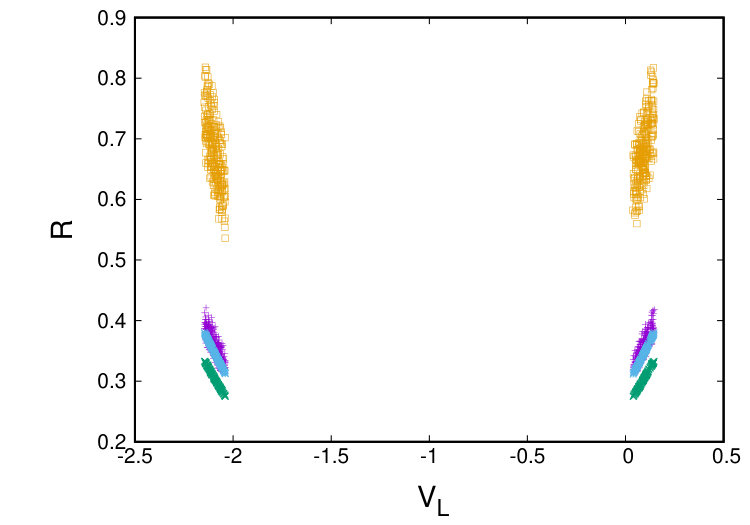 Figure 1
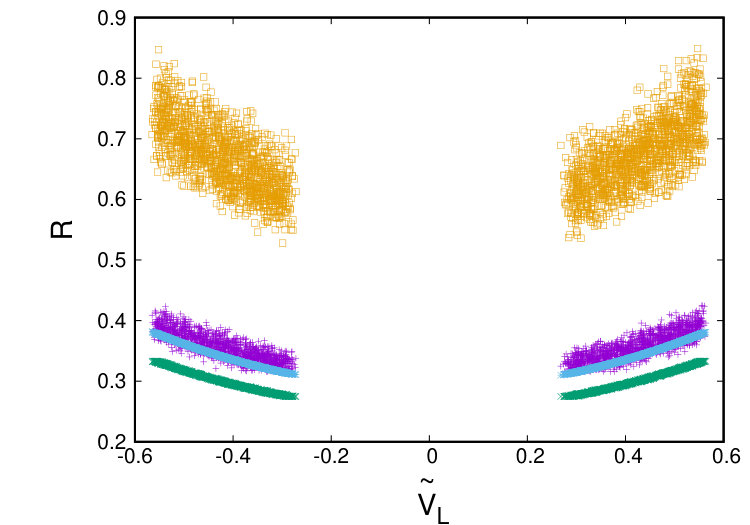 Figure 2
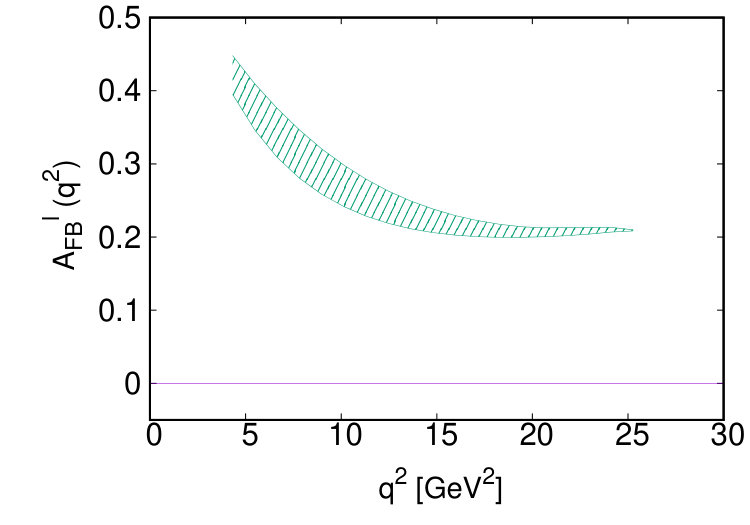 Figure 3
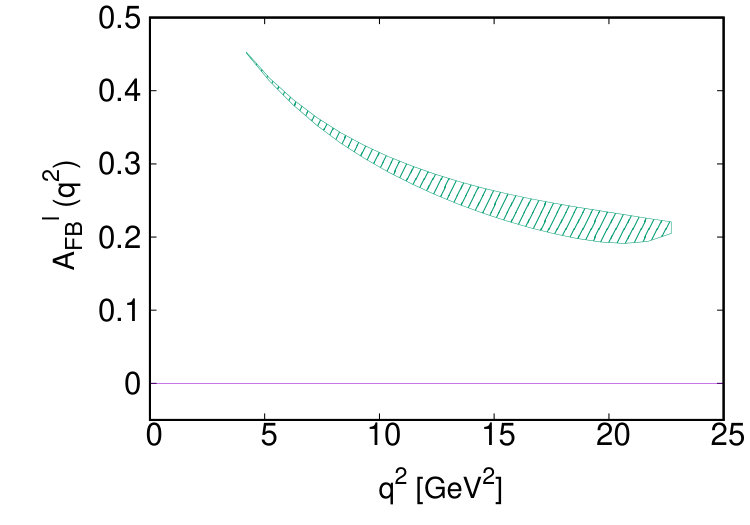 Figure 4
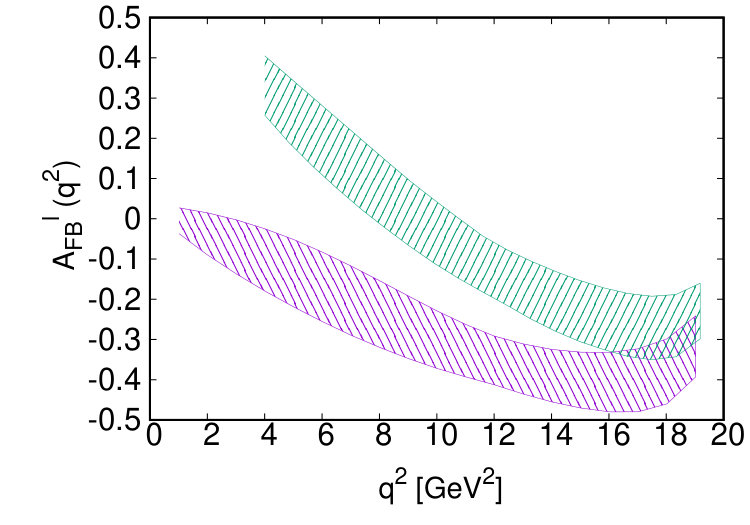 Figure 5
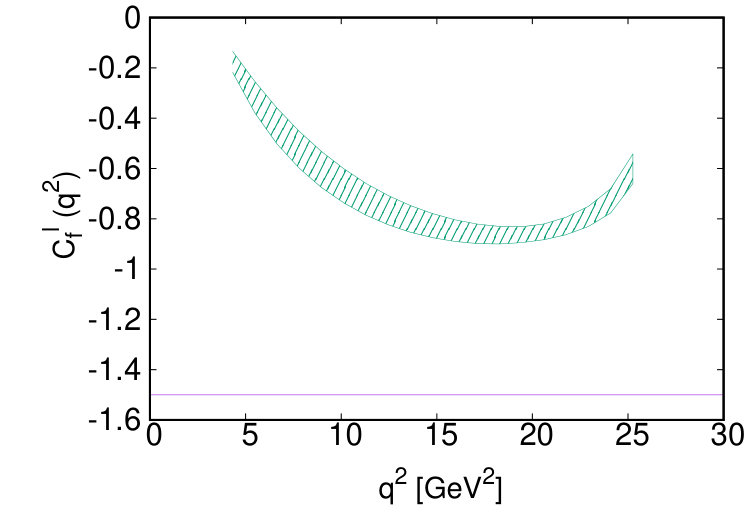 Figure 6
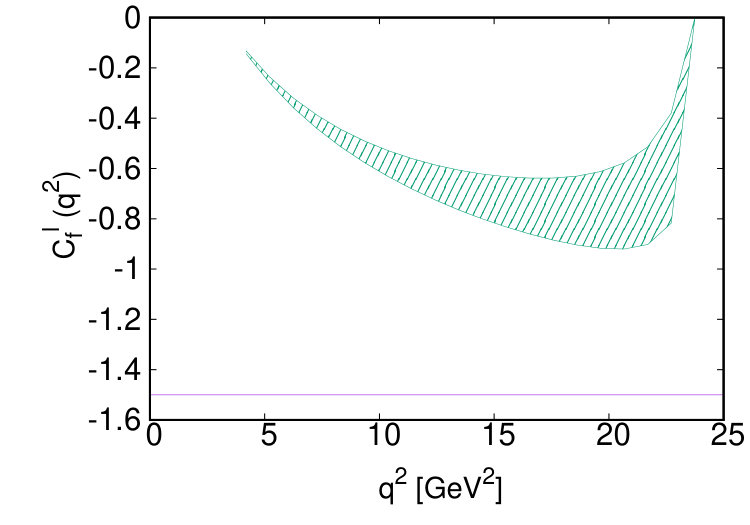 Figure 7
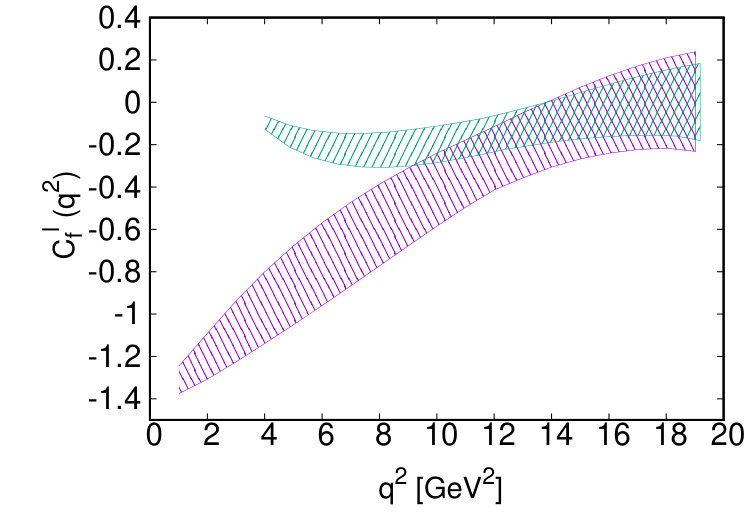 Figure 8
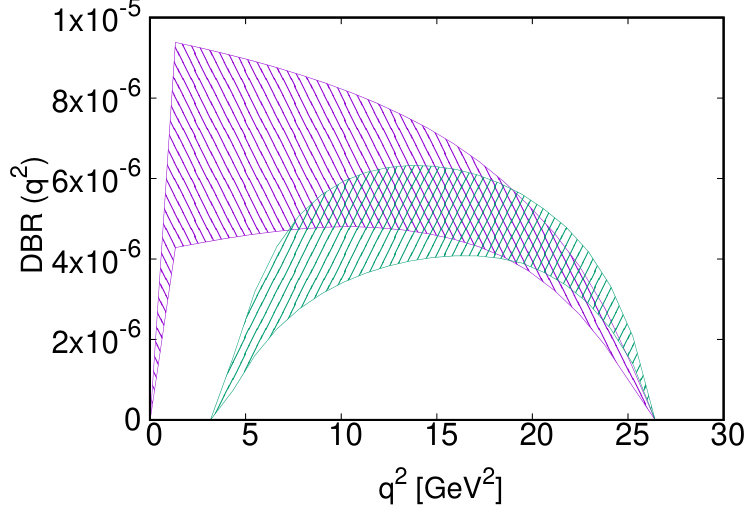 Figure 9
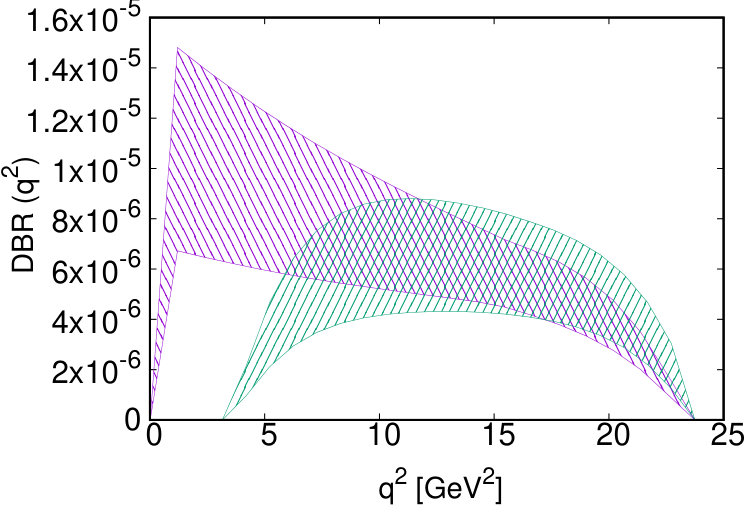 Figure 10
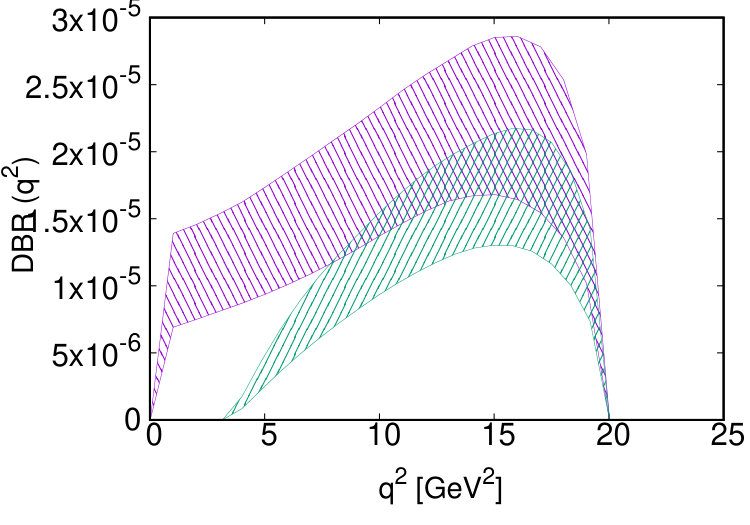 Figure 11
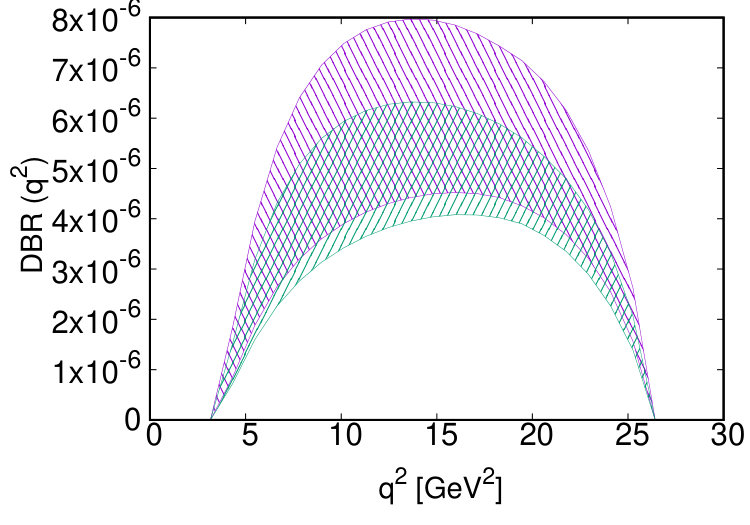 Figure 12
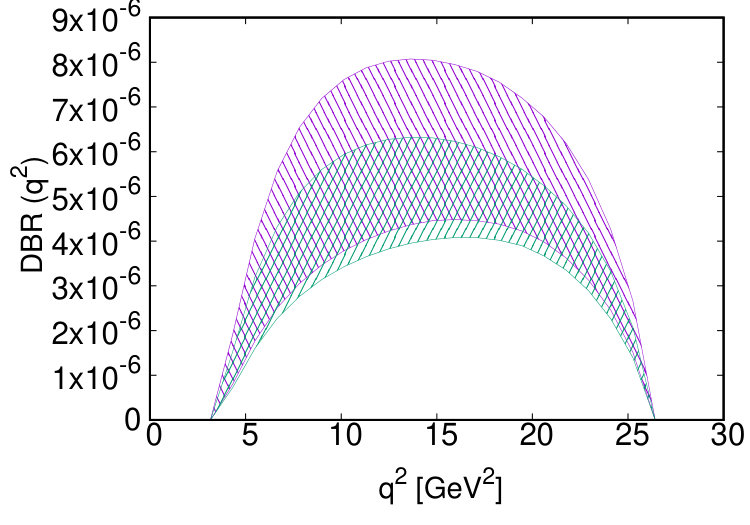 Figure 13
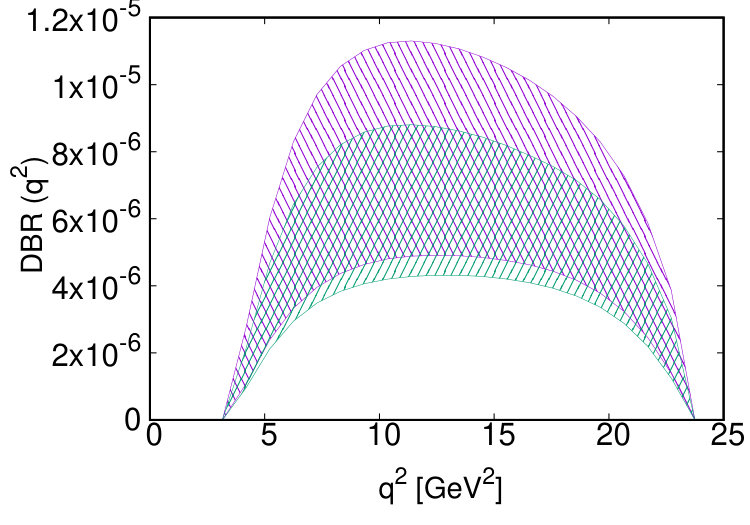 Figure 14
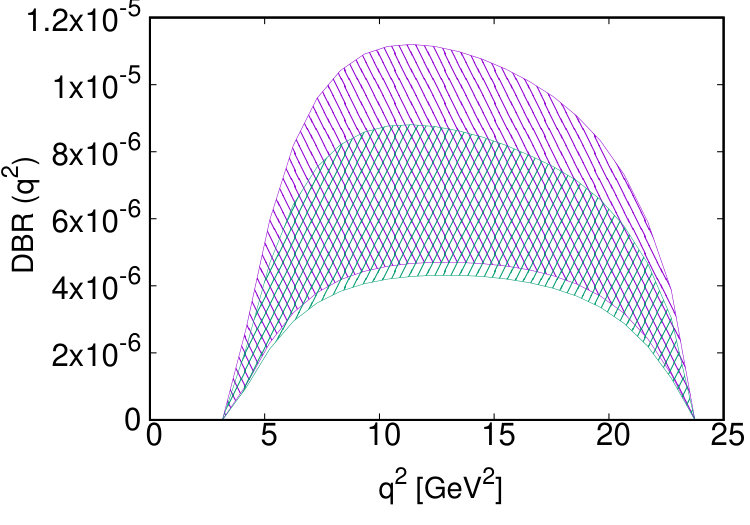 Figure 15
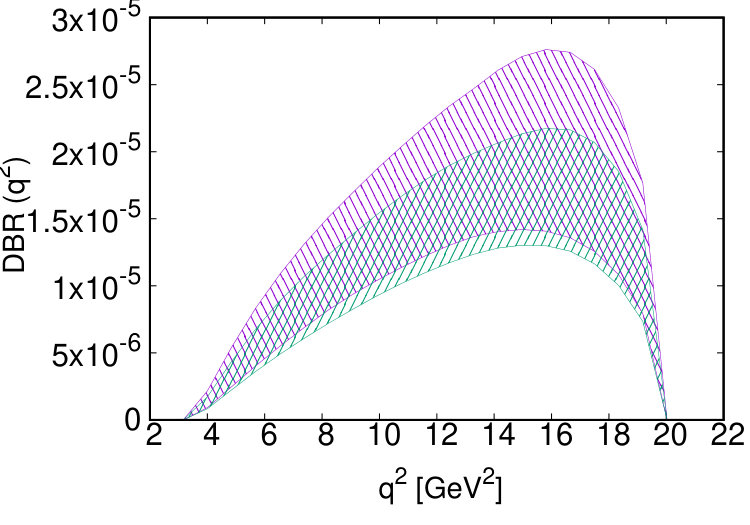 Figure 16
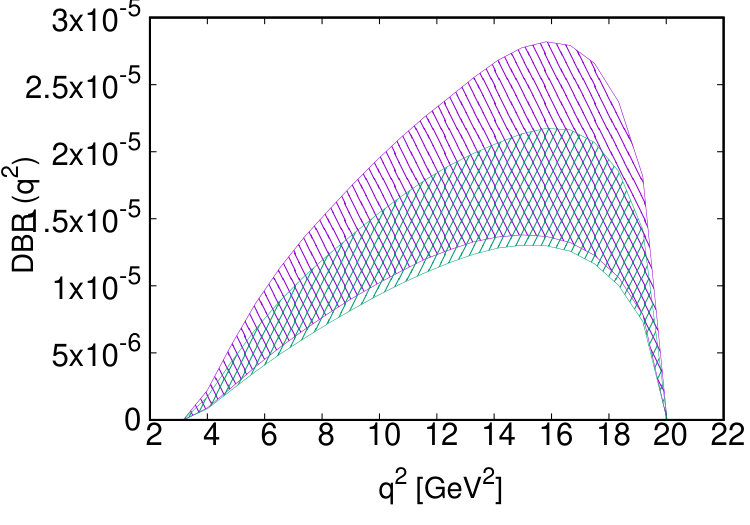 Figure 17
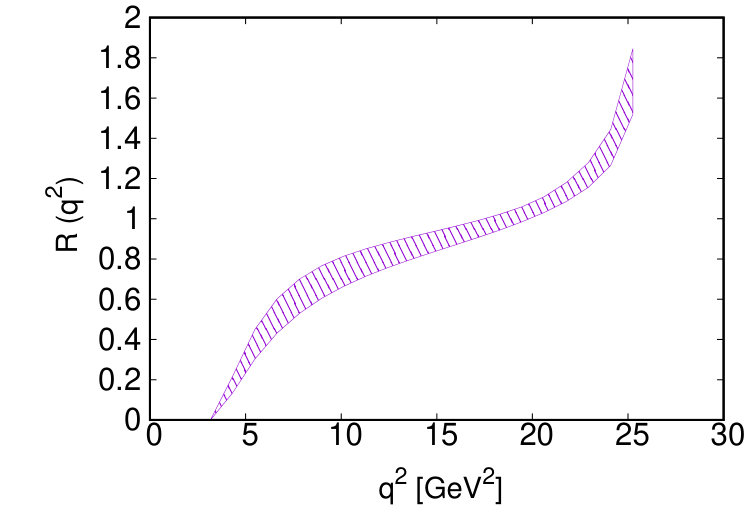 Figure 18
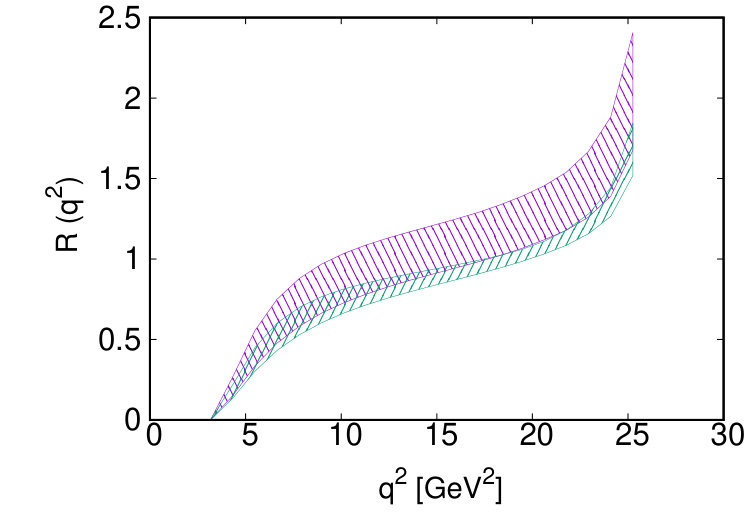 Figure 19
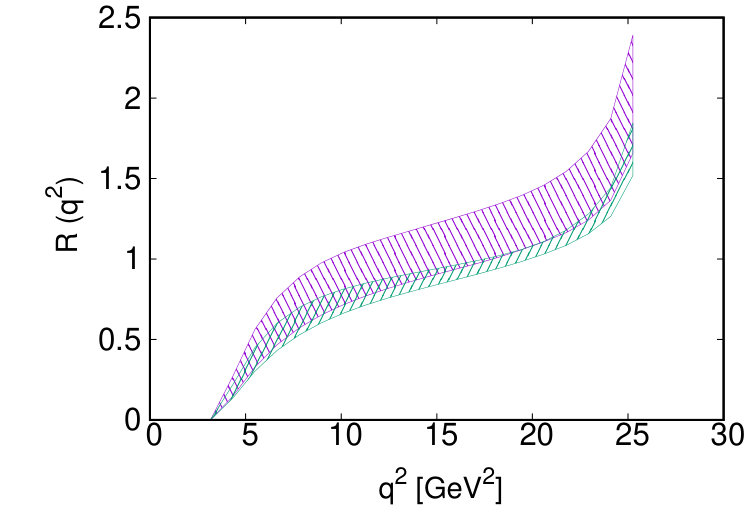 Figure 20
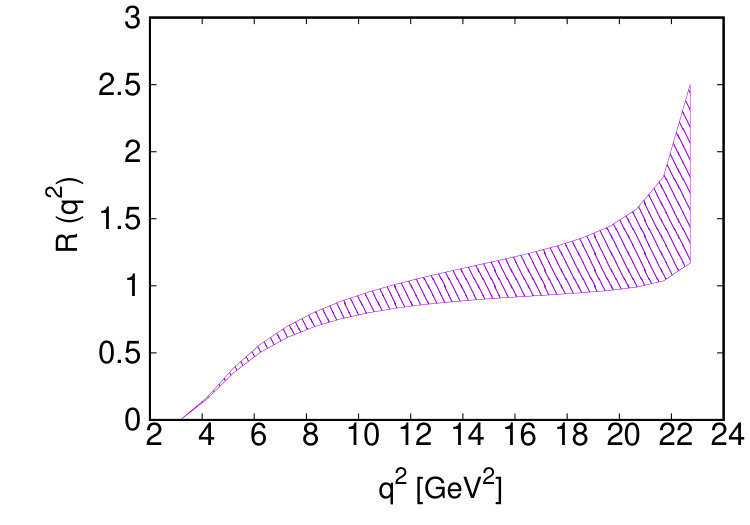 Figure 21
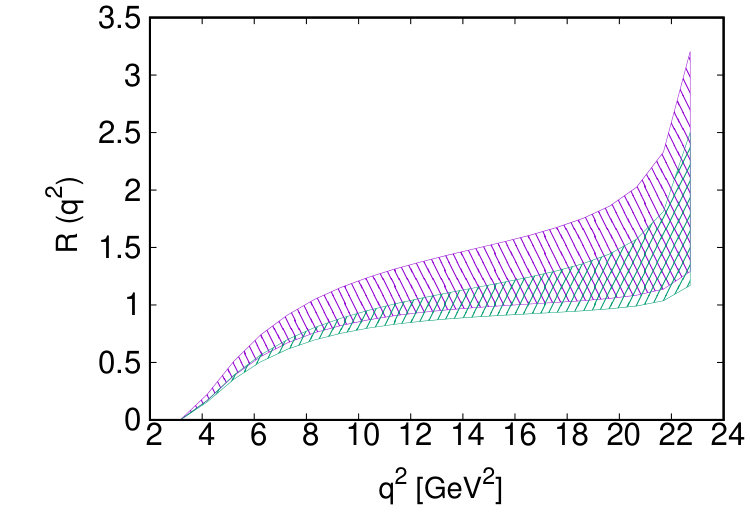 Figure 22
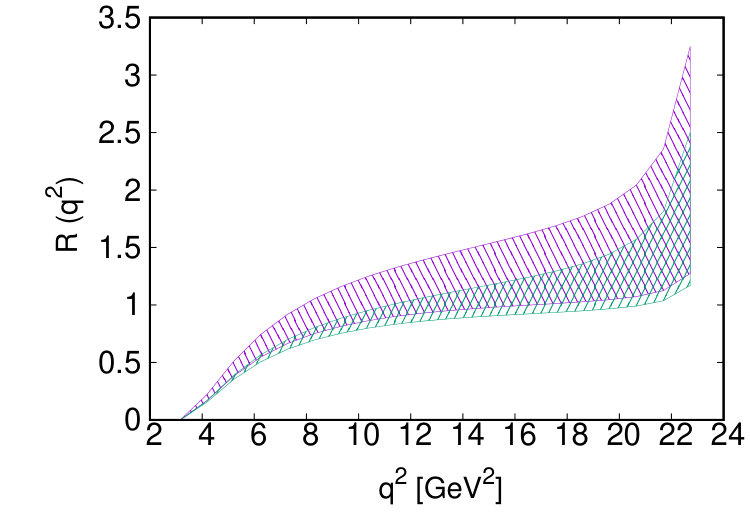 Figure 23
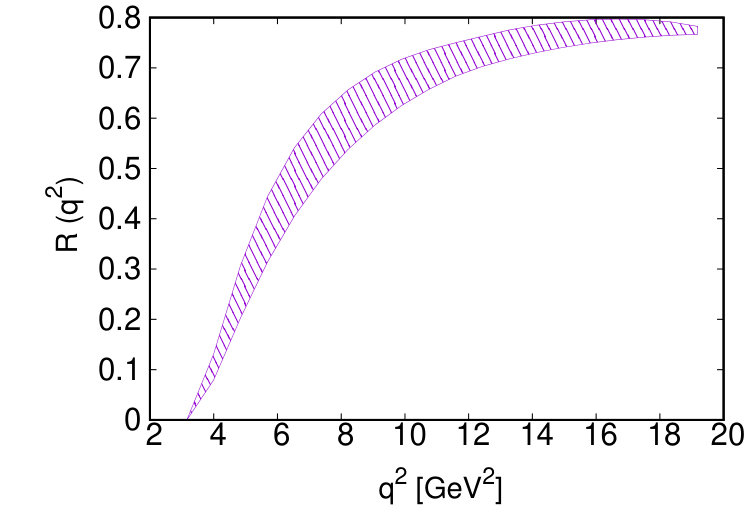 Figure 24
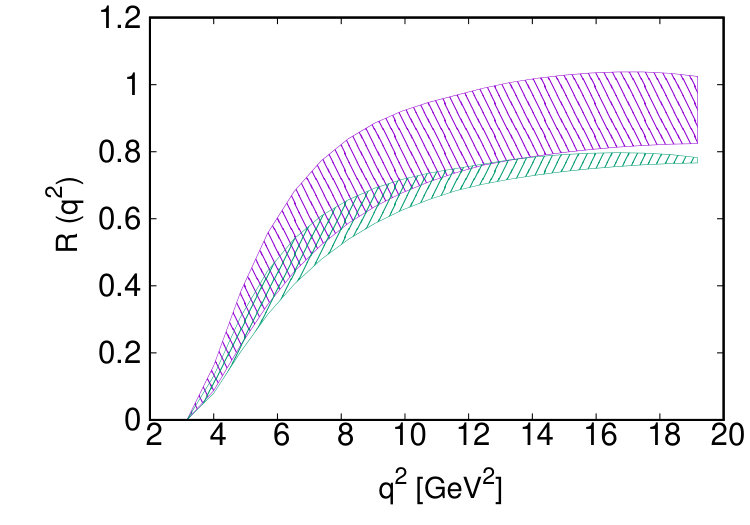 Figure 25
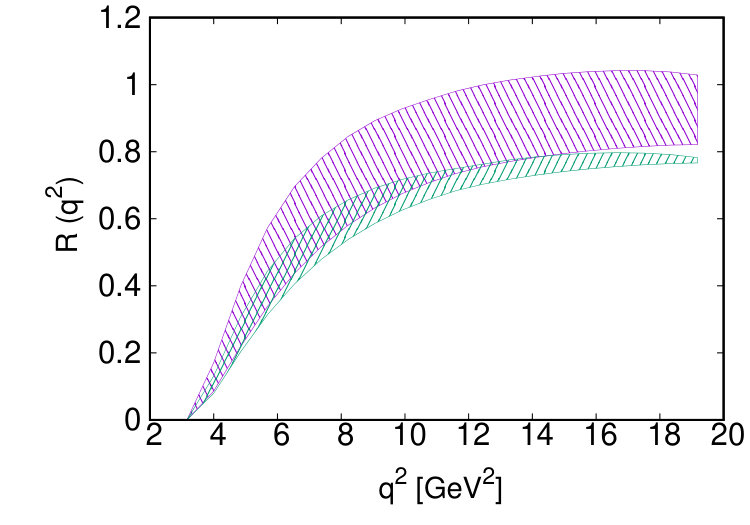 Figure 26
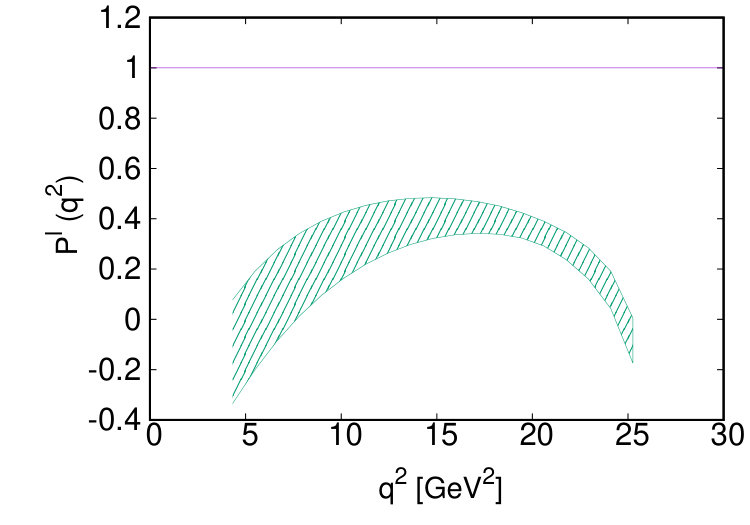 Figure 27
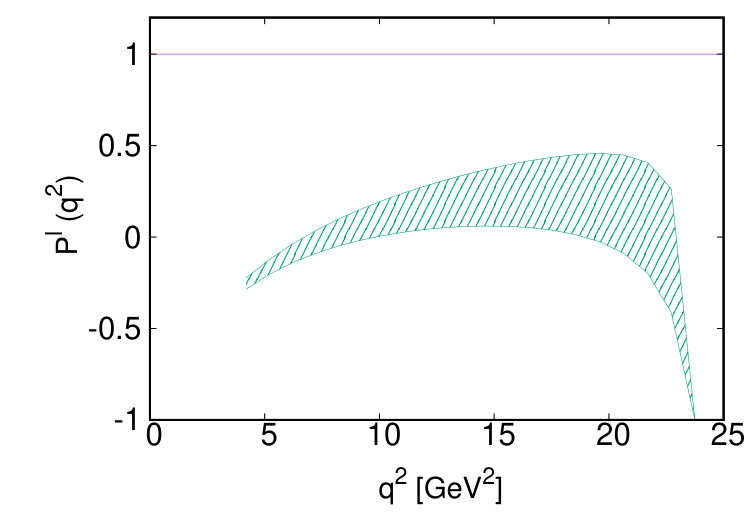 Figure 28
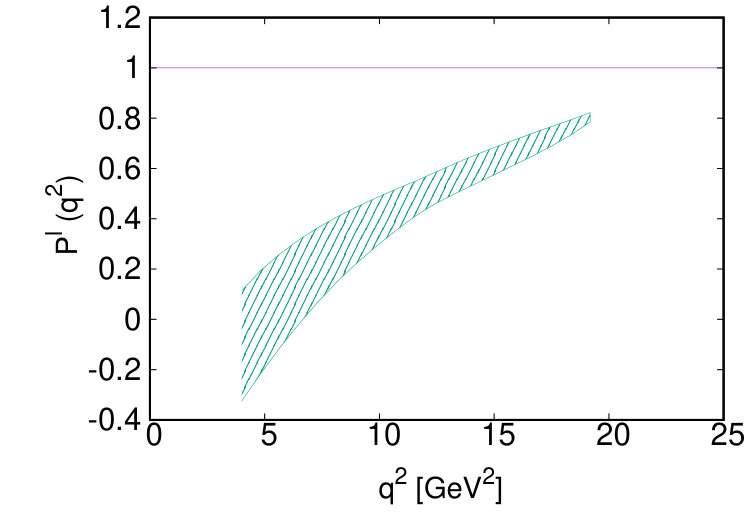 Figure 29
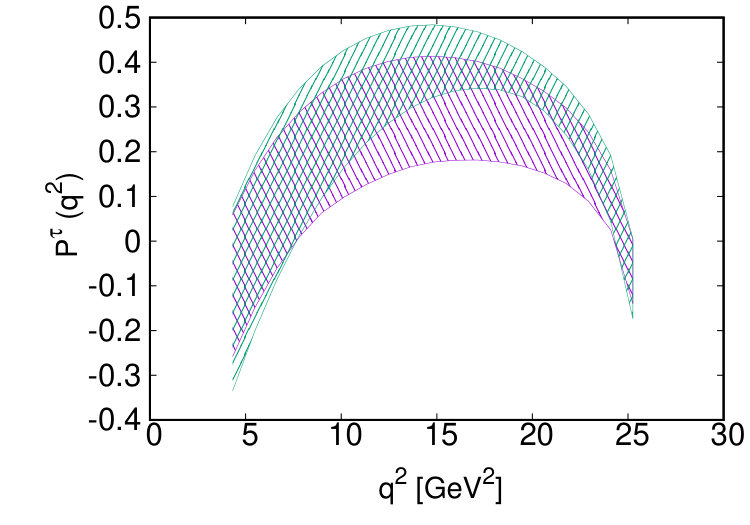 Figure 30
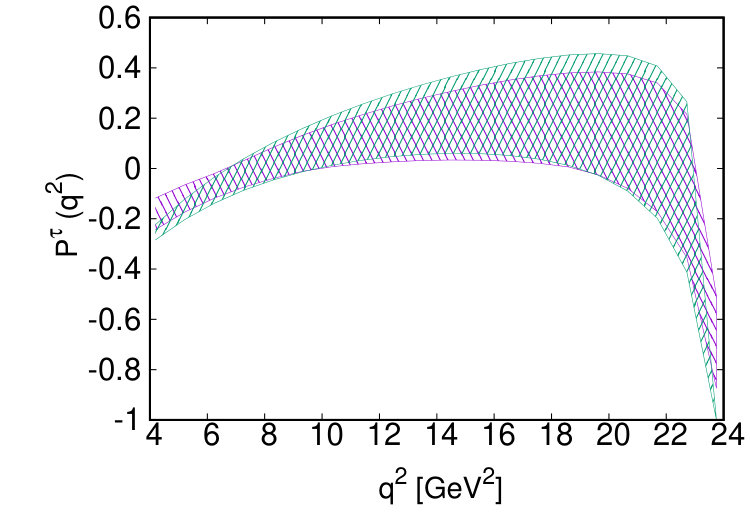 Figure 31
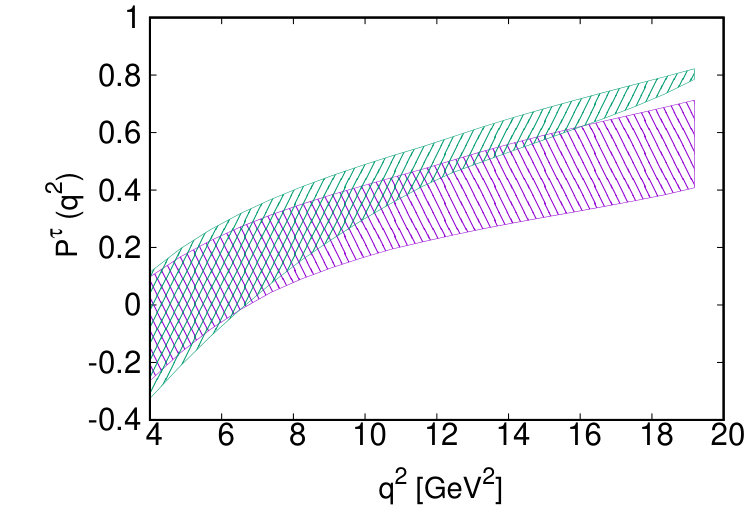 Figure 32
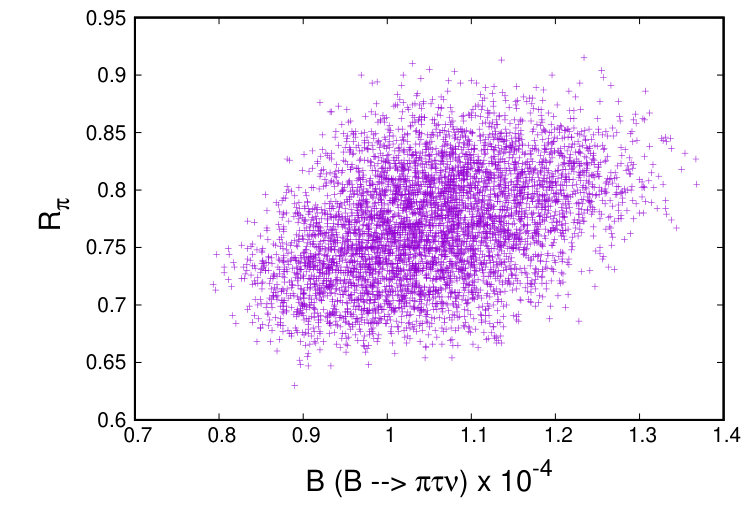 Figure 33
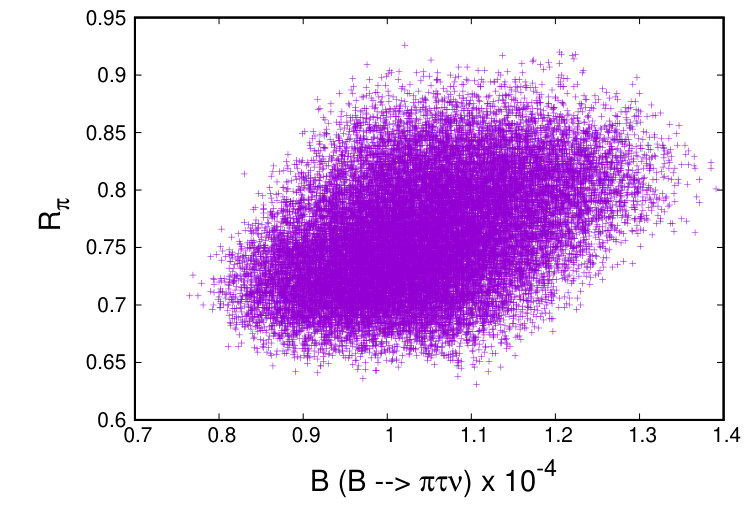 Figure 34
| Ratio of branching ratio | SM prediction | Experimental prediction |
|---|---|---|
| Lattice:2015rga ; Na:2015kha ; Aoki:2016frl ; Bigi:2016mdz | Lees:2013uzd ; Huschle:2015rga ; Sato:2016svk ; Hirose:2016wfn ; Aaij:2015yra | |
| Fajfer:2012vx ; Bernlochner:2017jka ; Bigi:2017jbd ; Jaiswal:2017rve | Lees:2013uzd ; Huschle:2015rga ; Sato:2016svk ; Hirose:2016wfn ; Aaij:2015yra | |
| Cohen:2018dgz | Aaij:2017tyk | |
| Bona:2009cj | Bernlochner:2015mya | |
| Patrignani:2016xqp | ||
| Patrignani:2016xqp | Bernlochner:2015mya |
| mode | Central value | 1.520 | 0.982 | -1.479 | ||
| range | [1.098, 2.053] | [0.006, 0.007] | [0.979, 0.984] | [-1.482, -1.478] | 0.636 | |
| mode | Central value | 0.966 | 0.284 | 0.105 | -0.607 | |
| range | [0.649, 1.392] | [0.262, 0.291] | [-0.035, 0.279] | [-0.711, -0.525] | [0.586, 0.688] | |
| mode | Central value | 3.259 | -0.281 | 0.993 | -0.417 | |
| range | [2.501, 4.179] | [-0.342, -0.222] | [0.989, 0.995] | [-0.575, -0.247] | 0.578 | |
| mode | Central value | 1.884 | -0.132 | 0.539 | -0.105 | |
| range | [1.449, 2.419] | [-0.203, -0.061] | [0.458, 0.603] | [-0.208, -0.007] | [0.539, 0.623] | |
| mode | Central value | 1.369 | 0.988 | -1.486 | ||
| range | [1.030, 1.786] | [0.004, 0.006] | [0.981, 0.991] | [-1.489, -1.481] | 0.641 | |
| mode | Central value | 0.878 | 0.246 | 0.298 | -0.737 | |
| range | [0.690, 1.092] | [0.227, 0.262] | [0.195, 0.385] | [-0.781, -0.682] | [0.576, 0.725] |
Peer Reviews
No public reviews on file for this paper yet. If you reviewed it on a platform where reviews are public (OpenReview, ICLR, NeurIPS, ICML), you can paste yours below so the community can read it here.
Videos
No videos yet. Explain this paper in a talk, walkthrough, or lecture? Add one.
Taxonomy
TopicsParticle physics theoretical and experimental studies · Computational Physics and Python Applications · Quantum Chromodynamics and Particle Interactions
Probing new physics in and decays
N Rajeev
Rupak Dutta
National Institute of Technology Silchar, Silchar 788010, India
Abstract
Motivated by the anomalies present in and semileptonic decays, we study the corresponding and decays within an effective field theory formalism. Our analysis is based on a strict model dependent assumption, i.e., we assume that and transition decays exhibit similar new physics pattern. We give prediction of various observables such as the branching fraction, ratio of branching ratio, lepton side forward-backward asymmetry, longitudinal polarization fraction of the charged lepton and convexity parameter in the standard model and in the presence of vector type new physics couplings.
pacs:
14.40.Nd, 13.20.He, 13.20.-v
I Introduction
Study of lepton flavor non-universality in the meson systems have been the center of interest both theoretically and experimentally over the last decade. Disagreement between the SM expectations and the experimental measurements (BaBar, Belle and LHCb) in and undergoing quark level transitions are well reflected in the flavor ratios , and defined as,
[TABLE]
In Table 1, we report the precise SM predictions and the experimental measurements of the various decay modes. The combined deviation of in and and around in from SM expectation is observed. Similarly, the average value of the branching ratio reported by BaBar and Belle experiments is not in good agreement with the SM expectations. Although, the is consistent with the SM, the ratio shows mild deviation. Similar deviations are also observed in the ratio as well. Motivated by these anomalies, we study the implications of , , , and anomalies on and semileptonic decays in a model dependent way.
II Theory
II.1 Effective Lagrangian
The effective Lagrangian for transition decays in the presence of vector type NP couplings is of the form Dutta:2013qaa
[TABLE]
where, is the Fermi coupling constant and is the CKM matrix element. , are the NP Wilson coefficients (WCs) involving left-handed neutrinos, and the WCs referring to tilde terms involve right-handed neutrinos.
Using the effective Lagrangian, we calculate the three body differential decay distribution for the decays. The final expressions pertaining to the psudoscalar and vector differential decay rates can be found in Rajeev:2018txm .
In general, we define the ratio of branching ratio as
[TABLE]
where and . We also define various dependent observables such as differential branching ratio , ratio of branching ratio , forward backward asymmetry , polarization fraction of the charged lepton and convexity parameter for the decay modes. For details one can refer to Rajeev:2018txm .
III Results and discussion
III.1 Standard model predictions
The SM central values are reported in Table 2. We calculate the central values by considering the central values of the input parameters. For the ranges, we perform a random scan over the theoretical inputs such as CKM matrix elements and the form factor inputs within of their central values. The significant difference in the mode and the mode are observed. The branching ratio of the order of is observed in all the decay modes. The results pertaining and are calculated for the first time for these decay modes. In Fig. 1, we show the dependency of all the observables for the mode and the mode.
III.2 Beyond the SM predictions
We discuss the NP contributions coming from and NP couplings. To get the allowed NP parameter space, we impose constraint coming from the measured values of , , , and . In the left panel of Fig. 2, we show the allowed range of and NP couplings once the constraints are imposed. Similarly, in the right panel the corresponding ranges in and using the allowed ranges of and NP couplings are shown. In Table 3 we display the allowed ranges of each observable in the presence of and NP couplings. Also, in Fig. 3 and 4, we display the dependency of the various observables in the presence of and NP couplings for the , and decays. The detailed observations are as follows:
- •
For the NP coupling, we notice a significant deviation from the SM prediction in and for all the decay modes. In addition, in the presence of NP coupling the polarization fraction show deviation along with and . So the measurement of can easily differentiate and NP contributions.
- •
The other observable such as , and are not affected by NP coupling. Similarly, and are not affected by NP coupling.
IV Conclusion
We study and decay modes within the SM and within the various NP scenarios. Although, there are hints of NP in various meson decays, the NP is not yet established. Studying and decay modes theoretically as well as experimentally are well motivated as these can provide complementary information regarding NP.
The reference list from the paper itself. Each links out to its DOI / PubMed record.
- 1(1) J. A. Bailey et al. [MILC Collaboration], Phys. Rev. D 92 , no. 3, 034506 (2015)
- 2(2) H. Na et al. [HPQCD Collaboration], Phys. Rev. D 92 , no. 5, 054510 (2015) Erratum: [Phys. Rev. D 93 , no. 11, 119906 (2016)]
- 3(3) S. Aoki et al. , Eur. Phys. J. C 77 , no. 2, 112 (2017)
- 4(4) D. Bigi and P. Gambino, Phys. Rev. D 94 , no. 9, 094008 (2016)
- 5(5) S. Fajfer, J. F. Kamenik and I. Nisandzic, Phys. Rev. D 85 , 094025 (2012)
- 6(6) F. U. Bernlochner, Z. Ligeti, M. Papucci and D. J. Robinson, Phys. Rev. D 95 , no. 11, 115008 (2017) Erratum: [Phys. Rev. D 97 , no. 5, 059902 (2018)]
- 7(7) D. Bigi, P. Gambino and S. Schacht, JHEP 1711 , 061 (2017)
- 8(8) S. Jaiswal, S. Nandi and S. K. Patra, JHEP 1712 , 060 (2017)