$\mathcal{PT}$-symmetry from Lindblad dynamics in an optomechanical system
B. Jaramillo \'Avila, C. Ventura-Vel\'azquez, R. de J. Le\'on-Montiel,, Y. N. Joglekar, B. M. Rodr\'iguez-Lara

TL;DR
This paper demonstrates how optomechanical systems can exhibit $ ext{PT}$-symmetry breaking transitions through Lindblad dynamics, connecting non-Hermitian quantum models with experimentally realizable optomechanical setups.
Contribution
It establishes a link between $ ext{PT}$-symmetry breaking and optomechanical state transfer dynamics, providing a pathway to realize non-Hermitian Hamiltonians at the quantum level.
Findings
Transition from mode-hybridization to damped dynamics signals $ ext{PT}$-symmetry breaking.
Comparison of Lindblad and $ ext{PT}$-symmetric Hamiltonian dynamics identifies conditions for equivalence.
Numerical simulations show quantum state evolution at zero and room temperature.
Abstract
The optomechanical state transfer protocol provides effective, lossy, quantum beam-splitter-like dynamics where the strength of the coupling between the electromagnetic and mechanical modes is controlled by the optical steady-state amplitude. By restricting to a subspace with no losses, we argue that the transition from mode-hybridization in the strong coupling regime to the damped-dynamics in the weak coupling regime, is a signature of the passive parity-time () symmetry breaking transition in the underlying non-Hermitian quantum dimer. We compare the dynamics generated by the quantum open system (Langevin or Lindblad) approach to that of the -symmetric Hamiltonian, to characterize the cases where the two are identical. Additionally, we numerically explore the evolution of separable and correlated number states at zero temperature as well as thermal initial…
Click any figure to enlarge with its caption.
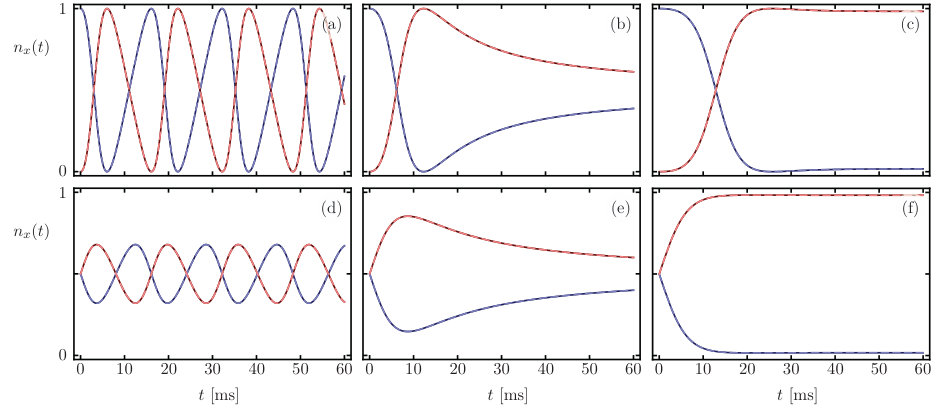 Figure 1
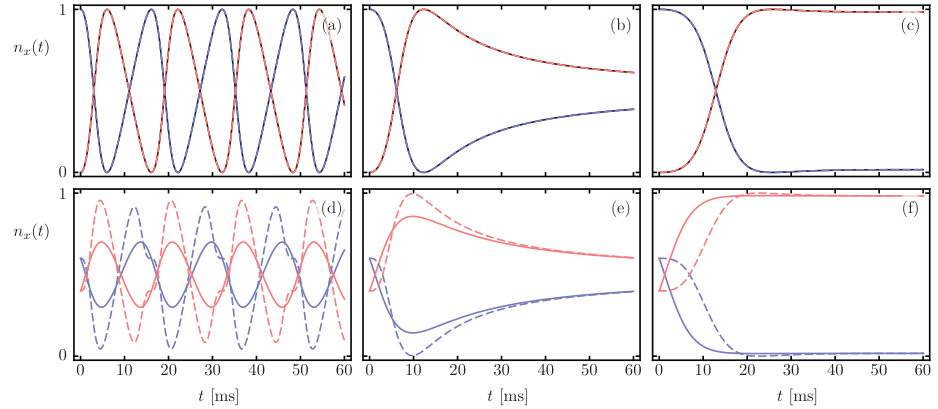 Figure 2
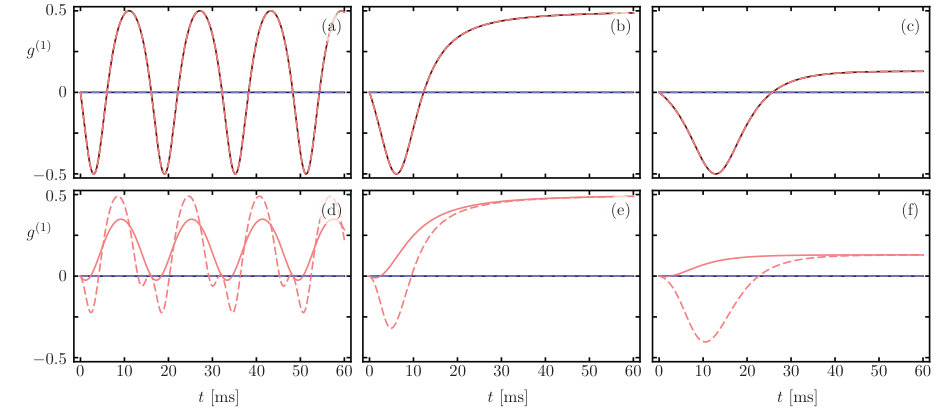 Figure 3
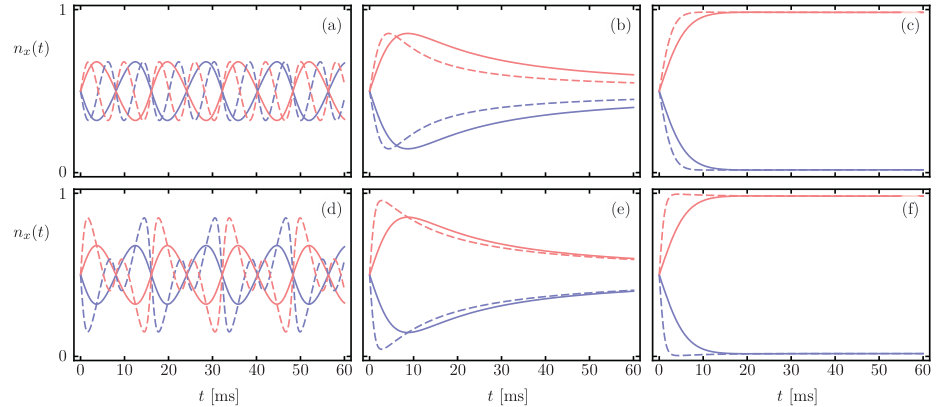 Figure 4
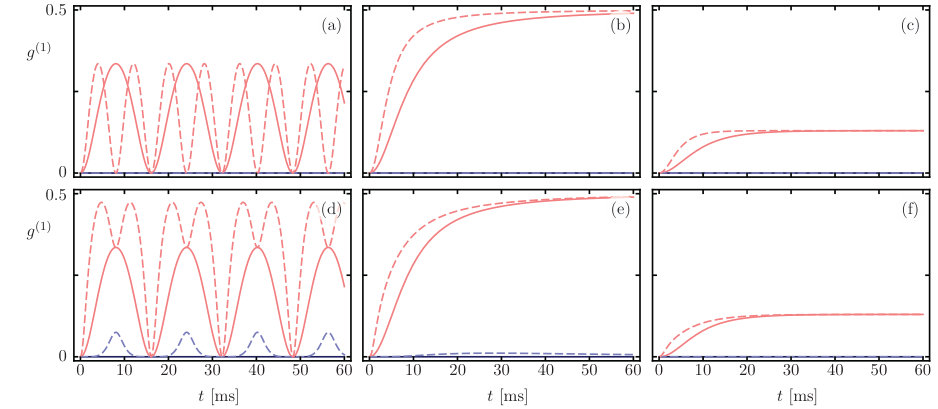 Figure 5
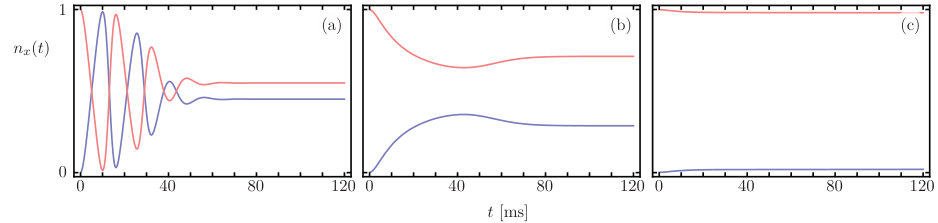 Figure 6
Peer Reviews
No public reviews on file for this paper yet. If you reviewed it on a platform where reviews are public (OpenReview, ICLR, NeurIPS, ICML), you can paste yours below so the community can read it here.
Videos
No videos yet. Explain this paper in a talk, walkthrough, or lecture? Add one.
-symmetry from Lindblad dynamics in an optomechanical system
B. Jaramillo Ávila
CONACYT-Instituto Nacional de Astrofísica, Óptica y Electrónica, Calle Luis Enrique Erro No. 1. Sta. Ma. Tonantzintla, Pue. C.P. 72840, México.
C. Ventura-Velázquez
Instituto Nacional de Astrofísica, Óptica y Electrónica, Calle Luis Enrique Erro No. 1. Sta. Ma. Tonantzintla, Pue. C.P. 72840, México.
R. de J. León-Montiel
Instituto de Ciencias Nucleares, Universidad Nacional Autónoma de México, Apartado Postal 70-543, 04510 Cd. Mx., México.
Y. N. Joglekar
Department of Physics, Indiana University Purdue University Indianapolis (IUPUI), Indianapolis, Indiana 46202 USA.
B. M. Rodríguez-Lara
Tecnologico de Monterrey, Escuela de Ingeniería y Ciencias, Ave. Eugenio Garza Sada 2501, Monterrey, N.L., México, 64849.
Instituto Nacional de Astrofísica, Óptica y Electrónica, Calle Luis Enrique Erro No. 1. Sta. Ma. Tonantzintla, Pue. C.P. 72840, México.
Abstract
The optomechanical state transfer protocol provides effective, lossy, quantum beam-splitter-like dynamics where the strength of the coupling between the electromagnetic and mechanical modes is controlled by the optical steady-state amplitude. By restricting to a subspace with no losses, we argue that the transition from mode-hybridization in the strong coupling regime to the damped-dynamics in the weak coupling regime, is a signature of the passive parity-time () symmetry breaking transition in the underlying non-Hermitian quantum dimer. We compare the dynamics generated by the quantum open system (Langevin or Lindblad) approach to that of the -symmetric Hamiltonian, to characterize the cases where the two are identical. Additionally, we numerically explore the evolution of separable and correlated number states at zero temperature as well as thermal initial state evolution at room temperature. Our results provide a pathway for realizing non-Hermitian Hamiltonians in optomechanical systems at a quantum level.
I Introduction
Photonics provides a fertile ground for the classical simulation of non-Hermitian systems with gain, loss, or both, including systems with balanced gain and loss, i.e. parity-time () symmetric systems El-Ganainy et al. (2018). In such a simulation with classical light, the complex potentials in the -symmetric Hamiltonian of a quantum system translate into complex refractive media that represent localized amplification or absorption. These parity-time symmetric structures are described by a Schrödinger-like differential equation, where the renormalized paraxial propagation mimics quantum dynamics of a non-relativistic particle in the presence of complex optical potentials Ruschhaupt et al. (2005); El-Ganainy et al. (2007); Huerta Morales et al. (2016). A key feature of the -symmetric Hamiltonian is that at small gain-loss strength, its spectrum remains purely real, its linearly independent eigenfunctions are no longer orthogonal, but continue to remain simultaneous eigenfunctions of the combined operator. When the gain-loss strength is large, the spectrum renders into complex conjugate eigenvalue pairs, and the associated eigenfunctions transform into the other under the operation Joglekar et al. (2013). This transition from the -symmetric phase to the -symmetry broken phase occurs at an exceptional point (EP) where the algebraic multiplicity of the Hamiltonian differs from its geometric multiplicity Kato (1995). The dynamics of non-Hermitian systems across and in the neighborhood of the transition point have been extensively investigated in recent years in mostly classical, optical realizations.
On a fundamental level, the effective, non-Hermitian Hamiltonian model ignores the thermal fluctuations attendant with the loss (due to fluctuation-dissipation theorem Kubo (1966)) and zero-temperature quantum fluctuations attendant with the gain (due to the vacuum noise in linear quantum amplifiers Caves (1982)). Therefore, non-Hermitian dynamics has been realized in mode-selective lossy systems, including heralded single photons Xiao et al. (2017), ultracold atoms Li et al. (2019), and superconducting transmons Naghiloo et al. , where the thermal fluctuations can be safely ignored. Such lossy systems are also a promising candidate for observing -symmetric quantum optics across EPs of arbitrary order with appropriate post-selection Quiroz-Juárez et al. (2019). In systems with both gain and loss, the inclusion of non-classical light requires the introduction of (quantum) fluctuations induced by the linear media either by Langevin equation Agarwal and Qu (2012); Huerta Morales and Rodríguez-Lara (2017); Longhi (2018) or Lindblad master equation Scheel and Szameit (2018); Schomerus (2010); Peřinová et al. (2019) formalism. Indeed, the trace-preserving, steady-state generating Lindblad approach allows us to understand, in a more realistic way, the dynamics of optomechanical systems and, at the same time, the emergence of a non-Hermitian Hamiltonian in this approach.
In this paper, we provide a thorough analysis of both approaches and present the main differences between them. As model system, we consider a standard, first red-sideband, strongly-driven optomechanical system, where the optomechanical coupling leads to the hybridization of the electromagnetic and mechanical modes Dobrindt et al. (2008). This protocol generates an effective, linearized quantum-fluctuation Hamiltonian for the electromagnetic and mechanical modes that is equivalent to that of a lossy, quantum beam-splitter for the two modes Aspelmeyer et al. (2014).
The plan for the paper is as follows. First, we introduce the basic model and its Lindblad dynamics, recall the corresponding Langevin equation treatment, and obtain the mode-selective lossy Hamiltonian. We show that coupling to a thermal reservoir leads to a passive -symmetric dimer dynamics where the electromagnetic driving controls the -symmetric or -symmetric broken phases of the dimer. Next, we present numerical results that compare the non-Hermitian evolution of the density matrix with the evolution under a zero-temperature Lindblad master equation for product initial states and correlated initial states. Then, we present finite temperature results for the transition from strong to weak coupling regimes in state transfer protocol at finite temperature to relate it with the -symmetry transition. We conclude the paper with a brief discussion.
II Results
II.1 Optomechanical state-transfer protocol
The Hamiltonian for the standard optomechanical system Pace et al. (1993); Law (1995), in a frame rotating at the pump frequency and units of ,
[TABLE]
models the interaction of an electromagnetic mode, with frequency and annihilation operator , and a mechanical mode, with frequency and annihilation operator . The bare optomechanical coupling, , indicates the coupling between the dimensionless intensity of the electromagnetic mode, provided by the number operator , and the dimensionless mechanical displacement, . The parameter gives the strength of the electromagnetic pump. Hereafter, we will use subscripts and to label electromagnetic and mechanical modes, respectively. Strong driving allows us to split the mode dynamics into semi-classical and quantum fluctuation parts, and Mancini and Tombesi (1994); Paternostro et al. (2006). In the presence of a thermal bath, which introduces dissipation for both modes, the semi-classical part shows a steady state with electromagnetic coherent amplitude and mechanical coherent amplitude . Here and are the phenomenological decay rates for the electromagnetic and mechanical mode-occupation numbers, respectively. Under red-sideband driving, , and the rotating-wave approximation, a quantum beam-splitter Hamiltonian provides the dynamics for the quantum fluctuation,
[TABLE]
where the steady-state electromagnetic coherent amplitude enhances the bare optomechanical coupling, Genes et al. (2008).
In this scenario, the Lindblad master equation Breuer and Petruccione (2007); Wiseman and Milburn (2009),
[TABLE]
governs the dynamics of the optomechanical density matrix, , coupled to a thermal bath defined by the action of the zero-trace superoperator
[TABLE]
where the average thermal mode-occupation numbers, with , are given in terms of Boltzmann constant and the bath temperature . The anti-commutator term in Eq.(4) can be interpreted as a purely imaginary gain or loss potential in an effective, non-Hermitian Hamiltonian. At zero temperature, the Lindblad approach leads to the following equations for the average excitation numbers and ,
[TABLE]
The quantum Langevin equations of motion for the annihilation operators Ventura-Velázquez et al. (2019),
[TABLE]
provide an equivalent approach to the open quantum evolution. Here, the dimensionful operators with zero mean and correlation functions and , with , model the quantum noise for the electromagnetic and mechanical modes respectively. A Hamiltonian with specific mode losses,
[TABLE]
generates the first term on the right-hand side of Eq.(15). When confined to a subspace with a fixed total excitation number , Eq.(16) becomes with
[TABLE]
where are standard Pauli matrices and . It follows that the decay rates of the two eigenmodes of are equal (-symmetric phase) for , they reach the maximum at , and a slowly decaying eigenmode emerges for Quiroz-Juárez et al. (2019); de J. León-Montiel et al. (2018); Rodríguez-Lara and Guerrero (2015); Li et al. (2019); Joglekar and Harter (2018).
The dynamics generated by Eq.(3) and Eq.(15) are completely equivalent Ventura-Velázquez et al. (2019). However, we want to identify and elucidate the cases where they are equivalent to the non-unitary time evolution generated by the non-Hermitian Hamiltonian, i.e. Eq.(16). In the absence of the quantum noise terms, the non-Hermitian approach gives the following equations of motion for the mode occupation numbers,
[TABLE]
In the following, we compare the numerical results obtained by solving Eqs.(5)-(6) with those from Eqs.(18)-(19). We explore both zero and finite temperatures with initial states that are either product states or correlated states.
II.2 Numerical results
For our simulations, we make use of optomechanical parameters from an experimental state transfer protocol Hz Cohen et al. (2015). The experimental enhanced optomechanical coupling provides dynamics in the -symmetric regime. We calculate the required value to reach the exceptional point, Hz. For the broken symmetry regime, we take an order of magnitude less than the reported experimental value, without further consideration regarding the validity of the mean-field approximation. For the sake of simplicity, we start our numerical experiments for Lindblad master equation carried at zero temperature and the initial states are given in terms of Fock states. It is important to remark that, even though zero-temperature conditions are ideal for optomechanical experiments, simulations assuming such condition can help elucidate the difference in the dynamics of both approaches, namely the full quantum analysis and the non-Hermitian Hamiltonian approach. For simulations at zero temperature, we use bosonic subspaces of dimension equal to the maximum number of excitations plus two to unfold and reduce the complex differential equations into a set of real differential equations solved using standard Livermore Solver for Ordinary Differential Equations (LSODA) methods. At finite temperature, the solutions to the Langevin equations are obtained exactly by means of an adaptive integrator Ventura-Velázquez et al. (2019).
We start with the single-excitation subspace. In this limit, the Lindblad dynamics and the non-Hermitian dynamics are identical,
[TABLE]
because for , and in the single-excitation subspace. Figure 1 shows the occupation numbers for the electromagnetic mode and the mechanical mode obtained via the Lindblad master equation (solid lines), and the non-Hermitian evolution (dashed lines). The initial state is separable (first row), and a correlated state (second row). The first, second, and third columns correspond to the system in the -symmetric region (), at the exceptional point (), and in the -symmetry broken region () respectively.
To explore the dynamics beyond the single-excitation subspace, we define instantaneously renormalized excitation numbers and first order correlation or coherence,
[TABLE]
We note that the process of instantaneous renormalization is equivalent to restricting to a fixed excitation number sector. In this sector, the Hamiltonian is an matrix in the photon-phonon number basis and post-selecting to this sector is equivalent to measuring the quantities and Quiroz-Juárez et al. (2019); Naghiloo et al. .
The top row in Fig. 2 shows occupation numbers for an initial state with obtained from the Lindblad (solid lines) and non-Hermitian (dashed lines) dynamics. The bottom row, on the other hand, shows results for with and . We observe the three well defined dynamical regimes: the anharmonic oscillations in have a slightly different period in the -symmetric region, but converge asymptotically at the exceptional point and in -symmetry broken region. This surprising result, where Lindblad dynamics does not rise to a steady-state behavior, is solely due to the post-selection scheme we have discussed.
Figure 3 shows the real (blue) and imaginary (blue) parts of the optomechanical coherence for separable states (top row) and (bottom row) respectively. The difference between the Lindblad dynamics (solid lines) and the non-Hermitian Hamiltonian evolution (dashed lines) is again manifest only for product states where both modes are excited.
Next, we consider the zero-temperature evolution with highly correlated initial states, such as the so-called states, with different values of . Figure 4 shows that the Lindblad master equation results (solid lines) for the scaled occupation numbers and are independent of , while the non-Hermitian evolution results (dashed line) show deviations that increase with . Again, the characteristic dynamics for the -symmetric phase, exceptional point, and -symmetry broken phase appear. The anharmonic oscillation period is the same for both approaches in the -symmetric region, but the interference in the non-Hermitian evolution differentiates them apart. In the exceptional and broken regimes both dynamics converge asymptotically.
Figure 5 shows qualitatively similar results for the optomechanical coherence with initial states. We find it remarkable that asymptotic value of at the exceptional point is a maximum in any each case. This is a fascinating effect that could prove useful for preserving coherence in the implementation of quantum information protocols.
Finally, we consider the finite-temperature case that is most relevant to current optomechanical experiments, where the states of the modes are thermal coherent states. In this case, the full quantum dynamics asymptotically provides a thermal steady-state, and the interplay between decay ratios and the enhanced optomechanical coupling provides the dynamics before stabilization Dobrindt et al. (2008). Figure 6 shows these dynamics for finite temperature K where the initial state of the fluctuations given by thermal states with mean excitation numbers and . For a strong optomechanical coupling, , the electromagnetic and mechanical modes hybridize and this standard mode-splitting results in oscillatory behavior that provides state transfer, Fig. 6(a), similar to dynamics in the -symmetry region. The transition point from strong to weak coupling occurs at what in non-Hermitian systems is the exceptional point where power-law approach to steady-state arises and there is no state transfer anymore, Fig. 6(b). For weak coupling, , the electromagnetic mode decays according to its damping rate but the mechanical mode shows an effective decay rate that includes the effect of the electromagnetic mode on the mechanical oscillator equivalent to the broken symmetry regime, Fig. 6(c). These results are obtained via the full Langevin equation for the same experimental systemCohen et al. (2015), but now at room temperature.
III Conclusion
We revisited the optomechanical state transfer protocol from a non-Hermitian-Hamiltonian point of view. After the mean-field approximation, the linearized quantum fluctuation beam-splitter-like Hamiltonian provides us with a theoretical testing ground to compare the results from Lindblad equation and non-Hermitian evolution for a realization of the standard quantum -symmetric dimer.
We have shown that Lindblad dynamics and the non-Hermitian evolution at zero temperature provide identical dynamics for separable initial states where one of the modes is a number state and the other is the vacuum. However, for Fock initial states with non-zero mode numbers, the dynamics are not identical, but continue to be qualitatively similar. The same trend holds for correlated states. Although the zero-temperature bath and Fock initial states cannot be explored in the present-day experimental optomechanical setting, they point to the fact that these regimes are differentiable in systems with engineered losses, such as coupled photonic waveguides.
Finally, at finite temperature, we find that the presence or absence of state transfer is a signature of the -symmetric or -symmetry broken phases, although the dynamics are described by the full, finite-temperature Langevin equation. These results are accessible in a single device through control of the driving strength.
The reference list from the paper itself. Each links out to its DOI / PubMed record.
- 1El-Ganainy et al. (2018) R. El-Ganainy, K. G. Makris, M. Khajavikhan, Z. H. Musslimani, S. Rotter, and D. N. Christodoulides, “Non-Hermitian physics and PT symmetry,” Nat. Phys. 14 , 11–19 (2018) . · doi ↗
- 2Ruschhaupt et al. (2005) A. Ruschhaupt, F. Delgado, and J. G. Muga, “Physical realization of PT-symmetric potential scattering in a planar slab waveguide,” Journal of Physics A: Mathematical and General 38 , L 171–L 176 (2005) , ar Xiv:1706.04056 [quant-ph] . · doi ↗
- 3El-Ganainy et al. (2007) R. El-Ganainy, K. G. Makris, D. N. Christodoulides, and Z. H. Musslimani, “Theory of coupled optical PT-symmetric structures,” Opt. Lett. 32 , 2632–2634 (2007) . · doi ↗
- 4Huerta Morales et al. (2016) J. D. Huerta Morales, J. Guerrero, S. Lopez-Aguayo, and B. M. Rodriguez-Lara, “Revisiting the optical PT-symmetric dimer,” Symmetry 8 , 83 (2016) , ar Xiv:1607.02782 [physics.optics] . · doi ↗
- 5Joglekar et al. (2013) Y. N. Joglekar, C. Thompson, D. D. Scott, and G. Vemuri, “Optical waveguide arrays: quantum effects and PT symmetry breaking,” Eur. Phys. J. Appl. Phys. 63 , 30001 (2013) , ar Xiv:1305.3565 [physics.optics] . · doi ↗
- 6Kato (1995) T. Kato, Perturbation Theory for Linear Operators (Springer-Verlag, 1995). · doi ↗
- 7Kubo (1966) R. Kubo, “The fluctuation-dissipation theorem,” Rep. Prog. Phys. 29 , 255–284 (1966) . · doi ↗
- 8Caves (1982) C. M. Caves, “Quantum limits on noise in linear amplifiers,” Phys. Rev. D 26 , 1817–1839 (1982) . · doi ↗