Learning Invariant Representations for Sentiment Analysis: The Missing Material is Datasets
Victor Bouvier, Philippe Very, C\'eline Hudelot, Cl\'ement Chastagnol

TL;DR
This paper introduces metrics and a data filtering method to evaluate and improve the robustness of sentiment analysis models against nuisance factors like product ID, highlighting the importance of dataset annotation for invariant representation learning.
Contribution
It proposes two generalization metrics and a simple filtering approach to assess and mitigate nuisance factors in NLP sentiment analysis datasets.
Findings
Nuisance factors can significantly bias sentiment classification.
Filtering data based on nuisance annotations improves model robustness.
The approach is applicable to datasets with annotated nuisance variables.
Abstract
Learning representations which remain invariant to a nuisance factor has a great interest in Domain Adaptation, Transfer Learning, and Fair Machine Learning. Finding such representations becomes highly challenging in NLP tasks since the nuisance factor is entangled in a raw text. To our knowledge, a major issue is also that only few NLP datasets allow assessing the impact of such factor. In this paper, we introduce two generalization metrics to assess model robustness to a nuisance factor: \textit{generalization under target bias} and \textit{generalization onto unknown}. We combine those metrics with a simple data filtering approach to control the impact of the nuisance factor on the data and thus to build experimental biased datasets. We apply our method to standard datasets of the literature (\textit{Amazon} and \textit{Yelp}). Our work shows that a simple text classification…
Click any figure to enlarge with its caption.
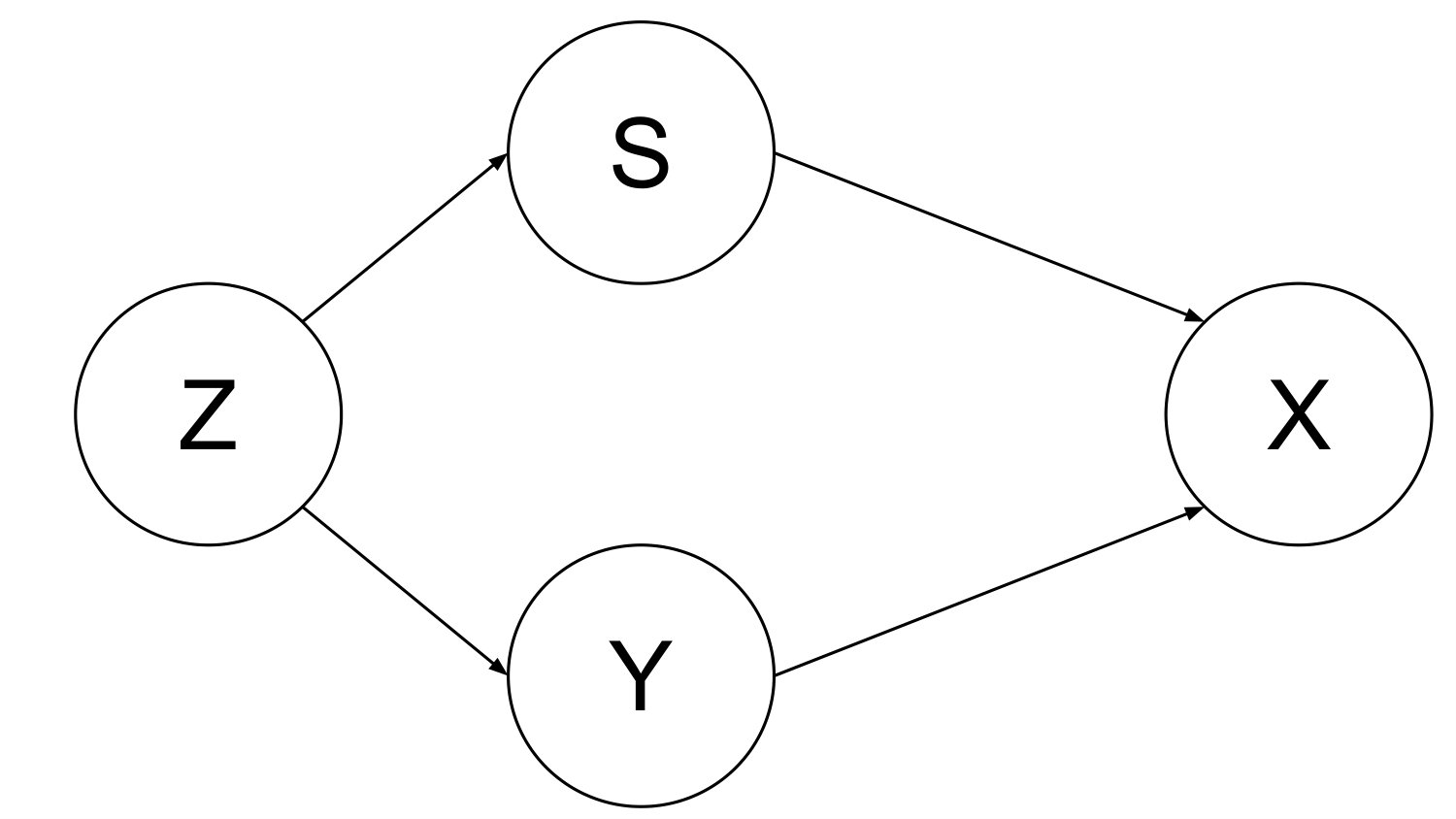 Figure 1
Peer Reviews
No public reviews on file for this paper yet. If you reviewed it on a platform where reviews are public (OpenReview, ICLR, NeurIPS, ICML), you can paste yours below so the community can read it here.
Videos
No videos yet. Explain this paper in a talk, walkthrough, or lecture? Add one.
Taxonomy
TopicsTopic Modeling · Sentiment Analysis and Opinion Mining · Generative Adversarial Networks and Image Synthesis