Jarlskog determinant and data on flavor matrices
Jihn E. Kim, Se-Jin Kim, Soonkeon Nam, Myungbo Shim

TL;DR
This paper analyzes the Jarlskog invariants related to CP violation in quark and lepton sectors, deriving bounds on CP phases and presenting updated flavor matrices based on experimental data.
Contribution
It provides a detailed calculation of Jarlskog invariants and their bounds, offering new insights into CP violation parameters beyond the Standard Model.
Findings
Jarlskog determinant in quark sector: ~3.11×10^{-5} |sin(δ_K)|
Jarlskog determinant in leptonic sector: ~2.96×10^{-2} |sin(δ_{Kℓ})|
Derived bounds on CP phases from unitarity and experimental data
Abstract
The essences of the weak CP violation, the quark and lepton Jarlskog invariants, are determined toward future model buildings beyond the Standard Model (SM). The equivalence of two calculations of Jarlskog invariants gives a bound on the CP phase in some parametrization. Satisfying the unitarity condition, we obtain the CKM and MNS matrices from the experimental data, and present the results in matrix forms. The Jarlskog determinant in the quark sector is found to be while in the leptonic sector is in the normal hierarchy parametrization.
Click any figure to enlarge with its caption.
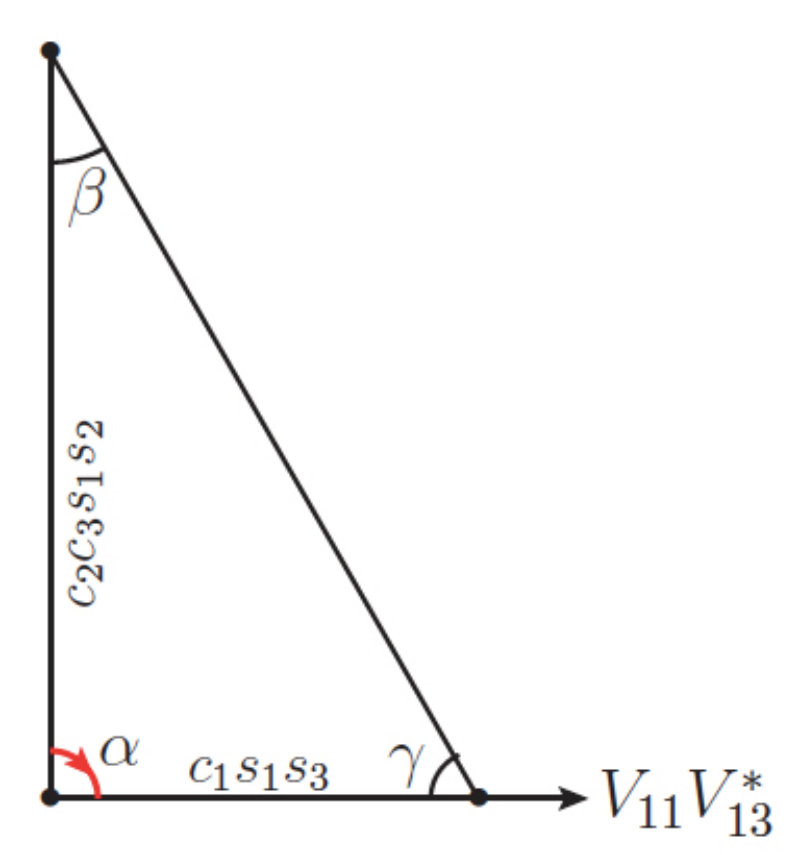 Figure 1
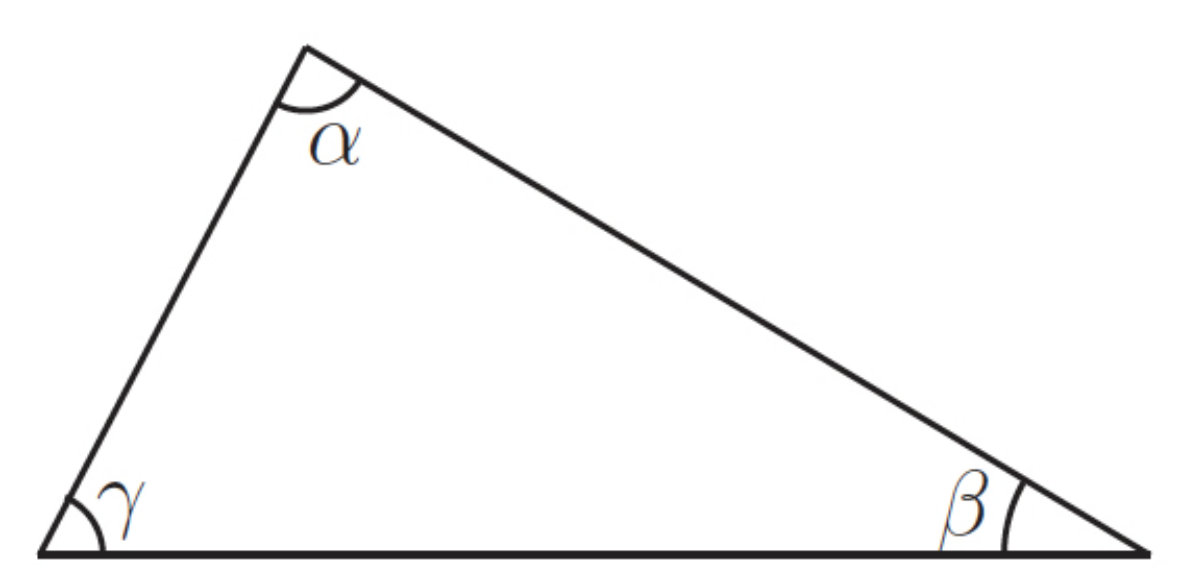 Figure 2
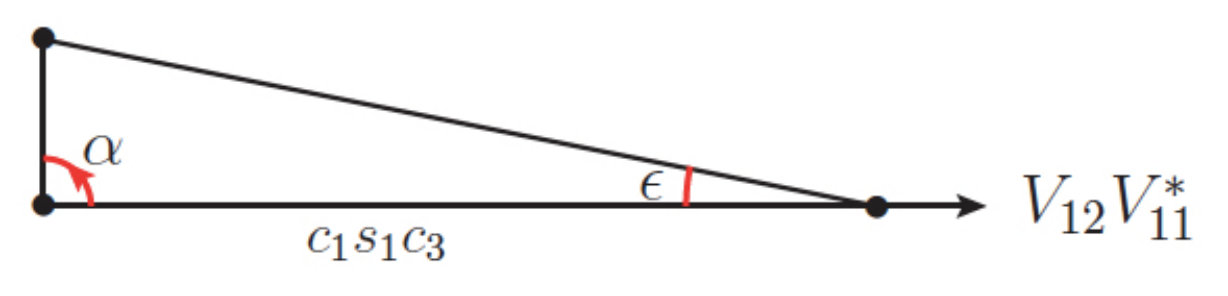 Figure 3
Peer Reviews
No public reviews on file for this paper yet. If you reviewed it on a platform where reviews are public (OpenReview, ICLR, NeurIPS, ICML), you can paste yours below so the community can read it here.
Videos
No videos yet. Explain this paper in a talk, walkthrough, or lecture? Add one.
Jarlskog determinant and data on flavor matrices
Jihn E. Kim, Se-Jin Kim, Soonkeon Nam, Myungbo Shim
Department of Physics, Kyung Hee University, 26 Gyungheedaero, Dongdaemun-Gu, Seoul 02447, Republic of Korea
Abstract
The essences of the weak violation, the quark and lepton Jarlskog invariants, are determined toward future model buildings beyond the Standard Model (SM). The equivalence of two calculations of Jarlskog invariants gives a bound on the phase in some parametrization. Satisfying the unitarity condition, we obtain the CKM and MNS matrices from the experimental data, and present the results in matrix forms. The Jarlskog determinant in the quark sector is found to be while in the leptonic sector is in the normal hierarchy parametrization.
CKM matrix, MNS matrix, Jarlskog determinant.
pacs:
11.25.Mj, 11.30.Er, 11.25.Wx, 12.60.Jv
I Introduction
Ever since the discovery of weak violation Cronin64 , its origin and cosmological implication have been a mystery. Ideas such as a tiny violation effect in the strong interaction sector or scalar mediated weak violation had not been considered any more as leading ones after Kobayashi and Maskawa(KM) found that three left-handed(L-handed) charged currents lead to weak violation effects KM73 . In early 1960’s, violation had been an interesting topic even to laymen Feynman65 . In late 1960’s, violation had been considered as an indispensable ingredient in baryogenesis, creating baryons out of a baryonless universe Sakharov67 .
violation can arise in three varieties, (1) the strong violation StrongCP , (2) the weak violation, and (3) violation by singlets beyond the Standard Model (BSM). The strong problem has led to the so-called axion physics which is one of the leading candidates for dark matter in the Universe KimRMP10 but short of explaining the current baryon asymmetry in the universe. Out of the remaining two, the leading candidate toward the baryon asymmetry is the violation by the BSM singlets. On the other hand, the weak violation hints a crucial information on a fundamental theory of elementary particles. The reason is the following. Because the strangeness changing neutral current effects are strongly suppressed GIM70 , the flavor changing effects are dominated by flavor changing charged currents. In the SM, the L-handed doublets encode this information. The observation of the weak violation Cronin64 requires three or more L-handed SM doublets. If we supersymmetrize the SM and require asymptotic freedom above the TeV scale, four or more L-handed doublets are forbidden. Thus, three L-handed doublets are unique. This observation leads to the following flavor puzzles.
The flavor puzzle in the SM constitutes in two parts: (i) “Why are there three chiral families?”, and (ii) “Why is the Cabibbo–Kobayashi–Maskawa(CKM) matrix Cabibbo63 ; KM73 almost diagonal while it is not so in the Pontecorvo–Maki–Nakagawa–Sakata(PMNS) matrix PMNS1 ; PMNS2 ; PMNS3 ?” Here, we suggest the usefulness of Jarlskog determinant Jarlskog85 answering the second flavor problem if three families are given. Because string theory has been believed to be sufficiently restrictive below the string scale, works on three families from string compactification exploded under the phrases ‘standard-like models in string compactification’ KimPLB19ga and ‘SUSY GUTs from string’ AEHN87 ; KimKyae07 ; Huh09 ; SU7 . All these models attempted to realize three chiral families. But, the more difficult problem is (ii) on the CKM matrix. Because of the reduction of the number of Yukawa couplings in GUTs compared to the standard-like models, an anti-SU(5) has been attempted for the flavor problem KimPRD18fl . For a successful phenomenology, not only the Yukawa couplings but also the discrete symmetry Leeetal11 and a mechanism for SUSY breaking at an intermediate scale KimPLB84 are needed. GUTs help analyzing these issues also KimPRDz4R ; KimPLB19ga .
It is known that using any CKM parametrization leads to the same physical quantities. In particular, the Jarlskog invariants of the quark sector and of the lepton sector must be the same in any parametrization. In this paper, in a global fitting using the 5 allowable real-number data points in the CKM and PMNS matrices, we will find that the quark sector is of order both in the Kim–Seo(KS) parametrization KimSeo11 and in the PDG book parametrization PDG18 . Thus, we draw the attention that the Jarlskog determinants and are useful in analyzing the actual data. In fact, using the allowable and , we obtain numerical CKM and PMNS matrices at our best capability, which can be easily applied in the future BSM model buildings. We apply our model-independent analysis to determine the elements of PMNS matrix. Consistency of in two parametrizations KimSeo11 ; PDG18 allows us to express the PMNS matrix without the information on the PMNS phase . We hope that our anayses on the CKM and PMNS matrices can be useful in the future model building.
In Sec. II, we define parametrizations used in the paper. In Sec. III, the essence of the Jarlskog determinant is presented. In Sec. IV, we analyse the PDG data presented in matrix forms with absolute values. For some specfific exclusive process may give some angle with a smaller error bar than presented in the matrix form, but such anayses must assume some value on the phase. We try to use the PDG matrix without phase information because we want to present the final result with the undetermined phase. Sec. V is a conclusion.
II A useful parametrization
Because the flavor changing neutral current effects are almost absent, the structure of three L-handed doublets of quarks and leptons are enough for the flavor study in the SM,
[TABLE]
In Eqs. (7) and (14), we choose bases such that the lower components are the mass eigenstates while the upper components are mixtures of the mass eigenstates.
We use the Kim–Seo(KS) form for the CKM matrix KimSeo11 ,
[TABLE]
where and are cosines and sines of three real angles and is a phase. The KS form is written such that the elements in the 1st row are all real, which makes it easy to draw the Jarlskog triangle with one side sitting on the horizontal axis. For the MNS matrix of Eq. (14), we use another four parameter set, (giving corresponding cosine and sine ) and .
The situation with the other forms of parametrization is the following. The original KM form KM73 gives a complex determinant. The Maiani form Maiani76 is not exactly unitary, and the Wolfenstein form is designed to be approximate Wolfenstein83 . A relevant one, being unitary with a real determinant, is the form used in the PDG book PDG18ckm which is the form originally used by Chau and Keung CK85 . The PDG form has four real elements, (11), (12), (23), and (33) elements.
In this paper, we determine explicitly in the KS and the PDG forms, using 5 real numbers: (11), (12), (13), (21), and with the KS form, and (11), (12), , (23), and (33) with the PDG form. For the CKM matrix, we determine the phase of in the KS form and in the PDG form. A choice of parametrization can be preferred depending on how easily such phases result in some ultra-violet completed theories. The leptonic phase has large error bars at present. For the readers’ convenience, we present the PDG form of the CKM matrix PDG18ckm here.
[TABLE]
III Usefulness of Jarlskog determinant
The violation effects for transitions involving , and were parametrized Jarlskog85 , here rearranging the original expression of Jarlskog85 , as . The violation is encoded in the imaginary part and in this case we define . If we take and as two sides of a triangle, they are elements of for and . So, three sides of a Jarlskog triangle corresponds to three values for , and these three complex numbers make up a triangle in the complex plane because due to the unitarity of . As we choose 2 and 1 from the column entries, there are three ways to make column-triangles. Similarly, one can make three row-triangles which we do not use in this paper. The physical magnitude of weak violation in the CKM matrix is given by the Jarlskog determinant which is twice of the area of the Jarlskog triangle shown in Fig. 1 where and are the angles determined from hadron phenomena PDG18ckm .
But a simple form, readable from the CKM matrix itself, is given by KimSeo12
[TABLE]
If the determinant is real as required, there is no imaginary part in
[TABLE]
*i.e. *the permutations of add up the imaginary parts to zero, implying any set of has the same magnitude. So, any set out of 6 can be used as , and there can be a consistency check on the determination of the CKM parameters by calculating from these 6 sets, i.e.
[TABLE]
As emphasized here, makes sense only if we use a unitary matrix . It is useful to check the six terms independently so that the unitarity condition is satisfied.
With the KS form, the Jarlskog triangle is shown in Fig. 2. Note that the horizontal axis is the number which is real and hence it is sitting on the -axis. Namely, in the KS form, one side of any Jarlskog triangle is sitting on the -axis. Out of three numbers from , if we take and using , with the phase is the angle at the origin. This invariant angle appears in any Jarlskog triangle. If we consider the Jarlskog triangle , we note and and we have a shape shown in Fig. 3. Since O, the small side has a length at most O(), which implies that two angles are close to 90o. Namely, from trigonometry, if we have two long sides of length and , the angle between them, , is given for by
[TABLE]
One among and must be , and cannot be since there is no angle close to 0 among angles of Fig. 1. The shape of this thin triangle is shown in Fig. 3, with an exaggerated .
Our form of the CKM and PMNS matrices are based on111The usual definition in Ceccucci et al. on the CKM matrix PDG18ckm is the same as ours but the definition on the PMNS matrix in Nakamura and Petcov for the PMNS matrix PetcovPDG18 is the opposite to ours.
[TABLE]
where and are diagonalizing unitary matrices of L-handed quark and lepton fields, i.e. and , respectively, for the following definition of mass terms defined on the weak eigenstates,
[TABLE]
Gauge interactions for the charge raising operators give the CKM and PMNS matrices of (21) and (22).
IV Data on flavor physics
Our final results will be presented in the CKM and PMNS matrix forms such that possible symmetries from these matrices can be looked for.
IV.1 CKM matrix
The CKM data in the PDG book was fitted to an approximate unitary matrix Wolfenstein83 , which is not adequate in calculating the Jarlskog determinant because an exact unitary matrix was not used. As we will see, is of order and the approximate form of Wolfenstein83 violates the unitarity condition at order . Since the data does not satisfy the exact unitarity condition, we process the data such that the median values of the processed data satisfy the exact unitarity condition. Let us try to include as many data points as possible. [If the processed data generates too large error bars, then we will conclude that the BSM contribution is significant.] To remove the uncertainty on the phase, we choose a point if the absolute value of the point does not have the phase dependence.
Let us express the median angles and the errors as
[TABLE]
We choose the following data entries for
[TABLE]
[TABLE]
from the PDG data given below PDG18ckm .
[TABLE]
After processing, we got the angles, firstly using row entries
[TABLE]
and second using column entries
[TABLE]
Averaging these, we obtained the following KS angles and ,
[TABLE]
Note that the error propagation during the procedure adds extra systematic errors in addition to the errors in PDG data. Then, the evaluated KS form of the CKM matrix determined from data is
[TABLE]
In the same way, we obtain the following from Eq. (27) and the PDG parametrization PDG18 ,
[TABLE]
from the row entries, and
[TABLE]
from the third column entries. Note that the third column has large error bars for the (23) and (33) elements regardless of the extra systematic error from the process. By averaging these, the following PDG angles and are obtained,
[TABLE]
Then, the evaluated KS form of the CKM matrix determined from data is
[TABLE]
From the invariance of Jarlskog determinant,
[TABLE]
leading to
[TABLE]
for , where the large error bar is primarily due to the large error of in Eq. (43).
Comparing with the value that the PDG book determined , and Eq. (35) with , we conclude that they are consistent. But, we emphasize that our method follows the unitary matrix in the whole analysis and should be followed in the future which is contrasted to the method in the PDG book using the approximate Wolfenstein parametrization Wolfenstein83 .
IV.2 Mass matrix of quarks
Let us diagonalize quarks. Then, the CKM matrix is . The mass matrix for quarks is
[TABLE]
Therefore, the mass matrix one can write the following, supported by the data, as
[TABLE]
Depending on the identification of the right-handed quark singlets matrix , we obtain the hierarchical terms in the mass matrix in Eq. (48) for which we may use some idea on discrete symmetries.
IV.3 Neutrino oscillation and MNS matrix
The PDG book gives the values in the PDG parametrization and we can convert to the values in the KS form in the following way,
[TABLE]
where
[TABLE]
Then, the real entries in the KS form are
[TABLE]
where are the real angles in the PDG parametrization.
Now, as in the CKM case let us use the –phase independent absolute values of data, the (11), (12), (13), (21), and (31) elements in the KS form.222Since there is an overall phase factor, we can work out with the absolute value of the (31) element. Since atmospheric neutrino data generically are difficult to analyze outside the experimental collaborations, the 2019 data on from NuFIT NuFIT18 gives the matrix elements333Since the data are given in terms of the angles, the unitarity conditions are automatically satisfied. excluding and including the Super-Kamiokande atmospheric (SK-atm) data.444A theoretical fit with a tribimaximal mixing is given in Valle18 . Therefore, we present for these two cases separately.
IV.3.1 Excluding the SK-atm data
Normal hierarchy
[TABLE]
The leptonic angles without SK-atm contribution and with normal ordered mass are obtained as
[TABLE]
In this case, we obtain from any one out of 6 possible products of the form given in Eq. (19),
[TABLE]
The PMNS matrix becomes
[TABLE]
Inverted hierarchy
[TABLE]
The leptonic angles without SK-atm contribution and with inversely ordered mass are obtained as
[TABLE]
In this case, we obtain from any one out of 6 possible products of the form given in Eq. (19),
[TABLE]
The MNS matrix becomes
[TABLE]
IV.3.2 Including SK-atm data
Normal hierarchy
[TABLE]
The leptonic angles with SK-atm contribution and normal ordered mass are obtained as
[TABLE]
In this case, we obtain from any one out of 6 possible products of the form given in Eq. (19),
[TABLE]
The MNS matrix becomes
[TABLE]
Inverted hierarchy
[TABLE]
The leptonic angles with SK-atm contribution and inversely ordered mass are obtained as
[TABLE]
In this case, we obtain from any one out of 6 possible products of the form given in Eq. (19),
[TABLE]
The MNS matrix becomes
[TABLE]
Equations (55) and (54) for the case without using the SK atmospheric data, which may be approximated to a tribimaximal mixing. Our error bounds of the resulting , Eq. (54), is roughly at a 1 from a model calculation of Ref. Ramond18 : their values are and the leptonic phase . This kind of comparison can be performed for Eqs. (59, 64, 69) also.
IV.4 Comparison of the CKM and PMNS phases
Let us discuss with the KS parametrizations of the CKM and MNS matrices and their determination given in Eqs. (36, 35) and (55, 54). We noted that . Reference NuFIT18 gives , leading to . For NH without KS, is given as 215o. The equivalence of in two parametrizations give, using the NH without the SK data, Eq. (54), and the central values
[TABLE]
Obviously, .
As in Eq. (48) in the quark sector, we may use some idea on discrete symmetries on the mass matrix of neutrinos but here the discussion is more involved because the neutrino masses arise from dimension 5 operators.
V Conclusion
We attempted to present the approximate CKM and PMNS matrices in the form of matrices, Eqs. (36) and (55,59,64,69), by determining three real angles with 5 data inputs. In the final matrices, we included the least known phases and as free parameters. The Jarlskog invariants in the quark and lepton sectors are determined as and for NH, respectively, which are the essential information for future BSM model buildings from string compactification.
Acknowledgements.
J.E.K. thanks S. K. Kang, S. Khalil, J. W. F. Valle, and U. Yang for the helpful discussions. This work is supported in part by the National Research Foundation (NRF) grant NRF-2018R1A2A3074631, and in addition M.S. is supported in part by the Hyundai Motor Chung Mong-Koo Foundation.
The reference list from the paper itself. Each links out to its DOI / PubMed record.
- 1(1)
- 2(2) J. H. Christenson, J. W. Cronin, V. L. Fitch, and R. Turlay, Evidence for the 2 π 2 𝜋 2\pi decay of the K 2 0 superscript subscript 𝐾 2 0 K_{2}^{0} meson , Phys. Rev. Lett. 13 (1964) 138 [doi:10.1103/Phys Rev Lett.13.138].
- 3(3) M. Kobayashi and T. Maskawa, CP violation in the renormalizable theory of weak interaction , Prog. Theor. Phys. 49 (1973) 652 [doi: 10.1143/PTP.49.652].
- 4(4) R. P. Feynman, R. B. Leighton, and M. Sands, The Feynman Lectures on Physics (California Institute of Technology, Pasadena, California, 1963) Vol. I, Chap. 52.
- 5(5) A. D. Sakharov, Violation of CP Invariance, C asymmetry, and baryon asymmetry of the universe , Pisma Zh. Eksp. Teor. Fiz. 5 (1967) 32 [JETP Lett. 5 (1967) 24] [doi:10.1070/PU 1991 v 034n 05ABEH 002497].
- 6(6) C. G. Callan, R. F. Dashen, and D. J. Gross, The structure of the gauge theory vacuum , Phys. Lett. B 63 (1976) 334 [doi:10.1016/0370-2693(76)90277-X]; R. Jackiw and C. Rebbi, Vacuum periodicity in a Yang-Mills quantum theory , Phys. Rev. Lett. 37 (1976) 172 [doi:10.1103/Phys Rev Lett.37.172].
- 7(7) See, for example, J. E. Kim and G. Carosi, Axions and the strong CP problem , Rev. Mod. Phys. 82 (2010) 557 [ar Xiv:0807.3125[hep-ph]].
- 8(8) S. L. Glashow, J. Iliopoulos, and L. Maiani, Weak interactions with lepton–hadron symmetry , Phys. Rev. D 2 (1970) 1285 [doi:10.1103/Phys Rev D.2.1285].