Observing sub-Poissonian statistics of twisted single photons using oscilloscope
Nijil Lal, Biveen Shajilal, Ali Anwar, Chithrabhanu Perumangatt, R., P. Singh

TL;DR
This paper demonstrates the observation of sub-Poissonian photon statistics in twisted single photons with orbital angular momentum using simple detection equipment, advancing the understanding of quantum light sources.
Contribution
It introduces a method to observe sub-Poissonian statistics of twisted photons using only photo detectors and an oscilloscope, simplifying quantum optics measurements.
Findings
Sub-Poissonian statistics observed in twisted single photons.
Method uses standard photo detectors and oscilloscope, no specialized photon counters.
Supports development of quantum information technologies with structured light.
Abstract
Heralded single photon sources (HSPS) from spontaneous parametric down-conversion are widely used as single photon sources. We study the photon number statistics of an HSPS carrying orbital angular momentum in our laboratory and observe the sub-Poissonian statistics using only photo detectors and an oscilloscope.
Click any figure to enlarge with its caption.
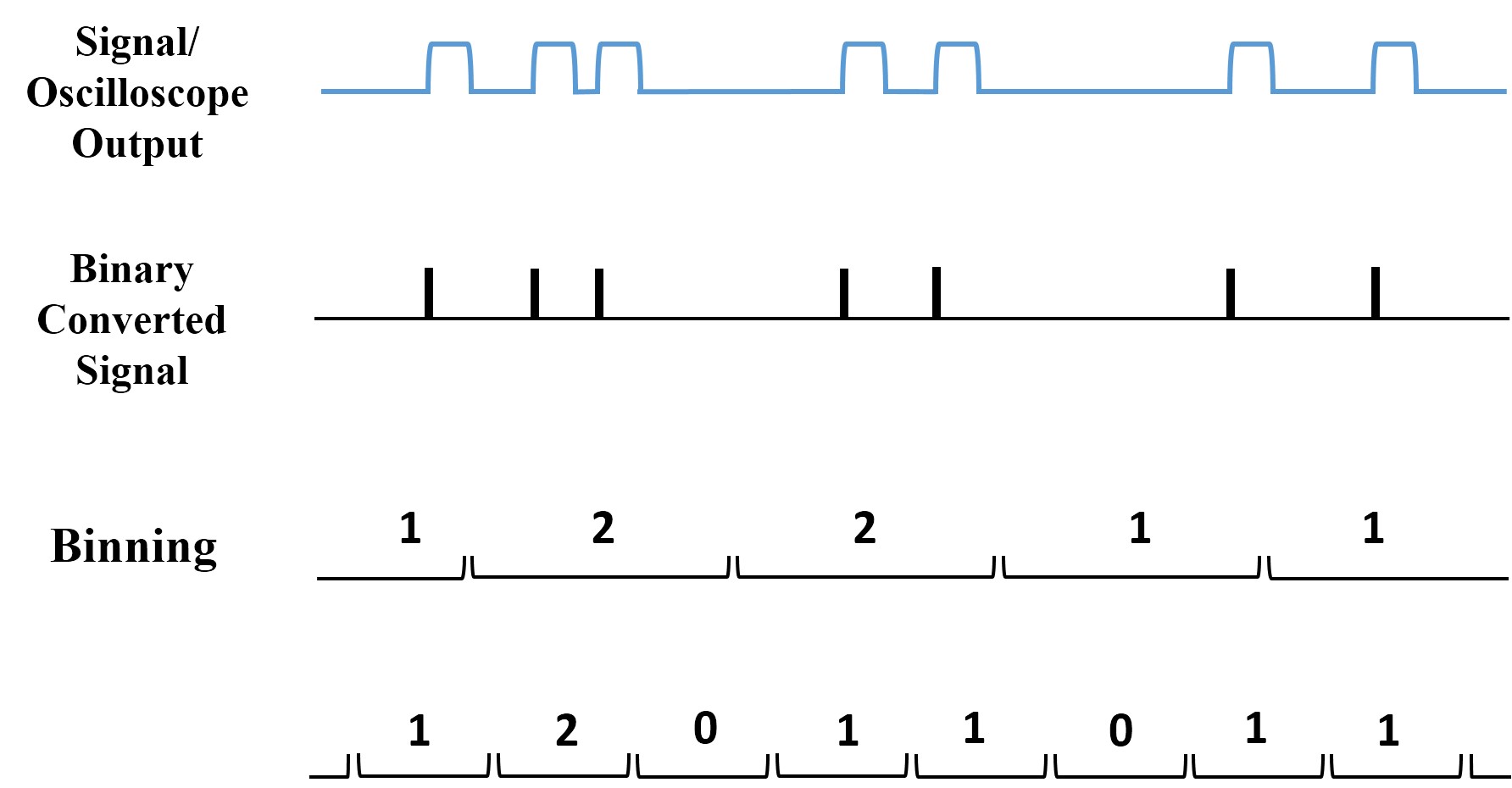 Figure 1
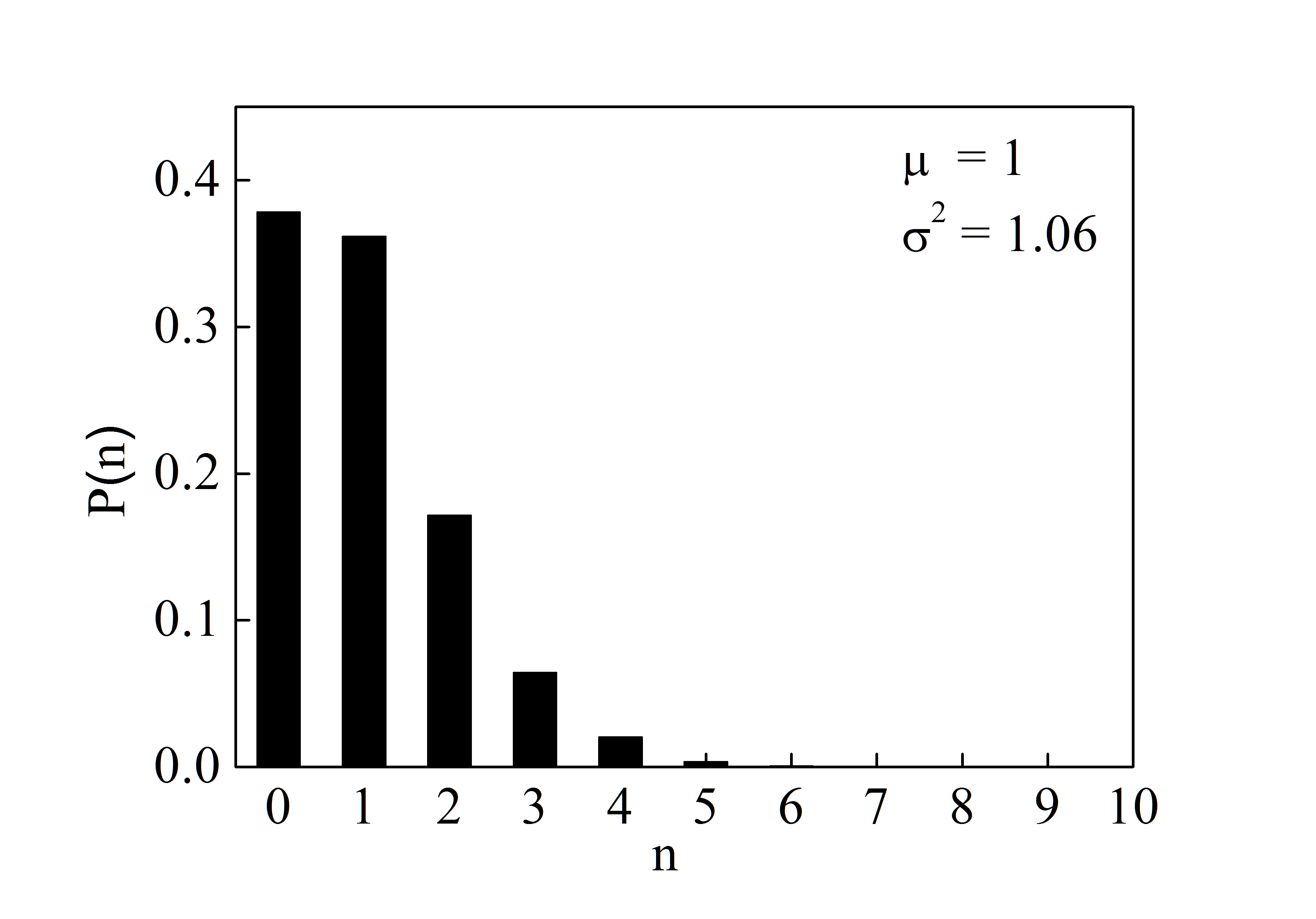 Figure 2
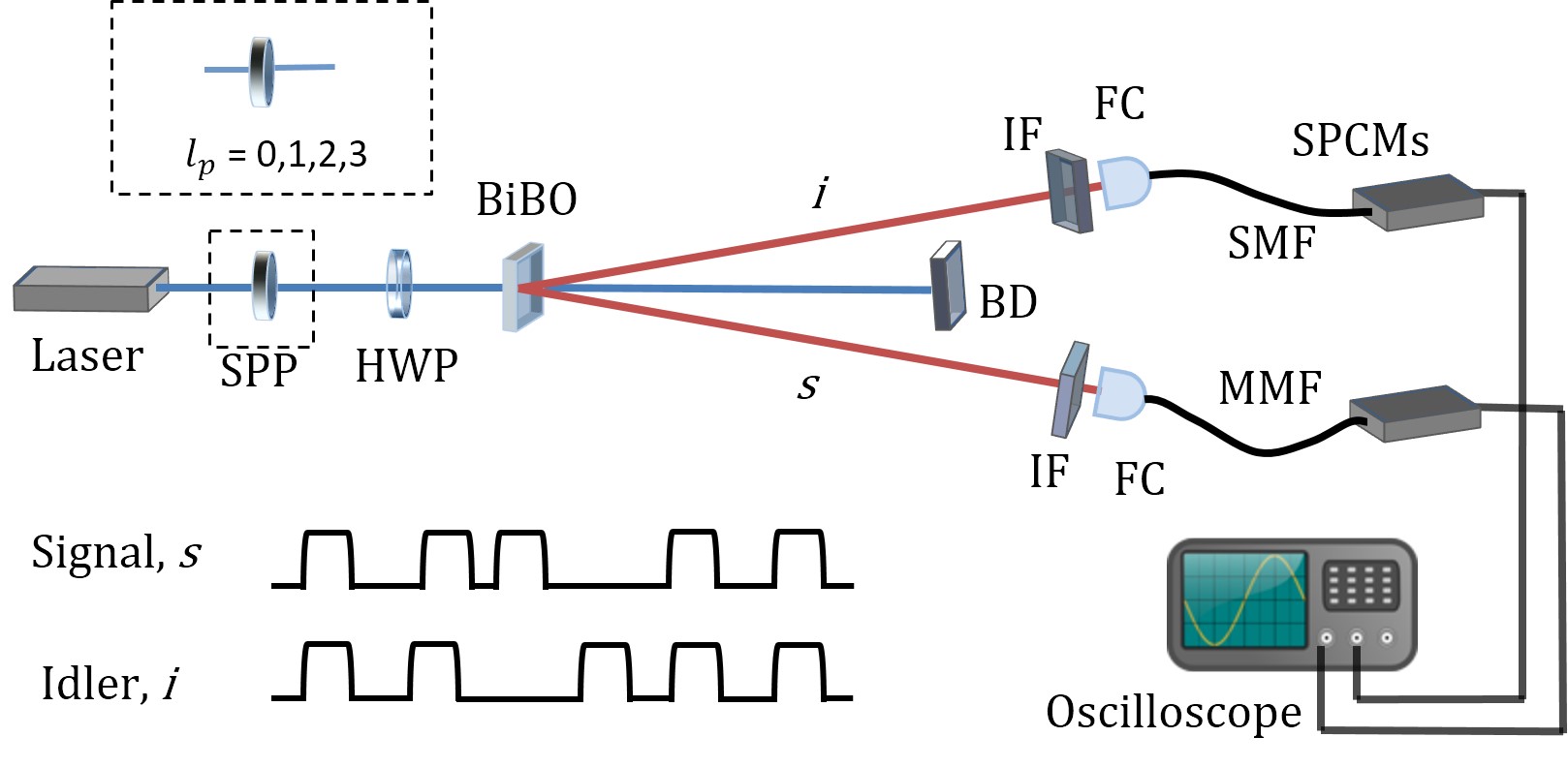 Figure 3
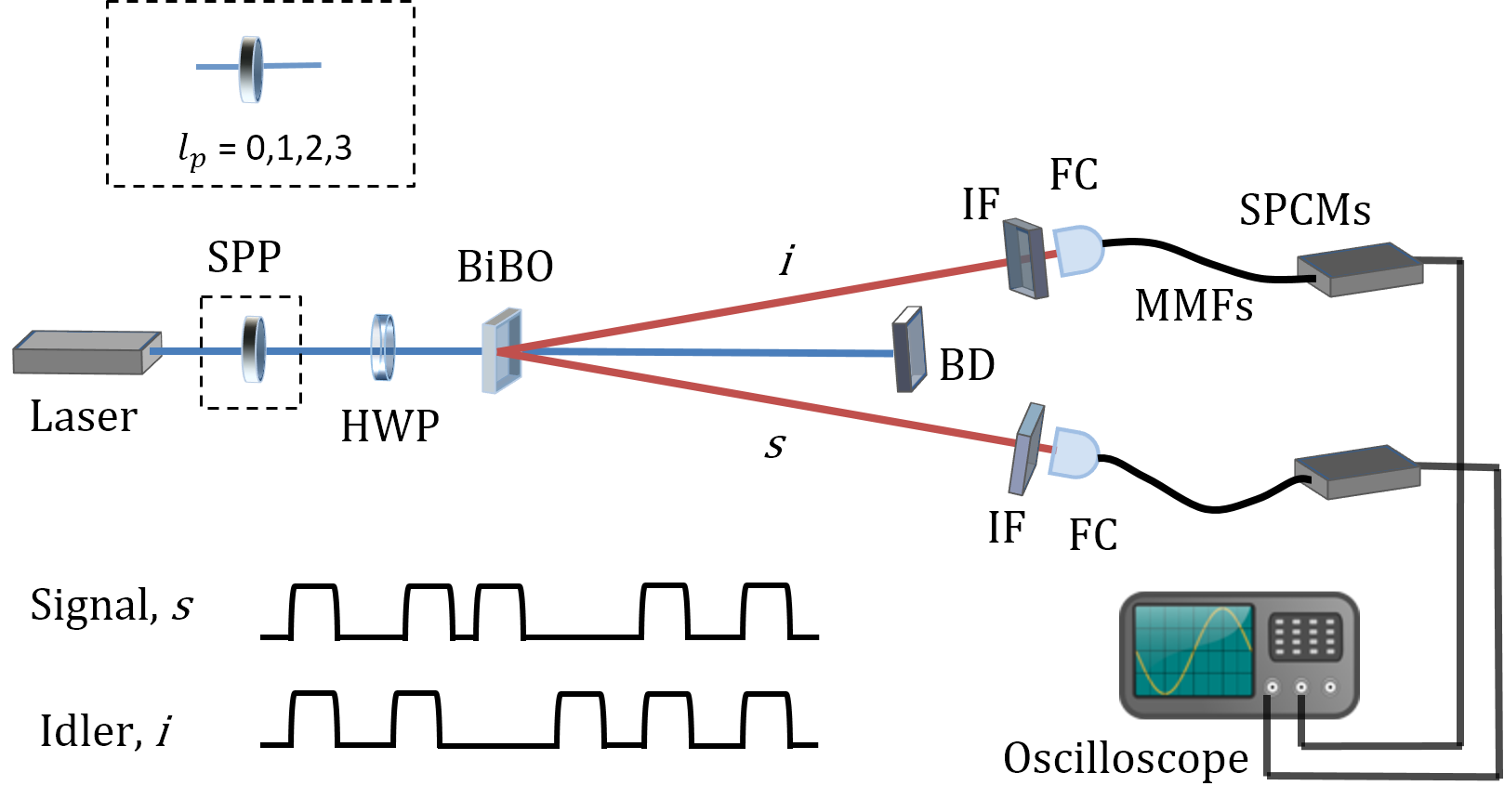 Figure 4
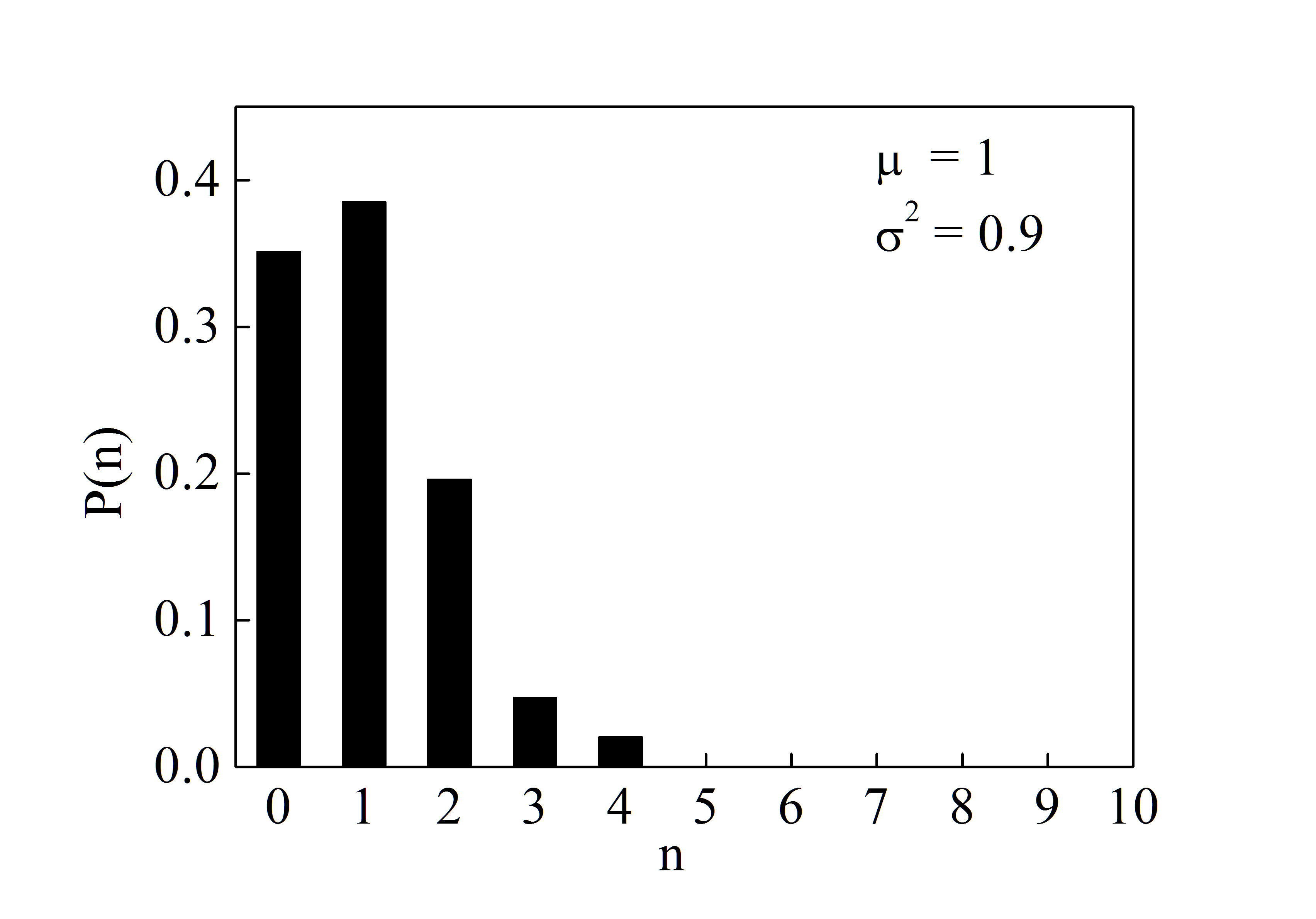 Figure 5
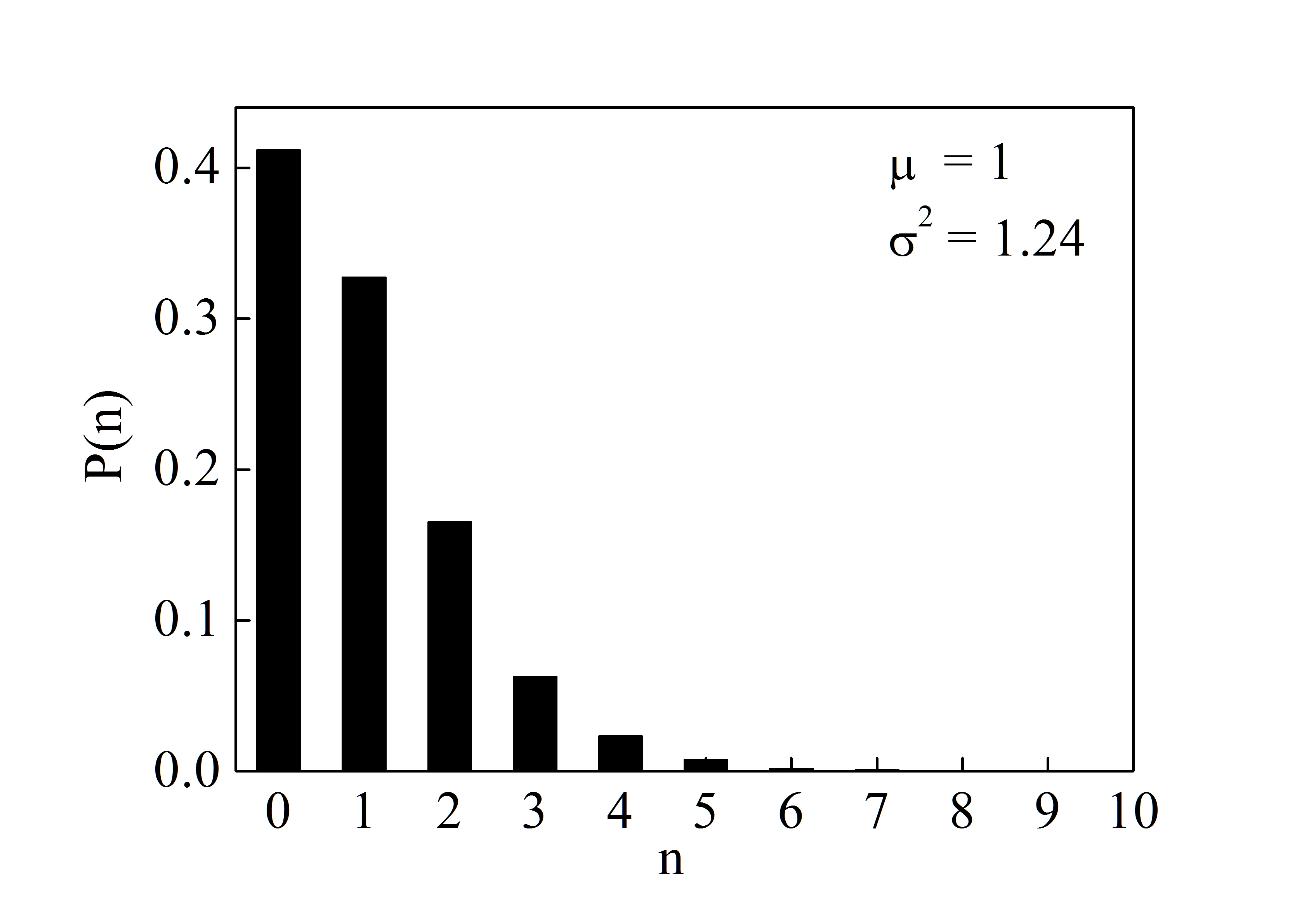 Figure 6
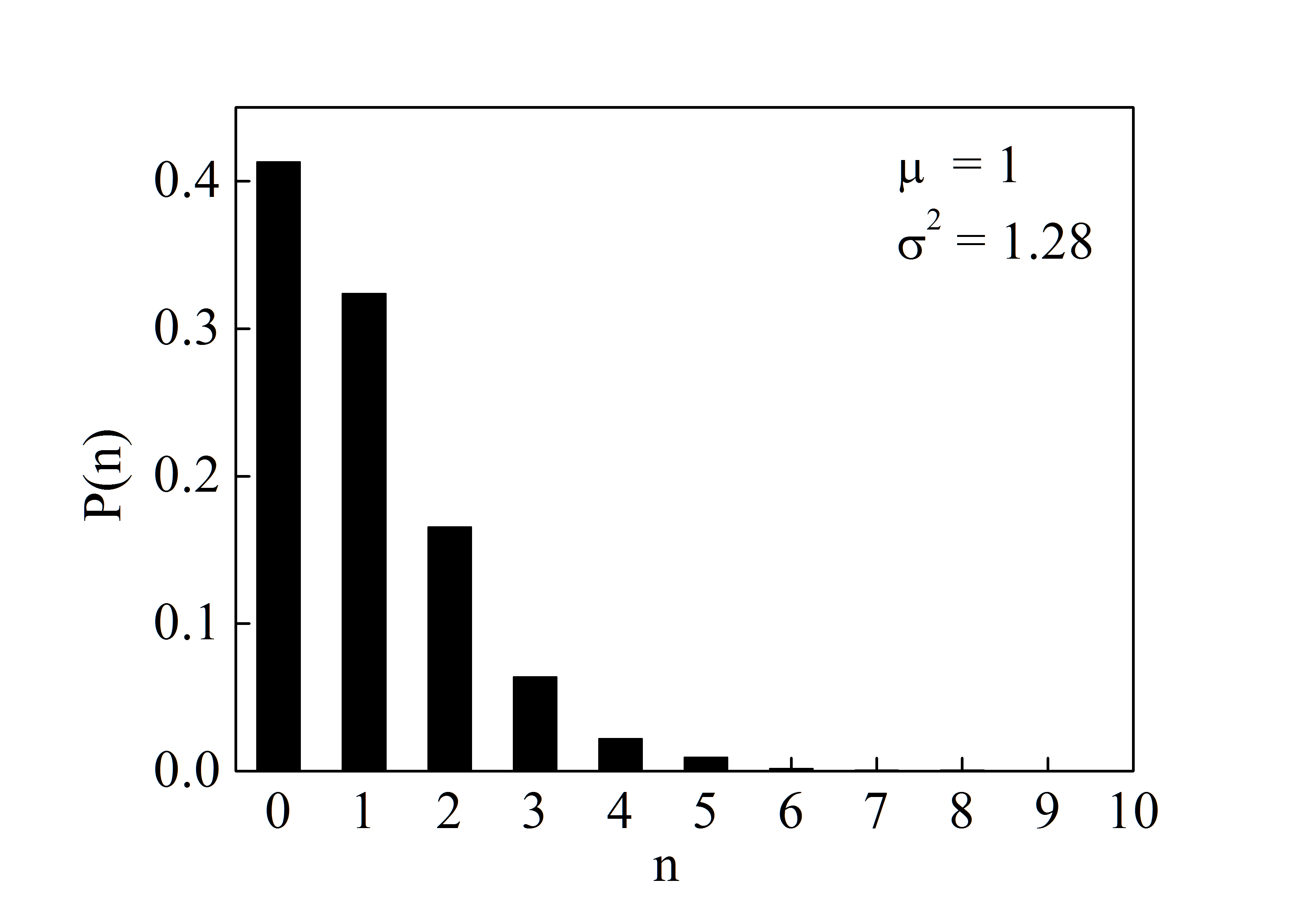 Figure 7
| Twisted photon OAM, l | Q-parameter |
|---|---|
Peer Reviews
No public reviews on file for this paper yet. If you reviewed it on a platform where reviews are public (OpenReview, ICLR, NeurIPS, ICML), you can paste yours below so the community can read it here.
Videos
No videos yet. Explain this paper in a talk, walkthrough, or lecture? Add one.
Present address: ]Centre for Quantum Computation and Communication Technology, Research School of Physics and Engineering, The Australian National University, Canberra, Australian Capital Territory 2601, Australia
Present address: ]Centre for Quantum Technologies, National University of Singapore, 3 Science Drive 2, S117543, Singapore
Present address: ]Centre for Quantum Technologies, National University of Singapore, 3 Science Drive 2, S117543, Singapore
Observing sub-Poissonian statistics of twisted single photons using oscilloscope
Nijil Lal
Physical Research Laboratory, Ahmedabad 380009, India
Indian Institute of Technology, Gandhinagar 382355, India
Biveen Shajilal
[
Cochin University of Science and Technology, Kochi 682022, India
Ali Anwar
[
Physical Research Laboratory, Ahmedabad 380009, India
Chithrabhanu Perumangatt
[
Physical Research Laboratory, Ahmedabad 380009, India
R. P. Singh
Physical Research Laboratory, Ahmedabad 380009, India
Abstract
Heralded single photon sources (HSPS) from spontaneous parametric down-conversion are widely used as single photon sources. We study the photon number statistics of an HSPS carrying orbital angular momentum in our laboratory and observe the sub-Poissonian statistics using only photo detectors and an oscilloscope.
††preprint: AIP/123-QED
I Introduction
Photon is a prominent qubit candidate in quantum information processing (QIP). Most of these applications require a single photon source (SPS) which will provide an “on-demand", deterministic supply of photons. Such ideal SPSs can be realized in crystal color centers Gaebel et al. (2004), quantum dots Shields (2010) single atoms Hennrich et al. (2004), single ions Maurer et al. (2004), and single molecules Steiner et al. (2007). Photon being an indivisible quantum of energy and the consequent impossibility of copying associated information from an unknown arbitrary state makes single photon sources an ideal choice for quantum information processing, secure communication, and metrology. Spontaneous parametric down-conversion (SPDC) is one of the most widely used processes to generate single photon sources as it provides a robust and bright source at room temperature Fasel et al. (2004). In this process, a pump photon is down-converted in frequency in a nonlinear crystal to a pair of photons, conventionally called as signal (s) and idler (i). The detection of one photon from the pair heralds the presence of another, and this conditioned detection serves as a technique for generating single photon sources. SPDC is also important in QIP as a bright source of entangled photon pairs Jabir and Samanta (2017) and thus finds applications in quantum teleportation Boschi et al. (1998), quantum cryptography Gisin et al. (2002), and quantum dense coding Mattle et al. (1996).
A single photon source shows non-classical properties such as sub-Poissonian photon number distribution and anti-bunching. The inherent thermal nature of the photon distribution in the individual arms (i.e., signal or idler) evokes the possibility of occurrences of multiple photons and hence would qualify the source as less quantum than it is expected to be. The occurrence of multiple photon pairs and consequent photon bunching threatens the security in cryptography related applications. Thus, it is important to study and quantify the non-classicality of the single photon sources being used. A general classification puts the sources into three categories, super-Poissonian, Poissonian and sub-Poissonian according to the photon number distribution. Classical sources, like thermal and coherent radiation, show super-Poissonian and Poissonian statistics respectively while a non-classical source, such as a single photon source, shows sub-Poissonian distribution. Violations of bounds defined for the number statistics of classical sources imply the non-classical behavior of single photon sources Short and Mandel (1983); Tapster, Rarity, and Satchell (1988); Laurat et al. (2003); Peřina, Haderka, and Michálek (2013). Photon antibunching is another manifestation of the non-classical behavior of the source and can be observed through the measurement of the degree of second-order coherence, . Single photon sources show antibunching and hence falls to zero. Though antibunching and sub-Poissonian statistics are completely non-classical effects and tend to occur together in many systems, they are distinct effects and need not necessarily be associated with one another Singh (1983); Zou and Mandel (1990). For a heralded SPS, antibunching can be observed using a heralded Hanbury Brown - Twiss (HBT) type experiment Grangier, Roger, and Aspect (1986); U’Ren et al. (2005). Twisted single photons carrying orbital angular momentum (OAM) is gaining interest in quantum information processing as they provide infinite number of orthogonal states to encode information Mirhosseini et al. (2015); Barreiro, Wei, and Kwiat (2008). The statistical second order correlation of classical beams Kumar, Banerji, and Singh (2010, 2012) as well as photons Lal et al. (2019) carrying OAM has already been studied. In the present work, we verify the sub-Poissonian nature of heralded single photons generated in parametric down-conversion having Gaussian as well as higher order OAM using a simple setup consisting of photodetectors and an oscilloscope.
II Theory
One can define an ideal single photon source as a Fock state for which the number statistics gives mean, and variance . Treatment of the electromagnetic field as a quantum harmonic oscillator allows us to define quadrature field operators, and , which can be shown to follow the uncertainty relation Gerry, Knight, and Knight (2005), . The minimum uncertainty state, with , is the coherent state,
[TABLE]
which defines a Poissonian distribution of photon number Glauber (1963), , with . Squeezing these states in terms of number or phase is achieved when the respective variance is less than that corresponding to the coherent state. The photon number variance can be written as,
[TABLE]
where and are the annihilation and creation operators. Based on the variance, the Mandel Q-parameter Mandel and Wolf (1995) is defined by,
[TABLE]
It classifies light sources on the basis of photon number fluctuations. for coherent and all other classical sources of light while sub-Poissonian light is identified with Mandel and Wolf (1995); Mandel (1979).
III Experiment
The experimental setup used for building the statistics of the heralded single photon source is given in Fig.1 Lal et al. (2016). A 405 nm diode laser (Toptica iBeam Smart, 5 mW) is used as a pump to generate photon pairs from a Type-I BiBO crystal (Castech, 5 mm thickness). The polarization of the pump is oriented along the crystal axis using a half-wave plate. The output pairs are spectrally filtered using interference filters of passband nm to rule out the non-degenerate pairs. Two diametrically opposite regions are selected from the cone of correlated pairs of photons generated in the Type-I SPDC. These individual arms (signal and idler) are then collimated and coupled to a multimode fiber (ThorLabs, M43L02) through a fibre coupler (CFC-5X-B).
The individual signal and idler photons are detected using single photon detectors. We have used two single photon counting modules (SPCM, Excelitas SPCM-AQRH-16-FC) placed in both signal and idler arm for the detection of the photon pairs. Photomultiplier tubes (PMTs), which will be more common in laboratories than an SPCM also can be used for the detection. The coincidences are maximized by optimizing the coupling to the fiber. The SPCM (or PMT) generates a TTL pulse in response to each photon incidence. However, the total number of photon incidences that can be recorded by a detector is limited by the detector dead time (22 ns for the SPCM used).
The output waveform from each arm of the SPDC is recorded using a digital oscilloscope (Infiniium 90000A series) for an exposure time of 20.5 ms. 10 iterations of such time series have been recorded to calculate the -parameter. Each iteration records a time series of 20.5 Mpts and a resolution of 1 ns. Oscilloscopes with lower specifications can also be used but with compromising the length of the time series to be captured and time resolution. The output from the detectors, as observed through the oscilloscope, consists of TTL pulses corresponding to photon incidences. Since the photon counters are not photon number-resolving, the output pulses can correspond to the incidence of one or more photons. The single photon detectors/PMTs produce an electrical signal in response to the absorption of light energy. It is important to choose intensity of the source and measurement window such that the detector measures one photon on an average for each incidence of the signal. The pump is kept in the low power regime (pump power = 1 mW) in order to avoid such scenarios due to the possible multiple photon generations Razavi et al. (2009).
In order to build the statistics, the detection events at the photo diodes are counted within a defined time interval (binning window) and the distribution of the number of such occurrences is obtained. This is done by converting the analog output from the oscilloscope into a series of 1s and 0s which corresponds to the presence or absence of a detection. We built a MATLAB code which identifies an event pulse in the oscilloscope output time series and labels its onset as 1 and the rest of the series as 0. This generates a binary time series of events in terms of the occurrences or non-occurrences of photon detection (Fig.2). A probability distribution of events is built from this generated time series.
The time series of binaries generated for both the signal and idler are then sliced into smaller binning windows in such a way that statistically one detection falls in a bin. The number distribution is developed for these individual arms. A new time series corresponding to the coincidences of photon pairs is developed from the time series corresponding to signal and idler, in a way that a count is observed in one arm (within the coincidence window, = 1 ns) given a detection in the other arm. The number distribution of this new time series corresponds to the statistics of the heralded single photon source from SPDC. The matlab code to build the statistics from the recorded time series is shared in GitHub repository for open accesssub .
Twisted single photons of different orders are obtained in SPDC by pumping with optical vortices of different orders and projecting the idler photon in a single mode fiber and hence selecting only those with OAM, =0. Due to OAM conservation in SPDC, this will result in only those signal photons which have the same OAM as the pump contributing to the coincidence counts Mair et al. (2001). Hence, a photon number distribution obtained for the coincidence events will correspond to the number statistics of single photons carrying OAM.
IV Results and Discussion
Initially, to see the photon number distribution for a classical source, we select a coherent laser source (Thorlabs 2mW HeNe, 632.8 nm). The intensity is attenuated such that the detected photo-counts are below the saturation level of the detectors. The time series of events recorded using an oscilloscope was converted into a binary series of photon incidence events.
A counting histogram that gives the probability of detection of n events within the corressponding time bin is generated for this time series that shows Poissonian distribution (Fig.3). For a time bin width such that an average number of 1 photon falls within the bin (), the variance () is determined to be . The -parameter is which is close to zero as expected for a Poissonian distribution of photon numbers.
In the same way, photon number histograms are generated for the individual arms of the down-converted pairs of photons (Fig.4). For an average photon number , the variances were and respectively for the signal and idler arms which are significantly apart from that corresponds to a Poissonian distribution. The -parameter is and respectively. This super-Poissonian behaviour is expected since the individual signal and idler photons from the down-conversion process are in a thermal stateBlauensteiner et al. (2009); Guo et al. (2017); Avenhaus et al. (2008).
For the heralded single photon source, the number statistics is built from the binary series of coincidences generated by post-processing the recorded events of individual signal and idler photons (Fig.5). For , the variance () for this source is calculated to be 0.9. The Mandel Q-parameter comes out to be . The negative value of Q is indication of the sub-Poissonian behavior of the source. A set of repeated measurements reveals the average value, = -0.099 0.004 for a heralded SPS generated using a Gaussian pump profile.
Q-parameter for the heralded single photons having different OAM, obtained by pumping with an optical vortex and projecting the idler arm to = 0, are given in Table 1. Time series of photon detection events of length 20.5 ms are recorded using the oscilloscope. 10 such iterations are recorded to determine the -parameter within statistical errors. For heralded single photons, it is found to violate the classical bounds of number statistics (i.e., ) by tens of standard deviations for photons carrying different OAM. The -parameter is observed to decrease with increasing order of twisted photon OAM. This can be attributed to the reduction in the number of coincidence events with higher order pump as the singles in the idler arm (with = 0) decreases with pump order Banerji et al. (2019).
V Conclusions
Conventional quantum optics experiments to determine the non-classical statistical behavior of single photon sources involve time-to-digital converters along with associated post-processing. Here, we introduce a simple technique to build the number statistics of heralded single photon source using a digital oscilloscope. The signal and idler in the SPDC output are detected and registered in the oscilloscope. From the recorded data, a time series corresponding to the coincident detections and the corresponding number distribution are obtained. In this way, one can observe the sub-Possonian behavior of the photon number statistics of the source using a set of detectors and an oscilloscope available in almost all the optics laboratories. We also show that in this way we can determine the number statistics of heralded single photons carrying OAM and thus can characterize them for further applications involving OAM of single photons.
The reference list from the paper itself. Each links out to its DOI / PubMed record.
- 1Gaebel et al. (2004) T. Gaebel, I. Popa, A. Gruber, M. Domhan, F. Jelezko, and J. Wrachtrup, “Stable single-photon source in the near infrared,” New Journal of Physics 6 , 98 (2004).
- 2Shields (2010) A. J. Shields, “Semiconductor quantum light sources,” Nanoscience And Technology: A Collection of Reviews from Nature Journals , , 221–229 (2010).
- 3Hennrich et al. (2004) M. Hennrich, T. Legero, A. Kuhn, and G. Rempe, “Photon statistics of a non-stationary periodically driven single-photon source,” New Journal of Physics 6 , 86 (2004).
- 4Maurer et al. (2004) C. Maurer, C. Becher, C. Russo, J. Eschner, and R. Blatt, “A single-photon source based on a single ca+ ion,” New journal of physics 6 , 94 (2004).
- 5Steiner et al. (2007) M. Steiner, A. Hartschuh, R. Korlacki, and A. J. Meixner, “Highly efficient, tunable single photon source based on single molecules,” Applied physics letters 90 , 183122 (2007).
- 6Fasel et al. (2004) S. Fasel, O. Alibart, S. Tanzilli, P. Baldi, A. Beveratos, N. Gisin, and H. Zbinden, “High-quality asynchronous heralded single-photon source at telecom wavelength,” New Journal of Physics 6 , 163 (2004).
- 7Jabir and Samanta (2017) M. V. Jabir and G. K. Samanta, “Robust, high brightness, degenerate entangled photon source at room temperature,” Scientific Reports 7 , 12613 (2017).
- 8Boschi et al. (1998) D. Boschi, S. Branca, F. De Martini, L. Hardy, and S. Popescu, “Experimental realization of teleporting an unknown pure quantum state via dual classical and einstein-podolsky-rosen channels,” Physical Review Letters 80 , 1121 (1998).