Young magnetars with fracturing crusts as fast radio burst repeaters
Arthur G. Suvorov, Kostas D. Kokkotas

TL;DR
This paper proposes that young magnetars with evolving, highly multipolar magnetic fields can produce crustal fractures that explain the repeating fast radio bursts observed, linking magnetic field dynamics to burst energetics.
Contribution
It introduces a model connecting crustal magnetic field evolution in young magnetars to the generation of repeated FRBs through crustal fractures.
Findings
Crustal magnetic stress can cause localized fractures in young magnetars.
Fracture energies are consistent with observed FRB burst magnitudes.
Hall drift-driven magnetic reconfiguration can produce sporadic crustal failures.
Abstract
Fast radio bursts are millisecond-duration radio pulses of extragalactic origin. A recent statistical analysis has found that the burst energetics of the repeating source FRB 121102 follow a power-law, with an exponent that is curiously consistent with the Gutenberg-Richter law for earthquakes. This hints that repeat-bursters may be compact objects undergoing violent tectonic activity. For young magnetars, possessing crustal magnetic fields which are both strong ( G) and highly multipolar, Hall drift can instigate significant field rearrangements even on century long timescales. This reconfiguration generates zones of magnetic stress throughout the outer layers of the star, potentially strong enough to facilitate frequent crustal failures. In this paper, assuming a quake scenario, we show how the crustal field evolution, which determines the resulting…
Click any figure to enlarge with its caption.
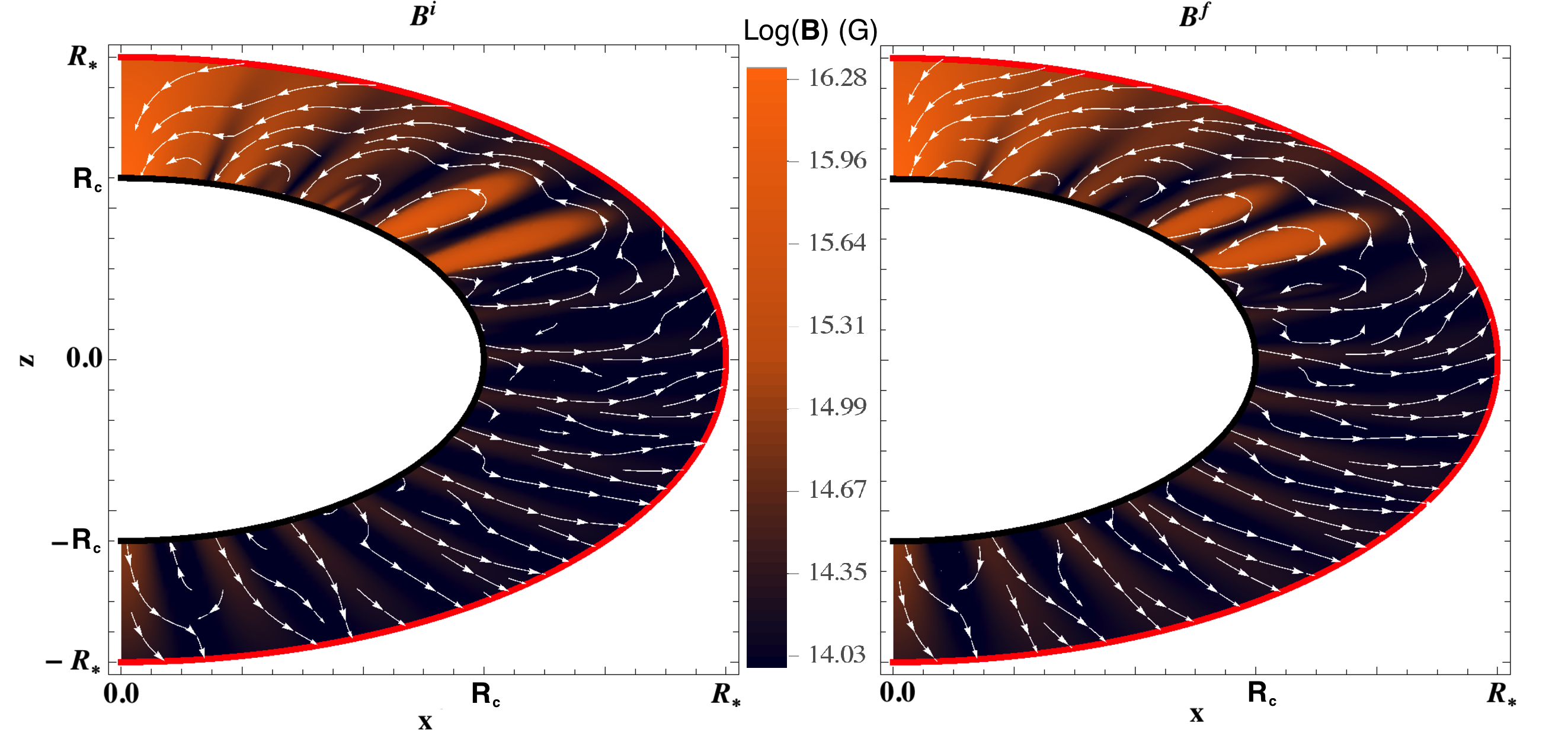 Figure 1
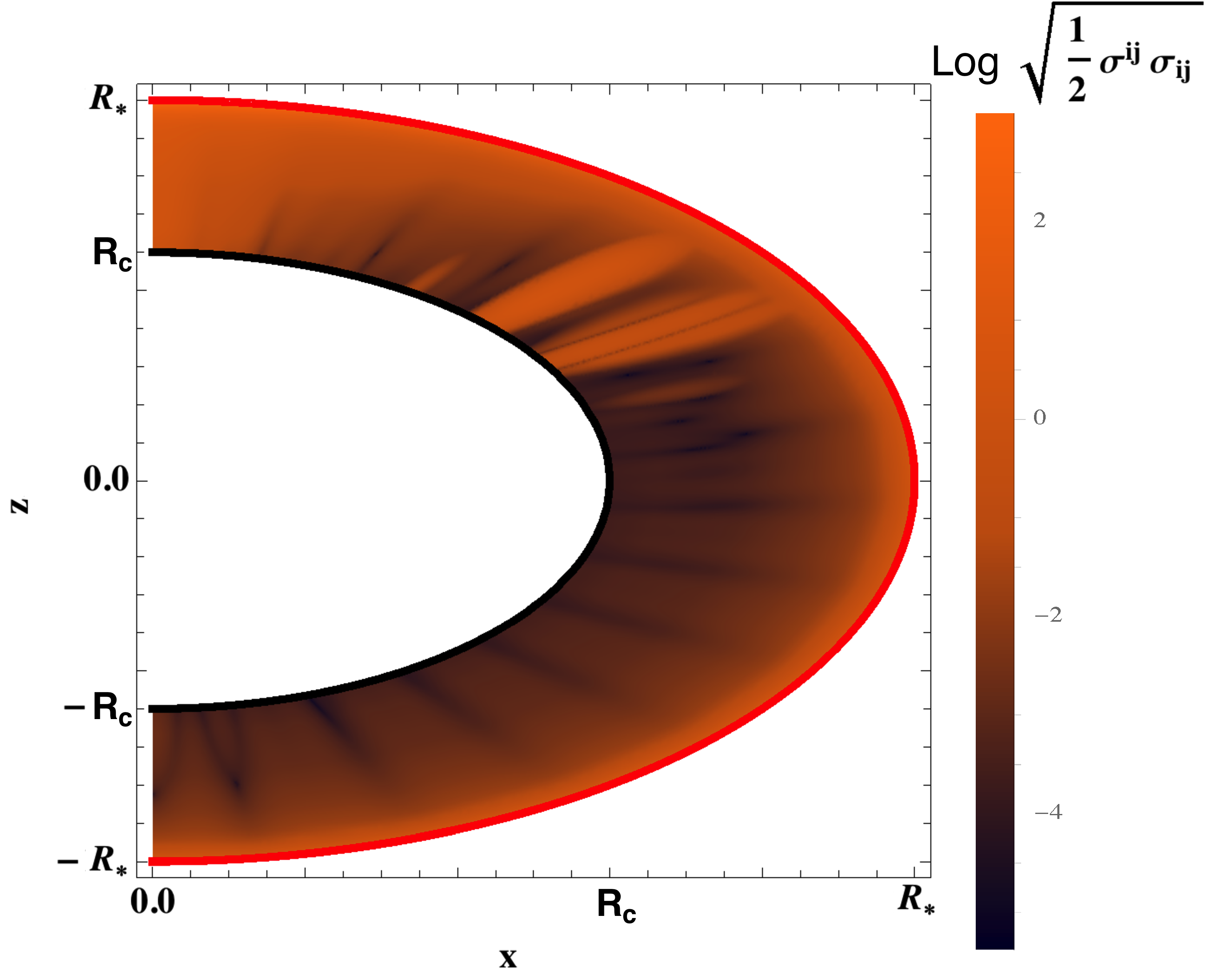 Figure 2
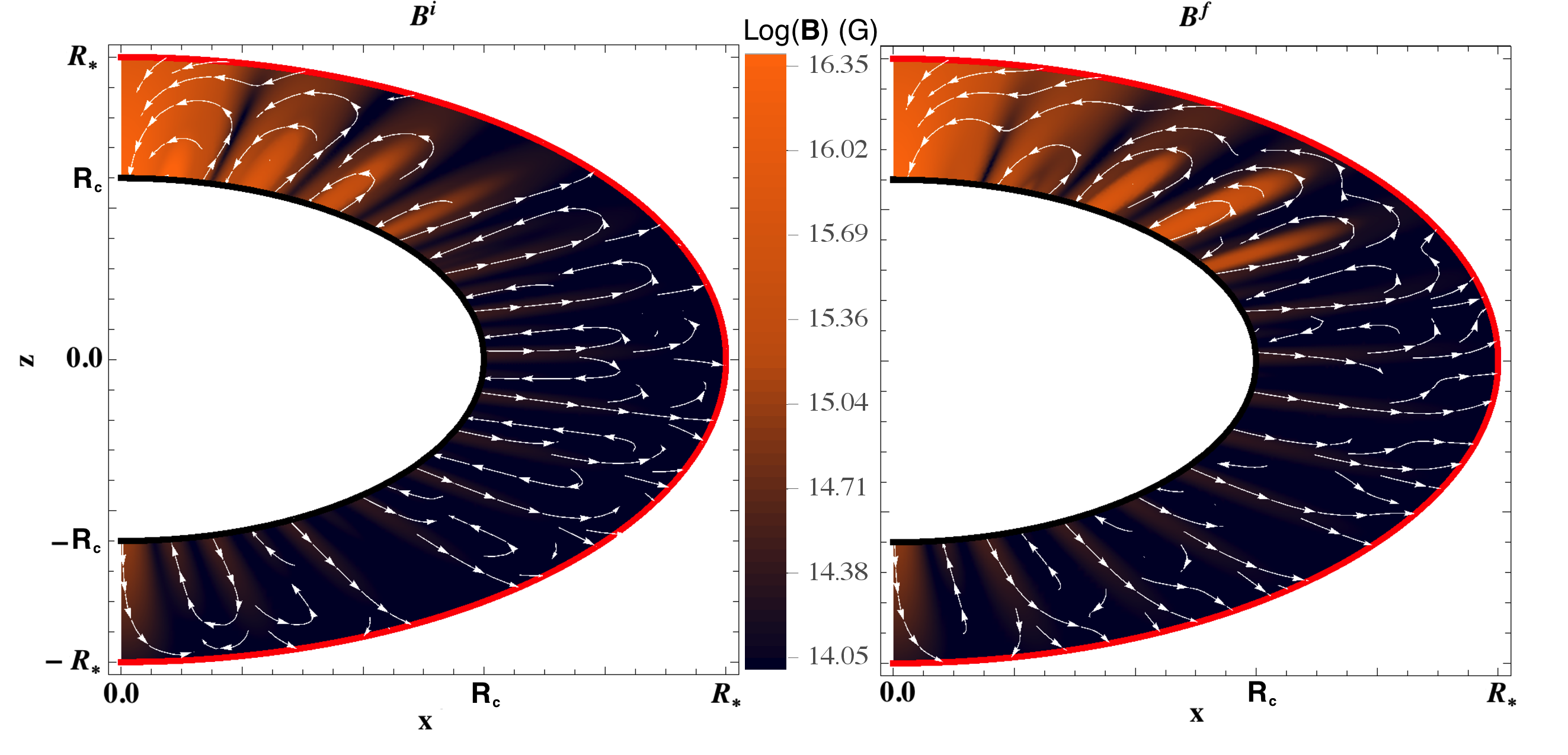 Figure 3
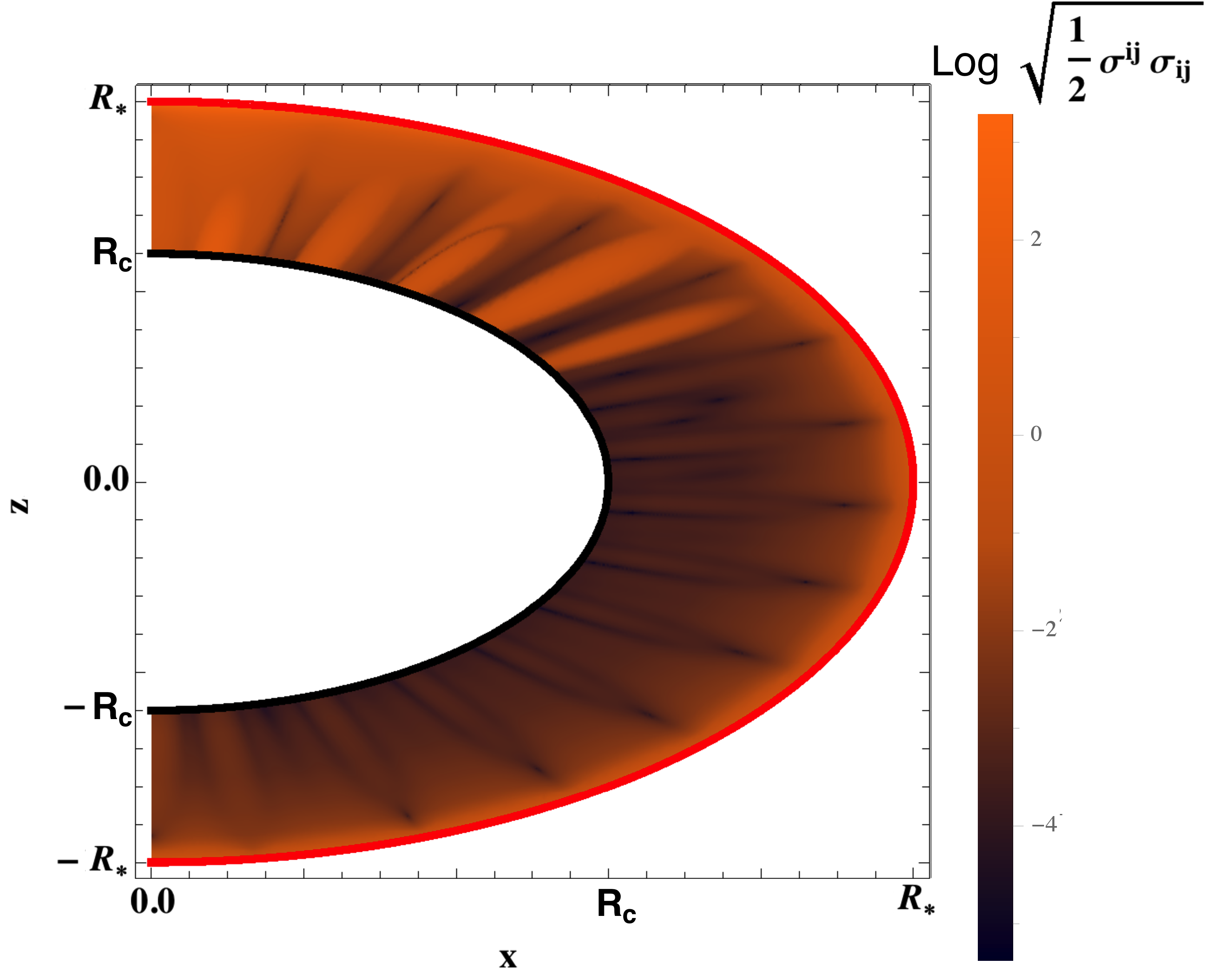 Figure 4
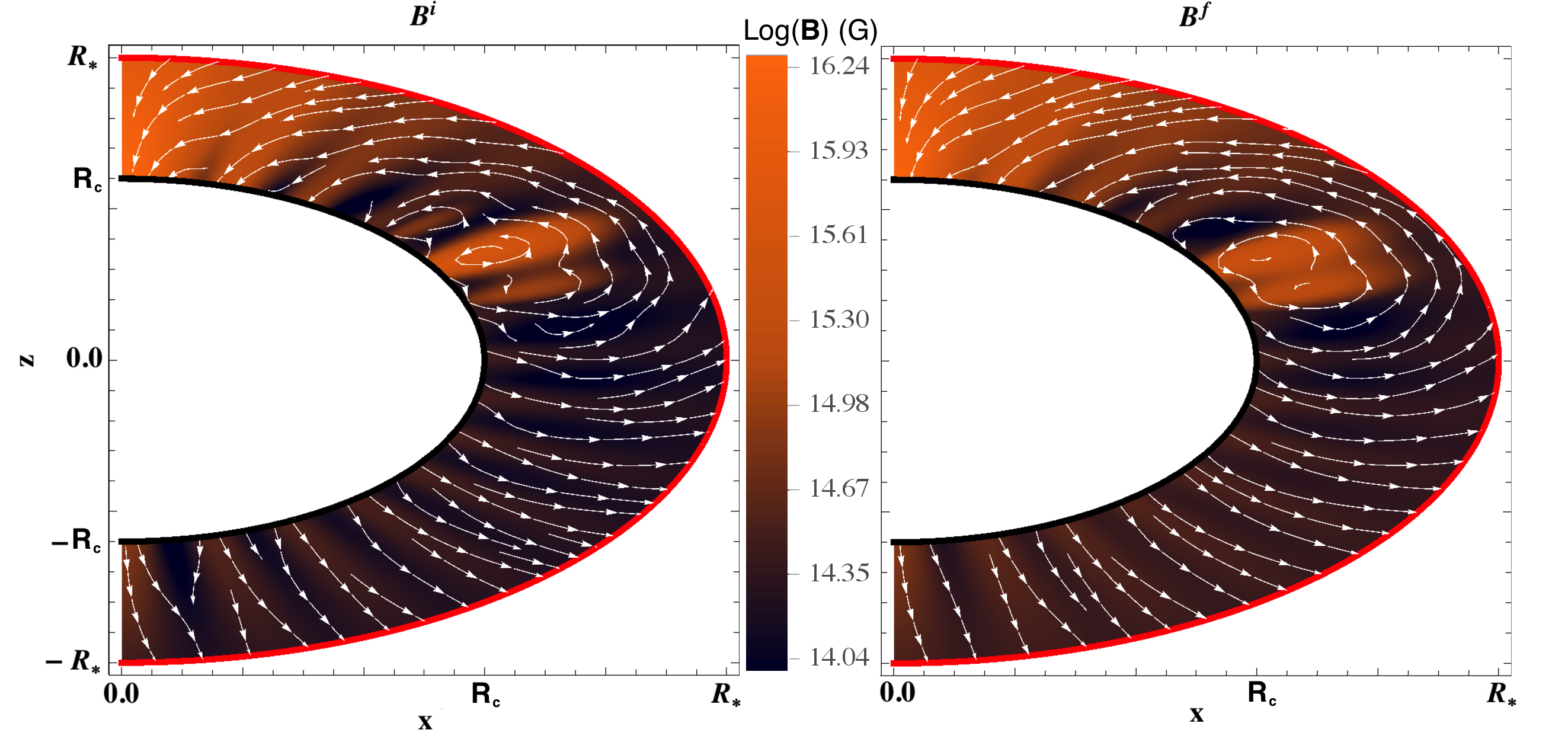 Figure 5
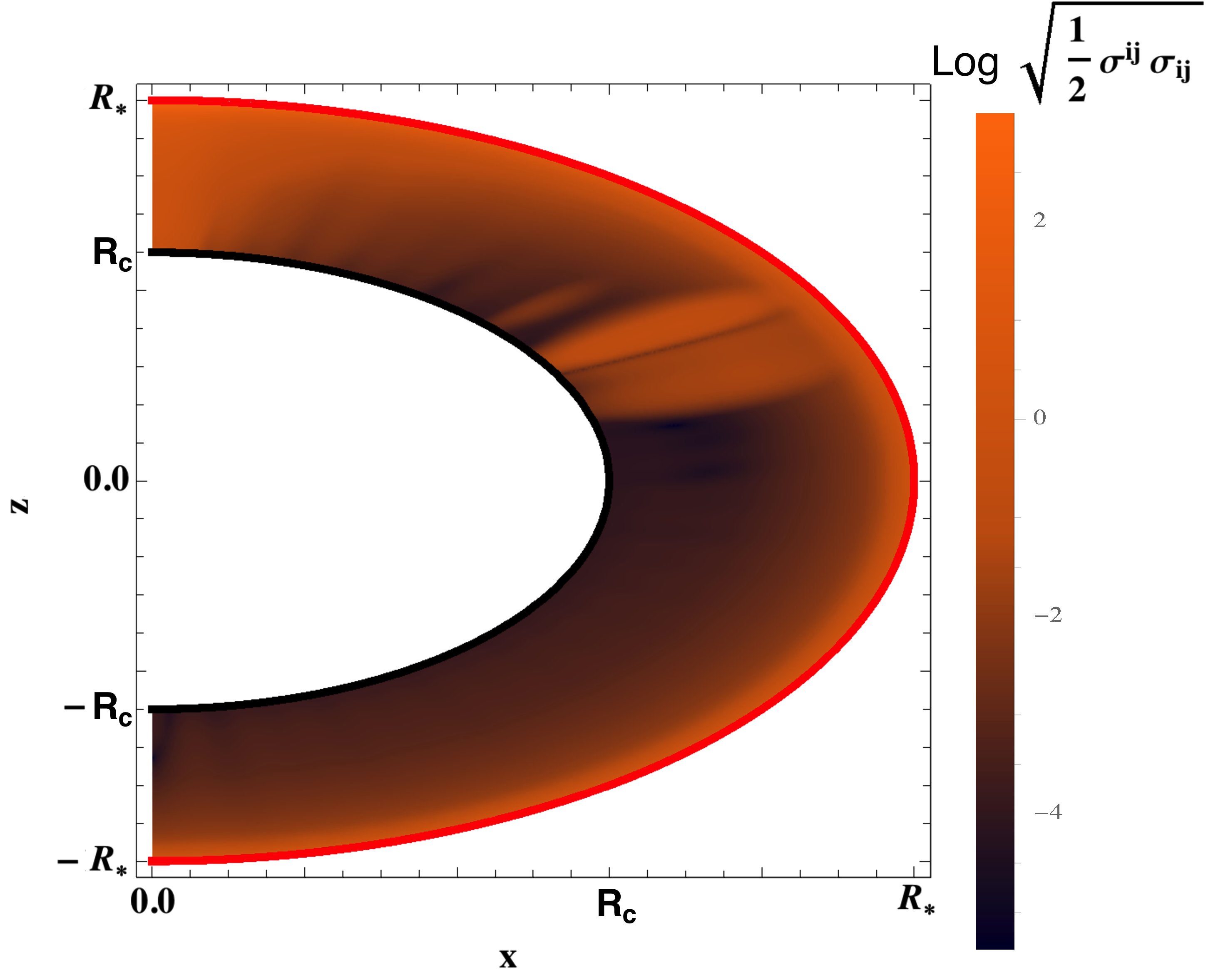 Figure 6
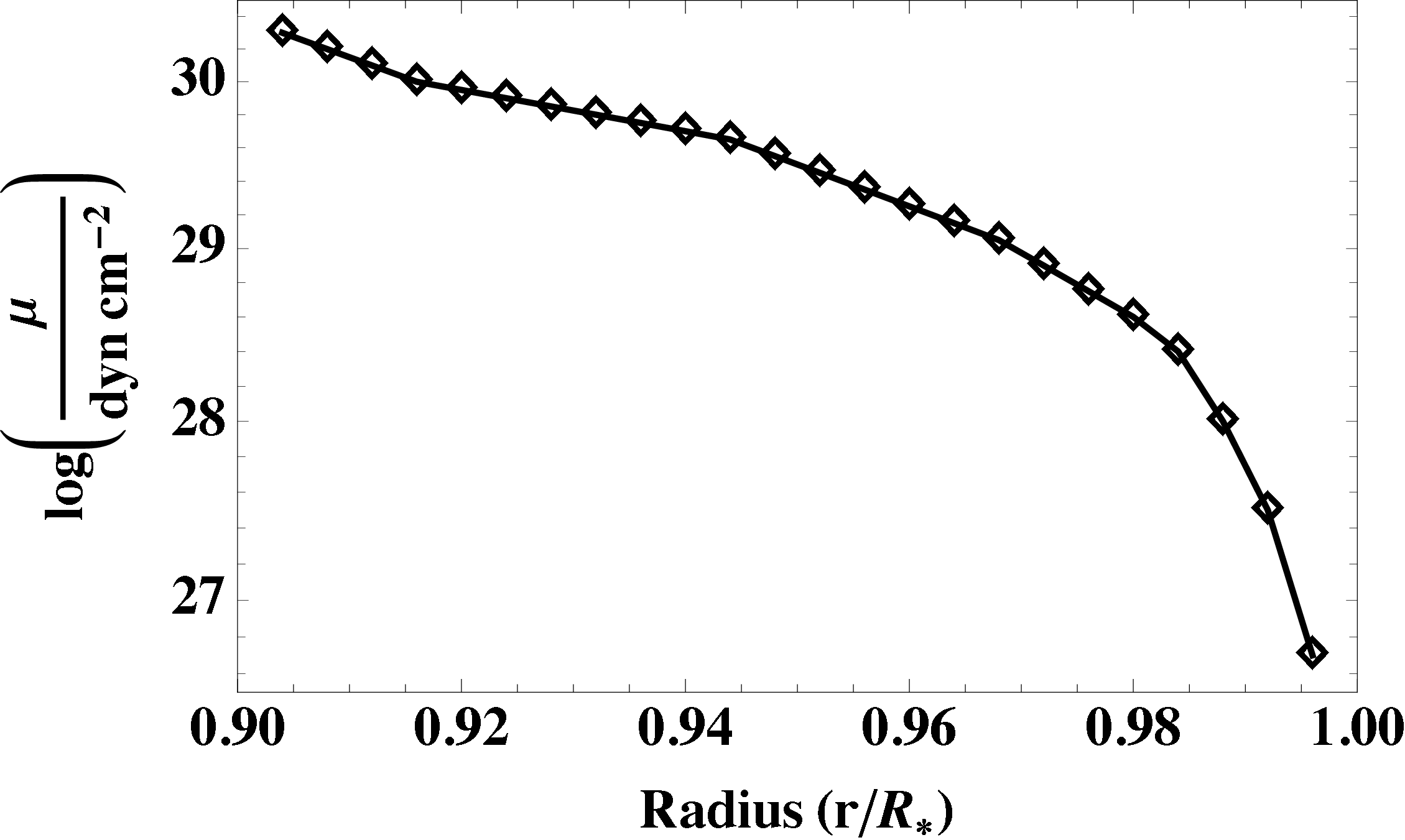 Figure 7
| Model | ||||
|---|---|---|---|---|
| A | ||||
| B | ||||
| C |
| Model | ||
|---|---|---|
| A | ||
| B | ||
| C |
Peer Reviews
No public reviews on file for this paper yet. If you reviewed it on a platform where reviews are public (OpenReview, ICLR, NeurIPS, ICML), you can paste yours below so the community can read it here.
Videos
No videos yet. Explain this paper in a talk, walkthrough, or lecture? Add one.
Young magnetars with fracturing crusts as fast radio burst repeaters
A. G. Suvorov and K. D. Kokkotas
Theoretical Astrophysics, Eberhard Karls University of Tübingen, Tübingen, D-72076, Germany E-mail: [email protected]
(Accepted ?. Received ?; in original form ?)
Abstract
Fast radio bursts are millisecond-duration radio pulses of extragalactic origin. A recent statistical analysis has found that the burst energetics of the repeating source FRB 121102 follow a power-law, with an exponent that is curiously consistent with the Gutenberg-Richter law for earthquakes. This hints that repeat-bursters may be compact objects undergoing violent tectonic activity. For young magnetars, possessing crustal magnetic fields which are both strong ( G) and highly multipolar, Hall drift can instigate significant field rearrangements even on century long timescales. This reconfiguration generates zones of magnetic stress throughout the outer layers of the star, potentially strong enough to facilitate frequent crustal failures. In this paper, assuming a quake scenario, we show how the crustal field evolution, which determines the resulting fracture geometries, can be tied to burst properties. Highly anisotropic stresses are generated by the rapid evolution of multipolar fields, implying that small, localised cracks can occur sporadically throughout the crust during the Hall evolution. Each of these shallow fractures may release bursts of energy, consistent in magnitude with those seen in the repeating sources FRB 121102 and FRB 180814.J0422+73.
keywords:
stars: magnetars – stars: magnetic field – stars: oscillations
††pagerange: Young magnetars with fracturing crusts as fast radio burst repeaters–References††pubyear: ?
1 Introduction
Fast radio bursts111A catalogue of observed FRBs is maintained at http://frbcat.org/ (Petroff et al., 2016). (FRBs) are short (duration ms) but intense (flux Jy) flashes, generally believed to be of extragalactic origin due to their high dispersion measures, which appear in the GHz-band (Lorimer et al., 2007; Keane et al., 2012; Thornton et al., 2013; Ravi et al., 2015; Gourdji et al., 2019; Zhang et al., 2019; Petroff et al., 2019). The physical mechanisms driving these phenomena are unknown, though, considering the timescale and energy requirements, most proposals involve coherent emission associated with disrupted compact objects, such as neutron stars (NSs) (Totani, 2013; Lyubarsky, 2014; Pen & Connor, 2015; Wang et al., 2018) or black holes (Ravi & Lasky, 2014; Mingarelli et al., 2015; Zhang, 2016; Barrau et al., 2018). Moreover, the existence of repeating sources, of which two have now been discovered, FRB 121102 (Spitler et al., 2014; Tendulkar et al., 2017; Scholz et al., 2017; Gajjar et al., 2018) and FRB 180814.J0422+73 (CHIME/FRB Collaboration et al., 2019; Wang et al., 2019; Yang et al., 2019), suggests that there is at least a subclass of FRBs resulting from transient outbursts of a young object (Caleb et al., 2018; Palaniswamy et al., 2018). For FRB 121102, the constraints coming from the dispersion measure, GHz free-free optical depth, and the size of the quiescent source indicate that the progenitor is yrs old (Murase, Kashiyama & Mészáros, 2016; Kashiyama & Murase, 2017; Bower et al., 2017; Metzger et al., 2017) [see fig. 1 of Margalit & Metzger (2018)].
Owing to the multitude of theorised FRB progenitors [see Katz (2018); Platts et al. (2018) for recent reviews], it is clear that we must turn to observational clues to try and discriminate between different scenarios. Wang et al. (2018) found that the burst energetics of FRB 121102 follow a distribution similiar to that of the Gutenberg & Richter (1956) law associated with earthquakes. This statistical similarity suggests that NS tectonic activity and eventual crustquakes may be, at least partially, responsible for [amongst other things, e.g. (anti-)glitches (Epstein & Link, 2000; Mastrano et al., 2015b), giant flares (Thompson et al., 2002; Colaiuda & Kokkotas, 2011; Zink et al., 2012), or quasi-periodic oscillations (Thompson et al., 2017)] the repeated FRBs [see also Zhang et al. (2018a)]. Furthermore, low-energy -ray flashes (Cheng et al., 1996), giant flares (Xu et al., 2006), and short bursts (Wadiasingh & Timokhin, 2019) from mature soft-gamma repeaters (SGRs) also follow earthquake-like statistics, evidencing a connection between magnetar outbursts and crustal activity (Wang & Yu, 2017).
On the other hand, Li et al. (2019) found no correlation between the waiting times and energetics from the pulses thus far observed in FRB 121102, and argued that this implies that the mechanism responsible for repeating sources is unlikely to be intrinsic to the star; one might expect that, when more time has elapsed between subsequent bursts, the energetics should increase. However, the extent to which a crust is susceptible to shear stresses depends on its molecular properties (Horowitz & Kadau, 2009; Chugunov & Horowitz, 2010; Hoffman & Heyl, 2012; Baiko & Chugunov, 2018), and complicated fracture geometries may result if highly anisotropic stresses are exerted (Franco et al., 2000). While the formation of small-scale voids or fractures in older NSs may be restricted by the high pressure-to-shear-modulus ratio (Jones, 2003; Horowitz & Kadau, 2009) [see also Levin & Lyutikov (2012)], a very young, more pliable crust may be susceptible to local fracturing. In particular, sporadic energy releases via minor quakes are possible if many local patches of stress accumulate within the crustal layers, thereby causing multiple, small fractures, each of which contribute to the overall transient activity. An evolving magnetic field with a complicated topological structure, for example, would be expected to strain the crust in a highly anisotropic manner (Lander et al., 2015; Lander & Gourgouliatos, 2019).
Various mechanisms can give rise to strong, multipolar magnetic fields within proto-NSs. In a core-collapse scenario, the characteristic field strength of the collapsed star is set, to first-order, by magnetic flux conservation (). Within seconds after collapse, strong core-surface differential rotation stretches field lines and generates strong, mixed poloidal-toroidal fields through wind-up (Janka & Moenchmeyer, 1989; Spruit, 1999; Braithwaite, 2006). The differential rotation combined with turbulent convection drives an dynamo, which may generate strongly multipolar fields with characteristic strengths of the order (Duncan & Thompson, 1992; Thompson & Duncan, 1993; Miralles et al., 2002). The field may then be further amplified by the magnetorotational instability (Shibata et al., 2006; Sawai et al., 2013), shockwave instabilities from the core bounce (Endeve et al., 2012), or electric currents generated from chiral imbalances between charged fermions in the plasma (Del Zanna & Bucciantini, 2018). For a star born following a NS-NS merger, the Kelvin-Helmholtz instability, generated at the shear layer between the progenitor stars, can amplify the field up to (Price & Rosswog, 2006; Giacomazzo et al., 2015; Gourgouliatos & Esposito, 2018).
Even after stable stratification s after formation, the magnetic field may continue to evolve rapidly through superfluid turbulence (Ferrario et al., 2015), which drives the circulation of charged particles via mutual friction and entrainment (Peralta et al., 2005), ambipolar diffusion, associated with direct Urca processes in stars with cooler and superconducting cores (Passamonti et al., 2017), or, in stars with high surface electron temperatures , from thermoelectric instabilities (Urpin et al., 1986; Geppert, 2017). The efficacy of each of these mechanisms is still not well understood, though certainly depends critically on the properties of the progenitor(s), such as their mass, angular momentum, magnetic field strength, and metallicity (Herant et al., 1992; Heger et al., 2003; Scheidegger et al., 2010; Nakamura et al., 2014; Vartanyan et al., 2019). Under some (possibly rare) conditions therefore, these effects might combine to yield a particularly tangled, ‘turbulent’ (i.e. strongly multipolar, and with non-negligible toroidal component) magnetic field shortly after birth, as supported by core-collapse (Obergaulinger & Aloy, 2017; Obergaulinger et al., 2018) and NS-NS merger simulations (Giacomazzo et al., 2015; Ciolfi et al., 2019). Furthermore, measurements of phase-resolved cyclotron absorption lines reveal that some magnetars possess local magnetic structures orders of magnitude stronger than their dipole-spindown fields (Sanwal et al., 2002; Tiengo et al., 2013).
Once the proto-NS has settled down into a quasi-stable state some time after birth, the evolution of the crustal magnetic field is mainly driven through Hall drift (Jones, 1988; Gourgouliatos & Cumming, 2015), and later by Ohmic dissipation (Goldreich & Reisenegger, 1992; Cumming et al., 2004). Hall drift is also expected to drive cascades in NS crusts, which in turn can further generate strong, small-scale magnetic structures (‘spots’) (Rheinhardt & Geppert, 2002; Geppert et al., 2003; Kojima & Kisaka, 2012; Marchant et al., 2014; Li et al., 2016; Suvorov et al., 2016). Recently, Gourgouliatos et al. (2016) showed that, for initial conditions corresponding to a turbulent, crustal magnetic field in a young magnetar with characteristic strength , the magnetic energy can decay via Hall and Ohmic evolution by a factor within a few , significantly redistributing energy among high-order multipoles in the process.
As such, even on shorter timescales of , the field evolves non-trivially (especially if the natal field since the Hall time ), all the while facilitating the growth of zones of magnetic stress throughout the crust (Thompson et al., 2002; Lander & Gourgouliatos, 2019). If the stress within a certain patch exceeds a critical threshold, the crust may locally cease to respond elastically and potentially crack (Chugunov & Horowitz, 2010; Lander et al., 2015; Baiko & Chugunov, 2018). Such events might lead to sequences of localised crustquakes, expelling energy at seemingly uncorrelated intervals (Lander, 2016; Thompson et al., 2017), thereby bypassing the intrinsic vs. extrinsic concerns of Li et al. (2019).
This paper is organised as follows. In Section 2 we introduce some phenomenological aspects of repeating FRBs and discuss their possible connection to crustquakes in young magnetars. In Section 3, a discussion of Hall drift and its role in generating magnetic stresses is given, followed by a brief introduction to the von Mises theory of elastic failures in a crust. A simple model is then presented in Section 4, illustrating how one may relate magnetic reconfigurations to quake geometries and energetics. Some discussion is offered in Section 5.
2 Repeating fast radio bursts
To date, there are two sources which are known to emit repeated FRB signals, namely FRB 121102 (Spitler et al., 2014; Tendulkar et al., 2017; Scholz et al., 2017; Gajjar et al., 2018) and FRB 180814.J0422+73 (CHIME/FRB Collaboration et al., 2019; Wang et al., 2019; Yang et al., 2019). While the second of these has only been recently discovered, which means that statistical analyses are limited, bursts from the former object have been recorded, from which statistically significant conclusions about the waiting times (Sec. 2.1) and the burst energetics (Sec. 2.2) can be drawn (Oppermann et al., 2018; Li et al., 2019).
2.1 Waiting times
From data analysis of FRB 121102, Li et al. (2019) found little to no correlation between burst waiting times, energetics, or duration. In particular, the lack of a correlation between burst energetics and the waiting times between successive bursts is suggestive that the trigger mechanism is either extrinsic [e.g. a neutron star embedded within an asteroid field (Dai et al., 2016)], or that small scale intrinsic (i.e. non global) mechanisms are responsible. The source also appears to be episodic, alternating between epochs of activity, wherein many bursts occur [e.g. bursts in FRB 121102 were found within 5 hours of observing time by Zhang et al. (2018b)] and quiescence, wherein no detectable bursts are released for several hours or more (Oppermann et al., 2018; Price et al., 2018).
Li et al. (2019) further found that the waiting times appear to be bimodal, clustering around s and (more so) at s. The former of these is of the order of the Alfvén crossing time,
[TABLE]
for characteristic crustal density and length-scale , with and denoting the crustal and stellar radii, respectively. It is well known that a variety of magnetohydrodynamic instabilities can occur over a few in some systems (Kokkotas, 2014). Rapid rotation can, however, delay the onset of magnetic instabilities by a factor for spin period (Braithwaite & Spruit, 2006), so that the instability time-scale associated with (1) could easily be of the order s in lighter sections of crust for . Furthermore, it has been shown that an overstability of global elastic modes may by caused by the collective shearing of locally overstressed patches, releasing energy over time-scales s (Thompson et al., 2017). This latter timescale may be related to the longer mode of the waiting time distribution. In any case, the magnetic field is likely to play a prominent role.
2.2 Energetics
While brighter bursts might be intensified by plasma lensing (Cordes et al., 2017), if we assume isotropic emission, then the observed fluence is related to the FRB energy through (Zhang, 2018)
[TABLE]
where is the source frequency, is the luminosity distance, with redshift for FRB 121102 (Chatterjee et al., 2017) and () for FRB 180814.J0422+73 (Yang et al., 2019). Any mechanism that is proposed to instigate FRB behaviour should predict energetics which are consistent with (2).
Wang et al. (2018) found that if one fits a power-law to the number distribution of burst energies for FRB 121102, , then the best fit is obtained with the value at the confidence level (see their Fig. 1); see also Lu & Kumar (2016) who find when including data from other FRBs and Wang & Zhang (2019). Wang et al. (2018) drew a comparison with the statistics for earthquakes, which are well described by the Gutenberg & Richter (1956) law . Though far from conclusive, the waiting time distribution, which was found to be consistent with a Poisson or Gaussian distribution [though cf. Oppermann et al. (2018)], also agrees with empirical relationships for seismicity rates of earthquakes (Utsu et al., 1995).
2.3 Radio emission
How might a quake in a neutron star source coherent radio emission? As an example, Wadiasingh & Timokhin (2019) proposed that the radio emission might originate from the closed field line zone within the magnetosphere surrounding a magnetar. If the magnetospheric twist is sufficiently low, so that the plasma above the active region is unable to screen the accelerating electric field, generated by a crust yielding event, the plasma density in the closed field zone would be low enough to permit the escape of GHz radio waves. This is similar to the classical picture of coherent emission from pulsars [see also Blaes et al. (1989)]. Other mechanisms have been proposed [see e.g. Beloborodov (2017)], which are also consistent with a quake picture (Petroff et al., 2019).
3 Crustquake model
Putting the pieces of evidence surrounding timescales and energetics together, it is possible that tectonic activity, resulting in the expulsion of energy from the crust of a young magnetar, may be connected to repeating FRBs (Wang et al., 2018). Furthermore, if a topologically complicated, quasi-equilibrium magnetic structure is frozen into the crust after birth, complicated fracture geometries are likely to result as the field then relaxes to a more stable state over the longer dynamical and diffusion timescales.
To investigate this possibility further it is necessary to understand which mechanisms, if any, may be responsible for driving both local and global magnetic field evolution over the observed age yr of FRB 121102 (Sec. 3.1), and to further detail a model of the crustal failures that might result (Sec. 3.2).
3.1 Hall drift
Hall drift, namely the process of field line advection due to the generation of an electric current from magnetic flux transport by mobile electrons, is believed to play a crucial role in NS crustal field evolution during the first yr after formation (Rheinhardt & Geppert, 2002; Geppert et al., 2003; Kojima & Kisaka, 2012), after which Ohmic dissipation takes over (Gourgouliatos et al., 2016) [though cf. Cumming et al. (2004)]. As initially put forth by Goldreich & Reisenegger (1992) [and later confirmed through numerical simulations (Rheinhardt & Geppert, 2002; Geppert et al., 2003; Kojima & Kisaka, 2012; Marchant et al., 2014; Li et al., 2016)], turbulent cascades resulting from the Hall drift can transfer energy from larger to smaller scales within the crust. This suggests that a star born with a multipolar field may have it persist, at least over the Hall timescale (see below). Furthermore, as the field relaxes, energy redistributions occur not only between the multipolar components, but also between the poloidal and toroidal components (Viganò et al., 2012; Geppert & Viganò, 2014), which can further instigate the formation of anisotropic, overstressed zones.
In general, the Hall timescale reads (Gourgouliatos & Cumming, 2015)
[TABLE]
where is the electron number density, which varies between throughout the crust . Clearly, over short length-scales or for locally intense magnetic fields ), the Hall time (3) could be of the order of a century or less (Cumming et al., 2004), which coincides with the predicted age for the object associated with FRB 121102 (Bower et al., 2017; Metzger et al., 2017).
In line with the theory of Goldreich & Reisenegger (1992), Gourgouliatos et al. (2016) found that strongly multipolar fields both persist and are generated over a few , i.e. over several Hall times (3), in the crusts of strongly magnetised NSs [see also Dall’Osso et al. (2009)], and further that substantial energy redistributions, between the individual multipolar components, occurs during this time. In regions of concentrated field (e.g. toroidal sections), redistributions occur even more rapidly as (Viganò et al., 2012; Geppert & Viganò, 2014).
3.2 Fracturing crusts
The problem of determining the yieldability of an elastic medium was considered by von Mises (1913) over a century ago. Modelling the NS crust as an elastic medium, the von Mises criterion may therefore be applied to study its ability to support stresses, as has been done by several authors, e.g. Perna & Pons (2011); Pons & Perna (2011); Johnson-McDaniel & Owen (2013); Lander et al. (2015), and Lander & Gourgouliatos (2019) [though cf. Baiko & Chugunov (2018)]. The von Mises criterion for the critical stress beyond which an isotropic crust no longer responds elastically, and may therefore crack, reads (Lander et al., 2015)
[TABLE]
where is the elastic strain tensor and is the maximum breaking strain of the crust. In general, the ions in the crustal layers interact via Coulomb potentials which are screened by the mobile, degenerate electrons, and form a crystal, the particulars of which determine the elastic properties of the crust (Horowitz & Kadau, 2009; Chugunov & Horowitz, 2010; Hoffman & Heyl, 2012; Baiko & Chugunov, 2018). Although depending on various factors, such as the degree of hydrostatic pressure anisotropies, molecular-dynamics simulations performed in the aforementioned studies find .
While the strain tensor is naturally a dynamic quantity, in the sense that it depends on the fluid motions, we can consider a quasi-static evolution in the magnetic field to determine which sections of crust might have yielded due to magnetic stresses over some period of time (Lander et al., 2015). In particular, we consider pairs of magnetic field configurations, each of which consists of an ‘initial’ field and a ‘final’ field . In other words, we assume that the ‘initial’ field has decayed into some new configuration via Hall drift or otherwise, which we call the ‘final’ field, and explore the resulting crustal stress.
Considering magnetic stresses alone (see below), the von Mises criterion (4) reads222 The surface temperature of a young neutron star can evolve rapidly due to plasmon decay during the first yrs after birth, and subsequently over the next yrs due to a combination of electron-nucleus and neutron-neutron bremsstrahlung (Gnedin, Yakovlev & Potekhin, 2001). These thermal relaxation processes can alter the crustal structure, allowing expansions, contractions, and equation of state shifts to occur before and during the Hall time (3). It is for this reason we have used the form (5) for the magnetic stress from Lander et al. (2015) rather than the form proposed in Lander & Gourgouliatos (2019), whose prefactors differ by a factor by not allowing expansions/contractions to source . In any case, these factor differences do not qualitatively affect our conclusions (see Sec. 4.4).
[TABLE]
where is the shear modulus. Following Lander et al. (2015), we estimate the shear modulus throughout the crust () from the molecular-dynamics simulation data provided by Horowitz & Hughto (2008) supplemented by the liquid drop equation of state of Douchin & Haensel (2001). The temperature profile of Kaminker et al. (2009), who modelled cooling via neutrino emission and thermal conduction, is further used to estimate the Coulomb coupling parameter. The fit we obtain, identical to that of Lander et al. (2015), and in quantitative agreement with others [e.g. the profile used by Sotani et al. (2007)], is shown in Fig. 1.
It is important to note that other, fluid-dynamical mechanisms may contribute to the overall crustal strain, particularly the spin-down (Baym & Pines, 1971). Using coupled crust-core models and elastic deformation theory, Cutler et al. (2003) have estimated the crustal strain due to neutron star precession and spin-down, which, for a newborn, millisecond magnetar, reads [see their equation (73) in particular]
[TABLE]
where is the precession frequency, given by (Goglichidze et al., 2015), where (see Sec. 5) is the oblateness parameter. In general, we find that the spin-down strain estimated in (6) is sub-leading compared to the magnetic deformation unless , which does not occur unless the star is significantly oblate, requiring a strong poloidal field with (Gualtieri et al., 2011; Lasky & Melatos, 2013). In any case, we find that the stars are primarily prolate for our models (see Table 2 below), and that magnetic stresses dominate over spin-down stresses (6) (see Sec. 4.4), so we ignore the latter contribution.
Lander et al. (2015) additionally found that the energy released in a shallow quake [i.e. the magnetic energy stored in regions wherein (4) is satisfied] can be well approximated by
[TABLE]
where is the quake penetration depth, and is the fracture length. Clearly, in order to match the energy requirements , only slight fractures of the crust are necessary .
In general, the geometry of a crustal failure depends on the magnetic field topology, as is evident from (5) (Franco et al., 2000). Localised, small fractures of the crust are therefore possible if the stress (5) is strongly anisotropic, as would occur for an evolving, multipolar magnetic field. Bursts with characteristic energy (7) will then be released as the spatially dependent criterion (4) is met in certain, disconnected sections of the crust.
4 Demonstrative models
In this section, we present some simple models for initial, , and final, , field states which aim to capture the major phenemonological features observed in the numerical simulations of Gourgouliatos et al. (2016). Through this, we can examine the geometry of fractures, and thus further assess the viability of the crustquake explanation for repeating FRBs initially considered by Wang et al. (2018).
4.1 Magnetar crustal field
Although we take inspiration for our field configurations through the simulations of Gourgouliatos et al. (2016), who found that non-axismmyetry played an important role for the evolution, since we only consider a quasi-static sequence (i.e. a and a ) of magnetic fields here, it is reasonable to consider fields which have energies similar to those in Gourgouliatos et al. (2016), but which are axisymmetric. In spherical coordinates (), an axisymmetric vector field can always be split into a mix of poloidal and toroidal components, viz.
[TABLE]
where is the characteristic field strength, is a scalar flux function, and , which describes the spatial variation of the toroidal component, is a function of only (Chandrasekhar, 1956; Mastrano et al., 2013, 2015a). In expression (8), we have introduced the constructions
[TABLE]
and
[TABLE]
which represent the poloidal and toroidal field energies stored within crustal volume , respectively. In (8), the parameter characterises the relative strength between the poloidal and toroidal components, e.g. gives a field which has an equal poloidal-to-toroidal field strength ratio: .
The stream function can be decomposed into a sum of multipoles (Mastrano et al., 2013),
[TABLE]
where the are the spherical harmonics, and the set the relative strengths between the multipolar components of (see Sec. 4.2). The radial functions are chosen as polynomials such that from (8) is everywhere finite, continuous both inside the crust () and with respect to a current-free external field (), and to ensure that the magnetic current vanishes at the surface (Mastrano et al., 2011, 2013, 2015a).
We further choose
[TABLE]
where is the value of that defines the last poloidal field line that closes inside the star. The simple quadratic (12) for ensures that the toroidal field is confined within an equatorial torus [in line with the numerical simulations of Braithwaite (2006, 2009)], bounded by the last closed poloidal field line defined by (Mastrano et al., 2013, 2015a; Suvorov et al., 2016; Suvorov, 2018).
4.2 Energy distribution
In this subsection we present explicit models for the generic fields (8) defined in the previous section. In particular, we wish to consider crustal fields in young magnetars which are initially ‘turbulent’ as discussed in the Introduction, i.e. fields that begin as a superposition of high order magnetic multipoles with a roughly uniform energy distribution across , which then evolve toward a more traditional dipole-dominated configuration (Gourgouliatos et al., 2016). This assumption is further supported by observations of millisecond magnetar braking indices finding (Lasky et al., 2017), suggesting that the dipole moment of young magnetars increases with time (Gourgouliatos & Cumming, 2015).
In general, we relate the energy between each of the multipolar components in (11) through the general expression
[TABLE]
where , are the generalised harmonic numbers, is the energy stored within the -th poloidal component, and is a canonical energy ‘budget’ for the magnetic field, which we set as . Integrating the components of the field (9) with (11) and imposing (13) yields a linear system for the . The parameter , appearing within (13), provides a convenient way to assign an energy distribution amongst the multipolar components in the following sense. If we set within (13), then the multipolar energy distribution is uniform; for all . The harmonic numbers are normalisation constants, included to ensure that the total poloidal energy is constant between configurations, i.e. . In general, each successive multipole has, with respect to its predecessor, an energy ratio
[TABLE]
which is strictly decreasing for fixed and , and strictly increasing for . For example, gives , so that the dipole component has twice as much energy as the quadrupole, and so on. Such a field would be highly-ordered and resembles more of a traditional dipole dominated field, while a field with is more ‘turbulent’ in the sense of Gourgouliatos et al. (2016) (see their Fig. S5 in particular). In this way, provides a measure for the extent of field reordering between subsequent configurations. Similarly, the value of between successive configurations adjusts as energy is exchanged between the poloidal and toroidal components, which also occurs in Hall drift (Viganò et al., 2012; Geppert & Viganò, 2014; Suvorov et al., 2016).
4.3 Models
We consider three pairs of magnetic fields, each of which consist of an ‘initial’ and a ‘final’ configuration (denoted with subscripts and , respectively). We assign each field a characteristic strength and resolve up to multipoles of order . The initial and final states are related by an adjustment of their respective and values through the assumption that the multipolar components tend to become more ordered on the Hall time (3), as found in Geppert & Viganò (2014); Gourgouliatos et al. (2016), in the sense that we set within (13). We further take , so that the final state has less total energy than the initial state (see Sec. 4.4). The properties of the three models (named A, B, and C) used in this paper, in terms of the above parameters, are listed in Table 1.
In Figure 2 we present the ‘initial’ (left panel) and ‘final’ (right panel) configurations corresponding to model A. For this case, the energies stored in the multipolar components of the initial magnetic field are roughly uniform with , though the dipole component is strongest, containing of the total energy as . For this model, the Hall time (3) reads in the northern hemisphere, while in the southern hemisphere (see below). The magnetic structure is also complicated, exhibiting the plume-like features characteristic to multipolar fields (Jackson, 1962). During the Hall time, we assume that the field has evolved from this disordered configuration towards a more stable configuration in which the dipole and other, lower components grow at the expense of the high- multipoles. We set so that the dipole component of the final state contains of the total energy. We see that, for both configurations, the field is strongest at the north pole , and in the respective toroidal regions just above the equator. Though the initial and final fields are qualitatively similar, even small reconfigurations in regions with strong can exert significant stresses on the crust (see Sec. 4.4).
In general, even order multipoles are symmetric about the equator, while odd order multipoles are anti-symmetric. This implies that a field which is a general superposition of odd and even order multipoles will be much stronger in the northern hemisphere. As such, as the field becomes more ordered (increasing ), tends to increase in the southern hemisphere (Mastrano et al., 2013, 2015a). Furthermore, in each model, the final toroidal field is relatively weaker as , and we have that the overall energy has decreased by [a fraction of which may be released through crustquakes; see Sec. 4.4], which can further facilitate a reordering amongst the poloidal terms (Viganò et al., 2012; Geppert & Viganò, 2014; Suvorov et al., 2016).
For model B, depicted in Figure 3, we have that the higher multipole terms actually dominate over the dipole component , so that the filamentary structure is even more evident, especially due to the closed magnetic loops which confine the toroidal field. As the field evolves towards one with a stronger dipole field , the toroidal field spreads equatorially, as expected. Figure 4 (model C) depicts a situation wherein the field is largely dipolar initially, though then becomes even more dipole dominated, with the dipole field containing of the energy in the final state. For this configuration we see that the higher multipoles are less visible, and the field resembles a dipole field with an off-axis toroidal field [similar to the fields described in Mastrano et al. (2013)], especially for the final state with . The growing strength of the field in the southern hemisphere is more evident here, even though the field is relatively weak there.
4.4 Fractures and energetics
In Figure 5 we plot the contracted strain tensor (5) for the magnetic fields given by model A. Even with a conservative value of , we see that the contracted elastic strain tensor can easily exceed the von Mises yielding threshold in several zones throughout crust (Lander et al., 2015; Lander & Gourgouliatos, 2019). The fracture geometry is tied to both the initial and final field states, especially through their relative multipolar strengths, as can be seen through the filamentary angular structure in Fig. 2. Because of the differing north-south symmetry properties between odd and even order multipoles, crustal fractures are separated by ‘magnetic walls’. In particular, the strain on the very outer layers across the crust is large, so that many long but shallow quakes may occur during the Hall time (3). Similarly, deep but short fractures may develop in between each of these magnetic walls at rates which depend on the local Hall time (3), and therefore implicitly through the initial and final values of . Furthermore, the toroidal fields may independently instigate quakes, as the azimuthal magnetic fields, and hence stresses through (4), are highly concentrated in these regions. Since the toroidal fields are confined within the closed field lines, a changing poloidal field geometry shifts the toroidal rings, which contributes to fracture growth.
Figures 6 and 7 depict the contracted strain tensor for models B and C, respectively. In both Figs. 6 and 7, we see that the fracture geometry follows the multipolar ‘plumes’ as before. In Fig. 7, which shows the strain from model C, which has a final state where the dipole component is strong, the magnetic walls are especially apparent in the southern hemisphere, and the fracture geometry is topologically complicated. In particular, many deep but short quakes may occur from crust yielding in this scenario.
The fact that each of the multipolar components have different amounts of energy stored within them implies that the Hall timescale (3) differs slightly for each . The implication is that the energetics associated with the fracture geometry through (5) and the waiting times may then be seemingly uncorrelated [depending on ], consistent with the statistical findings of Li et al. (2019) for FRB 121102.
Between each of the models presented, we have that the toroidal field has decayed slightly , thereby causing an energy differential of between the initial and final states. The Weibull distribution analysis of Oppermann et al. (2018) suggests that FRB 121102 may have a mean repetition rate of days333Recently, Zhang et al. (2018b) reported the discovery of pulses in FRB 121102 within hours. The quoted mean repetition rate of Oppermann et al. (2018) may therefore be an underestimate., thereby implying that, over years, a total of bursts may occur. If each of these contains roughly of energy in accord with (2), this would suggest that the total energy released over the bulk Hall time (3) is . This is consistent with the quake model here, provided that of the lost magnetic energy is converted into FRBs (Wadiasingh & Timokhin, 2019).
5 Discussion
In this paper, inspired by the statistical findings of Wang et al. (2018), which suggest a crustquake progenitor for repeating FRBs (Sec. 2), we have investigated how the evolution of a magnetic field within the crust of a young magnetar can be related to FRB properties (Sec. 3). By adopting models which, while simple, encapsulate the major features of the sophisticated numerical simulations of Gourgouliatos et al. (2016), we have shown how quake geometry (5), dictated by the magnetic field (8), can be related to the burst energetics (7) (Sec. 4). If a magnetar is born with a sufficiently strong, tangled magnetic field, predicted to occur under some circumstances following core-collapse (Obergaulinger & Aloy, 2017; Obergaulinger et al., 2018) and NS-NS merger events (Giacomazzo et al., 2015; Ciolfi et al., 2019), the Hall time (3) can be sufficiently short so as to instigate rapid field evolution in the crust over yr [in agreement with the predicted age of the object within FRB 121102 (Bower et al., 2017; Metzger et al., 2017)], generating magnetic stresses which crack the crust and release energy. We find that a multipolar magnetic field is important in the scenario because it allows for multiple, isolated fractures, each of which contribute separately to the overall burst activity, alleviating the concerns of Li et al. (2019) concerning the waiting time statistics of FRB 121102.
If young magnetars with especially strong crustal fields are responsible for repeating FRBs, one would expect that the birth rate of newborn magnetars, with the requisite characteristics, can be matched with the number of observed sources. Statistical studies of type II, Ib, and Ic supernovae suggest that approximately NSs are born within our galaxy every century (Tammann et al., 1994; Janka, 2004; Diehl et al., 2006). If we assume that this statistic is roughly constant amongst galaxies at low redshift, we can get an estimate for the number of neutron stars born per year within a certain distance, e.g. within Gpc [i.e. the distance to FRB 121102 (Chatterjee et al., 2017)]. From distributions of dark matter halos at low redshift (Murray et al., 2013), one can estimate, assuming that each halo hosts a galaxy, that , where is the number of (generic) galaxies. While it is generally expected that of NSs are born as soft-gamma repeaters or anomalous X-ray pulsars (Kouveliotou et al., 1994; Muno et al., 2008) [though cf. Beniamini et al. (2019) who claim that it may be as much as ], only a small fraction of these are expected to house the strongest magnetic fields . The population synthesis models of Popov et al. (2010) suggest444Note that Popov et al. (2010) consider field strengths characteristic of the whole star, including the core. As such, the percentage of magnetars with crustal field strengths of this order is likely to be even lower, since the core field may be times stronger than the crustal field. that as few as in of newborn NSs may have magnetic field strengths . Therefore, the number of magnetars, , with field strength born within Gpc can be estimated as
[TABLE]
Note that expression (15) estimates the number of potentially active sources within Gpc. While, even on the lower end, (15) is still considerably greater than , when considering the observable number of repeating FRB sources, there are other factors to consider. In particular, taking into account reductions related to the beaming fraction (i.e. the fraction whose emissions pass by Earth), the possibility of sources having dormant and active epochs (Zhang et al., 2018b; Price et al., 2018), that field strength is not the only factor (i.e. highly multipolar fields might only occur within some fraction of those which have strong fields), the number of observable sources will be much lower than the estimate in (15). Though, a more careful analysis of the FRB emission mechanism, NS orientations, and magnetar formation rates in low redshift galaxies is necessary to make a more definitive conclusion.
In general, because magnetic fields deform a star and induce a mass quadrupole moment, millisecond magnetars are expected to be excellent sources of gravitational waves (Dall’Osso et al., 2009; Mastrano et al., 2011; Dall’Osso et al., 2015). Unfortunately, owing to the Gpc distances to the repeating sources FRB 121102 and FRB 180814.J0422+73, it is highly unlikely that gravitational wave counterparts will be found since the signal-to-noise ratio scales as . Furthermore, since the (electromagnetic) spindown timescale is short for a magnetar, s (Lü et al., 2018), older sources are harder to detect since the gravitational wave strain .
However, the strain is also proportional to the square of the magnetic field strength through the gravitational ellipticity , so a NS with a strong and tangled magnetic field within Mpc of Earth would likely be detectable within the early stages of its life, with facilities such as the Laser Interferometer Gravitational-Wave Observatory (LIGO) or the upcoming Einstein telescope, with (Dall’Osso et al., 2009, 2015). The detectability increases further if the star houses a strong, toroidal field (Cutler, 2002; Mastrano et al., 2013, 2015a; Suvorov et al., 2016). Using the non-barotropic approach of Mastrano et al. (2013, 2015a), the perturbed density associated to a stellar magnetic field is estimated through
[TABLE]
where is the gravitational potential for the equilibrium configuration. From (16), the gravitational ellipticity can be found, viz.
[TABLE]
for moment of inertia . In Table 2, we list the ellipticities for the initial and final states of models A, B, and C. In all cases except the initial state for model B, the toroidal field is strong enough to deform the star into a prolate shape . In general, we find that the oblateness contributed by the poloidal field is of the order , in agreement with other estimates found in the literature (Dall’Osso et al., 2009, 2015; Suvorov et al., 2016). It is generally expected that the wobble angle of a precessing, prolate star with misaligned magnetic and angular momentum axes tends to grow until , which is the optimal state for gravitational wave emission (Cutler, 2002). Significant gravitational radiation and freebody precession would therefore be expected from the models (C especially) presented here (Jones & Andersson, 2002; Gualtieri et al., 2011). If, in the future, a repeating FRB source is detected within (say) the Virgo cluster, a coincident measurement of gravitational waves would place strong constraints on the nature of the object, however this would likely disfavour the (Hall-driven) quake scenario because of the disparity between the Hall time (3) and the spin-down time, .
Finally, it is important to note that we have not included effects related to plastic flow, such as those discussed by Lander & Gourgouliatos (2019). In particular, Hall-induced magnetic stresses shear the crust and may initiate a plastic flow, as opposed to fracturing, which dissipatively converts excess stress beyond the critical threshold (in the von Mises sense) to heat at a rate which depends on the plastic viscosity, reducing the overall stress felt by the outer layers of the star (Jones, 2003; Beloborodov & Levin, 2014). Plastic flow is also known to induce a logarithmic creep, which tends to postpone subsequent quakes (Baym & Pines, 1971). Plastic flow effects may therefore limit the ability of the star to release energy over the timescales required for repeated FRB activity. However, some of the heat deposited due to the plastic flow is eventually conducted to the stellar surface, possibly initiating afterglow activity within yrs after a burst (Li & Beloborodov, 2015), which may be connected to magnetar activity and have observable consequences. A thorough investigation of such effects requires full (general relativistic) elastic magnetohydrodynamics simulations using, for example, the formalism developed by Andersson et al. (2019).
Acknowledgements
We thank the anonymous referee for their insights and helpful suggestions. This work was supported by the Alexander von Humboldt Foundation.
The reference list from the paper itself. Each links out to its DOI / PubMed record.
- 1Andersson et al. (2019) Andersson, N., Haskell, B., Comer, G. L., & Samuelsson, L. 2019, Classical and Quantum Gravity, 36, 105004
- 2Baiko & Chugunov (2018) Baiko, D. A., & Chugunov, A. I. 2018, MNRAS, 480, 5511
- 3Barrau et al. (2018) Barrau, A., Moulin, F., & Martineau, K. 2018, Physical Review D, 97, 066019
- 4Baym & Pines (1971) Baym, G., & Pines, D. 1971, Annals of Physics, 66, 816
- 5Beloborodov & Levin (2014) Beloborodov A. M., Levin Y., 2014, Ap JL, 794, L 24
- 6Beloborodov (2017) Beloborodov, A. M. 2017, Ap JL, 843, L 26
- 7Beniamini et al. (2019) Beniamini, P., Hotokezaka, K., van der Horst, A., & Kouveliotou, C. 2019, MNRAS,
- 8Blaes et al. (1989) Blaes, O., Blandford, R., Goldreich, P., & Madau, P. 1989, Ap J, 343, 839