Pure Single Photons from Scalable Frequency Multiplexing
T. Hiemstra, T.F. Parker, P.C. Humphreys, J. Tiedau, M. Beck, M., Karpi\'nski, B.J. Smith, A. Eckstein, W.S. Kolthammer, I.A. Walmsley

TL;DR
This paper presents a scalable frequency multiplexing method for generating multiple indistinguishable, pure single photons suitable for quantum information, demonstrating increased single-photon delivery probability without raising multiphoton events.
Contribution
It introduces a resource-efficient frequency multiplexing scheme for pure single photon generation, enhancing quantum photonic source scalability.
Findings
Multiplexing increases single-photon delivery probability.
Photon statistics show multiplexing does not increase multiphoton events.
Interference measurements confirm high single-photon purity.
Abstract
We demonstrate multiphoton interference using a resource-efficient frequency multiplexing scheme, suitable for quantum information applications that demand multiple indistinguishable and pure single photons. In our source, frequency-correlated photon pairs are generated over a wide range of frequencies by pulsed parametric down conversion. Indistinguishable single photons of a predetermined frequency are prepared using frequency-resolved detection of one photon to control an electro-optic frequency shift applied to its partner. Measured photon statistics show multiplexing increases the probability of delivering a single photon, without a corresponding increase to multiphoton events. Interference of consecutive outputs is used to bound the single-photon purity and demonstrate the non-classical nature of the emitted light.
Click any figure to enlarge with its caption.
 Figure 1
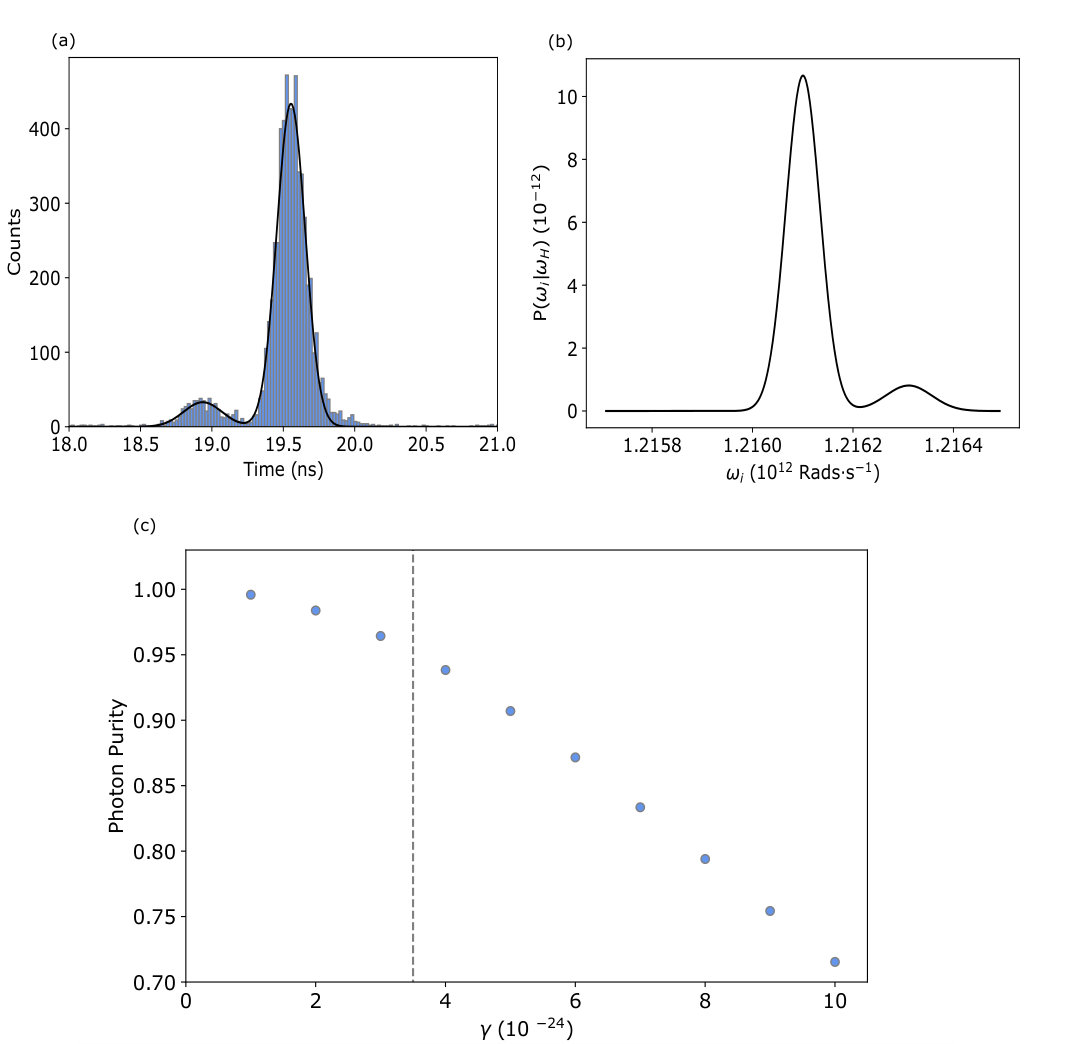 Figure 2
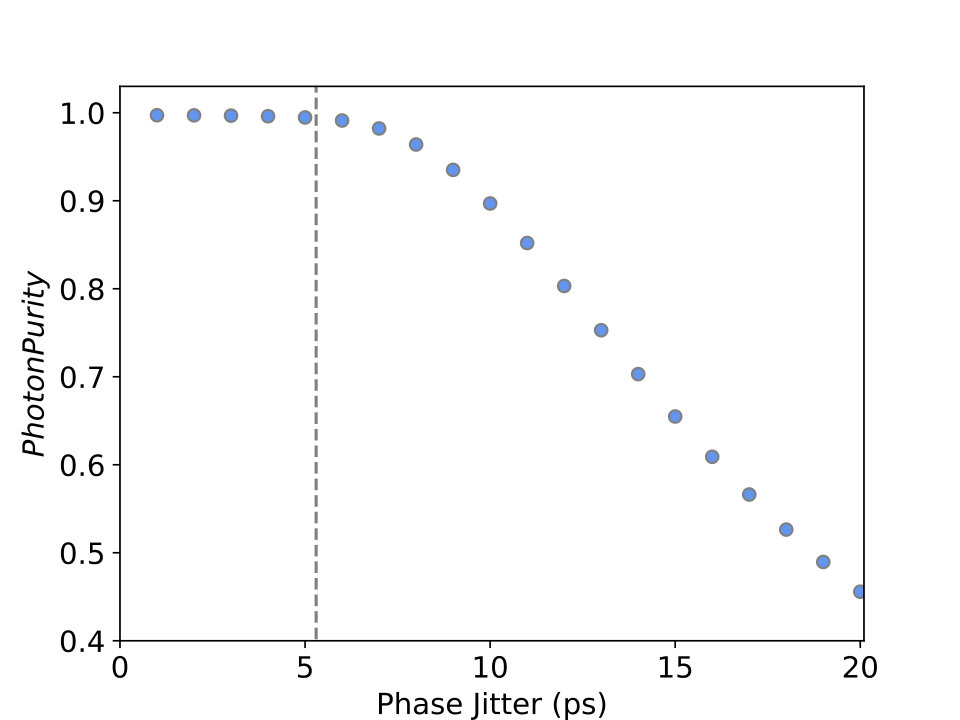 Figure 3
 Figure 3
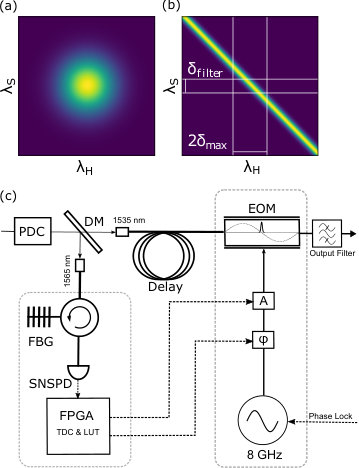 Figure 122
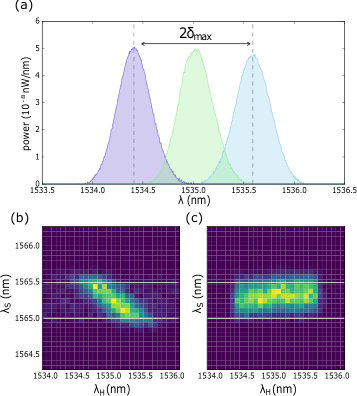 Figure 2
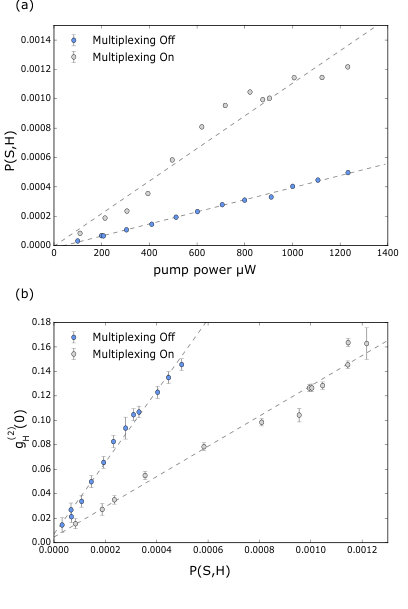 Figure 32
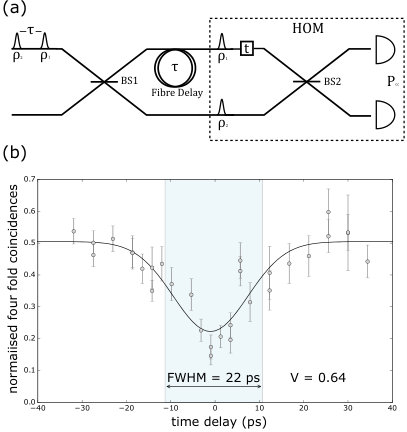 Figure 42
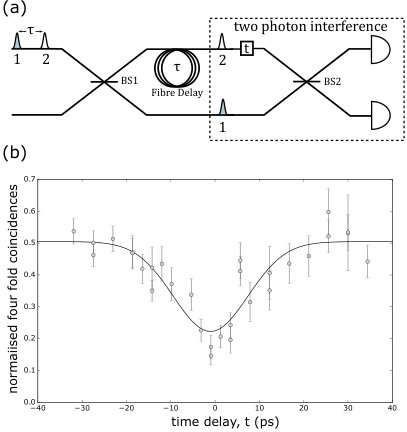 Figure 5
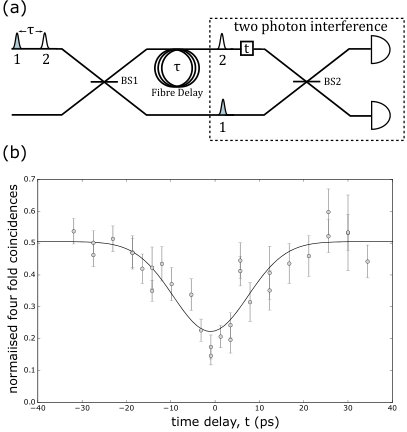 Figure 5
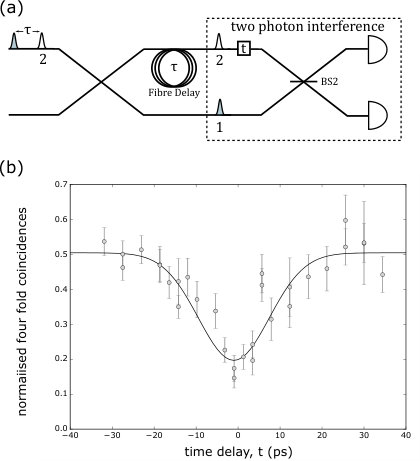 Figure 5
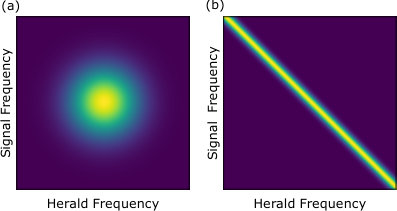 Figure 12
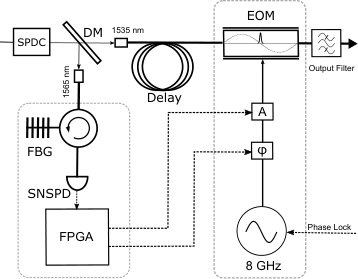 Figure 13
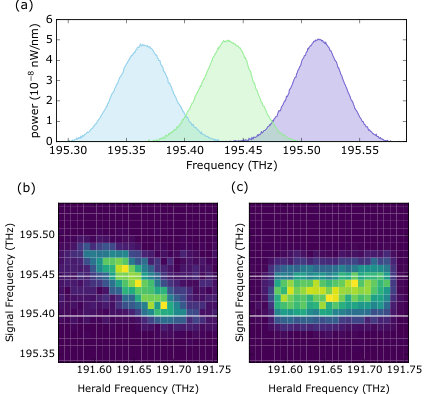 Figure 3
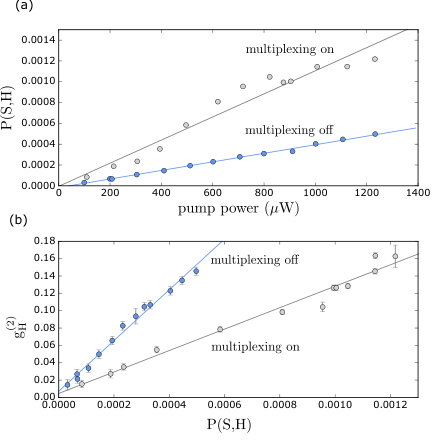 Figure 4
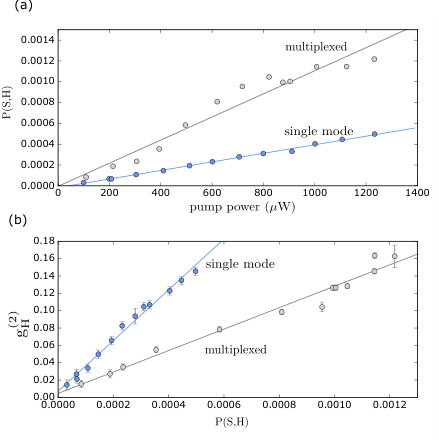 Figure 4
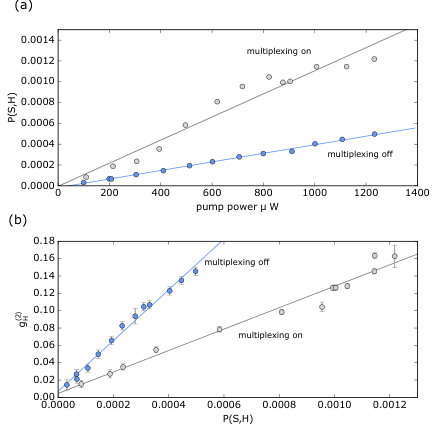 Figure 4
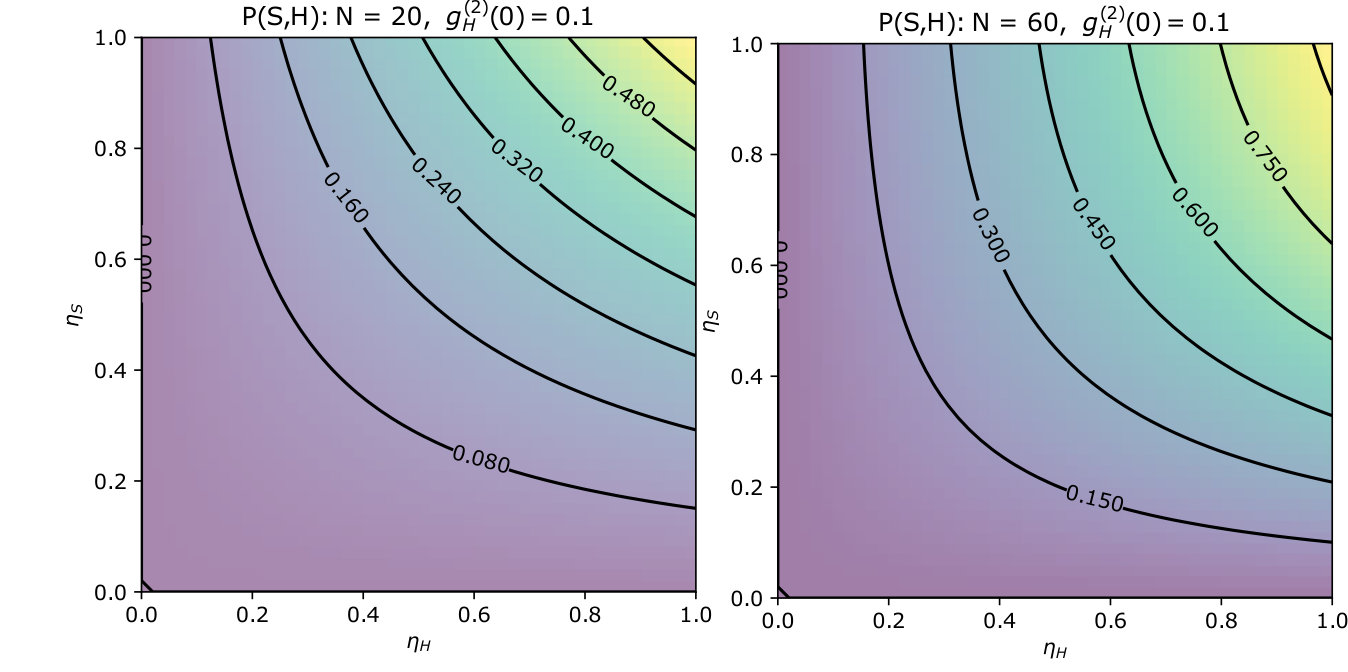 Figure 18
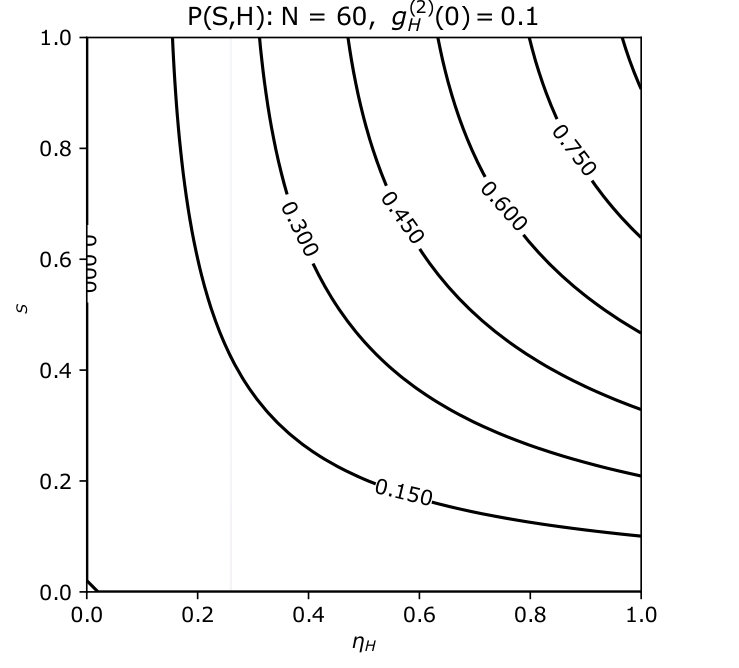 Figure 19
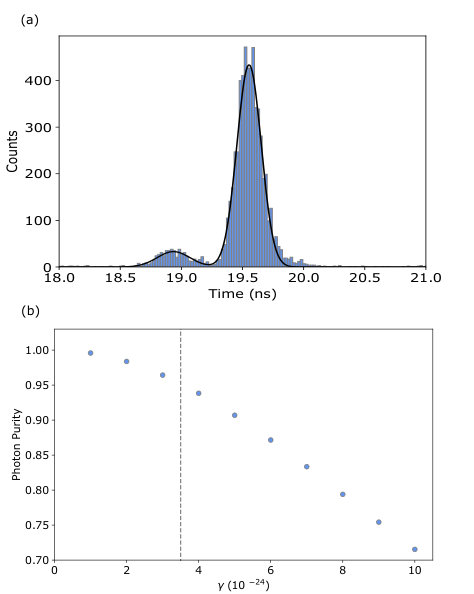 Figure 20
Peer Reviews
No public reviews on file for this paper yet. If you reviewed it on a platform where reviews are public (OpenReview, ICLR, NeurIPS, ICML), you can paste yours below so the community can read it here.
Videos
No videos yet. Explain this paper in a talk, walkthrough, or lecture? Add one.
††thanks: Both authors contributed equally to this work.††thanks: Both authors contributed equally to this work.
Pure Single Photons from Scalable Frequency Multiplexing
T. Hiemstra
Clarendon Laboratory, Department of Physics, University of Oxford, Oxford OX1 3PU, United Kingdom
T.F. Parker
Blackett Laboratory, Imperial College London, London SW7 2AZ, United Kingdom
Clarendon Laboratory, Department of Physics, University of Oxford, Oxford OX1 3PU, United Kingdom
P. Humphreys
Clarendon Laboratory, Department of Physics, University of Oxford, Oxford OX1 3PU, United Kingdom
J. Tiedau
Clarendon Laboratory, Department of Physics, University of Oxford, Oxford OX1 3PU, United Kingdom
M. Beck
Department of Physics, Reed College, Portland, Oregon 97202, USA
M. Karpiński
Clarendon Laboratory, Department of Physics, University of Oxford, Oxford OX1 3PU, United Kingdom
Faculty of Physics, University of Warsaw, Pasteura 5, 02-093 Warszawa, Poland
B.J. Smith
Clarendon Laboratory, Department of Physics, University of Oxford, Oxford OX1 3PU, United Kingdom
Department of Physics and Oregon Center for Optical, Molecular, and Quantum Science, University of Oregon, Eugene, Oregon 97403, USA
A. Eckstein
Clarendon Laboratory, Department of Physics, University of Oxford, Oxford OX1 3PU, United Kingdom
W.S. Kolthammer
Corresponding author: [email protected]
Blackett Laboratory, Imperial College London, London SW7 2AZ, United Kingdom
I.A. Walmsley
Blackett Laboratory, Imperial College London, London SW7 2AZ, United Kingdom
Clarendon Laboratory, Department of Physics, University of Oxford, Oxford OX1 3PU, United Kingdom
Abstract
We demonstrate multiphoton interference using a resource-efficient frequency multiplexing scheme, suitable for quantum information applications that demand multiple indistinguishable and pure single photons. In our source, frequency-correlated photon pairs are generated over a wide range of frequencies by pulsed parametric down conversion. Indistinguishable single photons of a predetermined frequency are prepared using frequency-resolved detection of one photon to control an electro-optic frequency shift applied to its partner. Measured photon statistics show multiplexing increases the probability of delivering a single photon, without a corresponding increase to multiphoton events. Interference of consecutive outputs is used to bound the single-photon purity and demonstrate the non-classical nature of the emitted light.
I Introduction
The deterministic preparation of an optical field consisting of exactly one photon with completely specified characteristics is a long-running scientific and technical challenge Eisaman et al. (2011). Potential applications for such a light source include sensing and imaging, quantum computing and simulations, secure communications, and fundamental tests of quantum science Zeilinger et al. (2005); O’Brien et al. (2009); Walmsley (2015). Approaches to meet this challenge are predominantly based on either a single emitter or nonlinear optical wave mixing, and the performance of such a single-photon source may be characterized in terms of its photon statistics– the degree to which the output field contains precisely one photon, and the single-photon purity– the degree to which the single photon occupies a single optical space-time mode. For some applications specific modal characteristics (e.g. particular frequency and beam geometry) might also be required. In all of these aspects, significant progress has been made for both single-emitter and nonlinear optical sources Senellart et al. (2017); Aharonovich et al. (2016); Flamini et al. (2018), yet further improvements are necessary to enable the most demanding applications.
Nonlinear optical photon sources are based on heralding detection and spontaneous parametric wave mixing, most commonly spontaneous parametric down conversion (SPDC). In SPDC the second-order nonlinear response of a material due to its interaction with a strong pump field generates pairs of photons in two new fields, which we refer to as signal and herald. Detection of the herald field is used to indicate when a single photon is prepared in the signal field Zeldovich and Klyshko (1969); Christ et al. (2013).
A quantum mechanical description of SPDC is given by an effective Hamiltonian that is bilinear in field operators:
[TABLE]
where and are bosonic creation operators in the signal and herald fields at the specified frequency , and the gain depends on the optical nonlinearity and pump field intensity. The complex-valued joint spectral amplitude (JSA) function describes spectral-temporal correlations between the signal and herald fields Grice and Walmsley (1997).
To achieve a high single-photon purity, heralded sources often employ a JSA that is factorable, , as in Fig. 1(a) Grice et al. (2001). The frequency characteristics of the signal photon are therefore independent of those of the detected herald photon, and Eq. 1 results in a two-mode squeezed vacuum state in broadband modes and with a squeezing parameter dependent on the gain. In this case, with optimal squeezing, the maximum probability to generate one pair of photons is 0.25. If the heralding detectors are capable of efficient photon number resolution, this allows such a high gain source to be employed. However, typically such detectors are at best inefficient, and more usually are not photon number resolving, and therefore a common expedient is to suppress contributions from multiple photon pairs, by operating the single-photon sources far below this limit Christ and Silberhorn (2012).
To increase the probability of delivering a photon, the outputs from several heralded SPDC sources can be combined into a common channel, an approach referred to as source multiplexing Pittman et al. (2002); Migdall et al. (2002). A spatially multiplexed photon source, for example, consists of multiple factorable sources routed through a switching network, conditioned on which source generates a photon pair Migdall et al. (2002). In a frequency-multiplexed photon source Grimau Puigibert et al. (2017); Joshi et al. (2018), the spectral structure of a single nonlinear interaction plays the role of multiple factorable sources. By using an anticorrelated JSA (Fig. 1(b)), which naturally arises when the pump bandwidth is much less than the phase-matching bandwidth, photon pairs that differ only by their central frequencies are generated across the whole joint spectrum. The frequency of a signal photon is determined by a frequency-resolved heralding measurement. A frequency shift is then applied to route the signal photon to the specified output mode, matched to the passband of an output filter needed to reject photons at other frequency ranges.
Recent advances in both single-emitter and multiplexed single-photon sources have led to devices that achieve a 50-70% probability of delivering a single photon with a purity of 80-90% Kaneda and Kwiat (2018); Senellart et al. (2017). Multiplexed devices could be further improved by employing number resolved herald detection– an ideal device would then require only 17 heralded sources to deliver a photon with over 99% probability Christ and Silberhorn (2012), however to be practical this would require a substantial improvement to the achievable detection efficiency. An alternative approach that makes use of efficient, but non-number-resolving detectors, is to use a large number of sources of weakly-squeezed light, where the probability of more than one pair of photons being generated is very small.
The technical feasibility for a multiplexing scheme to employ a large number of sources depends on how the number of device components and overall loss scale with the number of sources . Spatial schemes require physically distinct SPDC sources, and the construction of the switch determines its loss scaling: For example, a binary tree network requires log N two-port switches; a generalised Mach-Zehnder network demands N couplers and a phase shifter (used X times) and a serial network N switches. Bonneau et al. (2015); Gimeno-Segovia et al. (2017). In contrast, temporal multiplexing with an optical delay requires only one two-port switch and one SPDC source,each operated times Kaneda and Kwiat (2018). As with serial spatial switches, however, the output suffers a worst-case loss of passes through the switch. Frequency multiplexing is unique in combining advantages of the switch and optical delay. In this case, neither the overall loss nor the number of physical components necessarily increases with .
In this article, we report a frequency multiplexing device that demonstrates the promise to scale to high performance using a large number of effective sources. In particular, the methods we use to generate, detect, and switch photons operate continuously over a range of frequencies, thereby realizing the scaling advantage of this approach. We demonstrate an enhancement in single-photon statistics and, for the first time, test the single-photon purity of a frequency multiplexed source through interference of two photons generated by the source on sequential trials..
II Experimental Methods
A schematic of our frequency-multiplexed single-photon source is shown in Fig. 2. Pairs of photons with anticorrelated frequencies are generated by pulsed type-0 SPDC in a periodically poled potassium titanyl phosphate waveguide. This process is driven by a pulsed pump field at 386.8 THz (775 nm) with a full width half maximum (FWHM) bandwidth of 60 GHz (0.12 nm) and repetition rate of 10 MHz. The resulting joint spectrum is similar to that shown in Fig. 1(b), symmetric about 193.5 THz (1550 nm) and highly linear over a range of more than 10 THz (80 nm). The herald and signal fields, respectively corresponding to wavelengths longer and shorter than 1550 nm, are divided in two beams by a dichroic mirror.
The herald field is then measured by a time-of-flight single-photon spectrometer Avenhaus et al. (2009); Davis et al. (2017) consisting of a chirped fibre Bragg grating (FBG) and time-resolved detection by a superconducting nanowire single-photon detector (SNSPD). The FBG results in a frequency-dependent delay of 16 ps/GHz. The detection time, recorded by an FPGA-based time-to-digitial converter (TDC) Bourdeauducq (2013), determines the frequency of a herald photon with an uncertainty of 10 GHz due jitter in the SNSPD and timing electronics.
The frequency of a heralded photon in the signal field is shifted using a travelling-wave electro-optic phase modulator (EOM) Cumming (1957); Wright et al. (2017). The photon co-propagates through the EOM with a drive voltage with frequency and amplitude . The period is substantially longer than the photon’s pulse duration, so that appropriately setting the drive phase with respect to the photon’s arrival time causes a phase across the single-photon pulse that varies linearly in time. The corresponding shift in the photon’s carrier frequency is
[TABLE]
where is the EOM voltage that results in an optical phase of .
To calibrate the frequency shifting, a continuous-wave seed field is added at 1565 nm, so that signal field pulses generated via difference frequency generation can be readily measured with an optical spectrum analyzer. Figure 3(a) demonstrates a total frequency shift range of = 170 GHz using this method. The shifted spectral distributions show greater than 94% overlap, indicating that the shift causes negligible distortion.
Lastly, we combine the frequency-resolved herald measurement and frequency shift using feed-forward control. The FPGA uses a calibrated look up table to set the EOM voltage with a voltage-controlled attenuator, based on the time-of-flight detection time. To measure the joint spectrum of photon pairs, a second time-of-flight spectrometer is connected to the output signal field. Figure 3(b) shows that without shifting, the joint spectrum exhibits anticorrelation as expected. The signal output filter, with a passband indicated by the white lines, limits the observed frequency range. In contrast, the data in Fig. 3(c) correspond to active frequency shifting. The joint distribution now shows that the frequency of the signal photon is largely independent of the measured frequency of the herald photon.
III Source Characterisation
We first examine how much the probability of delivering a photon increases when frequency shifting is activated. To do so, we measure the probability of joint detection events by SNSPDs on the output signal and herald fields. Figure 4(a) shows the dependence of on the average power, with and without shifting activated. In both cases, we observe that increases linearly with power, as expected in the limit of small squeezing parameters. For a given pump power, we measure to increase by a factor of 2.7 when multiplexing is engaged.
Furthermore, we show that this increase in joint detection probability is achieved without a degredation of the output’s single-photon character, as is the case if the pump power is simply increased without using multiplexing. For this we measure the heralded second-order correlation using a Hanbury-Brown-Twiss (HBT) setup of a beam splitter followed by two detectors on the output of the source. As above, we record herald H and signal S1 and S2 detection events and estimate their independent and joint probabilities. We then estimate the second-order correlation from
[TABLE]
where is the mean number of photons in the signal field, before the HBT setup, conditional on a herald detection event, and in the second step we make an approximation of small squeezing U’Ren et al. (2005). For an ideal single-photon source since there is no probability to deliver more than one photon. For an ideal non-multiplexed heralded source with small squeezing, for probability to generate a pair of photons Belhassen et al. (2018).
Figure 4(b) shows measured for different values of , which are achieved by varying the pump power as indicated in Fig. 4(a). Without multiplexing, an increase in is accompanied by an undesirable increase in . By using multiplexing, these data show an increase in the probability of delivering a photon is achieved while maintaining a constant .
We now investigate the modal purity of photons delivered by the multiplexed source Christ et al. (2011). In particular, the spectral mode should be consistent and independent of the herald frequency measurement. The modal purity is estimated by interfering consecutive heralded photons Mosley et al. (2008) using an unbalanced Mach-Zehnder interferometer. As shown in Fig. 5(a) the two photons are probabilistically separated by an initial beam splitter and aligned in time by a fixed optical-fiber delay and adjustable micro-positioned delay. Interference at a second beam splitter is observed with single-photon detectors monitoring each output.
Two-photon interference is observed through variations in the joint detection probabilities as the relative delay is changed Hong et al. (1987), as shown in Fig. 5(b). These data are normalised to account for fluctuations in the pump power, causing a varying photon-pair generation rate, between each data point. This is achieved by dividing the raw fourfold coincidence counts by the square of the total heralded signal counts.
The maximum state purity is inferred to be the visibility of this variation in joint detection Mosley et al. (2008). We observe an interference visibility of 0.61 0.04, noting that a visibility of over from phase-independent sources indicates non-classical light Mandel (1983).
The modal purity of the single photons can be inferred to be at least as large as the observed interference visibility Mosley et al. (2008). A detailed model of our source indicates the purity suffers two technical limitations specific to its implementation. First, limited resolution of the herald spectrometer, due to timing jitter in detection electronics, limits the purity to 0.92. Second, group velocity dispersion in the optical delay line (300 m of SMF-28 fiber) that precedes frequency shifting causes a time delay correlated to measured herald frequency. The combined effects of spectrometer uncertainty and dispersion result in a purity of 0.84. We estimate that further reductions in the two-photon interference visibility are due to multi-pair generation and imperfections in our interferometer. These calculations are presented in detail in the Supplementary Material.
IV Outlook
In order to maximise the probability of delivering a single photon it is necessary to address as many frequency modes as possible whilst also minimising the losses on the signal and herald fields (see Supplementary Material for a full discussion about losses). For a continuous joint spectrum, the number of accessible modes is proportional to the ratio of the shift range to the photon bandwidth, . For a sinusoidal signal driving an EOM, the period of the drive signal must be larger than the photon temporal bandwidth in order to ensure a linear phase is applied to the photon. For an optimal ratio between the drive signal period and the photon temporal bandwidth, the maximum mode number is proportional to / .
The SPDC source described already generates photon pairs with anticorrelated frequencies that span a range over 80 nm. The range of the single-photon spectrometer described is 27 times greater than used. The limitation in our current implementation comes from the maximum rf voltage applied to the EOM. We expect that this can be increased by more than 30 times using standard RF amplifiers up to the breakdown voltage of our current EOM.
The single-photon purity can be readily improved by minimizing dispersion in the optical delay line. Splicing a suitable length of dispersion-compensating into the delay line, for example, would achieve this with negligible additional attenuation. Impurity due to heralding uncertainty can be reduced by increasing the spectrometer resolution, either by using low-jitter SNSPDs or increasing the FBG optical dispersion in the time-of-flight detector. Alternately, the spectrometer requirements could be greatly reduced by using a cavity-based SPDC source designed to generate photon pairs in distinct factorable states comprised of two longitudinal cavity modes Jeronimo-Moreno et al. (2010); Luo et al. (2015).
The single-photon spectrometer and frequency shifter described here are integrated using standard optical fiber. A complete waveguide-integrated multiplexed source can be achieved by employing a photon-pair source based on a fiber-coupled photonic chip Montaut et al. (2017) or in-fiber nonlinear optics Francis-Jones et al. (2016), along with a fiber wavelength splitter. The resulting device would allow compact and robust alignment-free operation. In light of the feasibility and performance scaling investigated here, these practical considerations suggest frequency multiplexing is a promising route to meeting the long-running challenge of a near-deterministic source of highly pure single photons.
Funding Information
Engineering and Physical Sciences Research Council (NQIT EP/M013243/1 and BLOQS EP/K034480/1); European Research Council (MOQUACINO); TFP is supported by the EPSRC Centre for Doctoral Training in Controlled Quantum Dynamics (EP/L016524/1).
Acknowledgments
The authors thank Alex Davis, Helen Chrzanowski and Ben Metcalf for fruitful discussions.
Supplemental Documents
See Supplement 1 for supporting content.
The reference list from the paper itself. Each links out to its DOI / PubMed record.
- 1Eisaman et al. (2011) M. D. Eisaman, J. Fan, A. Migdall, and S. V. Polyakov, Rev. Sci. Instrum. 82 , 071101 (2011) . · doi ↗
- 2Zeilinger et al. (2005) A. Zeilinger, G. Weihs, T. Jennewein, and M. Aspelmeyer, Nature 433 , 230 (2005) . · doi ↗
- 3O’Brien et al. (2009) J. L. O’Brien, A. Furusawa, and J. Vuckovic, Nature Photonics 3 , 687 (2009) . · doi ↗
- 4Walmsley (2015) I. A. Walmsley, Science 348 , 525 (2015) . · doi ↗
- 5Senellart et al. (2017) P. Senellart, G. Solomon, and A. White, Nat. Nanotechnol 12 , 1026 (2017) . · doi ↗
- 6Aharonovich et al. (2016) I. Aharonovich, D. Englund, and M. Toth, Nature Photonics 10 , 631 (2016) , review Article. · doi ↗
- 7Flamini et al. (2018) F. Flamini, N. Spagnolo, and F. Sciarrino, Reports on Progress in Physics 82 , 016001 (2018) . · doi ↗
- 8Zeldovich and Klyshko (1969) B. Y. Zeldovich and D. N. Klyshko, JETP Lett. 9 , 40 (1969) .