LOFAR discovery of a radio halo in the high-redshift galaxy cluster PSZ2 G099.86+58.45
R. Cassano, A. Botteon, G. Di Gennaro, G. Brunetti, M. Sereno, T.W., Shimwell, R.J. van Weeren, M. Br\"uggen, F. Gastaldello, L. Izzo, L., B\^irzan, A. Bonafede, V. Cuciti, F. de Gasperin, H.J.A. R\"otttgering, M., Hardcastle, A.P. Mechev, C. Tasse

TL;DR
This paper reports the discovery of a distant radio halo in a high-redshift galaxy cluster using LOFAR, providing insights into cluster magnetic fields and the prevalence of radio halos at high redshift.
Contribution
First detection of a high-redshift radio halo with LOFAR, revealing its properties and implications for magnetic fields and turbulence in galaxy clusters.
Findings
Radio halo extends over ~1 Mpc in the cluster.
The spectral index is constrained to be ≤ 1.5-1.6.
At least 30-60% of similar clusters may host radio halos.
Abstract
In this Letter, we report the discovery of a radio halo in the high-redshift galaxy cluster PSZ2 G099.86+58.45 () with the LOw Frequency ARray (LOFAR) at 120-168 MHz. This is one of the most distant radio halos discovered so far. The diffuse emission extends over 1 Mpc and has a morphology similar to that of the X-ray emission as revealed by XMM-Newton data. The halo is very faint at higher frequencies and is barely detected by follow-up 1-2 GHz Karl G.~Jansky Very Large Array (JVLA) observations, which enable us to constrain the radio spectral index to be , i.e.; with properties between canonical and ultra-steep spectrum radio halos. Radio halos are currently explained as synchrotron radiation from relativistic electrons that are re-accelerated in the intra-cluster medium (ICM) by turbulence driven by energetic mergers. We show that in such a…
Click any figure to enlarge with its caption.
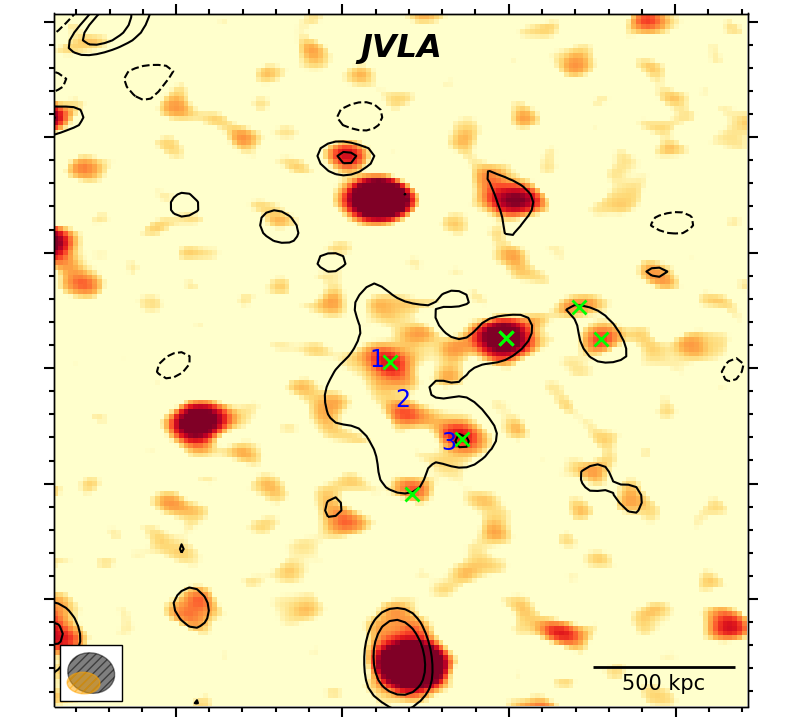 Figure 1
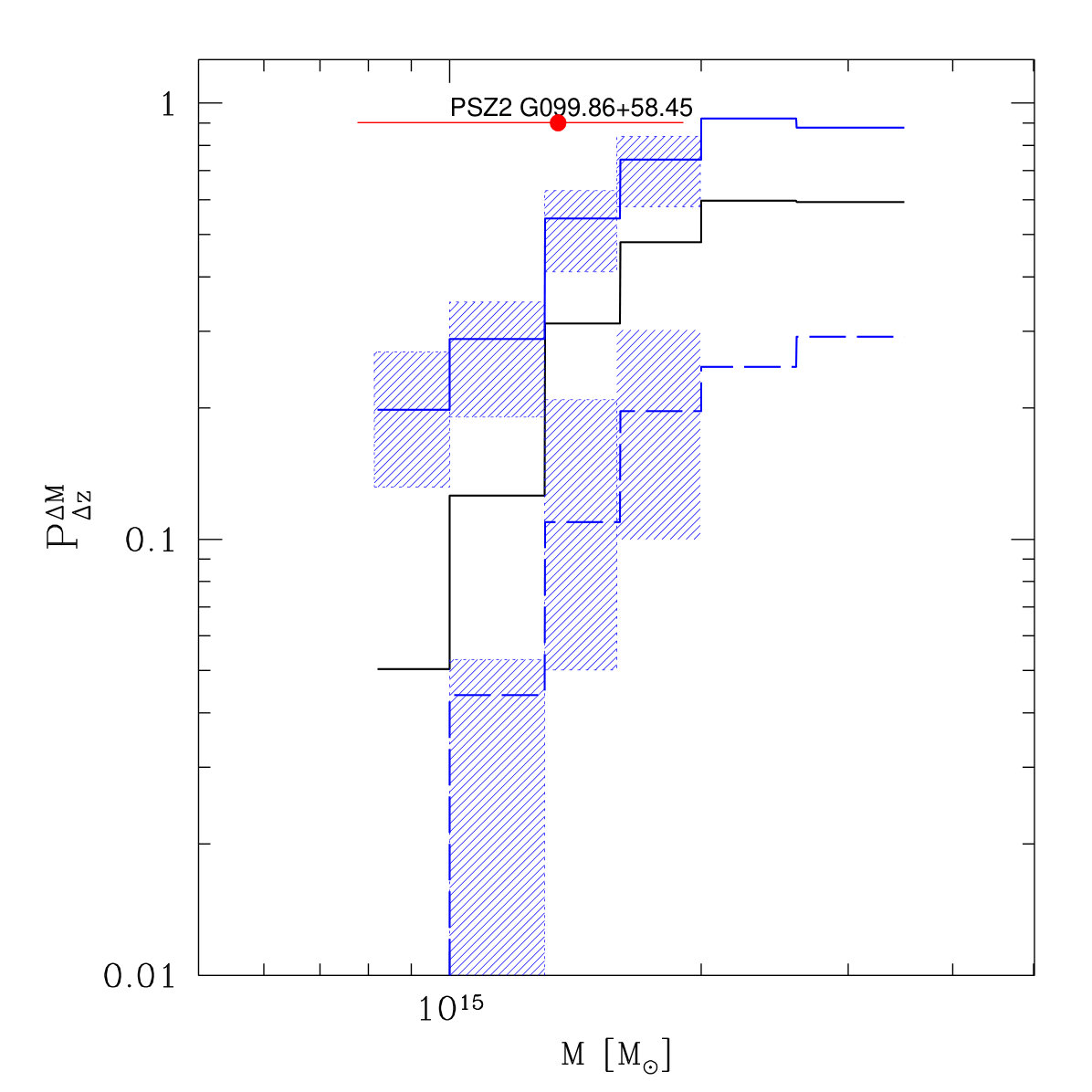 Figure 2
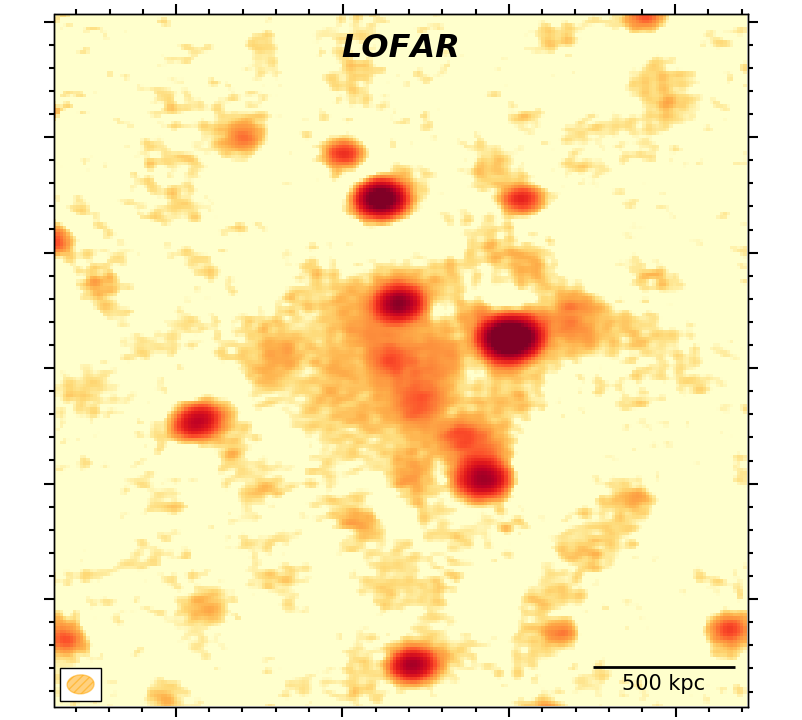 Figure 3
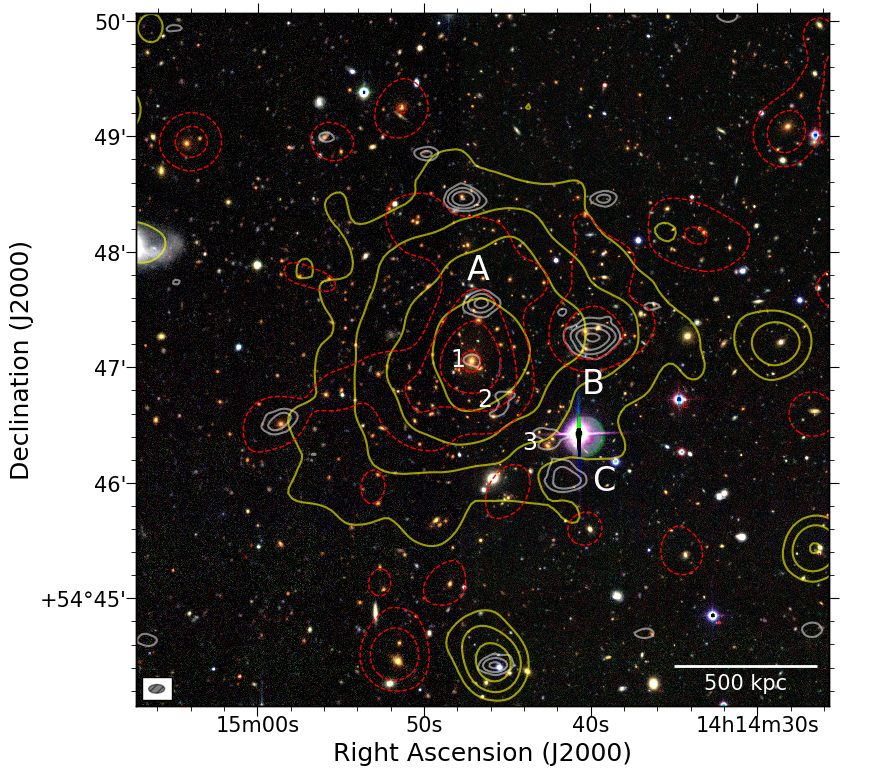 Figure 4
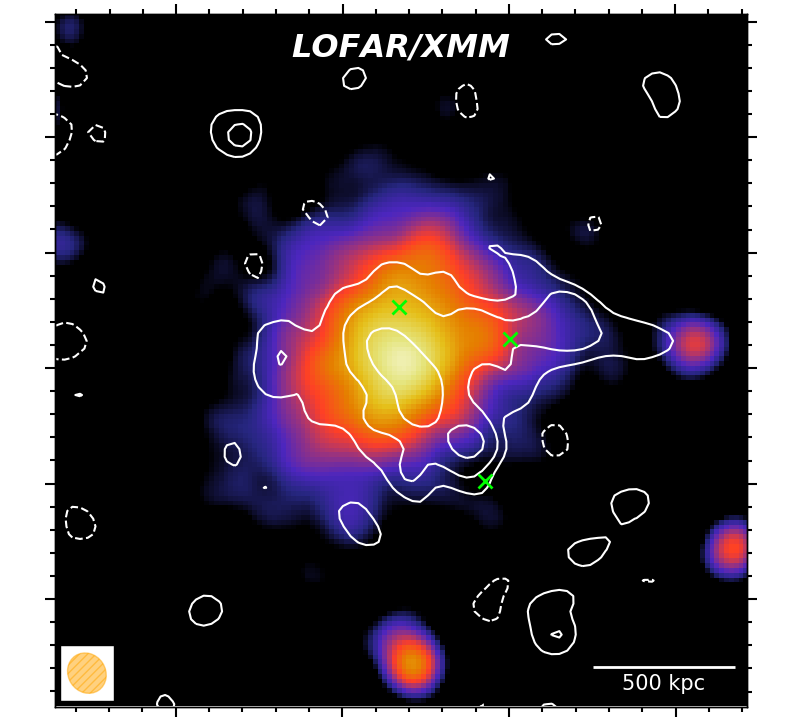 Figure 5
| (mJy)a | |
|---|---|
| (mJy) | |
| ( W Hz-1)b | |
| Halo Size (Mpc) | 0.6-1.2 |
| 144 MHz compact source fluxes (mJy) | (A) |
| (B) | |
| (C) |
Peer Reviews
No public reviews on file for this paper yet. If you reviewed it on a platform where reviews are public (OpenReview, ICLR, NeurIPS, ICML), you can paste yours below so the community can read it here.
Videos
No videos yet. Explain this paper in a talk, walkthrough, or lecture? Add one.
LOFAR discovery of a radio halo in the high-redshift galaxy cluster PSZ2 G099.86+58.45
R. Cassano11affiliationmark: , A. Botteon11affiliationmark: 22affiliationmark: 33affiliationmark: , G. Di Gennaro33affiliationmark: , G. Brunetti11affiliationmark: , M. Sereno44affiliationmark: 55affiliationmark: , T.W. Shimwell 66affiliationmark: 33affiliationmark: , R.J. van Weeren33affiliationmark: , M. Brüggen77affiliationmark: , F. Gastaldello88affiliationmark: , L. Izzo99affiliationmark: , L. Bîrzan77affiliationmark: , A. Bonafede22affiliationmark: 77affiliationmark: , V. Cuciti77affiliationmark: , F. de Gasperin77affiliationmark: , H.J.A. Röttgering33affiliationmark: , M. Hardcastle1010affiliationmark: , A.P. Mechev33affiliationmark: , C. Tasse1111affiliationmark: 1212affiliationmark:
11affiliationmark: INAF - Istituto di Radioastronomia, via P. Gobetti 101, I–40129 Bologna, Italy
22affiliationmark: Dipartimento di Fisica e Astronomia, Università di Bologna, via P. Gobetti 93/2, I-40129 Bologna, Italy
33affiliationmark: Leiden Observatory, Leiden University, P.O. Box 9513, 2300 RA Leiden, The Netherlands
44affiliationmark: INAF - Osservatorio di Astrofisica e Scienza dello Spazio, via P. Gobetti 93/3, I-40129 Bologna, Italy
55affiliationmark: INFN, Sezione di Bologna, viale Berti Pichat 6/2, 40127 Bologna, Italy
66affiliationmark: ASTRON - Netherlands Institute for Radio Astronomy, PO Box 2, 7990 AA Dwingeloo, The Netherlands
77affiliationmark: Universität Hamburg, Hamburger Sternwarte, Gojenbergsweg 112, 21029, Hamburg, Germany
88affiliationmark: INAF/IASF - Milano, Via A. Corti 12, I–20133 Milan, Italy
99affiliationmark: Instituto de Astrofísica de Andalucía (IAA-CSIC), Glorieta de la Astronomía s/n, E-18008, Granada, Spain
1010affiliationmark: Centre for Astrophysics Research, School of Physics, Astronomy and Mathematics, University of Hertfordshire, College Lane, Hatfield AL10 9AB, UK
1111affiliationmark: GEPI, Observatoire de Paris, Université PSL, CNRS, 5 Place Jules Janssen, 92190, Meudon, France
1212affiliationmark: Department of Physics & Electronics, Rhodes University, PO Box 94, Grahamstown, 6140, South Africa
Abstract
In this Letter, we report the discovery of a radio halo in the high-redshift galaxy cluster PSZ2 G099.86+58.45 () with the LOw Frequency ARray (LOFAR) at 120-168 MHz. This is one of the most distant radio halos discovered so far. The diffuse emission extends over 1 Mpc and has a morphology similar to that of the X-ray emission as revealed by XMM-Newton data. The halo is very faint at higher frequencies and is barely detected by follow-up 1-2 GHz Karl G. Jansky Very Large Array (JVLA) observations, which enable us to constrain the radio spectral index to be \alpha\;\raise 1.29167pt\hbox{<\kern-7.5pt\raise-4.73611pt\hbox{\sim}}\;1.5-1.6, *i.e., *with properties between canonical and ultra-steep spectrum radio halos. Radio halos are currently explained as synchrotron radiation from relativistic electrons that are re-accelerated in the intra-cluster medium (ICM) by turbulence driven by energetic mergers. We show that in such a framework radio halos are expected to be relatively common at MHz () in clusters with mass and redshift similar to PSZ2 G099.86+58.45; however, at least 2/3 of these radio halos should have steep spectrum and thus be very faint above GHz frequencies. Furthermore, since the luminosity of radio halos at high redshift depends strongly on the magnetic field strength in the hosting clusters, future LOFAR observations will also provide vital information on the origin and amplification of magnetic fields in galaxy clusters.
Subject headings:
Galaxies: clusters: individual (PSZ2 G099.86+58.45) — Galaxies: clusters: intracluster medium — large-scale structure of universe — Radiation mechanisms: non-thermal — X-rays: galaxies: clusters
1. Introduction
Cluster-scale (Mpc-scale), diffuse synchrotron emission is frequently found in high-mass (M_{500}\;\raise 1.29167pt\hbox{>\kern-7.5pt\raise-4.73611pt\hbox{\sim}}\;5\times 10^{14} M*⊙*) merging galaxy clusters in the form of so-called giant radio halos (hereafter RHs), apparently unpolarised emission that fills large cluster volumes (*e.g., * van Weeren et al., 2019). These sources are characterised by low surface brightnesses and steep spectra (, with , this is the convention we adopt in this paper). Their properties and connection with clusters mergers support the idea that they trace turbulent regions in the intra-cluster medium (ICM) where relativistic particles are trapped and re-accelerated during cluster-cluster mergers (*e.g., * Brunetti & Jones, 2014).
Present statistical studies are limited to relatively low-redshift systems (z\;\raise 1.29167pt\hbox{<\kern-7.5pt\raise-4.73611pt\hbox{\sim}}\;0.35-0.4; *e.g., * Venturi et al., 2007, 2008; Kale et al., 2015; Cuciti et al., 2015), with only a handful of halos discovered at (Giovannini & Feretti, 2000; Bonafede et al., 2009, 2012; van Weeren et al., 2009) and only two at higher redshift, one located in the El Gordo galaxy cluster, an exceptionally massive object at (Lindner et al., 2014) and one in PLCKG, a cluster at (van Weeren et al., 2014). At high redshift an increasing fraction of the energy that is dumped into the acceleration of relativistic electrons in RHs is radiated away in the form of inverse Compton (IC) emission, . This is expected to cause a decline of the fraction of RHs in high- galaxy clusters with respect to their low- counterparts (Cassano et al., 2006). In particular the fraction of clusters hosting RHs at higher is also expected to be very sensitive to the magnetic fields in these systems.
The discovery of high-redshift RHs has been limited by the need for radio observations with high sensitivity to steep spectrum emission and high resolution to adequately distinguish the emission from contaminating sources. The advent of the LOw Frequency ARray (LOFAR; van Haarlem et al., 2013), which can produce deep, high-resolution, high-fidelity, low-frequency radio images, has opened up the possibility to study RHs at low frequencies with unprecedented detail and sensitivity (*e.g., * van Weeren et al., 2016a; Shimwell et al., 2016; Bonafede et al., 2018; Botteon et al., 2018, 2019; Hoang et al., 2018, 2019a, 2019b; Wilber et al., 2018, 2019).
In this Letter, we report on the discovery of a radio halo in the high-redshift galaxy cluster PSZ2 G099.86+58.45 (PSZ2G099, hereafter) which was observed as part of the LOFAR Two-metre Sky Survey (LoTSS). LoTSS is an ongoing sensitive Jy/beam, high-resolution, , 120-168 MHz survey of the entire northern sky (Shimwell et al., 2017, 2019).
PSZ2G099 is a massive, M*⊙* (Planck Collaboration et al., 2016) and hot, keV (Sereno et al., 2018) cluster discovered through its Sunyaev-Zel’dovich (SZ) signal by the Planck satellite. Recently, the gravitational lensing signal of this cluster has been traced up to 30 Mpc from its centre implying that it sits in a very high-density environment, about six times denser than the average CDM prediction at this redshift (Sereno et al., 2018). The expected complex dynamics around this cluster make the discovery of a RH in this cluster particularly interesting.
Hereafter, we adopt a CDM cosmology with km s*-1* Mpc*-1*, , and . With the adopted cosmology, 1 corresponds to a length scale of 6.766 kpc at .
2. Observations & data reduction
The LoTSS pointings consist of 8 hr observations in the MHz band, which are typically separated by . PSZ2G099 is located at \sim 15$${}^{\prime}\,from the center of pointing P (in the region of the HETDEX Spring Field), acquired on 14 May 2015 (ObsID L343224). Data reduction of this pointing was performed with the pipeline described by Shimwell et al. (2019), which performs direction-independent and dependent calibration and imaging of the full LOFAR field-of-view, using prefactor (van Weeren et al., 2016b; Williams et al., 2016; de Gasperin et al., 2019; Mechev et al., 2018), killMS (Tasse, 2014a, b; Smirnov & Tasse, 2015) and DDFacet (Tasse et al., 2018). To improve the image quality in the direction of PSZ2G099, we used the products of the pipeline, subtracted all the sources outside a region of 15{}^{\prime}\,$$\times 15surrounding the target, and performed extra phase and amplitude self-calibration loops in this sub-field (more details by van Weeren et al. in prep.). The LOFAR images shown in this paper were produced with WSClean v2.6 (Offringa et al., 2014) and have a central frequency of 144 MHz. Uncertainties on the LOFAR integrated flux densities are dominated by errors in the absolute flux scale, which is conservatively set to 20, in line with LoTSS measurements (Shimwell et al., 2019).
A follow-up observation of PSZ2G099 was carried-out with the Karl G. Jansky Very Large Array (JVLA) in the L-band (*i.e., *1–2 GHz) in C- and D-configurations, for a total time of 4 hrs. Following the procedure described by Di Gennaro et al. (2018), we calibrated the antenna delays, bandpass, cross-hand delays, and polarisation leakage and angles using the primary calibrators 3C286 and 3C147. The calibration solutions were then applied to the target, and self-calibration on the single dataset was performed to refine its amplitude and phase solutions. During the final self-calibration on the combined dataset we also employed an additional self-calibration on a bright source located at the edge of the primary beam, whose side lobes affect the cluster radio emission. All the images in this paper were produced with CASA v5.0 (McMullin et al., 2007) using w-projection (Cornwell et al. 2005, 2008), Briggs weighting with robust=0, nterms=3 (Rau & Cornwell 2011) and are corrected for the primary beam attenuation.
PSZ2G099 was observed three times with XMM-Newton (ObsID: 0693660601, 0693662701, 0723780301) for a total exposure time of 63 ks. Periods of the observations that were affected by soft proton flares are excluded during the analysis by using the Scientific Analysis System tasks. The displayed image is a background-subtracted and exposure-corrected mosaic image in the keV band of the three ObsIDs where MOS and pn camera images are combined.
3. Results
A multi-wavelength view of PSZ2G099 is reported in Fig. 1 where the LOFAR high-resolution contours are overlaid on the CFHTLenS (Canada France Hawaii Telescope Lensing Survey, Heymans et al., 2012) image highlighting the presence of the compact radio sources in the direction of the cluster. The X-ray contours from XMM-Newton are also reported to show the distribution of the thermal gas. The red contours follow the average surface density of the cluster member galaxies selected in the optical -band. We select 3058 galaxies from the CFHTLenS image with photometric redshift within of the cluster redshift, comparable to the survey photo- uncertainty. The distribution was smoothed with a Gaussian kernel with a standard deviation of . The double-peaked average surface density and the elongated X-ray emission indicate that PSZ2G099 is in a merging phase.
At medium resolution (Fig. 2, left panel), LOFAR clearly reveals extended diffuse emission at the center of the galaxy cluster. Subtracting the emission from point sources and tapering down to \sim 20$${}^{\prime\prime}\, resolution (central panel) we find a total extent of \sim 3\times 1.5$${}^{\prime}\,in the east-west and north-south direction, respectively, corresponding to a physical extent of Mpc. We classify this emission as a RH due to its extension, morphology, and location in the cluster. The integrated flux density of the sources labelled A, B, and C located in the RH region (Fig. 1) is reported in Tab. 1. Among these only source B is detected in the JVLA image and has a spectral index (see Fig. 2, right panel), meaning that source A and C are very steep spectrum sources (). In the high-resolution LOFAR image, another three blobs of emission are detected at ( numbered from 1 to 3 in Fig. 1) which account for a small total flux density of mJy. These are also detected at high-frequency, as seen in Fig. 2 (right panel).
To disentangle the contribution of the point sources and provide a reliable measurement of the RH flux density we create an image of diffuse emission only (Fig. 2, central panel) by subtracting the clean components of the sources A, B and C from the visibilities obtained by applying an inner uv-cut of 3.5 k (corresponding to a linear size of about 400 kpc at ) to the data. The flux density of the halo measured within the LOFAR contour is mJy (this excludes the mJy flux of the three blobs). We verified that the subtraction of the three point sources using uv-cuts in the range k (corresponding to scales of kpc at the cluster redshift) corresponds to variations of the RH flux density of mJy, which is within the calibration error. The diffuse flux density is lower if emission above the level is considered.
In Fig. 2 (right panel) we show the JVLA high-resolution (17.1{}^{\prime\prime}\,$$\times 11.2) image with the 2.5 contours from the JVLA low-resolution source-subtracted image. The latter image has been obtained after the subtraction of the clean components of the point sources in the field (including those outside the cluster region) using an uv-cut of 1.3 k (corresponding to kpc) and robust=-0.5, and than tapering at 20resolution. The rms noise of this map is Jy/beam. Diffuse emission from the RH region is barely detected (the halo is not clearly detected at 3) but shows some similarity with the RH seen by LOFAR. However, the JVLA image appears to be contaminated by residuals of radio emission by individual sources. Indeed, from the un-tapered map in which point sources have been subtracted, we estimate that a residual contribution of mJy can still be attributed to point sources which leads to a residual RH flux density of mJy within . Because of the very low brightness of the halo we evaluated the statistics of the diffuse flux extracted from similar regions around the RH measuring residual flux densities which range between mJy and mJy. This provides an uncertainty in the determination of the RH flux of mJy at GHz.
4. Discussion
Observing high- RHs provides unique information on the physics of these sources in an extreme environment. In fact, models for the origin of RHs at such early times are challenged by the strong IC-losses of relativistic electrons () which would compete and hamper the acceleration of high-energy electrons and reduce the synchrotron luminosity that is generated by a factor . Under these conditions the maximum synchrotron frequency emitted by the electrons accelerated in RHs depends on (Cassano et al., 2006) and thus the magnetic field sets the frequency window where the emission can be observed.
To investigate this point, we derive the formation probability of RHs in a cluster with mass and redshift similar to PSZ2G099 using the statistical model developed by (Cassano & Brunetti, 2005, see also Cassano et al. 2006, 2010) which is based on the turbulent re-acceleration scenario. These models match the observed fraction of clusters with RHs derived in mass-selected cluster sample at low- (Cuciti et al., 2015). In such a framework, the synchrotron spectra of RHs steepen at high frequencies since turbulent re-acceleration is balanced by radiative losses of relativistic electrons. This steepening makes it difficult to detect RHs at frequencies higher than the frequency at which the steepening becomes severeaaa is defined as the frequency where the synchrotron spectrum is , with calculated between and (see Cassano et al., 2010, for details). As a simplified approach to estimate the occurrence of RHs at a given frequency we assume that only halos with can be observed at . Massive, merging clusters should statistically have larger values of making them detectable at relatively high frequencies ( GHz), while less energetic mergers are expected to produce RHs with lower which are only detectable at low frequencies ( few 100 MHz). The latter are referred to as ultra-steep spectrum RHs (USSRHsbbbRHs with are considered USSRHs (see discussion in Brunetti 2004; Brunetti et al. 2008) ) and are predicted to be the dominant class of RHs in low-frequency radio surveys, such as LoTSS (Brunetti et al., 2008; Cassano et al., 2010; Wilber et al., 2018). Theoretically, the two classes of RHs, the canonical and USSRHs, mark the extremes of a continuous distribution of properties of these radio sources.
In Fig. 3, we show the probability to form RHs with \nu_{s}\;\raise 1.29167pt\hbox{>\kern-7.5pt\raise-4.73611pt\hbox{\sim}}\;120 MHz (solid curves) and with \nu_{s}\;\raise 1.29167pt\hbox{>\kern-7.5pt\raise-4.73611pt\hbox{\sim}}\;1400 MHz (dashed curves) for clusters in the redshift range . We assume two values for the average magnetic field strength in the RH region:G (black line) and G (blue line). The latter value corresponds to the magnetic field that maximises the lifetime of relativistic electrons radiating at a given observing frequency at the redshift of the system (*i.e., *G), and thus it should be considered an upper limit for the model expectations. For the case G, we also report the resulting probabilities derived by 1000 Monte Carlo extractions of galaxy cluster samples from the pool of simulated merger trees (shadowed blue regions). Considering the virial mass of PSZ2G099, (Sereno et al., 2017), we find that at low frequency the probability to form a RH in such a cluster is maximum 40 to 60, while it drops to about considering G. We conclude that RHs in clusters similar to PSZ2G099 should be fairly common in LOFAR surveys. On the other hand, the probability to form RHs in these systems at high frequencies ( MHz) is found to depend critically on the magnetic field in the emitting volume. The maximum probability (G) is about whereas a very small probability (below the percent level, not visible in Fig. 3) is obtained considering G. The drop in probability between low and high frequencies is essentially due to the presence of USSRHs that glows up preferentially at lower frequencies.
For the specific case of PSZ2G099 the spectrum is not measured well, however our constraint \alpha\;\raise 1.29167pt\hbox{<\kern-7.5pt\raise-4.73611pt\hbox{\sim}}\;1.5-1.6 implies that we can exclude the case of a RH with an extremely steep spectrum, and that the radio properties of PSZ2G099 could be intermediate between those of canonical and USSRHs. We measure a RH flux density at 1.5 GHz of mJy, implying a 1.4 GHz radio power (-corrected) W Hz*-1*, which is consistent with the correlation observed in intermediate redshift clusters (Cassano et al. 2013). This provides information on the magnetic field in the RH volume. The expected radio luminosity is (where account for the fraction of turbulence dissipated in particle acceleration). Although the turbulent dissipation rate (, with gas density, turbulent velocity and the turbulence injection scale) can be larger in dynamically-young high- clusters than in low- ones, the fact that the radio power of PSZ2G099 is similar to its lower- counterparts suggests that in this cluster is at least similar to that in low- ones.
This finding provides important information for models of amplification of in galaxy clusters, in particular on the origin of the seed field that is stirred and amplified by turbulence and small scale dynamo (Dolag et al., 2005; Vazza et al., 2018; Donnert et al., 2018). Since the dynamo mechanism is a slow process that requires several turbulent eddy-turnover times (several Gyrs, *e.g., * Vazza et al., 2018, and ref. therein) our observations suggest an important role of Active Galactic Nuclei (AGN) and Galactic Winds (GW) in setting a significant seed field in the ICM at high redshift.
At the same time it should be stressed that PSZ2G099 is sitting in a special region of the Universe, which was found to be about six times denser than the average density of the Universe at that redshift (Sereno et al., 2018); its RH could therefore be unique. The effect of the large-scale environment (environment-bias; see Mao et al., 2018, and ref. therein) can trigger the formation of a RH: in such a place more merger/accretion episodes are expected to bias the halo growth with respect to cluster of similar mass in less denser regions of the Universe. As a consequence, future analysis of LOFAR surveys will be very important to constrain the formation rate of RHs at high- and the origin of magnetic fields in these systems.
5. Conclusions
We report on the discovery of a Mpc (total extent) RH in the PSZ2G099 cluster using LOFAR observations at MHz carried out for the LoTSS. Being at a redshift of it is among the most distant RHs discovered so far, and the furthest away currently discovered by LOFAR.
The halo is also barely detected by 1-2 GHz follow-up JVLA observations that constrains the radio spectral index to be \alpha\;\raise 1.29167pt\hbox{<\kern-7.5pt\raise-4.73611pt\hbox{\sim}}\;1.5-1.6, *i.e., *with properties between canonical and ultra-steep spectrum radio halos. The estimated 1.4 GHz radio power locates the halo on the observed correlation meaning that the magnetic field strength in this cluster should be not much different from that of other low to intermediate redshift halos in clusters with similar mass.
We show that current turbulent reacceleration models predict that RHs in clusters similar to PSZ2G099 should be common () at low frequencies, however at least 2/3 of these RHs should be USSRHs and thus be very faint at high-frequencies. This shows the power of LOFAR as a unique machine to discover RHs at high-.
Furthermore, since the fraction of clusters with RHs (and with USSRHs) at high- and their luminosity depend on the magnetic field in these systems we claim that LOFAR statistical studies of high-z RHs will provide vital information on the origin of magnetic fields in galaxy clusters.
Acknowledgments: This paper is based on data obtained from the International LOFAR Telescope (ILT) under project code LC3_008. LOFAR (van Haarlem et al., 2013) is the Low Frequency Array designed and constructed by ASTRON. It has observing, data processing, and data storage facilities in several countries, which are owned by various parties (each with their own funding sources), and are collectively operated by the ILT foundation under a joint scientific policy. The ILT resources have benefitted from the following recent major funding sources: CNRS-INSU, Observatoire de Paris and Université d’Orléans, France; BMBF, MIWF-NRW, MPG, Germany; Science Foundation Ireland (SFI), Department of Business, Enterprise and Innovation (DBEI), Ireland; NWO, The Netherlands; The Science and Technology Facilities Council, UK; Ministry of Science and Higher Education, Poland; Istituto Nazionale di Astrofisica (INAF), Italy. This research made use of the Dutch national e-infrastructure with support of the SURF Cooperative (e-infra 180169) and the LOFAR e-infra group. The Jülich LOFAR Long Term Archive and the German LOFAR network are both coordinated and operated by the Jülich Supercomputing Centre (JSC), and computing resources on the Supercomputer JUWELS at JSC were provided by the Gauss Centre for Supercomputing e.V. (grant CHTB00) through the John von Neumann Institute for Computing (NIC). This research made use of the University of Hertfordshire high-performance computing facility and the LOFAR-UK computing facility located at the University of Hertfordshire and supported by STFC [ST/P000096/1], and of the LOFAR IT computing infrastructure supported and operated by INAF, and by the Physics Dept. of Turin University (under the agreement with Consorzio Interuniversitario per la Fisica Spaziale) at the C3S Supercomputing Centre, Italy. M.S. acknowledges financial contribution from ASI-INAF n.2017-14-H.0. The Leiden LOFAR team acknowledge support from the European Research Council under the FP/2007-2013/ERC Advanced Grant NEWCLUSTERS-321271. RJvW acknowledges support from the VIDI research programme, project number 639.042.729, which is financed by the NWO. ABon acknowledges financial support from the ERC-Stg DRANOEL, no 714245, and from the MIUR grant FARE SMS. L.I. acknowledges support from funding associated with Juan de la Cierva Incorporacion fellowship IJCI-2016-30940. APM acknowledge support from the NWO/DOME/IBM programme “Big Bang Big Data: Innovating ICT as a Driver For Astronomy”, project #628.002.001. We would like to thank the anonymous referee for useful comments that help to improve the presentation of our work. Facilities: LOFAR, XMM-Newton, JVLA
The reference list from the paper itself. Each links out to its DOI / PubMed record.
- 1Bonafede et al. (2018) Bonafede, A., Brüggen, M., Rafferty, D., et al. 2018, MNRAS, 478, 2927
- 2Bonafede et al. (2012) Bonafede, A., Brüggen, M., van Weeren, R., et al. 2012, MNRAS, 426, 40
- 3Bonafede et al. (2009) Bonafede, A., Feretti, L., Giovannini, G., et al. 2009, A&A, 503, 707
- 4Botteon et al. (2019) Botteon, A., Shimwell, T. W., Bonafede, A., et al. 2019, A&A, 622, A 19
- 5Botteon et al. (2018) Botteon, A., Shimwell, T. W., Bonafede, A., et al. 2018, MNRAS, 478, 885
- 6Brunetti & Jones (2014) Brunetti, G., & Jones, T. W. 2014, International Journal of Modern Physics D, 23, 1430007-98
- 7Brunetti et al. (2008) Brunetti, G., Giacintucci, S., Cassano, R., et al. 2008, Nature, 455, 944
- 8Brunetti (2004) Brunetti, G. 2004, Journal of Korean Astronomical Society, 37, 493