From biquandle structures to Hom-biquandles
Eva Horvat, Alissa S. Crans

TL;DR
This paper explores the connection between biquandle and quandle invariants, introduces enhancements using biquandle structures, and studies the properties of Hom-biquandles and their relationship to Hom-quandles.
Contribution
It provides new insights into biquandle structures, develops biquandle analogs of Hom-quandle results, and describes the structure of Hom-biquandles.
Findings
Enhanced quandle and biquandle invariants using biquandle structures
Biquandle analogs of Hom-quandle results
Description of the biquandle structure of Hom-biquandles
Abstract
We investigate the relationship between the quandle and biquandle coloring invariant and obtain an enhancement of the quandle and biquandle coloring invariants using biquandle structures. We also continue the study of biquandle homomorphisms into a medial biquandle begun by the second author et al., finding biquandle analogs of results about Hom-quandles. We describe the biquandle structure of the Hom-biquandle, and consider the relationship between the Hom-quandle and Hom-biquandle.
Click any figure to enlarge with its caption.
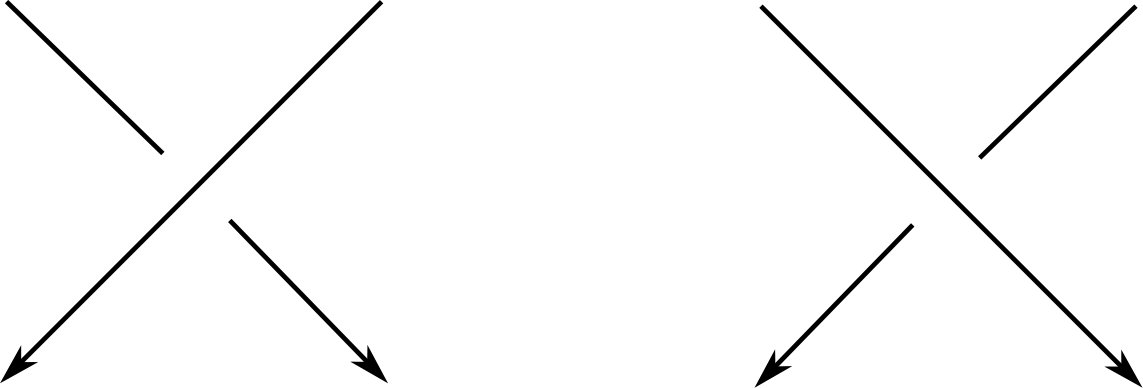 Figure 1
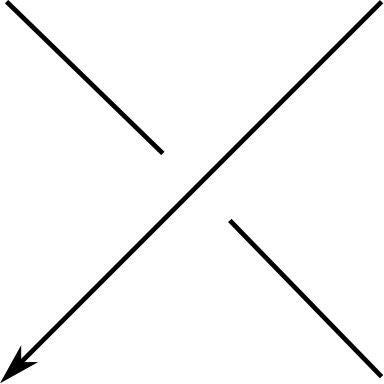 Figure 2
Peer Reviews
No public reviews on file for this paper yet. If you reviewed it on a platform where reviews are public (OpenReview, ICLR, NeurIPS, ICML), you can paste yours below so the community can read it here.
Videos
No videos yet. Explain this paper in a talk, walkthrough, or lecture? Add one.
From biquandle structures to Hom-biquandles
Eva Horvat, Alissa S. Crans
University of Ljubljana
Faculty of Education
Kardeljeva ploščad 16
1000 Ljubljana, Slovenia
Loyola Marymount University
Department of Mathematics
One LMU Drive, Suite 2700
Los Angeles, CA 90045
USA
Abstract.
We investigate the relationship between the quandle and biquandle coloring invariant and obtain an enhancement of the quandle and biquandle coloring invariants using biquandle structures.
We also continue the study of biquandle homomorphisms into a medial biquandle begun in [3], finding biquandle analogs of results therein. We describe the biquandle structure of the Hom-biquandle, and consider the relationship between the Hom-quandle and Hom-biquandle.
Key words and phrases:
quandle, biquandle, biquandle structure, Hom-biquandle, Hom-quandle.
2010 Mathematics Subject Classification:
57M27, 57M25
1. Introduction
Quandles and their generalizations, biquandles, are algebraic structures whose axioms encode the Reidemeister, and oriented Reidemeister, moves from classical knot theory. Biquandle invariants provide a method for distinguishing between certain virtual (and some non-virtual) knots. In this article, we study the relationship between quandles and biquandles, with the goal of finding biquandle versions of results pertaining to sets of quandle homomorphisms.
We begin in Section 2 with a brief review of basic quandle and biquandle definitions and facts together with fundamental examples. In Section 3 we recall the notion of a biquandle structure introduced in [5] and provide examples of different such structures one can place on the same quandle. We further present properties that a biquandle does, and does not, inherit from its associated quandle. We consider mediality and commutativity of biquandles and biquandle structures. We turn our focus to connections with knot theory in Section 4 by exploring the relationship between the quandle and biquandle coloring invariant, illustrating this with two concrete examples that demonstrate how the richness of biquandle structures on a given quandle can improve the strength of (bi)quandle representation invariants. We define an enhancement of quandle and biquandle coloring invariants based on biquandle structures. In Section 5 we continue the study of biquandle homomorphisms into a medial biquandle begun in [3], finding biquandle analogs of results therein. We describe the biquandle structure of the Hom-biquandle, and consider the relationship between the Hom-quandle and Hom-biquandle, adding some sample calculations. We conclude in Section 6 with questions for future investigation.
2. Preliminaries
We begin by recalling definitions and examples of quandles and biquandles. We refer the reader to [2, 11, 6, 7] for more details.
Definition 2.1**.**
A quandle is a set equipped with a binary operation that satisfies the following three axioms:
- •
* for every ;*
- •
the map given by is a bijection for every ; and
- •
* for every .*
On any set , we can define a trivial quandle using the binary operation for every . Given two quandles and , a map is called a quandle homomorphism if for every . Note that the third axiom above implies that each is a quandle homomorphism.
Two particularly important examples of quandles include the following.
- (a)
On any group we may define a quandle operation by for any . This gives what is known as the core quandle, .
- (b)
For an abelian group and a chosen group automorphism , the binary operation defines an affine quandle, .
We can generalize the notion of a quandle as follows:
Definition 2.2**.**
A biquandle is a set with two binary operations that satisfy the following axioms:
- •
* for every ;*
- •
the maps and , given by , and are bijections for every ; and
- •
the exchange laws
[TABLE]
hold for every .
We note that if for any , then is a quandle. Thus biquandles are a generalization of quandles. In fact, any biquandle has an associated quandle, , defined by the operation , and this induces a functor from the category of biquandles to the category of quandles [1], [10], [5, Lemma 3.1].
The biquandle analogs of our quandle examples are:
- ()
For any group , the binary operations and define a biquandle that is called the Wada biquandle. Its associated quandle is the core quandle .
- ()
Let be an abelian group and choose two automorphisms . The operations and define a biquandle whose associated quandle is the affine quandle .
In addition, given two quandles and , the product is a biquandle with the operations and .
Given two biquandles and , a map is called a biquandle homomorphism if and for every .
3. Biquandle structures on quandles
The algebraic structures of quandles and biquandles are closely intertwined. As mentioned in Section 2, every biquandle has an associated quandle . On the other hand, on a given quandle we may impose several nonequivalent structures that define biquandles. In this Section, we present the notion of a ‘biquandle structure’ and discuss which properties of biquandles are inherited from the properties of their associated quandle.
Definition 3.1**.**
Let be a quandle. A biquandle structure on is a family of quandle automorphisms that satisfies the following conditions:
- (1)
* for every , and* 2. (2)
the map defined by is a bijection of .
By [5], every biquandle structure defines a biquandle, and every biquandle arises as a biquandle structure on its associated quandle.
Theorem 3.2**.**
[5, Theorem 3.2]** Let be a biquandle structure on a quandle . Define two binary operations on by and for every . Then is a biquandle and .
Theorem 3.3**.**
[5, Theorem 3.4]** Let be a biquandle and let be its associated quandle. Then the family of maps is a biquandle structure on .
Nonisomorphic biquandle structures on quandles of order 2 and 3 are listed below. We follow the standard notation of denoting the elements of a finite quandle of order by numbers and its operation table by an matrix whose th entry is see [9]. A biquandle structure on such a quandle will be represented by the -tuple , where the automorphism is written as an element of the symmetric group in disjoint cycle notation. All computations were performed using Python.
Example 3.4**.**
There exists one quandle of order two, namely the trivial quandle with operation table . On this quandle we may impose two nonisomorphic biquandle structures: or .
Example 3.5**.**
There are three nonisomorphic quandles of order three.
- (a)
On the trivial quandle with operation table there are 5 nonisomorphic biquandle structures: , , , and .
- (b)
On the quandle with operation table , there are 4 nonisomorphic biquandle structures: , , and . We note that this quandle is not affine.
- (c)
On the quandle with operation table , there are 6 nonisomorphic biquandle structures: , , , , and . We remark that this quandle is affine.
A biquandle structure is called constant if for every . By [5, Corollary 3.8], the number of nonisomorphic constant biquandle structures on a quandle is the number of conjugacy classes of . The automorphism groups of the quandles in Example 3.5 (a) and (c) are isomorphic to , thus they admit 3 nonisomorphic constant biquandle structures. The automorphism group of the quandle in (b) is , which admits only two nonisomorphic constant biquandle structures.
Certain properties of biquandles are inherited from their associated quandles while others are not; we discuss examples of both in the remainder of this Section.
Lemma 3.6**.**
In a biquandle , the equality holds for every if any only if is a trivial quandle.
Proof.
By Theorems 3.2 and 3.3, the biquandle operations are given by and for any . Since is a bijection for every , the equivalence follows. ∎
Recall that a quandle is connected if for any there exist elements and , such that . For example, the quandle in Example 3.5 (c) is connected.
Definition 3.7**.**
Given a biquandle , consider the equivalence relation generated by and for every . The equivalence classes are called connected components, and the biquandle is called connected if there is only one class.
Proposition 3.8**.**
If is a connected quandle, then for every biquandle structure on the induced biquandle is also connected.
Proof.
Suppose is a biquandle structure on . We denote the induced biquandle by . Choose any . Since is a connected quandle, there exist and , such that . We prove that by induction on . If , it follows that either (when ) or (when ), and thus . Now suppose that for some . Denoting , we obtain and it follows that either or , which implies and thus . ∎
Definition 3.9**.**
A quandle is called medial if the equality holds for every . (All three quandles in Example 3.5 are medial.) A biquandle is called medial if the equalities
[TABLE]
hold for every .
Lemma 3.10**.**
If is a medial quandle, then for every constant biquandle structure on , the induced biquandle is also medial.
Proof.
Let be a medial quandle and . We denote the biquandle induced by the constant biquandle structure on by Using the mediality of , the computations:
[TABLE]
imply that is a medial biquandle. ∎
Commutativity is a possible, but not very common property of quandles. As the following result shows, a commutative quandle cannot be associated to a commutative biquandle.
Lemma 3.11**.**
Let be a commutative quandle of order . Then there exists no commutative biquandle with .
Proof.
Let be a biquandle given by a biquandle structure on a commutative quandle . Suppose is commutative. Then the equations imply that for every . Moreover, the equality implies that . Since is commutative, it follows that and therefore for every . Then (2) of Definition 3.1 implies that is of order . ∎
Lemma 3.12**.**
Let be a commutative biquandle given by a biquandle structure on a quandle . Then the automorphism is of order 2 for every .
Proof.
The equation implies that for every . Moreover, by we have that and by (1) of Definition 3.1 it follows that . Therefore . If for some , then the equations imply that . ∎
4. Coloring invariants of links
An important motivation behind the study of quandle-like structures lies in their natural connection with knot theory. In this Section we investigate the relationship between the quandle and biquandle coloring invariant.
Let be an oriented link diagram of a (classical or virtual) link . We denote the set of arcs and the set of crossings of by by and , respectively. Figure 1 depicts the quandle crossing relation at a crossing of the diagram .
The fundamental quandle of the link is the quandle given by the quandle presentation
[TABLE]
It is easy to see that two diagrams of the same link yield equivalent presentations and thus the fundamental quandle defines a link invariant. For more details, we refer the reader to [6].
Considering the link diagram as a 4-valent graph, every arc is divided into two semiarcs that are incident at a vertex of the graph. We denote the set of semiarcs of by Figure 2 depicts the biquandle crossing relations at a (positive or negative) crossing of the diagram . The fundamental biquandle of the link is the biquandle given by the biquandle presentation
[TABLE]
It is well-known that the fundamental biquandle of a classical or virtual link does not depend on the choice of a particular link diagram and thus defines a link invariant [7].
Fundamental (bi)quandles of links are often compared by representations into finite (bi)quandles. We denote the set of quandle (respectively biquandle) homomorphisms between the quandles (respectively biquandles) and by (respectively ).
Definition 4.1**.**
Let be a finite quandle. The cardinality is called the quandle coloring invariant of the link with respect to . For a finite biquandle , the cardinality is called the biquandle coloring invariant of the link with respect to .
Example 4.2**.**
Let be the quandle of order 4 with operation table . This quandle admits 9 nonisomorphic biquandle structures . We will denote the biquandle corresponding to the biquandle structure by . The coloring invariants of some knots with respect to and are listed in the table below. We use the standard knot enumeration from the Knot atlas [12].
[TABLE]
Observe that the quandle coloring invariant with respect to takes the same value for nearly all knots in the table. Also, the biquandle coloring invariant with respect to any one of the biquandles is not very effective in distinguishing knots. The tuple of invariants , however, is able to distinguish all but two of the knots under consideration.
Example 4.3**.**
Let again be the quandle of order 4 from Example 4.2. The coloring invariants of all 3-crossing virtual knots with respect to and are listed in the table below. The knot enumeration is taken from the Table of Virtual Knots [8].
[TABLE]
Observe that in contrast with the ordinary quandle and biquandle coloring invariants, the tuple of biquandle coloring invariants is able to distinguish all virtual knots in the table. All computations were performed using Python. Our code is available for interested readers upon request.
The above examples indicate how the richness of biquandle structures on a given quandle may improve the strength of (bi)quandle representation invariants. This lays ground for a new coloring invariant.
Definition 4.4**.**
Let be a finite quandle that admits nonisomorphic biquandle structures . Denote by the biquandle correponding to the biquandle structure on . The -tuple is called the biquandle structure coloring invariant of the link with respect to the quandle .
It is clear that the biquandle structure coloring invariant represents an enhancement of both the quandle and biquandle coloring invariants, and thus offers a new way of distinguishing links.
5. Hom - biquandles
In Section 4, we discussed representations of the fundamental (bi)quandle of a link into finite (bi)quandles. The biquandle coloring invariant of a link is defined by the cardinality of the homomorphism set for a finite biquandle . It turns out that for suitable choices of the target biquandle , this set allows an additional structure.
For two biquandles and we can endow the morphism set
[TABLE]
with two operations defined by and . A natural question arises as to whether these two operations define a biquandle. The following result has already been established in [3].
Proposition 5.1**.**
Let and be biquandles. If is medial, then is a medial biquandle.
Proof.
Since is a biquandle, it is easy to see that the pointwise operations on will always satisfy the first and third biquandle axioms from Definition 2.2.
To show that satisfies the second biquandle axiom, first consider the map given by . We need to show that is invertible. Let . Since is a biquandle, for every there exists a such that . This defines a mapping . Since and are biquandle homomorphisms and is medial, we compute
[TABLE]
[TABLE]
and it follows that is a biquandle homomorphism for which .
Secondly, consider the map given by . To show that is invertible, choose . Since is a biquandle, for every there exists such that . This defines a mapping . Using the mediality of , we compute
[TABLE]
[TABLE]
and thus is a biquandle homomorphism for which .
Thirdly, consider the map . Let . Since is a biquandle, for any there exist two elements such that . We need to show that the maps are biquandle homomorphisms. We have
[TABLE]
The obtained equalities imply that and since is invertible, it follows that and . Similarly, the equalities
[TABLE]
imply that , and thus and . We have therefore shown that and .
Thus, the mediality of implies the mediality of with the pointwise operations. ∎
Definition 5.2**.**
For biquandles and where is medial, the biquandle will be called the Hom-biquandle and denoted by .
Similarly, if is a quandle and is a medial quandle, the set of quandle homomorphisms
[TABLE]
forms a quandle with the operation for every [3]. This quandle is called the Hom-quandle and will be denoted by . Structure and properties of Hom-quandles were studied in [3],[4].
As we have seen, every biquandle arises by imposing a biquandle structure on its associated quandle. A natural question is: What is the associated quandle of the Hom-biquandle ? As a set, is the set of biquandle homomorphisms. The quandle operation is given by
[TABLE]
where on the right-hand side denotes the quandle operation on . It follows that is a subset of – the associated quandle of the Hom-biquandle is a subquandle of the Hom-quandle of associated quandles. The characterization of this subquandle is given below.
Proposition 5.3**.**
Let and be quandles. Suppose is a biquandle structure defining a biquandle and is a biquandle structure defining a biquandle . A quandle homomorphism lifts to a biquandle homomorphism if and only if for every .
Proof.
For any we have
[TABLE]
∎
Proposition 5.4**.**
Let be a biquandle defined by a biquandle structure . Let be a medial biquandle, defined by a biquandle structure . Then is the subquandle
[TABLE]
The biquandle structure of is given by .
Proof.
The first statement follows directly from Proposition 5.3 together with the discussion preceding the Proposition. For the second statement, observe that
[TABLE]
for any and . ∎
Example 5.5**.**
Consider nonisomorphic biquandles of order 3, listed in Example 3.5. Table 1 lists cardinalities of the Hom-biquandle for every pair of biquandles of order 3. We denote by (respectively or ) the biquandle, corresponding to the -th biquandle structure in Example 3.5 (a) (resp. (b) or (c)). Compare this to Table 2 that lists cardinalities of the Hom-quandle of associated quandles.
Table 1 shows that the Hom-biquandles and share the same order. Calculation reveals that and . Taking into account the biquandle operations, it is easy to check that and , thus the Hom-biquandles are not isomorphic.
By Proposition 5.4, the associated quandle of depends on the biquandle structures of both biquandles and . The biquandle structure of the Hom-biquandle, however, is determined solely by the biquandle structure of . This fact is reflected in Lemma 5.6 and Proposition 5.8. Recall that a biquandle is called involutory if the equalities
[TABLE]
hold for every .
Lemma 5.6**.**
Let be a biquandle and let be a medial biquandle.
- (a)
If is involutory, then is also involutory. 2. (b)
If is commutative, then is also commutative.
Proof.
This follows from a straightforward computation. ∎
A biquandle is called a constant action biquandle if for some bijection .
Lemma 5.7**.**
Any constant action biquandle is medial.
Proof.
Let be a constant action biquandle in which for some bijection . By Lemma 3.6, its associated quandle is trivial and thus medial. Since is defined by the constant biquandle structure , it is medial by Lemma 3.10. ∎
Proposition 5.8**.**
Let be a biquandle. If is a constant action biquandle, then is a constant action biquandle.
Proof.
Let be a constant action biquandle. There exists a bijection such that for every . It follows that
[TABLE]
for every and every . Define a map by . Since is injective, it follows that is injective.
It remains to show that is surjective. Let . Since is surjective, for every there exists a such that . This defines a function . We need to show that is a biquandle homomorphism. We have
[TABLE]
Therefore , and an analogous calculation shows that . We have thus found a biquandle homomorphism for which . Therefore is a bijection on and for every , which shows that is a constant action biquandle. ∎
Proposition 5.9**.**
* is a functor from the category of biquandles to the category of medial biquandles for any medial biquandle . is an endofunctor of the category of medial biquandles for any biquandle .*
Proof.
Let be a medial biquandle. For any biquandles and and are biquandles by Proposition 5.1. For a biquandle homomorphism , the map is given by . To see that is a biquandle homomorphism, we compute
[TABLE]
and similarly for the other operation.
Let be a biquandle. For any medial biquandles and , and are medial biquandles by Proposition 5.1. For a biquandle homomorphism , the map is given by . To check that is a biquandle homomorphism, we compute
[TABLE]
and similarly for the other operation. ∎
For a finitely generated biquandle and a medial biquandle , biquandles and are also related via subbiquandle inclusions. The following statement generalizes an analogous result about Hom-quandles, see [3, Theorem 8].
Proposition 5.10**.**
Let be a finitely generated biquandle and let be a medial biquandle. Then is isomorphic to a subbiquandle of , where is the size of a minimal generating set for .
Proof.
Let be a minimal generating set for . Define a map by .
Every biquandle homomorphism in is completely determined by its values on the generating set, thus is injective. For two homomorphisms we have
[TABLE]
and similarly for the other operation. It follows that is a biquandle monomorphism, and thus is isomorphic to . ∎
Remark 5.11**.**
We have shown that is isomorphic to the subbiquandle :
[TABLE]
which is precisely the set of all biquandle colorings of by the biquandle .
In the remainder of this Section, we investigate how the source biquandle of may be simplified and still yield the same Hom-biquandle. Our results generalize the results about Hom-quandles from [4].
Definition 5.12**.**
An equivalence relation on a biquandle is called a congruence if ( and ) implies ( and ) for every .
For each congruence on , the quotient set forms a quotient biquandle with the induced operations on equivalence classes.
Let be a collection of identities on a biquandle . We denote by the minimal congruence such that whenever there exist such that and , where is an identity in . We call the congruence, generated by .
Proposition 5.13**.**
Let and be biquandles and let be a set of identities, satisfied by . Then as sets.
Proof.
Denote by the quotient homomorphism. For every and for any identity in , we have
[TABLE]
therefore . By the First Isomorphism Theorem, there exists a unique biquandle homomorphism such that . We define a map by . Then is a bijection with inverse , given by . ∎
Definition 5.14**.**
A biquandle is called 2-reductive if the equalities
[TABLE]
are satisfied for every .
For example, every constant action biquandle is 2-reductive.
Lemma 5.15**.**
A 2-reductive biquandle is medial.
Proof.
Choose elements and of a 2-reductive biquandle . Using 2-reductiveness and the third biquandle axiom, we compute
[TABLE]
∎
In a biquandle , consider the relation
[TABLE]
and denote the congruence generated by by . Relation is the smallest congruence such that the quotient is 2-reductive.
Proposition 5.16**.**
Let be a biquandle and let be a 2-reductive biquandle. Then is 2-reductive and as biquandles.
Proof.
Since is 2-reductive, by Proposition 5.13 there exists a bijection , which is given by , where . For any we have , such that . A similar calculation shows that and it follows that is a biquandle isomorphism. ∎
6. Directions for Future Investigation
We first wonder whether the analogs of the questions posed in the final section of [3] hold for the Hom-biquandle. That is, what other properties, other than those presented here, does the Hom-biquandle inherit from the source and target biquandles? Given two connected biquandles, is the Hom-biquandle structure determined by the counting invariant?
In addition, we seek a relationship between the cardinalities of the source and target biquandles and that of the Hom-biquandle. In particular, could the notion of 2-reductiveness lead to finding an analog of Corollary 3.24 in [4], enabling us to count and characterize the Hom-biquandle of a 2-reductive target and arbitrary source?
Finally, when considering a more complicated study of links (e.g. virtual links), we sometimes must combine two or more different link invariants to obtain a stronger invariant. What role can the Hom-biquandle play in these situations?
Acknowledgments
Eva Horvat was supported by the Slovenian Research Agency grant N1-0083. Alissa S. Crans was supported by a grant from the Simons Foundation (#360097, Alissa Crans).
The reference list from the paper itself. Each links out to its DOI / PubMed record.
- 1[1] S. Ashihara, Fundamental biquandles of ribbon 2-knots and ribbon torus-knots with isomorphic fundamental quandles , J. Knot Theory Ramifications 23 (2014).
- 2[2] J. Carter, A Survey of Quandle Ideas , Introductory Lectures on Knot Theory, Series on Knots and Everything, vol. 46, pp. 22–53. World Science Publisher, Hackensack (2012).
- 3[3] A. Crans, S. Nelson, Hom Quandles , J. Knot Theory Ramifications, 23 , Number 2 (2014).
- 4[4] M. Bonatto, A. S. Crans, G. Whitney, On the Structure of Hom Quandles , Journal of Pure and Applied Algebra, 223 , Number 11 (2019).
- 5[5] E. Horvat, Constructing biquandles , preprint, available as ar Xiv:1810.03027.
- 6[6] R. Fenn, C. Rourke, Racks and links in codimension two , J. Knot Theory Ramifications, 1 , 343–406 (1992).
- 7[7] R. Fenn, M. Jordan-Santana, L. Kauffman, Biquandles and virtual links , Topology and its Applications, 145 , 157–175 (2004).
- 8[8] J. Green, A table of virtual knots , available at http://www.math.toronto.edu/ drorbn/Students/Green J/.