Strong electron-phonon coupling and its influence on the transport and optical properties of hole-doped single-layer InSe
A.V. Lugovskoi, M.I. Katsnelson, and A.N. Rudenko

TL;DR
This study reveals strong electron-phonon interactions in hole-doped single-layer InSe, significantly affecting its transport and optical properties, with potential observable effects at realistic doping levels and temperatures.
Contribution
It demonstrates the impact of electron-phonon coupling on mobility and optical excitations in single-layer InSe, highlighting effects of Fermi surface warping and many-body renormalization.
Findings
Charge carrier mobility is suppressed to ~1 cm^2V^{-1}s^{-1} at 100 K.
Sharp low-energy resonances in the spectral function lead to satellite quasiparticle states.
Unusual temperature-dependent optical excitations are predicted in the midinfrared region.
Abstract
We show that hole states in recently discovered single-layer InSe are strongly renormalized by the coupling with acoustic phonons. The coupling is enhanced significantly at moderate hole doping (10 cm) due to hexagonal warping of the Fermi surface. While the system remains dynamically stable, its electron-phonon spectral function exhibits sharp low-energy resonances, leading to the formation of satellite quasiparticle states near the Fermi energy. Such many-body renormalization is predicted to have two important consequences. First, it significantly suppresses charge carrier mobility reaching 1 cmVs at K in a freestanding sample. Second, it gives rise to unusual temperature-dependent optical excitations in the midinfrared region. Relatively small charge carrier concentrations and realistic temperatures suggest that these excitations may…
Click any figure to enlarge with its caption.
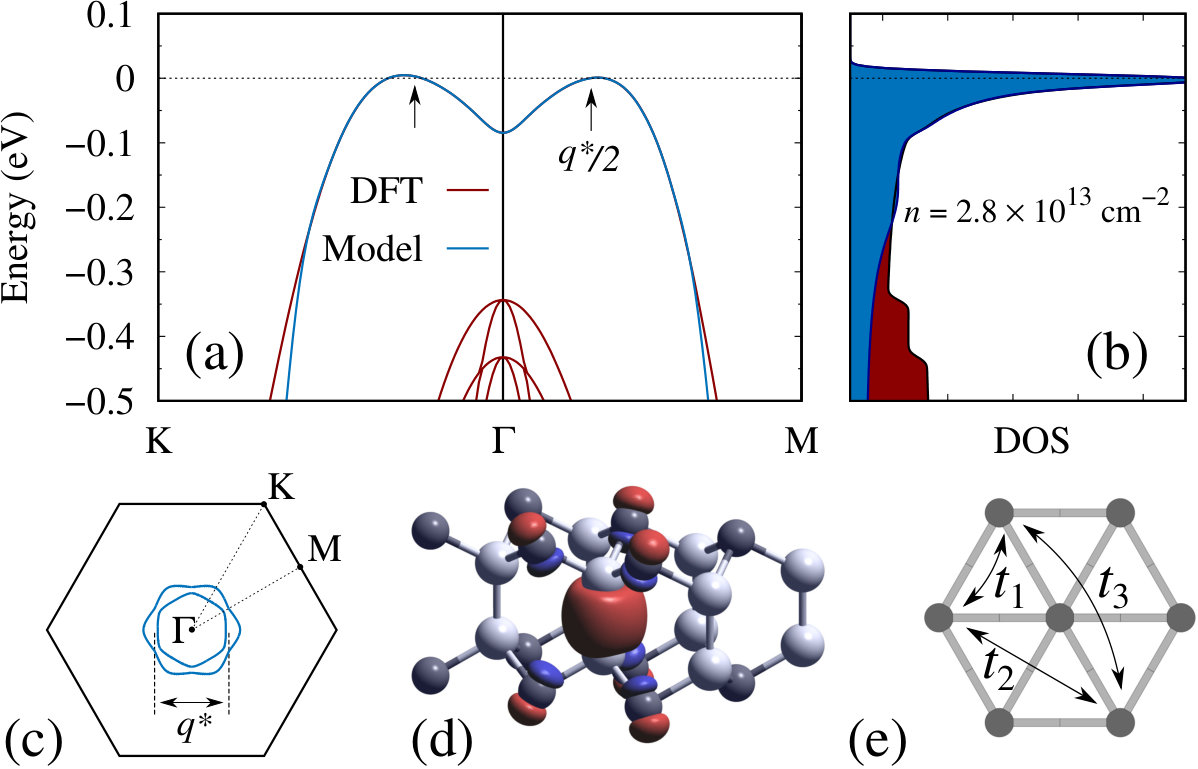 Figure 1
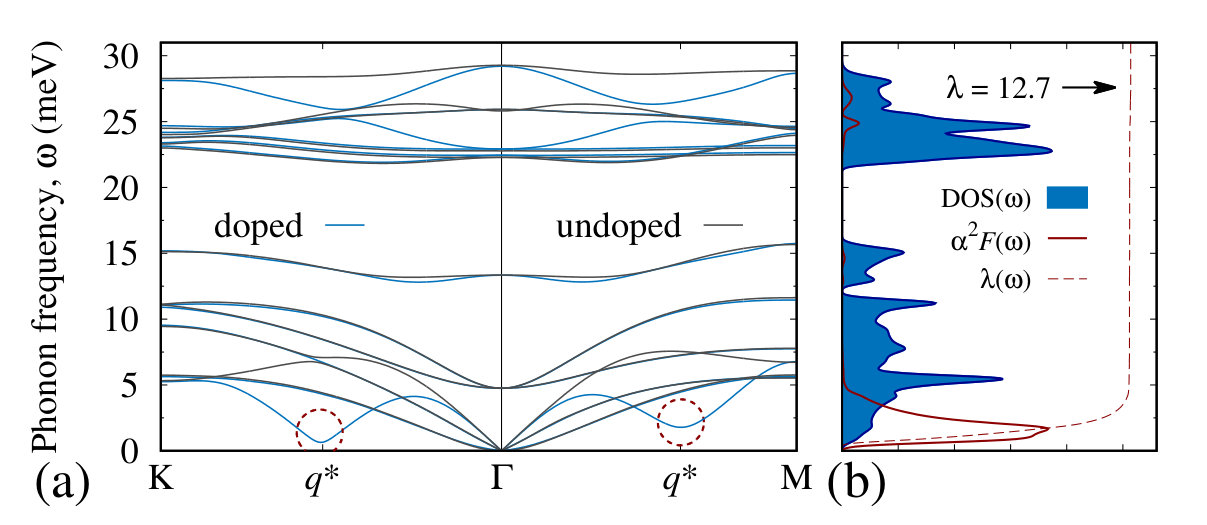 Figure 2
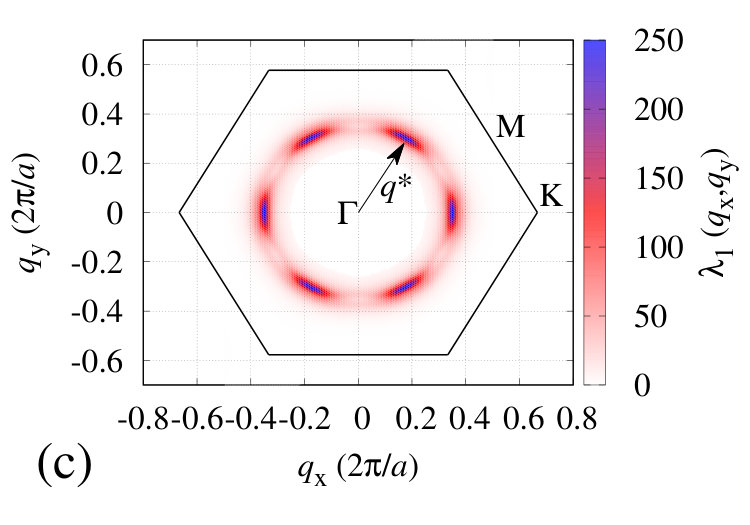 Figure 2
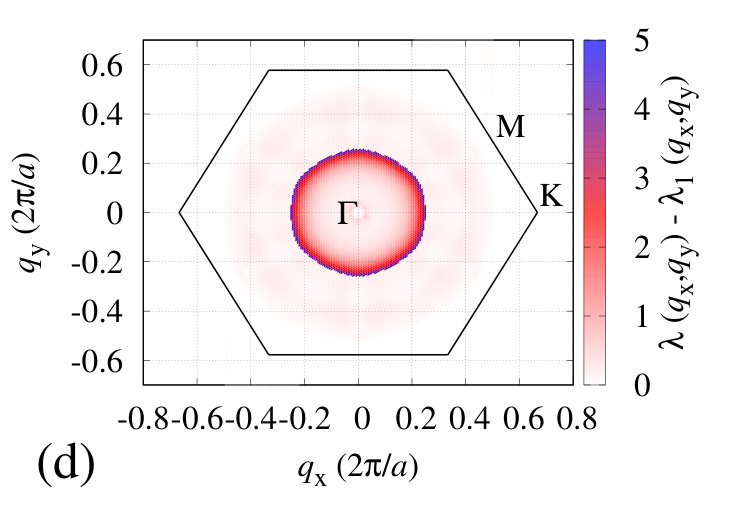 Figure 2
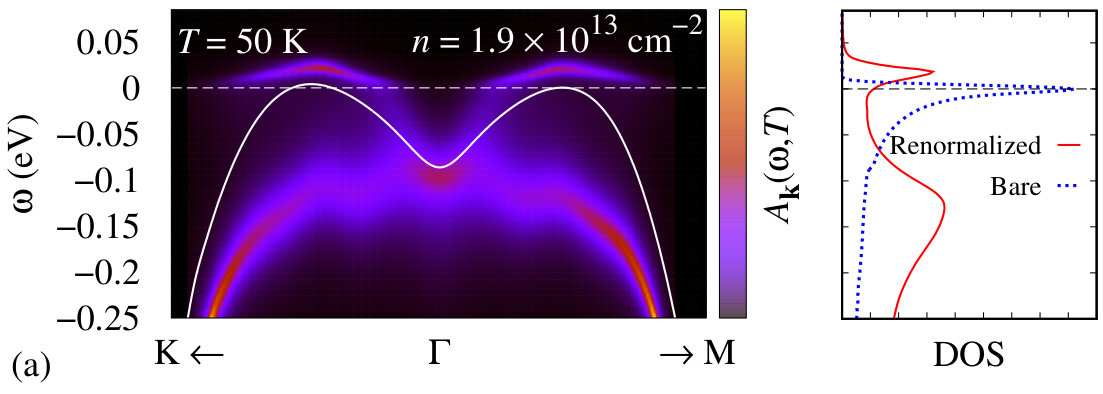 Figure 3
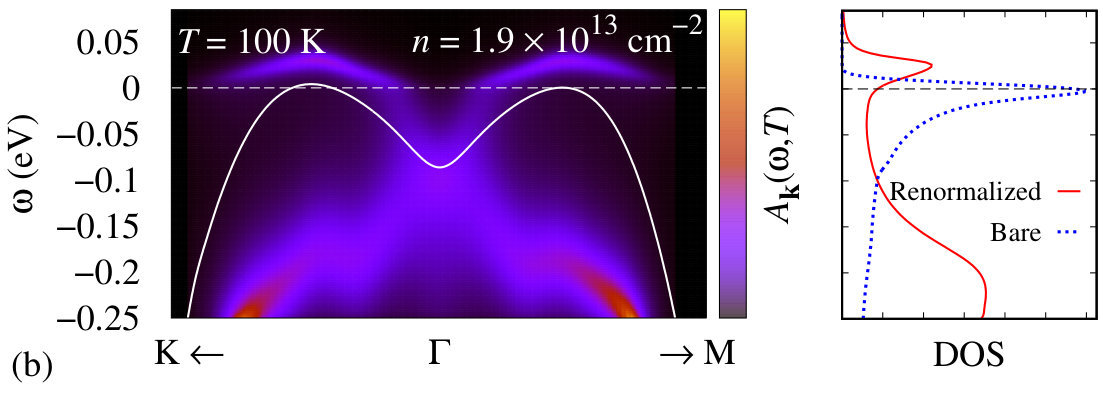 Figure 3
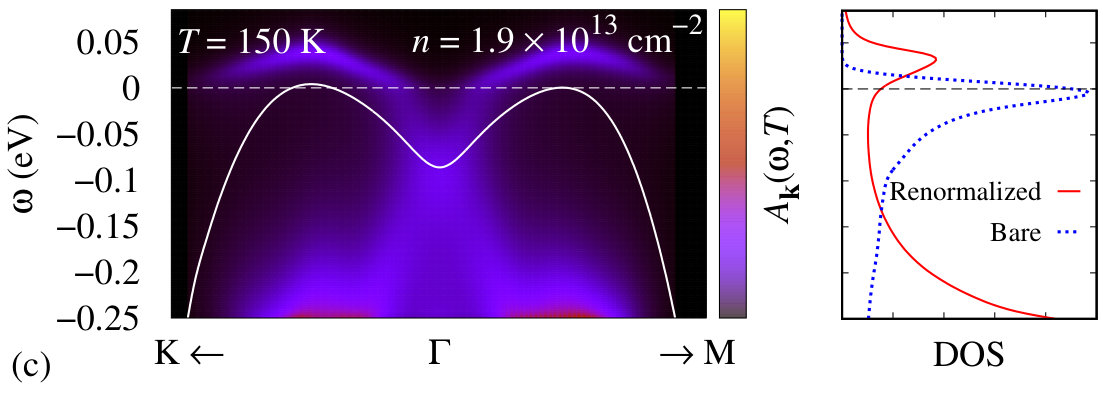 Figure 3
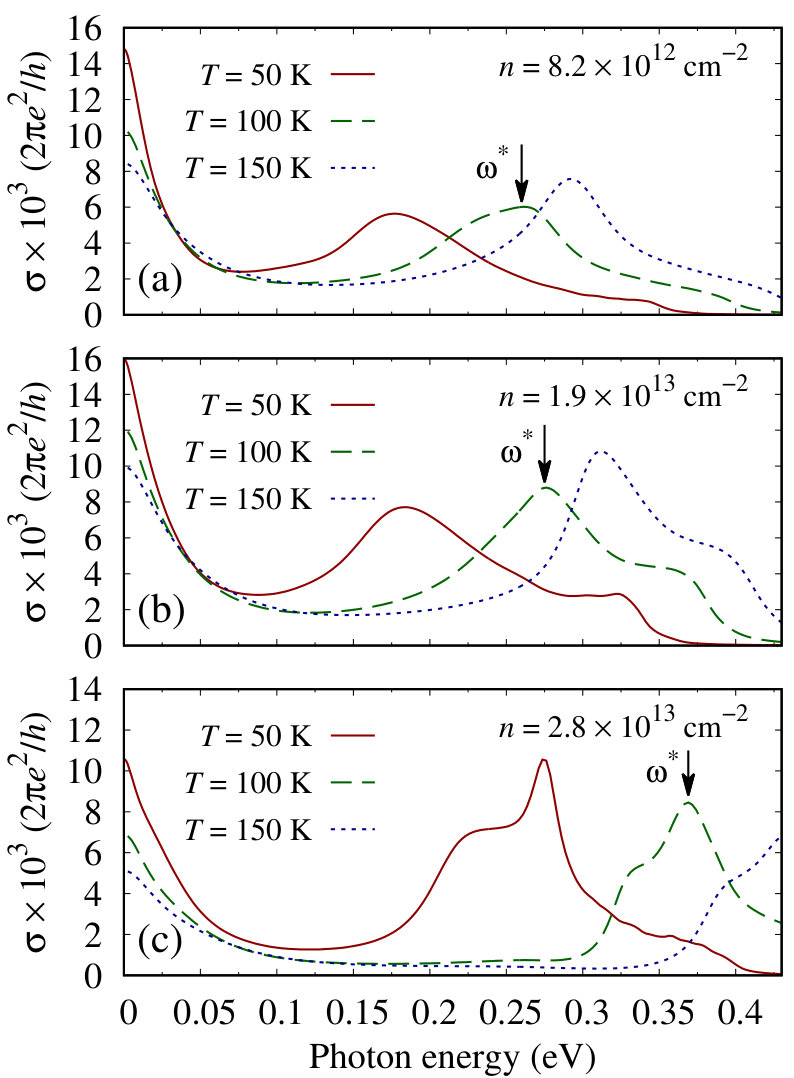 Figure 4
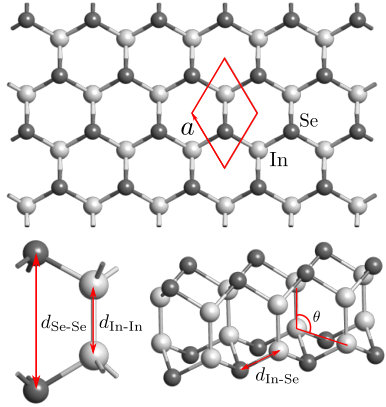 Figure 9
| (cm-2) | (cm2V-1s-1) | (eV) | ||
|---|---|---|---|---|
| 4.6 | 1.92 | 0.26 | 0.58 | |
| 5.9 | 0.94 | 0.28 | 0.73 | |
| 12.7 | 0.40 | 0.37 | 1.22 |
Peer Reviews
No public reviews on file for this paper yet. If you reviewed it on a platform where reviews are public (OpenReview, ICLR, NeurIPS, ICML), you can paste yours below so the community can read it here.
Videos
No videos yet. Explain this paper in a talk, walkthrough, or lecture? Add one.
Strong electron-phonon coupling and its influence on the transport
and optical properties of hole-doped single-layer InSe
A. V. Lugovskoi
Institute for Molecules and Materials, Radboud University, Heijendaalseweg 135, NL-6525 AJ Nijmegen, Netherlands
M. I. Katsnelson
Institute for Molecules and Materials, Radboud University, Heijendaalseweg 135, NL-6525 AJ Nijmegen, Netherlands
Theoretical Physics and Applied Mathematics Department, Ural Federal University, 620002 Ekaterinburg, Russia
A. N. Rudenko
School of Physics and Technology, Wuhan University, Wuhan 430072, China
Institute for Molecules and Materials, Radboud University, Heijendaalseweg 135, NL-6525 AJ Nijmegen, Netherlands
Theoretical Physics and Applied Mathematics Department, Ural Federal University, 620002 Ekaterinburg, Russia
Abstract
We show that hole states in recently discovered single-layer InSe are strongly renormalized by the coupling with acoustic phonons. The coupling is enhanced significantly at moderate hole doping (1013 cm*-2*) due to hexagonal warping of the Fermi surface. While the system remains dynamically stable, its electron-phonon spectral function exhibits sharp low-energy resonances, leading to the formation of satellite quasiparticle states near the Fermi energy. Such many-body renormalization is predicted to have two important consequences. First, it significantly suppresses charge carrier mobility reaching 1 cm2V*-1s-1* at K in a freestanding sample. Second, it gives rise to unusual temperature-dependent optical excitations in the midinfrared region. Relatively small charge carrier concentrations and realistic temperatures suggest that these excitations may be observed experimentally.
Introduction.—Two-dimensional (2D) indium selenide (InSe) is a recently discovered semiconductor receiving considerable attention because of its attractive electronic properties. Thin films of InSe have been proposed to be suitable for field-effect transistor applications due to their high carrier mobilities, reported to exceed 103 cm2V*-1s-1* at room temperature Sucharitakul et al. (2015); Bandurin et al. (2017); Ho et al. (2017); Li et al. (2018). Other interesting properties of this material include a tunable band gap Mudd et al. (2013); Lei et al. (2014); Brotons-Gisbert et al. (2016); Magorrian et al. (2016), fully developed quantum Hall effect Bandurin et al. (2017), anomalous optical response Bandurin et al. (2017); Mudd et al. (2013); Tamalampudi et al. (2014); Feng et al. (2015), superior flexibility Zhao et al. (2019), as well as excellent thermal Nissimagoudar et al. (2017); Zhou et al. (2018) and thermoelectric Hung et al. (2017) characteristics. These observations, along with its ambient stability Politano et al. (2016), make low-dimensional InSe an appealing candidate for numerous practical applications Boukhvalov et al. (2017).
Single-layer (SL) InSe is a layered semiconductor with an indirect energy gap in the visible range. Its electronic structure is characterized by peculiar flat regions in the valence band Zólyomi et al. (2014), giving rise to a giant van Hove singularity in the hole density of states Rybkovskiy et al. (2014); Debbichi et al. (2015). This feature is known as a “Mexican-hat”-like band, and has been predicted for the whole family of In and Ga (=S,Se,Te) compounds Zólyomi et al. (2014); Robertson (1979). Interestingly, this peculiar shape evolves into the conventional parabolic band with increasing material’s thickness, as has been theoretically predicted for InSe Rybkovskiy et al. (2014); Mudd et al. (2016) and recently confirmed by angular resolved photoemission spectroscopy Kibirev et al. (2018). This observation makes ultrathin InSe films especially attractive for further studies. The interest to flat-band materials is motivated by exotic physical properties of such systems, closely related to various many-body instabilities and strong correlation effects Khodel’ and Shaginyan (1990); Volovik (1991); Nozières (1992); Irkhin et al. (2002); Yudin et al. (2014). Recent experimental discovery of flat bands and associated many-body phenomena including superconductivity in magic-angle twisted bilayer graphene Cao et al. (2018a, b) enhances enormously the interest to the problem.
Electron-phonon interaction in the case of narrow bands can be dramatically different from the conventional case and can play a more important role. In particular, a strong electron-phonon coupling in the magic-angle twisted bilayer graphene was recently reported Choi and Choi (2018). When typical electron energies are comparable with the phonon ones, one can expect essential nonadiabatic modifications of electron Hewson (1981) and phonon Katsnelson and Trefilov (1985) energy spectra. For the case of a single electron in a crystal we have a well-known and well-studied problem of polaron Fröhlich (1954); Feynman (1955); Appel (1968); Emin (2013). The situation when we have a degenerate electron gas with a small electron energy scale near the Fermi energy is still quite poorly investigated.
In this work, we use many-body theory combined with first-principles calculations to study electron-phonon coupling and related properties of hole-doped SL-InSe. We find that due to peculiar character of hole states in SL-InSe, their interaction with phonons is anomalously strong. We predict that this interaction leads to a considerable limitation of charge carrier mobility in freestanding SL-InSe samples, but gives rise to unexpected temperature-dependent midinfrared optical excitations with large spectral weight.
Structure and basic electronic properties of SL-InSe.—Depending on the chemical composition, In-Se binary compounds demonstrate a rich variety of ordered phases with different physical properties Han et al. (2014). Among structural forms with a 1:1 stoichiometry, the polytype is the most attractive phase for exfoliation, composed of vertically stacked weakly interacting InSe layers. Each layer adopts a crystal structure with two vertically displaced 2D buckled honeycombs ( point group) SI . Atomically thin InSe was experimentally obtained by means of mechanical exfoliation Mudd et al. (2013); Brotons-Gisbert et al. (2016); Bandurin et al. (2017); Lei et al. (2014), as well as by epitaxial growth from a liquid phase Lauth et al. (2016).
Density-functional theory (DFT) electronic structure calculations and structural optimization were performed in this work by means of the plane-wave quantum espresso (qe) code Giannozzi et al. (2017), using fully relativistic norm-conserving pseudopotentials The pseudopotentials for our study were obtained from the online repository available at http://theossrv1.epfl.ch/Main/Pseudopotentials. More details about their generation can be found in A. Dal Corso (2014). Exchange and correlation were treated with the local density approximation. The kinetic energy cutoff for plane waves was set to 80 Ry, and the Brillouin zone (BZ) was sampled with a (8080) k-point mesh to ensure numerical accuracy. A vacuum thickness of 30 Å was introduced to avoid spurious interactions between the periodic supercell images in the direction perpendicular to the 2D plane. Carrier doping was introduced at the DFT level by increasing the total charge of the system and adding the compensating jellium background to preserve the charge neutrality.
In Fig. 1(a), we show the valence band of SL-InSe calculated for the hole concentration of cm*-2*. The prominent characteristic of hole doped SL-InSe is the van Hove singularity in the density of states (DOS) near the Fermi energy [Fig. 1(b)] originating from the hexagonal warping of the Fermi surface [Fig. 1(c)]. The strong nesting of the Fermi surface is expected to be responsible for giant anomalies in the response functions at the characteristic wave vector Å*-1*. In the energy region up to 0.3 eV, the valence states are represented by a single “Mexican hat”-like band. Importantly, this peculiar shape is only typical for SL- and few-layer InSe, while evolving into the parabolic shape for thick samples Kibirev et al. (2018). For the purpose of our study, it is convenient to map the full DFT Hamiltonian onto a single-band tight-binding (TB) model. To this end, we use the formalism of maximally localized Wannier functions (WF) Marzari et al. (2012) as implemented in wannier90 code Mostofi et al. (2014). The resulting model is defined in the basis of WFs localized in the center of an In-In bond with tails on neighboring Se atoms, as shown in Fig. 1(d). The effective TB Hamiltonian is defined on a triangular lattice [Fig. 1(e)] and is determined by the leading hopping integrals: eV, eV, and eV. In the low-energy region the model perfectly matches the first-principles results.
Phonons and electron-phonon coupling.—The phonon-related properties are calculated using density functional perturbation theory (DFPT) Baroni et al. (2001); Giustino (2017) as implemented in qe. The calculations are performed on a (1616) q-point mesh. The phonon dispersion curves and the corresponding DOS are shown in Figs. 2(a) and 2(b) for undoped and hole-doped SL-InSe. The undoped spectrum is typical to 2D materials, with the prominent out-of-plane (ZA) mode having quadratic dispersion around the point. Unlike elemental 2D semiconductors Zhu and Tománek (2014); Lugovskoi et al. (2019), optical modes in SL-InSe appear already at 5 meV, giving rise to a sharp peak in DOS. The hole-doping leads to a softening of the lowermost acoustic phonon mode at wave vector , which corresponds to the nesting wave vector depicted in Fig. 1(c). The frequencies of the soft mode depend on the doping value remaining positive up to the critical doping cm*-2*, at which imaginary frequencies appear suggesting structural instability of heavily doped samples. The rest of the phonon spectrum remains virtually unaffected by moderate hole doping.
We now turn to the interaction of phonons with holes in SL-InSe. To the first order in atomic displacements, the interaction of electrons with phonons can be described by the vertex , where is the characteristic displacement, and is the matrix element of the interaction potential associated with electronic states and , phonon wave vector , branch index , and frequency . In order to reach numerical convergence in evaluating BZ zone integrals, the electron-phonon-related quantities have been interpolated in momentum space by making use of the Wannier-interpolation scheme Giustino et al. (2007). To this end, we utilize the epw package Poncé et al. (2016), which allows us to achieve sufficiently accurate BZ sampling using (160160) k- and (320320) q-point meshes.
To quantify the electron-phonon coupling strength in metallic systems, it is convenient to define a dimensionless quantity averaged over the Fermi surface as , also known as the mass enhancement factor. The spectral representation of this quantity is known as the Eliashberg spectral function, which reads
[TABLE]
In Figs. 2(c) and 2(d), we show calculated for the lowermost (soft) phonon mode (), as well as for all other modes in hole-doped SL-InSe. The dominant electron-phonon coupling originates from the interaction with the soft phonon mode, exceeding the contribution from all other modes by almost 2 orders of magnitude. As expected, the strongest coupling is taking place around the nesting wave vector . In the frequency domain, the coupling is localized at low frequencies, giving rise to a pronounced peak below 5 meV in the Eliashberg function shown in Fig. 2(b). The total interaction is doping dependent and reaches its maximum value of 13 around the critical value (see Table 1). In all cases considered, , which allows us to designate hole-doped SL-InSe as a system with strong electron-phonon coupling, and expect significant renormalization of the observable electronic properties.
Many-body renormalization.—In the interacting system, the electronic structure can be characterized by the renormalized finite-temperature Green’s function , where is the bare (noninteracting) Green’s function, and is the electronic self-energy, describing the interaction. According to the Migdal theorem Migdal (1958), the latter can be approximated by a diagram involving electron and phonon propagators connected by the electron-phonon vertices , i.e.
[TABLE]
where are the fermionic Matsubara frequencies with being an integer number SI . This approximation assumes neglecting vertex corrections in the self-energy expansion Migdal (1958). Generally speaking, its applicability for the case of narrow energy bands is not fully justified. However, given that any realistic calculations of electron-phonon interaction with vertex corrections are far beyond current computational capabilities, we have no alternatives. Nevertheless, we believe that the Migdal approximation is at least qualitatively correct in our case.
In Fig. 3, we show the spectral function calculated in SL-InSe for 50, 100, and 150 K at hole concentration cm*-2*. The hole spectrum exhibits a significant renormalization compared to the noninteracting one. The spectrum reconstruction is taking place in the vicinity of the characteristic wave vector at which the hole states asymmetrically split into the upper and lower subbands. The splitting originates from the discontinuity in the self-energy at due to the strong electron-phonon coupling. The self-energy is dependent on the phonon occupation , resulting in the temperature dependence of the observed splitting. Moreover, since around K acoustic phonons can be considered classically (), this dependence is nearly linear. Both subbands are clearly observed in temperature-dependent DOS [Figs. 3(a)–(c)], which allows one to expect optically active transitions between them.
Transport and optical properties.—Having calculated the interacting Green’s function, as a next step we consider transport and optical properties of the system. Within the linear-response formalism, the conductivity tensor can be written as Economou (2006)
[TABLE]
where is the current-current correlation function with being the Kubo correlation function. Ignoring the vertex corrections, the corresponding quantity can be written in the limit of zero momentum transfer () as
[TABLE]
where is the component of the group velocity. In what follows, we consider diagonal components of the conductivity tensor only. Moreover, taking into account isotropic behavior of the system at , we have .
In Fig. 4, we show optical conductivity calculated in SL-InSe as a function of the photon energy for different temperatures and hole concentrations. At low energies, typical metallic behavior is observed with a clear Drude peak, whose amplitude in our case has the meaning of the phonon-limited direct current (dc) conductivity, i.e. . As temperature raises, dc conductivity decreases linearly with the temperature, demonstrating a dependence typical for metals in our temperature range. With increasing charge carrier concentration, dc conductivity tend to decrease. The relation of dc conductivity to the charge doping is more involved because of a nonlinear dependence of the electron-phonon coupling. The corresponding hole mobilities calculated at K for different hole concentrations are listed in Table 1. In all cases we obtain remarkably low values of the order of 1 cm2V*-1s-1*. This result is highly unexpected in view of recent experimental reports on high mobility in 2D InSe Bandurin et al. (2017); Sucharitakul et al. (2015); Ho et al. (2017); Li et al. (2018). We note, however, that our finding is solely applicable to a freestanding InSe single layer. Electronic structure of multilayer InSe, as well as encapsulated or supported samples turns out to be modified considerably by the interlayer interactions Kibirev et al. (2018), suppressing strong electron-phonon coupling. From the theoretical viewpoint low mobility values in SL-InSe are well understood and can be attributed to the formation of a coupling-induced pseudogap in the hole spectrum [see Fig. 3], resulting in a small DOS at the Fermi energy.
Finally, let us discuss many-body effects in the optical response of SL-InSe. In the independent particle approximation, the optical conductivity of an electron gas is given by the Drude formula, , with being the plasma frequency, and is a phenomenological damping. The Drude model describes monotonically decreasing conductivity as a function of energy unless interband transitions come into play. Since we deal with an effectively single-band system, no interband transitions are expected below at least 0.35 eV [see Fig. 1(a)]. Nevertheless, the calculated optical conductivity of hole-doped SL-InSe presented in Fig. 4 is qualitatively different. Specifically, the spectrum exhibits notable peaks in the energy range 0.1–0.3 eV, which are beyond the Drude model. The corresponding magnitudes are comparable with the Drude peaks at , and is increasing with doping. The observed excitations originate from the many-body splitting of hole states induced by the strong electron-phonon coupling, as discussed earlier. Importantly, the resonant frequencies are strongly temperature-dependent, which is in favor for their uncomplicated experimental detection. Relatively small doping required to observe the effect as well as favorable (midinfrared) spectral range makes us believe that this prominent optical characteristic of hole-doped SL-InSe might be observable by conventional optical, or even scanning probe techniques.
Conclusion.—We have shown that moderately hole-doped SL-InSe demonstrates strong electron-phonon coupling. The coupling arises from the Fermi surface nesting combined with the doping-induced softening of acoustic phonon modes. We have found two important consequences of this phenomenon: (i) Charge carrier mobility turns out to be essentially suppressed, being of the order of 1 cm2V*-1s-1*. (ii) Electronic spectrum undergoes strong renormalization, giving rise to unconventional temperature-dependent optical excitations in the midinfrared region with large spectral weight. Both effects are predicted for realistic doping levels (1013 cm*-2*) and temperatures around 100 K. We anticipate that our findings could be verified by standard experimental techniques, provided that sufficiently clean single-layer samples could be fabricated in a weakly interacting environment.
Our findings can motivate further experimental and theoretical studies on low-dimensional InSe. Apart from being an obvious candidate for experimental verification of the unusual optical response, SL-InSe is a promising material for exploring other aspects of many-body physics, including superconductivity, magnetism, electron-correlation effects, as well as other collective phenomena.
Acknowledgements.
This work is part of the research program “Two-dimensional semiconductor crystals” with project number 14TWOD01, which is (partly) financed by the Netherlands Organization for Scientific Research (NWO). M.I.K. acknowledges support from FLAG-ERA JTC2017 Project GRANSPORT. A.N.R. acknowledges support from the Russian Science Foundation, Grant No. 17-72-20041.
Note added in the proof.—Recently, we became aware of publications discussing the transport properties of 2D InSe at the single-particle theory level Wickramaratne et al. (2015); Das et al. (2019); Li et al. (2019), which might be of interest to the readers. Particularly, similar values for the hole mobility were obtained in Ref. Li et al. (2019).
.1 Equilibrium crystal structure of SL-InSe
Fig. S1 shows the equilibrium crystal structure of SL-InSe with the corresponding structural constants obtained from full structural optimization at the DFT level. The resulting values are in good agreement with the literature data Zólyomi et al. (2014).
.2 Computational details
Here, we provide some relevant expressions used in this work to calculate frequency-dependent characteristics related to the electron-phonon coupling. More details can be found, e.g., in Refs. Giustino, 2017; Economou, 2006.
For a single-band system with first-order electron-phonon coupling, the electron self-energy in the Migdal approximation Migdal (1958) can be represented on the real-frequency axis as:
[TABLE]
where and are the equilibrium occupation factors for phonons and electrons, respectively. To ensure numerical stability, we introduced small imaginary terms in the denominator of Eq. (S1). plays the role of a smearing parameter, which in our calculations is set to be equal to the temperature . Denoting , the electron spectral function is then given by
[TABLE]
Without vertex corrections, optical conductivity for zero momentum transfer in the presence of electron-phonon coupling takes the form:
[TABLE]
where is the unit cell area.
The reference list from the paper itself. Each links out to its DOI / PubMed record.
- 1Sucharitakul et al. (2015) S. Sucharitakul, N. J. Goble, U. R. Kumar, R. Sankar, Z. A. Bogorad, F.-C. Chou, Y.-T. Chen, and X. P. A. Gao, “Intrinsic Electron Mobility Exceeding 10 3 cm 2 /(Vs) in Multilayer In Se FE Ts,” Nano Lett. 15 , 3815 (2015) . · doi ↗
- 2Bandurin et al. (2017) D. A. Bandurin, A. V. Tyurnina, G. L. Yu, A. Mishchenko, V. Zólyomi, S. V. Morozov, R. K. Kumar, R. V. Gorbachev, Z. R. Kudrynskyi, S. Pezzini, Z. D. Kovalyuk, U. Zeitler, K. S. Novoselov, A. Patanè, L. Eaves, I. V. Grigorieva, V. I. Fal’ko, A. K. Geim, and Y. Cao, “High electron mobility, quantum Hall effect and anomalous optical response in atomically thin In Se,” Nat. Nanotechnol. 12 , 223 (2017) . · doi ↗
- 3Ho et al. (2017) P.-H. Ho, Y.-R. Chang, Y.-C. Chu, M.-K. Li, C.-A. Tsai, W.-H. Wang, C.-H. Ho, C.-W. Chen, and P.-W. Chiu, “High-Mobility In Se Transistors: The Role of Surface Oxides,” ACS Nano 11 , 7362 (2017) . · doi ↗
- 4Li et al. (2018) M. Li, C.-Y. Lin, S.-H. Yang, Y.-M. Chang, J.-K. Chang, F.-S. Yang, C. Zhong, W.-B. Jian, C.-H. Lien, C.-H. Ho, H.-J. Liu, R. Huang, W. Li, Y.-F. Lin, and J. Chu, “High mobilities in layered In Se transistors with indium-encapsulation-induced surface charge doping,” Adv. Mater. 30 , 1803690 (2018) . · doi ↗
- 5Mudd et al. (2013) G. W. Mudd, S. A. Svatek, T. Ren, A. Patanè, O. Makarovsky, L. Eaves, P. H. Beton, Z. D. Kovalyuk, G. V. Lashkarev, Z. R. Kudrynskyi, and A. I. Dmitriev, “Tuning the Bandgap of Exfoliated In Se Nanosheets by Quantum Confinement,” Adv. Mater. 25 , 5714 (2013) . · doi ↗
- 6Lei et al. (2014) S. Lei, L. Ge, S. Najmaei, A. George, R. Kappera, J. Lou, M. Chhowalla, H. Yamaguchi, G. Gupta, R. Vajtai, A. D. Mohite, and P. M. Ajayan, “Evolution of the Electronic Band Structure and Efficient Photo-Detection in Atomic Layers of In Se,” ACS Nano 8 , 1263 (2014) . · doi ↗
- 7Brotons-Gisbert et al. (2016) M. Brotons-Gisbert, D. Andres-Penares, J. Suh, F. Hidalgo, R. Abargues, P. J. Rodríguez-Cantó, A. Segura, A. Cros, G. Tobias, E. Canadell, P. Ordejón, J. Wu, J. P. Martínez-Pastor, and J. F. Sánchez-Royo, “Nanotexturing to enhance photoluminescent response of atomically thin indium selenide with highly tunable band gap,” Nano Lett. 16 , 3221 (2016) . · doi ↗
- 8Magorrian et al. (2016) S. J. Magorrian, V. Zólyomi, and V. I. Fal’ko, “Electronic and optical properties of two-dimensional In Se from a DFT-parametrized tight-binding model,” Phys. Rev. B 94 , 245431 (2016) . · doi ↗