Tidal disruption events as a site of an evolving relativistic spectral~line
Marcel Stolc, Vladimir Karas

TL;DR
This paper explores how relativistic spectral lines from tidal disruption events (TDEs) near supermassive black holes can reveal key parameters like black hole spin and the environment, advancing understanding of these cosmic phenomena.
Contribution
It introduces a model for the evolution of relativistic spectral lines in TDEs, highlighting their potential to measure SMBH properties and the environment around them.
Findings
Relativistically broadened X-ray lines can diagnose SMBH parameters.
The model predicts observable spectral features in TDEs.
Future observations can use spectral evolution to study SMBH environments.
Abstract
In nuclei of galaxies strong tidal forces can destroy stars passing within a critical distance from the central super-massive black hole (SMBH). Observational signatures of tidal disruption events (TDEs) depend on the environment around the SBMH horizon and the level of its accretion activity. Evidence for optical and UV spectral features has been reported in TDE flares; nevertheless, to test the effects of General Relativity in the immediate vicinity of SMBH, the relativistically broadened and skewed X-ray line would tell us significantly more useful information. This will require to proceed beyond inactive nuclei. To this end we consider a system where the material from a disrupted star forms a gaseous ring that circularises near the tidal radius around SMBH, it gradually spreads in radius by viscous processes, and resides embedded within a hot corona. In our test calculation the…
Click any figure to enlarge with its caption.
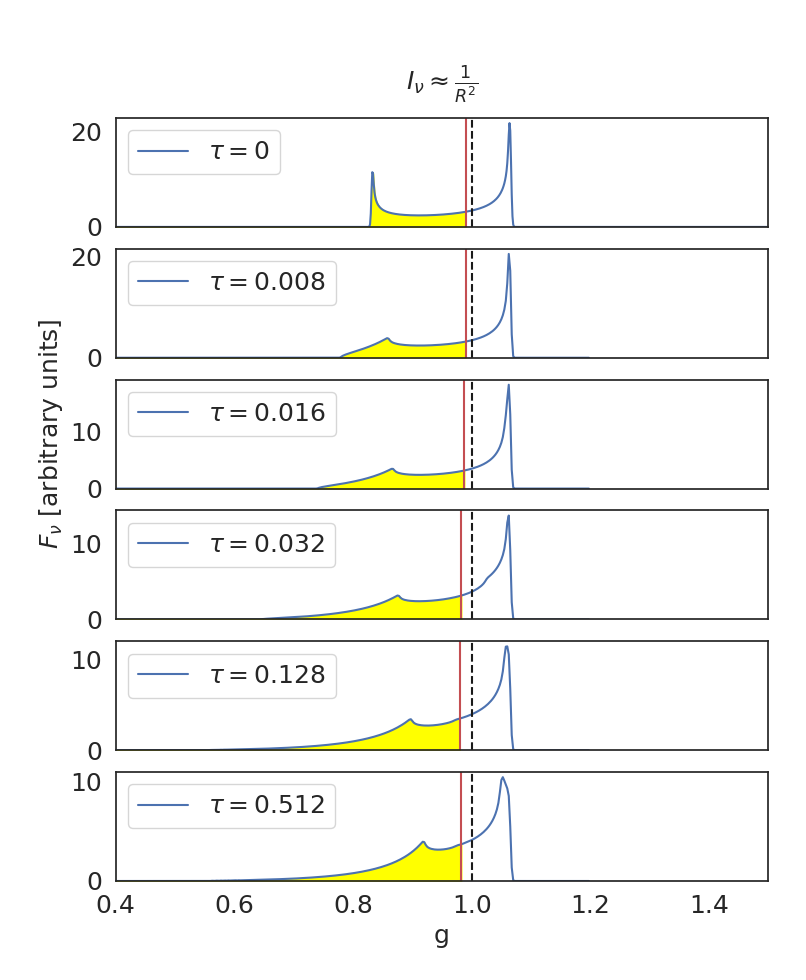 Figure 1
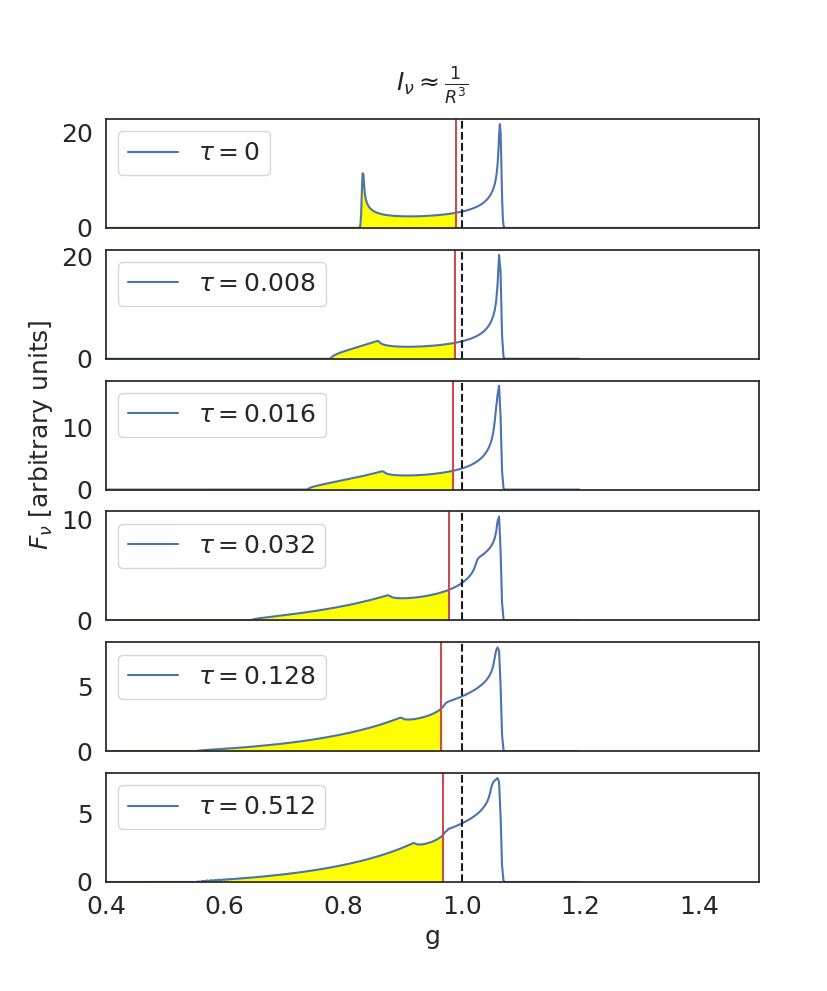 Figure 2
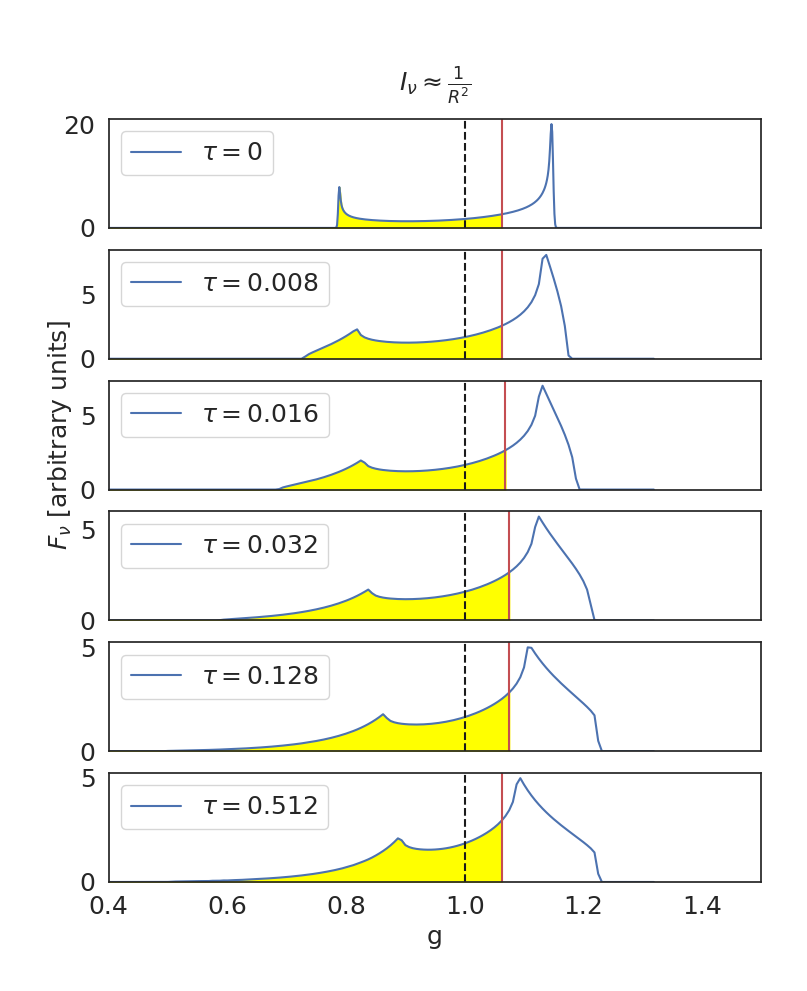 Figure 3
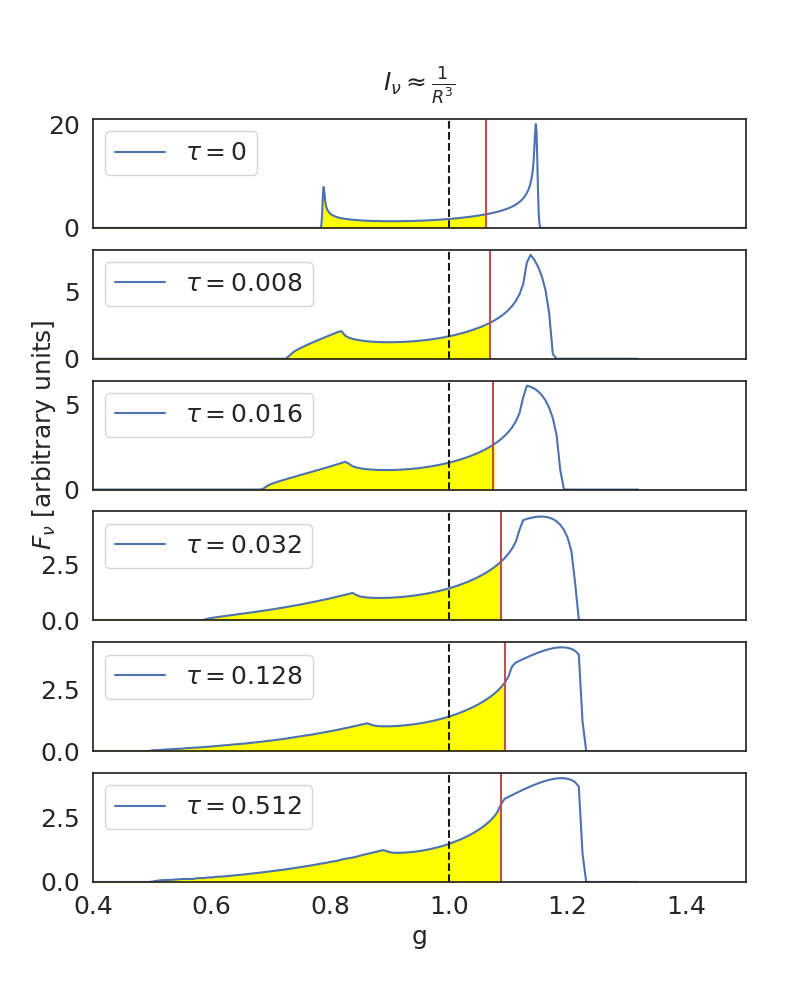 Figure 4
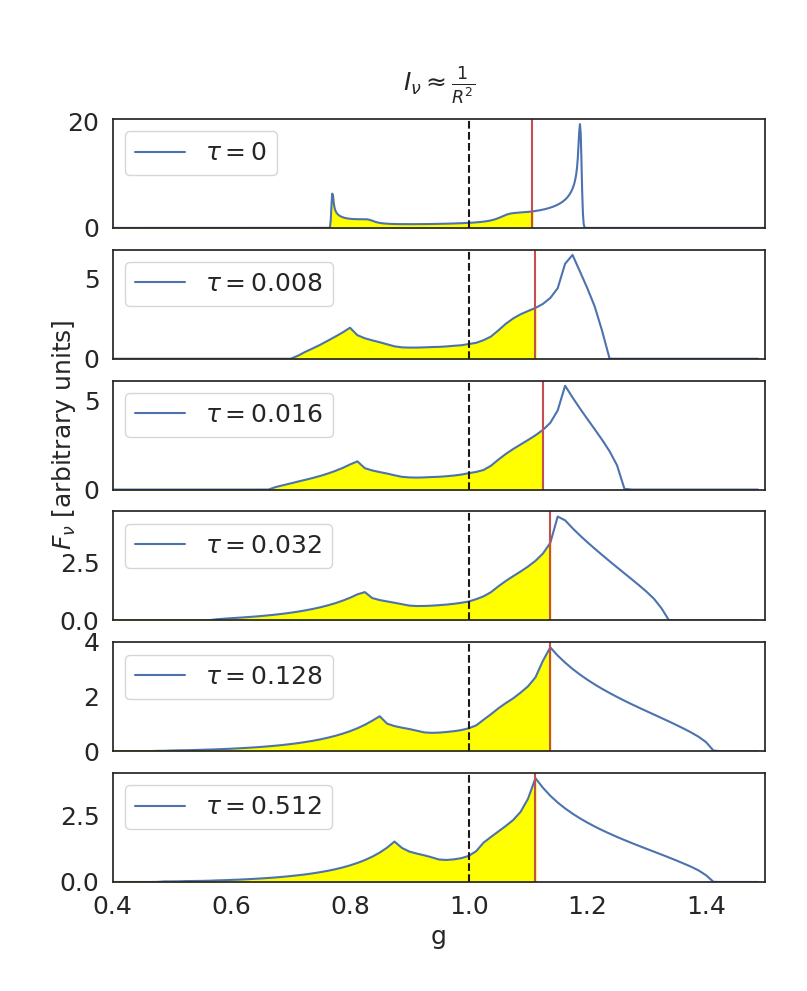 Figure 5
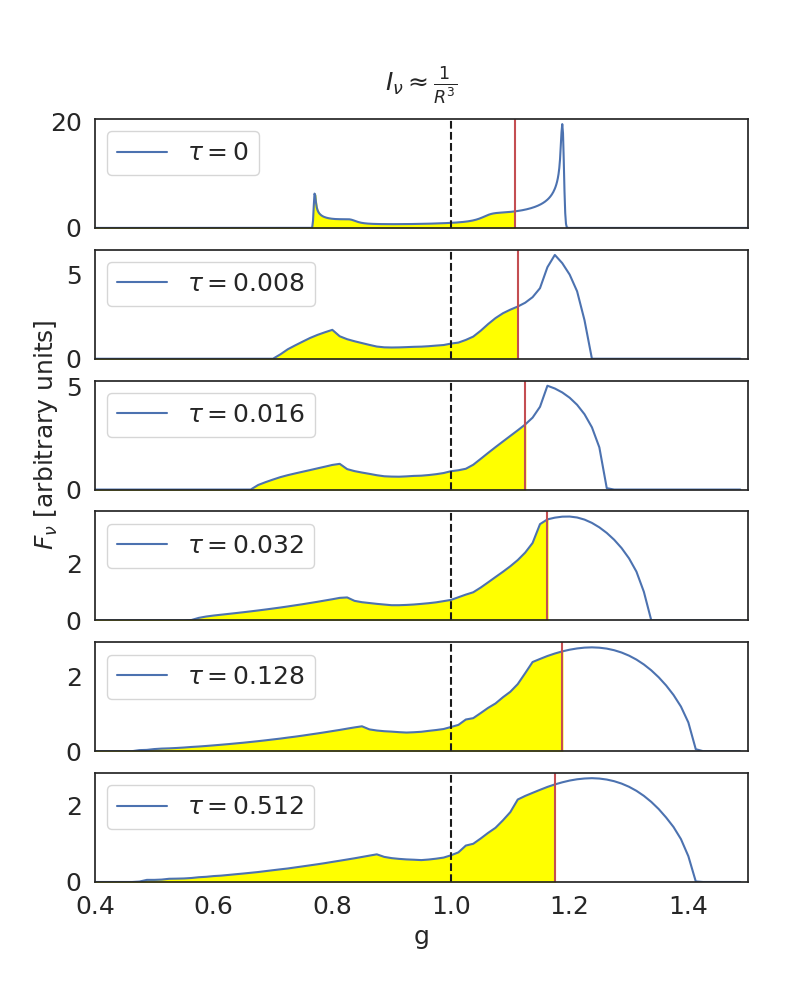 Figure 6
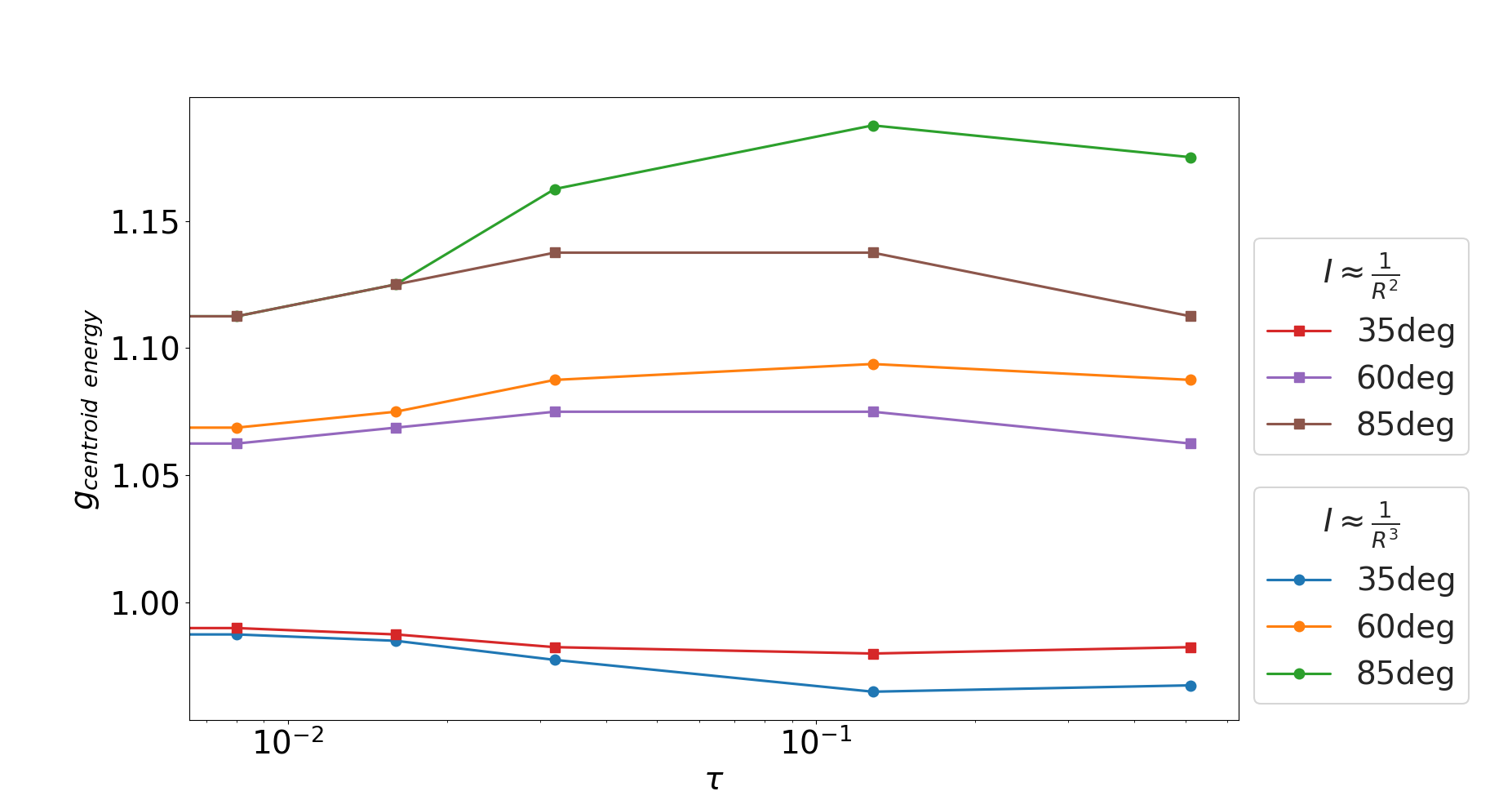 Figure 7
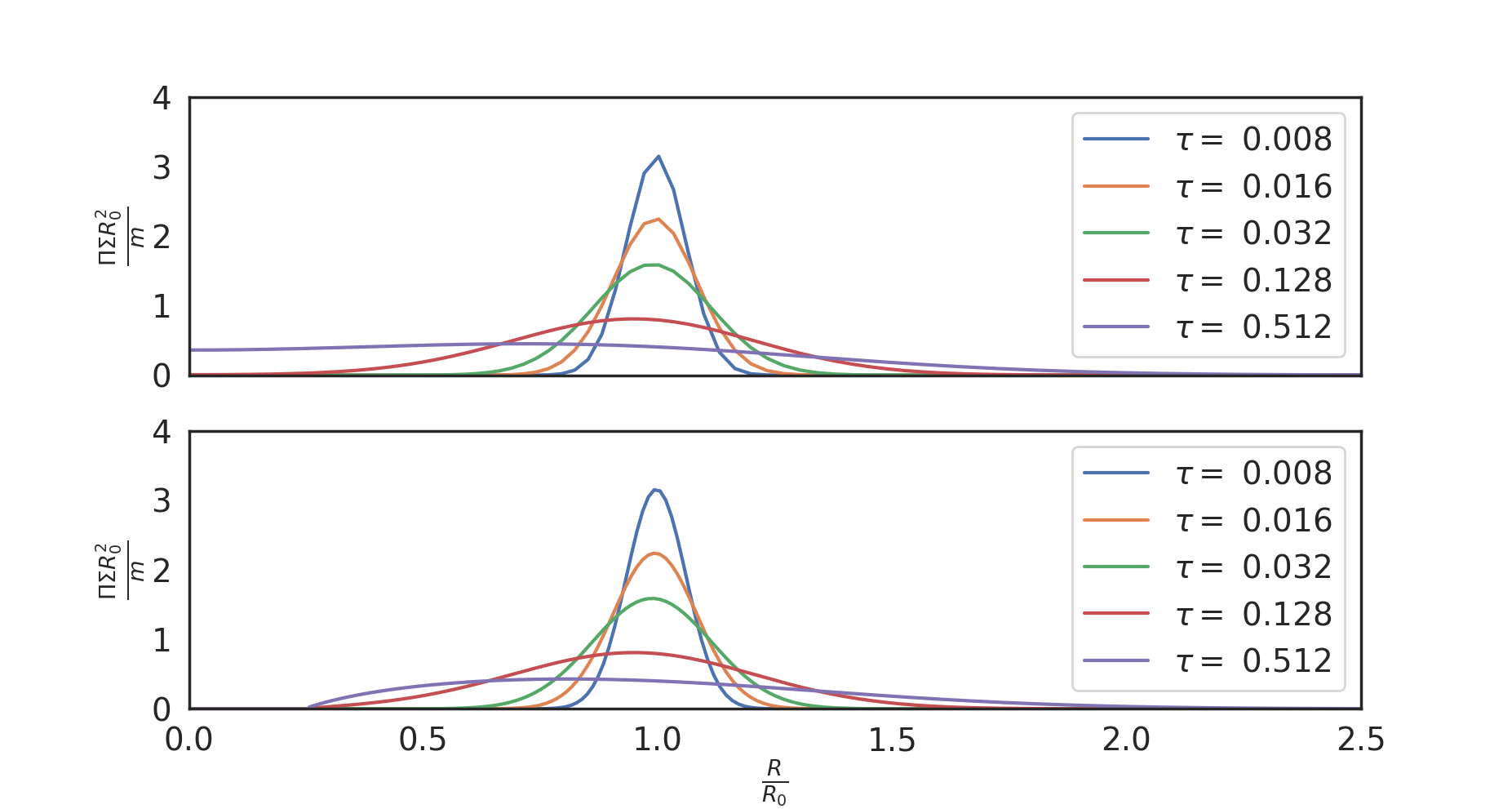 Figure 8
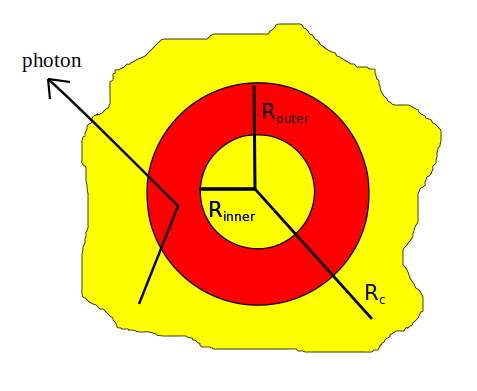 Figure 9
Peer Reviews
No public reviews on file for this paper yet. If you reviewed it on a platform where reviews are public (OpenReview, ICLR, NeurIPS, ICML), you can paste yours below so the community can read it here.
Videos
No videos yet. Explain this paper in a talk, walkthrough, or lecture? Add one.
\corres
- Boční II 1401, CZ-14100 Prague, Czech Republic. This contribution has been based on a student project by M. Š. at the Astronomical Institute of the Charles University in Prague.
Tidal disruption events as a site of an evolving relativistic spectral line
Marcel Štolc
Vladimír Karas
\orgdivAstronomical Institute, Faculty of Mathematics and Physics, \orgnameCharles University, \orgaddress\stateV Holešovičkách 2, CZ-18000 Prague, \countryCzech Republic;
\orgdivAstronomical Institute, \orgnameCzech Academy of Sciences, \orgaddress\stateBoční II 1401, CZ-14100 Prague, \countryCzech Republic;
Štolc
M
and Karas
V
(26 April 2019; 10 July 2019; 15 July 2019)
Abstract
In nuclei of galaxies strong tidal forces can destroy stars passing within a critical distance from the central super-massive black hole (SMBH). Observational signatures of tidal disruption events (TDEs) depend on the environment around the SBMH horizon and the level of its accretion activity. Evidence for optical and UV spectral features has been reported in TDE flares; nevertheless, to test the effects of General Relativity in the immediate vicinity of SMBH, the relativistically broadened and skewed X-ray line would tell us significantly more useful information. This will require to proceed beyond inactive nuclei. To this end we consider a system where the material from a disrupted star forms a gaseous ring that circularises near the tidal radius around SMBH, it gradually spreads in radius by viscous processes, and resides embedded within a hot corona.
In our test calculation the remnant trail is assumed to be fully circularized and embedded in a hot environment and illuminated by X-rays from a surrounding corona or a jet base of (mild) AGN activity. We show the expected effects on the observed profile and the centroid energy. In future the evolving spectral features can enhance the diagnostic capability and provide a novel way to reveal the parameters of TDEs in such sources; namely, the distance of the remnant gas from the SMBH, the radial extent of the gaseous trail, and the spin of the SMBH could be measured.
keywords:
Black hole physics; Accretion, accretion disks; Radiation mechanism: general; Line: profiles
††articletype: Article Type
\authormark
M. Štolc and V. Karas \jnlcitation\cname (\cyear2019), \ctitleTidal disruption events as a site of an evolving relativistic spectral line, \cjournalAstronomische Nachrichten, \cvol2019;. ††footnotetext: Abbreviations: AGN, active galactic nucleus; ISCO, innermost stable circular orbit; SMBH, super-massive black hole; TDE, tidal disruption event.
1 Introduction
The potential importance of Tidal Disruption Events (TDEs) as a way to probe the environment of supermassive black holes was recognized in the early 1980s (Hills, \APACyear1975; Luminet \BBA Marck, \APACyear1985; Rees, \APACyear1988). It has been soon recognized that the mechanism of circularization and the onset of accretion play an important role in the way how TDEs can be revealed observationally (Evans \BBA Kochanek, \APACyear1989). Since then, over almost three decades, the understanding of the mechanism of TDEs and different flavours of the process affecting the plunging stars was examined, first mainly theoretically and later on also observationally (Komossa, \APACyear2015; Stone, \APACyear2015; Stone \BOthers., \APACyear2019). Furthermore, it has been argued and the evidence confirms that TDEs can provide new constraints of dormant supermassive black holes in normal galaxies (Komossa \BOthers., \APACyear2004; Saxton \BOthers., \APACyear2012). These are governed by different time-scales. During the rising phase, the accretion luminosity increases by orders of magnitude in short time (order of weeks), and the emergent ionizing radiation illuminates the fresh accretion flow. However, in active galactic nuclei (AGN) the detection of TDEs has been hampered by the overall accretion variability in the gaseous flow, especially in the X-ray band; nonetheless, ideas were proposed for the prospects of TDE detection in mild AGNs. The evidence of spectral signatures from such events could test both the TDE mechanism as well as the underlying AGN activity (Mannheim \BOthers., \APACyear1996; Chang \BBA Choi, \APACyear2002; Karas \BOthers., \APACyear2014).
Once the star gets too close to the SMBH the tidal forces acting upon it overcome its self-gravity and create a gaseous trail of the remnant material residing near the tidal radius,
[TABLE]
where is the mass of SMBH, and are the mass and the radius of passing star respectively. The newly emerging gaseous trail initially has low angular momentum and only later it circularizes into a fluid ring that spreads by the viscous forces (see Sect. 2). Given the scaling relations for the characteristic masses, for tidal radius and for the gravitational radius, respectively, there is an upper limit constraining the SMBH capable of tidally damaging the star: Hills’ critical mass is determined by the relation (Stone, \APACyear2015)
[TABLE]
where and are the mass and the radius of sun, respectively.
TDEs vary in different ways over the timescale of the process, but their typical signatures are known well (see Komossa, \APACyear2015, and references therein): (i) the bolometric luminosity decreases , (ii) the soft X-ray spectra hardens as a function of time, (iii) no activity of the galactic nucleus observed prior to the TDE, (iv) the bolometric luminosities ranges from –erg/s, peaking in the interval of 0.2–2 keV (Montesinos Armijo \BBA de Freitas Pacheco, \APACyear2011).
The resulting radiation intensity fluctuations typically exceed those expected in classical AGN accretion spectra. Our present work describes the current results from an ongoing student project, where we anticipate the detections of the relativistic spectral features related to TDEs. Magorrian \BOthers. (\APACyear1998) suggest and further evidence confirm that there is a SMBH in the centre of (almost) every galaxy. Also the Nuclear Star Clusters are present in many galaxies, and so TDEs are expected to inevitably occur. Various pieces of observational evidence indicate an emerging jet (Cummings \BOthers., \APACyear2011) or the presence of spectral features in UV and X-rays (including Fe K emission) in the highly ionized state (Zhang \BOthers., \APACyear2015; Kara \BOthers., \APACyear2016; Dai \BOthers., \APACyear2018) during the early stages of TDE.††Specifically, Zhang \BOthers. (\APACyear2015) discuss the spectral lines that may appear in the early stages of TDEs. Furthermore, accretion-driven outflows and winds can be powered by TDEs and lead to absorption features in X-rays that should constrain abundances and velocity fields of the outflowing material near SMBH (Komossa, \APACyear2017), and TDEs might prove to be a useful tool to explore also the demographics of SMBH.
Let us note that the above-mentioned characteristics may not be entirely universal in all circumstances; in particular they depend on the the disrupted star type (Gallegos-Garcia \BOthers., \APACyear2018). It has been argued (Coughlin \BBA Nixon, \APACyear2019) that the fall-back rate and the implied luminosity decay become slower () in the case of only partial disruption when the stellar core survives the pericenter passage and continues to exert the gravitational influence on the stream of tidally-stripped debris. Ignoring these complexities, however, here we adopt the classical (analytical) value of the index and we focus ourselves on modeling the spectral line profile time evolution of the radiation reflected by the evolving accretion disc, originating as a result of an evolving X-ray illuminated remnant fluid ring that presumably arises from a complete TDE.
2 Viscous spreading of an accretion ring
Accretion is a process mostly studied in the context of binary stellar systems consisting of a donor and an accretor component. For our purposes we will study the behaviour of systems with a SMBH as the accretor and substitute the donor component for a material that has been tidally stripped off of a passing star. We presume the axial (cylindrical) symmetry of the problem which is a simplification allowing us to proceed with the analytical approaches further albeit the realistic astrophysical regimes are fully described by three-dimensional spatial and temporal dependency. The key equations necessary to describe the accretion disc are the continuity equation
[TABLE]
with as surface density profile of the accretion disc (here within the Newtonian framework), the radial component of a circulating material and angular momentum and energy transfer equation (Frank \BOthers., \APACyear2002; Kato \BOthers., \APACyear2008)
[TABLE]
where as are angular velocity and is -dependent gravitational torque. The latter describes the angular momentum transfer between neighbouring annuli of the accretion disc.
The assumption leading to the eq. (3) and (4) are the Newtonian approximation together with the velocity inequalities . Combining both of the equations (3) and (4) and taking the adjustments (Frank \BOthers., \APACyear2002) one arrives at formula
[TABLE]
which is a partial differential equation describing the spatial and temporal evolution of surface density profile of the accretion disc. A standard form of the solution to the equation (5), taking into account the initial mass ring represented by the Dirac delta distribution , can be expressed as (Frank \BOthers., \APACyear2002)
[TABLE]
with dimensionless quantities and modified Bessel functions , whereas stands for the initial radial location of the mass ring, for the mass of the initial mass ring and the kinematic viscosity is assumed to be constant. We can evaluate the evolving surface density, and thus estimate the changing area that forms the reflection line.
The initial step in solving eq. (5) numerically is to rewrite its convenient form,
[TABLE]
and substitute and (Frank \BOthers., \APACyear2002). We apply the finite difference method and define both spatial and temporal splitting
[TABLE]
with and as limits for spatial and temporal dimension and and denoting the total number of spatial and temporal nodes of the created grid. Using the definition of infinitesimal grid elements as (8) we write the scheme for numerical solution to equation (7) as (Bath \BBA Pringle, \APACyear1981)
[TABLE]
with truncation errors and in spatial and temporal direction of the grid. The stability of the solution given by (9) must adhere to von-Neumann stability criterion which is in this case defined as (Bath \BBA Pringle, \APACyear1981)
[TABLE]
To get a physically realistic estimate of the value of kinematic viscosity playing crucial role in the stability of numerical solution to equation (5) we use its definition (Frank \BOthers., \APACyear2002; Martin \BOthers., \APACyear2019)
[TABLE]
where is the viscosity parameter introduced in the Shakura–Sunyaev standard accretion disc model, fulfilling the inequality ; is speed of sound and the typical scale height of the accretion disc. We presume the material circulating in the accretion disc to be that of an ideal gas and
[TABLE]
with the mean molecular weight and the mass of proton. To express the typical scale height of the accretion disc as well as its temperature profile together with the accretion luminosity (to conclude the set of equations needed to obtain the estimate of the value of kinematic viscosity) we used standard definitions (Frank \BOthers., \APACyear2002). In the adopted approach the accretion luminosity is limited by the Eddington luminosity of the respective star that has been tidally disrupted.
We note that we were looking for the estimate value of the kinematic viscosity independent on the radial component of the accretion disc, i.e. having constant value. Figure 1 depicts the surface density profile for the different boundary conditions. The top panel shows the surface density profile to vanish once the inner radius of the accretion disc reaches (formally) the surface ; the bottom panel assumes the value of the surface density profile to drop to zero at the innermost stable circular orbit (ISCO), which in case of a Schwarzschild-type SMBH equals to . The latter case allows us to achieve better resolution considering the fact it stabilizes the solution of eqs. (9)–(10).
3 Reflection spectral line from evolving accretion rings
Within the context of a toy-model we consider the radiation in the spectral line to be produced by reflection on the accretion ring immersed in a corona (see Figure 2). We focus on modeling of the observed spectral line time evolution. We employ an approximation to account the relativistic effects on the energy and the direction of propagation of the photons.
We define the redshift factor (e.g. Karas, \APACyear2006)
[TABLE]
with and being the radiation frequency measured by the observer in infinity and in the close proximity of the accretion disc respectively. Aiming to take the relativistic effects into account in the first approximation we adopt the redshift factor (Pecháček \BOthers., \APACyear2005)
[TABLE]
where stands for the radial coordinate, for the azimuthal coordinate and for the inclination paramater of the system.
Assuming the accretion disc or a ring of matter radiating at a single frequency, , we can represent the intrinsic line by the Dirac -function,
[TABLE]
where is a parameter depending on the value of the outer radius of the corona surrounding the accretion disc, taking values for , for and for (Fabian \BOthers., \APACyear1989). We approach the evaluation of the total observed radiation flux as a superposition of the flux contributions from infinitesimally narrow rings. To this end we follow the formula
[TABLE]
with the surface element is positioned on the surface of the accretion disc, , and together with eqs. (14)–(15).
In order to focus on the relativistic effects in the formation of the observed spectral line profiles reflected by the evolving accretion ring, we have limited our choice of the model parameters in such a way that the tidal radius remains close to the horizon,
[TABLE]
The surface density profile of the initial mass ring at the tidal radius, , is evolved according to eq. (5). Therefore, the outer radius of the accretion disc comes out more than times that of the position of the initial mass ring. We thus set the threshold value for the value of the tidal radius (17) as we aim to capture the spectral line profile time evolution after the occurrence of the TDE in the close proximity of the central object in the order of a few tens of gravitational radii; the relativistic effects are negligible farther away from SMBH.
In the example shown here we assume the disrupted star to be of a solar type ( and ); we then vary the mass of the SMBH over the representative values, including . To estimate the size of the accretion discs we employed the boundary condition , which ensures the surface density profile to vanish at ISCO. Figure 3 depicts the expected spectral line temporal evolution for different inclination angles of the source and different prescription for the intrinsic (local) intensity, as described by eq. (15).
As mentioned above, the approximation scheme (Pecháček \BOthers., \APACyear2005) is employed to account for the relativistic effects on light rays propagating from the spreading ring or an accretion disc towards a distant observer. We calculate the position of the broad line centroid energy, as it also changes with time during the accretion ring evolution (marked by the red line in Fig. 3 panels; we also indicate the intrinsic (local frame) energy where the line has been emitted by the black dotted line). The reflection spectral features on the remnant trail resembles the situation studied previously in the context of AGN accretion rings (Sochora \BOthers., \APACyear2011; Pugliese \BBA Stuchlík, \APACyear2017).
We observe that the case of only small inclination, (almost pole-on view), exhibits more than half of the line radiation energy redshifted during the entire evolution cycle (see the part of the predicted profile indicated by the yellow colour; compare the left column vs. the right one in the plots). The corresponding plots for moderate () and high inclination (, i.e. almost edge-on view) show more than half of the profile to be blue-shifted during the entire interval. Time steps are measured in dimensionless geometrized units ( [0, 0.512]), thus corresponding proportionally to SMBH mass in physical units.
Finally, Figure 4 summarizes the dependency with time of the evolving energy centroid from the previous Fig. 3 (indicated by the red line). While mapping the detailed profile of the spectral feature is probably beyond the expected resolution of near-future detections, the centroid energy reflects the overall position of the line and its change appears to be indicative of the parameters with a promising sensitivity. However, a certain degeneracy of the parameter values is apparent, namely, between the inclination (characterizing the observer’s view angle), the radial index of the emissivity dependence (characterizing the compactness of the primary illumination by the corona), and the prescription for the inner boundary torque (see Štolc, \APACyear2019, for further examples).
4 Conclusions
We discussed a simple approximation scenario where a relativistically broadened and skewed spectral feature evolves in time due to viscous spreading of the underlying accretion ring. We suggested that this model may in near future form a basis to explore properties of such spectral features from Tidal Disruption Events occurring in AGN, where the remnant material from a disrupted star becomes embedded into a preexisting corona and illuminated by the primary X-rays. Especially for high inclination angles and late stages of the ring evolution we notice the development of an extended blue wing of the predicted line; the emerging feature adopts the shape quite different from the simple double-horn line expected from accretion discs with a fixed location of the edges.
Our scheme has been meant as a qualitative treatment which captures the basic effects (energy shifts and the viscous spreading of the disc), however, it cannot take quantitative details into consideration and it also neglects the role of frame dragging of a rotating black hole. The latter complexities are deferred to the future work. In this study we adopted the most simplistic approach: we considered a fully circularized trail of the remnant material, evolving just by action of -viscosity in the Newtonian regime, and we included the relativistic effects by an approximation scheme. One can immediately identify a number of important aspects that have been neglected in our tentative considerations: (i) the initial configuration of the accretion ring should consider its eccentricity and then follow the gradual circularization rather than assuming zero eccentricity ab initio; (ii) the presumed hot corona should contribute to the line-profile smearing by Comptonization, which will require to perform a more sophisticated radiation transfer of the reflection spectrum; (iii) effects of General Relativity (especially the role of frame-dragging) should be calculated in a self-consistent manner by adopting the relativistic formalism of Kerr solution; (iv) the influence of magnetic fields should be also included, so that the viscosity prescription reflects the dominant effect of magneto-rotational instability; (v) the spectral line profile should be combined with the underlying continuum that has to be also modelled and its parameters constrained by a simultaneous fitting procedure together with the line(s). All these factors need to be taken into account in order to produce an astrophysically realistic scenario, however, despite the above-mentioned neglections, the adopted scheme allowed us to demonstrate some of the expected effects on the emerging spectral features in a simplified approach.
As mentioned in the Sect. 3 the study of spectral line profile time evolution suggests a way how to infer the inclination of the radiation source as well as the method to constrain the size of the accretion disc, namely, the distance of the circulating debris from the SMBH and its evolving radial extent. We have postponed the prospects of a more complete analysis involving the SMBH spin and charge. It will then be necessary to use the redshift factor corresponding to the rotating (Kerr) metric, or even the rotating and electrically charged (Kerr–Newman) metric (Karas, \APACyear2006; Karas \BOthers., \APACyear2019). The initial moments after the trail formation will require to consider an eccentric ring. Furthermore, it will be necessary to adapt the equations (3) and (4) leading to the equation for the surface density profile of the accretion disc (5) to a more complicated framework of General Relativity.
Author contributions
M. Štolc performed calculations, prepared graphs and wrote the main part of the text. V. Karas provided additional analysis and contributed to the text of the article in all its sections.
Financial disclosure
\fundingAgency
Czech Science Foundation – Deutsche Forschungsgemeinschaft No. \fundingNumber19-01137J, and the COST Action MP1304 “Exploring Fundamental Physics with Compact Stars” grant of the \fundingAgencyCzech Ministry of Education, Youth and Sports No. \fundingNumberLD15061.
Conflict of interest
The authors declare no potential conflict of interests.
Acknowledgments
We thank an anonymous referee for helpful suggestions. We acknowledge the collaboration grant of the Czech Science Foundation – Deutsche Forschungsgemeinschaft (No. 19-01137J), and the COST Action MP1304 “Exploring Fundamental Physics with Compact Stars” of the Czech Ministry of Education, Youth and Sports (No. LD15061).
Author Biography
During the preparation of this contribution Marcel Štolc was a student working towards Master Degree at the Astronomical Institute of the Charles University in Prague (Faculty of Mathematics and Physics). Currently he is Ph.D. student in Prague Relativistic Astrophysics working group. Vladimír Karas is senior researcher and a supervisor working in the Astronomical Institute of the Czech Academy of Sciences.
The reference list from the paper itself. Each links out to its DOI / PubMed record.
- 1Bath \BBA Pringle ( \APA Cyear 1981) \APA Cinsertmetastar Bath {APA Crefauthors} Bath, G \BPBI T. \BCBT \BBA Pringle, J \BPBI E. \APA Cref Year Month Day 1981, \APA Cjournal Vol Num Pages MNRAS 194967-986. {APA Cref URL} http://adsabs.harvard.edu/abs/1981 MNRAS.194..967B \Print Back Refs \Current Bib
- 2Chang \BBA Choi ( \APA Cyear 2002) \APA Cinsertmetastar 2002 JKAS…35..123C {APA Crefauthors} Chang, H \BHBI Y. \BCBT \BBA Choi, C \BHBI S. \APA Cref Year Month Day 2002, \APA Cjournal Vol Num Pages Journal of Korean Astronomical Society 35123-130. {APA Cref URL} https://ui.adsabs.harvard.edu/abs/2002 JKAS...35..123C \Print Back Refs \Current Bib
- 3Coughlin \BBA Nixon ( \APA Cyear 2019) \APA Cinsertmetastar 2019 ar Xiv 190703034 C {APA Crefauthors} Coughlin, E \BPBI R. \BCBT \BBA Nixon, C \BPBI J. \APA Cref Year Month Day 2019 Jul, \APA Cjournal Vol Num Pages Ap JL, submittedar Xiv:1907.03034. \Print Back Refs \Current Bib
- 4Cummings \B Others . ( \APA Cyear 2011) \APA Cinsertmetastar cummings {APA Crefauthors} Cummings, J \BPBI R., Barthelmy, S \BPBI D., Beardmore, A \BPBI P. et al. \APA Cref Year Month Day 2011, \APA Cjournal Vol Num Pages GRB Coordinates Network, Circular Service, No. 11823, #1 (2011)11823. {APA Cref URL} http://adsabs.harvard.edu/abs/2011 GCN.11823....1C \Print Back Refs \Current Bib
- 5Dai \B Others . ( \APA Cyear 2018) \APA Cinsertmetastar 2018 Ap J…859L..20D {APA Crefauthors} Dai, L., Mc Kinney, J \BPBI C., Roth, N., Ramirez-Ruiz, E. \BCBL \BBA Miller, M \BPBI C. \APA Cref Year Month Day 2018, \APA Cjournal Vol Num Pages Ap J 8592 L 20. {APA Cref URL} https://ui.adsabs.harvard.edu/abs/2018 Ap J...859L..20D \Print Back Refs \Current Bib
- 6Evans \BBA Kochanek ( \APA Cyear 1989) \APA Cinsertmetastar 1989 Ap J…346L..13E {APA Crefauthors} Evans, C \BPBI R. \BCBT \BBA Kochanek, C \BPBI S. \APA Cref Year Month Day 1989 \APA Cmonth 11, \APA Cjournal Vol Num Pages Ap J 346L 13-L 16. {APA Cref DOI} 10.1086/185567 \Print Back Refs \Current Bib · doi ↗
- 7Fabian \B Others . ( \APA Cyear 1989) \APA Cinsertmetastar fabian {APA Crefauthors} Fabian, A \BPBI C., Rees, M \BPBI J., Stella, L. \BCBL \BBA White, N \BPBI E. \APA Cref Year Month Day 1989, \APA Cjournal Vol Num Pages MNRAS 238729-736. {APA Cref URL} https://ui.adsabs.harvard.edu/abs/1989 MNRAS.238..729F \Print Back Refs \Current Bib
- 8Frank \B Others . ( \APA Cyear 2002) \APA Cinsertmetastar frank {APA Crefauthors} Frank, J., King, A. \BCBL \BBA Raine, D. \APA Cref Year Month Day 2002, \APA Cjournal Vol Num Pages (Cambridge University Press; Cambridge). \Print Back Refs \Current Bib