Exclusive production of a large mass photon pair
A. Pedrak, B. Pire, L. Szymanowski, J. Wagner

TL;DR
This paper analyzes the photoproduction of high-mass photon pairs, revealing a unique amplitude structure and demonstrating its measurability at JLab with significant angular asymmetries.
Contribution
It introduces a novel analysis of diphoton production involving valence quark distributions at specific kinematic points, with implications for experimental measurements.
Findings
Amplitude proportional to valence quark GPDs at x=±ξ
Process measurable at JLab energies
Large angular asymmetry with linearly polarized photons
Abstract
The scattering amplitude for photoproduction of a large invariant mass diphoton in the generalized Bjorken regime has a very peculiar and interesting analytical structure. The leading twist leading order amplitude is proportional to valence quark generalized parton distributions taken at the border value . Cross section estimates show that this process is measurable at JLab energies. The angular asymmetry triggered by a linearly polarized photon beam is large.
Click any figure to enlarge with its caption.
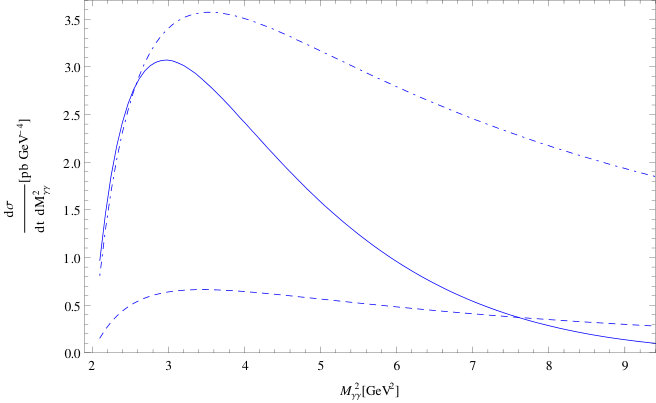 Figure 5
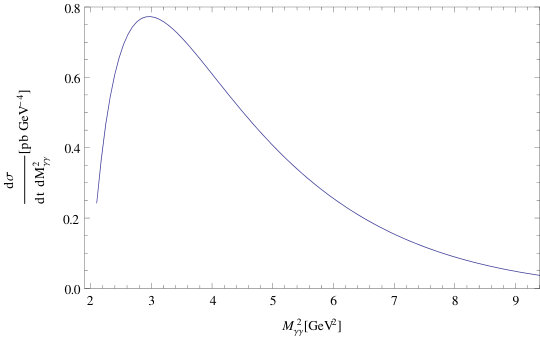 Figure 5
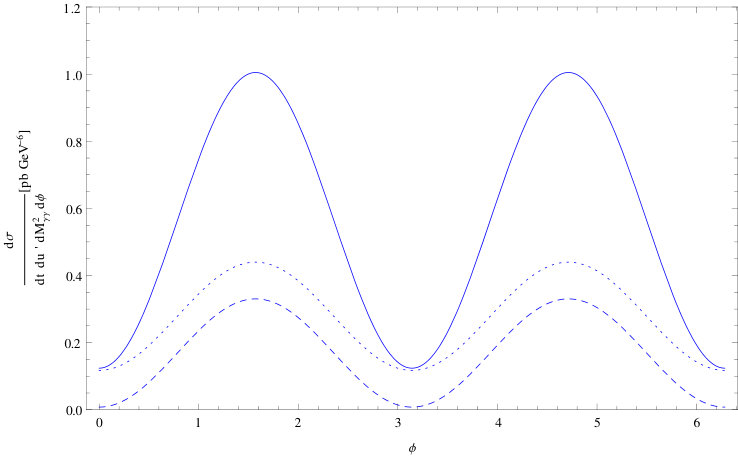 Figure 7
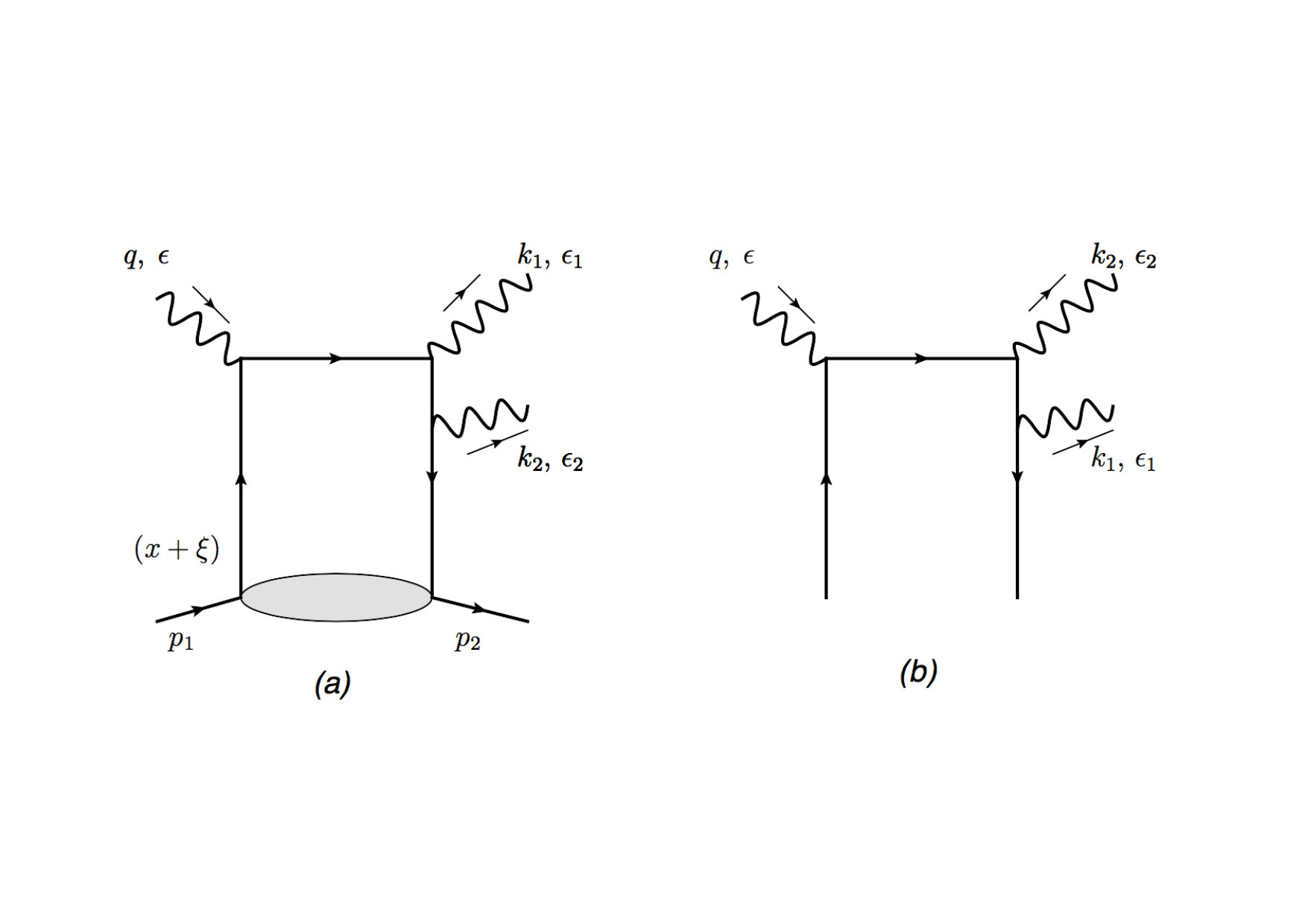 Figure 1
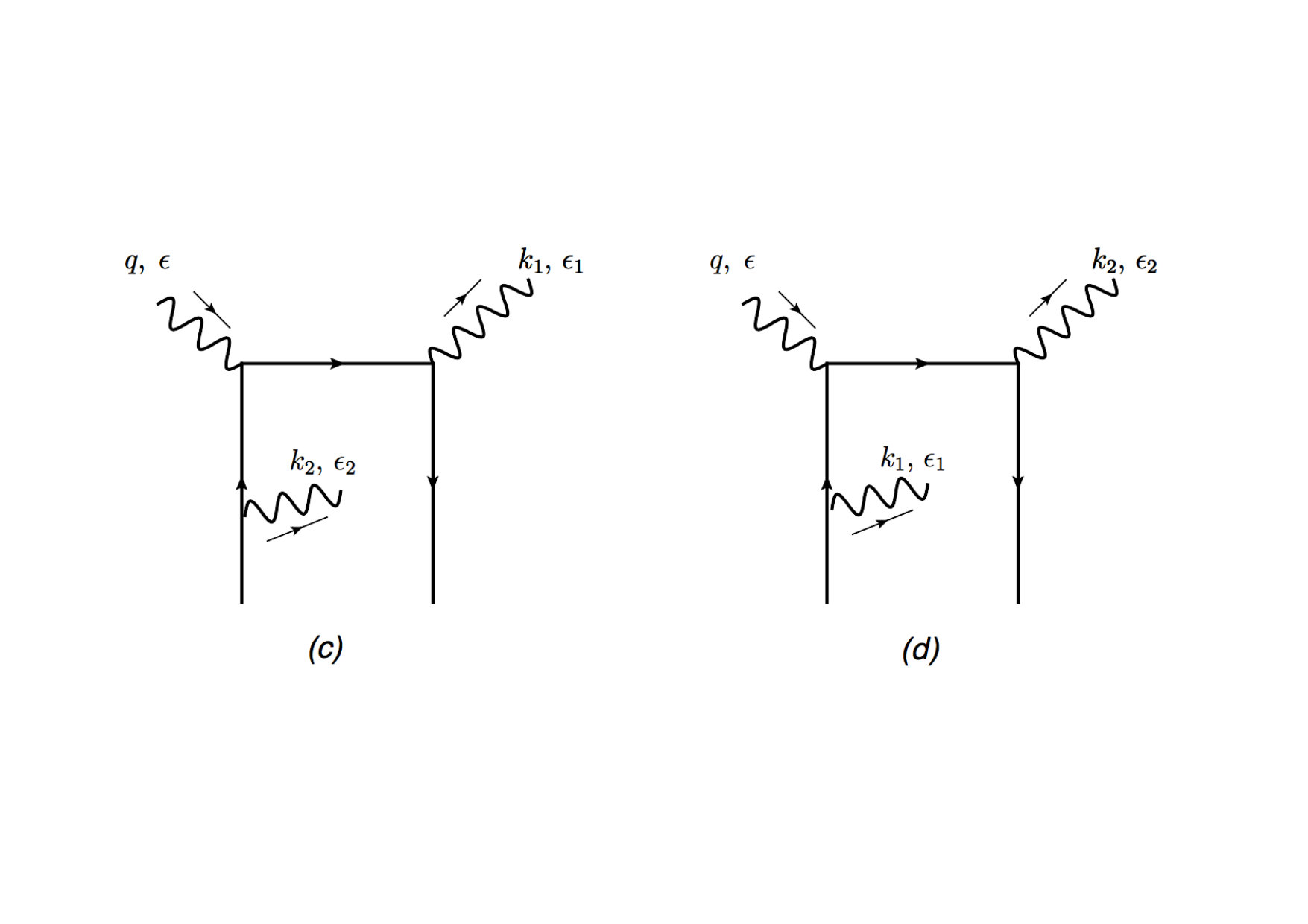 Figure 1
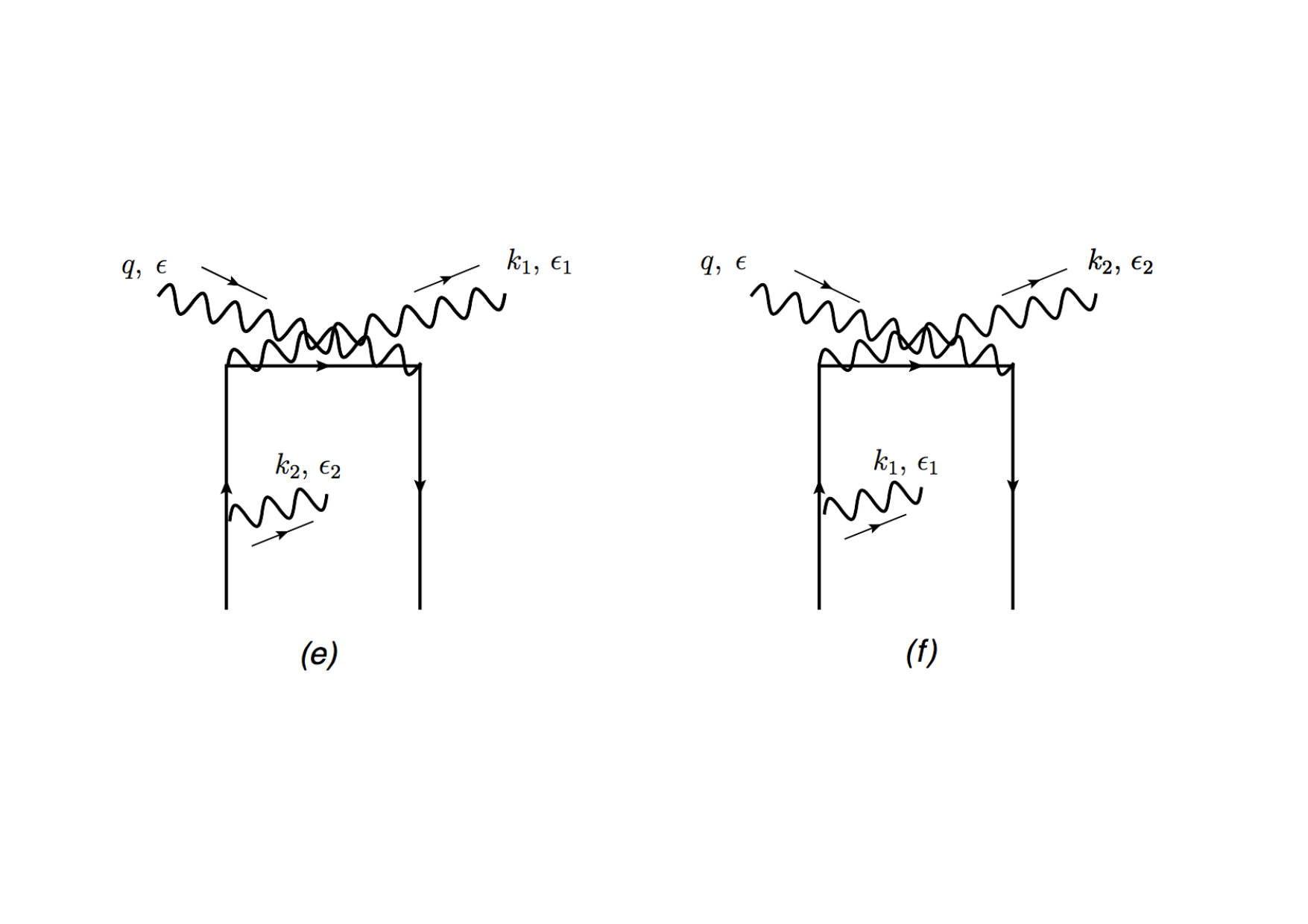 Figure 1
 Figure 7
Peer Reviews
No public reviews on file for this paper yet. If you reviewed it on a platform where reviews are public (OpenReview, ICLR, NeurIPS, ICML), you can paste yours below so the community can read it here.
Videos
No videos yet. Explain this paper in a talk, walkthrough, or lecture? Add one.
Taxonomy
TopicsQuantum Chromodynamics and Particle Interactions · Particle physics theoretical and experimental studies · High-Energy Particle Collisions Research
Exclusive production of a large mass photon pair
A. Pedrak 111speaker
National Center for Nuclear Research (NCBJ), 02093 Warsaw, Poland
B. Pire
CPHT, CNRS, École Polytechnique, I.P. Paris, 91128 Palaiseau, France
L. Szymanowski
National Centre for Nuclear Research (NCBJ), 02093 Warsaw, Poland
J. Wagner
National Center for Nuclear Research (NCBJ), 02093 Warsaw, Poland
Abstract:
The scattering amplitude for photoproduction of a large invariant mass diphoton in the generalized Bjorken regime has a very peculiar and interesting analytical structure. The leading twist leading order amplitude is proportional to valence quark generalized parton distributions taken at the border value . Cross section estimates show that this process is measurable at JLab energies. The angular asymmetry triggered by a linearly polarized photon beam is large.
1 Introduction
The exclusive photoproduction of two photons on a unpolarized proton or neutron target
[TABLE]
in the kinematical regime of large invariant diphoton mass of the final photon pair and small momentum transfer between the initial and the final nucleons, has a number of interesting features [1]. First, it is a purely electromagnetic process at Born order - as are deep inelastic scattering (DIS), deeply virtual Compton scattering (DVCS) and timelike Compton scattering (TCS) - and, although there is no deep understanding of this fact, this property is usually accompanied by early scaling. Second, the process is insensitive to gluon GPDs and to singlet quark GPDs because of the charge symmetry of the two photon final state and is thus very complementary to DVCS and TCS. We thus believe that this reaction may help us to progress in the understanding of hard exclusive scattering in the framework of the QCD collinear factorization of hard amplitudes in terms of generalized parton distributions (GPDs) and hard perturbatively calculable coefficient functions
2 The scattering amplitude
Factorization allows to write the scattering amplitude as
[TABLE]
with the coefficient functions calculated from the diagrams of Fig. 1 as
[TABLE]
where and are contributions of the hard part of scattering amplitude projected on vector and axial vector Fierz structures, and the denominators read
[TABLE]
The tensorial structure can be written for the vector part as
[TABLE]
with
[TABLE]
while the axial part reads
[TABLE]
with
[TABLE]
The scattering amplitude is written in terms of generalized Compton form factors , , and as
[TABLE]
where
[TABLE]
and similar equations for and .
3 Cross sections and asymmetries
The peculiar analytic structure of the coefficient function thus leads to a very interesting and quite unique fact : the leading order cross section of this process is proportional to the (square of the) GPDs at the cross over line . Contrarily to DVCS or TCS, one does not need to convolute the GPDs with a function. This feature is however not going to survive a NLO analysis which we plan to perform soon.
By lack of space, we restrict ourselves to the presentation (Fig. 2) of the dependence of the unpolarized differential cross section on a proton(left panel) and on a neutron(right panel) at and GeV2 (full curves), GeV2 (dashed curve) and GeV2 (dash-dotted curve, multiplied by ).
The conclusion of these cross-section estimates is straightforward. This reaction can be studied at intense photon beam facilities in JLab. The rates are not very large but of comparable order of magnitude as those for the timelike Compton scattering reaction, the feasibility of which has been demonstrated [2]. Since there are no contribution from gluons and sea-quarks, one does not get larger cross-sections at higher energies. Contrarily to timelike Compton scattering [3], it thus does not seem attractive to look for this reaction in ultra peripheral reactions at hadron colliders.
Linearly polarized real photons open the way to large asymmetries, as they do for dilepton photoproduction [4]. Let us consider the case where the initial photon is polarized along the axis, , and define the azimuthal angle through
[TABLE]
The cross section exhibits then an azimuthal dependence, and one should calculate
[TABLE]
This is shown on Fig. 3 for different values of at and GeV2. As straightforwardly anticipated, the cross section shows a modulation of the form . It turns out that is negative leading to a minimum at and a maximum at . In all cases, the linear polarization effects are huge.
This project has received funding from the European Union’s Horizon 2020 research and innovation programme under grant agreement No 824093 and from the grant 2017/26/M/ST2/01074 of the National Science Center in Poland. The project is co-financed by the Polish National Agency for Academic Exchange. L.S. thanks also the French LABEX P2IO, the French GDR QCD and the LPT for support.
The reference list from the paper itself. Each links out to its DOI / PubMed record.
- 1[1] A. Pedrak, B. Pire, L. Szymanowski and J. Wagner, Phys. Rev. D 96 , no. 7, 074008 (2017) and erratum to be published. doi:10.1103/Phys Rev D.96.074008 [ar Xiv:1708.01043 [hep-ph]].
- 2[2] B. Pire, L. Szymanowski and J. Wagner, Phys. Rev. D 83 , 034009 (2011), Few Body Systems 53 , 125 (2012); D. Mueller, B. Pire, L. Szymanowski and J. Wagner, Phys. Rev. D 86 , 031502 (2012); H. Moutarde, B. Pire, F. Sabatie, L. Szymanowski and J. Wagner, Phys. Rev. D 87 , 054029 (2013); M. Boer, M. Guidal and M. Vanderhaeghen, Eur. Phys. J. A 51 , 103 (2015).
- 3[3] B. Pire, L. Szymanowski and J. Wagner, Phys. Rev. D 79 , 014010 (2009).
- 4[4] A. T. Goritschnig, B. Pire and J. Wagner, Phys. Rev. D 89 , 094031 (2014).