Deep Learning with ConvNET Predicts Imagery Tasks Through EEG
Apdullah Yay{\i}k, Yakup Kutlu, G\"okhan Altan

TL;DR
This paper demonstrates that convolutional neural networks can effectively predict imagined left and right movements from raw EEG data, outperforming traditional methods by leveraging advanced training techniques.
Contribution
It introduces a ConvNet architecture optimized for EEG-based movement prediction and shows its superiority over conventional neural networks using spectral features.
Findings
ConvNets outperform traditional neural networks in EEG movement prediction.
Adaptive moments, batch normalization, and dropout improve ConvNet performance.
Raw EEG data can be effectively used without prior feature extraction.
Abstract
Deep learning with convolutional neural networks (ConvNets) have dramatically improved learning capabilities of computer vision applications just through considering raw data without any prior feature extraction. Nowadays, there is rising curiosity in interpreting and analyzing electroencephalography (EEG) dynamics with ConvNets. Our study focused on ConvNets of different structures, constructed for predicting imagined left and right movements on a subject-independent basis through raw EEG data. Results showed that recently advanced methods in machine learning field, i.e. adaptive moments and batch normalization together with dropout strategy, improved ConvNets predicting ability, outperforming that of conventional fully-connected neural networks with widely-used spectral features.
Click any figure to enlarge with its caption.
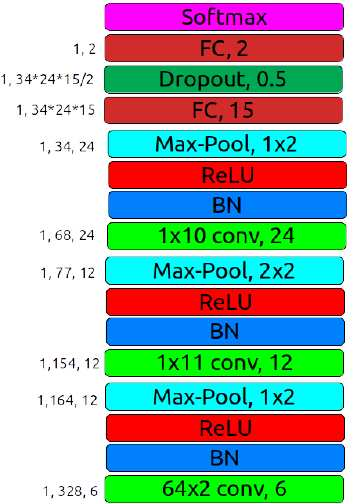 Figure 1
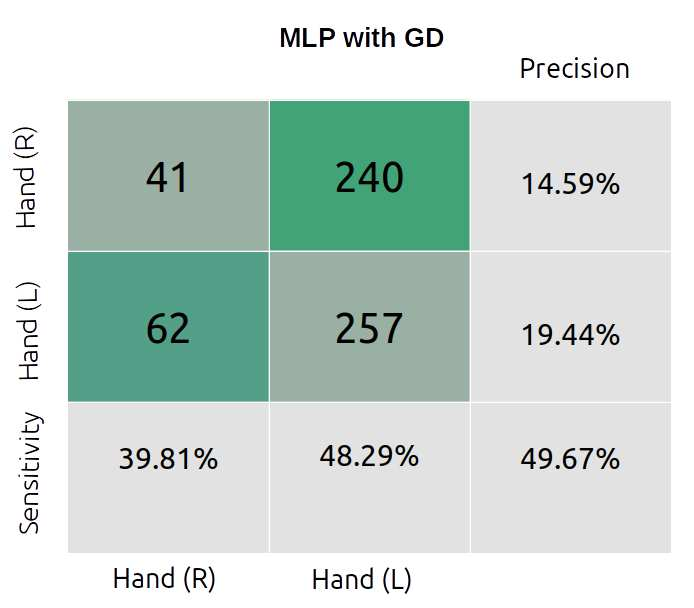 Figure 2
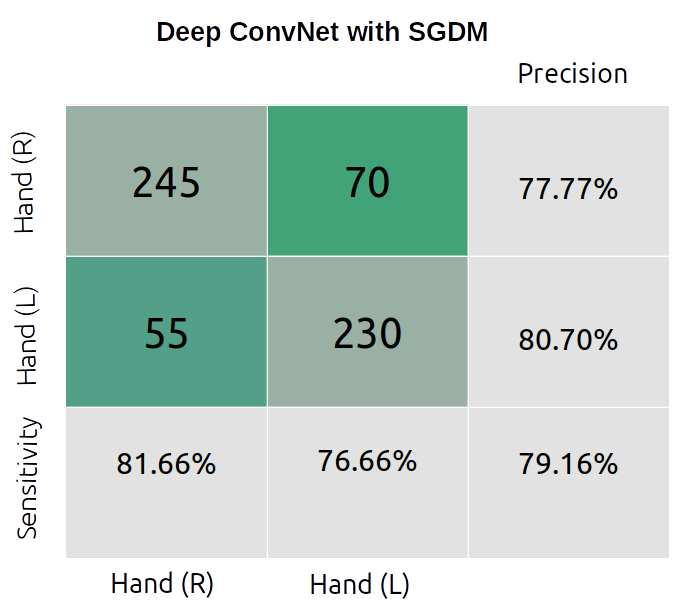 Figure 2
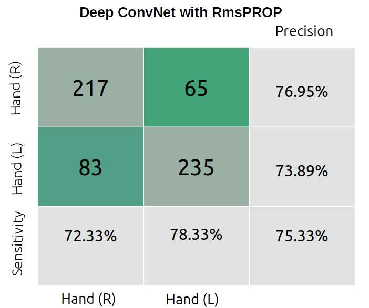 Figure 2
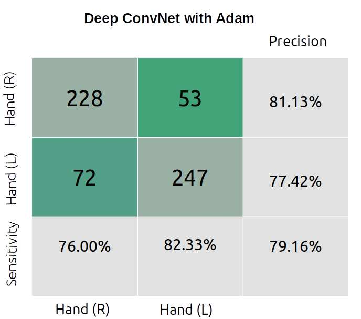 Figure 2
Peer Reviews
No public reviews on file for this paper yet. If you reviewed it on a platform where reviews are public (OpenReview, ICLR, NeurIPS, ICML), you can paste yours below so the community can read it here.
Videos
No videos yet. Explain this paper in a talk, walkthrough, or lecture? Add one.
Taxonomy
MethodsDropout · Batch Normalization