TL;DR
This paper demonstrates that multi-channel time encoding can perfectly reconstruct bandlimited signals without knowing the shifts between channels, offering a more natural and robust sampling method inspired by biological neurons.
Contribution
It introduces a multi-channel time encoding framework that allows perfect signal reconstruction without shift knowledge, extending classical sampling theory to biologically inspired methods.
Findings
Multi-channel time encoding reconstructs signals with M times the bandwidth.
Reconstruction algorithm converges in noiseless conditions without shift information.
Multi-channel approach simplifies and improves robustness over classical sampling.
Abstract
Sampling is classically performed by recording the amplitude of an input signal at given time instants; however, sampling and reconstructing a signal using multiple devices in parallel becomes a more difficult problem to solve when the devices have an unknown shift in their clocks. Alternatively, one can record the times at which a signal (or its integral) crosses given thresholds. This can model integrate-and-fire neurons, for example, and has been studied by Lazar and T\'oth under the name of ``Time Encoding Machines''. This sampling method is closer to what is found in nature. In this paper, we show that, when using time encoding machines, reconstruction from multiple channels has a more intuitive solution, and does not require the knowledge of the shifts between machines. We show that, if single-channel time encoding can sample and perfectly reconstruct a…
Click any figure to enlarge with its caption.
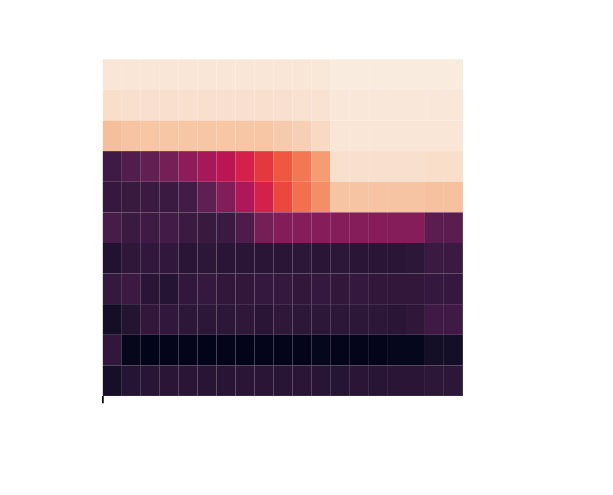 Figure 10
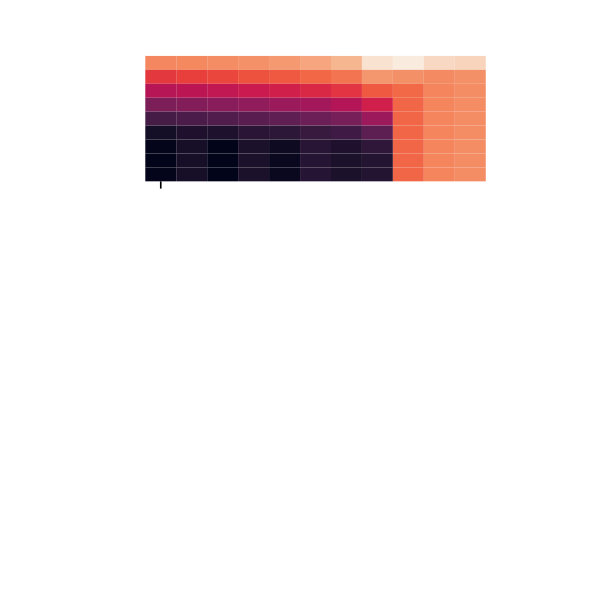 Figure 11
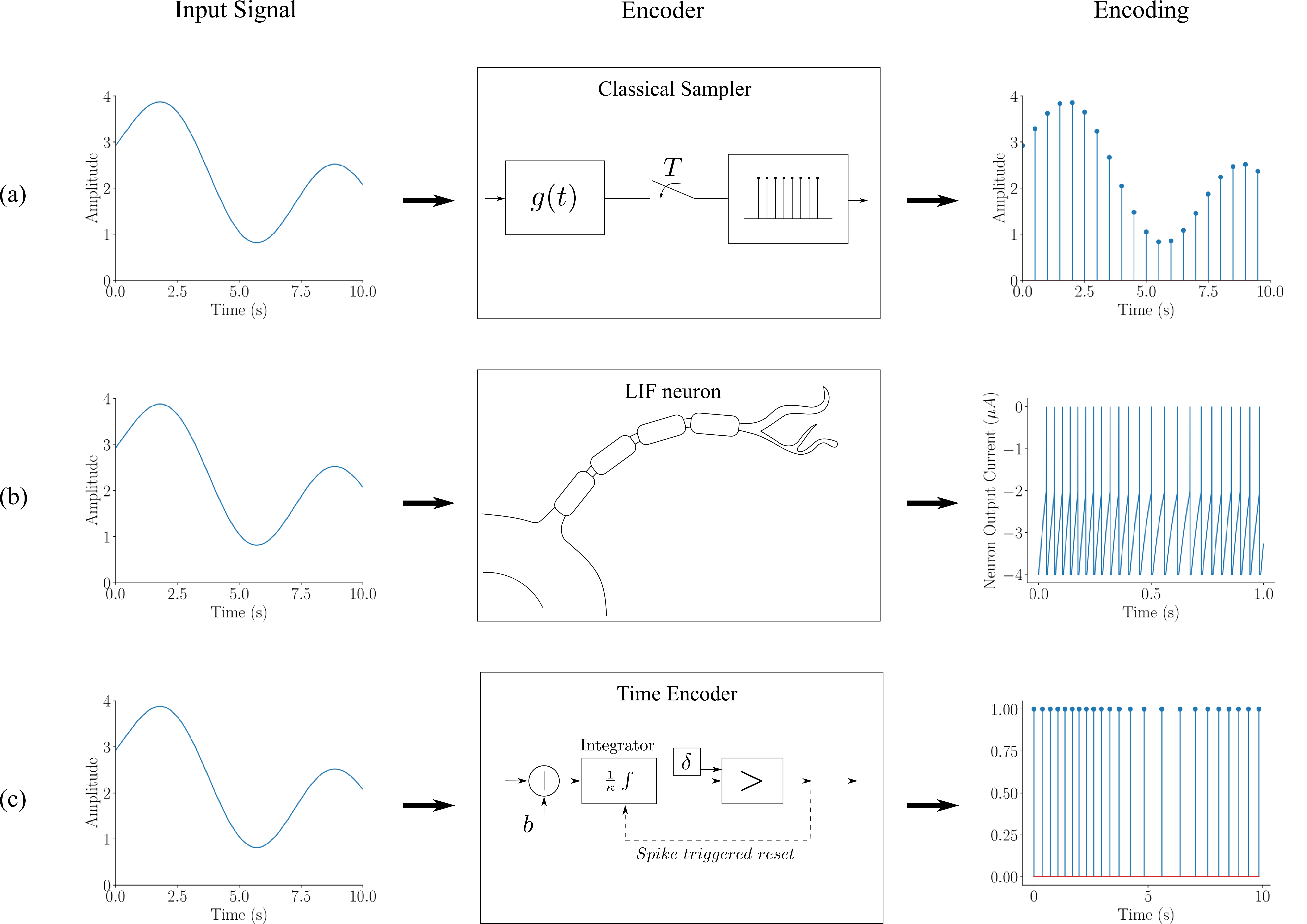 Figure 1
 Figure 3
 Figure 4
 Figure 7
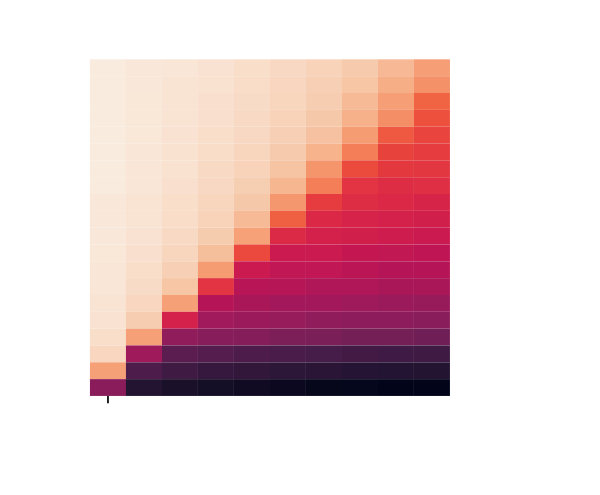 Figure 8
 Figure 9
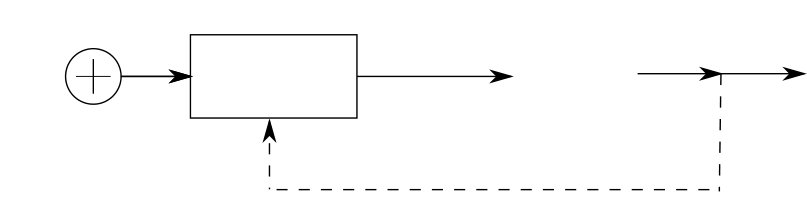 Figure 9
 Figure 10
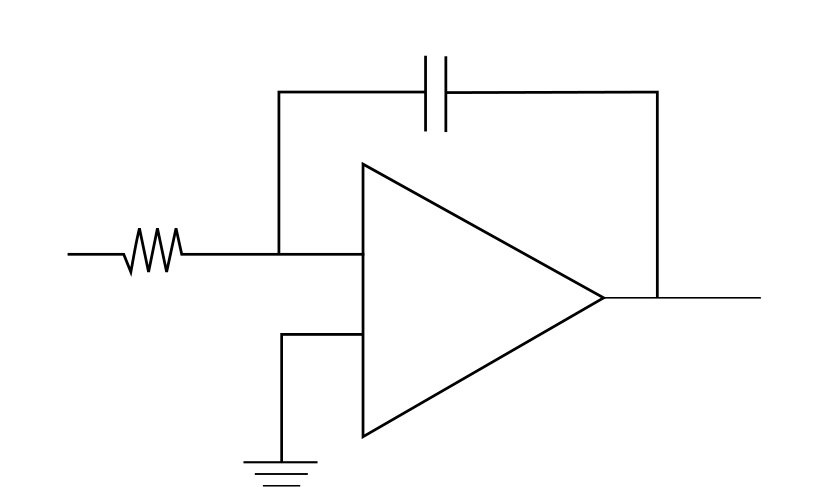 Figure 11
Peer Reviews
No public reviews on file for this paper yet. If you reviewed it on a platform where reviews are public (OpenReview, ICLR, NeurIPS, ICML), you can paste yours below so the community can read it here.
Code & Models
Videos
No videos yet. Explain this paper in a talk, walkthrough, or lecture? Add one.
