TL;DR
Future lepton colliders' precision Higgs measurements require comprehensive electroweak analysis, including optimal observables and multiple polarization strategies, to mitigate uncertainties and enhance coupling determinations.
Contribution
This paper presents a complete effective-field-theory analysis of Higgs and electroweak processes at future lepton colliders, emphasizing the importance of a dedicated Z-pole program and polarization strategies.
Findings
A new Z-pole program is crucial for circular colliders to accurately extract Higgs couplings.
Multiple polarizations and energies at linear colliders are essential to reduce electroweak uncertainties.
Higgs measurements can improve knowledge of Z couplings to electrons.
Abstract
LEP precision on electroweak measurements was sufficient not to hamper the extraction of Higgs couplings at the LHC. But the foreseen permille-level Higgs measurements at future lepton colliders might suffer from parametric electroweak uncertainties in the absence of a dedicated electroweak program. We perform a joint, complete and consistent effective-field-theory analysis of Higgs and electroweak processes. The full electroweak-sector dependence of the production process is notably accounted for, using statistically optimal observables. Up-to-date HL-LHC projections are combined with CEPC, FCC-ee, ILC and CLIC ones. For circular colliders, our results demonstrate the importance of a new -pole program for the robust extraction of Higgs couplings. At linear colliders, we show how exploiting multiple polarizations and centre-of-mass energies is crucial to mitigate…
Click any figure to enlarge with its caption.
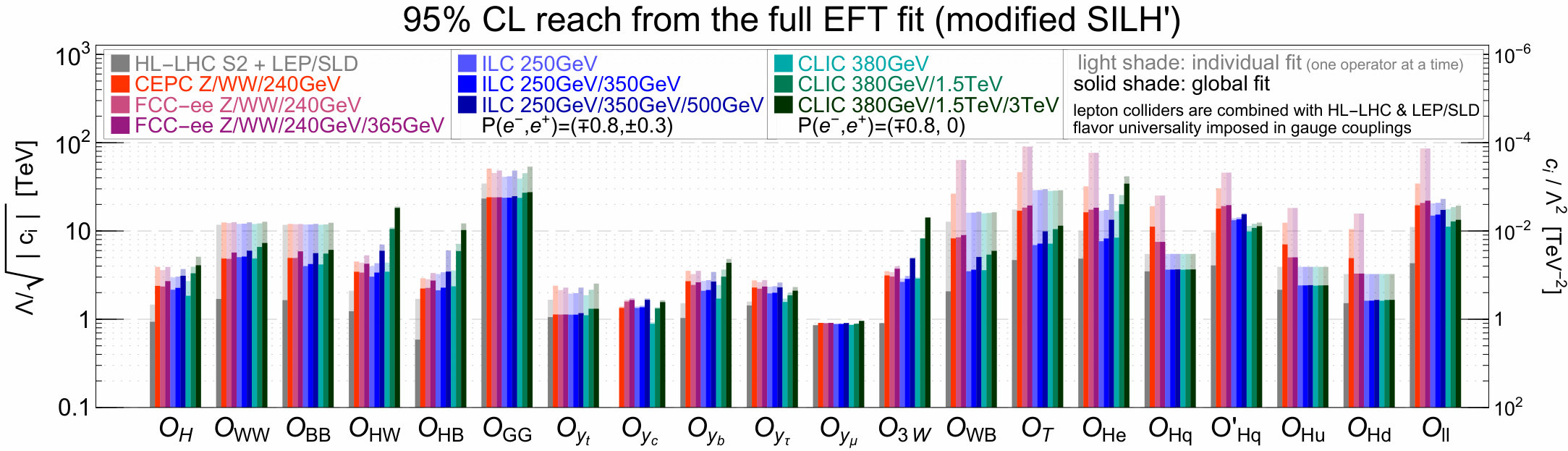 Figure 1
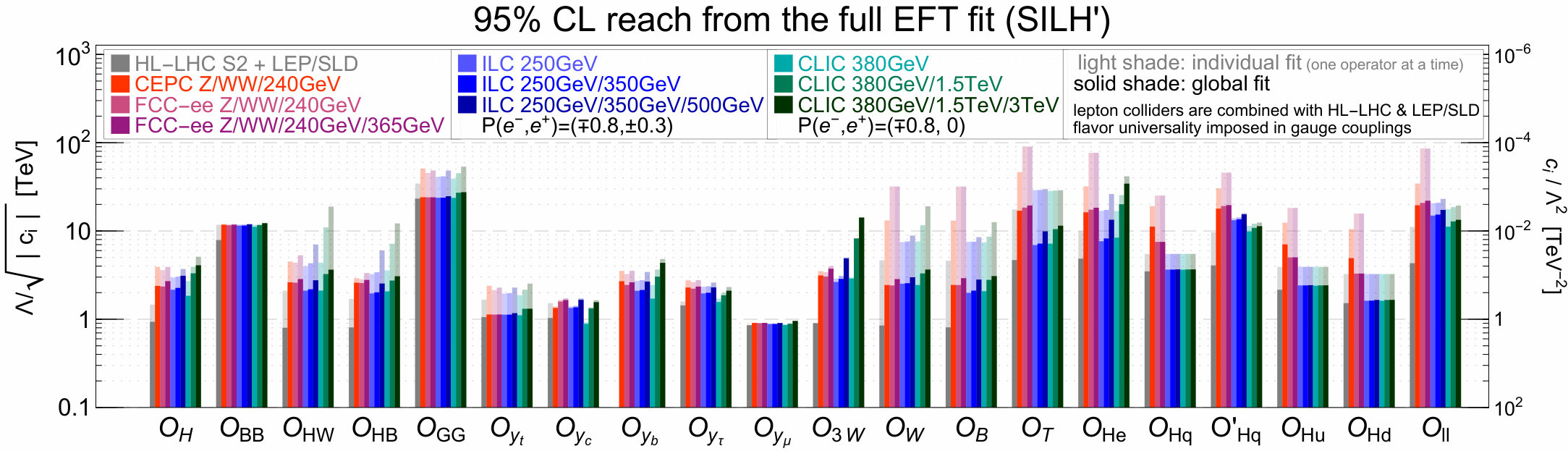 Figure 2
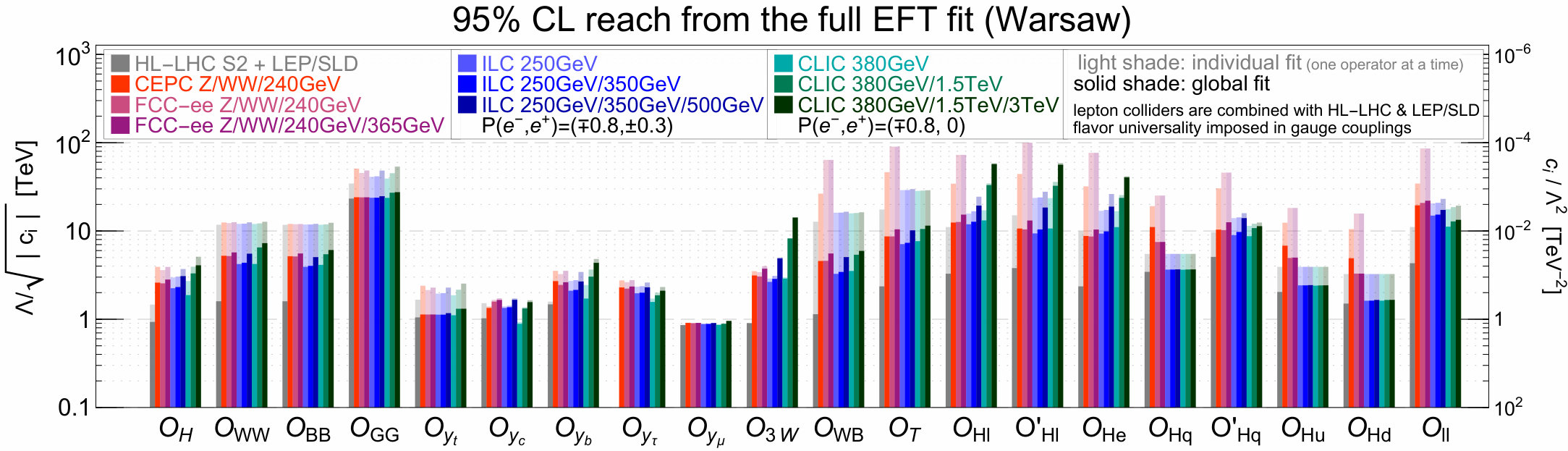 Figure 3
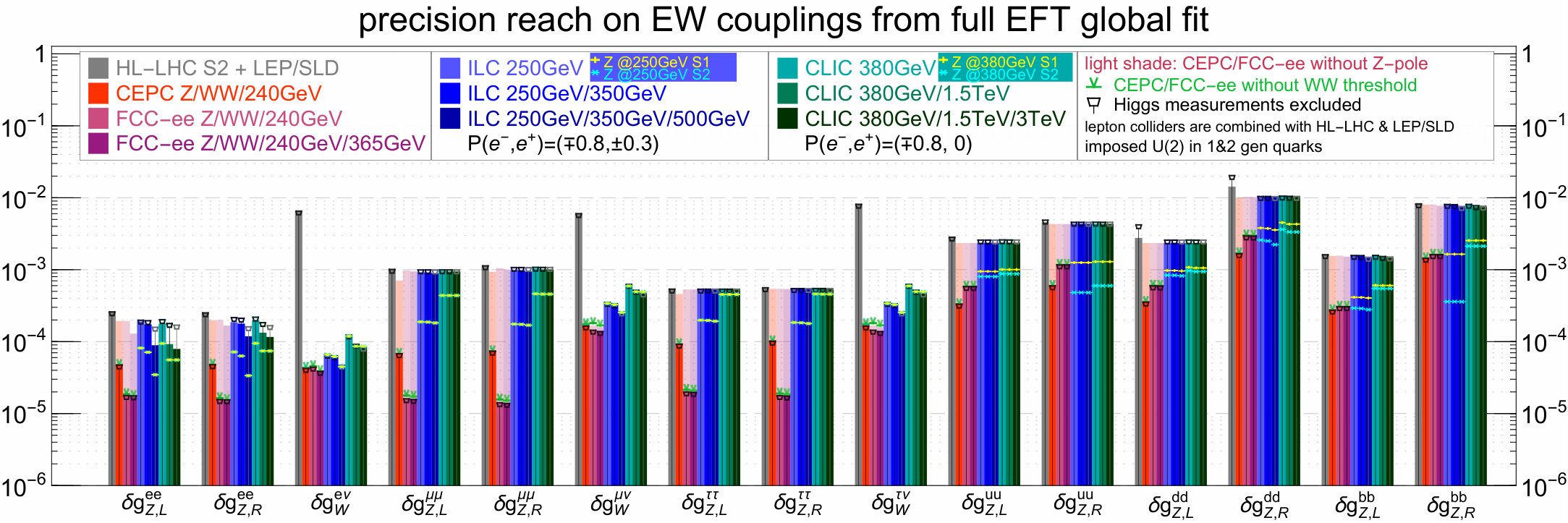 Figure 4
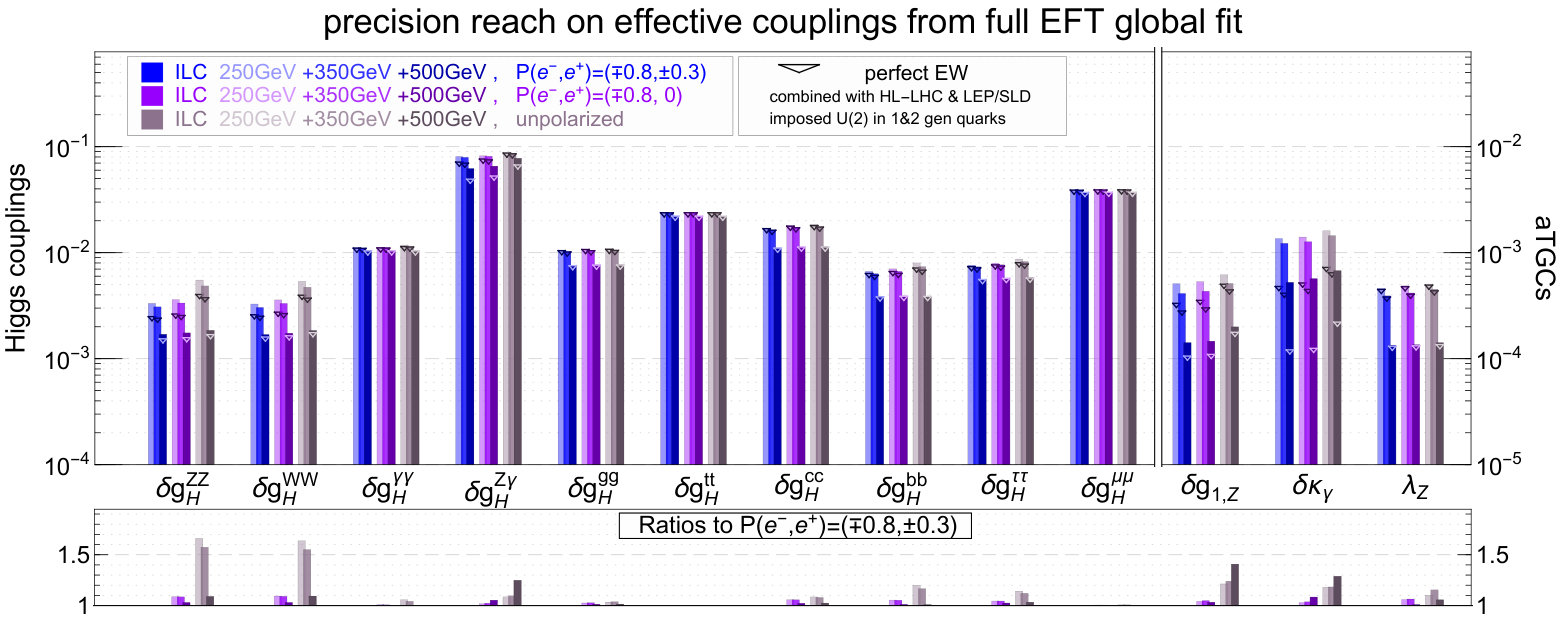 Figure 5
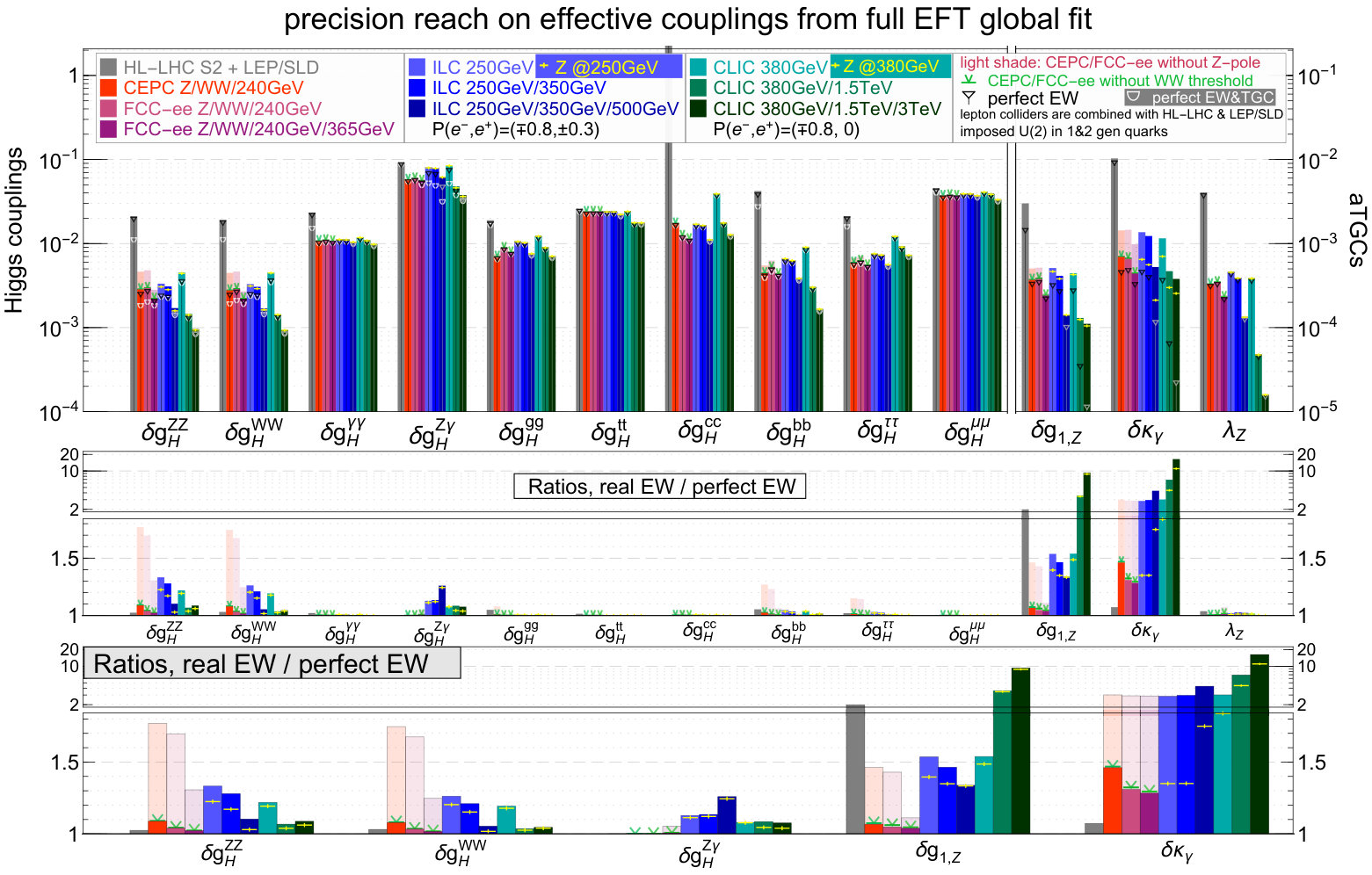 Figure 6
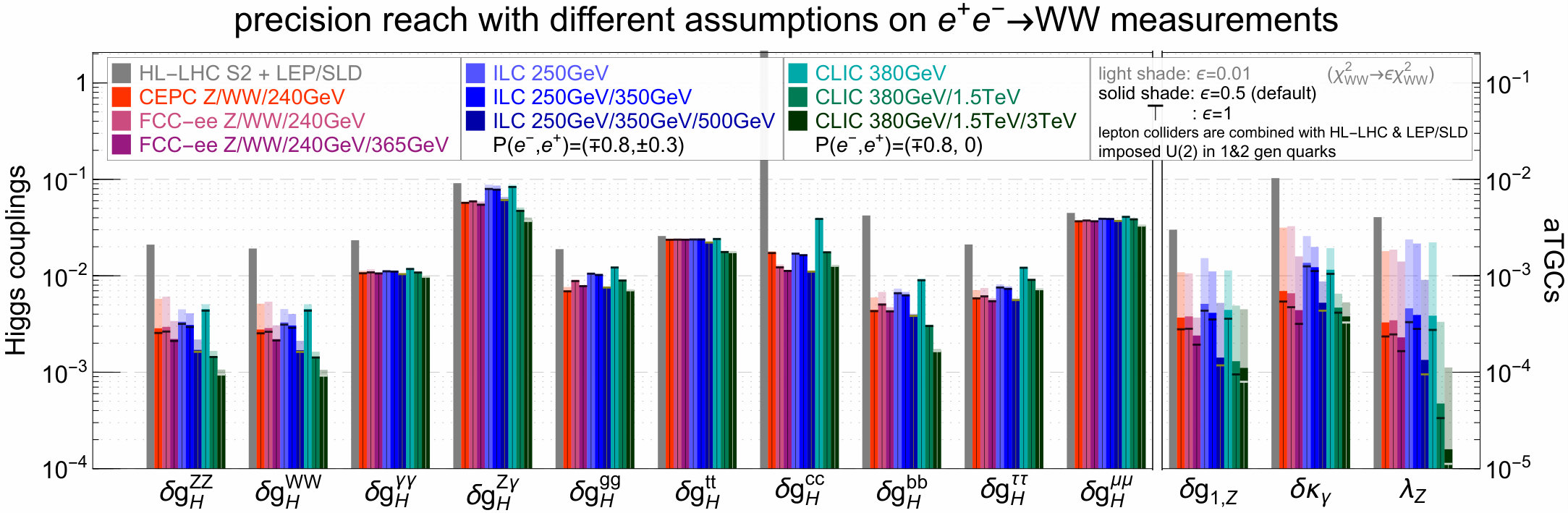 Figure 7
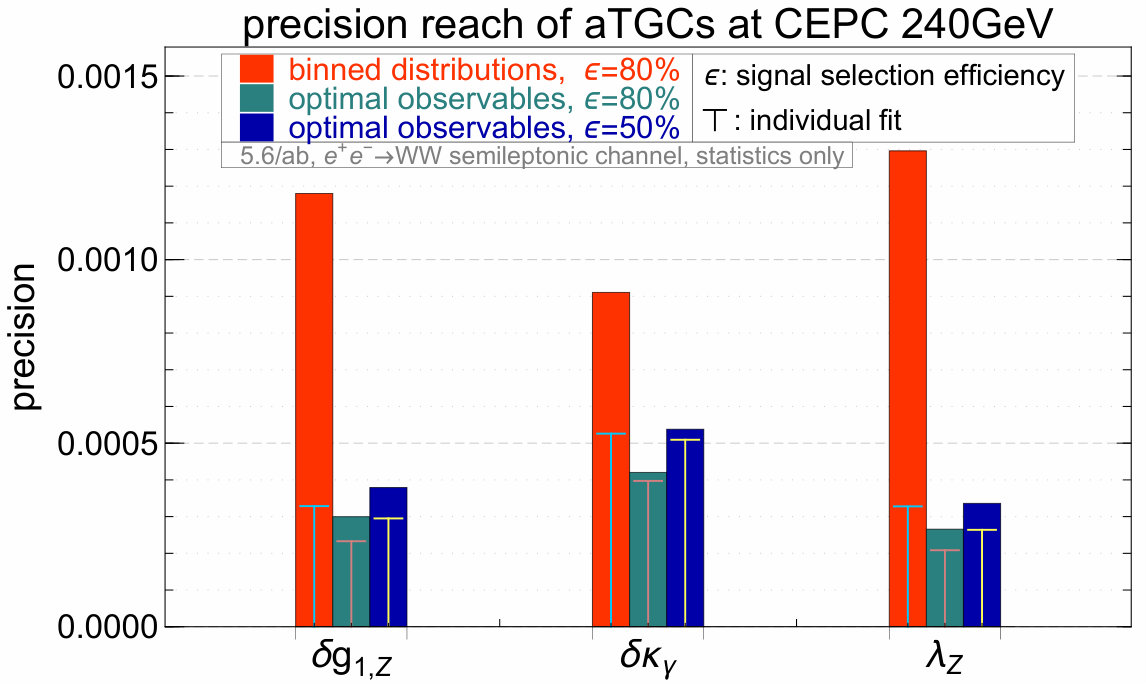 Figure 8
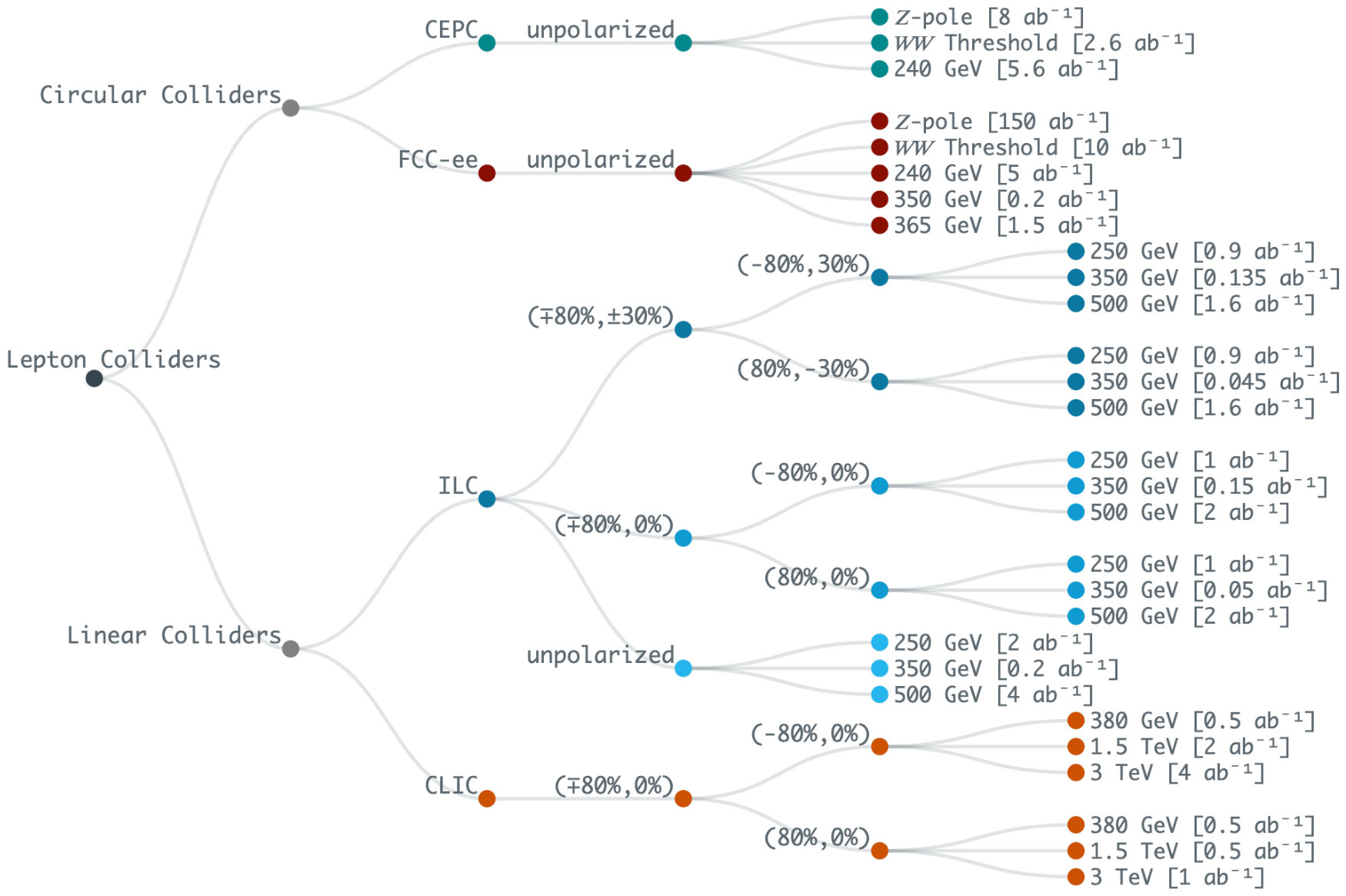 Figure 9
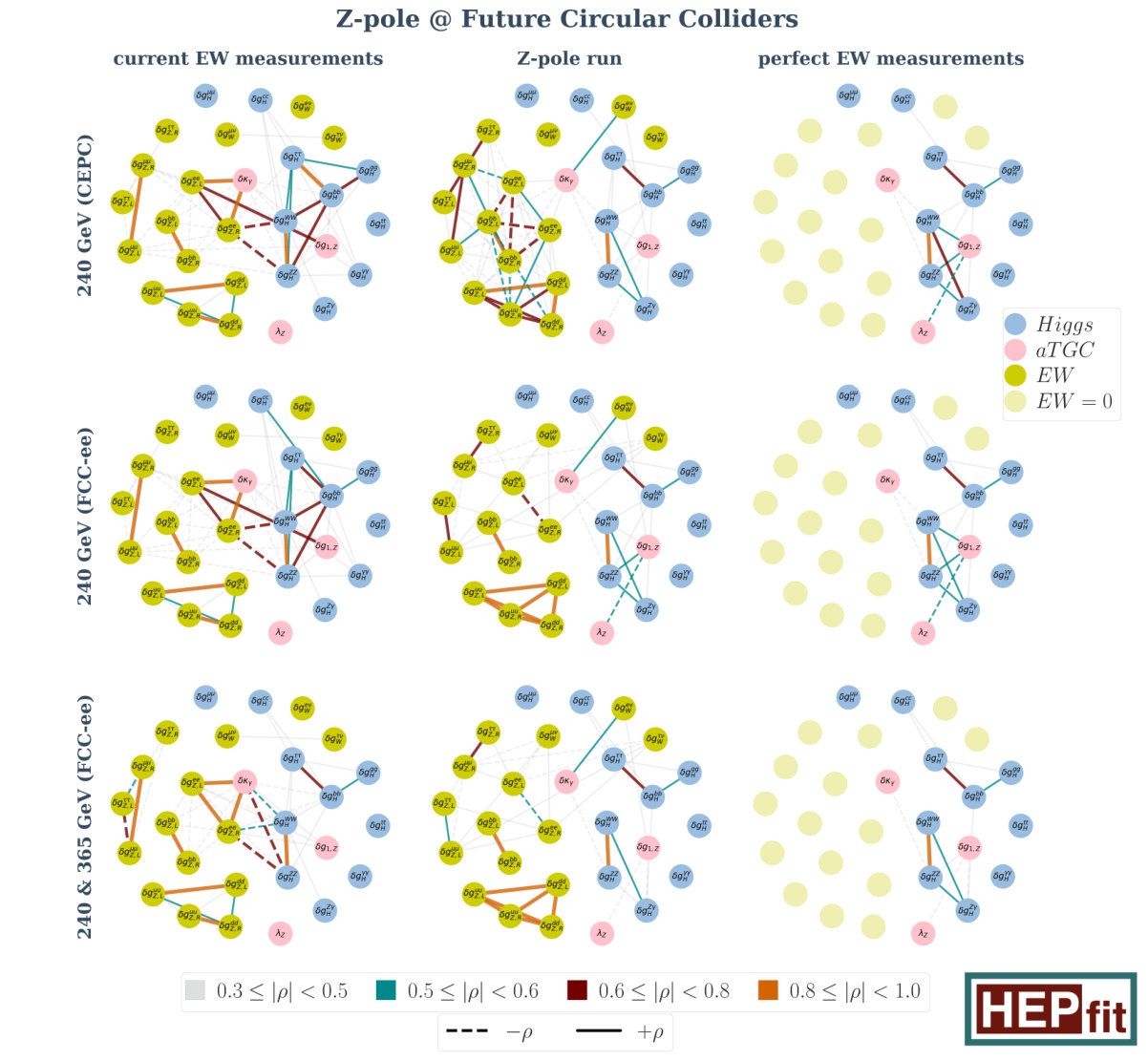 Figure 10
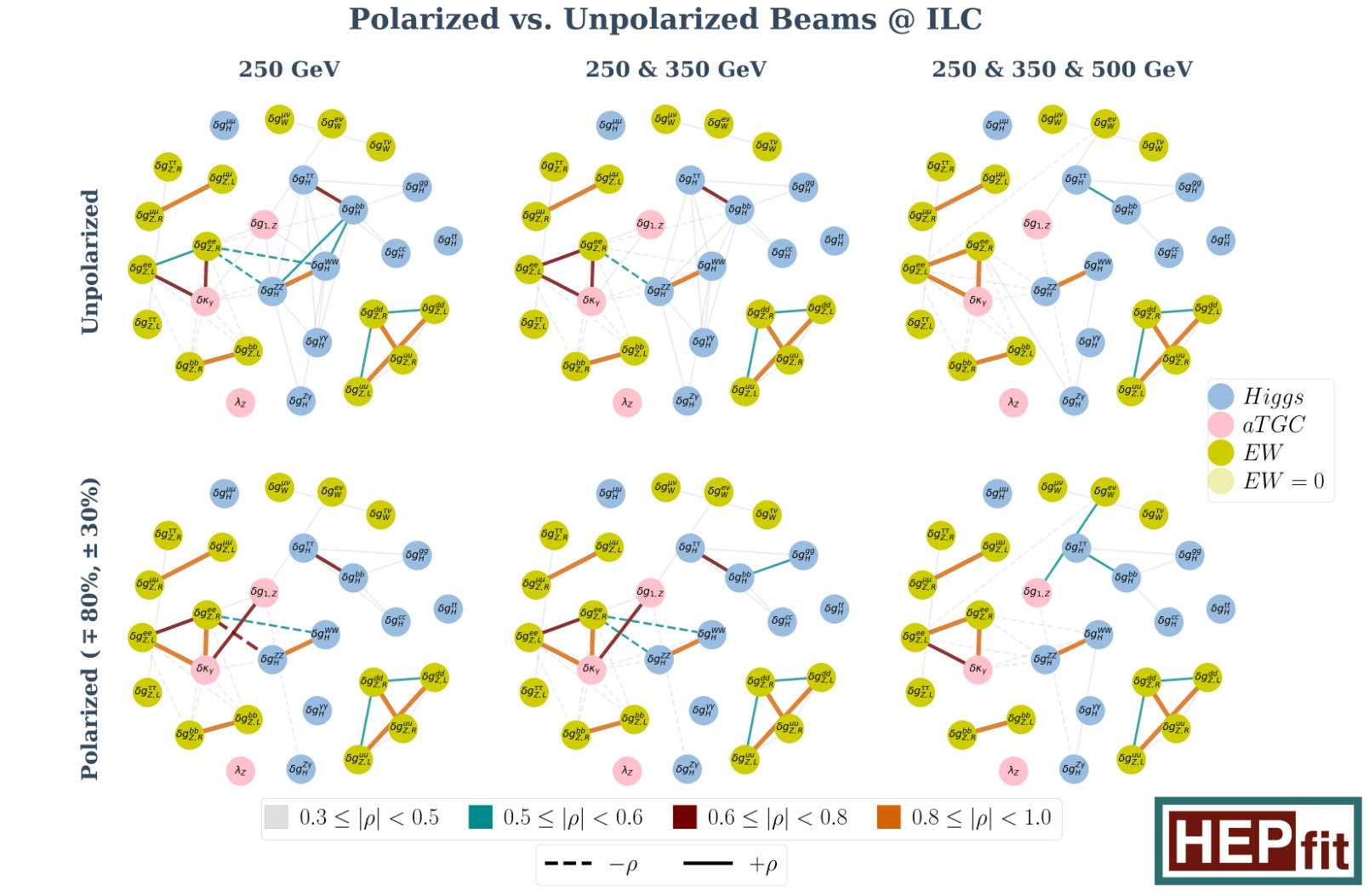 Figure 11
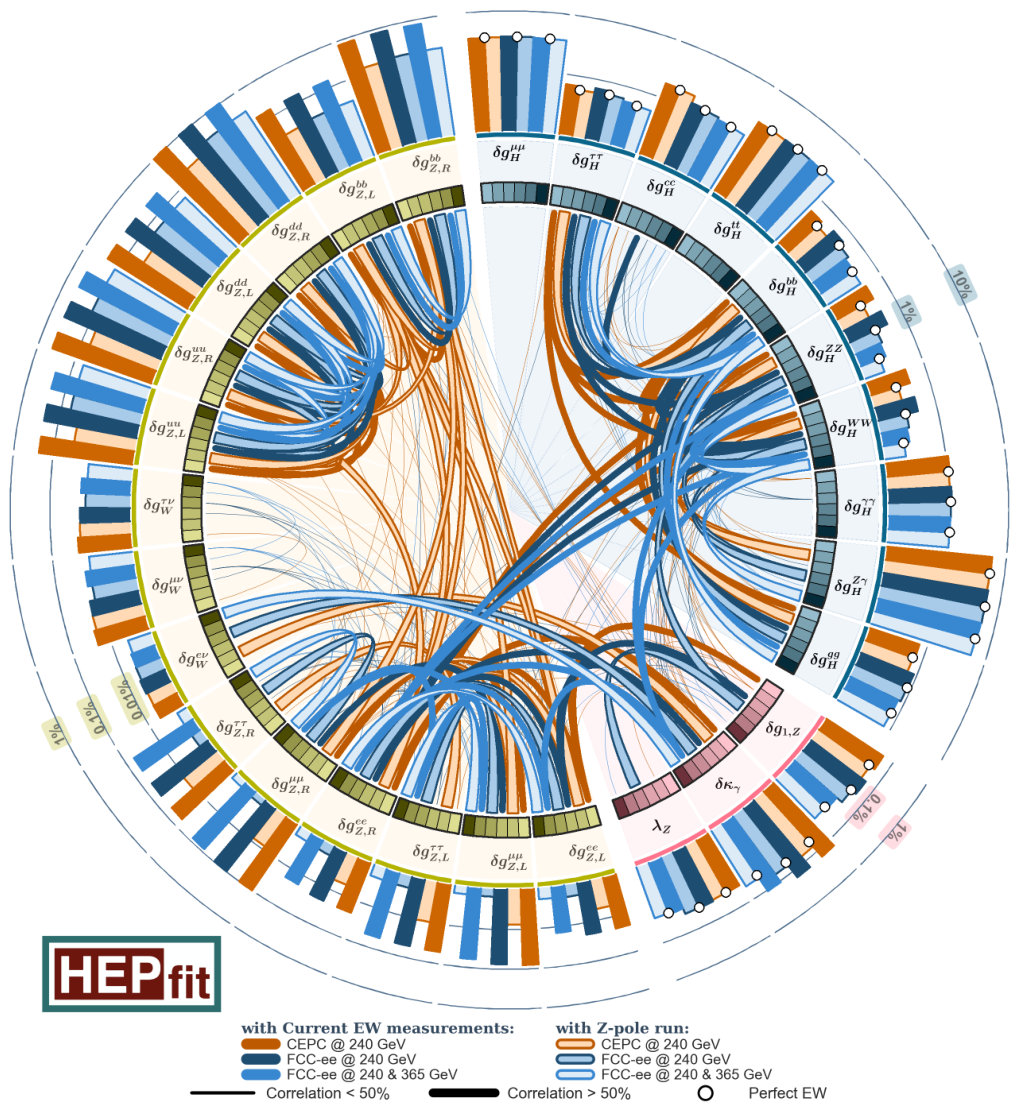 Figure 12
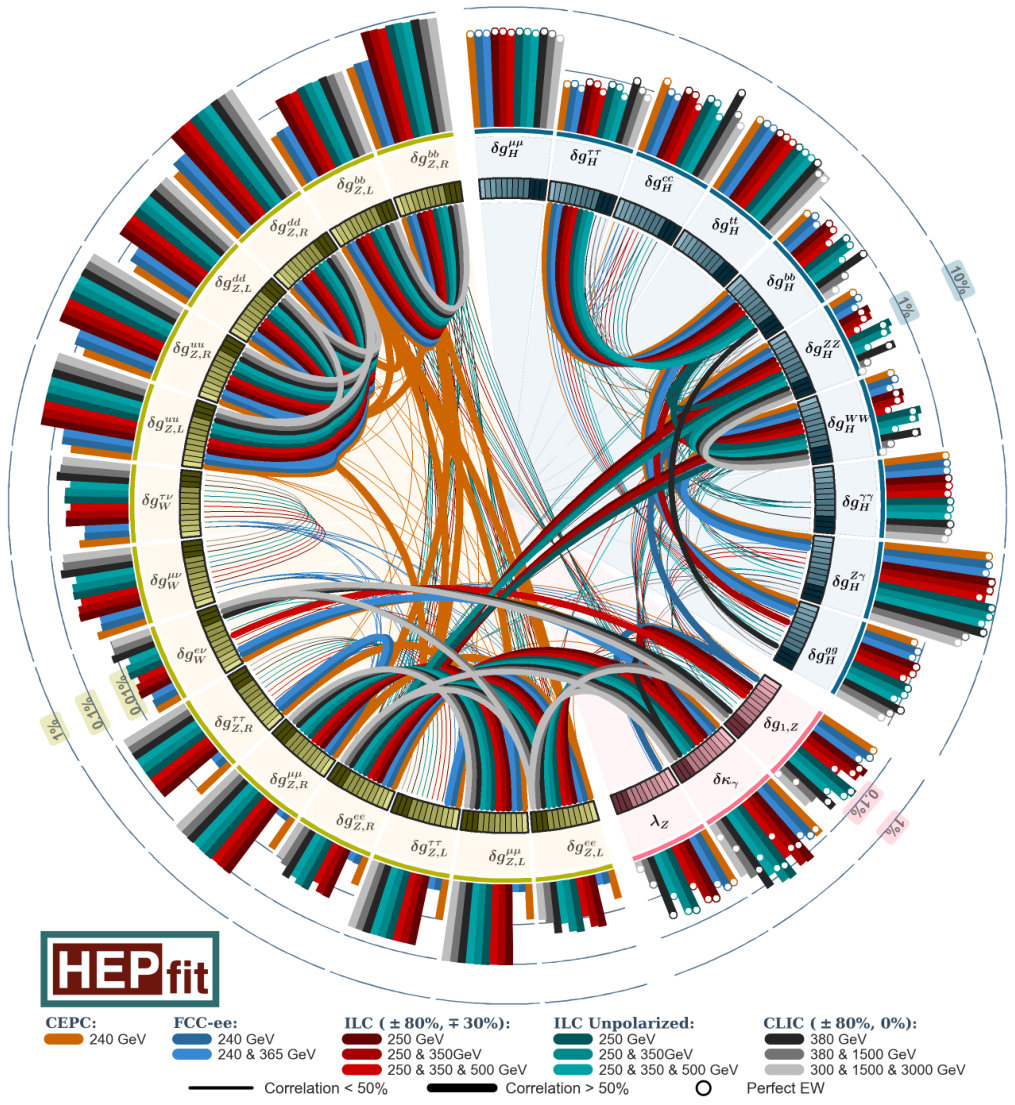 Figure 13
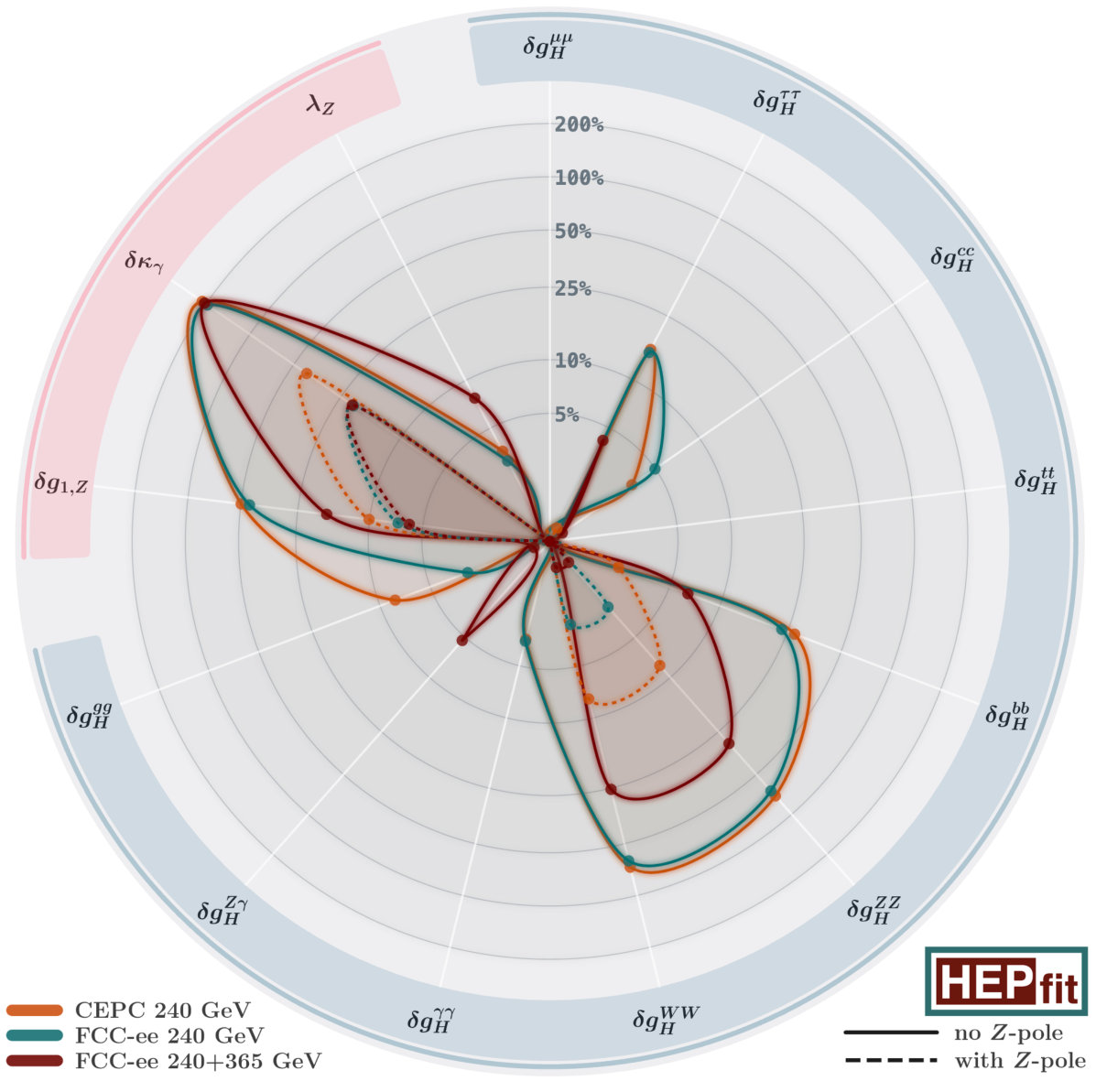 Figure 14
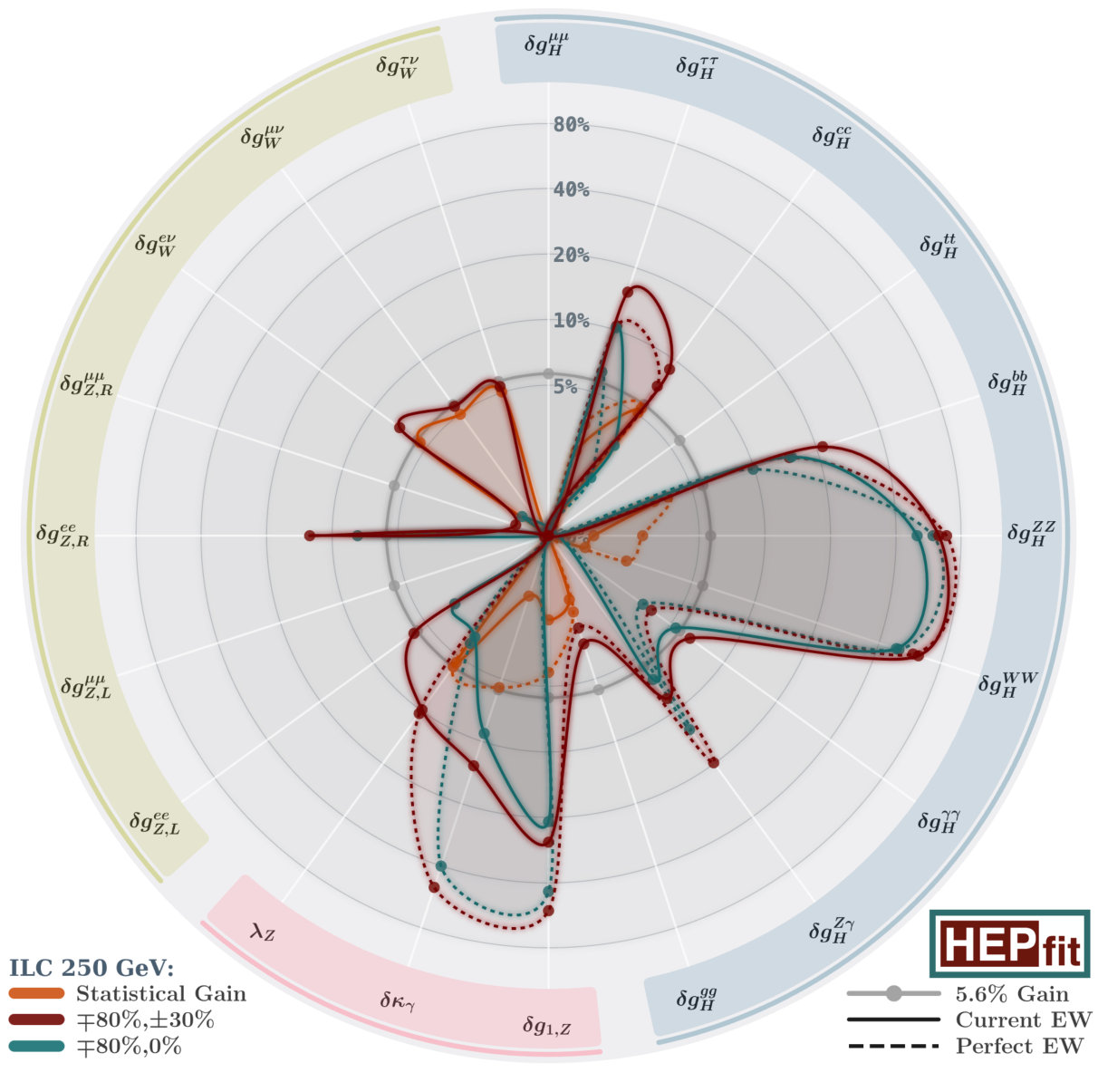 Figure 15
Peer Reviews
No public reviews on file for this paper yet. If you reviewed it on a platform where reviews are public (OpenReview, ICLR, NeurIPS, ICML), you can paste yours below so the community can read it here.
Code & Models
Videos
No videos yet. Explain this paper in a talk, walkthrough, or lecture? Add one.
