Variational Bayes' method for functions with applications to some inverse problems
Junxiong Jia, Qian Zhao, Zongben Xu, Deyu Meng, Yee Leung

TL;DR
This paper extends the Variational Bayes' method to infinite-dimensional spaces for solving inverse PDE problems, providing a computationally efficient alternative to traditional sampling methods with proven effectiveness.
Contribution
It generalizes finite-dimensional VBM to infinite-dimensional spaces and establishes a rigorous theoretical framework for inverse PDE problems.
Findings
Effective approximation of posterior measures in inverse PDE problems
Theoretical validation of infinite-dimensional VBM
Numerical examples demonstrate method's efficiency
Abstract
Bayesian approach, as a useful tool for quantifying uncertainties, has been widely used for solving inverse problems of partial differential equations (PDEs). One of the key difficulties for employing Bayesian approach for the issue is how to extract information from the posterior probability measure. Variational Bayes' method (VBM) is firstly and broadly studied in the field of machine learning, which has the ability to extract posterior information approximately by using much lower computational resources compared with the conventional sampling type methods. In this paper, we generalize the usual finite-dimensional VBM to infinite-dimensional space, which makes the usage of VBM for inverse problems of PDEs rigorously. We further establish general infinite-dimensional mean-field approximate theory, and apply this theory to abstract linear inverse problems with Gaussian and Laplace…
Click any figure to enlarge with its caption.
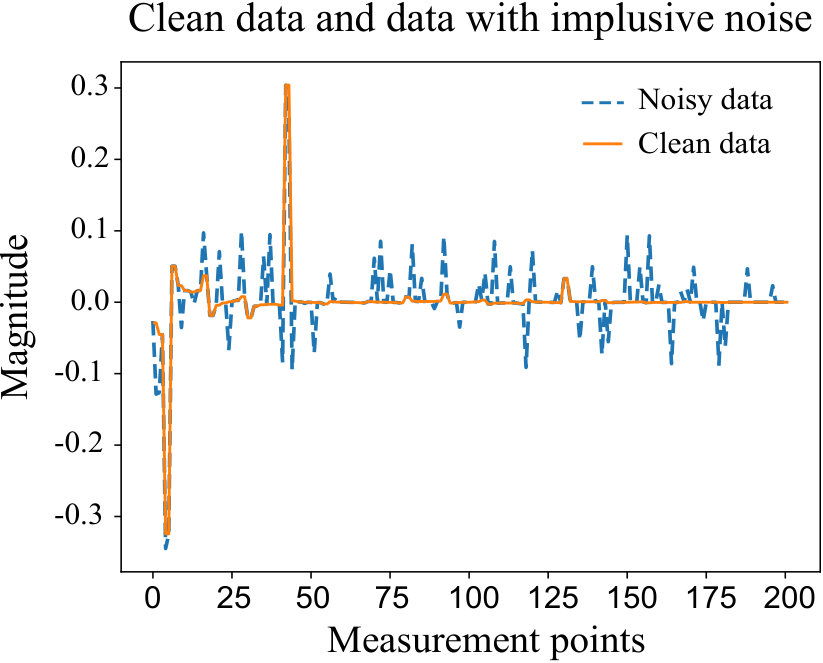 Figure 1
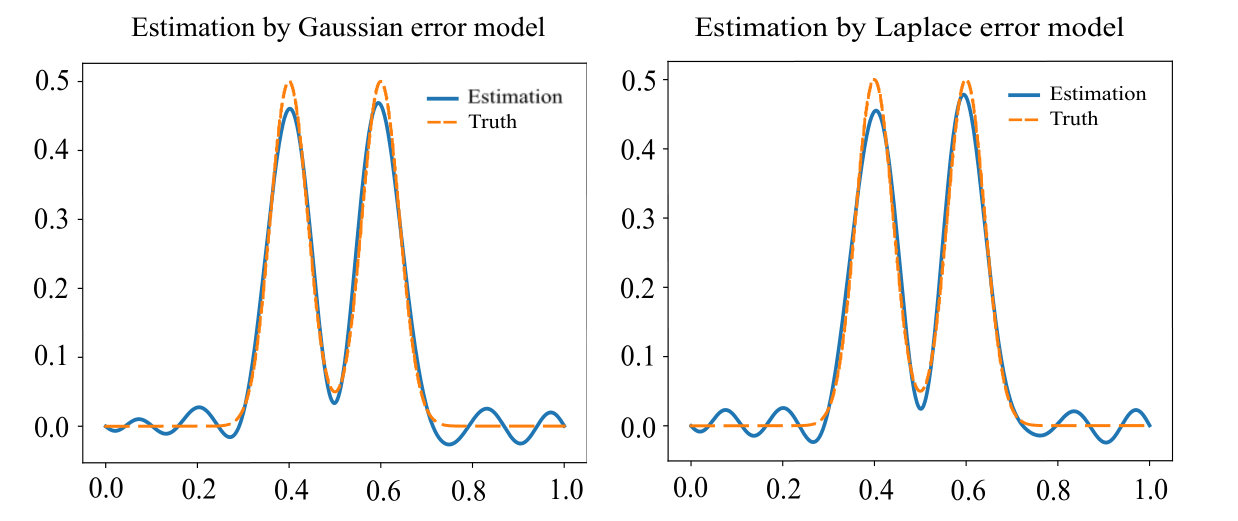 Figure 2
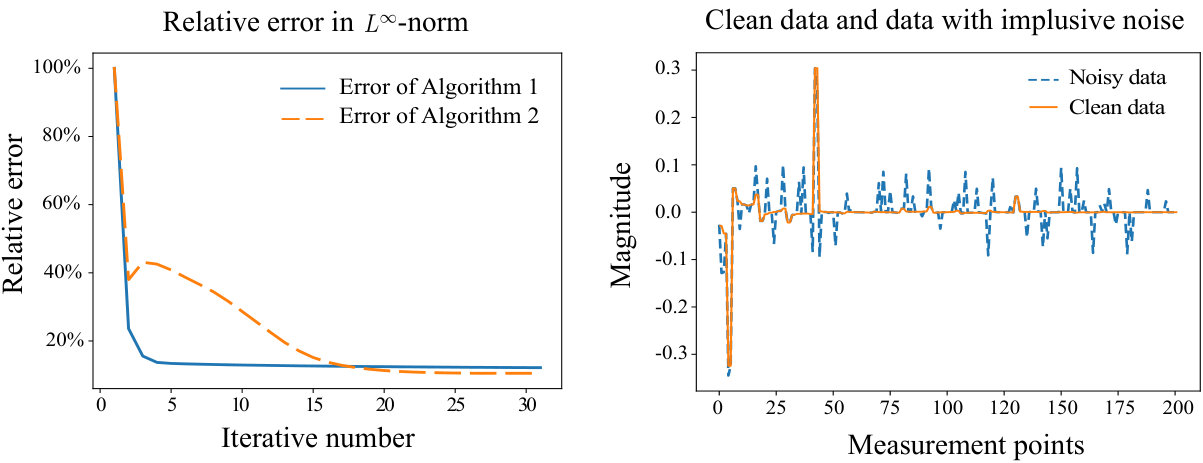 Figure 3
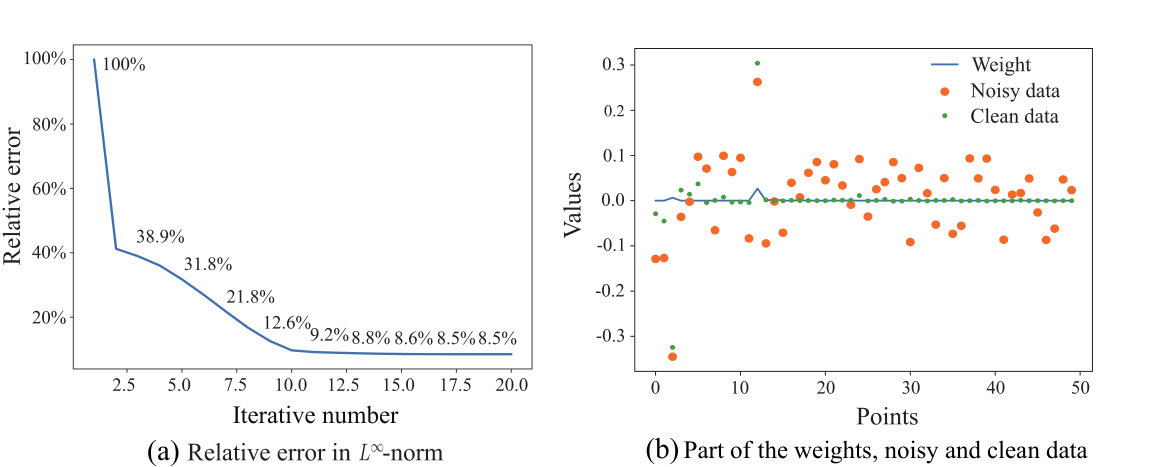 Figure 4
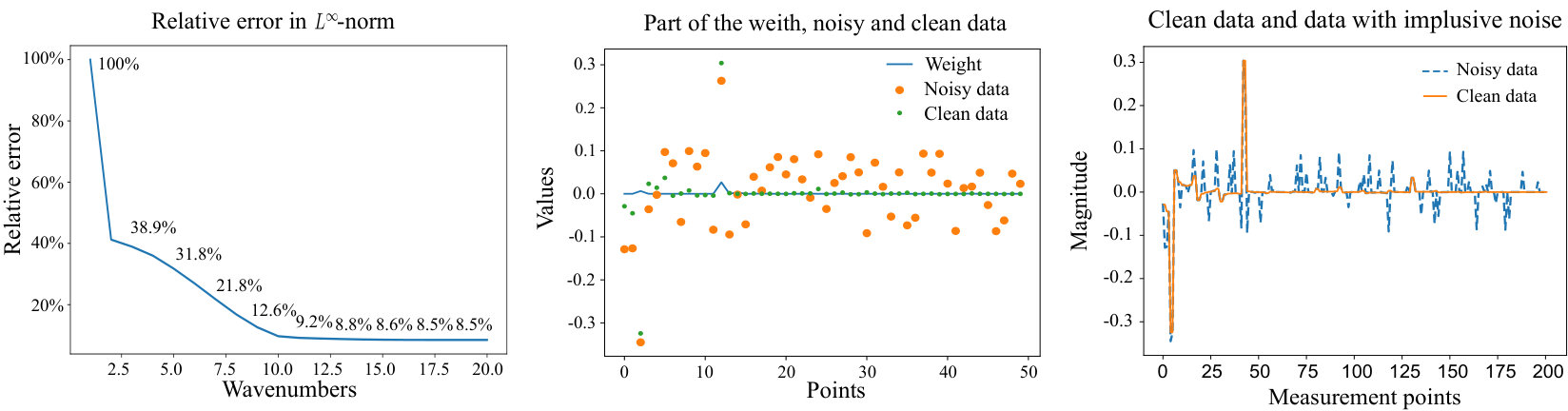 Figure 5
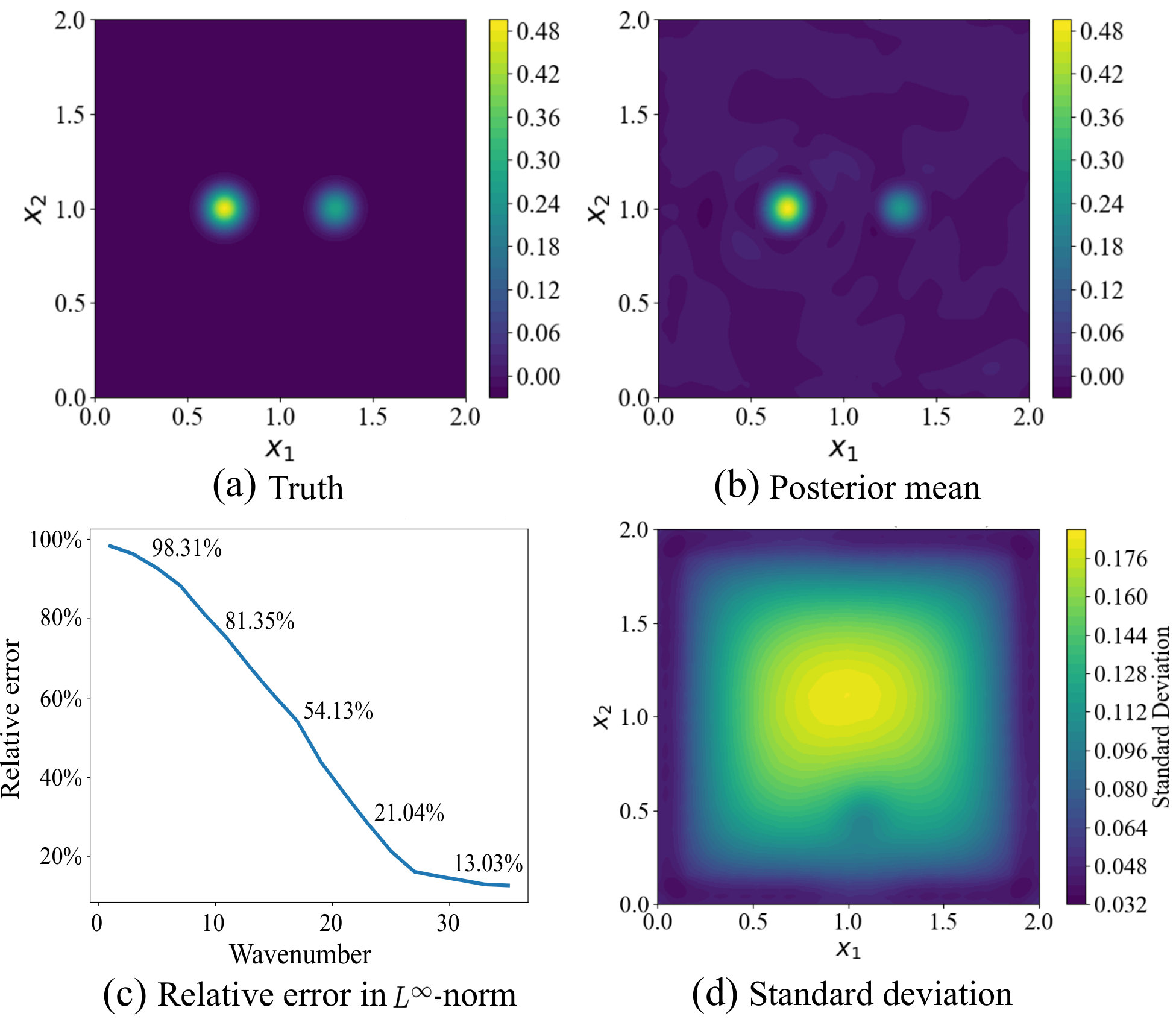 Figure 6
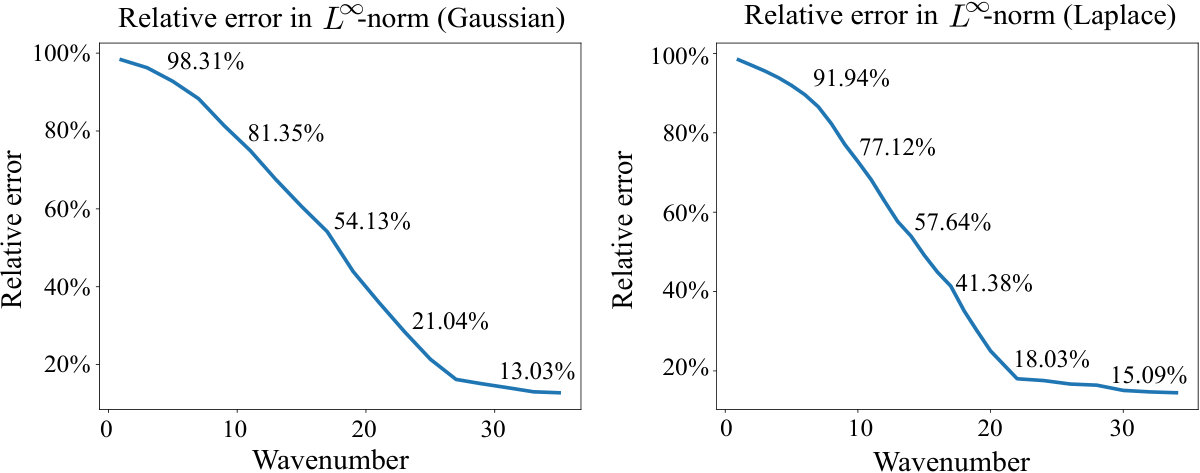 Figure 7
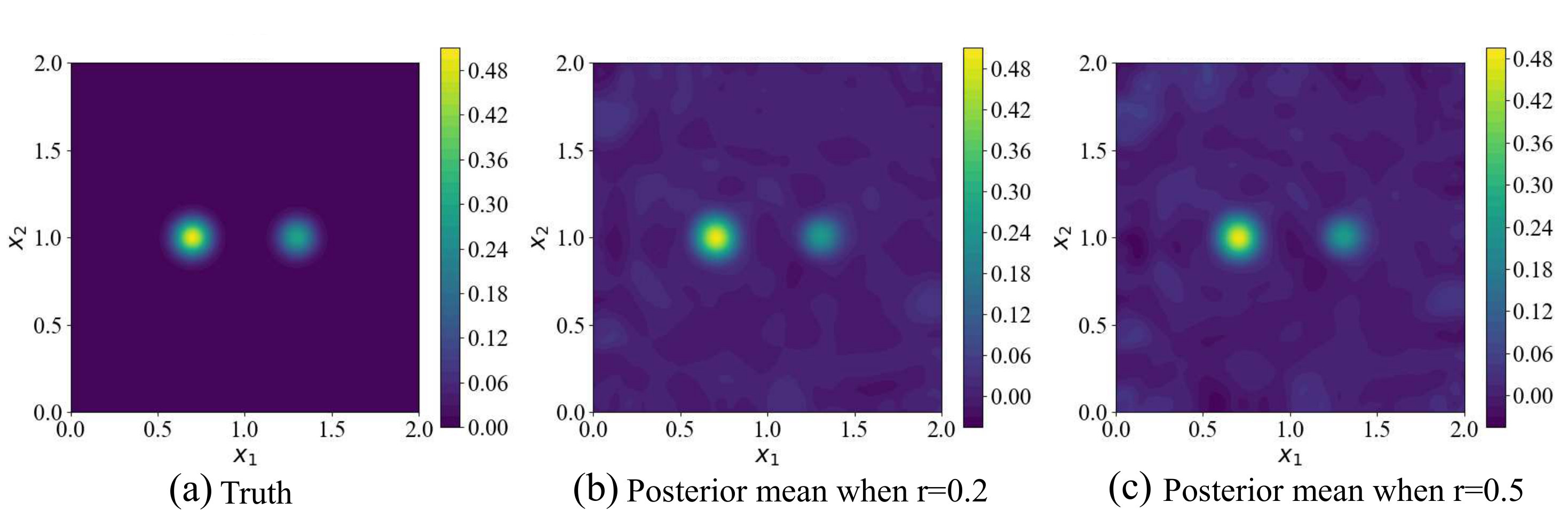 Figure 8
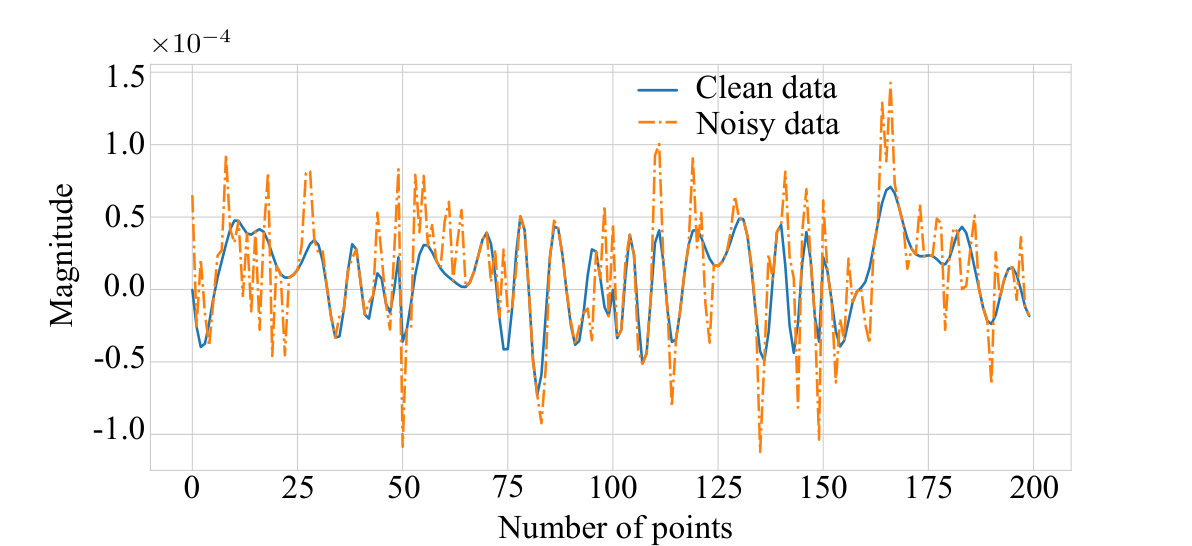 Figure 9
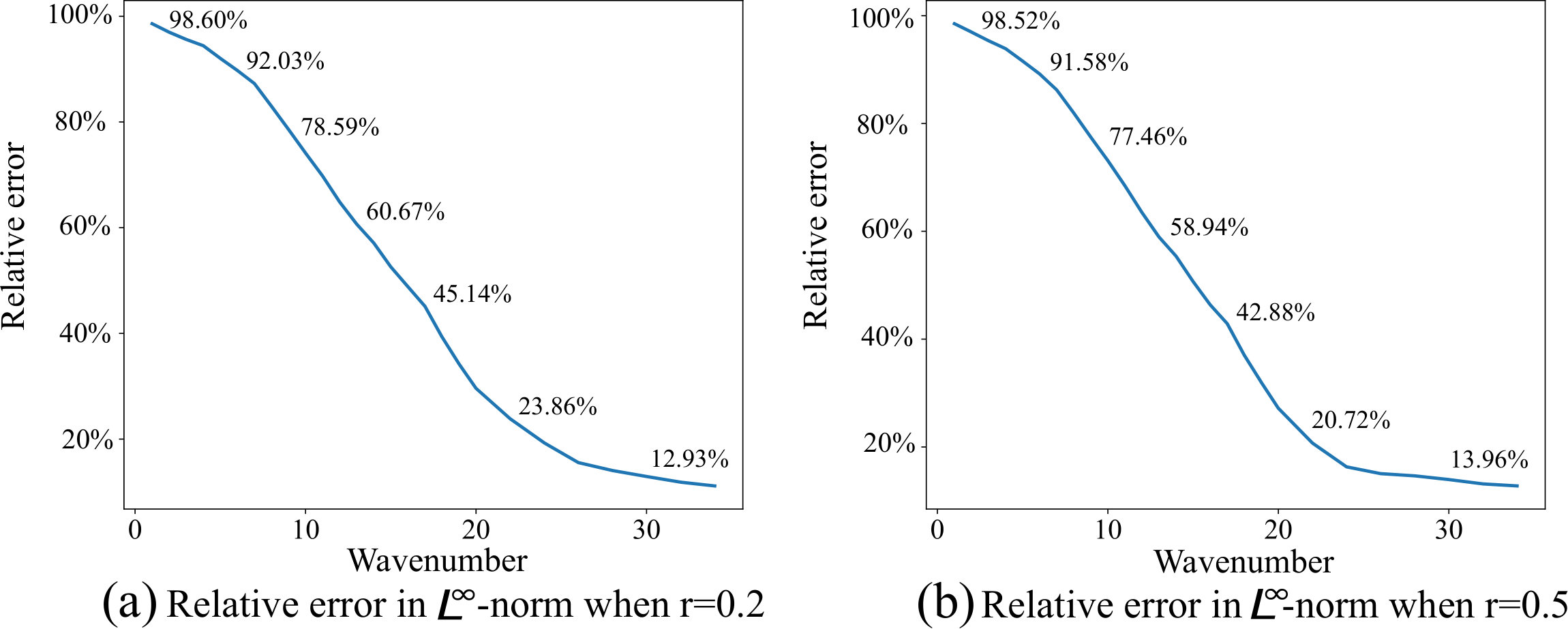 Figure 10
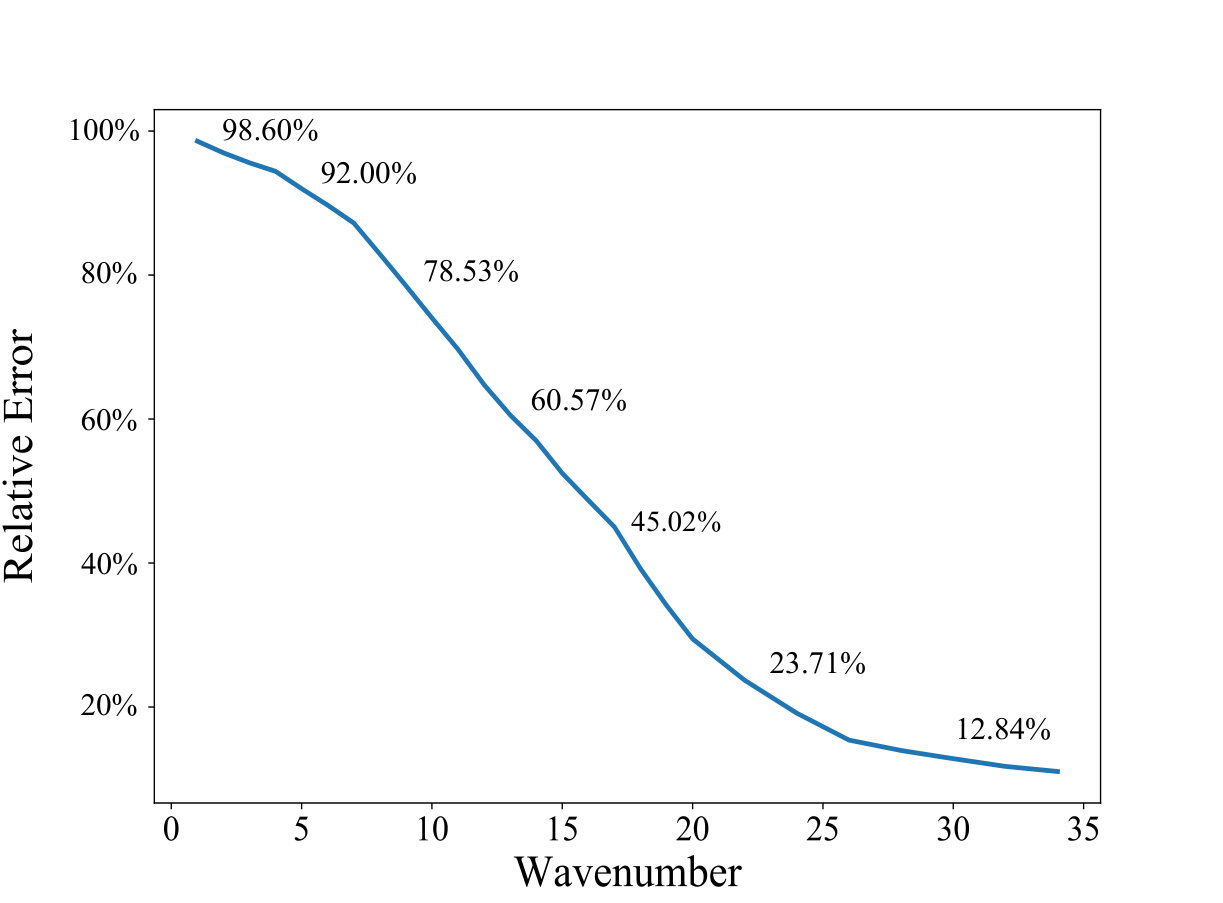 Figure 11
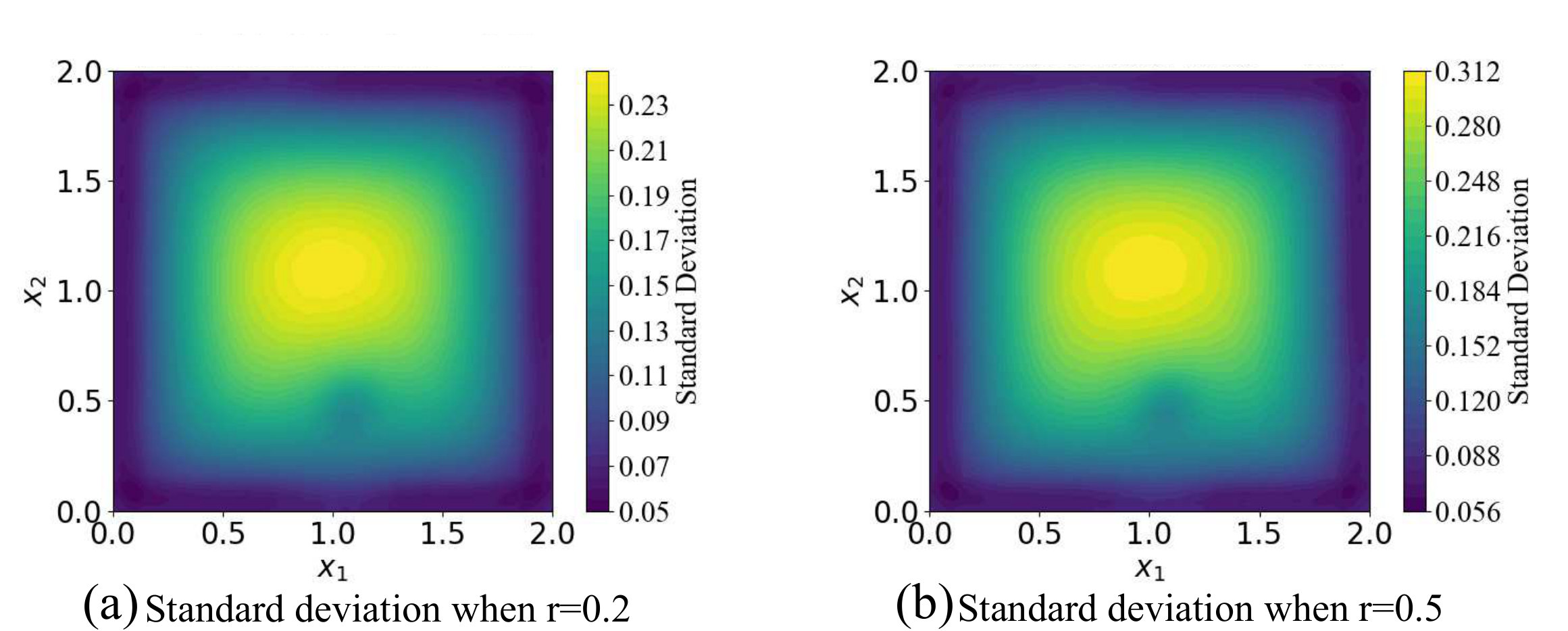 Figure 12
 Figure 13
 Figure 14
 Figure 15
 Figure 16
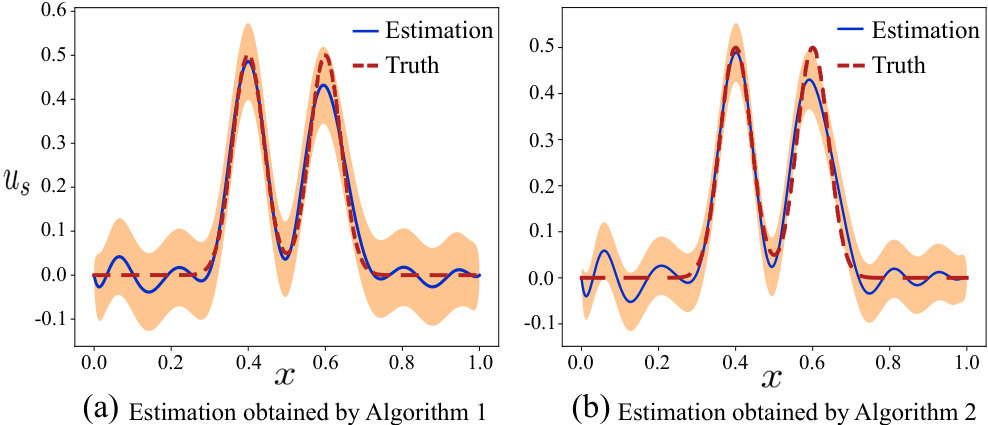 Figure 17
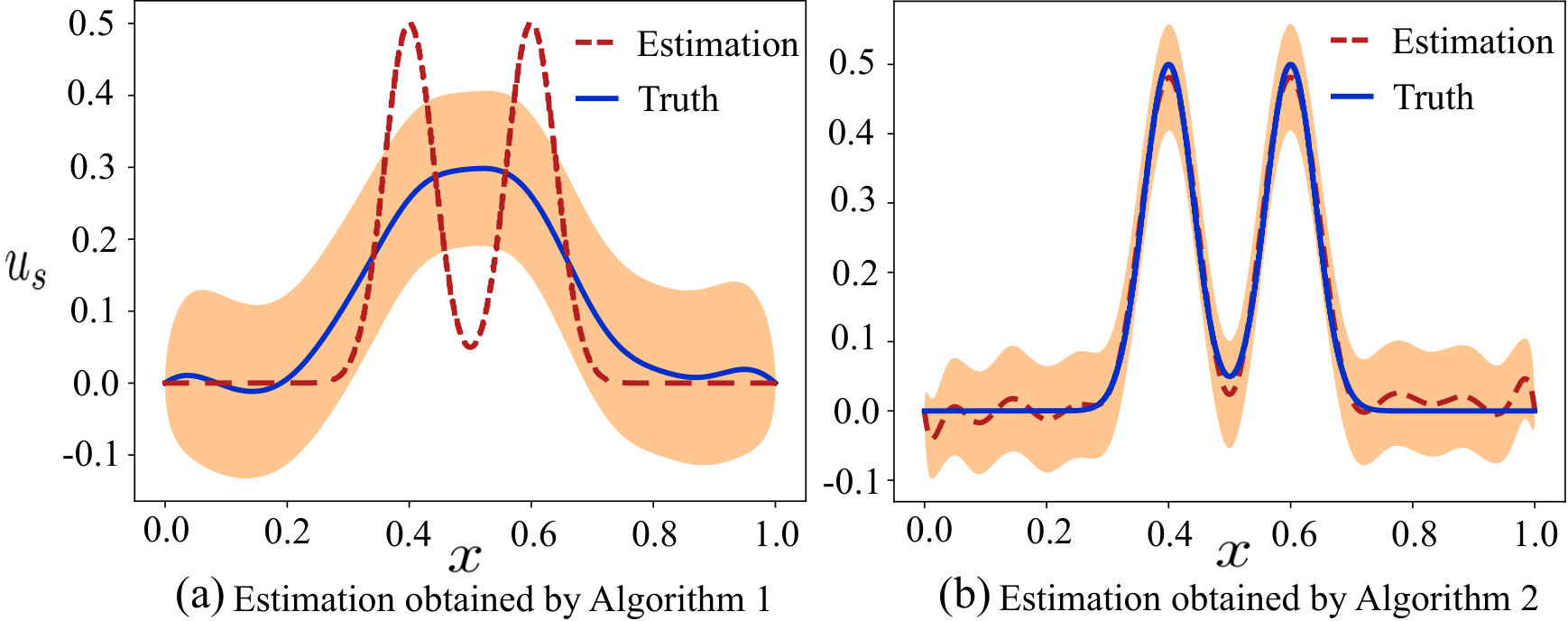 Figure 18
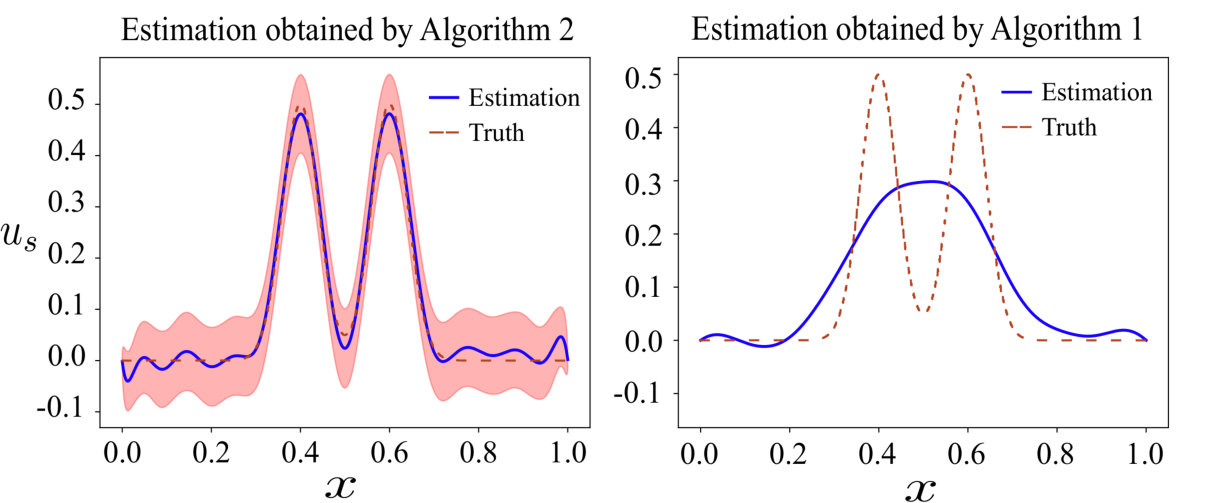 Figure 19
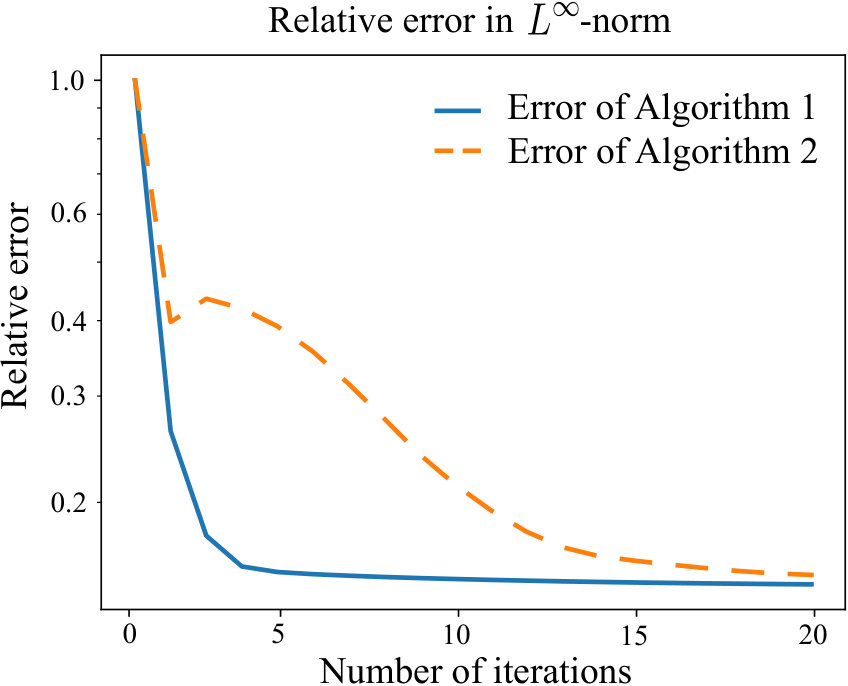 Figure 20
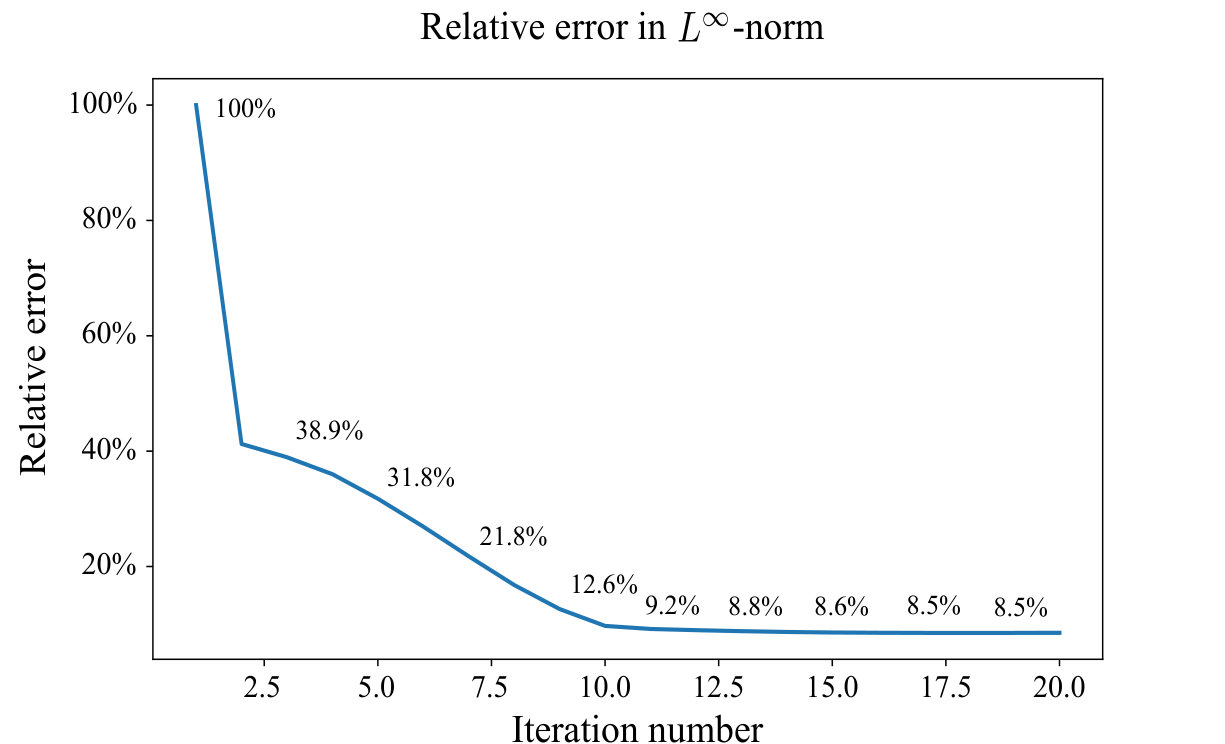 Figure 21
Peer Reviews
No public reviews on file for this paper yet. If you reviewed it on a platform where reviews are public (OpenReview, ICLR, NeurIPS, ICML), you can paste yours below so the community can read it here.
Videos
No videos yet. Explain this paper in a talk, walkthrough, or lecture? Add one.