Gapless surface Dirac cone in antiferromagnetic topological insulator MnBi$_2$Te$_4$
Yu-Jie Hao, Pengfei Liu, Yue Feng, Xiao-Ming Ma, Eike F. Schwier,, Masashi Arita, Shiv Kumar, Chaowei Hu, Rui'e Lu, Meng Zeng, Yuan Wang,, Zhanyang Hao, Hongyi Sun, Ke Zhang, Jiawei Mei, Ni Ni, Liusuo Wu, Kenya, Shimada, Chaoyu Chen, Qihang Liu, and Chang Liu

TL;DR
This study uncovers a gapless Dirac cone on the surface of MnBi$_2$Te$_4$, an antiferromagnetic topological insulator, challenging previous assumptions of a gapped surface state and revealing new topological phases.
Contribution
The paper provides the first direct experimental evidence of a gapless surface Dirac cone in MnBi$_2$Te$_4$, supported by symmetry analysis and ab initio calculations, indicating additional topological protection.
Findings
Existence of a gapless Dirac cone on MnBi$_2$Te$_4$ surface
Surface state remains unchanged across Néel temperature
Surface state is robust against surface degradation
Abstract
The recent discovered antiferromagnetic topological insulators in Mn-Bi-Te family with intrinsic magnetic ordering have rapidly drawn broad interest since its cleaved surface state is believed to be gapped, hosting the unprecedented axion states with half-integer quantum Hall effect. Here, however, we show unambiguously by using high-resolution angle-resolved photoemission spectroscopy that a gapless Dirac cone at the (0001) surface of MnBiTe exists between the bulk band gap. Such unexpected surface state remains unchanged across the bulk N\'eel temperature, and is even robust against severe surface degradation, indicating additional topological protection. Through symmetry analysis and - calculations we consider different types of surface reconstruction of the magnetic moments as possible origins giving rise to such linear dispersion. Our results…
Click any figure to enlarge with its caption.
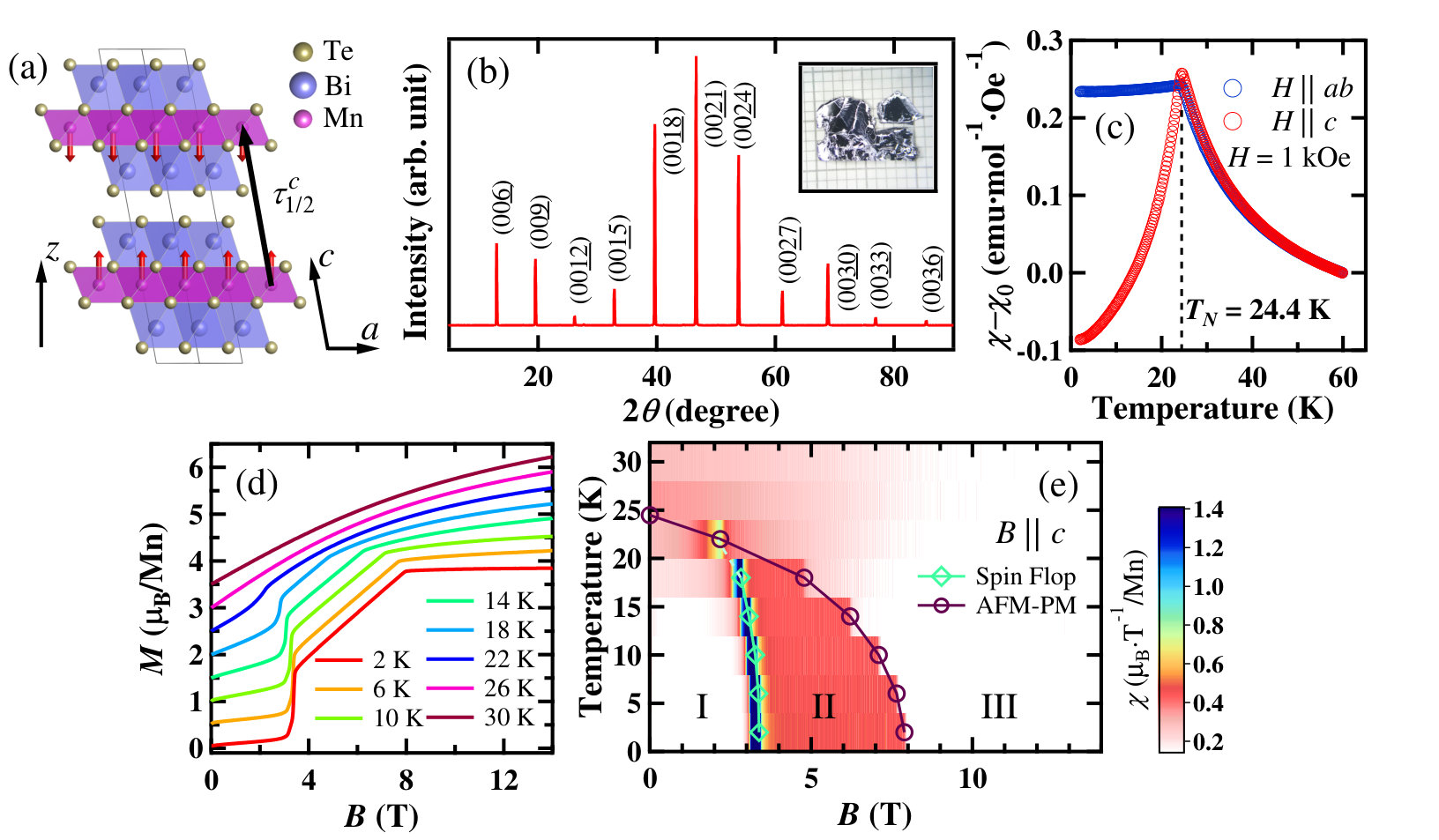 Figure 1
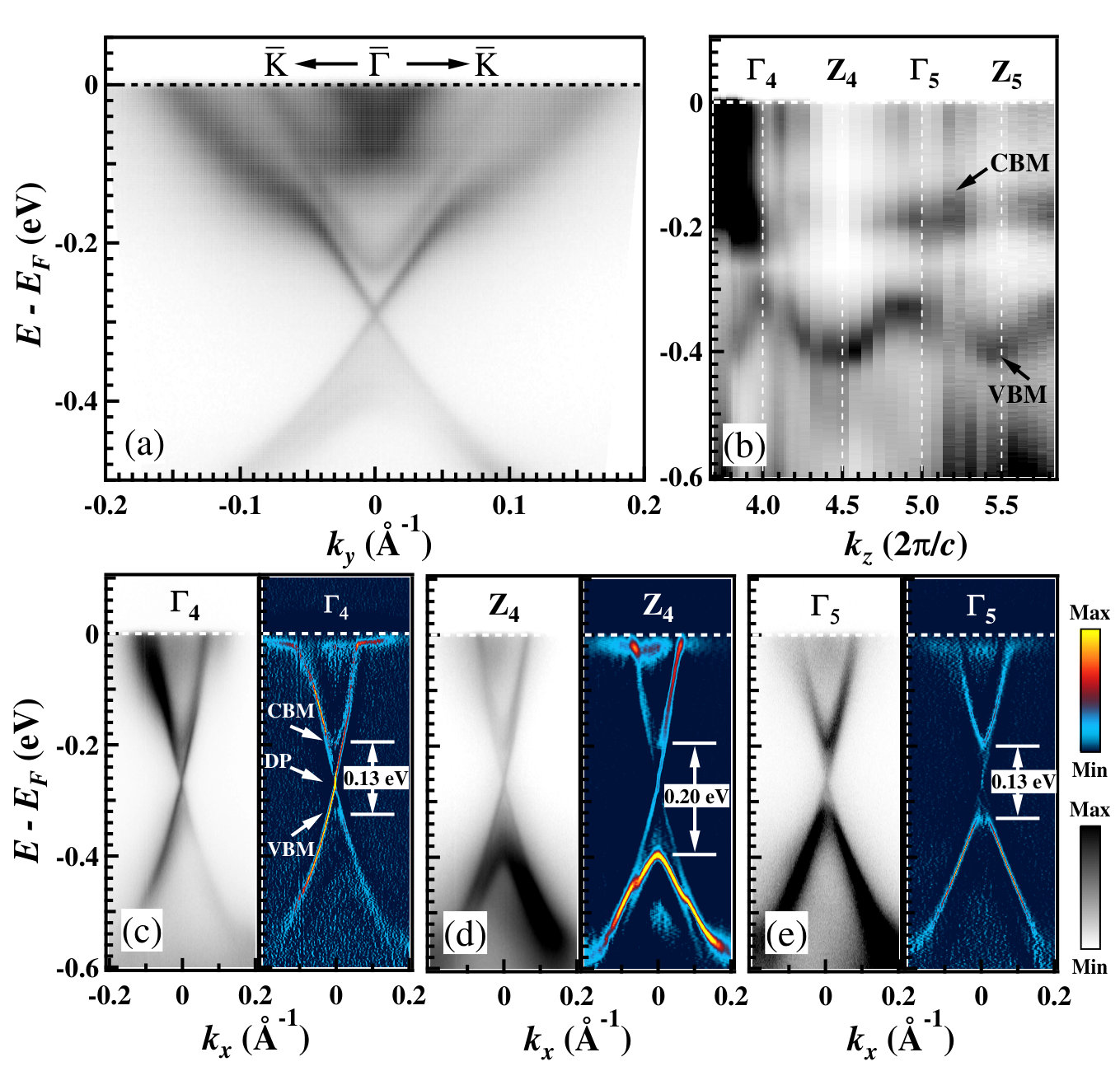 Figure 2
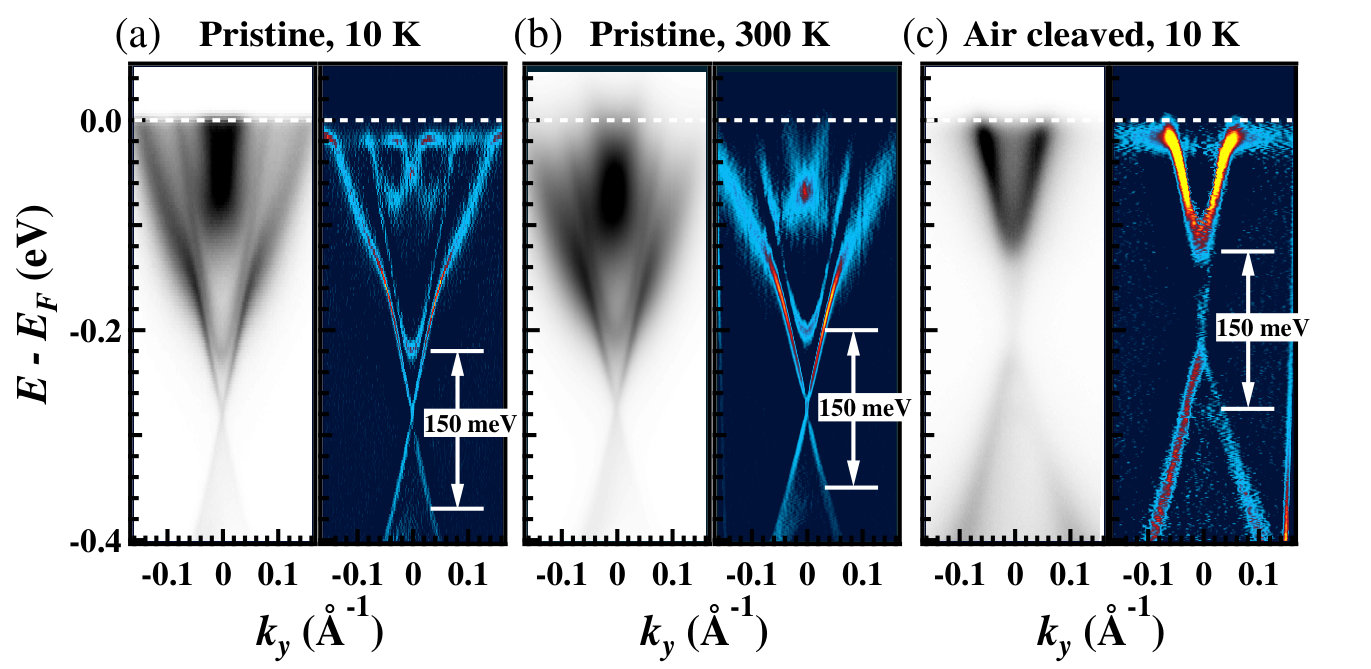 Figure 3
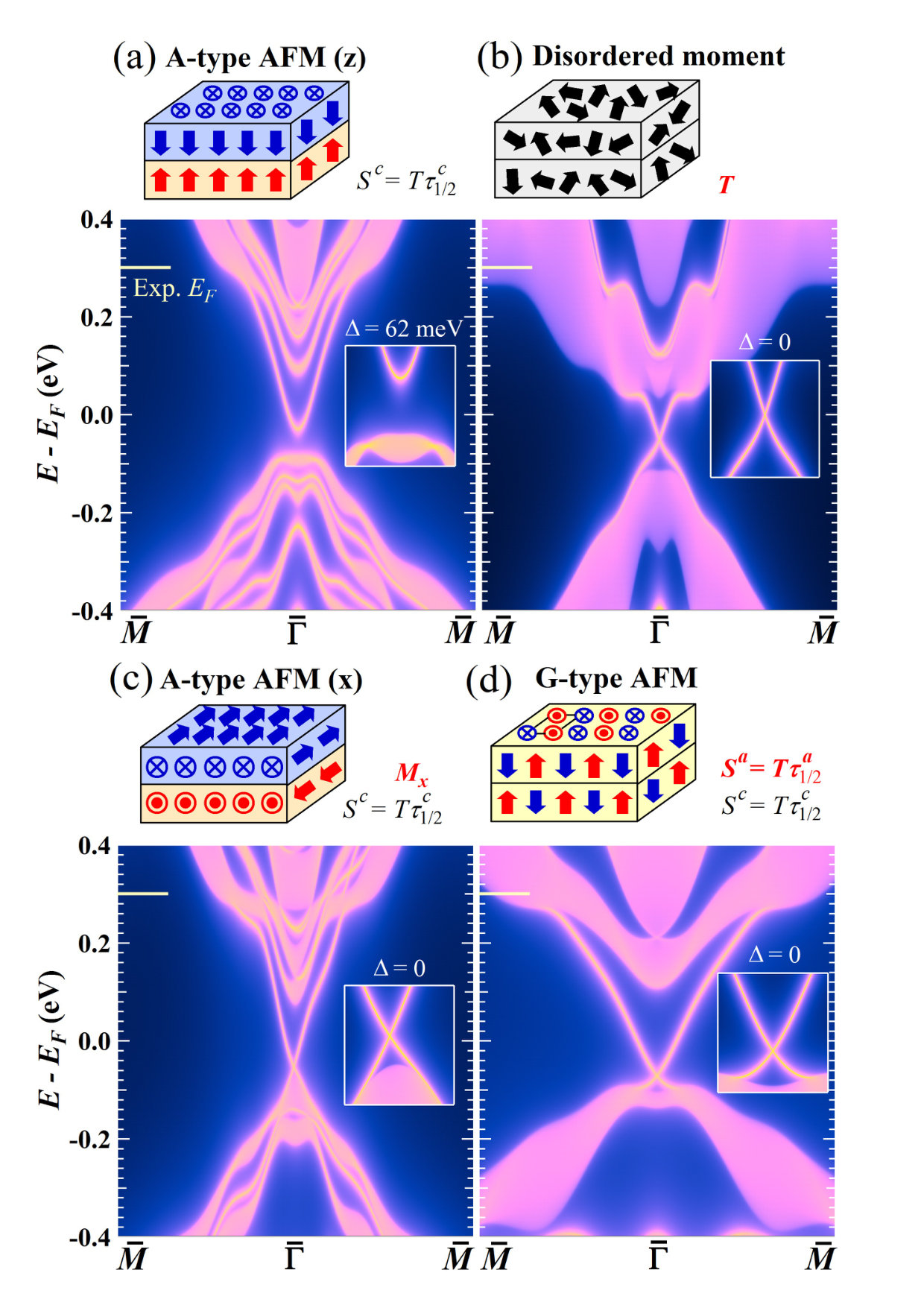 Figure 4
Peer Reviews
No public reviews on file for this paper yet. If you reviewed it on a platform where reviews are public (OpenReview, ICLR, NeurIPS, ICML), you can paste yours below so the community can read it here.
Videos
No videos yet. Explain this paper in a talk, walkthrough, or lecture? Add one.