Matters of Gravity: The Newsletter of the Division of Gravitational Physics of the American Physical Society. Number 53. June, 2019
David Garfinkle

TL;DR
This newsletter compiles recent updates and discussions in gravitational physics, including gravitational-wave standard sirens and community events, providing insights into current research and activities in the field.
Contribution
It offers a curated overview of recent developments, highlighting key topics and community gatherings in gravitational physics.
Findings
Discussion on gravitational-wave standard sirens and their cosmological implications
Highlights from HartleFest celebrating James Hartle's contributions
Updates on community events and research activities in gravitational physics
Abstract
we hear that..., by David Garfinkle Gravitational-wave Standard Sirens, by Daniel Holz and Maya Fishbach HartleFest, by Gary Horowitz
Click any figure to enlarge with its caption.
 Figure 1
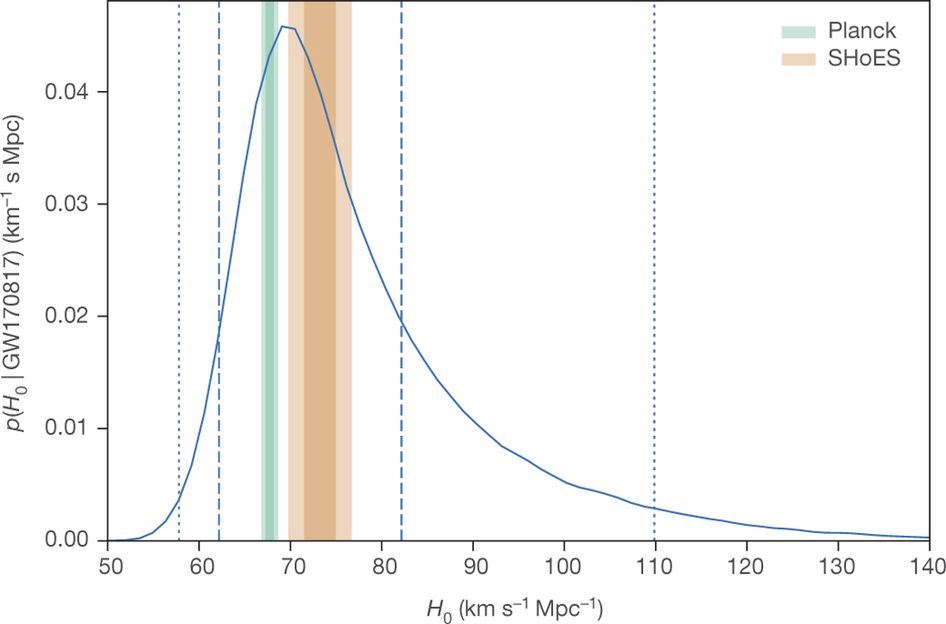 Figure 2
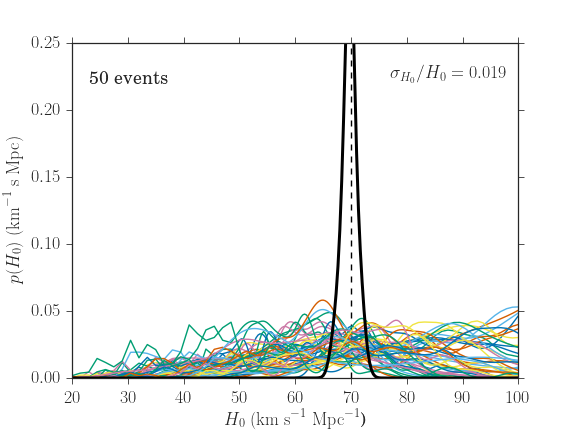 Figure 3
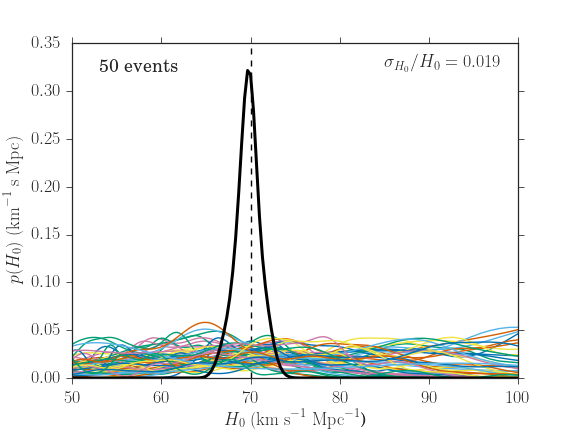 Figure 4
Peer Reviews
No public reviews on file for this paper yet. If you reviewed it on a platform where reviews are public (OpenReview, ICLR, NeurIPS, ICML), you can paste yours below so the community can read it here.
Videos
No videos yet. Explain this paper in a talk, walkthrough, or lecture? Add one.
Taxonomy
TopicsGeophysics and Gravity Measurements
**MATTERS OF GRAVITY
**The newsletter of the Division of Gravitational Physics of the American Physical Society
Number 53 June 2019
Contents
Editor
David Garfinkle
Department of Physics Oakland University Rochester, MI 48309
Phone: (248) 370-3411
Internet: garfinkl-at-oakland.edu
WWW: http://www.oakland.edu/physics/Faculty/david-garfinkle
Associate Editor
Greg Comer
Department of Physics and Center for Fluids at All Scales,
St. Louis University, St. Louis, MO 63103
Phone: (314) 977-8432
Internet: comergl-at-slu.edu
WWW: http://www.slu.edu/arts-and-sciences/physics/faculty/comer-greg.php
ISSN: 1527-3431
DISCLAIMER: The opinions expressed in the articles of this newsletter represent the views of the authors and are not necessarily the views of APS. The articles in this newsletter are not peer reviewed.
Editorial
The next newsletter is due December 2019. Issues 28-53 are available on the web at https://files.oakland.edu/users/garfinkl/web/mog/ All issues before number 28 are available at http://www.phys.lsu.edu/mog
Any ideas for topics that should be covered by the newsletter should be emailed to me, or Greg Comer, or the relevant correspondent. Any comments/questions/complaints about the newsletter should be emailed to me.
A hardcopy of the newsletter is distributed free of charge to the members of the APS Division of Gravitational Physics upon request (the default distribution form is via the web) to the secretary of the Division. It is considered a lack of etiquette to ask me to mail you hard copies of the newsletter unless you have exhausted all your resources to get your copy otherwise.
David Garfinkle
Correspondents of Matters of Gravity
- •
Daniel Holz: Relativistic Astrophysics,
- •
Bei-Lok Hu: Quantum Cosmology and Related Topics
- •
Veronika Hubeny: String Theory
- •
Pedro Marronetti: News from NSF
- •
Luis Lehner: Numerical Relativity
- •
Jim Isenberg: Mathematical Relativity
- •
Katherine Freese: Cosmology
- •
Lee Smolin: Quantum Gravity
- •
Cliff Will: Confrontation of Theory with Experiment
- •
Peter Bender: Space Experiments
- •
Jens Gundlach: Laboratory Experiments
- •
Warren Johnson: Resonant Mass Gravitational Wave Detectors
- •
David Shoemaker: LIGO
- •
Stan Whitcomb: Gravitational Wave detection
- •
Peter Saulson and Jorge Pullin: former editors, correspondents at large.
Division of Gravitational Physics (DGRAV) Authorities
Chair: Gary Horowitz; Chair-Elect: Nicolas Yunes ; Vice-Chair: Gabriela Gonzalez . Secretary-Treasurer: Geoffrey Lovelace; Past Chair: Emanuele Berti ; Councilor: Beverly Berger Members-at-large: Lisa Barsotti, Theodore Jacobson, Michael Lam, Jess McIver, Alessandra Corsi, Henriette Elvang. Student Members: Belinda Cheeseboro, Alejandro Cardenas-Avendano.
we hear that …
David Garfinkle, Oakland University garfinkl-at-oakland.edu
Clifford Will has been awarded the 2019 Albert Einstein Medal by the Albert Einstein Society in Berne, Switzerland.
Gabriela Gonzalez has been named the 2019 SEC Professor of the Year.
Bernard Schutz has been elected to the National Academy of Sciences.
Gabriela Gonzalez has been elected Vice-Chair of DGRAV. Alessandra Corsi and Henriette Elvang have been elected Members-at-large of the DGRAV Executive Committee. Alejandro Cardenas-Avendano has been elected Student Student Member of the DGRAV Executive Committee.
Hearty Congratulations!
Gravitational-wave Standard Sirens
*Daniel Holz, University of Chicago *holz-at-uchicago.edu
Maya Fishbach, University of Chicago mfishbach-at-uchicago.edu
Overview
Over thirty years ago Bernie Schutz pointed out that general relativity provides an exceedingly elegant way to determine the absolute distance to a source at cosmological distances **[36]. By measuring the gravitational waves from the inspiral and merger of two compact objects, such as neutron stars or black holes, one can infer both the mass scale and the luminosity distance to the source. The scale, known as the chirp mass, comes from the frequency evolution, while the distance comes from the measured amplitude of the waveform in the detectors [see][24]**[for an introductory discussion]. These sources are the gravitational analog of “standard candles” such as Type Ia supernovae, which can be used to infer absolute distances through use of a cosmological version of the inverse square law. Because of this close correspondence, these binary sources have been dubbed “standard sirens” **[23*]**. Unlike in the case of standard candles, standard sirens offer a direct and independent way to measure distances, completely obviating the need for a distance ladder. They are calibrated directly by general relativity. *
An absolute distance measurement is of particular interest when coupled with a redshift measurement to the same source. This combination constrains the distance-redshift relation, which is a measure of the scale of the universe as a function of time. Measurements of this relation help determine interesting quantities such as the age and composition of the universe and the nature of the dark energy. At low redshift, this relation can be approximated by , with the speed of light, the redshift, the Hubble constant, and the distance to the source. A standard siren provides directly from the amplitude of the gravitational waves, and with a measurement of the redshift to the source one can directly infer the Hubble constant.
It is to be emphasized, however, that the redshift of the source cannot be straightforwardly determined from gravitational waves alone. There is a redshift degeneracy: a lower mass binary farther away will be redshifted to have an identical (modulo amplitude) waveform to a closer, more massive binary. The simplest way to address this is to find an electromagnetic counterpart to the gravitational-wave source, and measure the redshift using photons. We call this the “counterpart standard siren” approach **[23]**, and short gamma-ray bursts have been thought to be a particularly promising counterpart source **[14, 33, 32]**. An alternate “statistical standard siren” approach is to identify potential host galaxies within the gravitational-wave localization volume, with each galaxy providing a potential redshift to the source **[36, 28, 16]**. Additionally, structure present in the population of sources, such as known features in the mass distribution, can be used in a similar manner **[20, 42]**. Finally, it may be possible to use properties of the source (such as knowledge of the equation-of-state of neutron stars) to extract frequency-dependent features in the waveform and thereby determine redshift directly **[29, 17]**.
For thirty years after Bernie’s original paper, a number of obstinate souls toiled at developing the standard siren approach to cosmology. In the absence of the detection of gravitational waves, much less the detection of a gravitational wave source with an associated electromagnetic counterpart allowing for a redshift determination, the field of standard siren science remained somewhat speculative and quixotic. This all changed in August of 2017.
GW170817
GW170817 was detected shortly before 8am Chicago time on August 17, 2017 **[5]**. Less than a day later we were making the first standard siren measurement of the Hubble constant! This binary neutron-star merger was the first gravitational-wave source with a detected electromagnetic counterpart. Two seconds following the merger, the Fermi gamma-ray space telescope detected a short gamma-ray burst spatially coincident with the gravitational-wave localization error box on the sky **[3]**. While it was incredibly exciting to detect gamma-rays and gravitational-waves from the same source for the first time, the gamma-ray burst was poorly localized on the sky. Over the next day, an extensive multi-messenger campaign was launched **[4]**, and eleven hours later, an optical transient was detected in the galaxy NGC 4993 **[12, 40]**. Further study revealed that this optical transient was a kilonova powered by r-process decay and unambiguously associated with the neutron star merger. It was now possible to associate a host galaxy with the gravitational-wave source, and thereby determine the redshift and make the very first standard siren measurement of the Hubble constant **[2]**. The resulting Hubble constant measurement is shown in Figure 1. With a single source, the Hubble constant is constrained to roughly : km/s/Mpc. This first result agrees with the cosmic microwave background measurement from Planck **[6]** as well as the local distance ladder measurement using Type Ia supernovae from SHoES **[35], which both lie near the peak of the posterior probability shown in Figure 1. As we discuss in the next section, combining this result with future standard sirens will tighten the gravitational-wave measurement and may help shed light on the current Hubble constant tension. We note that the broad distribution in Figure 1 is due in part to the distance-inclination degeneracy: a close edge-on binary will be detected with a similar amplitude to a more distance face-on binary [see, e.g.,][14, 38, 2]. Independent determinations of inclination would improve the measurement of [see, e.g.,][22, 25]**, at the (significant) cost of introducing potential astrophysical systematic errors.
The measurements discussed above presume that the theory of general relativity is correct. Alternatively, one can use the standard siren approach to constrain deviations from GR **[31, 8, 7, 27]**. For example, by comparing the measured amplitude of gravitational waves with the inferred luminosity distance through electromagnetic observations, it is possible to constrain the number of spacetime dimensions **[34]** and the running of the Planck mass **[26]**.
GW170817 is the only gravitational-wave source with a counterpart thus far, and therefore provides the only existing counterpart standard siren measurement. As a proof of principle, we can pretend that we were unable to identify the kilonova, and thereby unable to determine the host galaxy of GW170817 and determine its redshift. In this case, we would be relegated to the statistical standard siren approach discussed above, where we use every galaxy in the GW170817 localization volume as a potential host galaxy. We followed this approach in **[21]**, where we combined the gravitational-wave measurements with the GLADE galaxy catalog **[15]** to determine the Hubble constant. Since GW170817 is the closest and best-localized gravitational-wave detection, the galaxy distribution within the relatively small volume is dominated by a single group of galaxies (of which NGC 4993 is a member), with all of these galaxies at similar redshifts. As a result, the statistical standard siren measurement with GW170817 recovers the same distinct peak at km/s/Mpc which is seen in the counterpart result, with an error that is only roughly twice as broad, km/s/Mpc. For comparison, the statistical measurement for an “average” detected binary neutron star, at a typical distance and detected with a typical signal-to-noise ratio, would be expected to be times less informative than the counterpart measurement **[11]**.
The first application of the statistical standard siren method to a “dark siren” was with the binary black hole merger GW170814. This source was the first signal detected by three gravitational-wave detectors, the two LIGO detectors as well as the Virgo detector, and for this reason it was relatively well-localized to on the sky. The localization region of GW170814 also happened to be in the middle of the footprint of the Dark Energy Survey, which means there happened to be a pre-existing relatively deep and complete catalog of galaxies. GW170814 was therefore an ideal dark standard siren, and we performed a statistical standard siren measurement of the Hubble constant using GW170814 and the DES galaxy catalog in **[41]**. The resulting measurement is only marginally more informative than the prior: km/s/Mpc. The weaker constraint from GW170814 compared to Gw170817 is to be expected: because binary black holes are detected at greater distances with larger localization volumes and a significantly greater numbers of potential host galaxies, the Hubble constant measurement from a binary black hole standard siren is typically much less informative than the case of a binary neutron star, even if the neutron stars don’t have a counterpart and are analyzed statistically **[11]**.
The future of standard siren science
GW170817 heralds the birth of the field of standard siren cosmology, with this first measurement providing a determination of the Hubble constant. This is an impressive beginning, especially given that it is based on the detection of a single source. However, to make interesting contributions to cosmology, and shed light on the ongoing “tension” between early (CMB) and late (supernova) measurements of the Hubble constant, it will be necessary for standard siren measurements to improve to **[18]**. This precision is attainable with the gravitational-wave detection of binary neutron star coalescences **[32, 11, 19]**. Figure 2 provides an example of a 2% measurement of the Hubble constant from 50 binary neutron star detections with counterparts, based on mock data from the “First 2 Years” simulated gravitational-wave dataset **[39]**.
The third LIGO/Virgo observational run commenced this past April, and is expected to last year and produce a few detections of binary neutron stars. The detectors will then be upgraded, and roughly a year later a fourth observational run will commence at the design sensitivity, which is expected to be a improvement in distance over the current configuration **[1]**. After one year of observation with this improved network, neutron-star standard sirens may constrain the Hubble constant to **[11]**; the precise constraint will depend on a number of factors, including the detection rate and the fraction with electromagnetic counterparts and associated redshifts. Roughly speaking, the precision on will scale as , where is the number of detected binary neutron-star sources with counterparts. Without counterparts, the statistical standard siren method yields for binary neutron stars, and upwards of for binary black holes, depending on the galaxy catalog completeness and the binary black hole mass function. Some neutron star-black hole mergers are also expected to have counterparts and, depending on the merger rate, may contribute significantly to the standard siren measurement **[43]**.
Farther in the future, next generation ground-based networks such as the Cosmic Explorer and the Einstein Telescope will detect standard siren sources to very high redshift **[9, 30, 44]**. In addition, the space-based LISA gravitational-wave detector will enable revolutionary standard siren measurements of cosmology **[37, 13, 10]**.
After thirty years of development, standard sirens are now poised to become an important new tool in our exploration of the universe. It will be exciting to see what the next thirty years will bring.
Hartlefest
Gary Horowitz, University of California Santa Barbara horowitz-at-ucsb.edu
On June 7, 2019, approximately 70 physicists gathered at the KITP in Santa Barbara for a one-day celebration of Jim Hartle’s 80th birthday. There were seven talks: Kip Thorne and Gary Gibbons reviewed Jim’s many contributions to physics and astrophysics going back to the 1960s; Neil Turok and Thomas Hertog discussed various aspects of the Hartle-Hawking no-boundary wave function; Sean Carroll and Mark Srednicki discussed aspects of probability in quantum cosmology and complexity; and a philosopher, Simon Saunders, discussed the many worlds view of quantum mechanics. Many distinguished relativists attended this event, including Bob Wald, John Friedman, Jim Bardeen, and many others (including three of Jim’s former students: Paul Anderson, David Craig and Peter Morse). For a complete list of participants and links to the talks and pictures, see the conference website: http://web.physics.ucsb.edu/ HartleFest/
After dinner, there were reminiscences and remarks about how kind and helpful Jim has been to generations of students and postdocs by a number of people including Wald, Bardeen, Isaacson, Zurek, and a couple of Jim’s former students. It was a special event honoring a very special person.
The reference list from the paper itself. Each links out to its DOI / PubMed record.
- 1[1] B. P. Abbott, R. Abbott, T. D. Abbott, M. R. Abernathy, F. Acernese, K. Ackley, and Adams. Prospects for observing and localizing gravitational-wave transients with Advanced LIGO, Advanced Virgo and KAGRA. Living Reviews in Relativity , 21(1):3, Apr 2018.
- 2[2] B. P. Abbott, R. Abbott, T. D. Abbott, F. Acernese, K. Ackley, C. Adams, T. Adams, P. Addesso, R. X. Adhikari, and V. B. Adya. A gravitational-wave standard siren measurement of the Hubble constant. Nature , 551(7678):85–88, Nov 2017.
- 3[3] B. P. Abbott, R. Abbott, T. D. Abbott, F. Acernese, K. Ackley, C. Adams, T. Adams, P. Addesso, R. X. Adhikari, and V. B. Adya. Gravitational Waves and Gamma-Rays from a Binary Neutron Star Merger: GW 170817 and GRB 170817 A. Ap. J. Lett. , 848(2):L 13, Oct 2017.
- 4[4] B. P. Abbott, R. Abbott, T. D. Abbott, F. Acernese, K. Ackley, C. Adams, T. Adams, P. Addesso, R. X. Adhikari, and V. B. Adya. Multi-messenger Observations of a Binary Neutron Star Merger. Ap. J. Lett. , 848(2):L 12, Oct 2017.
- 5[5] B. P. Abbott and et al. Gw 170817: Observation of gravitational waves from a binary neutron star inspiral. Phys. Rev. Lett. , 119:161101, Oct 2017.
- 6[6] P. A. R. Ade, N. Aghanim, M. Arnaud, M. Ashdown, J. Aumont, and Baccigalupi. Planck 2015 results. XIII. Cosmological parameters. Astronomy and Astrophysics , 594:A 13, Sep 2016.
- 7[7] L. Amendola, I. Sawicki, M. Kunz, and I. D. Saltas. Direct detection of gravitational waves can measure the time variation of the Planck mass. Ar Xiv e-prints , December 2017.
- 8[8] E. Belgacem, Y. Dirian, S. Foffa, and M. Maggiore. The gravitational-wave luminosity distance in modified gravity theories. Ar Xiv e-prints , December 2017.