Stratification of spaces of locally convex curves by itineraries
Victor Goulart, Nicolau C. Saldanha

TL;DR
This paper introduces a stratification of the space of locally convex curves in spheres based on their itineraries, providing a topological framework that advances understanding of their homotopy types and related geometric properties.
Contribution
It defines the itinerary stratification for locally convex curves in Spin_{n+1} and proves each stratum is a contractible submanifold, advancing the study of their topology.
Findings
Each itinerary class forms an embedded contractible submanifold.
Constructs explicit transversal sections for each stratum.
Lays groundwork for CW complex constructions of the curve space.
Abstract
Locally convex (or nondegenerate) curves in the sphere (or projective space) have been studied for several reasons, including the study of linear ordinary differential equations. Taking Frenet frames allows us to translate such curves into corresponding curves in the flag space, the orthogonal group or its cover . Determining the homotopy type of the space of such closed curves or, more generally, of spaces of such curves with prescribed initial and final jets appears to be a hard problem, which has been solved for but otherwise remains open. This paper is a step towards solving the problem for larger values of . In the process, we prove a related conjecture of B. Shapiro and M. Shapiro. We define the itinerary of a locally convex curve as a word in the alphabet of non-trivial permutations. This word encodes the succession of…
Click any figure to enlarge with its caption.
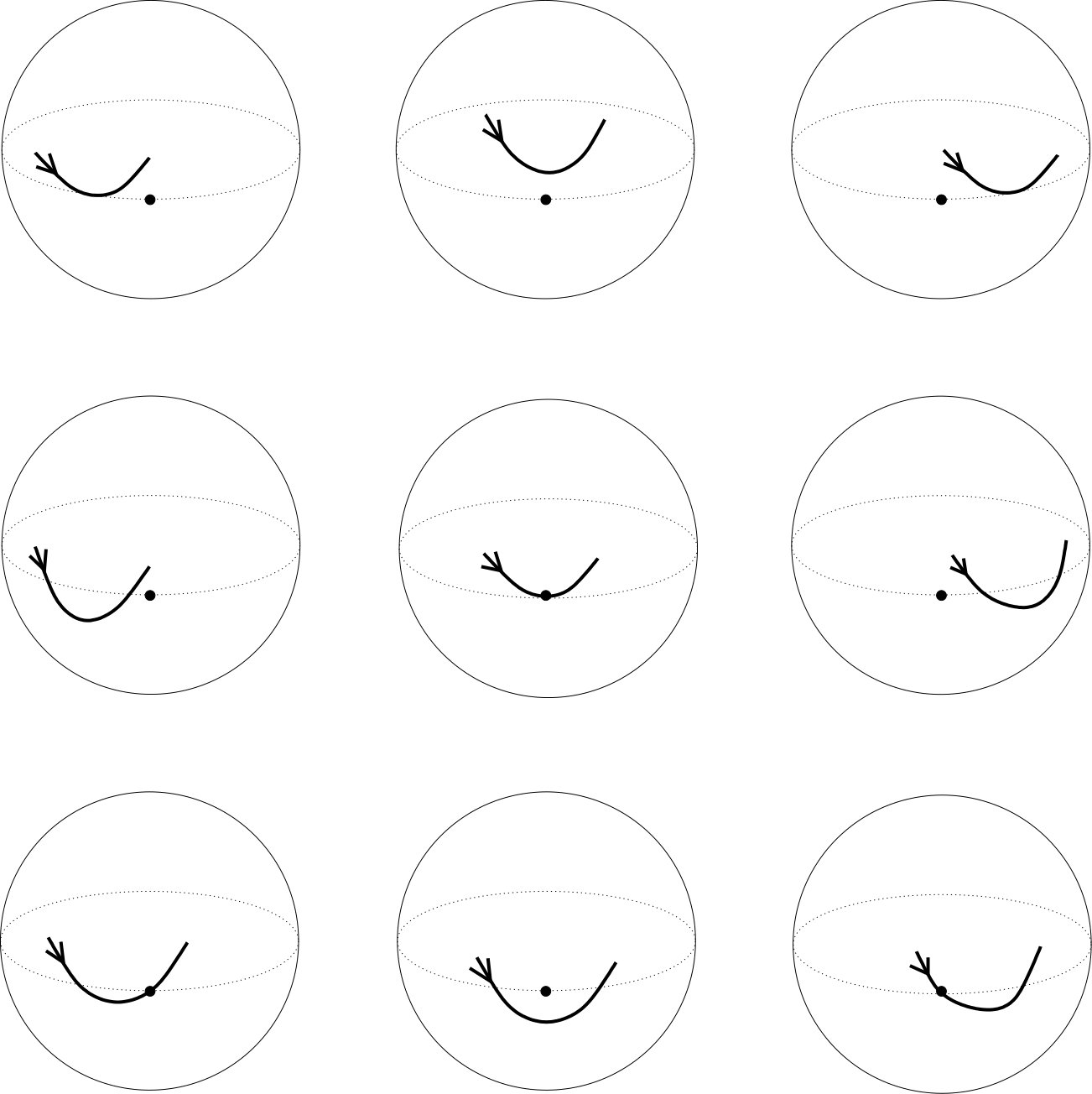 Figure 1
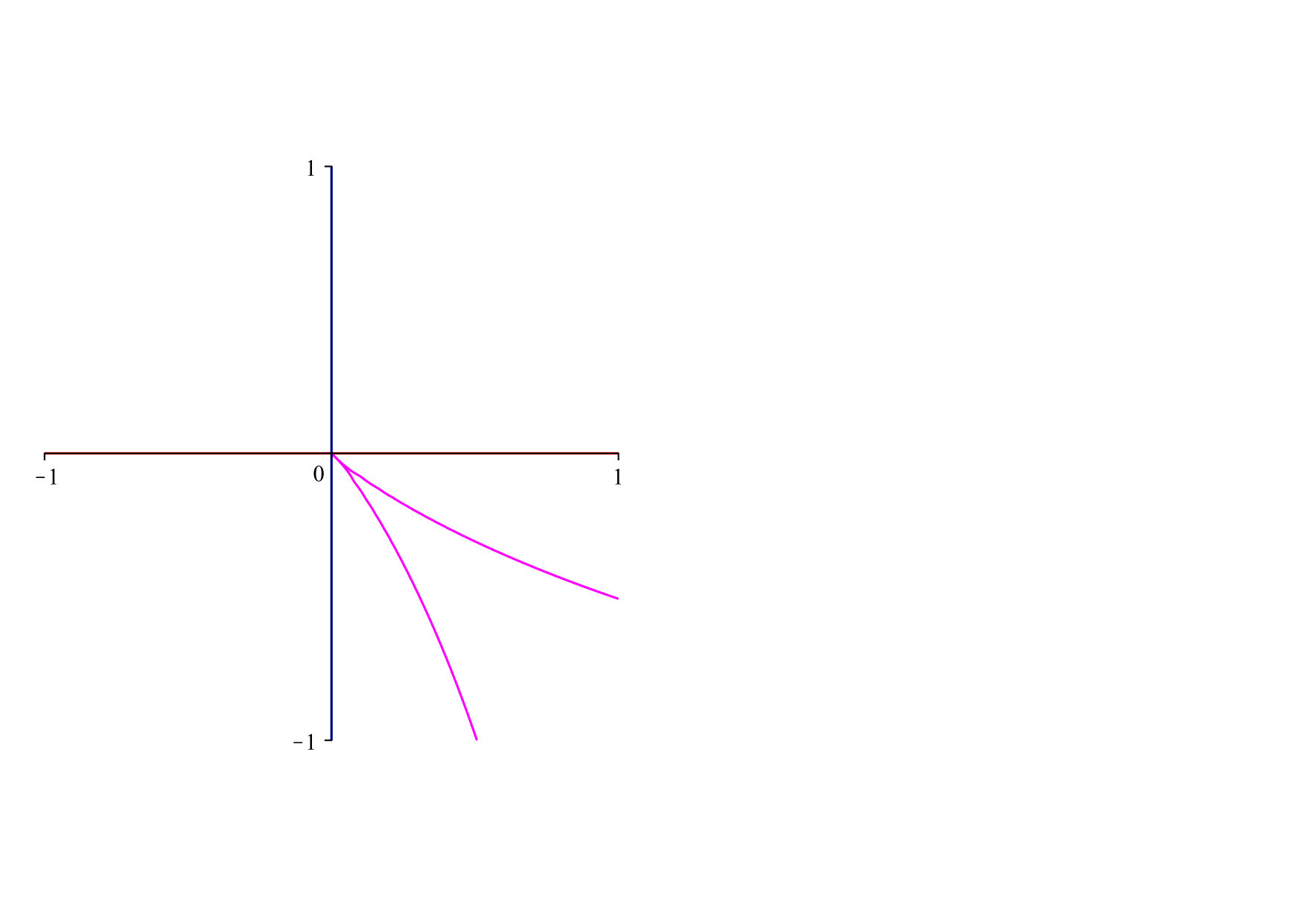 Figure 2
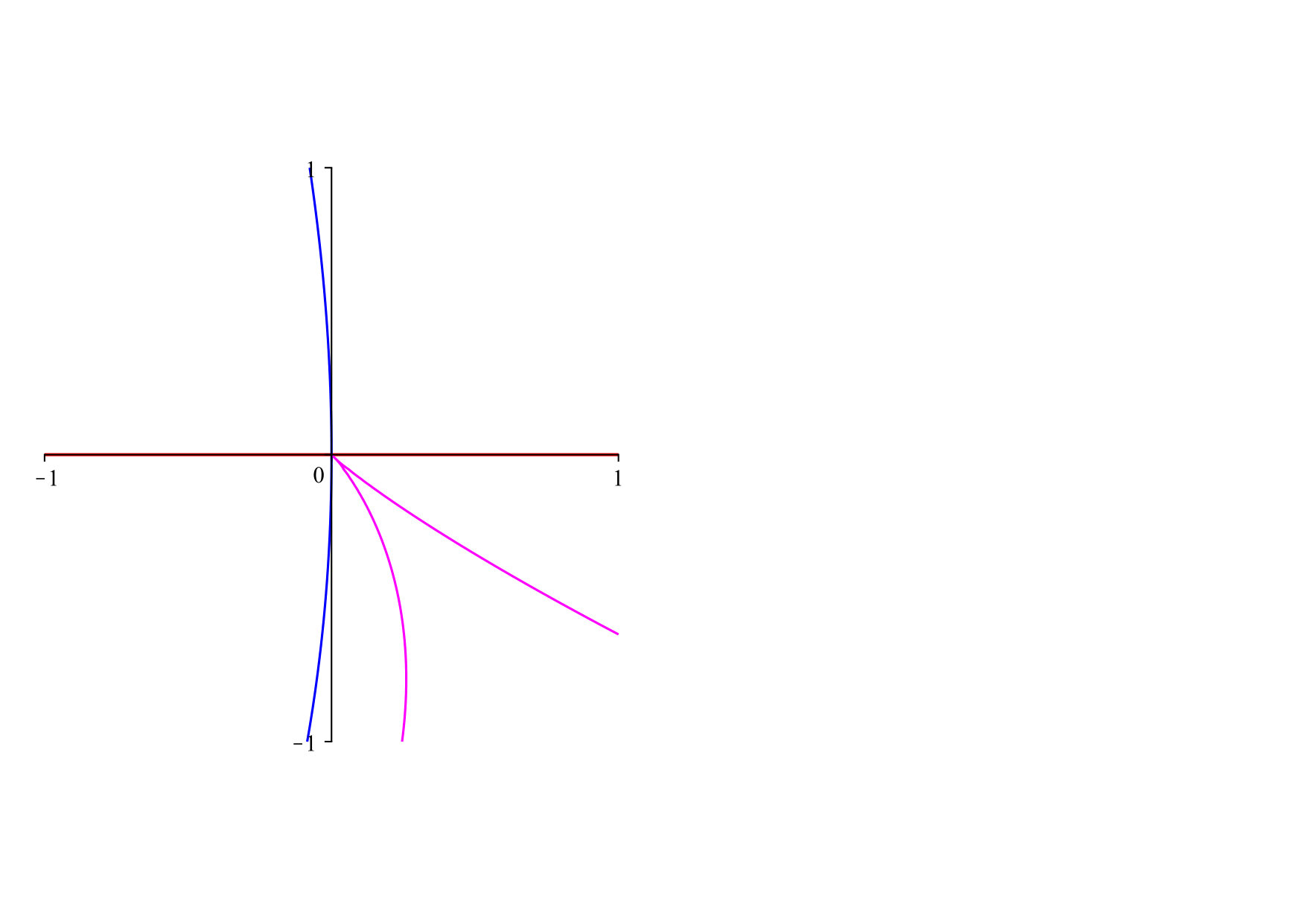 Figure 3
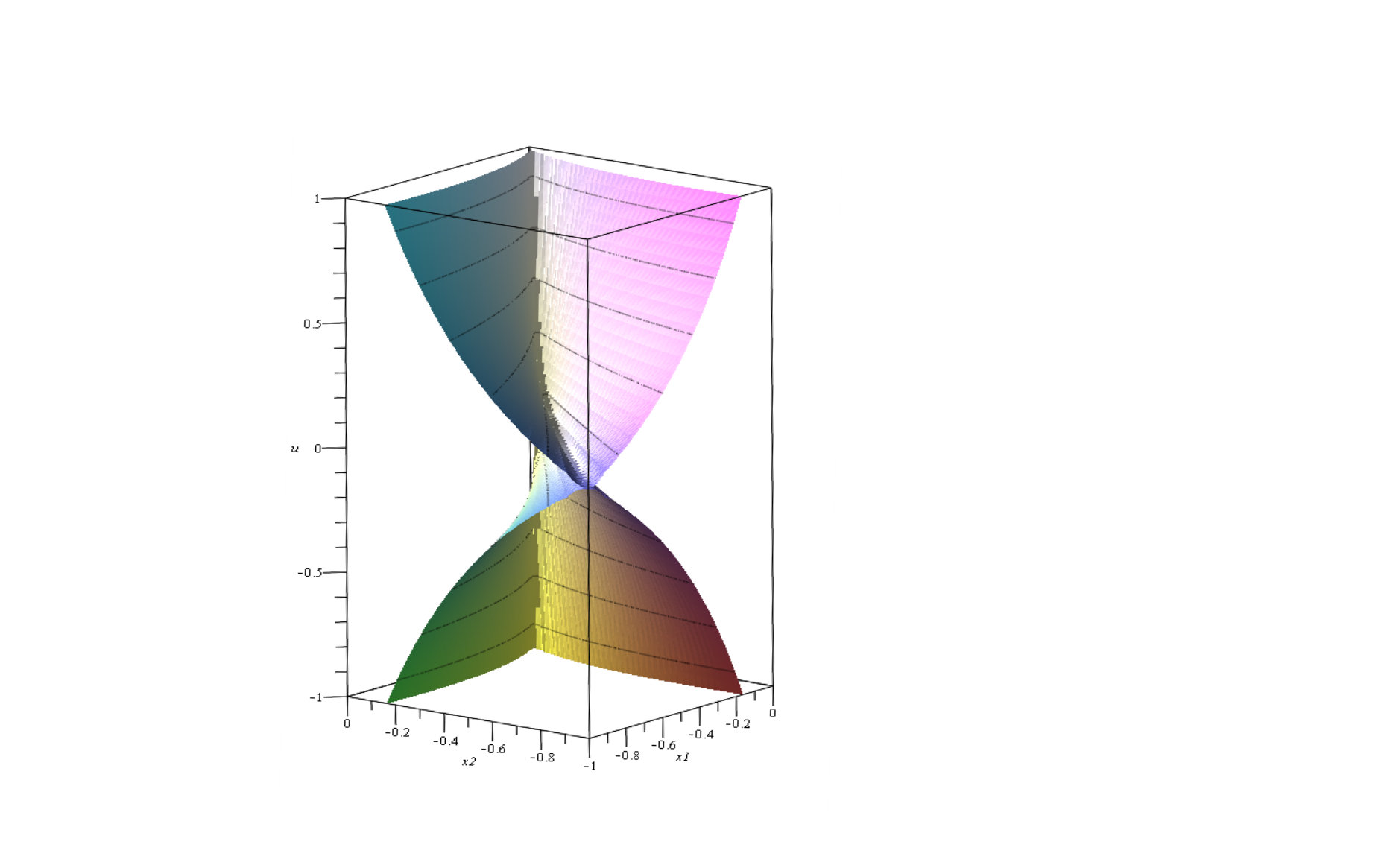 Figure 4
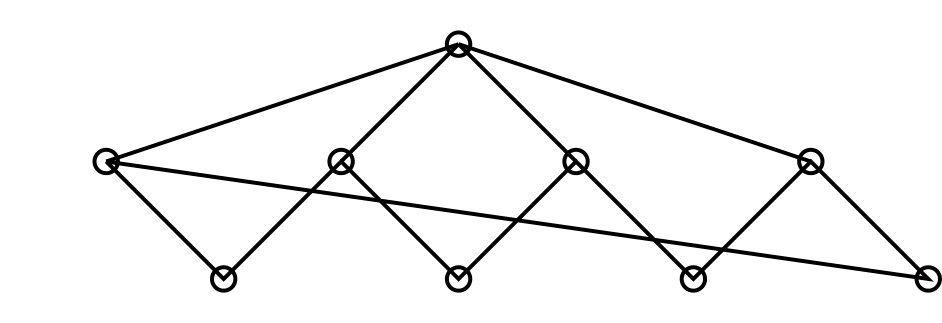 Figure 5
Peer Reviews
No public reviews on file for this paper yet. If you reviewed it on a platform where reviews are public (OpenReview, ICLR, NeurIPS, ICML), you can paste yours below so the community can read it here.
Videos
No videos yet. Explain this paper in a talk, walkthrough, or lecture? Add one.
Taxonomy
TopicsHomotopy and Cohomology in Algebraic Topology · Topological and Geometric Data Analysis · Algebraic Geometry and Number Theory