On knot semigroups and Gelfand-Kirillov dimensions
Toshinori Miyatani

TL;DR
This paper investigates the algebraic structure of knot semigroups, proving isomorphism for double twist knots and introducing a new link invariant based on Gelfand-Kirillov dimension.
Contribution
It confirms Vernitski's conjecture for double twist knots and introduces a novel link invariant derived from algebraic dimension.
Findings
Knot semigroup of double twist knot is isomorphic to an alternating sum semigroup
Constructed a new link invariant using Gelfand-Kirillov dimension
Supports Vernitski's conjecture for specific knot classes
Abstract
A knot semigroup is defined by A. Vernitski. A. Vernitski conjectured that the knot semigroup of the 2-bridge knot is isomorphic to an alternating sum semigroup. To support this conjecture, and as a first main result, we prove that the knot semigroup of the double twist knot is isomorphic to an alternating sum semigroup. Moreover, as a second main result, we construct a link invariant constructed by the Gelfand-Kiriliov dimension of algebra.
Click any figure to enlarge with its caption.
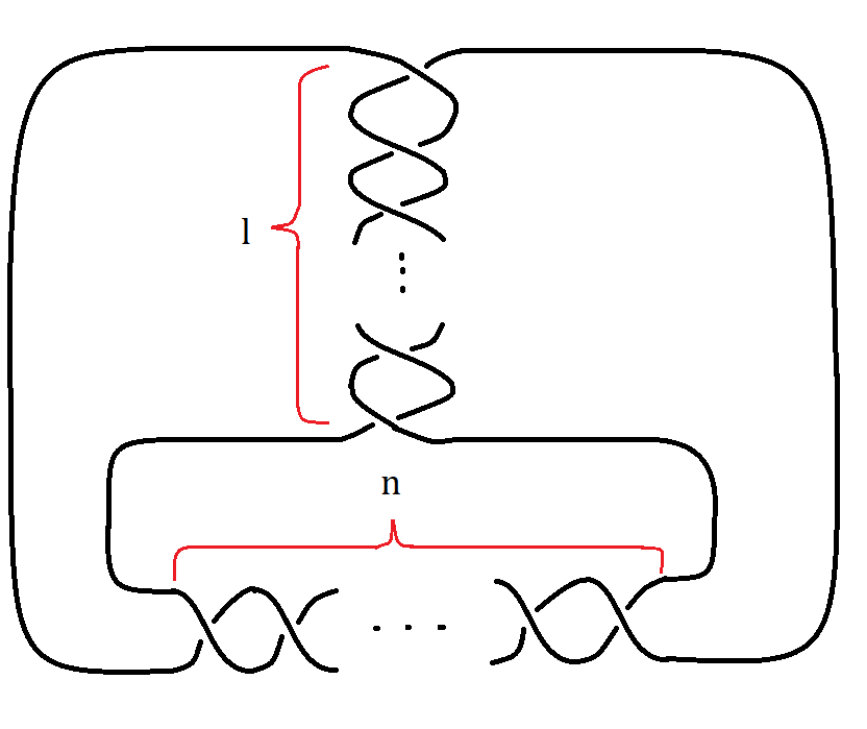 Figure 1
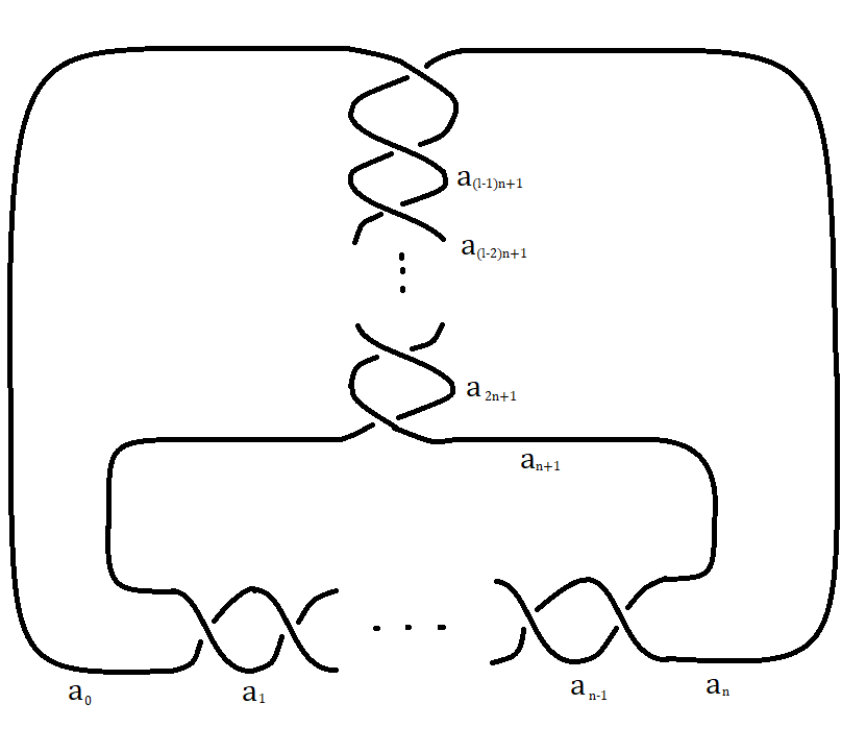 Figure 2
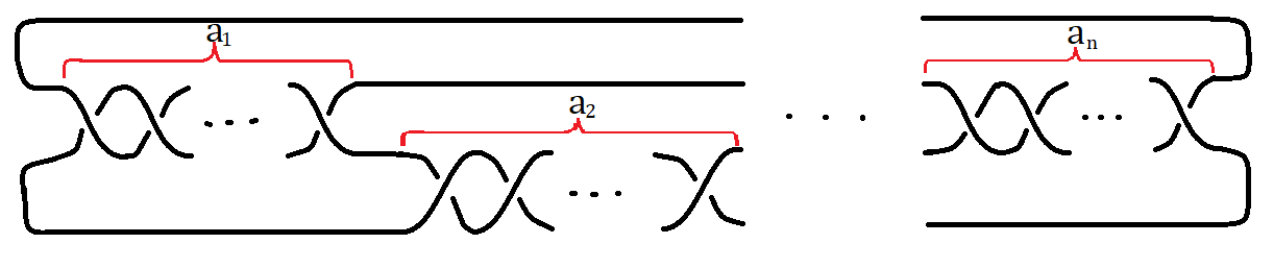 Figure 3
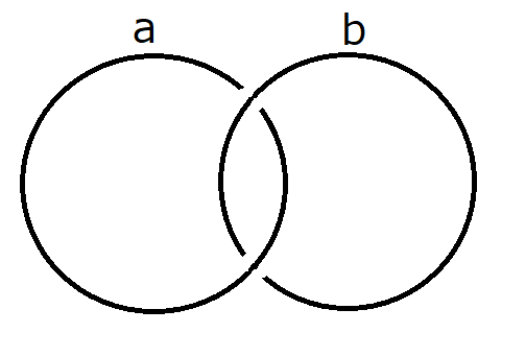 Figure 4
 Figure 5
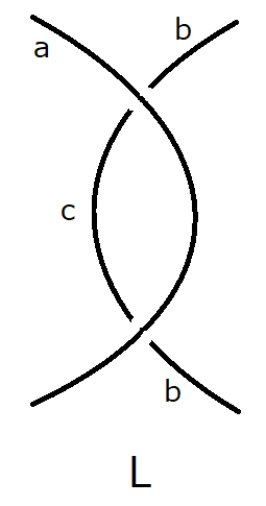 Figure 6
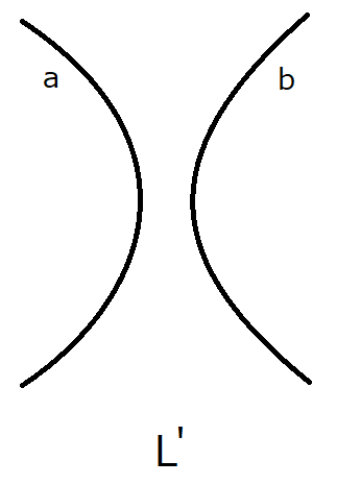 Figure 7
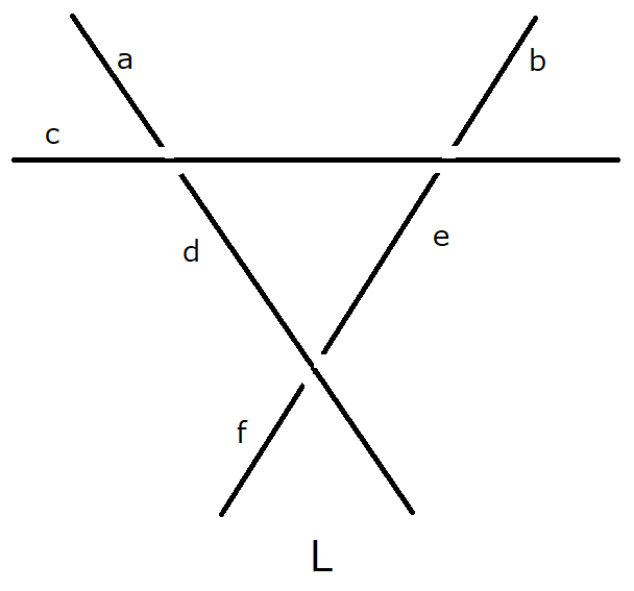 Figure 8
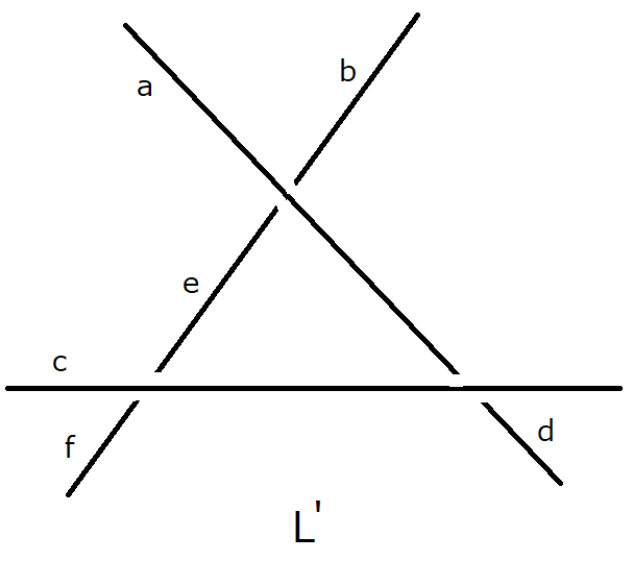 Figure 9
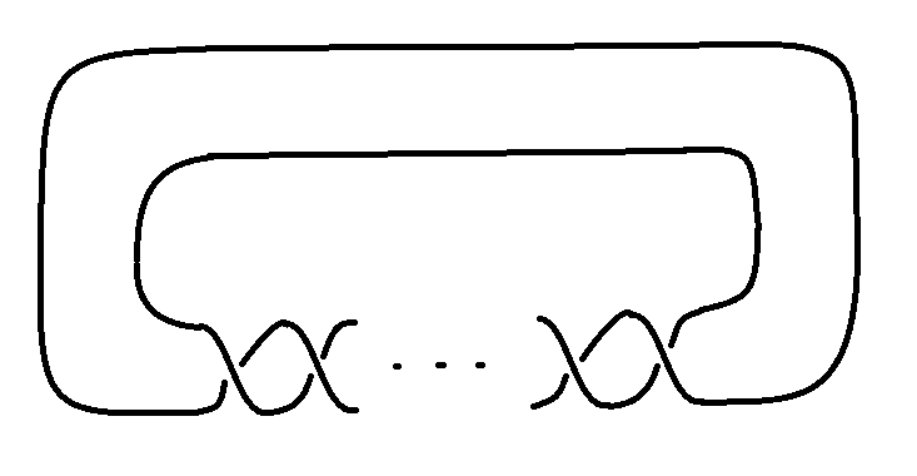 Figure 10
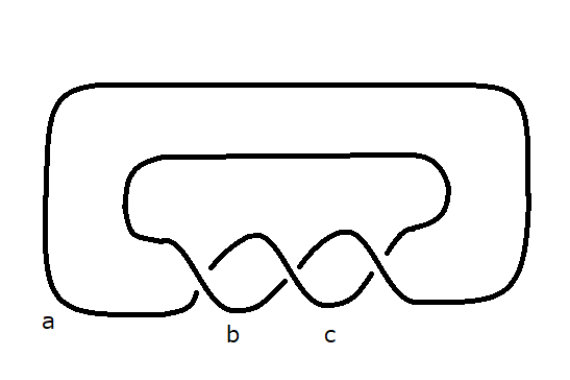 Figure 11
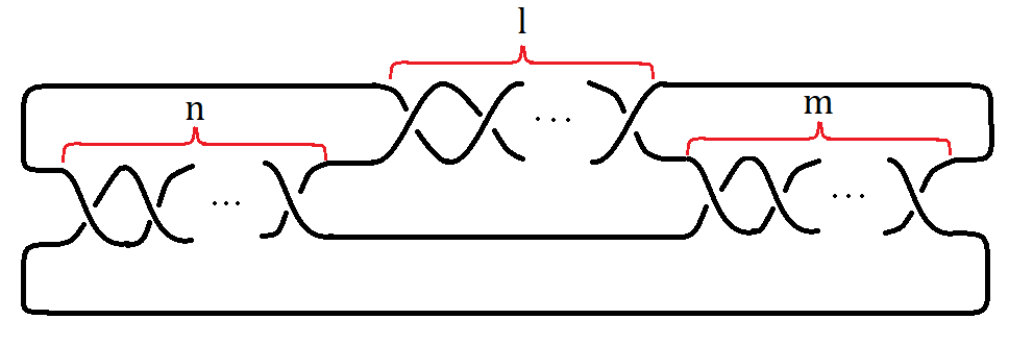 Figure 12
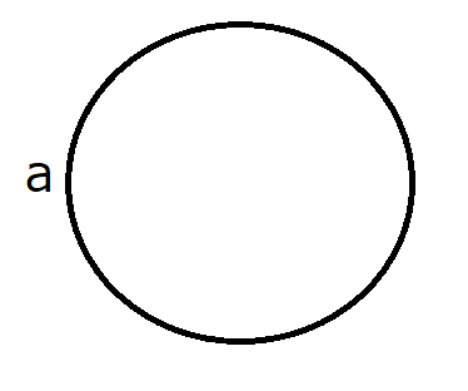 Figure 13
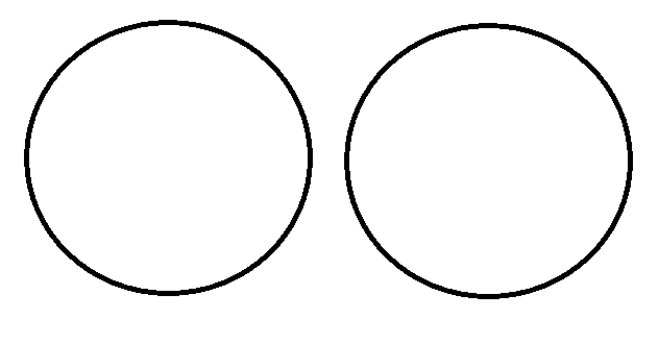 Figure 14
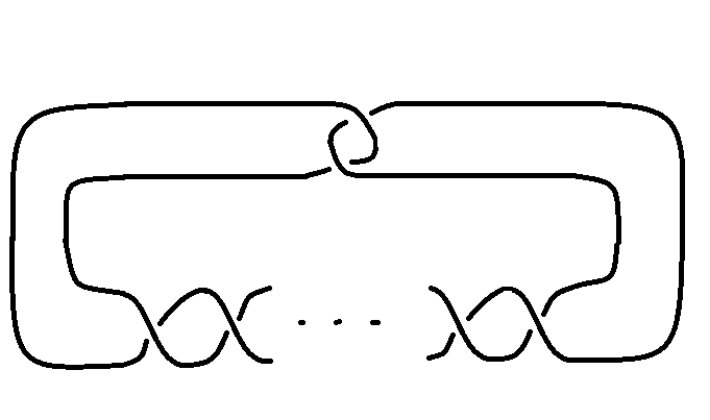 Figure 15
Peer Reviews
No public reviews on file for this paper yet. If you reviewed it on a platform where reviews are public (OpenReview, ICLR, NeurIPS, ICML), you can paste yours below so the community can read it here.
Videos
No videos yet. Explain this paper in a talk, walkthrough, or lecture? Add one.
Taxonomy
TopicsGeometric and Algebraic Topology · semigroups and automata theory · Homotopy and Cohomology in Algebraic Topology
On knot semigroups and Gelfand-Kirillov dimensions.
Toshinori Miyatani
Graduate School of Science, Hokkaido University, Sapporo, 004-0022, Japan
Abstract.
A knot semigroup is defined by A. Vernitski. A. Vernitski conjectured that the knot semigroup of the 2-bridge knot is isomorphic to an alternating sum semigroup. To support this conjecture, and as a first main result, we prove that the knot semigroup of the double twist knot is isomorphic to an alternating sum semigroup. Moreover, as a second main result, we construct a link invariant constructed by the Gelfand-Kiriliov dimension of algebra.
Key words and phrases:
knots; semigroups; knot semigroups; double twist knots; 2-bridge knots; Gelfand-Kirillov dimensions
Contents
1. Introduction
We shall consider the theory of knot semigroups. A knot semigroup is a cancellative semigroup whose defining relations come in pairs of the form and from crossing points of a knot diagram. This construction is similar to the Wirtinger presentation of the knot group. The knot semigroups are defined by A. Vernitski. A. Vernitski proved that torus knots and twist knots are isomorphic to alternating sum semigroups and conjectured that 2-bridge knot is isomorphic to an alternating sum semigroup [6]. As a main result, and to support this conjecture, we shall prove that the double twist knot is isomorphic to an alternating sum semigroup. Next, we consider the growth of knot semigroups. To investigate the growth of knot semigroups, we use a growth function of semigroups and the Gelfand-Kirillov dimension of semigroup algebra. As a second main result, we construct a link invariant constructed by the Gelfand-Kirillov dimension of algebra. This research is a first step connecting knot theory and semigroup theory.
This paper is organized as follows. In section 2, we recall standard definitions. In section 2.1, we recall a knot semigroup defined by A. Vernitski. In section 2.2, we review an alternating sum semigroup. In section 2.3, we recall a definition of the 2-bridge knot and its properties. In section 3, we describe examples of knot semigroups proved by A. Vernitski. In section, 3.1 we see that the knot semigroup of a trivial knot is the semigroup of the set of natural numbers. In section 3.2, we recall that the knot semigroup of the torus knot is an alternating sum semigroup. In section 3.3, we review that the knot semigroup of the twist knot is isomorphic to an alternating sum semigroup. In section 4.2, we state the first main result. In section 4.3, we shall prove that the knot semigroup of the double twist knot is isomorphic to an alternating sum semigroup. In section 5 we discuss a growth function of knot semigroups. In section 6.1 we review the Gelfand-Kirillov dimensions. In section 6.3 we compute examples.
2. Preliminaries
2.1. Knot semigroups
We recall a knot semigroup defined by A. Vernitski [6]. First we define the cancellative semigroups.
Definition 2.1**.**
A semigroup is called cancellative if it satisfies two conditions : if then , and if then for .
By an arc we mean a continuous line on a knot diagram from one undercrossing to another undercrossing. For example, consider the knot diagram on figure 1. It has three arcs, denoted by , and .
Let be a knot diagram. We shall define a semigroup, which we call the knot semigroup of , and denote by . We assume that each arc is denoted by a letter. Then we define two defining relations and at crossing, where arcs and form the undercrossing and arc is the overcrossing. We define these relations at every crossing. The cancellative semigroup generated by arc letters with these defining relations is the knot semigroup of the knot diagram. This construction is the analogy of the Wirtinger presentation of knot group. [8].
The definition of the knot semigroup naturally generalizes from diagrams of knots to diagrams of links. For example, the diagram of the Hopf link in Figure 2 contains two arcs and two crossings, each defining a single relation . Hence, its knot semigroup is a free commutative semigroup with two generators.
2.2. Alternating sum semigroups
We shall recall an alternating sum semigroup defined by A. Vernitski [6]. Let be either or . Let be a subset of , and the set of words of B. By the alternating sum of a word we shall define the value of calculated in . The notation denote the value, i.e.,
[TABLE]
We also define the following notation. denote the length of the word . We shall say that two words are in relation if and only if
- (1)
, 2. (2)
.
The relation is a congruence on . The semigroup denote the factor semigroup . is called an alternating sum semigroup.
We shall also recall a strong alternating sum semigroup defined by A. Vernitski [6]. The sets and are as above. Let us say that is even (resp. odd) in if can be represented in the form (resp. ) for some . Let . The notation denote the number of entries in which are even in . We shall say that two words are in relation if and only if
- (1)
, 2. (2)
, 3. (3)
.
The relation is a congruence on . The semigroup denote the factor semigroup . is called a strong alternating sum semigroup.
2.3. 2-bridge knots
2.3.1. Definitions of 2-bridge knots
We recall the 2-bridge knot. We first define a bridge number of a knot diagram.
Definition 2.2**.**
Suppose that is a knot diagram of a knot (or link) . If we can divide up into polygonal curves and , i.e.,
[TABLE]
that satisfy the conditions given by the followings, then the bridge number of , , is said to be at most and denoted by .
- (1)
are mutually disjoint, simple polygonal curves. 2. (2)
are also mutually disjoint, simple curves. 3. (3)
At the crossing points of , are segments that passes over the crossing points. While at the crossing points of , are segments that pass under the crossing points.
If but , then we define .
The bridge number of a knot diagram is not a knot invariant for a knot . But we have the following theorem.
Theorem 2.3**.**
Let be a knot or a link. Then the number is an invariant for , where is the set of all knot diagrams of . The number is called the bridge number of .
Let be a knot or a link. If , then is called a 2-bridge knot.
2.3.2. Conway’s normal forms
Any 2-bridge knot has a presentation, which can be deformed as in figure, where indicates crossing points with sign .
( is even)
( is odd)
We denote the 2-bridge knot with this knot diagram by , which is called Conway’s normal form.
3. Examples of knot semigroups
3.1. Trivial knots
Let be the semigroup of positive integers. The semigroup is a cancellative semigroup. The diagram of the trivial knot contains one arc and no crossings (Figure 3). Therefore, its knot semigroup is isomorphic to the semigroup .
3.2. Torus knots and torus links
A torus knot consists of half-twists (Figure 4.). We recall the knot semigroup of a knot diagram (with an odd ) and the knot semigroup of a link diagram (with an even ) proved by A. Vernitski [6].
Theorem 3.1** ([6] Theorem 3.).**
Let n be an odd integer. The knot semigroup of the torus knot diagram is isomorphic to the alternating sum semigroup .
Theorem 3.2** ([6] Theorem 13.).**
Let n be an even integer. The knot semigroup of the torus link diagram is isomorphic to the strong alternating sum semigroup .
Since for odd values of , we have the following corollary.
Corollary 3.3** ([6] Corollary 14.).**
The knot semigroup of the diagram for every positive is isomorphic to the strong alternating sum semigroup .
3.3. Twist knots
A twist knot, which we shall denote consists of clockwise half-twists and anticlockwise half-twists (Figure 5). We recall the knot semigroup of a knot diagram proved by A. Vernitski [6]. The notation denote the set .
Theorem 3.4** ([6] Theorem 15.).**
The knot semigroup of the twist knot diagram is isomorphic to the alternating sum semigroup .
4. Knot semigroups of double twist knots
4.1. A conjecture of the knot semigroups of 2-bridge knots
The torus knots and the twist knots are the 2-bridge knots. Then we have the following conjecture by A. Vernitski ([6] Conjecture 23.).
Conjecture 4.1**.**
The knot semigroup of the 2-bridge knot is isomorphic to an alternating sum semigroup.
4.2. Double twist knots
To support the Conjecture 4.1 we prove that the knot semigroup of the double twist knot is isomorphic to an alternating sum semigroup.
Figure6 : Double twist knots
A twist knot, which we shall denote consists of clockwise half-twists and anticlockwise half-twists, where indicate the number of crossing points (Figure 5). Then we have the following theorem.
Theorem 4.2**.**
Let be integers. Suppose the integer is an even integer. Then the knot semigroup of the double twist knot diagram is isomorphic to the alternating sum semigroup
[TABLE]
Remark 4.3**.**
The double twist knot is the -bridge knot .
Remark 4.4**.**
Let in Theorem 4.2. Then
[TABLE]
Thus Theorem 4.2 implies Theorem 3.4.
Remark 4.5**.**
Let in Theorem 4.2. Then
[TABLE]
On the other hand, as knots. By Theorem 3.1,
[TABLE]
Thus Theorem 4.2 holds in the case of .
Remark 4.6**.**
We consider the following knot .
Then we have the following conjecture.
Conjecture 4.7**.**
Let be integers. Suppose the integer is odd. Then the knot semigroup of the knot diagram is isomorphic to the alternating sum semigroup
[TABLE]
4.3. Proof of the theorem 4.2
Suppose that is a knot semigroup, where is the set of arcs and is a cancellative congruence on the free semigroup induced by the defining relations of the knot semigroup. Let be a congruence on , where is an alphabet of the same size as . We shall establish an isomorphism between and by the following Lemma.
Lemma 4.8** ([6] Lemma 2.).**
Suppose A and B are sets. Consider a bijection . It induces an isomorphism between and , which we shall denote . Suppose a congruence on and a congruence on on are such that for each if then . Then induces a mapping from to , which we shall denote by . Moreover, is a homomorphism. Suppose a subset of exists, which we shall call the set of canonical words, such that in each class of there is exactly one canonical word and at least one word of each class of is mapped by to a canonical word. Then is an isomorphism between and .
Let
[TABLE]
be the set of arcs as in the following figure.
Denote the set by . Consider a mapping from to defined as . It induces an isomorphism to , which we shall denote by . Then we have the following Lemma.
Lemma 4.9**.**
The equality is true in for all values of such that .
Proof.
The relations in are the equalities
[TABLE]
and
[TABLE]
for all (from the crossings at the bottom of the diagram), and the equalities
[TABLE]
and
[TABLE]
for all (from the crossings at the top of the diagram), where . Applying relations of the type repeatedly, we obtain for all values of such that . Similarly, we can obtain for all values of such that . Consider
[TABLE]
Hence by the cancellative rule. This proves that for all values of such that and even .
We shall prove that .
- (1)
Suppose the integer is an even number.
Consider
[TABLE]
Hence we have .
Next consider
[TABLE]
Hence .
Since is even, . 2. (2)
Suppose the integer is an odd number.
Since is even, is an even number. Consider
[TABLE]
Hence . Since this equation holds and is an even number,
[TABLE]
We shall prove that for all values of . Let be an odd number. Consider
[TABLE]
Hence .
Let be even and positive. Consider
[TABLE]
Hence .
Now suppose is odd. If is even we have
[TABLE]
If is odd, we have
[TABLE]
∎
Lemma 4.10**.**
The equality is true in for all values of such that .
Proof.
Applying relations of the type
[TABLE]
repeatedly, we obtain
[TABLE]
for all values of such that . Similarly, we can obtain
[TABLE]
for all values of such that . Consider
[TABLE]
Hence . This proves that
[TABLE]
for all values of such that and even .
We shall prove that .
- (1)
Suppose is odd.
Since is even, . 2. (2)
Suppose is even, and is even.
Consider
[TABLE]
Hence . This proves that . 3. (3)
Suppose is even and is odd.
Consider
[TABLE]
Hence .Since is odd, . Since is even, . Thus .
We shall prove that for all values . Let be an odd number. Consider
[TABLE]
Hence .
Let be even and positive. Consider
[TABLE]
Hence .
Suppose is odd. If is even we have
[TABLE]
If is odd, we have
[TABLE]
∎
Lemma 4.11**.**
The equality is true in for all values such that , , and .
Proof.
Consider
[TABLE]
Hence . ∎
Lemma 4.12**.**
The equality is true in for all values such that , , .
Proof.
Suppose . Then
[TABLE]
Suppose . Consider
[TABLE]
Hence . ∎
Canonical words in will be defined as words of the form or or or , where is the length of the word and , .
Consider a non-negative integer valued parameter of a word in , which is [math] if the first two entries in are or or or for some , and which is otherwise. Define the defect of a word in as a word . Defects are assumed to be ordered antilexicographically.
Lemma 4.13**.**
A word in is canonical if and only if its defect is a word consisting of [math]s.
Proof.
The result follows from the form of canonical word. ∎
Lemma 4.14**.**
Let be a word in . Unless the defect of is a word consisting of [math]s, there is a word in such that in and the defect of is less than the defect of .
Proof.
Suppose the defect of has a non-zero entry at a position which is not the first one. This means that at some position there is a non-zero entry in . Let , where and with .
- (1)
Suppose .
If , then we define
[TABLE] 2. 2.
If .
If , then we define
[TABLE] 2.
If , then define
[TABLE]
where . The words and are equal by the Lemma 4.11. 2. (2)
Suppose .
If or , then we define
[TABLE]
where , or
[TABLE]
where . 2. 2.
If , then we define
[TABLE]
By the Lemma 4.12, .
In each case, in , and the defect of is less than the defect of .
Suppose the defect of has a non-zero entry only at the first position. Let , where and .
- (1)
If , let , then define
[TABLE] 2. (2)
If , let and . If , then we define
[TABLE]
If , then we use the following case . 3. (3)
If , then consider
[TABLE]
Hence . Then we define
[TABLE]
where . 4. (4)
If , then we define
[TABLE]
where . 5. (5)
If , then we consider
[TABLE]
Then we define
[TABLE] 6. (6)
If , then we consider
[TABLE]
Then we define
[TABLE]
where . 7. (7)
If , then consider
[TABLE]
Then we define
[TABLE]
where .
In each case, in , and the defect is a word consisting of [math]s. ∎
Then we have the following corollary.
Corollary 4.15**.**
Every word in is equal in to a word in which is mapped by to a word with a defect consisting of [math]s.
Proof of theorem 4.2. The relations in are listed in the proof of Lemma 4.9. For each relation the words and have the same length and the same alternating sum calculated in . Thus by Lemma 4.8, induces a homomorphism .
Consider two canonical words which are equivalent. We shall show that each class of contains at most one canonical words.
- (1)
Suppose their alternating sums are both [math].
If are form of or , where , then since the canonical word can have at most one non-zero entry, both words consist only of [math]s and, therefore are equal. 2. 2.
If or is form of , where , , then the alternating sum of is . If or , then since , this contradicts , . Therefore both words consists only of [math]s, and are equal. 2. (2)
Suppose two canonical words share the same non-zero alternating sum.
If , , then since both alternating sum is the same, . Thus . 2. 2.
If , , then by the same reason of . 3. 3.
If , , then in . Since , this case is impossible. 4. 4.
If , , then in . Since , , this case is impossible (). 5. 5.
If , , then in . If , this case is impossible. If , this case is also impossible (, ). 6. 6.
If , , then in . Since , , this case is impossible.
Thus each class of contains at most one canonical words.
Consider a words which has a length and alternating sum . We shall show that each class of contains at least one canonical word.
- (1)
If , then canonical words is equivalent to . 2. (2)
If , let . Then is equivalent to . 3. (3)
If , then is equivalent to for some , .
Thus each class of contains at least one canonical word.
By Corollary 4.15 and Lemma 4.13, each word in is equal in to a word mapped by to a canonical word. Now Theorem 4.2 follows from Lemma 4.8.
5. Growth function of knot semigroups
5.1. Growth function and skew growth function
As a cororally of Theorem 3.1, 4.2, we can compute growth functions of some knot semigroups. First we explain growth functions of a monid.
Let be a monid with unit . For , we denote
[TABLE]
if there exists an element such that . We define an equivalence relation on by putting if and only if and . We consider a monid .
Definition 5.1**.**
A discrete degree map on a monoid is a map
[TABLE]
such that
- (1)
if and only if , 2. (2)
for any , 3. (3)
for any .
Let
[TABLE]
Then we define the growth function of the monoid by
[TABLE]
A skew growth function is defined in [5] Section 4.2. The we have the following theorem. Let
[TABLE]
Theorem 5.2** ([5]).**
Let be a cancellative monoid equipped with a discrete degree map. Then we have the following formula in the ring .
[TABLE]
5.2. Growth function of knot semigroups
In case of torus knots and double twist knot, we have the following corollary. In the case of knot semigroups we have
[TABLE]
Corollary 5.3**.**
Let be an odd integer and even integer. Then we have
[TABLE]
[TABLE]
Proof.
By Theorem 3.1, we have
[TABLE]
Thus
[TABLE]
can be computed by Theorem 5.2.
By Theorem 4.2, we have
[TABLE]
Thus
[TABLE]
can be computed by Theorem 5.2. ∎
6. Link invariants constructed by Gelfand-Kirillov dimensions
In this section, we consider the growth of semigroup algebras of knot semigroups. To investigate the growth, we use a Gelfand-Kirillov dimension. As an application and the main result, we construct a link invariant.
6.1. Gelfand-Kirillov dimensions
Let be a field and be a finitely generated algebra over . Let be a subspace of A, and we denote by the subspace spanned by all products of elements of of length . The subspace is called generating subspace if is finite-dimensional subspace of which generate as algebra, and contains . For a generating subspace , we define the function such that
[TABLE]
An algebra is said to have polynomial growth if there are positive real numbers such that
[TABLE]
for all . Then this definition is independent of the choice of generating spaces.
Lemma 6.1**.**
Let be a finitely generated -algebra, let be generating subspaces. If for all , then there is a such that for all .
Proof.
Suppose . Since and is finite-dimensional, for some . Then . Hence
[TABLE]
∎
Definition 6.2**.**
The Gelfand-Kirillov dimension of an algebra with polynomial growth is defined by
[TABLE]
If does not have polynomial growth then we define .
Example 6.3**.**
(1)Let . If we let V be the space spanned by , then is the space of polynomials of degree . The dimension of this space is . Thus .
(2)Let be the noncommutative polynomial algebra. Let V be the space spanned by . The dimension of this space is . Thus .
6.2. Link invariants
We can prove that the Gelfand-Kirillov dimension of semigroup algebra of knot semigrops is a link invariant. Let be a link. Then we let be a semigroup algebra of a knot semigroup of .
Theorem 6.4**.**
Let be links. If then
[TABLE]
Proof.
For a link , we prove is invariant under Reidemeister move . is invariant under Reidemeister move since is. Let , be the same links, except in the neighborhood of a point where they are as shown in Figure.
We can assume . Then
[TABLE]
where are labels of arcs except , and is a set of relations except . Let
[TABLE]
Then we have the following exact sequences for .
[TABLE]
Since
[TABLE]
and
[TABLE]
we have
[TABLE]
Let be a real number such that
[TABLE]
Let
[TABLE]
Suppose . Since is finite, there exists a real number such that
[TABLE]
Thus we have
[TABLE]
Since , this contradicts . Therefore,
[TABLE]
Thus is invariant under the Reidemeister move . Next let be the same links, except in the neighborhood of a point where they are as shown in Figure.
We can assume . Then
[TABLE]
where
[TABLE]
and are labels of arcs except , and is a set of relations except .
[TABLE]
Then we have the following exact sequences for .
[TABLE]
Since
[TABLE]
and
[TABLE]
we have
[TABLE]
Then we can prove that by the similar way of the case of the Reidemeister move . Therefore is invariant under the Reidemeister move III. ∎
6.3. Examples
Example 6.5**.**
Let be a Hopf link (Figure 2). Since
[TABLE]
. On the other hand let be the following link.
Since
[TABLE]
. Therefor we can conclude that .
Example 6.6**.**
We shall consider torus knots and double twist knots . Let be a generating subspace of . Then by Theorem 3.1,
[TABLE]
Thus . Let be a generating subspace of . The by theorem 4.2,
[TABLE]
Thus .
The reference list from the paper itself. Each links out to its DOI / PubMed record.
- 1[1] A. Kawauchi, A survey of knot theory. Birkhauser (1996).
- 2[2] G. R. Krause, T. H. Lenagan, Growth of Algebras and Gelfand-Kirillov Dimension. Graduate Studies in Mathematics. American Mathematical Society (1991).
- 3[3] W. B. R. Lickorish, An Introduction to Knot Theory. Graduate Texts in Mathematics 175 (1997), Springer.
- 4[4] K. Murasugi, Knot theory and its applications. Springer Science & Business Media (2007).
- 5[5] K. Saito, Inversion formula for the growth function of a cancellative monoid. Journal of Algebra 385 (2013) 314-332.
- 6[6] A. Vernitski, Describing semigroups with defining relations of the form x y = y z 𝑥 𝑦 𝑦 𝑧 xy=yz and y x = z y 𝑦 𝑥 𝑧 𝑦 yx=zy and connection with knot theory. Semigroup Forum, Volume 95, 1-17 (2016).
- 7[7] A. Vernitski, L. Tunsi, C. Ponchel, A. Lisitsa, Dihedral semigroups, their defining relations and an application to describing knot semigroups of rational links. Semigroup Forum, Volume 97, 75-86 (2018).
- 8[8] S. K. Winker, Quandles, knot invariants, and the n 𝑛 n -fold branched cover. Ph D thesis, University of Illinois at Chicago (1984).