Feynman integrals as A-hypergeometric functions
Leonardo de la Cruz

TL;DR
This paper demonstrates that Feynman integrals can be represented as solutions to GKZ hypergeometric systems, enabling new computational approaches using algebraic and geometric methods.
Contribution
It introduces a novel framework linking Feynman integrals to A-hypergeometric functions via GKZ systems and develops algorithms for their evaluation.
Findings
Feynman integrals are solutions of GKZ systems.
Canonical series algorithms can evaluate integrals with arbitrary powers.
The approach connects algebraic geometry with quantum field theory calculations.
Abstract
We show that the Lee-Pomeransky parametric representation of Feynman integrals can be understood as a solution of a certain Gel'fand-Kapranov-Zelevinsky (GKZ) system. In order to define such GKZ system, we consider the polynomial obtained from the Symanzik polynomials as having indeterminate coefficients. Noncompact integration cycles can be determined from the coamoeba---the argument mapping---of the algebraic variety associated with . In general, we add a deformation to in order to define integrals of generic graphs as linear combinations of their canonical series. We evaluate several Feynman integrals with arbitrary non-integer powers in the propagators using the canonical series algorithm.
Click any figure to enlarge with its caption.
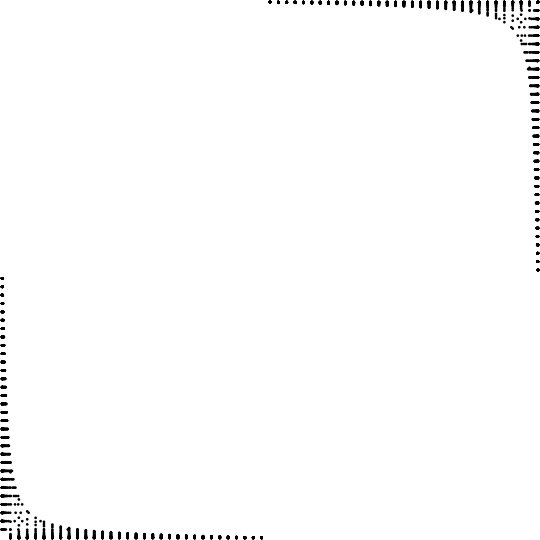 Figure 1
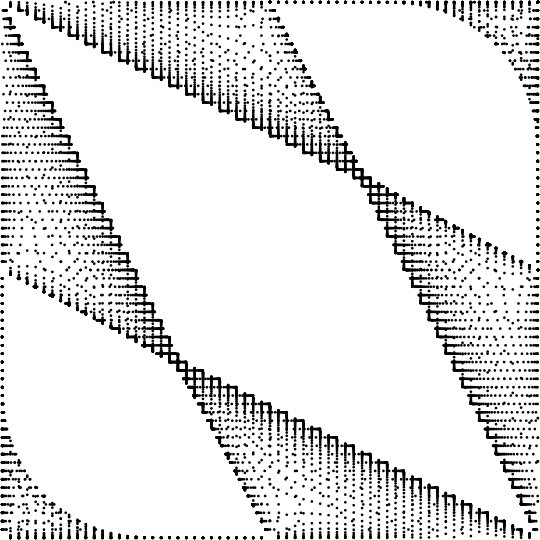 Figure 2
Peer Reviews
No public reviews on file for this paper yet. If you reviewed it on a platform where reviews are public (OpenReview, ICLR, NeurIPS, ICML), you can paste yours below so the community can read it here.
Videos
No videos yet. Explain this paper in a talk, walkthrough, or lecture? Add one.