Is Life (or at least socio-economic aspects of it) just Spin and Games?
Shakti N. Menon, V. Sasidevan, Sitabhra Sinha

TL;DR
This paper explores the parallels between physics-inspired models and economic theories, proposing that a new statistical mechanics framework could unify these approaches and advance understanding of socio-economic phenomena.
Contribution
It highlights the similarities between physics and economic models and suggests developing a new statistical mechanics formulation to integrate game theory with physics-based approaches.
Findings
Identifies parallels between physics and economic models.
Proposes a new statistical mechanics framework for socio-economic analysis.
Highlights potential for unifying diverse modeling approaches.
Abstract
The enterprise of trying to explain different social and economic phenomena using concepts and ideas drawn from physics has a long history. Statistical mechanics, in particular, has been often seen as most likely to provide the means to achieve this, because it provides a lucid and concrete framework for describing the collective behavior of systems comprising large numbers of interacting entities. Several physicists have, in recent years, attempted to use such tools to throw light on the mechanisms underlying a plethora of socio-economic phenomena. These endeavors have led them to develop a community identity - with their academic enterprise being dubbed as "econophysics" by some. However, the emergence of this field has also exposed several academic fault-lines. Social scientists often regard physics-inspired models, such as those involving spins coupled to each other, as…
Click any figure to enlarge with its caption.
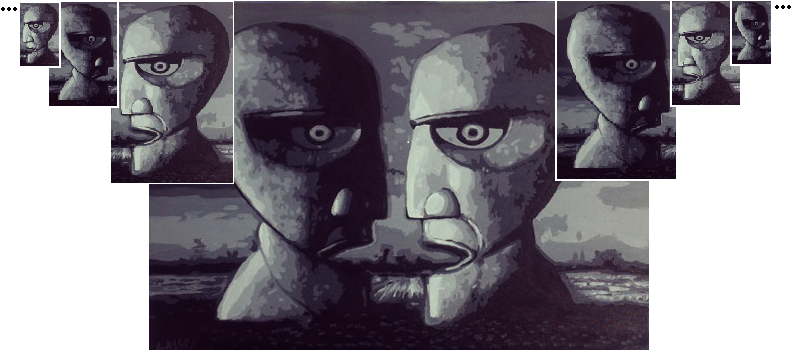 Figure 1
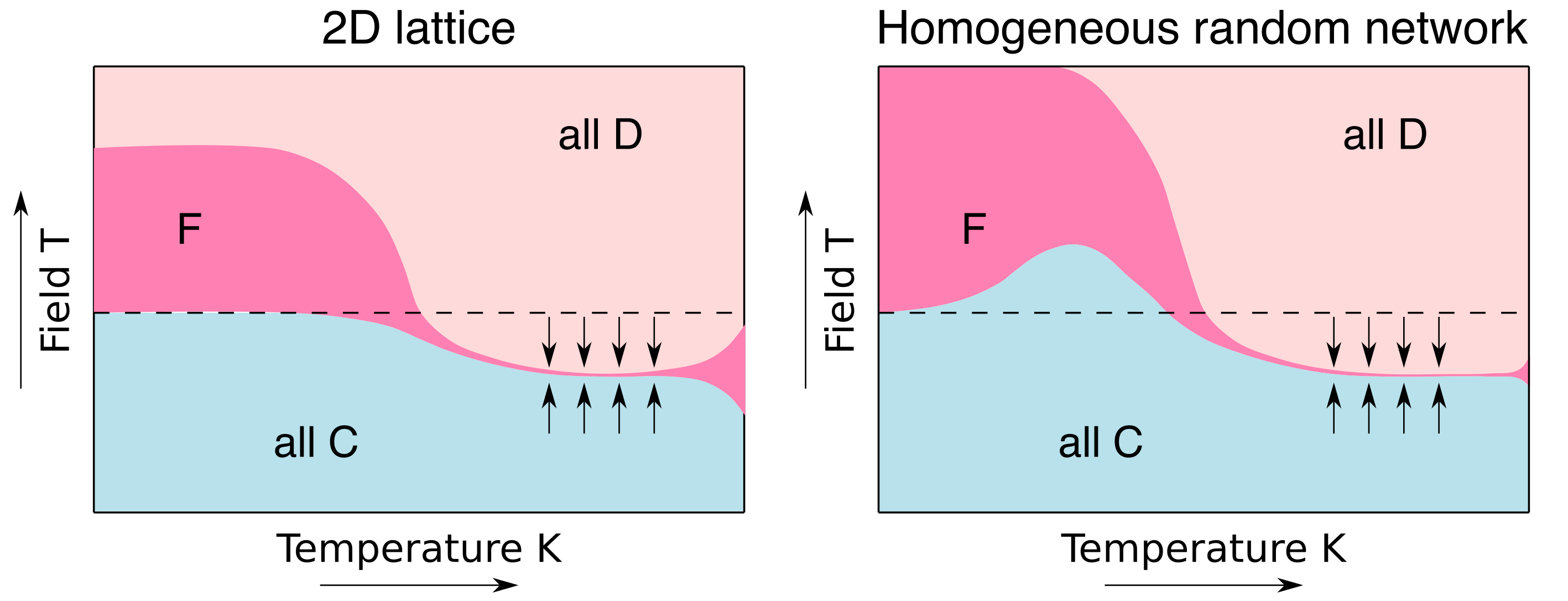 Figure 2
Peer Reviews
No public reviews on file for this paper yet. If you reviewed it on a platform where reviews are public (OpenReview, ICLR, NeurIPS, ICML), you can paste yours below so the community can read it here.
Videos
No videos yet. Explain this paper in a talk, walkthrough, or lecture? Add one.
Taxonomy
TopicsComplex Systems and Time Series Analysis · Opinion Dynamics and Social Influence · Complex Network Analysis Techniques
11institutetext: Shakti N. Menon 22institutetext: The Institute of Mathematical Sciences, CIT Campus, Taramani, Chennai 600113, India. 33institutetext: V. Sasidevan 44institutetext: Department of Physics, Cochin University of Science and Technology, Cochin 682022, India. 55institutetext: Sitabhra Sinha 66institutetext: The Institute of Mathematical Sciences, CIT Campus, Taramani, Chennai 600113, India. 66email: [email protected]
Is Life (or at least socio-economic aspects of it) just Spin and Games ?
Shakti N. Menon
V. Sasidevan and Sitabhra Sinha
Abstract
The enterprise of trying to explain different social and economic phenomena using concepts and ideas drawn from physics has a long history. Statistical mechanics, in particular, has been often seen as most likely to provide the means to achieve this, because it provides a lucid and concrete framework for describing the collective behavior of systems comprising large numbers of interacting entities. Several physicists have, in recent years, attempted to use such tools to throw light on the mechanisms underlying a plethora of socio-economic phenomena. These endeavors have led them to develop a community identity - with their academic enterprise being dubbed as “econophysics” by some. However, the emergence of this field has also exposed several academic fault-lines. Social scientists often regard physics-inspired models, such as those involving spins coupled to each other, as over-simplifications of empirical phenomena. At the same time, while models of rational agents who strategically make choices based on complete information so as to maximize their utility are commonly used in economics, many physicists consider them to be caricatures of reality. We show here that while these contrasting approaches may seem irreconcilable there are in fact many parallels and analogies between them. In addition, we suggest that a new formulation of statistical mechanics may be necessary to permit a complete mapping of the game-theoretic formalism to a statistical physics framework. This may indeed turn out to be the most significant contribution of econophysics.
1 Introduction
The physicist Ernest Rutherford is believed to have once distinguished physics from the other sciences, referring to the latter as merely “stamp collecting” Bernal1939 . While Rutherford may have been exceptional in explicitly voicing the traditional arrogance of physicists to other branches of knowledge, it is true that the spectacular success of physics in explaining the natural world has led many physicists to believe that progress has not happened in other sciences because those working in these fields are not trained to examine observed phenomena from the perspective of physics. Intriguingly, practitioners in several branches of knowledge have also occasionally looked at physics as a model to aspire to, a phenomenon sometimes referred to as “Physics-envy”. For instance, the science of economics has undergone such a phase, particularly in the late nineteenth century, and concepts from classical physics, such as equilibria and their stability, were central to the development of the field during this period Mirowski1989 . However, this situation gradually changed starting at the beginning of the twentieth century, curiously just around the time when physics was about to be transformed by the “quantum revolution”, and economics took a more formal, mathematical turn. The development of game theory starting from the 1920s and 1930s eventually provided a new de facto language for theorizing about economic and social phenomena. However, despite this apparent “parting of ways” between economics and physics, there have been several attempts, if somewhat isolated, throughout the previous century to build bridges between these two fields. In the 1990s, these efforts achieved sufficient traction and a sub-discipline sometimes referred to as “econophysics” emerged with the stated aim of explaining economic phenomena using tools from different branches of physics Sinha2010 .
In earlier times, the branch of physics now known as dynamical systems theory had been a rich source of ideas for economists developing their field. More recently, however, it has been the field of statistical mechanics, which tries to explain the emergence of systems-level properties at the macro-scale as a result of interactions between its components at the micro-scale, that has become a key source of concepts and techniques used to quantitatively model various social and economic phenomena. The central idea underlying this enterprise of developing statistical mechanics-inspired models is that, while the behavior of individuals may be essentially unpredictable, the collective behavior of a large population comprising many such individuals interacting with each other may exhibit characteristic patterns that are amenable to quantitative analysis and explanation, and could possibly even be predicted. This may bring to one’s mind the fictional discipline of “psychohistory”, said to have been devised by Hari Seldon of Isaac Asimov’s Foundation series fame Asimov1951 , that aimed to predict the large-scale features of future developments by discerning statistical patterns inherent in large populations. Asimov, who was trained in chemistry (and was a Professor of Biochemistry at Boston University), in fact used the analogy of a gas, where the trajectory of any individual molecule is almost impossible to predict, although the behavior of a macroscopic volume is strictly constrained by well-understood laws.
A large number of the statistical mechanics-inspired models for explaining economic phenomena appear to use the framework of interacting spins. This is perhaps not surprising given that spin models provide perhaps the simplest descriptions of how order can emerge spontaneously out of disorder. An everyday instance of such a self-organized order-disorder transition is exemplified by the so-called “effect of a staring crowd” Kikoin1978 . Consider a usual city street where pedestrians walking along the sidewalk are each looking in different arbitrarily chosen directions. This corresponds to a “disordered” situation, where each component is essentially acting independently and no coordination is observed globally. If however a pedestrian at some point persistently keeps looking at a particular object in her field of view (which corresponds to a fluctuation event arising through chance), this action may induce other pedestrians to also do likewise - even though there may actually be nothing remarkable to look at. Eventually, it may be that the gaze of almost all pedestrians will be aligned with each other and each of them will be staring into the same point in space that is devoid of any intrinsic interest. This situation will correspond to the spontaneous emergence of “order” through interactions between the components, i.e., as a result of the pedestrians responding almost unconsciously to each other’s actions. It is of course also possible to have everyone stare towards the same point by having an out-of-the-ordinary event (a “stimulus”) happen there. In this case, it will be the stimulus extrinsic to the pedestrians - rather than interactions between the individuals - that causes the transition from the disordered to ordered state.
The simplest of the spin models, the Ising model, was originally proposed to understand spontaneous magnetization in ferromagnetic materials below a critical temperature. It assumed the existence of a large number of elementary spins, each of which could orient in any one of two possible directions (“up” or “down”, say). Each spin is coupled to neighboring spins through exchange interactions, which makes it energetically favorable for neighboring spin pairs to be both oriented in the same direction. However, when the system is immersed in a finite temperature environment, thermal fluctuations can provide spins with sufficient energy to override the cost associated with neighboring spins being oppositely aligned. The spins could also be subject to the influence of an external field that will break the symmetry between the two orientations and will make one of the directions preferable to the spins. By associating temperature to the degree of noise or uncertainty among agents, field to any external influence on the agents and exchange coupling between spins to interaction between individuals in their social milieu, it is easy to see that the Ising model can be employed to quantitatively model a variety of social and economic situations involving a large number of interacting individuals. Such modeling is particularly relevant when the question of interest involves qualitative changes that occur in the collective behavior as different system parameters are varied. The nature of the transition may also be of much interest as external field-driven ordering typically manifests as a first-order or discontinuous transition, while transitions orchestrated entirely through interactions between the components has the characteristics of a second-order or continuous transition. As the latter is often associated with so-called power laws, it is not unusual that these are often much sought after by physicists modeling social or economic phenomena (sometimes to the puzzlement of economists).
The popularity of spin models in the econophysics community has however not percolated to mainstream social scientists, who, probably justifiably, find such models to be overly simplified descriptions of reality. Many economic and social phenomena are therefore quantitatively described in terms of game theoretic models, where the strategic considerations of individuals, who rationally choose between alternatives in order to maximize their utilities or payoffs, come to the fore. However, such approaches have also been criticized as being based upon an idealized view of the capabilities of individual agents and of the information that they have access to for making decisions. A complete description of aspects of economic life is possibly neither provided by spin models nor by game-theoretic ones - but being two very different types of caricatures of reality, an attempt to integrate these two approaches may provide us with a more nuanced understanding of the underlying phenomena. With this aim in view, in the two following sections we describe in brief the essential framework of these two approaches that are used to understand collective behavior in a population of agents. We show that despite differences, there are in fact many parallels and analogies between spin model-based and game theoretic approaches to describing social phenomena. We conclude with the suggestion that the statistical mechanics approach used at present may not be completely adequate for describing strategic interactions between rational agents that is the domain of game theory. This calls for the development of a new formalism that will allow seamless integration of statistical mechanics with game theory - which will possibly be the most enduring contribution of econophysics to the scientific enterprise.
2 Collective decision making by agents: Spins …
We can motivate a series of models of the dynamics of collective decision making by agents that differ in terms of the level of details or information resolution that one is willing to consider. We begin by considering a group of agents, each of whom are faced with the problem of having to choose between a finite number of possible options at each time step , where the temporal evolution of the system is assumed to occur over discrete intervals. To simplify matters we consider the special case of binary decisions in which the agents, for instance, simply choose between “yes” or “no”. Thus, in the framework of statistical physics, the state of each agent (representing the choice made by it) can be mapped to an Ising spin variable . Just as spin orientations are influenced by the exchange interaction coupling with their neighbors in the Ising model, agents take decisions that can, in principle, be based on the information regarding the choices made by other agents (with whom they are directly connected over a social network) in the past - as well as the memory of its own previous choices. If an agent needs to explicitly identify the specific choice made by each neighbor in order to take a decision, then this constitutes the most detailed input information scenario. Here, each agent considers the choices made by its neighbors in the social network of which it is a part (if its own choices also need to be taken into account we may assume that it includes itself in its set of neighbors). Furthermore, each agent has a memory of the choices made by its neighbors in the preceding time steps. Thus, the agent, upon being presented with a history represented as a binary matrix, has to choose between and . As there are possible histories that the agent may need to confront, this calls for formulating an input-output function for the agent that, given a string of bits, can generate the probability that the agent will make a particular choice, viz., Pr() = and with Pr()= Pr(). In other words, the choice of each agent will be determined by a function whose domain is a -dimensional hypercube and range is the unit interval .
The above situation is simplified by assuming that agents do not know the exact identity of the choices made by each of its neighbors but only have access to the aggregate information as to how many chose a particular option, e.g., . A natural extension of this is the scenario where, instead of an explicit network, agents are considered to essentially interact with the entire group. Such an effectively “mean-field” like situation (where pairwise interactions between spins are replaced by a self-consistent field representing the averaged effect of interactions of a spin with the collective) will arise when, in particular, an agent’s choice is made on the basis of a global observable that is the record of the outcome of choices made by all agents. For instance, one can model financial markets in this manner, with agents deciding whether to trade or not in an asset based entirely on its price, a variable that is accessible to all agents and which changes depending on the aggregate choice behavior of agents - with price rising if there is a net demand (more agents choose to buy than sell) and falling if the opposite is true (more agents choose to sell than to buy). Thus, if and are the number of agents choosing and , respectively, then agents base their decision on their knowledge of the net number of agents who choose one option rather than the other, i.e., , with being the magnetization or average value of spin state in the Ising model. In this setting, the choice of the th agent having memory (as stated above) is made using information about the value of in the preceding time steps. Therefore, the input-output function specifying the choice behavior of the agents maps a string of continuous variables111We however note that as there only agents whose choices need to be summed, the relevant information can be expressed in bits. lying in the interval to a probability for choosing a particular option, viz., Pr() = ) where is the value of magnetization time steps earlier. One can view several agent-based models that seek to reproduce the stylized features of price movements in financial markets as special cases of this framework, including the model proposed by Vikram et al Vikram2011 that exhibits heavy-tailed distributions for price fluctuations and trading volume which are quantitatively similar to that observed empirically, as well as volatility clustering and multifractality.
A further simplification can be achieved upon constraining the function to output binary values, so that Pr() can only be either [math] or . The set of functional values realized for all possible values of the argument (i.e., all possible histories that an agent can confront) which defines the strategy of the agent can, in this case, be written as a binary string of length . It is easy to see that the total number of possible distinct strategies is . In reality, of course, many of these possible strategies may not make much sense and one would be focusing on the subset for which has some well-behaved properties such as monotonicity. To simplify the situation even more, the granularity of the information on choices made in the past can be reduced Sasidevan2018 . In the most extreme case, the information about the aggregate or net choice of agents at a particular instant can be reduced to a single bit, viz., sign() instead of . This will be the case, for instance, when one only knows whether a particular option was chosen by the majority or not, and not how many opted for that choice. The number of possible different histories that an agent may confront is only in this situation and thus, the total number of possible strategies is . The well-known Minority Game Moro2004 can be seen as a special case of this simplified formalism. It is the very anti-thesis of a coordination game with each agent trying to be contrary to the majority. In other words, each agent is aiming to use those which would ensure sign() .
In the detailed input information scenario described above, a Minority Game (MG) like setting will translate into an Ising model defined over a network, where connected spin pairs have anti-ferromagnetic interactions with each other. Such a situation will correspond to a highly frustrated system, where the large number of energy minima would correspond to the various possible efficient solutions of the game. However, if the system remains at any particular equilibrium for all time, this will not be a fair solution as certain individuals will always form the minority and thus get benefits at the expense of others. A possible resolution that may make it both efficient and fair is to allow for fluctuations that will force the collective state to move continuously from one minima to another, without settling down into any single one for a very long time.
An important feature of the MG is the ability of agents to adapt their strategies, i.e., by evaluating at each time step the performance or payoff obtained by using each of the strategies, the agent can switch between strategies in order to maximize payoff. One can ask how the introduction of “learning” into the detailed input information scenario will affect the collective dynamics of the system. In the classical MG setting, each agent begins by randomly sampling a small number of s (typically ) from the set of all possible input-output functions and then scores each of them based on their performance against the input at each time step, thereafter choosing the one with the highest score for the next round. In the detailed information setting, we need to take into account that an agent will need to consider the interaction strength it has with each of its neighbors in the social network it is part of. Thus, agents could adapt based on their performance not just by altering strategy but also by varying the importance that they associate with information arriving from their different neighbors (quantified in terms of weighted links). Hence, link weight update dynamics could supplement (or even replace) the standard strategy scoring mechanism used by agents to improve their payoffs in this case. For example, an agent may strengthen links with those neighbors whose past choices have been successful (i.e., they were part of the minority) while weakening links with those who were unsuccessful. Alternatively, if agent happened to choose correctly, i.e., so as to have a sign opposite to that of sign(), while its neighbor agent chose wrongly, learning may lead to the link from to becoming positive (inducing to copy the choice made by in the future) while the link from to becomes negative (suggesting that will choose the opposite of what has chosen).
It may be worth noting in this context that the role of a link weight update rule on collective dynamics has been investigated in the context of spin models earlier, although in the different context of coordination where agents prefer to make similar choices as their neighbors Singh2014 . Using a learning rule that is motivated by the Hebbian weight update dynamics that is often used to train artificial recurrent neural network models, it has been seen that depending on the rate at which link weights adapt (relative to the spin state update timescale) and the degree of noise in the system, one could have an extremely high diversity in the time required to converge to structural balance (corresponding to spins spontaneously segregating into two clusters, such that within each cluster all interactions are ferromagnetic and all interactions between spins belonging to different clusters are anti-ferromagnetic) from an initially frustrated system. It is intriguing to speculate as to what will be observed if instead the learning dynamics tries to make the spins mis-align with their neighbors, which would be closer to the situation of MG.
3 Collective decision making by agents: …and Games
We now shift our focus from the relatively simpler spin-model inspired descriptions of collective behavior of agents to those that explicitly incorporate strategic considerations in the decision-making of agents. Not surprisingly, this often involves using ideas from game theory. Developed by John von Neumann in the early part of the th century, the mathematical theory of games provides a rigorous framework to describe decision-making by “rational” agents.
It appears intuitive that the states of binary Ising-like spins can be mapped to the different choices of agents when they are only allowed to opt between two possible actions. We will call these two options available to each agent as action A and action B, respectively (e.g., in the case of the game Prisoners’ Dilemma, these will correspond to “cooperation” and “defection”, respectively). However, unlike in spin models, in the case of games it is difficult to see in general that the choices of actions by agents are somehow reducing an energy function describing the global state of the system. This is because instead of trying to maximize the total payoff for the entire population of agents, each agent (corresponding to a “spin”) is only trying to maximize its own expected payoff - sometimes at the cost of others. Possibly the only exception is the class of the Potential Games wherein one can, in principle, express the desire of every agent to alter their action using a global function, viz., the “potential” function for the entire system.
Let us take a somewhat more detailed look into the analogy. For a spin-model, one can write down the effective time-evolution behavior for each spin from the energy function as the laws of physics dictate that at each time step the spins will try to adopt the orientation that will allow the system as a whole to travel “downhill” along the landscape defined by the energy function
[TABLE]
Here, refers to the strength of interaction between spins and , the summation is performed over neighboring spin pairs and refers to an external field. In the absence of any thermal fluctuations (i.e., at zero temperature), it is easy to see that the state of each spin will be updated according to
[TABLE]
For the case of a symmetric 2-person game, the total utility resulting from the choice of actions made by a group of agents whose collective behavior can be decomposed into independent dyadic interactions, will be given by
[TABLE]
Here and refer to the payoffs obtained by two agents when both choose A or both choose B, respectively, while if one chooses A and the other chooses B, the former will receive while the latter will receive . The variables , and refer to the fraction of agent pairs who both choose A, or both choose B, or where one chooses A while the other chooses B, respectively. On the other hand, for an individual agent the payoff is expressed as
[TABLE]
where refer to the probabilities of agents and , respectively, to choose action A. As an agent can only alter its own strategy by varying , it will evaluate and increment or decrement so as to maximize , eventually reaching an equilibrium.
Different solution concepts will be manifested according to the different ways an agent can model the possible strategy used by its opponent (which of course is unknown to the agent ). Thus, in order to solve the above equation the agent actually replaces the variable by its assumption about that strategy. In the conventional Nash solution framework, the agent is agnostic about its opponent’s strategy so that even is an unknown. To physicists, this approach may sound similar to that of a maximum entropy formalism where the solution is obtained with the least amount of prior knowledge about the situation at hand. However, advances in cognitive science and attempts to develop artificial intelligence capable of semi-human performance in various tasks have made us aware that human subjects rarely approach a situation where they have to anticipate their opponent’s move with a complete ‘blank slate’ (so to say). Even if the opponent is an individual who the subject is encountering for the first time, she is likely to employ a theory of mind to try to guess the strategy of the opponent. Thus, for example, a goalie facing a penalty kick will make a decision as to whether to jump to the left or the right as soon as the kick is taken (human response time is too slow for it to make sense for the goalie to wait until she actually sees which direction the ball is kicked) by trying to simulate within her mind the thought process of the player taking the kick. In turn, the player taking the penalty kick is also attempting to guess whether the goalie is more likely to jump towards the left or the right, and will, so to say, try to “get inside the mind” of the goalie. Each player is, of course, aware that the other player is trying to figure out what she is thinking and will take this into account in their theory of mind of the opponent. A little reflection will make it apparent that this process will ultimately lead to an infinite regress where each individual is modeling the thought process of the opponent simulating her own thought process, to figure out what the opponent might be thinking, and so on and so forth (Fig. 1).
The co-action solution framework Sasidevan2015 ; Sasidevan2016 solves the problem of how agents decide their strategy while taking into account the strategic considerations of their opponent by assuming that if both agents are rational, then regardless of what exact steps are used by each to arrive at the solution, they will eventually converge to the same strategy. Thus, in this framework, . This results in solutions that often differ drastically from those obtained in the Nash framework. For example, let us consider the case of the 2-person Prisoners’ Dilemma (PD), a well-known instance of a social dilemma. Here, the action chosen by each of the agents in order to maximize their individual payoffs paradoxically results in both of them ending up with a much inferior outcome than that would have been obtained with an alternative set of choices. In PD, each agent has the choice of either cooperation (C: action A) or defection (D: action B) and the payoffs for each possible pair of actions chosen by the two (viz., CC, DD, CD or DC) have the hierarchical relation . The value of the payoff is said to quantify the temptation of an agent for unilateral defection, while is the reward for mutual cooperation, is the penalty paid when both agents choose defection and is the so-called “sucker’s payoff” obtained by the agent whose decision to cooperate has been met with defection by its opponent. Other symmetric 2-person games can be defined upon altering the hierarchy among the values of the different payoffs. Thus, characterizes a game referred to as Chicken (alternatively referred to as Hawk-Dove or Snowdrift) that has been used extensively to model phenomena ranging from nuclear sabre-rattling between nations (with the prospect of mutually assured destruction) to evolutionary biology. Another frequently studied game called Stag Hunt, which is used to analyze social situations that require agents to coordinate their actions in order to achieve maximum payoff, is obtained when .
In the Nash framework, the only solution to a one-shot PD (i.e., when the game is played only once) is for both agents to choose defection. As is easily seen, they therefore end up with , whereas if they had both cooperated they would have received which is a higher payoff. This represents the dilemma illustrated by the game, namely that choosing to act in a way which appears to be optimal for the individual may actually yield a sub-optimal result for both players. Indeed, when human subjects are asked to play this game with each other, they are often seen to instinctively choose cooperation over defection. While this may be explained by assuming irrationality on the part of the human players, it is worth noting that the apparently naive behavior on the part of the players actually allows them to obtain a higher payoff than they would have received had they been strictly “rational” in the Nash sense. In fact, the rather myopic interpretation of rationality in the Nash perspective may be indicative of more fundamental issues. As has been pointed out in Ref. Sasidevan2015 , there is a contradiction between the two assumptions underlying the Nash solution, viz., (i) the players are aware that they are both equally rational and (ii) that each agent is capable of unilateral deviation, i.e., to choose an action that is independent of what its opponent does. The co-action framework resolves this by noting that if a player knows that the other is just as rational as her, she will take this into account and thus realize that both will eventually use the same strategy (if not the same action, as in the case of a mixed strategy). Therefore, cooperation is much more likely in the solution of PD in the co-action framework, which is in line with empirical observations.
A much richer set of possibilities emerges when one allows the game to be played repeatedly between the same set of agents. In this iterative version of PD (IPD), mutual defection is no longer the only solution even in the Nash framework, because agents need to now take into account the history of prior interactions with their opponents. Thus, direct reciprocity between agents where, for example, an act of cooperation by an agent in a particular round is matched by a reciprocating act of cooperation by its opponent in the next round, can help in maintaining cooperation in the face of the ever-present temptation towards unilateral defection. Indeed, folk theorems indicate that mutual cooperation is a possible equilibrium solution of the infinitely repeated IPD. Multiple reciprocal strategies, such as “tit-for-tat” and “win-stay, lose-shift” have been devised and their performance tested in computer tournaments for PD. Intriguingly, it has been shown that when repeated interactions are allowed between rational agents, the co-action solution is for agents to adopt a Pavlov strategy. In this, an agent sticks to its previous choice if it has been able to achieve a sufficiently high payoff but alters the choice if it receives a low payoff, which allows robust cooperation to emerge and maintain itself Sasidevan2016 .
Moving beyond dyadic interactions to general -person games, the analysis of situations where an agent simultaneously interacts with multiple neighbors can become a formidable task, especially with increasing number of agents. Thus, one may need to simplify the problem considerably in order to investigate collective dynamics of a group of rational agents having strategic interactions with each other. One possible approach - which deviates somewhat from the strictly rational nature of the agents - invokes the concept of bounded rationality. Here, the ability of an agent to find the optimal strategy that will maximize its payoff is constrained by its cognitive capabilities and/or the nature of the information it has access to. A notable example of such an approach is the model proposed by Martin Nowak and Robert May Nowak1992 , where a large number of agents, arranged on a lattice, simultaneously engage in PD with all their neighbors in an iterative fashion. As in the conventional 2-player iterated PD, each agent may choose to either cooperate or defect at each round, but with the difference that the agents nominate a single action that it uses in its interactions with each of its neighbors. At the end of each round, agents accumulate the total payoff received from each interaction and compares it with those of its neighbors. It then copies the action of the neighbor having the highest payoff to use in the next round. Note that each agent only has access to information regarding the decisions of agents in a local region, viz. its topological neighborhood, and hence the nature of the collective dynamics is intrinsically dependent on the structure of the underlying connection network. Nowak and May demonstrated that the model can sustain a non-zero fraction of cooperating agents, even after a very large number of rounds. In other words, limiting interactions to an agent’s network neighborhood may allow cooperation to remain a viable outcome - a concept that has been referred to as network reciprocity.
The model described above has been extremely influential, particularly in the physics community, where it has motivated a large number of studies that have built upon the basic framework provided by Nowak and May. Beyond the implications for how cooperation can be sustained in a population of selfish individuals, these studies have revealed tantalizing links between game theory and statistical physics. For instance, by considering the distinct collective dynamical regimes as phases, one may describe the switching between these regimes in terms of non-equilibrium phase transitions. The non-equilibrium nature is manifest from the breakdown of detailed balance (where the transition rate from one state to another is exactly matched by that of the reverse process) because of the existence of absorbing states. These states are defined by cessation of further evolution once they are reached by the system and correspond to either all agents being cooperators or all being defectors. The system cannot escape these states as agents can only copy actions that are still extant in the population.
While Nowak and May had considered a deterministic updating procedure (viz., the ‘imitate the best’ rule described above), there have been several variants that have incorporated the effect of uncertainty in an agent’s decision-making process. One of the most commonly used approaches is to allow each agent to choose a neighbor at random and copy its action with a probability given by the Fermi distribution function:
[TABLE]
where and are, respectively, the total payoffs received by agents and in the previous round, and is the effective temperature or noise in the decision-making process Szabo1998 . The utility of this function is that it allows one to smoothly interpolate between a deterministic situation in the limit (viz., agent will copy agent if ) and a completely random situation in the limit (viz., agent will effectively toss a coin to decide whether to copy agent ). Implementing this scheme in a population of agents whose interactions are governed by different connection topologies allows us to investigate the spectrum of collective dynamical states that arise, and the transitions between them that take place upon varying system parameters Menon2018 .
Fig. 2 shows the different collective states of the system that occur at various regions of the () parameter space. It is tempting to compare this with the phase diagrams obtained by varying the temperature and external field in spin systems. First, the state of an agent, i.e., the action chosen by it at a particular time instant, can be mapped to a spin orientation - e.g., if the th agent chooses cooperation, then the corresponding spin state can be designated , whereas implies that the agent has chosen defection. Typically, there is symmetry between the two orientations that a spin can adopt. However, in games such as PD one of the actions may be preferable to another under all circumstances (e.g., unconditional defection or is the dominant strategy in PD). This implies the existence of an effective external field, whose magnitude is linearly related to the ratio of the temptation for defection and reward for cooperation payoffs, viz., , that results in one of the action choices being more likely to be adopted by an agent than another. We also have noise in the state update dynamics of the agents as, for a finite value of , an agent stochastically decides whether to adopt the action of a randomly selected neighbor who has a higher total payoff than it. This is not unlike the situation where spins can sometimes switch to energetically unfavorable orientations because of thermal fluctuations, when the system is in a finite temperature environment.
Analogous to ordered states in spin systems (corresponding to the spins being aligned), we have the collective states all C (all agents choose to cooperate) or all D (all agents have chosen defection), and similar to a disordered state we observe that the collective dynamics of agents can converge to a fluctuating state F where agents keep switching between cooperation and defection. Just as in spin systems, the phases are distinguished by using an order parameter, namely, magnetization per spin , we can define an analogous quantity , which is a function of the key observable for the system of agents, viz., the fraction of agents who are cooperating at any given time . As for , the value of this quantity is bounded between (all D) and (all C), with the F state yielding values close to [math] provided sufficient averaging is done over time.
Note that despite this analogy between the parameters (viz., temperature/noise and field/payoff bias) governing the collective dynamics of spin systems and that of a population of agents that exhibit strategic interactions with each other, there are in fact significant differences between the two. As is manifest from Fig. 2, an increase in the noise does not quite have the same meaning as raising the temperature in spin systems. Unlike the latter situation, agents do not flip from cooperation to defection with equal probability as the temperature/noise increases. Instead, with equal probability agents either adopt the action chosen by a randomly selected neighbor or stick to their current action state. Not surprisingly, this implies that all C and all D states will be stable (for different values of the field , the payoff value corresponding to temptation for unilateral defection, relative to the reward for mutual cooperation) even when diverges.
In addition, even in the absence of noise (i.e., at ) we observe that agents can keep switching between different actions. In other words, unlike the situation in spin systems at zero temperature, the system will keep evolving dynamically. When an agent determines that a randomly selected neighbor has higher total payoff than it, the agent will switch to the action chosen by its neighbor deterministically. Therefore, if there is a coexistence of cooperation and defection states there will be switching between these two actions - thereby ensuring the existence of the fluctuating state at .
Spin systems are also characterized by coarsening dynamics, wherein spins of similar orientation coalesce over time to form domains. Existence of such domains in a spin system, whereby spins of opposite orientations can coexist even in the ordered phase, mean that even at low temperatures the global magnetization of a sufficiently large systems can yield quite small values. This happens not because of the absence of order, as is obvious, but because of coexistence of ordered regions that happen to be oppositely aligned. At the boundary of two such domains, the existence of spin pairs that are oppositely aligned means that there is a energy cost which increases with the perimeter of the boundary. Thus, energy minimization will result in the boundaries becoming smoother over time and the shape of the domains eventually stabilize.
Agents on lattices or networks will also exhibit the spontaneous formation of domains or clusters of interacting agents who have chosen the same action. Indeed, in order to maintain cooperation in the system for any length of time (in the presence of defectors), the cooperators will have to form clusters. Within these clusters agents receive a sufficiently high payoff from cooperating neighbors to prevent them from switching to defection, despite the potential for being exploited by any neighbor that chooses to defect. However, the collective dynamics leads to a form of “anti-coarsening”. This is because agents choosing defection would like to be surrounded by as many cooperating agents as possible in order to maximize their payoff, so that the boundary between groups of cooperators and defectors will tend to develop kinks and corners over time, instead of becoming smoother as in the case of spins. Furthermore, as the cooperators would tend to prefer as few defectors as possible at neighboring positions, we would observe ceaseless flux in the shape of the domain boundaries unless the system eventually converges to any one of the two absorbing states, all C or all D.
As already mentioned earlier, the mechanism of agents copying the action of neighbors who are more successful than them - although helping to simplify the dynamics - is somewhat dis-satisfactory as the agents are now no longer strictly rational. For instance, if the collective dynamics results in the system converging to the all C absorbing state, all agents will always cooperate with each other from that time onwards, as there is no agent left to copy the defection action from. Yet, in a one-shot PD game, defection is always the dominant strategy as will be realized by any agent who is being “rational” and works out the implications of its action in light of the payoff matrix (instead of blindly copying its neighbor). Of course, in the iterated PD, it is no longer true that unconditional defection is the best strategy Axelrod1984 . Nevertheless, an all C state is highly unstable as it provides a lucrative target for agents who choose to defect, knowing that they will reap an extremely high payoff at the expense of the cooperators. One possible way to prevent global cooperation from being an absorbing state in the modeling framework described above is to introduce a mutation probability. This will allow agents to spontaneously switch to a particular action with a low probability, independent of whether any of their more successful neighbors is using it or not. This will ensure that even if a population has reached an all C state, it need not remain there always.
A more innovative approach that re-introduces the essential rationality of agents in the context of studying the collective dynamics of a large number of agents interacting over a social network has been introduced in Sharma et al Sharma2019 . Although formulated in the specific context of agents making rational decisions as to whether to get vaccinated (based on information about the incidence of a disease and knowledge of how many neighbors have already gotten vaccinated), the framework can be generally applied to understand many possible situations in which a large number of agents make strategic decisions through interactions with other agents. In this approach, each agent plays a symmetric 2-person game with its “virtual self”, rather than with any of its neighbors, in order to decide its action. The interaction with neighbors is introduced by making specific entries in the payoff matrix that an agent uses for its decision process into functions of the number of its neighbors who have chosen a particular action. Thus, in the context of vaccination, if all its neighbors have already chosen to vaccinate themselves, an agent is already protected from disease and is most likely to choose not to get vaccinated (thereby avoiding any real or imagined cost associated with vaccination, e.g., perceived side-effects). As the neighborhood of each agent is different (in general) when considering either a lattice or a network, this means that each agent is playing a distinct game. Not only will the games played by each other differ quantitatively (i.e., in terms of the payoffs of the game) but also qualitatively. Thus, for instance, one agent may be playing what is in effect PD while another may be playing Chicken. Initial explorations suggest that such spatio-temporal variation of strategies may give rise to a rich variety of collective dynamical phenomena, which have implications for problems as diverse as designing voluntary vaccination programs so as to have maximum penetration in a population and predicting voter turnout in elections.
4 In lieu of a Conclusion
The brief presentation in this chapter of several approaches towards understanding the collective dynamics of a population of interacting agents, by using both physics-inspired spin models and game theoretic models of rational individuals making strategic decisions, has hopefully made it clear that there are clear parallels and analogies between the two frameworks. Although both are at best caricatures of reality, albeit of different types, comparing and contrasting between the results generated by both of these approaches should help us understand better how and why large groups or crowds behave in certain ways. While physicists may harbor the hope of revolutionizing the understanding of society through the use of simple models of self-organizing phenomena, it may also be that the contribution may be the other way around. In general, for a group of rational agents, unlike the case in spin models, there appears to be no single global function (such as energy) whose minimization leads to the collective states. Thus, it appears that the traditional tools of statistical mechanics maybe inadequate for describing situations where the same collective state may have different utilities for each agent. For instance, in PD, agent choosing C while agent choosing D, may be the best of all possible outcomes for - but it is the worst of all possible outcomes for agent . Therefore, while agent may be desirous of nudging the system to such an outcome, agent maybe as vehemently trying to push the system away from such a state. How then would one proceed to model the collective activity of such systems using the present tools of statistical mechanics ? It does appear that we may need to have a new formulation of statistical mechanics that applies to the situation outlined above. Thus, it may well turn out that the lasting significance of econophysics will be in not what it does for economics, but rather in the new, innovative types of physical theories, particularly in statistical physics, that it may spawn.
Acknowledgements.
We thank our collaborator Anupama Sharma, whose joint work with us forms the basis of several ideas discussed above, and Deepak Dhar, whose insightful comments had first gotten us intrigued about the relation between strategic games and statistical physics. The research reported here has been funded in part by the Department of Atomic Energy, Government of India through the grant for Center of Excellence in Complex Systems and Data Science at IMSc Chennai.
The reference list from the paper itself. Each links out to its DOI / PubMed record.
- 1(1) Bernal J D (1939) The Social Function of Science. G Routledge & Sons, London, p 9
- 2(2) Mirowski P (1989) More Heat than Light: Economics as Social Physics, Physics as Nature’s Economics. Cambridge University Press, Cambridge
- 3(3) Sinha S, Chatterjee A, Chakraborti A, Chakrabarti BK (2010) Econophysics: An Introduction. Wiley-VCH, Weinheim
- 4(4) Asimov I (1951) Foundation. Gnome Press, New York
- 5(5) Kikoin A K, Kikoin I K (1978) Molecular Physics (English trans, Leib G). Mir Publishers, Moscow, pp 436-437
- 6(6) Vikram S V, Sinha S (2011) Emergence of universal scaling in financial markets from mean-field dynamics. Physical Review E 83: 016101
- 7(7) Sasidevan V, Kushal A, Sinha S (2018) When big data fails: Adaptive agents using coarse-grained information have competitive advantage. Physical Review E 98: 020301
- 8(8) Moro E (2004) The minority game : An introductory guide. In: Korutcheva E, Cuerno R (eds) Advances in Condensed Matter and Statistical Mechanics, Nova Science Publishers, New York