Gravitational wave and Collider searches for the EWSB patterns
Ligong Bian, Huai-Ke Guo, Yongcheng Wu, Ruiyu Zhou

TL;DR
This paper explores how extra electroweak symmetry breaking contributions influence the vacuum structure, phase transition patterns, and potential signals in collider and gravitational wave experiments, providing new insights into the electroweak symmetry breaking mechanism.
Contribution
It introduces a novel scenario with extra EWSB contributions affecting vacuum structure and phase transitions, and analyzes collider and gravitational wave signals associated with this model.
Findings
Higgs pair searches complement gravitational wave signals in probing the model.
Strongly first-order electroweak phase transition can produce detectable gravitational waves.
Collider limits constrain the parameter space for the phase transition.
Abstract
We study the Electroweak symmetry breaking mechanism with extra Electroweak symmetry breaking contributions (eEWSB) that are bounded by the Fermi constant and limits from the related collider searches. The eEWSB is helpful to build a different zero temperature vacuum structure from the Standard Model (SM), and therefore leads to different Electroweak phase transition patterns at the early Universe. We investigate the collider search prospects and gravitational waves (GW) predictions from the strongly firstly order phase transition (SFOEWPT) in this scenario. The Higgs pair searches at lepton colliders are found to be complementary with the GW searches of the SFOEWPT parameter spaces.
Click any figure to enlarge with its caption.
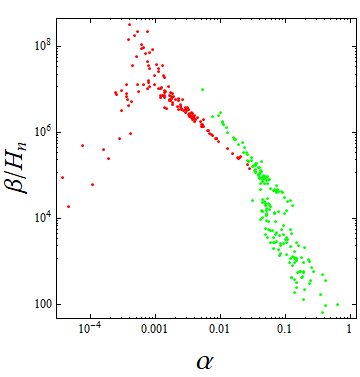 Figure 1
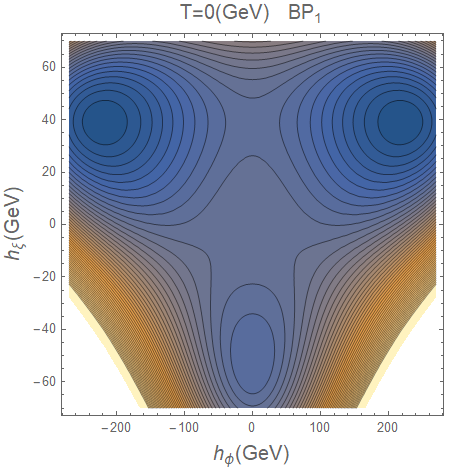 Figure 2
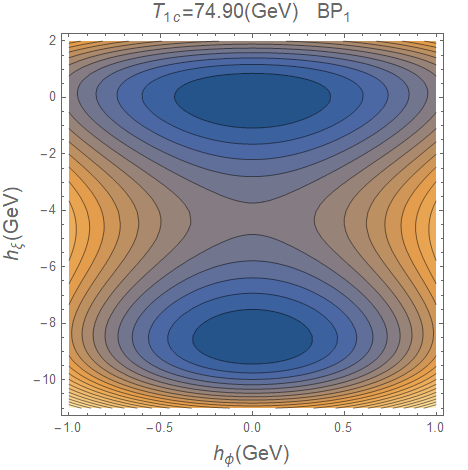 Figure 3
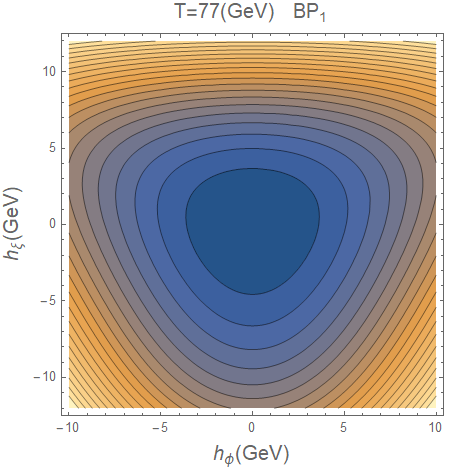 Figure 4
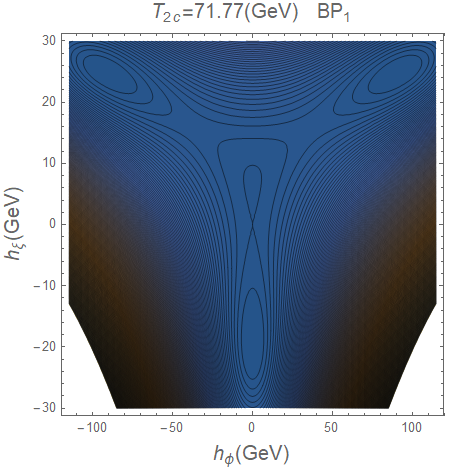 Figure 5
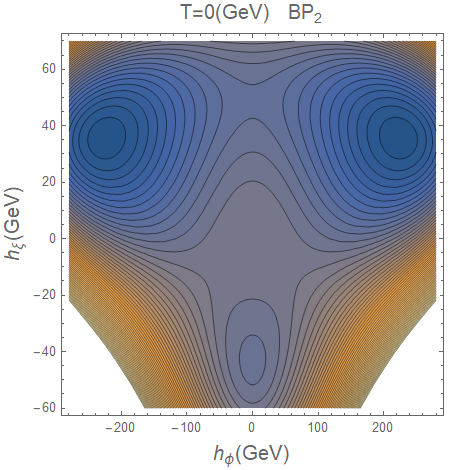 Figure 6
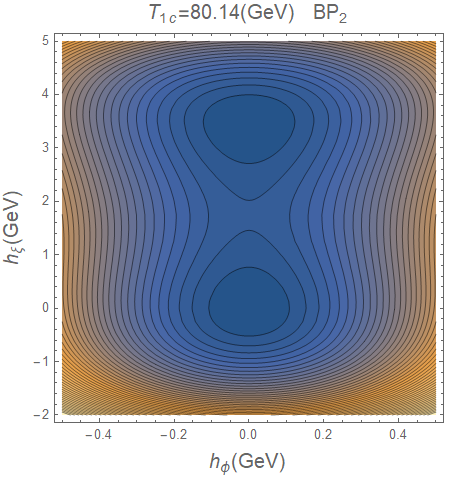 Figure 7
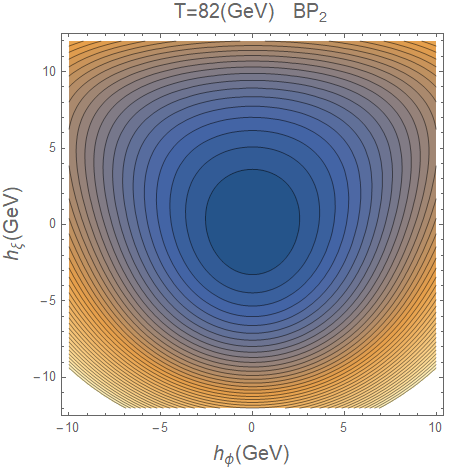 Figure 8
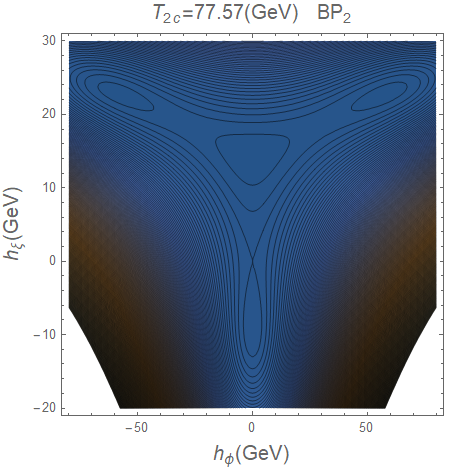 Figure 9
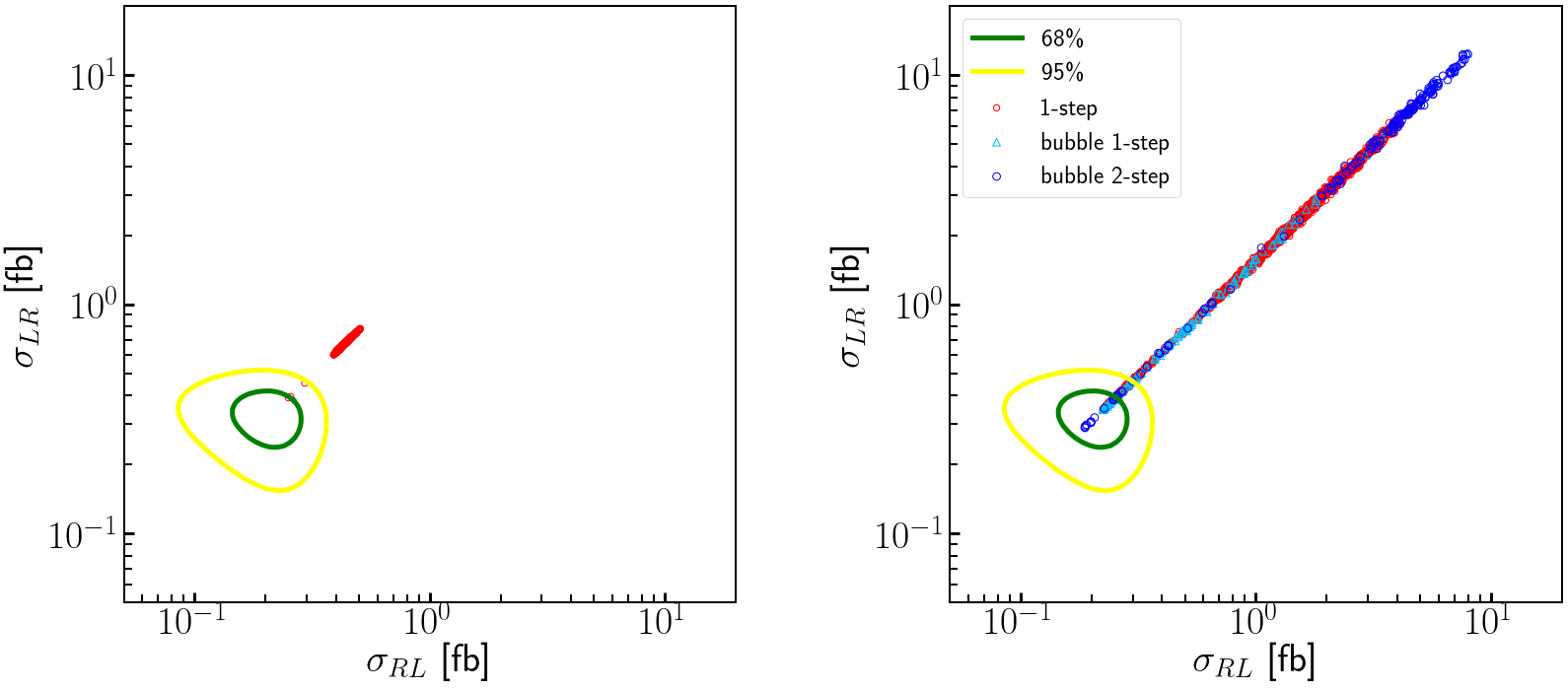 Figure 10
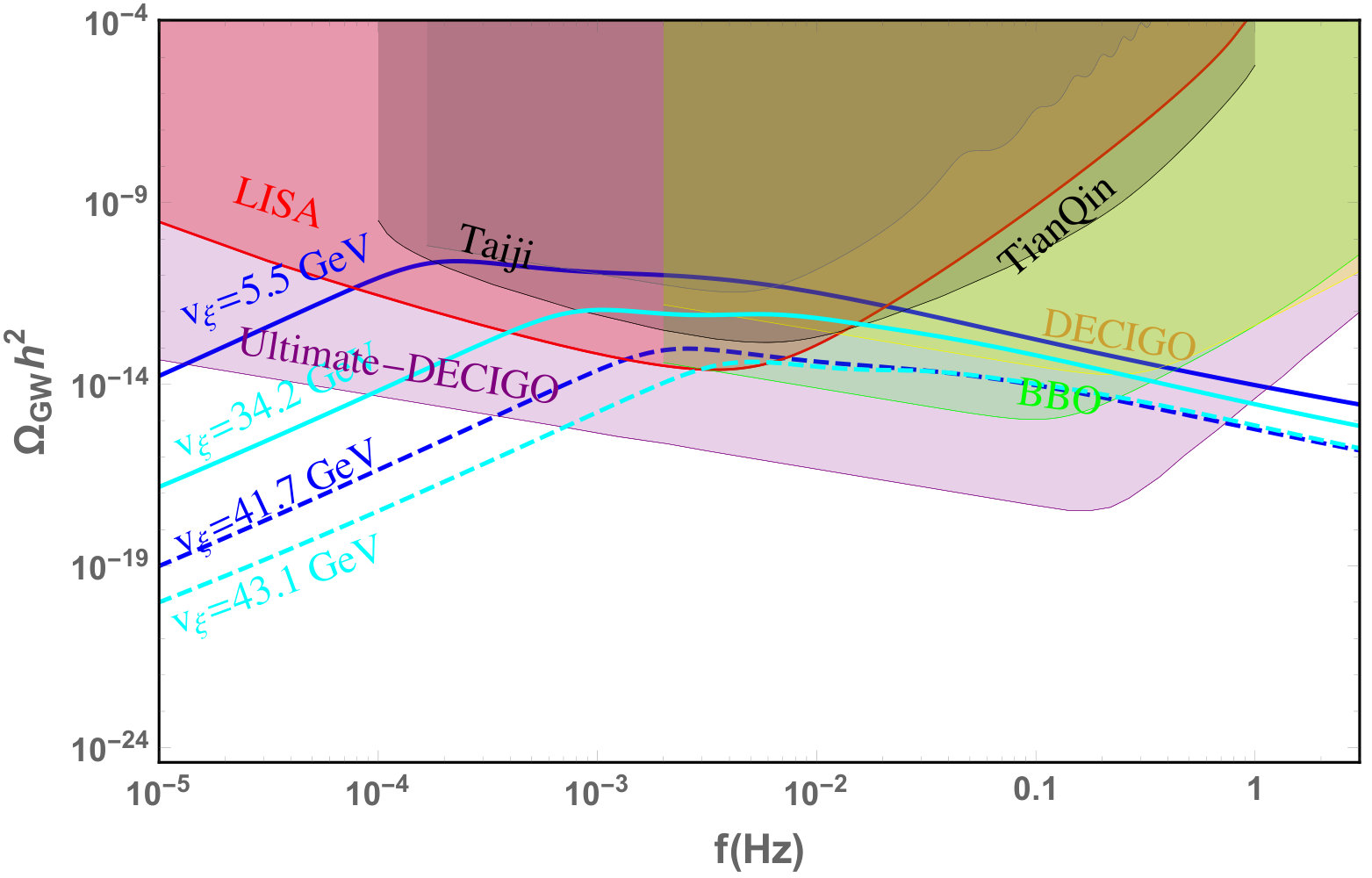 Figure 11
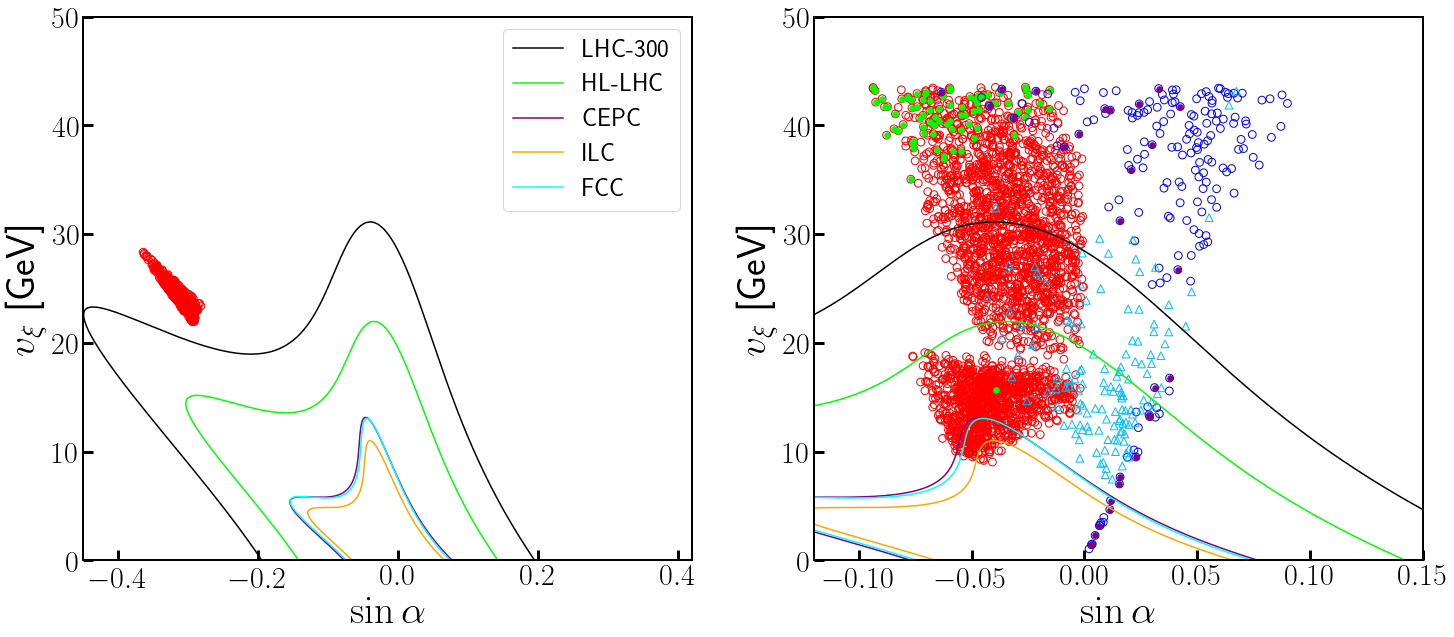 Figure 12
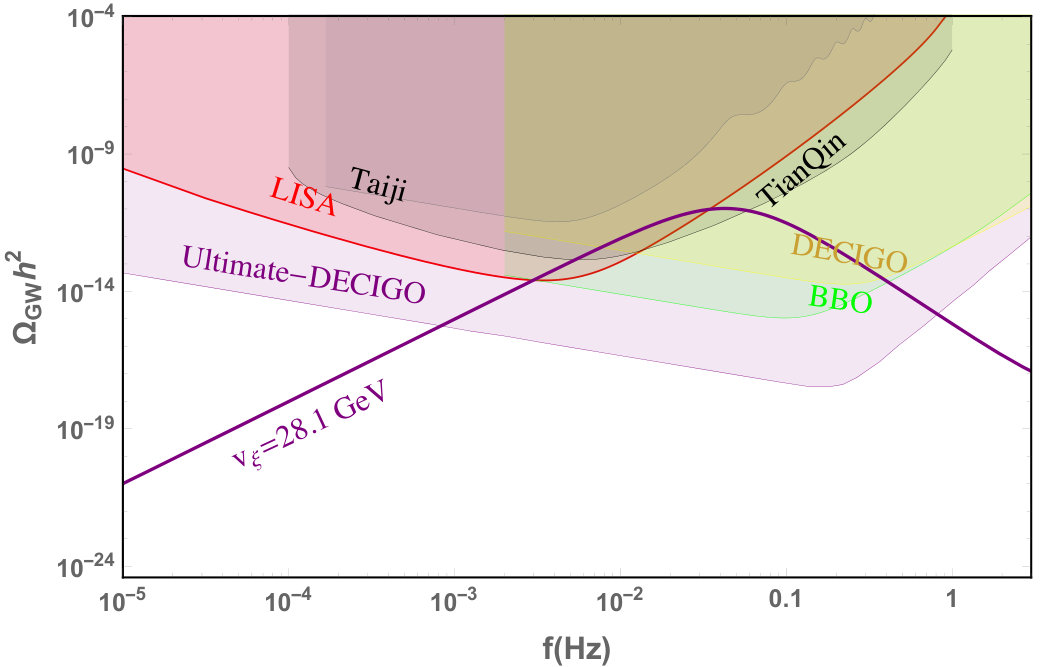 Figure 13
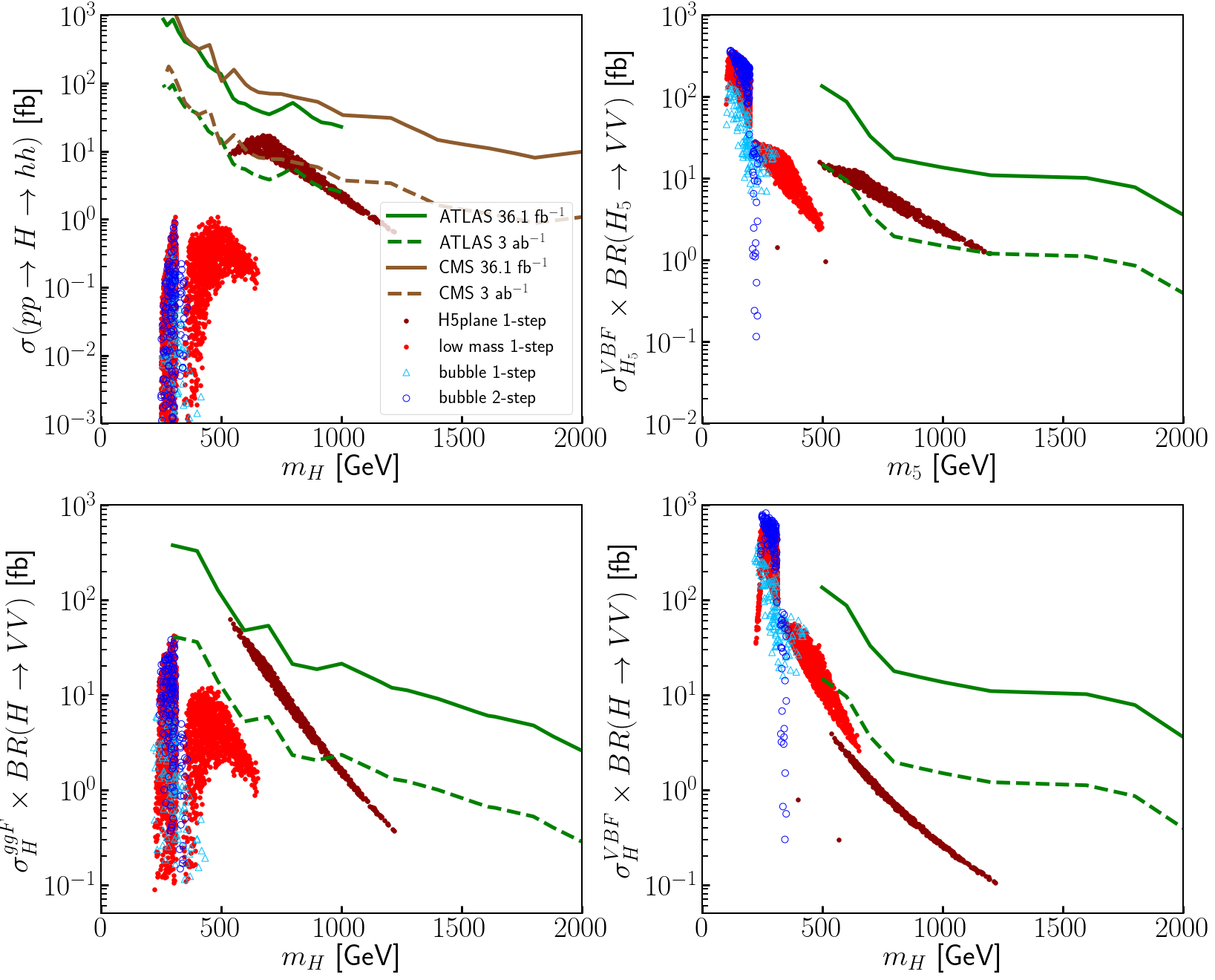 Figure 14
 Figure 15
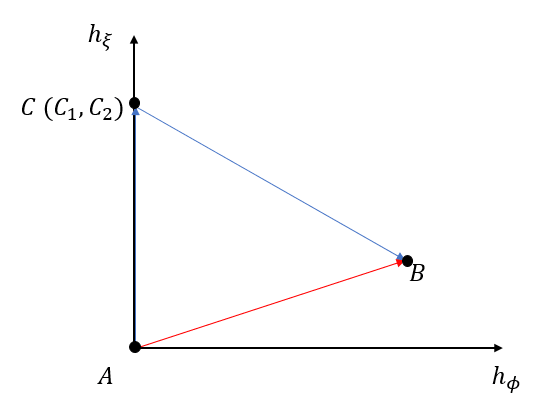 Figure 16
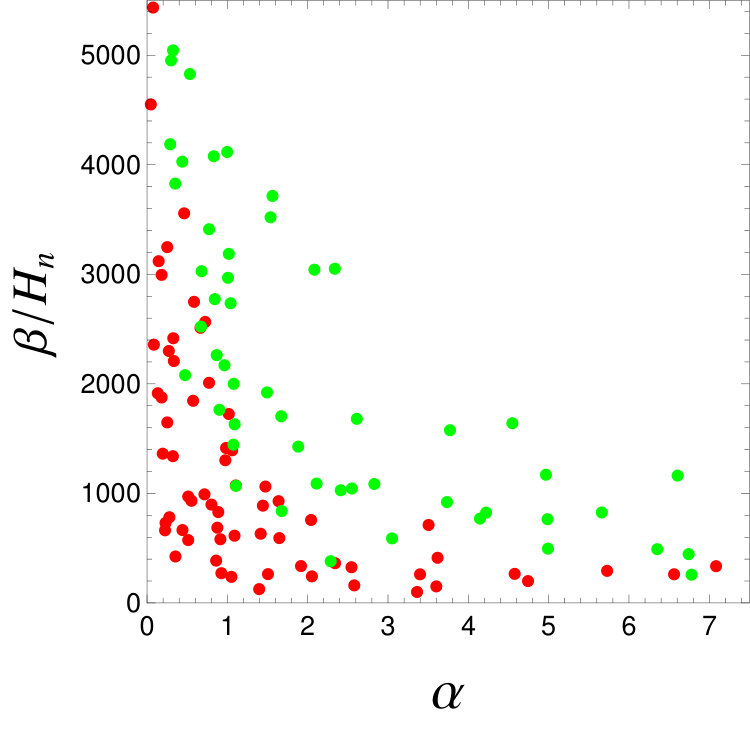 Figure 17
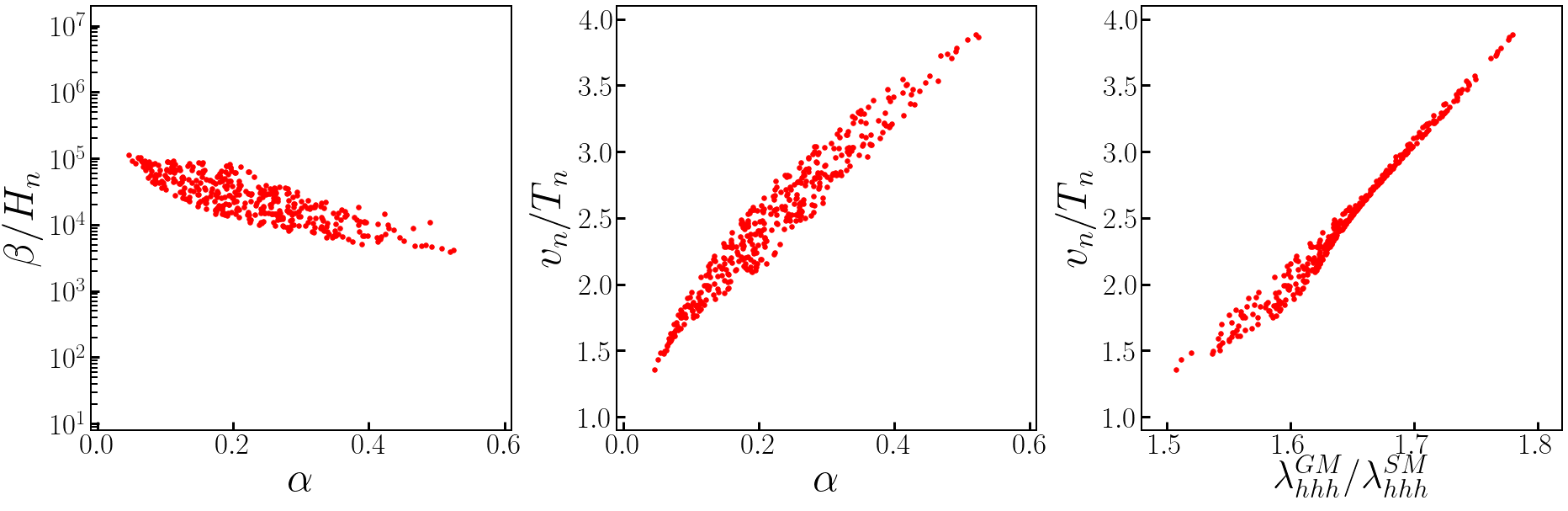 Figure 18
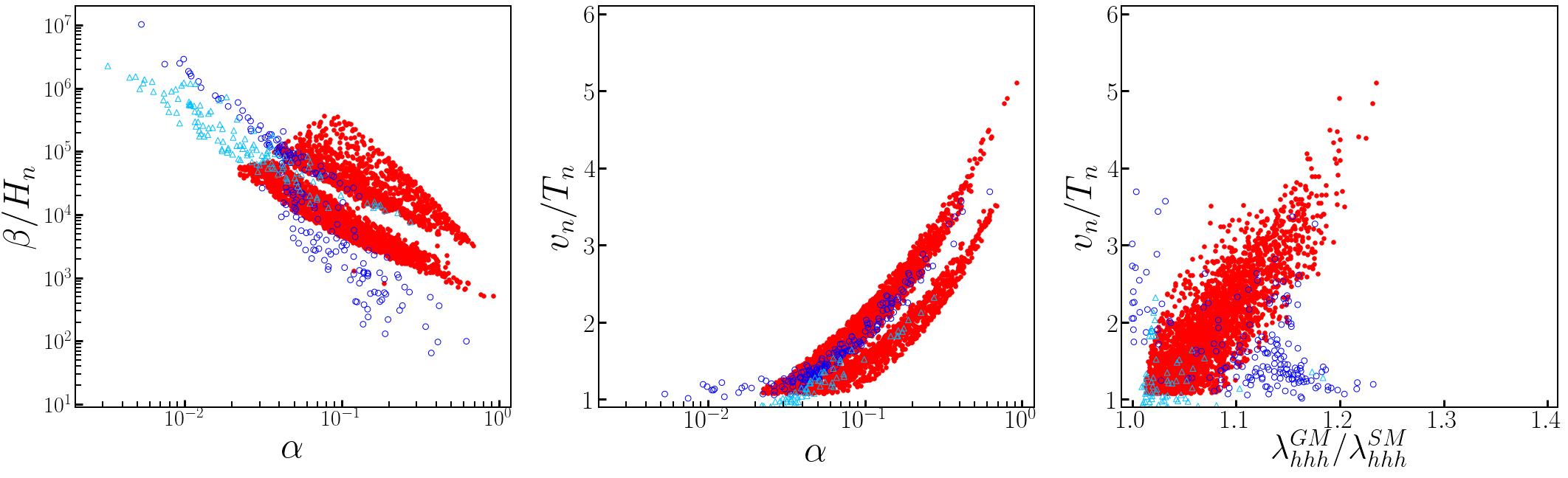 Figure 19
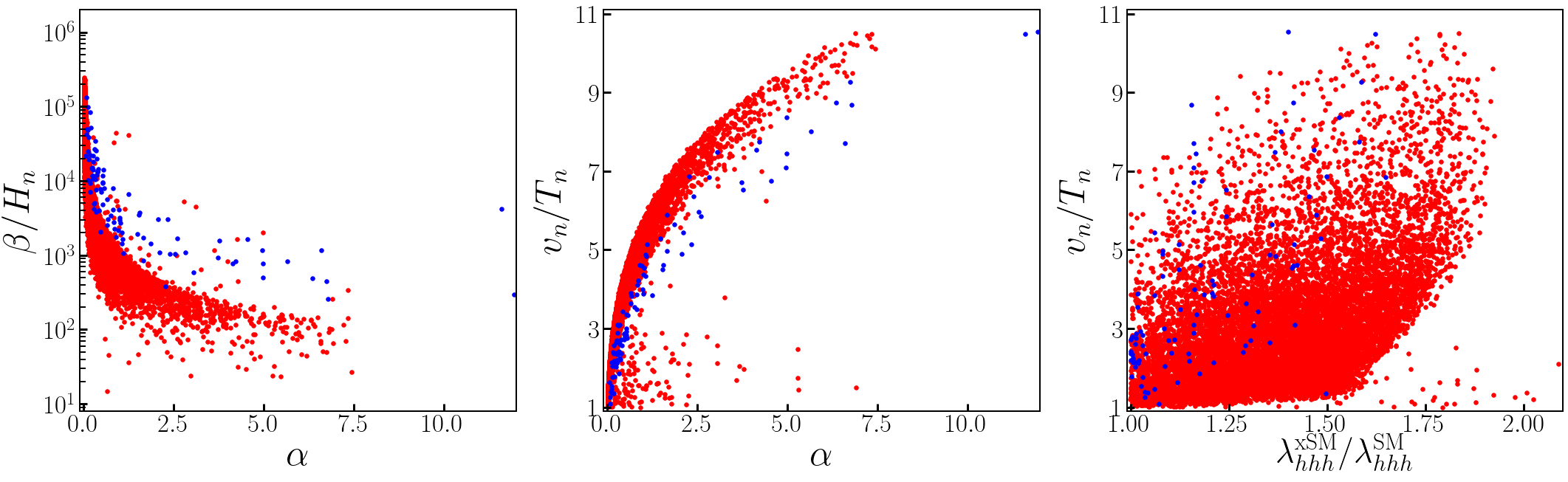 Figure 20
 Figure 21
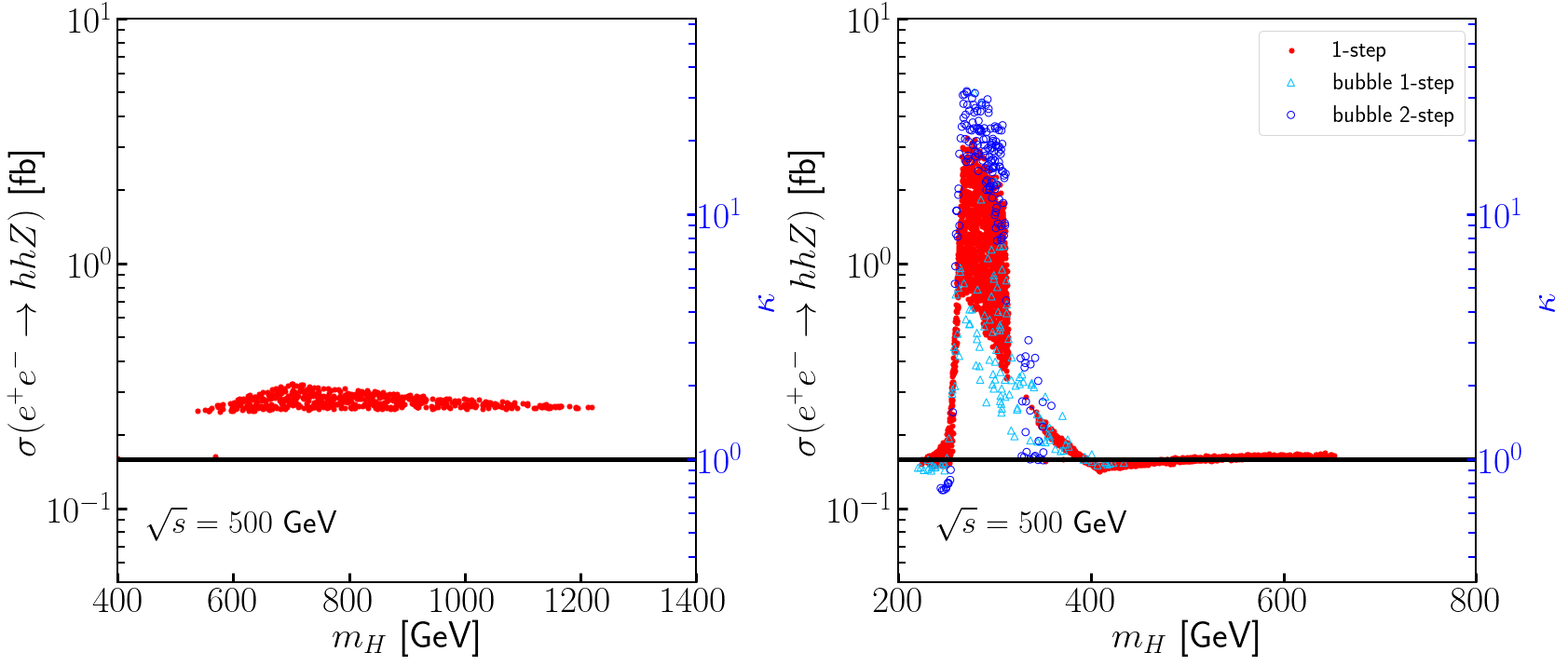 Figure 22
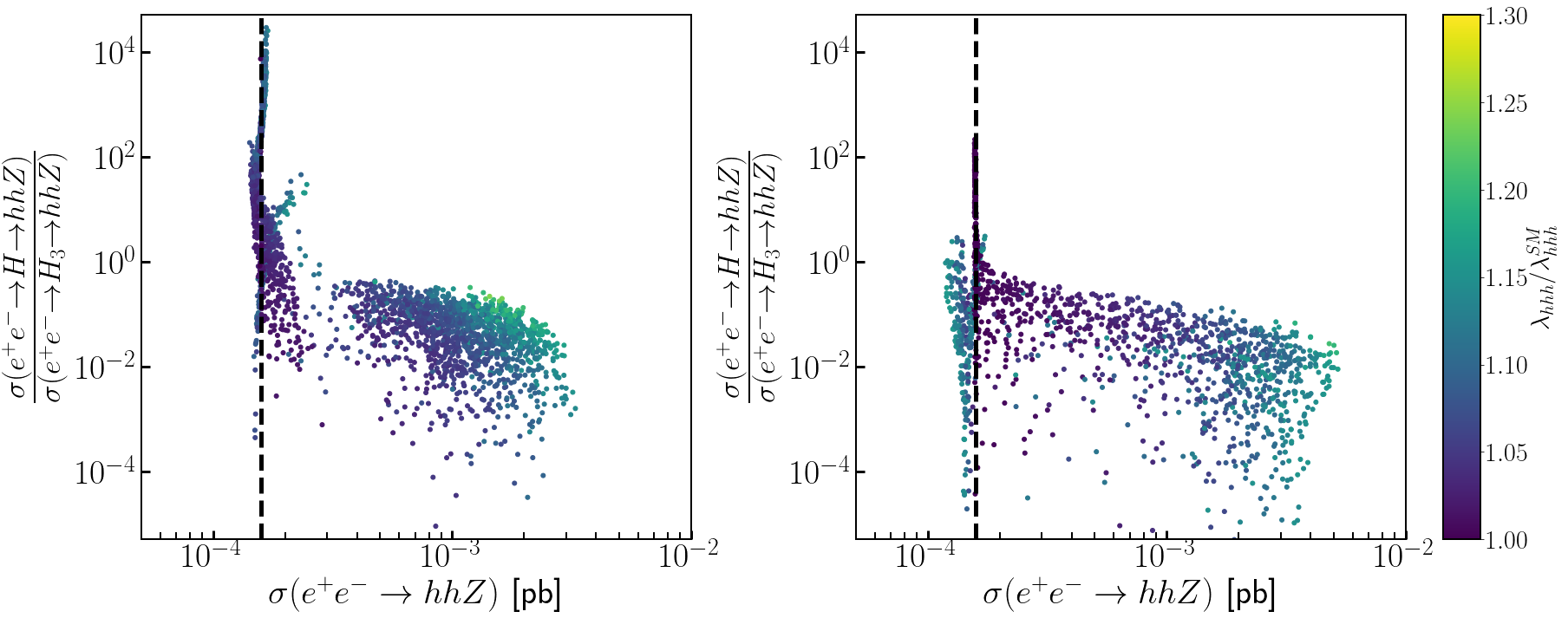 Figure 23
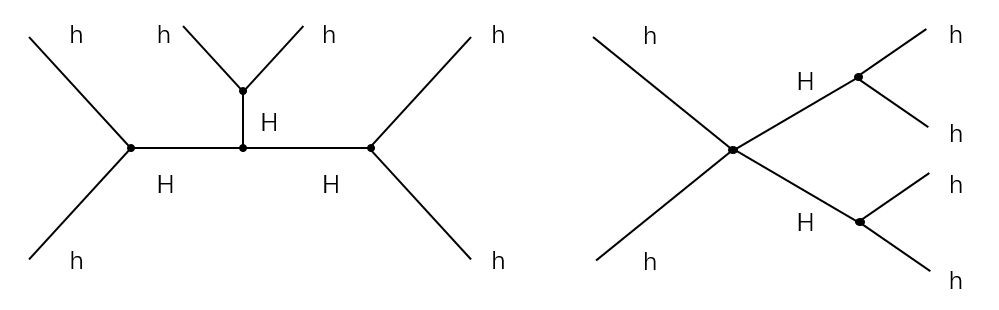 Figure 24
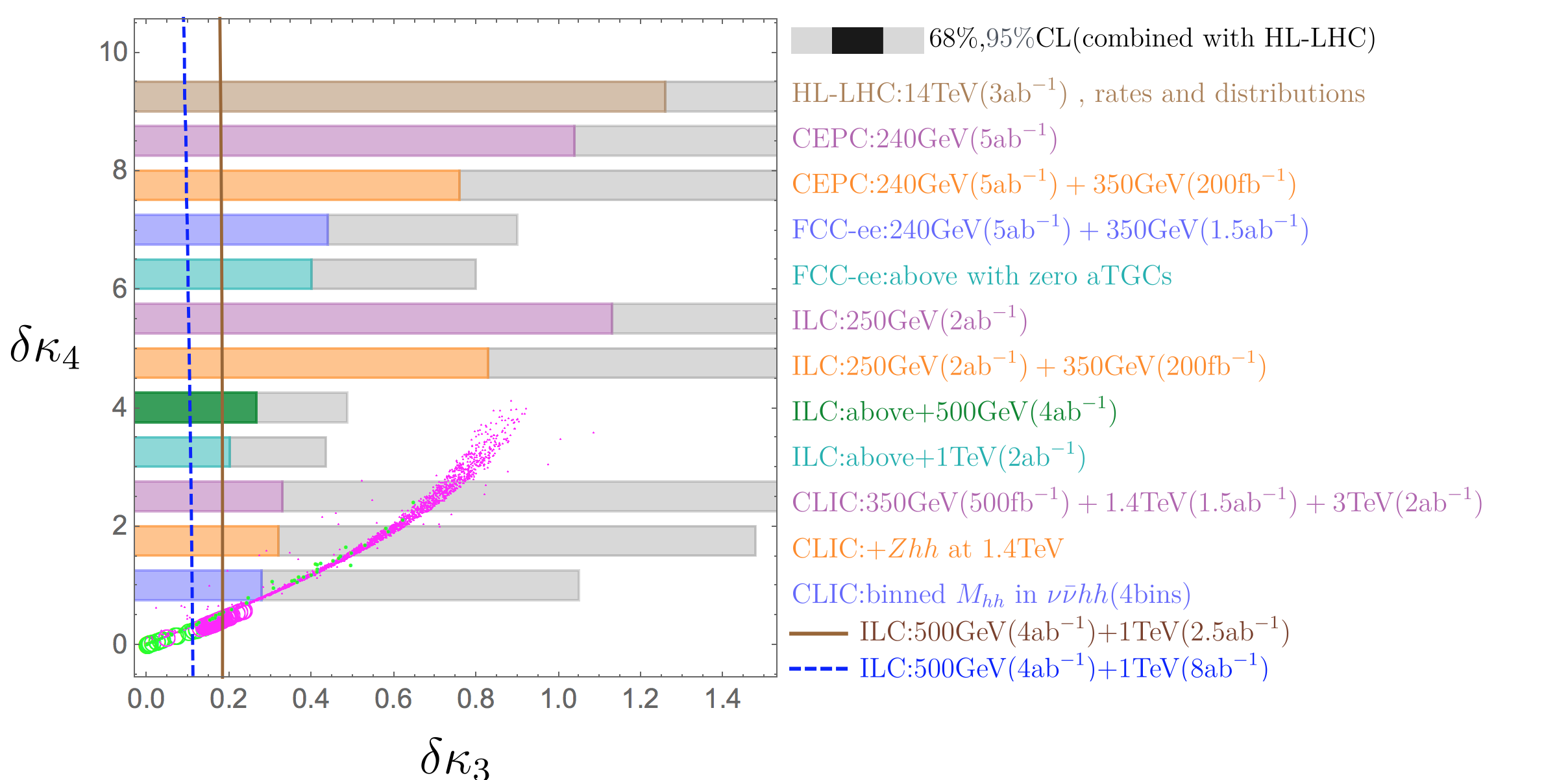 Figure 25
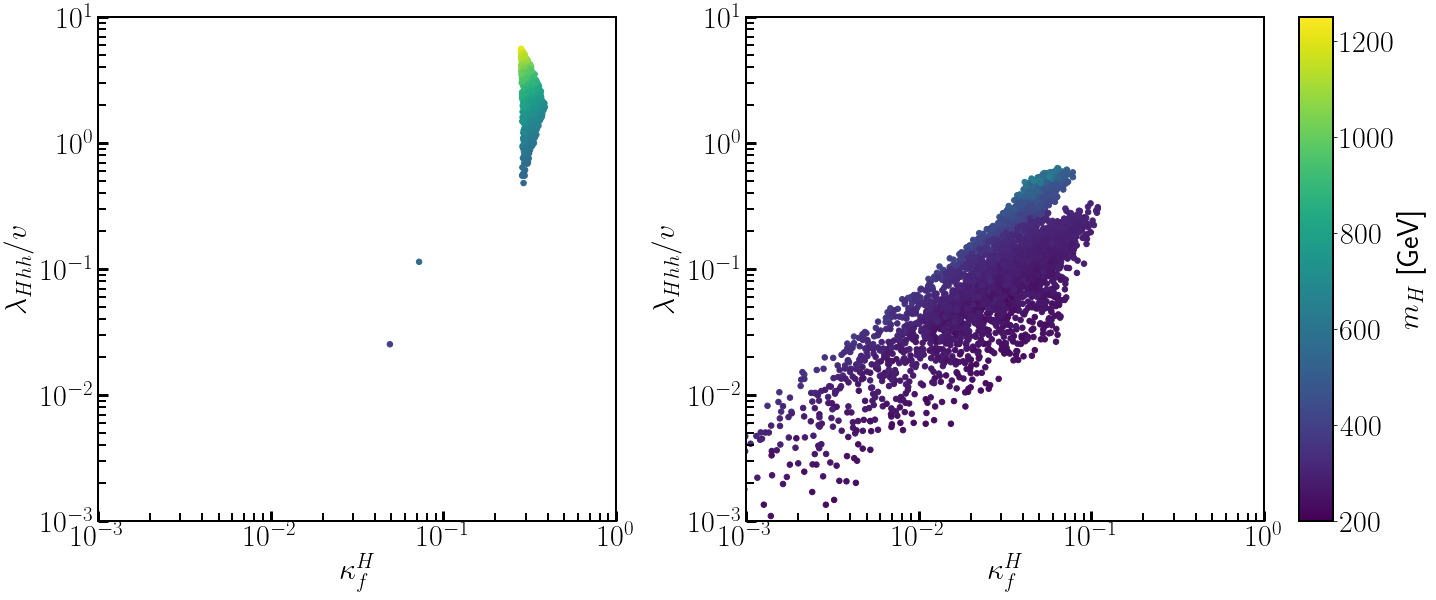 Figure 26
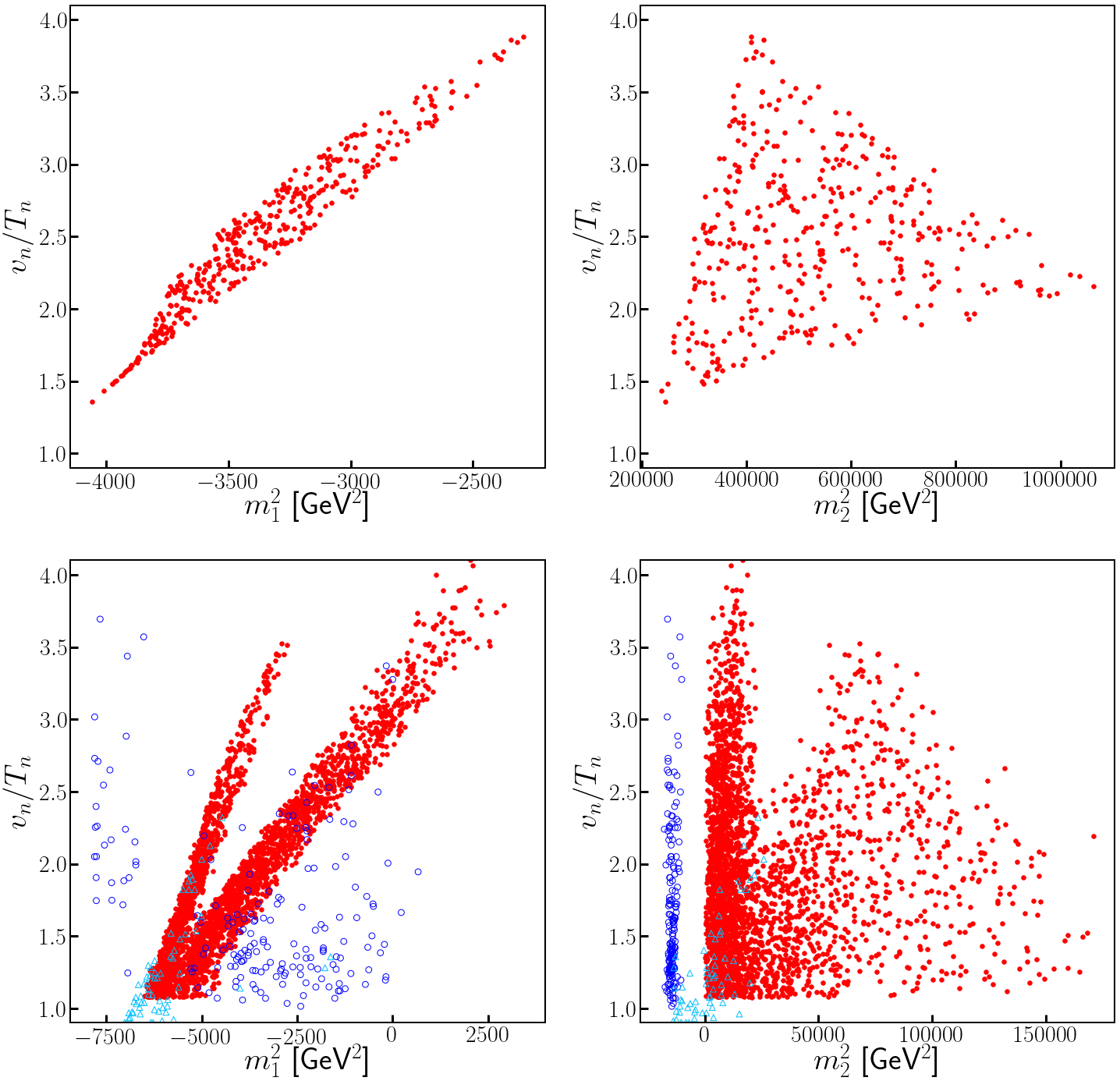 Figure 27
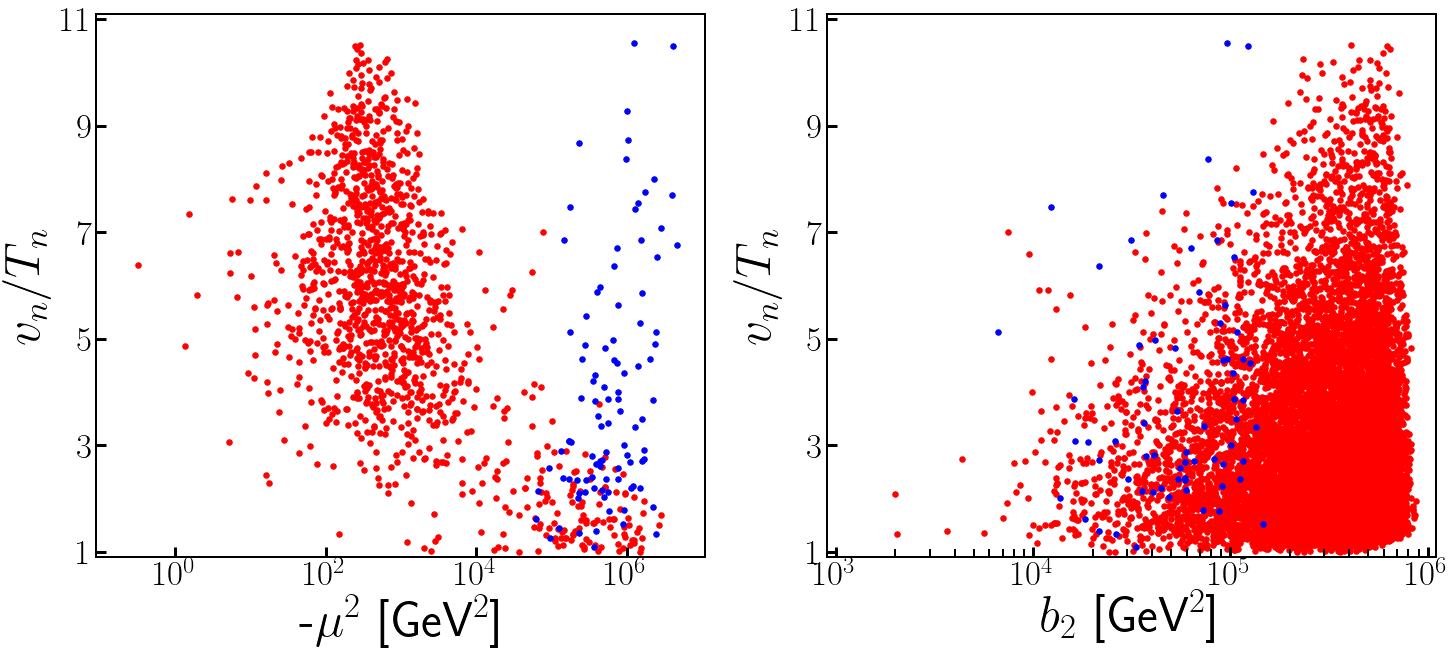 Figure 28
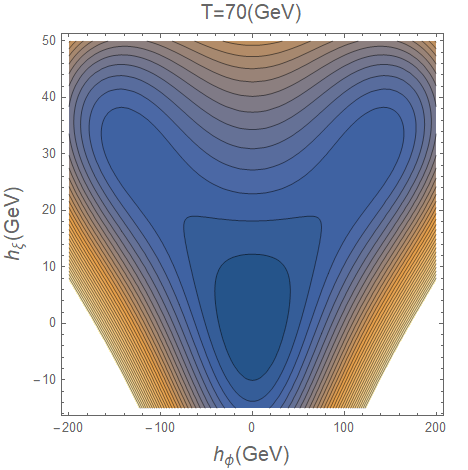 Figure 29
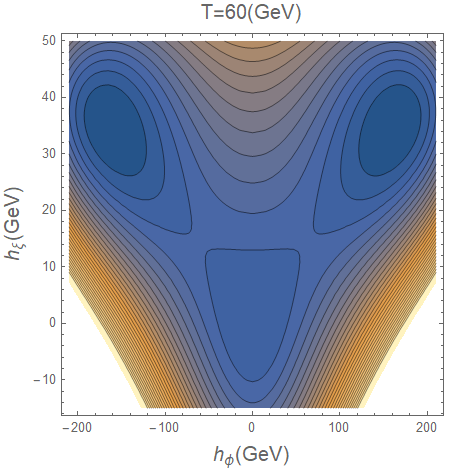 Figure 30
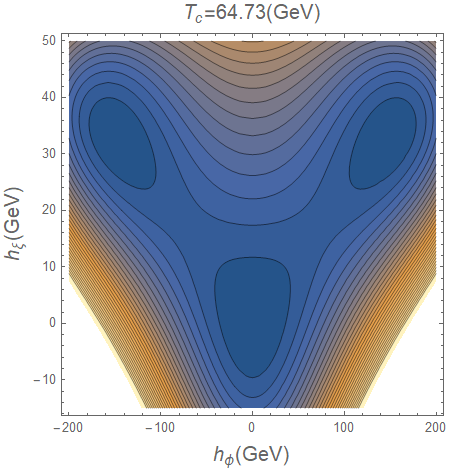 Figure 31
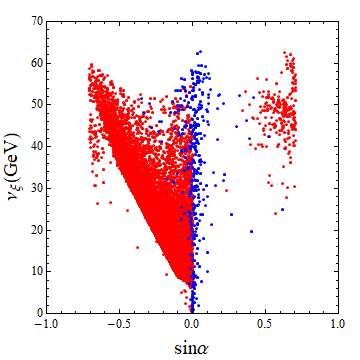 Figure 32
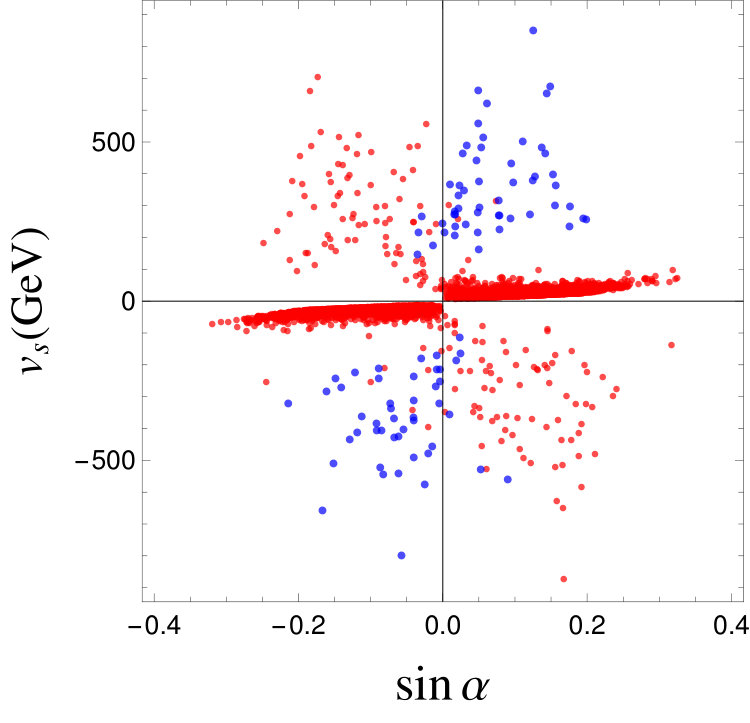 Figure 33
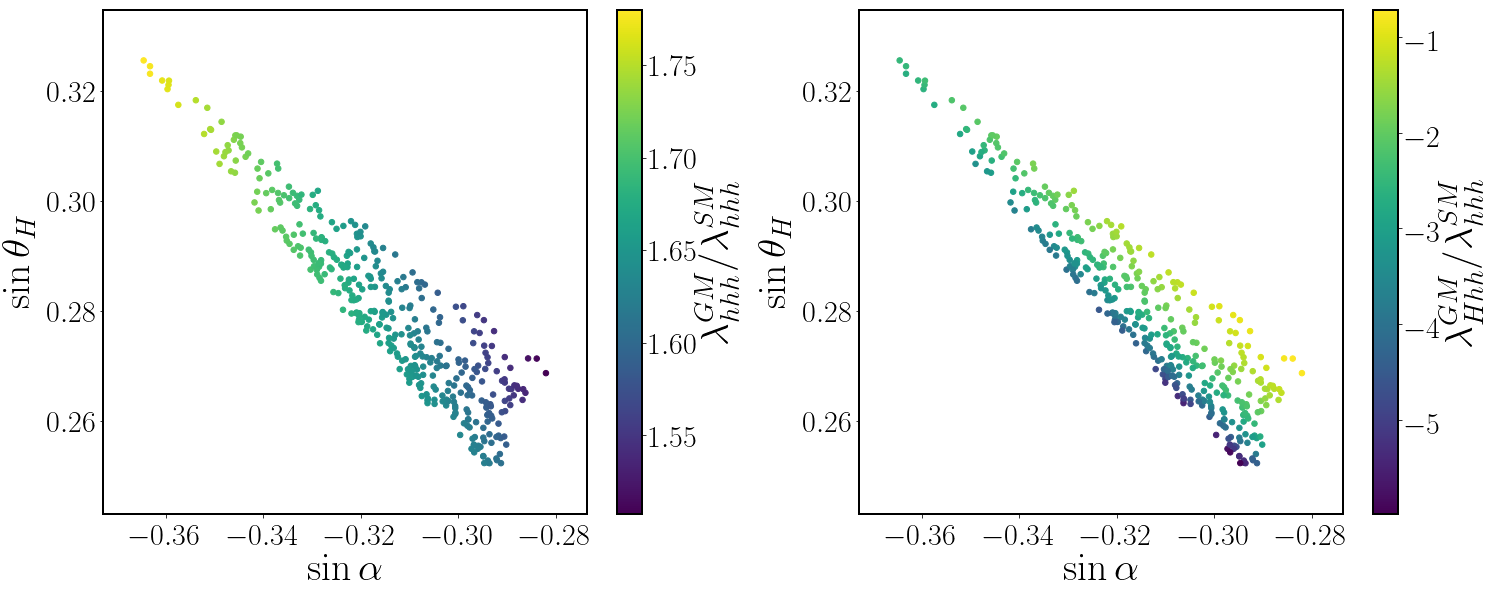 Figure 34
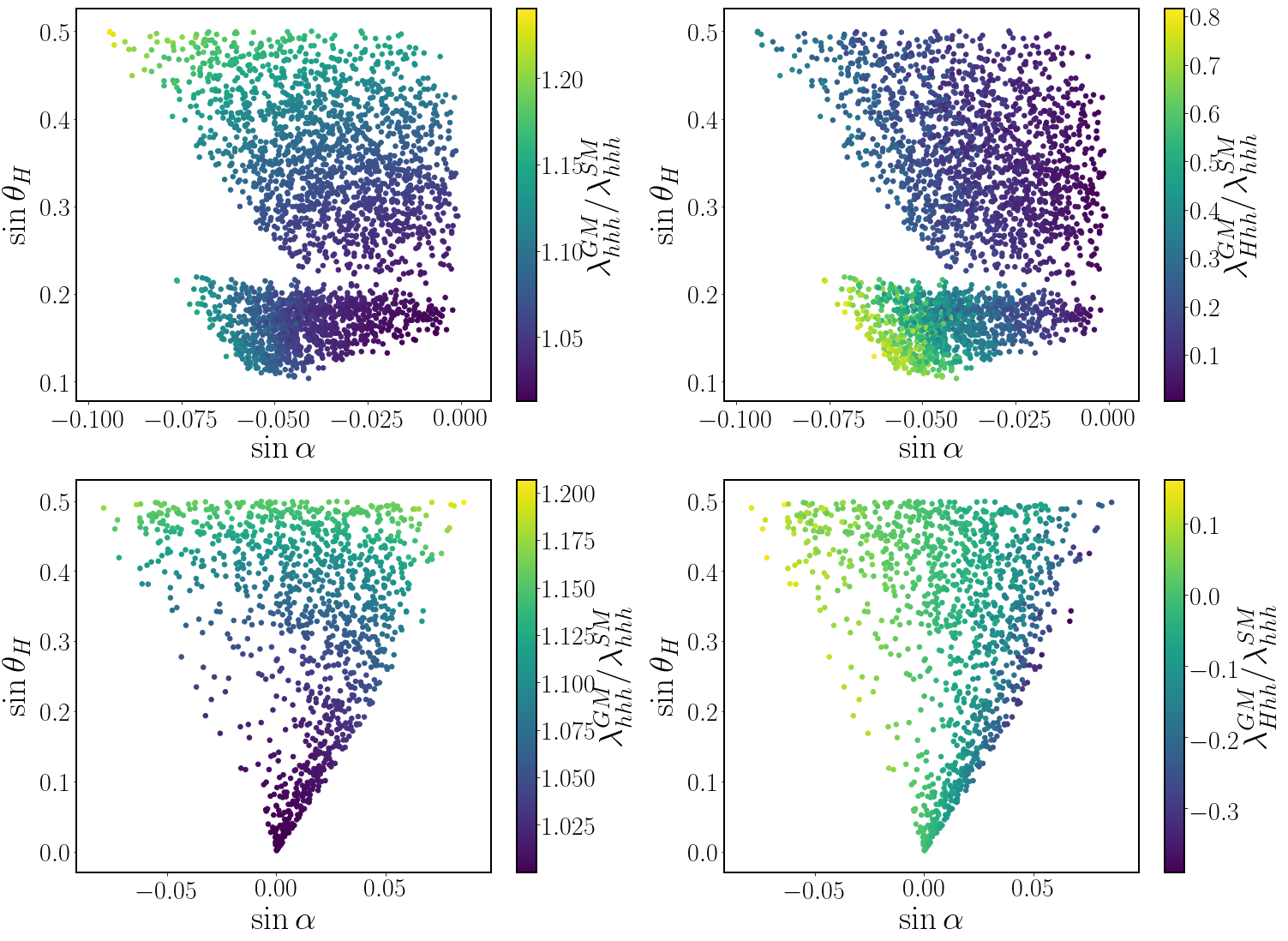 Figure 35
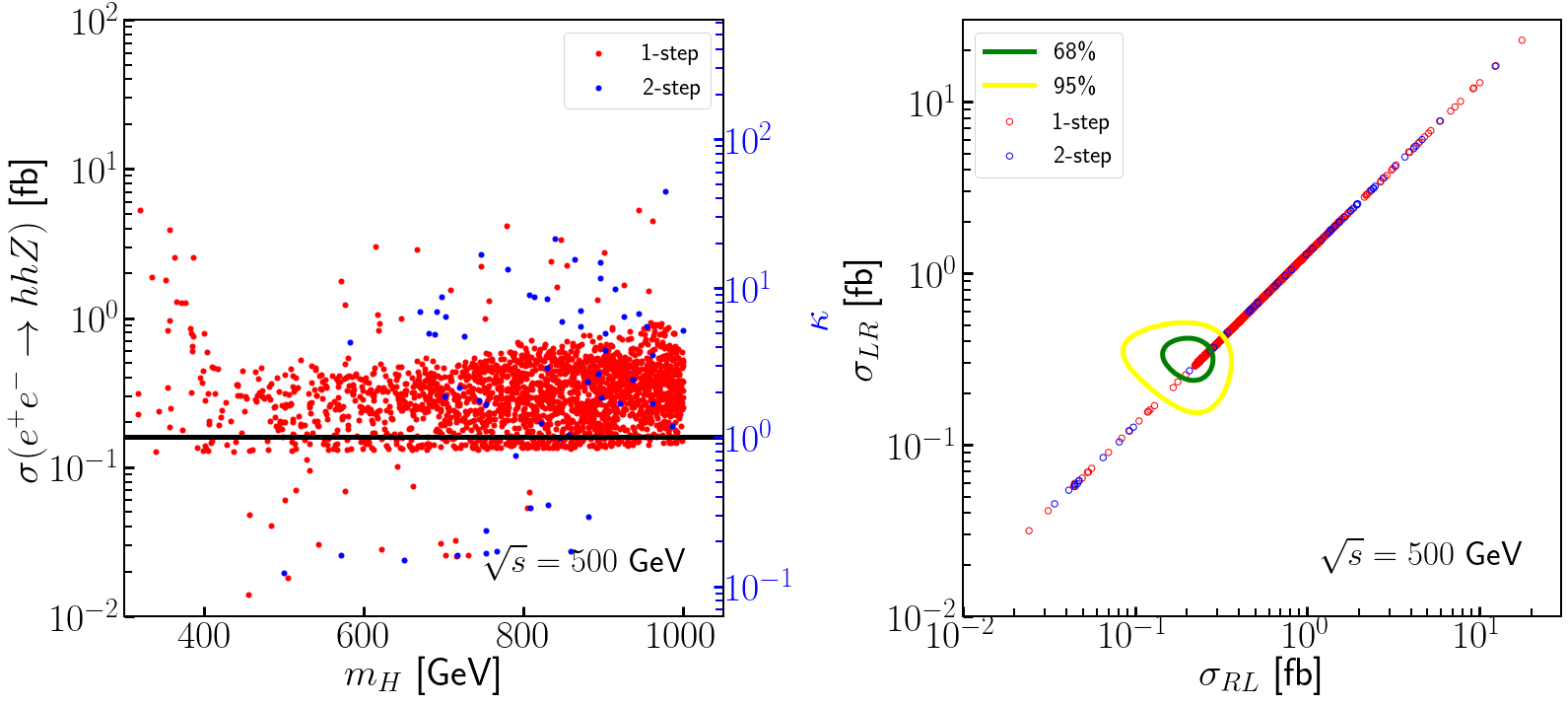 Figure 36
Peer Reviews
No public reviews on file for this paper yet. If you reviewed it on a platform where reviews are public (OpenReview, ICLR, NeurIPS, ICML), you can paste yours below so the community can read it here.
Videos
No videos yet. Explain this paper in a talk, walkthrough, or lecture? Add one.