Modeling C-Shock Chemistry in Isolated Molecular Outflows
Andrew M. Burkhardt, Christopher N. Shingledecker, Romane Le Gal,, Brett A. McGuire, Anthony J. Remijan, and Eric Herbst

TL;DR
This paper enhances a chemical network model to better simulate shock-induced chemistry in molecular outflows, successfully reproducing observed molecular distributions and revealing new formation pathways for complex organic molecules.
Contribution
The study introduces an improved shock-chemistry model incorporating high-temperature reactions and non-thermal desorption, providing new insights into molecule formation in shocked regions.
Findings
Model reproduces observed molecular distributions in L1157
Identifies new post-shock formation routes for certain COMs
Suggests specific molecules as effective shock tracers
Abstract
Shocks are a crucial probe for understanding the ongoing chemistry within ices on interstellar dust grains where many complex organic molecules (COMs) are believed to be formed. However, previous work has been limited to the initial liberation into the gas phase through non-thermal desorption processes such as sputtering. Here, we present results from the adapted three-phase gas-grain chemical network code NAUTILUS, with the inclusion of additional high-temperature reactions, non-thermal desorption, collisional dust heating, and shock-physics parameters. This enhanced model is capable of reproducing many of the molecular distributions and abundance ratios seen in our prior observations of the prototypical shocked-outflow L1157. In addition, we find that, among others, NHCHO, HCOOCH, and CHCHO have significant post-shock chemistry formation routes that differ from those of…
Click any figure to enlarge with its caption.
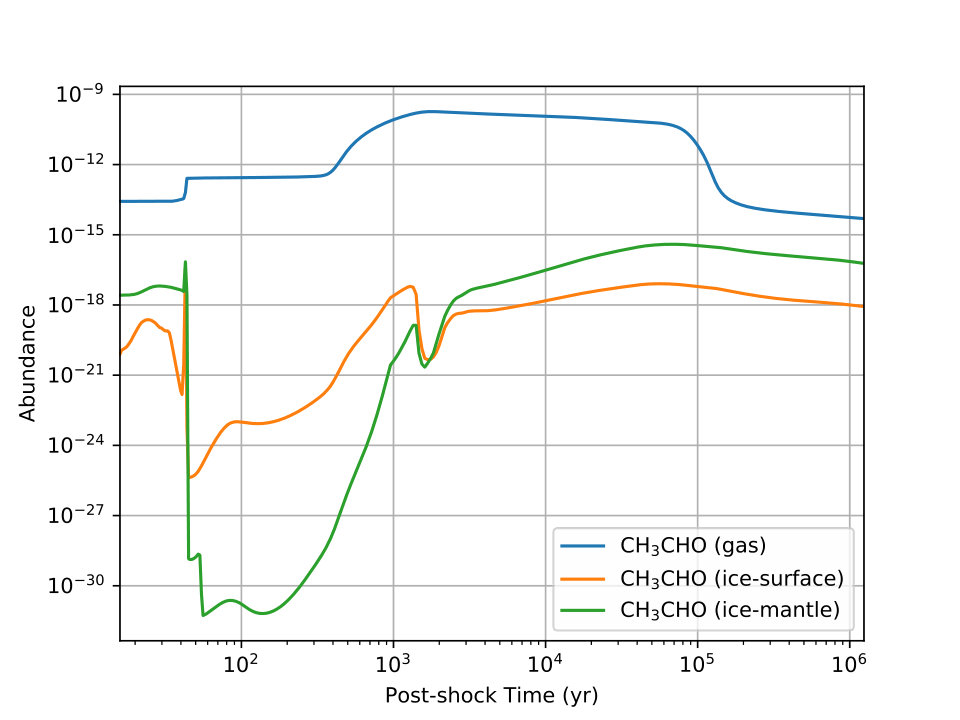 Figure 1
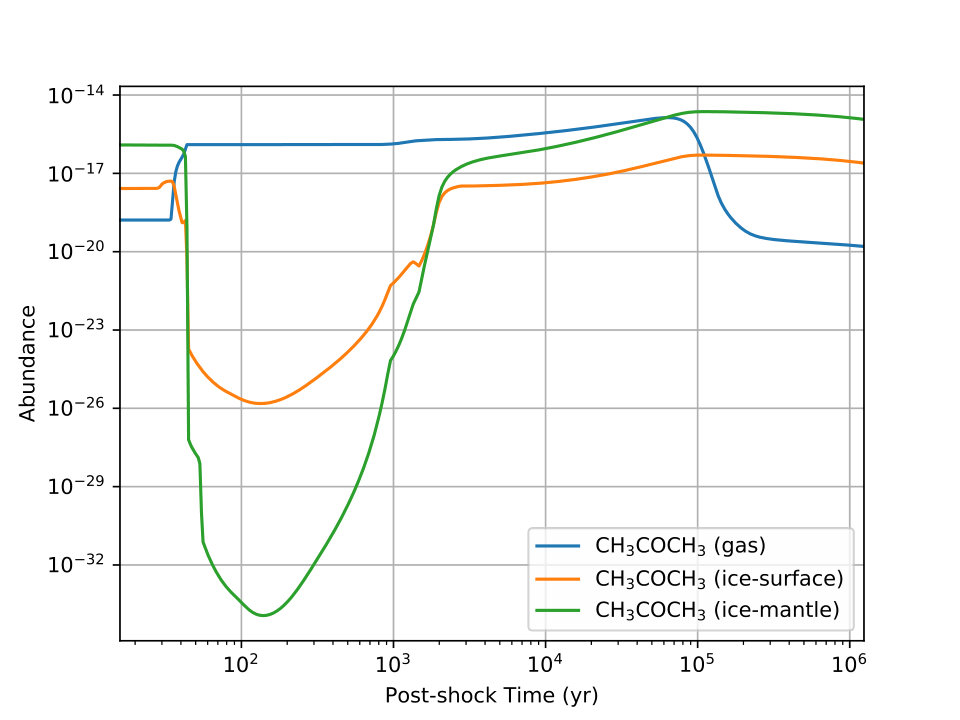 Figure 2
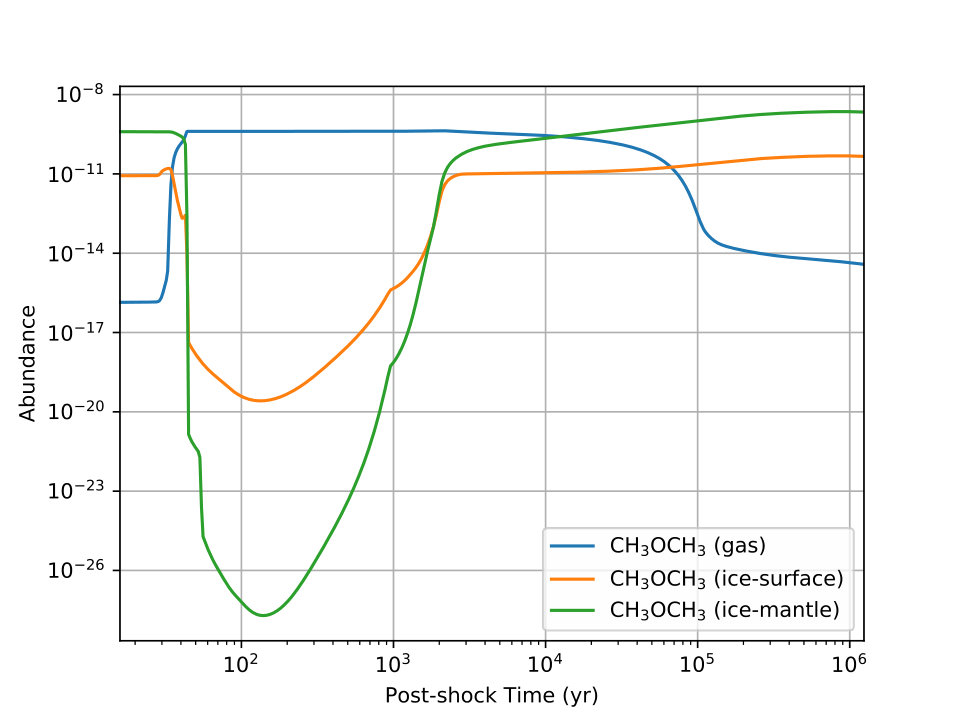 Figure 3
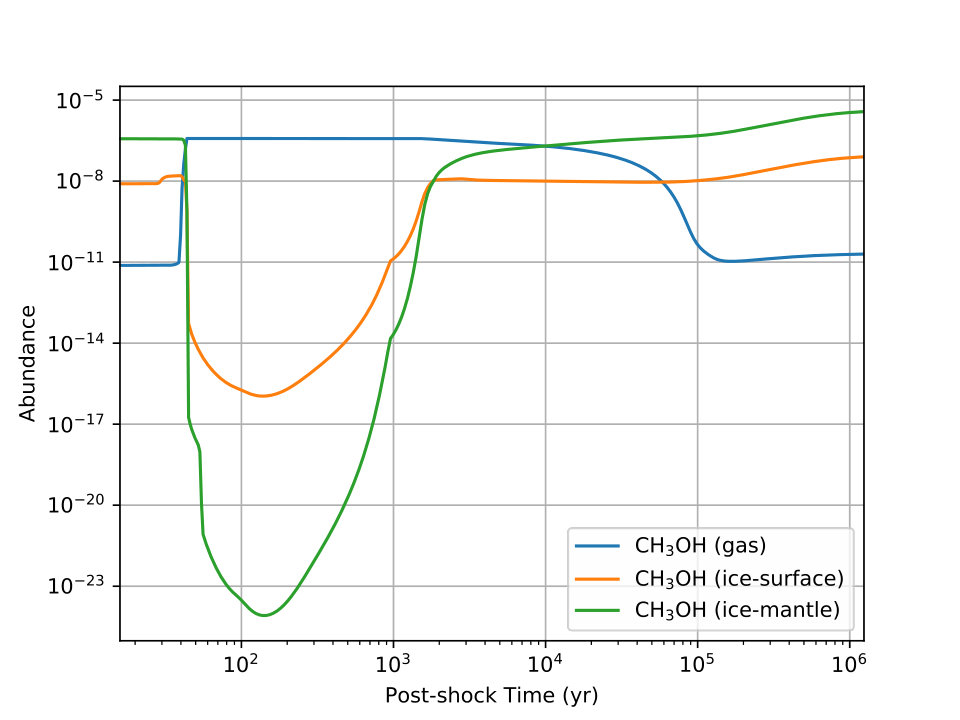 Figure 4
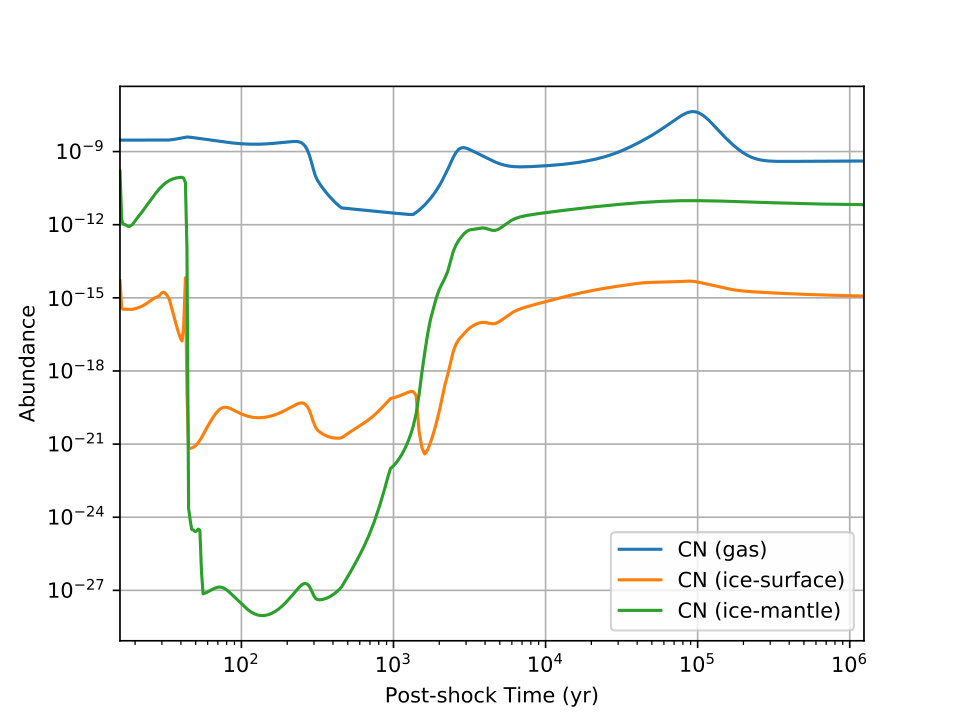 Figure 5
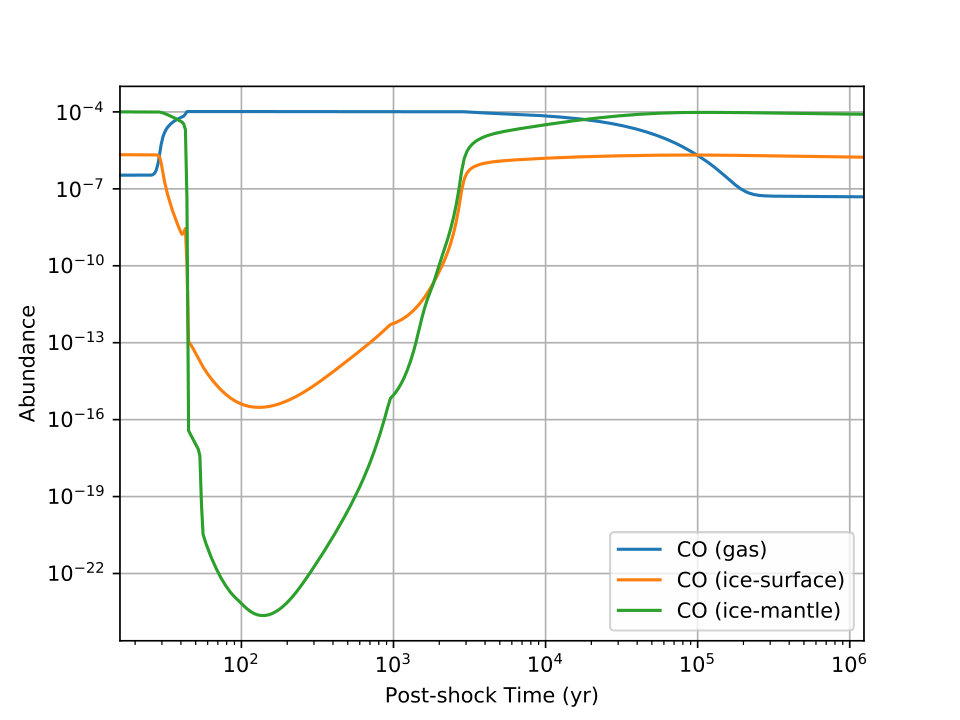 Figure 6
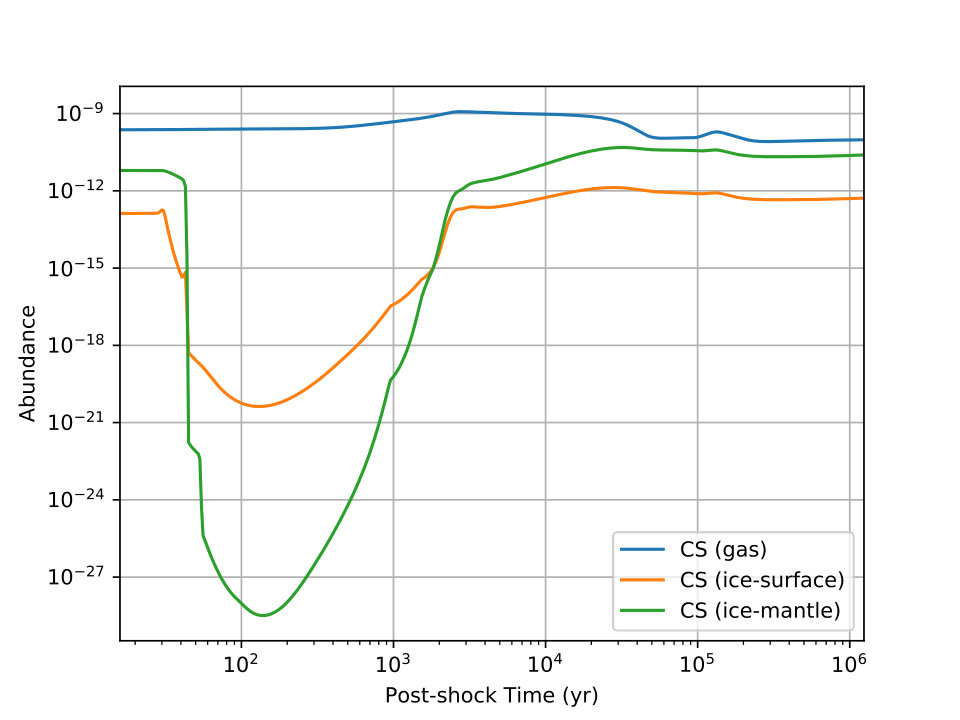 Figure 7
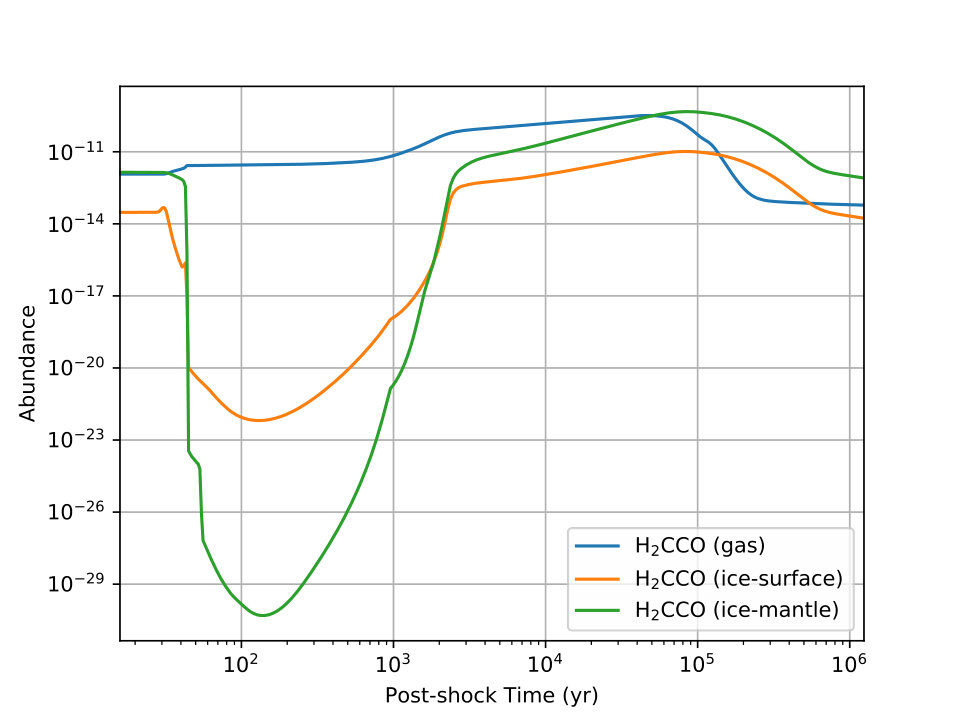 Figure 8
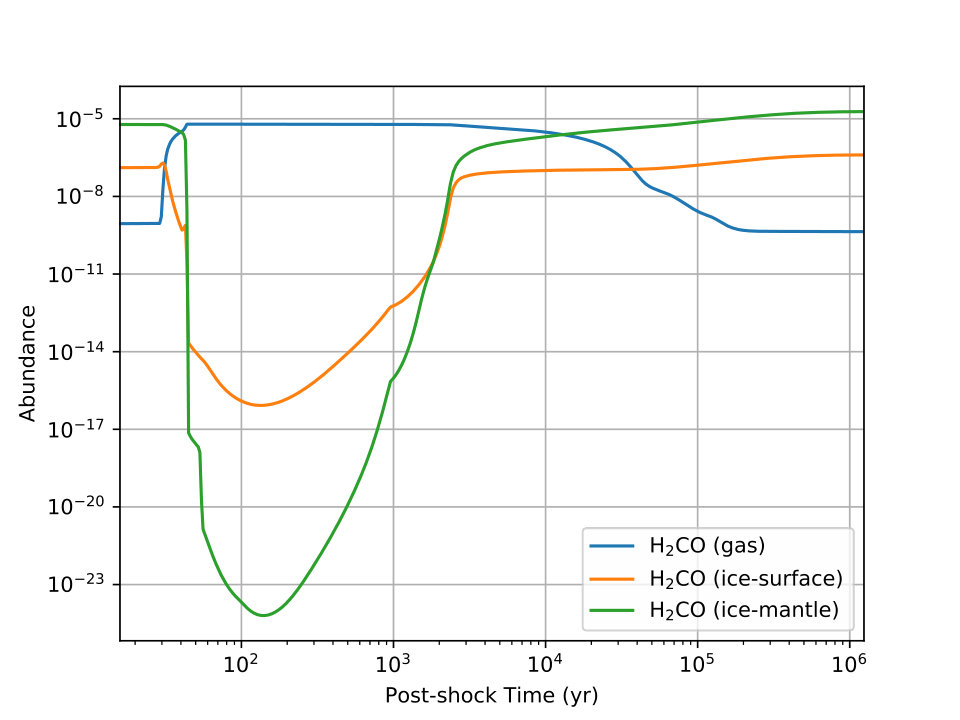 Figure 9
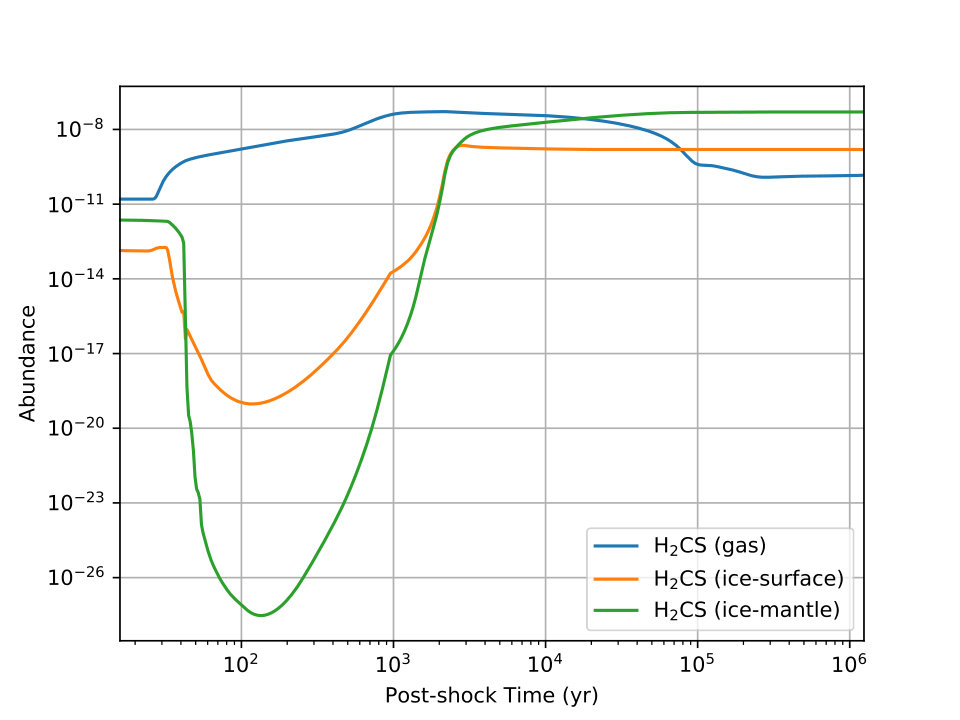 Figure 10
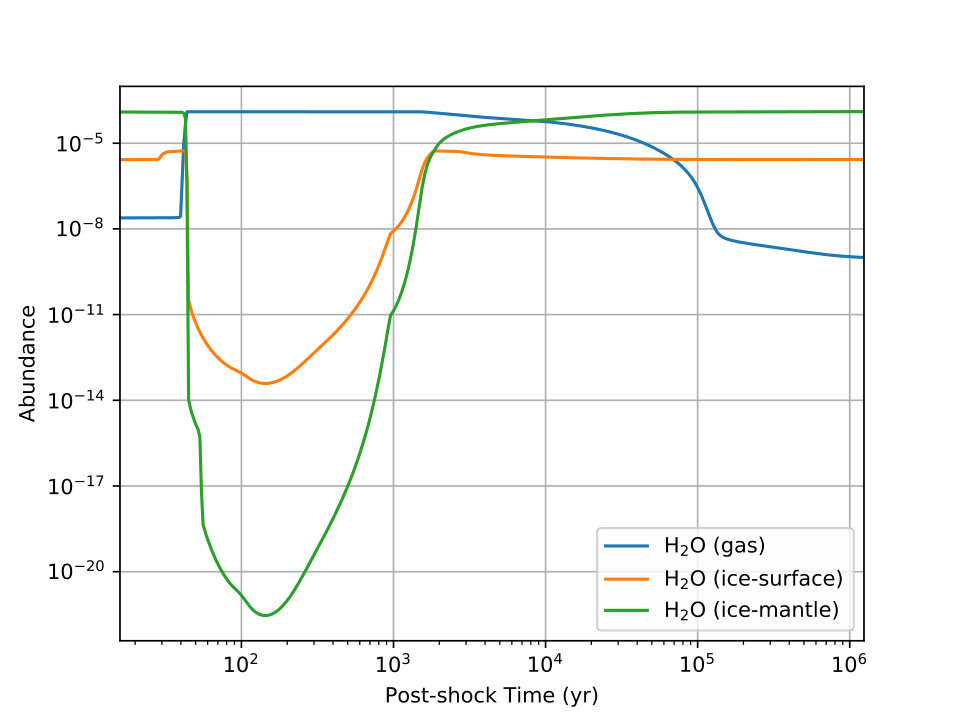 Figure 11
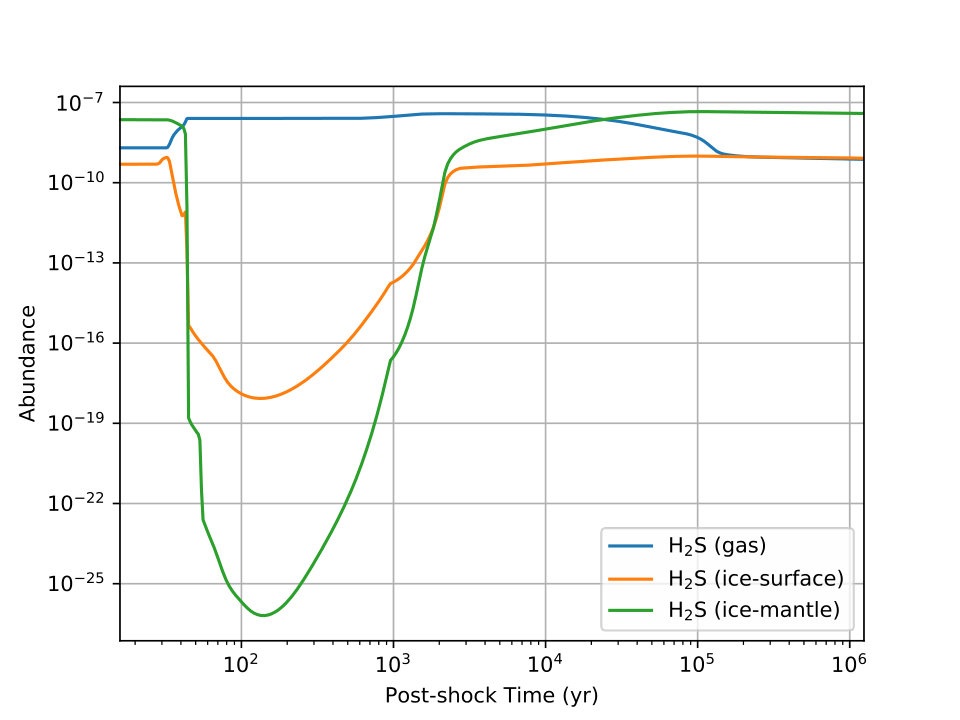 Figure 12
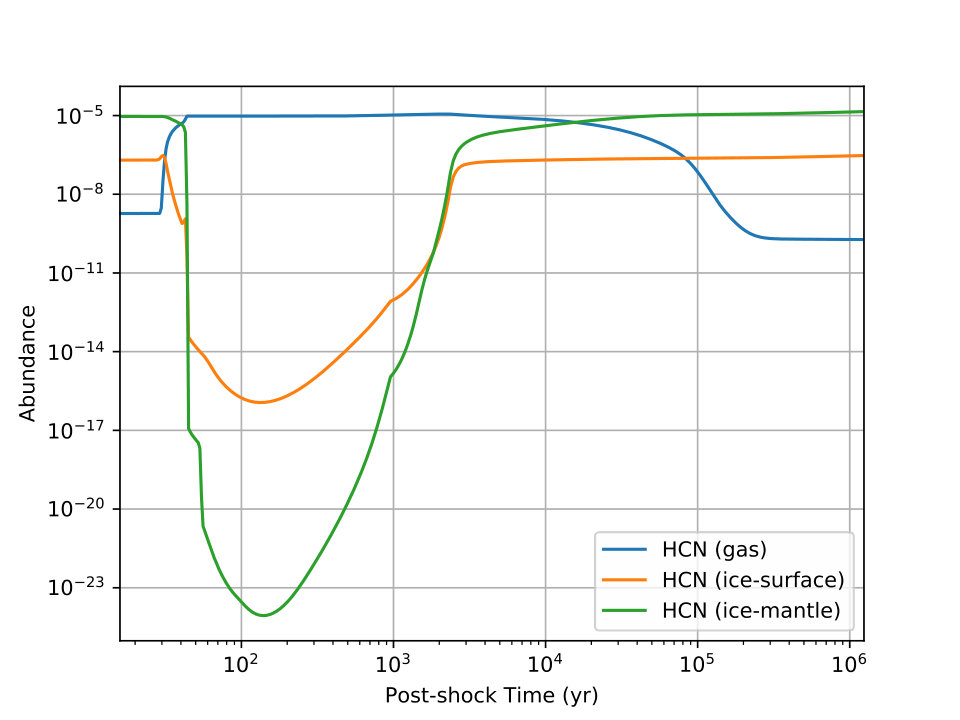 Figure 13
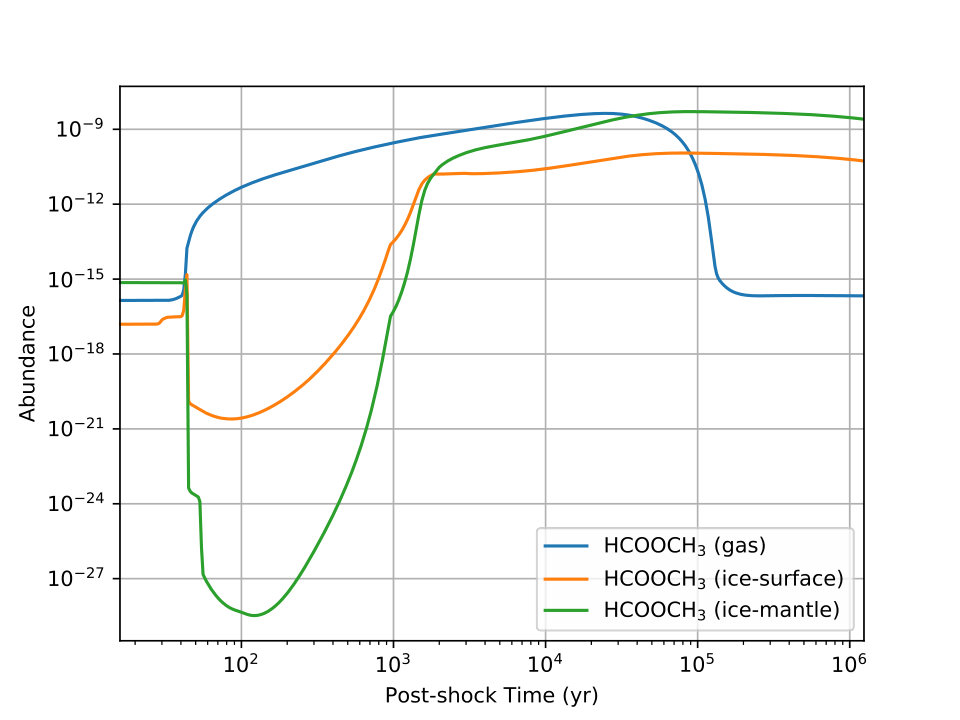 Figure 14
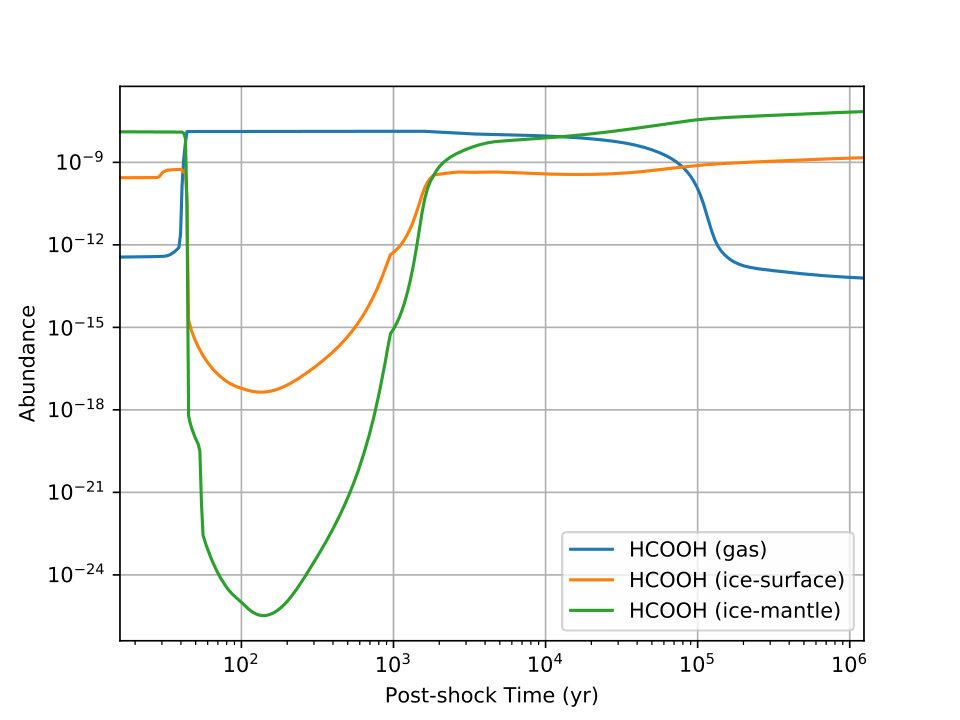 Figure 15
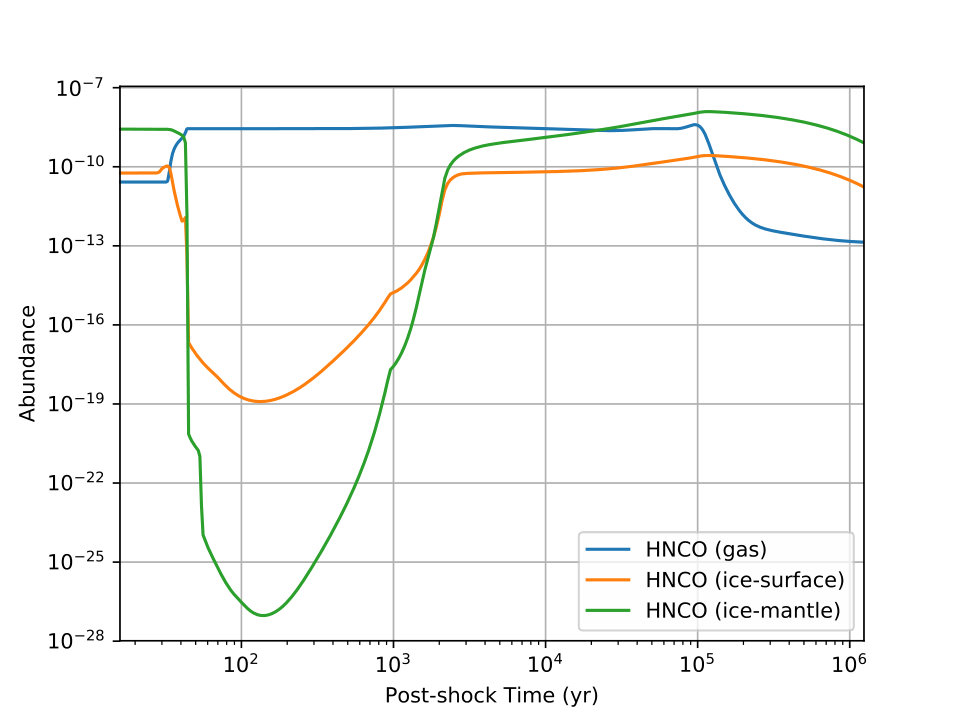 Figure 16
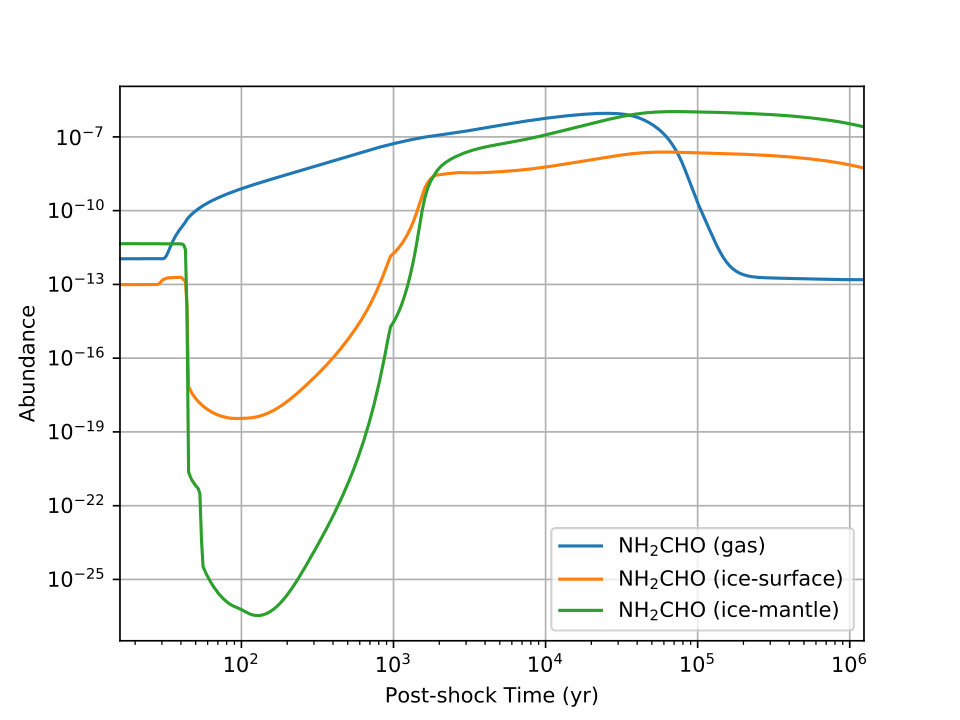 Figure 17
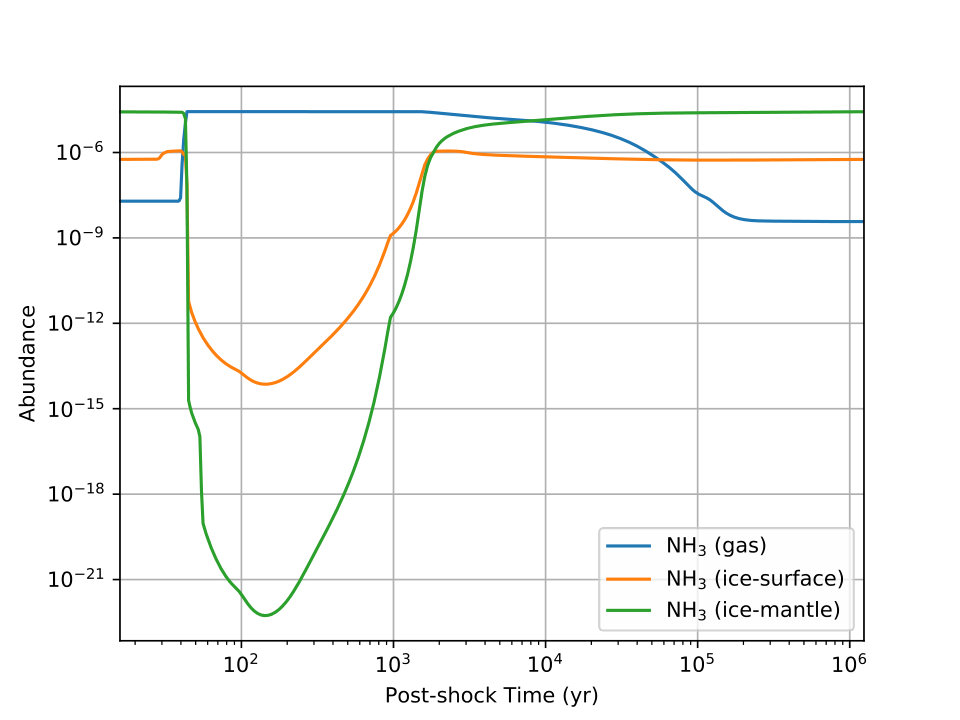 Figure 18
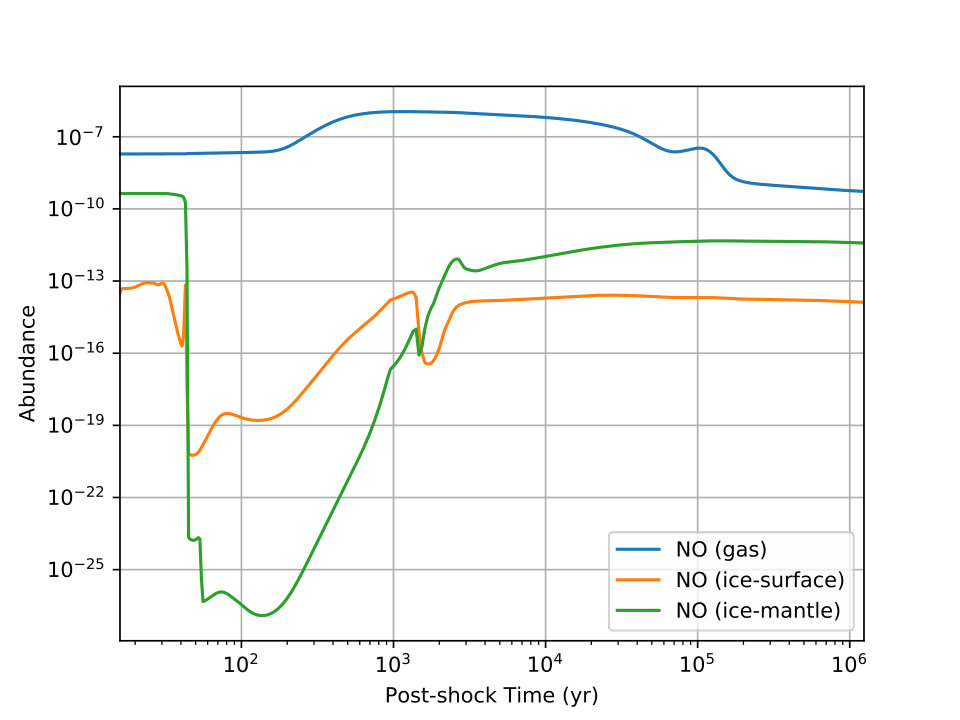 Figure 19
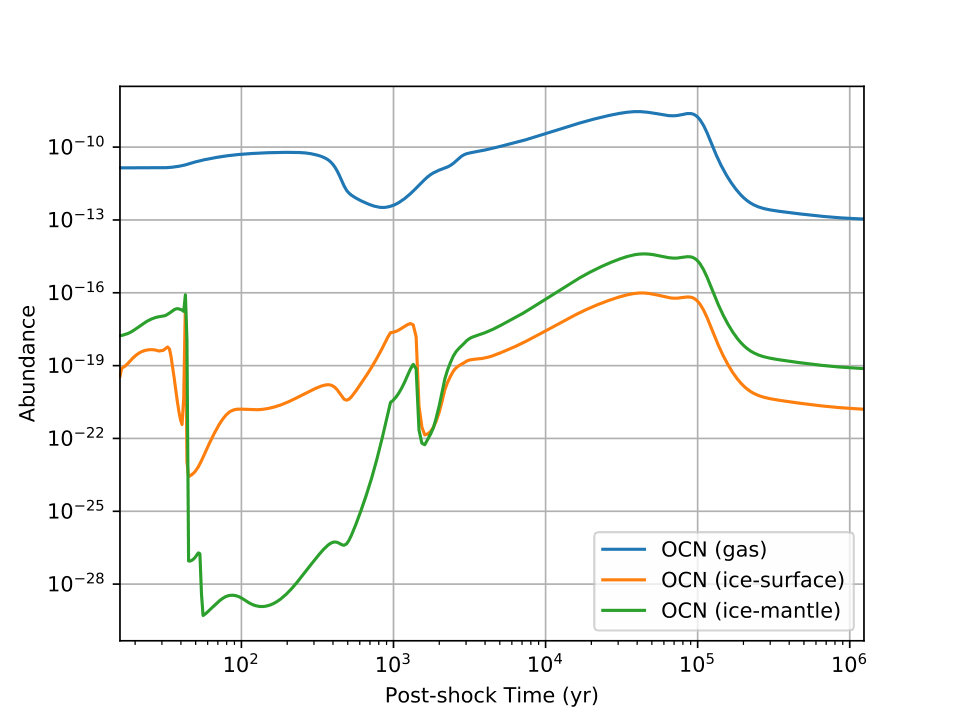 Figure 20
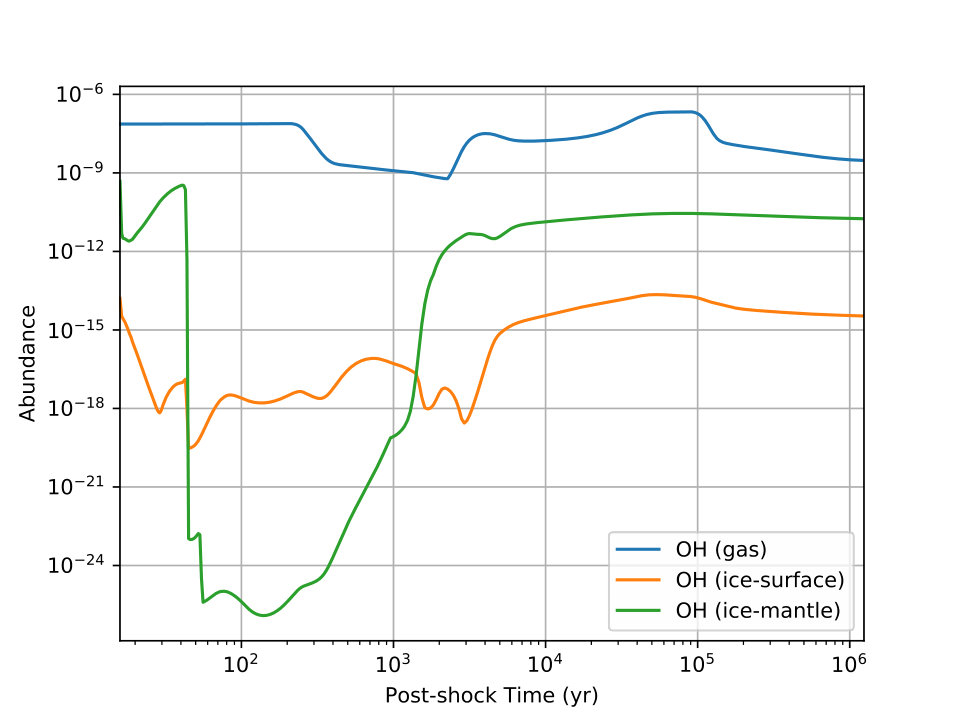 Figure 21
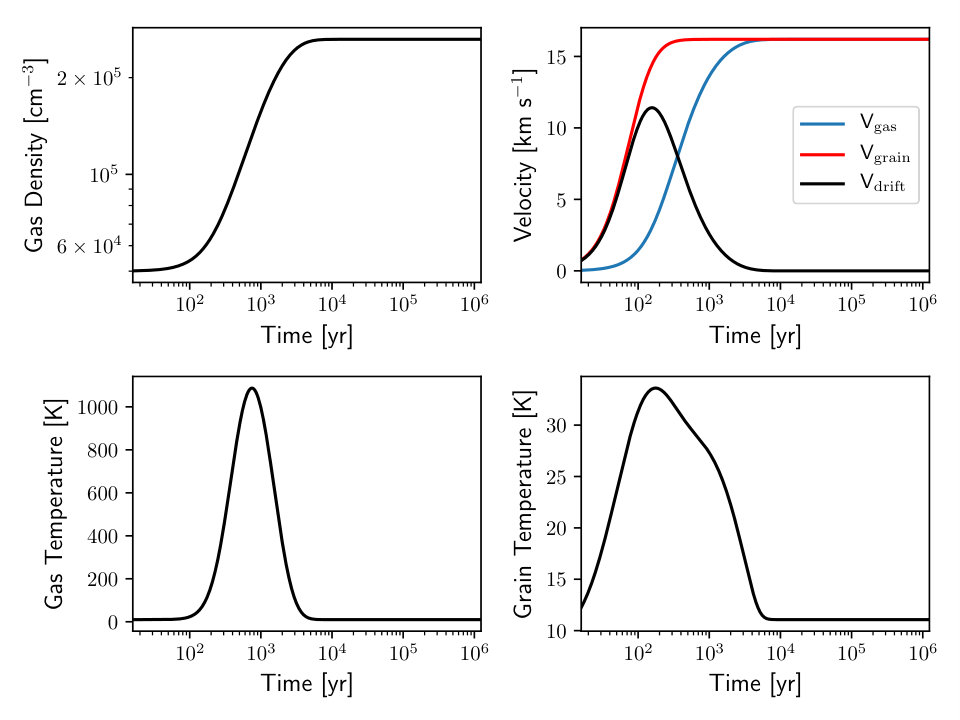 Figure 22
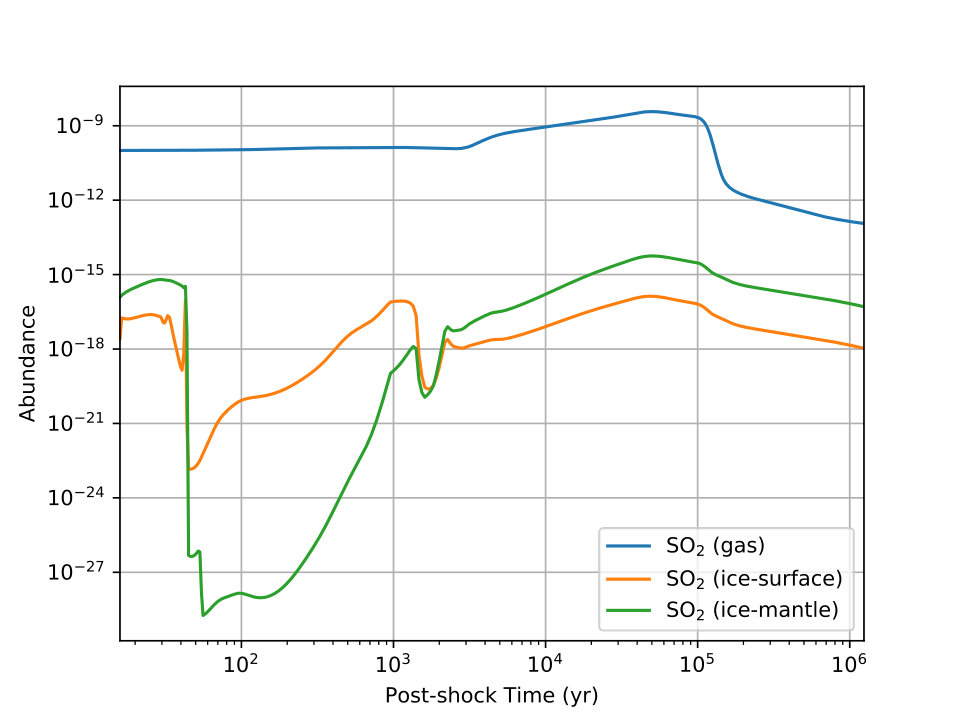 Figure 23
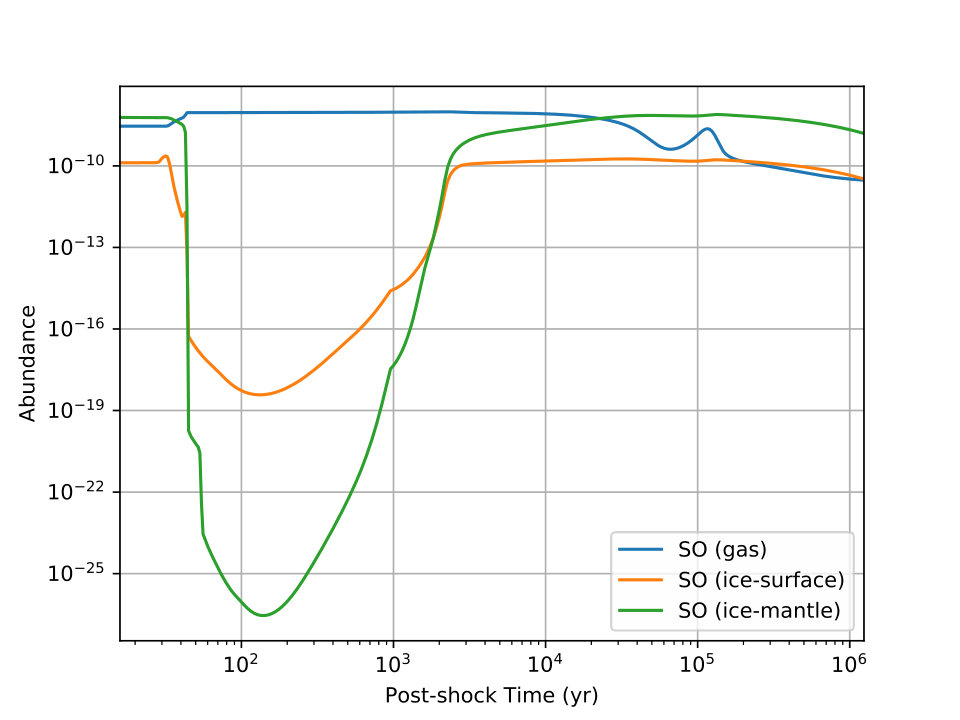 Figure 24
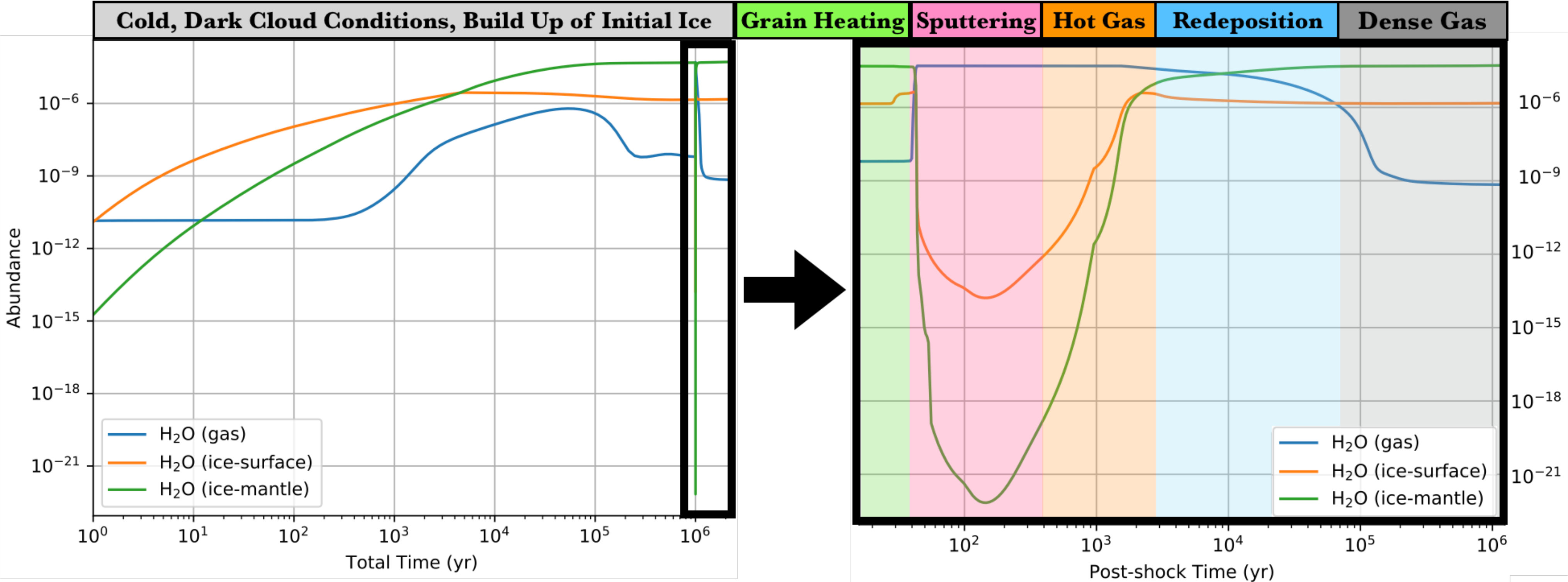 Figure 25
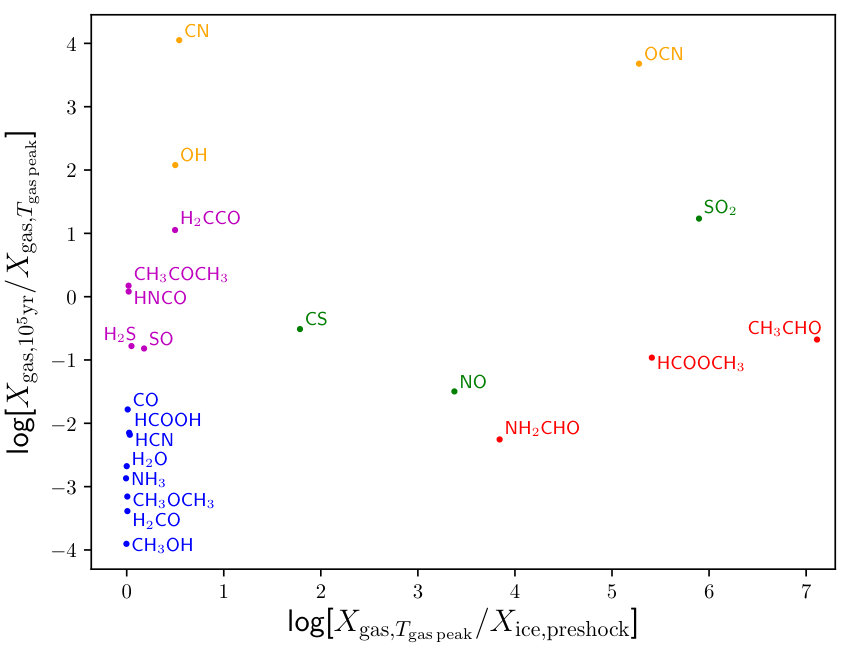 Figure 26
Peer Reviews
No public reviews on file for this paper yet. If you reviewed it on a platform where reviews are public (OpenReview, ICLR, NeurIPS, ICML), you can paste yours below so the community can read it here.
Videos
No videos yet. Explain this paper in a talk, walkthrough, or lecture? Add one.