Weak-U(1) x Strong-U(1) Effective Gauge Field Theories and electron-monopole scattering
Jean Alexandre, Nick E. Mavromatos

TL;DR
This paper develops a gauge-invariant model for matter-monopole scattering, showing how non-perturbative effects lead to velocity-dependent magnetic couplings, supporting collider search strategies for monopoles.
Contribution
It introduces a ${\rm U(1)}_{\rm weak} \times {\rm U(1)}_{\rm strong}$ effective gauge theory that explains monopole interactions with matter and their velocity-dependent couplings, providing formal backing for collider monopole searches.
Findings
Velocity-dependent magnetic charges become perturbative at low monopole velocities.
The model supports the use of effective U(1) theories in collider monopole searches.
Wave-function renormalization effects imply monopoles are composite, not elementary particles.
Abstract
We present a gauge and Lorentz invariant model for the scattering of matter off magnetic poles, which justifies the presence of velocity-dependent magnetic charges as an effective description of either the behaviour of monopoles in scattering with matter or their production from matter particles at colliders. Hence, in such an approach, perturbativity of the magnetic charge is ensured for relative low velocities of monopoles with respect to matter particles. The model employs a effective gauge field theory under which electrons and monopoles (assumed to be fermions) are appropriately charged. The non-perturbative quantum effects of the strongly coupled sector of the theory lead to dressed effective couplings of the monopole/dyon with the electromagnetic photon, due to non-trivial wave-function renormalization effects. For…
Click any figure to enlarge with its caption.
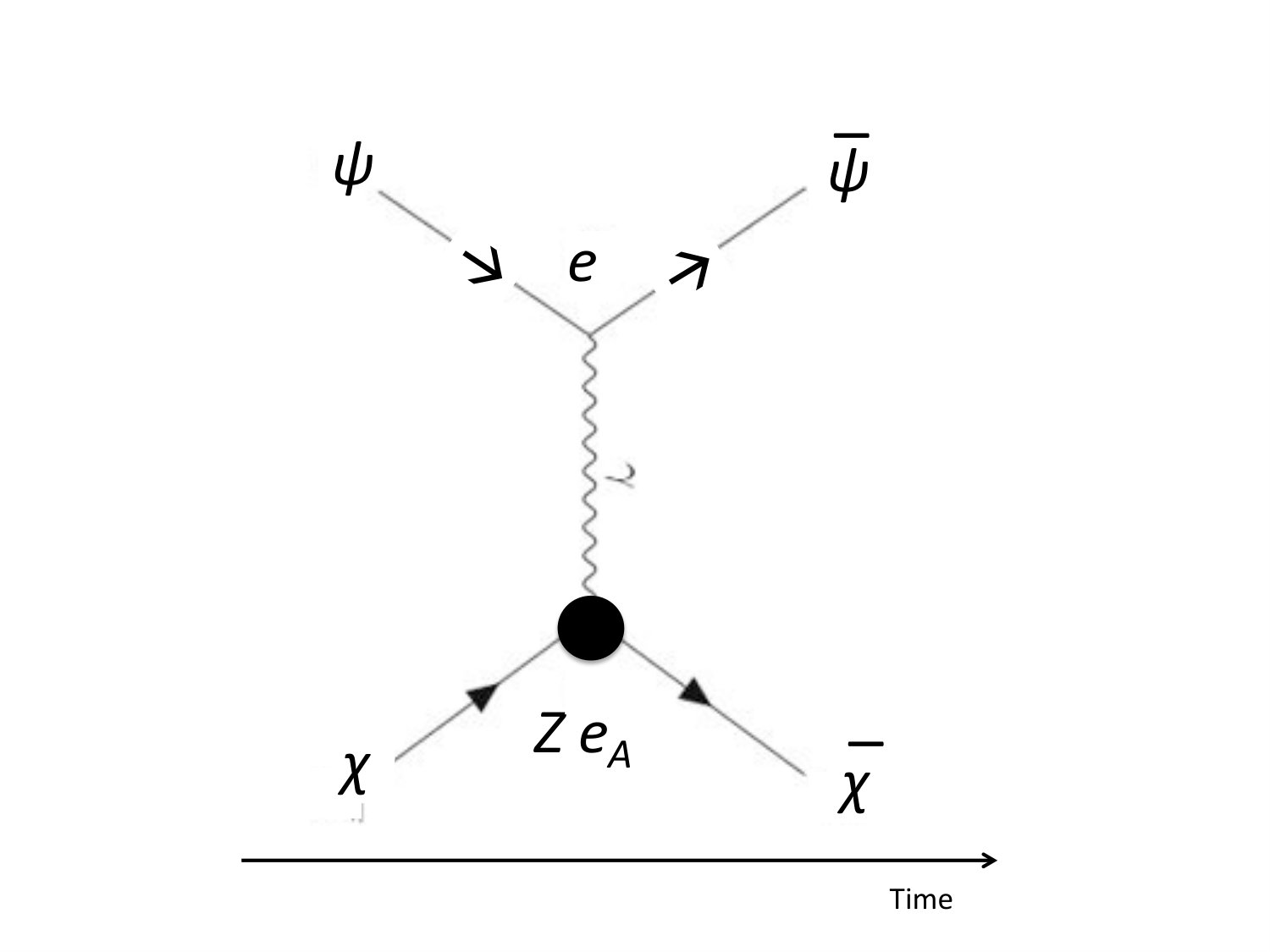 Figure 1
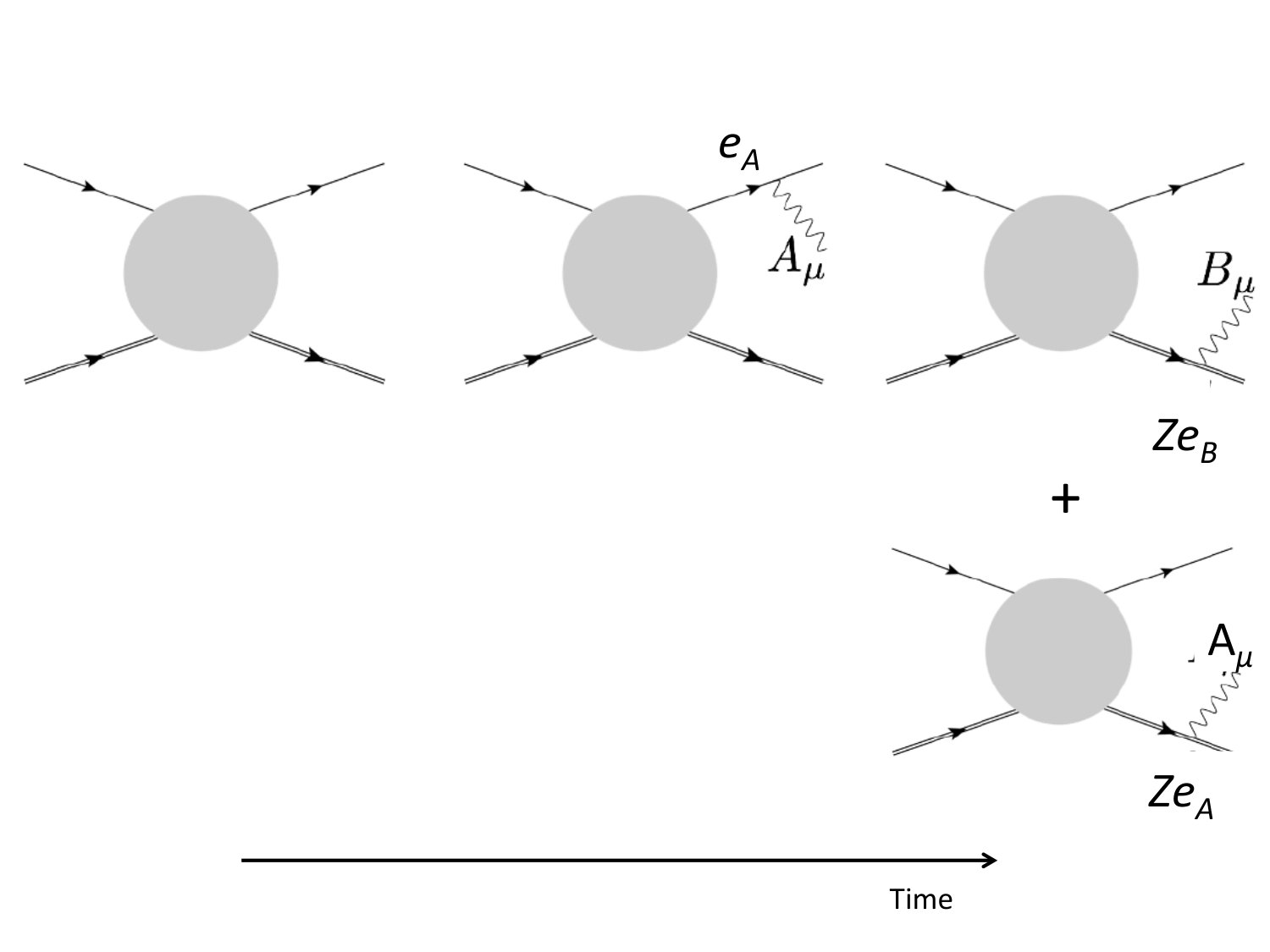 Figure 2
Peer Reviews
No public reviews on file for this paper yet. If you reviewed it on a platform where reviews are public (OpenReview, ICLR, NeurIPS, ICML), you can paste yours below so the community can read it here.
Videos
No videos yet. Explain this paper in a talk, walkthrough, or lecture? Add one.
KCL-PH-TH/2019-46
Weak-U(1) Strong-U(1) Effective Gauge Field Theories and electron-monopole scattering
Jean Alexandre and Nick E. Mavromatos
Theoretical Particle Physics and Cosmology Group, Physics Department, King’s College London, Strand, London WC2R 2LS, UK.
Abstract
We present a gauge and Lorentz invariant model for the scattering of matter off magnetic poles, which justifies the presence of velocity-dependent magnetic charges as an effective description of either the behaviour of monopoles in scattering with matter or their production from matter particles at colliders. Hence, in such an approach, perturbativity of the magnetic charge is ensured for relative low velocities of monopoles with respect to matter particles. The model employs a effective gauge field theory under which electrons and monopoles (assumed to be fermions) are appropriately charged. The non-perturbative quantum effects of the strongly coupled sector of the theory lead to dressed effective couplings of the monopole/dyon with the electromagnetic photon, due to non-trivial wave-function renormalization effects. For slowly-moving monopole/dyons, such effects lead to weak coupling, thus turning the bare non-perturbative magnetic charge, which is large due to the Dirac/Schwinger quantization rule, into a perturbative effective, velocity-(“”)-dependent magnetic coupling. Our work thus offers formal support to previous conjectural studies, employing effective U(1)-electromagnetic gauge field theories for the description of monopole production from Standard Model matter, which are used in contemporary collider searches of such objects. This work necessarily pertains to composite monopoles, as seems to be the case of all known monopoles so far, that are solutions of specific particle physics models. This is a consequence of the fact that the wave-function renormalization of the (slowly-moving) monopole fermion turns out to violate unitarity bounds that would characterise asymptotic elementary particle states.
††preprint: [
I Introduction and Motivation
The quantum theory of structureless magnetic poles as introduced by Dirac Dirac , was characterised by non-local hidden degrees of freedom, the “Dirac string”, whose invisibility in physical processes lead to the charge quantization condition. The presence of the string lead also to Lorentz non-invariance of the configuration and the associated field theory treatments, which manifested itself in various contexts, such as the local formulation of the magnetic charges by Zwanziger Zwanziger:1970hk , which necessitated the presence of a fixed four vector in the associated effective Lagrangian, containing two gauge potentials, associated with electric and magnetic current sources, or the famous Weinberg’s paradox Weinberg , according to which the leading perturbative term in the scattering amplitude between en electric charge and a magnetic pole was not Lorentz invariant. Schwinger’s formulation of the dyon schw , which generalised the magnetic monopole to an object carrying both electric and magnetic charge, restored Lorentz invariance, but at the cost of introducing a non-local Hamiltonian formulation of the dyon field, provided Schwinger generalisation of Dirac’s quantization condition is valid, for the scattering of dyon configurations with charges , , positive integers:
[TABLE]
where denotes the set of integers. In the absence of electric charges, this condition leads to the Dirac quantisation (but the fundamental charge unit is twice that of Dirac Dirac ). It should be remarked that, upon the imposition of (1), any Lorentz non-invariant effect in the effective two-gauge-potential Lagrangian of Zwanziger Zwanziger:1970hk disappears, and this is also associated with an integrability condition of the representation of the Poincaré Lie algebra, that stems from Poincaré invariance into a representation of the finite Poincaré group Zwanziger:1970hk .
Although the initial concept of the monopole as envisaged by Dirac was structureless, subsequently, ‘t Hooft and Polyakov thooft proposed composite monopoles, which were topological soliton solutions of phenomenologically realistic gauge and Lorentz invariant field theories, involving spontaneous (Higgs-like) symmetry breaking. Unlike the Dirac monopole, such solutions were smooth, with no Dirac-string singularities, being characterised by finite energy.111The fact that such solutions were obtained from gauge and Lorentz invariant field theories, made Weinberg’s observation on the non-Lorentz invariant nature of the (perturbative) scattering of electric charges off (generic) magnetic poles, a true paradox. The solution is localised around the origin, where the gauge group is unbroken, but very far from it the gauge group G is broken to a subgroup H, and the ‘t Hooft-Polyakov monopole reduces to the Dirac one. ‘t Hooft considered the Georgi-Glashow model gg involving a Higgs triplet that spontaneously breaks the SU(2) group. The importance of this type of simply connected gauge groups is that they are characterised by a non-trivial homotopy, e.g. for the SU(2) gauge group (SU(2)), with the set of integers. The defines how many times the spatial three-sphere, where the Higgs field lives on, wraps around the internal (gauge) space sphere spanned by the Higgs triplet of the Georgi-Glashow model, which leads to the magnetic charge quantization condition ((1) for the magnetic monopole, i.e. ). Extension of the monopole and dyon solutions to phenomenologically realistic Grand Unified Theories (GUT) with gauge group SU(5), with similar conclusions, were made in dokos . In such models, the monopoles have masses of order of the GUT scale GeV, which implies that inflation (whose scale is believed to be closed to this scale) would have inflated them away, which probably explains why such large GUT scale monopoles have not been discovered in cosmic searches so far patrizii . In superstring theories, with appropriate grand unifying gauge groups, broken by stringy methods (Wilson lines), structures with magnetic charges have been first considered in wen . Moreover, in D-brane-inspired GUT models shafi , the unification scale (and hence the mass of the appropriate magnetic monopoles/dyons) can be lowered significantly, down to GeV, relevant for future collider or cosmic-ray searches.
Unfortunately, unlike the SU(2) or SU(5) or other GUT-like-group monopoles, the gauge group of the standard model (SM) SU(2) UY(1), does not have this simple structure allowing for topological charge quantization, because of the hypercharge UY(1) factor. As a result, after Higgs breaking, the quotient group SU(2) UY(1)/Uem(1) is not characterised by a non-trivial second homotopy, thus monopoles were not expected to exist in the Standard Model. Phenomenologically, such a conclusion would imply that current collider (LHC) monopole searches might be futile.
However, in cho , it was argued that one can look for non-trivial topology in the Higgs field structure. Indeed, in the presence of the UY(1) hypercharge group factor, the Weinberg Salam model is viewed as a gauge model with the (normalised) Higgs doublet field playing the role of the corresponding CP1 field, characterised by a non-trivial homotopy thus allowing in principle for a topological quantization à la ‘t Hooft-Polyakov. This monopole is not characterised by a Dirac string, given that the latter had been argued to be a gauge artifact, provided the UY(1) hypercharge group is endowed with a non-trivial bundle structure cho . Unfortunately, however, the resulting monopole or dyon solutions of cho were characterised by infinite energy.
Recently, though, it was observed that finite energy monopoles of the type proposed in cho can characterise extensions of the Standard Model, with either appropriate non-minimally coupled Higgs and hypercharge sectors emy , or higher-derivative extensions of the hypercharge sector, for instance in a (string-inspired) Born-Infeld configuration aruna . Such monopole/dyon solutions could have masses accessible to the scales of current or future colliders. Other finite-energy structured monopole/dyon solutions with potentially low mass (characterised by a Dirac string, though) can be found in string-inspired models with axion-like structures sarkar .
In view of the above theoretical advances in the field of relatively light monopoles/dyons, the development of effective field theory methods that could allow study of their production at colliders or scattering off SM matter has gained renewed interest. So far, lacking a fundamental theory for the description of the interaction of magnetic poles with standard model matter, like leptons, quarks and photons, only ad hoc phenomenological effective U(1) gauge field theory models are used for collider searches of monopoles monprod .
These models are essentially dual extensions of electrically charged particles of various spins interacting with photons, in which the electric charge in the coupling with the photon is replaced by an effective magnetic charge. Such effective descriptions may contain some truth in them, provided one considers the above-mentioned cases of the composite monopole solutions in (extensions of) the SM. Indeed, as discussed in drukier , one may think of the magnetic monopole charge in such cases as a collective coupling to photons of (electrically) charged constituent degrees of freedom, such as charged -bosons and Higgs fields, which the monopole is composed of. Modeling these constituent fields as quantum harmonic oscillators, the authors of drukier argued that the monopole might be viewed as a coherent superposition of such quantum states, with the result that the collective coupling to photons is , consistent with the lowest non-trivial sector of the charge quantization condition (1).
In this work we shall attempt to construct (strongly coupled) effective gauge field theories for the above type of composite monopoles, by extending non trivially the ideas of Zwanziger Zwanziger:1970hk that were developed for structureless monopoles. When we consider our effective theory sufficiently far away from the monopole centre, the ‘t-Hooft-Polyakov-type monopoles mentioned above resemble the structureless Dirac ones, to a good approximation. Nonetheless, as we shall explain below, the role of compositeness will turn out to be crucial for us, since, as we shall see, when we consider the quantisation of our non-perturbative effective field theory, the resulting wave-function renormalization for the monopole field will not respect the appropriate unitarity bounds for an elementary field, thus making our effective description suitable only for composite fields psbook . We shall be quite generic though in our considerations, and we shall not specify the type of the composite monopole/dyon. For us, it might be one of the known types, mentioned above, or an as yet unknown solution of some beyond the SM theory with or without Dirac string singularities.
Let us commence our study by first reviewing Zwanziger’s approach Zwanziger:1970hk , which we shall make partial use of in this work. The approach employs two related gauge fields, which allows for the construction of a local Lagrangian for the description of dyons, albeit non Lorentz invariant. If one considers electric and magnetic currents, and respectively, then, as shown in Zwanziger:1970hk , the corresponding Maxwell’s equations read
[TABLE]
where denotes the electromagnetic field-strength tensor, with the dual tensor, and the totally antisymmetric Levi-Civita symbol, with , etc. We work throughout this work in a flat Minkowski space-time with metric . For future purposes, we note the axial-vector (pseudovector) nature of the magnetic current in (2).
The general solution of the two Maxwell’s equations, can be expressed in terms of two (related, as we shall see) potentials and and a fixed four vector , as follows Zwanziger:1970hk :
[TABLE]
[TABLE]
where we used a form notation for brevity, with () denoting exterior (interior-dot) product as usual, such that for four vectors , . With these conventions we have, for any antisymmetric second-rank tensor : .
As discussed in Zwanziger:1970hk , one can eliminate the currents from (3) and (4), and express these equations solely in terms of the potentials and . The following representation of the kernel (satisfying ) is used:
[TABLE]
with a real constant, appropriately defined in order to obtain the correct form of the Lorentz force in the classical relativistic particle limit of the dyon field Zwanziger:1970hk . The form (5) implies that, in the point-particle case, the support of is reduced to , for , with the proper time.
The gauge potentials and depend on and on the gauge choice. For convenience, in the approach of ref. Zwanziger:1970hk , the fixed four vector was chosen to be space-like . The gauge potentials are not independent, as they are associated with a single field strength , since the dual is expressed in terms of . Indeed, from (3), by equating the expressions for the field strength between the first equation in (3) and the second equation in (4), yields:
[TABLE]
so that only two photon degrees of freedom propagate on-shell in this local theory, despite the fact that two potentials are needed to ensure a local formulation of the dyon. The constraint (6) would imply that is an axial vector, since this is the case with the magnetic current as well, and in this way one obtains consistent transformations under the (improper) Lorentz group, involving reflexions. This will be essential for our purposes in this work, when we formulate in the next section the effective quantum gauge field theory for the monopole.
We also remark at this point that, upon using the following identity for an antisymmetric second rank tensor :
[TABLE]
with the notation , , etc., it is possible express the electromagnetic tensor and its dual , (3), (4), in terms of the potentials and alone Zwanziger:1970hk :
[TABLE]
in differential form notation.
Taking into account the identity (7), the Lagrangian yielding the field equations (2), in agreement with the solutions (3), (4), reads Zwanziger:1970hk :
[TABLE]
The expression (9) has the advantage of separating, formally at least, the Lorentz-violating effects of the fixed four-vector from the conventional Lorentz-invariant form of the Quantum Electrodynamics (QED) Lagrangian in terms of the photon field. Indeed, the first line of (9) would correspond to the conventional (Lorentz invariant, isotropic) QED terms, independent of the four-vector , while the second line would correspond to the Lorentz-violating effects of the Dirac string in the dyon/monopole case, under the assumption that the Dirac string direction is aligned with that of the fixed space-like four-vector . The presence of the monopole, and its topologically non-trivial nature (the solutions belong to a field-theory sectors of monopole number ) is reflected precisely on the impossibility to deform continuously the vector so as , with denoting matrix transposition. However, by using the form (9), such a limit can be formally taken. Indeed, eq. (6) implies in such a case
[TABLE]
since, in view of (5), we can formally set the -dependent right-hand-side to zero (given that it approaches [math] faster than , since the operator has zero support in the limit ). The Lagrangian (9) then does not contain any Lorentz-symmetry violating term, and involves two gauge fields related by the constraint (10). Our starting point is a similar model, as we explain in the next section.
In terning , it was argued, by means of topological considerations, that any Lorentz-violating effects of a magnetic pole (due to the Dirac string), can be resummed in a non-perturbative way in such a way that the scattering amplitude of an electric charge off a magnetic charge contains all such Lorentz-violating effects in a phase, which thus drops out of physical quantities such as cross sections. Moreover, this phase turns out to be a multiple of , provided the quantization condition (1), and thus in such a case the amplitude is Lorentz invariant. Such a conclusion was reached by means of studying a toy model employing perturbative magnetic charges in a dark sector, using the two potential formalism (9) appropriately in both the visible and dark sectors, and assuming a perturbative small mixing of ordinary photons with dark photons, that leads to perturbative couplings of magnetic charges to ordinary photons in the visible sector. This allows for a perturbative resummation of the “dark” monopole effects, making use of appropriate soft emissions of both gauge fields and in the pertinent Feynman diagrams, describing the scattering of electrons off monopoles, which in turn leads to the aforementioned decoupling of the Lorentz-violating-(Dirac-string-like) effects of the vector from the relevant cross sections.
Before proceeding further, we would like to mention another peculiarity of the dyon, discussed in milton , which will turn out to be of pivotal importance for our purposes here. When considering dyon-dyon scattering within a non-relativistic quantum mechanical framework, as appropriate for small relative velocities of the scattered dyons, Schwinger et al. arrived at the following differential cross section for the particular case of an electric charge scattered off a magnetic one (in units with the speed of light in vacuo is ):
[TABLE]
where is the reduced mass, is the (small) scattering angle of the non relativistic scattering, and is the magnitude of relative velocity of the magnetic charge .
If the magnetic pole is a dyon, carrying also an electric charge , then (11) is extended classically to milton
[TABLE]
However, when consider quantum scattering, of an electron off a dyon, the small-angle formula for the differential cross section contains milton only the first term inside the brackets of (12) and thus coincides with (11). This will turn out to be important for our work, when we define the magnetic charge in section IV using scattering arguments.
One observes that the cross section (11) of electron-magnetic-monopole scattering can be obtained from the Rutherford differential cross section
[TABLE]
upon the replacement , where the effective monopole charge is (we reinstate the units of in this formula for notational clarity, so that the reader connects easily to the existing literature milton )
[TABLE]
Upon invoking electric-magnetic duality, one therefore might expect that defines an effective “velocity-dependent” magnetic charge that describes the behaviour of a magnetic monopole in matter (or equivalently its production from the collision of matter Standard model particles, such as quarks or charged leptons, at colliders), The important thing of having a magnetic coupling (14) is its perturbative nature for small , which can be used in monopole searches at colliders to place monopole mass bounds moedal . In fact, in the case of monopole-antimonopole pair production mechanisms at colliders, one may use such effective magnetic charges but in a Lorentz-invariant manner, using the centre-of-mass velocity monprod
[TABLE]
where is the monopole mass, and is the Mandelstam variable, with , , the momenta of the colliding particles (quarks of photons, in Drell-Yan or photon fusion processes for monopole production, respectively).
It is the purpose of this work to justify the use of an effective magnetic charge (14) in scattering processes involving magnetic poles by constructing a Lorentz and gauge invariant effective field theory of monopoles within a toy model, which we shall describe below. Our model is motivated by the model of Zwanziger Zwanziger:1970hk (9), combined with the findings/arguments of terning that any Lorentz-Violating effects of the monopole will not be present in cross sections (or scattering amplitudes, if the quantization condition (1) is valid). Our results are based on a non-perturbative dressing of the coupling of the monopole to the real photon. At present, it is not technically possible to work directly with the Lagrangian (9), due to complications arising from the presence of the four vector , and the associated constraint (6). However, as our main purpose here is to demonstrate the emergence of non-perturbative dressing of the magnetic coupling, we deviate from the letter of the Zwanziger approach Zwanziger:1970hk , keeping as much as possible of its spirit.
To this end, we consider a model Lagrangian, involving two independent U(1) gauge potentials , with denoting the ordinary photon of the weakly coupled quantum electrodynamics (denoted by U(1)weak). The gauge field , referred to as a ‘dual photon’, belongs to the Lie algebra of a strongly coupled U(1)strong, which is independent of that of electromagnetism. We also ignore any Lorentz violating effects, anticipating the results of terning , based on soft gauge-field resummation, which we discuss briefly at the end of our article. The ordinary standard matter is represented as a spin-1/2 fermion, for simplicity, carrying electric charge only. For concreteness, in this work we assume the matter fermion to be an electron of charge , but extension to any other electrically charged fermion in the Standard Model sector is straightforward. The dyon, on the other hand, is represented as a dual of the ordinary electron, under the aforementioned electric-magnetic duality, which lead to the symmetry of Maxwell’s equations if magnetic poles are present. Hence it is a fermion field itself (spin-1/2), which however carries both electric and magnetic charge, and thus couples to both and fields. Our approach consists in studying coupled Schwinger-Dyson equations, so as to study the effective vertex of the coupling of the dyon to the real photon which, as we shall demonstrate, can be identified with an effective magnetic charge of the form (14), consistently with electric-magnetic duality.
The structure of the article is the following: in the next section II, we present the U(1) U(1)strong - model, discuss its properties and present the relevant set of coupled Schwinger-Dyson (SD) equations. In section III we solve these equations in the non-perturbative regime for the coupling of the dual photon, but in the weak-coupling limit of the ordinary quantum electrodynamics (QED), and obtain expressions for the dressed dual photon propagator and the photon-monopole vertices. Of particular interest to our study is the ordinary-photon-monopole dressed vertex, which turns out to be proportional to the monopole-field wave-function renormalization. The latter is computed in a self-consistent way in the strong coupling limit of the dual U(1) gauge theory, under the assumption that it is approximately momentum independent. The gauge independence of the associated physical observables is also discussed. In the following section IV, we discuss electron (matter)-monopole scattering, compute the relevant cross section and derive the effective velocity-dependent magnetic charge (14) as a dressed coupling of the monopole-real-photon vertex derived previously. An important role in this is played by the appropriate physical interpretation of the dimensional-transmutation scale than enters the expression for the wave-function renormalization within our dimensional-regularisation treatment. For slowly-moving monopoles, the resulting wave-function renormalization will turn out to violate unitarity bounds for elementary particle states. Thus, our effective field theory can only describe composite monopoles. Finally, section V contains our conclusions and outlook. Technical aspects of our analysis are given in several Appendices.
II The Model
We consider a gauge field theory with two independent sectors: (i) the Standard Model, with electric charges only and a corresponding U(1)weak gauge field ; (ii) the monopole/dyon sector, “electrically” charged under (with a bare charge ) and “magnetically” coupled to an independent U(1)strong axial gauge field (with the corresponding bare coupling ). Before proceeding, we should make some important comments regarding the characterisation of the monopole/dyon as ‘electrically charged’ under U(1)weak. From a naive point of view it seems that we are dealing here with a dyon in the sense of Schwinger schw or Zwanzinger Zwanziger:1970hk , whose bare electric charge is . However, as we shall discuss in this work, the non-perturbative dressing of the corresponding monopole-electromagnetic-photon vertex will lead to a non-conventional dressed ‘electric charge’ proportional to the (square of the) ‘magnetic charge’ (cf. (70), (72) in section IV, below), and thus vanishing when . In this sense, this dressed coupling is the induced magnetic charge coupling of the monopole/dyon to the real photons, assumed ad hoc in the phenomenological searches of magnetic monopoles using effective field theories monprod . Our approach provides a microscopic derivation of this effect.
For our purposes it is enough to consider a simplified matter sector, consisting of an electron of (bare) mass , coupled to the Standard Model photon with a perturbative electric charge . We also consider a spin- monopole , of (bare) mass , coupled electrically to and magnetically to the axial dual-photon . Unlike the Zwanziger approach Zwanziger:1970hk , here and are independent U(1) gauge degrees of freedom, which suffices for our main purpose, which is a demonstration of the emergence of an effective velocity-dependent coupling of the monopole to the ordinary photon, after non-perturbative quantum dressing. As already mentioned, the restriction to a fermion monopole makes direct contact with the work of Zwanziger:1970hk and is motivated by the electric-magnetic duality, under which the dual of an electron is such a fermion monopole, although it must be said that consistent formulations of field theories of monopoles with spin one or zero might also exist.
II.1 Lagrangian
The Lagrangian of our model is given by
[TABLE]
where is a vector and is an axial vector (pseudovector). The corresponding field strength tensors are given by
[TABLE]
and the covariant derivatives are:
[TABLE]
where is the coupling the electron to the gauge field and are the couplings of the monopole to and respectively. These covariant derivatives ensure that the Lagrangian is invariant under the gauge transformation
[TABLE]
Few remarks are in order at this point:
- •
The axial nature of the gauge field is required for consistency of the field equations ( see eq. (23) below), under improper Lorentz transformations, including spatial reflexions and reversal in time. As a consequence, the Lagrangian (16) breaks parity, P, and time reversal symmetry, T, but preserves CPT, where C denotes charge conjugation. It should be noted that such an explicit parity and time reversal symmetry breaking, but CPT conservation, is a generic feature of theories with magnetic charges cptmag .
- •
The (bare) electric charges and are both assumed to be perturbative: and ; as already mentioned, we assume here, for concreteness, that the electrically charged matter fermion is an electron of charge . Our analysis can be of course extended trivially to incorporate any other charged matter, in which case the coupling will be replaced by the corresponding electric charge .
- •
The coupling of the spin- monopole to the dual photon should not be identified immediately with the magnetic charge of the monopole/dyon. The latter will be defined appropriately later on, in section IV, via studying the scattering process of dyons with matter fermions in our effective theory, and identifying the relevant cross sections in the non-relativistic limit with the corresponding ones in the quantum-mechanical approach of milton . It is this charge that satisfies the quantization condition (1). As we shall discuss in this work, this quantization condition implies strong coupling for the dual photons , and it is the dressing of the electric vertex of the monopole with the real photon by non-perturbative quantum corrections of the strongly-coupled dual photon that leads in general to non-perturbative electromagnetic couplings of the monopole/dyons to the real photon. This coupling will be identified with the “magnetic charge coupling ” of the monopole to photons, appearing in phenomenological effective field theories used in monopole/matter scattering or production of monopoles at colliders monprod . As we shall discuss in section (IV), this magnetic charge , coincides with the one defined by Dirac Dirac in the expression for the (singular) magnetic field of the monopole. In our context, it will turn out to be a product of with the monopole/dyon wave-function renormalization , , where the factor is due to the (strongly-coupled, non-perturbative) quantum effects associated with the dual photon of the gauge group factor of our effective field theory. This wave-function renormalization factor is itself a non-trivial function of both couplings and , and under the requirement of the validity of the charge quantization (1), will turn out to be proportional to (cf. (70),(72)), thus vanishing in the absence of a magnetic coupling . Moreover, and most importantly, as our effective field theory approach will also indicate, such magnetic charge dressed couplings can become perturbative for slowly moving monopole/dyons, in agreement with the electric-magnetic-duality-inspired conjecture of milton on the emergence of an effective magnetic charge (14) in scattering processes of monopole/dyons with matter. We stress once again that for us, the presence of a bare electric coupling of the monopole associated with the weak electromagnetic gauge group is essential.
After the above necessary remarks, we are now in position to commence our study. Minimising the action with respect to and respectively leads to:
[TABLE]
where the currents are defined here without the charges
[TABLE]
Contracting eqs.(20) with the divergence , one can see that both vector currents are conserved individually
[TABLE]
which is expected, since the gauge functions and are independent. To make the connection with Zwanziger’s approach Zwanziger:1970hk and the (electromagnetic) field strength tensor , which appears in the field equations (2), we require that the gauge fields and satisfy the on-shell constraints
[TABLE]
This leads to a condition identical to eq. (10), since . The fields and in our model will be treated as independent variables in the quantum theory, though, and the constraints (23) will then characterise external photon lines with the relevant fields put on-shell. This will be implied in what follows.
Our main point in doing this is to demonstrate the existence of effective non-perturbatively-dressed couplings of the photons and with the monopole, which depend on a wave-function renormalization factor (cf. (33) below) that vanishes for vanishing monopole velocities (cf. (63) and (68) below), thus becoming perturbative for slowly-moving monopoles. This would allow for the soft-photon resummation arguments of terning to go through, implying that any -dependent term in (9) can be ignored, as it will contribute only to the phase of the electron-monopole scattering amplitude; upon the quantization condition (1), such -dependent terms in the phase would vanish , thus leaving the amplitude itself Lorentz and gauge invariant.
With the above in mind we now proceed to study non perturbatively the model described by (16).
II.2 Properties of the quantum theory
The notations used here are defined in Appendix A, where the properties of the one-particle-irreducible graph generating functional are given.
II.2.1 Current conservation and Furry’s theorem
Because of the two independent conserved currents, there is no mixing between and , and the following inverse propagators vanish
[TABLE]
Also, Furry’s theorem psbook , based on charge conjugation of magnetic currents, states that any graph involving a monopole loop vanishes if it has an odd number of dual photon insertions. This result is also valid for an axial-vector , since it relies on the charge-conjugation properties of the current only. As a consequence, the gauge field propagator is diagonal in gauge fields space and
[TABLE]
since any corresponding graph necessarily contains an odd number of monopole/dual-photon vertices. For the same reason, the dressed electron/dual-photon vertex also vanishes, , which implies that the electron does not couple to a single dual photon. The electron can couple to two dual photons though, through a two-loop process which involves a monopole loop, and it is therefore possible to detect the electromagnetic field generated by via the electron.
II.2.2 Ward identities
It is shown in Appendix B that the usual ward identities hold for fermions: in the limit of vanishing momentum for the gauge fields, one obtains
[TABLE]
We also find
[TABLE]
with denoting the gauge-field momentum, which is consistent with the fact that the electron does not couple to the dual photon. An additional property one finds is that ( cf. (B.9))
[TABLE]
showing that the interactions between the monopole and the gauge fields are dressed with the same quantum corrections. The condition (28) also implies that the U(1)strong non-perturbative quantum corrections due to the dual photons induce a non-perturbative coupling of the monopole/dyon to the electromagnetic photon, which is an important feature for the matter-monopole/dyon scattering or production of monopole/dyons in our framework, as we shall discuss later in section IV.
II.2.3 Schwinger-Dyson equations
Following the usual derivation of Schwinger-Dyson (SD) equations and taking into account the property (24), we show in Appendix C that the fermion self energies satisfy
[TABLE]
where integration over repeated space-time coordinates is understood. Because of the property (25), the gauge propagator is diagonal, and the gauge-field self-energies satisfy
[TABLE]
In the next section we apply these non-perturbative equations to study a specific limit, where the monopole does not propagate.
III Solution of Schwinger-Dyson Equations in the Non-perturbative regime
We consider a regime which is perturbative in the electric charge , but where the coupling is large, . Thus, quantum corrections to the electronic sector are neglected, and the SD equations are used to calculate quantum corrections in the monopole sector only. In what follows, we neglect the momentum dependence of quantum corrections for the calculation of loop integrals. Because of regularisation though, these corrections acquire a scale dependence, which will be interpreted as an external momentum dependence, in graphs describing the relevant scattering process we are interested in.
III.1 Quantum corrections
We derive here the monopole self-energy, as well as the polarisation tensor for the dual photon. In a perturbative approach, these two quantities would be determined independently but, in the non-perturbative framework of SD equations, as appropriate for strong couplings, the corresponding quantum corrections are coupled and depend on one another.
The bare fermion propagators are
[TABLE]
and we consider the approximation where the dressed fermion propagators are
[TABLE]
where is the monopole wave-function renormalisation and is the dressed monopole mass. If we assume that and the dressed vertices and are momentum-independent, the Ward identities given in section (II.2.2) imply
[TABLE]
In a generic covariant gauge parametrised by , the gauge propagators assume the form
[TABLE]
where is the quantum correction responsible for the dual photon transverse polarisation tensor, defined by
[TABLE]
and is also assumed to be momentum independent.
We show in Appendix D that the SD equation for the monopole self-energy, given in section II.2.3, leads to
[TABLE]
and
[TABLE]
where
[TABLE]
and dimensional regularisation is used. The latter introduces the arbitrary (transmutation) mass scale in dimensions . It is interesting to note that the expression for does not involve , although it does correspond to a non-trivial resumation of higher-order loops.
The SD equation for the dual photon self energy gives the same integral as in the perturbative case, except for a factor
[TABLE]
which is a non-perturbative effect.
III.2 Strong coupling limit
The SD equations relevant to our model lead us to the quantum corrections given by eqs. (36), (37)) and (39). In a perturbative context, these corrections vanish in the limit where the coupling constants go to 0, but we are interested here in a non-trivial solution of the SD equations, which does not necessarily reproduce the perturbative results for small couplings. In order to achieve this, we first derive the coupled differential equations obtained from eqs. (36),(37),(39)), which describe the evolution of with the scale . Instead of taking boundary conditions set by the perturbative regime, we explore here the possibility of having as part of the boundary conditions. We stress that it is only in the framework of effective theories that such a non-perturbative regime is relevant, and the renormalisation flows we derive in this section are not related to the usual perturbative ones.
Before proceeding, we remark that the usual perturbative renormalisation procedure, which consists of appropriately absorbing the divergence in (37), introduces the rescaling , where is the bare fermion field. One chooses then such that perturbatively,
[TABLE]
where the dots represent higher orders in . As expected from a consistent unitary description of asymptotic states psbook , given the interpretation of the wave-function renormalization as the probability for finding such states, the unitarity bound is indeed satisfied. In principle this implies
[TABLE]
whereas we are interested in the regime where . The latter regime violates the unitarity bound (41), which is possible in the case of composite monopoles. As mentioned in the introduction, these are the only type of known solutions of field theories of phenomenological interest so far thooft ; dokos ; emy ; aruna . Thus, the effective field theory developed here can only be associated with composite monopoles/dyons, not necessarily restricted to the aforementioned types, but also encompassing new composite monopole/dyon solutions that may exist in beyond the standard model physics.
Equation (37) implies
[TABLE]
with solution
[TABLE]
where is a constant. We then introduce the “running mass” via the definition
[TABLE]
from which the scale , at which , can be defined as the solution of the self consistent equation222 The reader should bear in mind that the scale is gauge independent, which can be guaranteed by requiring an appropriate dependence of the constant and the bare coupling on the gauge parameter .
[TABLE]
This allows to express as
[TABLE]
For the polarisation tensor, we obtain from eq.(39)
[TABLE]
where is a constant. On requiring a finite limit when , we can easily determine , implying, on account of (46), that is actually independent of :
[TABLE]
Notice that , since the gauge parameter is positive.
For the mass correction, we obtain from (36)
[TABLE]
where the effective coupling is given by
[TABLE]
As a consequence,
[TABLE]
where is a constant. Taking into account the definition and the expression (46) for , we obtain the self consistent equation which must be satisfied by the function :
[TABLE]
One can check that there is indeed an appropriate solution for : the latter equation for is of the form
[TABLE]
where , is a positive constant and is a constant of integration. It can be easily seen graphically that this equation has always a finite and positive solution, which ensures the consistency of the present derivation.
We note that increases with since, from eq.(52),
[TABLE]
Also, one can see that for (and )
[TABLE]
implying that increases with :
[TABLE]
The above analysis has shown that it was possible to find a consistent solution of the SD equations, which allowed for the non-perturbative limit to be taken. Such a solution is parametrised by two scales with dimensions of mass, and . We also note that as , the renormalised mass , since and goes to the finite value . As a consequence, the corrections to the mass of the monopole/dyon are negative when , since (cf. (38)) . This feature is specific to the non-perturbative regime we consider here, and we emphasise again that it does not reduce to the usual perturbative solution when the coupling constant becomes small: it represents instead a disconnected configuration of quantum fluctuations in the model.
III.3 Gauge dependence
The polarisation given in the expression (48) depends on , which is allowed by the non-perturbative resummation provided by the SD equations. Unfortunately this has an effect on the gauge-dependence of physical observables. Indeed, let us consider the scalar potential seen by a dual charge , and generated by a point-like dual charge at rest, assumed to correspond to a magnetic current , which in Fourier components reads . We have
[TABLE]
where is the dual photon propagator (III.1). For the static modes , this leads to the Coulomb potential
[TABLE]
which depends on the gauge through .
A similar situation characterises dynamically generated masses in non perturbative gauge theories am . Nevertheless, it is possible that, through appropriate resummation of special classes of appropriate Feynman graphs (“pinched technique” pt ), one recovers the gauge-independent value of physical quantities, such as masses, or in our case dressed charges, and such values seem to correspond to the value one would obtain in the truncated SD treatment in Feynman gauge . In what follows, we therefore make this gauge choice, and we identify the effective dual coupling
[TABLE]
from which the flow for the running mass given in eq.(54) reads
[TABLE]
an will be used in the discussion below.
IV Electron-monopole scattering and an effective velocity-dependent magnetic charge for (composite) monopoles
As we have discussed in the introduction, one may obtain the differential cross section for non-relativistic electron-monopole scattering at small angles using quantum mechanical treatment, leading to the expression (11), which scales with the relative momentum of the incident matter particle (in the frame where the heavy monopole is initially at rest) as instead of the traditional of the conventional Ruhterford scattering differential cross section (13) between charged matter particles. As already mentioned previously, upon invoking electric-magnetic duality, one may obtain the Rutherford scattering formula from (11), by replacing the monopole magnetic coupling with an effective velocity()-dependent magnetic coupling, (14), (15). In what follows, we propose an origin of such a coupling based on the non-perturbative results derived in the previous section.
IV.1 Perturbative Effective Magnetic charge for slowly-moving (composite) monopoles
To this end, we consider slowly moving monopoles, relative to the incident matter particle, assumed for concreteness to be an electron of charge . The one-photon exchange scattering Feynman graph of fig. 1, between the fermions (electron) and (monopole fermion), will prove sufficient for this purpose, as a result of the perturbative nature of both couplings, the electron charge , but also the coupling of the monopole to the real photon. The latter is determined by the appropriate dressed vertex , (33), with the wave function to be determined from (46), and as we shall see below it can become perturbative, when the scale approaches , for which , with . We shall also be able to express the magnetic charge of the monopole, which is subjected to the quantization condition (1), in terms of .
We first notice that, from the differential equation (60), one can expand to first order in to find
[TABLE]
where
[TABLE]
From the expression (46) for we obtain then, to first order in ,
[TABLE]
where
[TABLE]
with given by (59).
The Feynman diagram of fig. 1 makes sense if the dressed coupling of the monopole to the electromagnetic photon is small, which necessitates in (63), and can be achieved for . Then the scattering process resembles that of two ordinary charged particles in (perturbative) electrodynamics with charges and , both small. The result for the corresponding differential cross section can be borrowed from standard quantum electrodynamics then. Since our interest is to compare this result with the differential cross section (11) of the non relativistic scattering of an electron off a monopole with magnetic charge , discussed in milton , we consider here the appropriate limit, of a low relative velocity between the electron and the monopole. The result from the differential cross section at small angles , in a frame where the monopole is initially at rest, reads then (in appropriate units in which the fine structure constant , as per the conventions of milton ) qedbook :
[TABLE]
where is the reduced mass of the electron-monopole system.
Comparing (65) with (11), which as we discussed in section I describes quantum scattering of an electron off a dyon at small angles, we then observe that one can define an effective magnetic charge, describing the coupling of the monopole to the photon, by (cf. (63))
[TABLE]
with the scale being identified with a proper (Lorentz invariant) centre-of-mass momentum scale, and is identified with a mass scale through the self-consistent relation (45), where we choose the constant of integration such that
[TABLE]
Consistently with the effective field theory approach for monopole-antimonopole pair production monprod , we may take the mass scale to represent the monopole (rest) mass, and in this way one can reproduce the formula (11) of milton , and arrive at an effective “velocity-dependent” magnetic charge (14)333The reader should bear in mind the Lorentz-invariant nature of the scale (68), characteristic of the effective field theory monprod , which was not evident in the initial non-relativistic quantum mechanical approach to dyon-dyon scattering of milton .
[TABLE]
with the relevant Mandelstam variable (with () the incoming (outgoing) four momenta in the scattering process of fig. 1 (or the corresponding fused momenta in the case of production). In such an identification, denotes the exchanged photon momentum scale (see fig. (1)). In the last approximate equality of (68), we considered slowly moving monopoles, for which (since their kinetic energy is small), and this case corresponds to where perturbativity applies, and
[TABLE]
with given by (64). In the duality-compatible approach of milton , , with the magnetic charge that in the monopole case satisfies the appropriate quantization rule (1). Hence, it is natural to identify in the context of our effective field theory
[TABLE]
Schwinger’s quantization condition for the Monopole (1) would then require
[TABLE]
with the set of integers, and the fine structure constant of electromagnetism.
The value of depends on several parameters, and the quantization condition (71) is not compatible with all of them. For bare couplings , we note that we also have and we can see, for instance, that the case , would be inconsistent with (71). On the other hand, for , we have from (64),
[TABLE]
which, together with eq. (71), implies a quantization condition for the (gauge independent) dressed dual photon coupling (59). In this sense, we understand why the dual photon coupling is proportional to the magnetic charge of the monopole, and how our effective theory (9) describes the scattering of the latter with charged matter or its production from charged matter milton .
At this point we make some important remarks, which relate to the fact that the above effective field theory approach can only describe composite monopoles, like the ones that exist currently as topological soliton solutions of several field theories of phenomenological relevance thooft ; dokos ; emy ; aruna , as discussed in the introduction of the article. This becomes clear by noticing that, because of the presence of the transmutation scale , the wave function renormalization (63) for the monopole fermion can, and in fact it does for , become smaller than unity. This violates the unitarity bound psbook that requires the wave function renormalization to be larger than one (cf. (41)), should the monopole be an elementary particle asymptotic state. However, such a bound can be evaded for composite states, either of the type discussed in the literature so far, or new, yet unknown structured solutions to be discovered in theories beyond the standard model.
We stress that in our approach, the arguments of drukier on the strong suppression of the cross section for the collider production of such (composite) monopole-antimonopole pairs by form factors of order {\mathcal{O}}\Big{(}e^{-\frac{4}{\alpha}}\Big{)}\simeq 10^{-238}, are not valid for slowly moving monopoles; effectively, such factors would be replaced by terms of order {\mathcal{O}}\Big{(}e^{-\frac{4}{\alpha}\,\frac{k-k_{0}}{k_{0}}}\Big{)} in our case, which would be of for slowly moving heavy monopoles (), with masses much larger than the SM quarks or leptons, whose collisions can lead to the monopole production. At present, such remarks of course remain speculations, as we do not have a complete microscopic understanding on the strong dual interactions involved in our effective model.
IV.2 Soft gauge-field-emission resummation and disappearance of Dirac-String effects from cross sections: a brief review of the arguments of terning
Before closing the discussion, we would like to review briefly the arguments of terning on the decoupling of any Lorentz-violating Dirac-string effects from the physical cross sections (or even the scattering amplitudes if the quantization condition (1) is valid). These arguments were based on a perturbative resummation of soft photons in the toy model for the monopole used in that work, where the magnetic charge was perturbative. This was achieved in terning by assuming dark sector monopoles, and weak coupling of the monopole sector with the visible sector. In our case, as discussed above, both the magnetic and electric charge couplings of the monopole to photon and dual photon are perturbative for slowly moving monopoles, due to the wave-function renormalization screening effects on the effective magnetic charge (33), (69), (see also (70)-(72)).
For such perturbative couplings, the leading soft gauge field (photons and dual photons) emissions that affect generic scattering processes of electrons off fermion-monopoles in our effective gauge theory are depicted in figure 2. The analysis has been performed in terning and in previous relevant literature referenced there, and we shall not repeat it here. We only point out a trivial modification in our case as compared to those works, namely the addition of the soft-(dual-photon)- emission graph, since, in contrast to the standard Zwanziger approach Zwanziger:1970hk , here the fields and are treated as independent gauge fields, not related through (6), except when one considers classical solutions (10). Such solutions are the on-shell solutions represented by the external gauge field wavy lines in the graphs, and will combine the and photon emission into one; this is indicated with the pertinent “+” sign in fig. (2).
The presence of a classical solution, satisfying the constraint (10) implies a classical Lagrangian (9) which has Chern-Simons-like topological terms mixing the and fields, which depend on the Lorentz-Violating Dirac-string effects ( fixed four-vector). However, upon resumming soft photon and dual photon emissions, such effects exponentiate in the pertinent scattering amplitude, in such a way that they appear only in the phases of the amplitude, as demonstrated in terning , whose arguments apply here as a consequence of our perturbative magnetic charge couplings. Upon the quantization condition (1), which should be respected by the non perturbative dressing, as discussed above, the effects disappear also from the phase of the scattering amplitude. This completes our discussion on the self consistency of our perturbative effective gauge field theory approach to the (slow) monopole-matter scattering or (slow)monopole-antimonopole-pair-production-from-matter processes, which have been conjectured in the previous literature and used in monopole searches at colliders moedal ; monprod
V Conclusions and Outlook
In this work we have considered a rather toy model of magnetically-charged spin- “dyons” interacting with ordinary electrically-charged matter fermions (electrons for concreteness). We have considered an effective gauge field theory , where the weak represents electromagnetism, whilst the strong effectively describes interactions that would lead to the presence of magnetic poles in then theory. The presence of two potentials was adopted by Zwanziger Zwanziger:1970hk in an attempt to describe the effective theory of Dirac monopoles in a local fashion, avoiding the use of infinite strings. However, the theory lacked Lorentz invariance. In a recent work terning , employing a toy model of perturbative magnetic charge, it was argued that all such string effects can be resummed to a physically-irrelevant phase of the scattering amplitude between monopoles and matter, and in case the charge quantization condition applies, such phases vanish, so the amplitude itself was Lorentz (and gauge) invariant. In realistic monopole models, perturbative magnetic charges have been argued by Schwinger, Milton and collaborators milton to characterise the interaction of monopoles with matter as a result of electric magnetic duality. However, such arguments were purely qualitative, not supported by any detailed modeling. They were based on quantum mechanical scattering of electrons off magnetic poles, whose cross sections had a form that, in order to be obtained from Rutherford cross section of normal charged particles by means of imposing electromagnetic duality, one should impose that the magnetic charge was effectively proportional to the monopole velocity, hence perturbative for slowly moving monopoles.
Motivated by these results, we have discussed in this work a toy model for describing the interaction of magnetic monopoles/dyons with matter, where quantum fluctuation effects of the magnetic charge are represented by the presence of a second independent strong U(1) gauge potential. However, we have ignored any Lorentz (or gauge) violation effects, anticipating the results of terning . Our analysis has lead to a consistent result, namely, the emergence of an effective magnetic coupling of the monopole/dyon to the real photons, depending on the monopole velocity, in the spirit conjectured in milton . This result was obtained as a mathematically-self-consistent solution of the appropriate Schwinger Dyson equations. The role of the velocity-dependent factor that appeared in the work of milton is played here by the transmutation mass scale that appears in the Schwinger-Dyson solution for the monopole wave-function renormalization, which enters the expression of the monopole-photon vertex. The role of the non-perturbative corrections of the dual U(1)strong is crucial to this effect. However, we stress that in the case of slowly-moving monopoles/dyons, the wave-function renormalization violates unitarity bounds set for elementary particle asymptotic states (41), thus necessitating the application of our effective U(1) gauge field theory only to composite monopoles/dyons, of generic type though, not necessarily restricted to the known solutions existing in the literature.
Once such a perturbative monopole-photon coupling is established (for slowly moving, heavy (compared to the matter-fermion mass) monopoles), then the arguments of terning are in operation, and one may assume that any Lorentz non-invariant string effects that might appear in the theory of Zwanziger:1970hk affect only the phases of the respective scattering amplitudes, and they actually disappear once the charge quantization condition (1) is imposed. In our approach we have explained how such a quantization arises naturally for the dual photon coupling. Although in the theory of Zwanziger:1970hk such string effects implied that the dual photon is not independent of the real photon, and that on-shell there are only two propagating degrees of freedom, in our fully quantum theory, the dual photon quantum fluctuations have been assumed independent of electromagnetism. Nonetheless, one may impose the monopole solution of Zwanziger as a consistent Lorentz non invariant solution to the respective equations of motion, thus making contact with the original Dirac monopole case.
We should stress though that the emergence of the strong U(1) interactions from microscopic considerations in concrete composite monopole models existing in the current literature thooft ; dokos ; emy ; aruna is still not understood. It might be possible that the very existence of a magnetic pole implies automatically such interactions, as an effective way of describing the monopole quantum fluctuations.444In this latter respect, we mention that an interesting research direction would be to attempt and find connections, if any, of the current approach with the manifestly dual quantum field theory proposal for electric and magnetic charges of marchetti , in which the Dirac string (and thus the associated fixed vector in the Zwanziger approach Zwanziger:1970hk ) becomes dynamical. Nonetheless, our effective field theory description of monopole-matter interactions developed in the current work offers support to the relativistic effective gauge field theory approach of monprod , used so far in collider searches of magnetically charged particles moedal . Formulating our theory on the lattice might then be a way forward for obtaining results in the non-perturbative regime of the effective magnetic couplings, when the monopoles are not slowly moving, or appear as virtual particles in quantum loops of, say, light-by-light scattering processes, of interest to collider searches for monopoles heavier than the respective collider production threshold. In the latter case, an enhanced light-by-light scattering cross section, as compared to the Standard-Model case, has been claimed in ref. ginzburg , as an indirect way of detecting the existence of monopoles. In that work, analytical estimates for the corresponding cross sections have been made on assuming ad hoc photon-energy dependent monopole-photon couplings of the form (66),(68), which are weak for sufficiently low photon energies compared to the monopole mass. Our effective gauge field theory not only provides justification for such assumptions, as we discussed above, but, by being placed on the lattice, can also lead, in principle, to an extension of the considerations of ginzburg to higher photon energies and lower monopole masses, thus enhancing the appropriate parameter space region in future collider searches. Such issues constitute interesting research material for future work.
Acknowledgements
It is a pleasure to acknowledge discussions with fellow members of the MoEDAL Collaboration. The work of JA and NEM is supported in part by the UK Science and Technology Facilities research Council (STFC) under the research grant ST/P000258/1. NEM also acknowledges a scientific associateship (“Doctor Vinculado”) at IFIC-CSIC-Valencia University, Valencia, Spain.
Appendix A One-Particle-Irreducible (1PI) effective action
The partition function is
[TABLE]
where denotes collectively the different degrees of freedom with sources respectively, such that the source term is
[TABLE]
The connected-graphs generating functional is
[TABLE]
whose functional derivatives define the background fields
[TABLE]
with
[TABLE]
The one-particle-irreducible(1PI)-graphs generating functional, the effective action , is a functional of the background fields and is obtained via a Legendre transform of , after inverting the relations (A.4) and treating the sources as functionals of the background fields
[TABLE]
has the following functional derivatives
[TABLE]
The bare propagators are defined by
[TABLE]
where the subscript 0 denotes vanishing fields. As explained in section II.2.1, the dressed propagators are diagonal, both for fermions and gauge fields, and are defined by
[TABLE]
The dressed vertices are
[TABLE]
From the first functional derivatives (A.7), one can obtain the following identities, relating the second functional derivatives of and
[TABLE]
where the inverse has to be read as the element of the inverse matrix.
Appendix B Ward identities
The gauge transformation (19) leaves the action invariant and modifies the source terms, such that the partition function (A.1) is modified as
[TABLE]
Integration by parts lead to
[TABLE]
and gauge invariance for independent functions and leads to
[TABLE]
Together with the identities given in Appendix A, we obtain then
[TABLE]
On account of the property (24), taking the functional derivatives of eqs.(B.4) with respect to and , followed by setting the background fields to 0, leads to
[TABLE]
For the same reason, on taking the functional derivatives of eqs.(B.4) with respect to and , and then setting the background fields to 0, leads to
[TABLE]
In Fourier components, we have
[TABLE]
where is an incoming fermion momentum and is the gauge field momentum. In the limit , we then obtain the Ward identities
[TABLE]
and the additional properties
[TABLE]
Appendix C Schwinger-Dyson (SD) equations
The SD equation for the -self energy is obtained by noting that the integral of the following functional derivative vanishes
[TABLE]
such that
[TABLE]
Using the identities in Appendix A, the latter equation can also be written
[TABLE]
and a functional derivative with respect to , followed by setting the fields to 0, leads to
[TABLE]
We have
[TABLE]
and
[TABLE]
where the missing terms vanish when fields are set to 0, and the integral over spacetime coordinates is understood. The next step consists in noting that
[TABLE]
where since the gauge propagator is diagonal. We finally obtain
[TABLE]
where the integration over space time coordinates in understood.
The SD equation for the -fermion self-energy is obtained by noting that
[TABLE]
such that
[TABLE]
and the same steps as the ones described above lead to
[TABLE]
The SD equation for the -self energy is obtained by noting that
[TABLE]
such that
[TABLE]
A functional derivative with respect to leads to
[TABLE]
and for vanishing fields we have
[TABLE]
Finally we obtain
[TABLE]
The SD equation for the -self energy is obtained by noting that
[TABLE]
such that
[TABLE]
and similar steps as the ones described above lead to
[TABLE]
Appendix D Calculation of quantum corrections
Within the approximations described in Section III, the SD equation for the monopole self energy is
[TABLE]
and the SD equation for the dual photon polarisation tensor is
[TABLE]
where the propagators and vertices are given in section III.
For the monopole self energy (D), the mass corrections is obtained by setting the external momentum to 0
[TABLE]
and the wave function renormalisation is obtained by taking a derivative with respect to the external momentum component , which is then set to 0
[TABLE]
In the latter expressions dimensional regularisation is used, in dimension and with the arbitrary mass scale . In both cases the simplification of the integrand is straightforward, and we obtain for the mass corrections
[TABLE]
For the monopole wave function renormalisation, we observe that both and cancel in the integrand (both in the diverging and finite parts), such that the corrections arising from are identical to those arising from , and we obtain
[TABLE]
For the dual photon polarisation, the integral in eq.(D.2) is the same as in the usual perturbative case, except for an overall factor , which is a non-perturbative feature:
[TABLE]
The reference list from the paper itself. Each links out to its DOI / PubMed record.
- 1(1) P. A. M. Dirac, Phys. Rev. 74 , 817 (1948). doi:10.1103/Phys Rev.74.817
- 2(2) D. Zwanziger, Phys. Rev. D 3 , 880 (1971). doi:10.1103/Phys Rev D.3.880
- 3(3) S. Weinberg, Phys. Rev. 138 (1965) B 988. doi:10.1103/Phys Rev.138.B 988;
- 4(4) J. S. Schwinger, Phys. Rev. 144 , 1087 (1966). doi:10.1103/Phys Rev.144.1087 Phys. Rev. 173 , 1536 (1968). doi:10.1103/Phys Rev.173.1536; Phys. Rev. D 12 , 3105 (1975). doi:10.1103/Phys Rev D.12.3105
- 5(5) G. ’t Hooft, Nucl. Phys. B 79 (1974) 276. doi:10.1016/0550-3213(74)90486-6 A. M. Polyakov, JETP Lett. 20 , 194 (1974) [Pisma Zh. Eksp. Teor. Fiz. 20 , 430 (1974)].
- 6(6) H. Georgi and S. L. Glashow, Phys. Rev. Lett. 32 (1974) 438. doi:10.1103/Phys Rev Lett.32.438
- 7(7) C. P. Dokos and T. N. Tomaras, Phys. Rev. D 21 , 2940 (1980). doi:10.1103/Phys Rev D.21.2940
- 8(8) L. Patrizii and M. Spurio, “Status of Searches for Magnetic Monopoles,” Ann. Rev. Nucl. Part. Sci. 65 , 279 (2015) doi:10.1146/annurev-nucl-102014-022137 [ar Xiv:1510.07125 [hep-ex]], and references therein; V. A. Mitsou, “The quest for magnetic monopoles ? past, present and future,” Po S CORFU 2017 , 188 (2018). doi:10.22323/1.318.0188, and references therein.