Invariance in ecological pattern
Steven A. Frank, Jordi Bascompte

TL;DR
This paper introduces an invariance-based framework to explain ecological patterns, showing how simple distributions like the log series and lognormal emerge from fundamental symmetry principles in ecological processes.
Contribution
It applies the concept of invariance from physics to ecology, providing a unified, fundamental explanation for common ecological abundance patterns.
Findings
Log series pattern arises from invariance to additive or multiplicative abundance transformations.
Lognormal pattern results from rotational invariance in species growth processes.
Invariance offers a simpler derivation of maximum entropy and neutral theory results.
Abstract
The abundance of different species in a community often follows the log series distribution. Other ecological patterns also have simple forms. Why does the complexity and variability of ecological systems reduce to such simplicity? Common answers include maximum entropy, neutrality, and convergent outcome from different underlying biological processes. This article proposes a more general answer based on the concept of invariance, the property by which a pattern remains the same after transformation. Invariance has a long tradition in physics. For example, general relativity emphasizes the need for the equations describing the laws of physics to have the same form in all frames of reference. By bringing this unifying invariance approach into ecology, we show that the log series pattern dominates when the consequences of processes acting on abundance are invariant to the addition or…
Click any figure to enlarge with its caption.
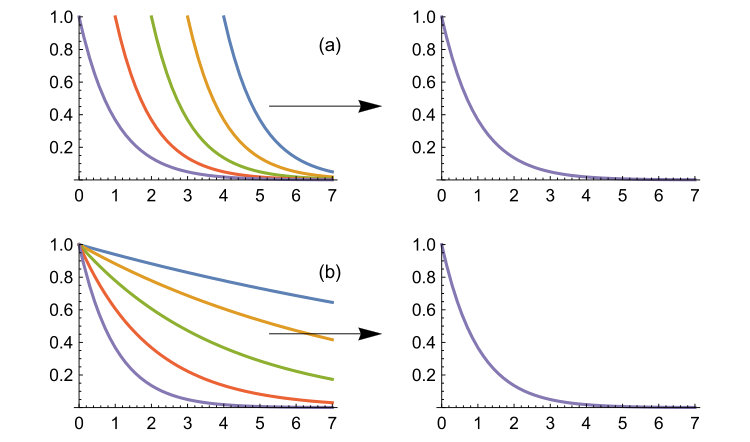 Figure 1
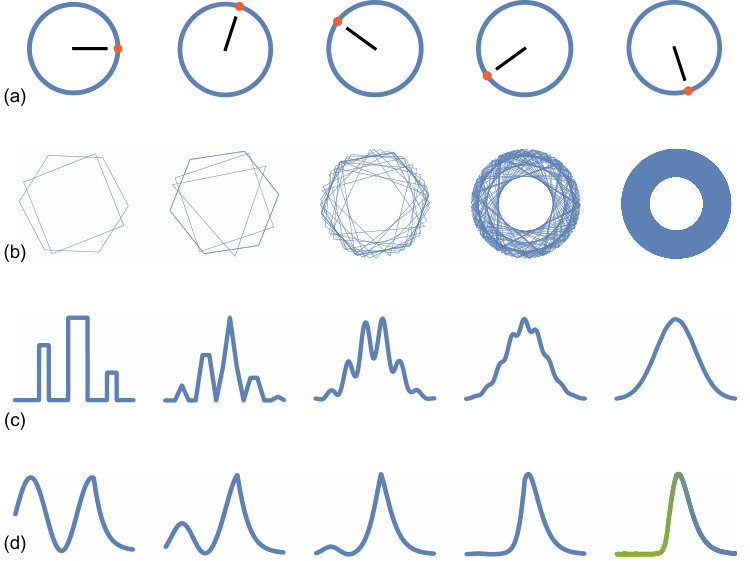 Figure 2
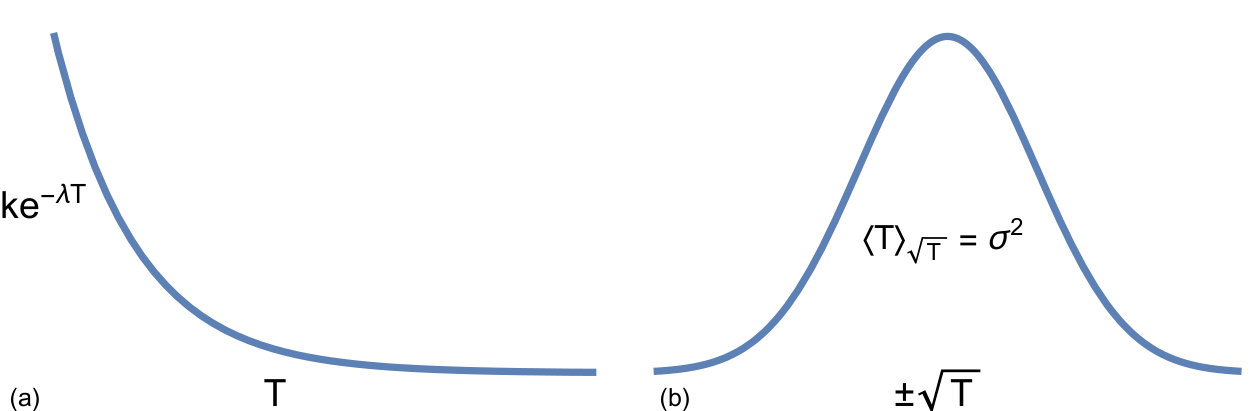 Figure 3
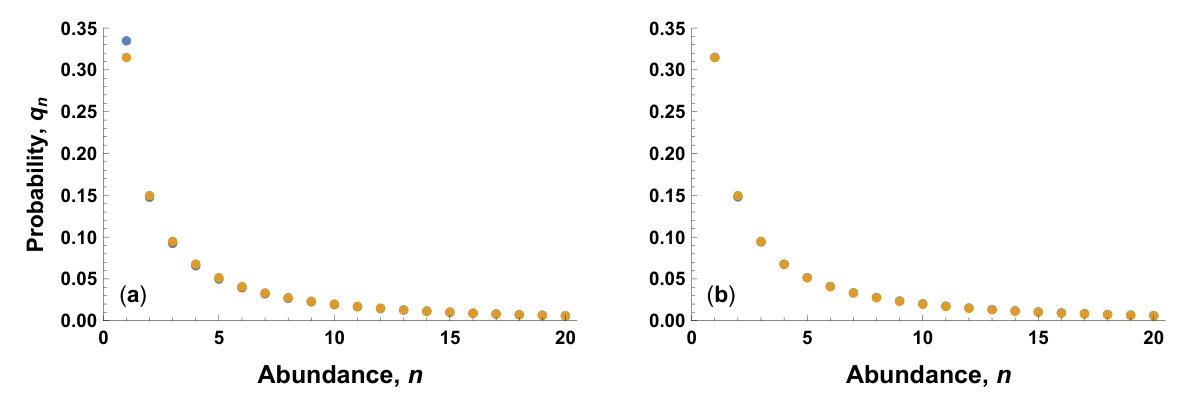 Figure 4
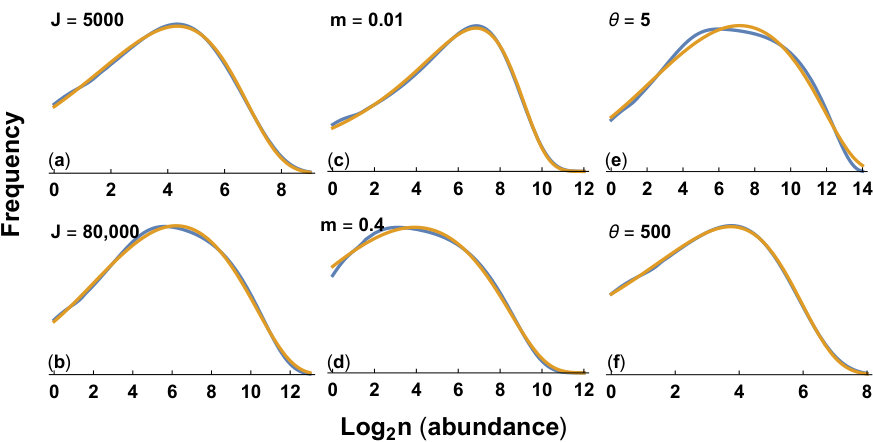 Figure 5
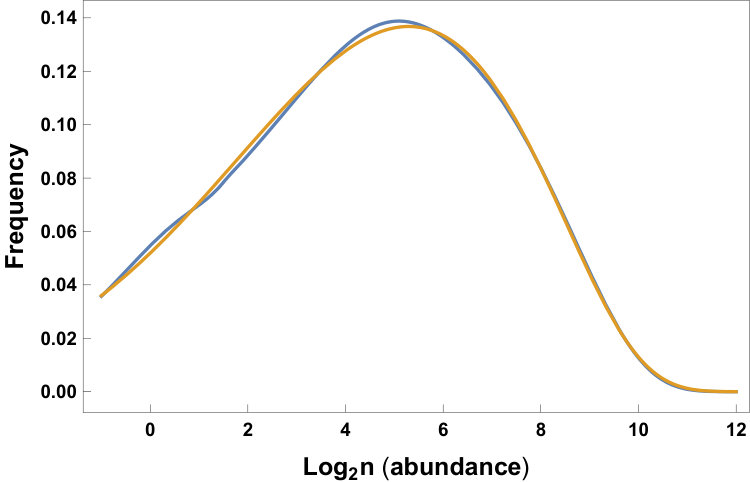 Figure 6
Peer Reviews
No public reviews on file for this paper yet. If you reviewed it on a platform where reviews are public (OpenReview, ICLR, NeurIPS, ICML), you can paste yours below so the community can read it here.
Videos
No videos yet. Explain this paper in a talk, walkthrough, or lecture? Add one.