Holography of Massive M2-brane Theory with Discrete Torsion
Dongmin Jang, Yoonbai Kim, O-Kab Kwon, D. D. Tolla

TL;DR
This paper explores the holographic duality between a mass-deformed ABJ theory with discrete torsion and 11D supergravity on LLM geometries, deriving exact vacuum expectation values and analyzing the effects of orbifolding and torsion.
Contribution
It provides exact holographic vacuum expectation values for chiral primary operators and examines how discrete torsion and orbifolding influence the gauge/gravity duality in LLM geometries.
Findings
Exact VEVs depend on droplet shapes in LLM geometries.
Discrete torsion contributes terms proportional to l/√N in large N limit.
Orbifolding and torsion affect the duality dictionary and asymptotic geometry limits.
Abstract
We investigate the gauge/gravity duality between the mass-deformed ABJ theory with UU gauge symmetry and the 11-dimensional supergravity on LLM geometries with SO(2,1)SO(4)/SO(4)/ isometry and the discrete torsion . For chiral primary operators with conformal dimensions , we obtain the exact vacuum expectation values using the holographic method in 11-dimensional supergravity and show that the results depend on the shapes of droplet pictures in LLM geometries. The contributions from the discrete torsion for several simple droplet pictures in the large limit are determined in holographic vacuum expectation values. We also explore the effects of the orbifolding and the asymptotic discrete torsion , on the gauge/gravity duality dictionary and on…
Click any figure to enlarge with its caption.
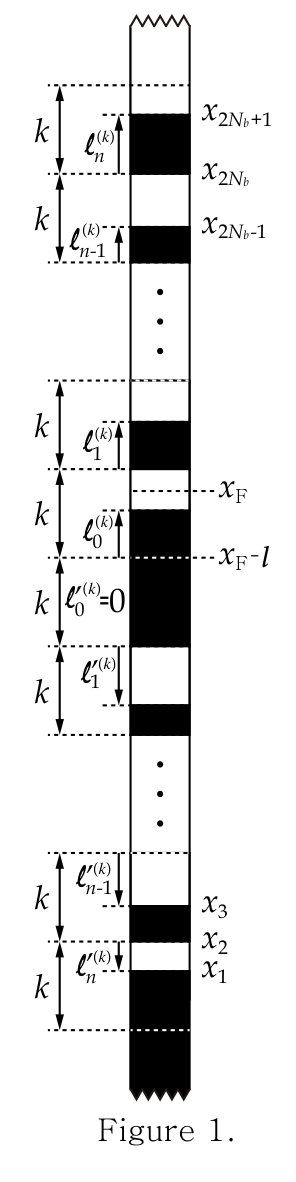 Figure 1
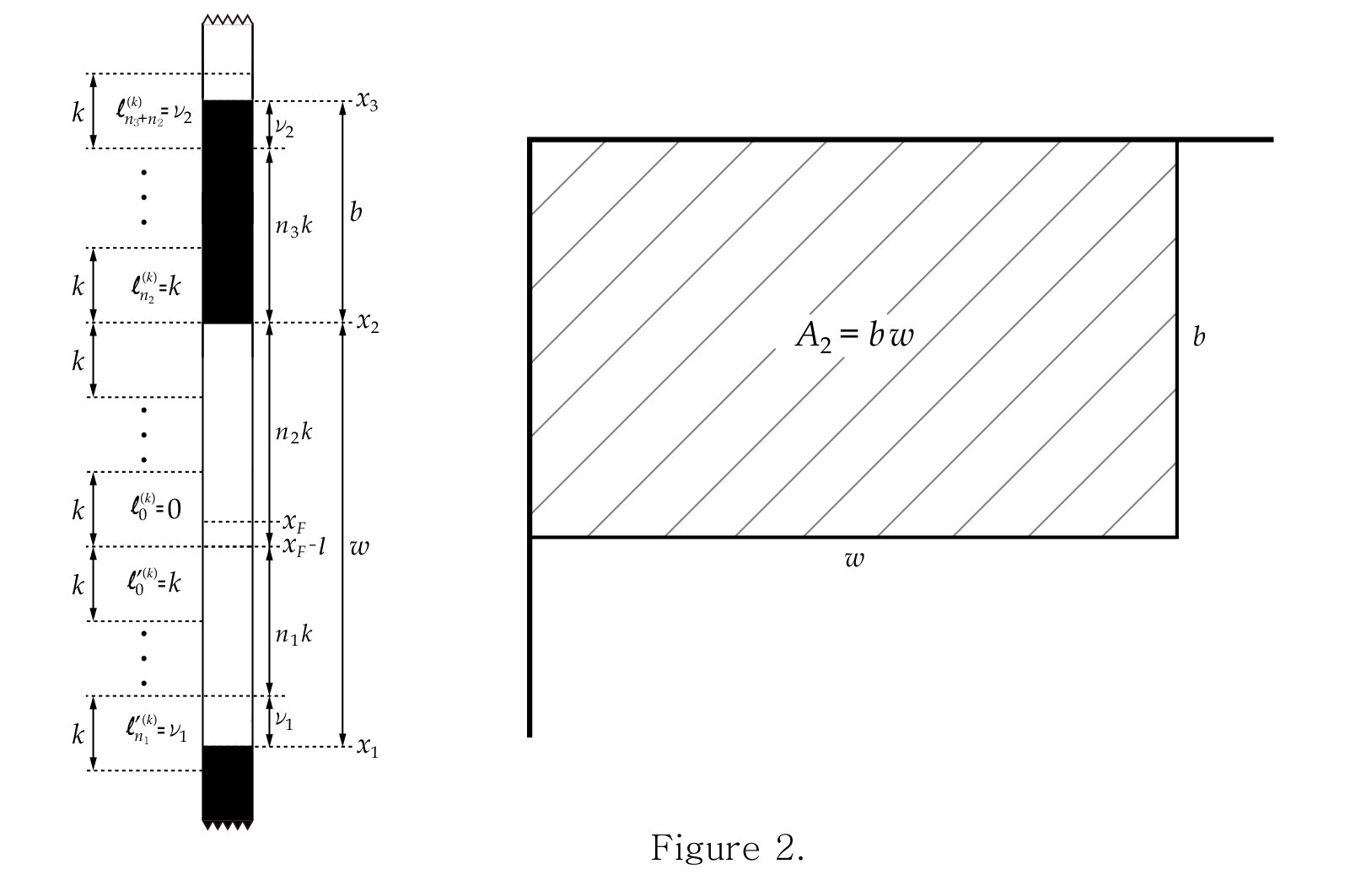 Figure 2
Peer Reviews
No public reviews on file for this paper yet. If you reviewed it on a platform where reviews are public (OpenReview, ICLR, NeurIPS, ICML), you can paste yours below so the community can read it here.
Videos
No videos yet. Explain this paper in a talk, walkthrough, or lecture? Add one.
**Holography of Massive M2-brane Theory
with Discrete Torsion**
Dongmin Jang1, Yoonbai Kim1, O-Kab Kwon1 D. D. Tolla1,2
*1**Department of Physics, BK21 Physics Research Division, Institute of Basic Science, Sungkyunkwan University, Suwon 440-746, South Korea
2University College,
Sungkyunkwan University, Suwon 440-746, South Korea
[email protected], [email protected], [email protected], [email protected]
Abstract
We investigate the gauge/gravity duality between the mass-deformed ABJ theory with UU gauge symmetry and the 11-dimensional supergravity on LLM geometries with SO(2,1)SO(4)/SO(4)/ isometry and the discrete torsion . For chiral primary operators with conformal dimensions , we obtain the vacuum expectation values using the supersymmetric vacua in the mass-deformed ABJ theory and the holographic method in 11-dimensional supergravity. We show that the two results agree for all supersymmetric vacuum solutions in the large limit. The contributions from the discrete torsion for several simple droplet pictures in the large limit are determined in holographic vacuum expectation values. We also explore the effects of the orbifolding and the asymptotic discrete torsion , on the gauge/gravity duality dictionary and on the nature of the asymptotic limits of the LLM geometries.
1 Introduction
The duality between the 3-dimensional Aharony-Bergman-Jefferis-Maldacena (ABJM) theory with UU gauge symmetry [1] and the M-theory on AdS geometry, together with the 4-dimensional super Yang-Mills theory, which is dual to type IIB string theory on AdS geometry [2], are thoroughly investigated cases of the gauge/gravity duality paradigm [2, 3, 4]. The non-conformal extension of the former, which is obtained by adding an appropriate mass deformation, preserves the full supersymmetry [5, 6]. The mass-deformed ABJM (mABJM) theory is dual to the M-theory on 11-dimensional Lin-Lunin-Maldacena (LLM) geometries with SO(2,1)SO(4)/SO(4)/ isometry [7, 8]. Recently, we have made some meaningful tests of this duality [9, 10, 11]. We have calculated the vacuum expectation values (vevs) of chiral primary operators (CPOs) with conformal dimensions and , from the classical vacuum solutions of mABJM theory and from the asymptotic expansion of the LLM solutions using the holographic methods. In the large limit, there is an agreement between the vevs obtained from the two sides. We have also calculated the entanglement entropy by using the Ryu-Takayanagi holographic formula [12] in the asymptotic limit of the LLM geometries and using the path integral methods developed in [13]. We have shown that the entanglement entropies obtained by using these two methods agree when the asymptotic limit of the LLM metric satisfies the linearized Einstein equation with an energy-momentum tensor for two scalar fields which encode the information of the mass deformation of the ABJM theory. See also Refs. [14, 15] for related works.
An extension of the mABJM theory was achieved by widening the gauge symmetry as UU, where [16]. In the dual gravity theory, the was identified with the discrete torsion at asymptotic points of the LLM geometry with orbifold [8]. In general, the LLM geometries are represented by the droplet pictures, which are infinitely long strips with series of black/white regions along one space direction [7, 8]. In these droplet pictures, discrete torsions are assigned to the boundaries between the black/white regions and they count the number of fractional M2-branes at every odd boundary and fractional anti-M2-branes at every even boundary. In particular, the asymptotic discrete torsion belongs to the points.
The structure of the classical vacuum solutions in the extended mass-deformed Aharony-Bergman-Jefferis (mABJ) theory is the same as that of the original mABJM theory, and are expressed in terms of the GRVV matrices [6]. Evaluation of the from these classical vacuum solutions follows the same line as before. On the gravity side, we will argue that the LLM geometries with non-vanishing asymptotic discrete torsions are represented by droplet pictures where the origin is shifted by from the Fermi-level. As a result, we will show that the discrete torsions satisfy a modified level-matching condition and quantization condition of the 4-form flux. The holographic are expressed as infinite summations involving these modified discrete torsions. In the general setting, converting these summations into expressions involving the parameters of the theory () is out of our reach. Therefore, we rely on specific examples in order to determine the behaviour of the holographic . In particular, our holographic for the CPO of conformal dimension is given by
[TABLE]
where is the mass parameter of the LLM solutions and denotes a finite quantity depending on the shape of the droplet only. Interestingly, there is no subleading term in the -expansion in the classical limit of the 11-dimensional supergravity.
On the other hand, the result obtained from the classical vacuum solutions on the field theory side is given by (see (4))
[TABLE]
Comparing (1.1) and (1.2), one can see that in the large limit, the gauge/gravity duality works exactly for the supersymmetric vacuum solutions of the mABJ theory. We will show that, in the special case of , all the subleading terms are absent and there is an exact agreement between the results obtained from the classical vacuum solutions and from the holographic methods [9]. However, in the case of , the agreement is achieved only in the large limit. The absence of the subleading terms in the case reveals some meaningful effect of the orbifold singularity on the nature of the gauge/gravity duality dictionary.
In order to obtain the holographic in (1.1), we need the asymptotic expansion of the LLM solutions. The asymptotic limit of LLM geometries represented by any droplet picture is the AdS geometry. However, we will show that the radius of the asymptotic is given by
[TABLE]
where is the Planck length and is determined by the details of the droplet picture of the original LLM geometry. Therefore, even though every LLM geometry reduces asymptotically to the AdS geometry, the fact that depends on suggests that there is some reminiscent information about the original LLM geometries in the asymptotic limit.
The remainder of this paper is organized as follows. In section 2, we discuss the droplet representation of the LLM geometries with the asymptotic discrete torsion and obtain the appropriate level-matching and quantization conditions. We also introduce two quantities ( and ), and express them as infinite summations involving the discrete torsions. These two quantities are crucial to calculate the holographic . In section 3, based on our previous works, we summarize the Kaluza-Klein (KK) reduction of the 11-dimensional gravity on LLM geometries with orbifold to obtain 4-dimensional matter-gravity theory on AdS4 background geometry. In section 4, we evaluate the of the CPO of conformal dimension from the classical vacuum solutions of the mABJ theory. In section 5, we calculate the holographic from the asymptotic expansion of the LLM solutions. We compare the holographic result with classical field theory result. For few simple droplet pictures in the large limit, the contributions of the asymptotic discrete torsion are determined in holographic . We also comment on the holographic for CPO of . In section 6, we draw our conclusions.
2 LLM Geometry with Discrete Torsion
Some compelling evidences for the duality between the mABJM theory with UU gauge symmetry and the 11-dimensional supergravity on the LLM geometry with orbifold, are presented in [7, 8, 9, 10]. It is also conjectured that the mABJ theory with UU gauge symmetry is dual to the LLM geometry with orbifold and asymptotic discrete torsion . We begin this section by presenting a brief summary of the LLM geometry with asymptotic discrete torsion.
The metric and the corresponding 4-form field strength for the LLM geometry with orbifold and SO(2,1) isometry, are given by [7]
[TABLE]
where and are metrics of two ’s with orbifold while and are the corresponding volume forms [17, 8]. The warp factors of the metric and the functions which determine the 4-form field strength are given by111See [9, 11] for detailed conventions.
[TABLE]
with
[TABLE]
The geometry is completely determined by the two functions and ,
[TABLE]
At , the function has values for and for . Then the LLM geometries are represented by an infinite strip in the -direction with regions of denoted by black color while regions of denoted by white color and the ’s are the positions of the boundaries between the black and white regions. See figure 1 below. The series of black/white regions are called droplets and each diagram contains black/white finite length droplets in addition to a semi-infinite black region below and a semi-infinite white region above .
In any droplet picture, if one pulls down all the finite black regions to fill all the finite white regions, then the boundary between the resulting semi-infinite black region and semi-infinite white region is located at
[TABLE]
where is the length of the black region in the original diagram. This point is referred to as the Fermi level. In the original diagram, the total length of black regions above the Fermi level is equal to the total length of the white regions below the level.
In Ref. [8], it was proved that the 4-form flux through the orbifold of a 4-sphere that surrounds the black/white region is proportional to the length of those regions, while the flux through the semi-infinite 4-cycle surrounding the semi-infinite black/white regions is proportional to the total lengths of all finite black/white regions. As a result, quantization of the fluxes leads to quantization of the lengths of those regions, namely
[TABLE]
It was also verified that, introducing a rescaled coordinates , the quantized lengths between and are related to the discrete torsions of the 3-form gauge field at those two boundaries as
[TABLE]
where the signs are for the black/white regions and is the discrete torsion at . The recursion relation (2.11) is valid modulo since all the discrete torsions can be put in the range by gauge transformation of the 3-form gauge field.
The recursion relation (2.11) means all the discrete torsions can be fixed once we know the discrete torsions of either at , which are the discrete torsions of the asymptotic geometry AdS. It was argued that the discrete torsions at those asymptotic points are related to the rank of the UU gauge symmetry of the dual field theory [16, 8]. For later convenience, we list the expressions for the discrete torsions at the odd and even boundary points as follows
[TABLE]
where and are the quantized lengths of the black and white regions, respectively.
The discrete torsions are interpreted as fractional M2-branes at the odd fixed points , whereas the are interpreted as fractional anti-M2-branes at the even fixed points [8]. However, it was illustrated that the solutions with anti-M2-branes can be geometrized to yield solutions with M2-branes only. Those solutions with M2-branes only are compared with vacuum solutions in the dual field theory. In this case the discrete torsions at the even fixed points are vanishing, i.e., the recursion relation (2.11) gives
[TABLE]
This means in any droplet picture, the quantized distance between even fixed points is an integer multiple of . Therefore, we can divide the droplet into intervals of length and all the even fixed points coincide with the boundaries of some of the intervals. See figure 1.
2.1 Shift of origin in the droplet picture
Recalling and combining (2) and (2.9), we obtain
[TABLE]
Since is at a boundary point of one of the intervals with length , (2.14) means that the point is also at one of those boundary points as in figure 1. For a non-vanishing , we shift the origin of the droplet picture from the Fermi level to . This shift of origin is required in order to get a correct level-matching condition. See below. The intervals both above and below the shifted origin are labelled by non-negative integers starting at the origin. Any droplet picture is then parametrized by a set of integers , where / are the lengths of the black/white region in the interval above/below the origin. These integers are the discrete torsions assigned to the interval. Since the length of the black or white region in a given interval cannot be bigger than the length of the interval itself, these integers should satisfy the condition .
For the case, counting of the intervals starts at the Fermi level, which implies the level-matching condition . However, in the case of non-vanishing , the counting starts at point and then this shift of the origin increases the length of the black regions above or/and decreases the white regions below the origin. As a result, the level-matching condition is now given by
[TABLE]
In addition, the relation between the discrete torsions and the number of M2-branes follows from the quantization of the 4-form flux [8],
[TABLE]
2.2 Invariant quantities under the shift of origin
In the previous subsection, in order to obtain the correct level-matching condition, we have shifted the origin of the droplet picture by below the Fermi level. For later convenience, here we discuss two important quantities which are invariant under such shift of the origin.
After some rearranging, the functions and in (2.8) can be written in terms of the Legendre polynomials as follows [15],
[TABLE]
where with , and are the Legendre polynomials. We have also introduced [9]222Note that our definition for here differs from that of [9] by factor of , where is area of Young diagram.
[TABLE]
The two shift-invariant quantities of our interest are
[TABLE]
These are shift invariants because they can be written in terms of shift invariant variables and , which are the lengths of the black and white regions, as
[TABLE]
These invariant quantities will play central role in the asymptotic expansion of the LLM solutions and consequently in the holographic determination of the vevs of CPOs.
In [9], we have obtained the expressions of those two invariant quantities in terms of the discrete torsions for the special case of , where the discrete torsions are either [math] or . The results were
[TABLE]
We have also verified that, in this special case, , with being the rank of the gauge group, and is proportional to the vev of a CPO of conformal dimension one in the dual field theory. Here, we follow some indirect procedure in order to obtain the expressions for and for the case of (, ). To that end, let us rewrite (2.21) by shifting down the origin of the droplet picture by , so that the counting of discrete torsions starts from . In order to account for this shift of the origin, we rename the discrete torsions as in the following table
[TABLE]
In terms of the renamed discrete torsions, the quantities in (2.21) are written as
[TABLE]
Next, we write (2.23) in terms of the discrete torsions for the case of (, ). We note that, because of the constraints in (2.13) and (2.14), not all droplet pictures which are allowed in the case are allowed in the . Any droplet picture with arbitrary lengths of the black/white regions is consistent with (2.13) and (2.14) in the case, whereas only some subset of those droplet pictures are consistent with those constraints in the case. For those droplet pictures in the subset, the discrete torsions for can be written in terms of introduced in (2.22) as follows
[TABLE]
Rearranging (2.23) and using (2.24), one can rewrite it in terms of as
[TABLE]
These results are crucial in subsequent sections for our holographic calculations of the of CPO with conformal dimensions one and two.
3 KK Reduction
In this section, we review the KK reduction of the 11-dimensional supergravity to a 4-dimensional matter-gravity theory, where the matter content of the latter is determined by the LLM solutions. The KK reduction involves an expansion of the 11-dimensional fluctuations in terms of the spherical harmonics on and then projecting the equations of motions on those spherical harmonics to obtain the equations of motion for various KK modes. At non-linear order, the resulting equations contain higher derivative terms of the 11-dimensional fluctuations. Then one needs to introduce the KK maps to absorb the higher derivative terms and obtain the canonical equations of motion for the 4-dimensional modes. A detailed KK reduction procedure at non-linear order is carried out in [9, 10, 11]. Here, for clarity, we briefly summarize the procedure and write the equations of motion for a few 4-dimensional modes which are necessary for our purpose.
3.1 Field equations at quadratic order
In order to write the 11-dimensional gravity equations of motion up to quadratic order in the fluctuations, we perturb the 11-dimensional fields around the AdS background as
[TABLE]
where . The equations of motion for those fluctuations are obtained by inserting (3.26) into the 11-dimensional gravity equations of motion and keeping all the terms which are quadratic in the fluctuations and . The resultant equations are
[TABLE]
where the indices are raised/lowered by the AdS background metric and the covariant derivatives as well as the Ricci tensor are also those of the background.
Next we expand the fluctuations in terms of the spherical harmonics on , with symmetry, so that the orbifolding does not affect the expansion,
[TABLE]
where . Here we have split the 11-dimensional indices into the AdS4 indices and the indices , denotes the AdS4 coordinates, whereas denotes the coordinates, and (, ) are the scalar and antisymmetric 3-tensor spherical harmonics on , respectively.
Plugging (3.1) into (3.27) and (3.28), we obtain the equations for various modes. The details can be found in [11]. Here we copy the equations for the graviton mode and two scalar modes and
[TABLE]
[TABLE]
where represents the Einstein operator, and we have introduced the following diagonal modes
[TABLE]
with .
We use the following field redefinition in order to absorb the higher derivative terms in the graviton equation (3.1), and obtain the canonical 4-dimensional graviton mode
[TABLE]
where
[TABLE]
Consequently the graviton equation (3.1) becomes
[TABLE]
3.2 Asymptotic expansion of LLM geometries
The expansion of the functions and to all orders are given in (2.2), however it is difficult to obtain such closed form for the expansions of the functionals in (2). Therefore, for the warp factors in (2), we write the asymptotic expansion by keeping only the leading and subleading terms,
[TABLE]
where we made the replacement .
By recalling that the asymptotic limit of the LLM geometry is the AdS, the leading terms of the above warp factors should give those of the AdS geometry. In particular, we should have
[TABLE]
where is the radius of the . Comparing (3.37) with the expansion of in (3.2), we obtain
[TABLE]
where we have used the definition of in (2.19). With the result in (3.38), we reproduce the AdS metric by plugging the leading terms of the warp factors in (3.2) into the LLM metric in (2.4).
A comment is in order about the result in (3.38). In the previous section, we have discussed the LLM geometries which are classified by their droplet representations. For every droplet picture, we have the corresponding set of the discrete torsions , which are constrained by the level-matching condition (2.15) and the quantization condition (2.16). The asymptotic limit of all these LLM geometries is the AdS geometry. However, since the radius in (3.38) depends on , which is expressed in terms of the discrete torsions as in (2.25), there is some reminiscent information about the original LLM geometries in the asymptotic AdS geometry.
Now using the coordinate transformation
[TABLE]
we rewrite (3.2) as
[TABLE]
In order to read the of gauge invariant operators from the asymptotic expansions of gravity solutions, the Fefferman-Graham (FG) coordinates system is the most convenient. In the FG coordinates, the LLM metric (2.4) is written as
[TABLE]
The warp factors in (3.2) are written in the FG coordinates as
[TABLE]
where we have used the following coordinate transformation
[TABLE]
Similarly, the asymptotic expansions of the 4-form field strength of the LLM solution in (2) are given by
[TABLE]
The expansion in (3.2) shows that in the asymptotic region, the warp factors for the LLM metric are given by the AdS background and small fluctuations. Therefore, in the asymptotic region, the LLM metric are written as in (3.26), where the values of the fluctuations are read from the asymptotic expansion in (3.2). Similarly, from the asymptotic expansion of the 4-form field strength in (3.2), we read the values of the fluctuations . Finally, the obtained values of the fluctuations and can be expanded in terms of the spherical harmonics on as in (3.1), in order to obtain the values of the KK modes (). Here, we are interested only in three physical modes which consist of the graviton mode and the two scalar modes, and , introduced in the previous subsection. From (3.32) and (3.1), we notice that these three physical modes are composed of KK modes (). Therefore, we obtain the values of the physical modes by combining the values of the KK modes, which in turn are read from the asymptotic expansion of the LLM geometry.333Similar procedure was developed in [19, 20] to investigate the holographic dual of the Coulomb branch in Yang-Mills theory. See Ref. [9] for the detailed procedure. The results are
[TABLE]
where and
[TABLE]
4 Vacuum Solutions of Mass-deformed ABJ Theory and vevs of CPOs
The mass deformation of the ABJM theory with gauge group preserves full supersymmetry but breaks SU(4) global R-symmetry to SU(2)SU(2)U(1). When overlapping fractional M2-branes are added at orbifold fixed points, the gauge group of the theory is extended to with . This theory is often called the ABJ theory [16]. The vacuum solutions in the mass-deformed ABJ theory are composed of the GRVV matrices, which are also the building blocks of the vacuum solutions in the mass-deformed ABJM theory.
In order to reflect the SU(2)SU(2)U(1) global symmetry, the four complex scalars are split into two two-component scalars as
[TABLE]
Then, the vacuum solutions are,
[TABLE]
where and are the irreducible GRVV matrices,
[TABLE]
with . Each vacuum solution contains irreducible matrices of the first type and of the second type . The set of integers are called occupation numbers. Since are matrices, the occupation numbers should satisfy the relations,
[TABLE]
The vacuum solutions are supesymmetric for [18]. There is one-to-one correspondence between the LLM solutions and the vacuum solutions of the mABJM theory [8]. This correspondence is realized through a one-to-one map between the discrete torsions and the occupation numbers,
[TABLE]
The CPO of conformal dimension one, which is invariant under the SU(2)SU(2)U(1) global symmetry with non-vanishing vev, is given by [9]
[TABLE]
In large limit, the leading term for the vev of this CPO is determined by the classical vacuum solutions in (4)
[TABLE]
where from here on the ellipses denotes quantum corrections, and and satisfy the conditions in (4.50). Using the one-to-one map in (4.51), we rewrite the in (4) in terms of the discrete torsions of the dual LLM geometry,
[TABLE]
5 Holographic Vacuum Expectation Values
In section 3, we have constructed the equations of motion (3.35) for 4-dimensional graviton in which the graviton is coupled to the two scalar fields and . The scalar field is dual to the CPO in (4.52), whereas is dual to a gauge-invariant operator of conformal dimension two and does not play a role in the holographic calculation of the of . Thus, let us neglect the scalar field and consider the action for 4-dimensional graviton and the scalar field ,
[TABLE]
This action reproduces the equation of motion in (3.35), if the multiplicative factor is set to . By the field redefinition , the action in (5.55) takes canonical form,
[TABLE]
where the 4-dimensional gravitational coupling is expressed as
[TABLE]
with the ’t Hooft coupling constant in the ABJM theory [1]. The solution for the rescaled field can be read from the asymptotic expansion of the LLM geometries in (3.2),
[TABLE]
In odd dimensions, the Gubser, Klebanov, Polyakov-Witten (GKP-W) relation [3, 4] states that the of a gauge invariant operator with conformal dimension is obtained via the holographic renormalization procedure [21, 22, 23, 24, 25, 26, 27, 28, 29, 30] as
[TABLE]
where is the coefficient of term in the asymptotic expansion of the scalar field . Plugging (3.46) and (5.58) into (5.59) results in the holographic of the CPO of conformal dimension one [9]
[TABLE]
Subsequently, we employ the gauge/gravity duality dictionary and discuss the effect of the asymptotic discrete torsion on the vevs.
5.1 Comparison of gravity and field theory results
In order to figure out the role of the asymptotic discrete torsion in the holographic calculation of the , we compare the field theory result in (4.54) to the holographic result in (5.60). Since it is not clear how to evaluate the infinite summations in (2.25) and (4.54), it is difficult to make the comparison with full generality. We explicitly show our results by using the example of LLM geometries represented by a rectangular Young diagram in figure 2 and then discuss the general picture.
From the droplet picture in figure 2, we read the values for the discrete torsions in the following table,
[TABLE]
where and are non-negative integers smaller than . Using the relations and , together with the level-matching condition in (2.15), we obtain
[TABLE]
where and are the lengths of the finite black and white regions, respectively. For later convenience, we set without loss of generality for some finite and positive and rewrite as
[TABLE]
In [31], it was argued that the LLM geometries are highly curved if they are represented by Young diagrams that contain some short sides. A way to avoid such highly curved geometries is to assume that both and are of the order of . Actually, the relation between and is obtained by plugging the values of the discrete torsions (5.61) into (2.16),
[TABLE]
The of the CPO of conformal dimension is evaluated in the mABJ theory by plugging the discrete torsions (5.61) into (4.54), accompanied by the expansion in large limit,
[TABLE]
where we truncated the expansion at order for simplicity. Similarly, the holographic is obtained by plugging the discrete torsions (5.61) into (5.60). However, now when we expand in the large limit, the subleading terms are cancelled and only the leading term survive444Following [11], we have also tested the case of CPO of conformal dimension and we found the holographic is still exact and is given by
\displaystyle\langle{\cal O}^{(\Delta=2)}\rangle_{{\rm HR}}=-\frac{\mu_{0}^{2}N^{3/2}}{6\pi}\bigg{[}\frac{\sqrt{k}}{\delta}(\delta+1)^{2}\bigg{]}.
(5.66)
[TABLE]
Comparing the field theory and the holographic , we confirm an agreement of the two results in the large limit.
We have made similar comparisons for LLM geometries with more complex Young diagrams and the behavior is the same as that of the rectangular Young diagram. For instance, the results for the LLM geometries represented by a Young diagram with four long sides are the following. When we have set the lengths of the sides as , is determined by (2.16),
[TABLE]
where ’s are non-negative integers smaller than . Then we obtain
[TABLE]
and
[TABLE]
Again, the results (5.1) and (5.70) agree in the large limit.
Absence of the subleading terms in (5.67), (5.66), and (5.70) shows that is an exact result in 11-dimensional tree-level supergravity. In [9], we have verified that there is an exact agreement between the classical field theory result and the holographic result for the special case . In such special case, our result here replicates those results, because all ’s, which are non-negative integers smaller than , are zero.
5.2 correction from the discrete torsion
In order to reveal the significance of in the holographic results, it is necessary to express (5.67) in terms of the parameters of the theory, that can be achieved by eliminating from (5.67) by using (5.63) and (5.64). Then we obtain
[TABLE]
If , the leading term is of the same order as the -dependent term, and thus both are vanishing in the large limit. This case corresponds to the LLM geometries represented by Young diagrams that are almost a square and the is vanishing in the case. On the other hand, if the Young diagrams are considered far from being a square, for some finite value and thus the does not vanish and becomes
[TABLE]
It means the asymptotic discrete torsion affects the holographic only in the subleading order.
6 Conclusion
We have investigated the duality between the 3-dimensional mABJ theory and the 11-dimensional supergravity on LLM geometries with asymptotic discrete torsion . We have calculated the of the CPO with conformal dimension from the classical vacuum solutions of the mABJ theory and from the asymptotic limit of the LLM geometries with orbifold. In our previous works [9], we have verified that, in the special case of , there is an exact agreement between the result obtained from the field theory classical vacuum solutions and from the holographic methods, whereas for LLM geometries with orbifold singularity, such agreement is reached only in the large limit.
We have showed that the holographic can be expressed by infinite summations involving the discrete torsions , which are fixed by the details of the droplet pictures representing the LLM geometries. The vevs for CPOs with depend on the shapes of droplets except for the overall -factor. Relying on the examples of LLM geometries represented by some specific droplet pictures, we have shown that these infinite summations can be evaluated and the holographic is exactly determined. However, the obtained from the field theory classical vacuum solutions, in addition to the leading order term which agrees with the holographic , it contains corrections when and . This means that there is an agreement between the field theory and the holographic results in the large limit. We have also tested our holographic calculations for the CPO of conformal dimension .
The holographic methods involve the asymptotic expansion of the LLM geometries. The asymptotic limit of the LLM geometries with the orbifold is the AdS geometry with the radius of the determined by the details of the droplet picture of the original LLM geometry. In the case the radius depends only on and the asymptotic geometry does not depend on the details of the droplet picture of the LLM geometries. Therefore, in the absence of the orbifolding, all LLM geometries with the same value of have the same asymptotic geometry, whereas such degeneracy is removed for the LLM geometries with the orbifold singularity.
Acknowledgements
This work was supported by the National Research Foundation of Korea(NRF) grant with grant number NRF-2018R1D1A1B07048061 (D.J.), NRF-2019R1F1A1056815 (Y.K.), NRF-2017R1D1A1A09000951 (O.K.), and NRF-2017R1D1A1B03032523 (D.T.).
The reference list from the paper itself. Each links out to its DOI / PubMed record.
- 1[1] O. Aharony, O. Bergman, D. L. Jafferis and J. Maldacena, “N=6 superconformal Chern-Simons-matter theories, M 2-branes and their gravity duals,” JHEP 0810 , 091 (2008) [ar Xiv:0806.1218 [hep-th]].
- 2[2] J. M. Maldacena, “The Large N limit of superconformal field theories and Int. J. Theor. Phys. 38 , 1113 (1999) [Adv. Theor. Math. Phys. 2 , 231 (1998)] [hep-th/9711200].
- 3[3] S. S. Gubser, I. R. Klebanov and A. M. Polyakov, “Gauge theory correlators from noncritical string theory,” Phys. Lett. B 428 , 105 (1998) [hep-th/9802109].
- 4[4] E. Witten, “Anti-de Sitter space and holography,” Adv. Theor. Math. Phys. 2 , 253 (1998) [hep-th/9802150].
- 5[5] K. Hosomichi, K. M. Lee, S. Lee, S. Lee and J. Park, “N=5,6 Superconformal Chern-Simons Theories and M 2-branes on Orbifolds,” JHEP 0809 , 002 (2008) [ar Xiv:0806.4977 [hep-th]].
- 6[6] J. Gomis, D. Rodriguez-Gomez, M. Van Raamsdonk and H. Verlinde, “A Massive Study of M 2-brane Proposals,” JHEP 0809 , 113 (2008) [ar Xiv:0807.1074 [hep-th]].
- 7[7] H. Lin, O. Lunin and J. M. Maldacena, “Bubbling Ad S space and 1/2 BPS geometries,” JHEP 0410 , 025 (2004) [hep-th/0409174].
- 8[8] S. Cheon, H. C. Kim and S. Kim, “Holography of mass-deformed M 2-branes,” ar Xiv:1101.1101 [hep-th].