A Note on the dS Swampland Conjecture, Non-BPS branes and K-theory
Ralph Blumenhagen, Max Brinkmann, Andriana Makridou

TL;DR
This paper discusses how the de Sitter swampland conjecture constrains string theory vacua, specifically linking it to K-theory charge cancellation in fluxed Type IIA orientifold models with non-BPS branes.
Contribution
It highlights a potential falsification of the dS swampland conjecture if certain classical fluxed Type IIA vacua with non-BPS D7-branes exist, connecting it to K-theory charge cancellation.
Findings
The dS swampland conjecture implies K-theory charge cancellation.
Classical fluxed Type IIA vacua with non-BPS D7-branes could challenge the conjecture.
The existence of such vacua would falsify the conjecture.
Abstract
We point out that the de Sitter swampland conjecture would be falsified if classical fluxed Type IIA orientifold vacua with a single non-BPS D7-brane were indeed part of the string theory landscape. In other words, the dS swampland conjecture implies the cancellation of K-theory charges on a compact space.
Click any figure to enlarge with its caption.
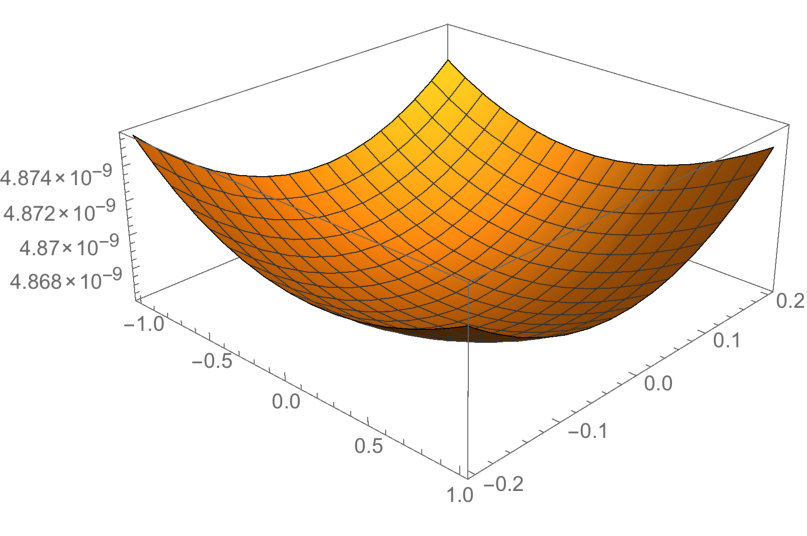 Figure 1
| multiplet | State | Cohomology |
|---|---|---|
| chiral | ||
| chiral | ||
| vector |
| Flux | Cohomology |
|---|---|
| non-BPS brane | Tension | K-theory |
|---|---|---|
| Type I | Type IIA | Homology |
|---|---|---|
Peer Reviews
No public reviews on file for this paper yet. If you reviewed it on a platform where reviews are public (OpenReview, ICLR, NeurIPS, ICML), you can paste yours below so the community can read it here.
Videos
No videos yet. Explain this paper in a talk, walkthrough, or lecture? Add one.
MPP-2019-110
A Note on the dS Swampland Conjecture,
Non-BPS branes and K-theory
Ralph Blumenhagen1, Max Brinkmann1, Andriana Makridou1,2
*1 Max-Planck-Institut für Physik (Werner-Heisenberg-Institut),
Föhringer Ring 6, 80805 München, Germany *
*2 Ludwig-Maximilians-Universität München, Fakultät für Physik,
Theresienstr. 37, 80333 München, Germany*
Abstract
We point out that the de Sitter swampland conjecture would be falsified if classical fluxed Type IIA orientifold vacua with a single non-BPS D7-brane were indeed part of the string theory landscape. In other words, the dS swampland conjecture implies the cancellation of K-theory charges on a compact space.
1 Introduction
Since its first proposal [1], the swampland program has recently been advanced to a set of intertwined swampland conjectures. These are a set of quantitative properties [2, 3, 4, 5, 6, 7, 8, 9, 10, 11, 12, 13, 14] that a low-energy effective field theory should satisfy in order to admit a UV completion to a consistent theory of quantum gravity (see [15] for a recent review). The main support for these conjectures derives from string theory, in particular from its landscape of compactifications. Moreover, it was realized that the different swampland conjectures are not unrelated, but rather form a tight web with many interrelations. Thus they are mutually supporting each other and in this respect they are similar to the duality conjectures for the different perturbative string theories, that were discovered in the nineties.
To better understand their origin and their consequences, these swampland conjectures need to be challenged by concrete string theory constructions. For instance, the KKLT scenario [16] can still be considered a challenge for the dS swampland conjecture, which forbids such dS vacua in any theory of quantum gravity. Since this latter suspicion first arose [17, 18], the KKLT scenario has been scrutinized in an ongoing debate. One issue that arose was the existence of a 10D realization of KKLT [19, 20, 21, 22, 23, 24, 25, 26, 27], while a second one is the question whether the effective field theory in the warped throat is really controlled [28, 29]. Even though these arguments have not yet been completely settled, they revealed new aspects of the KKLT scenario and their relation to the various swampland conjectures.
To reveal new connections between the swampland conjectures and fundamental aspects of string theory (that are often not derived but motivated by indirect arguments), one can also turn the logic around and analyze what are the consequences for string theory, if the swampland conjectures are assumed to be correct. The aim of this note is to provide an argument of this type that involves the dS swampland conjecture and the cancellation of K-theory charges for D-branes in string theory.
The dS swampland conjecture [7] states that where is of order one. The refined version of the conjecture [9, 10] states that either the previous inequality or has to hold, where is the minimal eigenvalue of the Hessian matrix and is also of order one. Consistent with the dS no-go theorem of [30], these conjectures forbid (meta-)stable de Sitter vacua. Such an inequality was first derived for classical flux vacua of Type IIA string theory in [31]. In this paper we will consider such Type IIA orientifolds and will try to challenge the conjecture by introducing non-BPS branes in the background. This sources supersymmetry breaking and provides a positive contribution to the scalar potential.
Such branes are known to exist e.g. in the Type I superstring, where the non-BPS -branes are S-dual to massive perturbative heterotic string states [32]. Non-BPS branes only couple to closed string states from the NS-NS sector. They do not carry any R-R charge, so there is no Bianchi identity whose integrated form can give rise to tadpole cancellation conditions. Thus there is no K-theory analogue to the condition that the total R-R charge on a compact space has to vanish. For stable non-BPS branes on orientifolds, the open string tachyon is projected out not by a GSO projection but by the world-sheet parity operation. This can only happen for a single brane, so a stack of two branes is unstable and decays. Mathematically, such non-BPS branes are described by valued K-theory classes[33] so that a single such brane has a topological obstruction to decay. The question arises whether also the total K-theory charge on a compact space has to cancel, i.e. that it is even. Arguments in favour of this could be indirectly derived for certain cases by analyzing global anomalies on probe-branes [34].
In this note, we will find evidence for the following
Proposition: If the (refined) de Sitter swampland conjecture is correct, then the K-theory charge on a compact space has to be trivial.
We will work in fluxed Type IIA orientifolds, where all closed string moduli can be stabilized by NS-NS and R-R fluxes. Via T-duality, one expects that such Type IIA orientifolds with intersecting -branes will also admit non-BPS branes. In section 2, after providing the salient features of Type IIA orientifolds, we determine which non-BPS branes are expected to exist.
In section 3, assuming that K-theory charges are not cancelled, we analyze how the dS no-go theorem for fluxed Type IIA orientifolds is affected by the presence of such branes. Indeed, we find that the dS no-go theorem does not go through. Finally, we construct a supergravity toy model, which after adding a single non-BPS brane, admits a dS vacuum. This provides strong evidence for the proposition.
2 Type IIA orientifolds with fluxes and branes
In this section we briefly review the set-up that are Type IIA orientifolds with intersecting D6-branes and moduli stabilized by NS-NS and R-R fluxes. In contrast to Type IIB, here all closed string moduli can be stabilized already at string tree-level. Moreover, we argue via T-duality that in these Type IIA orientifolds there should exist stable non-BPS branes.
2.1 Basics of Type IIA orientifolds
We consider a Type IIA orientifold on a Calabi-Yau threefold. Here the orientifold projection is given by , where is the world-sheet parity transformation, an anti-holomorphic involution of the CY and the left-moving space-time fermion number operator. The anti-holomorphic involution acts on the Kähler form and the covariantly constant holomorphic three-form as
[TABLE]
The orientifold projection breaks the supersymmetry of Type IIA Calabi-Yau compactifications to . The massless spectrum in the closed string sector of such a compactification is determined by the equivariant cohomology groups shown in table 1.
The universal chiral multiplet with is denoted as . The fixed point locus of defines the location of -planes, whose -form tadpole needs to be cancelled by the introduction of stacks of in general intersecting -branes. Such intersecting -brane models have been studied in detail in the past (see [35, 36] for reviews and further references).
The kinetic terms for the moduli are encoded in the tree-level Kähler potential
[TABLE]
with . The moduli can (all) be fixed by the introduction of fluxes in Type IIA. Concretely, the complex structure moduli and can be fixed by NS-NS three-form flux , whereas the Kähler moduli receive a potential from non-vanishing R-R fluxes and . The corresponding superpotential is of Gukov-Vafa-Witten type
[TABLE]
where denotes the formal sum over all even R-R fluxes and is the complexified Kähler form. Explicit expressions can be obtained by expanding all forms in the respective cohomological bases of and . Here the orientifold even fluxes take values in the equivariant cohomology groups listed in table 2.
Noting that the total volume form is -odd, these fluxes are precisely those that can give a non-vanishing contribution to the superpotential (2.3).
2.2 Non-BPS branes
It is known that due to the orientifold projection there can exist stable non-BPS branes (see for instance the review [37]) that correspond to torsional K-theory groups [33]. The simplest example is the Type I superstring that besides BPS , and branes also contains the stable non-BPS branes listed in table 3 [38]. The boundary states of these branes only contain contributions from the NS-NS sector. Thus in the loop-channel annulus amplitude the GSO projection is missing, and no R-R tadpole conditions for these branes arise.
The tachyon in the open string NS-sector is instead projected out by the orientifold projection . This only works for a single such brane, hence two non-BPS branes on top of each other are unstable. In other words, the corresponding K-theory group is valued.
The lower dimensional and branes are not of interest to us as they do not fill the entire four-dimensional Minkowski space.
To get an idea of how this story generalizes to Type IIA orientifolds on Calabi-Yau threefolds, we consider a compactification of the Type I string and apply T-duality along the three directions so that the anti-holomorphic involution becomes with . Then for instance a brane that is localized at is mapped by T-duality to a brane wrapping the four-cycle spanned by . Therefore, under this four-cycle transforms as so it is in the homology.
If the initial brane is instead localized at , after T-duality one obtains a brane wrapping the two-cycle spanned by . In principle the brane could also wrap a general one-cycle on the third , in which case one gets a brane equipped with a non-trivial line-bundle. In this paper, we are not considering such fluxed non-BPS branes, mainly as the simpler non-fluxed ones are sufficient for our purpose. To get the full spectrum of stable non-BPS branes one has to determine the corresponding K-theory groups, which is however not an easy task.
Applying T-duality to the non-BPS and branes in all possible space-time filling positions we find the (non-fluxed) non-BPS branes for Type IIA orientifolds listed in table 4.
Note that on a Calabi-Yau and are not supported, as there are no homological one- and five-cycles. Moreover, branes111As shown in [39], also the BPS branes contribute to the K-theory charge carried by the non-BPS branes. The vanishing of the global Witten-anomaly on a probe D6-brane of -type implied that this K-theory charge has to be trivial. are in danger of developing a Freed-Witten anomaly, as the -flux is also supported in the odd-(co-)homology group222This effect is taken care of by computing the H-twisted K-theory groups..
On the other hand the brane is free from Freed-Witten anomalies while a brane can be made safe by wrapping it on a four-cycle that does not contain any homological three-cycle, like e.g. a del-Pezzo surface. Moreover, a del-Pezzo surface is rigid so there are no transversal deformations of the non-BPS brane. By wrapping the intersecting -branes also on rigid three-cycles in , one can avoid that the non-BPS branes and the -branes can come close to each other. Their mutual attraction or repulsion will only lead to a one-loop potential for the closed string moduli that in the perturbative regime is expected to be subdominant relative to the tree-level flux induced potential.
As we have seen, the prime candidates for our purpose are the non-BPS and branes (wrapped on rigid four-cycles) in Type IIA orientifolds. Note that they are not directly coupled to the complexified Kähler moduli, that belong to the homology. However, the existence of such non-BPS branes comes along with extra symmetries from the closed string R-R sector. In addition, while the tachyon is projected out, a single such non-BPS brane will support an open string gauge field on its world-volume.
3 The failure of the dS no-go theorem
In this section we analyze the scalar potential of fluxed Type IIA orientifolds with a single non-BPS brane included in the background. First, we review the no-go theorem for dS minima in Type IIA and investigate what happens if the tension of the non-BPS branes is included.
3.1 Analysis of no-go theorem with non-BPS branes
In [31] it was shown that classical Type IIA flux vacua on a Calabi-Yau space with D6-branes and O6-planes satisfy a lower bound for the slow-roll parameter , namely
[TABLE]
for . Clearly, this forbids dS vacua. Let us redo their computation while also allowing for the presence of non-BPS and branes. The idea of [31] is to keep track of the contributions to the scalar potential from the individual constituents, e.g. fluxes and D-branes, and in particular tracking how the individual contributions scale with respect to the universal modulus and the overall volume modulus . Here the convention is that the volume is measured in string frame and eventually one transforms the 4D metric to Einstein frame via . As a consequence, the string scale and the 4D Planck scale are related as .
In this way, one finds the following form of the total potential
[TABLE]
where we have indicated the different contributions from fluxes, D-branes and O-planes. The coefficients in the numerators are positive semi-definite and in general are complicated functions of all the other present moduli. Next, one computes the combination
[TABLE]
For this implies that any extremum will satisfy . However, due to the positive sign in front of the last term in (3.3), this dS no-go argument does not go through when there is a non-BPS brane present in the background333That the no-go does not apply for branes with was already observed in [31], though not applied to non-BPS branes.. Thus, there still exists a chance that Type IIA orientifolds with a non-BPS brane admit dS minima.
3.2 A simple SUGRA example
In this section, we analyze whether a simple SUGRA model does indeed lead to dS vacua when including a non-BPS brane. This model has only two moduli, a Kähler modulus and the universal modulus . One can think of it as a toroidal -model where we have identified and . The Kähler potential becomes
[TABLE]
and the flux induced superpotential
[TABLE]
If this model arises as an effective one after integrating out all other moduli, the coefficients are not necessarily quantized integers. Nevertheless, here we treat them as integers to see how much freedom we have in “tuning” such a model even if only integers are involved.
To further simplify the setting, we choose . The resulting supergravity scalar potential is minimized for vanishing axions , hence the potential for the saxions and becomes
[TABLE]
which features precisely the scaling expected in (3.2). Note that the last term scales like a D6-brane contribution. This makes sense as the flux combination contributes to the D6-brane tadpole cancellation condition, which has implicitly been taken into account when expressing the scalar potential as an F-term of a SUGRA model.
Minimizing the potential with respect to one obtains a supersymmetric AdS-minimum at
[TABLE]
This model is of the flux-scaling type promoted in [40]. To be in the perturbative regime we require and . This can be achieved by choosing the flux sufficiently large.
Now we add a contribution from a single non-BPS brane
[TABLE]
where the coefficient is a fixed number, that can be determined from a dimensional reduction of the Type IIA action as . In order to see whether dS minima are possible, we first treat as a free parameter and try to solve for Minkowski minima. Thus, solving for the three variables we find
[TABLE]
If we tried to do the same for the contribution of a non-BPS brane, we would not find any solution with all coming out positively. This case is consistent with the above no-go theorem.
To obtain a dS minimum, we must now find integers so that in (3.9) is slightly smaller than the true value . One choice is . Plugging these values into the scalar potential (3.8) with , a numerical analysis shows that the resulting model features a dS minimum at and with . The form of the potential around this minimum is shown in figure 1. It is evident that we have indeed found a minimum and not a saddle point, which is also verified by the fact that .
3.3 Discussion
Thus, this simple SUGRA model indicates that there should exist dS minima in Type IIA orientifolds with a single non-BPS brane in the background. This is not yet a full-fledged string theory compactification, as we have only considered a stringy model with two moduli via suitable identifications in the STU-model and then added a hard supersymmetry breaking sector to the theory by hand.
We can however provide two arguments supporting the assumption that such a set-up is likely to be controlled. Since the tension of the non-BPS brane scales in the same way as the tension of D-branes, we expect that their backreaction on the geometry is controlled by the string coupling constant and therefore should be small in the weak coupling regime . Second, once we make sure that the branes do not have open string moduli, we also expect the attraction/repulsion with the other -branes to only lead to suppressed subleading contributions to the tree-level scalar potential.
Having such stable dS Sitter minima is in conflict with the dS swampland conjecture. It is easy to see that even the less constraining refined dS conjecture does not provide a way out, since both the proposed inequalities are violated444In more realistic compactifications that feature a larger number of moduli, it would indeed be important to check the refined version of the conjecture to make sure that the dS vacuum does not arise only due to ignoring unstable directions in the moduli space.. Instead of claiming that we found a counter example, we would rather consider this as evidence that something is wrong with our string theory set-up. The obvious candidate here is that a single non-BPS on a compact transverse space should not be allowed. But this will be precisely guaranteed if the K-theory charge is cancelled (mod 2).
In this case there must be an even number of non-BPS branes wrapping a four-cycle in . Note that the intersecting BPS -branes do not contribute to this charge. An even number of non-BPS branes will however be unstable and decay. In the case where two such branes do not carry any additional line bundle, they can completely annihilate. If one of them is equipped with an additional line bundle, we expect that open string tachyons will appear, connecting the two branes. In this case, we expect that the two non-BPS branes will decay to non-BPS branes that might further decay. In any case, the brane contribution (3.8) to the scalar potential will disappear after the decay and along with it the dS minimum.
Therefore, we found evidence for our proposition that the dS swampland conjecture implies that K-theory charges should be cancelled on compact spaces.
4 Conclusions
In this note we have pointed out that Type IIA orientifolds would support dS minima if single non-BPS branes could be consistently added to the background. First, via T-duality we argued which non-BPS branes are expected to be present in Type IIA orientifolds and how they are related to equivariant homology classes. It turned out that those homology classes that appear are not related to fluxes and moduli fields.
We then investigated how the dS no-go theorem of [31] is affected once one also takes the positive contribution of a non-BPS brane to the scalar potential into account. While for non-BPS branes the no-go still applies, for non-BPS branes it does not. We were able to provide a supergravity toy model which after slight tuning of the fluxes indeed features a dS minimum. The dS swampland conjecture can then only hold if the inclusion of single non-BPS branes is inherently forbidden. This exactly implies cancellation of K-theory charges.
Since the net of swampland conjectures is tightly knit, it could be interesting to search for further evidence for the cancellation of K-theory charges from other conjectures. A natural candidate to check would be the recently proposed Strong Scalar Weak Gravity Conjecture [12], once its generalization to multiple scalar fields is clear.
Acknowledgments
We would like to thank Luis Ibáñez, Daniel Junghans and Daniel Kläwer for discussions.
The reference list from the paper itself. Each links out to its DOI / PubMed record.
- 1[1] C. Vafa, “The String landscape and the swampland,” ar Xiv:hep-th/0509212 [hep-th] .
- 2[2] N. Arkani-Hamed, L. Motl, A. Nicolis, and C. Vafa, “The String landscape, black holes and gravity as the weakest force,” JHEP 06 (2007) 060 , ar Xiv:hep-th/0601001 [hep-th] . · doi ↗
- 3[3] H. Ooguri and C. Vafa, “On the Geometry of the String Landscape and the Swampland,” Nucl. Phys. B 766 (2007) 21–33 , ar Xiv:hep-th/0605264 [hep-th] . · doi ↗
- 4[4] D. Kläwer and E. Palti, “Super-Planckian Spatial Field Variations and Quantum Gravity,” JHEP 01 (2017) 088 , ar Xiv:1610.00010 [hep-th] . · doi ↗
- 5[5] H. Ooguri and C. Vafa, “Non-supersymmetric Ad S and the Swampland,” Adv. Theor. Math. Phys. 21 (2017) 1787–1801 , ar Xiv:1610.01533 [hep-th] . · doi ↗
- 6[6] E. Palti, “The Weak Gravity Conjecture and Scalar Fields,” JHEP 08 (2017) 034 , ar Xiv:1705.04328 [hep-th] . · doi ↗
- 7[7] G. Obied, H. Ooguri, L. Spodyneiko, and C. Vafa, “De Sitter Space and the Swampland,” ar Xiv:1806.08362 [hep-th] .
- 8[8] S. Cecotti and C. Vafa, “Theta-problem and the String Swampland,” ar Xiv:1808.03483 [hep-th] .