Choreographed entangle dances: topological states of quantum matter
Xiao-Gang Wen

TL;DR
This paper explores topological states of quantum matter at zero temperature, highlighting their unique entanglement properties and significance in unifying fundamental concepts in physics.
Contribution
It introduces the concept of topological phases in quantum matter, emphasizing states with topological and SPT order that do not involve symmetry breaking.
Findings
Topological phases can exist without symmetry breaking.
Quantum matter can have highly entangled topological order.
Emergent properties unify fundamental physical concepts.
Abstract
For a long time, we thought that only symmetry breaking can give rise to different phases of matter. If there was no symmetry breaking, there would be no pattern and it would be featureless. But now we realize that, for quantum matter at zero temperature, even symmetric disordered liquids can have features, which give rise to topological phases of quantum matter. Some of the topological phases are highly entangled (i.e. have topological order), while others are weakly entangled (i.e. have SPT order). In this article, we will briefly introduce those new zero-temperature states of matter and their amazing emergent properties. We will also discuss their significance in unifying some most basic concepts in nature.
Click any figure to enlarge with its caption.
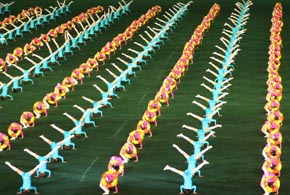 Figure 1
 Figure 2
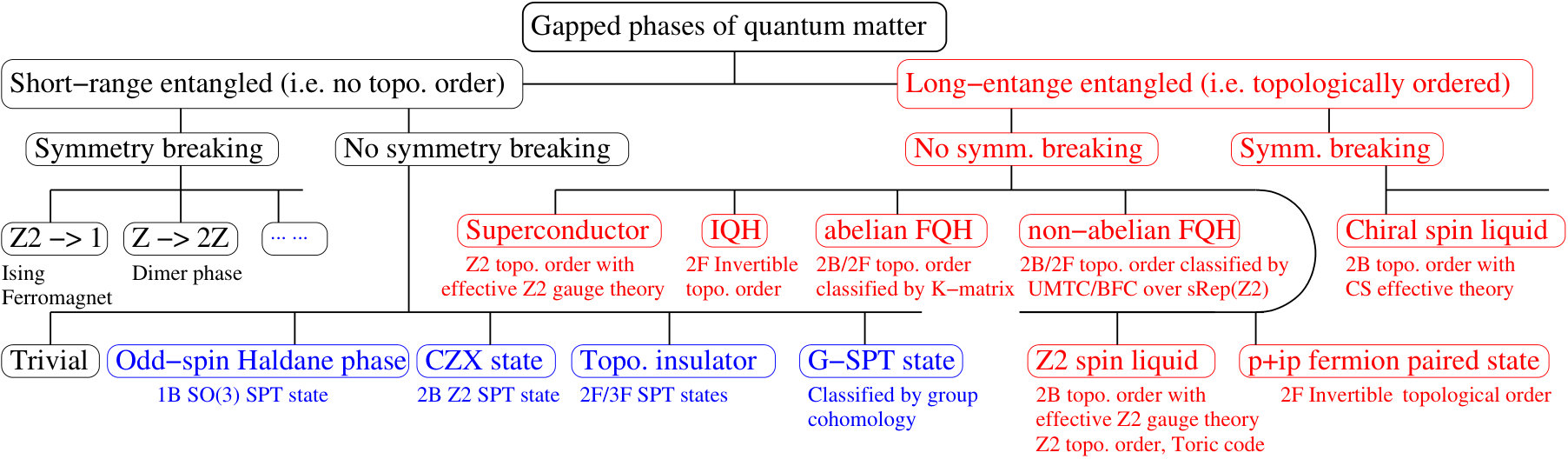 Figure 3
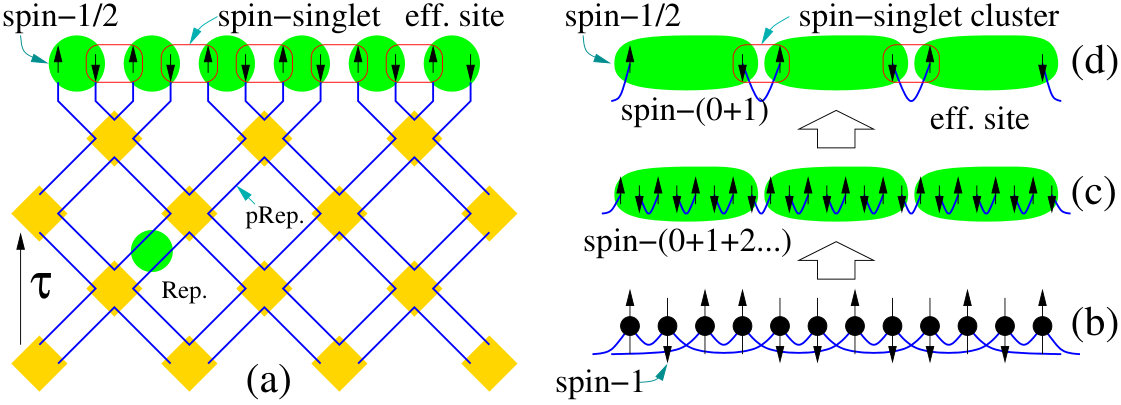 Figure 4
 Figure 5
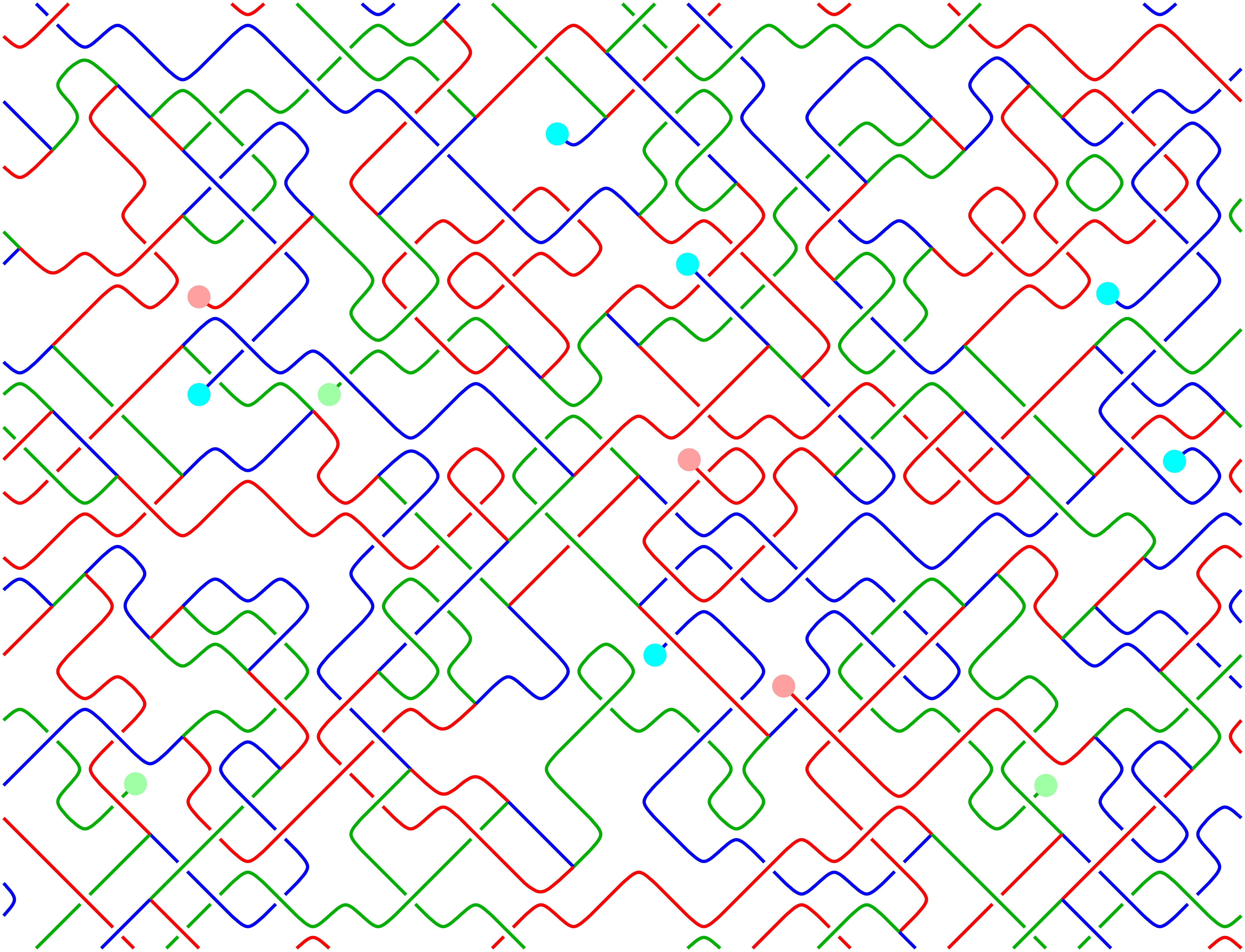 Figure 6
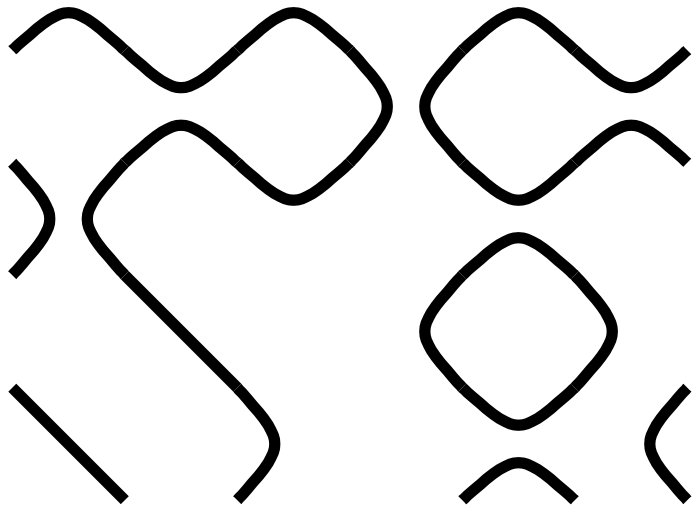 Figure 7
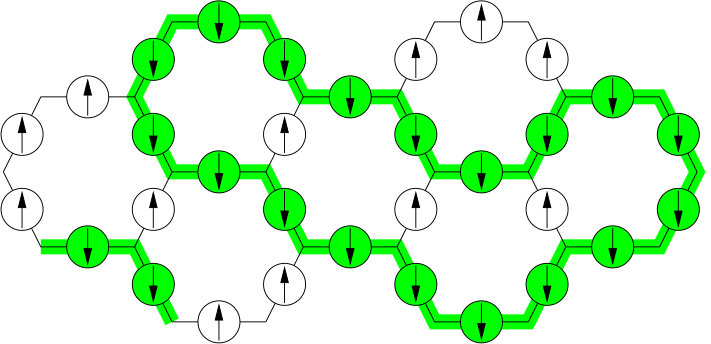 Figure 8
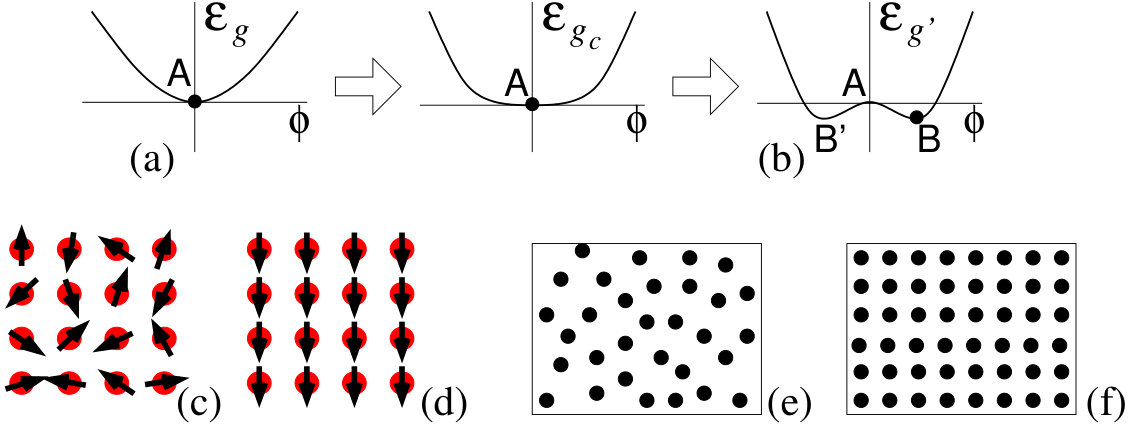 Figure 9
 Figure 10
Peer Reviews
No public reviews on file for this paper yet. If you reviewed it on a platform where reviews are public (OpenReview, ICLR, NeurIPS, ICML), you can paste yours below so the community can read it here.
Videos
No videos yet. Explain this paper in a talk, walkthrough, or lecture? Add one.
For a long time, we thought that only symmetry breaking can give rise to different phases of matter. If there was no symmetry breaking, there would be no pattern and it would be featureless. But now we realize that, for quantum matter at zero temperature, even symmetric disordered liquids can have features, which give rise to topological phases of quantum matter. Some of the topological phases are highly entangled (*i.e. *have topological order), while others are weakly entangled (*i.e. *have SPT order). In this article, we will briefly introduce those new zero-temperature states of matter and their amazing emergent properties. We will also discuss their significance in unifying some most basic concepts in nature.
Choreographed entangle dances: topological states of quantum matter
Xiao-Gang Wen
Department of Physics, Massachusetts Institute of Technology, Cambridge, Massachusetts 02139, USA
Contents
- I Condensed matter goes topological
- II The era of broken symmetry
- III New world beyond symmetry breaking
- IV Topological orders as choreographed quantum dances
- V Even disordered product states are not featureless
- VI Four revolutions in physics and the second quantum revolution
I Condensed matter goes topological
Since the 1980’s, the study of topological phases of quantum matter slowly became more and more active. It now becomes a main stream in condensed matter physics. But what are topological phases? Why people are interested in topological phases? We know that quantum matter refers to states of matter at zero temperature, which can have many different kinds of phases. Topological phases are one class of those zero-temperature phases, that appear featureless and have non-zero energy gaps. The energy gap implies that, like inert gases, topological phases hardly respond to any external perturbations. Featureless and inert, that sounds really boring.
But in fact, topological phases of quantum matter represent a new unexplored world in condensed matter physics. Many amazing new phenomena, such as emergent gauge interaction, emergent Fermi and non-Abelian statistics, are discovered. Some of those new phenomena are beyond wildest imaginations and were thought to be impossible. Those new topological phenomena have a deep impact on different fields of physics and mathematics, such as condensed matter physics, quantum information science, high energy particle physics, algebraic topology and tensor category theory. In my opinion, the topological phases of quantum matter and the associated many-body entanglement represent a second quantum revolution in physics.
II The era of broken symmetry
Our world is very rich. One aspect of its richness is reflected in the existence of many different phases of matter. It turns out that those rich phases of matter can be understood from a symmetry point of view. For example, a liquid has randomly distributed atoms. It has all the symmetries, since it remains the same after we displace and/or rotate it arbitrarily. Having all the symmetry, liquids are featureless. In contrast, a crystal does not have all the symmetry. It remains unchanged only when we displace it by a particular set of distances (integer times of lattice constant). So a crystal has only discrete translation symmetry. The phase transition between a liquid and a crystal is a transition that reduces the continuous translation symmetry to the discrete symmetry. Such a change in symmetry is called “spontaneous symmetry breaking” (see Fig. 1). The rich beautiful crystal structures actually come from the partial breaking of the translation and rotation symmetries.
Landau theory generalizes the above picture to describe any phases and any phase transitions LL58. It points out that different phases are different only because they have different symmetries in the organizations of the constituent particles (such organizations are called orders). As a material changes from one phase to another, what happens is that the symmetry of the organization of the particles changes. Having such a comprehensive theory that describes all phases of matter, one started have a feeling that the condensed matter theory had come to its mature end.
III New world beyond symmetry breaking
III.1 Disordered liquids are not featureless
According to the Landau symmetry breaking theory, the rich beautiful patterns in phases of matter actually come from symmetry breaking. If there was no symmetry breaking, such as in disordered liquids, then there would be no pattern and the state would be featureless. But, in late 1980s, it became clear that even disordered liquids can have features. In a study of high superconductors Kalmeyer and Laughlin (1987); Wen et al. (1989) of a 2-dimensional disordered spin liquid – “chiral spin liquid” – was discovered. Chiral spin liquid is characterized by its absence of any spin order (see Fig. 1c) and its perfect heat conducting edge (since all edge excitations move in the same direction). It was quickly realized that there can be many different chiral spin liquids with exactly the same symmetry Wen (1990a) but different numbers of heat conducting edge modes Wen (1991a). So symmetry alone is not enough to characterize and distinguish different chiral spin liquids. This means that the chiral spin liquids must contain a new kind of order that is beyond the usual symmetry description. The proposed new kind of order was named “topological111The term “topological” was motivated by the low energy effective theory of the chiral spin liquids which is a Chern-Simons (CS) gauge theory Wen et al. (1989) – a topological quantum field theory (TQFT)Witten (1989). order”Wen (1990a)
Unfortunately, the chiral spin liquid has not been realized in experiments222The chiral spin liquid is realized numerically in Heisenberg model on Kagome lattice with -- coupling He and Chen (2015); Gong et al. (2015).. But, people have discovered many different fractional quantum Hall (FQH) phases at semiconductor interface under strong magnetic field. FQH liquids have a property that an electric field will induce a current density in the transverse direction: . It is an amazing discovery that the Hall conductance of a FQH liquid is precisely quantized as a rational number if we measure it in unit of : Klitzing et al. (1980); Tsui et al. (1982). Different quantized correspond to different FQH phases. Just like the chiral spin liquids, those different FQH phases all have the same symmetry and cannot be distinguished by symmetry-breaking. This suggests that FQH liquids may also contain the new topological orders.
III.2 What is the essence of FQH liquids?
C. N. Yang once pointed out that the BCS theory of fermionic superfluid and superconductor capture the essence of the superfluid and superconductor, but what is this essence? To address this question, he developed the theory of off-diagonal long range order Yang (1962) which reveal the essence of superfluid and superconductor. In fact long range correlation of local order parameter is the essence of any symmetry breaking order.
Similarly, Laughlin’s theory Laughlin (1983) captures the essence of the FQH effect, but what is this essence? It turns out that the essence is not long range order. Actually, the essence hidden in chiral spin liquids and FQH effect is so new that it does not even have a name. So we are free to call it “topological order”. In last 20 some years, the theory of topological order was developed trying to understand what is this hidden essence. Our exploration is a journey into an unknown world, which is surprisingly rich and fascinating.
III.3 What is topological order?
In the above discussion, we only refer topological order by what it is not: it is not symmetry breaking order. But this is not enough, we must define it by what it is. In physics, to propose a new concept, we must define it via physical properties that can be measured in experiments and/or numerical calculations. Furthermore, those measurable properties must be robust against any small perturbations that can break any symmetries, in order to define new orders beyond symmetry. As a comparison, we note that superfluid order is defined/characterized by zero viscosity and vortex quantization, that are robust against any small perturbations that do not break the particle-number-conservation symmetry. Thus, superfluid order is an order protected by particle-number-conservation symmetry.
How to define/characterize topological order? Influenced by Landau symmetry breaking theory, people still try to use order parameter and long range correlation to characterize the essence of FQH liquids Girvin and MacDonald (1987); Zhang et al. (1989); Read (1989), which result in the Ginzburg-Landau-Chern-Simons effective theory of quantum Hall states. But the order parameter and long range correlation used in the characterization are not physical. In fact, all the local physical operators have a short-ranged correlations in FQH liquids. So to reveal the essence of FQH liquids, we must think in a new direction.
Motivated by research in chiral spin state Wen (1990a), we identified new topological properties that can reveal the essence of FQH liquids: (1) the ground state degeneracyWen (1990a); Wen and Niu (1990) on torus (and other spaces with non-trivial topology); (2) the non-Abelian geometric phase333For an explanation of non-Abelian geometric phase, see LABEL:WZ8411. of those degenerate ground states Wen (1990a) (which form a representation of modular group ); (3) the gapless edge modes Halperin (1982); Wen (1990b). We showed that all those properties are robust against any small perturbations (even those that break all the symmetries) Wen and Niu (1990); Wen (1990b). Thus those robust topological properties play the role of order parameter which allow us to define the notion of topological order macroscopically.
The notion of topological order can also be defined microscopically. First, we reminder readers that a product state is a many-body state formed by a fixed pattern of local quantum state on each site, such as the anti-ferromagnetic state: . Product states are unentangled states. A spin flip represents an excitation above the anti-ferromagnetic ground state. If such an excitation costs a finite energy, then we say the ground state have a finite energy gap. The notion of product state is opposite to that of topological order in the sense that a gapped product state has no topological order. More generally: a topologically ordered state is a gapped ground state444More precisely, a topologically ordered state is a gapped liquid state, a notion introduced in LABEL:ZW1490,SM1403. that cannot be continuously deformed into a product state smoothly without closing the energy gap (*i.e. *without phase transition). Two topologically ordered states belong to the same phase (*i.e. *have the same topological order) if they can deform into each other smoothly without phase transition. From the above definition, one can show that all the states with no topological order actually belong to the same phase, since the deformation mentioned above can deform any product state into any other product state.
We note that the deformations that do not close energy gap can only modify the entanglement over a short distance. Thus we can also call the states with no topological order as short-range entangled states, and states with topological order as long-range entangled states Chen et al. (2010). We see that topological order is nothing but pattern of long range entanglement. Long range entanglement is the essence of topological order, as well as the essence of FQH liquids and chiral spin liquids.
IV Topological orders as choreographed quantum dances
Topological order is a very new concept that actually describes quantum entanglement in many-body systems. Such a concept is very remote from our daily experiences and it is hard to have an intuition about it. Here we would like describe topological order through some intuitive pictures.
IV.1 Static pattern versus dancing pattern
The product states (which correspond to symmetry breaking states) are characterized by their fixed static patterns, such as (see Fig. IV.1a,b). In contrast, topologically ordered ground states are superpositions of many different configurations, such as different spin configurations . Such kind of states are also referred as having strong quantum fluctuations. In the following, we will use dancing to gain an intuitive picture of topological order (*i.e. *pattern of quantum fluctuation or quantum entanglement).
A topological order is described by a global dance (see Fig. IV.1c,d), where every particle (or spin) is dancing with every other particle (or spin) in a very organized way: (a) all spins/particles dance following a set of local dancing “rules” trying to lower the energy of a local Hamiltonian. (b) the local dancing “rules” enforce a global dancing pattern, which corresponds to the topological order (*i.e. *long-range entanglement).
For example in FQH liquid, the electrons dance according to the following local dancing rules:
(a) electron always dances anti-clockwise which implies that the electron wave function only depend on the electron coordinates via .
(b) each electron always takes exactly “three steps” to dance around any other electron, which implies that the phase of the wave function changes by as we move an electron around any other electron.
The above two local dancing rules enforce a global dancing pattern which corresponds to the Laughlin wave function Laughlin (1983) . Such a collective dancing gives rise to the topological order (or long range entanglement) in the filling fraction FQH liquid (*i.e. *with Hall conductance ).
In additional to FQH liquids, some spin liquids555Spin liquids refer to ground states of quantum spin systems that do not spontaneously break any symmetry. also contain topological orders Read and Sachdev (1991); Wen (1991b), where the spins dance according to the follow local dancing rules:
(a) Down spins form closed strings with no open ends (see Fig. 3).
(b) Strings can otherwise move and reconnect freely.
The global dance formed by the spins following the above dancing rules gives us a quantum spin liquid which is a superposition of all closed string configurations:Kitaev (2003) |\Phi_{\text{string}}\rangle=\sum_{\text{all string pattern}}\left|\vtop{\vskip-10.84006pt\hbox{\includegraphics[height=18.06749pt]{strnetS}}}\right\rangle. Such a state is a string condensed state Levin and Wen (2005), which gives rise to the simplest topological order – topological order Read and Sachdev (1991); Wen (1991b).
IV.2 Topological orders in flat land
After having an intuitive picture of topological order in terms of quantum dances, we like to ask, which topological orders have been observed in experiments? Which topological orders are possible? What properties do they have?
IV.2.1 Fractionalization without fragmentation
In addition to the filling fraction FQH liquid, many other FQH liquids with were also discovered in experiments. Those FQH states are described by more complicated dancing pattern. For example, the electrons in FQH liquid have the following dancing pattern: (1) First, the electrons spontaneously separate into two components; (2) all the electrons dances anti-clockwise; (3) each electron always takes exactly three steps to dance around any other electron in the same component, but takes exactly two steps to dance around any other electron in the other component. We can use a symmetric integer matrix to encode such a dancing rule: K=\big{(}{3\ 2\atop 2\ 3}\big{)}. Similarly, the FQH liquid is described by K=\big{(}{1\ 2\atop 2\ 1}\big{)}, while the FQH liquid is described by a 3-by-3 -matrix since its electrons separate into three components.
Knowing the dance pattern encoded by -matrix, we can calculate all the topological properties of the FQH state from . For example the quantized Hall conductance is given by , where describes the charge of the electron in each component. As if the precisely quantized Hall conductance is not amazing enough, the FQH liquids (and other topologically ordered states) also have particle-like excitations above the ground state, that may carry fractional charges Laughlin (1983) and fraction statistics Arovas et al. (1984); Halperin (1984). We know that FQH liquids are formed by electrons, which all carry integer charge. It is hard to believe the appearance of fractionally charged excitations without the electrons getting fragmented into smaller pieces. But this unbelievable prediction has been confirmed by noise measurement in experiments de Picciotto et al. (1997); Saminadayar et al. (1997).
The fractional charge is hard to imagine, but the fraction statistics is even more exotic. We know that exchanging two identical particles will change their quantum amplitude by a phase factor . If the particles are bosons, then . If the particles are fermions, then . In nature, bosons and fermions are the only two types of elementary particles, and their compositions are always bosons or fermions. However, the excitations in FQH liquids can give us totally new types of particles where is not zero nor Leinaas and Myrheim (1977); Wilczek (1982). Such new type of particles is said to have Abelian fractional statistics, or simply fractional statistics. All those fractionalization phenomena are not due to the fragmentation of electrons, but due to the long range entanglement between electrons in topologically ordered states.
As a result, the fractionalization is determined by the -matrix that describes the dancing pattern (*i.e. *the pattern of long range entanglement) Wen and Niu (1990); Wen and Zee (1992). First, let us view each column of the -matrix as a vector, and those vectors span a lattice. The unit cell of such lattice contain det number of integer vectors . Those integer vectors happen to label det distinct types of fractionalized excitations. The fractional charge of the excitation is then given by , and the fractional statistical angle by .
It turns out that our simple dancing-step picture of topological order and long range entanglement is very powerful and comprehensive: all 2+1D Abelian topological orders (*i.e. *with only Abelian fractional statistics) can be described by such kind of dance. In other words, all 2+1D Abelian topological orders are classified by symmetric integer -matrices Wen and Zee (1992). This dancing-step picture can be generalized even further which leads to a pattern-of-zeros theory for FQH liquids Seidel and Lee (2006); Bergholtz et al. (2006); Wen and Wang (2008), that can even describe non-Abelian FQH liquids with non-Abelian statistics.
IV.2.2 Even degrees of freedom can be fractionalized
But what is non-Abelian statistics? We know that the Abelian statistics is determined by the phase as we exchange two identical particles. However, if two particles have internal degrees of freedom, which leads to a degeneracy , then exchanging the two particles while leads to a unitary matrix. In this case, we say the particles have a non-Abelian statistics Wu (1984); Goldin et al. (1985); Witten (1989); Kitaev (2006).
We see that the key to have non-Abelian statistics is the degeneracy from the internal degrees of freedom of the particles. If the total degeneracy is for identical particles, then internal degrees of freedom of each particle is given by in limit. For example, for spin-1/2 electron, and . Thus the internal degrees of freedom of an electron is 2, which corresponds to a 2-dimensional vector space in quantum theory. We will call the quantum dimension of the particle. But for particle with non-Abelian statistics, may not even be an integer,666Even though and are integers, may not be integer. as if the internal degrees of freedom of the particle are described by a vector space with a non-integer dimension . In this case, we say that the particle has a fractional degrees of freedom!
Non-Abelian statistics, in particular its fractional degrees of freedom, is so strange, it hard to imagine such a thing can appear in condensed matter systems formed by simple electrons and atoms. But the quantum entanglement between electrons is a very powerful “creator”, it can even make such an impossibility to happen.
A concrete realization of non-Abelian statistics in FQH liquids was first proposed in LABEL:Wnab,MR9162. One of the proposed FQH liquid at is given by the wave function Wen (1991c) , where is the many-electron wave function with filled Landau levels. It has a type non-Abelian statistics (*i.e. *Fibonacci anyon), with quantum dimension (*i.e. *log qubits). Such non-Abelian statistics also appear in parafermion FQH state Read and Rezayi (1999).
The degeneracy from non-integer quantum dimension cannot be viewed as local degrees of freedom associated with each particle, despite we call it “the internal degrees of freedom” of the particle. Such a name, in this aspect, is a little misleading. In fact, those degrees of freedom are distributed between well separated non-Abelian particles and are intrinsically non-local. As a result, the quantum information carried by those degenerate states is immune from the decoherence by environment which interact locally with each particle. The degeneracy from non-Abelian particles is the same type of topological degeneracy as the ground state degeneracy of topological order on torus. They both are robust against any local perturbations, including any perturbations acting on the particles. So we can use non-Abelian topological order to perform topological quantum computation Freedman (2001); Freedman et al. (2002); Kitaev (2003, 2006). In particular, non-Abelian topological order can perform universal topological quantum computation Freedman et al. (2002).
A simpler non-Abelian FQH liquid at is given by Wen (1991c) or by Moore and Read (1991). They both have type non-Abelian statistics, with quantum dimension (a half qubit!). Such non-Abelian particle is incorrectly called Majorana fermion by some. The experimentally realized FQH state is likely to be such non-Abelian FQH state Willett et al. (1987); Dolev et al. (2008); Radu et al. (2008). But unfortunately, non-Abelian topological order cannot perform universal topological quantum computation Freedman et al. (2002).
IV.2.3 String liquid in spin liquid: emergence of gauge theory
FQH liquids and chiral spin liquids discussed above can not have time-reversal symmetry. However, there are topological orders with time-reversal symmetry, such as the topological order defined by its emergent -gauge theory at low energy. The topological order (and the emergent -gauge theory) was first proposed to exist in 2+1D spin liquid with frustrations Read and Sachdev (1991); Wen (1991b). Later, a numerical calculation confirmed its existence in a closely related quantum dimmer model on triangular lattice Moessner and Sondhi (2001). If we break the spin rotation symmetry, the topological order can be realized by an exactly soluble model – the toric code model Kitaev (2003). The toric code model reveals that the topological order happen to be the topological order in the string dance of non-oriented loops described in section IV.1. Unlike FQH states whose boundary is always gapless, those time-reversal symmetric topological orders can have boundaries that are gapped Kitaev and Kong (2012).
In addition to the above theoretical realizations, the -topological order Read and Sachdev (1991); Wen (1991b) may be realized by Herbertsmithite (spin-1/2 on Kagome lattice) Helton et al. (2007), as suggested by recent experiments Fu et al. (2015); Han et al. (2016). The early numerical calculation of LABEL:YHW1173 suggested the spin-1/2 Heisenberg model on Kagome lattice to be gapped, but the details of the results are inconsistent with -topological order, which led people to suspect that the model is gapless. A more recent numerical calculation suggests the model to have a -topological order with long correlation length (10 unit cell length) Mei et al. (2017), while several other calculations suggest gapless spin liquid ground states Jiang et al. (2016); Liao et al. (2017); He et al. (2017).
We like to point out that the string dancing picture for the topological order and emergent gauge theory can be generalized by allowing strings to have more types and by allowing three strings to join in a certain way (see Fig. 4). This gives rise to string-net condensed state Levin and Wen (2005), which can leads to non-Abelian topological orders and emergent non-Abelian gauge theory. In fact, the strings behave like the “electric” flux of the gauge theory and the string density wave corresponds to non-Abelian gauge field that gives rise to gauge bosons. The ends of strings correspond gauge charges, which may carry non-Abelian statistics in 2+1D or Fermi statistics in 3+1D..
Such a string-net construction is also very powerful and comprehensive: it can give rise to all 2+1D topological orders with gappable boundaries Freedman et al. (2004); Levin and Wen (2005). Such a construction has a mathematical root in unitary fusion category theory Etingof et al. (2005) and is closely related to the Turaev-Viro invariant of 3-dimensional manifolds Turaev and Viro (1992). To be more precise, unitary fusion categories classify 2+1D topological orders with gappable boundaries.
V Even disordered product states are not featureless
For a long time, we thought that the symmetry breaking in the product states describes all possible phases of matter. Now we realize the existence of long-range entangled states, which leads to rich topologically ordered phases. If we consider only product states and assume no symmetry breaking, we would expect the corresponding symmetric product states to be trivial. However, this naive guess turns out to be wrong. If the Hamiltonian has a symmetry, even when its ground state is a product state that does not spontaneously break any symmetry, such ground state can still be non-trivial. This is the most “trivial” non-trivial state of quantum matter.
V.1 Haldane phase for integer spin chain
Due to quantum fluctuations, the ground state of antiferromagnetic spin-1/2 chain does not break the spin-rotation symmetry. However, it almost breaks the symmetry in the sense that spin-spin correlation has a slow algebraic decay (similar non-decaying long-range order) and the chain is gapless (as if having a Goldstone mode). For spin- chain with , the quantum fluctuations are weaker than the spin-1/2 chain. So people believe that a spin- chain also almost breaks the symmetry, which is also gapless and have an algebraic decaying spin-spin correlation.
But in 1983, Haldane pointed Haldane (1983) out that the spin chain is actually gapped and the spin-spin correlation has an exponential decay when the spin is integer. The gapped ground state of integer spin chain is called Haldane phase. At that time, people did not distinguish even-integer-spin chain from odd-integer-spin chain, and believed the Haldane phase for both even- and odd-integer spin chain to be a trivial disordered phase, just like the product state formed by spin-0 on each site.
V.2 Odd-integer and even-integer are different: the essence of
odd-integer Haldane phases
In fact, only even-integer spin chains behave like the product states formed by spin-0 on each site. The odd-integer spin chains actually give rise to a non-trivial state!
What is the essence of Haldane phase for odd-integer spins? In LABEL:GW0931, the spin-1 chain was studied using a tensor network renormalization approach. It was found that the tensor network, describing the space-time spin fluctuations, flows to a so called corner-double-line tensor under the coarse graining of the network (see Fig. 5a). To understand the physical meaning of corner-double-line structure, let us describe the coarse-graining process from the point of view of ground state wave function.
The ground state of spin-1 chain (see Fig. 5b) is formed by spin-1’s on each site. We may group a number of sites into an effective site. When the effective site is large enough, the direct entanglement between two spin-1’s (represented by the blue curves) can only appear between the neighboring effective sites. Then we can use an unitary transformation acting within an effective site to simplify the entanglement within each effective site (see Fig. 5c). After removing the degrees of freedom that are entangled only within each effective site, we obtain a simplified coarse-grained wave function (see Fig. 5d) which corresponds to the corner-double-line structure. We note that, in the coarse-grained wave function, each effective site has four states: spin-0 spin-1, which can be viewed as two spin-1/2’s: spin-1/2 spin-1/2. We also see that the coarse-grained wave function is a product state of spin-singlets (see Fig. 5a,d). This seems confirm that the Haldane phase is a trivial product state formed by spin-0’s.
However, the coarse-grained wave function is not the product state formed by spin-singlets on each site, but the product state formed by spin-singlets between sites (see Fig. 5). Furthermore, the spin-singlets between sites are formed by spin-1/2’s Gu and Wen (2009) which are not representation of , but projective representations of Pollmann et al. (2010); Chen et al. (2011a). This feature and the associated corner-double-line structure is robust against any perturbations that preserve of symmetry. In other words, the product state formed by spin-singlets on each site and the product state formed by spin-singlets between sites belong to two different phases, provided that the spin-singlets are formed by projective representations of (*i.e. *half-integer spins). In this case, we cannot deform one into the other without encounter gap closing phase transition, if the deformation preserve the symmetry. Thus the Haldane phase of spin-1 chain is actually a new phase of matter robust against any symmetry preserving perturbations despite it is a product state that does not break any symmetry. This new phase of matter was named SPT phase (which stands for symmetry protected trivial phase if one stresses its nature of short-range entanglement, or symmetry protected topological phase if one stresses its nature of beyond symmetry breaking).
We see that an essence of spin-1 Haldane phase is the corner-double-line structure in coarse-grained tensor network (see Fig. 5a), or entangled clusters between sites without inter-cluster entanglement in coarse-grained wave function (see Fig. 5d). LABEL:PBT1039 also pointed out that Haldane phase has degenerate entanglement spectrum which describes the intra-cluster entanglement. The fact that the intra-cluster entanglement is between projective representations of the symmetry is the other essence of spin-1 Haldane phase (see Fig. 5a,d).
V.3 SPT phases: the most trivial non-trivial phases
In the presence of symmetry, even product states that do not spontaneously break the symmetry can be non-trivial! As unentangled states, SPT phases must be one of the simplest phases of matter. Strictly speaking, SPT phases have the following defining properties: (1) different SPT phases can all be deformed into the same trivial product state smoothly without phase transition if the deformations break the symmetry, and (2) they cannot be deformed into each other smoothly without phase transition if the deformations preserve the symmetry.
Such a point of view of SPT phases (*i.e. *stressing their unentangled trivialness) leads to a fast development of the field. Indeed, only one year later, a classification Chen et al. (2011a); Fidkowski and Kitaev (2011); Schuch et al. (2011) of all 1+1D SPT phases protected by symmetry group was found in terms of the projective representations of Pollmann et al. (2010). This leads to a complete classification of all 1+1D gapped phases of matter. In particular, the classification predicts that all 1+1D SPT states have symmetry protected boundary degeneracy which is described by the projective representations of the symmetry. Such a measurable character of SPT states agrees with an earlier result Affleck et al. (1987) that spin-1 Haldane phase has a degenerate spin-1/2 degrees of freedom at a chain end. However, LABEL:AKL8799 also predicts degenerate spin-1 degrees of freedom at a boundary of spin-2 Haldane phase, which seems to indicate that the spin-2 Haldane phase is also a non-trivial SPT phase. Now we know that such spin-1 boundary degrees of freedom are not protected by symmetry since they can be gapped out by adding several spin-2 degrees of freedom to the boundary without breaking the symmetry. Thus the spin-2 Haldane phase is a trivial SPT phase Pollmann et al. (2012).
Two years later, a systematic theory of bosonic SPT phases in all -dimensions was developed based on group cohomology Chen et al. (2013), and a theory for the boundary of SPT phases was developed by generalizing the Wess-Zumino-Witten model Wess and Zumino (1971); Witten (1983). One found that SPT phases cannot have a trivial gapped boundary Chen et al. (2011b); Vishwanath and Senthil (2013): the boundary must be gapless, symmetry breaking, or topologically ordered (if the boundary is 2-dimensional or higher). Many new phases of matter were discovered Chen et al. (2011b); Wang and Senthil (2013); Senthil (2015). Shortly after that, a classification of all bosonic SPT phases in -dimensions was obtained based group cohomology Wen (2015a), and based on cobordism Kapustin (2014).
SPT phases can appear in both bosonic and fermionic systems. Beside the bosonic spin-1 Haldane phase that has been realized by experiments Buyers et al. (1986), the other well known SPT phase is the fermionic topological insulator protected symmetry Kane and Mele (2005); Moore and Balents (2007); Roy (2009); Fu et al. (2007); Qi et al. (2008); Chiu et al. (2016) that is also realized by experiments Konig et al. (2007); Hsieh et al. (2008). Here is the symmetry group generated by time reversal symmetry, and is the symmetry group for charge conservation. The early theories of topological insulators and topological superconductors Roy (2006) are based on non-interacting fermions , in terms of -theory Kitaev (2009) or replica theory Ryu et al. (2010). But many topological insulators and topological superconductors obtained in non-interacting theory are actually not topological insulators and topological superconductors in the presence of interactions Fidkowski and Kitaev (2010). With interaction, topological insulators and topological superconductors are not described by -theory or replica theory. In this case, they should be viewed as fermionic SPT phases protected by a symmetry , which are described by group-supercohomology theory of Gu and Wen (2014); Gaiotto and Kapustin (2016), spin cobordism theory Kapustin et al. (2015), and/or modular extensions of sRep (only in 2+1D) Lan et al. (2017).
VI Four revolutions in physics and the second quantum revolution
It happens several times in the history of physics that a truly new phenomenon requires a new mathematics to describe it. In fact, the appearance of new mathematics is a sign of truly new discovery and a revolution in physics. For example, Newton’s theory of mechanics requires calculus to describe the phenomena of curved motion of particles that was believed to form all matter. Maxwell theory of electromagnetism reveals a new form of matter: “wave-like” matter (the electromagnetic waves and light). It requires a mathematical theory of fiber bundle to describe it. Einstein’s theory of general relativity reveals yet another form of “wave-like” matter – gravitational wave. It requires Riemannian geometry. Quantum theory unified “particle-like” matter and “wave-like” matter, which requires linear algebra. Those are four major revolutions in physics. Newton’s and Maxwell’s cases are the only two times when the physicists are ahead of mathematicians, *i.e. *the related mathematics had not been invented yet when developing those theories.
Right now, we are facing a similar situation. For a long time, we thought that different phases of matter are described by symmetry breaking patterns, which are classified by group theory. Now we know that there are many new phases of quantum matter (*i.e. *phases at zero temperature) that are beyond symmetry breaking (see Fig. 6). Those new phases are described by the patterns of many-body quantum entanglement.
Many-body entanglement is not only the origin of many new states of quantum matter (such as topological orders), it is also the origin of emergent gauge fields, and emergent Fermi or fractional statistics. Those fundamental properties of nature are simply derived emergent properties the simple bosonic qubits that form the system. Recent work found that our empty space itself might be a particular (long-range) entangled qubit ocean, whose emergent gauge fields and fermions are the elementary particles in the standard model Wen (2003, 2013); You and Xu (2015). Such an emergent picture represents an unification of gauge interaction and Fermi statistics (not just an unification of different gauge interactions). It resents an unification of matter and information: it from qubits (see Fig. 4).
Many-body entanglement (*i.e. *topological order) is a truly new phenomenon. It requires a new mathematics to describe it. But what mathematics describes pattern of many-body entanglement (and classify topological orders and SPT orders)? We have seen that some modern mathematical theories are required. To classify SPT orders, we need group cohomology Chen et al. (2013); Wen (2015a) or cobordism Kapustin (2014); Kapustin et al. (2015). To classify 2+1D bosonic topological orders, we need unitary modular tensor category Kitaev (2006); Rowell et al. (2009); Wen (2015b). To classify 2+1D fermionic topological orders, we need unitary braided fusion categories over sRep Lan et al. (2016). But the mathematical theory to classify topological orders in 3D and beyond is yet to be developed.
Many-body entanglement features new topological states of quantum matter, topological quantum computation, unification of matter and information, origin of matter (and even space) from entangled qubits, and new mathematical foundation of nature. Thus many-body entanglement (*i.e. *topological order) represents a second quantum revolution. Condensed matter physics is not at its beginning of end. It is just the end of beginning. It is an exciting time in physics.
This research was supported by NSF Grant No. DMR-1506475.
The reference list from the paper itself. Each links out to its DOI / PubMed record.
- 1Kalmeyer and Laughlin (1987) V. Kalmeyer and R. B. Laughlin, Phys. Rev. Lett. 59 , 2095 (1987) . · doi ↗
- 2Wen et al. (1989) X.-G. Wen, F. Wilczek, and A. Zee, Phys. Rev. B 39 , 11413 (1989) . · doi ↗
- 3Wen (1990 a) X.-G. Wen, Int. J. Mod. Phys. B 04 , 239 (1990 a) . · doi ↗
- 4Wen (1991 a) X.-G. Wen, Phys. Rev. B 43 , 11025 (1991 a) . · doi ↗
- 5Witten (1989) E. Witten, Commun. Math. Phys. 121 , 351 (1989) . · doi ↗
- 6He and Chen (2015) Y.-C. He and Y. Chen, Phys. Rev. Lett. 114 , 037201 (2015) , ar Xiv:1407.2740 . · doi ↗
- 7Gong et al. (2015) S.-S. Gong, W. Zhu, L. Balents, and D. N. Sheng, Phys. Rev. B 91 , 075112 (2015) , ar Xiv:1412.1571 . · doi ↗
- 8Klitzing et al. (1980) K. v. Klitzing, G. Dorda, and M. Pepper, Phys. Rev. Lett. 45 , 494 (1980) . · doi ↗