Unraveling the role of dipolar versus Dzyaloshinskii-Moriya interaction in stabilizing compact magnetic skyrmions
Anne Bernand-Mantel, Cyrill B. Muratov, Thilo M. Simon

TL;DR
This paper presents a micromagnetic analysis that clarifies how dipolar and Dzyaloshinskii-Moriya interactions influence the size and stability of magnetic skyrmions, emphasizing the importance of full stray field energy.
Contribution
It introduces analytical formulas accounting for full stray field energy, distinguishing the roles of DMI and dipolar interactions in skyrmion stability and size.
Findings
Dzyaloshinskii-Moriya and dipolar interactions are key to skyrmion properties.
Analytical expressions for skyrmion radius and energy are derived.
Full stray field energy is crucial for understanding skyrmion behavior.
Abstract
Magnetic skyrmions have been the subject of extensive experimental studies in ferromagnetic thin films and multilayers, revealing a diversity in their size, stability and internal structure. While the orthodox skyrmion theory focuses on the Dzyaloshinskii-Moryia interaction (DMI) and neglects higher-order energy terms, it is becoming clear that the full stray field energy needs to be taken into account to understand these recent observations. Here we present a micromagnetic study based on rigorous mathematical analysis which allows to account for the full stray field energy in the thin film and low DMI regime. In this regime, the skyrmion profile is close to a Belavin-Polyakov profile, which yields analytical expressions for the equilibrium skyrmion radius and energy. The obtained formulas provide a clear identification of Dzyaloshinskii-Moryia and long-range dipolar interactions as two…
Click any figure to enlarge with its caption.
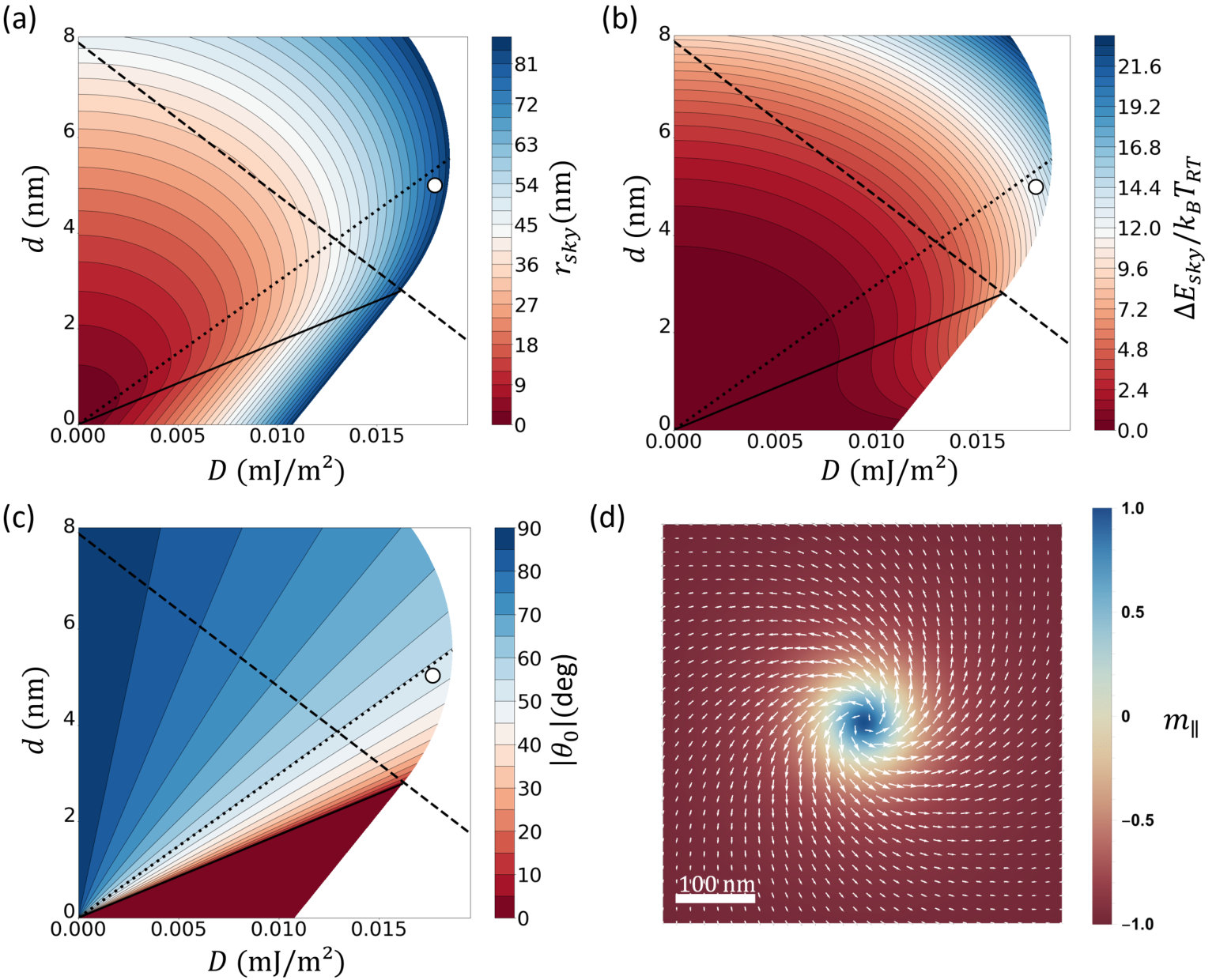 Figure 1
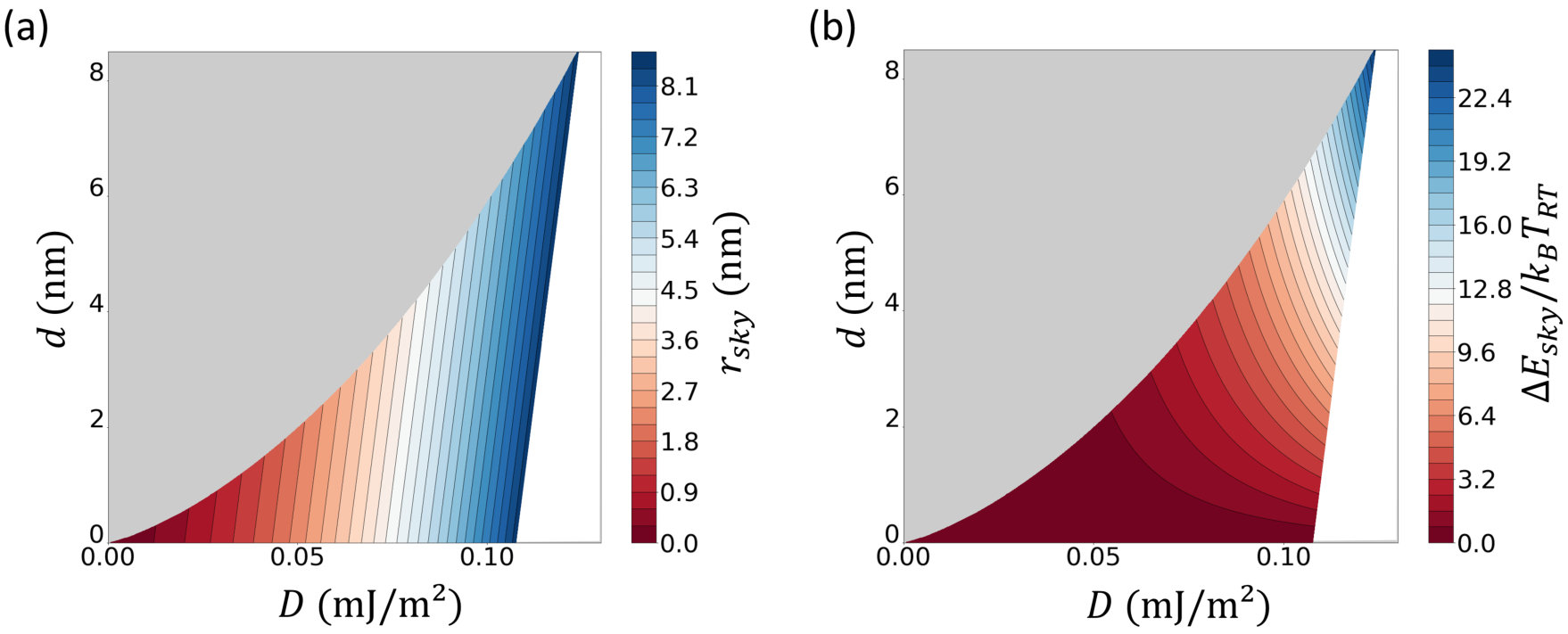 Figure 2
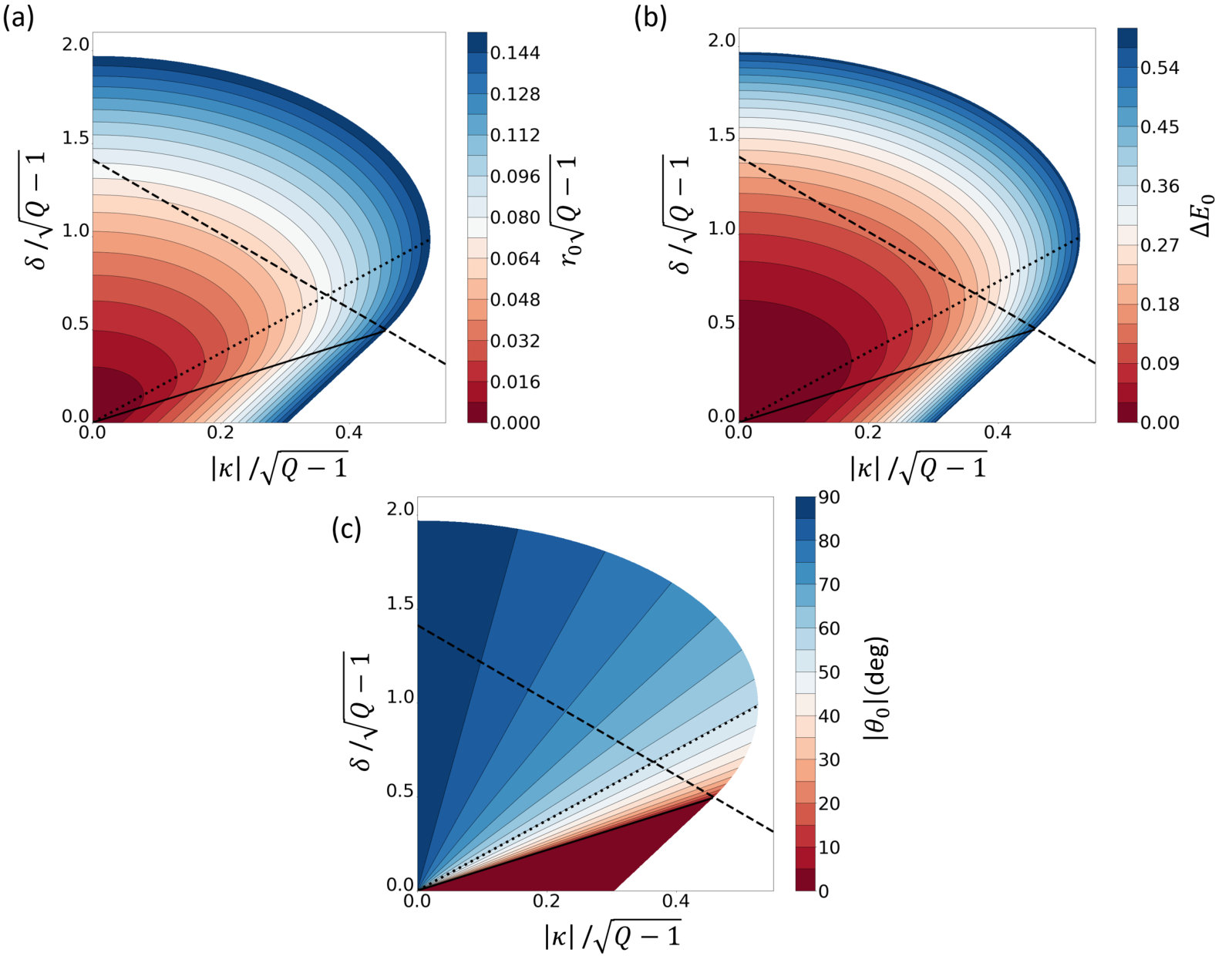 Figure 3
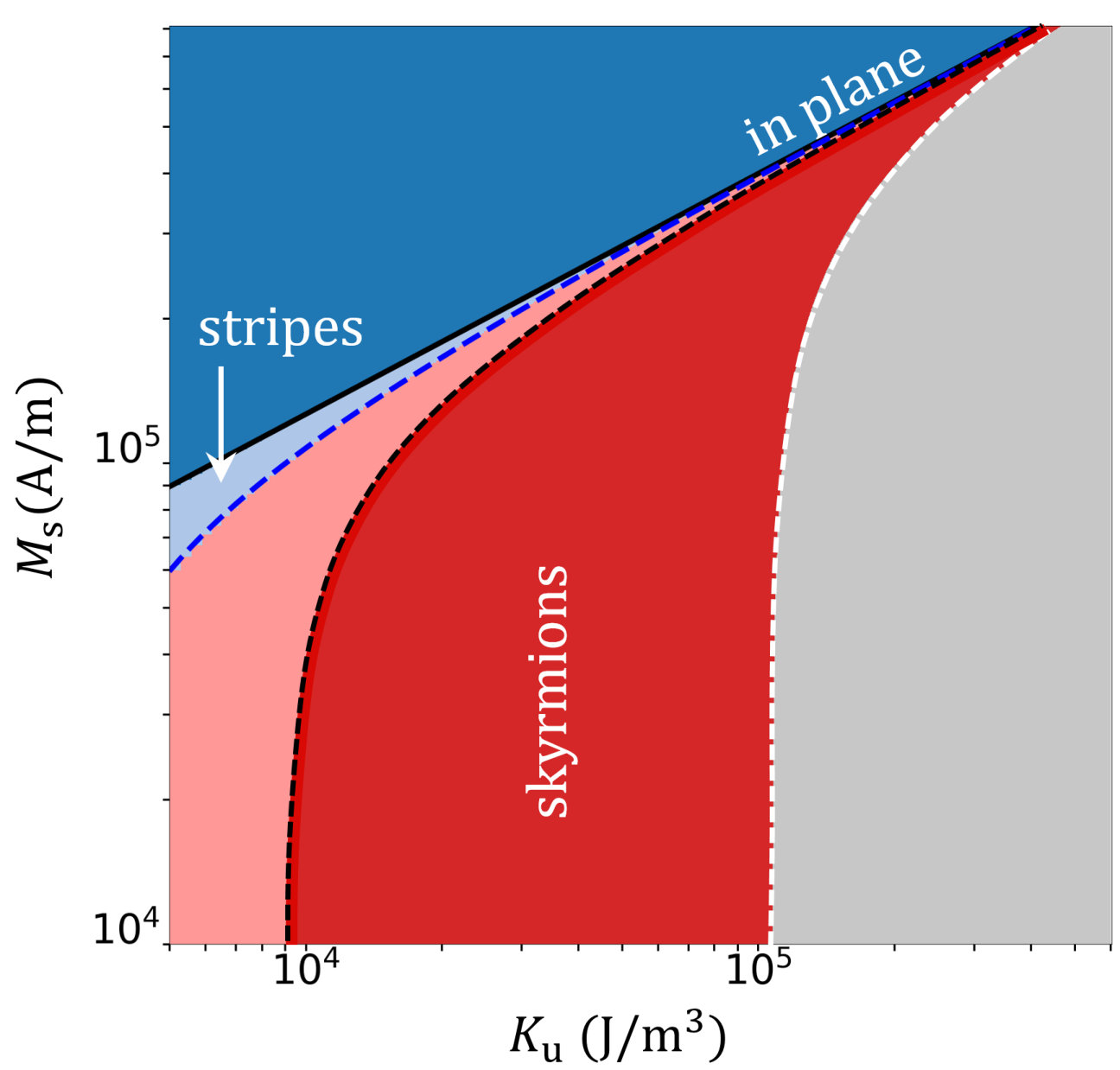 Figure 4
Peer Reviews
No public reviews on file for this paper yet. If you reviewed it on a platform where reviews are public (OpenReview, ICLR, NeurIPS, ICML), you can paste yours below so the community can read it here.
Videos
No videos yet. Explain this paper in a talk, walkthrough, or lecture? Add one.
Unraveling the role of dipolar versus Dzyaloshinskii-Moriya interaction in stabilizing compact magnetic skyrmions
Anne Bernand-Mantel
Université de Toulouse, Laboratoire de Physique et Chimie des Nano-Objets, UMR 5215 INSA, CNRS, UPS, 135 Avenue de Rangueil, F-31077 Toulouse Cedex 4, France
Cyrill B. Muratov
Department of Mathematical Sciences, New Jersey Institute of Technology, Newark, New Jersey 07102, USA
Thilo M. Simon
Department of Mathematical Sciences, New Jersey Institute of Technology, Newark, New Jersey 07102, USA
Institute for Applied Mathematics, University of Bonn, Endenicher Allee 60, 53115 Bonn, Germany
Abstract
We present a theoretical study of compact magnetic skyrmions in ferromagnetic films with perpendicular magnetic anisotropy that accounts for the full stray field energy in the thin film and low interfacial DMI regime. In this regime, the skyrmion profile is close to a Belavin-Polyakov profile, which yields analytical expressions for the equilibrium skyrmion radius and energy. The obtained formulas provide a clear identification of Dzyaloshinskii-Moryia and long-range dipolar interactions as two physical mechanisms determining skyrmion size and stability.
I INTRODUCTION
Magnetic skyrmions are a prime example of topologically nontrivial spin textures observed in a variety of magnetic materials. Their nucleation and annihilation in an otherwise uniformly magnetized ferromagnet is enabled by the discrete nature of matter. Romming et al. (2013); Verga (2014); Cortés-Ortuño et al. (2017); Hagemeister et al. (2015) Magnetic skyrmions emerge when the exchange and anisotropy energies promoting parallel alignment of spins in a ferromagnet enter in competition with energies favoring non-collinear alignment of spins such as the Dzyaloshinskii-Moriya interaction (DMI),Bogdanov and Yablonskii (1989); Bogdanov et al. (1989) the long-range dipolar interaction Yu et al. (2016a); Montoya et al. (2017) or higher-order exchange interactions.Ivanov et al. (1990); Abanov and Pokrovsky (1998); Okubo et al. (2012) In particular, DMI is at the heart of a large number of magnetic skyrmion observations in recent years. This antisymmetric exchange interaction is related to the lack of structural inversion symmetry and is present in a variety of bulk chiral magnets. Mühlbauer et al. (2009); Yu et al. (2010); Tokunaga et al. (2015); Kézsmárki et al. (2015); Seki et al. (2012) Interfacial DMI induced by the symmetry breaking in ferromagnetic heterostructures with asymmetric interfaces Bode et al. (2007); Heide et al. (2009); Yang et al. (2015) also leads to the formation of skyrmions in thin ferromagnetic layers Heinze et al. (2011); Romming et al. (2013); Hervé et al. (2018) and multilayers.Moreau-Luchaire et al. (2016) Another classical energy term known to favor non-collinear spin alignment in ferromagnets is the dipolar energy, also called stray field or demagnetizing energy.Hubert and Schäfer (1998) A manifestation of the long-range nature of this energy in thin films with perpendicular magnetic anisotropy is the appearance of micron-sized magnetic bubble domains.Kooy and Enz (1960); Bobeck (1967); Chaudhari et al. (1973); Montoya et al. (2017) The equilibrium shape and size of these domains is determined by the balance between the long-range dipolar interaction and the energy cost of the bubble related to the domain wall energy and the Zeeman energy. Bernand-Mantel et al. (2018)
The orthodox theory of skyrmions in ultrathin ferromagnetic layers with interfacial DMI relies on a model that accounts for the dipolar interaction through an effective anisotropy term, neglecting long-range effects.Ivanov et al. (1990); Rohart and Thiaville (2013) At the same time, in single ferromagnetic layers with interfacial DMI, large chiral skyrmions, also called skyrmionic bubbles have been observed, Jiang et al. (2015); Büttner et al. (2015); Woo et al. (2016); Yu et al. (2016b); Schott et al. (2017) suggesting a nontrivial interplay between DMI and long-range dipolar effects. The competition between these two energies also leads to the formation of skyrmions exhibiting spin rotations with intermediate angles between Néel and Bloch,Büttner et al. (2018); Legrand et al. (2018a); Dovzhenko et al. (2018) a phenomenon also present in domain walls.Thiaville et al. (2012) In addition, there is a growing body of theoretical evidence that points to a need to take into account the long-range dipolar energy in the models describing magnetic skyrmions.Kiselev et al. (2011); Bernand-Mantel et al. (2018); Büttner et al. (2018); Legrand et al. (2018b) In particular, Büttner et al. Büttner et al. (2018) used a 360∘-wall ansatz Braun (1994) to numerically calculate the skyrmion equilibrium radius and energy as functions of the material parameters for intermediate thicknesses, focusing on room temperature stable skyrmions and predicting the existence of room temperature skyrmions stabilized solely by the stray field.
The above considerations put into question the validity of the commonly used assumption that the contribution of the long-range dipolar interaction is negligible. Another open question is whether there exists a size difference between the skyrmions stabilized by the DMI and those stabilized by the stray field.Kiselev et al. (2011); Bernand-Mantel et al. (2018); Büttner et al. (2018); Legrand et al. (2018b) In this paper, we address these questions using an ansatz-free analysis of a micromagnetic model that is valid for sufficiently small film thicknesses. We provide explicit analytical expressions for the skyrmion radius, rotation angle and energy valid in the low DMI and thickness regime, taking into account the long-range dipolar energy contribution. We obtain a prediction for the critical DMI value at which the skyrmion character changes from pure Néel to a mixed Néel-Bloch type. These findings are corroborated by micromagnetic simulations. Our rigorous treatment of the stray field contribution sheds light on the necessity to tune both the magnetic layer thickness and the DMI constant to optimise the skyrmion size and stability for applications.
II MODEL
We consider a ferromagnetic thin film with perpendicular magnetic anisotropy (PMA) and infinite extent in the plane. The film is assumed to be sufficiently thin in order for the magnetization vector to be constant in the direction normal to the film plane. Under these conditions, the micromagnetic energy Hubert and Schäfer (1998) reduces to: Muratov and Slastikov (2016); Knüpfer et al. (2019); Muratov (2019)
[TABLE]
Here is measured in the units of , where is the exchange stiffness and is the film thickness, lengths are measured in the units of the exchange length , is the saturation magnetization and is the dimensionless film thickness (for further details, see sup ). Furthermore, in Eq. (1) we set , where and are the respective in-plane and out-of-plane components of , and introduced the dimensionless quality factor , where is the magnetocrystalline anisotropy constant, , and the dimensionless DMI strength . The first three energy terms are local and represent, respectively, the exchange energy, the effective anisotropy energy, which corresponds to the magnetocrystalline energy renormalized to take into account the local stray field contribution, and the DMI energy. The last two terms correspond to the long-range part of the dipolar energy, which splits into two contributions. The first contribution is due to the out-of-plane component of and accounts for surface charges at the top and bottom interfaces of the film. The second energy term corresponds to volume charges and is due to the in-plane divergence of the magnetization.
III RESULTS AND DISCUSSION
III.1 Definition of a skyrmion
Magnetic skyrmions were originally predicted to exist using a fully local micromagnetic model that is obtained from Eq. (1) by setting .Bogdanov and Yablonskii (1989); Bogdanov et al. (1989); Bogdanov and Hubert (1994a) Within this model,Winter (1961); Gioia and James (1997) the ground state for PMA materials () and sufficiently small values of is the monodomain state , where is the unit normal vector to the film plane (the -plane). Muratov and Slastikov (2016); Bogdanov and Hubert (1994a) Therefore, one should identify magnetic skyrmions with metastable magnetization configurations that locally minimize the energy in Eq. (1). In addition, skyrmions possess a non-zero topological charge defined as Nagaosa and Tokura (2013); Braun (2012); Rybakov and Kiselev (2019)
[TABLE]
provided in order to fix the sign convention so that for either the Néel or Bloch skyrmion profiles. In a fully local micromagnetic model with bulk DMI and no anisotropy term, Melcher Melcher (2014) studied the existence of minimizers among nontrivial topological sectors in the presence of a sufficiently strong Zeeman term. He found that in this class the energy is globally minimized by a configuration with (in our convention) and identified this energy minimizing magnetization configuration with a magnetic skyrmion.
In contrast, in the absence of an applied magnetic field and in the presence of long-range dipolar interaction the monodomain state is never the ground state in an extended ferromagnetic film.Kaplan and Gehring (1993); Knüpfer et al. (2019) This can be seen by noting that the energy in Eq. (1) with and goes to negative infinity for configurations consisting of a growing bubble domain in which the core is separated from the background by a Bloch or Néel wall, depending on the magnitude of , and which carry the topological charge .Knüpfer et al. (2019); Bernand-Mantel et al. (2018) Thus, it is not possible to carry out the analysis of Ref. [Melcher, 2014] to establish existence of skyrmion profiles via direct energy minimization without introducing further restrictions on the admissible configurations distinguishing compact magnetic skyrmions from skyrmionic bubbles.
In the present work, we assign a mathematical meaning to the notion of compact magnetic skyrmion by defining a class of admissible configurations in which the topological charge is fixed to and the exchange energy cannot exceed twice the topological lower bound, i.e., twice the exchange energy of the Belavin-Polyakov profile.Belavin and Polyakov (1975); Büttner et al. (2018); Bernand-Mantel et al. (2018) Within this class we establish the existence of compact skyrmions as minimizers of the energy in Eq. (1) for an explicit range of the parameters.
Theorem 1**.**
Let , and be such that
[TABLE]
Then there exists a minimizer of among all such that , , and as .
A more precise statement and a sketch of the proof of this result may be found in the Supplemental Material.sup In the following, we always refer to the minimizers in the above theorem as skyrmion solutions. We note that Eq. (3) is only a sufficient condition for their existence.
III.2 Skyrmion solutions in the low
and regime
Once existence of a compact skyrmion solution is established, we proceed with an asymptotic analysis of the skyrmion profile at low values of and (for a fully rigorous treatment, see bms ). It is known that in a model with exchange energy alone the minimizer is given explicitly by all rigid in-plane rotations, dilations and translations of the Belavin-Polyakov profile.Belavin and Polyakov (1975) It can be expected that in the limit where additional energy terms appear as perturbations (low and ) of the dominating exchange energy, skyrmions retain the Belavin-Polyakov profile.Abanov and Pokrovsky (1998) This has been demonstrated recently via a formal asymptotic analysis of radial skyrmion solutions in the local model with bulk DMI in the limit of vanishing DMI constant.Komineas et al. (2019) In the full model given in Eq. (1), we were able to prove bms that as the energy minimizing profile converges to a Belavin-Polyakov profile given by
[TABLE]
where is the matrix of in-plane rotations by angle
[TABLE]
and the dimensionless skyrmion radius is asymptotically
[TABLE]
for with and
[TABLE]
The above expressions may be obtained by considering a suitably truncated magnetization profile in the form of Eq. (4), optimizing in and and expanding the obtained expressions in the leading order of and (see sup for more details). Our analysis also yields the following asymptotic expression for the skyrmion energy:
[TABLE]
The associated skyrmion collapse energy barrier gives an indication of the skyrmion stability as it represents the energy necessary to suppress the skyrmion via compression.Cortés-Ortuño et al. (2017); Büttner et al. (2018); Bernand-Mantel et al. (2018) The solution described in Eqs. (4)–(8) is asymptotically exact to the leading order for and , but in practice remains at least qualitatively correct also up to and . Nevertheless, to avoid artefacts from the predictions of our formulas outside their range of validity, we somewhat arbitrarily restrict the considered parameters to those for which , ensuring .
III.3 Asymptotic properties of skyrmion
solutions
The dependences of the dimensionless skyrmion radius , the collapse energy and the rotation angle on the model parameters obtained from the asymptotic analysis of Sec. III.2 are presented in Fig. 1. The first important characteristic of the solution is the existence of a minimum or threshold value
[TABLE]
above which pure Néel skyrmions ( or , depending on the sign of ) are obtained and below which skyrmions are characterized by a non-zero rotation angle . This angle tends to , corresponding to pure Bloch skyrmions when . It is a direct consequence of the competition between long-range dipolar interaction, which favors a Bloch rotation, and interfacial DMI, which favors a Néel rotation. Note that a similar threshold is observed in the case of straight domain walls:Thiaville et al. (2012); Lemesh et al. (2017)
[TABLE]
Thus, a larger DMI is necessary to obtain a pure Néel skyrmion as compared to the case of a 1D Néel wall, as can be seen from the factor of 3 difference between the values of and . This is an indication that dipolar effects play a stronger role for skyrmions compared to domain walls.
The second characteristic associated with the interplay between DMI and the dipolar interaction that is visible in Fig. 1(a) and Fig. 1(b) is the non-monotone dependence of the dimensionless skyrmion radius and collapse energy on for and fixed. For below the critical value where skyrmions are of Néel character, the skyrmion radius decreases with increasing , while for large enough , in the regime with non-zero , the radius increases with . As can be seen from Eq. (6), the skyrmion radius reaches its minimum at , where
[TABLE]
This observation is of importance for applications, as the thickness of the film is the parameter which is the most easy to tune experimentally for a thin film in order to optimize the skyrmion size and stability. Interestingly, at the rotation angle attains a universal value of , i.e., for or for .
The third important result illustrated in Fig. 1 is the existence of skyrmions stabilized solely by the long-range dipolar interaction for . Such dipolar skyrmions possess a pure Bloch character (), with volume charges not contributing to the energy. We observe in Fig. 1(a) that, starting from and following a skyrmion solution of fixed radius while decreasing , one goes continuously from a Bloch skyrmion at to a Néel skyrmion at . Consequently, skyrmions stabilized by DMI and stray field cannot be distinguished by their radius.
III.4 Phase diagram
To complete our description, we locate the skyrmion solutions on a phase diagram (see Fig. 2). For that purpose, we fix a representative set of parameters: exchange constant pJ/m, film thickness nm and DMI constant mJ/m2, and vary the saturation magnetization and magnetocrystalline anisotropy constant over a wide range. The solid black line represents the threshold at which the magnetization reorientation transition between in-plane and out-of-plane occurs (, i.e., for ). In the dark blue region above this line, the magnetization prefers to lie in the film plane, and no compact skyrmion solutions exist in an infinite film. Below this line, the easy axis is perpendicular to the film plane. In the zone represented in light blue, the domain wall energy density defined as is negative. Here, the expected ground state of the thin film is the helicoidal state,Bogdanov and Hubert (1999) and isolated compact skyrmions do not exist in the absence of an applied magnetic field Romming et al. (2013). Below the dashed blue line corresponding to , the ferromagnetic ground state is restored, the domain wall energy becomes positive again, and compact skyrmions may exist as metastable states. In the light red region, the existence of compact skyrmion solutions as metastable state is not guaranteed. Indeed, in this region close to the transition to the helicoidal state, skyrmions may be subject to elliptical instabilities favored by both the DMI and the long-range dipolar interaction.Bogdanov and Hubert (1994b); Hubert and Schäfer (1998) The dark red zone represents the domain of existence of our skyrmion solutions. It is delimited on one side by a dashed black line, which represents the boundary of the region defined by Eq. (3) below which we have existence of a compact skyrmion. When the anisotropy is further increased (or is decreased), the limit of validity of our 2D thin film model is reached as the skyrmion radius becomes of the order of the film thickness. The white dashed line represents the line at which as a guide to the eye. We point out that below this line skyrmion solutions may exist and develop -dependence.Legrand et al. (2018a, b) Further below this line the continuum micromagnetic model is no longer valid, as the skyrmion radius becomes of the order of the interatomic spacing.
III.5 Application to specific examples for low and intermediate
values
In this section, we apply our compact skyrmion results to the case of ferrimagnetic materials, i.e., materials with low and values (e.g., GdCoCaretta et al. (2018)). These conditions favor the observation of skyrmions in the absence of an applied magnetic field as discussed in the previous section. An observation of room temperature zero-field skyrmions in this material was recently reported.Caretta et al. (2018)
In Fig. 3, we present the case of low values for which the transition from pure Néel to pure Bloch skyrmion appears, as seen in Fig. 3(c). For comparison, we carried out micromagnetic simulations for the parameters corresponding to the white dot in Fig. 3(a)–(c) (see figure caption for details). From the simulations we obtain a skyrmion with a rotation angle and a radius nm, vs. and nm from the analytical formulas. This confirms the transition from purely Néel, to intermediate Néel-Bloch rotation angle, predicted by our analysis at lower thicknesses compared to 1D walls as discussed in Sec. III.3 . Indeed, for 1D walls, a purely Néel character is expected up to thicknesses of nm. This validates the increased importance of dipolar interaction in the case of compact skyrmions predicted by our theory compared to 1D walls. Figure 3(b) shows the skyrmion collapse energy barrier normalized by the room temperature thermal energy . The collapse energy barrier obtained by our analysis is 13 , compared to 15.5 from the micromagnetic simulations. We observe that in the low regime the collapse barrier increase with film thickness. This consideration justifies the choice of systems with bulk out-of-plane anisotropy (like the ferrimagnetic alloy GdCo), or multilayers (e.g., (Pt/Co/Ir)n) to optimise skyrmion lifetime, since they allow to increase the film thickness (or effective thickness) without losing the out-of-plane anisotropy, as would be the case for single ferromagnetic layers with surface-induced anisotropy alone.Caretta et al. (2018); Moreau-Luchaire et al. (2016)
In Fig. 4, we present the results for an intermediate DMI range where the values are an order of magnitude larger than those in Fig. 3. We use the same parameters as in Fig. 3, except J/m3 corresponding to . All the solutions in Fig. 4 are the iconic Néel skyrmions with nm radii that grow with an increase of the DMI strength [see Fig. 4(a)]. The skyrmion collapse barrier can be heightened by either increasing the film thickness or the DMI strength [see Fig. 4(b)]. In the low thickness regime, the decrease of the collapse barrier with the film thickness is due to the dimensional scale factor of . The same phenomenon is at the origin of the short skyrmion lifetime () observed experimentally at low temperature in ferromagnetic monolayers,Romming et al. (2013) despite a large DMI constant.Romming et al. (2015)
We observe in Fig. 4(b) that the collapse energy barrier of 8 nm radius skyrmions reaches 22 , which corresponds to a few seconds lifetime, considering the Néel-Brown model with the attempt frequency s*-1*. At fixed thickness , the skyrmion radius decreases with the DMI strength, and the limit of validity of our thin film model is reached as the skyrmion radius becomes of the same order as the film thickness. In this regime, 3D models and full 3D micromagnetic simulations will be needed to take into account the long-range dipolar effects.
IV Summary
We have used rigorous mathematical analysis to develop a skyrmion theory that takes into account the full dipolar energy in the thin film regime and provides analytical formulas for compact skyrmion radius, rotation angle and energy. While long-range interactions are often assumed to have a negligible impact on skyrmions in this regime, we demonstrate that the DMI threshold at which a compact skyrmion looses its Néel character is a factor of higher than that for a 1D wall. A reorientation of the skyrmion rotation angle from Néel to intermediate Néel-Bloch angles is predicted as the layer thickness is increased in the low DMI regime, which is confirmed by micromagnetic simulations. The estimation of this reorientation thickness is important for applications as the skyrmion angle affects its current-induced dynamics.Tomasello et al. (2014)
Acknowledgements.
A. B.-M. wishes to acknowledge support from DARPA TEE program through grant MIPR# HR0011831554. The work of C. B. M. and T. M. S. was supported, in part, by NSF via grants DMS-1614948 and DMS-1908709. C. B. M. would also like to acknowledge support by CNRS via EUR grant NanoX ANR-17-EURE-0009 in the framework of the “Programme des Investissements d’Avenir”, and LPCNO, INSA, Toulouse, France, for its hospitality. This work benefited from access to the HPC resources of CALMIP supercomputing center under the allocation 2019-19011. The authors also acknowledge the hospitality of Erwin Schrödinfer International Institute for Mathematics and Physics.
The reference list from the paper itself. Each links out to its DOI / PubMed record.
- 1Romming et al. (2013) N. Romming, C. Hanneken, M. Menzel, J. E. Bickel, B. Wolter, K. von Bergmann, A. Kubetzka, and R. Wiesendanger, Science 341 , 636 (2013).
- 2Verga (2014) A. D. Verga, Phys. Rev. B 90 , 174428 (2014).
- 3Cortés-Ortuño et al. (2017) D. Cortés-Ortuño, W. Wang, M. Beg, R. A. Pepper, M.-A. Bisotti, R. Carey, M. Vousden, T. Kluyver, O. Hovorka, and H. Fangohr, Sci. Rep. 7 , 4060 (2017).
- 4Hagemeister et al. (2015) J. Hagemeister, N. Romming, K. von Bergmann, E. Y. Vedmedenko, and R. Wiesendanger, Nature Commun. 6 , 8455 (2015).
- 5Bogdanov and Yablonskii (1989) A. N. Bogdanov and D. A. Yablonskii, Sov. Phys. – JETP 68 , 101 (1989).
- 6Bogdanov et al. (1989) A. N. Bogdanov, M. V. Kudinov, and D. A. Yablonskii, Sov. Phys. – Solid State 31 , 1707 (1989).
- 7Yu et al. (2016 a) X. Z. Yu, K. Shibata, W. Koshibae, Y. Tokunaga, Y. Kaneko, T. Nagai, K. Kimoto, Y. Taguchi, N. Nagaosa, and Y. Tokura, Phys. Rev. B 93 , 134417 (2016 a).
- 8Montoya et al. (2017) S. A. Montoya, S. Couture, J. J. Chess, J. C. T. Lee, N. Kent, D. Henze, S. K. Sinha, M.-Y. Im, S. D. Kevan, P. Fischer, et al., Phys. Rev. B 95 , 024415 (2017).