ATLAS Measurements of CP Violation and Rare Decays in Beauty Mesons
Wolfgang Walkowiak (On behalf of the ATLAS Collaboration)

TL;DR
The ATLAS experiment at the LHC has conducted precise measurements of CP violation and rare decay processes in neutral B mesons, providing new insights into flavor physics and potential signs of new physics beyond the Standard Model.
Contribution
This paper presents the latest ATLAS results on CP violation and rare B meson decays, including measurements of $B^0_s o u^+ u^-$ and $B^0 o u^+ u^-$ processes, advancing the understanding of flavor physics.
Findings
Measured $B^0_s o u^+ u^-$ and $B^0 o u^+ u^-$ decay rates.
Observed CP violation in $B^0_s o J/ u ext{psi} ext{phi}$.
Set new limits on rare decay branching fractions.
Abstract
The ATLAS experiment at the Large Hadron Collider (LHC) has performed accurate measurements of mixing and CP violation in the neutral B mesons, and also of rare processes happening in electroweak FCNC-suppressed neutral B-mesons decays. This contribution focuses on the latest results from ATLAS, including measurements of rare processes and , and measurements of CP violation in .
Click any figure to enlarge with its caption.
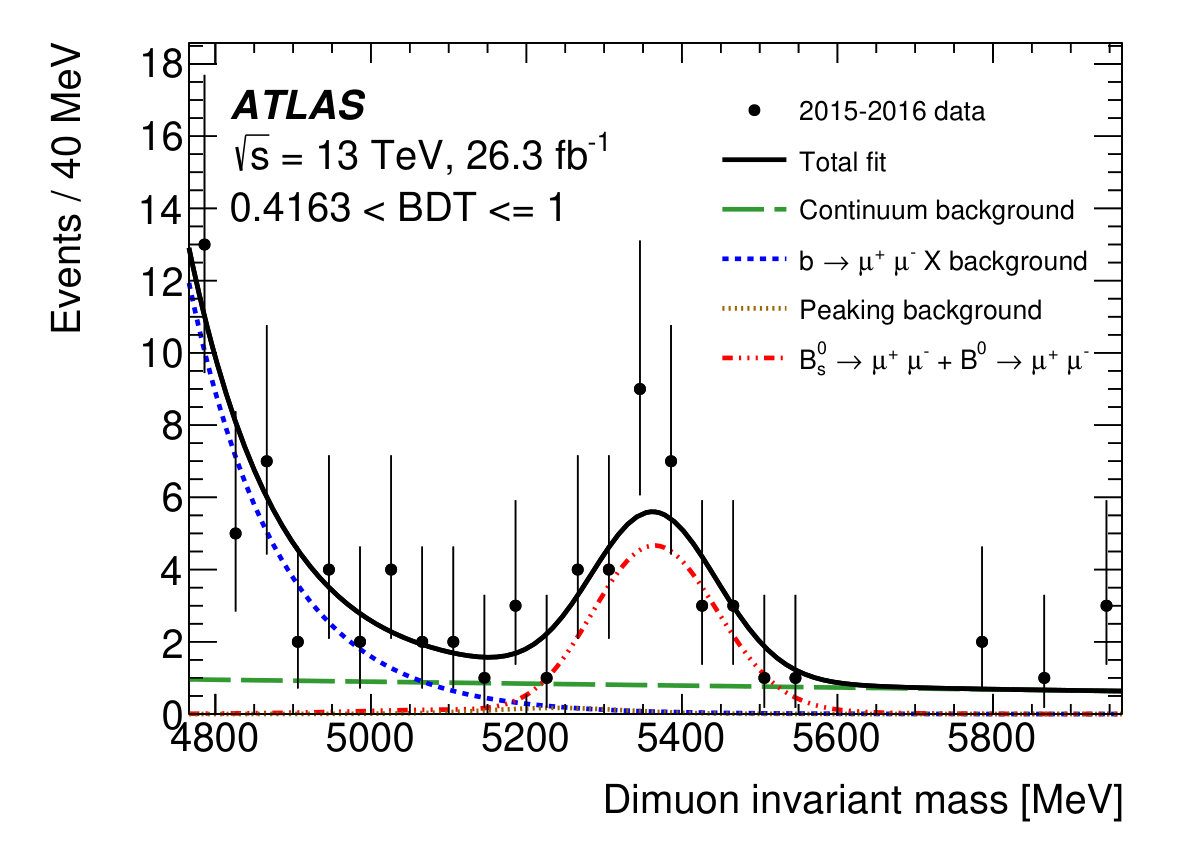 Figure 1
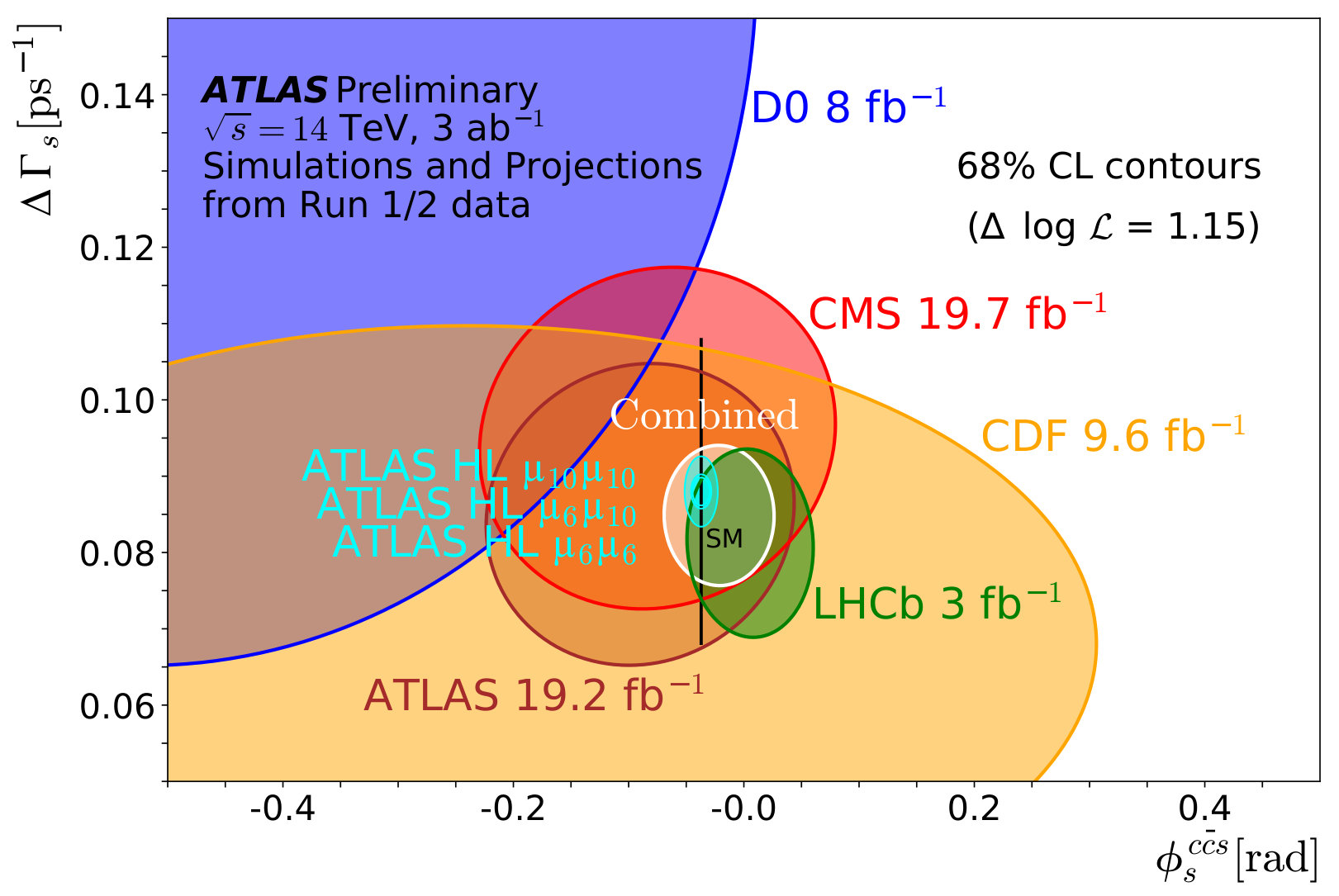 Figure 10
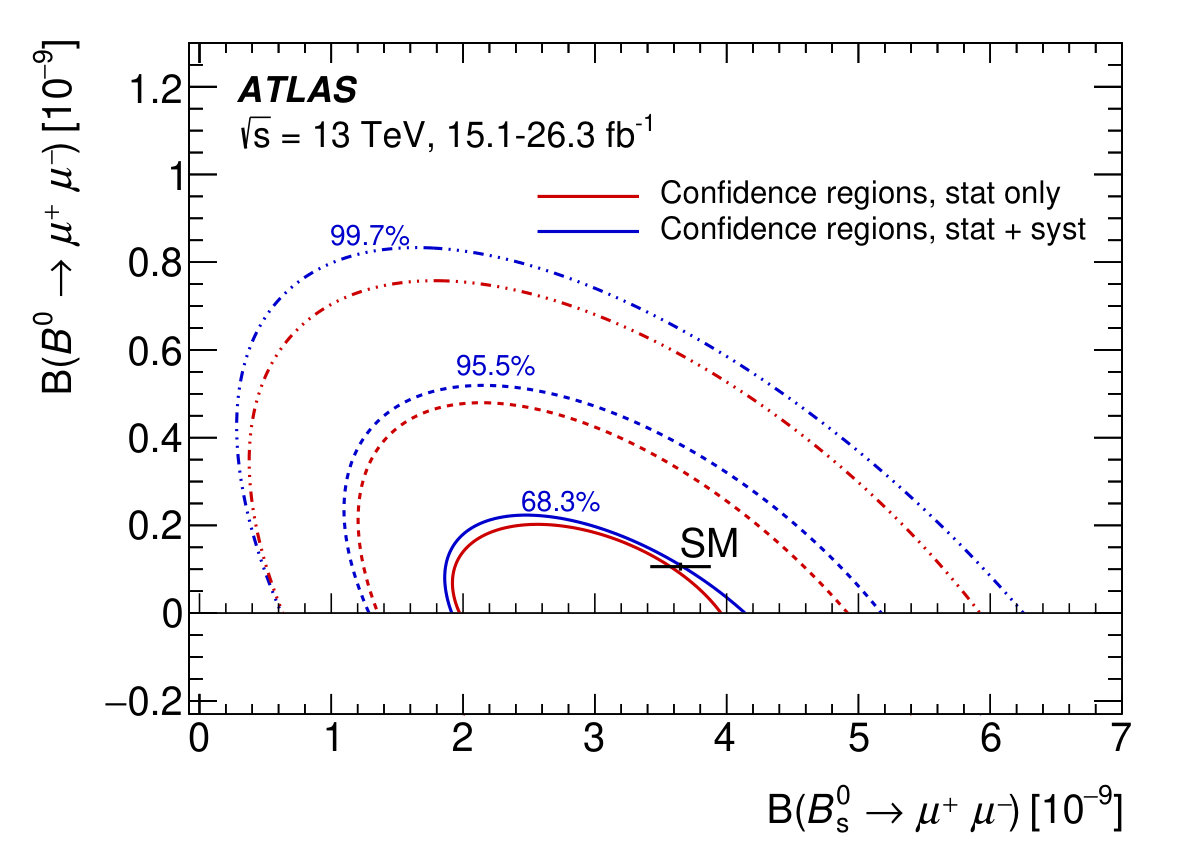 Figure 2
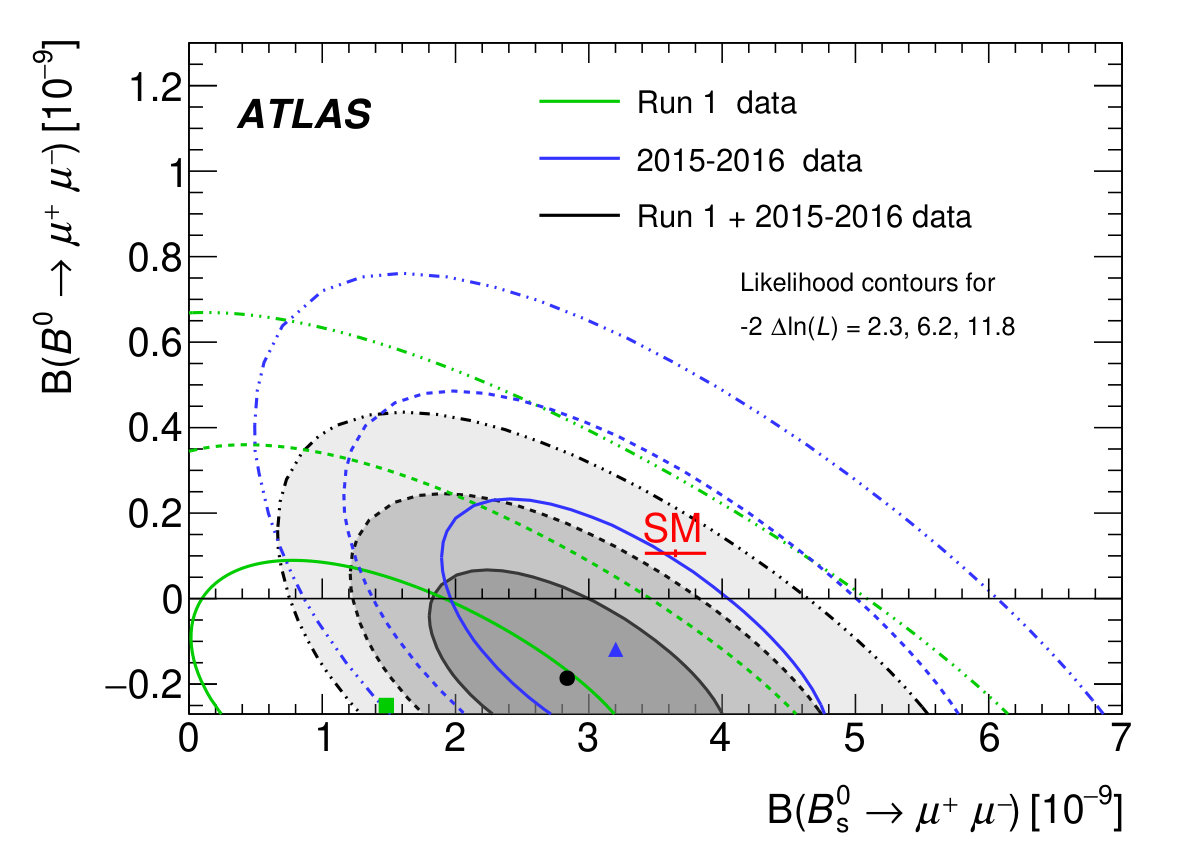 Figure 3
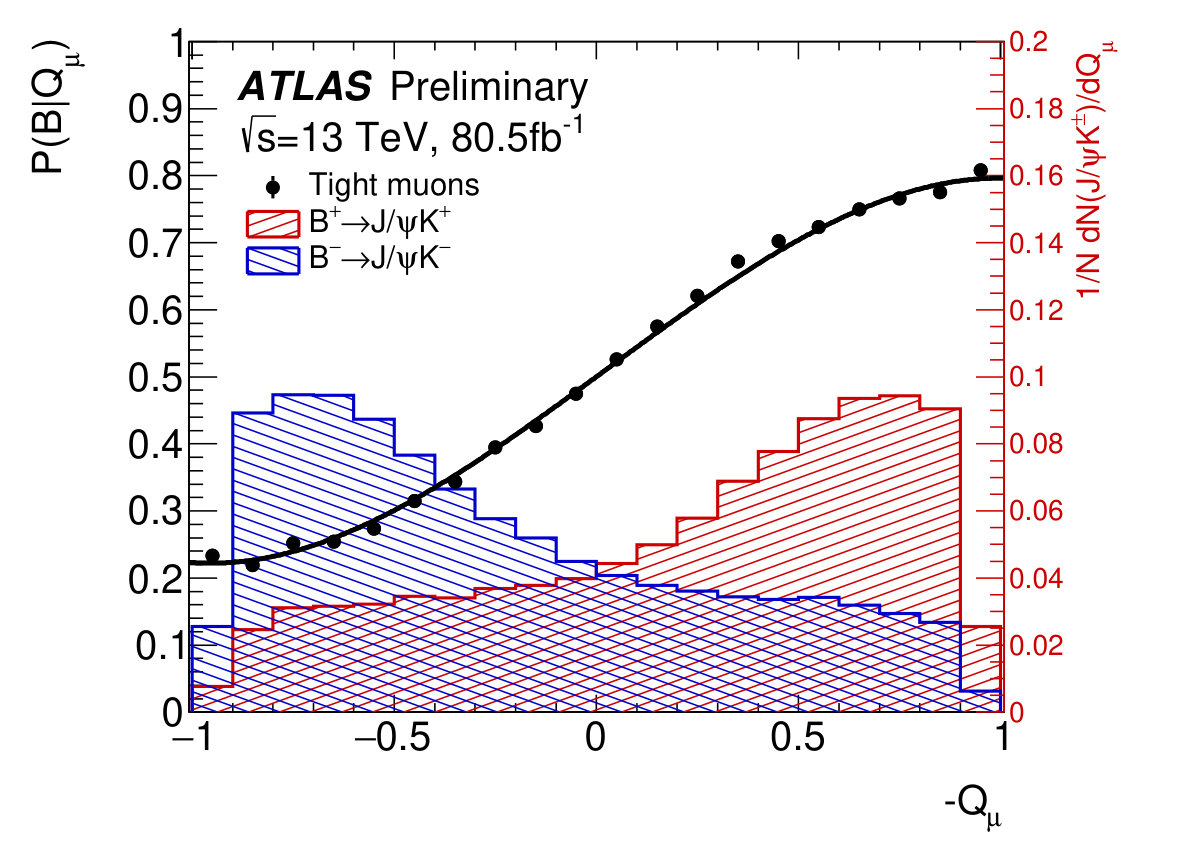 Figure 4
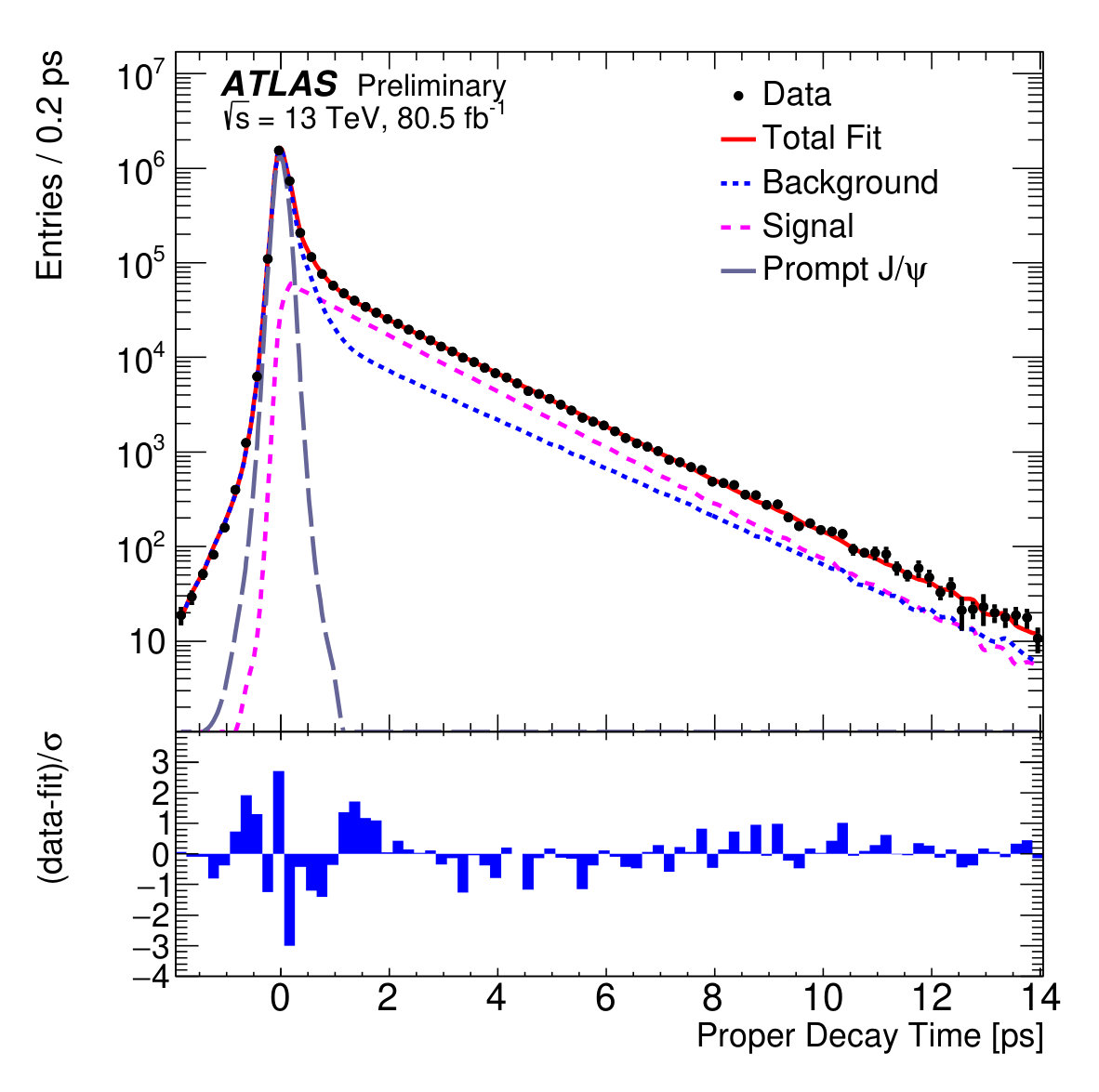 Figure 5
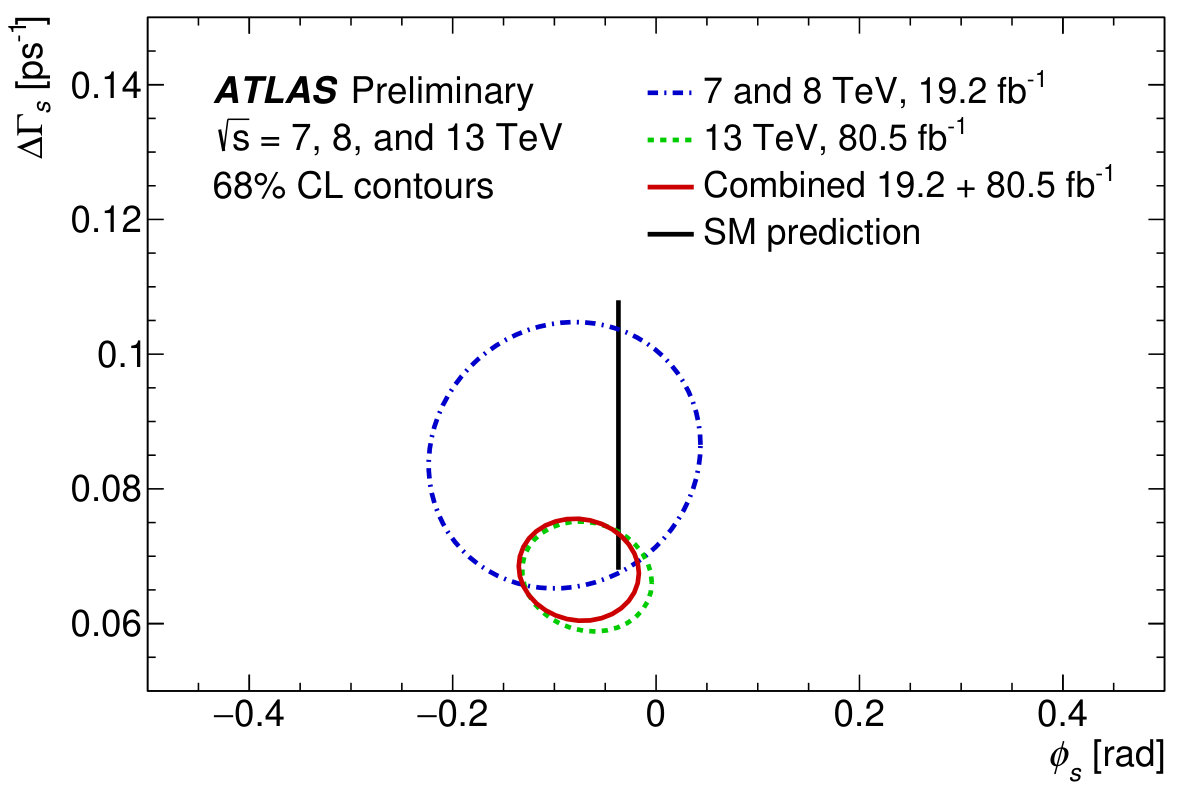 Figure 6
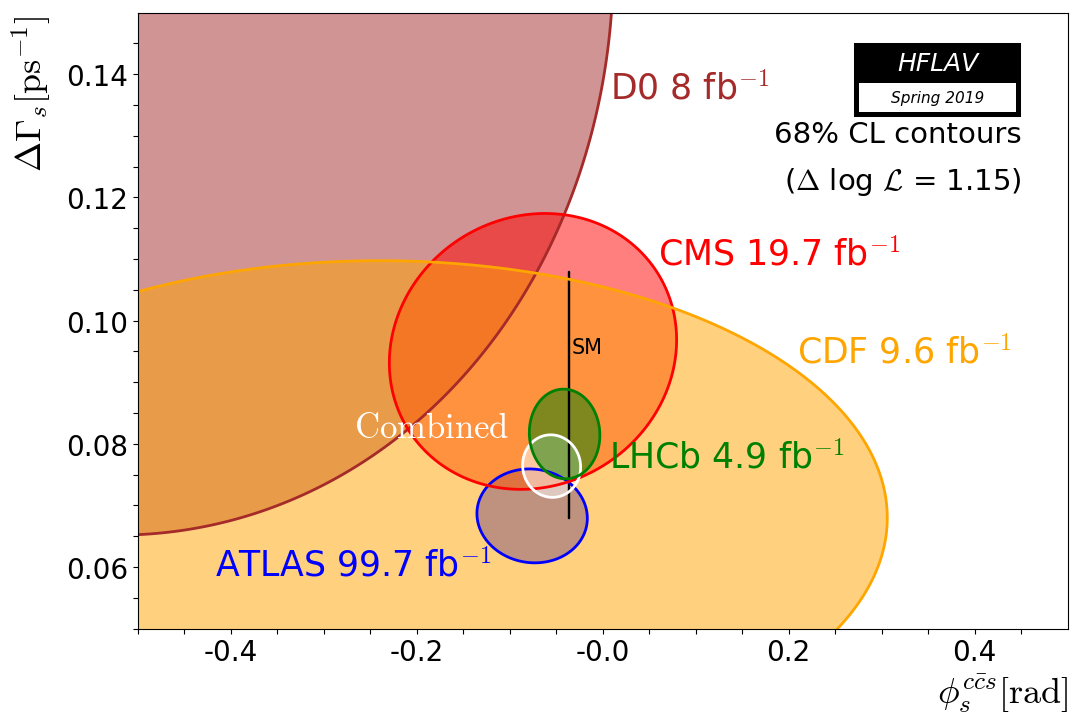 Figure 7
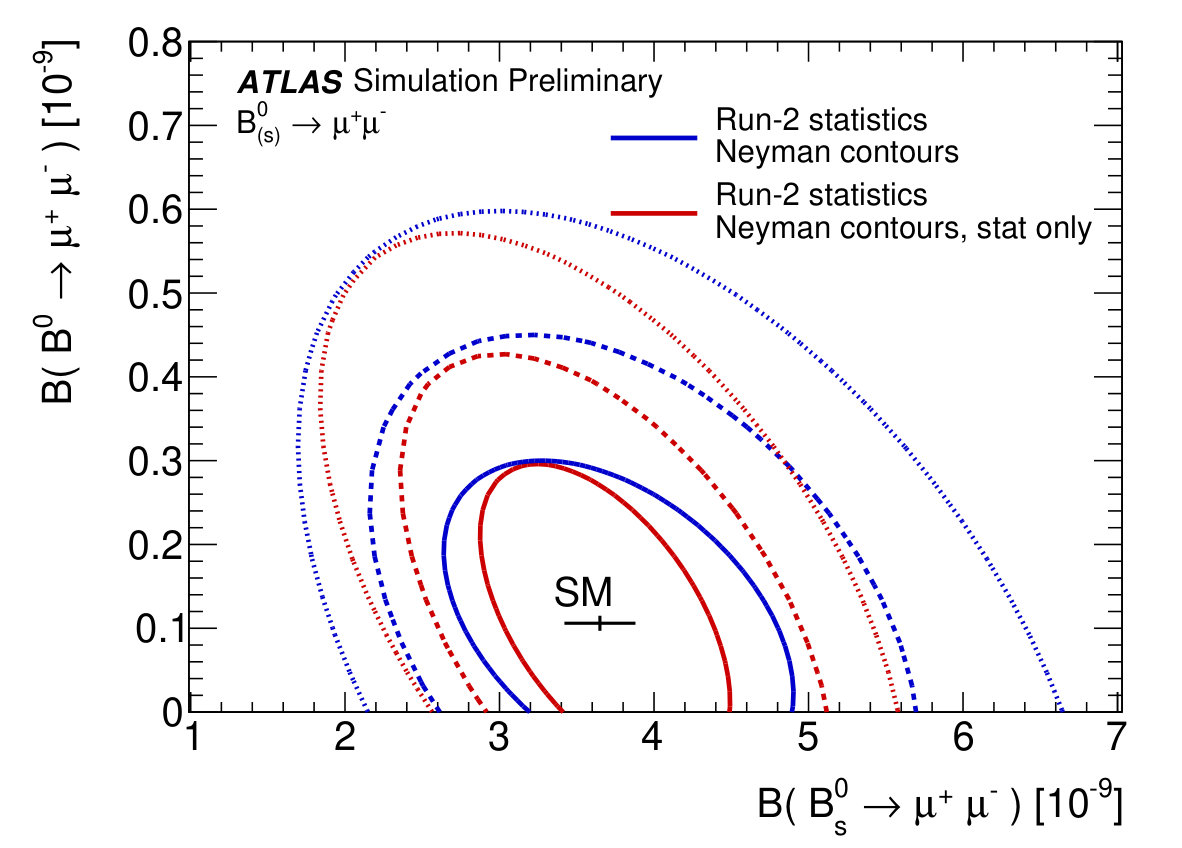 Figure 8
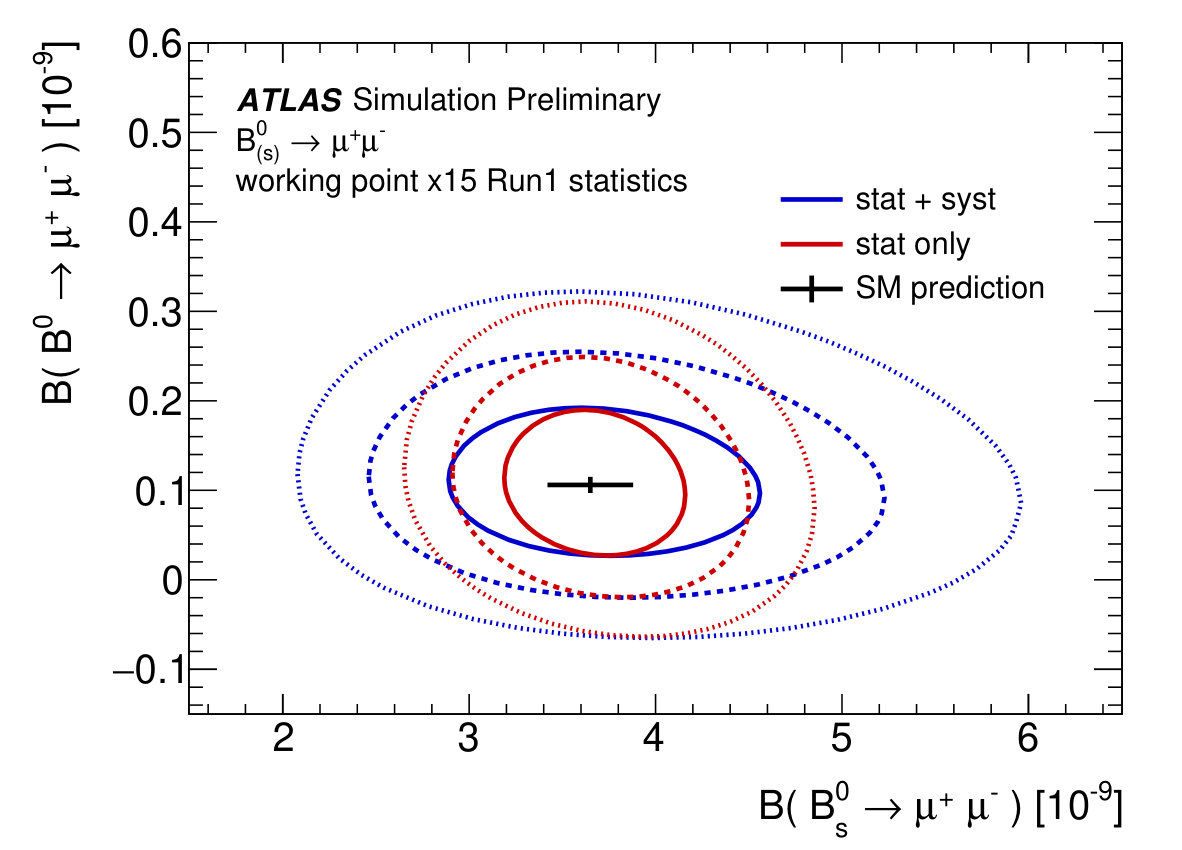 Figure 8
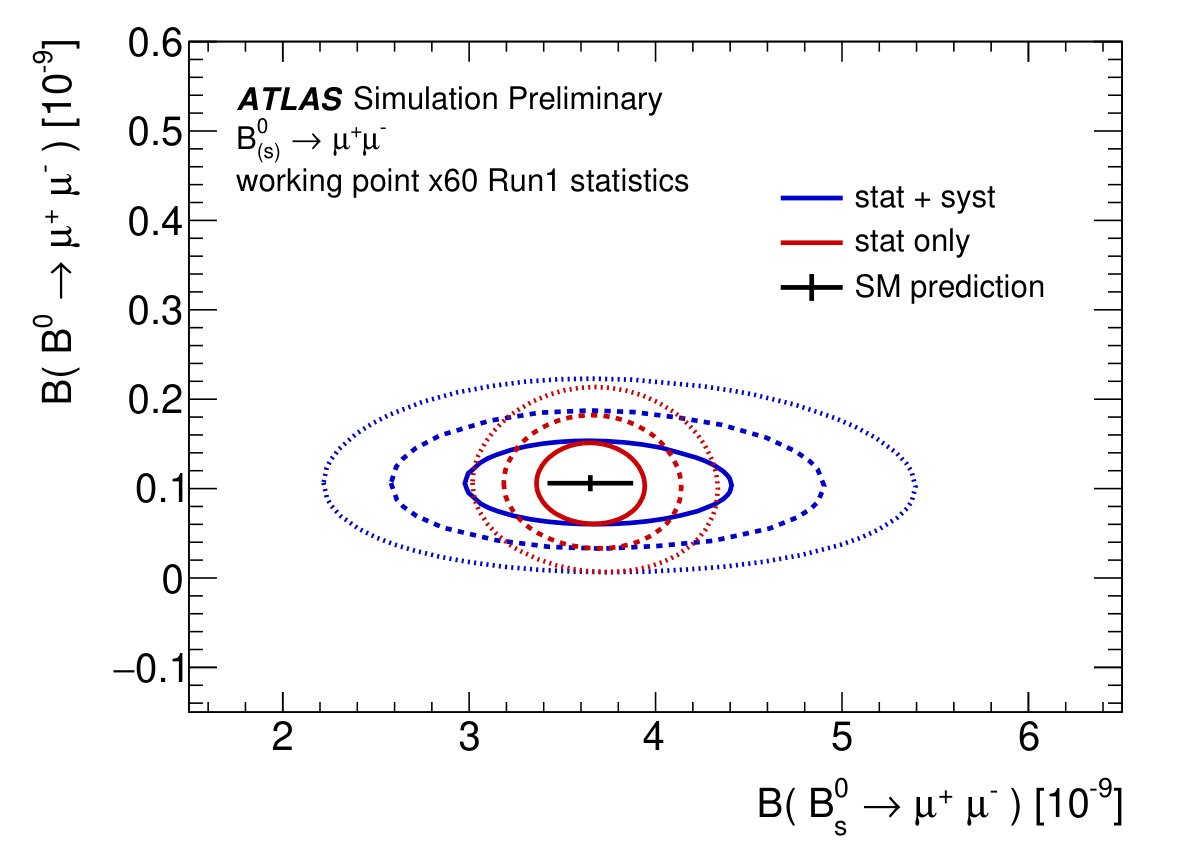 Figure 8
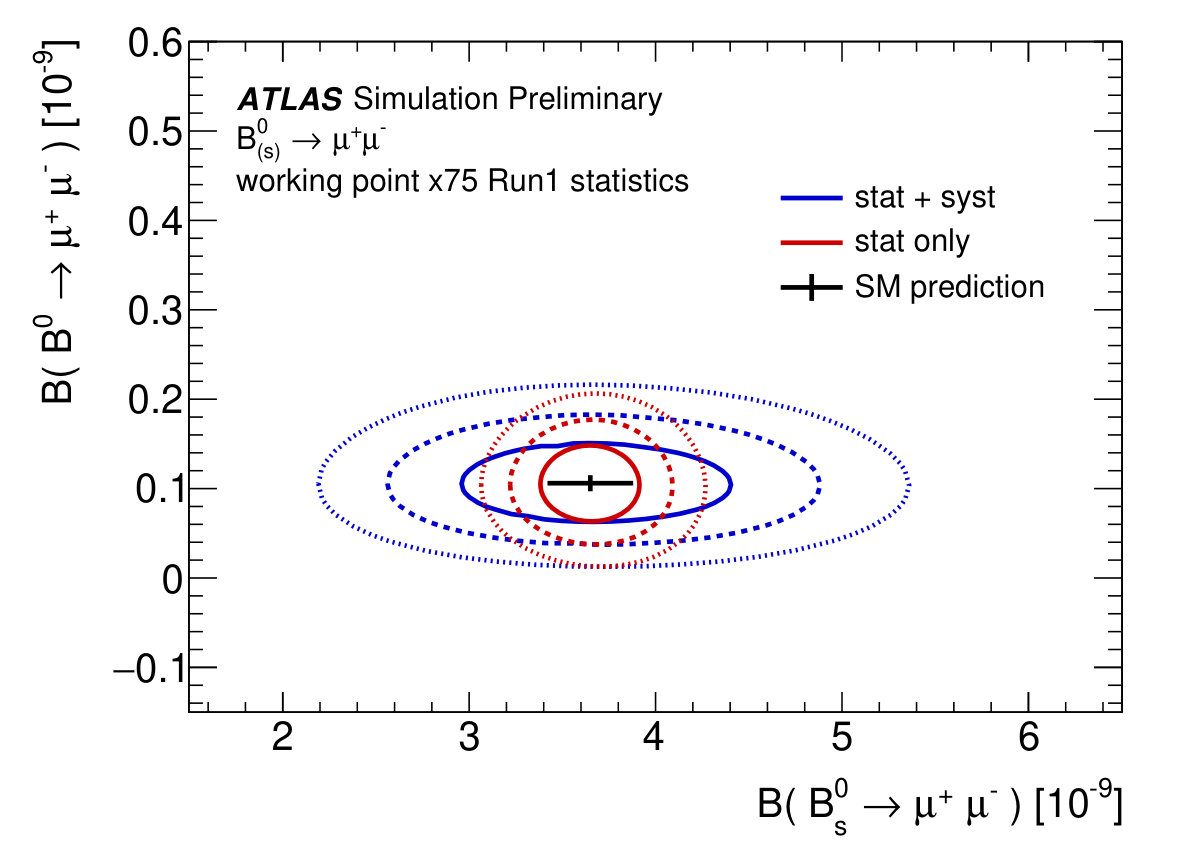 Figure 8
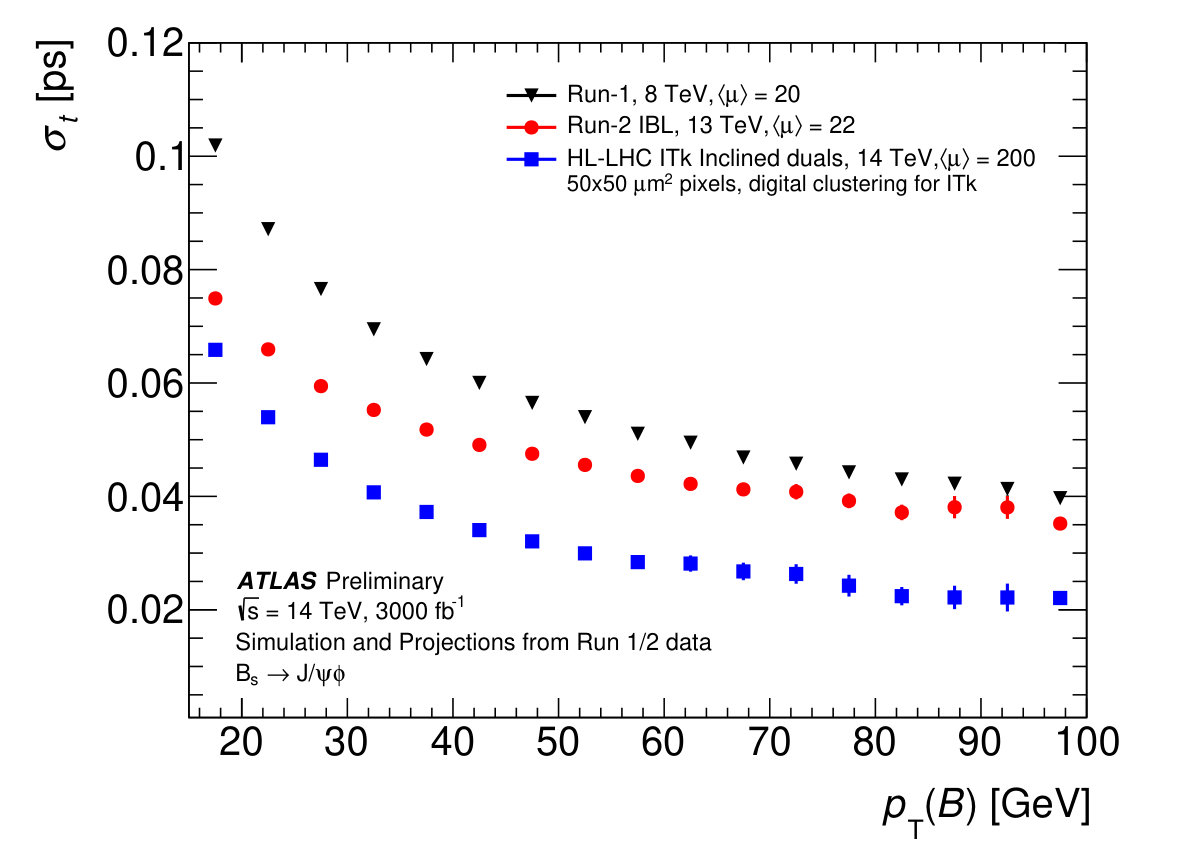 Figure 9
Peer Reviews
No public reviews on file for this paper yet. If you reviewed it on a platform where reviews are public (OpenReview, ICLR, NeurIPS, ICML), you can paste yours below so the community can read it here.
Videos
No videos yet. Explain this paper in a talk, walkthrough, or lecture? Add one.
Taxonomy
TopicsParticle physics theoretical and experimental studies · Dark Matter and Cosmic Phenomena · Particle Detector Development and Performance
ATLAS Measurements of CP Violation and Rare Decays in Beauty Mesons
W. Walkowiak
on behalf of the ATLAS Collaboration
University of Siegen, 57068 Siegen, Germany
Abstract
The ATLAS experiment at the Large Hadron Collider (LHC) has performed accurate measurements of mixing and CP violation in the neutral B mesons, and also of rare processes happening in electroweak FCNC-suppressed neutral B-mesons decays. This contribution focuses on the latest results from ATLAS, including measurements of rare processes and , and measurements of CP violation in .
I Introduction
New physics beyond the Standard Model (SM) may manifest itself in the branching fractions of very rare meson decays or CP-violating parameters in oscillations. The ATLAS experiment ATLASdet at the Large Hadron Collider (LHC) LHCpaper at CERN performs indirect searches for New Physics by measuring the branching fractions of the rare decays and and the CP-violating phase as well as in the decay. In addition, projections for the branching fractions of the rare decays and expected sensitivities for the search for CP violation in the decay channel at the High-Luminosity LHC (HL-LHC) ybHLLHC are presented111Copyright 2019 CERN for the benefit of the ATLAS Collaboration CC-BY-4.0 license..
II Branching fractions of and
The rare decays and , which are sensitive to New Physics in the decays via loop diagrams, are highly suppressed in the Standard Model (SM) with predicted branching fractions bobeth2014 of and , respectively. The ATLAS Run 1 result atlasbs2016 is compatible with the SM at level, and the () values are lower than the CMS-LHCb combined result CMSLHCbcomb2015 . A recent LHCb measurement LHCbBmumu2017 including a part of Run 2 data sets an upper limit of at 95% confidence level (CL) which reduces the tension in this parameter.
The updated ATLAS measurement ATLASBmumu2019 of the branching fractions includes 36.2 fb*-1* of data taken at a centre-of-mass energy of 13 TeV during 2015 and 2016 (LHC Run 2) and a combination with the result based on 25 fb*-1* data taken at 7-8 TeV during LHC Run 1. For Run 2, events triggered by two muons ( GeV, GeV, ) with the invariant di-muon mass in the range of 4 to 8.5 GeV are selected. The dominant combinatorial background ( pairs) is rejected by a 15-variable Boosted Decision Tree (BDT) which is trained and tested on data sidebands and simulated signal events. Tails from partially reconstructed decays like , or , which involve real di-muons at low , and semi-leptonic decays ( with ) contribute to the signal region and are taken into account in the signal fit. A small contribution of () decays, with hadrons misidentified as muons, peaks in the signal region contributing events after a “tight” muon selection is applied. The yield in the normalisation channel with is determined by an unbinned maximum likelihood fit to while the efficiency relative to is extracted from Monte Carlo (MC) within a fiducial volume defined by GeV and . The overall efficiency ratio is with the largest contribution to the systematic uncertainties originating from data-MC discrepancies in the BDT input quantities. A correction of 2.7% has been applied to to account for the effective lifetime.
Due to the limited mass resolution the overlapping and peaks are statistically separated by an unbinned maximum likelihood fit to the distributions in four BDT bins. The signal and distributions are modelled by three double-Gaussian PDFs, each with a common mean, while the background is described by a first-order polynomial (combinatorial background) in combination with an exponential distribution ( and semi-leptonic background) whose shape parameters and normalisations are obtained from data (Fig. 1).
For the Run 2 data, yields of and events are extracted, consistent with SM expectations of and , respectively. Employing a Neyman construction (Fig. 2) a branching fraction of and an upper limit of at 95% CL are obtained. A combination of the likelihood contours of the Run 2 (2015 and 2016) and Run 1 results (Fig. 3) is compatible with the SM at level and results in and at 95% CL.
III CP-violation in
In the SM, the CP violating phase in the decay (with and ) is small and can be predicted to rad Charles2011 . The ATLAS Run 1 measurement atlasbsjpsiphi2016 of rad and of the decay width difference agrees with SM expectations ( in SM LenzNierste2011 ) and is consistent with results from other experiments.
The ATLAS Run-2 measurement ATLASBsJpsiPhi2019 uses 80.5 fb*-1* of 13 TeV data taken in 2015-2017 selected by multiple triggers based on decays with muon- thresholds of 4 or 6 GeV. In order to extract the flavour of the decaying (or ) opposite-side taggers which rely on the -weighted charge of tracks inside a cone around either an electron, a muon or a -jet are used. The taggers are calibrated on self-tagging events and yield a total tagging power of % with the tight muon tagger contributing %, about half of the tagging power (Fig. 4).
An unbinned maximum likelihood fit based on the properties ( mass and mass uncertainty, proper decay time (Fig. 5) and uncertainty, the -flavour tagging probability ) and the transversity angles , defined in ATLASBsJpsiPhi2019 , is employed to extract nine signal parameters. For Run 2 data only, values of rad and (Fig. 6) are obtained.
The combined ATLAS Run 1 and Run 2 result yields rad and which are consistent with the SM expectations as well as results from other experiments (Fig. 7). A preliminary HFLAV average hflavbsjpsiphispring2019 results in rad and .
IV High-luminosity LHC prospects
The branching fraction measurement of the very rare decays and will benefit from the increased statistics and the improved invariant mass resolution at the HL-LHC. The separation of the and mass peaks increases by a factor of 1.65 (1.5) to () in the barrel (end-cap) region compared to Run 1 atlasHLperformance2016 .
The projection of the ATLAS detector performance for measuring () with the expected datasets during the full LHC Run 2 (130 fb*-1*) and at the HL-LHC (3 000 fb*-1*) atlasbmumuproj2018 using pseudo-MC experiments is based on the likelihood of the Run 1 analysis. The signal statistics estimate for the Run 2 scenario applies scaling factors for the integrated luminosity, the cross-section increase due to the higher center-of-mass energy of 13 TeV and the muon pair selection with topological triggers with ( GeV) or ( GeV, GeV) thresholds resulting in 7 times the number of signal events in Run 1. The contours of the 2-dimensional Neyman construction (Fig. 8 (a)) include the external systematic uncertainties on the -quark fragmentation fractions and () which were kept the same as in the Run 1 analysis as well as internal ones like the fit shapes and efficiencies which were scaled according to the increase in statistics. For the HL-LHC case three potential trigger scenarios are considered: two muons with GeV (“conservative”), one muon with GeV and another with GeV (“intermediate”) as well as two muons with GeV (“high yield”) providing 15, 60 and 75 times the Run 1 statistics, respectively. The profile likelihood contours of pseudo-experiments based again on the likelihood of the Run 1 analysis demonstrate the increased sensitivity of the ATLAS detector for () and () at the HL-LHC (Fig. 8 (b)-(d)). The uncertainty on the value, conservatively taken as 8.3% from the ATLAS measurement atlasfsfd2015 , dominates the systematic uncertainty contributions on ().
The prospects of measuring the CP-violating phase and the decay width difference using decays at the HL-LHC (3\,000~{}\mbox{fb{}^{-1}}) atlasbsjpsiphipros2018 have been explored by pseudo-MC experiments based on the Run 1 analysis using similar trigger scenarios as in the HL-LHC study, yielding a signal statistics increase of , and w.r.t. the yield obtained in 2012 data for the “conservative”, “intermediate” and “high-yield” scenarios, respectively. The sensitivity to as well as to is improved considerably by the detector upgrades, especially the proper time resolution (Fig. 9). In the calculation of the expected uncertainties on and the number of signal events and the proper time resolution are assumed to scale with the integrated luminosity while the flavour tagging power – conservatively – is not scaled. The systematic uncertainties (likelihood fit model description, flavor tagging calibration, detector acceptance description, detector alignment, peaking background contributions) are expected to improve with increased statistics as well, providing estimates of rad and for an integrated luminosity of 3\,000~{}\mbox{fb{}^{-1}}. The improvement in the statistical uncertainties obtained w.r.t. the Run 1 result are factors 9 to 20 for , up to 7 times smaller than the SM prediction for , and factors 4 to 10 for . The 68% CL contours for the three scenarios (Fig. 10) include the combination of statistical and systematic uncertainties.
V Summary
Measurements of rare decays and CP-violation by the ATLAS collaboration have been presented. The results for and the search for the decay with 36.2 fb*-1* of Run-2 data agree with the Standard Model and other measurements. There is no sign for the decay in ATLAS data, but ATLAS will add approximately data taken in 2017 and 2018 to the analysis (\approx 107~{}\mbox{fb{}^{-1}}).
The ATLAS measurement of the CP-violating phase and the decay width difference provides a single measurement precision comparable to that of the LHCb experiment and reaches the sensitivity to test the Standard Model prediction. About 60 fb*-1* of data taken in 2018 will be added to the analysis in the future.
Both analyses will profit considerably from the increased statistics expected from the 3\,000~{}\mbox{fb{}^{-1}} of HL-LHC data as well as detector improvements providing better mass and proper decay time resolutions. This will allow more stringent tests of the Standard Model.
Acknowledgements.
This work was partially supported by grants of the German Federal Ministry of Education and Research (BMBF) and the German Helmholtz Alliance “Physics at the Terascale”.
The reference list from the paper itself. Each links out to its DOI / PubMed record.
- 1(1) ATLAS Collaboration, The ATLAS Experiment at the CERN Large Hadron Collider , 2008 JINST 3 S 08003
- 2(2) L. Evans and P. Bryant (editors), LHC Machine , 2008 JINST 3 S 08001
- 3(3) G. Apollinari, I. Béjar Alonso, O. Brüning, P. Fessia, M. Lamont, L. Rossi, L. Tavian (editors), High-Luminosity Large Hadron Collider (HL-LHC), Technical Design Report V. 0.1 , CERN Yellow Reports Vol. 4/2017, CERN-2017-007-M (CERN, Geneva, 2017) [ https://cds.cern.ch/record/2284929 ]
- 4(4) C. Bobeth et al., B s , d 0 → ℓ + ℓ − → superscript subscript 𝐵 𝑠 𝑑 0 superscript ℓ superscript ℓ B_{s,d}^{0}\to\ell^{+}\ell^{-} in the Standard Model with Reduced Theoretical Uncertainty , Phys. Rev. Lett. 112 (2014) 101801
- 5(5) ATLAS Collaboration, Study of the rare decays of B s 0 superscript subscript 𝐵 𝑠 0 B_{s}^{0} and B 0 superscript 𝐵 0 B^{0} into muon pairs from data collected during the LHC Run 1 with the ATLAS detector , Eur. Phys. J. C (2016) 76:513
- 6(6) CMS and LH Cb Collaborations, Observation of the rare B s 0 → μ + μ − → superscript subscript 𝐵 𝑠 0 superscript 𝜇 superscript 𝜇 B_{s}^{0}\to\mu^{+}\mu^{-} decay from the combined analysis of CMS and LH Cb data , Nature, 522 , 2015
- 7(7) LH Cb Collaboration, Measurement of the B s 0 → μ + μ − → superscript subscript 𝐵 𝑠 0 superscript 𝜇 superscript 𝜇 B_{s}^{0}\to\mu^{+}\mu^{-} Branching Fraction and Effective Lifetime and Search for B 0 → μ + μ − → superscript 𝐵 0 superscript 𝜇 superscript 𝜇 B^{0}\to\mu^{+}\mu^{-} Decays , Phys. Rev. Lett. 118 (2017) 191801
- 8(8) ATLAS Collaboration, Study of the rare decays of B s 0 superscript subscript 𝐵 𝑠 0 B_{s}^{0} and B 0 superscript 𝐵 0 B^{0} mesons into muon pairs using data collected during 2015 and 2016 with the ATLAS detector , JHEP 04 (2019) 098