Nature of the magnetism of iridium in the double perovskite Sr2CoIrO6
S. Agrestini, K. Chen, C.-Y. Kuo, L. Zhao, H.-J. Lin, C.-T. Chen, A., Rogalev, P. Ohresser, T.-S. Chan, S.-C. Weng, A. C. Komarek, K. Yamaura, M., W. Haverkort, Z. Hu, and L. H. Tjeng

TL;DR
This study investigates the magnetic properties of Sr2CoIrO6, revealing a complex mixture of Ir and Co oxidation states and a breakdown of the expected J_eff=0 state, challenging previous assumptions about its magnetism.
Contribution
The paper provides detailed spectroscopic analysis and atomic multiplet calculations showing the coexistence of multiple Ir and Co oxidation states and their magnetic interactions in Sr2CoIrO6.
Findings
Ir5+ is the dominant oxidation state but with a breakdown of J_eff=0 ground state.
Approximately 10% of Ir is in the Ir6+ state with significant magnetic moment.
The compound exhibits a competition between Ir5+-Co3+ and Ir6+-Co2+ configurations.
Abstract
We report on our investigation on the magnetism of the iridate double perovskite SrCoIrO, a nominally Ir Van Vleck system. Using x-ray absorption (XAS) and x-ray magnetic circular dichroism (XMCD) spectroscopy at the Ir- edges, we found a nearly zero orbital contribution to the magnetic moment and thus an apparent breakdown of the ground state. By carrying out also XAS and XMCD experiments at the Co- edges and by performing detailed full atomic multiplet calculations to simulate all spectra, we discovered that the compound consists of about 90% Ir () and Co () and 10% Ir () and Co (). The magnetic signal of this minority Ir component is almost equally strong as that of the main Ir component. We infer that there is a competition between the Ir-Co…
Click any figure to enlarge with its caption.
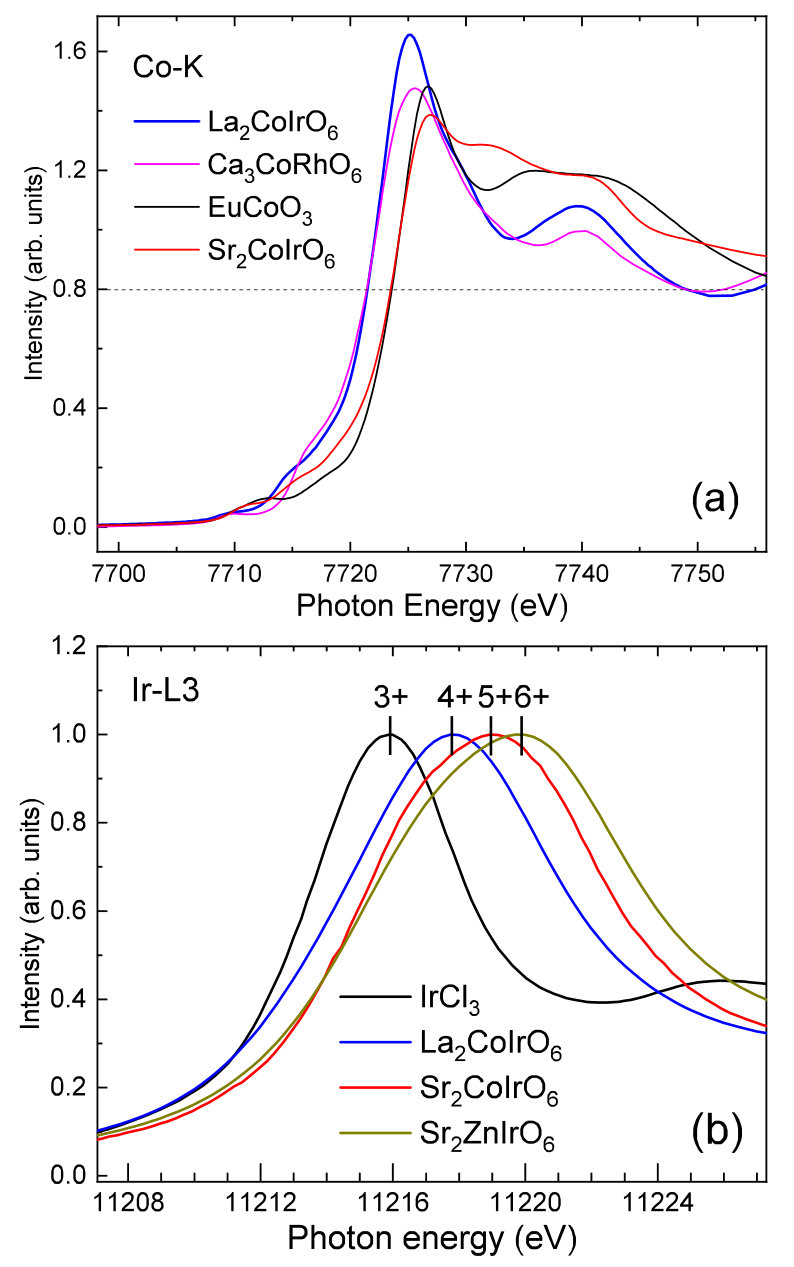 Figure 1
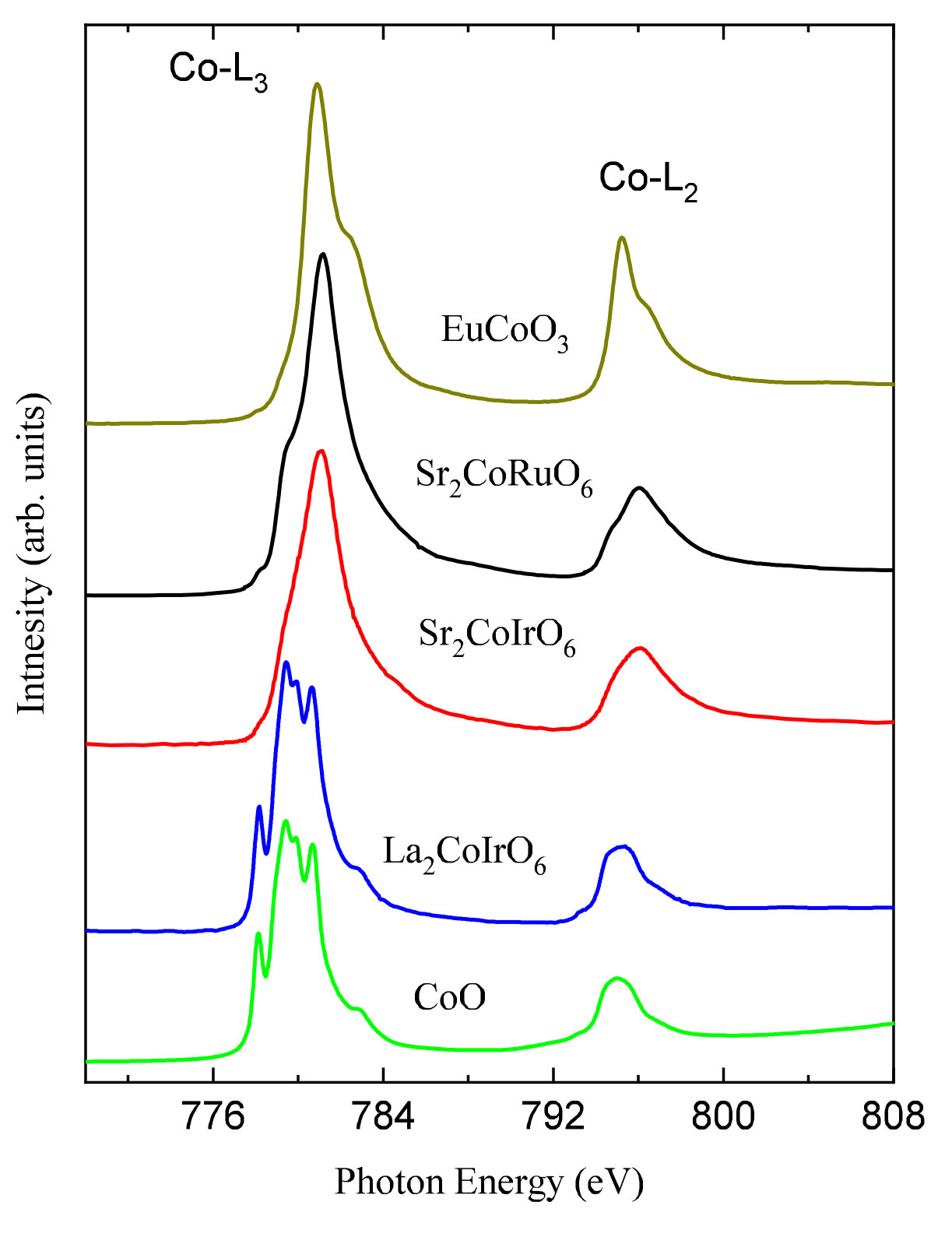 Figure 2
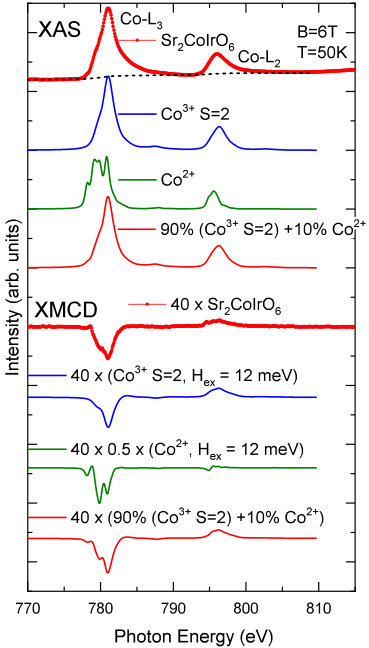 Figure 3
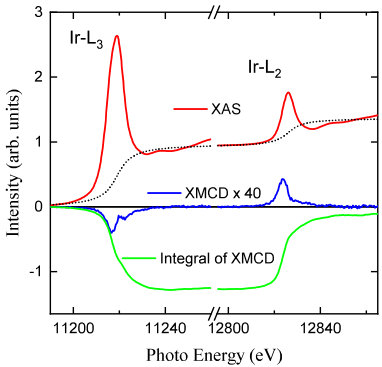 Figure 4
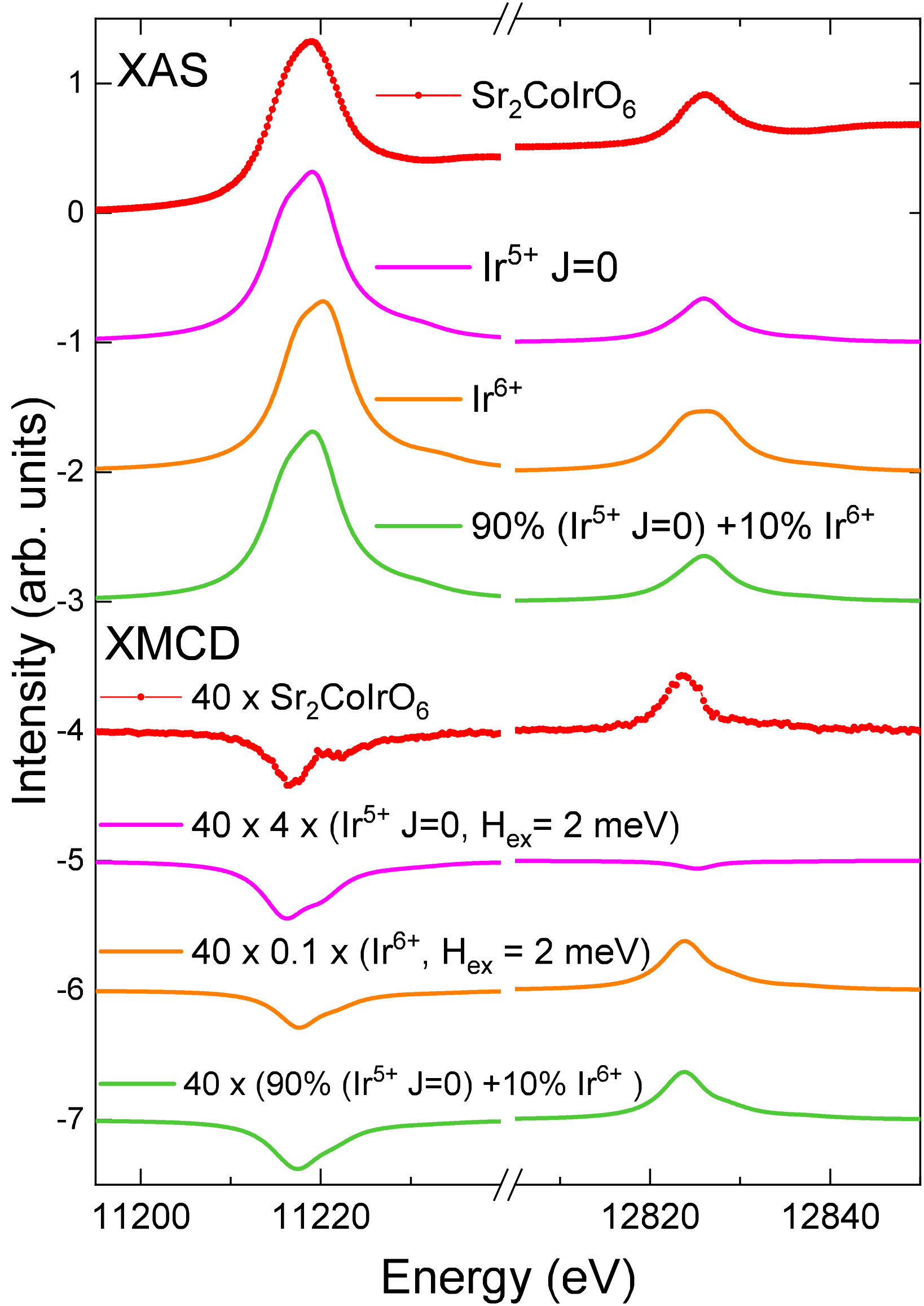 Figure 5
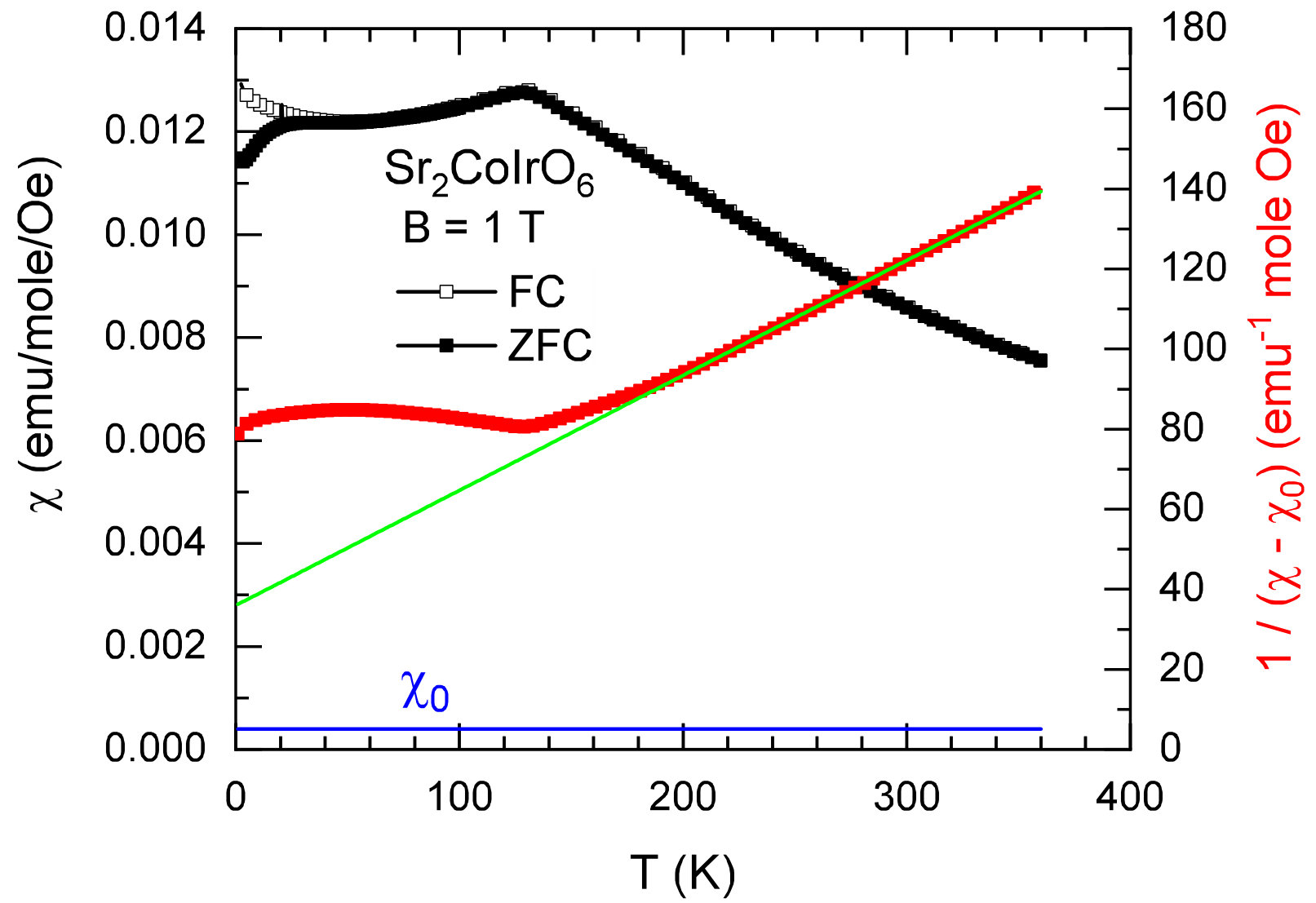 Figure 6
Peer Reviews
No public reviews on file for this paper yet. If you reviewed it on a platform where reviews are public (OpenReview, ICLR, NeurIPS, ICML), you can paste yours below so the community can read it here.
Videos
No videos yet. Explain this paper in a talk, walkthrough, or lecture? Add one.
Nature of the magnetism of iridium in the double perovskite Sr2CoIrO6
S. Agrestini
Max Planck Institute for Chemical Physics of Solids, Nöthnitzerstr. 40, 01187 Dresden, Germany
ALBA Synchrotron Light Source, E-08290 Cerdanyola del Vallès, Barcelona, Spain
K. Chen
Synchrotron SOLEIL, L’Orme des Merisiers, Saint-Aubin, 91192 Gif-sur-Yvette, France
Institute of Physics II, University of Cologne, Zülpicher Straße 77, 50937 Cologne, Germany
C.-Y. Kuo
Max Planck Institute for Chemical Physics of Solids, Nöthnitzerstr. 40, 01187 Dresden, Germany
National Synchrotron Radiation Research Center, 101 Hsin-Ann Road, Hsinchu 30076, Taiwan
L. Zhao
Max Planck Institute for Chemical Physics of Solids, Nöthnitzerstr. 40, 01187 Dresden, Germany
H.-J. Lin
National Synchrotron Radiation Research Center, 101 Hsin-Ann Road, Hsinchu 30076, Taiwan
C.-T. Chen
National Synchrotron Radiation Research Center, 101 Hsin-Ann Road, Hsinchu 30076, Taiwan
A. Rogalev
ESRF-The European Synchrotron, 71 Avenue des Martyrs, 38000 Grenoble, France
P. Ohresser
Synchrotron SOLEIL, L’Orme des Merisiers, Saint-Aubin, 91192 Gif-sur-Yvette, France
T.-S. Chan
National Synchrotron Radiation Research Center, 101 Hsin-Ann Road, Hsinchu 30076, Taiwan
S.-C. Weng
National Synchrotron Radiation Research Center, 101 Hsin-Ann Road, Hsinchu 30076, Taiwan
A. C. Komarek
Max Planck Institute for Chemical Physics of Solids, Nöthnitzerstr. 40, 01187 Dresden, Germany
K. Yamaura
Research Center for Functional Materials, National Institute for Materials Science, 1-1 Namiki, Tsukuba, Ibaraki 305-0044, Japan
Graduate School of Chemical Sciences and Engineering, Hokkaido University, North 10 West 8, Kita-ku, Sapporo, Hokkaido 060-0810, Japan
M. W. Haverkort
Institute for theoretical physics, Heidelberg University, Philosophenweg 19, 69120 Heidelberg, Germany
Z. Hu
Max Planck Institute for Chemical Physics of Solids, Nöthnitzerstr. 40, 01187 Dresden, Germany
L. H. Tjeng
Max Planck Institute for Chemical Physics of Solids, Nöthnitzerstr. 40, 01187 Dresden, Germany
Abstract
We report on our investigation on the magnetism of the iridate double perovskite Sr2CoIrO6, a nominally Ir5+ Van Vleck system. Using x-ray absorption (XAS) and x-ray magnetic circular dichroism (XMCD) spectroscopy at the Ir- edges, we found a nearly zero orbital contribution to the magnetic moment and thus an apparent breakdown of the ground state. By carrying out also XAS and XMCD experiments at the Co- edges and by performing detailed full atomic multiplet calculations to simulate all spectra, we discovered that the compound consists of about 90% Ir5+ () and Co3+ () and 10% Ir6+ () and Co2+ (). The magnetic signal of this minority Ir6+ component is almost equally strong as that of the main Ir5+ component. We infer that there is a competition between the Ir5+-Co3+ and the Ir6+-Co2+ configurations in this stoichiometric compound.
pacs:
71.70.Ch, 75.70.Tj, 78.70.Dm, 72.80.Ga
I Introduction
Recently, correlated oxides with strong spin-orbit coupling (SOC) have attracted a tremendous interest because the associated entanglement of the spin and orbital degrees of freedom may give rise to unexpected exotic electronic states. In the case of iridates with Ir4+ (5) in octahedral coordination the strong SOC can lead to the so-called state by splitting the states into a full band and a half-filled band Kim et al. (2008). This spin-orbit entangled state renders the Mott insulator behavior observed in many iridium oxides like Sr2IrO4 Kim et al. (2008, 2009) and has been proposed to provide in honeycomb systems like (Li,Na)2IrO3 Jackeli and Khaliullin (2009); Chaloupka et al. (2010) and RuCl3 Plumb et al. (2014); Agrestini et al. (2017) the needed prerequisites for the long-sought materialization of the Kitaev model and the emergence of Majorana fermions Kitaev (2006).
Applying the same picture of a strong SOC limit to transition metals with configuration, e.g. Ru4+, Os4+, and Ir5+, the quadruplet is filled with four electrons and the doublet is completely empty, which leads to a Van Vleck singlet ground state . In contrast to these expectations, some Ru4+ oxides like Ca2RuO4 are known to show an antiferromagnetic ground state Nakatsuji et al. (1997); Braden et al. (1998). Recently, theoretical studies have suggested that strong inter-site hopping may lead to superexchange interactions large enough to cause an exciton condensation , or more accurately, a condensation of triplon excitations, and to drive the antiferromagnetism or ferromagnetism in such nominally Van Vleck systems Khaliullin (2013); Meetei et al. (2015); Chaloupka and Khaliullin (2016). Later works however, suggested that the interatomic exchange in Ir5+ double perovskites might be too weak to overcome the singlet-triplet gap Pajskr et al. (2016); Svoboda et al. (2017). Experimentally, on the one hand, Cao et al. Cao et al. (2014) reported an antiferromagnetic long-range order in the double perovskite Sr2YIrO6 and, to explain the magnetic order, argued that the non-cubic crystal field would cause a suppression of the excitation gap and, as a result, the breakdown of the state. On the other hand, a study combining XMCD measurements and full atomic multiplet cluster calculations demonstrated the stability of the Van Vleck singlet state of Ir5+, even in presence of strong tetragonal crystal distortions like in Sr2Co0.5Ir0.5O4 Agrestini et al. (2018). A very recent resonant inelastic x-ray scattering study determined the dispersion of the triplet and quintet states in the double perovskites (Ba,Sr)2YIrO6 to be less than 50 meV, i.e. much smaller than the excitation gap, ruling out the possibility of a excitonic condensation Kusch et al. (2018). The origin of the magnetism reported in the double perovskite Sr2YIrO6 and Ba2YIrO6 is also debated in a number of other papers Bhowal et al. (2015); Dey et al. (2016); Corredor et al. (2017); Terzic et al. (2017).
In this context, the magnetism of the Ir5+ ion in the double perovskite Sr2CoIrO6 is a very interesting case. In this compound the large difference in cation radii causes the cobalt ions to form a three dimensional alternate arrangement with the iridium ions. Neutron diffraction and susceptibility measurements detected the onset of a long range antiferromagnetic order of the cobalt moments at K Narayanan et al. (2010); Mikhailova et al. (2010). The Iridium ions, instead, were considered to be paramagnetic. Bond valence sums and band structure calculations predicted Sr2CoIrO6 to have a high spin (HS, ) Co3+ and low spin (LS) Ir5+ state Narayanan et al. (2010). Surprisingly, a subsequent XMCD study of the La2-xSrxCoIrO6 system reported that the Ir5+ has a paramagnetic moment with almost no orbital contribution Kolchinskaya et al. (2012), implying that the state does not form the ground state. This finding is in contradiction with XMCD studies on other iridates where the Ir5+ XMCD signal does indicate the presence of an orbital moment Agrestini et al. (2018); Laguna-Marco et al. (2015).
Here we address the Sr2CoIrO6 issue by carrying out XAS and XMCD measurements not only on the Ir- edges but also on the Co- together with detailed calculations to explain the spectra. Our first objective is to verify whether the valence state of the Ir and Co is 5+ and 3+, respectively, and whether the system is stoichiometric. We then aim to determine what the magnetic ground state is of the Ir5+ ions producing possibly such an unusual spectral shape that may indicate the absence of orbital contribution to the paramagnetic moment.
II Experimental
The Sr2CoIrO6 sample was grown from appropriate amounts of SrCO3, Co3O4 and IrO2 that were mixed and ground together. The mixture was pressed into a pellet that was sintered for 22 h at 1180 *∘*C in air, followed by a final sintering for more than two days in a flow of oxygen (ambient pressure).
The XAS at the Co- edge was recorded in the total electron yield mode at the Dragon beamline of the NSRRC in Taiwan with a photon-energy resolution of 0.25 eV. A single crystal of CoO was measured simultaneously in a separate chamber to obtain relative energy referencing with better than a few meV accuracy at the Co- edge (780 eV). The sample pellets were fractured in situ in order to obtain a clean surface. The pressure was below mbar during the measurements. The XAS at the Co- and Ir- edges were measured in fluorescence yield and transmission modes at the 16A1 and 07A1 beamlines of the NSRRC, respectively. The XMCD spectra at the Co- edges of Sr2CoIrO6 were collected at the DEIMOS beamline Ohresser et al. (2014) of the synchrotron SOLEIL in Paris (France) with a photon-energy resolution of 0.2 eV and a degree of circular polarization close to 100%. The sample was measured at T = 50 K and in a magnetic field of 6 T. The spectra were recorded using the total electron yield method. The sample was also fractured in situ in order to obtain a clean surface. The XMCD measurements at the Ir- edges were performed at the ID12 beamline Rogalev and Wilhelm (2015) of the European Synchrotron Radiation Facility (ESRF) using the fluorescence yield detection mode. The degree of circular polarization was about 97%. A self-absorption correction was applied to the Ir- XAS measured with right and left circular polarized light. Finally the Ir- edge-jump intensity ratio was normalized to 2.22 Henke et al. (1993). This takes into account the difference in the radial matrix elements of the 2-to-5 and 2-to-5 transitions. The XMCD spectra were obtained as the direct difference between consecutive x-ray absorption near edge spectroscopy (XANES) scans recorded with opposite helicities of the incoming x-ray beam in 17 T at low temperature of 2 K.
III Theoretical calculations
The configuration-interaction cluster calculations were performed using the Quanty Package Haverkort et al. (2012); Lu et al. (2014); Haverkort et al. (2014). The method uses an IrO6 and CoO6 cluster, which includes explicitly the full atomic multiplet interaction, the hybridization of Ir and Co with the ligands, the crystal field acting on the Ir and Co ions, and the crystal field acting on the ligands. The hybridization strengths and the crystal field parameters were extracted ab initio by DFT calculations carried out using the full-potential local-orbital code FPLO Koepernik and Eschrig (1999). The non-cubic crystal field acting on the Ir and Co ions was varied to best fit the experimental XAS and XMCD spectra. The parameters used in the calculations for the Co and Ir ions are listed in Ref. Cop and Irp , respectively. Since we are dealing with a polycrystalline sample, we simulated the experimental data by summing two calculated spectra: one for circularly polarized light with the Poynting vector in the xy plane and one with the Poynting vector along the z axis, with a weighting ratio of 2:1. For all simulations we have considered the thermal population of the different states using a Boltzmann distribution.
IV Experimental Results
IV.1 Co- and Ir- XAS
To check the Co valence we have measured the Co- edge XAS taken with TFY for La2CoIrO6, Ca3CoRhO6, Sr2CoIrO6 and EuCoO3, as shown in Fig. 1a. Although the spectral features of the Co- edge are strongly affected by the local crystal structure, the valence state of Co can still be determined Wong et al. (1984) by the energy position of the steepest slope of the absorption edge. Here we can see that the energy position in Sr2CoIrO6 is the same as that of the Co3+ reference sample LaCoO3, and is about 1.7 eV higher than that of La2CoIrO6 with a Co2+ state, which suggests a mainly 3+ valence of the cobalt ions in Sr2CoIrO6. Similar results were obtained previously by A. Kolchinskaya et al. Kolchinskaya et al. (2012).
Having determined a mainly Co3+ state in Sr2CoIrO6, we turn to the Ir- XAS spectra to probe the valence of the iridium ions. Fig. 1b reports the Ir- XAS spectrum of Sr2CoIrO6 together with the spectra of IrCl3, La2CoIrO6 and Sr2ZnIrO6 as Ir3+, Ir4+, and Ir6+ reference compounds, respectively. It is well known that XAS spectra at the transition metal edge are highly sensitive to the valence state: an increase of the valence state of the metal ion by one results in a shift of the XAS spectra by one or more eV toward higher energies, as shown by XAS studies on many oxides Chen and Sette (1990); Mitra et al. (2003); Burnus et al. (2006, 2008a), including iridium oxides Laguna-Marco et al. (2015); Baroudi et al. (2014); Choy et al. (1995). This shift is due to a final state effect in the x-ray absorption process. The energy difference between a (e.g. for Ir5+) and a (e.g. for Ir6+) configuration is approximately \Delta$$E=E(2p^{6}d^{n-1}\rightarrow 2p^{5}d^{n})-E(2p^{6}d^{n}\rightarrow 2p^{5}d^{n+1})=U_{pd}-U_{dd}\sim 1-2 eV, where is the Coulomb repulsion energy between two electrons and the one between a electron and the core hole.
One can see that the white line of Sr2CoIrO6 is shifted by eV to higher energies with respect to that of Ir4+ in La2CoIrO6, but is shifted by eV to lower energies with respect to that of Ir6+ oxide Sr2ZnIrO6. This energy shift thus indicates a reasonable increase of Ir valence state from 4+ to 5+ and further to 6+ going from La2CoIrO6 to Sr2CoIrO6 and further to Sr2ZnIrO6. A similar energy shift of the white line position was previously observed going from Sr3ZnIr4+O6 to Sr3NaIr5+O6 and further to Nd2K2Ir6+O7 Mugavero III et al. (2009). Our experimental results are different from the previous study in ref Kolchinskaya et al. (2012), where no energy shift of the Ir- white-line was observed. Our results are consistent with the above finding of mainly Co3+ in Sr2CoIrO6 observed from the Co-, fulfilling the charge balance requirement. It should be noted, however, that the Ir- XAS data reported in Fig. 1b cannot exclude the presence of a minor amount of Ir4+ or Ir6+ ions coexisting with the majority of Ir5+ ions.
IV.2 Co- XAS
Fig. 2 shows the room temperature Co- XAS of Sr2CoIrO6 (red line) together with the spectra of EuCoO3 (olive green) as a LS-Co3+ reference, Sr2CoRuO6 (black line) as a HS-Co3+ reference Chen et al. (2014), La2CoIrO6 (blue line) and CoO (green line) as Co2+ references. As it can be seen in Fig. 2, the XAS of Sr2CoIrO6 has the centers of gravity of the Co- and white lines lying at the same energies as those of Sr2CoRuO6 and EuCoO3, and about 1.2 eV higher in energy than those of La2CoIrO6 and CoO. Hence, our experimental Co- XAS data indicate the cobalt valence state in Sr2CoIrO6 and La2CoIrO6 to be 3+ and 2+, respectively. However, we would like also to point out the presence of a minor prepeak at 778 eV in the spectrum of Sr2CoIrO6. A similar prepeak is also present in the spectrum of Sr2CoRuO6 and was attributed in literature to the presence of a Co2+ species Chen et al. (2014). By subtracting a 10% Co2+ spectrum from the as measured spectrum of Sr2CoIrO6 one can obtain a XAS spectrum free from any features in the pre-peak region. A two-component scenario with similar amounts of Co2+ species was previously reported in literature in thin films of Sr2CoIrO6 Esser et al. (2018).
Another unique feature of the XAS spectra is that the dipole selection rules are very sensitive in determining which of the final states can be reached and with what intensity, starting from a particular initial state ( for Co3+ and for Co2+). This makes the technique extremely sensitive to the symmetry of the initial state, i.e., the spin state and local environment of the Co ions Hu et al. (2004); Haverkort et al. (2006); Chang et al. (2009); Burnus et al. (2008b, c); Hollmann et al. (2009). Despite having the same Co3+ valence, the line shape of the Co- edge spectrum of Sr2CoIrO6 is very different from that of EuCoO3 but in very good agreement with that of Sr2CoRuO6. This shows that the ground state of the Co ions in Sr2CoIrO6 is different from the LS state of EuCoO3 Hu et al. (2004) and is the same as the HS state of Sr2CoRuO6 Chen et al. (2014). The spin only effective magnetic moment of HS Co3+ is /f.u. This value in good agreement with the effective magnetic moment /f.u. determined from magnetic susceptibility measurements Narayanan et al. (2010) assuming a small magnetic moment of the Van Vleck Ir5+ ions.
IV.3 Co- XMCD
Fig.3 shows the Co- isotropic XAS and XMCD data (red circles) measured on Sr2CoIrO6 with circular polarized light. The XMCD is defined as the difference between the x-ray absorption spectra taken with the photon spin of the circular polarized light parallel and antiparallel aligned to the magnetic field. In Fig. 3 we have reported also the theoretical Co- XAS and XMCD spectra for the Co3+ in the HS () configuration (blue lines) as obtained from our full-multiplet configuration-interaction calculations. The HS Co3+ simulation can nicely reproduce the line-shape of the measured Co- XMCD spectrum of Sr2CoIrO6 except for the minor prepeak at 778 eV and the high intense shoulder at 780 eV. These features are related to the XMCD signal of the Co2+ ions. If the contribution of the Co2+ ions is included through a weighted sum (red lines) of the calculated XMCD (XAS) spectrum of Co3+ and that of Co2+ (green lines) the agreement with the experimental XMCD (XAS) spectrum of Sr2CoIrO6 becomes excellent all over the energy range. The simulation provides further evidence for the coexistence of a majority (90%) of Co3+ ions in the state and a minority (10%) of Co2+ ions in Sr2CoIrO6.
Important to mention is that the size of the measured Co XMCD is about 11 times smaller than the calculated Co XMCD spectrum if the exchange field is assumed to be zero (paramagnetic case). The small size of the experimental Co XMCD signal is due to the fact the cobalt ions are antiferromagnetically ordered, as revealed by previous neutron diffraction measurements Narayanan et al. (2010), and only the canting moment induced by the applied field contributes to the XMCD signal. The size of the experimental XMCD signal was reproduced by using an exchange field of 12 meV, a value that matches nicely with the ordering temperature = 130 K of the cobalt moments Mikhailova et al. (2010).
The large difference in intensity of the measured dichroic signal between the and edges shown in Fig. 3 is a clear signature that the Co ions have a relevant unquenched orbital moment. To be quantitative, we now apply the sum rules for XMCD developed by Thole et al.Thole et al. (1992) and Carra et al.Carra et al. (1993), which provide the orbital to spin ratio:
[TABLE]
where denotes the intra-atomic magnetic dipole moment. From the experiments we obtain a value of 0.25 for this quantity. Our configuration-interaction full-multiplet simulation with the weighted sum of 90% Co3+ and 10% Co2+ provides a value of 0.235, which is in very good agreement with the experiment. This is fully consistent with the fact that our simulation reproduces very well the experimental line shapes of the XAS and XMCD spectra as displayed in Fig. 3.
We would like to note that for transition metal ions in an octahedral symmetry this term is a small number Teramura et al. (1996) and is expected to be a little increased by the local distortion existing in the present compound. Our configuration interaction full-multiplet calculations indeed found that the magnetic dipole moment is small compared to the large spin moment the HS Co3+ and Co2+: . In other words, the above mentioned XMCD sum rule provides in our case directly the important quantum number of orbital to spin ratio, .
IV.4 Ir- XMCD
The Ir- XAS and XMCD spectra of Sr2CoIrO6 are reported as red and blue lines, respectively, in Fig. 4, together with the integral of the XMCD signal (green lines). Very important, the Ir- and XMCD signals have almost equal intensity but opposite sign, which results in a very small integrated intensity (green line) over the Ir- energy range. Kolchinskaya et al Kolchinskaya et al. (2012) reported a similar (but not identical) Ir- XMCD spectrum for Sr2CoIrO6. A vanishing integrated XMCD intensity indicates that the orbital moment of Ir5+ in Sr2CoIrO6 is nearly quenched. The spectral lineshape of the present compound is quite different from that of the Ir- XMCD spectrum of Sr2Co0.5Ir0.5O4, where the measured dichroic signal at the edge is much larger than that at edge Agrestini et al. (2018). In order to be quantitative we applied the sum rules to our XMCD data and estimated the orbital to spin ratio to be very small and positive: . This is an order of magnitude smaller than the value in Sr2Co0.5Ir0.5O4 Agrestini et al. (2018).
V Discussion
The Ir- XMCD spectrum of Sr2CoIrO6 is very different from the usual spectrum measured on other Ir5+ oxides, like the layered Sr2Co0.5Ir0.5O4 Agrestini et al. (2018) or the double perovskites Sr2MIrO6 with M = Sc, In and Fe Laguna-Marco et al. (2015). In fact, the typical Ir5+ XMCD spectrum exhibits an Ir- signal much smaller than the Ir- signal. The resulting XMCD integral is large and reflects the presence of a significant orbital moment, as also shown by the application of the sum rules giving an ratio ranging from 0.26 (in Sr2FeIrO6) to 0.8 (in Sr2InIrO6). In Sr2Co0.5Ir0.5O4 Agrestini et al. (2018) and Sr2ScIrO6 Laguna-Marco et al. (2015) the ratio is close to 0.5, i.e. the expected value for a ground state. To our knowledge, Sr2CoIrO6 is the only Ir5+ oxide displaying a large Ir- XMCD signal, with intensity similar to the Ir- one, and, hence, having close to zero. The question that arises now is what physical mechanism is causing the seemingly vanishing of the orbital moment in the present compound. In order to answer to this question and to determine what is the nature of the ground state of Ir5+ ions in Sr2CoIrO6 we have performed configuration-interaction cluster calculations for the Ir- XAS and XMCD spectra.
Considering the fact that we have found about 10% Co2+ ions in this formally Co3+ system, we investigate the possibility that the measured XMCD signal contains contributions from the presence of Ir4+ and/or Ir6+ ions in this otherwise Ir5+ material. Starting with the Ir4+ scenario, we note that the XMCD spectrum of Ir4+ oxides is well known to exhibit a very small Ir- XMCD signal Laguna-Marco et al. (2015, 2010); Haskel et al. (2012). Since this cannot generate the large Ir- XMCD signal observed in our Sr2CoIrO6, we can safely rule out the possibility that the XCMD of Sr2CoIrO6 is produced by Ir4+ ions. Considering now the Ir6+ scenario, we would like to remark that Ir6+ ions have a configuration with the spins of three electrons in the shell all parallel to form a spin state. In this situation of half-filled shell the orbital moment is naturally zero or close to. As a consequence, the XMCD spectrum of Ir6+ oxides has the and signals similar in size. This is then a promising scenario to follow.
In Fig. 5, we have plotted the experimental XAS and XMCD spectra together with the simulations for the Ir5+ (magenta lines) and Ir6+ (orange lines). The parameters for the simulations are listed in Ref. Irp . We can clearly observe that the calculated XMCD signal at the is small for the Ir5+ and that it is large for the Ir6+, confirming our considerations described in the above paragraph. We now compose a weighted sum of the Ir5+ and Ir6+ simulations, and the result for a 90:10 ratio is also displayed in Fig. 5 (green lines). This weighted sum can nicely reproduce the line shape of both the experimental XAS and XMCD spectra of Sr2CoIrO6. Hence, the anomalous spectral shape of the Ir- XMCD of Sr2CoIrO6 can be explained by the presence of 10% magnetic Ir6+ ions in a matrix of Van Vleck paramagnetic Ir5+ ions. Our finding is not inconsistent with a previous diffraction study, where the bond valence sums predicted in Sr2CoIrO6 a partial amount of iridium ions to be in the 6+ valence state Narayanan et al. (2010).
In our full multiplet atomic calculations the orbital moment of Ir5+ ions is quite large, with an isotropic ratio of (). This is the orbital-to-spin moment ratio expected for the ground state Agrestini et al. (2018). The calculated orbital moment of the Ir6+ ions is very small, as expected for the state: (). The application of the sum rules to our configuration-interaction full-multiplet simulation of the Ir- XMCD with the weighted sum of 90% Ir5+ and 10% Ir6+ provides a value of 0.026, which is in excellent agreement with the experiment.
It is interesting that a 90:10 weighted sum simulation reproduce the experimental spectra quite accurately. The amount of 10% Ir6+ corresponds very well with the presence of 10% Co2+ as we have found earlier. It seems that the two quantities compensate each other, i.e. that the charge balance requirement is fulfilled here. This in turn suggests also that our material is stoichiometric and that there is a competition between the Ir5+-Co3+ and the Ir6+-Co2+ configurations in this double perovskite.
It is important to note that the calculated XMCD of the majority Van Vleck Ir5+ ions in an applied field of 17 Tesla is roughly half of the size of the needed contribution in the weighted sum to simulate the experimental XMCD spectrum. Such a difference in size can be explained by the presence of a small exchange field of 2 meV acting on the paramagnetic Van Vleck Ir5+ ions. The exchange field would be generated by the canting of the antiferromagnetic ordered Co moments, which is induced by the 17 T applied magnetic field, or by the Ir6+ ions. A similar exchange field of 2 meV was also used for the calculation of the XMCD of the Ir6+ ions. Differently from the paramagnetic Van Vleck Ir5+ ions, in our model the Ir6+ ions are antiferromagnetically ordered because paramagnetic Ir6+ ions would produce a Curie-like divergent susceptibility, which is not observed in the magnetic susceptibility of Sr2CoIrO6 as displayed in Fig. 6. Instead the magnetic susceptibility exhibits a maximum at around 20 K, indicative for the ordering temperature of the Ir6+ sublattice.
As final check of our Ir6+/ Ir5+ two-component scenario for the magnetism of the iridium ions in Sr2CoIrO6, we performed a Curie-Weiss analysis of the magnetic susceptibility. The T-dependent molar magnetic inverse susceptibility (red points) of Sr2CoIrO6 is displayed in Fig. 6. The good linearity of vs. T indicates Curie-Weiss behavior at temperatures above 200 K. Here, we have used emu mol*-1* Oe*-1* as also indicated in Fig. 6 (blue line). From the Curie-Weiss fit (green line) we extracted an effective magnetic moment of and a Weiss-constant of K. The ratio very close to 1 suggests that frustration of the exchange interactions is readily lifted in this compound, like in SrLaNiIrO6 where ratio is 1.2. A very different situation is observed in Ba2BOsO6 (B = Sc, Y, In ) and SrLaCuIrO6, where ratios of 6-8 indicate the presence of a large degree of frustration Feng et al. (2016); Wolff et al. (2019).
From our full atomic multiplet calculations we found a Van Vleck paramagnetic contribution of emu mol*-1* Oe*-1* for the Ir5+ ions ions. This is larger than the experimentally extracted value of emu mol*-1* Oe*-1*. From the sum of the diamagnetic susceptibilities, obtained from standard charts Bain and Berry (2008), of the individual ions in the compound we estimate that the temperature independent diamagnetic contribution amounts to about emu mol*-1* Oe*-1*. Although we may not be able to fully explain the discrepancy between the calculated and experimental values, it is fair to state that the agreement is quite satisfactory, i.e. vs. ( + ) emu mol*-1* Oe*-1*. A variety of values in the same range were reported for of other Ir5+ double perovskites : from and emu mol*-1* Oe*-1* in SrLaCuIrO6 Wolff et al. (2019) and Sr2YIrO6 Cao et al. (2014), respectively, to relatively smaller numbers (, , and emu mol*-1* Oe*-1*) in Ba2YIrO6 Dey et al. (2016), SrLaNiIrO6, SrLaMgIrO6 and SrLaZnIrO6 Wolff et al. (2017). The total effective magnetic moment of Sr2CoIrO6 as given by our cluster calculations Cop ; Irp in the hypothesis of cobalt site 90% occupied by Co3+ and 10% by Co2+, and iridium site 10% occupied by Ir6+ , is . This value is in good agreement with the value of extracted from the Curie-Weiss fit. If on the other hand a pure Ir5+ scenario is considered the calculated total is reduced to . On the base of the above analysis, we can conclude that within the limits of the sensitivity of the magnetic susceptibility the two-component scenario provides a good agreement with the experimental data.
VI Summary
To summarize, XAS and XMCD measurements at the Co- edge demonstrate a Co3+ HS state in the double perovskite Sr2CoIrO6. This state is not pure, as our XAS and XMCD also reveal the presence of 10% cobalt ions in the Co2+ state. Our Ir- edge XAS shows that iridium has mainly the 5+ valence. However, by a comparison of the experimental Ir- XMCD data with full atomic multiplet calculations we were able to clarify that the signal at the edge is mainly due to a contribution from Ir6+ ions. Hence, the unusual shape of the XMCD spectrum of Sr2CoIrO6 can be explained with the presence of 10% of Ir6+ ions coexisting with 90% Ir5+ ions. The presence of equal amounts of ions with a different valence state in Sr2CoIrO6 is probably driven by the delicate balance between the chemical stability for a Ir5+-Co3+ configuration versus that for a Ir6+-Co2+ configuration.
Acknowledgements.
K. C. benefited from support of the Deutsche Forschungsgemeinschaft (DFG) via the Project SE 1441/1-2. The research in Dresden was partially supported by the DFG through SFB 1143 (project-id 247310070) and by the Max Planck-POSTECH-Hsinchu Center for Complex Phase Materials. We gratefully acknowledge SOLEIL, HASYLAB, ESRF and NSRRC for providing us with synchrotron beamtime.
The reference list from the paper itself. Each links out to its DOI / PubMed record.
- 1Kim et al. (2008) B. J. Kim, H. Jin, S. J. Moon, J.-Y. Kim, B.-G. Park, C. S. Leem, J. Yu, T. W. Noh, C. Kim, S.-J. Oh, et al., Phys. Rev. Lett. 101 , 076402 (2008), URL https://link.aps.org/doi/10.1103/Phys Rev Lett.101.076402 .
- 2Kim et al. (2009) B. J. Kim, H. Ohsumi, T. Komesu, S. Sakai, T. Morita, H. Takagi, and T. Arima, Science 323 , 1329 (2009), ISSN 0036-8075, eprint https://science.sciencemag.org/content/323/5919/1329.full.pdf, URL https://science.sciencemag.org/content/323/5919/1329 .
- 3Jackeli and Khaliullin (2009) G. Jackeli and G. Khaliullin, Phys. Rev. Lett. 102 , 017205 (2009), URL https://link.aps.org/doi/10.1103/Phys Rev Lett.102.017205 .
- 4Chaloupka et al. (2010) J. c. v. Chaloupka, G. Jackeli, and G. Khaliullin, Phys. Rev. Lett. 105 , 027204 (2010), URL https://link.aps.org/doi/10.1103/Phys Rev Lett.105.027204 .
- 5Plumb et al. (2014) K. W. Plumb, J. P. Clancy, L. J. Sandilands, V. V. Shankar, Y. F. Hu, K. S. Burch, H.-Y. Kee, and Y.-J. Kim, Phys. Rev. B 90 , 041112(R) (2014), URL https://link.aps.org/doi/10.1103/Phys Rev B.90.041112 .
- 6Agrestini et al. (2017) S. Agrestini, C.-Y. Kuo, K.-T. Ko, Z. Hu, D. Kasinathan, H. B. Vasili, J. Herrero-Martin, S. M. Valvidares, E. Pellegrin, L.-Y. Jang, et al., Phys. Rev. B 96 , 161107(R) (2017), URL https://link.aps.org/doi/10.1103/Phys Rev B.96.161107 .
- 7Kitaev (2006) A. Kitaev, Annals of Physics 321 , 2 (2006), ISSN 0003-4916, january Special Issue, URL http://www.sciencedirect.com/science/article/pii/S 0003491605002381 .
- 8Nakatsuji et al. (1997) S. Nakatsuji, S.-i. Ikeda, and Y. Maeno, Journal of the Physical Society of Japan 66 , 1868 (1997), URL https://doi.org/10.1143/JPSJ.66.1868 . · doi ↗