The Degree of Alignment Between Circumbinary Disks and Their Binary Hosts
Ian Czekala, Eugene Chiang, Sean M. Andrews, Eric L. N. Jensen,, Guillermo Torres, David J. Wilner, Keivan G. Stassun, and Bruce Macintosh

TL;DR
This study finds that circumbinary disks around short-period binaries are nearly aligned with their host stars, suggesting a high likelihood of co-planarity, which has implications for the occurrence of planets in such systems.
Contribution
The paper provides observational evidence and Bayesian analysis showing that short-period binary systems have nearly coplanar circumbinary disks, contrasting with the wide range of inclinations seen in longer-period systems.
Findings
68% of short-period CB disks have mutual inclination < 3 degrees
Short-period CB disks are nearly co-planar with their binary hosts
Long-period CB disks show a wide range of mutual inclinations
Abstract
All four circumbinary (CB) protoplanetary disks orbiting short-period ( day) double-lined spectroscopic binaries (SB2s)---a group that includes UZ Tau E, for which we present new ALMA data---exhibit sky-plane inclinations which match, to within a few degrees, the sky-plane inclinations of their stellar hosts. Although for these systems the true mutual inclinations between disk and binary cannot be directly measured because relative nodal angles are unknown, the near-coincidence of and suggests that is small for these most compact of systems. We confirm this hypothesis using a hierarchical Bayesian analysis, showing that 68% of CB disks around short-period SB2s have . Near co-planarity of CB disks implies near co-planarity of CB planets discovered by Kepler, which in turn implies that the…
Click any figure to enlarge with its caption.
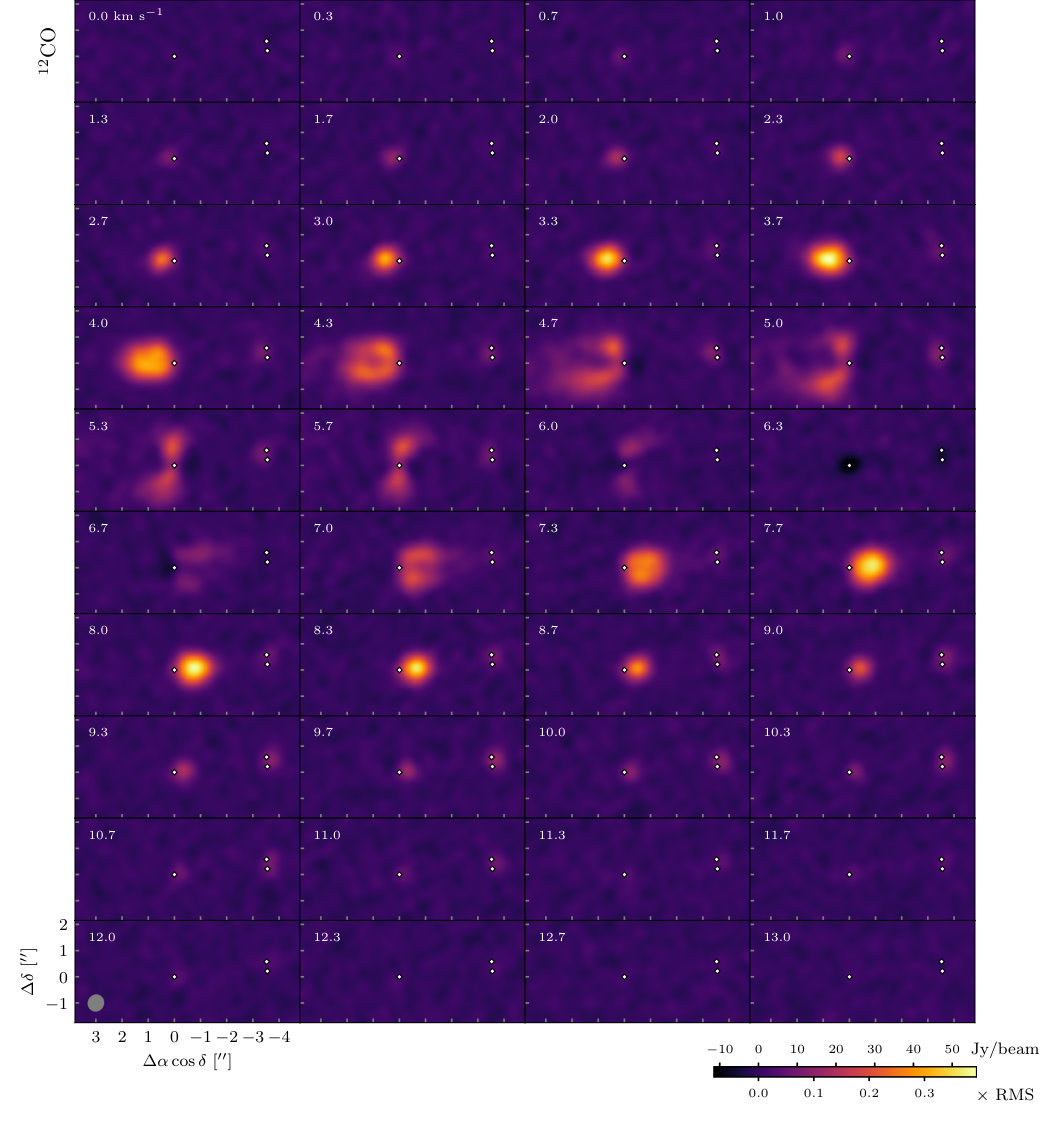 Figure 1
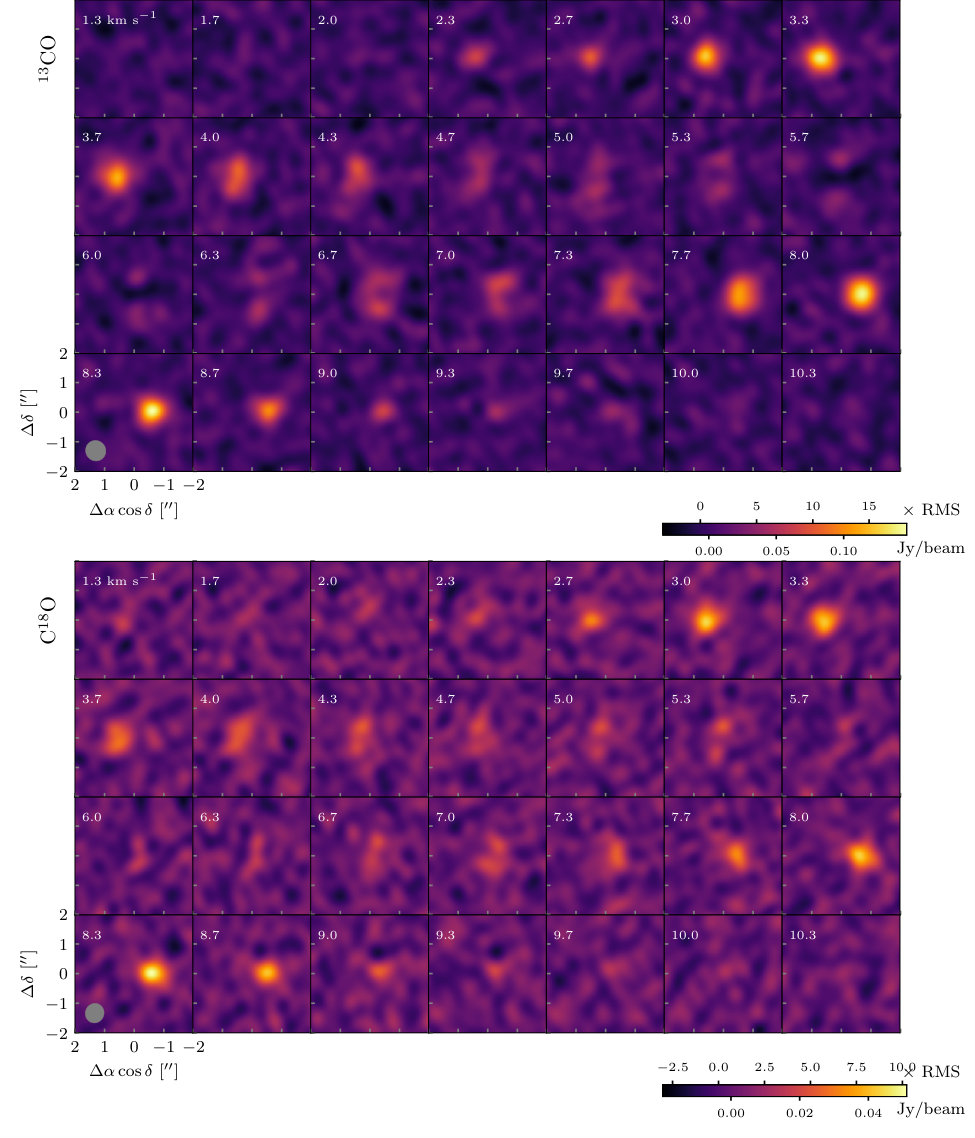 Figure 2
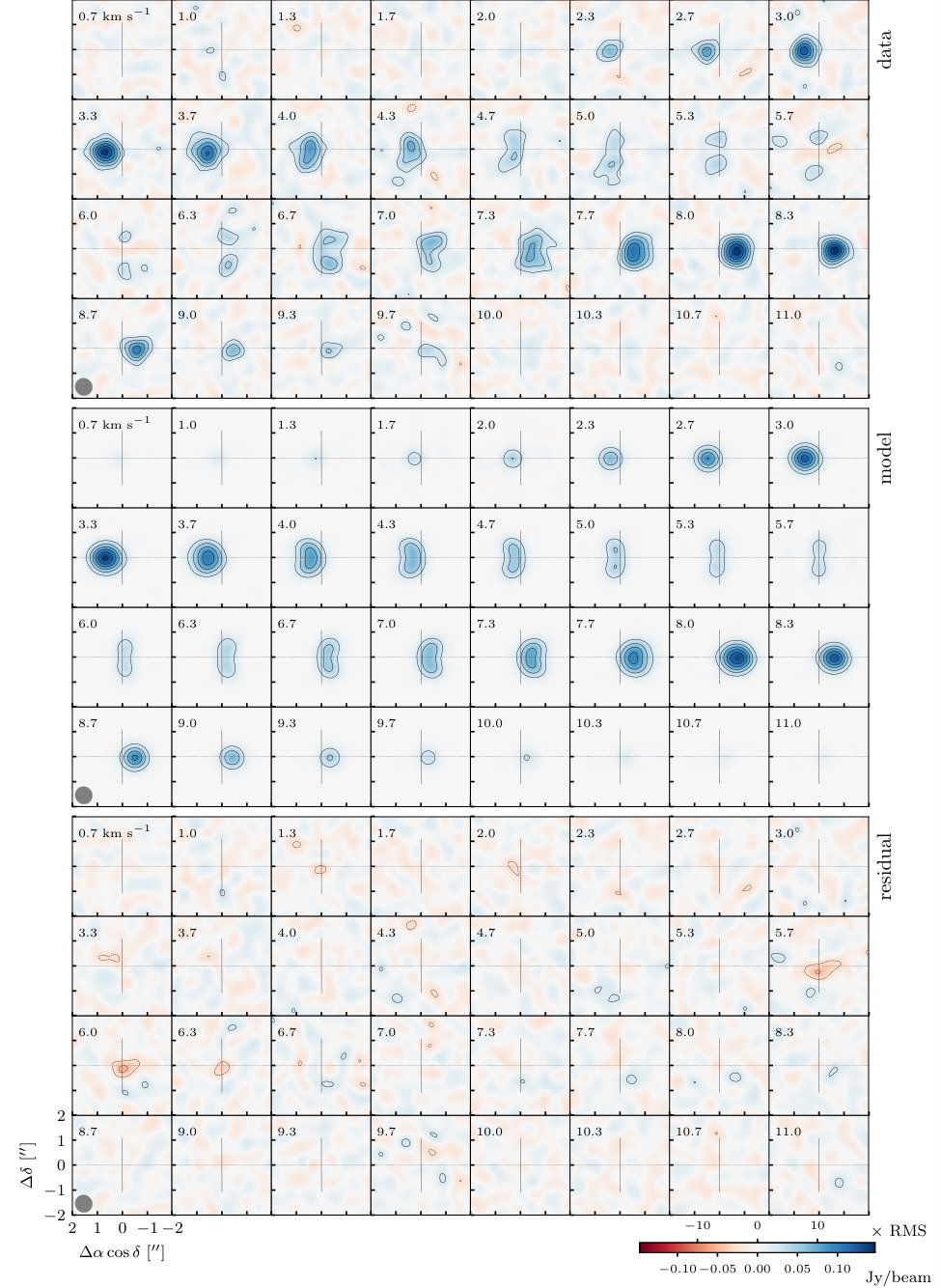 Figure 3
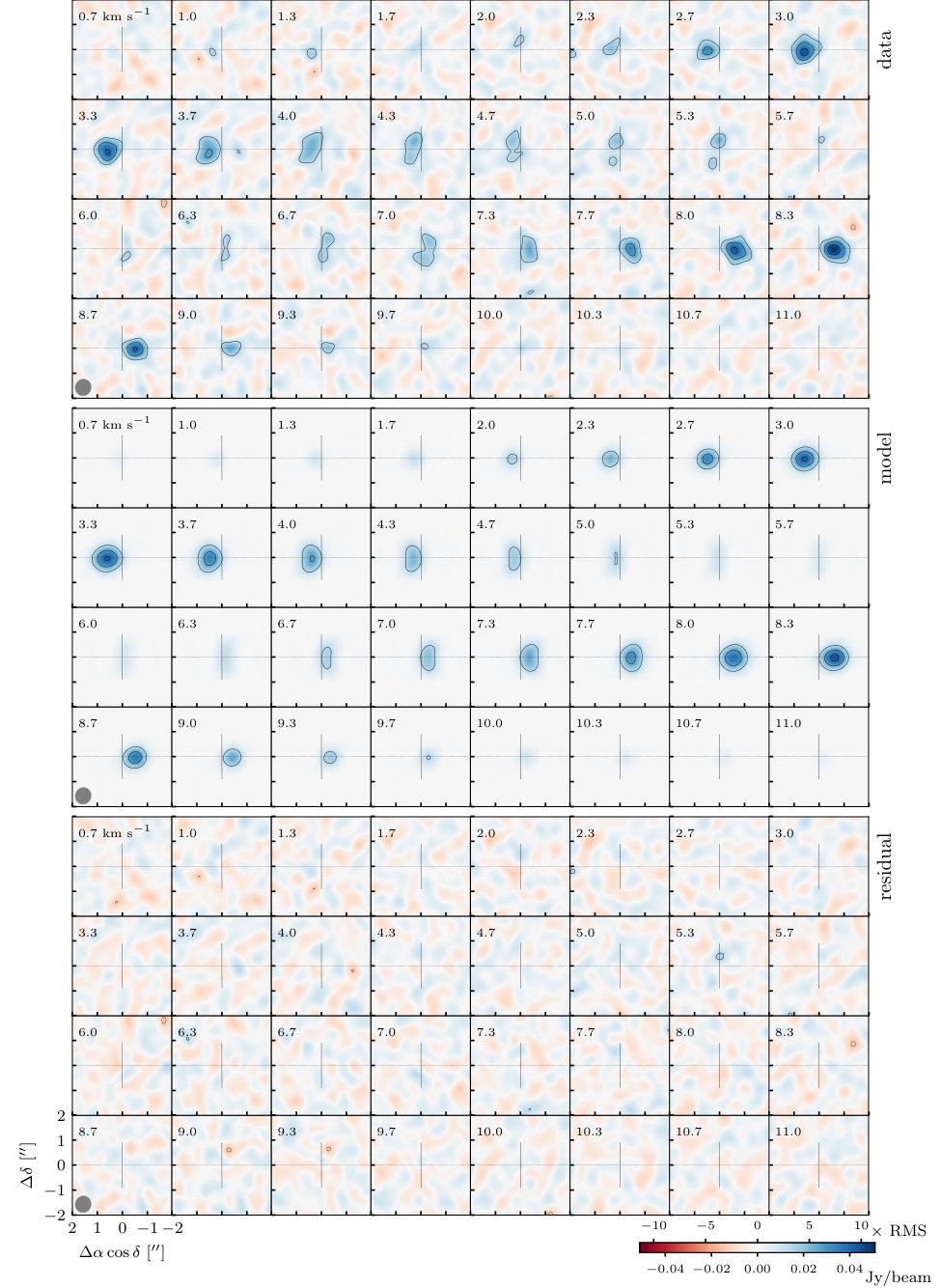 Figure 4
 Figure 5
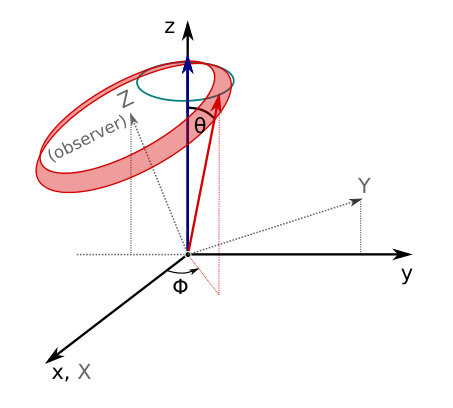 Figure 6
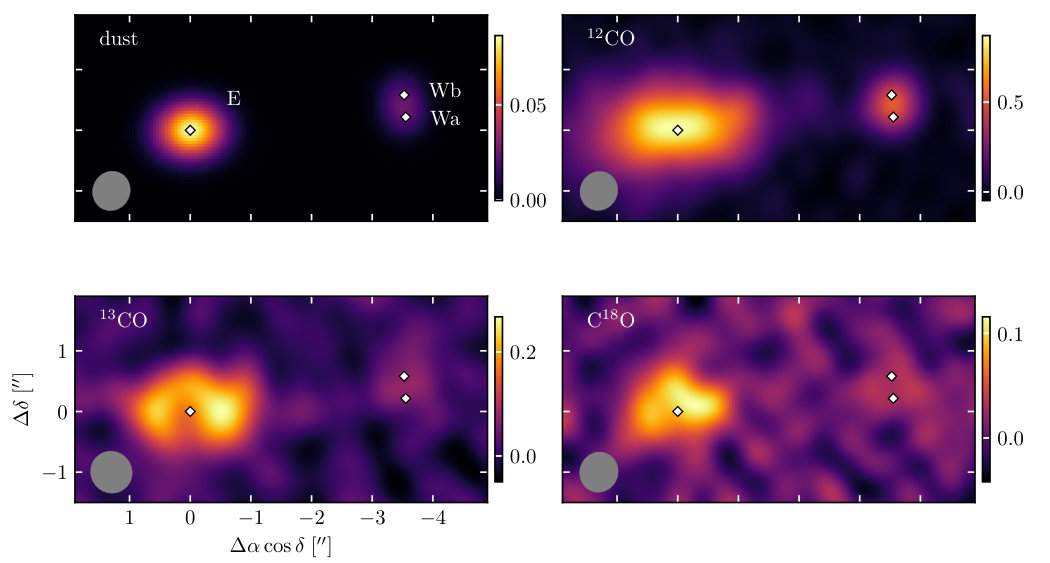 Figure 7
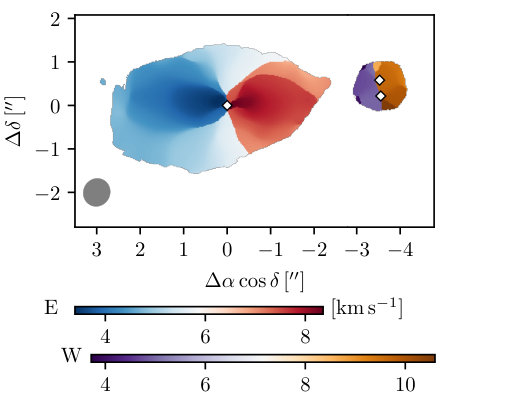 Figure 8
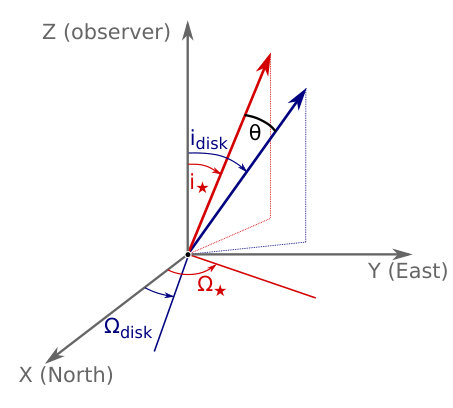 Figure 9
 Figure 10
 Figure 11
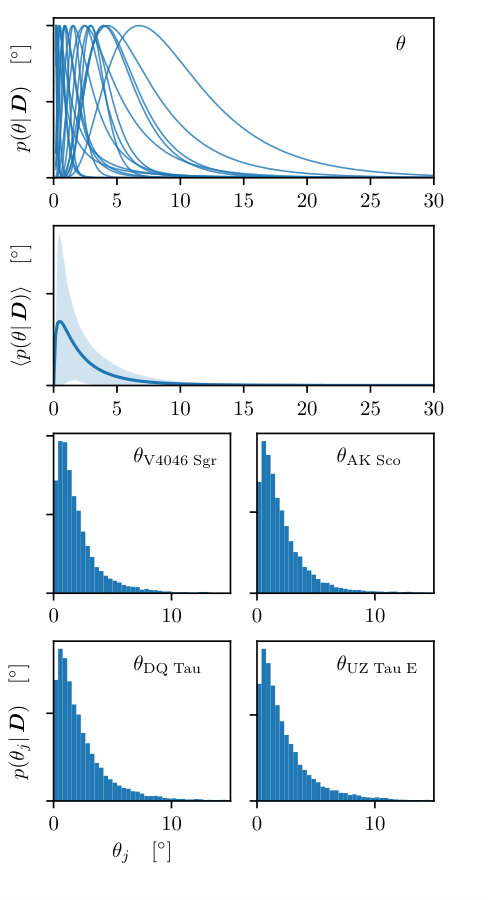 Figure 12
 Figure 13
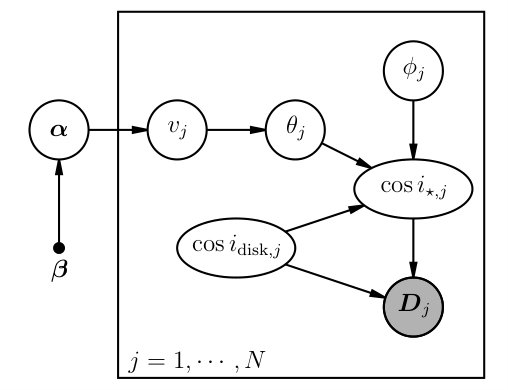 Figure 14
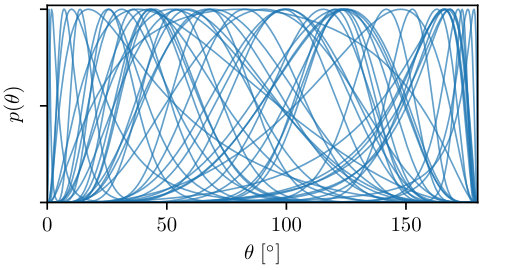 Figure 15
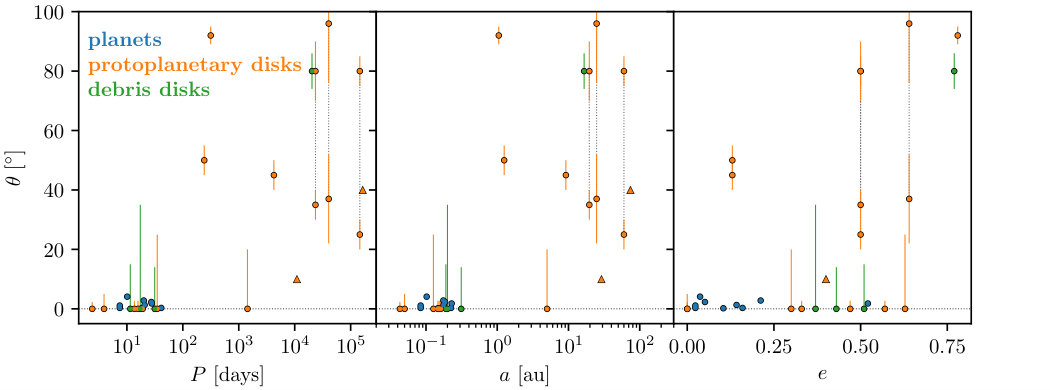 Figure 16
Peer Reviews
No public reviews on file for this paper yet. If you reviewed it on a platform where reviews are public (OpenReview, ICLR, NeurIPS, ICML), you can paste yours below so the community can read it here.
Videos
No videos yet. Explain this paper in a talk, walkthrough, or lecture? Add one.