Acylindrical actions for two-dimensional Artin groups of hyperbolic type
Alexandre Martin, Piotr Przytycki

TL;DR
This paper proves that certain two-dimensional hyperbolic Artin groups act acylindrically on hyperbolic spaces, leading to new insights into their subgroup structure and hyperbolic properties.
Contribution
It establishes acylindrical actions for two-dimensional hyperbolic Artin groups and derives consequences like the Tits alternative and subgroup classifications.
Findings
Artin groups act acylindrically on hyperbolic spaces
Irreducible Artin groups with ≥3 generators are acylindrically hyperbolic
Subgroups virtually splitting as direct products are classified
Abstract
For a two-dimensional Artin group whose associated Coxeter group is hyperbolic, we prove that the action of on the hyperbolic space obtained by coning off certain subcomplexes of its modified Deligne complex is acylindrical. Moreover, if for each there is with , then this action is universal. As a consequence, for , if is irreducible, then it is acylindrically hyperbolic. We also obtain the Tits alternative for , and we classify the subgroups of that virtually split as a direct product. A key ingredient in our approach is a simple criterion to show the acylindricity of an action on a two-dimensional complex.
Click any figure to enlarge with its caption.
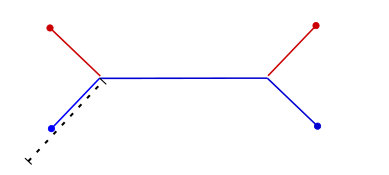 Figure 1
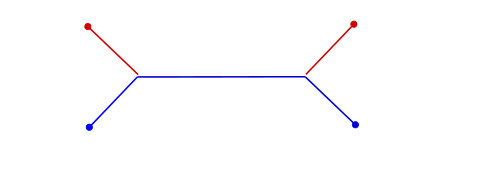 Figure 2
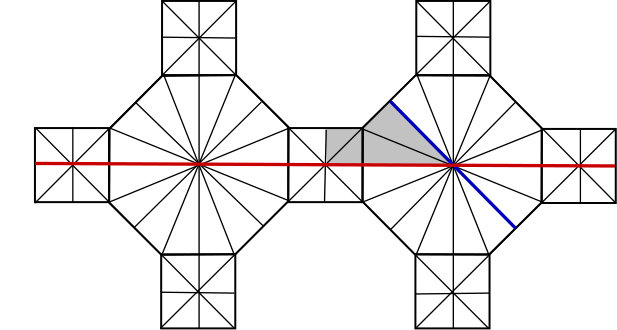 Figure 3
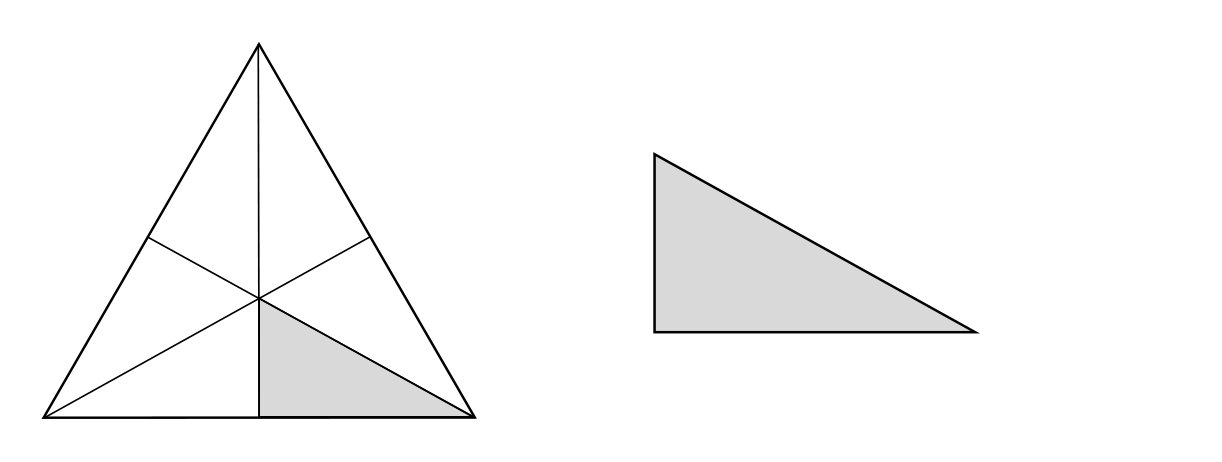 Figure 4
Peer Reviews
No public reviews on file for this paper yet. If you reviewed it on a platform where reviews are public (OpenReview, ICLR, NeurIPS, ICML), you can paste yours below so the community can read it here.
Videos
No videos yet. Explain this paper in a talk, walkthrough, or lecture? Add one.
Acylindrical actions for two-dimensional Artin groups of hyperbolic type
Alexandre Martin*†∗*
Department of Mathematics and the Maxwell Institute for Mathematical Sciences, Heriot-Watt University, Riccarton, EH14 4AS Edinburgh, United Kingdom
and
Piotr Przytycki*‡∗*
Department of Mathematics and Statistics, McGill University, Burnside Hall, 805 Sherbrooke Street West, Montreal, QC, H3A 0B9, Canada
Abstract.
For a two-dimensional Artin group whose associated Coxeter group is hyperbolic, we prove that the action of on the hyperbolic space obtained by coning off certain subcomplexes of its modified Deligne complex is acylindrical. Moreover, if for each there is with , then this action is universal. As a consequence, for , if is irreducible, then it is acylindrically hyperbolic. We also obtain the Tits alternative for , and we classify the subgroups of that virtually split as a direct product. A key ingredient in our approach is a simple criterion to show the acylindricity of an action on a two-dimensional complex.
Partially supported by EPSRC New Investigator Award EP/S010963/1.
Partially supported by NSERC, FRQNT, and National Science Centre, Poland UMO-2018/30/M/ST1/00668.
This work was partially supported by the grant 346300 for IMPAN from the Simons Foundation and the matching 2015–2019 Polish MNiSW fund
1. Introduction
Artin groups form a class of intensively studied groups generalising braid groups and closely related to Coxeter groups. Let us recall their definition. Let be a finite set and for all let . We encode this data in the defining graph with vertex set and edges between and with label whenever . The associated Artin group is given by generators and relations:
[TABLE]
The associated Coxeter group is obtained by adding the relations for every .
Coxeter groups are well understood in many respects. In particular, they are known to be [Mou]. Artin groups on the other hand form a class of groups with a more mysterious structure and geometry, and many problems remain open in general: whether they are torsion-free, linear, or whether they satisfy the celebrated conjecture. (See [CharneyProblems] for a survey of many open problems on Artin groups, as well as partial results.) While little is known about general Artin groups, they are expected to be as well-behaved as Coxeter groups. In particular, braid groups are conjectured to be , which was verified in low dimensions [4BraidCAT0, 6BraidCAT0]. Recently, Artin groups of large-type (i.e. such that for every ) were shown to be systolic [SystolicArtin], a simplicial analogue of . Artin groups of XXL type (that is, with all ), are CAT(0) by [H2].
A unifying theme for many groups in geometric group theory has been to find interesting actions on hyperbolic spaces, and in particular acylindrical actions on hyperbolic spaces. Recall that an isometric action of a group on a metric space is acylindrical [BowditchTightGeodesics] if for every , there exist constants such that for every at distance at least , there are at most elements such that , . The prime example of this phenomenon is the mapping class group of a closed hyperbolic surface acting acylindrically on its curve complex [MasurMinsky, BowditchTightGeodesics]. Since then, many groups have been shown to admit acylindrical actions on hyperbolic spaces [OsinAcyl], including large classes of Artin groups and related groups [ChatterjiMartin, CalvezWiest, CharneyAcylArtin, H2].
We say that an action is elliptic if it has bounded orbits. A group that is not virtually cyclic is acylindrically hyperbolic if it has has an acylindrical action on a hyperbolic space that is not elliptic. (For equivalent definitions, see [OsinAcyl, Thm 1.2].)
While a group may have many acylindrical actions on hyperbolic spaces, there has been a lot of interest recently in understanding which groups, like mapping class groups, admit a ’universal‘ acylindrical action on a hyperbolic space. Let be a group acting on a hyperbolic space . Recall that an element is loxodromic for this action if for some (hence any) point , its orbit map is a quasi-isometric embedding. An acylindrical action of a group on a hyperbolic metric space is called universal [OsinAcyl] if the elements of that are loxodromic for this action are exactly the elements of that are loxodromic for some acylindrical action of on a hyperbolic space (such elements are called generalised loxodromic). Universal actions often offer much deeper insight into the structure of the underlying group, and are known to exist for instance for right-angled Artin groups, and more generally for hierarchically hyperbolic groups [HHUniversal]. The goal of this article is to show the existence of such a universal acylindrical action for a large class of Artin groups, and to use the dynamics of the action to understand the structure of certain of its subgroups.
Statement of results.
An Artin group is two-dimensional (see [CD]) if for every , we have
[TABLE]
This class contains in particular all large-type Artin groups. We say that an Artin group is of hyperbolic type if the associated Coxeter group is hyperbolic. For two-dimensional Artin groups, by [Mou] this is equivalent to requiring that for any , we have
[TABLE]
An important complex associated to an Artin group is its modified Deligne complex (see Definition 3.6) introduced by Charney and Davis [CD], and generalising a construction of Deligne for Artin groups of spherical type [Del]. While the action of an Artin group on its modified Deligne complex is almost never acylindrical, we are able to construct an acylindrical action for a two-dimensional Artin group of hyperbolic type by coning off an appropriate family of subcomplexes of its modified Deligne complex called standard trees (see Definition 4.1). Our main result is the following:
Theorem A**.**
The action of a two-dimensional Artin group of hyperbolic type on its coned off Deligne complex is acylindrical. Moreover, if for each there is with , then this action is universal.
In particular, for , if is irreducible, then it is acylindrically hyperbolic.
Here is irreducible if there is no nontrivial partition with for all .
Note that a notion stronger than universal acylindrical action, namely largest acylindrical action, was recently introduced in [HypStructures]. Right-angled Artin groups and more generally hierarchically hyperbolic groups are known to have such a largest action [HHUniversal]. Although we do not address this question here, it would be interesting to know whether the action of on its coned off Deligne complex is a largest acylindrical action for .
Theorem A is the first example of a universal acylindrical action for Artin groups that are not right-angled. The dynamics of such an action can be used to understand the structure of certain subgroups of these Artin groups, as we now explain.
Tits alternative.
A group satisfies the Tits alternative if every finitely generated subgroup is either virtually soluble or contains a non-abelian free subgroup. This dichotomy has been shown for many groups of geometric interest, such as linear groups [TitsAlternative], mapping class groups of hyperbolic surfaces [IvanovAutomorphisms, McCarthyTitsAlternative], outer automorphism groups of free groups [BestvinaFeighnHandelTitsI, BFH2], groups of birational transformations of surfaces [CantatTits], etc. A general heuristic is that a group that is non-positively curved in a very broad sense should satisfy the Tits alternative. In particular, it is conjectured that all groups satisfy the Tits alternative. Several classes of groups have been shown to satisfy this alternative, in particular cocompactly cubulated groups [SageevWiseTits], and groups acting geometrically on two-dimensional systolic complexes or buildings [OP], but the problem remains open in general.
Following the heuristic that Artin groups should be non-positively curved in an appropriate sense, it is natural to ask whether Artin groups satisfy the Tits alternative, as already noted in [BestvinaArtin]. It should be mentioned that Coxeter groups are linear, which implies that they do satisfy the Tits alternative. So far, the following classes of Artin groups have been shown to satisfy the Tits alternative:
- •
Artin groups that can be cocompactly cubulated. An important class of such Artin groups is the class of right-angled Artin groups, namely Artin groups such that or for every . Beyond them, a few classes of Artin groups have been shown to be cocompactly cubulated [HJP, VirtuallyCubulatedArtin], but the conjectural picture states that the class of cocompactly cubulated Artin groups is extremely constrained [VirtuallyCubulatedArtin].
- •
Artin groups of finite type (also known as spherical Artin groups), i.e. Artin groups whose associated Coxeter group is finite, since they were shown to be linear [Kr, SphericalArtinLinear, Dig].
- •
Artin groups acting geometrically on certain two-dimensional complexes, including large-type Artin groups [OP, Thm A.2] and Artin groups acting geometrically on a two-dimensional systolic complex [OP, Thm A] provided by [BM].
We obtain a strengthening of the Tits alternative for two-dimensional Artin groups of hyperbolic type.
Corollary B** (Tits alternative).**
Let be a two-dimensional Artin group of hyperbolic type. Then satisfies the Tits alternative. More precisely, every subgroup of that is not virtually cyclic either contains a nonabelian free group or is virtually .
In a forthcoming article [MP2], we prove the Tits alternative for Artin groups of type FC, using different techniques.
Virtual abelian and virtual product subgroups.
We complete Corollary B by obtaining a classification of the virtually subgroups of two-dimensional Artin groups of hyperbolic type. Before stating our result, let us first recall some of the known of Artin groups (see Section 2 for references).
A dihedral Artin group, that is, an Artin group on two generators with , contains a finite index subgroup isomorphic to , where is a free group of rank . In particular, dihedral parabolic subgroups (i.e. conjugates of ) of a given Artin group contain many subgroups.
Another source of subgroups are the central elements of dihedral parabolic subgroups. The centre of a dihedral Artin group on two generators with is infinite cyclic, generated by an element . In particular, for a general Artin group and , commutes with any element in the subgroup generated by , where denote the neighbours of is the defining graph.
For two-dimensional Artin groups of hyperbolic type, our result states that these subgroups are close to being the only ones, and relies crucially on the dynamics of the action of these Artin groups on their coned off Deligne complex.
Corollary C** (Classification of virtually subgroups).**
Let be a two-dimensional Artin group of hyperbolic type, and let be a subgroup that is virtually . Up to conjugation, one of the following occurs:
- •
* is contained in the stabiliser of a vertex of the modified Deligne complex (i.e. is contained in a dihedral parabolic subgroup), or*
- •
* is contained in the stabiliser of a standard tree of the modified Deligne complex. In particular, contains a conjugate of a non-trivial power of some . We refer to Remark 4.6 for an explicit description of these subgroups.*
By contrast, for more general two-dimensional Artin groups where contains a Euclidean parabolic subgroup, there exist ’exotic‘ virtually subgroups coming from periodic flats of the modified Deligne complex, see [MPabelian].
In a similar direction, we also obtain a complete classification of the subgroups that decompose as a non-trivial product in a two-dimensional Artin group of hyperbolic type.
Corollary D** (Classification of virtual products).**
Let be a two-dimensional Artin group of hyperbolic type, and let be a subgroup that virtually splits as a (non-trivial) direct product. Then is virtually of the form , where is a free group.
Strategy of the proof.
The key to all the theorems is to find a convenient hyperbolic space on which acts acylindrically. The first space we study is the modified Deligne complex associated to , where it was shown that the Moussong metric on is for two-dimensional Artin groups [CD]. In the case of two-dimensional Artin groups of hyperbolic type, this metric can be modified to be . However, since dihedral Artin groups have non-trivial centres, the action on is not acylindrical. More precisely, contains unbounded trees with infinite pointwise stabilisers (see Definition 4.1). To circumvent this, we construct a new space by coning off these trees, and we show that it is still possible to endow this new space with an equivariant metric. More crucially, removing these obvious obstructions to acylindricity turns out to be enough, as we prove that the action of on the coned off Deligne complex is acylindrical and universal.
Theorem A is proved by means of a general result on acylindrical actions on two-dimensional spaces. Recall that an action of a group on a metric space is weakly acylindrical [MartinAcylSquare] if there exist constants such that two points of at distance are fixed by at most elements of . Weak acylindricity is a dynamical condition that is weaker and much easier to deal with than acylindricity, especially for actions on non-locally compact spaces. Weak acylindricity was already known to be equivalent to acylindricity for actions on trees, and more generally for actions on finite-dimensional cube complexes [ConingOffGenevois]. The following theorem, which is the central result of this article, is thus a powerful tool to study the dynamics of actions on two-dimensional spaces (the result extends in a straightforward manner to spaces, ).
Theorem E**.**
Let be a group acting by simplicial isometries on a two-dimensional piecewise hyperbolic simplicial complex with finitely many isometry types of simplices. If the action of on is weakly acylindrical, then it is acylindrical.
Organisation of the article.
In Section 2, we recall a few basic facts about dihedral Artin groups, whose properties are used to understand the links of vertices of the modified Deligne complex in a two-dimensional Artin group. In Section 3, we recall the definition of and endow it with a particular metric. In Section 4, we introduce the standard trees, which are the main obstruction to the acylindricity of the action of on . We describe their geometry and use it to construct the coned off space , which we show to admit a metric. Section 5 is devoted to the proof of acylindricity Theorems E and A, and relies on a fine control of geodesics in a two-dimensional simplicial complex. With the acylindricity of the action of on , we are then able to prove Corollaries B–D.
Acknowledgements.
We thank Florestan Brunck and the referees for helpful remarks.
2. Preliminaries on dihedral Artin groups
Let with , and let us consider the dihedral Artin group . In this section, we recall a few facts about . The following is well known, see for example [HJP, Lem 4.3(1)] for a proof.
Lemma 2.1**.**
* has a finite index subgroup isomorphic to , where is a free group (non-abelian if ).*
We denote .
Lemma 2.2** ([Del, Thm 4.21]).**
Let . The centre of is generated by for even and by for odd.
We therefore denote for even (including the case ) and for odd.
Lemma 2.3** ([CrispAut, Lem 7(ii)]).**
Let . For any the centralizer in of is the rank abelian group generated by and .
Lemma 2.4** ([AS, Lem 6]).**
Let . A word with syllables (i.e. of form with all ) is non-trivial in .
3. Modified Deligne complex and its geometry
Let be a two-dimensional Artin group. For satisfying , let be the dihedral Artin group with . For , let .
Let be the following simplicial complex. The vertices of correspond to subsets satisfying and, in the case where with , satisfying . We call the type of its corresponding vertex. Vertices of types are connected by an edge of , if we have or vice versa. Similarly, three vertices span a triangle of , if they have types for some .
We give the following structure of a simple complex of groups (see [BH, §II.12] for background). The vertex groups are trivial, , or , when the vertex is of type , respectively. For an edge joining a vertex of type to a vertex of type , its edge group is ; all other edge groups and all triangle groups are trivial. All inclusion maps are the obvious ones. It follows directly from the definitions that is the fundamental group of .
3.1. Modified Deligne complex
Assume now that is of hyperbolic type. We will equip with a metric, which is inspired by the construction of Moussong for Coxeter groups [Mou, §13]. However, our construction is new. In particular, we make some of the angles larger than Moussong, in order to prepare the construction of the coned off space in Definition 4.8.
Let be small enough so that for all we have
[TABLE]
For any , let be the third angle of any Euclidean triangle with angles . In other words, .
Lemma 3.1**.**
There exists satisfying and such that for any cycle in the defining graph of any Artin group of hyperbolic type, for , we have .
Proof.
Step 1. There is such that for each hyperbolic triangle group with exponents we have .
In order to prove this, let be such that for and triangle groups. Since the exponents of any hyperbolic triangle group dominate the exponents of one of these three, the same inequality holds for all hyperbolic triangle groups. Consequently,
[TABLE]
Step 2. There is such that for any -cycle we have .
Indeed, since is of hyperbolic type, at least one is , and consequently . Hence it suffices to take .
Step 3. There is such that for any -cycle with we have .
Indeed, we have . Hence it suffices to take . ∎
From now on, we fix any satisfying Lemma 3.1.
Lemma 3.2**.**
Given a finite set , for sufficiently small we have that for any there exists a hyperbolic triangle with angles and (see Figure 1).
Proof.
We claim that for any and any there is a hyperbolic triangle with , and . Indeed, fix at distance and a half-line at angle to at . Varying along that half-line we can achieve any angle at between [math] and . By , we have , justifying the claim.
Denote . It is easy to see that for fixed and , we have . Thus for sufficiently small , the area of the triangle is arbitrarily small, hence by the Gauss–Bonnet Theorem so is its defect and thus . Since is finite, for sufficiently small this holds for all simultaneously. ∎
To choose appropriately we need the following, the role of which will become clear in Section 4.
Remark 3.3**.**
In a right-angled hyperbolic triangle with legs of lengths and , for sufficiently small, the other angle at the length leg is .
We fix arbitrary satisfying Lemma 3.2 and with satisfying Remark 3.3, for all exponents of . We now equip with a piecewise hyperbolic metric. Let be a triangle of with vertices of types , respectively. We equip with the metric of the unique hyperbolic triangle from Lemma 3.2, with .
Note that this choice is consistent on the edges, since two triangles sharing an edge either share a vertex of type and are thus congruent, or they share an edge with vertices of types , which is of common length .
For each vertex of , let be the local development at of . The vertex of corresponding to is labelled . See [BH, § II.12.24].
Lemma 3.4**.**
For each vertex of , the link of in has girth .
Proof.
As in [CD], the idea is to appeal to Lemma 2.4.
At of type , coincides with . The link of in coincides with the barycentric subdivision of the defining graph with the length of the edge being (Lemma 3.2). Hence the lemma follows from Lemma 3.1.
Suppose now that has type . Then the link of in is a bipartite graph of edge length and the lemma follows as well.
Finally, suppose that has type with . Then the link of in is the barycentric subdivision of the following graph . Namely, consider the edge of groups with vertex groups and , trivial edge group, and the length of the underlying edge . Consider the obvious morphism of into . Then is the development of associated to that morphism. Thus it suffices to show that has girth . This is exactly Lemma 2.4. ∎
By [BH, Thm II.12.28] we obtain the following (which is also a consequence of [L, Thm 4.13]).
Corollary 3.5**.**
* is strictly developable.*
Definition 3.6**.**
The development of is called the modified Deligne complex [CD] and is denoted .
Note that is a triangle complex with a cocompact action of . Its vertex stabilisers are trivial or conjugates of and , depending on their type, and its edge stabilisers are trivial or conjugates of . In particular, all and with map injectively into . Furthermore, has finitely many isometry types of simplices and thus it is complete by [BH, Thm I.7.19]. By [BH, Thm II.12.28], is . Vertices of inherit types from the types of the vertices of .
3.2. Non-hyperbolic case
Here we drop the hypothesis that is of hyperbolic type. Let be the same complex of groups as before with the metric on each triangle being Euclidean with angles . Setting , the same arguments as before give that the local developments of are and hence is strictly developable and its development exists and is . See [CD] for detailed proof and the description of this piecewise Euclidean Moussong metric in general.
4. Standard trees and the coned off space
Let be a two-dimensional Artin group, possibly not of a hyperbolic type. Let be the subcomplex that is the union of all the edges of joining vertices of type and for all . Let and let be the fixed-point set in of . Note that since acts on without inversions, is a subcomplex of . Since the stabilisers of the simplices of outside are trivial, we have that . In particular is a graph. Since with the Moussong metric is , is convex and thus it is a tree.
Definition 4.1**.**
A standard tree is the fixed-point set in of a conjugate of a generator of .
The first goal of this section is to describe standard trees and their stabilisers, in the spirit of Example 4.7 ahead. In particular, see Figure 2.
Recall from Section 3.2 that, in the Moussong metric, the angles of triangles at a vertex of type are . From the convexity of we thus have immediately:
Corollary 4.2**.**
Let be a standard tree, and let be a vertex of incident to edges of . Then the combinatorial distance between their corresponding vertices in the link of is at least for of type , or exactly for of type . Consequently, in the case where is of hyperbolic type, their distance in the angular metric induced from the piecewise hyperbolic metric is at least for of type or exactly for of type .
The following lemma will allow us to describe the structure of the stabiliser of a standard tree. For a vertex of type , with for and the unique vertex of type in , we define . Note that does not depend on , since if , then and hence commutes with implying .
Lemma 4.3**.**
Let be edges in with a common vertex of type . Then either or . Moreover in the latter case,
- •
if are of the same type, then there is with , and
- •
if corresponds to the coset and to the coset , then is odd and there is satisfying .
Proof.
Assume without loss of generality that corresponds to the trivial coset . Then . Assume first that corresponds to a coset . Note that whenever we will establish for some , we will have . If , then . Thus there is with , and so , as desired. Suppose now . If , then we have for some . This means that , and using the homomorphism mapping both generators to we obtain . By Lemma 2.3, there is with , as desired.
If corresponds to and , then we have for some . This means that , and using the same homomorphism we obtain . If is even, then and are not conjugate (use a homomorphism to killing but not ), contradiction. When is odd, we have and consequently , so that commutes with . By Lemma 2.3 there is with and . Thus . ∎
Remark 4.4**.**
By Lemma 4.3, the stabilisers of all edges in a standard tree coincide. Consequently each edge of belongs to exactly one standard tree and each vertex of type belongs to exactly one standard tree. (In contrast, each vertex of type belongs to infinitely many standard trees, for , or to two standard trees, for .)
Lemma 4.5**.**
The stabiliser of the standard tree that is the fixed-point set of is of the form for some free group .
Proof.
Let be the standard tree that is the fixed-point set of . Since fixes an edge of , any element conjugates to an element also fixing an edge of , which must be some by Remark 4.4. In fact, we obtain using the homomorphism mapping all the generators to . Hence is in the centre of . The quotient acts on with trivial edge stabilisers. Thus is the fundamental group of the quotient graph of groups , whose edge groups are trivial and whose vertex groups are by Lemma 4.3. Consequently is free. Taking any splitting gives us . ∎
Remark 4.6**.**
We have the following explicit description of the stabiliser of the standard tree in Lemma 4.5. Let be the graph obtained from by cutting it along all the vertices of type with even. Vertices of inherit types from the vertices of . Let be the component of containing the unique vertex of type . By Lemma 4.3, we have , with vertex groups at all the vertices of type . Introduce an order on the elements of . Label each directed edge of connecting the vertex of type to the vertex of type with and odd with the element . Label all other edges of by the trivial element. From Lemma 4.3 one can deduce that we can take freely generated by
- •
the words labelling a set of closed paths in based at the vertex of type forming a free basis of , and
- •
the conjugates of by the words labelling some paths in joining the vertex of type with each of the vertices of type in .
Example 4.7**.**
We illustrate Remark 4.6 on an example, see Figure 2 below. Let with . Let be the unique edge of joining the vertices of types and . Then the standard tree that is the fixed-point set of is the union of the translates of under , which is bounded. The stabiliser of is .
Let (respectively, ) be the unique edge of joining the vertices of types and (respectively, and ). Then the standard tree that is the fixed-point set of is not bounded. Each of the vertices of of type has degree , and each of the vertices of of type or has infinite degree. The stabiliser of is the direct product of and the free group generated by and .
Definition 4.8**.**
Suppose now that is of hyperbolic type, and equip with the metric of Section 3.1. Let be the -complex obtained by coning off simplicially each of the standard trees. In consider an edge of a standard tree with vertices of type respectively, and let be its cone vertex. We put on the triangle the metric of a right-angled hyperbolic triangle with the right angle at , and the length (depending on ) as in so that by Remark 3.3 the angle at is .
Since has finitely many isometry types of simplices, also has finitely many isometry types of simplices. In particular is complete by [BH, Thm I.7.19].
The action of on extends to an action of on , where each maps the cone vertex of a standard tree to the cone vertex of the standard tree . Since the metric on each triangle above depends only on the length of the edge in , we have that acts on by isometries.
Proposition 4.9**.**
For sufficiently small, is .
Proof.
Since is simply connected and standard trees are simply connected, is simply connected. is piecewise hyperbolic, so by [BH, Thms II.4.1(2) and II.5.24] it suffices to show that the link of each vertex is of girth . If is a cone point, its link is a tree and there is nothing to prove. The vertex links in are of girth by Lemma 3.4. Hence if is of type , we are done as well.
If if of type , and is a cycle in its link not contained in , then passes through a vertex corresponding to an edge joining to a cone point, which is unique by Remark 4.4. Hence travels through two adjacent edges of length , and through at least two edges in , which by Corollary 4.2 have length , as desired.
If if of type , and is a cycle in its link not contained in , then analogously passes through a vertex corresponding to an edge joining to a cone point. Hence travels through two adjacent edges of length . If the remaining part of is contained in , then it suffices to use Corollary 4.2. Finally, by Remark 4.4, if passes through exactly one other vertex (respectively, at least two other vertices) corresponding to a cone point, it is of length (respectively, ), which is for small enough with respect to . ∎
Convention 4.10**.**
From now on, we assume that in Section 3 was chosen small enough so that the coned off space is .
5. Dynamics of the action
The goal of this section is to prove the acylindricity of the action of on for two-dimensional Artin groups of hyperbolic type (Theorem A) and its Corollaries B–D. In order to do this, we use the more general Theorem E whose proof we postpone to the next subsection.
5.1. Weak acylindricity of the action of on
Lemma 5.1**.**
Let be a connected piecewise hyperbolic simplicial complex with finitely many isometry types of simplices. Then for any non-empty subcomplexes there are points realising the distance between and .
Moreover, if is and are convex and disjoint, then such a pair of points is unique.
Proof.
Let . By [BH, Thm I.7.28], there is a constant such that each taut string in [BH, Def I.7.20] of length has size . In particular, since each geodesic segment in of length determines a taut string of length , we have that the minimal subcomplex of containing is the union of at most simplices. Since has finitely many isometry types of simplices, there are only finitely many isometry types of such . Below, denotes the intrinsic distance function on each .
To justify that is realised, we will prove that over all simplices and geodesics of length between some points in and . Indeed, we have . On the other hand, is the infimum of the lengths of , which are .
The second assertion follows from the strict convexity of the distance function in spaces (see for example [BH, Prop II.2.2], where for a space and one obtains the strict inequality). ∎
Proposition 5.2**.**
The action of on is weakly acylindrical.
Proof.
Suppose is a non-trivial element fixing points . To prove weak acylindricity it suffices to bound the distance from above. Let (resp. ) be a vertex of the simplex containing (resp. ) in its interior. We will bound from above the combinatorial distance between and .
Since acts without inversions, fixes . We now define the following subcomplexes of . If is a vertex of , set . If is a cone vertex, set to be the standard tree corresponding to . Define analogously. We can assume that are disjoint, since otherwise are at combinatorial distance in , as desired. By Lemma 5.1 applied to , there are unique points and realising the distance between and . Let be the geodesic of between and . Since stabilises and , we have that fixes .
If is not contained in , then it has a point with trivial stabiliser, contradicting the assumption that is non-trivial. Assume now that is contained in . Suppose that has two consecutive edges that belong to distinct standard trees. By Lemma 4.3, we have that is trivial, contradicting again the assumption that is non-trivial. In the remaining case, the entire path is contained in one standard tree. Consequently are at combinatorial distance in , as desired. ∎
Remark 5.3**.**
If acts elliptically on , then since is and complete, by [BH, Thm II.2.8(1)] fixes a point of . Since , and hence , acts without inversions, we can take a vertex, which is a vertex of or a cone vertex. Thus by Lemmas 2.1 and 4.5 has a finite index subgroup contained in for a free group .
Proof of Theorem A.
Since the action of on is weakly acylindrical by Proposition 5.2, it follows from Theorem E that the action is acylindrical. Assume now that for each there is with and let us show the universality of this action. By a theorem of Bridson [B, Thm A], a simplicial isometry of a piecewise hyperbolic complex with finitely many isometry types of simplices is either loxodromic or elliptic. In particular, this applies to the action of each on . Thus if is not loxodromic, by Remark 5.3 applied to , there is with for a free group . The group has rank since in the case where stabilises a standard tree that is a translate of the fixed-point set of , we assumed that there is with . Thus generates an infinite cyclic subgroup with infinite index in its centraliser. It follows from [OsinAcyl, Cor 6.9] that cannot be generalised loxodromic.
Finally, assume that and is irreducible. Since , we have that is not virtually cyclic. Since the action of on the hyperbolic space is acylindrical, to show that is acylindrically hyperbolic it suffices to prove that this action is not elliptic. Indeed, otherwise by Remark 5.3 applied with , we have that fixes a vertex of or a cone vertex. If fixes a vertex of type or , then we have or , which contradicts . If fixes a cone vertex corresponding to a standard tree that is, say, the fixed point set of , then by Lemma 4.5 the group centralises . Thus for all we have , which contradicts the irreducibility of . ∎
Note that the condition that for each there is with is necessary for the action to be universal. Indeed, otherwise and is a tree of spaces with vertex spaces of two types. The first type are the coned off modified Deligne complexes for . The second type are edges joining the fixed points of the conjugates of with their cone points. These vertex spaces are joined by edges with vertices of type and . If we replace the vertex spaces of the second type with real lines containing a ‘s worth of vertices of type , the action stays acylindrical but becomes loxodromic. Note also that after performing these replacements for all free factors of we obtain a universal acylindrical action.
Note also that if is not irreducible, then it is not acylidrically hyperbolic [OsinAcyl, Cor 7.3(b)]. If and , then is the free group on and , so it is acylindrically hyperbolic. Finally, if and , then the group is virtually for some free group (Lemma 2.1). Thus is not acylidrically hyperbolic [OsinAcyl, Cor 7.3(b)].
Proof of Corollary B.
Let be a subgroup of that is not virtually cyclic. Since the action of on the hyperbolic space is acylindrical by Theorem A, is elliptic or acylindrically hyperbolic. If is elliptic, then by Remark 5.3 is virtually contained in for a free group , and thus it is virtually or contains a non-abelian free group. If is acylindrically hyperbolic, then it contains a non-abelian free group by [DGO, Thm 6.14]. ∎
Proof of Corollary C.
Let be a subgroup of that is virtually . Since is not acylindrically hyperbolic by [OsinAcyl, Cor 7.3(b)], it is elliptic by Theorem A. By Remark 5.3, stabilises a vertex of or a cone vertex of , and hence a standard tree of . In the latter case by Lemma 4.5, is contained in a with a free group, and conjugate to some , as desired. ∎
Proof of Corollary D.
Let be a subgroup of that is virtually a non-trivial direct product. Since is torsion-free [CD, Thm B], by [OsinAcyl, Cor 7.3(b)] is not acylindrically hyperbolic, and thus it is elliptic by Theorem A. By Remark 5.3, is virtually of form , as desired.∎
5.2. The general acylindricity theorem
We now turn to the proof of Theorem E. In this section, denotes a two-dimensional piecewise hyperbolic simplicial complex, with finitely many isometry types of simplices, and that is .
Simplifications.
We first explain how to alter the metric on so that girths of vertex links become uniformly greater than . Replace every hyperbolic triangle of with side lengths by a hyperbolic triangle of side lengths respectively, and call this new metric . With respect to all the angles are strictly larger than with respect to . Since still has finitely many isometry types of simplices, the girths of vertex links are now uniformly greater than . Therefore, without loss of generality we assume from now on that the same was true with respect to . Note that in the case where is the coned off space , it follows from the proof of Proposition 4.9 that vertex links already satisfy this condition to start with.
Secondly, we explain how to subdivide the complex so that all the triangles become acute. Namely, any finite piecewise euclidean triangle complex admits an acute triangulation, i.e. a triangulation all of whose triangles are acute [BZ]. While the piecewise hyperbolic counterpart of that result does not seem to appear in the literature, we can make use of the piecewise euclidean statement in the following way.
Lemma 5.4**.**
Let be a two-dimensional piecewise hyperbolic simplicial complex, with finitely many isometry types of simplices. For , let be the metric on obtained by replacing every hyperbolic triangle of with side lengths by a hyperbolic triangle of side lengths . There exists such that admits an acute triangulation.
Proof.
For satisfying , let be the Euclidean triangle with side lengths , and let be the hyperbolic triangle of side lengths . Let denote with metric rescaled by the factor . In other words, is isometric to a triangle of side lengths in the hyperbolic plane rescaled by the factor , hence of curvature .
For each , let be an isometric embedding of in the unit disc of equipped with the Riemannian metric of the Klein model of the hyperbolic plane. We require additionally that contains the centre of . Let be the diffeomorphism that is the composition of the rescaling map , the map , and the affine map sending to (respecting the sides). Note that the Riemannian metrics on pushed forward from via converge pointwise to the euclidean Riemannian metric of , which we call . Furthermore, the geodesics for coincide (up to a reparametrisation) with the geodesics for each . In particular, the unit tangent vector at to the unique geodesic in the metric converges to the unit tangent vector at to the unique geodesic in the metric .
Let be the piecewise euclidean simplicial complex obtained from by replacing each hyperbolic triangle by the euclidean triangle with the same side lengths. Since has finitely many isomorphism types of simplices, it admits a quotient map to a finite piecewise euclidean triangle complex that is an isometry on each of the simplices. By [BZ], there is an acute triangulation of , which we pull back to an acute triangulation of . Then for of a fixed isometry type, there are only finitely many possibilities for the restriction of to . By the previous paragraph, for sufficiently large, pulling back to the vertices of in via , and joining the same pairs as in by geodesic segments in , gives an acute triangulation of . For sufficiently large we have that is acute for all simultaneously.
To find an acute triangulation of some it suffices to find an acute triangulation of . We regard as the union of , over in . We wish to piece together an acute triangulation of from . Note, however, that for a vertex of in the interior of an edge of two (or more) triangles of , the preimages of in the triangles of under the maps might not coincide. In other words, and might not match on a common edge of . However, the distance between and converges to [math] as converges to . Hence replacing by in (which we do simultaneously in all such configurations, of which there are finitely many up to an isometry), we still obtain an acute triangulation of for sufficiently large. These triangulations piece together to an acute triangulation of . ∎
By Lemma 5.4, without loss of generality we assume that all the triangles of are acute. In particular, stars are convex, and the union of two triangles sharing an edge is convex.
Notation.
Let be a vertex of . We denote by the map assigning to each the direction of the geodesic from to (which is well-defined since geodesics are unique). The angular distance between two points will be denoted . For we extend this notation so that For , we define the metric -neighbourhood of a subset of as the set
[TABLE]
For a point , by we denote the simplex of containing in its interior. For a simplex of , its open star is the union of the interiors of the simplices containing .
Definition 5.5**.**
We fix a constant such that:
- •
the link of every vertex of has girth ,
- •
every triangle of has all angles .
Choosing an open cover.
A key tool in controlling geodesics of will be to subdivide them in pieces that are easier to understand locally. This will be done by means of an appropriate cover of , which will take us some time to define. The cover will consist of an open set for each simplex of . We will also define a constant (distinct from in Convention 4.10) that depends only on . Their main properties will be:
**(): **
Each is contained in .
**(): **
If intersects , then contains or vice versa.
To start with, since has only finitely many isometry types of simplices, we can fix a constant such that the balls
[TABLE]
around the vertices of satisfy and property () for vertices. Before we proceed with the construction of the remaining elements of the cover, we need the following.
Definition 5.6**.**
We fix a constant such that for each vertex of and a pair of points with , we have
[TABLE]
(Such a constant exists, since is Lipschitz on .)
Now, for an edge of , we define
[TABLE]
Note that for any point , we have . Then by Definitions 5.5 and 5.6, for any edge with , we have (since for with we have and ). Consequently, is disjoint from , and so we have property () for an edge. Similarly we have property () for edges. Property () for an edge and a vertex follows from for .
Note also that for points at distance from , we have and , and consequently . This is why when for a triangle of , we define
[TABLE]
we have property () and consequently property () for a triangle and arbitrary. Furthermore, again by Definitions 5.5 and 5.6 we have the following:
Corollary 5.7**.**
Let be a vertex of , and let be simplices of containing and such that neither of them is contained in the other. Then for every and , we have
[TABLE]
Galleries and extended galleries.
Definition 5.8** (Gallery).**
Let be a geodesic segment in . We denote by the minimal subcomplex of that contains , and we call it the gallery of . It is the union of all the simplices over .
We now want to slightly enlarge .
Definition 5.9** (Extended gallery).**
Let be a geodesic segment in , let be its gallery, and let be the (possibly empty) set of vertices of contained in and which are not an endpoint of . For each , we perform the following construction.
Since the geodesic passes through , defines two points in the link at angular distance . Since vertex links have girth , there exists at most one geodesic of (for the angular metric) of length between and . If no such geodesic exists, we set Otherwise, let be the set of edges of the minimal subgraph of containing . Each edge of corresponds to a triangle of containing . We set
[TABLE]
which we call the extended gallery of
Remark 5.10**.**
By [BH, Thm I.7.28], and since angles of triangles in are bounded from below, there is a constant such that for each geodesic segment of length , the extended gallery contains at most vertices.
Appropriate subdivision of a geodesic.
Definition 5.11** (Decomposition).**
Let be a geodesic in , oriented from to . By property (), we can choose a shortest sequence of simplices such that there are points lying on in that order, with and . We call the data of all and (and determined by them) a decomposition of .
Remark 5.12**.**
If in each pair none of the simplices is contained in the other, we say that the decomposition is anchored. Note that by the minimality of , cannot be contained in unless , and cannot contain unless . Thus the geodesic has an anchored decomposition obtained by discarding .
Technical lemma.
The following lemma is the key technical result allowing us to control the simplices met by a geodesic sufficiently close to another one. We advise the reader to skip its proof during a first reading.
Lemma 5.13**.**
Let be two geodesics in with . Suppose that has an anchored decomposition with . Then
[TABLE]
We first prove a local version of Lemma 5.13:
Lemma 5.14**.**
Lemma 5.13 holds under the additional assumption that the anchored decomposition of has .
Proof.
Let be the simplices of the anchored decomposition of . First notice that if is an edge, then are triangles and so by property () we have , which is is convex. Thus we have and consequently so the lemma follows. We can thus assume that is a vertex .
Case 1. .
Then passes through . Thus and the lemma follows.
Case 2. .
Since the decomposition was anchored, Corollary 5.7 implies . Moreover, Definition 5.6 and the fact that
[TABLE]
implies and similarly . In particular, the geodesics in are disjoint and . Since has girth , the convex hull of the points in is a tree indicated in Figure 3 (possibly degenerate, which happens for example if lies on the geodesic ). Since is convex and contains by property (), we have that consists of the triangles with in the geodesic in . Since triangle angles are , we have that among these only might not lie in , as desired. ∎
Proof of Lemma 5.13.
We decompose as a concatenation with for a sequence of points such that for all . Let . By Lemma 5.14, for each , we have . To conclude that , it suffices to prove the following.
Claim. For every , we have
To justify the claim, let us assume by contradiction that for some , the simplex is neither contained in nor in . Then in particular , so by property () is not a triangle and thus it is an edge. Furthermore, and contain , so in particular , and thus . For simplicity, let us denote the vertices of by and respectively. We will prove that each of intersects , which contradicts the convexity of and . To show, say, , we consider the following cases.
Case 1.
Then passes through , as required.
Case 2.
Since the decomposition was anchored, Corollary 5.7 implies . Moreover, as before Definition 5.6 implies and . In particular, the geodesics in are disjoint and . Since has girth , the convex hull of the points in is a tree indicated in Figure 4. Note that since is not contained in , the point does not lie on the geodesic in .
Suppose first that the point does not lie on the geodesic in . Then, since , the branching point indicated in the figure must be (all other branching points of are at distance from by Definition 5.6), which justifies . Secondly, suppose that the point lies on the geodesic in . Then, since lies on the geodesic in , we have as well.
∎
Proof of Theorem E.
We are finally ready to prove Theorem E. We will use the following variant of [K, Lem 3.10].
Lemma 5.15**.**
For each there is satisfying the following. Let be a geodesic in a space , and let be an isometry of with and . For each subsegment of with endpoints at distance from and , we have that the -neighbourhood of in satisfies .
Proof of Theorem E.
Consider for as in Definition 5.6, and let , be such that two points of at distance at least are stabilised by at most elements of . Let be as in Lemma 5.15. Since has only finitely many isometry types of simplices, there is an upper bound on the length of a geodesic contained in the star of a vertex of [BH, Lem I.7.23 and Thm I.7.28]. Let . For a point , we define the -stabiliser of as
[TABLE]
To prove acylindrical hyperbolicity, consider with . We will bound the size of .
Let be the geodesic between and . By Lemma 5.15, there is a subsegment of length such that for all we have for some . By Remark 5.12, each has a subsegment with an anchored decomposition obtained by removing from a subsegment of length at most at each of . Consequently, by Lemma 5.13 there is a subsegment , obtained by removing from a subsegment of length at most at each of , with . Thus the subsegment of of length and centred at the midpoint of satisfies . By Remark 5.10, there is a constant such that contains at most vertices. Consequently , since otherwise there would be with each fixing . ∎
References