Convergence in variation for the multidimensional generalized sampling series and applications to smoothing for digital image processing
Laura Angeloni, Danilo Costarelli, Gianluca Vinti

TL;DR
This paper investigates the convergence in variation of multidimensional generalized sampling series with averaged kernels, introduces sampling-Kantorovich operators for L^p convergence, and applies these results to digital image smoothing techniques.
Contribution
It establishes convergence in variation for multidimensional sampling series using new sampling-Kantorovich operators and links derivatives of these operators to the series, with applications in image processing.
Findings
Proves convergence in L^p for a class of operators.
Establishes convergence in variation for sampling series.
Demonstrates applications to digital image smoothing.
Abstract
In this paper we study the problem of the convergence in variation for the generalized sampling series based upon averaged-type kernels in the multidimensional setting. As a crucial tool, we introduce a family of operators of sampling-Kantorovich type for which we prove convergence in L^p on a subspace of L^p(R^N): therefore we obtain the convergence in variation for the multidimensional generalized sampling series by means of a relation between the partial derivatives of such operators acting on an absolutely continuous function f and the sampling-Kantorovich type operators acting on the partial derivatives of f. Applications to digital image processing are also furnished.
Click any figure to enlarge with its caption.
 Figure 1
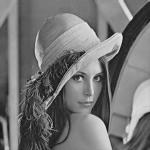 Figure 2
 Figure 3
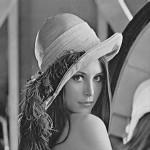 Figure 4
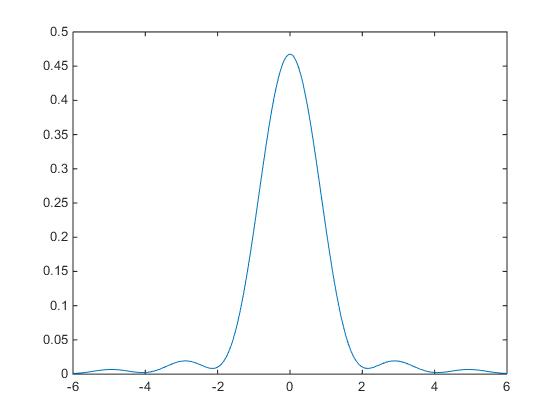 Figure 5
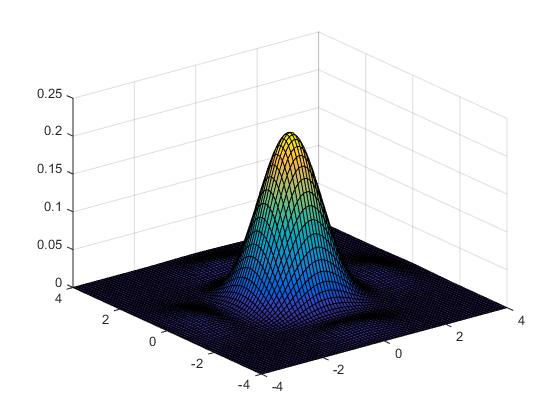 Figure 6
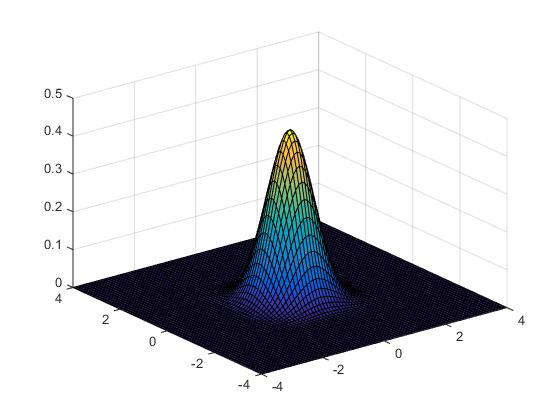 Figure 7
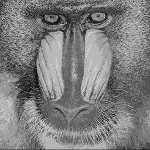 Figure 8
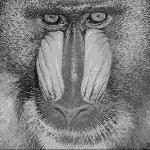 Figure 9
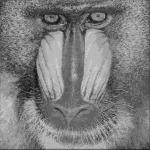 Figure 10
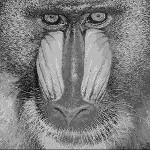 Figure 11
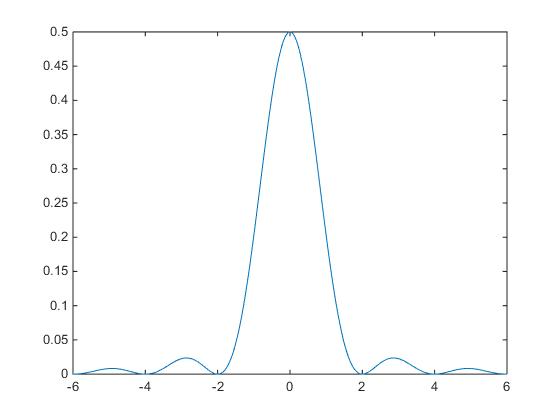 Figure 12
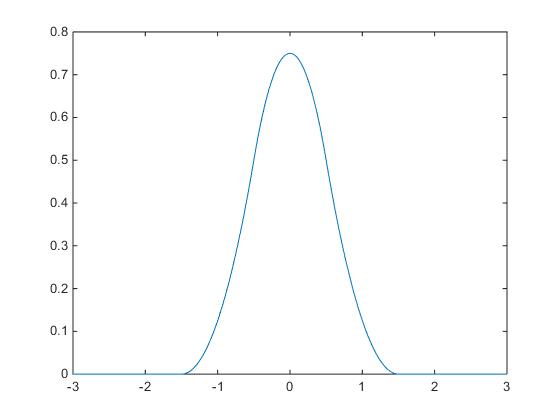 Figure 13
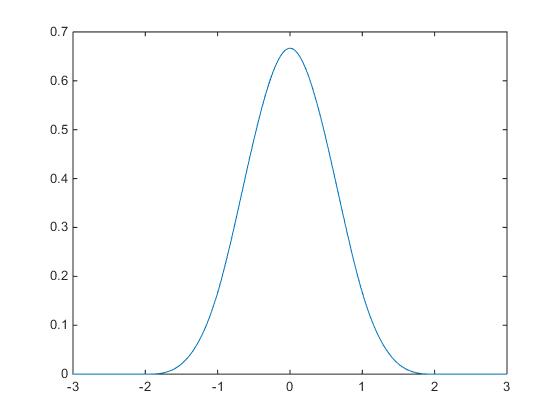 Figure 14
Peer Reviews
No public reviews on file for this paper yet. If you reviewed it on a platform where reviews are public (OpenReview, ICLR, NeurIPS, ICML), you can paste yours below so the community can read it here.
Videos
No videos yet. Explain this paper in a talk, walkthrough, or lecture? Add one.
Taxonomy
TopicsApproximation Theory and Sequence Spaces · Mathematical Approximation and Integration · Advanced Harmonic Analysis Research
Convergence in variation for the
multidimensional generalized sampling series and applications to smoothing
for digital image processing
Laura Angeloni, Danilo Costarelli, Gianluca Vinti
Department of Mathematics and Computer Science
University of Perugia
Via Vanvitelli 1
06123
Perugia
Italy
[email protected] - [email protected]
Abstract
In this paper we study the problem of the convergence in variation for the generalized sampling series based upon averaged-type kernels in the multidimensional setting. As a crucial tool, we introduce a family of operators of sampling-Kantorovich type for which we prove convergence in on a subspace of : therefore we obtain the convergence in variation for the multidimensional generalized sampling series by means of a relation between the partial derivatives of such operators acting on an absolutely continuous function and the sampling-Kantorovich type operators acting on the partial derivatives of . Applications to digital image processing are also furnished. AMS 2010 Mathematics Subject Classification: 41A30, 41A05 Key words and phrases: convergence in variation; multidimensional generalized sampling series; sampling-Kantorovich operators; variation diminishing type property; smoothing in digital image processing
1 Introduction
In this paper we present approximation results in BV-spaces for the generalized sampling series in the multidimensional frame.
The above sampling series, defined as
[TABLE]
has been introduced by P.L. Butzer (see, e.g., [24]) and revealed to be very interesting for both the theoretical and applicative aspects. Indeed, several approximation results have been obtained in the last forty years with respect to different notions of convergence, such as uniform, , and modular convergence ([18, 37, 16]). Moreover, they have many important applications to Signal Theory since they provide an approximate sampling formula, which allows to reconstruct not necessarily band-limited signals. By its multivariate generalization, that is,
[TABLE]
several problems of image processing can be treated (see, e.g., [17]).
A natural setting to study some issues involving digital images is furnished by the spaces of functions of bounded variation ([36, 44, 47]). In this direction, it is interesting to have results about estimates and convergence in variation for the above discrete operators. In the case of functions of one-variable, the problem has been faced in [6] for the operators (I) based upon averaged type kernels.
Here, also with the aim to consider applicative aspects, we deal with the multivariate case, namely we study results about approximation in variation by means of the operators (II) based upon multidimensional product kernels of averaged type, namely
[TABLE]
where
[TABLE]
for some , and are suitable one-dimensional kernels. We will use the multidimensional generalization of the classical Jordan variation introduced by Tonelli (see, e.g., [45]) and later generalized by T. Radó ([40]) and C. Vinti ([48]) to the case of functions of -variables.
In particular, we establish a variation diminishing-type property (Proposition 1) and a convergence theorem (Theorem 1).
Due to form of the above discrete sampling type operators, to obtain results about approximation in variation is a very delicate problem. The strategy we propose is to introduce a new family of Kantorovich type operators defined as
[TABLE]
, , , for which we establish -convergence in a subspace of (Theorem 4), therefore obtaining a convergence result for the new class of operators (III). We notice that the above result is obtained through the use of the modulus of continuity (see [34, 33, 42]) which seems to be the most suitable approach in this setting.
The crucial point in order to reach the convergence in variation is to find a link between the two classes of operators: to this aim we prove (Proposition 2) a relation between the gradient of the multivariate generalized sampling series of a function and the family of Kantorovich-type discrete operators acting on the partial derivatives of .
Some of the results of the present paper may have an applicative interpretation: in particular, the variation diminishing type property (Proposition 1), ensuring that the generalized sampling series (II) have smaller variation than the function on which they act, can be viewed as a smoothing procedure. Indeed, if the function is a gray scale digital image, the action of the operators and the consequent variation diminishing corresponds to reducing the jumps of gray levels with respect to the original image, hence producing a smoothing effect. In Section 6 we discuss such digital image processing applications in details, furnishing some numerical examples.
2 Notations and preliminaries
Our results will be set in the frame of the space of multivariate functions of bounded variation: in particular we will consider the concept of variation introduced by Tonelli ([45]) for two variables, extended to the general case of by Radó and C. Vinti ([40, 48]). Here we will recall it.
For a function and , we will use the notation
[TABLE]
if we are interested in the th coordinate of , . Moreover, given an dimensional interval by we will denote the dimensional interval obtained deleting by the th coordinate, i.e.,
[TABLE]
Given a vector and , we will use the usual notation for products and quotients, i.e., and, for , .
By we will denote the space of locally Riemann integrable functions on , while will denote the space of all the measurable and bounded functions .
Definition 1
A function is said to be of bounded variation () if (the usual Jordan one-dimensional variation of the th section of ) is finite for a.e. and
[TABLE]
for every .
For more details about -spaces, see, e.g., [9, 5, 10, 11, 4, 13].
Let us now recall how to compute the multidimensional Tonelli variation. The first step is to consider, for and the dimensional integrals
[TABLE]
where is the usual one-dimensional (Jordan) variation of the section of . Let now be the Euclidean norm of the vector , namely
[TABLE]
where if for some .
Then the variation of on is defined as
[TABLE]
where the supremum is taken over all the finite families of dimensional intervals which form partitions of .
Passing to the supremum over all the intervals , we obtain the variation of over the whole , i.e.,
[TABLE]
It is well known that, for every , exists a.e. in and , for every (see e.g. [40, 48]).
We now recall the notion of absolute continuity in the sense of Tonelli.
Definition 2
A function is locally absolutely continuous in the sense of Tonelli () if, for every interval and for every , the th section of , is absolutely continuous for almost every .
It is a well known result that, if then
[TABLE]
(see [40, 48, 35, 12]), that is, an integral representation for the variation of holds.
We will therefore denote by the space of all the functions (absolutely continuous functions).
We will study approximation results for the multivariate generalized sampling series, namely a family of discrete operators defined as
[TABLE]
such operators are the multidimensional version of the generalized sampling series (see, e.g., [21, 22, 17]).
Here is a kernel, that is, a function that satisfies the following assumptions:
is such that , for every ;
, where the convergence of the series is uniform on the compact sets of .
The above assumptions are quite standard working with discrete families of operators: see e.g., [21]. We point out that the operators are well-defined, for example, for every : indeed in this case is bounded and since , for some and for every , we have
[TABLE]
by .
In particular, in the present paper we will study the convergence in variation for the multivariate generalized sampling series with product kernels of averaged type, that is kernels of the form
[TABLE]
where
[TABLE]
for some , and is a (one-dimensional) kernel for every (i.e., satisfying and with ).
Notice that it is easy to see that is a kernel itself and moreover, by the Fubini-Tonelli theorem,
[TABLE]
and, by this,
[TABLE]
We point out that is it easy to give examples of product kernels of averaged type (see Section 6) to which our results can be applied.
The corresponding multivariate generalized sampling series (associated to the averaged product kernel ) will be denoted as
[TABLE]
It is easy to see that is differentiable and, taking into account that, obviously,
[TABLE]
it is possible to write, for every , , ,
[TABLE]
Notice that, since is bounded, exists for every since
[TABLE]
again by for each one-dimensional kernel .
One of the main ideas of this paper is to establish a relation between the gradient of the multivariate generalized sampling series of a function and a family of Kantorovich-type discrete operators, that we now introduce, acting on the partial derivatives of . This generalizes the analogous result, in the one-dimensional case, obtained in [6], similarly to what happens between the Bernstein polynomials and their Kantorovich version (see, e.g., [1]).
We therefore introduce the following family of multidimensional discrete operators of sampling-Kantorovich type:
[TABLE]
. Notice that, similarly to the case of , it is easy to see that the operators , , are well-defined if, for example , since is in particular bounded.
3 Results for the multidimensional generalized sampling series
We will first prove that the operators map into . Such result is a kind of ”asymptotic” variation diminishing property: indeed, choosing sufficiently large, we obtain the classical variation diminishing property for the multidimensional generalized sampling series.
Proposition 1
Let . Then , for every , , and
[TABLE]
Proof. Let us fix and . By (3) and (4), the partial derivatives of exist for every , , and are bounded: this implies that the sections of the function are locally absolutely continuous, namely . Let us fix and let be a partition of , with , . For every fixed , , similarly to the proof of Proposition 1 of [6], it is possible to show that, since , a.e. ,
[TABLE]
and therefore, by (2),
[TABLE]
This implies that, for every ,
[TABLE]
Summing now over and passing to the supremum over all the possible partitions of we conclude that
[TABLE]
and hence, by the arbitrariness of ,
[TABLE]
This implies that and hence .
We will now give the result that establishes a relation between the partial derivatives of the multidimensional sampling series and the multidimensional sampling-Kantorovich type operators acting on the partial derivatives of the function.
Proposition 2
If then for every , ,
[TABLE]
, .
Proof. By (3), since is locally absolutely continuous, we have that
[TABLE]
Now putting in the first series and for every , there holds
[TABLE]
4 Convergence in for the multidimensional sampling-Kantorovich type operators
We now study the problem of the convergence in for the multidimensional sampling-Kantorovich type operators that we introduced. Such result will be also fundamental in order to prove the convergence in variation for .
We recall that convergence in holds for the multidimensional generalized sampling series (see [17]) assuming that belongs to a suitable subspace of , namely . Since the definition of our operators is very close to that one of , it is natural to expect that the convergence holds within the same subspace, that is what we will now prove.
Let us recall the definition of (see [17]).
Let us consider an admissible partition over the th axis, i.e., such that
[TABLE]
We say that , , , is an admissible sequence if it is the cartesian product of admissible partitions .
For a fixed admissible sequence , the norm of a function is defined as
[TABLE]
where and is the volume of . With such notations the subspace is defined as
[TABLE]
In [17] it is proved that is a proper linear subspace of , together with other properties concerning such space. In particular, we recall the following important result of convergence in for the modulus of smoothness (see [34, 33, 42])
[TABLE]
where
[TABLE]
, and \Delta^{r}_{\tt h}f({\tt t}):=\sum_{j=0}^{r}(-1)^{r+j}\left(\begin{array}[]{l}r\\ j\end{array}\right)f({\tt t}+j{\tt h}) denotes the differences of order at with increment .
Proposition 3** (Prop. 7 of [17])**
If , , , then
[TABLE]
We point out that, of course, is a non trivial subspace since it contains, for example, all the functions in with compact support.
We are now ready to state the result of convergence in for the multidimensional sampling-Kantorovich type operators.
Let us now assume that is a kernel with compact support, i.e., if , , not necessarily of product type, namely satisfies the assumption:
there exists such that for and , for every .
We point out that, since has compact support, obviously (and therefore () holds) and satisfies the condition () since is bounded and the series reduces to a finite sum.
Proposition 4
Let , . Then, for every ,
[TABLE]
Proof. By assumption there holds, for , and ,
[TABLE]
Since has support contained in , if , and therefore the series reduces to a finite sum over the indexes such that , namely , for every : for such we have that
[TABLE]
by the definition of the modulus of smoothness. Therefore
[TABLE]
by (). Passing to the norm we obtain
[TABLE]
and the thesis follows by Proposition 3.
5 Convergence in variation for the multidimensional generalized sampling series
We are now ready to prove the main result of the paper, that is, the convergence in variation for the multidimensional generalized sampling series with product kernels of averaged type. Since we will use results of the previous section, we assume here that is a kernel with compact support, that is, satisfies assumption .
Theorem 1
Let be such that , for every . Then, for every ,
[TABLE]
Proof. Since , by Proposition 1, , for every and : then
[TABLE]
Now, by Proposition 2,
[TABLE]
Now, as by Proposition 4, while as , for every , , by the continuity in of the translation operator. Therefore the theorem is proved.
6 Examples and applications to smoothing for digital image processing
In this section, we provide some basic examples of kernels for which the above results hold, and we discuss some applications of the variation diminishing-type property (5) to smoothing in digital image processing.
As stated in Section 2, in this paper we consider product kernels of averaged type.
As a first example, we can consider the multivariate product kernel of the averaged type generated by the well-known Fejér kernel (see, e.g., Fig. 1 left and [27]), defined by:
[TABLE]
where the sinc-function (see, e.g., [26, 7]) is of the form:
[TABLE]
Now, the one-dimensional averaged Fejér kernel (see, e.g., Fig. 1, right) is the following:
[TABLE]
and the corresponding multivariate version (see, e.g., Fig. 2 for the case ) is:
[TABLE]
It is well-known that the Fejér kernel has unbounded support and satisfies assumptions and (see e.g., [31, 8]), then for the multivariate generalized sampling series based upon holds the variation diminishing type property established in Proposition 1, when multivariate signals of bounded variation are considered.
Moreover, also the relation established in Proposition 2 holds, where the -th first order partial derivatives of the generalized sampling series of a given absolutely continuous function is related with , i.e., the corresponding sampling series of the Kantorovich type of the -th first order partial derivatives of .
However, the convergence results proved in Section 4 can not be applied to the generalized sampling series based upon since the kernels do not have compact support, hence assumption is not satisfied.
Other examples of one-dimensional kernels with unbounded support that can be used to define product averaged type kernels can be found, e.g., in [38, 28, 29, 30].
In order to recall examples of kernels of one variable such that the corresponding multivariate averaged type versions also satisfy assumption , we recall the definition of the well-known central B-spline of order (see, e.g., Fig. 3 and [46, 25, 2, 3, 20]), defined by:
[TABLE]
where denotes “the positive part” of (see e.g., [41, 32]). The functions are non-negative, continuous with compact support contained in , and satisfy conditions and .
Now, let us denote by
[TABLE]
the averaged B-spline kernel of order . Recalling the following well-known property:
[TABLE]
for , we have:
[TABLE]
i.e., , . Now, since belongs to (see [6]), we must have and therefore we conclude that
[TABLE]
for every , namely, the averaged kernel with generated by a central B-spline of order is a B-spline itself of order .
In view of the above remark, we can explicitly state that the multivariate averaged type kernel with and generated by (see, e.g., Fig. 4 for the case in two space dimension) is the following:
[TABLE]
In practice, in the latter case the multivariate generalized sampling operators based upon averaged B-spline with coincide with the usual generalized sampling series based upon the multivariate central B-spline of order .
Generally speaking, we can also define the multivariate average central B-spline kernels as follows:
[TABLE]
Since has compact support it satisfies also assumption ; thus the above sampling series fulfills the results of both Section 3 and Section 5. Further, for the latter examples of kernels also Proposition 4 and Theorem 1 can be applied.
Now, at the end of this section we consider some applications to smoothing in digital processing. For basic facts concerning this numerical tool for imaging, see e.g., [19, 39, 43].
It is well-known that any static gray scale image is a bivariate signal with compact support; then it can be (naturally) modeled as follows:
[TABLE]
for every image (matrix) , , where , , is the characteristic function of the sets (i.e. , for and otherwise).
Note that the above function is defined in such a way that to every pixel it is associated the corresponding gray level .
Moreover, by the above representation of the image it turns out that , hence one can consider approximations of by means of the bivariate generalized sampling series based upon the averaged type kernels. The main advantage that can be achieved by the above procedure is expressed by Proposition 1: have no-bigger variation than , for sufficiently large , i.e., the operators provide an approximated version of the original image , but regularized. In this sense, the generalized sampling series can be used for smoothing of images.
Clearly, in order to visualize an approximation (new image) of the original image by means of , we need to sample the operators, for , with a fixed sampling rate concordant with the dimension of . Obviously, the sampling rate is chosen arbitrarily hence one can also consider different (high) sampling rates.
The effect of the proposed procedure can be strongly noticed at the edges of the figures, where the jumps of gray levels are reduced with respect to the corresponding ones in the original image.
Now we can give the following practical examples of image reconstruction in order to show the smoothing capabilities of the above operators. An optimized version of the above described algorithm for image reconstruction and smoothing can be implemented by means of the MATLAB programming language, following the indications outlined in [14, 15] in case of the so-called sampling Kantorovich algorithm for image enhancement.
For the numerical experiments, we consider the well-known images of Lena and Baboon with pixel resolution (see Fig. 5).
First of all, we reconstruct the original images in Fig. 5 by using the bivariate averaged Fejér kernel with . According to Proposition 1, and observing that , we have:
[TABLE]
i.e., the total variation of any reconstructed images is, at least, 4 times smaller than that of the original ones, producing the smoothing effect. In Fig. 6 we have the reconstruction of Lena and Baboon (of pixel resolution) by means of the operator , , based upon the bivariate averaged Fejér kernel with . By detailed analysis of the edges (especially in case of Lena, at the contours of the hat) it is possible to observe the smoothing of the analyzed images.
In Fig. 7 we have the reconstruction of Lena and Baboon (of pixel resolution) by means of the operator , , based upon the bivariate averaged Fejér kernel with .
The main differences that can be observed between the images in Fig. 6 and Fig. 7 are that, for big values of the images are closer to the original and consequently the edges tend to be more clear.
Finally, in Fig. 8 we have the reconstruction of Lena and Baboon (of pixel resolution) by means of the operator , , based upon the bivariate central B-spline of order with . Note that, also for the latter case one can state a inequality as that given in (7) since also .
Acknowledgments
The authors are members of the Gruppo Nazionale per l’Analisi Matematica, la Probabilitá e le loro Applicazioni (GNAMPA) of the Istituto Nazionale di Alta Matematica (INdAM).
The authors are partially supported by the "Department of Mathematics and Computer Science" of the University of Perugia (Italy). The first and the third author have been partially supported within the project "Metodi di teoria degli operatori e di Analisi Reale per problemi di approssimazione ed applicazioni", funded by the 2017 basic research fund of the University of Perugia. Finally, the second author of the paper has been partially supported within a 2018 GNAMPA-INdAM Project: “Dinamiche non autonome, analisi reale e applicazioni”.
The reference list from the paper itself. Each links out to its DOI / PubMed record.
- 1[1] O. Agratini, An approximation process of Kantorovich type , Math. Notes, Miskolc, 2 (1) (2001), 3-10.
- 2[2] G. Allasia, R. Cavoretto, A. De Rossi, A class of spline functions for landmark-based image registration , Math. Methods Appl. Sci., 35 (2012), 923–934.
- 3[3] G. Allasia, R. Cavoretto, A. De Rossi, Lobachevsky spline functions and interpolation to scattered data , Comput. Appl. Math., 32 (2013), 71–87.
- 4[4] L. Ambrosio, S. Di Marino, Equivalent definitions of BV space and of total variation on metric measure spaces , Journal of Functional Analysis, 266 (7) (2014), 4150–4188.
- 5[5] L. Angeloni, Approximation results with respect to multidimensional φ 𝜑 \varphi -variation for nonlinear integral operators , Z. Anal. Anwendungen, 32 (1) (2013), 103–128.
- 6[6] L. Angeloni, D. Costarelli, G. Vinti, A characterization of the convergence in variation for the generalized sampling series , Ann. Acad. Sci. Fenn. Math., 43 (2018), 755-767.
- 7[7] L. Angeloni, D. Costarelli, G. Vinti, A characterization of the absolute continuity in terms of convergence in variation for the sampling Kantorovich operators , Mediterr. J. Math., 16 (2019), 44. DOI:10.1007/s 00009-019-1315-0
- 8[8] L. Angeloni, D. Costarelli, G. Vinti, Quantitative estimates for sampling type operators with respect to the Jordan variation , submitted (2019).