TL;DR
This paper explores how adversarial attacks can undermine neural network explanations and proposes a novel regularization method to enhance model robustness and explanation fidelity, significantly advancing trustworthy AI in sensitive applications.
Contribution
Introduces a Lipschitz-inspired regularization technique that improves neural network robustness and explanation accuracy against adversarial attacks.
Findings
Achieved a 2.4x increase in Accuracy-Robustness Area on ImageNet
Demonstrated adversarial attacks can invalidate explanations of NN decisions
Leveraged attacks as more faithful explanations with robust networks
Abstract
For sensitive problems, such as medical imaging or fraud detection, Neural Network (NN) adoption has been slow due to concerns about their reliability, leading to a number of algorithms for explaining their decisions. NNs have also been found vulnerable to a class of imperceptible attacks, called adversarial examples, which arbitrarily alter the output of the network. Here we demonstrate both that these attacks can invalidate prior attempts to explain the decisions of NNs, and that with very robust networks, the attacks themselves may be leveraged as explanations with greater fidelity to the model. We show that the introduction of a novel regularization technique inspired by the Lipschitz constraint, alongside other proposed improvements, greatly improves an NN's resistance to adversarial examples. On the ImageNet classification task, we demonstrate a network with an Accuracy-Robustness…
Click any figure to enlarge with its caption.
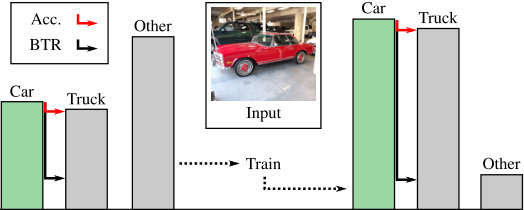 Figure 1
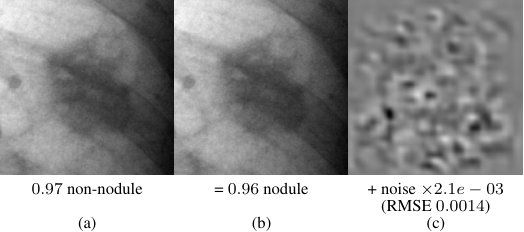 Figure 2
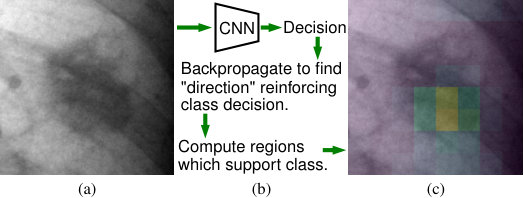 Figure 3
 Figure 4
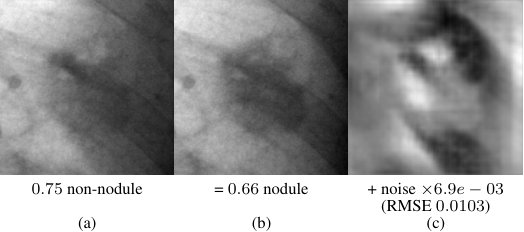 Figure 5
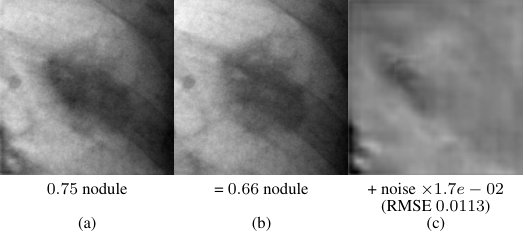 Figure 6
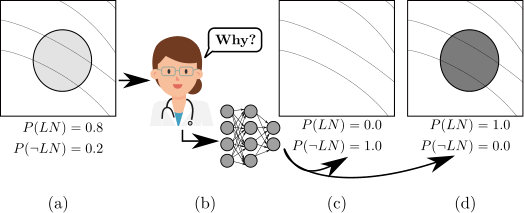 Figure 7
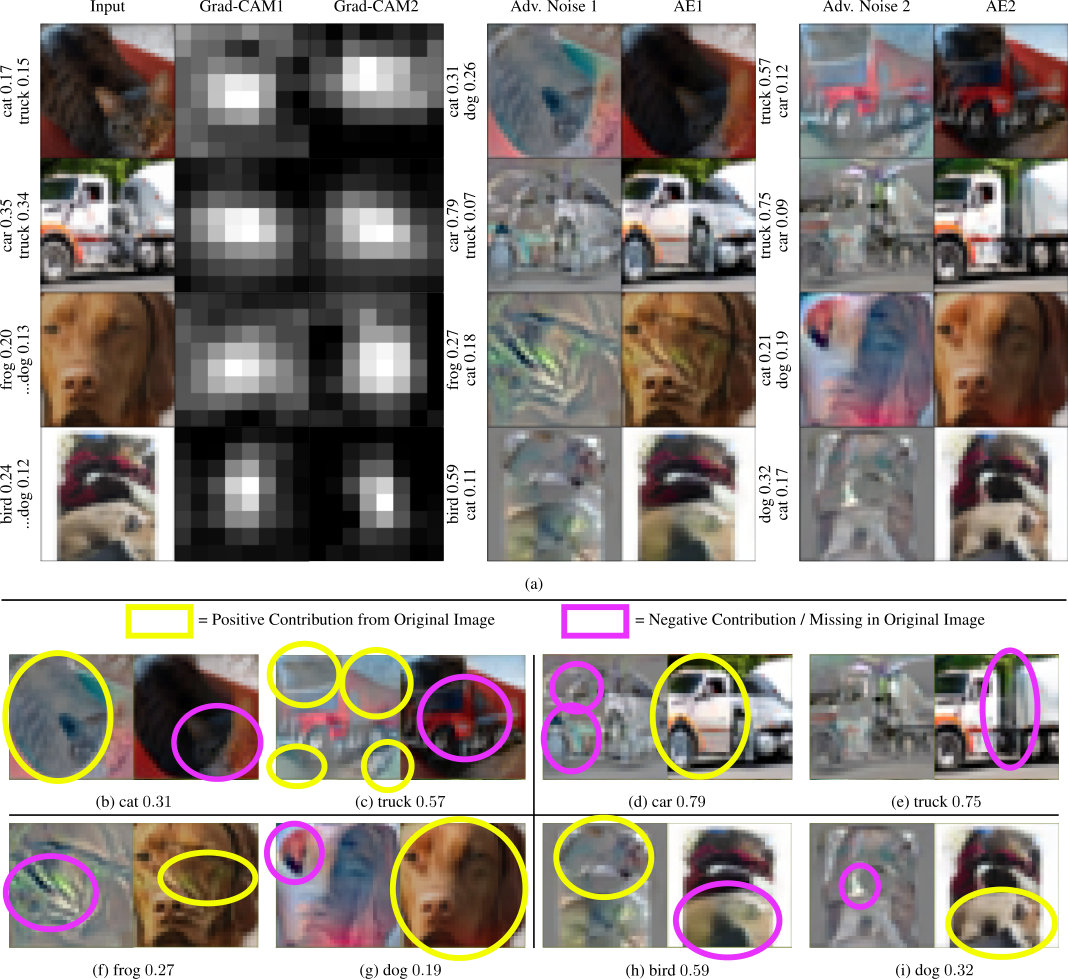 Figure 8
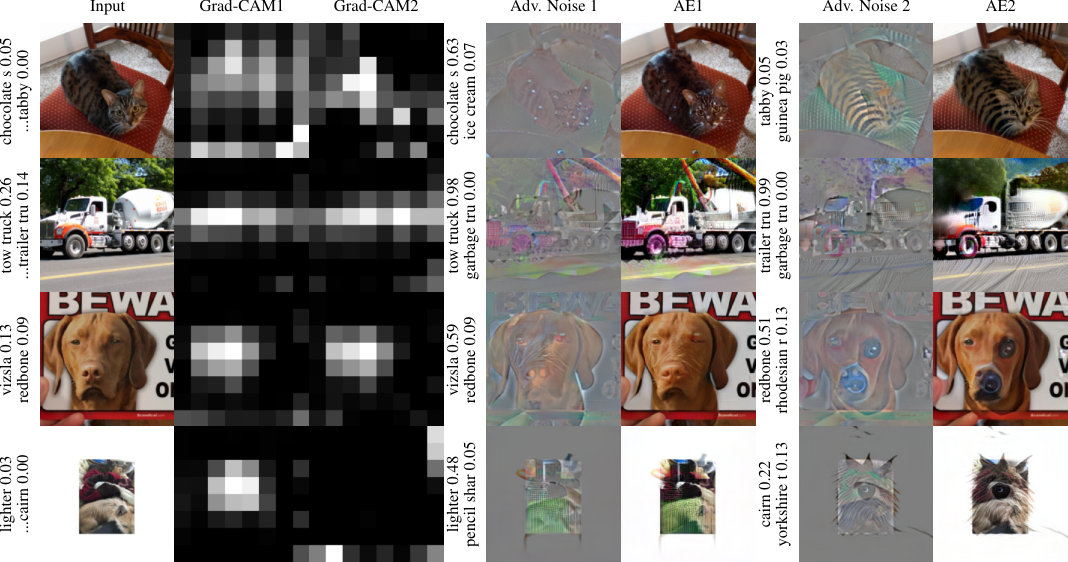 Figure 9
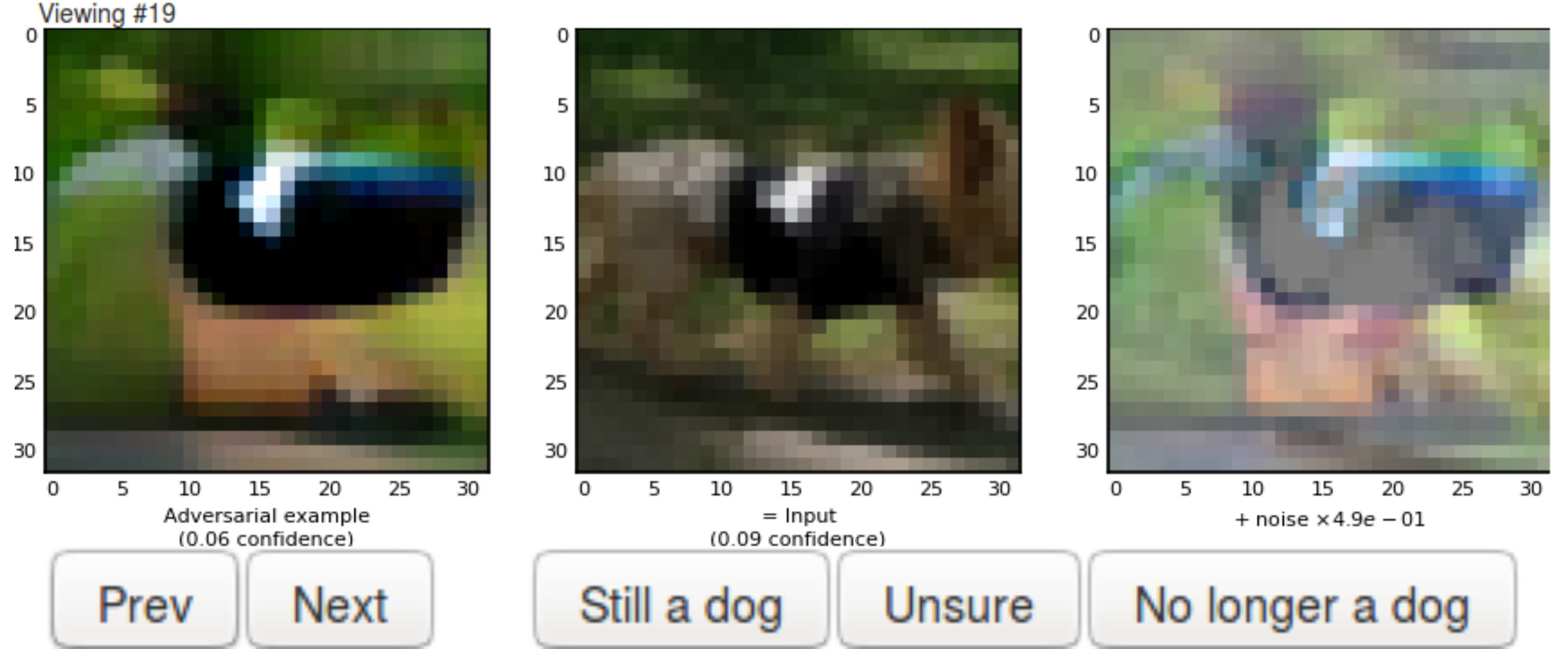 Figure 10
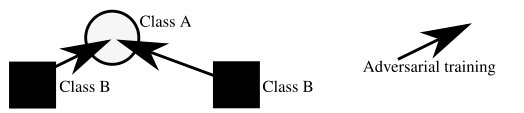 Figure 11
 Figure 12
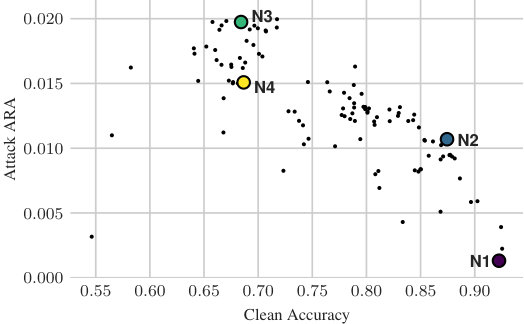 Figure 13
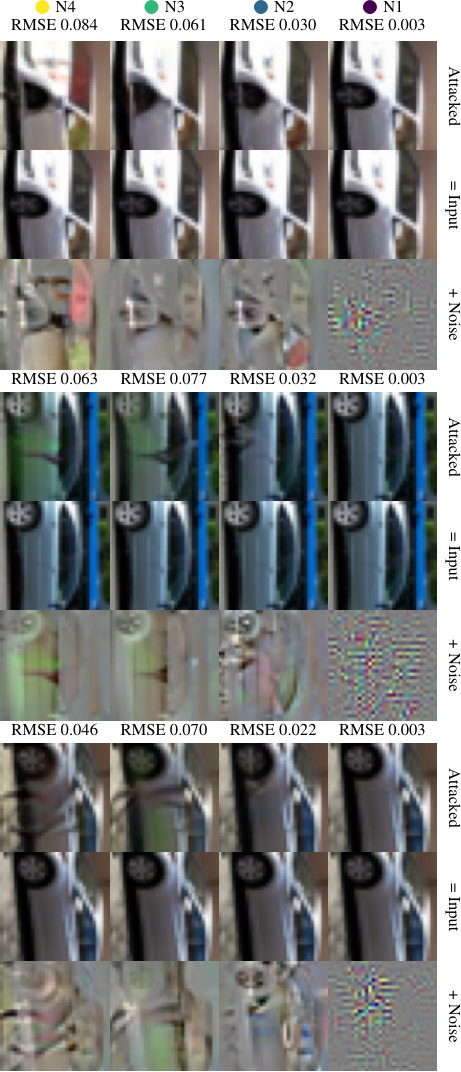 Figure 14
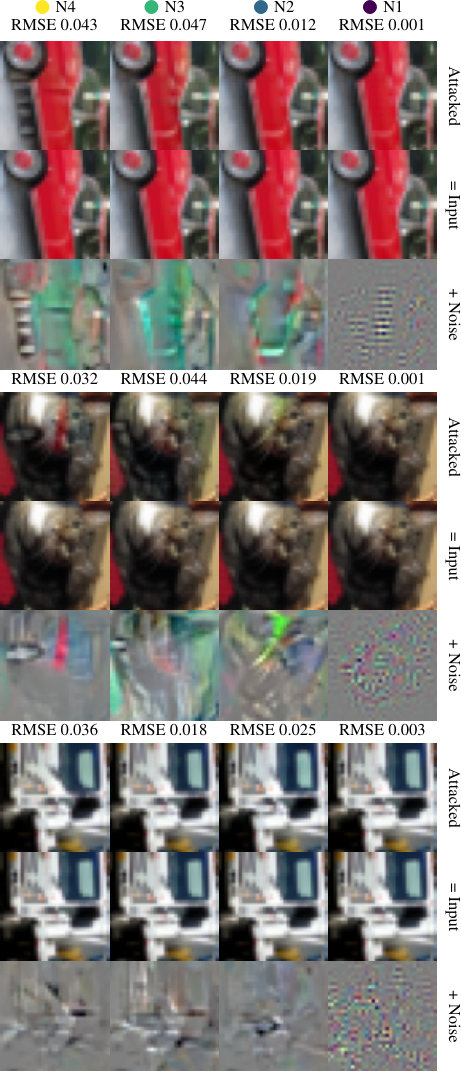 Figure 15
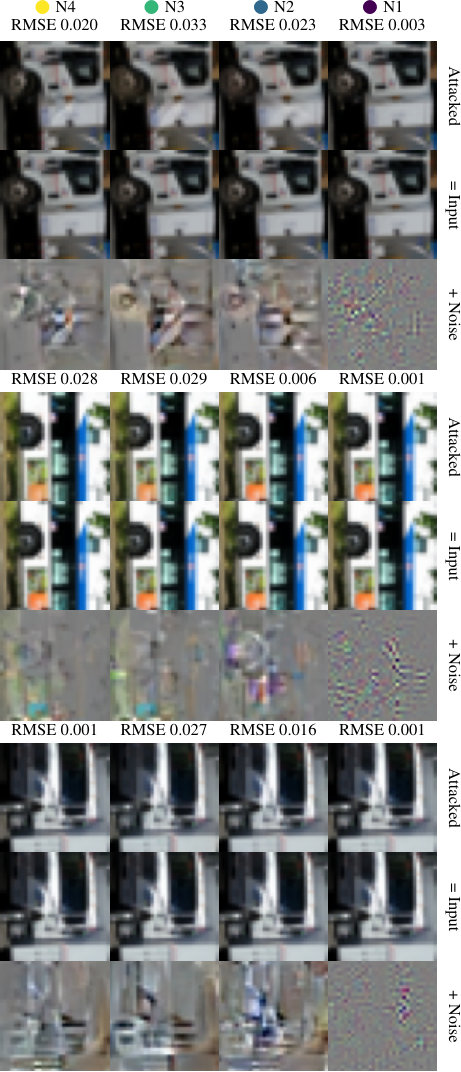 Figure 16
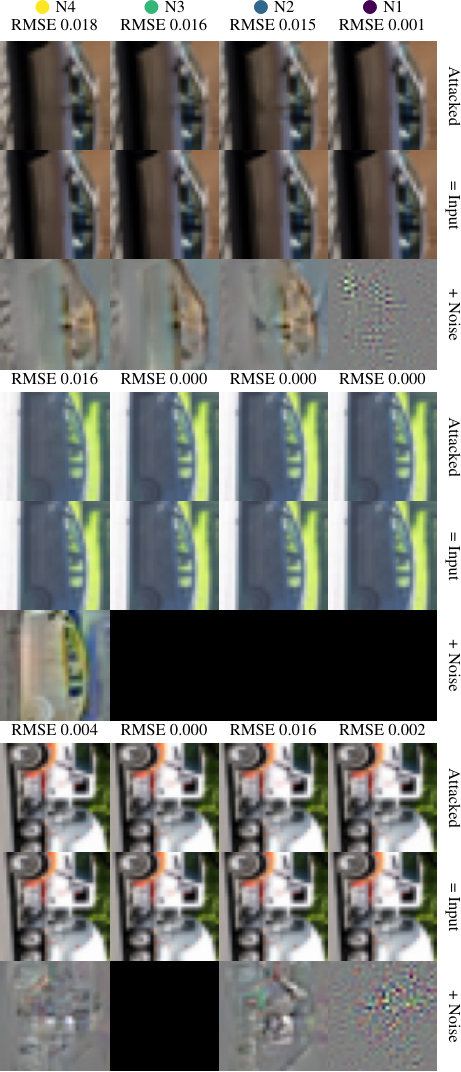 Figure 17
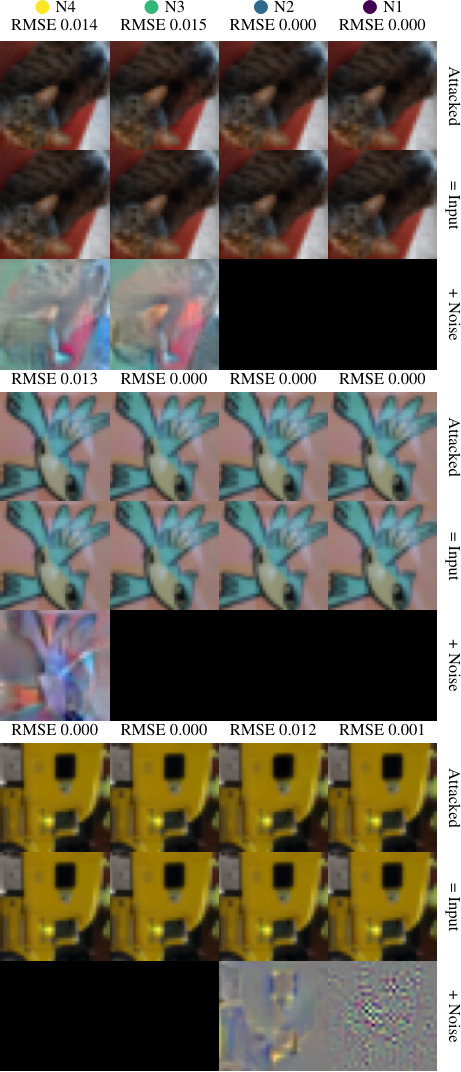 Figure 18
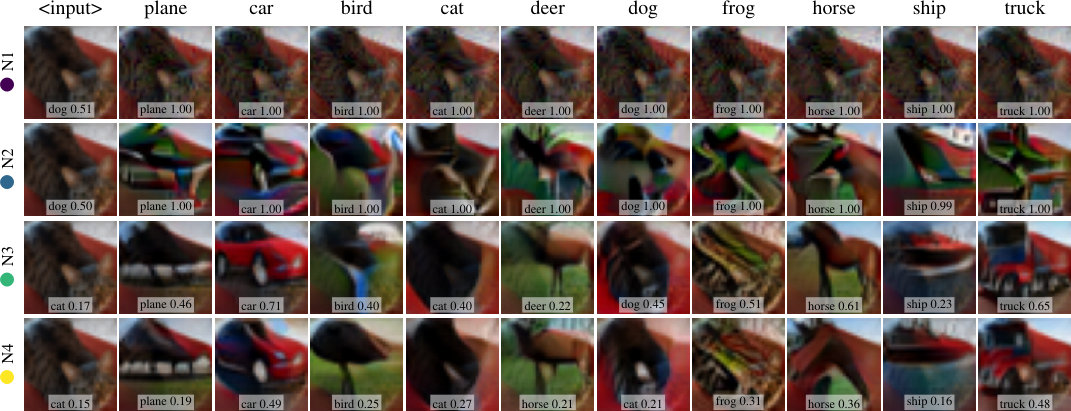 Figure 19
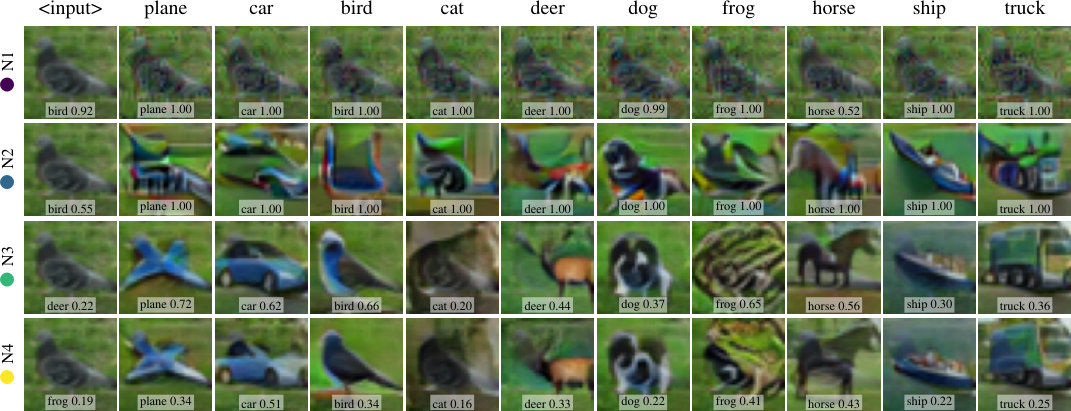 Figure 20
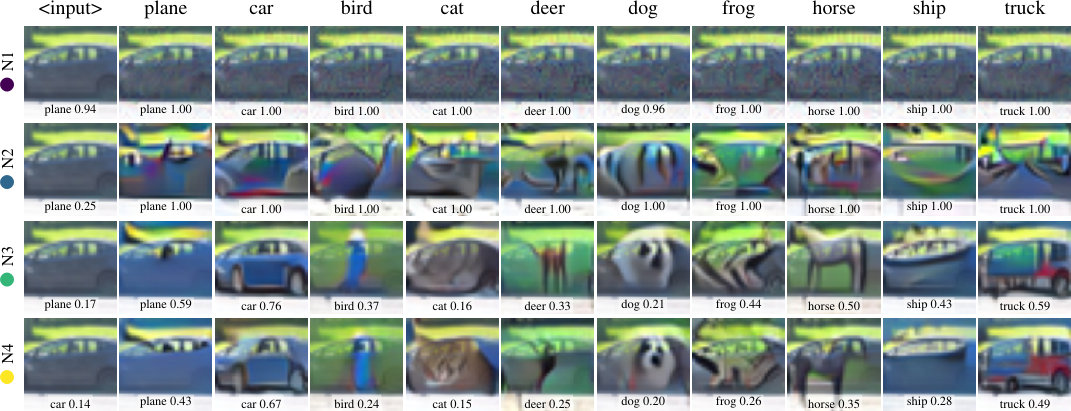 Figure 21
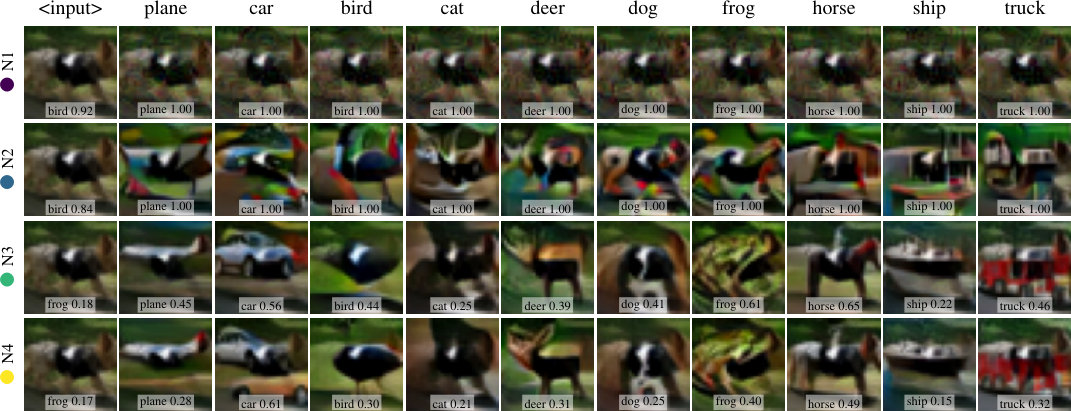 Figure 22
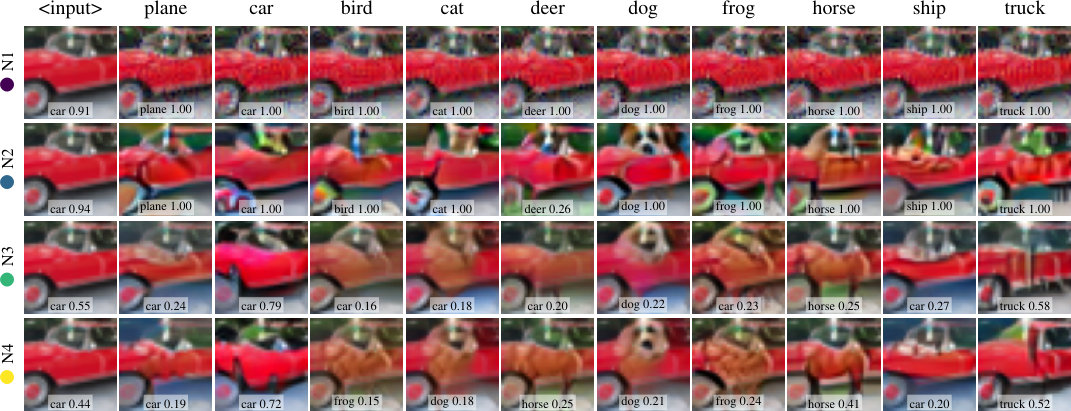 Figure 23
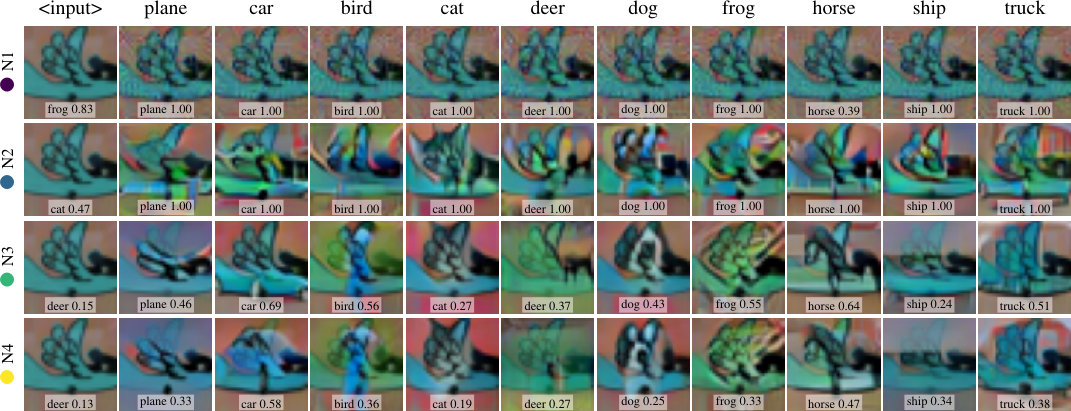 Figure 24
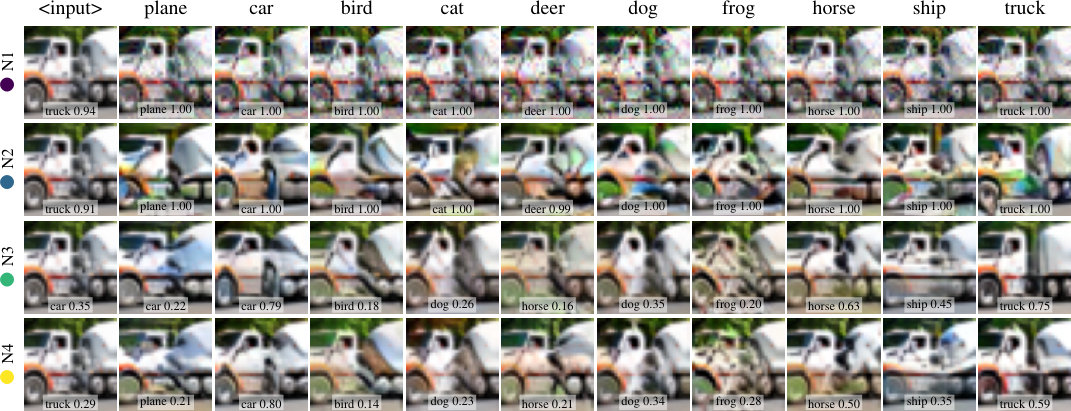 Figure 25
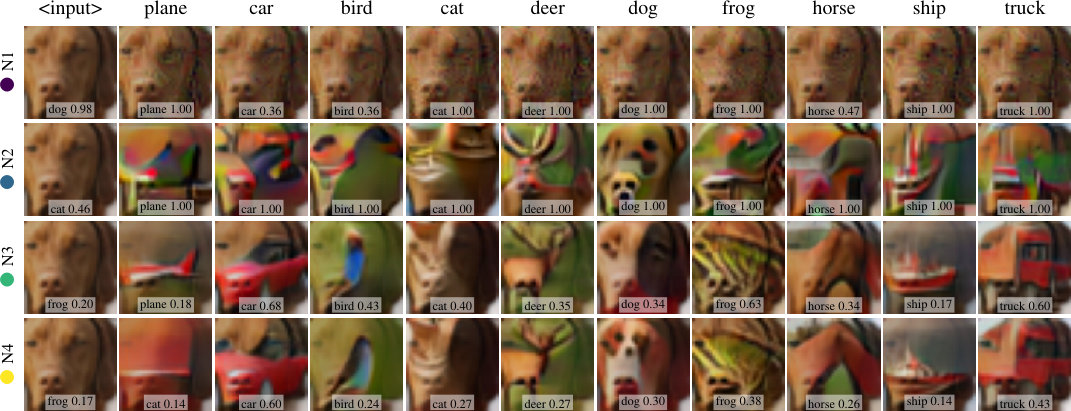 Figure 26
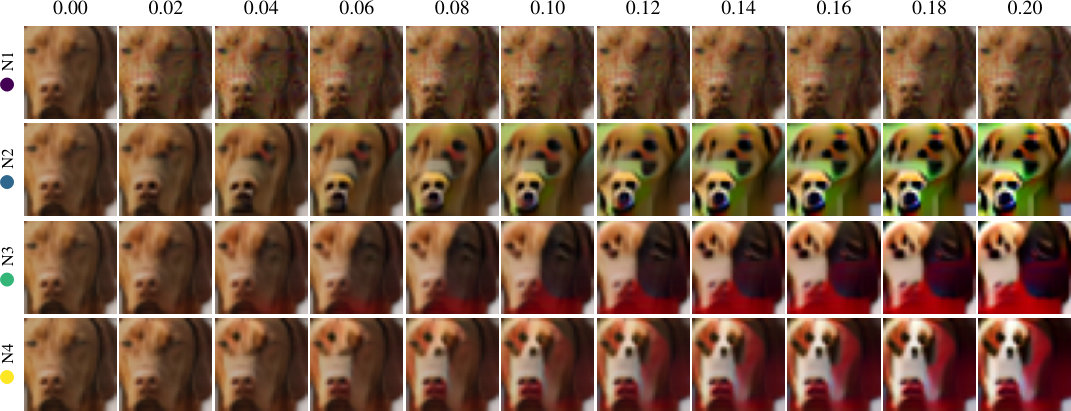 Figure 27
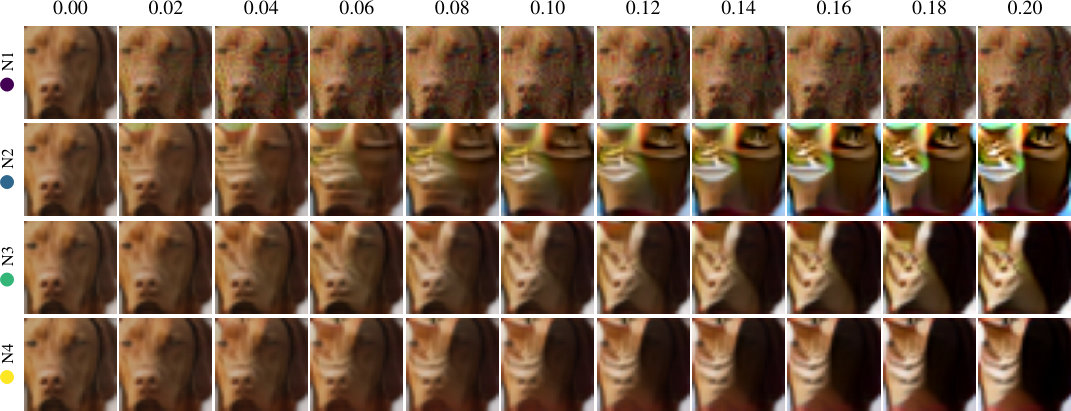 Figure 28
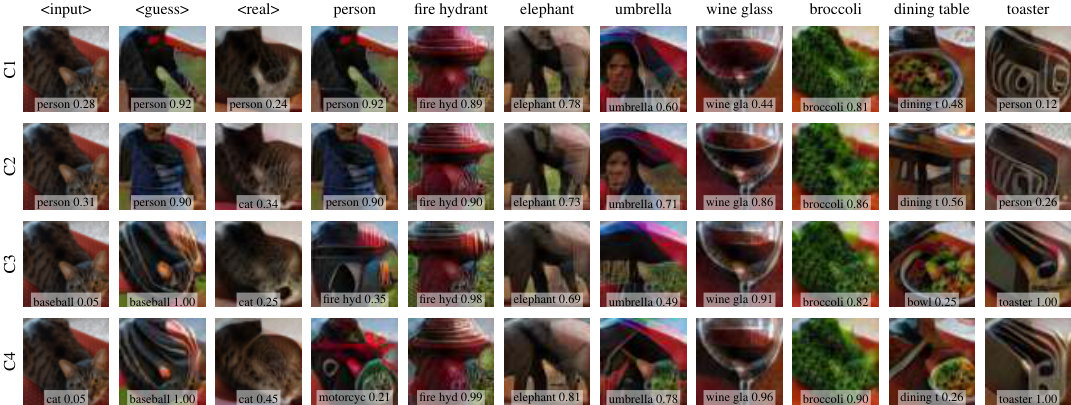 Figure 29
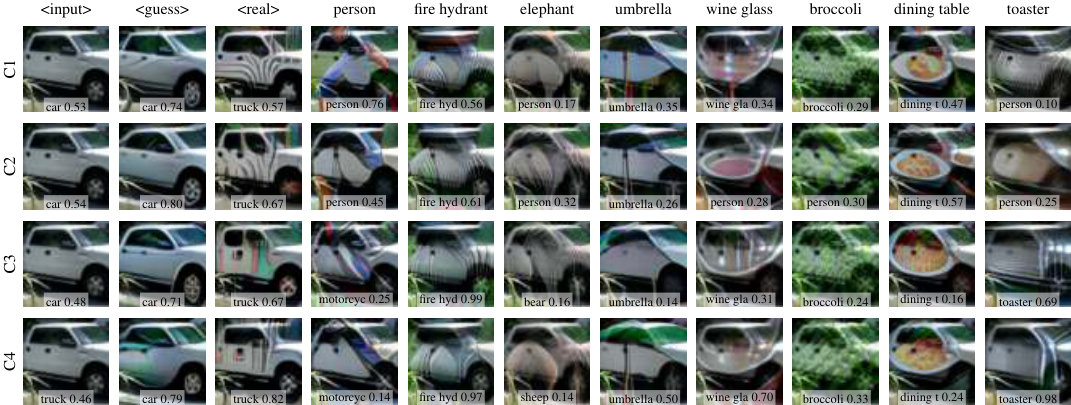 Figure 30
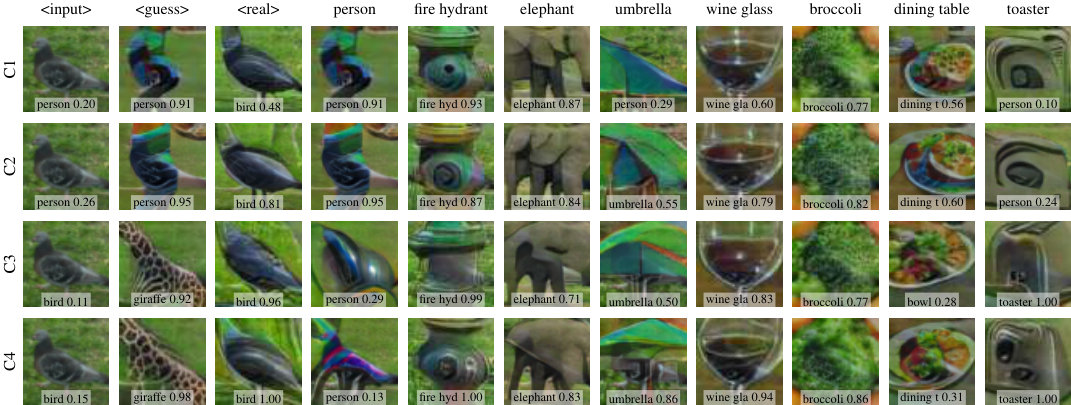 Figure 31
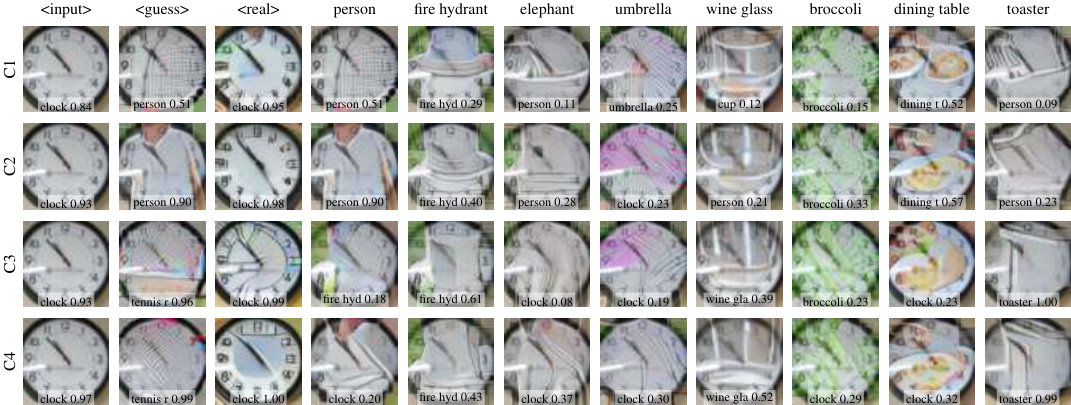 Figure 32
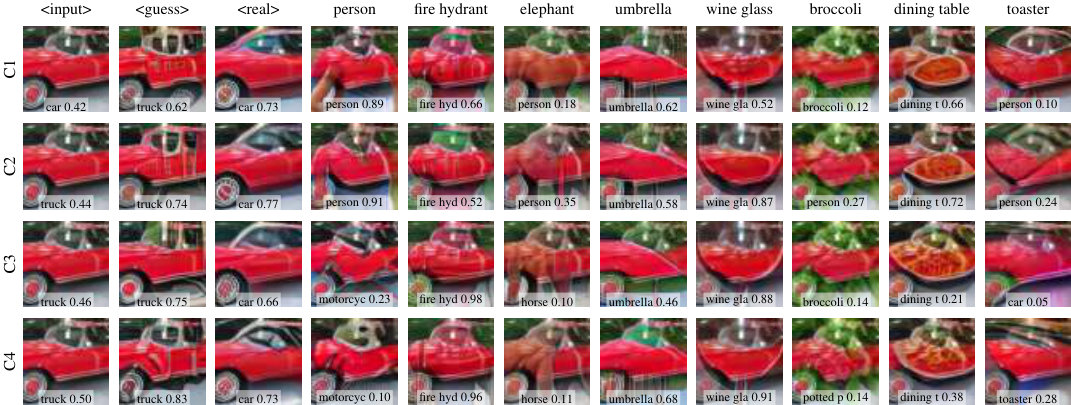 Figure 33
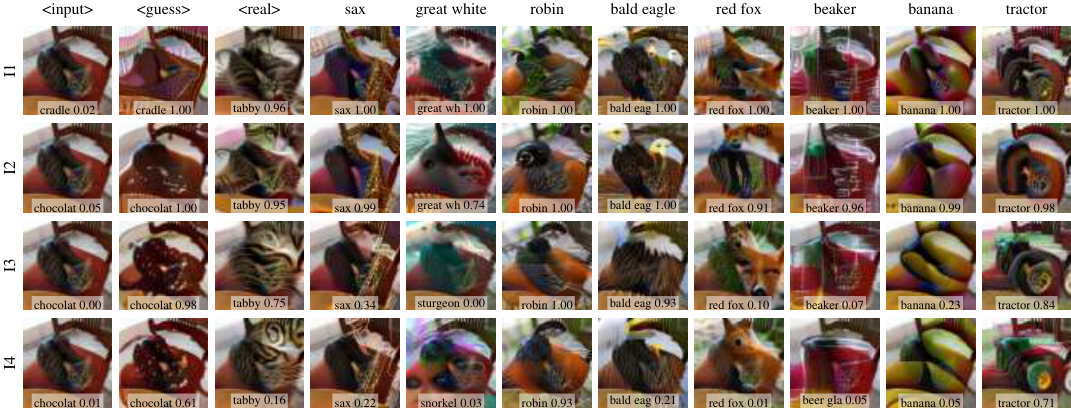 Figure 34
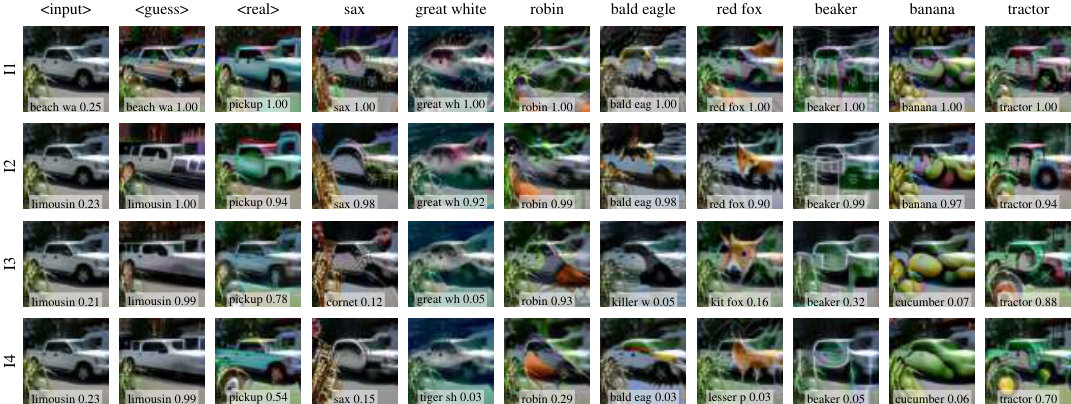 Figure 35
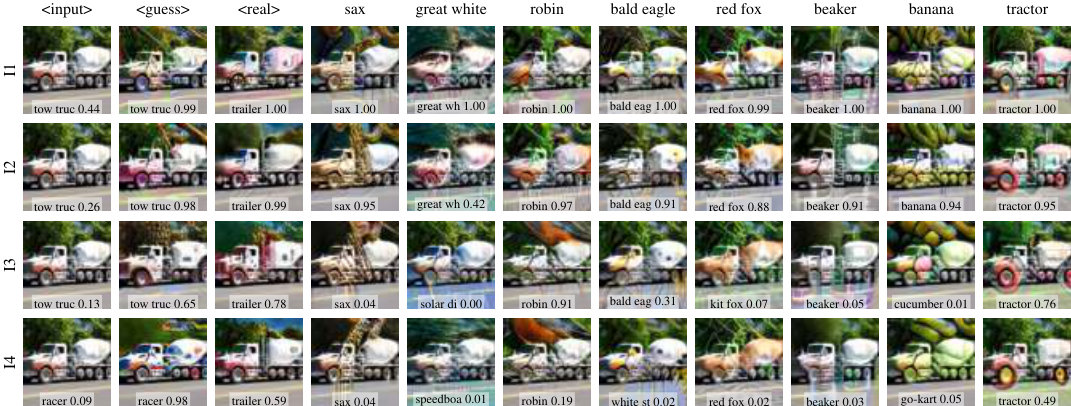 Figure 36
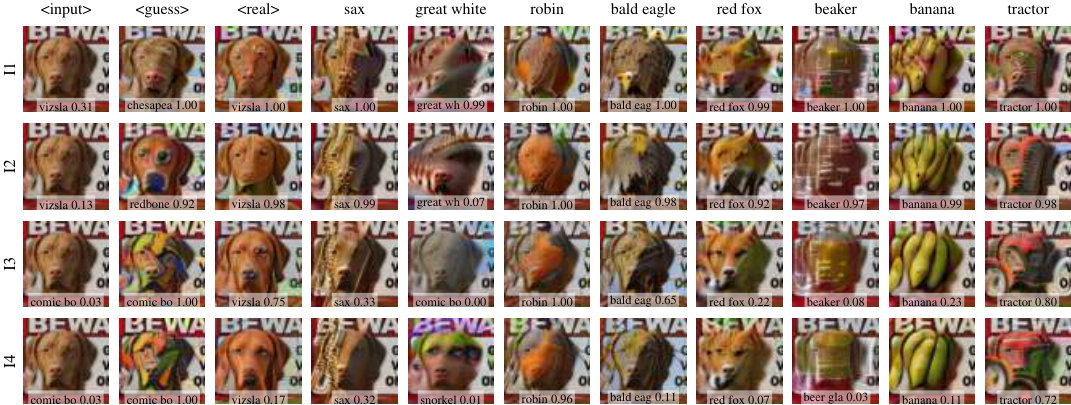 Figure 37
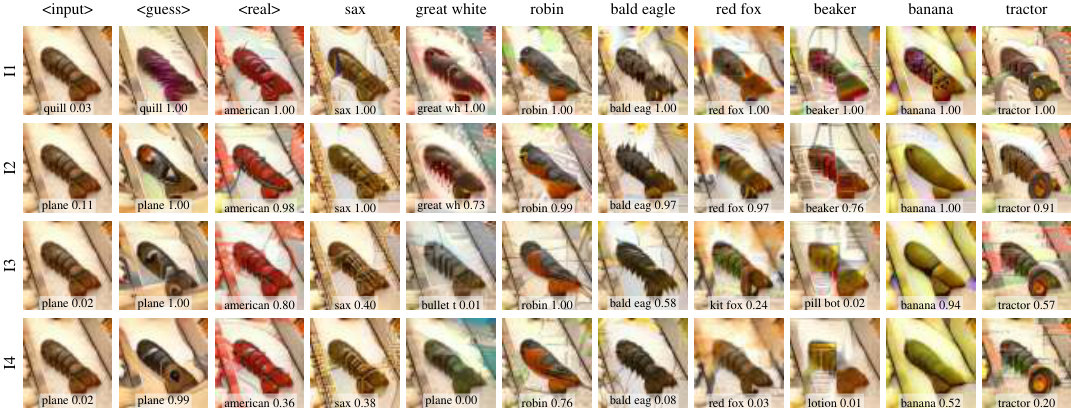 Figure 38
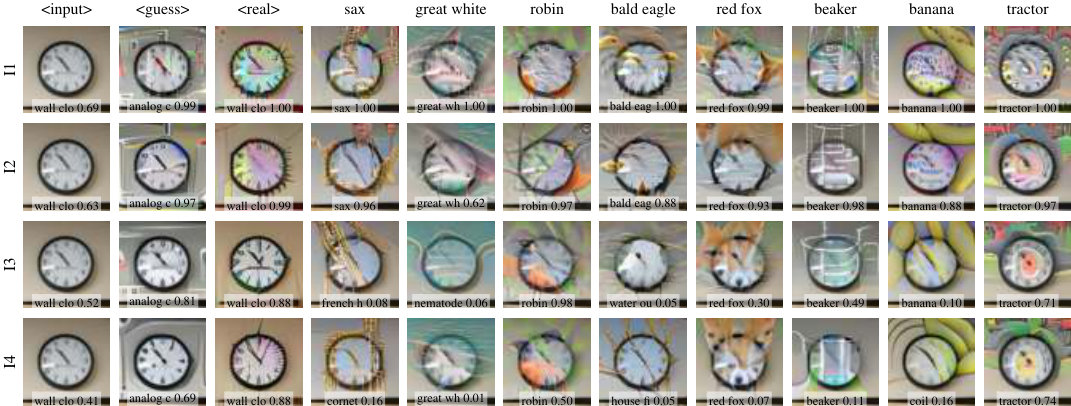 Figure 39
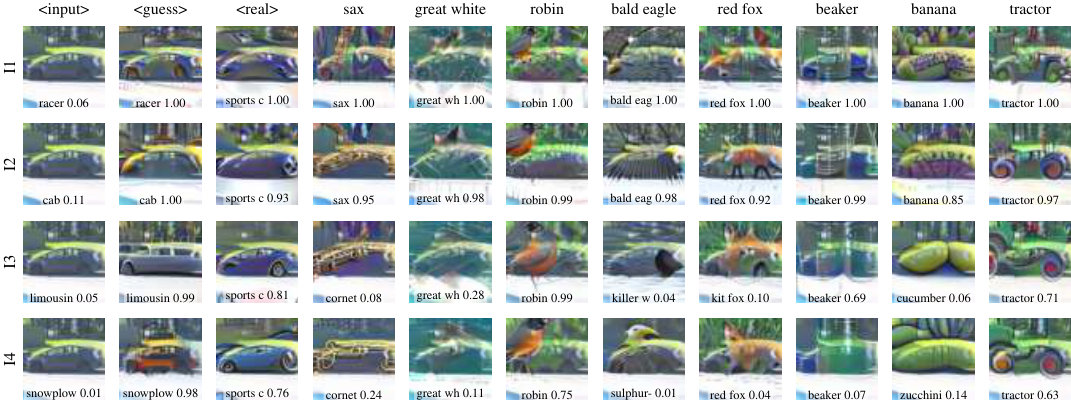 Figure 40
Peer Reviews
No public reviews on file for this paper yet. If you reviewed it on a platform where reviews are public (OpenReview, ICLR, NeurIPS, ICML), you can paste yours below so the community can read it here.
Code & Models
Videos
No videos yet. Explain this paper in a talk, walkthrough, or lecture? Add one.
Taxonomy
MethodsAccuracy-Robustness Area
