Lower $H_0$ within The Theoretical Insights of Special Cosmological Model Pertains to Derived from The Infinite Future
Cheqiu Lyu, Wei Hong, Tong-Jie Zhang

TL;DR
This study proposes a novel method to lower the Hubble constant estimate within a specific cosmological model by combining theoretical and observational data, resulting in values that alleviate the current tension in measurements.
Contribution
It introduces a new approach that integrates a fixed theoretical $H(z)$ value with observational data using Gaussian Processes, leading to refined cosmological parameter constraints and a lower $H_0$ estimate.
Findings
Derived $H_0$ is significantly lower than Planck and Riess estimates.
Incorporating theoretical $H(z)$) reduces tension in $H_0$ measurements.
Refined cosmological parameters improve model consistency.
Abstract
In the realm of the CDM cosmological model with quiescence or quintessence as the dark energy, characterized by , there exists a fixed value of at , devoid of dependency on other cosmological parameters. To constrain the Hubble constant, we amalgamated this theoretical value with the latest 35 observational data (OHD) using a Gaussian Process (GP) approach that is unrelated to cosmological models but intertwined with kernel functions. Within such a specialized cosmological paradigm, our scrutiny yields , markedly inferior to the estimate posited by the Planck Collaboration (2018) (exhibiting a tension of ), and substantially less than that of \cite{Riess2016A} (manifesting a tension of ). Conversely, when solely utilizing the latest 35 OHD, the inferred…
Click any figure to enlarge with its caption.
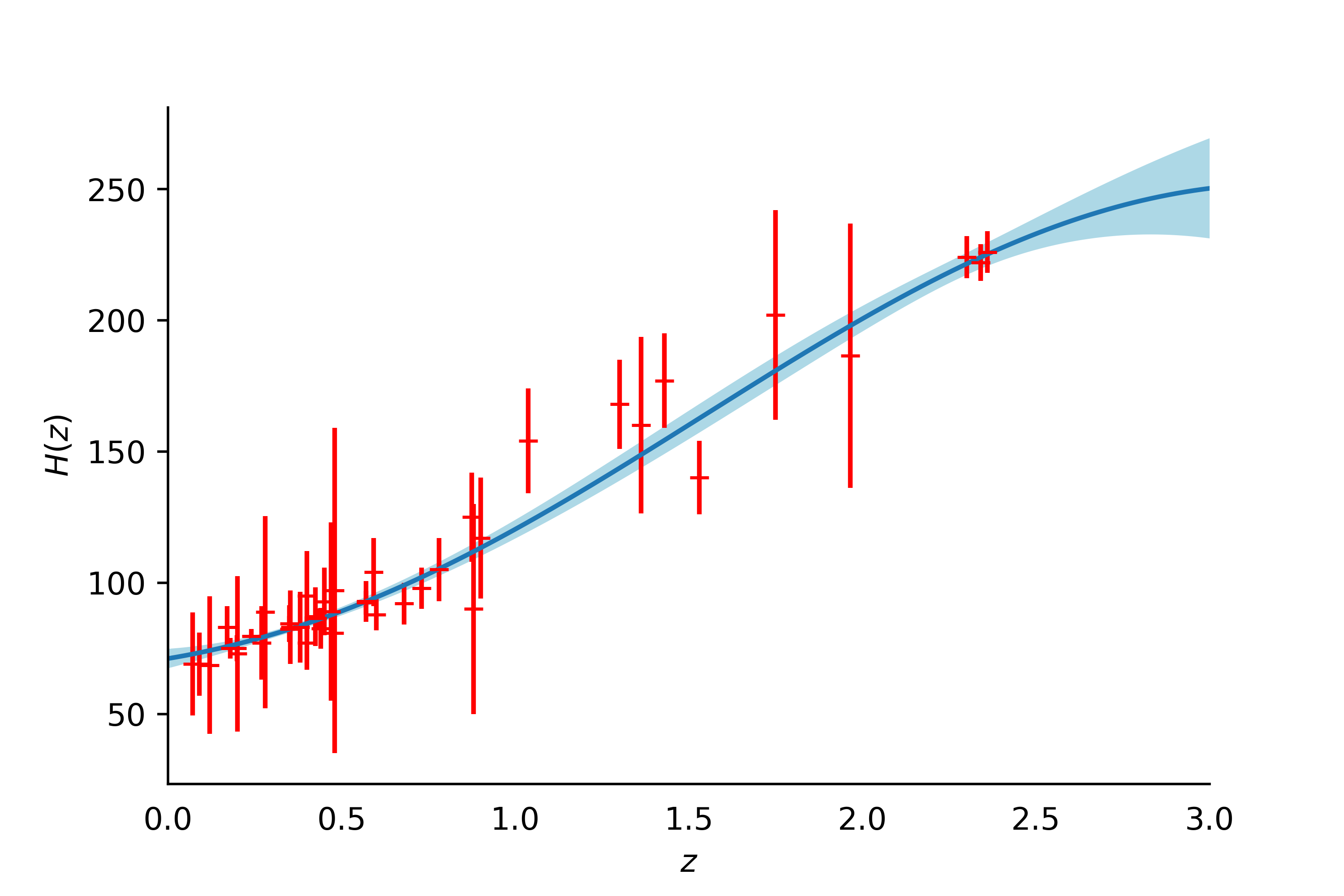 Figure 1
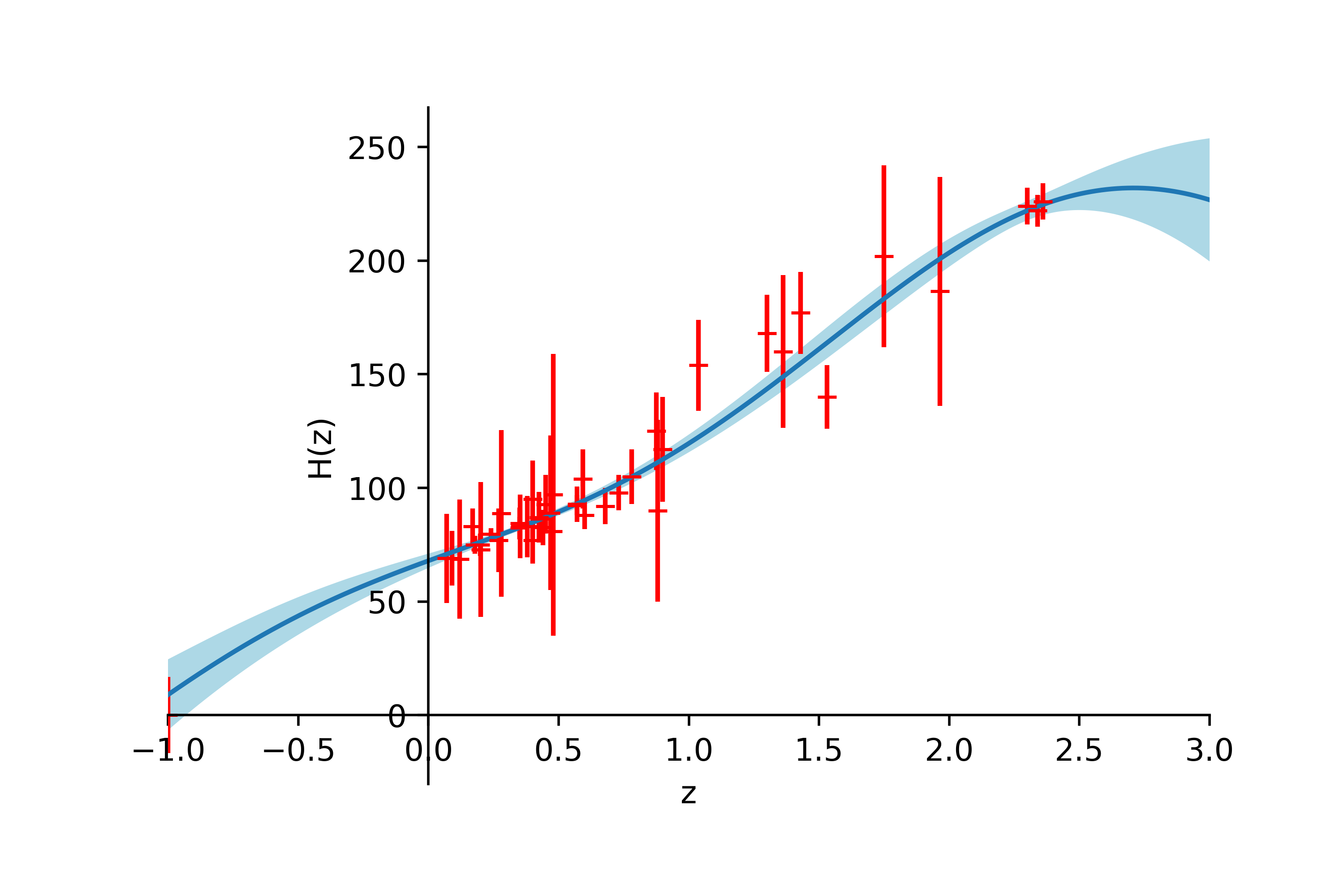 Figure 2
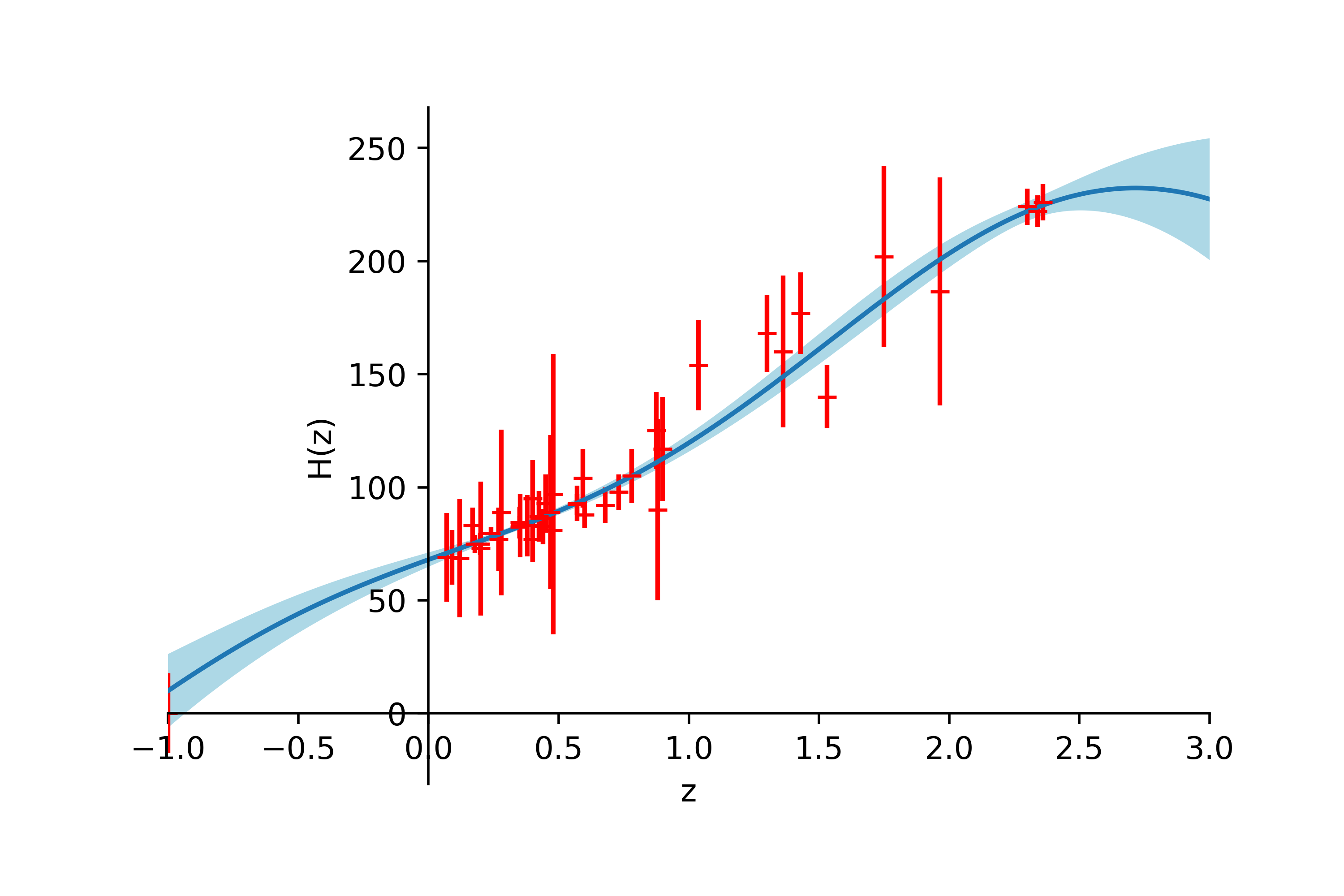 Figure 3
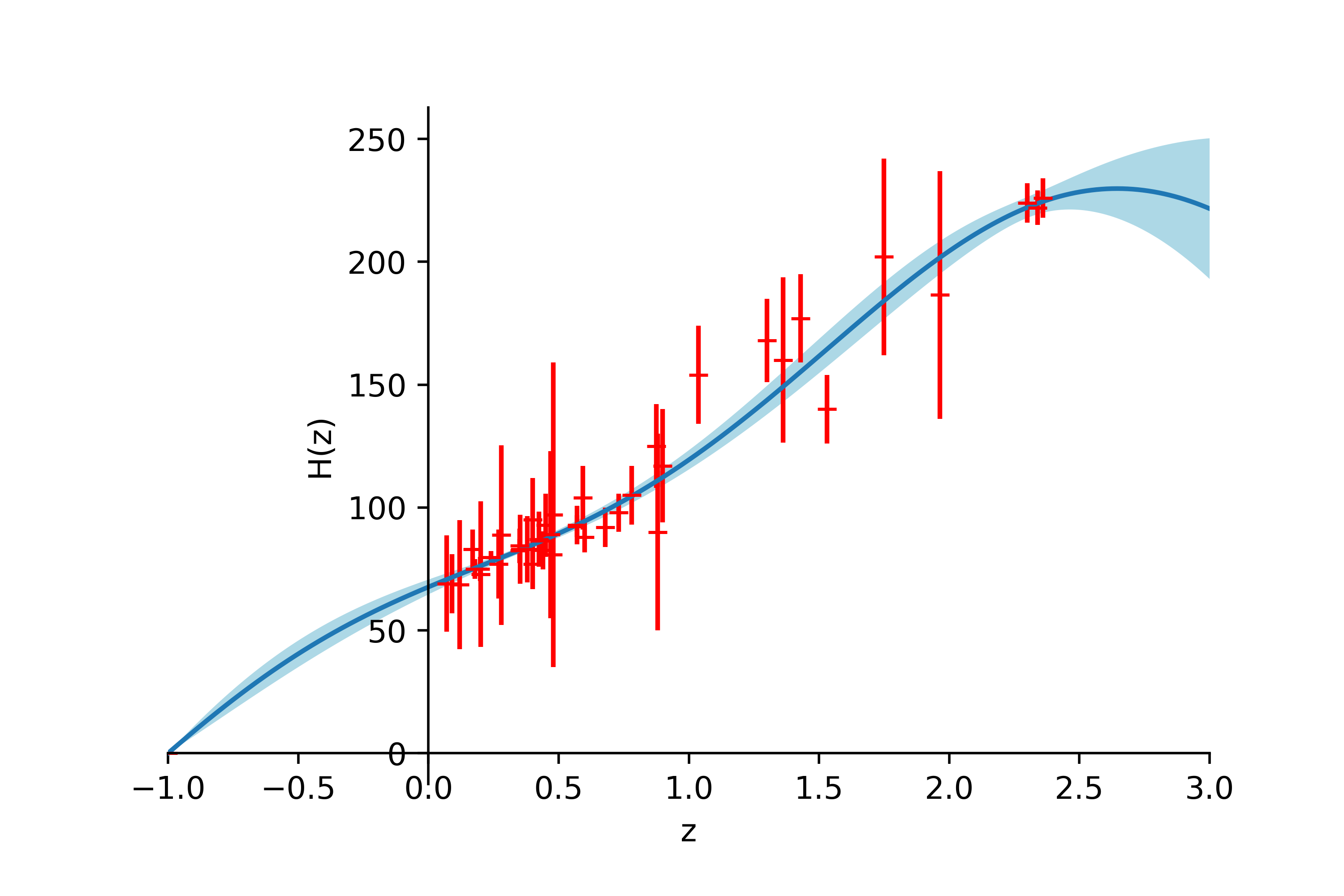 Figure 4
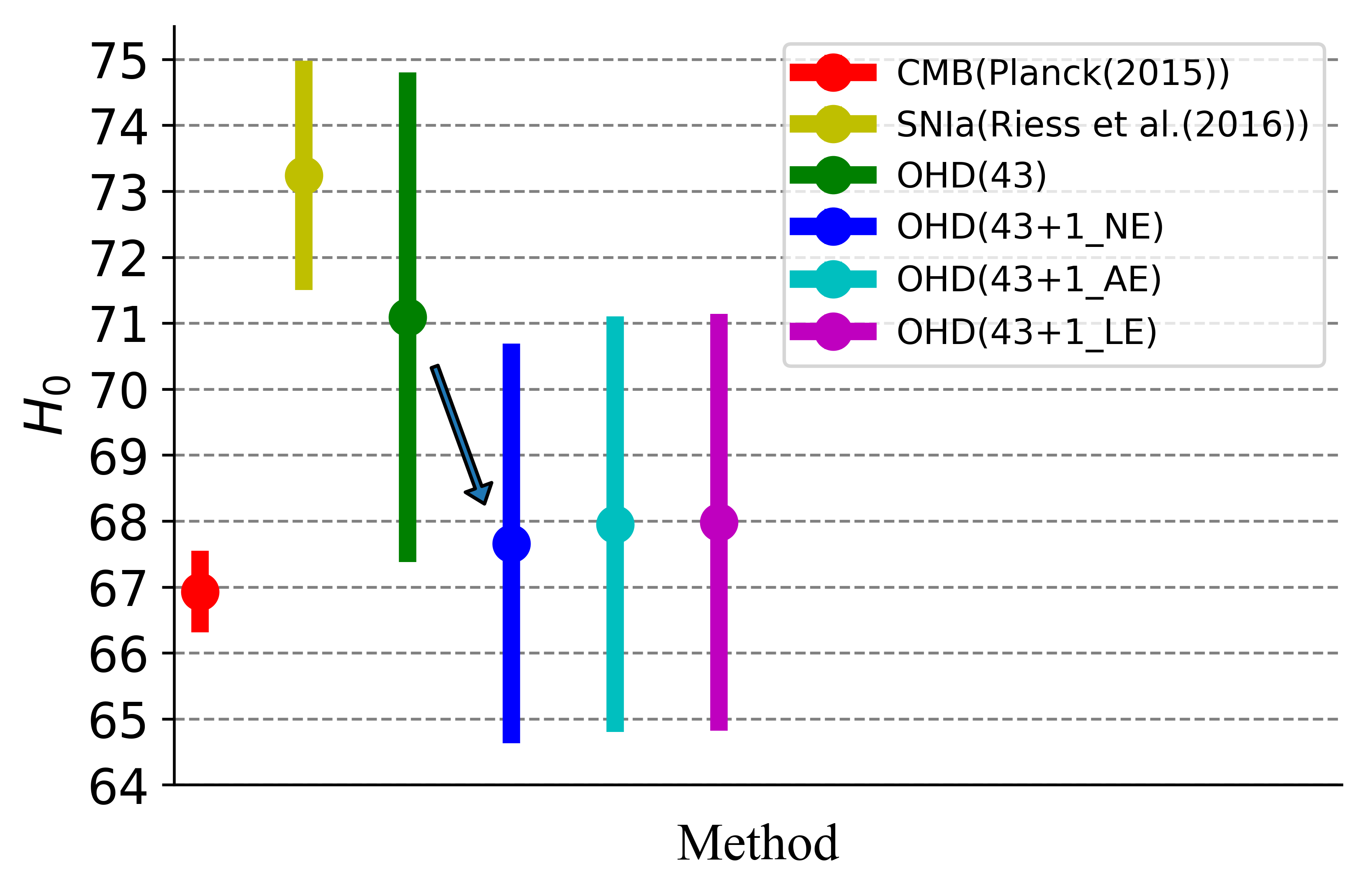 Figure 5
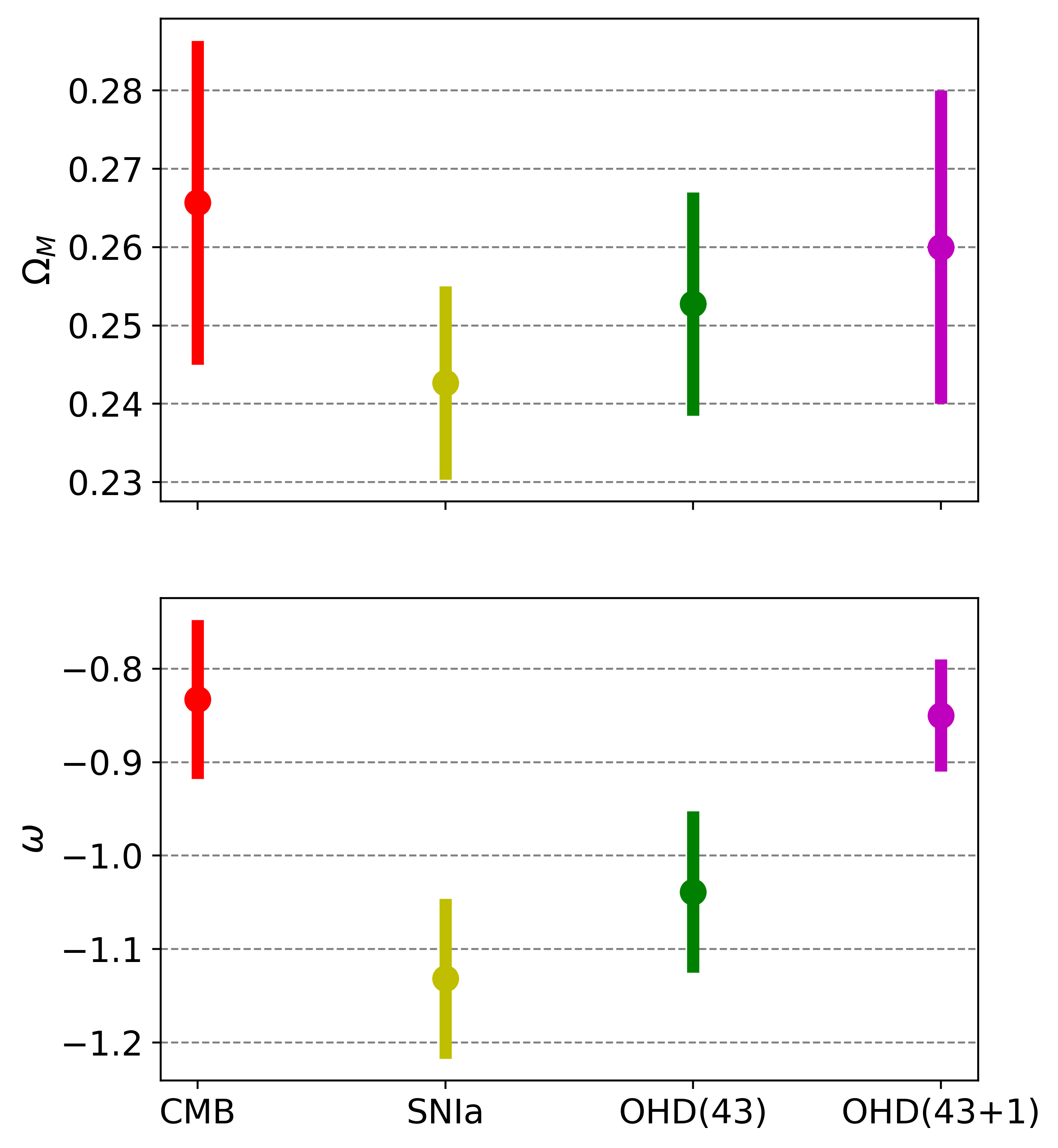 Figure 6
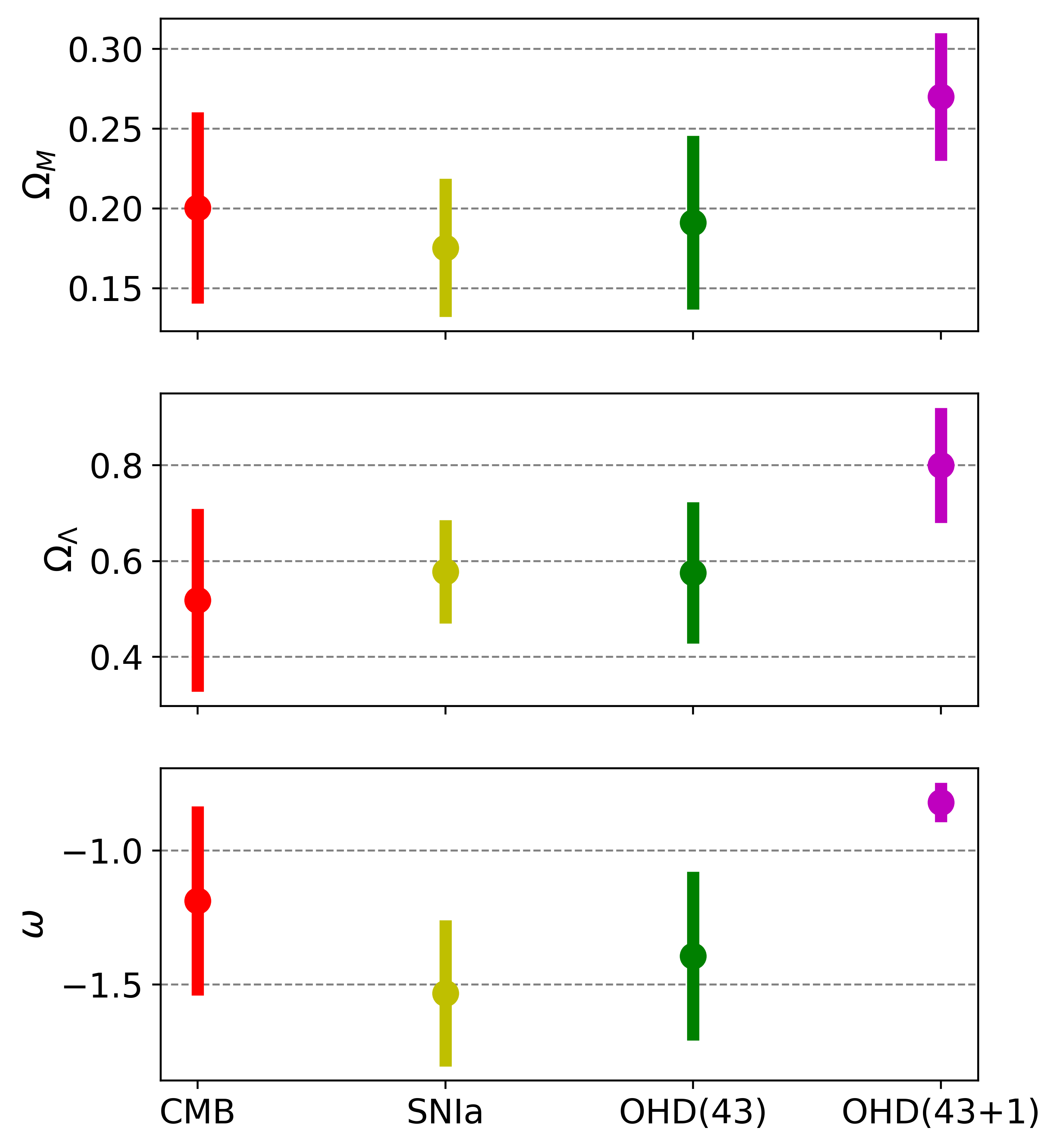 Figure 7
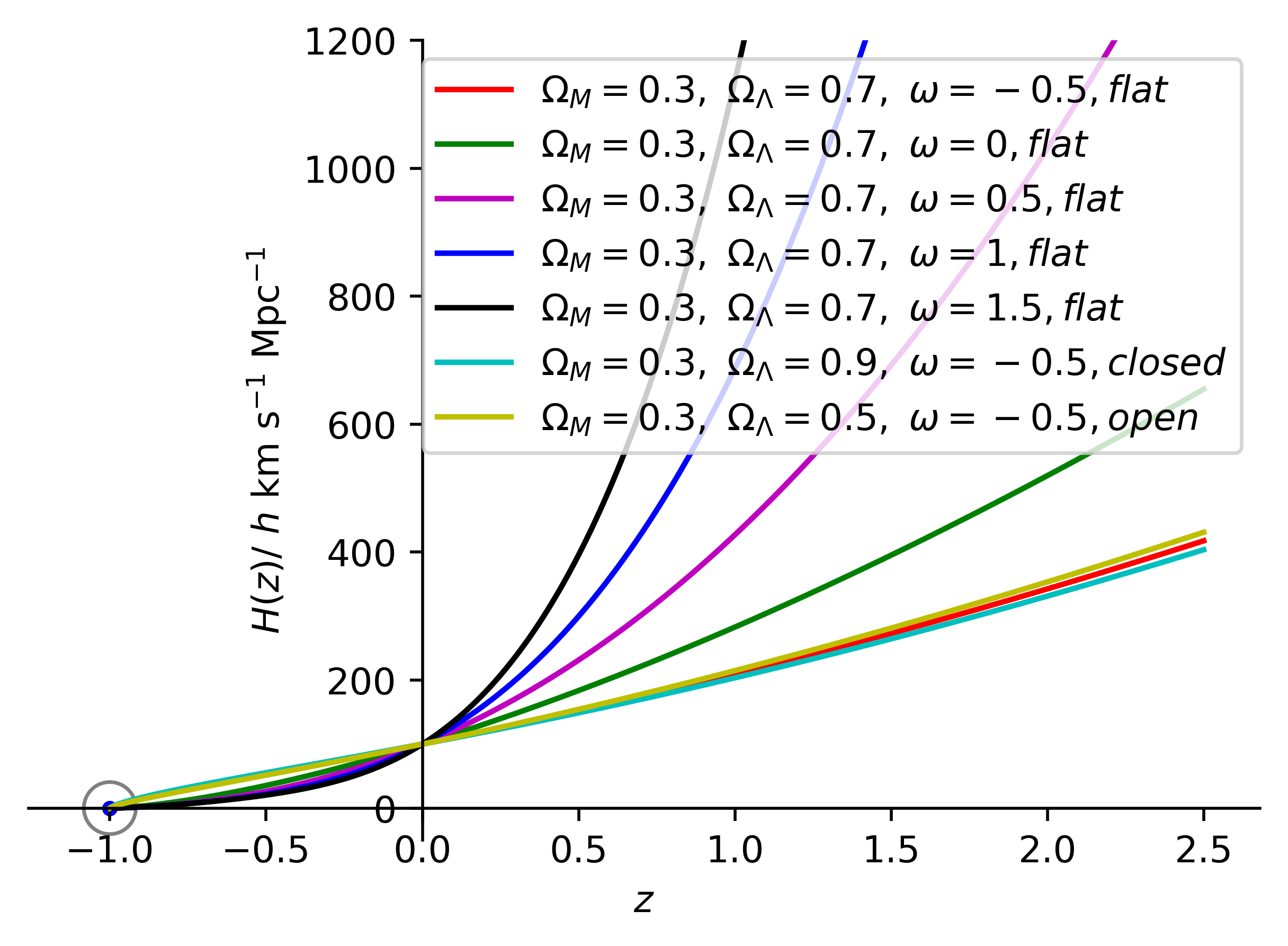 Figure 8
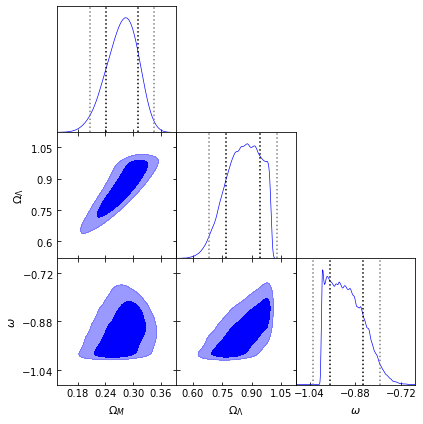 Figure 9
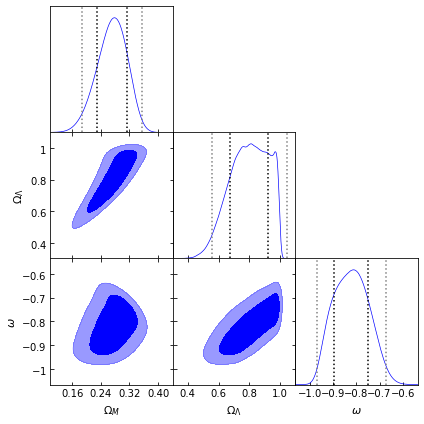 Figure 10
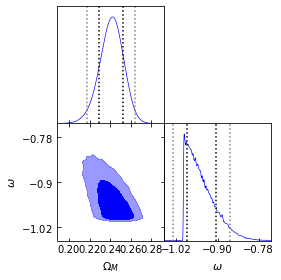 Figure 11
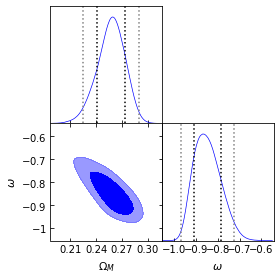 Figure 12
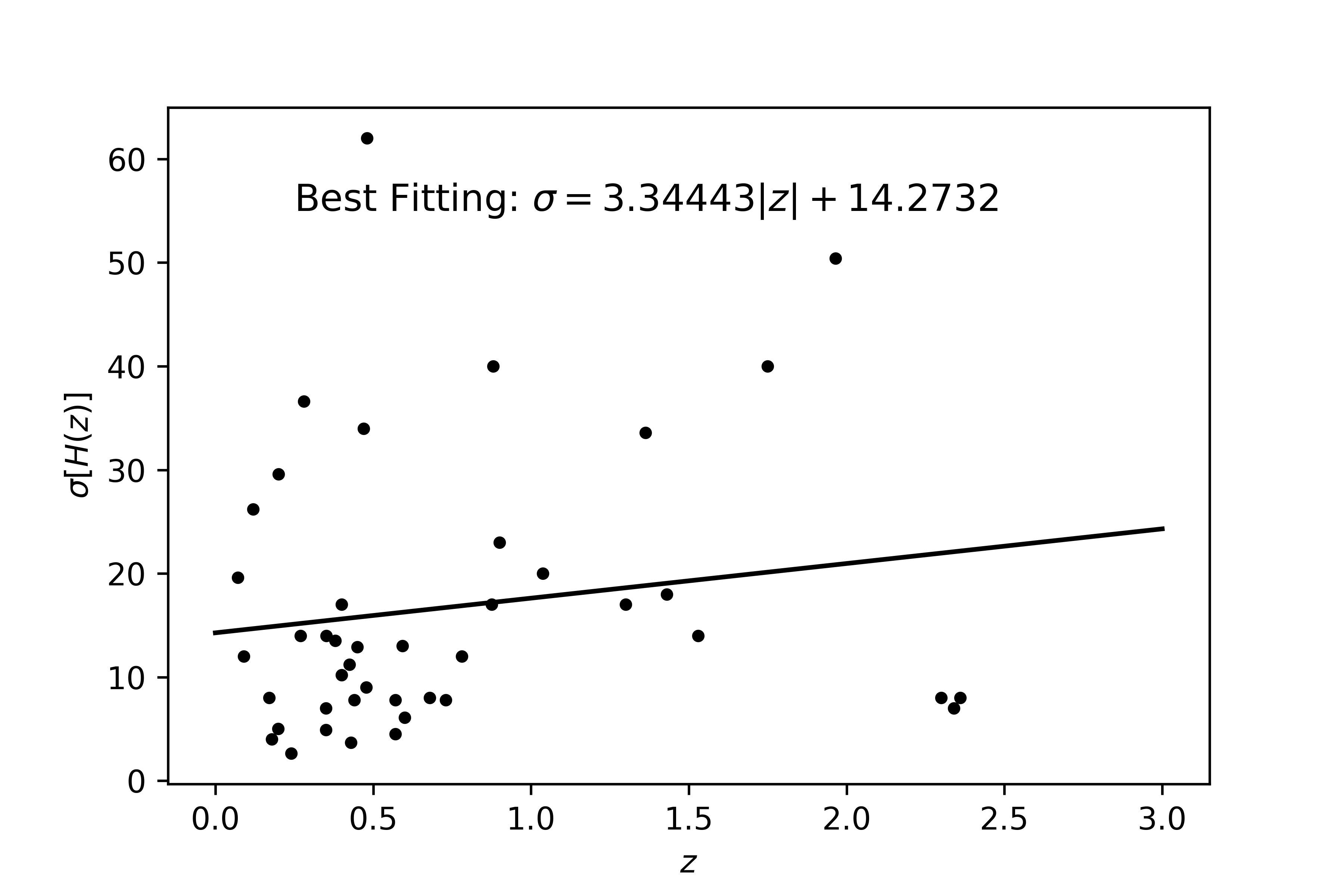 Figure 13
| CMB | SNIa | OHD(43) | |
|---|---|---|---|
| CMB | — | ||
| SNIa | — | ||
| OHD(43) | — | ||
| OHD(43+1_NE) | |||
| OHD(43+1_AE) | |||
| OHD(43+1_LE) |
| /km | Ref. of | |||||
|---|---|---|---|---|---|---|
| 66.93 | 0.27 | -0.83 | 0.26 | 0.74 | -0.82 | CMB |
| 73.24 | 0.22 | -0.97 | 0.28 | 0.91 | -0.94 | SNIa |
| 71.09 | 0.24 | -0.95 | 0.28 | 0.86 | -0.91 | OHD(43) |
| 67.67 | – | – | – | – | – | OHD(43+1_NE) |
| 67.95 | 0.26 | -0.84 | 0.27 | 0.79 | -0.82 | OHD(43+1_AE) |
| 67.98 | 0.26 | -0.85 | 0.27 | 0.80 | -0.82 | OHD(43+1_LE) |
Peer Reviews
No public reviews on file for this paper yet. If you reviewed it on a platform where reviews are public (OpenReview, ICLR, NeurIPS, ICML), you can paste yours below so the community can read it here.
Videos
No videos yet. Explain this paper in a talk, walkthrough, or lecture? Add one.
Taxonomy
TopicsCosmology and Gravitation Theories · Galaxies: Formation, Evolution, Phenomena · Statistical and numerical algorithms
11institutetext: Department of Astronomy, Beijing Normal University, Beijing, 100875, P. R. China
Towards to Tension by the Theoretical Hubble Parameter in the Infinite Future
Che-Qiu Lyu 11
Tong-Jie Zhang 11
(Received: date / Revised version: date)
Abstract
There exists a constant value of at when in CDM universe with , which is independent on other cosmological parameters. We first combine this theoretical value with the latest 43 observational data (OHD) to perform the model-independent Gaussian Processes (GP) and constrain the Hubble constant. We obtain =67.67, which is in agreement with values from Plank Collaboration (2015) ( tension) but a larger deviation from Riess et al. (2016) ( tension), while =71.09 tension) by only using latest 43 OHD. Using this value, we perform statistics with Markov Chain Monte Carlo (MCMC) method to constrain cosmological parameters. We obtain and in flat model, and and in non-flat model, which are larger than those not using the theoretical value.
1 Introduction
Hubble constant () describes the expansion rate of the universe today and plays a important role in the modern cosmology. In recent years, tension problem occurs that it shows a 3.4 tension ( tension measures the discrepancy of two values of Gaussian distribution, given by ) between the local measurement =73.24 (Riess et al. 2016 Riess2016A ) from Type Ia supernovae (SNIa) and the global measurement =66.93 (Planck Collaboration 2015 Aghanim2016Planck ) based on Cosmic Microwave Background (CMB) from Planck satellite. Astrophysicists attempt to explain the discrepancy but its astrophysics mechanism still remains unclear now. Therefore, it needs to derive from alternative methods different from that above.
One of the simplest way to obtain the value of is to use OHD. Busti et al. (2014) Busti2014Evidence proposed a non-parametric method based on GP method and chose the most proper covariance function to determine the correlated points in the reconstructing processes. They used the 19 measurements by differential age (DA) method and radial baryon acoustic oscillations (BAO) data to reconstruct the and extrapolate to redshift zero, obtaining =64.9 Busti2015The .
In previous works, the dataset including OHD from DA and BAO methods was used to extrapolate to obtain . However, the error of is large and redshift range is limited due to observation methods and technology, therefore, the extrapolating to depending on unilateral data is not so reliable. In this letter, we for the first time consider theoretical value in the infinite future (at redshift , when equation of state of dark energy ) as one point of OHD to figure out its impact on and other cosmological parameters. Due to this theoretical value without any observational error, the reconstruction result of can be more accurate, and it can be constrained from both the positive and negative redshift.
2 Methodology
The Hubble parameter describe the expansion rate of the universe and is defined as . Specifically, the Hubble constant describes the present () or local () value of Hubble parameter. For the universe of model, the Friedmann equation can be written as and , where , , and are dimensionless cosmological density parameters of matter, radiation, curvature and dark energy (DE), respectively, at present epoch. In this letter, we regard as a negligible, and conceptually, for a flat cosmological model, . The constant is the equation of state of DE. For , it reduces to a flat model, while for the other cases of , we can simply get the when . In cosmology, the positive redshift for observed sources represents the past time of the universe while negative redshift means the sources located in the future universe. Furthermore, according to the equation , from now to infinite future, negative redshift is getting smaller and smaller. Meanwhile, the scale factor is getting larger and larger. Extremely, means and a infinite future, so the universe expands to the possible maximum and the temperature . Therefore, we get:
[TABLE]
We can see from Fig. 1 that can be taken the same theoretical value at . In this letter, we do not discuss the case where since theoretical value at this point depends on the value of and ( model) or is diverge to infinity.
Theoretically, redshift is derived from observational spectrum of astrophysical source, , where and represent the observed and emitted wavelengths, respectively. Actually, spectrum with negative redshift is not available at present because everything is receding from observers on the earth on the cosmological scale. That is to say, we can not derive electromagnetic spectrum from future universe at present. However, what we can study is the impact of the theoretical value at future universe 2019PhRvD..99b3503L , thus we can presume that measurements is available from observation at , then we utilize this OHD to constrain by GP method.
One advantage of the theoretical in the infinite future is its definiteness without any observational error () which can be also used to perform GP. But if we use it to constrain other cosmological parameters with MCMC method, we need to define a hypothetical observational error of value at . For this, we assume there is a symmetry of observational error between the past light (positive redshift) and the future light (negative redshift). According to the existing OHD data of DA method, for simplicity, we can assume that there is a simple linear relationship between the measurement error and the absolute value of the redshift, shown as Fig. 2, , then can take 17.6177. Besides, we also take average error of exist data () as comparison.
Latest data can be derived from both DA method 2014RAA….14.1221Z ; 2003ApJ…593..622J ; 2005PhRvD..71l3001S ; 2012JCAP…07..053M ; 2016JCAP…05..014M ; 2017MNRAS.467.3239R ; 2010JCAP…02..008S ; 2015MNRAS.450L..16M and BAO method 2009MNRAS.399.1663G ; 2012MNRAS.426..226C ; 2013MNRAS.431.2834X ; 2012MNRAS.425..405B ; 2013MNRAS.429.1514S ; 2014MNRAS.439…83A ; 2013AA…552A..96B ; 2015AA…574A..59D ; 2014JCAP…05..027F . We add this theoretical value of in the infinite future to the OHD dataset.
Gaussian Processes is a value-of-function reconstructing method that the reconstruction function for each reconstructed point is given by a Gaussian distribution. In the GP method of reconstructing , we know the observed data at certain redshift, and use their errors to calculate the covariance matrix, obtaining the function value corresponding to the reconstructed redshift. In this letter, we choose the square exponential covariance function as the covariance matrix, which is
[TABLE]
where and represent two hyper-parameters related to changes in the function value, and reshift interval to let function value change significantly.
In this letter, we use the public package GaPP (Gaussian Processes in Python) firstly developed by Seikel et al Seikel2012Reconstruction Seikel2013GaPP to achieve the GP. We determine the maximum likelihood value of two hyper-parameters and and then obtain the the reconstructed function results.
3 Results
We use all the latest OHD to perform GP, and the reconstruction results are shown in Fig. 3(a). We obtain =71.09 when extrapolating to the , which is consistent with Type Ia supernovae results (Riess et al 2016) within 1 and has a 1.11 discrepancy with Planck Collaboration (2015) results. Fig. 3(b) show the reconstruction results including the theoretical value in the infinite future, =67.67 that is very closed to results we take average error assumption (=67.95) and linear error assumption (=67.98). It shows a 0.24 discrepancy with Planck Collaboration (2015) results and a 1.60 discrepancy with results from Riess et al. (2016) (see Table 1).
When adding the theoretical value in the infinite future to the OHD dataset, the value from OHD method becomes smaller, which shows a 0.640.72 (¡ 1 ) tension with that from 43 OHD. According to the GP restriction function adopting average or linear error assumption, the is probably a positive value close to zero and the confidence interval at is much more larger than that at . That is to say, though its tinny impact of the theoretical in the infinite future, it gives a smaller value of remarkably and inconsistent with the measurements from Planck Collaboration (2015) and Riess et al. (2016). The comparison of these results from OHD method and two observation results are shown in Fig. 4.
Next, we use the results obtained above to constrain the equation of state of DE in model. We assume a uniform distribution of as prior distribution, then use MCMC sampling to compare the GP restruction results with the standard parametric equation, and obtain the cosmological parameters by statistics analysis Ma2012POWER . For flat model, the constraining results of and are shown in Fig. 5, while for non-flat model, the constraining results of , and are shown in Fig. 6.
In contrast, we also use observed value from Riess et al.(2016) and Planck Collaboration (2015) to repeat these processes. The comparison of constraining results are shown in Table 2 and Fig. 7.
Table 2 shows that the values of are less sensitive to the changes of than and and . The uncertainty of these parameters is larger in non-flat universe. In the results of flat model, the estimated value of is about 0.24. However, the estimated value of changes remarkably if the alters. The constraining result of is very close to -1.00 (see Fig. 5(a) and Fig. 6(a)), therefore, the constraining results support model. But within the frame of model, if the theoretical value of Hubble parameter in the infinite future () is considered, the value of which closely approximates the theoretical value [math], and the results of change to 0.820.85 and have a deviation from model.
Besides, when we consider the theoretical value in the infinite future, we find the value and other cosmological parameters constraining results from flat universe is more close to the Planck Collaboration (2015) results. There may be some cosmological relationship between the observation result from Planck satellite based on CMB and infinite future because both of them are related to global universe.
Comparing the MCMC constraining results including the theoretical value in the infinite future with others, we find that the is about 0.26 with a certainty about 0.02 in flat model and is about 0.27 with a large certainty about 0.04 in non-flat model. In the meantime, a smaller about 0.85 is obtained, which suggests a negative and a close universe. And the is much more larger when considering infinite future data than that using the from other methods or references.
4 Conclusions
We consider the impact of the theoretical value in the infinite future, presents a model-independent restruction of and obtain a smaller value of Hubble constant than that without considering . The value is in consistent with Planck Collaboration (2015) result ( tension) and in great agreement with latest Planck Collaboration(2018) result (, 0.09 2018arXiv180706209P ), but a larger deviation from Riess et al. (2016) ( tension). It relieve the Hubble tension to some extent, but not solve the the problem physically. We also constrain the other cosmological parameters in both flat and non-flat model, obtaining , in flat model and , , in non-flat model.
We compare our result with previous works. Our result is very close to that of Macaulay et al. (2018)2019MNRAS.486.2184M , who used the ‘inverse distance ladder’ method with 207 Type Ia supernovae and obtained . And it is also in agreement with the result of Shanks et al.(2018)2019MNRAS.484L..64S , who used Gaia Cepheid parallaxes and ‘Local Hole’ and obtained . Both of them got a value a bit more than Planck Collaboration(2015). However, Feeney et al. (2017)2018MNRAS.476.3861F developed a Bayesian hierarchical model (BHM) that describes the full distance ladder and . Birrer et al. (2019)2019MNRAS.484.4726B presented a blind time-delay strong lensing (TDSL) cosmographic analysis of the doubly imaged quasar SDSS 1206+4332 and obtained , which was independent of the distance ladder and other cosmological probes. Both of their results shows a large tension with our result and they are in agreement with Riess et al. (2016). It seems that the tension can be relieved thanks to more improved method but it still shows a division into two opposing extremes.
Admittedly, though our work is using a hypothetical observed quantity based on strict cosmological theory, the value from negative redshift or future universe is still unavailable in astronomical observation. To make it available and meaningful in observation, probably we can re-understand the time relativity of cosmological redshift, and use new ideas to solve the tension problem.
On the one hand, it is believed that the theory of cosmic expansion is more and more conductive to guiding astronomical observation. On the other hand, more precise observation and improved data processing methods are expected to bring more precise Hubble constant values. If the Hubble constant tension is still unsolved, there are probably some new astrophysical mechanisms for understanding of the theory of cosmic expansion. Additionally, finding out a method to obtain the observational data at the negative redshift in the universe is a prospective challenge, which may lead to a revolutionary change in modern observational cosmology.
Acknowledgements
This work was supported by the National Science Foundation of China (Grants No. 11573006, 11528306), and National Key R&D Program of China (2017YFA0402600).
The reference list from the paper itself. Each links out to its DOI / PubMed record.
- 1(1) A.G. Riess, L.M. Macri, S.L. Hoffmann, et al., Astrophys. J. 826 , 56 (2016). DOI 10.3847/0004-637X/826/1/56
- 2(2) N. Aghanim, M. Ashdown, J. Aumont, et al., Astron. Astrophys. 596 , A 107 (2016). DOI 10.1051/0004-6361/201628890
- 3(3) V.C. Busti, C. Clarkson, M. Seikel, Mon. Not. R. Astron. Soc. 441 , L 11 (2014). DOI 10.1093/mnrasl/slu 035
- 4(4) V.C. Busti, C. Clarkson, M. Seikel, in Statistical Challenges in 21st Century Cosmology , IAU Symposium , vol. 306, ed. by A. Heavens, J.L. Starck, A. Krone-Martins (2014), IAU Symposium , vol. 306, pp. 25–27. DOI 10.1017/S 1743921314013751
- 5(5) E.V. Linder, D. Polarski, Phys. Rev. D 99 (2), 023503 (2019). DOI 10.1103/Phys Rev D.99.023503
- 6(6) C. Zhang, H. Zhang, S. Yuan, et al., Res. Astron. Astrophys. 14 , 1221-1233 (2014). DOI 10.1088/1674-4527/14/10/002
- 7(7) R. Jimenez, L. Verde, T. Treu, et al., Astrophys. J. 593 , 622 (2003). DOI 10.1086/376595
- 8(8) J. Simon, L. Verde, R. Jimenez, Phys. Rev. D 71 (12), 123001 (2005). DOI 10.1103/Phys Rev D.71.123001