Dominance margins for feedback systems
Alberto Padoan, Fulvio Forni, Rodolphe Sepulchre

TL;DR
This paper develops a new framework for analyzing the robustness of systems that switch and oscillate, extending stability concepts to behaviors like multistability and oscillations using p-dominance theory.
Contribution
It introduces dominance margins as a novel robustness measure for non-equilibrium behaviors in feedback systems, generalizing stability margins within p-dominance theory.
Findings
Dominance margins provide quantitative robustness measures.
Frequency domain interpretations of dominance margins are established.
The framework is demonstrated with a mechanical example.
Abstract
The paper introduces notions of robustness margins geared towards the analysis and design of systems that switch and oscillate. While such phenomena are ubiquitous in nature and in engineering, a theory of robustness for behaviors away from equilibria is lacking. The proposed framework addresses this need in the framework of p-dominance theory, which aims at generalizing stability theory for the analysis of systems with low-dimensional attractors. Dominance margins are introduced as natural generalisations of stability margins in the context of p-dominance analysis. In analogy with stability margins, dominance margins are shown to admit simple interpretations in terms of familiar frequency domain tools and to provide quantitative measures of robustness for multistable and oscillatory behaviors in Lure systems. The theory is illustrated by means of an elementary mechanical example.
Click any figure to enlarge with its caption.
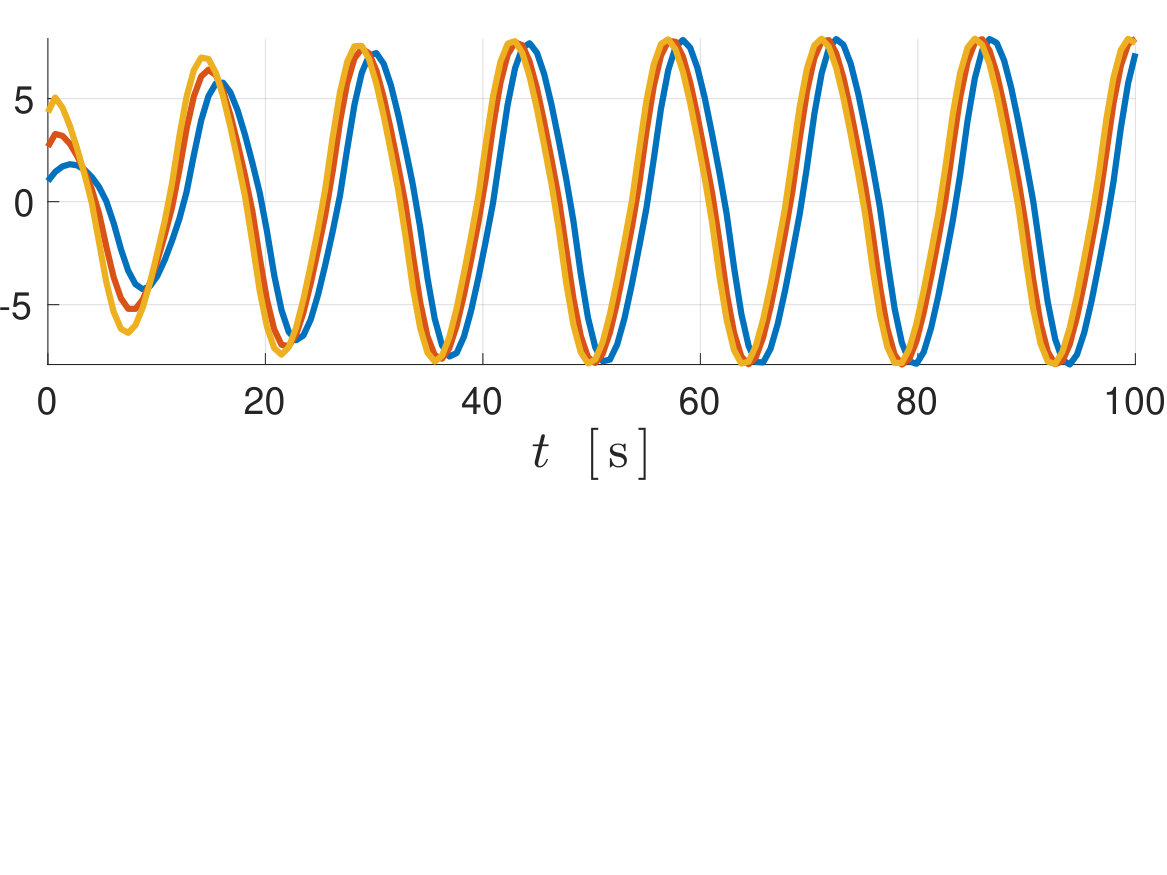 Figure 1
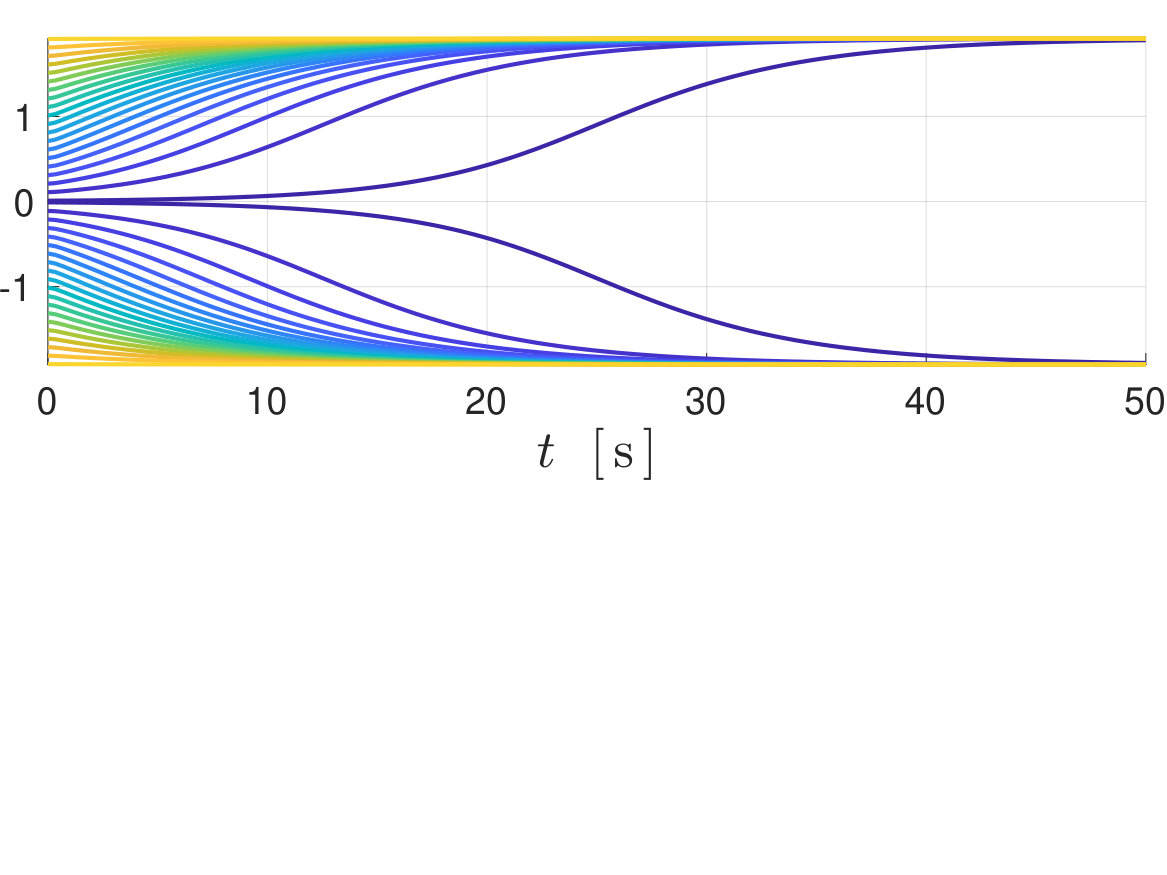 Figure 2
Peer Reviews
No public reviews on file for this paper yet. If you reviewed it on a platform where reviews are public (OpenReview, ICLR, NeurIPS, ICML), you can paste yours below so the community can read it here.
Videos
No videos yet. Explain this paper in a talk, walkthrough, or lecture? Add one.