Melting of charge order in the low-temperature state of an electronic ferroelectric
Nora M. Hassan, Komalavalli Thirunavukkuarasu, Zhengguang Lu, Dmitry, Smirnov, Elena I. Zhilyaeva, Svetlana Torunova, Rimma N. Lyubovskaya, Natalia, Drichko

TL;DR
This paper investigates how charge order in a ferroelectric Mott insulator melts at low temperatures, revealing a re-entrant behavior where the ordered state disappears while the system remains insulating.
Contribution
It demonstrates the melting of charge order in a ferroelectric Mott insulator at low temperatures, a phenomenon not previously observed in such systems.
Findings
Charge order melts below 15 K while maintaining the insulating gap.
Re-entrant behavior of charge order is observed in the phase diagram.
Material enters a dipole solid state at 30 K before melting at lower temperatures.
Abstract
Strong electronic interactions can drive a system into a state with a symmetry breaking. Lattice frustration or competing interactions tend to prevent a symmetry breaking, leading to quantum disordered phases. In spin systems frustration can produce a spin liquid state. Frustration of a charge degree of freedom also can result in various exotic states, however, experimental data on these effects is scarce. In this work we demonstrate how a charge ordered ferroelectric looses the order on cooling to low temperatures using an example of a Mott insulator on a weakly anisotropic triangular lattice -(BEDT-TTF)Hg(SCN)Cl. Typically, a low temperature ordered state is a ground state of a system, and the demonstrated re-entrant behavior is unique. Raman scattering spectroscopy finds that this material enters an insulating ferroelectric `dipole solid' state at , but below…
Click any figure to enlarge with its caption.
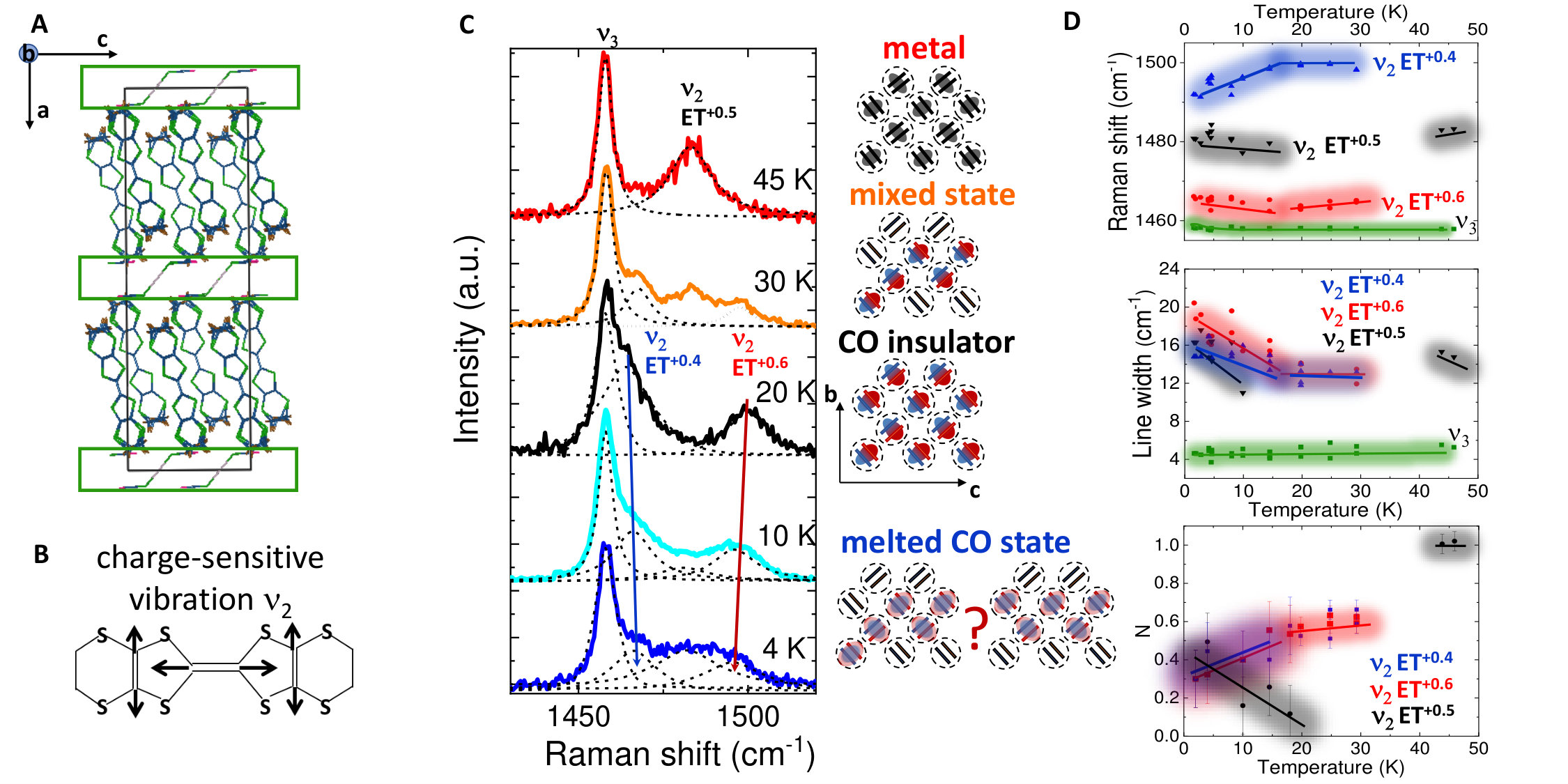 Figure 1
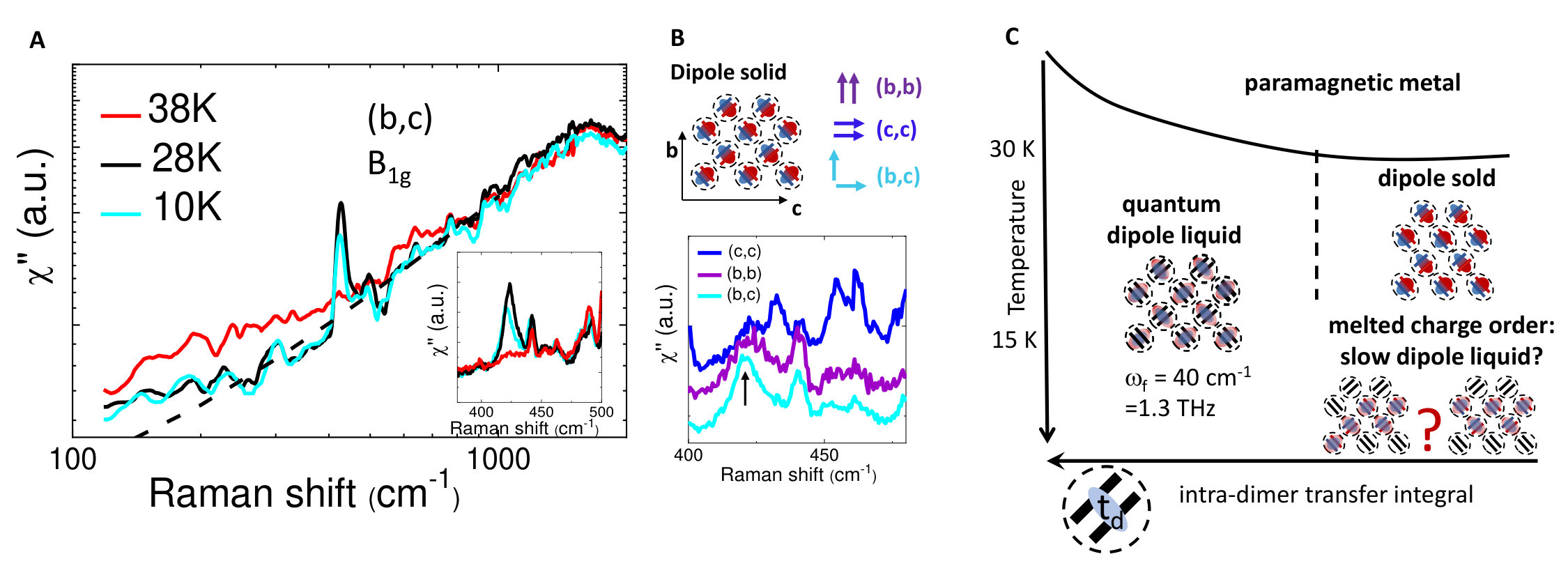 Figure 2
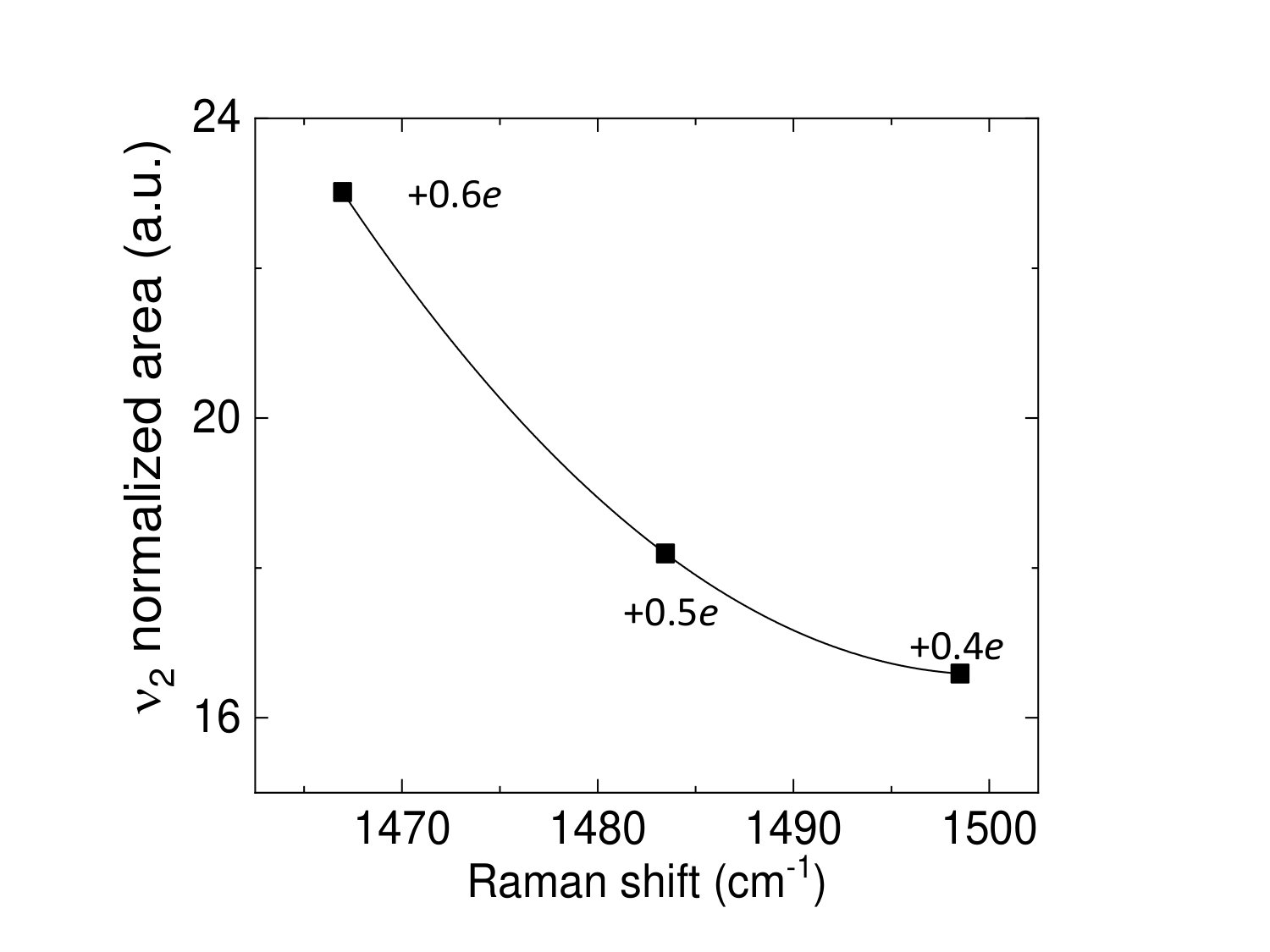 Figure 3
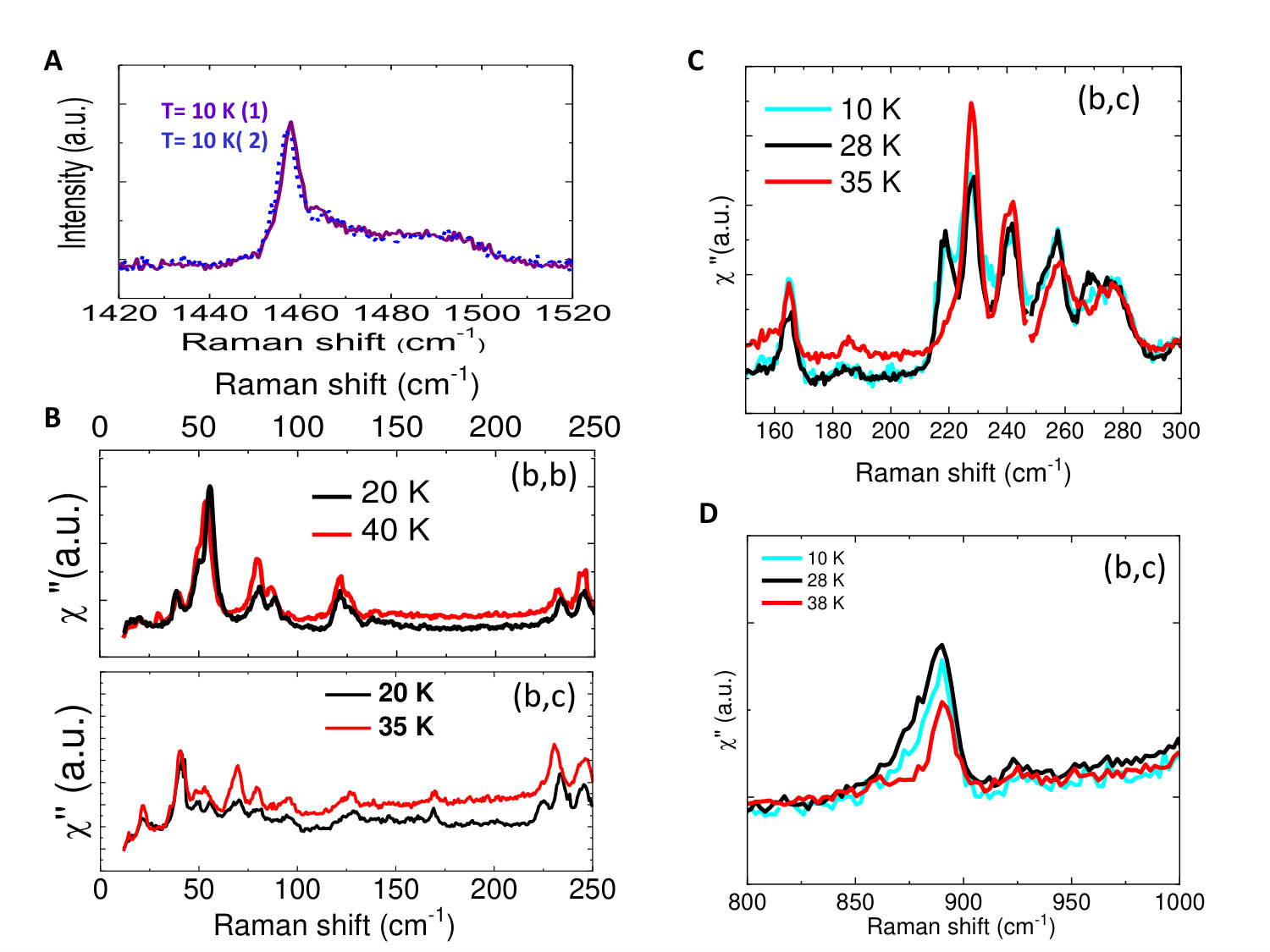 Figure 4
Peer Reviews
No public reviews on file for this paper yet. If you reviewed it on a platform where reviews are public (OpenReview, ICLR, NeurIPS, ICML), you can paste yours below so the community can read it here.
Videos
No videos yet. Explain this paper in a talk, walkthrough, or lecture? Add one.
Melting of charge order in the low-temperature state of an electronic ferroelectric.
Nora M. Hassan
Institute for Quantum Matter and Department of Physics and Astronomy, Johns Hopkins University, Baltimore, MD 21218, USA
Komalavalli Thirunavukkuarasu
Department of Physics, Florida A & M University, Tallahassee, FL, 32307, USA
Zhengguang Lu
National High Magnetic Field Laboratory, Tallahassee, Florida 32310, USA
Florida State University, Tallahassee, Florida 32306, USA
Dmitry Smirnov
National High Magnetic Field Laboratory, Tallahassee, Florida 32310, USA
Elena I. Zhilyaeva
Institute of Problems of Chemical Physics, Chernogolovka, Russia
Svetlana Torunova
Institute of Problems of Chemical Physics, Chernogolovka, Russia
Rimma N. Lyubovskaya
Institute of Problems of Chemical Physics, Chernogolovka, Russia
Natalia Drichko
Corresponding author: [email protected]
Institute for Quantum Matter and Department of Physics and Astronomy, Johns Hopkins University, Baltimore, MD 21218, USA
Strong electronic interactions can drive a system into a state with a symmetry breaking. Lattice frustration or competing interactions tend to prevent a symmetry breaking, leading to quantum disordered phases. In spin systems frustration can produce a spin liquid state. Frustration of a charge degree of freedom also can result in various exotic states, however, experimental data on these effects is scarce. In this work we demonstrate how a charge ordered ferroelectric looses the order on cooling to low temperatures using an example of a Mott insulator on a weakly anisotropic triangular lattice -(BEDT-TTF)2Hg(SCN)2Cl. Typically, a low temperature ordered state is a ground state of a system, and the demonstrated re-entrant behavior is unique. Raman scattering spectroscopy finds that this material enters an insulating ferroelectric “dipole solid” state at , but below the order melts, while preserving the insulating energy gap. The resulting phase diagram is relevant to other quantum paraelectric materials.
Frustration of a charge degree of freedom can result in charge glass Sato et al. (2017a); Sasaki et al. (2017) or a quantum paraelectric state, where electric dipoles fluctuate down to the lowest temperatures Yao et al. (2018); Shen et al. (2016); Hotta (2010). Such quantum dipole liquid was observed experimentally in a band insulator on a triangular lattice Shen et al. (2016) and in a Mott insulator Hassan et al. (2018). In a band insulator fluctuations of polarization are predicted to lead to a multiferroic effect Dunnett et al. (2019). In a Mott insulator charge-spin coupling is predicted to result in a spin liquid state Hotta (2010); Naka and Ishihara (2016a). An experimental realization of a system where electrical dipoles form on lattice sites of a Mott insulator at this point is limited to molecular-based systems Yao et al. (2018); Hotta (2010); Hassan et al. (2018). However, exotic multiferroicity Dunnett et al. (2019); Naka and Ishihara (2016b) which can result from an interplay of a quantum paraelectric and a spin liquid states is of interest to a broad community working on materials with strong electron-electron interactions. Also, notable is an analogy of a charge degree of freedom on the orbital of molecular dimer (BEDT-TTF)2 to the orbital degree of freedom and orbital liquid in atomic crystals, and as a way to produce novel spin liquid states Naka and Ishihara (2016a).
Organic Mott insulators where electronic ferroelectricity and quantum dipole liquid are observed are layered charge-transfer crystals based on BEDT-TTF 111bis(ethyleneditio)tetrathiafulvalene molecule. Layers responsible for the interesting physical properties of these materials are formed by dimers (BEDT-TTF). They alternate with layers which serve as charge reservoirs and define the exact structural parameters of the BEDT-TTF layers. A compound discussed in this work -(BEDT-TTF)2Hg(SCN)2Cl (k-Hg-Cl) shows a structure where (BEDT-TTF) sites form a slightly anisotropic triangular lattice within the layer. In this compound electronic ferroelectricity is observed in a charge ordered state below 30 K Drichko et al. (2014); Gati et al. (2018). In this work we experimentally detect a gradual melting of this charge order as the material is cooled down below 15 K.
Typically, if a system undergoes a phase transition into a broken symmetry state, such as a ferroelectric state, this state is a ground state of the system. A loss of an order on lowering temperature, for example, in a re-entrant transition, is very rare to observe experimentally. Such a re-entrant transition was predicted theoretically for some cases of strong electronic interactions Merino et al. (2003); Murray and Tešanović (2013); Neilson et al. (2013); Watanabe and Seo (2017). In quasi-two-dimensional (quasi-2D) organic Mott metals a weak re-entrant behavior was observed close to insulating charge order phase for compounds with a quarter-filled conductance band Drichko et al. (2006).
I Results
We use Raman spectroscopy as a main tool for this study. This method allows us to access molecular vibrations to characterize charge distribution on the BEDT-TTF-formed lattice, phonons, and electronic excitations, providing full information about the state of the material and a symmetry of the order.
First we will discuss the charge ordered state which appears in k-Hg-Cl below the metal-insulator transition at 30 K Drichko et al. (2014). The charge distribution in the layer formed by (BEDT-TTF) molecular dimers is determined by following the frequency of the Raman-active stretching vibration of the central C=C bond of the BEDT-TTF molecules, which has a known linear dependence on charge on the molecule Hassan et al. (2018); Yakushi et al. (2015). A single mode observed above the transition (Fig. 1, 45 K) splits into two components found at 1475 and 1507 cm*-1* (T=27 K) in the spectra of k-Hg-Cl below 30 K. The latter corresponds to a charge ordered state where charge symmetry within each dimer lattice site is broken, with (BEDT-TTF)+0.6 and (BEDT-TTF)+0.4 at each dimer (see Fig. 1).
Vibrational features in the spectra of k-Hg-Cl are superimposed on a continuum of electronic excitations, presented in Fig. 2 after subtracting phonon contributions. In scattering channel, on the M-I phase transition at 30 K we observe an opening of an electronic gap. It manifests itself in a suppression of the intensity of the continuum below approximately 850 cm*-1* with spectral weight shifted to the region between 850 and 1200 cm*-1*. The size of the gap 2 can be estimated as a frequency where the slope of flattens due to the suppression of spectral weight (Fig. 2A). This estimate yields 2 of about 250 cm*-1*. An opening of an insulating gap due to electronic correlations in Raman response is observed in strongly correlated materials, for example in SmB6 Valentine et al. (2015); Devereaux and Hackl (2007). The scattering channel corresponds to B1g scattering channel in the spectra of cuprate superconductors, where charge order effects are well studied Caprara et al. (2015).
The 1D properties of the charge stripes formed in the charge ordered state Drichko et al. (2014); Gati et al. (2018) are evidenced by a broad asymmetric feature that appears at about 400 cm*-1* in , and scattering channels, while its intensity in is negligible (see Fig. 2). The symmetry and position of this feature is reminiscent of an amplitude mode of a charge density wave, which would be found below an electronic gap and reveals the anisotropy of the order Eiter et al. (2013). While the exact details of the origin of this feature are outside of the scope of this paper, its position suggests that it originates from a coupling of electrons to a vibration of BEDT-TTF molecule.222 vibration is known to couple to localized electrons Eldridge et al. (1995), and with additional symmetry breaking would appear both in Raman and in infrared spectra Drichko et al. (2014) in the crystallographic direction along which charge is alternating in the structure.
An important question about the ordered phase in k-Hg-Cl is the strength of coupling of the electronic ferroelectricity to the lattice. In a strong coupling regime a formation of a spin singlet between the charge-rich sites is suggested Dayal et al. (2011). In the absence of a coupling to the lattice the charge-rich stripes can be considered as 1D antiferromagnetic (AF) chains Watanabe and Seo (2017) and have a potential to show 1D spin liquid properties. No lattice symmetry breaking was found by XRD measurements by now Drichko et al. (2014). Raman spectroscopy study also does not observe any major changes for lattice phonons which lie below 100 cm*-1*, confirming the absence of major structural changes. Some small changes in the molecular vibrations of BEDT-TTF on the phase transition reflect the charge redistribution (for details see SI).
Typically, a broken symmetry state would be a ground state of a system. The situation is different for k-Hg-Cl where we observe melting of the charge order below approximately 15 K. The first evidence comes from vibrational spectroscopy: The components of the charge sensitive band start to gradually broaden, move closer together in frequencies, and loose spectral weight to the increasing (BEDT-TTF*+0.5*). Basing on the temperature dependence of the intensity of band for different charges on BEDT-TTF molecule (see Methods for details) we can estimate a dependence of fractions of differently charged BEDT-TTF molecules on temperature, presented in Fig. 1B, lower panel.
At T=10 K the estimated distribution is:
= 0.40.15 : 0.40.15 : 0.160.15. The spectral weight of the 400 cm*-1* in-gap mode decreases proportionally to the part of the system that lost charge order: The spectral weight is in agreement with the vibrational spectra estimate of a charge order loss in about 0.160.15 of the total number of molecular dimers. While loosing spectral weight, the feature at 400 cm*-1* preserves the anisotropy relevant to the charge stripes along axis. The Mott electronic gap at 250 cm*-1* does not change below the charge order transition at 30 K (Fig. 2A). No major changes on vibrational features apart from are observed, confirming again that the coupling of the charge order to the lattice is weak.
At the lowest measured temperature of 2 K it is difficult to distinguish single components of mode, which shows intensity spread from about 1450 to 1510 cm*-1*. If we identify the components of the in a way similar to the 10 K data analysis, we can estimate that the charge distribution is:
= 0.30.15 : 0.30.15 : 0.30.15.
The shape of the line in the low temperature phase of k-Hg-Cl is reproduced on different cooing cycles, and for cooling rates varied between 0.1K/min to 40 K/min in measurements with the laser probe sizes of 50*100 m and 2 m. Thus, if the mixture is formed by domains, they are much smaller than 2 m.
The the width of line components increases gradually of on cooling into the melting regime. This is in contrast to the behavior of a mixed state of metallic and charge ordered domains observed at the temperature of the charge order phase transition T=30 K (see Fig. 1B). The spectra of the mixed state show a superposition of the charge-homogeneous and charge ordered response without additional line broadening. Such a formation of local strain-controlled domains on a phase transition into charge ordered insulating phase was observed in -(BEDT-TTF)2I3 Pustogow et al. (2018). Typically, domains formed at a phase transition in BEDT-TTF-based materials vary in size from about 1 m Pustogow et al. (2018) to 100 m Sasaki et al. (2004).
II Discussion
As our data show, an interplay between electronic correlations and frustration of the lattice leads to exotic effects related to the metal-insulating transition and insulating state. In comparison to a classic example of a charge-ordered insulating transition in -(BEDT-TTF)2I3 at TMI=135 K Ivek et al. (2011) with electronic gap of 600 cm*-1*, k-Hg-Cl shows a larger gap of 2=8kT. The charge order in k-Hg-Cl is weakly coupled to the lattice, which explains an absence of a spin singlet state Yamashita and Drichko .
The main result of our study is that the charge order observed at temperatures below T=30 K is not the ground state of the system. On cooling below 15 K charge order gradually melts with an appearance of BEDT-TTF*+0.5*, while the fraction of the system which still holds charge order shows broadened charge-sensitive lines moving closer in frequency on cooling. This gradual melting of charge order does not have a detectable effect on heat capacity Hassan et al. (2018). Also, an absence of a dependence on the cooling rate does not favour an interpretation in terms of charge glass, in agreement with an absence of glassy behavior in dielectric measurements Gati et al. (2018). The melting of charge order occurs without a formation of macroscopic domains of different phases and can result in a charge-fluctuating or microscopically disordered charge state.
Basing on vibrational spectroscopy only it is not possible to distinguish a decrease of charge disproportionation accompanied by some additional charge disorder from an offset of slow charge fluctuations. However, a continuous change of the line positions and width on cooling is in agreement with charge fluctuations scenario. A frequency of charge fluctuations or, in other words, dipole fluctuations in this case is about 4 cm*-1* at 2 K, according to the line width analysis Hassan et al. (2018). This is an order of magnitude slower than dipole fluctuations observed in the quantum dipole liquid -(BEDT-TTF)2Hg(SCN)2Br. The fraction of the system which preserves the charge order also preserves 1D anisotropy, as measured by anisotropic Raman response at 420 cm*-1*. We estimate that at the lowest measured temperature of 2 K each charge state presents approximately 1/3 of the system.
While our results is the first report of the low-temperature melting of the dipole order in k-Hg-Cl, some published experimental data for this material reveal this effect. ESR data Yasin et al. (2012); Gati et al. (2018) show a decrease of at the charge order transition, with a recovery of the metallic state value of below T=20 K. This behavior can be associated with the melting of charge order or a related loss of magnetic short range correlations between charge-rich sites. Resistivity of k-Hg-Cl Drichko et al. (2014); Gati et al. (2018) increases by a few orders of magnitude on the metal-insulator transition at 30 K, but the temperature dependence flattens below 20 K. Both results suggest that below approximately 20 K the system changes the behaviour and becomes “less insulating”, while the metallic behaviour is not fully recovered. Interestingly, for these lower-frequency probes the upturn of the behavior occurs at slightly higher temperatures than our observations, which would agree with interpretation of the low-temperature state in terms of fluctuations.
There are a number of models which can explain our observation on the melting of the charge order in the low-temperature phase of k-Hg-Cl:
A re-entrant transition is predicted for a system with electronic ferroelecticity of molecular dimers in Ref. Naka and Ishihara (2010). It is suggested that antiferromagnetic exchange on lowering the temperature would compete with the interactions which lead to ferroelectric order, and weaken them, leading to the loss of the ferroelectric order.
A number of models for a frustrated charge system discuss a competition between a stripes charge order similar to that in k-Hg-Cl and different variants of a three-fold charge order. This phase competition at low temperatures can result in a melting of a ferroelectric charge order state without an impact of magnetic interactions. Ref. Yoshida and Hotta (2014) discusses a competition between change order stripes and an ”order by disorder” phase with so-called ”good defects” containing ordered pairs produced by thermal fluctuations. Another possibility is a competition between ferroelectric stripes and anti-ferroelectric three-fold stripes ground state discussed in Refs. Mori (2016); Watanabe and Seo (2017). Interestingly, a competition between ferroelectric and antiferroelectic state is a reason for quantum paraelectric behavior in SrTiO3 Chandra et al. (2017).
Our experimental data present a limited agreement with these models, without suggesting a clear picture. At 2 K we observe a charge distribution which corresponds to a three-fold charge order, but it is not clear if this charge distribution is the final state of the system or it would change on cooling. The 1D anisotropy is preserved in the melted state for the fraction of the system which holds charge separation. This result can agree both with a competition of different stripe orders and with microscopic domains containing stripes, which would appear on a re-entrant transition. Three-fold charge order is a metallic state, and the stripe order of this kind is antiferroelectric and thus would change the dielectric constant behavior. Further experimental studies such as detailed dielectric measurements and resistivity below 30 K are necessary for the identification of the low temperature state.
The models above work in the assumption that the FE state is static. Since the dielectric measurements are done at about 1000 GHz, and Raman and optical measurements are done at even higher frequencies, it cannot be excluded that very slow fluctuations, with frequency below 100 GHz are present even between 30 and 20 K. This would suggest that the MI transition and the gap at 250 cm*-1* is related to purely Mott transition.
Our results not only demonstrate the unique effect of melting of an ordered state at low temperatures in k-Hg-Cl but also suggest a phase diagram drafted in Fig. 2C. A transition into insulating state on temperature lowering is of the first order both for k-Hg-Cl Gati et al. (2018) and for the closely related quantum dipole liquid -BEDT-TTF2Hg(SCN)2Br Hassan et al. (2018); Hemmida et al. (2018). The fluctuations of the charge order in -BEDT-TTF2Hg(SCN)2Br and dipole ordered phase or possibly much slower fluctuations in k-Hg-Cl suggest a quantum critical point and a second order phase transition into a charge ordered state. According to both theory Hotta (2010); Naka and Ishihara (2010); Sato et al. (2017b) and DFT Gati et al. (2018); Valenti the tuning parameter of the ground state is an overlap integral in a (BEDT-TTF)2 dimer Hotta (2010); Hassan et al. (2018). Interestingly, a bandwidth controlled phase diagram suggested by calculations in Ref. Sato et al. (2017b) also has a 1st order phase transition between metallic and antiferromagnetic insulating phase, while a transition between metal and antiferromagnetic phases, and electric dipole ordered phase is 2nd order. A similar phase diagram with 1st order phase transition with temperature, and 2nd with another parameter, contain triple quantum critical point is also suggested for ferroelectrics such as SrTiO3 without spin degree of freedom Chandra et al. (2017).
III Acknowledgements
The authors are grateful to T. Clay, T. Mori, C. Hotta, H. Seo, M. Naka, T. Ivek, M. Yamashita for fruitful discussions. Work in JHU was supported as part of the Institute for Quantum Matter, an Energy Frontier Research Center funded by the U.S. Department of Energy, Office of Science, Office of Basic Energy Sciences under Award Number DE-SC0019331. The work in Chernogolovka was supported by FASO Russia, state registration number 0089-2019-0011. KT acknowledges funding via ONR HBCU/MI program. A portion of this work was performed at the National High Magnetic Field Laboratory, which is supported by the National Science Foundation Cooperative Agreement No. DMR-1644779 and the State of Florida. ND and NH acknowledge the support of Institute for Complex Adaptive Matter (ICAM) and The Gordon and Betty Moore Foundation.
IV Methods
Synthesis Single crystals of -(BEDT-TTF)2Hg(SCN)2Cl (k-Hg-Cl) were prepared by electrochemical oxidation of the BEDT-TTF solution in 1,1,2-trichloroethane (TCE) at a temperature of 40*∘* C and a constant current of 0.5 A. A solution of Hg(SCN)2, [Me4N]SCN·KCl, and dibenzo-18-crown-6 in 1:0.7:1 molar ratio in ethanol/TCE was used as supporting electrolyte for the k-Hg-Cl preparation. The composition of the crystals was verified by electron probe microanalysis and X-ray diffraction.
Raman scattering was measured in three different setups.
(i) In the frequency range from 100 to 2000 cm*-1and temperatures down to 10 K spectra were measured in the pseudo-Brewster angle geometry using T64000 triple monochromator spectrometer equipped with the liquid N2 cooled CCD detector. In single monochrmonator configuration with the edge filter option was used. Spectral resolution was 2 cm-1*. Line of Ar+-Kr+ Coherent laser at 514.nm was used for excitation. Laser power was kept at 2 mW for the laser probe size of approximately 50 by 100 m. This ensured that laser heating of the sample was kept below 2 K, as was proved by observing the temperature of ordering transition in k-Hg-Cl. Measurements at temperatures down to 10 K were performed using Janis ST500 cold finger cryostat. Cooling rates used were between 0.1 and 40 K/min. The samples were glued on the cold finger of the cryostat using GE varnish. The experiments were performed on at least 6 samples to ensure reproducibility of the results.
Non-polarized micro-Raman measurements in the range of charge-sensitive vibrations were performed in backscattering geometry using T64000 triple monochromator spectrometer equipped with the Olympus microscope. Probe size was 2 m in diameter.
The crystals were oriented using polarization-dependent Raman scattering measurements. For the measurements, electrical vector of excitation and scattered light were polarized along and axes. Our notations of polarizations refer to the structure and symmetry of the BEDT-TTF layer, to make an easy comparison to the calculations which refer to D4h Devereaux and Hackl (2007) without loosing the information about the symmetry of the real crystal. Thus A1g symmetry corresponds to the were measurement in and geometries, and B1g corresponds to and geometries (). All spectra were corrected by the Bose-Einstein thermal factor.
(ii) Measurements down to 1.9 K in the spectral range between 1200 and 1700 cm*-1* with a spectral resolution of 1.74 cm*-1* were conducted in NHMFL at 0 T. The Raman spectra were measured in a backscattering geometry using a 532nm laser excitation. The laser light was injected into an single mode optical fiber, guiding the excitation to the sample stage inserted into a helium-flow variable temperature cryostat. The excitation light was focused by an aspheric objective lens(NA=0.67) to a spot size of about 3.5 m in diameter. The excitation power delivered to the sample was about 100W or less to minimize the sample heating. The scattered light collected by the same lens was directed into a 100 m multimode collection fiber, and then guided to a spectrometer equipped with a liquid-nitrogen-cooled CCD camera. The spectra were acquired in the spectral region from 1200 cm*-1* to 1700 cm*-1* with a spectral resolution of 1.74 cm*-1*.
Data analysis
We determine charge on BEDT-TTF molecules in the structure by following the frequency of the central C=C molecular bond vibration () (Fig. 1B,C). This frequency changes by -140 cm*-1* when the charge of the molecule changes from (BEDT-TTF)0 to (BEDT-TTF)+1, as demonstrated in Refs. Dressel* et al. (2004); Yamamoto et al. (2005). This is a result of a lengthening of the central C=C bond of the molecule when more charge occupy the highest occupied molecular orbital (HOMO).
To compute the fractions of the system which carries certain charge at temperatures below 15 K, where charge order starts to melt (see Fig 1D lower panel) we performed a comparative analyses of Raman intensities. While frequency of the charge sensitive vibration linearly depends on the charge on BEDT-TTF molecule Yamamoto et al. (2005), the Raman intensity shows a non-linear dependence, which we obtained from the experiment. The known points of this dependence is T=45 K in the metallic state, where all molecules have average +0.5 charge, and T=22 K, where half of the system carriers charge +0.6, and half is +0.4. Spectral weight of vs Raman shift plot is presented in Fig. 3. Used in the plot spectral weight values are received from the fits of the vibrational bands with Lorentzian shape and are normalized to the spectral weight of C=C non-charge sensitive band to correct for the errors of intensity measurements at different temperatures, which can in principle occur due to small misalignment of a system at changing temperature. We used the empirical dependency (solid line) to estimate the fraction of BEDT-TTF molecules carrying a certain charge at temperatures below 15 K.
V Supplemental Information
V.1 Vibrational spectra of the mixed state at the charge order transition temperature vs low temperature charge order melted state.
We follow the charge state of k-Hg-Cl on cooling through the charge order phase transition by following Raman active charge sensitive vibration Yakushi et al. (2015). A single mode observed above the transition (Fig. 1, 45 K) splits into two components found at 1475 and 1507 cm*-1* (T=27 K) in the spectra of k-Hg-Cl below 30 K suggests charge ordered state with charge disproportionation = 0.2. At the temperature of the phase transition T=30 K we observe a mix of charge order and homogeneous charge response (see Fig. 1). The widths of the vibrational bands in the mixed state are similar to that in the metallic state just above the transition and the ordered state below 30 K. This suggest at the mixed state consists of macroscopic domains, and does not introduce additional disorder on the microscopic level. Since the ratio of charge-homogeneous to charge ordered fraction of the system is similar on different cooling cycle, we expect domains to be much smaller than the 2 m radius of the laser probe.
Domains can be a signature of the 1st order phase transition which was suggested for this compound Gati et al. (2018). In addition, since thermal conductivity of the materials decreases on a transition into the insulating state, the domains can be associated with small inhomogeneities of cooling of the crystal on the cold finger of the cryostat.
Importantly, a comparison of the vibrational spectra in the mixed state with the spectra in the low temperature charge melted state reveal important differences. The broadening on the bands at low temperatures suggest charge fluctuations or disorder or microscopic charge disorder of the fraction of the system which preserved separation of changes on the lattice at low temperatures.
V.2 Vibrational changes on the CO phase transition
While we do not observe and notable changes in the lattice phonons on the charge ordering phase transition at 30 K in k-Hg-Cl. However, in addition to some other lines of molecular vibrations of BEDT-TTF split on the phase transition. These vibrations listed below and shown in Fig 4B are associated with the deformations of the fragments of the aromatic rings of BEDT-TTF. Molecular -orbitals of BEDT-TTF have a large input of orbitals of the aromatic rings, and a change of geometry of these rings on the change of the charge could be expected.
We observe a doubling of a vibrational lines at about 228 cm*-1*, which is assigned to a B3g deformation of S-C-S angle between the two aromatic rings and an angle between central C=C and C-S of the first ring, and the one at about 290 cm*-1*, which is related to and A1g stretching of the bonds of the outer aromatic ring (Fig. 4B, upper panel) Kozlov et al. (1987).
We also observe an enhanced intensity of the vibrational line at about 900 cm*-1* in the charge ordered state. This band is related to a B3g stretch of a C=C bonds of the inner rings, and was claimed to couple to electronic transitions in BEDT-TTF materials Eldridge et al. (1996)
The reference list from the paper itself. Each links out to its DOI / PubMed record.
- 1Sato et al. (2017 a) T. Sato, K. Miyagawa, and K. Kanoda, Science 357 , 1378 (2017 a) , https://science.sciencemag.org/content/357/6358/1378.full.pdf . · doi ↗
- 2Sasaki et al. (2017) S. Sasaki, K. Hashimoto, R. Kobayashi, K. Itoh, S. Iguchi, Y. Nishio, Y. Ikemoto, T. Moriwaki, N. Yoneyama, M. Watanabe, A. Ueda, H. Mori, K. Kobayashi, R. Kumai, Y. Murakami, J. Müller, and T. Sasaki, Science 357 , 1381 (2017) , https://science.sciencemag.org/content/357/6358/1381.full.pdf . · doi ↗
- 3Yao et al. (2018) N. Y. Yao, M. P. Zaletel, D. M. Stamper-Kurn, and A. Vishwanath, Nature Physics , 1 (2018).
- 4Shen et al. (2016) S.-P. Shen, J.-C. Wu, J.-D. Song, X.-F. Sun, Y.-F. Yang, Y.-S. Chai, D.-S. Shang, S.-G. Wang, J. F. Scott, and Y. Sun, Nature communications 7 (2016).
- 5Hotta (2010) C. Hotta, Physical Review B 82 , 241104 (2010).
- 6Hassan et al. (2018) N. Hassan, S. Cunningham, M. Mourigal, E. I. Zhilyaeva, S. A. Torunova, R. N. Lyubovskaya, J. A. Schlueter, and N. Drichko, Science 360 , 1101 (2018).
- 7Dunnett et al. (2019) K. Dunnett, J.-X. Zhu, N. Spaldin, V. Juričić, and A. V. Balatsky, Physical review letters 122 , 057208 (2019).
- 8Naka and Ishihara (2016 a) M. Naka and S. Ishihara, Phys. Rev. B 93 , 195114 (2016 a) . · doi ↗