Reflected Light Phase Curves in the TESS Era
L. C. Mayorga, N. E. Batalha, N. K. Lewis, and M. S. Marley

TL;DR
This paper evaluates the potential of TESS to characterize exoplanets through reflected light phase curves, identifying key planetary properties and conditions that maximize observational contrast.
Contribution
It introduces a simulated TESS exoplanet population and assesses their reflected light signals, highlighting the most promising targets and conditions for future observations.
Findings
Contrast in TESS bandpass typically <10 ppm, reaching tens ppm for brightest or closest planets.
Blue bandpass contrast can be 10-50 ppm, up to 150 ppm for certain planets.
Cloud properties significantly affect planetary brightness and reflectivity at different wavelengths.
Abstract
The reflected light signal from a planet throughout its orbit is a powerful probe of a planet's atmospheric properties. There are a number of planets that are amenable to reflected light phase curve studies with present and future space-based instrumentation and here we assess our ability to characterize these worlds. Using simulated TESS populations we identify the Nine, a set of archetypal exoplanets with the potential to be bright in reflected light, because of their radii and proximity to their star, while still being cool enough to have minimal thermal contamination at optical wavelengths. For each planet we compute albedo spectra for several cloud and atmosphere assumptions (e.g. thermochemical equilibrium, solar composition). We find that in the TESS bandpass the estimated contrast at optical wavelengths is typically <10 ppm except for the brightest, largest, or closest in…
Click any figure to enlarge with its caption.
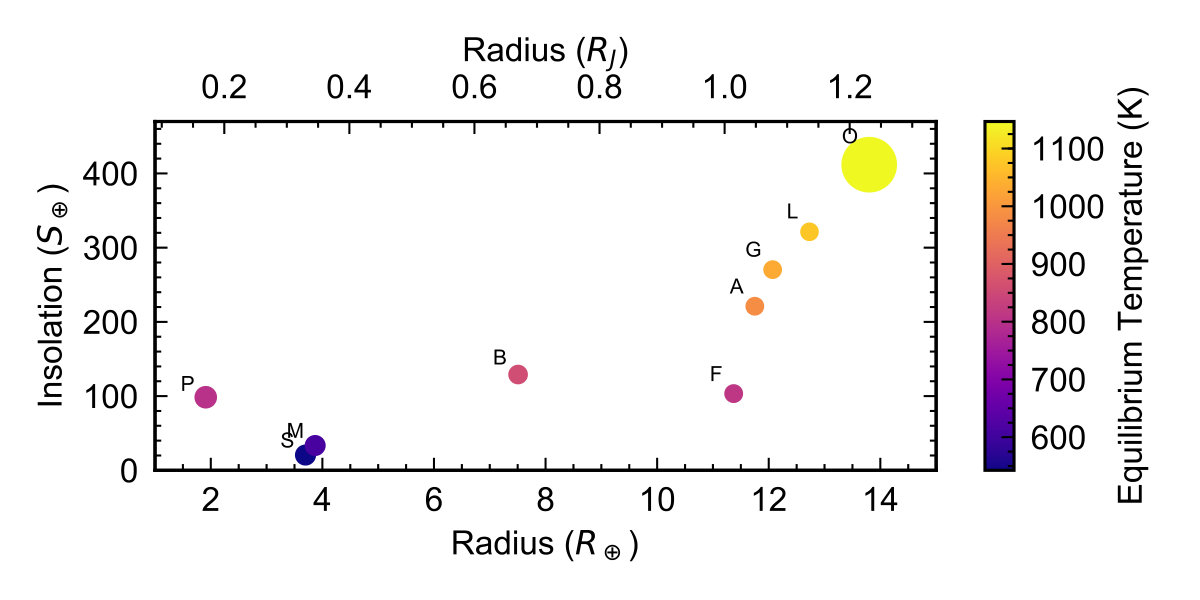 Figure 1
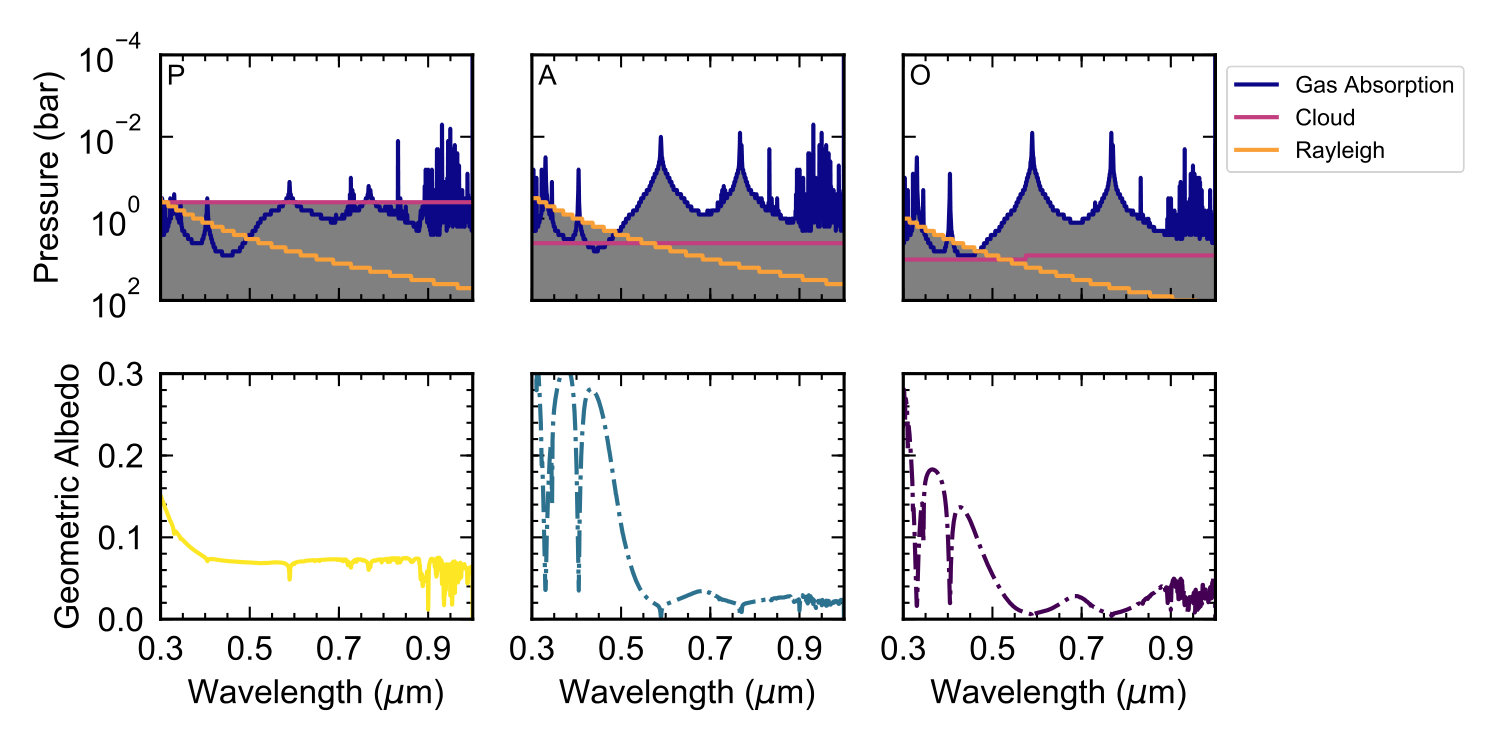 Figure 2
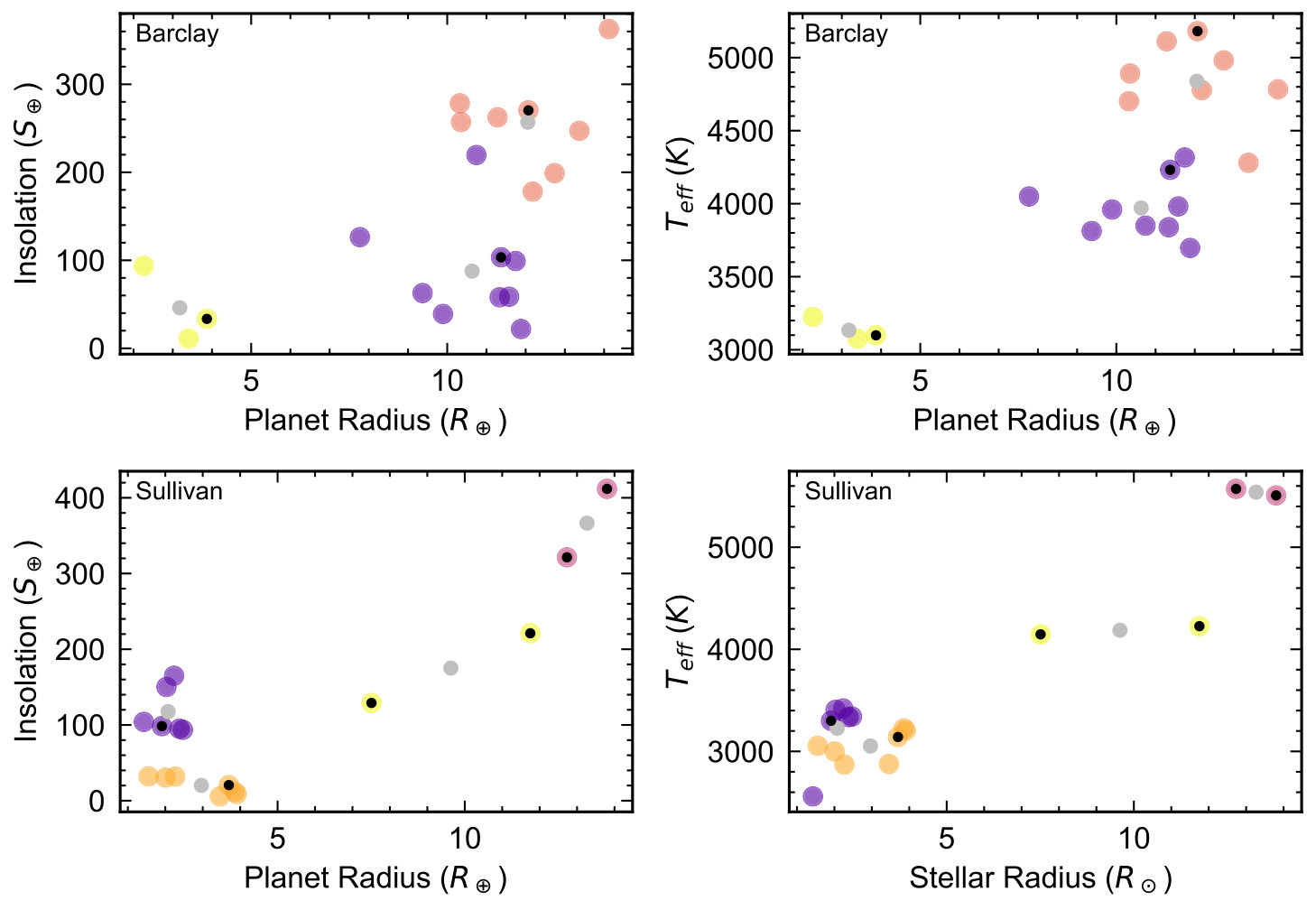 Figure 3
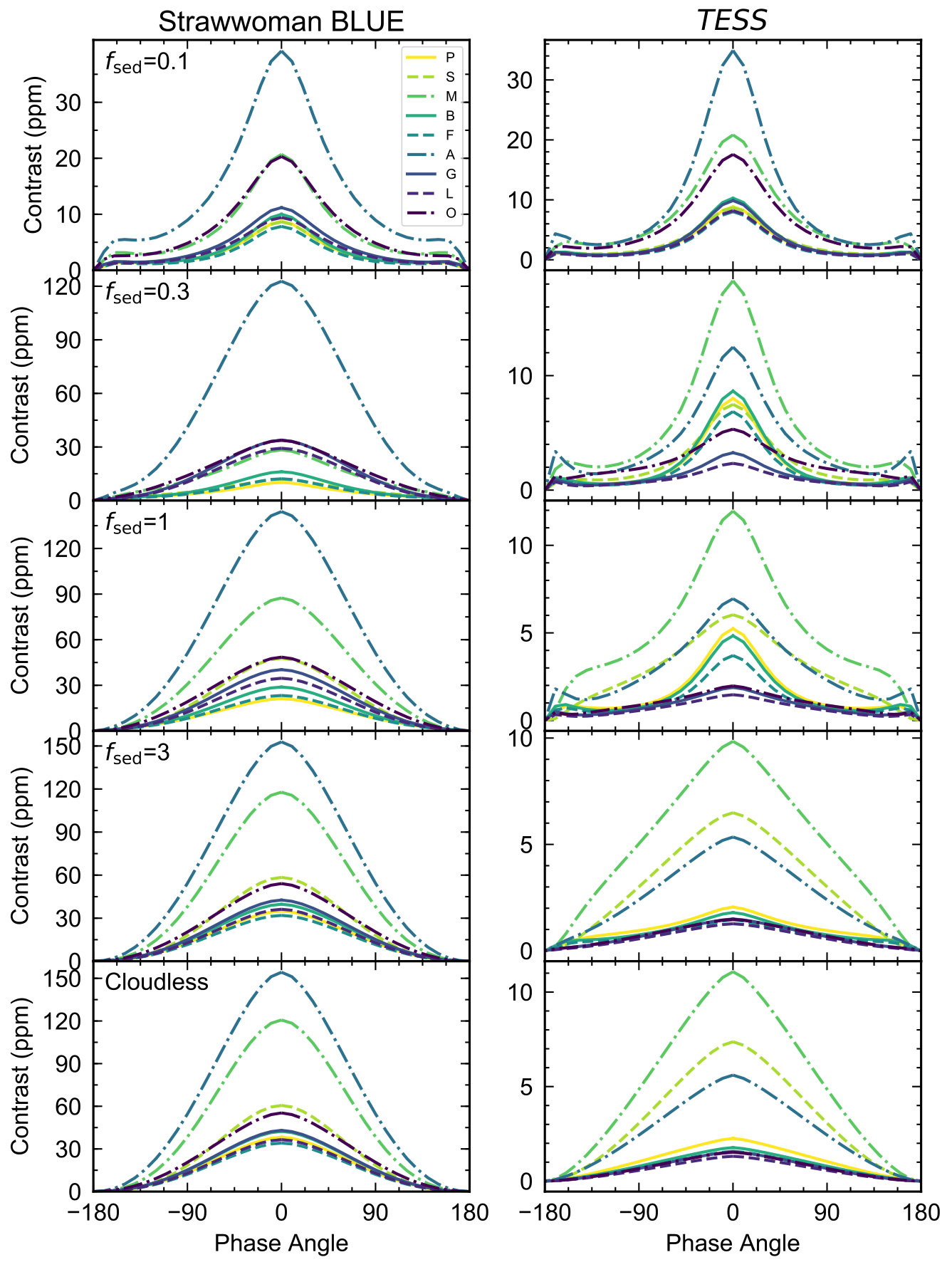 Figure 4
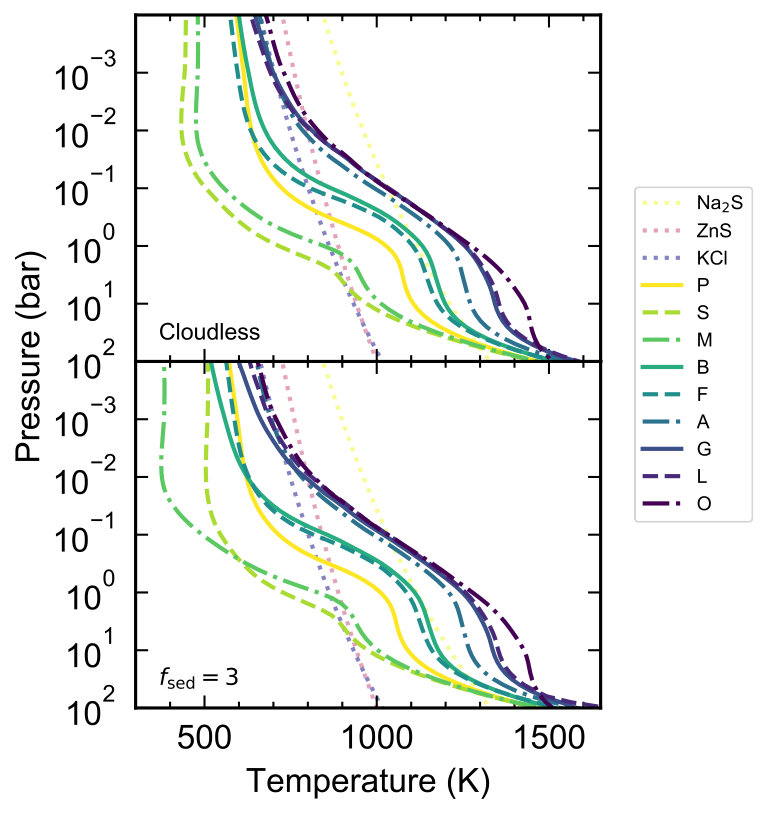 Figure 5
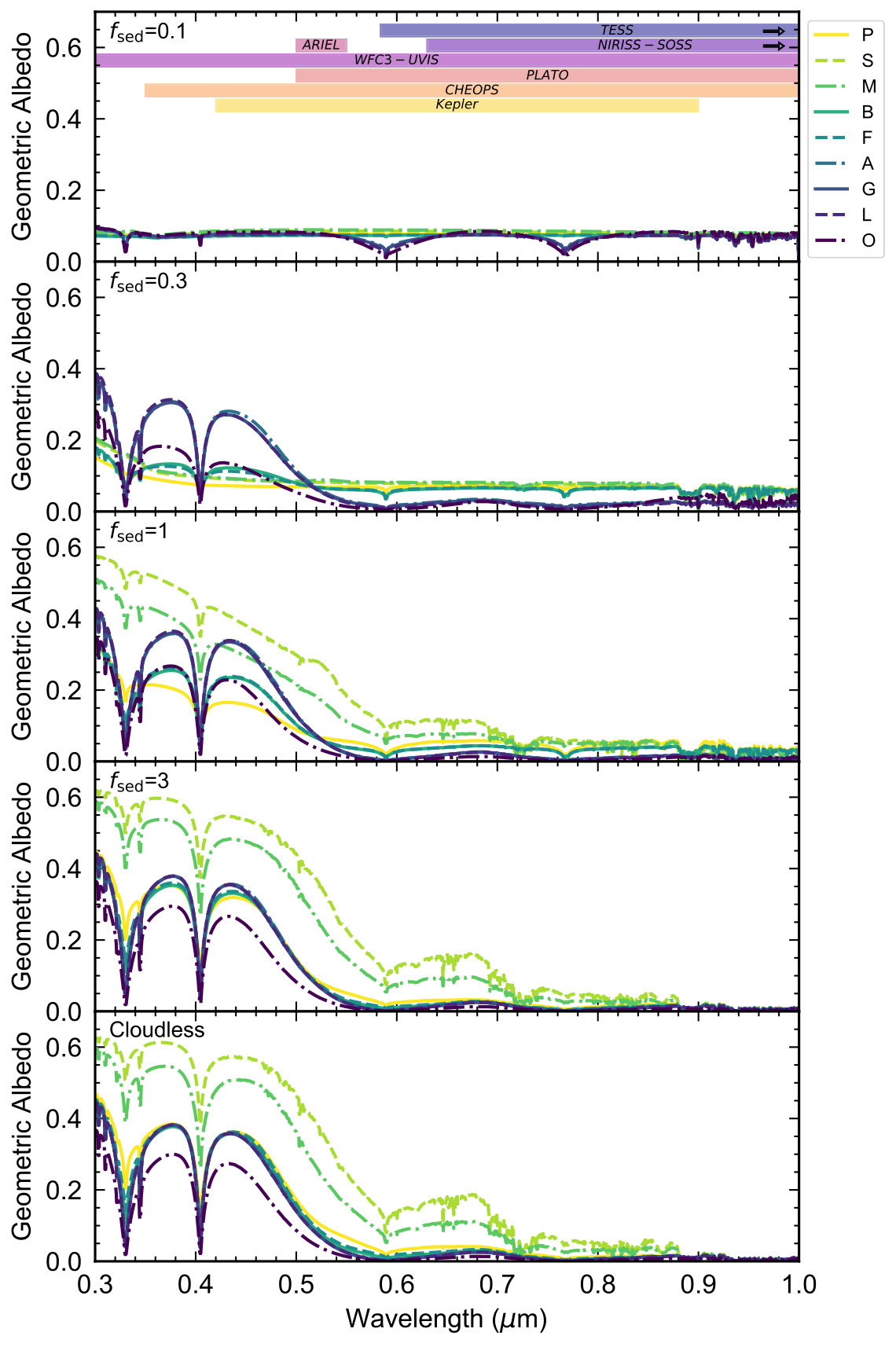 Figure 6
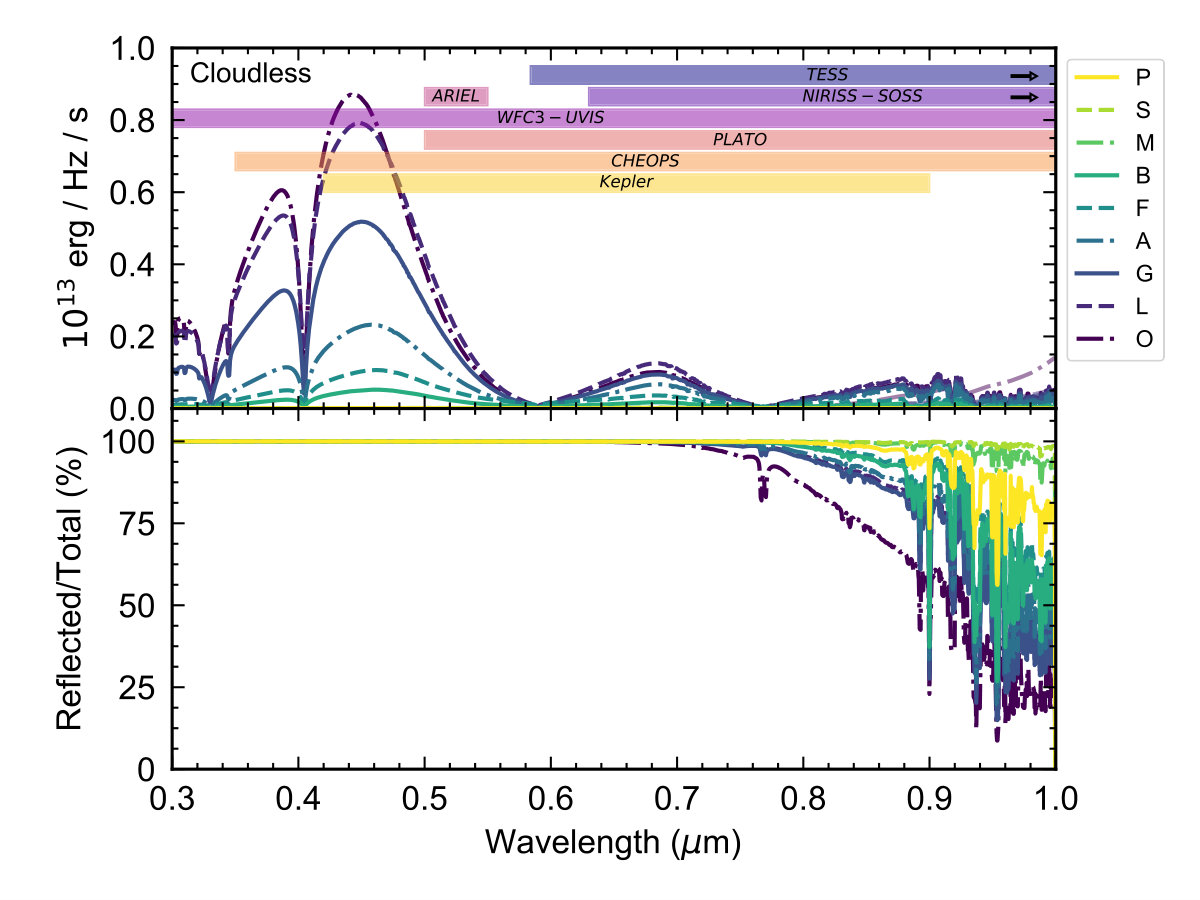 Figure 7
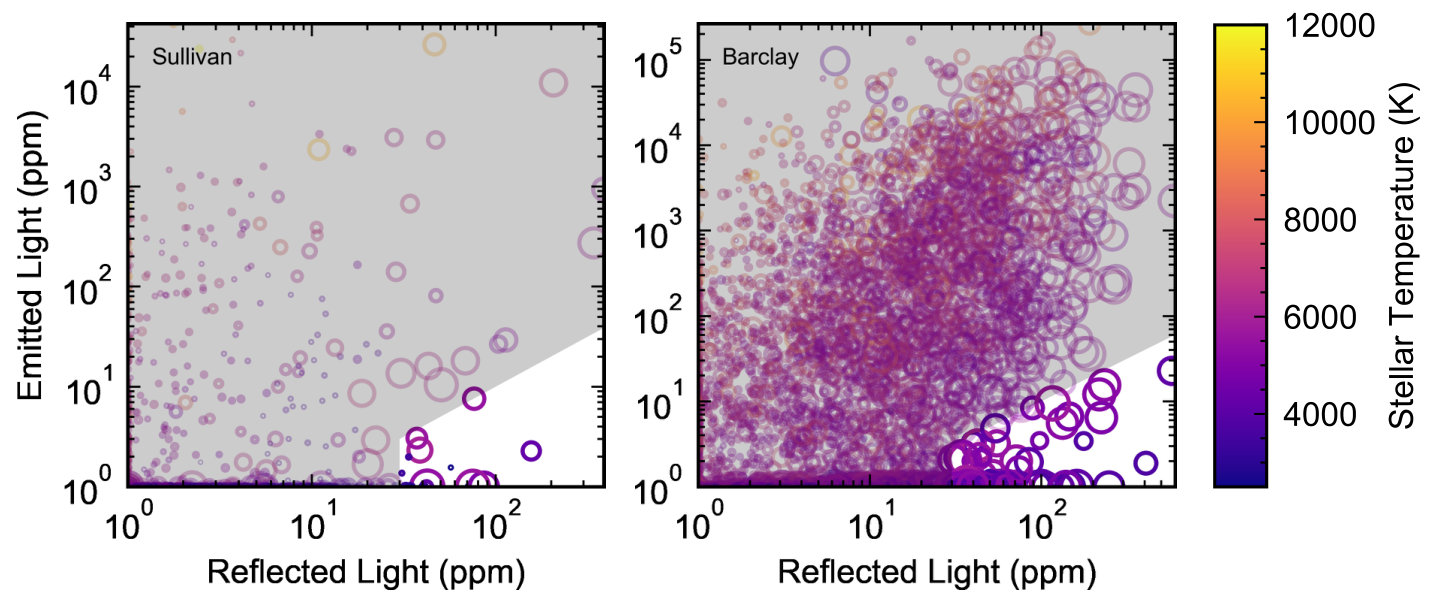 Figure 8
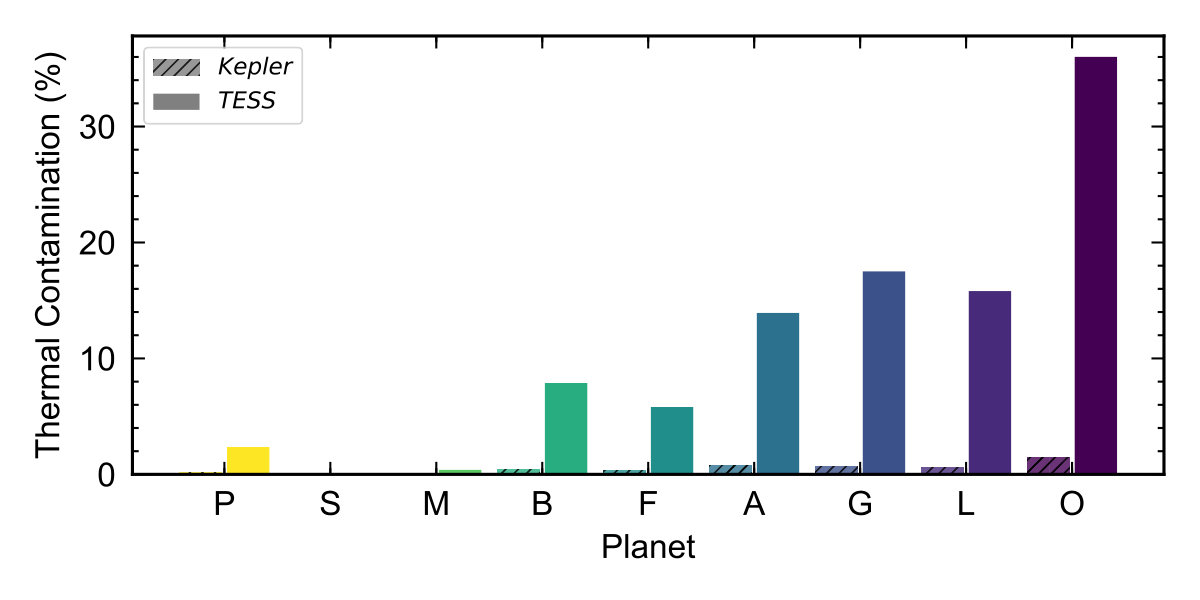 Figure 9
Peer Reviews
No public reviews on file for this paper yet. If you reviewed it on a platform where reviews are public (OpenReview, ICLR, NeurIPS, ICML), you can paste yours below so the community can read it here.
Videos
No videos yet. Explain this paper in a talk, walkthrough, or lecture? Add one.
Taxonomy
TopicsAstro and Planetary Science · Stellar, planetary, and galactic studies · Atmospheric Ozone and Climate