TL;DR
The paper introduces MementoMap, a flexible framework for summarizing web archive holdings efficiently, enabling quick lookups with minimal storage while maintaining high accuracy and recall.
Contribution
It presents a novel, extensible file format and algorithms for compacting and searching web archive summaries, demonstrated on a large-scale web archive dataset.
Findings
MementoMap achieves 60% accuracy with less than 1.5% relative cost.
The framework maintains 100% recall, ensuring no false negatives.
Efficient algorithms enable compact storage and fast lookup in large web archives.
Abstract
In this work we propose MementoMap, a flexible and adaptive framework to efficiently summarize holdings of a web archive. We described a simple, yet extensible, file format suitable for MementoMap. We used the complete index of the Arquivo.pt comprising 5B mementos (archived web pages/files) to understand the nature and shape of its holdings. We generated MementoMaps with varying amount of detail from its HTML pages that have an HTTP status code of 200 OK. Additionally, we designed a single-pass, memory-efficient, and parallelization-friendly algorithm to compact a large MementoMap into a small one and an in-file binary search method for efficient lookup. We analyzed more than three years of MemGator (a Memento aggregator) logs to understand the response behavior of 14 public web archives. We evaluated MementoMaps by measuring their Accuracy using 3.3M unique URIs from MemGator logs. We…
Click any figure to enlarge with its caption.
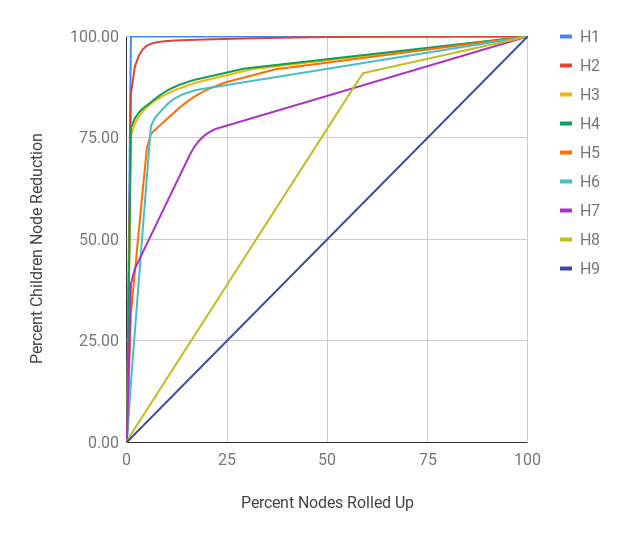 Figure 1
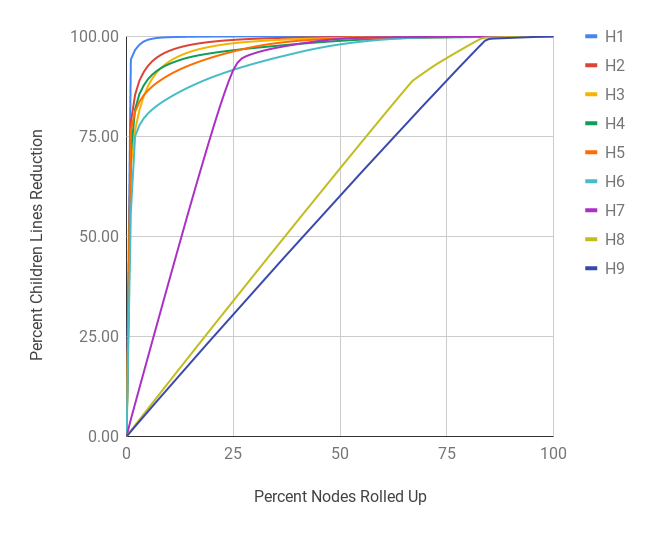 Figure 2
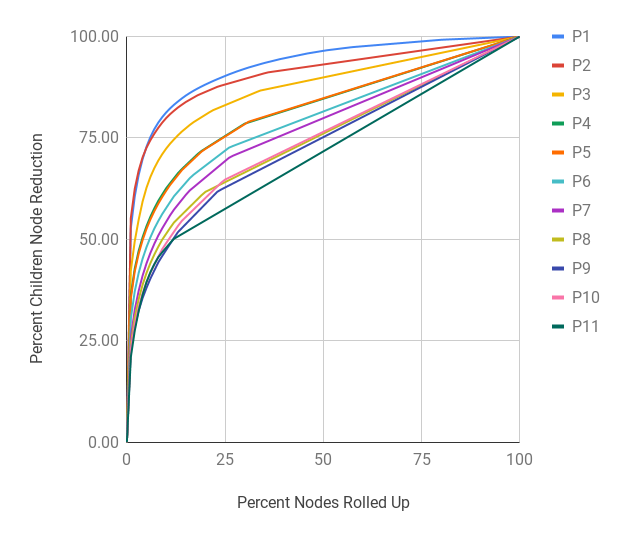 Figure 3
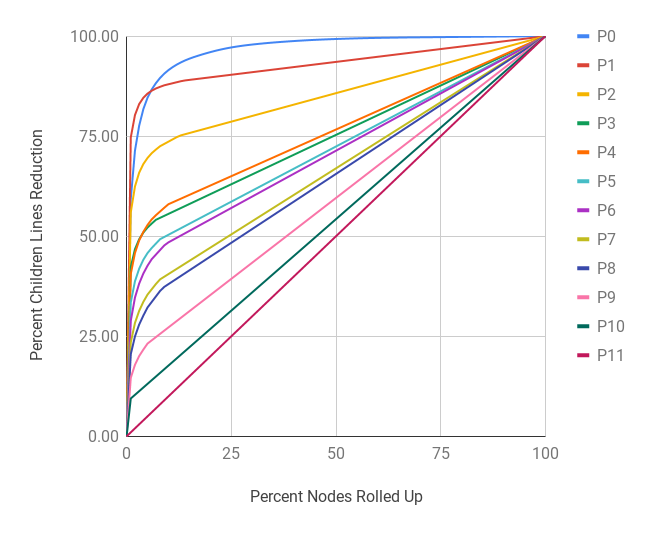 Figure 4
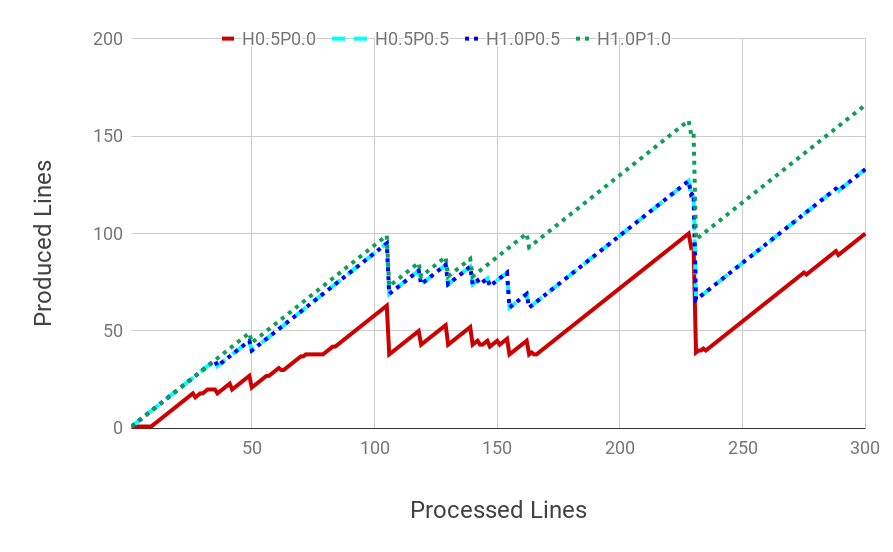 Figure 5
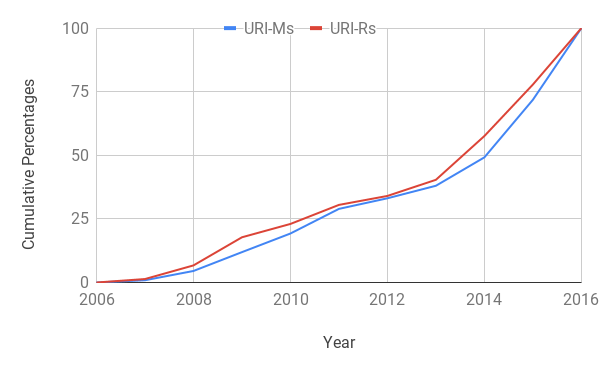 Figure 6
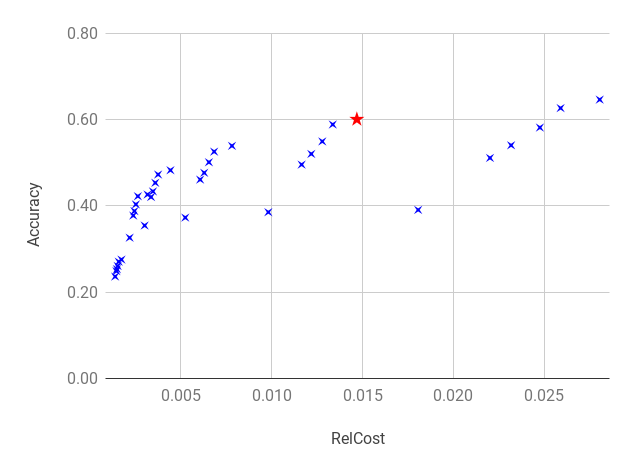 Figure 7
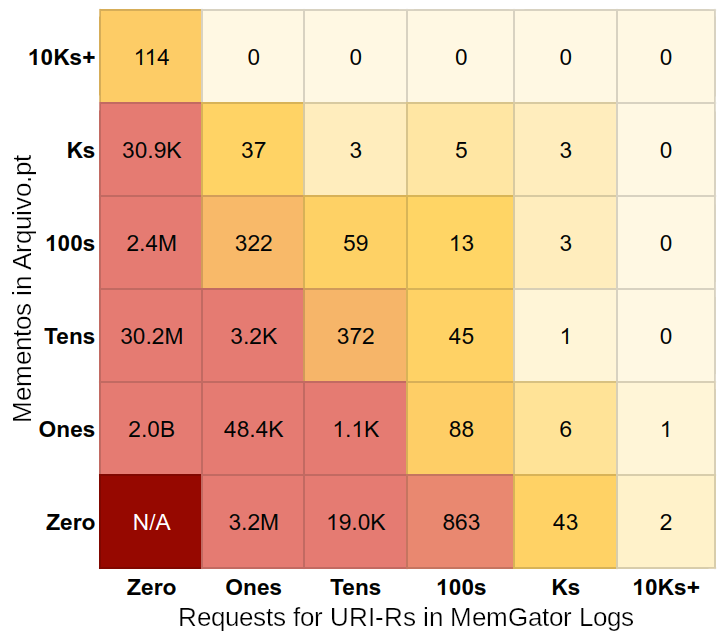 Figure 8
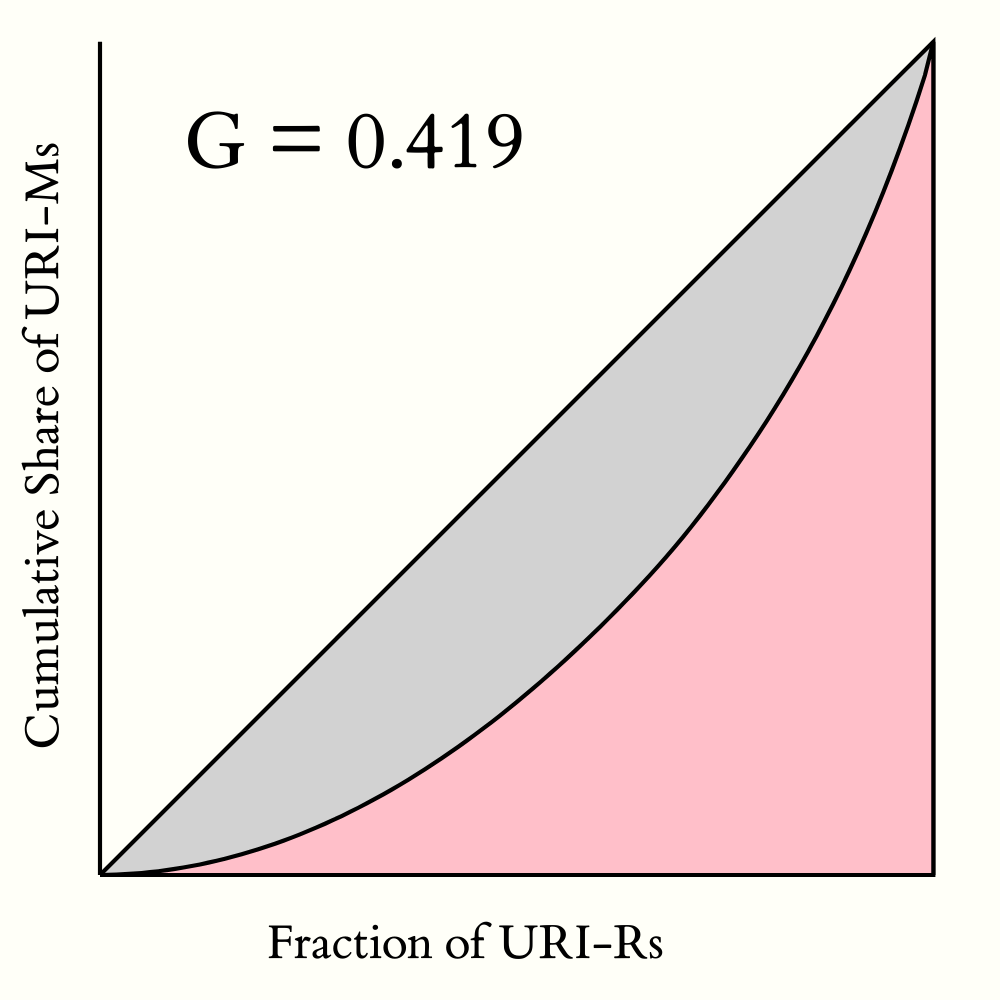 Figure 9
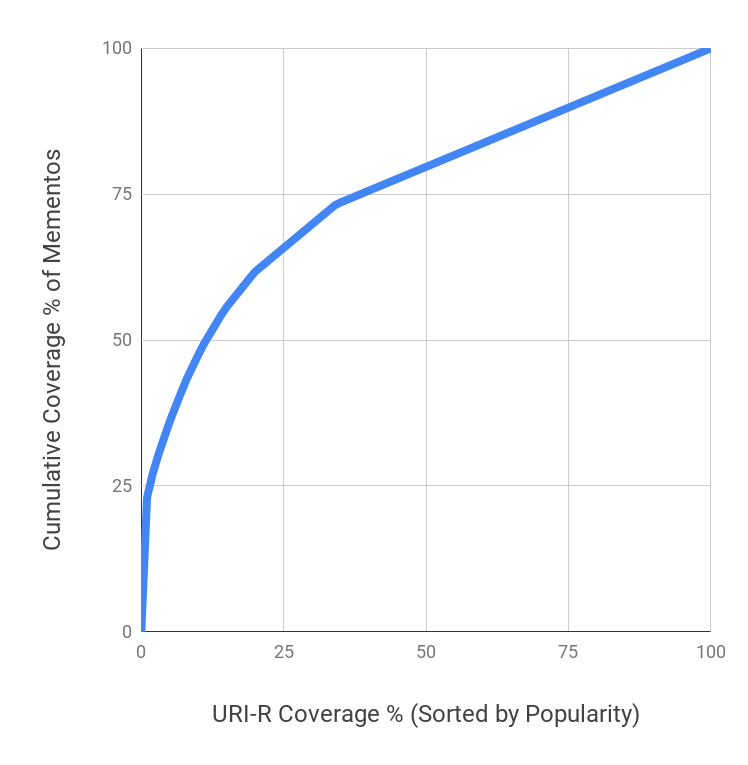 Figure 10
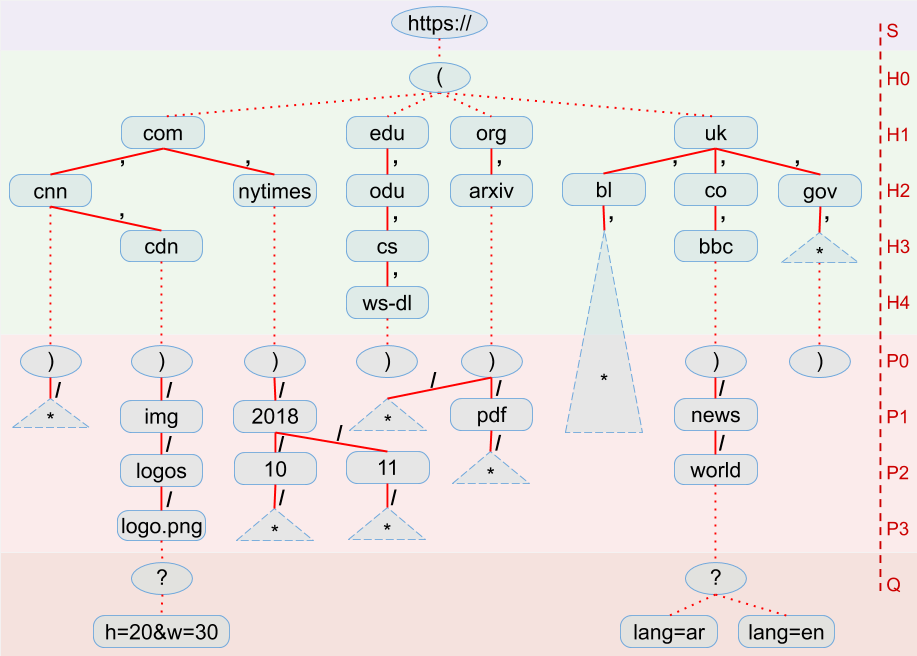 Figure 11
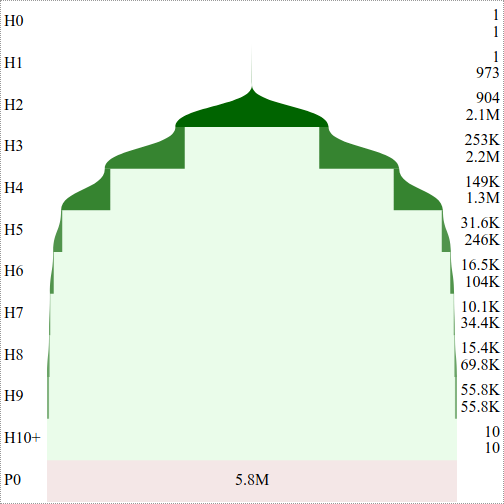 Figure 12
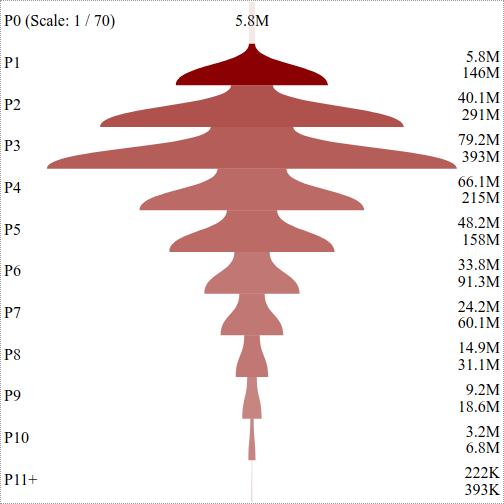 Figure 13
| TLD | URI-R% | URI-M% |
|---|---|---|
| .pt | 61.422 | 68.266 |
| .com | 19.610 | 19.643 |
| .eu | 8.665 | 4.262 |
| .net | 1.973 | 1.829 |
| .org | 1.790 | 1.263 |
| .de | 0.635 | 0.343 |
| .br | 0.617 | 0.470 |
| .uk | 0.449 | 0.260 |
| .fr | 0.347 | 0.173 |
| .nl | 0.274 | 0.131 |
| .mz | 0.236 | 0.414 |
| .pl | 0.226 | 0.104 |
| .io | 0.223 | 0.208 |
| .edu | 0.201 | 0.096 |
| .es | 0.200 | 0.126 |
| .it | 0.198 | 0.109 |
| .cv | 0.198 | 0.335 |
| .ru | 0.196 | 0.203 |
| .ao | 0.156 | 0.295 |
| .us | 0.142 | 0.102 |
| .cz | 0.117 | 0.057 |
| .info | 0.113 | 0.160 |
| IP Addresses | 0.070 | 0.050 |
| Other TLDs | 1.941 | 1.149 |
| Attributes | Values |
|---|---|
| CDXJ files | 70 |
| Total file size | 1.8T |
| Compressed file size | 262G |
| Temporal coverage | 1992–2018 |
| CDXJ lines | 5.0B |
| Mementos (URI-Ms) | 4.9B |
| Unique URI-Rs | 2.0B |
| Unique HxPx keys | 1.1B |
| Unique hosts | 5.8M |
| Unique IP addresses | 15K |
| Archive | Request | Hit% | Miss% | Err% | Sleep |
|---|---|---|---|---|---|
| Internet Archive | 4,723,880 | 35.76 | 63.68 | 0.56 | 1,594 |
| Archive-It | 5,011,385 | 9.14 | 90.38 | 0.48 | 1,556 |
| Archive Today | 5,151,720 | 8.44 | 88.96 | 2.60 | 1,920 |
| Library of Congress | 4,862,458 | 4.77 | 94.31 | 0.92 | 2,705 |
| Arquivo.pt | 4,300,221 | 3.35 | 96.29 | 0.36 | 1,153 |
| Icelandic | 5,126,706 | 2.22 | 97.14 | 0.64 | 3,143 |
| Stanford | 5,178,835 | 1.54 | 98.02 | 0.43 | 1,482 |
| UK Web Archive | 5,113,984 | 1.49 | 86.30 | 12.20 | 2,779 |
| Perma | 4,116,099 | 1.32 | 98.67 | 0.01 | 46 |
| PRONI | 5,165,805 | 0.75 | 98.72 | 0.54 | 1,608 |
| UK Parliament | 5,181,991 | 0.63 | 98.85 | 0.52 | 1,542 |
| NRS | 2,683,311 | 0.21 | 99.77 | 0.01 | 46 |
| UK National | 5,178,184 | 0.10 | 99.45 | 0.45 | 1,457 |
| PastPages | 22,058 | 0.00 | 62.90 | 37.10 | 0 |
| All | 61,816,637 | 5.44 | 92.92 | 1.64 | 21,031 |
| Attributes | Values |
|---|---|
| Unique URI-Rs | 1,999,790,376 |
| Total number of mementos | 4,923,080,506 |
| Maximum mementos for any URI-R | 2,308,634 |
| Median (and Minimum) | 1 |
| Mean mementos per URI-R () | 2.46 |
| Standard Deviation | 57.20 |
| Gini Coefficient | 0.42 |
| Pareto Break Point | 70/30 |
| URIs | URI-Ms |
|---|---|
| com,wunderground,icons)/graphics/blank.gif | 2,308,634 |
| com,wunderground,icons)/graphics/wuicorner.gif | 768,250 |
| pt,ipleiria,inscricoes)/logon.aspx | 238,292 |
| com,wunderground,icons)/graphics/wuicorner2.gif | 207,448 |
| com,lygo)/ly/i/inv/dot_clear.gif | 115,221 |
| com,listbot)/subscribe_button.gif | 108,530 |
| com,wunderground,icons)/* (including top URI-R) | 3,336,086 |
| com,wunderground,* (41 sub-domains) | 3,392,676 |
| Year | URI-R | URI-R+ | URI-M | URI-M+ | Dup. URI-R% | 2xx% | 3xx% | 4xx% | 5xx% | ||
|---|---|---|---|---|---|---|---|---|---|---|---|
| 1992 | 1 | 1 | 1 | 1 | 0.00 | 1.00 | 1.00 | 100.00 | 0.00 | 0.00 | 0.00 |
| 1993 | 1 | 2 | 1 | 2 | 0.00 | 1.00 | 1.00 | 100.00 | 0.00 | 0.00 | 0.00 |
| 1994 | 128 | 130 | 225 | 227 | 0.00 | 1.76 | 1.75 | 100.00 | 0.00 | 0.00 | 0.00 |
| 1995 | 642 | 772 | 742 | 969 | 0.00 | 1.16 | 1.26 | 100.00 | 0.00 | 0.00 | 0.00 |
| 1996 | 110,531 | 111,303 | 126,600 | 127,569 | 0.00 | 1.15 | 1.15 | 99.96 | 0.01 | 0.00 | 0.00 |
| 1997 | 466,515 | 563,734 | 847,783 | 975,352 | 3.02 | 1.82 | 1.73 | 100.00 | 0.00 | 0.00 | 0.00 |
| 1998 | 447,042 | 928,112 | 747,114 | 1,722,466 | 18.49 | 1.67 | 1.86 | 99.23 | 0.77 | 0.00 | 0.00 |
| 1999 | 732,866 | 1,513,381 | 1,233,994 | 2,956,460 | 20.14 | 1.68 | 1.95 | 76.52 | 10.61 | 12.84 | 0.00 |
| 2000 | 1,710,099 | 2,874,152 | 13,413,518 | 16,369,978 | 20.43 | 7.84 | 5.70 | 86.99 | 7.24 | 5.73 | 0.00 |
| 2001 | 4,837,012 | 7,286,174 | 7,873,642 | 24,243,620 | 8.79 | 1.63 | 3.33 | 93.87 | 4.87 | 1.25 | 0.01 |
| 2002 | 7,675,876 | 13,364,488 | 13,048,749 | 37,292,369 | 20.81 | 1.70 | 2.79 | 90.96 | 5.11 | 3.92 | 0.01 |
| 2003 | 11,043,675 | 21,565,730 | 19,989,725 | 57,282,094 | 25.74 | 1.81 | 2.66 | 92.12 | 4.45 | 3.41 | 0.03 |
| 2004 | 11,550,512 | 29,460,627 | 22,810,763 | 80,092,857 | 31.65 | 1.97 | 2.72 | 92.00 | 5.11 | 2.88 | 0.01 |
| 2005 | 9,057,866 | 35,249,604 | 19,839,405 | 99,932,262 | 36.09 | 2.19 | 2.83 | 93.99 | 3.94 | 2.07 | 0.01 |
| 2006 | 5,979,310 | 39,609,628 | 15,388,836 | 115,321,098 | 27.08 | 2.57 | 2.91 | 92.33 | 6.29 | 1.37 | 0.01 |
| 2007 | 26,841,427 | 63,396,199 | 43,021,527 | 158,342,625 | 11.38 | 1.60 | 2.50 | 83.03 | 14.88 | 2.08 | 0.01 |
| 2008 | 113,915,969 | 166,926,098 | 174,996,303 | 333,338,928 | 9.12 | 1.54 | 2.00 | 85.87 | 8.95 | 6.18 | 0.37 |
| 2009 | 249,069,391 | 383,960,128 | 355,833,394 | 689,172,322 | 12.86 | 1.43 | 1.79 | 87.37 | 6.55 | 6.49 | 0.36 |
| 2010 | 174,786,328 | 487,044,797 | 352,019,433 | 1,041,191,755 | 41.02 | 2.01 | 2.14 | 87.39 | 6.83 | 6.49 | 0.42 |
| 2011 | 206,966,813 | 634,061,322 | 465,274,765 | 1,506,466,520 | 28.97 | 2.25 | 2.38 | 89.13 | 6.21 | 6.99 | 0.58 |
| 2012 | 118,916,669 | 703,235,309 | 200,042,923 | 1,706,509,443 | 41.83 | 1.68 | 2.43 | 87.79 | 6.66 | 7.96 | 0.46 |
| 2013 | 174,913,693 | 827,924,633 | 236,583,969 | 1,943,093,412 | 28.71 | 1.35 | 2.35 | 84.03 | 7.28 | 10.90 | 0.57 |
| 2014 | 430,555,712 | 1,166,054,663 | 536,560,181 | 2,479,653,593 | 21.47 | 1.25 | 2.13 | 80.50 | 7.10 | 13.47 | 0.52 |
| 2015 | 558,504,002 | 1,563,688,006 | 1,087,680,516 | 3,567,334,109 | 28.80 | 1.95 | 2.28 | 78.32 | 5.12 | 17.75 | 0.32 |
| 2016 | 719,889,903 | 1,999,522,571 | 1,353,786,928 | 4,921,121,037 | 39.46 | 1.88 | 2.46 | 73.20 | 6.46 | 20.78 | 1.30 |
| 2017 | 685,097 | 1,999,687,103 | 1,111,999 | 4,922,233,036 | 75.98 | 1.62 | 2.46 | 57.82 | 5.44 | 7.89 | 0.22 |
| 2018 | 106,186 | 1,999,790,376 | 847,470 | 4,923,080,506 | 2.74 | 7.98 | 2.46 | 22.07 | 5.63 | 1.38 | 0.00 |
| All | 1,999,790,376 | 1,999,790,376 | 4,923,080,506 | 4,923,080,506 | 0.00 | 2.46 | 2.46 | 80.74 | 6.42 | 13.86 | 0.66 |
| Depth | Host (Domains) | Host (HxPx) | Path (HxPx) |
|---|---|---|---|
| 0 | 1 | 1 | 4,456,831 |
| 1 | 119 | 6,479 | 113,022,403 |
| 2 | 1,949,845 | 508,607,506 | 225,489,773 |
| 3 | 2,097,254 | 429,000,297 | 334,455,187 |
| 4 | 1,316,005 | 161,912,251 | 174,429,887 |
| 5 | 234,110 | 21,825,084 | 127,484,179 |
| 6 | 95,492 | 7,935,125 | 68,578,693 |
| 7 | 28,121 | 3,252,943 | 45,819,300 |
| 8 | 64,716 | 3,722,893 | 22,178,800 |
| 9 | 55,801 | 2,660,529 | 15,553,102 |
| 10 | 5 | 50 | 6,596,158 |
| 11+ | 5 | 12 | 858,856 |
| Total | 5,841,473 | 1,138,923,169 | 1,138,923,169 |
| Depth | Count | Sum | Max | Mean | Med. | StdDev | RedQ | Parents | Children | MeanChld |
|---|---|---|---|---|---|---|---|---|---|---|
| H1 | 973 | 1,138,923,169 | 616,372,626 | 1,170,527.41 | 930 | 21,620,107.00 | 1.00000 | 1 | 973 | 973.00 |
| H2 | 2,068,333 | 1,138,916,690 | 109,176,956 | 550.64 | 5 | 91,308.66 | 0.99818 | 904 | 2,068,333 | 2,287.98 |
| H3 | 2,158,880 | 630,309,184 | 51,849,377 | 291.96 | 7 | 37,641.59 | 0.55153 | 253,091 | 2,158,880 | 8.53 |
| H4 | 1,329,137 | 201,308,887 | 3,765,122 | 151.46 | 10 | 4,797.10 | 0.17559 | 148,589 | 1,329,137 | 8.95 |
| H5 | 245,881 | 39,396,636 | 376,969 | 160.23 | 5 | 3,420.96 | 0.03438 | 31,635 | 245,881 | 7.77 |
| H6 | 103,579 | 17,571,552 | 105,591 | 169.64 | 27 | 1,106.03 | 0.01534 | 16,496 | 103,579 | 6.28 |
| H7 | 34,380 | 9,636,427 | 19,572 | 280.29 | 20 | 450.16 | 0.00843 | 10,061 | 34,380 | 3.42 |
| H8 | 69,829 | 6,383,484 | 535 | 91.42 | 120 | 45.75 | 0.00554 | 15,359 | 69,829 | 4.55 |
| H9 | 55,811 | 2,660,591 | 80 | 47.67 | 56 | 19.6 | 0.00229 | 55,811 | 55,811 | 1.00 |
| H10+ | 10 | 62 | 19 | 6.20 | 2 | 6.51 | 0.00000 | 10 | 10 | 1.00 |
| P0 | 5,841,503 | 1,138,923,169 | 2,264,623 | 194.97 | 7 | 3,059.43 | 0.99487 | 5,841,503 | 5,841,503 | 1.00 |
| P1 | 145,687,459 | 1,134,466,338 | 2,242,344 | 7.79 | 1 | 376.64 | 0.86817 | 5,828,059 | 145,687,459 | 25.00 |
| P2 | 290,761,965 | 1,021,443,935 | 603,840 | 3.51 | 1 | 130.76 | 0.64156 | 40,130,355 | 290,761,965 | 7.25 |
| P3 | 392,635,328 | 795,954,162 | 565,043 | 2.03 | 1 | 78.14 | 0.35412 | 79,234,027 | 392,635,328 | 4.96 |
| P4 | 215,251,988 | 461,498,975 | 512,098 | 2.14 | 1 | 80.01 | 0.21621 | 66,059,544 | 215,251,988 | 3.26 |
| P5 | 158,256,277 | 287,069,088 | 512,098 | 1.81 | 1 | 65.72 | 0.11310 | 48,163,114 | 158,256,277 | 3.29 |
| P6 | 91,334,214 | 159,584,909 | 50,384 | 1.75 | 1 | 22.3 | 0.05993 | 33,776,599 | 91,334,214 | 2.70 |
| P7 | 60,099,825 | 91,006,216 | 44,114 | 1.51 | 1 | 17.24 | 0.02714 | 24,201,781 | 60,099,825 | 2.48 |
| P8 | 31,101,768 | 45,186,916 | 24,631 | 1.45 | 1 | 15.54 | 0.01237 | 14,890,308 | 31,101,768 | 2.09 |
| P9 | 18,601,197 | 23,008,116 | 10,247 | 1.24 | 1 | 9.74 | 0.00387 | 9,233,634 | 18,601,197 | 2.01 |
| P10 | 6,817,122 | 7,455,014 | 5,858 | 1.09 | 1 | 9.36 | 0.00056 | 3,206,260 | 6,817,122 | 2.13 |
| P11+ | 858,772 | 858,856 | 2 | 1.00 | 1 | 0.01 | 0.00000 | 222,432 | 392,565 | 1.76 |
| Input | Lines | Size (bytes) | Gzipped (MB) | Rollups | Time (sec) | RelCost | Accuracy | ||
|---|---|---|---|---|---|---|---|---|---|
| CDXJ | 447,107,301 | 30,753,644,382 | 3,449 | N/A | N/A | 0.464 | 0.946 | ||
| 4.00 | 4.00 | 27,010,037 | 1,443,292,676 | 218 | 4,574,305 | 8,643 | 0.028 | 0.646 | |
| 4.00 | 2.00 | 14,143,676 | 662,171,623 | 119 | 703,394 | 507 | 0.015 | 0.600 | |
| 4.00 | 1.00 | 7,528,548 | 315,946,553 | 63 | 537,341 | 264 | 0.008 | 0.539 | |
| 4.00 | 0.50 | 4,269,344 | 162,132,599 | 35 | 483,779 | 151 | 0.004 | 0.482 | |
| 4.00 | 0.25 | 3,054,686 | 107,784,353 | 24 | 411,843 | 87 | 0.003 | 0.426 | |
| 4.00 | 0.00 | 1,673,784 | 40,446,417 | 11 | 1,411,579 | 70 | 0.002 | 0.275 | |
| 2.00 | 4.00 | 24,937,984 | 1,316,371,599 | 205 | 9,572 | 500 | 0.026 | 0.626 | |
| 2.00 | 2.00 | 12,867,647 | 585,142,758 | 111 | 669,670 | 468 | 0.013 | 0.588 | |
| 2.00 | 1.00 | 6,584,376 | 257,905,766 | 58 | 512,413 | 241 | 0.007 | 0.525 | |
| 2.00 | 0.50 | 3,615,997 | 121,452,813 | 32 | 458,681 | 124 | 0.004 | 0.472 | |
| 2.00 | 0.25 | 2,542,869 | 76,274,453 | 21 | 349,700 | 70 | 0.003 | 0.422 | |
| 2.00 | 0.00 | 1,529,328 | 33,658,544 | 10 | 1,171,377 | 56 | 0.002 | 0.270 | |
| 1.00 | 4.00 | 23,840,710 | 1,252,548,065 | 196 | 4,671 | 466 | 0.025 | 0.581 | |
| 1.00 | 2.00 | 12,313,036 | 555,628,348 | 107 | 640,163 | 448 | 0.013 | 0.549 | |
| 1.00 | 1.00 | 6,307,180 | 244,402,690 | 56 | 489,942 | 232 | 0.007 | 0.501 | |
| 1.00 | 0.50 | 3,465,689 | 114,755,789 | 30 | 439,647 | 116 | 0.004 | 0.453 | |
| 1.00 | 0.25 | 2,437,451 | 71,797,863 | 20 | 333,087 | 67 | 0.003 | 0.403 | |
| 1.00 | 0.00 | 1,474,541 | 31,881,496 | 10 | 1,117,830 | 58 | 0.002 | 0.261 | |
| 0.50 | 4.00 | 22,315,969 | 1,162,107,385 | 184 | 6,516 | 447 | 0.023 | 0.540 | |
| 0.50 | 2.00 | 11,729,408 | 525,115,243 | 101 | 594,779 | 420 | 0.012 | 0.520 | |
| 0.50 | 1.00 | 6,056,959 | 232,945,804 | 53 | 461,516 | 218 | 0.006 | 0.476 | |
| 0.50 | 0.50 | 3,342,092 | 109,798,250 | 29 | 417,912 | 112 | 0.003 | 0.433 | |
| 0.50 | 0.25 | 2,358,976 | 68,957,985 | 20 | 316,782 | 65 | 0.002 | 0.388 | |
| 0.50 | 0.00 | 1,434,084 | 30,800,396 | 9 | 1,071,071 | 51 | 0.001 | 0.253 | |
| 0.25 | 4.00 | 21,197,676 | 1,096,034,790 | 174 | 9,533 | 416 | 0.022 | 0.511 | |
| 0.25 | 2.00 | 11,217,682 | 498,573,523 | 97 | 558,528 | 392 | 0.012 | 0.495 | |
| 0.25 | 1.00 | 5,842,652 | 223,237,207 | 51 | 435,916 | 204 | 0.006 | 0.461 | |
| 0.25 | 0.50 | 3,241,589 | 105,791,213 | 28 | 398,097 | 109 | 0.003 | 0.420 | |
| 0.25 | 0.25 | 2,298,413 | 66,763,014 | 19 | 302,762 | 64 | 0.002 | 0.377 | |
| 0.25 | 0.00 | 1,404,993 | 30,018,340 | 9 | 1,031,775 | 53 | 0.001 | 0.249 | |
| 0.00 | 4.00 | 17,391,655 | 882,144,079 | 142 | 118,082 | 392 | 0.018 | 0.391 | |
| 0.00 | 2.00 | 9,453,810 | 410,205,661 | 81 | 560,039 | 324 | 0.010 | 0.385 | |
| 0.00 | 1.00 | 5,054,662 | 187,327,280 | 43 | 471,696 | 179 | 0.005 | 0.373 | |
| 0.00 | 0.50 | 2,901,796 | 91,419,782 | 25 | 440,818 | 95 | 0.003 | 0.354 | |
| 0.00 | 0.25 | 2,107,245 | 59,036,815 | 17 | 366,330 | 57 | 0.002 | 0.326 | |
| 0.00 | 0.00 | 1,339,475 | 27,946,167 | 8 | 986,664 | 48 | 0.001 | 0.236 |
Peer Reviews
No public reviews on file for this paper yet. If you reviewed it on a platform where reviews are public (OpenReview, ICLR, NeurIPS, ICML), you can paste yours below so the community can read it here.
Code & Models
Videos
No videos yet. Explain this paper in a talk, walkthrough, or lecture? Add one.
MementoMap Framework for Flexible and Adaptive Web Archive Profiling
Sawood Alam
Old Dominion UniversityDepartment of Computer ScienceNorfolkVirginia23529USA
,
Michele C. Weigle
Old Dominion UniversityDepartment of Computer ScienceNorfolkVirginia23529USA
,
Michael L. Nelson
Old Dominion UniversityDepartment of Computer ScienceNorfolkVirginia23529USA
,
Fernando Melo
FCT: Arquivo.ptLisbonPortugal
,
Daniel Bicho
FCT: Arquivo.ptLisbonPortugal
and
Daniel Gomes
FCT: Arquivo.ptLisbonPortugal
Abstract.
In this work we propose MementoMap, a flexible and adaptive framework to efficiently summarize holdings of a web archive. We described a simple, yet extensible, file format suitable for MementoMap. We used the complete index of the Arquivo.pt comprising 5B mementos (archived web pages/files) to understand the nature and shape of its holdings. We generated MementoMaps with varying amount of detail from its HTML pages that have an HTTP status code of 200 OK. Additionally, we designed a single-pass, memory-efficient, and parallelization-friendly algorithm to compact a large MementoMap into a small one and an in-file binary search method for efficient lookup. We analyzed more than three years of MemGator (a Memento aggregator) logs to understand the response behavior of 14 public web archives. We evaluated MementoMaps by measuring their Accuracy using 3.3M unique URIs from MemGator logs. We found that a MementoMap of less than 1.5% Relative Cost (as compared to the comprehensive listing of all the unique original URIs) can correctly identify the presence or absence of 60% of the lookup URIs in the corresponding archive while maintaining 100% Recall (i.e., zero false negatives).
Memento, Web Archiving, Archive Profiling, MementoMap
††copyright: none††journalyear: 2019
1. Introduction
Old Dominion University (ODU) runs MemGator (Alam and Nelson, 2016) as a service to power many of our tools and services such as Mink (Kelly et al., 2014), CarbonDate (Atkins, 2017), WAIL (Berlin et al., 2017), ICanHazMemento (Nwala, 2015), and MementoDamage (Siregar, 2017). We released MemGator (Alam, 2015) as an open-source tool for users to run locally to avoid generating too much traffic on a central aggregator service. Our service receives three aggregation lookup requests per minute on average. Due to this low traffic we do not yet use any prediction-based Memento routing or caching. We recently analyzed over three years of our MemGator logs and found that it has served about 5.2M requests so far. These lookups were broadcasted to 14 different upstream archives for a total of 61.8M requests. Only 5.44% of these requests had a hit, while the remaining 93.56% were either a miss or an error as shown in Table 3. If only there was a way to know a summary of the holdings of these web archives, we could have avoided many wasted upstream requests and had an overall better response time for clients.
MementoMap is a framework for profiling web archives and expressing their holdings in an adaptive and flexible way to easily scale. It is inspired by the simplicity of the widely used robots.txt and sitemap.xml formats, but for a purpose other than search engine optimization. An example MementoMap is illustrated in Figure 2 in the format we propose. MementoMap allows wildcard-based partial URI Keys to enable flexibility in how detailed or concise one wants it to be depending on use cases, full or partial knowledge about the archive’s holdings, and available resources. This can either be generated by the archives themselves or by a third party based on their external observations. We propose the “mementomap” well-known URI suffix (Nottingham, 2019) and the “mementomap” link relation for its dissemination and discovery.
We used the complete index of Arquivo.pt (the Portuguese Web Archive), spanning over 27 years, and more than three years of MemGator logs for evaluation. We found that a summarized MementoMap of less than 1.5% Relative Cost (as compared to the comprehensive listing of all the unique original URIs) can correctly identify the presence or absence of 60% of the lookup URIs in Arquivo.pt without any false negatives (i.e., 100% Recall). We have open-sourced our implementation (Alam, 2019a) under the MIT license. This paper is an expanded version of a conference paper (Alam et al., 2019).
2. Background
The Internet Archive (IA)111https://archive.org/ is the first, largest, and most resourceful web archive with over 700B mementos (timestamped archived copies of web pages and files) as of January 21, 2019222https://twitter.com/brewster_kahle/status/1087515601717800960. However, it is also the softest target for censorship and denial of service attacks (Kahle, 2016). It continues to be blocked in China (GreatFire.org, 2018) and Russia (Estes, 2015) for an extended period of time and has been blocked temporarily in many other countries such as India and Jordan (Butler, 2017; Al-Masri and Cain, 2017). As a result, many web archiving related tools are increasingly adding support for Memento aggregators to consolidate archived resources from more than one web archive of varying scale to avoid single point of failure.
The Memento framework (Van de Sompel et al., 2013) defines uniform APIs for TimeMap and TimeGate endpoints to enable cross-archive communication. A TimeMap is a list of all mementos of an original URI (or URI-R) and a TimeGate is a gateway to resolve to the closest memento of a URI-R w.r.t. a given Datetime and redirect to a Memento URI (or URI-M). With out-of-the-box Memento support in major archival tools and replay systems, many web archives have adopted the protocol. To avoid the need of every tool being configured and periodically updated to poll results from an ever-changing list of many known web archives, Memento aggregators were created to act like a single consolidated web archive to users and tools. Los Alamos National Laboratory’s (LANL) Time Travel 333http://timetravel.mementoweb.org/ service is one such well-known aggregator that powers many tools and services. MemGator is our open-source Memento aggregator implementation that can be used locally as a CLI tool or run as a service for a drop-in replacement of the Time Travel service.
CDX (Capture inDeX) (Internet Archive, 2003) is a CSV-like text file-based index format that has traditionally been used by the IA and was one of the primarily supported index formats of OpenWayback444https://github.com/iipc/openwayback. It is very rigid in nature and has a predefined list of fields that are not extendable. While working on this paper, we encountered a consequence of its limitations when we realized that the MIME-Type field was reused to record a different metadata to identify whether a record is a revisit. As a result the actual MIME-Type of the record would not be known without finding another entry in the index which the record is a revisit of. CDXJ (Alam et al., 2015a) is an evolution of the classic CDX format. In this file format, lookup key fields (URI-R and Datetime) are placed at the beginning of each line which is followed by a single-line compact JSON (Crockford, 2006) block that holds other fields that can vary in number and be extended as needed. Both of these formats are sort-friendly to enable binary search on file when performing lookups. The latter format is primarily used by archival replay systems including PyWB555https://github.com/webrecorder/pywb and our InterPlanetary Wayback (IPWB) (Kelly et al., 2016).
SURT (Sort-friendly URI Reordering Transform) (Sigurðsson et al., 2006) is used to canonicalize URIs and place together related URIs when sorted, which is important for efficient indexing. In a traditional URI the hostname parts are organized differently than paths. In the hostname section, the root of the Domain Name System (DNS) chain (i.e., the Top Level Domain, or TLD) comes at the end towards the right hand side while registered domain name portion and subdomain sections are placed towards the left hand side. In contrast, in the path section, the root path comes first followed by deeper nodes of the path tree towards the right side. As a consequence, if a list of three domain names example.com, foo.example.com, and example.net are sorted, the latter with a different TLD will sit in between the other two. As opposed to this the SURT of “Www.Foo.Example.COM/a/b?x=y&c=d” converts it to become
“com,example,foo)/a/b?c=d&x=y”, which changes the domain
name with lower case letters, removes the “www” subdomain, reverses the order of hostname segments, and sorts query parameters. SURTs are commonly used in archival index files and many other places where a URI is used as a lookup field, including MementoMap. Figure 1(a) illustrates a sample of sorted SURTs and highlights different segments. We have extended SURTs to support wildcard to allow grouping of URI Keys with the same prefix and roll them up into a single key. A visual representation of these SURTs is illustrated in Figure 1(b) in the form of a tree that segregates layers of Scheme, Host, Path, and Query. It further annotates various depths of Host and Path segments as H0, H1, H2… and P0, P1, P2… that will be useful in understanding some terminologies used later in this paper. SURTs also allow credentials and port numbers, but we omitted them from the illustration for brevity. It is worth noting that the scheme portion is common in all HTTP/HTTPS URIs and has no informational value, hence the “https://(” prefix is often omitted.
UKVS (Unified Key Value Store) (Alam, 2019b) is an evolving file format proposal that is a contribution of this MementoMap work. It is an evolution of the CDXJ format that we earlier proposed to be used by Archive Profiles (Alam et al., 2016b). This format extends SURT with wildcard support and improves various other aspects to simplify it and eliminate some limitations of our prior proposal (such as not being able to express blacklists or lack of support to merge two profiles generated with different profiling policies). We generalized the format to be more inclusive and flexible after we realized its utility in many web archiving related use cases (such as indexing, replay access control list (ACL), fixity blocks (Aturban et al., 2019), and extended TimeMaps) and many other places such as extended server logging.
Figure 2 illustrates a sample MementoMap file that starts with some metadata headers. Header lines are prefixed with “!” to ensure they are separated from data lines and surfaced on top when the file is sorted. The “!fields” header tells that the first column is a SURT and is used as a lookup key (there can be more than one key column such as Datetime or Language) which is followed by a value column that holds “frequency” information. Each data line can optionally also contain a single-line JSON block, which is not illustrated here for the sake of simplicity. The frequency column is formatted as “[URI-M Count]/[URI-R Count]” where both counts are optional and the separator is also optional if only the URI-M Count is present (in this paper we only used this latter option). Additionally, these counts can have an optional suffix character +, -, or ~ to express that the numbers are not exact and represent a lower bound, an upper bound, and a rough estimate respectively. The first data line in the example means there are a total of exactly 54,321 mementos (URI-Ms) of exactly 20,000 URI-Rs in the archive and the next line suggests that there are at least 10,000 mementos from the “.com” TLD. The next two lines suggest that there are 100 mementos of the arxiv.org homepage and many more captures of pages with deeper paths. However, the next line illustrates an exclusion of a sub-tree by being more specific under /pdf/* that has zero mementos (this is illustrated in Figure 1(b) as well).
Arquivo.pt (Gomes et al., 2013) was founded in 2008 with the aim to preserve web content of interest to the Portuguese community, but not limited to just the .pt TLD (as shown in Table 1). It has since archived about 5B mementos of which some data was donated to it by other archives, including IA, explaining why its temporal spread extends back before the Arquivo.pt’s founding date. We analyzed 1.8T of Arquivo.pt’s complete CDXJ index in production. A brief summary of the dataset is shown in Table 2. We used it along with ODU’s MemGator server logs to evaluate this work.
3. Related Work
Query routing is a rigorously researched topic in various fields including, networked databases, meta-searching, and search aggregation (Gravano et al., 1997; Meng et al., 2002). However, archive profiling and Memento lookup routing is a niche field that is not explored by many researchers beyond a small community.
Sanderson et al. created comprehensive content-based profiles (Sanderson et al., 2012; Sanderson, 2012) of various International Internet Preservation Consortium (IIPC) member archives by collecting their CDX files and extracting URI-Rs from them. This approach gave them complete knowledge of the holdings in each participating archive, hence they can route queries precisely to archives that have any mementos for the given URI-R. This approach yielded no false positives or false negatives (i.e., 100% Accuracy) while the CDX files were fresh, but they would go stale very quickly. It is a resource and time intensive task to generate such profiles and some archives may be unwilling or unable to provide their CDX files. Such profiles are so large in size (typically, a few billion URI-R keys) that they require special infrastructure to support fast lookup. Acquiring fresh CDX files from various archives and updating these profiles regularly is not easy.
In contrast, AlSum et al. explored a minimal form of archive profiling using only the TLDs and Content-Language (AlSum et al., 2013, 2014). They created profiles of 15 public archives using access logs of those archives (if available) and fulltext search queries. They found that by sending requests to only the top three archives matching the criteria for the lookup URI based on their profile, they can discover about 96% of TimeMaps. When they excluded IA from the list and performed the same experiment on the remaining archives, they were able to discover about 65% of TimeMaps using the remaining top three archives. Excluding IA was an important aspect of evaluation as its dominance can cause bias in results. This exclusion experiment also showed the importance of smaller archives and the impact of their holdings collectively. This minimal approach had many false positives, but no false negatives.
Bornand et al. implemented a different approach for Memento routing by building binary classifiers from LANL’s Time Travel aggregator cache data (Bornand et al., 2016). They analyzed responses from various archives in the aggregator’s cache over a period of time to learn about the holdings of different archives. They reported a 77% reduction in the number of requests and a 42% reduction in response time while maintaining 85% Recall. These approaches can be categorized as usage-based profiling in which access logs or caches are used to observe what people were looking for in archives and which of those lookups had a hit or miss in the past. While usage-based profiling can be useful for Memento lookup routing, it may not give the real picture of archives’ holdings, producing both false negatives and false positives666https://groups.google.com/forum/#!topic/memento-dev/YE4rt6L5ICg.
We found that traffic from MemGator requested less than 0.003% of the archived resources in Arquivo.pt. There is a need for content-based archive profiling which can express what is present in archives, irrespective of whether or not it is being looked for.
In previous work (Alam et al., 2015b, 2016b), we explored the middle ground where archive profiles are neither as minimal as storing just the TLD (which results in many false positives) nor as detailed as collecting every URI-R present in every archive (which goes stale very quickly and is difficult to maintain). We first defined various profiling policies, summarized CDX files according to those policies, evaluated associated costs and benefits, and prepared gold standard datasets (Alam et al., 2015b, 2016b). In our experiments, we correctly identified about 78% of the URIs that were or were not present in the archive with less than 1% relative cost as compared to the complete knowledge profile and identified 94% URIs with less than 10% relative cost without any false negatives. Based on the archive profiling framework we established, we further investigated the possibility of content-based profiling by issuing fulltext search queries (when available) and observing returned results (Alam et al., 2016a) if access to the CDX data is not possible. We were able to make routing decisions of 80% of the requests correctly while maintaining about 90% Recall by discovering only 10% of the archive holdings and generating a profile that costs less than 1% of the complete knowledge profile. MementoMap is a continuation of this effort to make it more flexible and portable by eliminating the need for rigid profiling policies we defined earlier (Alam et al., 2015b, 2016b) (which are still good for baseline evaluation purposes) and replacing them with an adaptive approach in which the level of detail is dynamically controlled with a number of parameters.
4. Methodology
Generating a MementoMap begins by scanning CDX/CDXJ files, performing fulltext search, filtering access logs, or any other means to identify what URIs an archive holds (or does not hold). These URIs are then converted to SURTs (if not already) and their query section is stripped off. We call these partial SURTs as HxPx URI Keys (which means a URI Key that has all the host and path parts, but no query parameters). Previously, we found that removing query parameters from these SURTs reduces the file size and the number of unique URI Keys significantly without any significant loss in the lookup Accuracy (Alam et al., 2016b). We then create a text file with its first column containing HxPx Keys and the second column as their respective Frequencies. The frequency column in its simplest form can be the count of each HxPx Key, but it can be made more expressive as illustrated in the data section of Figure 2. Finally, necessary metadata is added and the file is sorted as the baseline MementoMap.
In order to make a less detailed MementoMap (which is desired for efficient dissemination and long-lasting freshness at the cost of increased false positives), we pass a detailed MementoMap through a compaction procedure which yields a summarized output that contains fewer lookup keys by rolling sub-trees with many children nodes up and replacing them with corresponding wildcard keys. Our compaction algorithm is illustrated with pseudo-code in Figure 3. As opposed to an in-memory tree building (which will not scale), it is a single-pass procedure with minimal memory requirements and does not need any special hardware to process a MementoMap of any size. We leverage the fact that the input MementoMap is sorted, hence, we can easily detect at what depth of host or path segments a branch differed from the previous line. We keep track of the most recent state of host and path keys at each depth (up to MAXHOSTDEPTH and MAXPATHDEPTH), their corresponding cumulative frequencies, how many children nodes each of them have seen so far, and the byte position of the output file when these keys were seen the first time. Each time we encounter a new branch at any depth, we check to see if a roll up action is applicable at that depth or further down in the existing tree based on the most recent states and the compaction parameters supplied. If so, we move the write pointer in the output file back to the position where the corresponding key was observed first, then we reset the state of all the deeper depths and update them with the current state. As a consequence of this progressive processing, the trailing part of the output file is overwritten many times. The input file does not have to be the baseline MementoMap, any MementoMap can be supplied as input with fresh compaction parameters to attempt to further compact it. Our algorithm is parallel processing-friendly if the input data is partitioned strategically (e.g., processing each TLD’s records on separate machines and combining all compacted output files). It is worth noting that sub-trees of the path section are neither independent trees nor have a single root node (as shown in Figure 1(b)), as a result, certain implementation details can be more complex than a simple tree pruning algorithm.
The algorithm for lookup in a MementoMap is also illustrated in Figure 3. Given a URI, we first generate all possible lookup keys, in which all keys but the longest one have a wildcard suffix (e.g, “Www.Example.COM/a/b?x=y&c=d” yields “com,example)/a/b”,
“com,example)/a/b/”, “com,example)/a/”, “com,example)/”, and “com,” as lookup keys). We then perform a binary search in the MementoMap with lookup keys in decreasing specificity until we find a match or all the keys are exhausted. In case of a match, we return the matched lookup key and corresponding frequency results.
For dissemination and discovery of MementoMaps we propose that web archives make their MementoMap available at the well-known URI (Nottingham, 2019) “/.well-known/mementomap” under their domain names. Alternatively, a custom URI can be advertised using the “mementomap” link relation (or “rel”) in an HTTP Link header or HTML ¡link¿ element. Third parties hosting MementoMaps of other archives can use the “anchor” attribute of the Link header to advertise a different context. Moreover, MementoMaps are self-descriptive as they contain sufficient metadata in their headers to establish a relationship with their corresponding archives. MementoMaps support pagination that can be discovered after retrieving the primary MementoMap from a well-known URI or by any other means.
5. Evaluation
For evaluation we used the complete index of Arquivo.pt, complete logs of our MemGator service, and generated MementoMaps. We first examine logs, then describe holdings of Arquivo.pt in detail, and finally measure the effectiveness of various MementoMaps.
5.1. Archived vs. Accessed Resources
We analyzed over three years of our MemGator logs containing records about 14 different web archives. In its lifetime it has served a total of 5,241,771 requests for 3,282,155 unique URIs. Table 3 shows the the summary of our log analysis in which IA has over 35% hit rate, and every other archive is below 10% (down to zero) in decreasing order of hit rate. Arquivo.pt is showing a 3.35% hit rate, so we cross checked it with the full index and found that there are only 1.64% unique URIs from the MemGator logs that are present in Arquivo.pt (note that the CDX data even includes recent mementos that would have generated a miss prior to them being archived). The difference in these numbers is perhaps as a result of some archived URIs being looked for more frequently. This low percentage of overlap in access logs and archive indexes conforms to our earlier findings (Alam et al., 2016b). The table shows an overall 93% miss rate, which is all wasted traffic and delayed response time. Identifying sources of such a large miss rate can save resources and time significantly, which is the primary motivation of this work.
There are some other notable entries in Table 3 such as low number of requests to PastPages which was excluded from being polled in the early days due to its zero hit rate and high error rate. NRS (National Records of Scotland) is a new addition to the list, hence it shows a low number of requests. The high error rate of the UK Web Archive was primarily caused by a bug in the Go language (used to develop MemGator) that was not cleaning idle TCP connections that were already closed by the application. As a result, UKWA’s firewall was seeing an ever increasing number of open, but idle connections, hence dropping packets after a hard limit of 20 concurrent connections per host. This has since been fixed after the release of the Go language version 1.7. We have later introduced an automatic dormant feature that puts an upstream archive to sleep for a configurable amount of time after a set number of successive errors.
Figure 4 shows a breakdown of what people are looking for in archives and what web archives hold. The 1.1K entry in the “Ones” row and “Tens” column shows that there are over a thousand URI-Rs that were requested 10–99 times in MemGator and each has 1–9 mementos in Arquivo.pt. Large numbers in the “Zero” column show there are a lot of mementos that are never requested from MemGator. Similarly, the “Zero” row shows there are a lot of requests that have zero mementos in Arquivo.pt. Another way to look at it is that a content-based archive profile will not know about the “Zero” row and a usage-based profile will miss out the content in the “Zero” column. Active archives may want to profile their access logs periodically to identify potential seed URIs of frequently requested missing resources that are within the scope of the archive. Ideally, we would like more activity along the diagonal that passes from the (Zero, Zero) corner, except the corner itself, which suggests there are undetermined number of URI-Rs that were never archived or accessed.
5.2. Holdings of Arquivo.pt
Table 4 and Figure 5 summarize the distribution of URI-Ms over URI-Rs in Arquivo.pt. Almost 2M unique URI-Rs in Arquivo.pt have an average of 2.46 mementos per URI-R ( value (Alam et al., 2016b)), but this distribution is not uniform. The top 30% URI-Rs account for 70% of the mementos, for a Gini Coefficient of 0.42 (Yitzhaki, 1979). Additionally, the Median is one, which means at least half of the URI-Rs have only one memento. Furthermore, the most frequently archived URI-R has 2.3M mementos (i.e., 0.05% of total), so we decided to investigate it further. Table 5 lists the six most archived URI-Rs, and they are mostly one pixel clear images and corner graphics primarily used in web designing in the pre-CSS3 era. The only HTML page that shows up in the top list is a login page. We further investigated all the mementos from all the subdomains of the top URI-R’s domain and found that the blank.gif image was archived out of proportion. This shows another use for archive profiling – identifying such unintentional biases due to misconfigured crawling policies or bugs in crawlers’ frontier queue management.
Furthermore, we partitioned Arquivo.pt’s index into yearly buckets for analysis as shown in Table 6. Data prior to year 2008 is mostly donated from other sources in the form of many small files, as Arquivo.pt was not yet established. However, when everything is put together it looks like the archiving activity took off significantly in 2007. Low numbers in years 2017 and 2018 are due to Arquivo.pt’s embargo policy. It shows that Arquivo.pt’s collection is growing with a healthy pace by mostly collecting new URI-Rs as well as revisiting on an average 26% of older ones on a yearly basis. We expected would change gradually over time, but years 2000 and 2018 had significantly high values with respect to other years. So, we looked for the possibility of increased 3xx status codes in those years as a potential source of increase in (e.g., http URIs redirecting to corresponding https version), but we did not see any correlation there. However, the data for these years seems to have come from another source and overall they are insignificant, hence, the cumulative is fairly stable between 2 and 3. We noted a significant and steady growth in 4xx status codes which has crossed the 20% mark in year 2016. Status codes for the last two years (still in embargo period) do not sum up to 100% because a significant portion of their entries are either revisit records or screenshots that do not report status codes. In Figure 6 we plotted a cumulative growth graph of both URI-Ms and URI-Rs to see the shape (Jones et al., 2018) of Arquivo.pt during the active region. Their archiving rate is increasing over time as almost half of the total mementos were archived in the last two active years alone.
5.3. The Shape of Archived URI Tree
To understand the shape of the URI Keys tree in MementoMap we first investigated the number of unique Domains and HxPx Keys that have certain host or path depths as shown in Table 7. These numbers are relative to the size of the Arquivo.pt index, but we believe a similar trend should be seen in other archives, unless their collection is manually curated and crawled using a more or less capable tool than what is currently being used by many large web archives (Mohr et al., 2004). There were some outliers in the data that showed a host depth of up to 15 and path depths up to 130, but those were very few in number. These numbers gave us a good starting point to decide how deep we need to analyze hosts and paths for profiling.
Figure 7 shows the shape of the total 1,138,923,169 unique HxPx Keys of Arquivo.pt’s current index put together in the form of a tree as the URI Key space changes on each host and path depth. The tree is broken down in host and path segments (i.e., Figure 7(a) and 7(b)) instead of one continuous tree and the latter is scaled down 70 times as compared with the host segment to ensure that the shape of path segment is distinguishable from one depth to the next. In the host segment, at each host level (after H1) a significant portion leads to P0 (i.e., root path), but the remainder has further children host segments (i.e., sub-domains). Figure 7(a) shows that hostnames with depth more than four (i.e., H5 and beyond) are significantly small in number. In the path segment, at each level a significant portion terminates, but the remainder branches out into deeper path segments. The shape of the path segment in Figure 7(b) shows that the tree starts to shrink from P4 and the bulk tree is around P3. Any effort to reduce the URI Key space near this level can significantly reduce the Relative Cost.
Table 8 is based on the total 1,138,923,169 unique HxPx Keys of Arquivo.pt’s current index. For example, the H3 (see Figure 1(b) for naming convention) row means there are a total of 2,158,880 unique H3 prefixes that cover a sum of 630,309,184 HxPx Keys of which the most popular prefix covers 51,849,377 keys alone. The Mean number of keys per prefix at H3 is 291.96 with a Median of 7 and Standard Deviation of 37,641.59. The RedQ (Reduction Coefficient) column represents a derived quantity that we defined as the amount of reduction in keys it would cause if HxPx Keys longer than a given depth are stripped off at that depth and only counted reduced unique prefixes. This can be calculated using Equation 1 at depth where is the number of HxPx Keys with depth and is the number of unique partial URI Keys stripped at depth (reported under the Sum and Count columns of Table 8 respectively). Figures 8(a) and 8(b) show the cumulative reduction as the top most frequent keys are rolled up at a host and path depth respectively. Furthermore, there are 253,091 nodes in the tree one depth above (i.e., H2) that lead to 2,158,880 nodes at the current depth. While the Mean Child count at H3 is 8.53, the distribution is not uniform. Figures 8(c) and 8(d) show the cumulative reduction in immediate children count as the most popular parents leading to the current depth are rolled up incrementally from bottom up. The purpose of the Reduction Coefficient is to understand the impact and importance of various host and path depths globally while the Mean Child count gives an estimate of a more localized impact at a given depth. For this work we have used the latter as a factor to decide when to roll a sub-tree up while compacting a MementoMap. Rolling the sub-tree up at H1, H2, and P0 are not applicable for evaluation here because H1 means shrinking everything into a single record of “*” key, H2 would require out-of-band information (because not every TLD is equally popular), and P0 being the root of the path has nothing to roll up into (though compaction might happen in the relevant host segment independently). We fit the remaining values of Mean Child count on Power Law (Clauset et al., 2009) curves (other curve fittings are also possible) for both host and path segments to find and parameters and use these empirical values for compaction decision making.
[TABLE]
5.4. MementoMap Cost and Accuracy
Web archives are messy collections that contain many malformed records often caused by configuration issues in web servers, poorly written web applications, bugs in archiving tools, incompatible file transformations, or even security vulnerabilities (Alam et al., 2014). Archive profiling can uncover some of these as we found many malformed MIME-Type777https://gist.github.com/ibnesayeed/bb167fe19c5719d87c1c1f665001d44b and Status Code888https://gist.github.com/ibnesayeed/7307f0bf1783357db99f8b2357249dd0 entries in Arquivo.pt.
To run our experiments we decided to filter only the clean records out from these CDXJ files. We further limited our scope to only HTML pages that returned a 200 status code. Additionally, we excluded any robots.txt and sitemap.xml files that were served wrongly as “text/html”. With these filters in place we reduced mementos by almost half of the total index size to only 2,671,653,766. Now, there are 962,832,513 filtered unique URI-Rs, which means the value is increased slightly to 2.77. Also, the HxPx Keys count is reduced to 447,107,301, which is 39% of the overall number. From these keys we created the baseline MementoMap with compressed file size of 3.4G (as shown in the first record of Table 9) which is already reduced to 1.3% of the original index size. This baseline MementoMap has 46.4% Relative Cost (i.e., the ratio of reduced number of unique lookup keys vs. number of unique URI-Rs) that yields 94.6% Accuracy.
In the next step we supplied this baseline MementoMap as input for compaction with host and path compaction weights and respectively. These weights are multiplied by their corresponding estimated Mean Child value at each depth to find the cutoff number when the sub-tree is to be rolled up. A small weight will roll the sub-tree up more aggressively than a large value, resulting in a more compact MementoMap. This process produced a MementoMap with only 27,010,037 lines (i.e., 6.0% of the baseline or 2.8% Relative Cost) after going through 4,574,305 recursive roll ups. The process took 2.4 hours to complete on our Network File System (NFS) storage. The time taken to complete the compaction process is a function of the number of lines to process from the input, number of lines to be written out, and the number of roll ups to occur (along with the read and write speeds of the disk). Since the process is I/O intensive, using faster storage can reduce the time significantly, which we verified by repeating the experiment on TMPFS (Snyder, 1990). We generated 36 variations of MementoMaps with all possible pairs of and weights from values 4.00, 2.00, 1.00, 0.50, 0.25, and 0.00 as shown in Table 9. To generate MementoMaps with smaller weights we used MementoMaps of immediate larger weight pairs as inputs (e.g., input one with to generate one with ). This technique of chaining the output as input to the next step reduced the generation time for subsequent MementoMaps from hours to a few minutes and also illustrated that MementoMaps can easily be compacted further when needed.
Figure 9 shows a portion of the roll up activity during the compaction process. The size of the output grows linearly, but on a micro-scale whenever there is a roll up activity, the output size goes down depending on at what depth roll up happened and how big of a sub-tree was affected.
Finally, we used MemGator logs to perform lookup in these 36 MementoMaps generated with different host and path weight pairs to see how well they perform. Figure 10 shows the Relative Cost and corresponding Lookup Routing Accuracy of these MementoMaps. The Accuracy here is defined as the ratio of correctly identified URIs for their presence or absence vs. all the lookup URIs. In this experiment MementoMaps with weights and yielded about 60% Routing Accuracy with less 1.5% Relative Cost without any false negatives (i.e., 100% Recall). Since Arquivo.pt had only a 3.35% hit rate in the past three years, MemGator could have avoided almost 60% of the wasted traffic to Arquivo.pt without missing any good results if Arquivo.pt were to advertise its holdings via a small MementoMap of about 111MB in size. The accuracy can further be improved by 1) exploring other optimal configurations for sub-tree pruning, 2) generating MementoMaps with the full index, not just a sample, and 3) including entries for absent resources from the “Zero” row of the Figure 4.
6. Conclusions and Future Work
In this work we proposed MementoMap, a flexible and adaptive framework to express holdings of a web archive efficiently. We described a simple, yet extensible, file format suitable for MementoMap and some other use cases. We extended traditional SURT format to support wildcards for partial URI Keys. We analyzed more than three years of MemGator logs to understand the response behavior of 14 public web archives. We used the complete index of 5B mementos in the Arquivo.pt as a case study, learned some generalizable behaviors of URIs in web archives, described Arquivo.pt’s holdings in different ways, and created MementoMaps of varying sizes from it for evaluation. We designed a single-pass, memory-efficient, and parallelization-friendly algorithm to compact a large MementoMap into a small one iteratively, based on user-specified parameters to accommodate different needs and available resources. We also implemented a time-and memory-efficient lookup method using binary search on MementoMap files on disk by leveraging the fact that MementoMaps are in a lexicographical order. Finally, we evaluated the effectiveness of MementoMaps of varying sizes by measuring the Accuracy using 3.3M unique URIs from MemGator logs. We found that a MementoMap of less than 1.5% Relative Cost can correctly identify the presence or absence of 60% of the lookup URIs in the corresponding archive without any false negatives. We open-sourced our implementation code under a permissive license (Alam, 2019a). For dissemination and discovery of MementoMaps we proposed the “mementomap” well-known URI suffix and the “mementomap” link relation.
The trend shown in Figure 8 opens up many possibilities to try, such as, to fit them as Heaps’ Law (Egghe, 2007) curves and estimate and parameters to then automatically identify the best roll up possibilities instead of asking a human to provide weights and supply other parameters. The MementoMap format proposed in this paper supports the ability to highlight inactive sub-trees within an active tree by being more specific, which will reduce false positives. However, generating this information will require processing access logs or other out-of-band data sources. Rolling the sub-tree up at H2 can be useful for large web archives and one way to explore this possibility is to identify globally less popular TLDs that have a significant presence in an archive. Currently, it is possible to do it manually, but not automatically. A major goal of this work is to push for adoption of MementoMap by adding out-of-the-box support in major archival replay systems. We would also like to investigate the possibility of routing non-HTML lookup requests by utilizing MementoMap generated for HTML mementos only. The motivation comes from the assumption that page requisites are generally co-located with the parent page, hence we can leverage the information present in the Referer header of embedded resources to identify potential archives to poll from.
7. Acknowledgements
This work is supported in part by National Science Foundation grant IIS-1526700.
The reference list from the paper itself. Each links out to its DOI / PubMed record.
- 1(1)
- 2Al-Masri and Cain (2017) Reem Al-Masri and James Cain. 2017. In Jordan, the “Invisible Hand” Blocks Internet Archive. https://www.7iber.com/technology/the-invisible-hand-blocks-internet-archive/ .
- 3Alam (2015) Sawood Alam. 2015. Mem Gator: A Memento Aggregator CLI and Server in Go. https://github.com/oduwsdl/Mem Gator .
- 4Alam (2019 a) Sawood Alam. 2019 a. Memento Map: A Tool to Summarize Web Archive Holdings. https://github.com/oduwsdl/Memento Map .
- 5Alam (2019 b) Sawood Alam. 2019 b. Unified Key Value Store (UKVS). https://github.com/oduwsdl/ORS/blob/master/ukvs.md .
- 6Alam et al . (2014) Sawood Alam, Charles L. Cartledge, and Michael L. Nelson. 2014. Support for Various HTTP Methods on the Web . Technical Report ar Xiv:1405.2330.
- 7Alam et al . (2015 a) Sawood Alam, Ilya Kreymer, and Michael L. Nelson. 2015 a. Object Resource Stream (ORS) and CDX-JSON (CDXJ) Draft. https://github.com/oduwsdl/ORS .
- 8Alam and Nelson (2016) Sawood Alam and Michael L. Nelson. 2016. Mem Gator - A Portable Concurrent Memento Aggregator. In Proceedings of the 16th ACM/IEEE-CS Joint Conference on Digital Libraries (JCDL ’16) .
