Saddle-point von Hove singularity and dual topological insulator state in Pt$_2$HgSe$_3$
Barun Ghosh, Sougata Mardanya, Bahadur Singh, Xiaoting Zhou, Baokai, Wang, Tay-Rong Chang, Chenliang Su, Hsin Lin, Amit Agarwal, and Arun Bansil

TL;DR
This study reveals that Pt$_2$HgSe$_3$ hosts saddle-like topological surface states with van Hove singularities, and transitions between topological phases can be induced by structural modulation, making it a promising material for exploring exotic topological phenomena.
Contribution
The paper demonstrates the existence of saddle-like topological surface states with van Hove singularities in Pt$_2$HgSe$_3$, and shows how structural changes can induce phase transitions to Dirac semimetals.
Findings
Pt$_2$HgSe$_3$ hosts saddle-like surface states with van Hove singularities.
Switching on spin-orbit coupling induces a topological insulator phase.
Structural modulation can drive the material into a Dirac semimetal state.
Abstract
Saddle-point van Hove singularities in the topological surface states are interesting because they can provide a new pathway for accessing exotic correlated phenomena in topological materials. Here, based on first-principles calculations combined with a model Hamiltonian analysis, we show that the layered platinum mineral jacutingaite (PtHgSe) harbours saddle-like topological surface states with associated van Hove singularities. PtHgSe is shown to host two distinct types of nodal lines without spin-orbit coupling (SOC) which are protected by combined inversion () and time-reversal () symmetries. Switching on the SOC gaps out the nodal lines and drives the system into a topological insulator state with nonzero weak topological invariant and mirror Chern number . Surface states on the naturally cleaved (001) surface are…
Click any figure to enlarge with its caption.
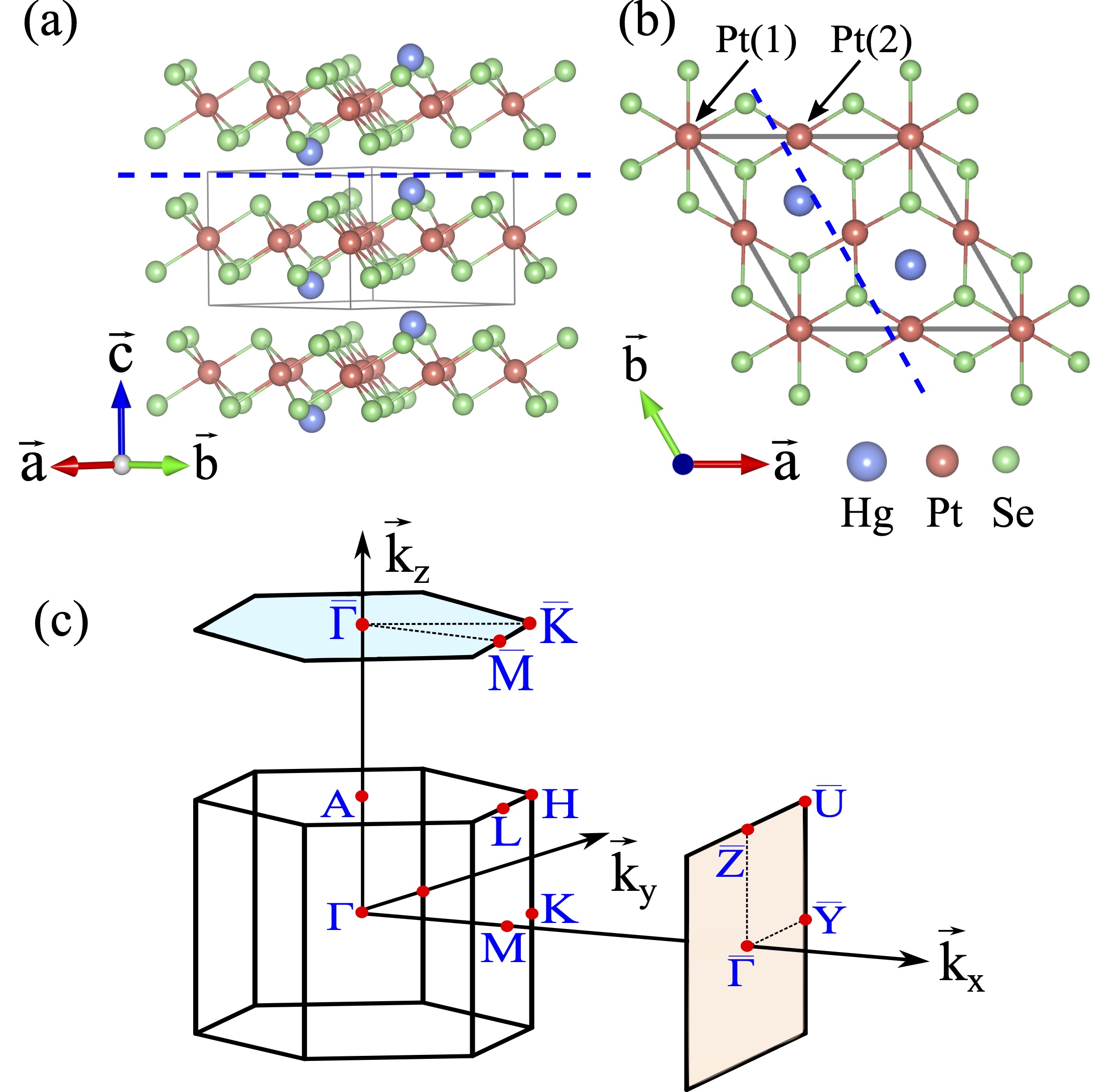 Figure 1
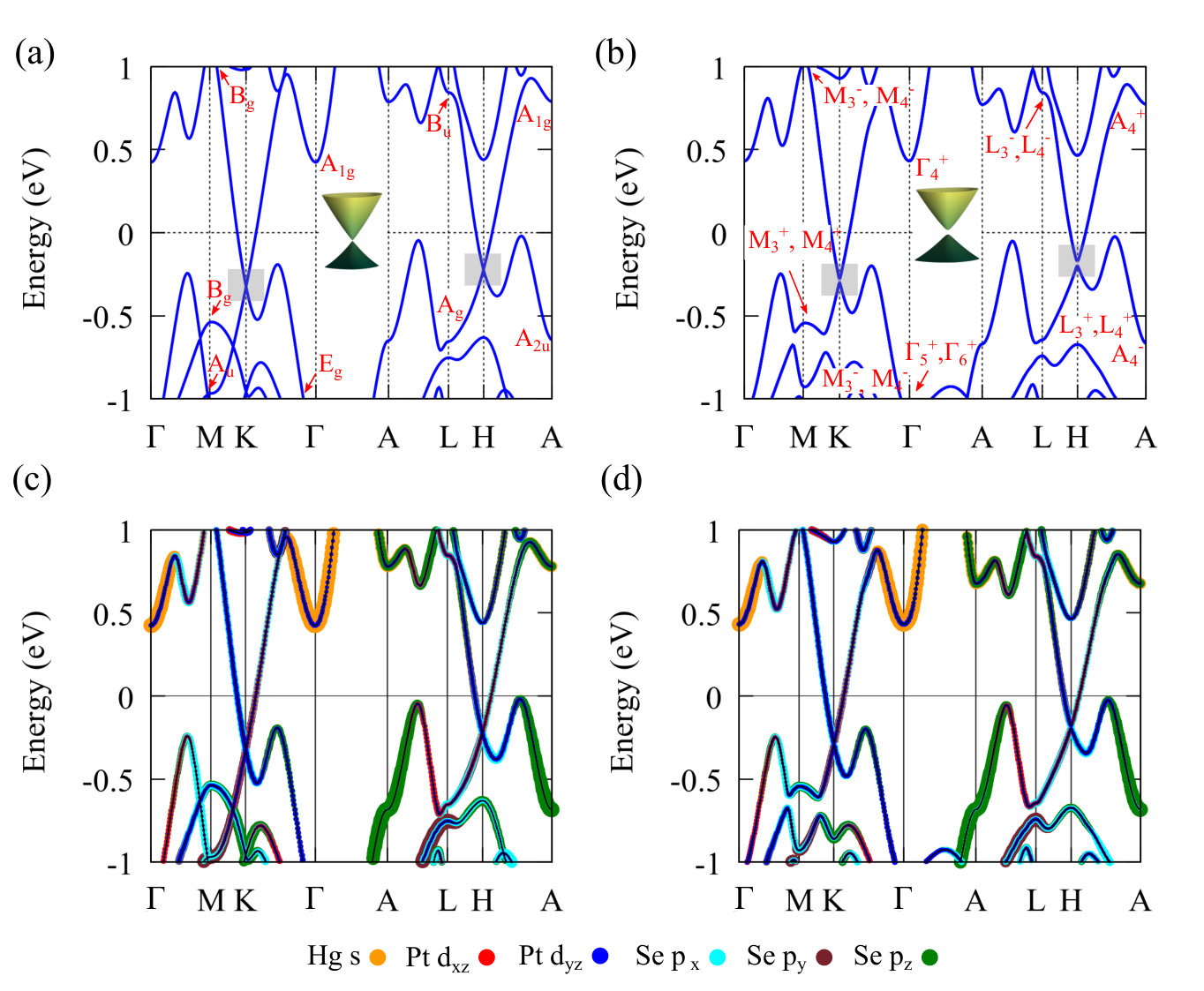 Figure 2
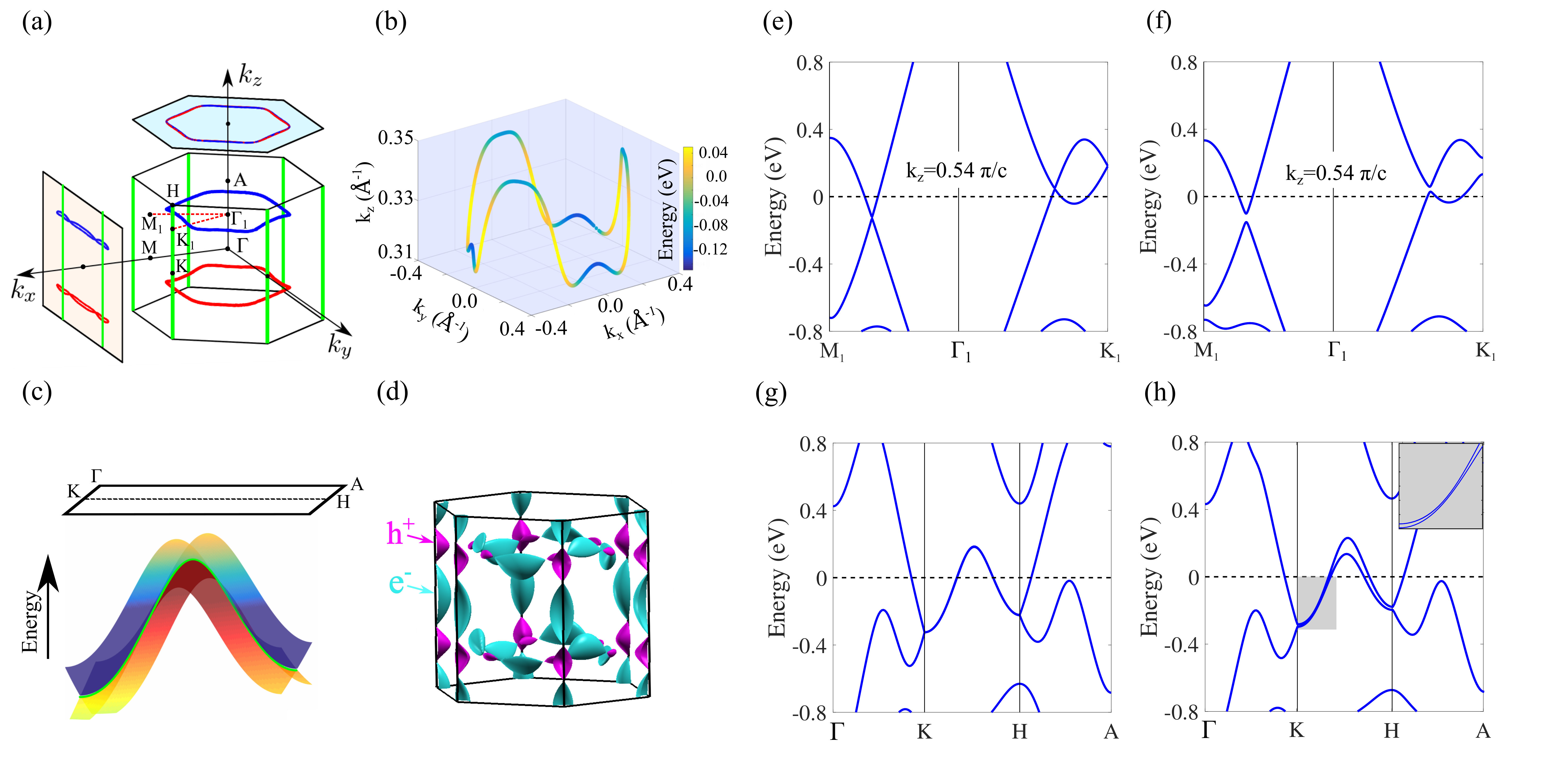 Figure 3
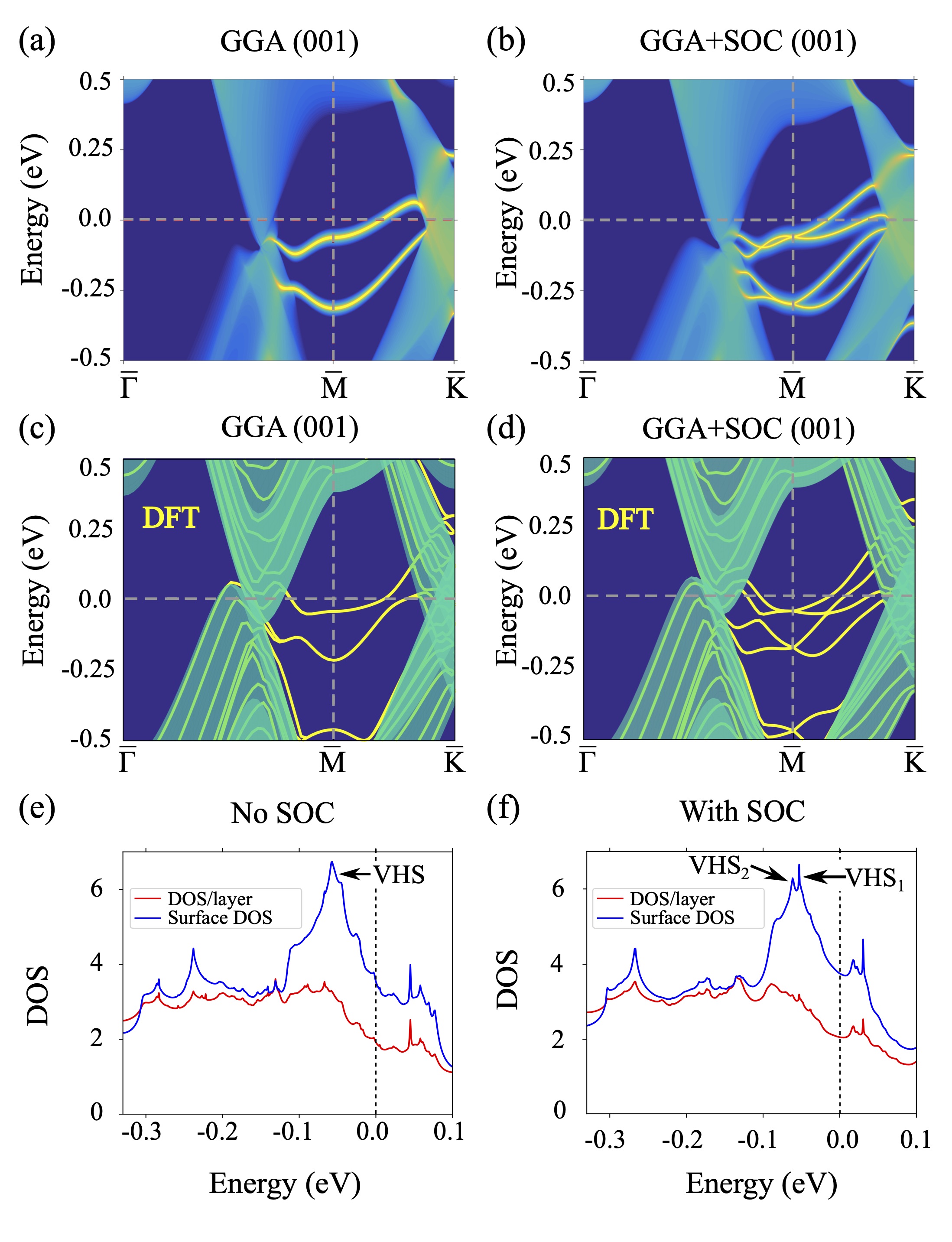 Figure 41
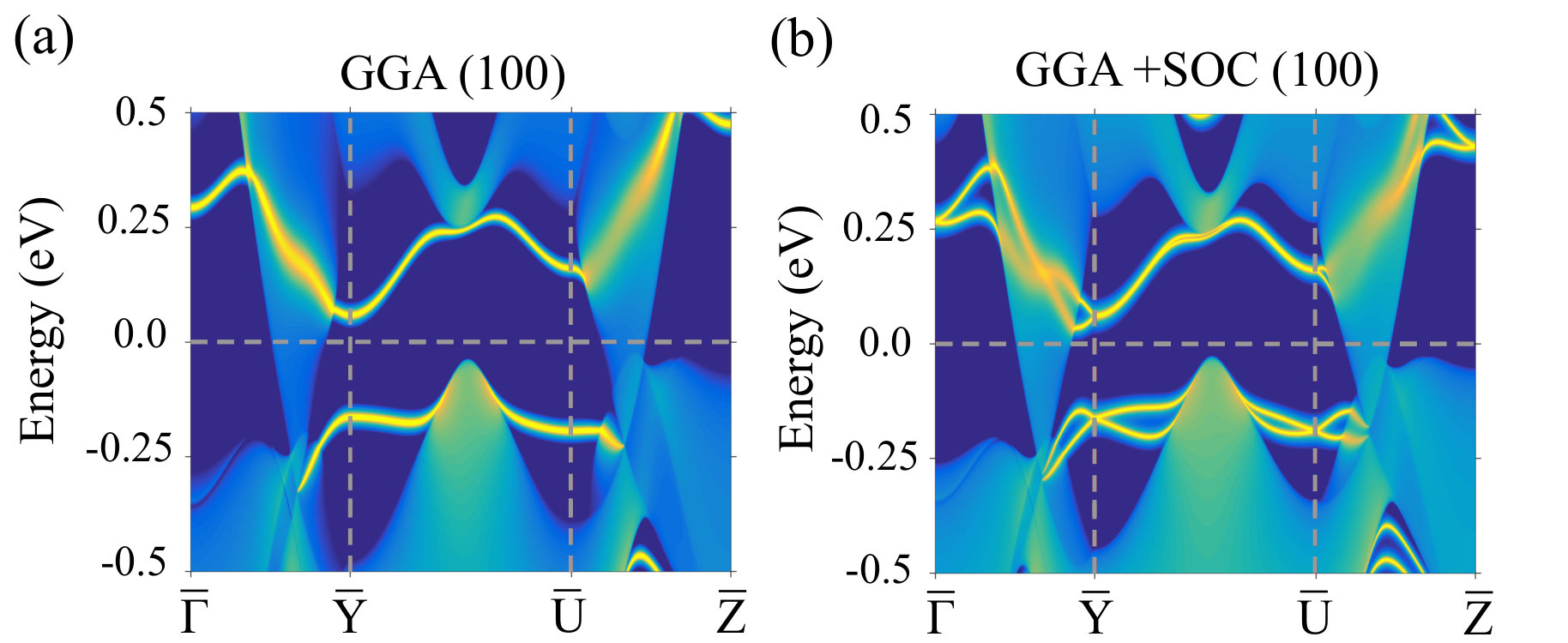 Figure 42
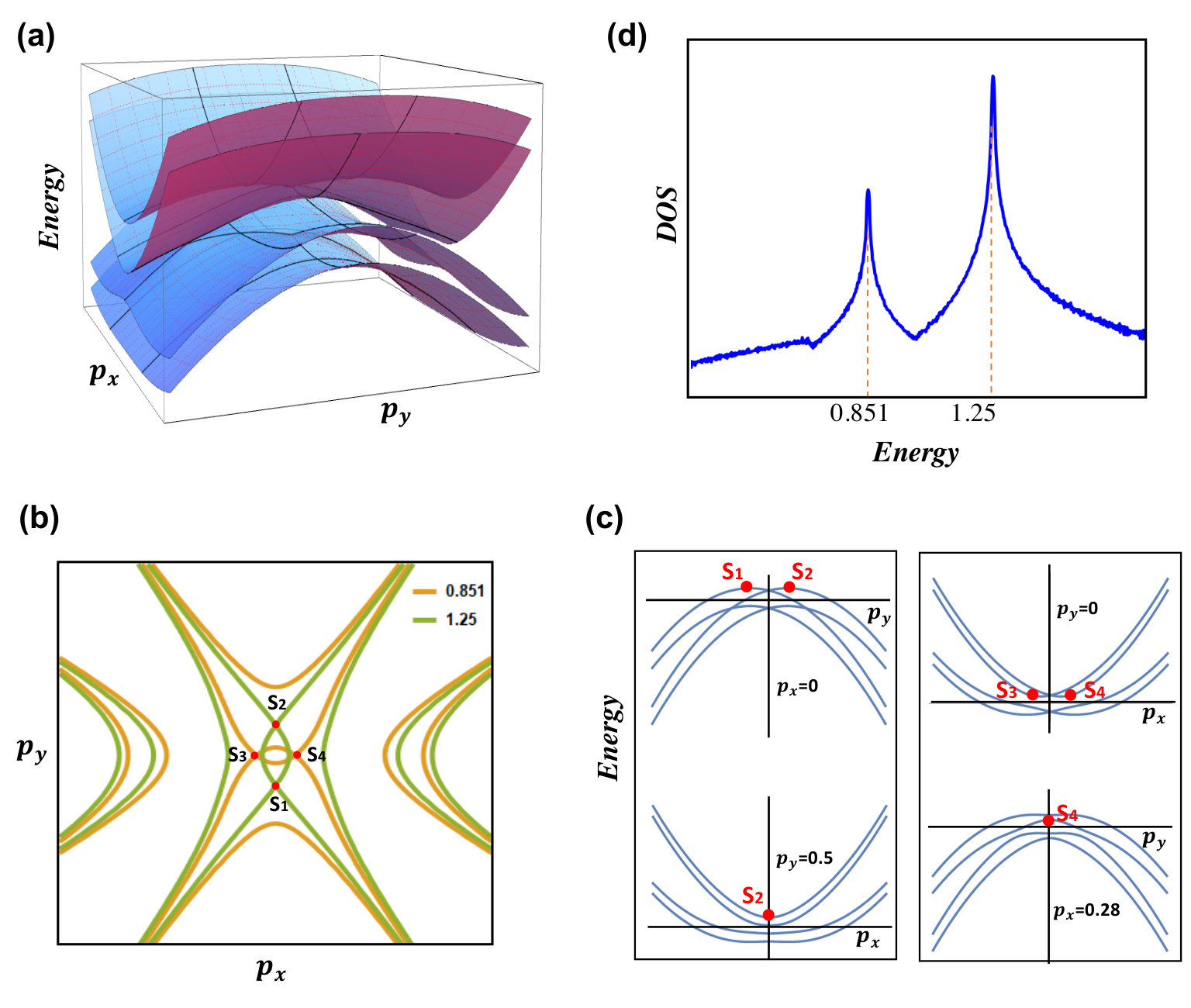 Figure 6
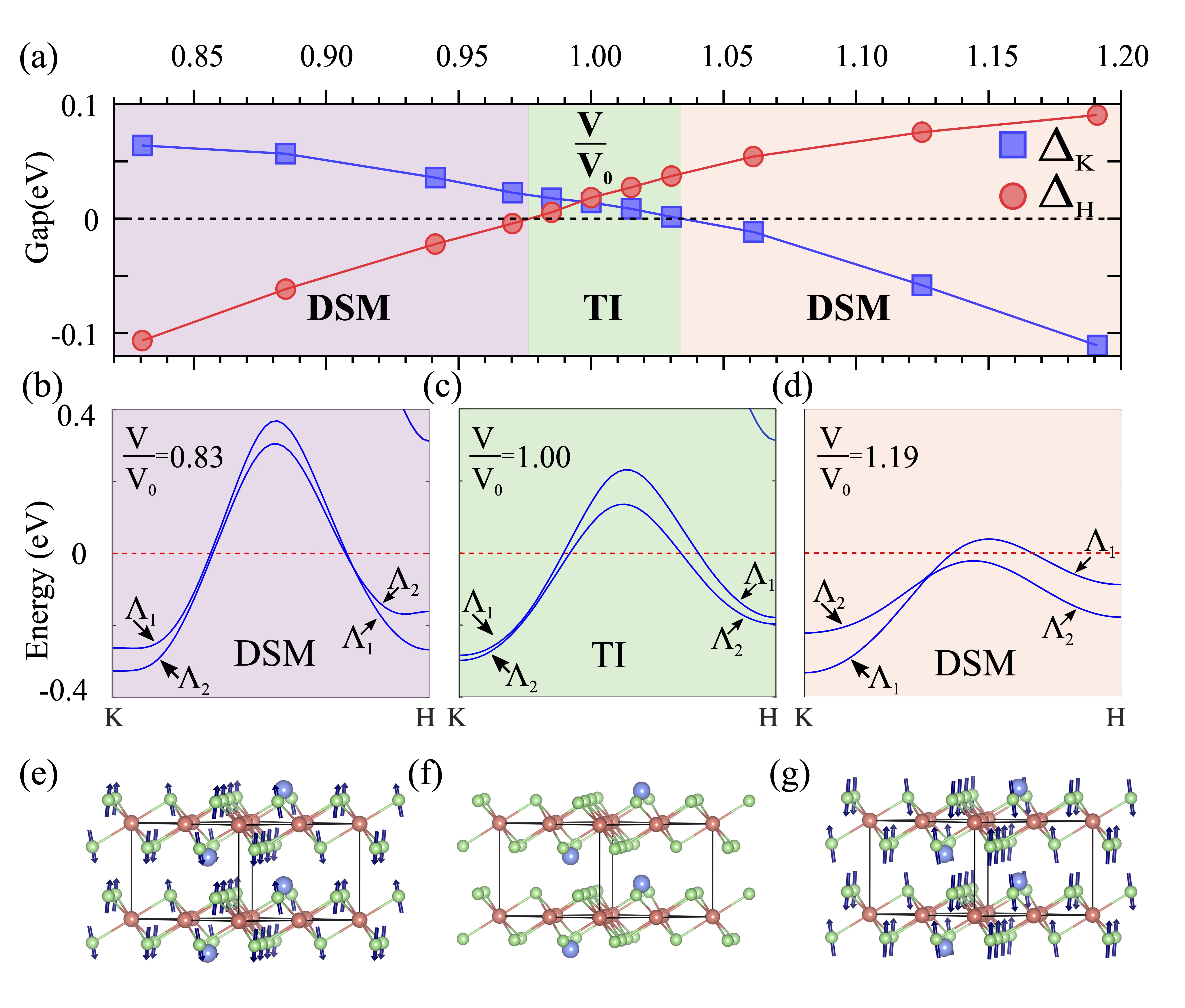 Figure 7
| (0,0,1,2) | (0;001) | 0 | 1 |
|---|
| Wyckoff positions | ||
|---|---|---|
| Atom (Wyckoff symbol) | Experiments | Optimized |
| Pt1 () | ||
| Pt2 () | ||
| Hg () | ||
| Se () | ||
Peer Reviews
No public reviews on file for this paper yet. If you reviewed it on a platform where reviews are public (OpenReview, ICLR, NeurIPS, ICML), you can paste yours below so the community can read it here.
Videos
No videos yet. Explain this paper in a talk, walkthrough, or lecture? Add one.
Saddle-point van Hove singularity and dual topological state in Pt2HgSe3
Barun Ghosh
Department of Physics, Indian Institute of Technology Kanpur, Kanpur 208016, India
Sougata Mardanya
Department of Physics, Indian Institute of Technology Kanpur, Kanpur 208016, India
Bahadur Singh∗
SZU-NUS Collaborative Center and International Collaborative Laboratory of 2D Materials for Optoelectronic Science Technology, Engineering Technology Research Center for 2D Materials Information Functional Devices and Systems of Guangdong Province, College of Optoelectronic Engineering, Shenzhen University, ShenZhen 518060, China
Department of Physics, Northeastern University, Boston, Massachusetts 02115, USA
Xiaoting Zhou
Department of Physics and Astronomy, California State University, Northridge, CA 91330, USA
Department of Physics, National Cheng Kung University, Tainan 701, Taiwan
Baokai Wang
Department of Physics, Northeastern University, Boston, Massachusetts 02115, USA
Tay-Rong Chang
Department of Physics, National Cheng Kung University, Tainan 701, Taiwan
Center for Quantum Frontiers of Research and Technology (QFort), Tainan 701, Taiwan
Chenliang Su
SZU-NUS Collaborative Center and International Collaborative Laboratory of 2D Materials for Optoelectronic Science Technology, Engineering Technology Research Center for 2D Materials Information Functional Devices and Systems of Guangdong Province, College of Optoelectronic Engineering, Shenzhen University, ShenZhen 518060, China
Hsin Lin∗
Institute of Physics, Academia Sinica, Taipei 11529, Taiwan
Amit Agarwal∗
Department of Physics, Indian Institute of Technology Kanpur, Kanpur 208016, India
Arun Bansil111Corresponding authors’ emails: [email protected], [email protected], [email protected], [email protected]
Department of Physics, Northeastern University, Boston, Massachusetts 02115, USA
Abstract
Saddle-point van Hove singularities in the topological surface states are interesting because they can provide a new pathway for accessing exotic correlated phenomena in topological materials. Here, based on first-principles calculations combined with a model Hamiltonian analysis, we show that the layered platinum mineral jacutingaite (Pt2HgSe3) harbors saddle-like topological surface states with associated van Hove singularities. Pt2HgSe3 is shown to host two distinct types of nodal lines without spin-orbit coupling (SOC) which are protected by combined inversion () and time-reversal () symmetries. Switching on the SOC gaps out the nodal lines and drives the system into a topological state with nonzero weak topological invariant and mirror Chern number . Surface states on the naturally cleaved (001) surface are found to be nontrivial with a unique saddle-like energy dispersion with type II van Hove singularities. We also discuss how modulating the crystal structure can drive Pt2HgSe3 into a Dirac semimetal state with a pair of Dirac points. Our results indicate that Pt2HgSe3 is an ideal candidate material for exploring the properties of topological insulators with saddle-like surface states.
I Introduction
Finding new topological materials with unique properties is currently drawing intense interest as an open research frontier in condensed matter physics and related fields.Bansil et al. (2016); Hasan and Kane (2010); Qi and Zhang (2011) Initial ideas of time-reversal symmetry () protected topological states have been generalized to incorporate crystal symmetries, leading to the identification of a variety of new topological states in insulators, semimetals, and metals.Fu et al. (2007); Fu (2011); Po et al. (2017); Song et al. (2018); Kruthoff et al. (2017) Examples include mirror-symmetry protected topological crystalline insulators (TCIs), weak topological insulators (WTIs), Dirac/Weyl semimetals, nodal line semimetals, hourglass semimetals, triple-point semimetals, among others.Hsieh et al. (2012); Young et al. (2012); Armitage et al. (2018); Wang et al. (2012, 2013); Singh et al. (2012); Fang et al. (2015); Kim et al. (2015); Fang et al. (2016); Wang et al. (2017); Singh et al. (2018a); Zhu et al. (2016) Theoretically predicted topological properties of a number of materials have been demonstrated experimentally via spectroscopic and transport measurements.Tanaka et al. (2012); Xu et al. (2012); Neupane et al. (2014); Liu et al. (2014); Lv et al. (2015); Xu et al. (2015); Bian et al. (2016); Ma et al. (2017) It has been recognized that a topological state can also be protected simultaneously by different crystal symmetries as is the case in Bi2(Se,Te)3 where the protection involves both and crystalline mirror symmetries. Rauch et al. (2014); Eschbach et al. (2017) Such dual-symmetry-protected topological states can open up new possibilities for tuning topological properties via controlled symmetry breaking.
Topological surface states (TSSs) are the hallmark and source of numerous useful properties in topological quantum materials. Depending on the symmetries of their crystalline surfaces, the electronic dispersion () of TSSs can deviate substantially from the well-known Dirac-like form.Singh et al. (2018b) Specifically, when a surface lacks rotational symmetry for , a saddle-like dispersion with saddle points is, in principle, allowed via symmetry constraints. Such saddle points in -space can lead to Van Hove singularities (VHSs) where densities of states (DOSs) diverge logarithmically in two-dimensions (2D). The interest in VHSs has been revived recently in the theory of correlated twisted bilayer graphene and, in fact, the new concept of higher order VHSs has been proposed. Cao et al. (2018a, b); Yuan et al. (2019) More generally, when VHSs lie close to the Fermi level, the increased DOS amplifies electron correlation effects that can drive various quantum many-body instabilities involving the lattice, charge and spin degrees of freedom.Hlubina et al. (1997); Honerkamp and Salmhofer (2001); Ziletti et al. (2015); Singh et al. (2017); Chen and Lado (2019) When these VHSs lie at generic points, they favor an odd-parity pairing, which can lead to unconventional superconductivity. Yao and Yang (2015); Markiewicz (1997) Despite theoretical prediction of TSSs with VHSs, experimental evidence of such states is still lacking. The identification of new materials with saddle-like TSSs is thus of great importance.
Here, we investigate the topological electronic structure of layered platinum mineral jacutingaite Pt2HgSe3 and reveal a dual-symmetry-based protection of its topological state and the existence of saddle-point VHSs in its surface electronic spectrum. The monolayer Pt2HgSe3 has been predicted recently as a large band gap Kane-Mele quantum spin Hall (QSH) insulator.(Marrazzo et al., 2018) A nontrivial band gap of 0.53 eV has been found within the G0W0 approximation: its Fermiology under electron and hole doping suggests the existence of VHSs and unconventional superconductivity.Wu et al. (2018) The QSH state in Pt2HgSe3 monolayer has been experimentally demonstrated using scanning tunneling microscopy (STM).Kandrai et al. (2019) Also, it is found that few nanometers thick as well as bulk jacutingaite is stable under ambient conditions for months and even up to an year.Kandrai et al. (2019) However, the bulk topological state and the associated TSSs with VHSs remain unexplored.
Our analysis reveals that Pt2HgSe3 supports two distinct types of nodal lines when spin-orbit coupling (SOC) effects are ignored. Including SOC in the computations gaps out the nodal lines and drives the system into a topological state characterized by nonzero weak topological invariants, , as well as the mirror Chern number . To highlight the nontrivial bulk band topology, we investigate the naturally cleaved (001)-surface electronic structure and show the existence of a unique symmetry-allowed saddle-like dispersion of topological surface states with saddle-point VHSs. Informed by our first-principles computations, we present a viable model Hamiltonian for the topological surface states. We also discuss the effect of hydrostatic pressure on bulk band topology and reveal the presence of a topological phase transition to a type-II Dirac semimetal state with pressure. Our results suggest that Pt2HgSe3 is an ideal material for experimental exploration of saddle-like surface states with VHSs.
The remainder of the paper is organized as follows. In Sec. II, we discuss computational details along with the crystal structure of Pt2HgSe3. The bulk topological properties are discussed in Sec. III. In section IV, we characterize the topological states and present surface electronic structure with and without SOC. The model Hamiltonian for the topological surface states is described in Sec. V. In Sec. VI, we present the evolution of topological electronic structure under hydrostatic pressure. Finally, we summarize our findings in Sec. VII.
II Computational Details and Crystal Structure
Electronic structure calculations were performed within the framework of the density functional theory (DFT) with the projector-augmented-wave (PAW) pseudopotentials and a plane-wave basis set using the Quantum Espresso package.Kohn and Sham (1965); Kresse and Joubert (1999); Giannozzi et al. (2009) We used an energy cut-off of 50 Ry for the plane wave basis set and a mesh for the bulk calculations. The generalized gradient approximation (GGA) of Perdew, Burke, and Ernzerhof (PBE) was used to include exchange-correlation effects.Perdew et al. (1996) A tolerance of 10*-8* Ry was used for electronic energy minimization. Experimental lattice parameters ( Å and Å) were used, but the atomic positions within the unit cell were optimized until the residual force on each atom was less than Ry/au; see Appendix A for structural details. Results presented in this study are based on the GGA-PBE. Effects of van der Waal’s corrections, which we ascertained using the DFT-D3 methodGrimme et al. (2011), were found to be negligible. We constructed our tight-binding model Hamiltonian by deploying atom-centered Wannier functions and computed topological properties using the WannierTools package.Marzari and Vanderbilt (1997); Wu et al. (2018) The surface electronic spectrum was also checked by calculations using a supercell of ten-layer thick Pt2HgSe3 slabs separated by vacuum regions of 16 Å using the VASP suite of codes.Kresse and Furthmüller (1996),222Both the Quantum Espresso and VASP codes were used for calculating structural and electronic properties. Two sets of results were found to be in excellent agreement.
Jacutingaite Pt2HgSe3 forms a bipartite lattice in the symmorphic space group (No. 164).Cabral et al. The experimental crystal structure is layered with AA stacking and it can be viewed as a supercell of 1T-PtSe2 with additional Hg atoms that are placed in the anti-cubo-octahedral voids of Se atoms [Figs. 1(a)-(b)]. There are two symmetry-inequivalent Pt atoms in the primitive unit cell that form two distinct hexagonal sublattices. The Pt(1) atom connects to six nearest Se atoms and forms Pt(1)Se6 local octahedral coordination while the Pt(2) atom constitutes the Pt(2)Se4 square structure.(Cabral et al., ; Vymazalová et al., 2012) The Pt(1)-Se bond length is 2.55 Å, which is slightly larger than the Pt(2)-Se bond length of 2.47 Å. This crystal structure possesses three-fold rotational symmetry around the -axis (), inversion symmetry , and the mirror symmetries , and . Additionally, it respects the -symmetry.
III Bulk electronic structure and topological invariants
The bulk electronic spectrum of Pt2HgSe3 (without SOC) is shown in Fig. 2(a). It is semimetallic in character where the symmetry band is seen to cross with the band at the point in the bulk BZ. These band crossings are linearly dispersed over a substantial energy range along and . Similar Dirac-cone-like band features are also present in the band structure of graphite and their origin is attributed to the honeycomb lattice arrangement of the constituent atoms.(Slonczewski and Weiss, 1958) The orbital-resolved band structure in Fig. 2(c) shows that these crossing bands are mainly composed of Hg , Se , and Pt and orbitals. The band structure including the SOC is illustrated in Figs. 2(b) and 2(d). The Dirac-cone-like band crossings without the SOC at the and points are now gapped and a continuous bandgap appears between the valence and conduction bands.
In order to characterize the nodal lines and their symmetry protection, we systematically examine the band crossings in Fig. 3. A careful inspection of band crossings in full bulk BZ reveals that Pt2HgSe3 hosts two distinct types of nodal lines. The type I nodal lines (identified by NLC) are generated by accidental band crossings and form an inversion-symmetric pair of closed loops at generic points around the line inside the BZ. Importantly, these nodal lines are not hooked to a fixed momentum plane but trace an arbitrary path encircling the line [see red and blue curves in Fig. 3(a)]. They show considerable energy spread in the momentum space as illustrated in Fig. 3(b) where the energies of the gap closing points are plotted in color in the momentum space. We further demonstrate these nodal crossings by plotting the band structure along the in-plane directions for a fixed plane in Fig. 3(e).
The type II nodal lines (NLKH) stretch along the high symmetry directions at the hinges of the hexagonal BZ [green lines in Fig. 3(a)]. These nodal lines are essential and enforced by little group symmetries of the line. Notably, line is invariant under three-fold rotational symmetry and anti-unitary operator . For a spinless system, the eigenvalues of are 1, , and . The conjugate symmetry operator , however, enforces a double degeneracy between states with and eigenvalues. We have verified these symmetry states through an analysis of our first-principles wavefunctions. We find that the symmetry-adapted basis of the degenerate bands can be expressed as where are normalized coefficients. We further explore the nodal line energy dispersions in Figs. 3(c) and 3(g). We emphasize that similar type-II nodal lines have also been reported in AA stacked graphite, the high-temperature superconductor MgB2 and its iso-structural counterparts such as AlB2. (Lobato and Partoens, 2011; Jin et al., 2019; Takane et al., 2018)
We present the Fermi surface of Pt2HgSe3 in Fig. 3(d) with unique electron and hole pockets that originate from both NLC and NLKH nodal lines. Such a Fermi surface may lead to balanced electron-hole resonance conditions and it could thus induce unusual transport signatures such as a large positive unsaturated magnetoresistance.
Figures 3(f) and 3(h) show the energy bands with SOC along the selected paths of NLC and NLKH, respectively. Clearly, the SOC opens an energy gap at the nodal crossing points. This bandgap opening facilitates the calculation of symmetry-based indicators (SI) to determine the topological state of the system. Following Ref.[7], the band insulators in space group are defined by three and a single indicator i.e. (). By explicitly calculating the irreducible representations of the occupied bands at different time-reversal invariant momentum points, we find (.Vergniory et al. (2019); TQC ; Tang et al. (2019) Such an SI leads to two distinct scenarios for the existence of a dual topological phase characterized by weak invariants along with either a nonzero mirror Chern number , or a nonzero rotation invariant, .Song et al. (2018) In both cases, the inversion invariant has a non-zero value (). In order to pin down the exact topological state, we further calculated the mirror Chern number, , and found it to be . The calculated SI and topological invariants are listed in Table 1. Thus, the topological phase of Pt2HgSe3 is characterized by both (001) weak topological invariants and a non-zero mirror Chern number .
IV Surface electronic structure
We present the electronic spectrum of the (001) surface of Pt2HgSe3 in Fig. 4 with Hg surface termination, which is the natural cleavage plane (Fig. 1). The projection of the NLC nodal lines on the (001) surface forms two closed loops whereas the NLKH nodal lines project at the corner points of the (001) surface BZ. Topological surface states related to NLC are therefore more obvious over the (001) surface as seen in Fig. 4(a) (without SOC). The two drumhead surface states (DSSs) nested outside the nodal lines are clearly visible, consistent with the calculated nontrivial character of the nodal lines. Interestingly, the DSS which lies closer to the Fermi energy has opposite band curvatures along the and directions. Specifically, this DSS has a maximum at the point if one looks from the direction whereas the point is a minimum when approached from the direction. The DSS thus forms a unique saddle-like dispersion around the point. When the SOC is included in the computations, the DSSs split away from the -symmetric point [see Fig. 4(b)], and evolve into topological states with saddle-like energy dispersion, see Sec. V for more details. The existence of two Dirac-like surface-state crossings at the point is in accord with the bulk nonzero mirror Chern number of .
Tight-binding based methods for calculating surface spectrum generally neglect effects on the surface potential due to charge redistribution near the surface. In order to emphasize the robustness of our saddle-like topological states, we calculated the electronic structure of a 10-layer slab on a first-principles basis, where effects of surface charge redistribution are included self-consistently. Figs. 4(c) and 4(d) show reasonable agreement between the results of tight-binding and first-principles computations, at least insofar as the saddle-like energy dispersion of the DSSs is concerned. Figs. 4(e) and 4(f) show the calculated DOS for the 10-layer slab without and with the SOC, respectively. The high DOS near the saddle-points reflects the presence of the VHSs. The single VHS feature in the DOS (without SOC) splits into two VHSs in Fig. 4(e) after the SOC is included due to the appearance of more saddle-points in the underlying energy spectrum, see Sec. V for details. These results demonstrate that the surface-state VHSs yield significant features in the total DOS. The saddle-like surface states and the associated VHSs would, therefore, be accessible in spectroscopic experiments.
The (100) surface band structure with Hg termination is presented in Figs. 5(a) and 5(b) without and with the SOC effects, respectively. Over the (100) surface, the projection of NLKH nodal lines connects and symmetry lines as shown in Fig. 3(a). The topological DSSs connect these projections which are seen clearly in Fig. 5(a). When the SOC is included, the DSSs evolve into the Dirac-cone-like states with Dirac points at the and points (Fig. 5(b)). While these surface states are in accord with the weak bulk topological invariant (001), it becomes difficult to ascertain that they cross the Fermi level an odd number of times along the or lines as the gap in the surface spectrum closes due to the presence of projected bulk bands.Teo et al. (2008)
V model Hamiltonian
We now discuss a minimal low-energy Hamiltonian for the topological surface states on the (001) surface that captures essential features of these states. Based on our first-principles calculations, the TSSs spread around the point on the (001) surface. Therefore, a Hamiltonian around point is sufficient to describe the TSSs. On the (001) surface at , the little group contain a mirror plane symmetry. In the presence of the SOC, the symmetry operators are and , where and are Pauli matrices in the spin and sublattice space, respectively. The associated symmetry-allowed basis functions for the TSSs are , where A and B denote the two sublattices of the bipartite lattice. These can be expressed as
[TABLE]
Here, the subscript denotes spin-up/spin-down, respectively, and , and describe normalization coefficients. Using the above basis, the minimal four-band Hamiltonian around the surface Dirac point (up to second order in momentum) can be written as,
[TABLE]
where , , , and are real numbers and denotes the Rashba parameter. As discussed in Ref. Singh et al. (2018b), ensures a saddle-like dispersion. Since the little group of hosts a mirror plane without any rotational symmetry, the saddle-like energy dispersion is symmetry allowed. This however is only a necessary condition for realizing the saddle-like dispersion whose actual existence will depend on material properties. The corresponding eigenenergies of are
[TABLE]
with and . Equation (2) shows that the lower branch of the conduction band cross the top branch of the valence band at along the mirror invariant line. This gives rise to the Dirac cone states protected by mirror symmetry, as shown explicitly in Figs. 6(a)-6(c). In addition, for , we find a pair of type II saddle-point VHSs,Singh et al. (2018b) as illustrated in Fig. 6(d) in accord with our first-principles results. We have verified that the energy dispersions obtained by considering symmetry-allowed terms beyond the second order in the Hamiltonian retain the saddle-like features of the topological surface states with VHSs; these results are not shown in the interest of brevity.
VI Topological phase transition
We now demonstrate the possibility of tuning the topological order of Pt2HgSe3 and realizing a Dirac semimetal by modulating the unit cell volume with reference to Fig. 7. For this purpose, it is useful to define the SOC-induced gap as at and at between the and states that form a nodal line without the SOC along the direction (see Fig. 7). The evolution of and with relative unit cell volume , where denotes the equilibrium unit cell volume, is presented in Fig. 7(a). We find that and are comparable in the gapped pristine state but show opposite behavior on changing the unit cell volume (). On decreasing (increasing) from its equilibrium value, the and bands cross near point and realize a tilted band crossing along the direction, see Figs. 7(b)-(d). A detailed symmetry analysis shows that the crossing bands have opposite rotation eigenvalues and thus the Dirac point is symmetry protected against band hybridization. Importantly, we find that when , the and are separated by a continuous gap and realize a gapped topological phase. But, when , the two states cross along the line and the system realizes a symmetry-protected type II Dirac semimetal state.
Our analysis suggests that can provide a control knob for continuous tuning of the position and velocity of the Dirac cones when . Owing to the parabolic energy dispersion of and , the energy location of Dirac points can be tuned to lie on the Fermi level. For , a pair of Dirac cones located on the line moves toward the point. These Dirac cones merge at for , thereby realizing a gapped insulator state. For beyond , the Dirac points start reappearing near the K-point 333Note that the topological phase transition to a Dirac semimetal state takes place at () which corresponds to ) decrease (increase) of volume . This level of strain would be practical to achieve in experiments. We have not explored the dynamical stability of the structure under pressure, although such a study will be interesting..
Generally, a topological semimetal phase separates two distinct gapped insulating topological phases. In sharp contrast to this, in Pt2HgSe3 we find that a topological insulating phase exists as a critical region between two gapless Dirac semimetal phases. Moreover, the Dirac points in Pt2HgSe3 are located on BZ hinges along the line in contrast to the other well-known Dirac semimetals such as Na3Bi and PtTe2 where they are located on the line in the hexagonal BZ.(Wang et al., 2012, 2013; Politano et al., 2018) Such a Dirac semimetal state is unique to Pt2HgSe3, and has not been identified before.
VII Conclusion
In conclusion, based on our first-principles calculations combined with a model Hamiltonian analysis, we identify and characterize the dual-symmetry-protected topological state of Pt2HgSe3. The material is shown to harbor two distinct types of nodal lines when SOC effects are neglected in the computations. Inclusion of SOC gaps out the nodal lines and drives the system into a topological phase which is characterized by both the weak topological invariant and the mirror Chern number . The (001) surface band structure reveals the existence of unique saddle-like topological surface states with saddle-point VHSs. We also discuss the tunability of the topological state of Pt2HgSe3 by modulating its crystal structure. In this way, the system is shown to undergo a unique topological phase transition where a gapped topological state exists as an intermediate phase between gapless Dirac semimetal states. Our analysis suggests that the naturally cleaved (001) surface of Pt2HgSe3 presents an ideal testbed for exploring saddle-like topological surface states with VHSs and the associated physics in topological materials.
Note added: We recently became aware of a related eprint in which dual topological state of Pt2HgSe3 is discussed Facio et al. (2019). A more recent preprint on ARPES measurements of Pt2HgSe3 reveals the existence of saddle-like topological surface states with VHSs which are consistent with the results presented in this study Cucchi et al. (2019).
ACKNOWLEDGEMENTS
Work at the Shenzhen University is financially supported by the Shenzhen Peacock Plan (KQTD2016053112042971) and Science and Technology Planning Project of Guangdong Province (2016B050501005). The work at Northeastern University is supported by the U.S. Department of Energy (DOE), Office of Science, Basic Energy Sciences Grant No. DE-FG02-07ER46352, and benefited from Northeastern University’s Advanced Scientific Computation Center and the National Energy Research Scientific Computing Center through DOE Grant No. DE-AC02-05CH11231. T.-R.C. was supported from Young Scholar Fellowship Program by Ministry of Science and Technology (MOST) in Taiwan, under MOST Grant for the Columbus Program MOST107-2636-M-006-004, National Cheng Kung University, Taiwan, and National Center for Theoretical Sciences (NCTS), Taiwan. This work is supported partially by the MOST, Taiwan, Grants No. MOST 107-2627-E-006-001. H. L. acknowledges Academia Sinica, Taiwan for the support under Innovative Materials and Analysis Technology Exploration (AS-iMATE-107-11). BG acknowledges the CSIR for Senior Research Fellowship. We thank CC-IITK for providing the HPC facility.
Appendix A Structural details
The experimental lattice constants and the relaxed atomic positions for bulk Pt2HgSe3 that have been used in our computations are listed in the table below.
The reference list from the paper itself. Each links out to its DOI / PubMed record.
- 1Bansil et al. (2016) A. Bansil, Hsin Lin, and Tanmoy Das, “Colloquium,” Rev. Mod. Phys. 88 , 021004 (2016) . · doi ↗
- 2Hasan and Kane (2010) M. Z. Hasan and C. L. Kane, “Colloquium,” Rev. Mod. Phys. 82 , 3045–3067 (2010) . · doi ↗
- 3Qi and Zhang (2011) Xiao-Liang Qi and Shou-Cheng Zhang, “Topological insulators and superconductors,” Rev. Mod. Phys. 83 , 1057–1110 (2011) . · doi ↗
- 4Fu et al. (2007) Liang Fu, C. L. Kane, and E. J. Mele, “Topological insulators in three dimensions,” Phys. Rev. Lett. 98 , 106803 (2007) . · doi ↗
- 5Fu (2011) Liang Fu, “Topological crystalline insulators,” Phys. Rev. Lett. 106 , 106802 (2011) . · doi ↗
- 6Po et al. (2017) Hoi Chun Po, Ashvin Vishwanath, and Haruki Watanabe, “Symmetry-based indicators of band topology in the 230 space groups,” Nat. Commun. 8 , 50 (2017) . · doi ↗
- 7Song et al. (2018) Zhida Song, Tiantian Zhang, Zhong Fang, and Chen Fang, “Quantitative mappings between symmetry and topology in solids,” Nat. Commun. 9 , 3530 (2018) . · doi ↗
- 8Kruthoff et al. (2017) Jorrit Kruthoff, Jan de Boer, Jasper van Wezel, Charles L. Kane, and Robert-Jan Slager, “Topological classification of crystalline insulators through band structure combinatorics,” Phys. Rev. X 7 , 041069 (2017) . · doi ↗