
TL;DR
This survey introduces topological cyclic homology, discusses key theorems like Bökstedt periodicity, and explores recent extensions and applications in p-adic contexts, providing foundational and advanced insights into the subject.
Contribution
It offers a comprehensive overview of topological cyclic homology, including proofs of fundamental theorems and recent extensions to perfectoid rings, with applications in p-adic homotopy theory.
Findings
Proof of Bökstedt periodicity resembling original proof
Extension of Bökstedt periodicity to perfectoid rings
Evaluation of the cofiber of the assembly map in p-adic TC
Abstract
This survey of topological cyclic homology is a chapter in the Handbook on Homotopy Theory. We give a brief introduction to topological cyclic homology and the cyclotomic trace map following Nikolaus-Scholze, followed by a proof of B\"okstedt periodicity that closely resembles B\"okstedt's original unpublished proof. We explain the extension of B\"{o}kstedt periodicity by Bhatt-Morrow-Scholze from perfect fields to perfectoid rings and use this to give a purely p-adic proof of Bott periodicity. Finally, we evaluate the cofiber of the assembly map in p-adic topological cyclic homology for the cyclic group of order p and a perfectoid ring of coefficients.
Click any figure to enlarge with its caption.
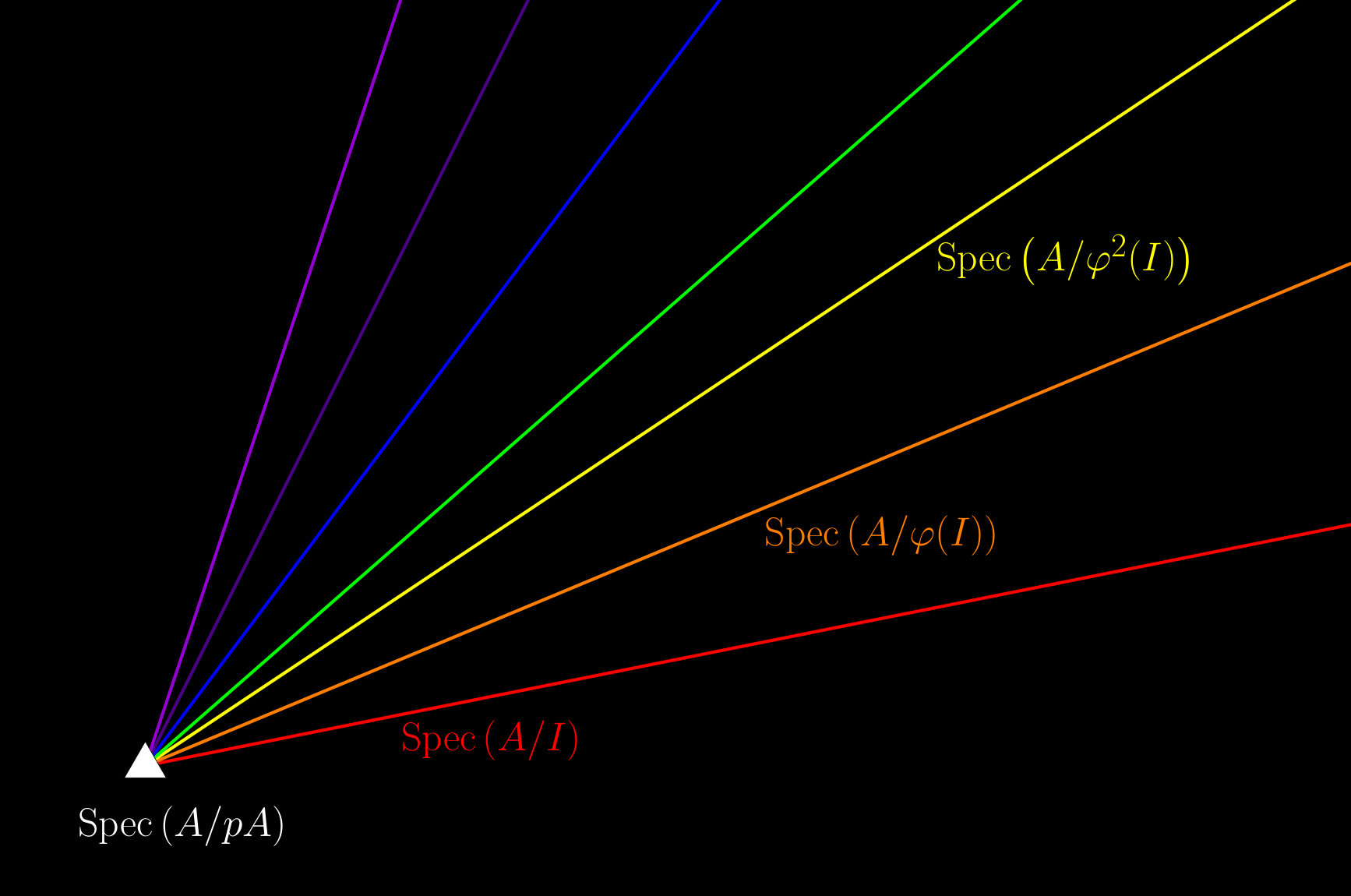 Figure 1
Peer Reviews
No public reviews on file for this paper yet. If you reviewed it on a platform where reviews are public (OpenReview, ICLR, NeurIPS, ICML), you can paste yours below so the community can read it here.
Videos
No videos yet. Explain this paper in a talk, walkthrough, or lecture? Add one.
Chapter 0 Topological cyclic homology
Lars Hesselholt and Thomas Nikolaus
Abstract: This survey of topological cyclic homology is a chapter in the Handbook on Homotopy Theory. We give a brief introduction to topological cyclic homology and the cyclotomic trace map following Nikolaus-Scholze, followed by a proof of Bökstedt periodicity that closely resembles Bökstedt’s original unpublished proof. We explain the extension of Bökstedt periodicity by Bhatt-Morrow-Scholze from perfect fields to perfectoid rings and use this to give a purely -adic proof of Bott periodicity. Finally, we evaluate the cofiber of the assembly map in -adic topological cyclic homology for the cyclic group of order and a perfectoid ring of coefficients.
Topological cyclic homology is a manifestation of Waldhausen’s vision that the cyclic theory of Connes and Tsygan should be developed with the initial ring of higher algebra as base. In his philosophy, such a theory should be meaningful integrally as opposed to rationally. Bökstedt realized this vision for Hochschild homology [9], and he made the fundamental calculation that
[TABLE]
is a polynomial algebra on a generator in degree two [10]. By comparison,
[TABLE]
is the divided power algebra,111 The divided power algebra has generators with subject to the relations that for all and . So . so Bökstedt’s periodicity theorem indeed shows that by replacing the base by the base , denominators disappear. In fact, the base-change map can be identified with the edge homomorphism of a spectral sequence
[TABLE]
so apparently the stable homotopy groups of spheres have exactly the right size to eliminate the denominators in the divided power algebra.
The appropriate definition of cyclic homology relative to was given by Bökstedt–Hsiang–Madsen [11]. It involves a new ingredient not present in the Connes–Tsygan cyclic theory: a Frobenius map. The nature of this Frobenius map is now much better understood by the work of Nikolaus–Scholze [32]. As in the Connes–Tsygan theory, the circle group acts on topological Hochschild homology, and negative topological cyclic homology and periodic topological cyclic homology are defined to be the homotopy fixed points and the Tate construction, respectively, of this action:
[TABLE]
There is always a canonical map from the homotopy fixed points to the Tate construction, but, after -completion, the th Frobenius gives rise to another such map and topological cyclic homology is the equalizer
[TABLE]
Here “” and “” indicates profinite and -adic completion.
Topological cyclic homology receives a map from algebraic -theory, called the cyclotomic trace map.
Roughly speaking, this map records traces of powers of matrices and may be viewed as a denominator-free version of the Chern character. There are two theorems that concern the behavior of this map applied to cubical diagrams of connective -algebras in spectra. If is such an -cube, then the theorems give conditions for the -cube
[TABLE]
to be cartesian. For , the Dundas–Goodwillie–McCarthy theorem [16]
states that this is so provided is a surjection with nilpotent kernel. And for , the Land–Tamme theorem [26],
which strengthens theorems of Cortiñas [15] and Geisser–Hesselholt [21], states that this is so provided is cartesian and an isomorphism. For , it is an open question to find conditions on that make cartesian. It is also not clear that the conditions for and are optimal. Indeed, a theorem of Clausen–Mathew–Morrow [14]
states that for every commutative ring and ideal with henselian, the square
[TABLE]
becomes cartesian after profinite completion. So in this case, the conclusion of the Dundas–Goodwillie–McCarthy theorem holds under a much weaker assumption on the -cube . The Clausen–Mathew–Morrow theorem may be seen as a -adic analogue of Gabber rigidity [20]. Indeed, for prime numbers that are invertible in , the left-hand terms in the square above vanish after -adic completion, so the Clausen–Mathew–Morrow recovers and extends the Gabber rigidity theorem.
Absolute comparison theorems between -theory and topological cyclic homology begin with the calculation that for a perfect commutative -algebra, the cyclotomic trace map induces an equivalence
[TABLE]
The Clausen–Mathew–Morrow theorem then implies that the same is true for every commutative ring such that is henselian and such that the Frobenius is surjective. Indeed, in this case, is perfect and is henselian; see [14, Corollary 6.9]. In particular, this is true for all semiperfectoid rings .222 A commutative -algebra is perfectoid (resp. semiperfectoid), for example, if there exists a non-zero-divisor with such that the -adic topology on is complete and separated and such that the Frobenius a bijection (resp. surjection).
The starting point for the calculation of topological cyclic homology and its variants is the Bökstedt periodicity theorem, which we mentioned above. Since Bökstedt’s paper [10] has never appeared, we take the opportunity to give his proof in Section 2 below. The full scope of this theorem was realized only recently by Bhatt–Morrow–Scholze [4], who proved that Bökstedt periodicity holds for every perfectoid ring. More precisely, their result, which we explain in Section 3 below states that if is perfectoid, then333 We write for the homotopy groups of the -completion of a spectrum , and we write instead of . For -completion, see Bousfield [12].
[TABLE]
on a polynomial generator of degree . Therefore, as is familiar from complex orientable cohomology theories, the Tate spectral sequence
[TABLE]
collapses, since all non-zero elements are concentrated in even total degree. However, since the -action on is non-trivial, the ring homomorphism given by the edge homomorphism of the spectral sequence,
[TABLE]
does not admit a section, and therefore, we cannot identify the domain with a power series algebra over . Instead, this ring homomorphism is canonically identified with the universal -complete pro-infinitesimal thickening
[TABLE]
introduced by Fontaine [19], which we recall in Section 3 below. In addition, Bhatt–Scholze [6] show that, rather than a formal group over , there is a canonical -typical -ring structure
[TABLE]
the associated Adams operation of which is the composition of the inverse of the canonical map and the Frobenius map . The kernel of the edge homomorphism is a principal ideal, and Bhatt–Scholze show that the pair is a prism in the sense that
[TABLE]
and that this prism is perfect in the sense that is an isomorphism. We remark that if is a generator, then, equivalently, the prism condition means that the intersection of the divisors “” and “” is contained in the special fiber “,” whence the name. We thank Riccardo Pengo for the following figure, which illustrates .
Bhatt–Morrow–Scholze further show that, given the choice of , one can choose , , and in such a way that
[TABLE]
and , , , and with a unit. In these formulas, the unit can be eliminated, if one is willing to replace the generator by the generator . We use these results for , where is a complete algebraically closed -adic field, to give a purely -adic proof of Bott periodicity. In particular, Bökstedt periodicity implies Bott periodicity, but not vice versa.
The Nikolaus–Scholze approach to topological cyclic homology is also very useful for calculations. To wit, Speirs has much simplified the calculation of the topological cyclic homology of truncated polynomial algebras over a perfect -algebra [34], and we have evaluated the topological cyclic homology of planar cuspical curves over a perfect -algebra [23]. Here, we illustrate this approach in Section 4, where we identify the cofiber of the assembly map
[TABLE]
for perfectoid in terms of an analogue of the affine deformation to the normal cone along with as the parameter.
Finally, we mention that Bhatt–Morrow–Scholze [5] have constructed weight444 If is a smooth -algebra, then, on the th graded piece of the Bhatt–Morrow–Scholze filtration on , the geometric Frobenius acts with pure weight in the sense that , where is the cyclotomic Frobenius. filtrations of topological cyclic homology and its variants such that, on th graded pieces, the equalizer of -completed spectra
[TABLE]
gives rise to an equalizer
[TABLE]
Here is any commutative ring, is an -algebra in the derived -category of -modules, is an invertible -module, and is the derived complete descending “Nygaard” filtration thereof. The equalizer is a version of syntomic cohomology that works correctly for all weights , as opposed to only for . The Bhatt–Morrow–Scholze filtration of gives rise to an Atiyah–Hirzebruch type spectral sequence
[TABLE]
and similarly for and . If is perfectoid, then
[TABLE]
for all integers , and methods for evaluating these “prismatic” cohomology groups are currently being developed by Bhatt–Scholze [6].
It is a great pleasure to acknowledge the support that we have received while preparing this chapter. Hesselholt was funded in part by the Isaac Newton Institute as a Rothschild Distinguished Visiting Fellow and by the Mathematical Sciences Research Institute as a Simons Visiting Professor, and Nikolaus was funded in part by Deutsche Forschungsgemeinschaft under Germany’s Excellence Strategy EXC 2044 D390685587, Mathematics Münster: Dynamics–Geometry–Structure.
1 Topological Hochschild homology
We sketch the definition of topological Hochschild homology, topological cyclic homology, and the cyclotomic trace map from algebraic -theory following Nikolaus–Scholze [32] and Nikolaus [31].
1 Definition
If is an -algebra in spectra, then we define to be the colimit of the diagram that is constant with value , and we write
[TABLE]
to indicate this colimit. Here is the circle group. The action of on itself by left translation induces a -action on the -algebra . In addition, the map of -algebras induced by the structure map of the colimit exhibits as the initial -algebra with -action under .
We let be a prime number, and let be the subgroup of order . The Tate diagonal is a natural map of -algebras in spectra
[TABLE]
Heuristically, this map takes to the equivalence class of , but it exist only in higher algebra.555 In fact, if is a commutative ring, then the space of natural transformations between the corresponding endofunctors on is empty. Moreover, the map of -algebras in spectra extends uniquely to a map of -algebras in spectra with -action, which, in turn, induces a map of Tate spectra
[TABLE]
This map also is a map of -algebras, and its target carries a residual action of , which we identify with via the isomorphism given by the th root. Hence, by the universal property of , there is a unique map of -algebras in spectra with -action which makes the diagram
[TABLE]
in commute (in the -categorical sense). The map is called the th cyclotomic Frobenius, and the family of maps indexed by the set of prime numbers makes a cyclotomic spectrum in the following sense.
Definition 1.1** (Nikolaus–Scholze).**
A cyclotomic spectrum is a pair of a spectrum with -action and a family of -equivariant maps
[TABLE]
The -category of cyclotomic spectra is the pullback of simplicial sets
[TABLE]
We remark that, in contrast to the earlier notions of cyclotomic spectra in Hesselholt–Madsen [22] and Blumberg–Mandell [8], the Nikolaus–Scholze definition does not require equivariant homotopy theory.
It is shown in [32] that is a presentable stable -category, and that it canonically extends to a symmetric monoidal -category
[TABLE]
with underlying -category . Now, the construction of given above produces a lax symmetric monoidal functor
[TABLE]
Topological Hochschild homology may be defined, more generally, for (small) stable -categories .
If is an -algebra in spectra and is the stable -category of perfect -modules, there is a canonical equivalence
[TABLE]
of cyclotomic spectra. The basic idea is to define the underlying spectrum with -action to be the geometric realization of the cyclic spectrum that, in simplicial degree , is given by
[TABLE]
where the colimit ranges over the space of -tuples in the groupoid core of the -category , denotes the mapping spectrum in , and the index is taken modulo . We indicate the steps necessary to make sense of this definition, see [31] and the forthcoming paper [30] for details.
First, to make sense of the colimit above, one must construct a functor
[TABLE]
that to assigns . This can be achieved by a combination of the tensor product functor, the mapping spectrum functor , and the canonical equivalence . Second, one must lift the assignment to a functor from Connes’ cyclic category such that the face and degeneracy maps are given by composing adjacent morphisms and by inserting identities, respectively, while the cyclic operator is given by cyclic permutation of the tensor factors. As explained in [32, Appendix B], for every cyclic spectrum , the geometric realization of the simplicial spectrum carries a natural -action. Finally, one must construct the cyclotomic Frobenius maps
[TABLE]
These are defined following [32, Section III.2] as the Tate-diagonal applied levelwise followed by the canonical colimit-Tate interchange map.
2 Topological cyclic homology and the trace
Taking to be the sphere spectrum , we obtain an -algebra in cyclotomic spectra , which we denote by . Its underlying spectrum is , and its cyclotomic Frobenius map can be identified with a canonical -equivariant refinement of the composition
[TABLE]
of the map induced from the projection and the canonical map. Since the -category is stable, we have associated with every pair of objects a mapping spectrum , which depends functorially on and .
Definition 1.2**.**
The topological cyclic homology of a cyclotomic spectrum is the mapping spectrum .
If with an -algebra in spectra, then we abbreviate and write instead of . Similarly, if with a stable -category, then we write instead of .
This definition of topological cyclic homology as given above is abstractly elegant and useful, but for concrete calculations, a more concrete formula is necessary. Therefore, we unpack Definition 1.2. We assume that is bounded below and write
[TABLE]
for the canonical map . We call the domain and target of this map the negative topological cyclic homology and the periodic topological cyclic homology of , respectively. Since the cyclotomic Frobenius maps
[TABLE]
are -equivariant, they give rise to a map of -homotopy fixed points spectra
[TABLE]
Moreover, there is a canonical map
[TABLE]
which becomes an equivalence after profinite completion, since is bounded below, by the Tate-orbit lemma [32, Lemma II.4.2]. Hence, we get a map
[TABLE]
where “” indicates profinite completion. There is also a canonical map
[TABLE]
given by the composition of the canonical from the homotopy fixed point spectrum to the Tate construction followed by the completion map. This gives the following description of .
Proposition 1.3**.**
For bounded below cyclotomic spectra , there is natural equalizer diagram
[TABLE]
We now explain the definition of the cyclotomic trace map from -theory to topological cyclic homology. Let be the -category of small, stable -categories and exact functors. The -category of noncommutative motives (or a slight variant thereof) of Blumberg–Gepner–Tabuada [7] is defined to be the initial (large) -category with a functor
[TABLE]
such that the following hold:
- (1)
(Stability) The -category is stable. 2. (2)
(Localization) For every Verdier sequence666 This means that is both a fiber sequence and cofiber sequence in . In particular, is fully faithful and its image in is closed under retracts. in , the image sequence in is a fiber sequence. 3. (3)
(Morita invariance) For every map in that becomes an equivalence after idempotent completion, the image map in is an equivalence.
The main theorem of op. cit. states777 In fact, we do not require to preserve filtered colimits, as do [7]. that for every (small) stable -category , there is a canonical equivalence
[TABLE]
between its nonconnective algebraic -theory spectrum and the indicated mapping spectrum in . In general, one may view the mapping spectra in as bivariant versions of nonconnective algebraic -theory. Accordingly, the mapping spectra in are bivariant versions of . As we outlined in the previous section, topological Hochschild homology is a functor
[TABLE]
and one can show that it satisfies the properties (1)–(3) above. There is a very elegant proof of (2) and (3) based on work of Keller, Blumberg–Mandell, and Kaledin that uses the trace property of , see the forthcoming paper [30] for a summary.
Accordingly, the functor admits a unique factorization
[TABLE]
with exact. In particular, for every stable -category , we have an induced map of mapping spectra
[TABLE]
This map, by definition, is the cyclotomic trace map, which we write
[TABLE]
More concretely, on connective covers, considered here as -groups in spaces, the cyclotomic trace map is given by the composition
[TABLE]
where and indicate Waldhausen’s construction and idempotent completion, respectively, where the second map is induced from the map
[TABLE]
and where last equivalence follows from satisfying (2) and (3) above.
3 Connes’ operator
The symmetric monoidal -category of spectra with -action is canonically equivalent to the symmetric monoidal -category of modules over the group algebra . The latter is an -algebra in spectra, and
[TABLE]
where has degree and is obtained from a choice of generator of by translating it to the basepoint in the group ring. The relation is a consequence of the fact that, stably, the multiplication map splits off the Hopf map . From this calculation we conclude that a -action on an -algebra in spectra gives rise to a graded derivation
[TABLE]
and this is Connes’ operator. The operator is not quite a differential, since we have .
The -algebra structure on gives rise to power operations in homology. In singular homology with -coefficients, there are power operations
[TABLE]
for all integers introduced by Araki–Kudo [25], and in singular homology with -coefficients, where is odd, there are similar power operations
[TABLE]
for all integers defined by Dyer–Lashof [17]. The power operations are natural with respect to maps of -rings, but it is not immediately clear that they are compatible with Connes’ operator, too. We give a proof that this is the nevertheless the case, following Angeltveit–Rognes [1, Proposition 5.9] and the very nice exposition of Höning [24].
Proposition 1.4**.**
If is an -ring with -action, then
[TABLE]
for all integers .
Proof.
The adjunct of the map induced by the -action on is a map of -rings, as is the canonical equivalence . Composing the former map with an inverse of the latter map, we obtain a map of -rings
[TABLE]
and hence, the induced map on homology preserves power operations. We identify the homology of the target via the isomorphism
[TABLE]
and the direct sum decomposition of induced by the direct sum decomposition above, and under this idenfication, we have
[TABLE]
Now, the Cartan formula for power operations shows that
[TABLE]
since and for . But we also have
[TABLE]
so we conclude that as stated. ∎
We finally discuss the HKR-filtration. If is a commutative ring and a simplicial commutative -algebra, then the Hochschild spectrum
[TABLE]
has a complete and -equivariant descending filtration
[TABLE]
defined as follows. If is smooth and discrete, then
[TABLE]
and in general, the filtration is obtained from this special case by left Kan extension. The filtration quotients are identified as follows. If is discrete, then may be represented by a simplicial commutative -algebra, and hence, its homotopy groups form a strictly888 Here “strictly” indicates that elements of odd degree square to zero. This follows from [13, Théorème 4] by considering the universal case of Eilenberg–MacLane spaces.anticommutative graded -algebra. Moreover, Connes’ operator gives rise to a differential on , which raises degrees by one and is a graded -linear derivation. By definition, the de Rham-complex is the universal example of this algebraic structure, and therefore, we have a canonical map
[TABLE]
which, by the Hochschild–Kostant–Rosenberg theorem, is an isomorphism, if smooth. By the definition of the cotangent complex, this shows that
[TABLE]
with trivial -action. Here indicates the non-abelian derived functor of the th exterior power over .
2 Bökstedt periodicity
Bökstedt periodicity is the fundamental result that is a polynomial algebra over on a generator in degree two. We present a proof, which is close to Bökstedt’s original proof in the unpublished manuscript [10]. The skeleton filtration of the standard simplicial model for the circle induces a filtration of the topological Hochschild spectrum. For every homology theory, this gives rise to a spectral sequence, called the Bökstedt spectral sequence, that converges to the homology of the topological Hochschild spectrum. It is a spectral sequence of Hopf algebras in the symmetric monoidal category of quasi-coherent sheaves on the stack defined by the homology theory in question, and to handle this rich algebraic structure, we find it useful to introduce the geometric language of Berthelot and Grothendieck [3, II.1].
1 The Adams spectral sequence
If is a map of anticommutative graded rings, then extension of scalars along and restriction of scalars along define adjoint functors
[TABLE]
between the respective categories of graded modules. Moreover, the extension of scalars functor is symmetric monoidal, while the restriction of scalars functor is lax symmetric monoidal with respect to the tensor product of graded modules.
We let be an -ring and form the cosimplicial -ring
[TABLE]
Here, as usual, denotes the finite ordinal , so is an -fold tensor product. We will assume that the map
[TABLE]
is flat, so that induce an isomorphism of graded rings
[TABLE]
The map now gives rise to a map of graded rings
[TABLE]
and the sextuple
[TABLE]
forms a cocategory object in the category of graded rings with the cocartesian symmetric monoidal structure. Here the maps , , and are the opposites of the unit map, the source and target maps, and the composition map. Likewise, the septuple, where we also include the map induced by the unique non-identity automorphism of the set , forms a cogroupoid in this symmetric monoidal category. We will abbreviate and simply write for this cogroupoid object.
In general, given a cogroupoid object in graded rings, we define an -module999 The cogroupoid defines a stack , and the categories of -modules and quasi-coherent -modules are equivalent. For this reason, we prefer to say -module instead of -comodule, as is more common in the homotopy theory literature. to be a pair of an -module and a -linear map
[TABLE]
that makes the following diagrams, in which the equality signs indicate the unique isomorphisms, commute.
[TABLE]
[TABLE]
We say that is a stratification of the -module relative to the cogroupoid . The map , we remark, is necessarily an isomorphism. We define a map of -modules to be a map of -modules that makes the diagram of -modules
[TABLE]
commute. In this case, we also say that the -linear map is horizontal with respect . The category of -modules admits a symmetric monoidal structure with the monoidal product defined by
[TABLE]
where is the unique map that makes the diagram
[TABLE]
commute. The unit for the monoidal product is given by the -module with its unique structure of -module, where is the unique -linear map that makes the diagram
[TABLE]
commute.
We again let be the cogroupoid associated with the -ring . For every spectrum , we consider the cosimplicial spectrum . The homotopy groups and form a left -module and a left -module, respectively. Moreover, we have -linear maps
[TABLE]
induced by , and their adjunct maps
[TABLE]
are -linear isomorphisms. We now define the -module associated with the spectrum to be the pair with
[TABLE]
and with the unique map that makes the following diagram commute.
[TABLE]
We often abbreviate and write for the -module .
The skeleton filtration of the cosimplicial spectrum gives rise to the conditionally convergent -based Adams spectral sequence
[TABLE]
where the -groups are calculated in the abelian category of modules over the cogroupoid . An -algebra structure on gives rise to a commutative monoid structure on in the symmetric monoidal category of -modules and makes the spectral sequence one of bigraded rings.
If is a -module, then the augmented cosimplicial spectrum
[TABLE]
acquires a nullhomotopy. Therefore, the spectral sequence collapses and its edge homomorphism becomes an isomorphism
[TABLE]
This identifies with the subgroup of elements that are horizontal101010 In comodule nomenclature, horizontal elements are called primitive elements. with respect to the stratification relative to in the sense that .
2 The Bökstedt spectral sequence
In general, if is an -ring, then
[TABLE]
A priori, the right-hand term is the colimit in , but since the index category is sifted [28, Lemma 5.5.8.4], the colimit agrees with the one in . The increasing filtration of by the skeleta induces an increasing filtration of ,
[TABLE]
We let be an -ring and let be the associated cogroupoid in graded rings, where and . We also let be the commutative monoid in the symmetric monoidal category of -modules. Here we assume that and are flat. The filtration above gives rise to a spectral sequence
[TABLE]
called the Bökstedt spectral sequence. It is a spectral sequence of -algebras in the symmetric monoidal category of -modules, and Connes’ operator on induces a map
[TABLE]
of spectral sequences, which, on the -term, is equal to Connes’ operator
[TABLE]
In particular, if and both survive the spectral sequence, and if represents a homology class , then represents the homology class .
Theorem 2.1** (Bökstedt).**
The canonical map of graded -algebras
[TABLE]
is an isomorphism, and is a -dimensional -vector space.
Proof.
We let and continue to write , , and . We apply the Bökstedt spectral sequence to show that, as a -algebra in the symmetric monoidal category of -modules,
[TABLE]
on a horizontal generator of degree , and use the Adams spectral sequence to conclude that , as desired. Along the way, we will use the fact, observed by Angeltveit–Rognes [1], that the maps
[TABLE]
where and are the pinch and fold maps, and the unique maps, and the flip map, give the structure of a -Hopf algebra in the symmetric monoidal category of -modules, assuming that the unit map is flat. Moreover, the Bökstedt spectral sequence is a spectral sequence of -Hopf algebras, provided that the unit map is flat for all . We remark that the requirement that the comultiplication on be a map of -modules in the symmetric monoidal category of -modules is equivalent to the requirement that the diagram
[TABLE]
commutes.
To begin, we recall from Milnor [29] that, as a graded -algebra,
[TABLE]
where and are the images by the antipode of Milnor’s generators and . Here, for , , while for odd, and . The stratification
[TABLE]
is given by
[TABLE]
with the sums indexed by with . Moreover, we recall from Steinberger [35] that the power operations on satisfy
[TABLE]
A very nice brief account of this calculation is given in [38].
We first consider . The -term of the Bökstedt spectral sequence, as a -Hopf algebra in -modules, takes the form
[TABLE]
with and , and all differentials in the spectral sequence vanish. Indeed, they are -linear derivations and, for degree reasons, the algebra generators cannot support non-zero differentials. We define to be the image of by the composite map
[TABLE]
and proceed to show, by induction on , that the homology class is represented by the element in the spectral sequence. The case follows from what was said above, so we assume the statement has been proved for and prove it for . We have
[TABLE]
which, by induction, is represented by . But Proposition 1.4 and Steinberger’s calculation show that
[TABLE]
so we conclude that is represented by . Hence, as a graded -algebra,
[TABLE]
Finally, we calculate that
[TABLE]
which shows that the element is horizontal with respect to the stratification of relative to .
We next let be odd. As a -Hopf algebra,
[TABLE]
with , , , and , and with the coproduct given by
[TABLE]
where the sum ranges over with . Here indicates the th divided power. We define to be the image of by the composite map
[TABLE]
and see, as in the case , that the homology class is represented by the element . This is also shows that for , the element
[TABLE]
represents the homology class , which is zero. Hence, this element is annihilated by some differential. We claim that for all ,
[TABLE]
with a unit that depends on but not on . Grating this, we find as in the case that, as a -algebra,
[TABLE]
with horizontal of degree , which proves the theorem.
To prove the claim, we note that a shortest possible non-zero differential between elements of lowest possible total degree factors as a composition
[TABLE]
where is the quotient by algebra decomposables and is the inclusion of the coalgebra primitives. We further observe that is zero, unless is a power of , and that is zero, unless . Hence, the shortest possible non-zero differential of lowest possible total degree is
[TABLE]
with . In particular, we have . If , then survives the spectral sequence, so . This proves the claim for .
We proceed by nested induction on to prove the claim in general. We first note that if, for a fixed , the claim holds for , then it holds for all . For let and assume, inductively, that the claim holds for all smaller values of . One calculates that the difference
[TABLE]
is a coalgebra primitive element, which shows that it is zero, since all non-zero coalgebra primitives in have filtration .
It remains to prove that the claim holds for all and . We have already proved the case , so we let and assume, inductively, that the claim has been proved for all and all . The inductive assumption implies that is a subquotient of the -subalgebra
[TABLE]
of . Now, since is an augmented -algebra, all elements of filtration [math] survive the spectral sequence. Hence, if with supports a non-zero differential, then has filtration at least . But all algebra generators in of filtration at least have total degree at least , so either is non-zero, or else all elements in of total degree at most survive the spectral sequence. Since we know that the element of total degree does not survive the spectral sequence, we conclude that the former is the case. We must show that
[TABLE]
with , and to this end, we use the fact that is a -Hopf algebra in the symmetric monoidal category of -modules. We have
[TABLE]
where the sums range over with . Hence, the sub--vector space of that consists of the horizontal elements of bidegree is spanned by . Therefore, it suffices to show that , and hence, is horizontal. We have already proved that is horizontal, and using the fact that is a -algebra in the symmetric monoidal category of -modules, we conclude that , and therefore, is horizontal for all . Finally, we make use of the fact that is a -coalgebra in the symmetric monoidal category of -modules. Since
[TABLE]
with the sum indexed by with , and since we have already proved that with are horizontal, we find that is horizontal. This completes the proof. ∎
We finally recall the following analogue of the Segal conjecture. This is a key result for understanding topological cyclic homology and its variants.
Addendum 2.2**.**
The Frobenius induces an equivalence
[TABLE]
Proof.
See [32, Section IV.4]. ∎
3 Perfectoid rings
Perfectoid rings are to topological Hochschild homology what separably closed fields are to -theory: they annihilate Kähler differentials. In this section, we present the proof by Bhatt–Morrow–Scholze that Bökstedt periodicity holds for every perfectoid ring . As a consequence, the Tate spectral sequence
[TABLE]
collapses and gives the ring a complete and separated descending filtration, the graded pieces of which are free -modules of rank . The ring , however, is not a power series ring over . Instead, it agrees, up to unique isomorphism over , with Fontaine’s -adic period ring , the definition of which we recall below. Finally, we use these results to prove that Bökstedt periodicity implies Bott periodicity.
1 Perfectoid rings
A -algebra is perfectoid, for example, if there exists a non-zero-divisor with such that is complete and separated with respect to the -adic topology and such that the Frobenius is an isomorphism. We will give the general definition, which does not require to be a non-zero-divisor, below. Typically, perfectoid rings are large and highly non-noetherian. Moreover, the ring is typically not a field, but is also a large non-noetherian ring with many nilpotent elements. An example to keep in mind is the valuation ring in an algebraically closed field that is complete with respect to a non-archimedean absolute value extending the -adic absolute value on ; here we can take to be a th root of .
We recall some facts from [4, Section 3]. If a ring contains an element such that and such that -adic topology on is complete and separated, then the canonical projections
[TABLE]
all are isomorphisms. Here the limits range over non-negative integers with the respective Witt vector Frobenius maps as the structure maps. Moreover, since the Witt vector Frobenius for -algebras agrees with the map of rings of Witt vectors induced by the Frobenius, we have a canonical map
[TABLE]
and this map, too, is an isomorphism, since the Witt vector functor preserves limits. The perfect -algebra
[TABLE]
is called the tilt of , and its ring of Witt vectors
[TABLE]
is called Fontaine’s ring of -adic periods. The Frobenius automorphism of induces the automorphism of , which, by abuse of notation, we also write and call the Frobenius.
We again consider the diagram of isomorphisms at the beginning of the section. By composing the isomorphisms in the diagram with the projection onto in the lower left-hand term of the diagram, we obtain a ring homomorphism , and we define
[TABLE]
to be . It is clear from the definition that the diagrams
[TABLE]
commute. The map is Fontaine’s map from [19], which we now describe more explicitly. There is a well-defined map
[TABLE]
that to assigns for any choice of lifts of . It is multiplicative, but it is not additive unless is an -algebra. Using this map, we have
[TABLE]
where is the Teichmüller representative. We can now state the general definition of a perfectoid ring that is used in [4], [5], and [6].
Definition 3.1**.**
A -algebra is perfectoid if there exists such that , such that the -adic topology on is complete and separated, such that the Frobenius is surjective, and such that the kernel of is a principal ideal.
The ideal is typically not fixed by the Frobenius on , but it always satisfies the prism property that
[TABLE]
If an ideal satisfies the prism property, then the quotient is an untilt of in the sense that it is perfectoid and that its tilt is . In fact, every untilt of arises as for some ideal that satisfies the prism property. The set of such ideals is typically large, but it has a very interesting -adic geometry. Indeed, for , there is a canonical one-to-one correspondence between orbits under the Frobenius of such ideals and closed points of the Fargues–Fontaine curve [18]. Among all ideals that satisfy the prism property, the ideal is the only one for which the untilt is of characteristic ; all other untilts are of mixed characteristic . One can show that every untilt is a reduced ring and that a generator of the ideal necessarily is a non-zero-divisor. Hence, such a generator is well-defined, up to a unit in . An untilt may have -torsion, but if an element is annihilated by some power of , then it is in fact annihilated by . We refer to [6] for proofs of these statements.
Bhatt–Morrow–Scholze prove in [5, Theorem 6.1] that Bökstedt periodicity for implies the analogous result for any perfectoid ring.
Theorem 3.2** (Bhatt–Morrow–Scholze).**
If is a perfectoid ring, then the canonical map is an isomorphism of graded rings
[TABLE]
and is a free -module of rank .
Proof.
We follow the proof in loc. cit. We first claim that the canonical map
[TABLE]
is an isomorphism and that the -module is free of rank . To prove this, we first notice that the base-change map
[TABLE]
is a -adic equivalence. Indeed, we always have
[TABLE]
and is a -adic equivalence, because
[TABLE]
The last equivalence holds since is perfect. Now, we write with to see that with , and similarly, we write with to see that
[TABLE]
which proves the claim.
It follows, in particular, that the -module
[TABLE]
is pseudocoherent in the sense that it can be represented by a chain complex of finitely generated free -modules that is bounded below. Since has finitely generated homotopy groups, we conclude, inductively, that
[TABLE]
is a pseudocoherent -module for all . Therefore, also is a pseudocoherent -module.
Next, we claim that any ring homomorphism between perfectoid rings induces an equivalence
[TABLE]
Indeed, it suffices to prove that the claim holds after extension of scalars along the canonical map . This reduces us to proving that
[TABLE]
is an equivalence, which follows from the first claim.
We now prove that the map in the statement is an isomorphism. The case of is Theorem 2.1, and the case of a perfect -algebra follows from the base-change formula that we just proved. In the general case, we show, inductively, that the map is an isomorphism in degree . So we assume that the map is an isomorphism in degrees and prove that it is an isomorphism in degree . By induction, the -module is perfect, and hence, the -module is pseudocoherent. It follows that the -module is finitely generated. Since is perfectoid, the composition
[TABLE]
of the canonical projection and the canonical map from the initial term in the colimit is surjective. Since is a perfect -algebra, the base-change formula and the inductive hypothesis show that, in the diagram
[TABLE]
the vertical maps are isomorphisms in degrees , and we have already seen that the lower horizontal map is an isomorphism. Hence, the upper horizontal map is an isomorphism in degrees . Since the kernel of the map contains the Jacobson radical, Nakayama’s lemma shows that the map in the statement of the theorem is surjective in degrees . To prove that it is also injective, we consider the diagram
[TABLE]
where the products range over the minimal primes . Since is reduced, the left-hand vertical map is injective and the local rings are fields. Hence, it suffices to prove that for every minimal prime , the map
[TABLE]
is injective in degrees . To this end, we write as the union of the closed subscheme and its open complement . If belongs to , then the map in question is an isomorphism in degrees by what was proved above. Similarly, if belongs to , then the map in a question is an isomorphism in all degrees, since the map
[TABLE]
is so, by the claim at the beginning of the proof. This completes the proof. ∎
Addendum 3.3**.**
If is a perfectoid ring, then
[TABLE]
is an equivalence.
Proof.
See [5, Proposition 6.2]. ∎
We show that Fontaine’s map is the universal -complete pro-infinitesimal thickening following [19, Théorème 1.2.1]. We remark that, in loc. cit., Fontaine defines to be the -adic completion of . We include a proof here that this is not necessary in that the -adic topology on is already complete and separated.
Proposition 3.4** (Fontaine).**
If is a perfectoid ring, then the map
[TABLE]
is initial among ring homomorphisms such that is complete and separated in both the -adic topology and the -adic topology.
Proof.
We first show that is complete and separated in both the -adic topology and the -adic topology. Since is a perfect -algebra, we have , so the -adic topology on is complete and separated. Moreover, since is a non-zero-divisor, this is equivalent to being derived -complete. As we recalled above, a generator is necessariy a non-zero-divisor. Therefore, the -adic topology on is complete and separated if and only if is derived -adically complete, and since is derived -adically complete, this, in turn, is equivalent to being derived -adically complete. Now, we have
[TABLE]
with the middle and right-hand maps bijective and with the remaining maps surjective. Taking derived limits, we obtain
[TABLE]
with the middle and right-hand maps equivalences. The composite map takes the class of to , and therefore, it, too, is an equivalence. This proves that the left-hand map is an equivalence, as desired.
Let be as in the statement. We wish to prove that there is a unique ring homomorphism such that . Since and are derived -complete and , this is equivalent to showing that there is a unique ring homomorphism with the property that , where and are induced by and , respectively. Identifying with , we wish to show that there is a unique ring homomorphism such that for all . Since the -adic topology on is complete and separated, so is the -adic topology on . It follows that for , the limit
[TABLE]
where we choose with , exists and is independent of the choices made. This defines a map , and the uniqueness of the limit implies that it is a ring homomorphism. It satisfies by construction, and it is unique with this property, since the -adic topology on is separated. ∎
We identify the diagram of -adic homotopy groups
[TABLE]
for perfectoid. By Bökstedt periodicity, the spectral sequences
[TABLE]
collapse. It follows that the respective edge homomorphisms in total degree [math] satisfy the hypotheses of Proposition 3.4, and therefore, there exists a unique ring homomorphism making the diagram
[TABLE]
commute. We view and as graded -algebras via the top horizontal maps in the diagram. Bhatt–Morrow–Scholze make the following calculation in [5, Propositions 6.2 and 6.3].
Theorem 3.5** (Bhatt–Morrow–Scholze).**
Let be a perfectoid ring, and let be a generator of the kernel of Fontaine’s map .
- (1)
There exists such that
[TABLE] 2. (2)
There exists and such that
[TABLE] 3. (3)
The graded ring homomorphisms
[TABLE]
are -linear and -linear, respectively, and , , and can be chosen in such a way that , , , and , where is a unit.111111 If one is willing to replace by , then the unit can be eliminated.
Proof.
The canonical map is a map of filtered rings, where the domain and target are given the -adic filtration and the filtration induced by the Tate spectral sequence, respectively. Since both filtrations are complete and separated, the map is an isomorphism if and only if the induced maps of filtration quotients are isomorphisms. These, in turn, are -linear maps between free -modules of rank , and to prove that they are isomorphisms, it suffices to consider the case .
The canonical map induces the map of spectral sequences that, on -terms, is given by the localization map
[TABLE]
where and are any -module generators. It follows that is 2-periodic and concentrated in even degrees, so (1) holds for any that is an -module generator, or equivalently, is represented in the spectral sequence by an -module generator of . We now fix a choice of , and let and be the unique elements that represent and , respectively. The latter classes are the images by the canonical map of unique classes and , and . This proves (2) and the part of (3) that concerns the canonical map.
It remains to identify . In degree zero, we have fixed identifications of domain and target with , and we first prove that, with respect to these identifications, the map in question is given by the Frobenius . To this end, we consider the diagram
[TABLE]
where, on the right, we view as an -ring with trivial -action, and where the right-hand horizontal maps both are induced by the unique extension of the identity map of to a map of -rings with -action. Applying , we obtain the diagram of rings
[TABLE]
where we identify the upper right-hand horizontal map by applying naturality of the edge homomorphism of the Tate spectral sequence to . Now, it follows from the proof of Proposition 3.4 that the map is uniquely determined by the map . Moreover, the latter map is identified in [32, Corollary IV.2.4] to be the map that takes to the class of . We conclude that is equal to the Frobenius , since the latter makes the left-hand square commute. Finally, since
[TABLE]
is an isomorphism, we have with a unit, and the relation implies that . ∎
2 Bott periodicity
We fix a field that contains and that is both algebraically closed and complete with respect to a non-archimedean absolute value that extends the -adic absolute value on . The valuation ring
[TABLE]
is a perfectoid ring, and we proceed to evaluate its topological cyclic homology. We explain that this calculation, which uses Bökstedt periodicity, gives a purely -adic proof of Bott periodicity.
The calculation uses a particular choice of generator of the kernel of the map , which we define first. We fix a generator
[TABLE]
of the -primary Tate module of . It determines and is determined by the sequence of compatible primitive -power roots of unity in , where . By abuse of notation, we also write
[TABLE]
We now define the elements by
[TABLE]
The element lies in the kernel of , since
[TABLE]
and it is a generator. More generally, the element
[TABLE]
generates the kernel of , and the element generates the kernel of the induced map121212 Its cokernel is a huge -module that is almost zero.
[TABLE]
Theorem 3.6**.**
Let be a field extension of that is both algebraically closed and complete with respect to a non-archimedean absolute value that extends the -adic absolute value on , and let be the valuation ring. The canonical map of graded rings
[TABLE]
is an isomorphism, and is a free -module of rank . Moreover, the map takes a -module generator of the domain to times an -module generator of the target.
Proof.
We let and be as above. According to Theorem 3.5, the even (resp. odd) -adic homology groups of are given by the kernel (resp. cokernel) of the -linear map
[TABLE]
given by
[TABLE]
where is an integer, and where is a fixed unit. We need only consider the top formula, since we know, for general reasons, that the -adic homotopy groups of are concentrated in degrees .
We first prove that an element in the image of the map
[TABLE]
is of the form , for some . The element is uniquely determined by , since , and hence, is an integral domain. This image consists of the elements , where satisfies
[TABLE]
Rewriting this equation in the form
[TABLE]
we find inductively that for all ,
[TABLE]
where and . Therefore, we have
[TABLE]
as desired. Moreover, the element belongs to the image of the map above if and only if solves the equation
[TABLE]
Indeed, the elements satisfy .
To complete the proof, it suffices to show that the canonical map
[TABLE]
is an isomorphism, and that the -vector space has dimension . First, to show that is zero, we must show that for every , there exists such that
[TABLE]
The ring is complete with respect to the non-archimedean absolute value given by , and its quotient field is algebraically closed. Hence, there exists that solves the equation in question, and we must show that . If , then
[TABLE]
and since is non-archimedean, we conclude that
[TABLE]
Hence, every solution to the equation in question is in . This shows that the group is zero.
Finally, we determine the -vector space , which we have identified with the subspace of that consists of the elements of the form , where satisfies the equation
[TABLE]
Since is algebraically closed, there are solutions to this equations, namely, [math] and the th roots of , all of which are units in . This shows that is a -vector space of dimension , for all . It remains only to notice that if and satisfy and , respectively, then satisfies , which shows that the map in the statement is an isomorphism. ∎
We thank Antieau–Mathew–Morrow for sharing the elegant proof of the following statement with us.
Lemma 3.7**.**
With notation as in Theorem 3.6, the map
[TABLE]
is an equivalence.
Proof.
For every ring , the category of coherent -modules is abelian, and we define to be the algebraic -theory of this abelian category. If is coherent as an -module, then the category of coherent -modules contains the category of finite projective -modules as a full exact subcategory. So in this situation the canonical inclusion induces a map of -theory spectra
[TABLE]
If, in addition, the ring is of finite global dimension, then the resolution theorem [33, Theorem 3] shows that this map is an equivalence. In particular, this is so, if is a valuation ring. For every finitely generated ideal in is principal, so is coherent, and it follows form [2] that is of finite global dimension.
We now choose any pseudouniformizer and apply the localization theorem [33, Theorem 5] to the abelian category of coherent -modules and the full abelian subcategory of coherent -modules. The localization sequence then takes the form
[TABLE]
since and both are valuation rings. In a similar manner, we obtain, for any pseudouniformizer , the localization sequence
[TABLE]
We may choose and such that and are isomorphic rings, so we conclude that the lemma is equivalent to the statement that
[TABLE]
is an equivalence. But and are both perfect local -algebras, so the domain and target are both equivalent to . Finally, the map in question is a map of -algebras in spectra, so it is necessarily an equivalence. ∎
Corollary 3.8** (Bott periodicity).**
The canonical map of graded rings
[TABLE]
is an isomorphism, and is a free abelian group of rank .
Proof.
The homotopy groups of are finitely generated131313 This follows by a Serre class argument from the fact that the homology groups of the underlying space are finitely generated., so it suffices to prove the analogous statements for the -adic homotopy groups, for all prime numbers . We fix , let be as in Theorem 3.6, and choose a ring homomorphism . By Suslin [36, 37], the canonical maps
[TABLE]
become weak equivalences upon -completion. Moreover, by Lemma 3.7, the map becomes a weak equivalence after -completion. The ring is a henselian local ring with algebraically closed residue field of characteristic . Therefore, by Clausen–Mathew–Morrow [14], the cyclotomic trace map induces an equivalence
[TABLE]
so the statement follows from Theorem 3.6. ∎
4 Group rings
Let be a discrete group. We would like to understand the topological cyclic homology of the group ring , where is a ring or, more generally, a connective -algebra in spectra. Since the assignment is functorial in the 2-category of groups,141414By the latter we mean the full subcategory of the -category of spaces consisting of spaces of the form . Concretely objects are groups, morphisms are group homomorphisms and 2-morphisms are conjugations. we get an “assembly” map
[TABLE]
and what we will actually do here is to consider the cofiber of this map. By [27, Theorem 1.2], topological cyclic homology for a given group can be assembled from the cyclic subgroups of . We will focus on the case of a cyclic group of prime order , but the methods that we present here can be generalized to the case of cyclic -groups. We will be interested in the -adic homotopy type of the cofiber. To this end, we remark that the -completion of , which we denote by as before, inherits a cyclotomic structure. For connective, we have
[TABLE]
The formula we give involves the non-trivial extension of groups
[TABLE]
The middle group is a circle, but the right-hand map is a -fold cover, and by restriction along this map, a spectrum with -action gives rise to a spectrum with -action, which we also write .
Theorem 4.1**.**
For a connective -algebra in spectra, there is a natural cofiber sequence of spectra
[TABLE]
where is considered as a pointed set with basepoint .
We note that the right-hand term in the sequence above is non-canonically equivalent to a -fold sum of copies of . We do not determine the boundary map in the sequence. The proof of Theorem 4.1 requires some preparation and preliminary results. First, we recall that for a spherical group ring , there is a natural equivalence
[TABLE]
where is the free loop space. Moreover, the equivalence is -equivariant for the -action on induced from the action of on itself by multiplication. Hence, for general , we have
[TABLE]
where acts diagonally on the right-hand side. Since is discrete, we further have a -equivariant decomposition of spaces
[TABLE]
where ranges over a set of representatives of the conjugacy classes of elements of , and where is the centralizer of . The action by on is given by the map induced by the group homomorphism that to assigns . Specializing to the case , we get the following description.
Lemma 4.2**.**
There is a natural -equivariant cofiber sequence of spaces
[TABLE]
where has the trivial -action and has the residual action by . 151515This comes from the fact that carries a (necessarily trivial) -action. In a point set model, it can be described as .
As a consequence, we obtain for every -algebra in spectra , a cofiber sequence of spectra with -action
[TABLE]
where the left-hand map is the assembly map. To determine the cyclotomic structure on the terms of this sequence, we prove the following result.
Lemma 4.3**.**
Let be a spectrum with -action that is bounded below, and let act diagonally on . Then .
Proof.
We write as the limit of its Postnikov tower. The spectra inherit a -action, and the equivalence is -equivariant. The map induced by the canonical projections,
[TABLE]
is an equivalence, since the connectivity of the fibers tend to infinity with , and therefore, also the map
[TABLE]
is an equivalence. Indeed, the analogous statements for homotopy fixed points and homotopy orbits is respectively clear and a consequence of the fact that the connectivity of the fibers tend to infinity with .
Since is bounded below, we may assume that is concentrated in a single degree with necessarily trivial -action. As spectra with -action,
[TABLE]
where the right-hand side has the residual -action. But by the Tate orbit lemma [32, Lemma I.2.1], so the lemma follows. ∎
Corollary 4.4**.**
Let be a spectrum with -action that is bounded below and -complete. The spectrum with the diagonal -action admits a unique cyclotomic structure, and, with respect to this structure,
[TABLE]
Proof.
A cyclotomic structure on a spectrum with -action consists of a family of -equivariant maps , one for every prime number , including . In the case of , the target of this map is contractible for all . Indeed, for , this follows from being -complete, and for , it follows from Lemma 4.3. Hence, there is a unique such family of maps. In order to evaluate , we first note that Lemma 4.3 also implies that
[TABLE]
Accordingly,
[TABLE]
and by the vanishing of , this is further equivalent to
[TABLE]
where, in the middle term, acts trivially on . ∎
Proof of Theorem 4.1.
We have proved that there is a cofiber sequence
[TABLE]
of spectra with -action in which the left-hand map is the assembly map. We get an induced fiber sequence with -adic coefficients. Since the forgetful functor from cyclotomic spectra to spectra with -action creates colimits, this map is also the assembly map in the -category of cyclotomic spectra, and by Corollary 4.4, the induced cyclotomic structure on cofiber necessarily is the unique cyclotomic structure, for which
[TABLE]
Finally, by the universal property of the colimit, there is a canonical map
[TABLE]
and by [14, Theorem 2.7], this map is an equivalence. ∎
Example 4.5**.**
For , the sequence in Theorem 4.1 becomes
[TABLE]
where . One can also give a formula for in this case, but this is more complicated than the formula for the cofiber of the assembly map.
Finally, we evaluate the homotopy groups of in the case, where is a -torsion free perfectoid ring. We consider the diagram
[TABLE]
where the horizontal maps are given by restriction along , and where the vertical maps are given by change-of-coefficients. The respective homotopy fixed point spectral sequences endow each of the four rings with a descending filtration, which we refer to as the Nygaard filtration, and they are all complete and separated in the topology. We have identified the top left-hand ring with Fontaine’s ring . The lower horizontal map is an isomorphism, and the common ring is identified with , where “” indicates Nygaard completion. We further have compatible edge homomorphisms
[TABLE]
whose kernels and are principal ideals, and we can choose generators and such that the top horizontal map takes to . This identifies the top right-hand ring with the subring
[TABLE]
given by the Nygaard completion of the Rees construction.
Proposition 4.6**.**
Let be a -torsion free perfectoid ring. The map
[TABLE]
is given by the localization of graded -algebras
[TABLE]
where and are homogeneous elements of degree and , and where is a generator of the kernel of the edge homomorphism .
Proof.
The proof is analogous to the proof of Theorem 3.5. ∎
Corollary 4.7**.**
Let be a -torsion free perfectoid ring. For ,
[TABLE]
and the remaining homotopy groups are zero.
Remark 4.8**.**
It is interesting to compare the calculation above to the case, where is a perfect -algebra. In this case, the map
[TABLE]
takes to , and since is a unit, we conclude that, in the target ring, . Hence, this ring is a power series ring on a generator that is represented by in the spectral sequence
[TABLE]
Hence, for , we have
[TABLE]
and the remaining homotopy groups are zero.
We also consider the case of the semi-direct product The conjugacy classes of elements in are represented by the elements , , and with , the centralizers of which are , , and , respectively. Hence, for every -algebra in spectra , there is a cofiber sequence of spectra with -action
[TABLE]
where the last tensor factor is viewed as a pointed space with as basepoint. Moreover, as cyclotomic spectra, the right-hand summand splits off. Therefore, after -completion, we arrive at the following statement.
Theorem 4.9**.**
Let , and let be a connective -ring. There is a canonical fiber sequence of spectra
[TABLE]
and moreover, the summand splits off .
Index
-
-category of cyclotomic spectra, 7
-
, 29
-
-theory of, 32
-
topological cyclic homology of, 30
-
, 30
-
-adic homotopy groups, 3
-
-complete pro-infinitesimal thickening, 3, 26
-
Adams spectral sequence, 13–16
-
-based, 16
-
algebraic -theory
-
of stable -category, 10
-
assembly map, 34
-
Bökstedt periodicity, 1, 3, 16–21
-
for perfectoid ring, 23
-
Bökstedt spectral sequence, 16
-
Bhatt–Morrow–Scholze filtration, 5
-
Bott periodicity, 29–33
-
Clausen–Mathew–Morrow theorem, 2, 33
-
cogroupoid, 14
-
associated with -ring, 14, 15
-
cogroupoid module, 14
-
associated with spectrum, 15
-
Connes’ operator, 11
-
and power operations, 11
-
cyclotomic Frobenius, 6
-
cyclotomic spectrum, 7
-
cyclotomic trace map, 2, 9
-
on connective covers, 10
-
divided power algebra, 1
-
Dundas–Goodwillie–McCarthy theorem, 2
-
extension of scalars, 13
-
Fargues–Fontaine curve, 23
-
Fontaine’s ring of -adic periods, 22, 26
-
group ring
-
topological cyclic homology of, 33–38
-
Hochschild homology, 12
-
Hochschild–Kostant–Rosenberg filtration, 12
-
horizontal
-
with respect to stratification, 16
-
Land–Tamme theorem, 2
-
negative topological cyclic homology, 2, 8
-
of perfectoid ring, 27
-
noncommutative motives, 9
-
Nygaard filtration, 37
-
perfectoid ring, 3, 21–29
-
definition of, 23
-
properties of, 23
-
periodic topological cyclic homology, 2, 8
-
of perfectoid ring, 27
-
power operations
-
Araki–Kudo, 11
-
Dyer–Lashof, 11
-
prism, 4, 23
-
prismatic cohomology, 5
-
pseudocoherent module, 24
-
Rees construction
-
-adic, 37
-
restriction of scalars, 13
-
semiperfectoid ring, 3
-
stratification
-
relative to cogroupoid, 14
-
symmetric monoidal product
-
of modules over cogroupoid, 15
-
syntomic cohomology, 5
-
Tate diagonal, 6
-
Tate orbit lemma, 9, 35
-
tilt, 22
-
topological cyclic homology, 2, 8–10
-
negative, 2, 8, 27
-
of , 30
-
of group ring, 33–38
-
periodic, 2, 8, 27
-
topological Hochschild homology, 6–8
-
of -algebra in spectra, 6
-
of stable -categories, 7
-
trace property of, 10
-
untilt, 23
The reference list from the paper itself. Each links out to its DOI / PubMed record.
- 1[1] V. Angeltveit and J. Rognes. Hopf algebra structure on topological Hochschild homology. Algebr. Geom. Topol. , 5:1223–1290, 2005.
- 2[2] I. Berstein. On the dimension of modules and algebras. IX. Direct limits. Nagoya Math. J. , 13:83–84, 1958.
- 3[3] P. Berthelot. Cohomologie Cristalline des Schemas de Caracteristique p > 0 𝑝 0 p>0 , volume 407 of Lecture Notes in Math. Springer-Verlag, New York, 1974.
- 4[4] B. Bhatt, M. Morrow, and P. Scholze. Integral p 𝑝 p -adic hodge theory. ar Xiv:1602.03148.
- 5[5] B. Bhatt, M. Morrow, and P. Scholze. Topological Hochschild homology and integral p 𝑝 p -adic hodge theory. ar Xiv:1802.03261.
- 6[6] B. Bhatt and P. Scholze. Prisms and prismatic cohomology. In preparation.
- 7[7] A. J. Blumberg, D. Gepner, and G. Tabuada. A universal characterization of higher algebraic K 𝐾 K -theory. Geom. Topol. , 17:733–838, 2013.
- 8[8] A. J. Blumberg and M. A. Mandell. The homotopy theory of cyclotomic spectra. Geom. Topol. , 19:3105–3147, 2015.