Analogous BMS Symmetry in QED and Quantum Anomaly in Dirac and Weyl Semimetals
Andrea Addazi, Antonino Marciano

TL;DR
This paper demonstrates that the asymptotic gauge symmetries in QED become anomalous in Dirac and Weyl semimetals, leading to observable effects related to BMS symmetries and QED soft theorems.
Contribution
It reveals the anomalous behavior of BMS-like symmetries in semimetals and connects these to observable currents and memory effects.
Findings
Anomalous gauge symmetries induce new currents in semimetals.
Observable memory effects linked to BMS symmetry in materials.
Connection between quantum anomalies and condensed matter phenomena.
Abstract
We show that the asymptotic infinite dimensional enlarged gauge symmetries constructed for QED are anomalous in Dirac and Weyl semimetals. This symmetry is particularly important in particle physics for its analogy with the Bondi-Metzner-Sachs (BMS) symmetries in gravity, as well as for its connection with QED soft IR theorems. This leads to observable effects, because of the induction of a new current in the material, which carries a memory of the BMS symmetry precursor.
Click any figure to enlarge with its caption.
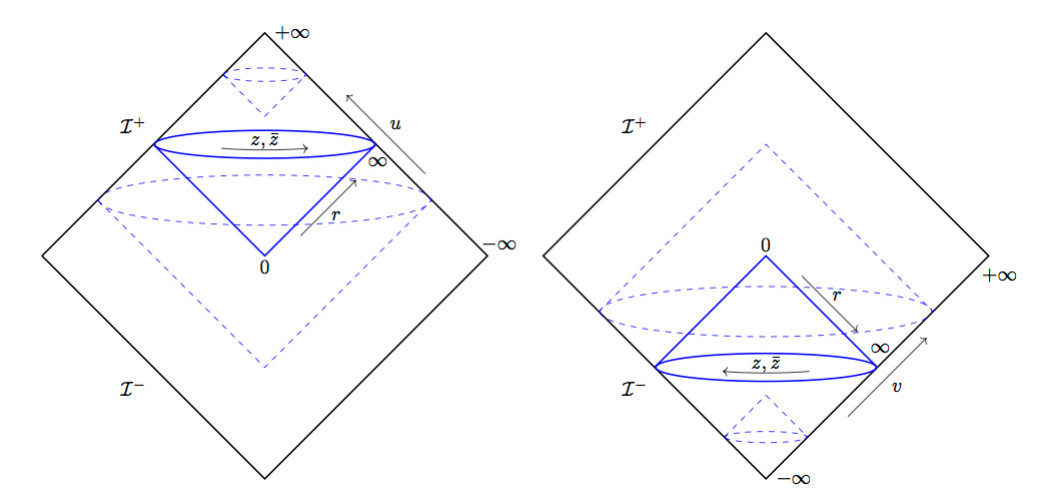 Figure 1
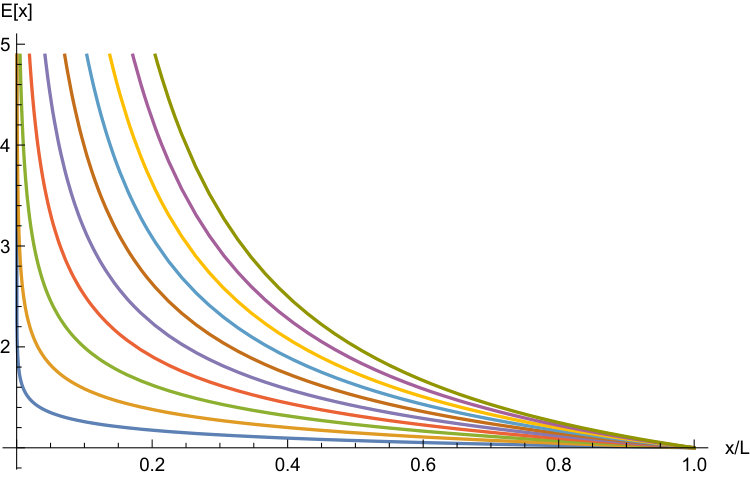 Figure 2
Peer Reviews
No public reviews on file for this paper yet. If you reviewed it on a platform where reviews are public (OpenReview, ICLR, NeurIPS, ICML), you can paste yours below so the community can read it here.
Videos
No videos yet. Explain this paper in a talk, walkthrough, or lecture? Add one.
Analogous BMS Symmetry in QED and Quantum Anomaly in Dirac and Weyl Semimetals
Andrea Addazi
Center for Field Theory and Particle Physics & Department of Physics, Fudan University, 200433 Shanghai, China
Antonino Marcianò
Center for Field Theory and Particle Physics & Department of Physics, Fudan University, 200433 Shanghai, China
Abstract
We show that the asymptotic infinite dimensional enlarged gauge symmetries constructed for QED are anomalous in Weyl semimetals. This symmetry is particularly important in particle physics for its analogy with the Bondi-Metzner-Sachs (BMS) symmetries in gravity, as well as for its connection with QED soft IR theorems. This leads to observable effects, because of the induction of a new current in the material, which carries a memory of the BMS symmetry precursor.
††preprint: IPM/P-2012/009
*Introduction. — * Dirac and Weyl semimetals are an exciting test-bed for many important concepts and frameworks of quantum field theory. Indeed, it was argued very recently that the chiral currents generated in these materials are understood as a manifestation of a chiral anomaly term. An holographic explanation of the phenomena was found Gooth:2017mbd ; Landsteiner:2017lwm ; Landsteiner:2017hye . This was developed connecting the quantum field theory description of the chiral anomalous phenomena to the anomalous terms of (an effective) string theory in higher dimensional anti-de Sitter bulk. Quantum anomalies are important in our understanding of high energy physics and in particular of the Standard Model of particles and interactions. As it is well known, the chiral anomaly induced by 1-loop triangles of quarks, explained the pion decay into two photons111We thank Jerzy Kowalsky-Glikman and Paolo Pani for reminding us to add this remark., reproducing the correct amount for the transitions observed in the laboratory.
It is also well known that all gauge anomalies of the Standard Model vanish by virtue of a perfect balance among the contributions arising from all the matter particles. This cancellation appears as an accidental miracle that allows the Standard Model to be not plagued by unitarity and causality loss. Finally, an anomaly of the scale invariance and conformal symmetry is dynamically generated by radiative corrections or by non-perturbative phenomena — this for instance the case of confinement in Quantum Chromodynamics. About the conformal anomaly, it was recently suggested that it may be tested in the very same Weyl-semimetals Chu:2018ksb ; Chu:2018ntx ; Chernodub:2017jcp ; Arjona:2019lxz ; Chernodub:2019blw . Indeed, for a boundary plane with a magnetic field parallelly oriented, the conformal Weyl anomaly induces a charge transport current.
In this letter, we propose a new paradigm of testing anomalies of infinite dimensional asymptotic symmetries. The Bondi-Metzner-Sachs (BMS) symmetry is certainly the most popular infinite dimensional asymptotic symmetry of gravity fields. As shown by Strominger and collaborators in a series of papers, BMS is related to the same Ward identities of the soft infrared gravitational radiation Strominger:2013jfa ; He:2014laa ; Strominger:2014pwa . Recently Hawking, Perry and Strominger proposed that the very same same black hole information loss paradox may be solved invoking a memory effect from the new Noether charges associated to BMS Hawking:2016msc . BMS symmetry is an extension of the conformal Weyl symmetry with new infinite supertranslation symmetries. Consequently BMS includes an infinite number of supertranslation charges, which may provide a gravitational memory effect. It has been also argued that an analogous of the BMS symmetry is recovered also in Quantum Electrodynamics, as a large gauge symmetry He:2014cra ; Kapec:2017tkm ; Henneaux:2018gfi .
A large gauge symmetry incorporates an infinite number of gauge symmetries He:2014cra ; Kapec:2017tkm ; Henneaux:2018gfi . Once again, this corresponds to an infinite number of Noether charges, and is exactly the symmetry that we claim to be anomalous in the Weyl semimetals. We unveil the appearance of this quantum anomaly in a simple set-up: a boundary plane with a constant magnetic field parallelly oriented on it. The magnetic field induces, through the analogous BMS anomaly, an electric current which leads to a characteristic potential and charge redistribution. Such an effect is related to the formation of Schwinger fermion pairs, which percolates into a characteristic electric potential and a Debye screening of the electric field. This modifies the standard electrostatic and vector potentials in the asymptotic limit as the breaking of the Large Asymptotic QED symmetry.
*BMS and large asymptotic gauge symmetries. — * Let us initially start from the standard vacuum theory in Minkowski space-time:
[TABLE]
We may complexify the variables through the change of coordinates
[TABLE]
[TABLE]
This allows to obtain the metric of the Minkowski spacetime in the future null infinity , as shown in the Penrose’s diagram in Fig.1, namely
[TABLE]
where and is the metric of the conformal sphere. The asymptotic topology is at the boundary. Boundaries of at are denoted as .
The bulk equations are as follows
[TABLE]
where and is the conserved matter where .
The gauge symmetry associated to the equation of motion (EoM) is
[TABLE]
We consider the retarded radial gauge, defined by
[TABLE]
Let us expand the fields around . To ensure a finite non-vanishing radiation flux, , a near is required. On the other hand, Eq.(7) implies that near . This implies that free Maxwell fields undergo the expansion
[TABLE]
The leading terms of the field strength are , , and . At leading order the constraint equation is
[TABLE]
where
[TABLE]
The gauge conditions for Eq.(7) leave unfixed the arbitrary function on the conformal sphere at . These are called Large Gauge Transformations, specified by
[TABLE]
The charges associated to the gauge theory on are
[TABLE]
A similar expression for the charges can be found in the past boundary :
[TABLE]
where now coefficient functions depend on the advanced coordinate in stead of the retarded .
The invariance of the theory under the large gauge symmetries generated by the charges casts
[TABLE]
where generically we have particles in the in state and in OUT as , while is the S-matrix operator. This implies that for an incoming state
[TABLE]
which means that the charges do not annihilate the vacuum state, unless is fixed to a constant. From this relation, one derives the associated Goldstone bosons, which coincide with the fields entering . The corresponding Ward identities are
[TABLE]
As we previously commented, in vacuum the conformal invariant sphere casts
[TABLE]
The identity disconnected component of the Lorentz group is isomorphic to , and acts as a conformal transformation to the Riemann sphere. More specifically, the transformation has the form
[TABLE]
where are complex number parameters constrained to . The transformation then acts on the metric as
[TABLE]
where
[TABLE]
The large asymptotic gauge symmetry preserves the conformal invariance of the sphere, i.e. the algebra of the theory is .
Such a group can be broken at the quantum level by conformal anomalies, induced from either gauge interactions or gravity, retaining the form
[TABLE]
For this class of QFT, has the form
[TABLE]
where here denotes , , , .
*Boundary QFT and induced anomaly.— * Let us introduce a plane static boundary at a certain point . Such a boundary induces a large asymptotic gauge symmetry anomaly. In Boundary Quantum Field Theory Cardy:1984bb ; McAvity:1993ue ; McAvity:1995zd , the renormalized current has a general structure close to the boundary of the form
[TABLE]
where the coefficients are dependent on the geometry. We focus on currents that are conserved once the anomaly term from Eq.(18) is disregarded.
Gauge invariance imposes the following constraints:
[TABLE]
[TABLE]
where are the background field gauge strenght, the normal boundary vector, the covariant derivative and the extrinsic curvature induced on the boundary. We have expressed by means of the extrinsic curvature, using the standard Gauss-Codazzi relation .
The variation of the anomaly term Eq. (18) leads to the relation with the integral on the bulk
[TABLE]
where is a x-regulator. Eq. (23) establishes a relation between the integrated anomaly and a variation of the gauge field coupled to the current. The integral is UV logarithmically divergent. The metric can be rewritten in the Gauss normal coordinates
[TABLE]
where is the normal vector. Let us chose a gauge and expand the gauge field around the boundary as . The variation of the Weyl anomaly with respect to the gauge field leads to , which is related to
[TABLE]
For and , the latter leads to
[TABLE]
which can also be rewritten as
[TABLE]
The BMS analogous charges are shifted to
[TABLE]
where is understood as a mapping between standard Minkowski in Cartesian-coordinates and the Penrose diagram coordinates. This result is somehow expected, since the new charge distribution on the x-axis does not allow to define conserved Noether charges on the asymptotic null infinity. Indeed, the phenomenon is related to a change of the vector and scalar potential in the asymptotic limit.
*Electric field from the anomaly, and suggested experiment.— * The new anomaly percolates on a new equation for the electric field
[TABLE]
which leads to an electrostatic potential and field, the profile of which is
[TABLE]
where is the critical anomalous exponent, which is related to , the renormalization function of the electric coupling , and the vacuum dielectric constant by
[TABLE]
If the presence of the boundary is within a dielectric material, Eq. (30) can be generalized with the dielectric of the material by substituting . In Fig.2 the predicted electric field corrected by the BMS analogous anomaly is displayed.
As a simple experimental set-up can be envisaged to test the effect of the quantum anomaly of analogous BMS symmetries arising from the boundary. We can propose exactly the same concept of Refs. Arjona:2019lxz ; Chernodub:2019blw , being sufficient to consider a Dirac or Weyl semi-metal material, applying a difference of potential on the two sides of it. In this way, we can test the electrostatic profile , which is affected by the quantum screening effect. Indeed, the conformal anomaly pointed out in Refs. Arjona:2019lxz ; Chernodub:2019blw is related to the BMS analogue in QED. However, there is a new prediction of BMS anomaly that cannot be captured by the conformal anomaly. This new class of effects are related to the electromagnetic radiation that may be detected from these materials, providing a new memory effect as for BMS and gravity. As a matter of fact, the soft Bremsstrahlung effect is described by the QED soft limits, in turn related to the Large Asymptotic Symmetry. An anomaly of it percolates onto the modification of the soft Bremsstrahlung effect. Indeed, being Eq. (15) anomalous, the asymptotic future and past charges in Eqs. (13)-(14) are modified by the anomaly. This affects any QED scattering process considered in the material. These aspects certainly deserve future extended experimental and theoretical analysis beyond the purposes of this paper.
Conclusions.— The infinite dimensional asymptotic gauge symmetry in QED is quantum anomalous in presence of a magnetized boundary. This effect may be tested in Dirac or Weyl semimetals over the next future. Thus, it might provide a better understanding of the role of infinite dimensional symmetries in quantum physics, including the BMS symmetries in gravity, which allow a memory effect for quantum black hole physics.
Acknowledgements.
We wish to acknowledge support by the NSFC, through the grant No. 11875113, by the Shanghai Municipality, through the grant No. KBH1512299, and by Fudan University, through the grant No. JJH1512105.
The reference list from the paper itself. Each links out to its DOI / PubMed record.
- 1(1) J. Gooth et al. , Nature 547 (2017) 324 doi:10.1038/nature 23005 [ar Xiv:1703.10682 [cond-mat.mtrl-sci]].
- 2(2) K. Landsteiner, E. Lopez and G. Milans del Bosch, Phys. Rev. Lett. 120 (2018) no.7, 071602 doi:10.1103/Phys Rev Lett.120.071602 [ar Xiv:1709.08384 [hep-th]].
- 3(3) K. Landsteiner and Y. Liu, Phys. Lett. B 783 (2018) 446 doi:10.1016/j.physletb.2018.04.068 [ar Xiv:1703.01944 [cond-mat.mes-hall]].
- 4(4) C. S. Chu and R. X. Miao, Phys. Rev. Lett. 121 (2018) no.25, 251602 doi:10.1103/Phys Rev Lett.121.251602 [ar Xiv:1803.03068 [hep-th]].
- 5(5) C. S. Chu and R. X. Miao, JHEP 1807 (2018) 005 doi:10.1007/JHEP 07(2018)005 [ar Xiv:1804.01648 [hep-th]].
- 6(6) M. N. Chernodub, A. Cortijo and M. A. H. Vozmediano, Phys. Rev. Lett. 120 (2018) no.20, 206601 doi:10.1103/Phys Rev Lett.120.206601 [ar Xiv:1712.05386 [cond-mat.str-el]].
- 7(7) V. Arjona, M. N. Chernodub and M. A. H. Vozmediano, ar Xiv:1902.02358 [cond-mat.mes-hall].
- 8(8) M. N. Chernodub and M. A. H. Vozmediano, ar Xiv:1902.02694 [cond-mat.str-el].