Fast and inefficient star formation due to short-lived molecular clouds and rapid feedback
J. M. Diederik Kruijssen (1,2), Andreas Schruba (3), M\'elanie, Chevance (1), Steven N. Longmore (4), Alexander P. S. Hygate (2,1), Daniel T., Haydon (1), Anna F. McLeod (5,6), Julianne J. Dalcanton (7), Linda J. Tacconi, (3), Ewine F. van Dishoeck (8,3) ((1) Heidelberg

TL;DR
This study reveals that star formation in molecular clouds is rapid and inefficient, driven by stellar feedback that disperses clouds within about 10 million years, explaining the slow overall star formation rate in galaxies.
Contribution
It introduces a novel statistical method to quantify GMC evolution, demonstrating that feedback limits cloud lifetimes and star formation efficiency, advancing understanding of galaxy-scale star formation processes.
Findings
GMCs and star formation are spatially de-correlated on small scales.
Stellar feedback disperses GMCs within ~1.5 Myr.
Star formation efficiency in GMCs is only 2-3%.
Abstract
The physics of star formation and the deposition of mass, momentum, and energy into the interstellar medium by massive stars (`feedback') are the main uncertainties in modern cosmological simulations of galaxy formation and evolution. These processes determine the properties of galaxies, but are poorly understood on the 100 pc scale of individual giant molecular clouds (GMCs) resolved in modern galaxy formation simulations. The key question is why the timescale for depleting molecular gas through star formation in galaxies ( Gyr) exceeds the dynamical timescale of GMCs by two orders of magnitude. Either most of a GMC's mass is converted into stars over many dynamical times, or only a small fraction turns into stars before the GMC is dispersed on a dynamical timescale. Here we report our observation that molecular gas and star formation are spatially…
Click any figure to enlarge with its caption.
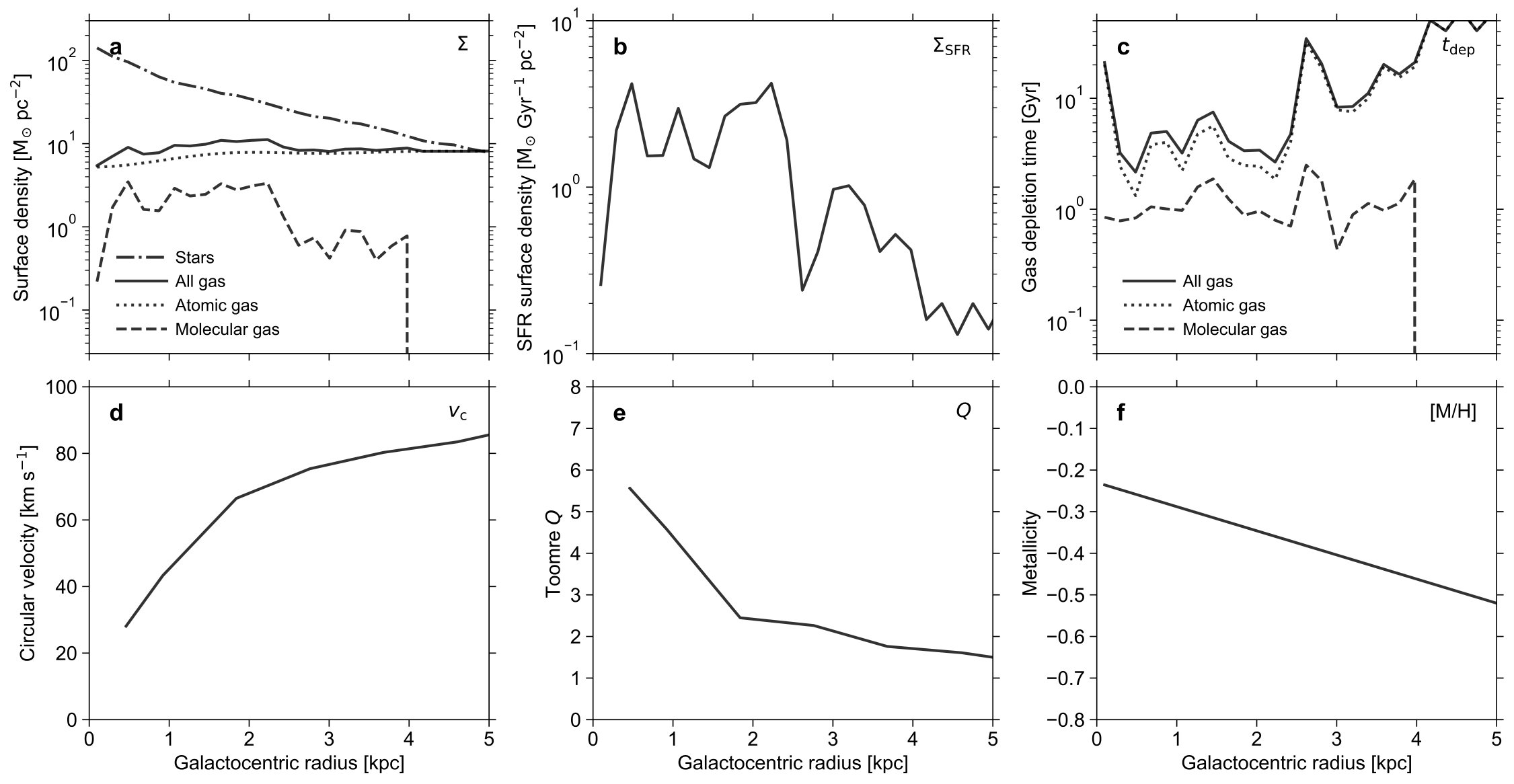 Figure 1
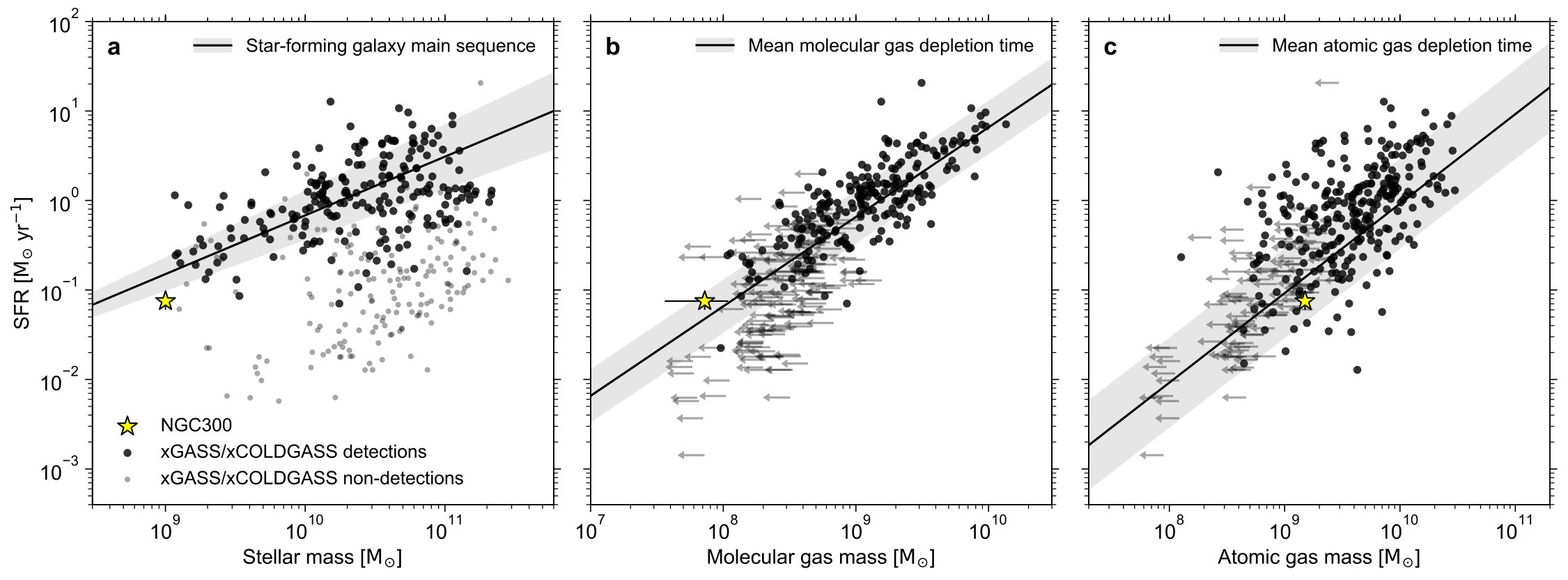 Figure 2
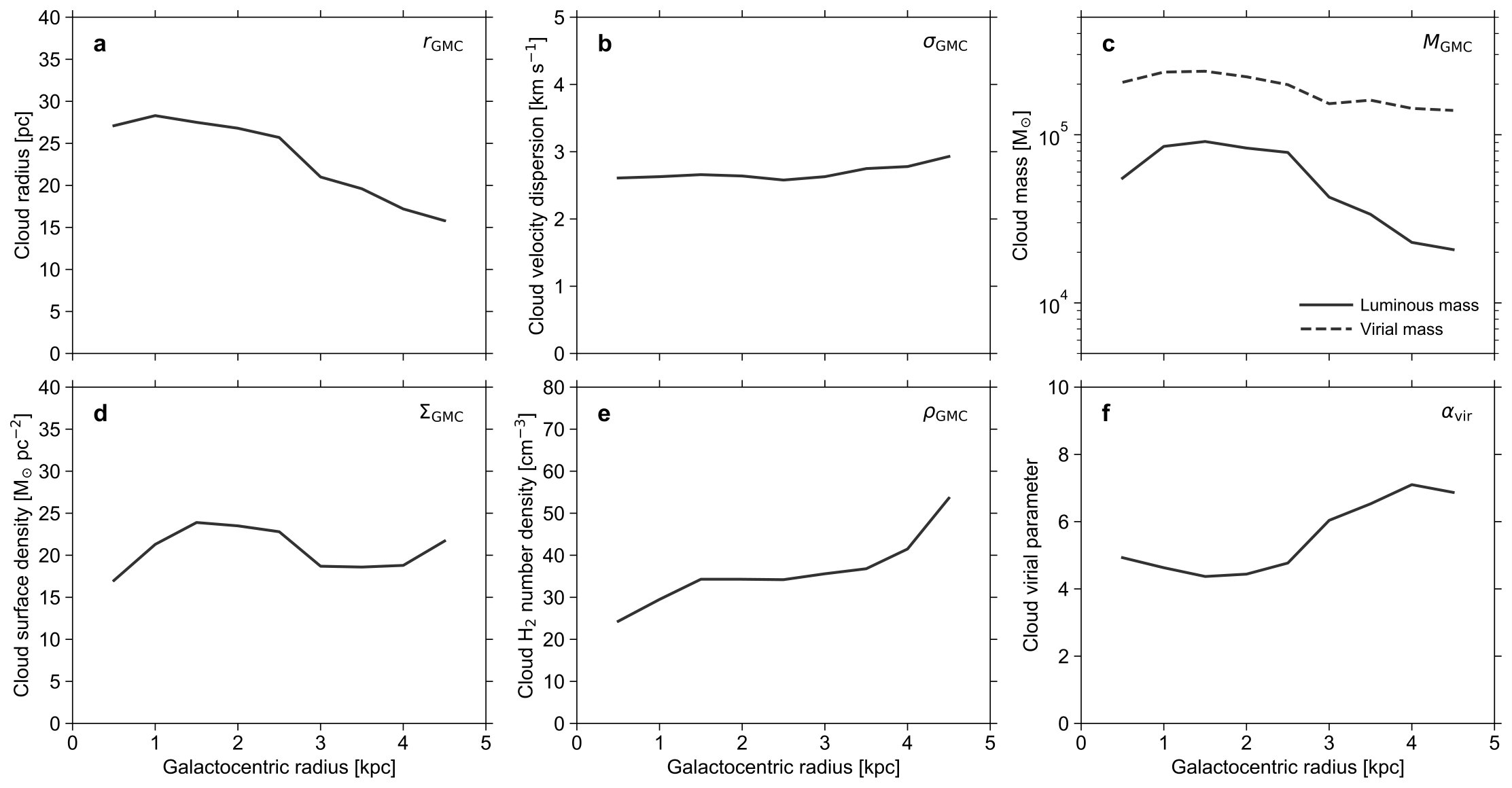 Figure 3
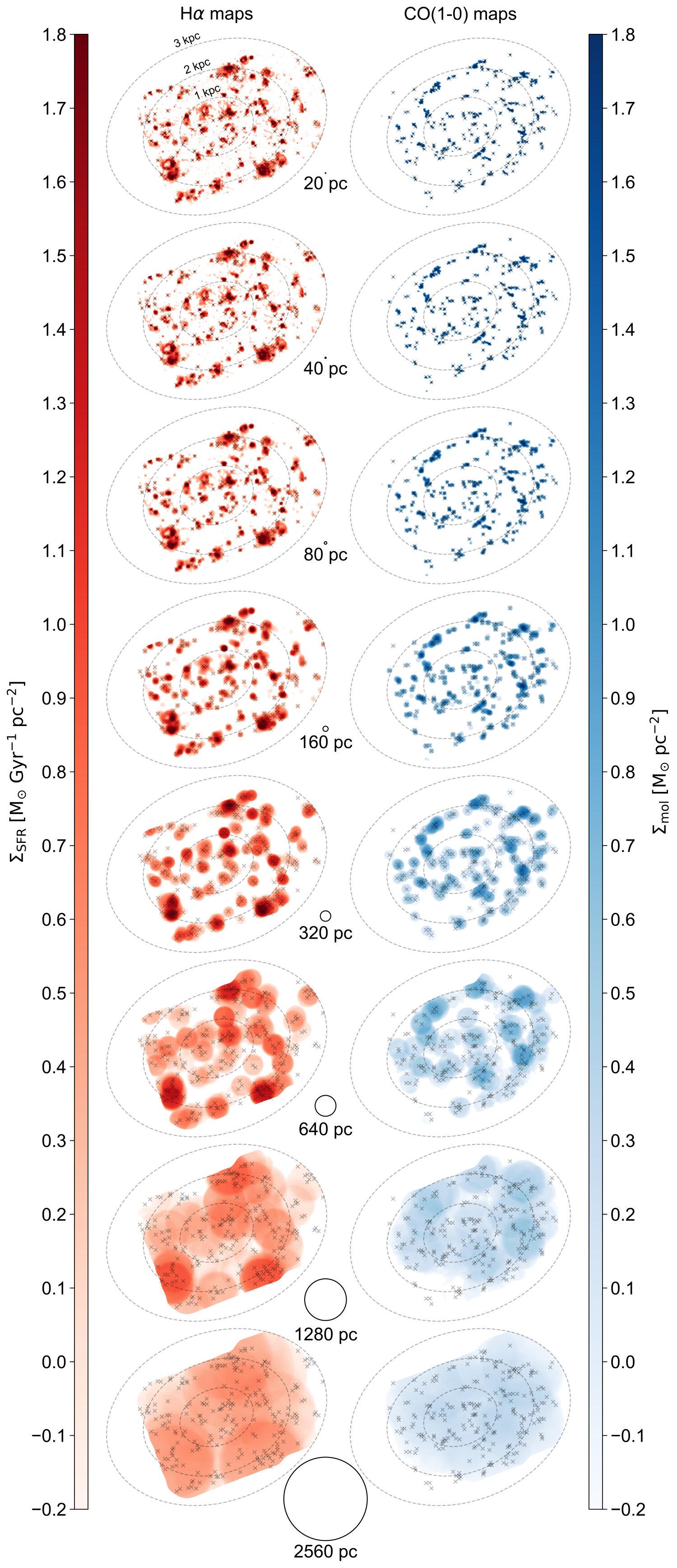 Figure 4
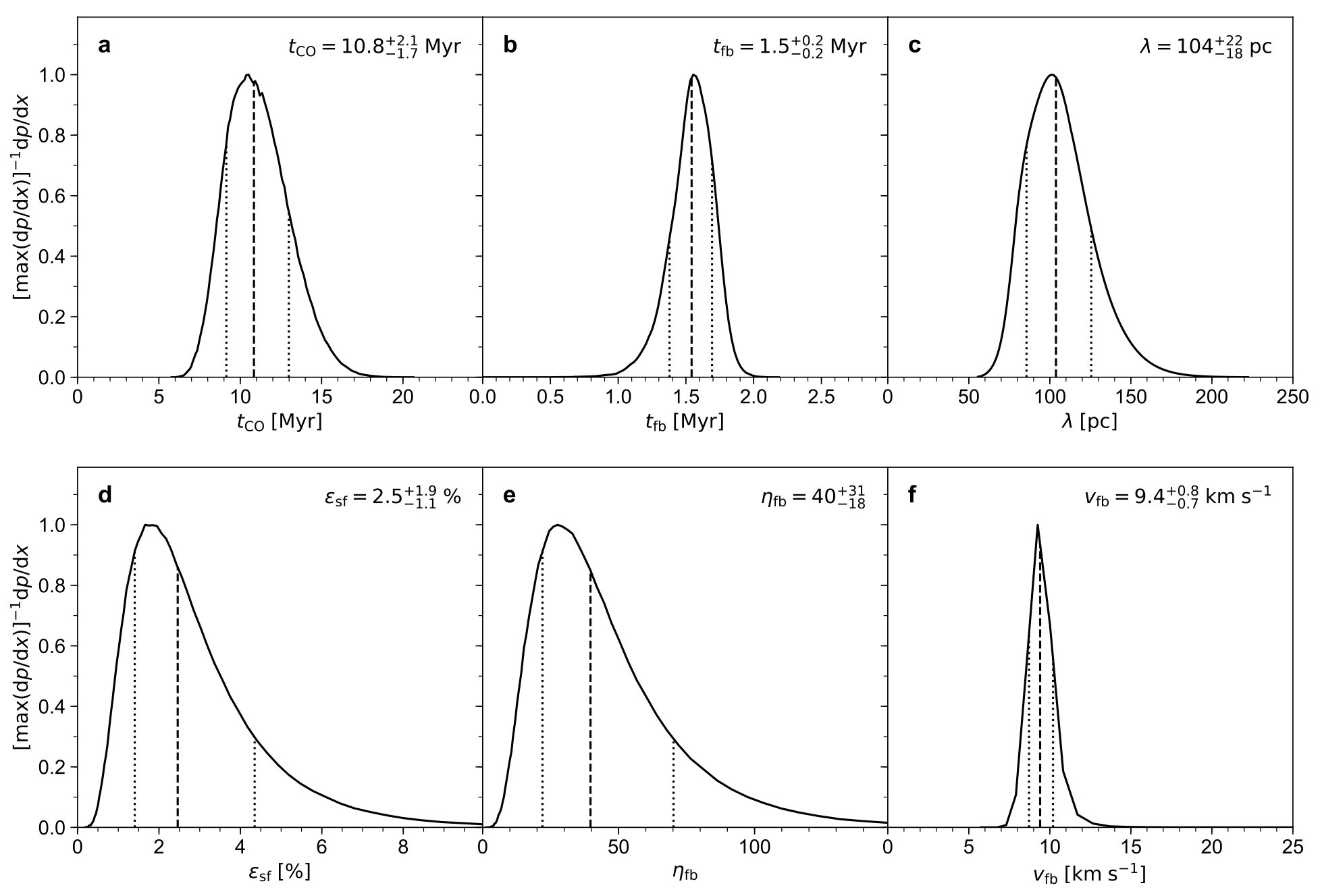 Figure 5
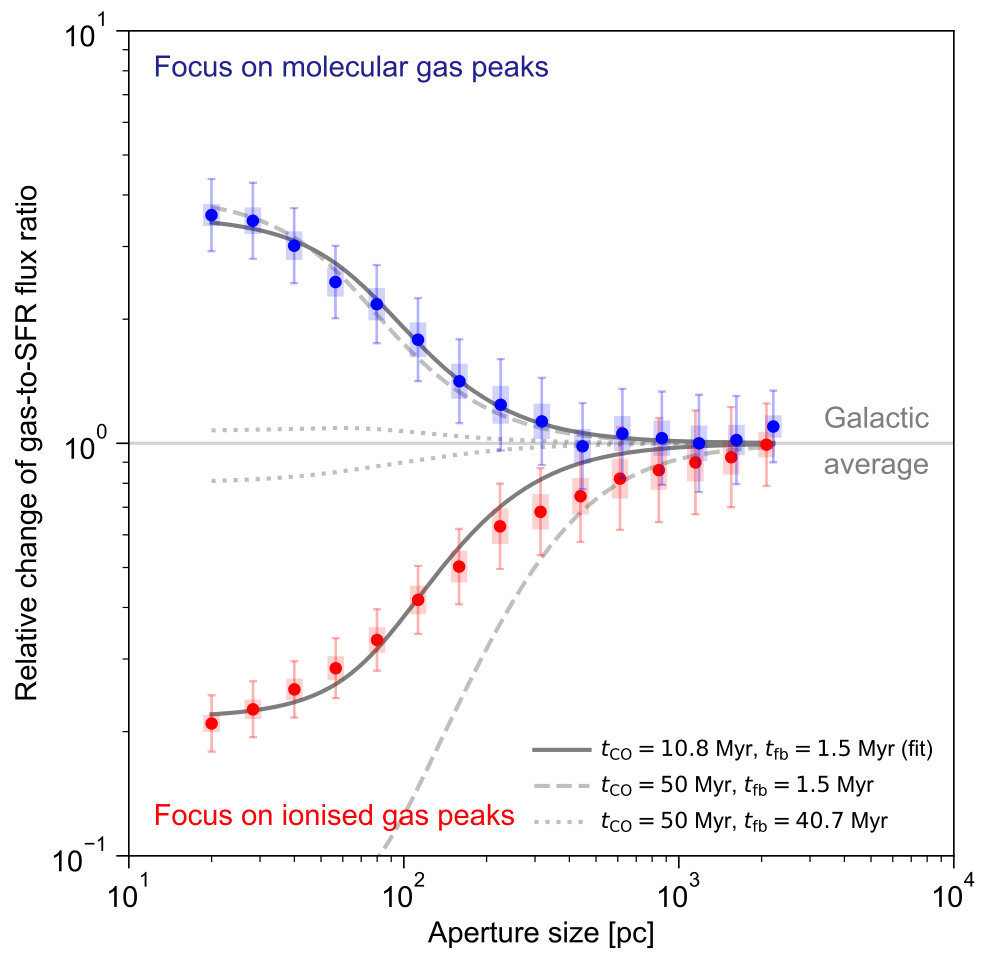 Figure 6
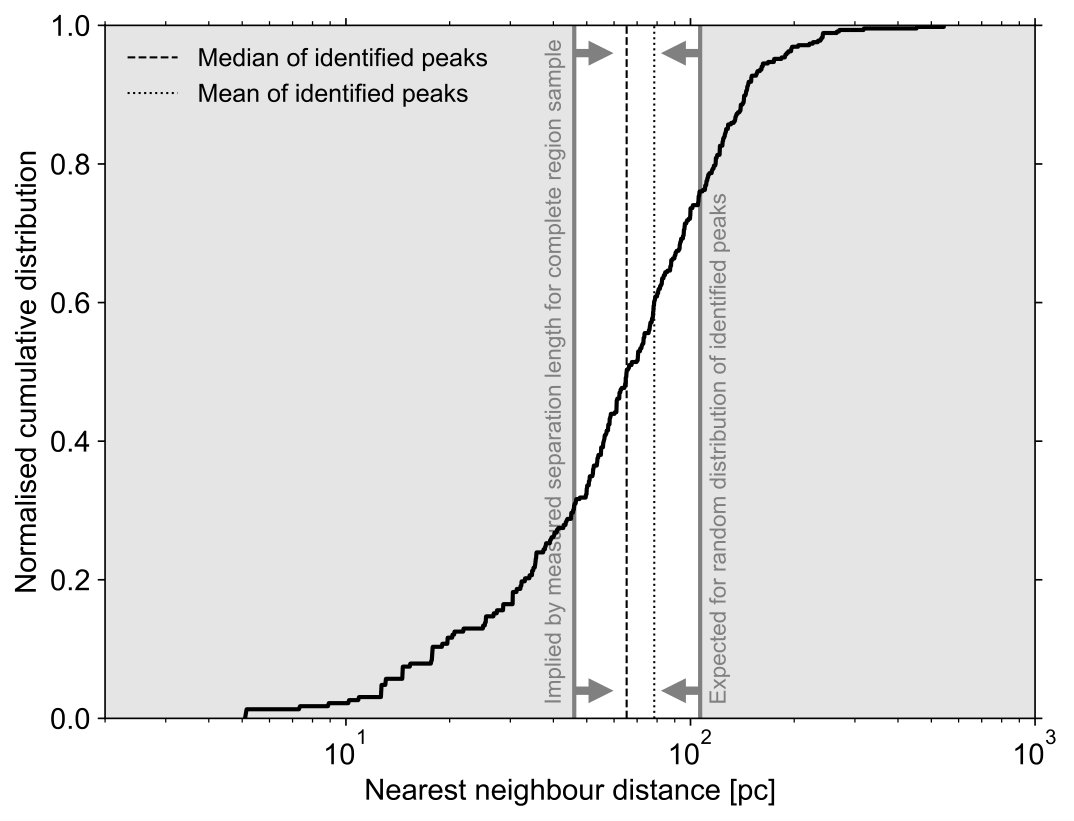 Figure 7
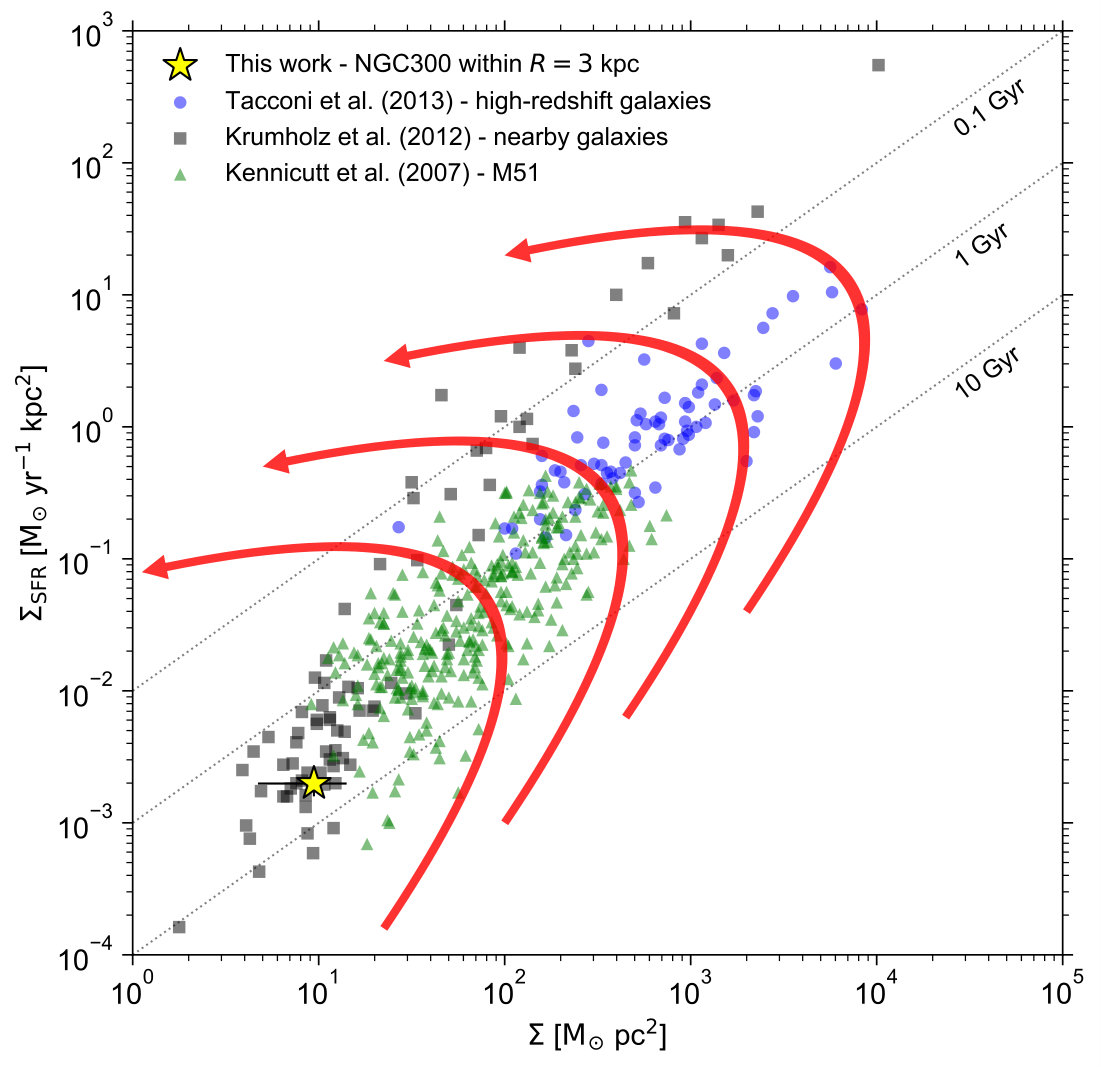 Figure 8
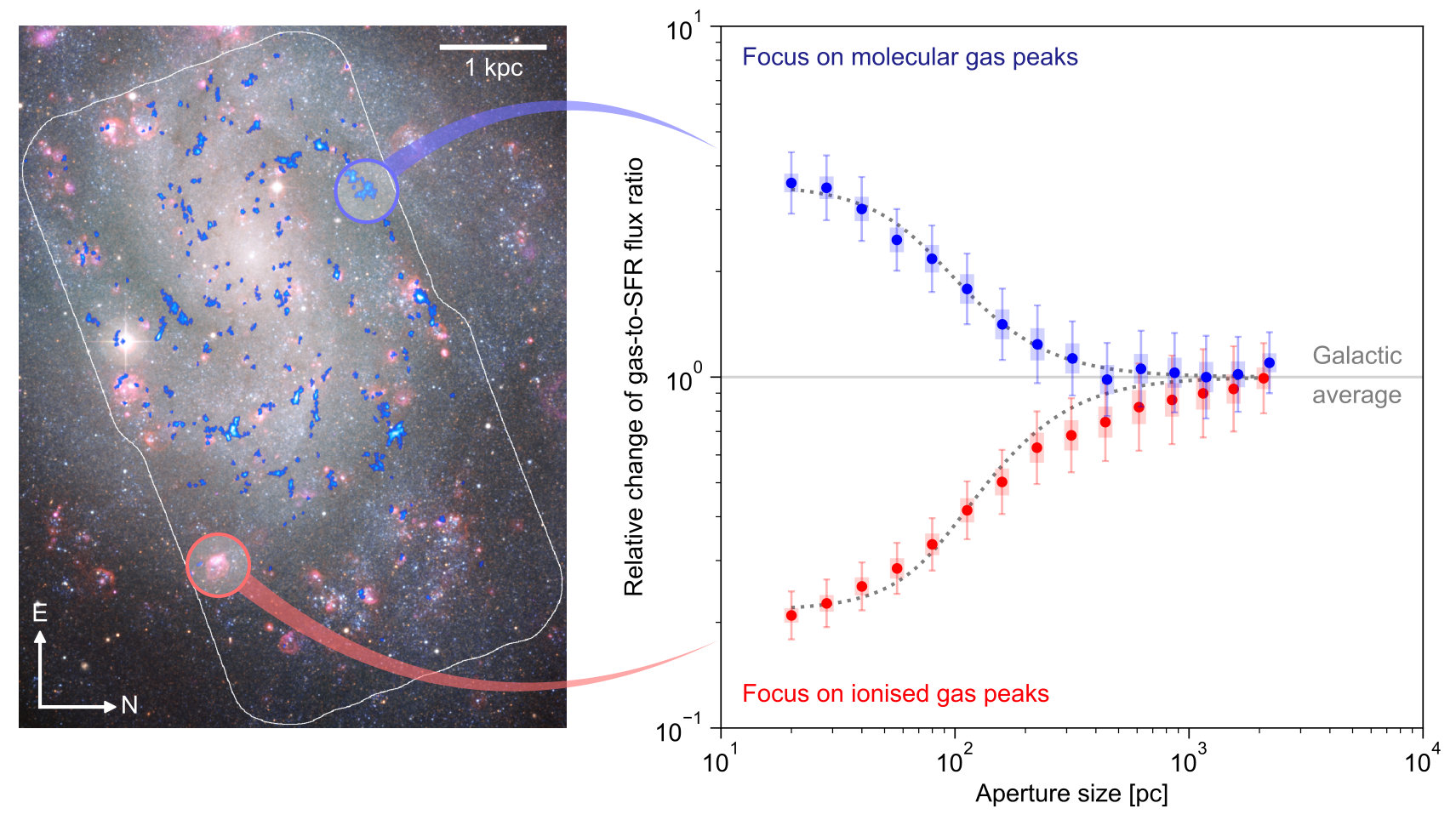 Figure 1
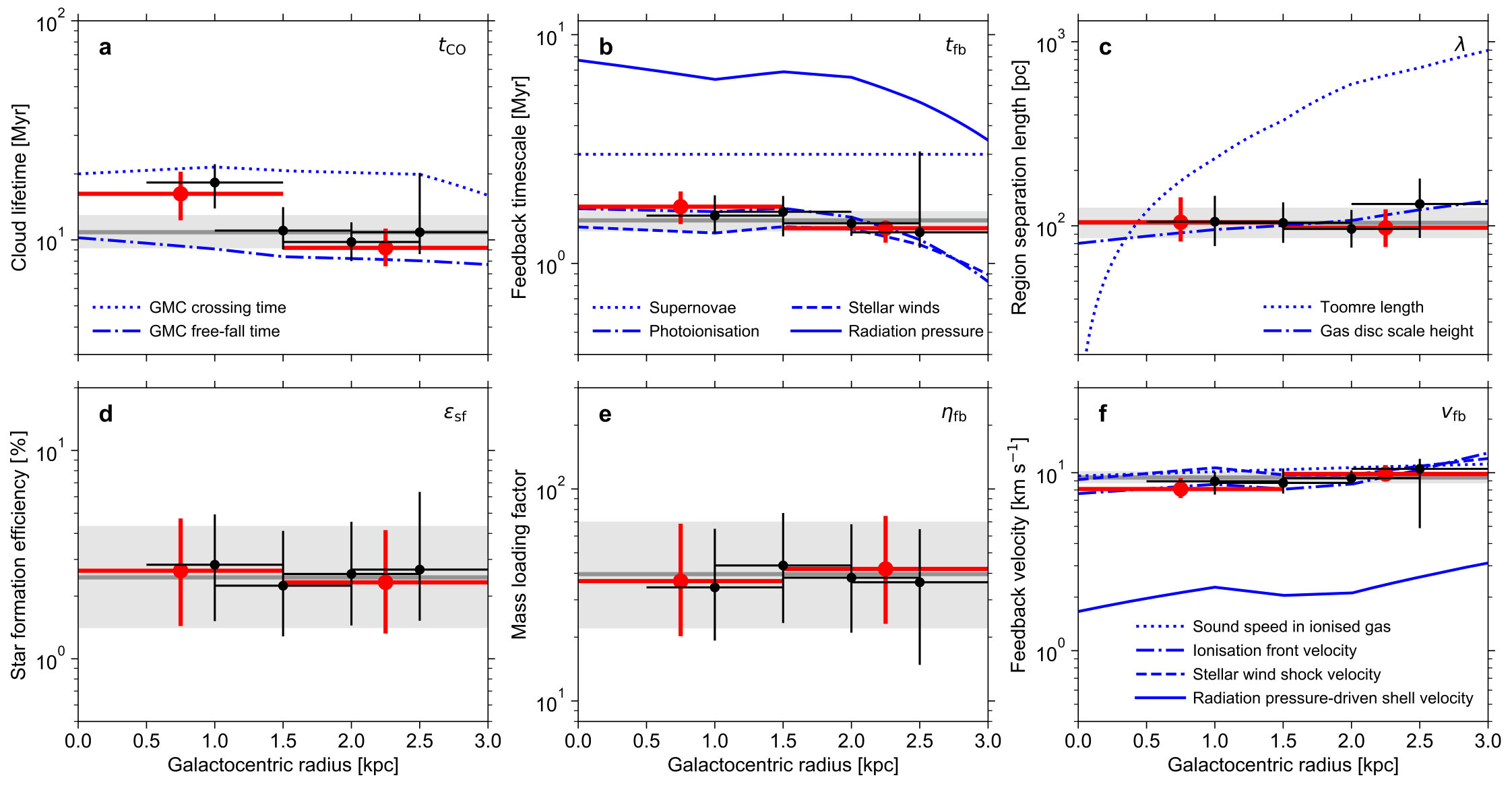 Figure 2
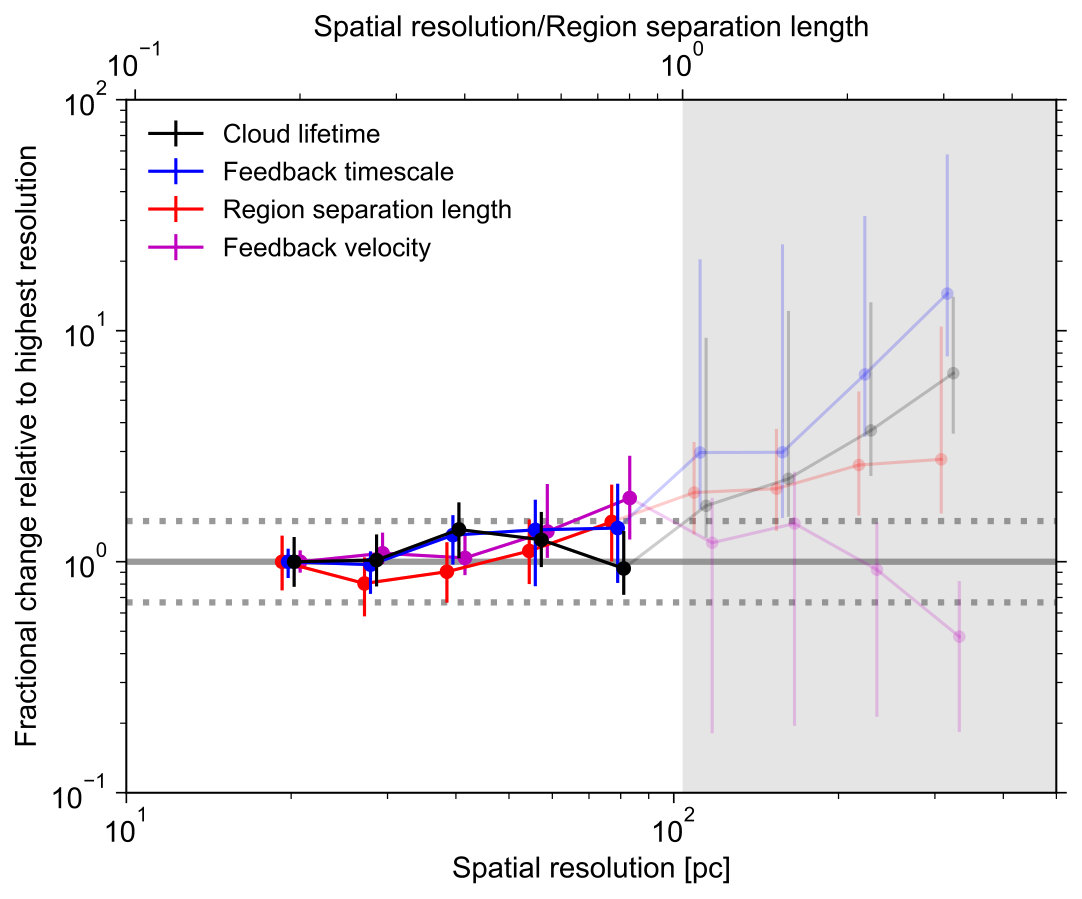 Figure 3
| Radial interval | |||||||
|---|---|---|---|---|---|---|---|
| – | |||||||
| – | |||||||
| – | |||||||
| – | |||||||
| – | |||||||
| – | |||||||
| – |
Peer Reviews
No public reviews on file for this paper yet. If you reviewed it on a platform where reviews are public (OpenReview, ICLR, NeurIPS, ICML), you can paste yours below so the community can read it here.
Videos
No videos yet. Explain this paper in a talk, walkthrough, or lecture? Add one.
Fast and inefficient star formation due to short-lived molecular clouds and rapid feedback
J. M. Diederik Kruijssen1,2
Andreas Schruba3
Mélanie Chevance1
Steven N. Longmore4
Alexander P. S. Hygate2,1
Daniel T. Haydon1
Anna F. McLeod5,6
Julianne J. Dalcanton7
Linda J. Tacconi3 & Ewine F. van Dishoeck8,3
Abstract
The physics of star formation and the deposition of mass, momentum, and energy into the interstellar medium by massive stars (‘feedback’) are the main uncertainties in modern cosmological simulations of galaxy formation and evolution[1, 2]. These processes determine the properties of galaxies[3, 4], but are poorly understood on the 100 pc scale of individual giant molecular clouds (GMCs)[5, 6] resolved in modern galaxy formation simulations[7, 8]. The key question is why the timescale for depleting molecular gas through star formation in galaxies (t_{\rm dep}\approx 2~{}\mbox{{\rm Gyr}})[9, 10] exceeds the dynamical timescale of GMCs by two orders of magnitude[11]. Either most of a GMC’s mass is converted into stars over many dynamical times[12], or only a small fraction turns into stars before the GMC is dispersed on a dynamical timescale[13, 14]. Here we report our observation that molecular gas and star formation are spatially de-correlated on GMC scales in the nearby flocculent spiral galaxy NGC300, contrary to their tight correlation on galactic scales[5]. We demonstrate that this de-correlation implies rapid evolutionary cycling between GMCs, star formation, and feedback. We apply a novel statistical method[15, 16] to quantify the evolutionary timeline and find that star formation is regulated by efficient stellar feedback, driving GMC dispersal on short timescales (1.5 Myr) due to radiation and stellar winds, prior to supernova explosions. This feedback limits GMC lifetimes to about one dynamical timescale (10 Myr), with integrated star formation efficiencies of only 23%. Our findings reveal that galaxies consist of building blocks undergoing vigorous, feedback-driven lifecycles, that vary with the galactic environment and collectively define how galaxies form stars. Systematic applications of this multi-scale analysis to large galaxy samples will provide key input for a predictive, bottom-up theory of galaxy formation and evolution.
†† {affiliations} Astronomisches Rechen-Institut, Zentrum für Astronomie der Universität Heidelberg, Mönchhofstraße 12-14, 69120 Heidelberg, Germany Max-Planck Institut für Astronomie, Königstuhl 17, 69117 Heidelberg, Germany Max-Planck Institut für Extraterrestrische Physik, Giessenbachstraße 1, 85748 Garching, Germany Astrophysics Research Institute, Liverpool John Moores University, IC2, Liverpool Science Park, 146 Brownlow Hill, Liverpool L3 5RF, United Kingdom Department of Astronomy, University of California Berkeley, Berkeley, CA 94720, USA Department of Physics & Astronomy, Texas Tech Univ., PO Box 41051, Lubbock, TX 79409, USA Department of Astronomy, University of Washington, Box 351580, Seattle, WA 98195, USA Leiden Observatory, Leiden University, P.O. Box 9513, NL-2300 RA, Leiden, the Netherlands
We carry out an empirical measurement to explain why t_{\rm dep}=t_{\rm sf}/\epsilon_{\rm sf}\approx 2~{}\mbox{{\rm Gyr}}, where and represent degenerate quantities: is the timescale over which gas is turned into stars and represents the fraction of mass converted into stars (the ‘star formation efficiency’ or SFE). If star formation within GMCs is slow and efficient (long , high ), GMCs and young stars are co-spatial for many dynamical times. If star formation is fast and inefficient (short , low ), they should rarely coincide. Therefore, measurements of the spatial correlation between gas and young stars discriminate between these two scenarios.
We characterise the lifecycle of GMCs and star-forming regions by applying a new statistical method[16] to maps of the molecular gas and emission from young massive stars in NGC300. This method requires observational data at high sensitivity and resolution over a large field-of-view, now available with the Atacama Large Millimeter/submillimeter Array (ALMA). NGC300 is the perfect target for the first application of this method, as it is the closest ( Mpc), face-on, star-forming disc galaxy accessible from the southern hemisphere. Figure 1 (left) shows the molecular gas traced by our high-resolution (2^{\prime\prime}=20~{}\mbox{{\rm pc}}) ALMA map of CO(1-0). We combine this with a matched-resolution map of H-emitting Hii regions from the MPG/ESO 2.2-m telescope to trace recent star formation. The use of H means that we define ‘star formation’ to refer to an unembedded stellar population, with a mass of at least 200~{}\mbox{M{}_{\odot}} and a normal stellar initial mass function (see Methods).
We characterise the correlation between GMCs and star formation by placing apertures on peaks of CO(1-0) or H emission, and measuring how the enclosed CO-to-H flux ratios are elevated or suppressed, respectively, relative to the galactic average as the aperture size is changed (Figure 1 and Supplementary Video 1)[17, 15]. The shorter-lived of these two tracers will be rare compared to the longer-lived, more common one. Only a small number of apertures are required to cover the complete sample of rare, short-lived emission peaks. These will encompass a relatively small part of the galaxy and contain few of the many long-lived emission peaks. This results in a CO-to-H flux ratio that differs significantly from the galactic average. Conversely, covering the long-lived emission peaks requires numerous apertures that will also include many of the short-lived emission peaks, resulting in a modest deviation from the galactic CO-to-H ratio.
We fit a model describing this statistical behaviour[16] (see Methods and Supplementary Video 2) to measure how long GMCs live and form stars (), how long feedback takes to evacuate residual gas (, the time for which GMCs and Hii regions coexist), and the mean separation length between independent star-forming regions (), below which the CO-to-H ratio significantly deviates from the galactic average. These evolutionary time and length scales define the fraction of gas converted into stars (the cloud-scale integrated SFE), the time-averaged mass outflow rate per unit star formation rate (SFR) (the mass loading factor ), and the feedback outflow velocity (). Extensive tests[16] show that these quantities are measured with an accuracy of better than . The quantities , , , and are independent of the adopted CO-to-H2 and H-to-SFR conversion factors.
Figure 1 (left) demonstrates that CO(1-0) and H emission are rarely co-spatial; they do not trace each other on the cloud scale. We quantify this in Figure 1 (right), which shows the CO-to-H flux ratio as a function of the aperture size for apertures placed on either CO(1-0) or H emission peaks (cf. Supplementary Video 1). We find a symmetric de-correlation between CO(1-0) and H emission on small ({<}150~{}\mbox{{\rm pc}}) scales, implying that molecular gas and star formation are distinct, subsequent phases of the GMC and Hii region lifecycle with similar durations. The aperture size at which the two branches diverge shows that NGC300 consists of independent, cloud-scale building blocks separated by 100{-}150~{}\mbox{{\rm pc}} (cf. Figure 2) that exist in a state of vigorous evolutionary cycling. This empirical result implies that star formation is fast and inefficient; the long gas depletion times observed on galactic scales are not due to slow star formation on the cloud scale.
To infer which physics drive the observed evolutionary cycling, we fit the statistical model described in the Methods[16] to the data and summarise the constrained quantities in Table 1. We analyse both the entire field of view and several bins in galactic radius, visualised in Figure 2. We measure GMC lifetimes spanning t_{\rm CO}=9{-}18~{}\mbox{{\rm Myr}}, with a galactic average of t_{\rm CO}=10.8^{+2.1}_{-1.7}~{}\mbox{{\rm Myr}}. These lifetimes fall between the GMC crossing and gravitational free-fall times (see Methods) at all galactic radii. GMC lifetimes are the longest in the central region (R<1.5~{}\mbox{{\rm kpc}}), most likely caused by higher disc stability (see Extended Data Figure 1) and the correspondingly increased influence of galactic shear in supporting the GMCs against collapse[18, 19]. The GMCs live and form stars for a dynamical timescale, after which they are dispersed relative to the new-born stellar population. This implies that the global evolution of GMCs is not significantly slowed down by support from magnetic fields and that GMCs do not live long enough to be affected by spiral arm crossings[12] or cloud-cloud collisions[20] (see Methods).
GMC dispersal is likely feedback-driven in NGC300. By construction, our analysis measures the cumulative GMC lifetime up to (and including) the onset of massive star formation traced by H emission, integrating over multiple cycles if these are unassociated with H. The GMCs in NGC300 have high virial ratios (see Methods) and have a cumulative lifetime of about one crossing time. This short timescale does not permit multiple GMC lifecycles during which GMCs disperse dynamically (which each would take a turbulent crossing time) prior to massive star formation. It is therefore most plausible that the GMC lifetime is limited by feedback from massive stars. GMCs and Hii regions coexist on average for t_{\rm fb}=1.5^{+0.2}_{-0.2}~{}\mbox{{\rm Myr}}, independently of galactic radius, implying that GMCs are dispersed before the first supernovae explode (\sim 3~{}\mbox{{\rm Myr}}, see Methods). Instead, early feedback by photoionisation, stellar winds, or radiation pressure is needed, none of which are currently included in large-scale cosmological simulations of galaxy formation[21, 22]. The quantitative comparison to predicted GMC dispersal timescales (Figure 2) shows that GMCs in NGC300 are primarily dispersed by photoionisation and stellar winds. The importance of stellar feedback in regulating the GMC lifecycle is further supported by the measured region separation lengths of \lambda=100{-}150~{}\mbox{{\rm pc}}. These closely match the disc scale height across the range of galactic radii, which is expected if the interstellar medium is structured by feedback-driven bubbles that depressurise when they break out of the disc[23, 24].
The short coexistence timescale of 1.5 Myr refers to that of unembedded, massive stars; low-mass stars or embedded massive stars could form and coexist with the parent GMC for longer. While we cannot trace low-mass stars in NGC300, we search for embedded massive star-forming regions using a Spitzer m map, which does not suffer from extinction. We find only regions bright at m that are not associated with H emission, out of a total number of 224 identified H peaks (or %). This small number of embedded massive star-forming regions in NGC300 can be explained by the low GMC surface densities (\sim 20~{}\mbox{M{}_{\odot}}~{}\mbox{{\rm pc}}^{-2}, implying an H extinction of only mag), and the observed spatial offset of m emission and GMCs (consistent with observations of the Milky Way[25]). This means that our extinction-corrected H map recovers most of the SFR, and rules out any significant impact of embedded massive stars on the conclusions of this work (also see Methods).
The GMCs in NGC300 achieve average integrated SFEs of only . The SFE is constant with radius, indicating that local variations in reflect changes of the GMC lifetime. Feedback disperses the GMCs whenever the observed SFE reaches a few percent. Due to the low SFE, the mass loading factor on the cloud scale is high, with . On galactic scales, is about an order of magnitude lower[26, 27], indicating that most of the expelled material will not escape NGC300, but will cool to form a new generation of GMCs. This is confirmed by the measured feedback velocities of v_{\rm fb}=8.1{-}10.5~{}\mbox{{\rm km}{}{\rm s}^{-1}}, which match the predicted photoionisation and stellar wind bubble velocities (including their increase with galactic radius) and fall well below the local escape velocities[28] of 50{-}120~{}\mbox{{\rm km}{}{\rm s}^{-1}}. The feedback velocity is derived from and the GMC radius and thus represents a prediction that can be verified independently with integral-field spectroscopy of the ionised gas kinematics.
Numerical simulations of galaxy formation and evolution often describe cloud-scale star formation with prescriptions based on the galactic-scale relation between the (molecular) gas mass and SFR[21, 22]. However, our results demonstrate that star-forming galaxies undergo rapid evolutionary cycling on spatial scales {<}150~{}\mbox{{\rm pc}}. Gas and young stars are not instantly related and the appearance of galaxies constantly changes. This fundamental behaviour of observed galaxies should be reproduced by simulations, rather than adopting the galactic-scale relationships to describe star formation on GMC scales. Our results show that GMC dynamics and pre-supernova feedback mechanisms need to be modelled to achieve this. Otherwise, galaxy simulations reproduce the macroscopic properties of galaxies for the wrong reasons. Initial steps towards including early feedback are promising in this regard[29, 8].
Figure 2 (top left) shows that the lifecycle of GMCs and Hii regions is not universal, but within NGC300 exhibits a factor-of-2 variation with galactic environment. GMC lifetimes may vary depending on the importance of galactic dynamics relative to cloud-scale dynamics[19], whereas the impact of stellar feedback is predicted to depend on the ambient gas density (see Methods). Future GMC-scale observations of large galaxy samples will reveal dynamical cycling processes similar to those identified here and in previous Galactic observations[5]. Our statistical method will facilitate the interpretation of these observations by constraining the physics setting the GMC lifecycle in galaxies as a function of their properties.
Figure 3 shows the performance of our method[16] as a function of spatial resolution (and thus galaxy distance). Owing to its statistical nature, this method does not require resolving individual GMCs or star-forming regions, but only their separation , offering a major benefit relative to previous methods for characterising evolutionary cycling on sub-galactic scales. Local galaxies like NGC300 require a resolution of pc, which Figure 2 shows corresponds to the disc scale height; the cloud-scale physics of star formation and feedback can therefore be characterised for hundreds of galaxies within tens of Mpc at resolution with current observatories. At high redshift (), the high gas content implies elevated scale heights and collapse length scales of[30] kpc (below which fragmentation can still occur), implying that the dynamical cycling scale may be accessible by modern observatories (at ) across cosmic time. This possibility is promising in view of the environmental dependences identified here. Mapping the GMC lifecycle across the Universe will eventually enable the representation of galaxies as ensembles of vigorously evolving building blocks and motivate a bottom-up theory of how galaxies grow and form stars, from high redshift to the present day.
References
- [1]
- [2]
Bolatto, A. D., Wolfire, M. & Leroy, A. K.
The CO-to-H2 Conversion Factor.
ARA&A 51, 207–268 (2013).
- [3]
Wong, T. et al.
The Magellanic Mopra Assessment (MAGMA). I. The Molecular Cloud Population of the Large Magellanic Cloud.
ApJS 197, 16 (2011).
- [4]
Druard, C. et al.
The IRAM M 33 CO(2-1) survey. A complete census of molecular gas out to 7 kpc.
A&A 567, A118 (2014).
- [5]
Faesi, C. M., Lada, C. J., Forbrich, J., Menten, K. M. & Bouy, H.
Molecular Cloud-scale Star Formation in NGC 300.
ApJ 789, 81 (2014).
- [6]
Roussel, H. et al.
Extinction Law Variations and Dust Excitation in the Spiral Galaxy NGC 300.
ApJ 632, 227–252 (2005).
- [7]
Luridiana, V., Morisset, C. & Shaw, R. A.
PyNeb: a new tool for analyzing emission lines. I. Code description and validation of results.
A&A 573, A42 (2015).
- [8]
Leitherer, C. et al.
Starburst99: Synthesis Models for Galaxies with Active Star Formation.
ApJS 123, 3–40 (1999).
- [9]
Haydon, D. T. et al.
An uncertainty principle for star formation – III. The characteristic time-scales of star formation rate tracers.
MNRAS submitted, arXiv:1810.10897 (2018).
- [10]
Murphy, E. J. et al.
Calibrating Extinction-free Star Formation Rate Diagnostics with 33 GHz Free-free Emission in NGC 6946.
ApJ 737, 67 (2011).
- [11]
Kroupa, P.
On the variation of the initial mass function.
MNRAS 322, 231–246 (2001).
- [12]
Kang, X., Zhang, F., Chang, R., Wang, L. & Cheng, L.
The star formation history of low-mass disk galaxies: A case study of NGC 300.
A&A 585, A20 (2016).
- [13]
Dalcanton, J. J. et al.
The ACS Nearby Galaxy Survey Treasury.
ApJS 183, 67–108 (2009).
- [14]
Koch, E. W. et al.
Kinematics of the atomic ISM ifigun M33 on 80 pc scales.
MNRAS 479, 2505–2533 (2018).
- [15]
Dale, D. A. et al.
The Spitzer Local Volume Legacy: Survey Description and Infrared Photometry.
ApJ 703, 517–556 (2009).
- [16]
Querejeta, M. et al.
The Spitzer Survey of Stellar Structure in Galaxies (S4G): Precise Stellar Mass Distributions from Automated Dust Correction at 3.6 m.
ApJS 219, 5 (2015).
- [17]
Meidt, S. E. et al.
Reconstructing the Stellar Mass Distributions of Galaxies Using S4G IRAC 3.6 and 4.5 m Images. I. Correcting for Contamination by Polycyclic Aromatic Hydrocarbons, Hot Dust, and Intermediate-age Stars.
ApJ 744, 17 (2012).
- [18]
Leroy, A. K. et al.
The Star Formation Efficiency in Nearby Galaxies: Measuring Where Gas Forms Stars Effectively.
AJ 136, 2782–2845 (2008).
- [19]
Meidt, S. E. et al.
Reconstructing the Stellar Mass Distributions of Galaxies Using S4G IRAC 3.6 and 4.5 m Images. II. The Conversion from Light to Mass.
ApJ 788, 144 (2014).
- [20]
Faesi, C. M., Lada, C. J. & Forbrich, J.
The ALMA View of GMCs in NGC 300: Physical Properties and Scaling Relations at 10 pc Resolution.
ApJ 857, 19 (2018).
- [21]
van der Kruit, P. C. & Freeman, K. C.
Galaxy Disks.
ARA&A 49, 301–371 (2011).
- [22]
Gogarten, S. M. et al.
The Advanced Camera for Surveys Nearby Galaxy Survey Treasury. V. Radial Star Formation History of NGC 300.
ApJ 712, 858–874 (2010).
- [23]
Bresolin, F. et al.
Extragalactic Chemical Abundances: Do H II Regions and Young Stars Tell the Same Story? The Case of the Spiral Galaxy NGC 300.
ApJ 700, 309–330 (2009).
- [24]
Saintonge, A. et al.
xCOLD GASS: The Complete IRAM 30 m Legacy Survey of Molecular Gas for Galaxy Evolution Studies.
ApJS 233, 22 (2017).
- [25]
Catinella, B. et al.
xGASS: total cold gas scaling relations and molecular-to-atomic gas ratios of galaxies in the local Universe.
MNRAS 476, 875–895 (2018).
- [26]
Moster, B. P., Naab, T. & White, S. D. M.
Galactic star formation and accretion histories from matching galaxies to dark matter haloes.
MNRAS 428, 3121–3138 (2013).
- [27]
Bland-Hawthorn, J. & Gerhard, O.
The Galaxy in Context: Structural, Kinematic, and Integrated Properties.
ARA&A 54, 529–596 (2016).
- [28]
Rosolowsky, E. & Leroy, A.
Bias-free Measurement of Giant Molecular Cloud Properties.
PASP 118, 590–610 (2006).
- [29]
Leroy, A. K. et al.
ALMA Reveals the Molecular Medium Fueling the Nearest Nuclear Starburst.
ApJ 801, 25 (2015).
- [30]
Solomon, P. M., Rivolo, A. R., Barrett, J. & Yahil, A.
Mass, luminosity, and line width relations of Galactic molecular clouds.
ApJ 319, 730–741 (1987).
- [31]
Williams, J. P., de Geus, E. J. & Blitz, L.
Determining structure in molecular clouds.
ApJ 428, 693–712 (1994).
- [32]
da Silva, R. L., Fumagalli, M. & Krumholz, M.
SLUG—Stochastically Lighting Up Galaxies. I. Methods and Validating Tests.
ApJ 745, 145 (2012).
- [33]
Krumholz, M. R., Fumagalli, M., da Silva, R. L., Rendahl, T. & Parra, J.
SLUG - stochastically lighting up galaxies - III. A suite of tools for simulated photometry, spectroscopy, and Bayesian inference with stochastic stellar populations.
MNRAS 452, 1447–1467 (2015).
- [34]
Hygate, A. P. S. et al.
An uncertainty principle for star formation – IV. On the nature and filtering of diffuse emission.
MNRAS submitted, arXiv:1810.11405 (2018).
- [35]
Schruba, A. et al.
A Molecular Star Formation Law in the Atomic-gas-dominated Regime in Nearby Galaxies.
AJ 142, 37 (2011).
- [36]
Leroy, A. K. et al.
Molecular Gas and Star Formation in nearby Disk Galaxies.
AJ 146, 19 (2013).
- [37]
Pety, J. et al.
The Plateau de Bure + 30 m Arcsecond Whirlpool Survey Reveals a Thick Disk of Diffuse Molecular Gas in the M51 Galaxy.
ApJ 779, 43 (2013).
- [38]
Krumholz, M. R., Dekel, A. & McKee, C. F.
A Universal, Local Star Formation Law in Galactic Clouds, nearby Galaxies, High-redshift Disks, and Starbursts.
ApJ 745, 69 (2012).
- [39]
Elmegreen, B. G.
Supercloud formation by nonaxisymmetric gravitational instabilities in sheared magnetic galaxy disks.
ApJ 312, 626–639 (1987).
- [40]
Leitherer, C. et al.
The Effects of Stellar Rotation. II. A Comprehensive Set of Starburst99 Models.
ApJS 212, 14 (2014).
- [41]
Spitzer, L.
Physical processes in the interstellar medium (Wiley-Interscience, 1978).
- [42]
Hosokawa, T. & Inutsuka, S.-i.
Dynamical Expansion of Ionization and Dissociation Front around a Massive Star. II. On the Generality of Triggered Star Formation.
ApJ 646, 240–257 (2006).
- [43]
Tielens, A. G. G. M.
The Physics and Chemistry of the Interstellar Medium (Cambridge University Press, 2005).
- [44]
Weaver, R., McCray, R., Castor, J., Shapiro, P. & Moore, R.
Interstellar bubbles. II - Structure and evolution.
ApJ 218, 377–395 (1977).
- [45]
Mac Low, M.-M. & McCray, R.
Superbubbles in disk galaxies.
ApJ 324, 776–785 (1988).
- [46]
Thompson, T. A., Quataert, E. & Murray, N.
Radiation Pressure-supported Starburst Disks and Active Galactic Nucleus Fueling.
ApJ 630, 167–185 (2005).
- [47]
Krumholz, M. R. & Thompson, T. A.
Direct Numerical Simulation of Radiation Pressure-driven Turbulence and Winds in Star Clusters and Galactic Disks.
ApJ 760, 155 (2012).
- [48]
Rosen, A. L., Lopez, L. A., Krumholz, M. R. & Ramirez-Ruiz, E.
Gone with the wind: Where is the missing stellar wind energy from massive star clusters?
MNRAS 442, 2701–2716 (2014).
- [49]
Chevance, M. et al.
A milestone toward understanding PDR properties in the extreme environment of LMC-30 Doradus.
A&A 590, A36 (2016).
- [50]
Toomre, A.
On the gravitational stability of a disk of stars.
ApJ 139, 1217–1238 (1964).
- [51]
Schruba, A. et al.
Physical Properties of Molecular Clouds at 2 pc Resolution in the Low-metallicity Dwarf Galaxy NGC 6822 and the Milky Way.
ApJ 835, 278 (2017).
- [52]
Hughes, A. et al.
A Comparative Study of Giant Molecular Clouds in M51, M33, and the Large Magellanic Cloud.
ApJ 779, 46 (2013).
- [53]
Schruba, A., Kruijssen, J. M. D. & Leroy, A. K.
How Galactic Environment affects the Dynamical State of Molecular Clouds and their Star Formation Efficiency.
ApJ submitted (2018).
- [54]
Clark, P. C., Bonnell, I. A., Zinnecker, H. & Bate, M. R.
Star formation in unbound giant molecular clouds: the origin of OB associations?
MNRAS 359, 809–818 (2005).
- [55]
Padoan, P., Haugbølle, T. & Nordlund, Å.
A Simple Law of Star Formation.
ApJ 759, L27 (2012).
- [56]
Dale, J. E., Ercolano, B. & Bonnell, I. A.
Ionizing feedback from massive stars in massive clusters - III. Disruption of partially unbound clouds.
MNRAS 430, 234–246 (2013).
- [57]
Rathborne, J. M. et al.
A Cluster in the Making: ALMA Reveals the Initial Conditions for High-mass Cluster Formation.
ApJ 802, 125 (2015).
- [58]
Scoville, N. Z., Solomon, P. M. & Sanders, D. B.
CO observations of spiral structure and the lifetime of giant molecular clouds.
In Burton, W. B. (ed.) The Large-Scale Characteristics of the Galaxy, vol. 84 of IAU Symposium, 277–282 (1979).
- [59]
Sanders, D. B., Scoville, N. Z. & Solomon, P. M.
Giant molecular clouds in the Galaxy. II - Characteristics of discrete features.
ApJ 289, 373–387 (1985).
- [60]
Hartmann, L., Ballesteros-Paredes, J. & Bergin, E. A.
Rapid Formation of Molecular Clouds and Stars in the Solar Neighborhood.
ApJ 562, 852–868 (2001).
- [61]
Engargiola, G., Plambeck, R. L., Rosolowsky, E. & Blitz, L.
Giant Molecular Clouds in M33. I. BIMA All-Disk Survey.
ApJS 149, 343–363 (2003).
- [62]
Blitz, L. et al.
Giant Molecular Clouds in Local Group Galaxies.
Protostars and Planets V 81–96 (2007).
- [63]
Kawamura, A. et al.
The Second Survey of the Molecular Clouds in the Large Magellanic Cloud by NANTEN. II. Star Formation.
ApJS 184, 1–17 (2009).
- [64]
Murray, N.
Star Formation Efficiencies and Lifetimes of Giant Molecular Clouds in the Milky Way.
ApJ 729, 133 (2011).
- [65]
Dobbs, C. L. et al.
Formation of Molecular Clouds and Global Conditions for Star Formation.
Protostars and Planets VI 3–26 (2014).
- [66]
Meidt, S. E. et al.
Short GMC Lifetimes: An Observational Estimate with the PdBI Arcsecond Whirlpool Survey (PAWS).
ApJ 806, 72 (2015).
- [67]
Kruijssen, J. M. D., Dale, J. E. & Longmore, S. N.
The dynamical evolution of molecular clouds near the Galactic Centre - I. Orbital structure and evolutionary timeline.
MNRAS 447, 1059–1079 (2015).
- [68]
Corbelli, E. et al.
From molecules to young stellar clusters: the star formation cycle across the disk of M 33.
A&A 601, A146 (2017).
- [69]
Barnes, A. T. et al.
Star formation rates and efficiencies in the Galactic Centre.
MNRAS 469, 2263–2285 (2017).
- [70]
Kreckel, K. et al.
A 50 pc Scale View of Star Formation Efficiency across NGC 628.
ApJ 863, L21 (2018).
- [71]
Grasha, K. et al.
Connecting young star clusters to CO molecular gas in NGC 7793 with ALMA-LEGUS.
MNRAS 481, 1016–1027 (2018).
- [72]
Efremov, Y. N. & Elmegreen, B. G.
Hierarchical star formation from the time-space distribution of star clusters in the Large Magellanic Cloud.
MNRAS 299, 588–594 (1998).
- [73]
Elmegreen, B. G. & Falgarone, E.
A Fractal Origin for the Mass Spectrum of Interstellar Clouds.
ApJ 471, 816 (1996).
- [74]
Hopkins, P. F.
An excursion-set model for the structure of giant molecular clouds and the interstellar medium.
MNRAS 423, 2016–2036 (2012).
- [75]
Hopkins, P. F.
A general theory of turbulent fragmentation.
MNRAS 430, 1653–1693 (2013).
- [76]
Mac Low, M.-M. & Klessen, R. S.
Control of star formation by supersonic turbulence.
Reviews of Modern Physics 76, 125–194 (2004).
- [77]
Henshaw, J. D., Longmore, S. N. & Kruijssen, J. M. D.
Seeding the Galactic Centre gas stream: gravitational instabilities set the initial conditions for the formation of protocluster clouds.
MNRAS 463, L122–L126 (2016).
- [78]
Zamora-Avilés, M., Vázquez-Semadeni, E. & Colín, P.
An Evolutionary Model for Collapsing Molecular Clouds and Their Star Formation Activity.
ApJ 751, 77 (2012).
- [79]
Elmegreen, B. G.
On the Appearance of Thresholds in the Dynamical Model of Star Formation.
ApJ 854, 16 (2018).
- [80]
Burkhart, B.
The Star Formation Rate in the Gravoturbulent Interstellar Medium.
ApJ 863, 118 (2018).
- [81]
Vázquez-Semadeni, E., Zamora-Avilés, M., Galván-Madrid, R. & Forbrich, J.
Molecular cloud evolution - VI. Measuring cloud ages.
MNRAS 479, 3254–3263 (2018).
- [82]
Feldmann, R., Gnedin, N. Y. & Kravtsov, A. V.
How Universal is the Relation?
ApJ 732, 115 (2011).
- [83]
Semenov, V. A., Kravtsov, A. V. & Gnedin, N. Y.
Nonuniversal Star Formation Efficiency in Turbulent ISM.
ApJ 826, 200 (2016).
- [84]
Semenov, V. A., Kravtsov, A. V. & Gnedin, N. Y.
The Physical Origin of Long Gas Depletion Times in Galaxies.
ApJ 845, 133 (2017).
- [85]
Semenov, V. A., Kravtsov, A. V. & Gnedin, N. Y.
How Galaxies Form Stars: The Connection between Local and Global Star Formation in Galaxy Simulations.
ApJ 861, 4 (2018).
- [86]
Ochsendorf, B. B., Meixner, M., Roman-Duval, J., Rahman, M. & Evans, N. J., II.
What Sets the Massive Star Formation Rates and Efficiencies of Giant Molecular Clouds?
ApJ 841, 109 (2017).
- [87]
Silk, J.
Feedback, Disk Self-Regulation, and Galaxy Formation.
ApJ 481, 703 (1997).
- [88]
Elmegreen, B. G. & Efremov, Y. N.
A Universal Formation Mechanism for Open and Globular Clusters in Turbulent Gas.
ApJ 480, 235–245 (1997).
- [89]
Kennicutt, R. C., Jr.
Star Formation in Galaxies Along the Hubble Sequence.
ARA&A 36, 189–232 (1998).
- [90]
Fujimoto, Y., Tasker, E. J., Wakayama, M. & Habe, A.
Do giant molecular clouds care about the galactic structure?
MNRAS 439, 936–953 (2014).
- [91]
Dobbs, C. L., Pringle, J. E. & Duarte-Cabral, A.
The frequency and nature of ‘cloud-cloud collisions’ in galaxies.
MNRAS 446, 3608–3620 (2015).
- [92]
Tasker, E. J., Wadsley, J. & Pudritz, R.
Star Formation in Disk Galaxies. III. Does Stellar Feedback Result in Cloud Death?
ApJ 801, 33 (2015).
- [93]
Meidt, S. E. et al.
Gas Kinematics on Giant Molecular Cloud Scales in M51 with PAWS: Cloud Stabilization through Dynamical Pressure.
ApJ 779, 45 (2013).
- [94]
Meidt, S. E. et al.
A Model for the Onset of Self-gravitation and Star Formation in Molecular Gas Governed by Galactic Forces. I. Cloud-scale Gas Motions.
ApJ 854, 100 (2018).
- [95]
Ostriker, E. C., McKee, C. F. & Leroy, A. K.
Regulation of Star Formation Rates in Multiphase Galactic Disks: A Thermal/Dynamical Equilibrium Model.
ApJ 721, 975–994 (2010).
- [96]
Ostriker, E. C. & Shetty, R.
Maximally Star-forming Galactic Disks. I. Starburst Regulation Via Feedback-driven Turbulence.
ApJ 731, 41 (2011).
- [97]
Kim, C.-G., Kim, W.-T. & Ostriker, E. C.
Regulation of Star Formation Rates in Multiphase Galactic Disks: Numerical Tests of the Thermal/Dynamical Equilibrium Model.
ApJ 743, 25 (2011).
- [98]
Hopkins, P. F. et al.
Galaxies on FIRE (Feedback In Realistic Environments): stellar feedback explains cosmologically inefficient star formation.
MNRAS 445, 581–603 (2014).
- [99]
Stinson, G. S. et al.
Making Galaxies In a Cosmological Context: the need for early stellar feedback.
MNRAS 428, 129–140 (2013).
- [100]
Dale, J. E.
The modelling of feedback in star formation simulations.
New. Astron. Rev. 68, 1–33 (2015).
- [101]
Gatto, A. et al.
Modelling the supernova-driven ISM in different environments.
MNRAS 449, 1057–1075 (2015).
- [102]
Gatto, A. et al.
The SILCC project - III. Regulation of star formation and outflows by stellar winds and supernovae.
MNRAS 466, 1903–1924 (2017).
- [103]
Hu, C.-Y., Naab, T., Glover, S. C. O., Walch, S. & Clark, P. C.
Variable interstellar radiation fields in simulated dwarf galaxies: supernovae versus photoelectric heating.
MNRAS 471, 2151–2173 (2017).
- [104]
Matzner, C. D.
On the Role of Massive Stars in the Support and Destruction of Giant Molecular Clouds.
ApJ 566, 302–314 (2002).
- [105]
Krumholz, M. R. & Matzner, C. D.
The Dynamics of Radiation-pressure-dominated H II Regions.
ApJ 703, 1352–1362 (2009).
- [106]
Dale, J. E., Ngoumou, J., Ercolano, B. & Bonnell, I. A.
Before the first supernova: combined effects of H II regions and winds on molecular clouds.
MNRAS 442, 694–712 (2014).
- [107]
Matzner, C. D. & Jumper, P. H.
Star Cluster Formation with Stellar Feedback and Large-scale Inflow.
ApJ 815, 68 (2015).
- [108]
Rahner, D., Pellegrini, E. W., Glover, S. C. O. & Klessen, R. S.
Winds and radiation in unison: a new semi-analytic feedback model for cloud dissolution.
MNRAS 470, 4453–4472 (2017).
- [109]
Kim, J.-G., Kim, W.-T. & Ostriker, E. C.
Modeling UV Radiation Feedback from Massive Stars. II. Dispersal of Star-forming Giant Molecular Clouds by Photoionization and Radiation Pressure.
ApJ 859, 68 (2018).
- [110]
Lopez, L. A. et al.
The Role of Stellar Feedback in the Dynamics of H II Regions.
ApJ 795, 121 (2014).
- [111]
Kennicutt, R. C., Jr. et al.
Star Formation in NGC 5194 (M51a). II. The Spatially Resolved Star Formation Law.
ApJ 671, 333–348 (2007).
- [112]
Tacconi, L. J. et al.
Phibss: Molecular Gas Content and Scaling Relations in z ~ 1-3 Massive, Main-sequence Star-forming Galaxies.
ApJ 768, 74 (2013).
**SUPPLEMENTARY INFORMATION **
Supplementary Video 1 Spatial de-correlation between molecular gas and ionised emission from young stars towards small spatial scales in the nearby galaxy NGC300. The top panels show the ionised emission (H, left) and molecular gas (CO, right) maps of NGC300, with crosses indicating the emission peaks in each of the maps. The bottom-left panel shows the gas depletion time (the ratio between the top maps). The colour of this map changes from white on large spatial scales (strong CO-H correlation) to bright red and blue on small spatial scales (strong CO-H anti-correlation). The bottom-right panel quantifies this behaviour by showing how the change of the CO-to-H flux ratio relative to the galactic average increases towards small (<150~{}\mbox{{\rm pc}}) aperture sizes. The circle and vertical line indicate the spatial scale (‘aperture size’) at which the galaxy is observed.
Supplementary Video 2 Relation between the change of the CO-to-H flux ratio relative to the galactic average and the physical quantities defining the cloud lifecycle. The young stellar lifetime (), the cloud lifetime (), the feedback timescale (), and the region separation length () are initially set equal to values measured for NGC300, but are systematically varied to demonstrate their effect on the CO-to-H ratio. The top panels show mock ‘CO’ and ‘H’ maps from a numerical simulation of a disc galaxy, with an inclination and position angle mimicking NGC300. The images are generated using stellar particles in specific age intervals, yielding emission peak lifetimes as indicated in the timeline and annotation at the top of the video. The bottom-left panel shows the ‘gas depletion time’, i.e. the ratio between the top maps. The bottom-right panel shows the change of this ratio relative to the galactic average, with indicated along the bottom axis. This diagram provides a non-degenerate measurement of the three measured quantities (, , and ), because is known (see Methods).
The reference list from the paper itself. Each links out to its DOI / PubMed record.
- 1[1] Somerville, R. S. & Davé, R. Physical Models of Galaxy Formation in a Cosmological Framework. ARA&A 53 , 51–113 (2015).
- 2[2] Naab, T. & Ostriker, J. P. Theoretical Challenges in Galaxy Formation. ARA&A 55 , 59–109 (2017).
- 3[3] Scannapieco, C. et al. The Aquila comparison project: the effects of feedback and numerical methods on simulations of galaxy formation. MNRAS 423 , 1726–1749 (2012).
- 4[4] Hopkins, P. F., Narayanan, D. & Murray, N. The meaning and consequences of star formation criteria in galaxy models with resolved stellar feedback. MNRAS 432 , 2647–2653 (2013).
- 5[5] Kennicutt, R. C. & Evans, N. J. Star Formation in the Milky Way and Nearby Galaxies. ARA&A 50 , 531–608 (2012).
- 6[6] Krumholz, M. R. The big problems in star formation: The star formation rate, stellar clustering, and the initial mass function. Phys. Rep. 539 , 49–134 (2014).
- 7[7] Grand, R. J. J. et al. The Auriga Project: the properties and formation mechanisms of disc galaxies across cosmic time. MNRAS 467 , 179–207 (2017).
- 8[8] Hopkins, P. F. et al. FIRE-2 simulations: physics versus numerics in galaxy formation. MNRAS 480 , 800–863 (2018).