Revealing the complex nature of bonding in binary high-pressure compound FeO$_2$
E. Koemets, I. Leonov, M. Bykov, E. Bykova, S. Chariton, G. Aprilis,, T. Fedotenko, S. Cl\'ement, J. Rouquette, J. Haines, V. Cerantola, K., Glazyrin, C. McCammon, V. B. Prakapenka, M. Hanfland, H.-P. Liermann, V., Svitlyk, R. Torchio, A.D. Rosa, T. Irifune, A. V. Ponomareva

TL;DR
This study combines experimental and theoretical methods to reveal that in high-pressure cubic FeO₂ and FeO₂H₀.₅, iron is ferric and oxygen has a valence less than 2, indicating complex bonding involving localized holes.
Contribution
It provides new insights into the electronic structure and bonding of high-pressure FeO₂ compounds, combining multiple advanced techniques.
Findings
Iron in high-pressure FeO₂ is ferric (Fe³⁺).
Oxygen has a formal valence less than 2, around 1.5.
Localized holes at oxygen sites explain the reduced oxygen valence.
Abstract
Extreme pressures and temperatures are known to drastically affect the chemistry of iron oxides resulting in numerous compounds forming homologous series FeOFeO and the appearance of FeO. Here, based on the results of \emph{in situ} single-crystal X-ray diffraction, M\"ossbauer spectroscopy, X-ray absorption spectroscopy, and DFT+dynamical mean-field theory calculations we demonstrate that iron in high pressure cubic FeO and isostructural FeOH is ferric (Fe), and oxygen has a formal valence less than two. Reduction of oxygen valence from 2, common for oxides, down to 1.5 can be explained by a formation of a localized hole at oxygen sites.
Click any figure to enlarge with its caption.
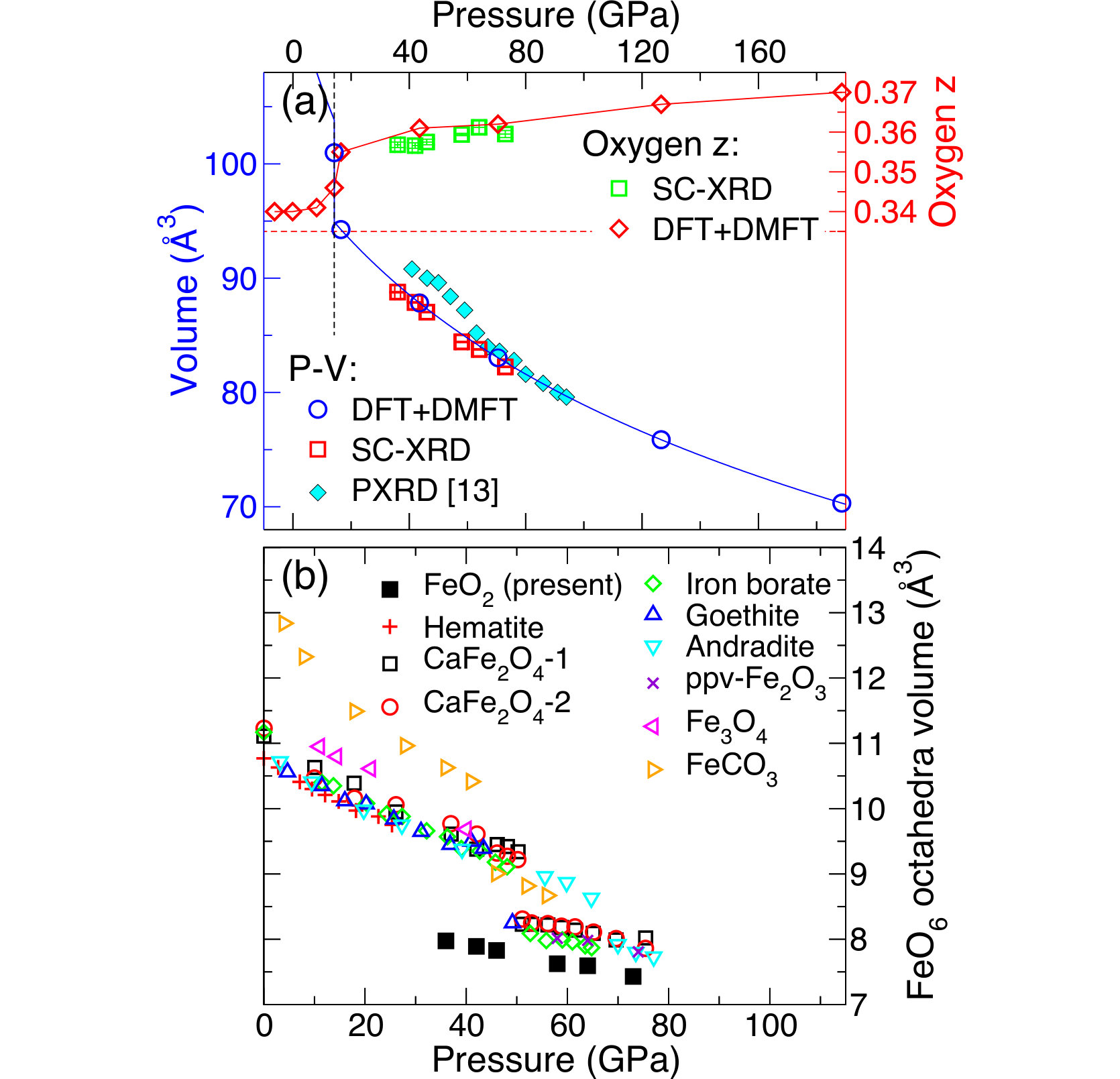 Figure 1
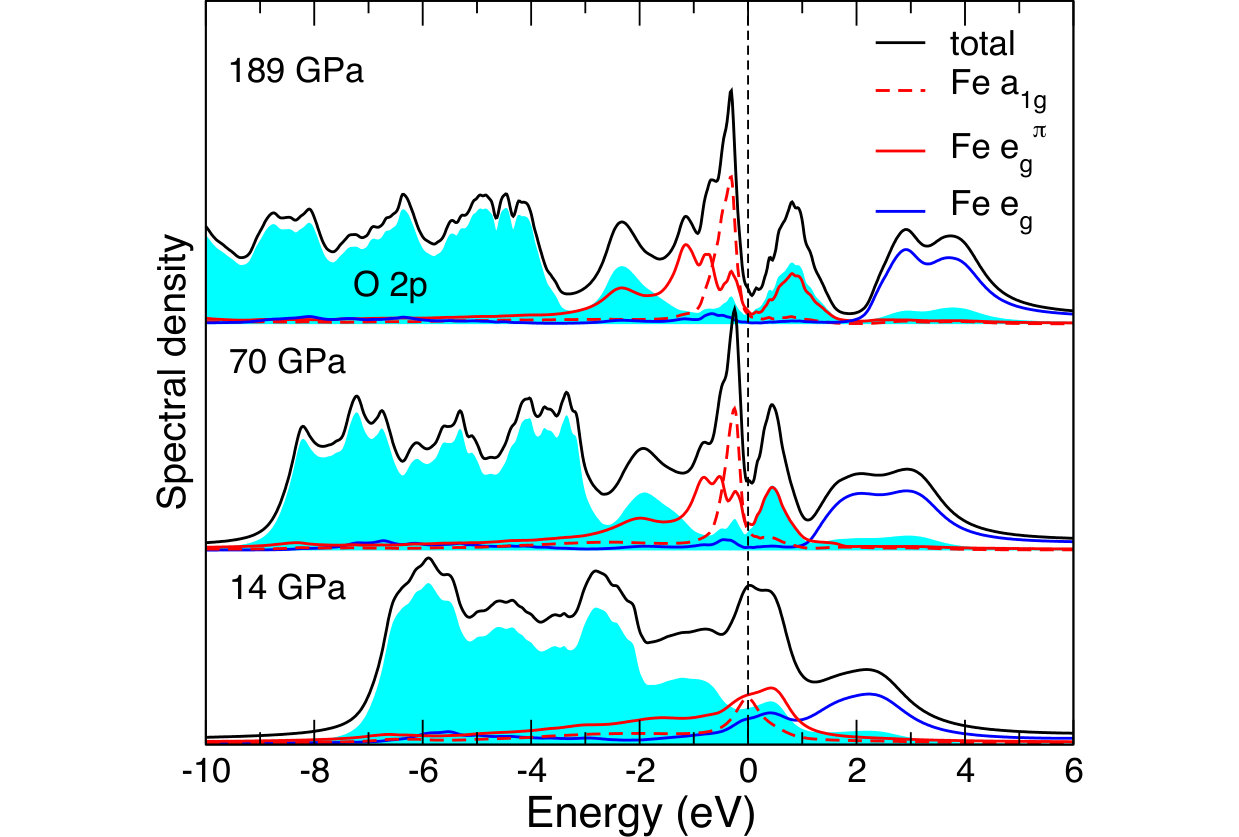 Figure 2
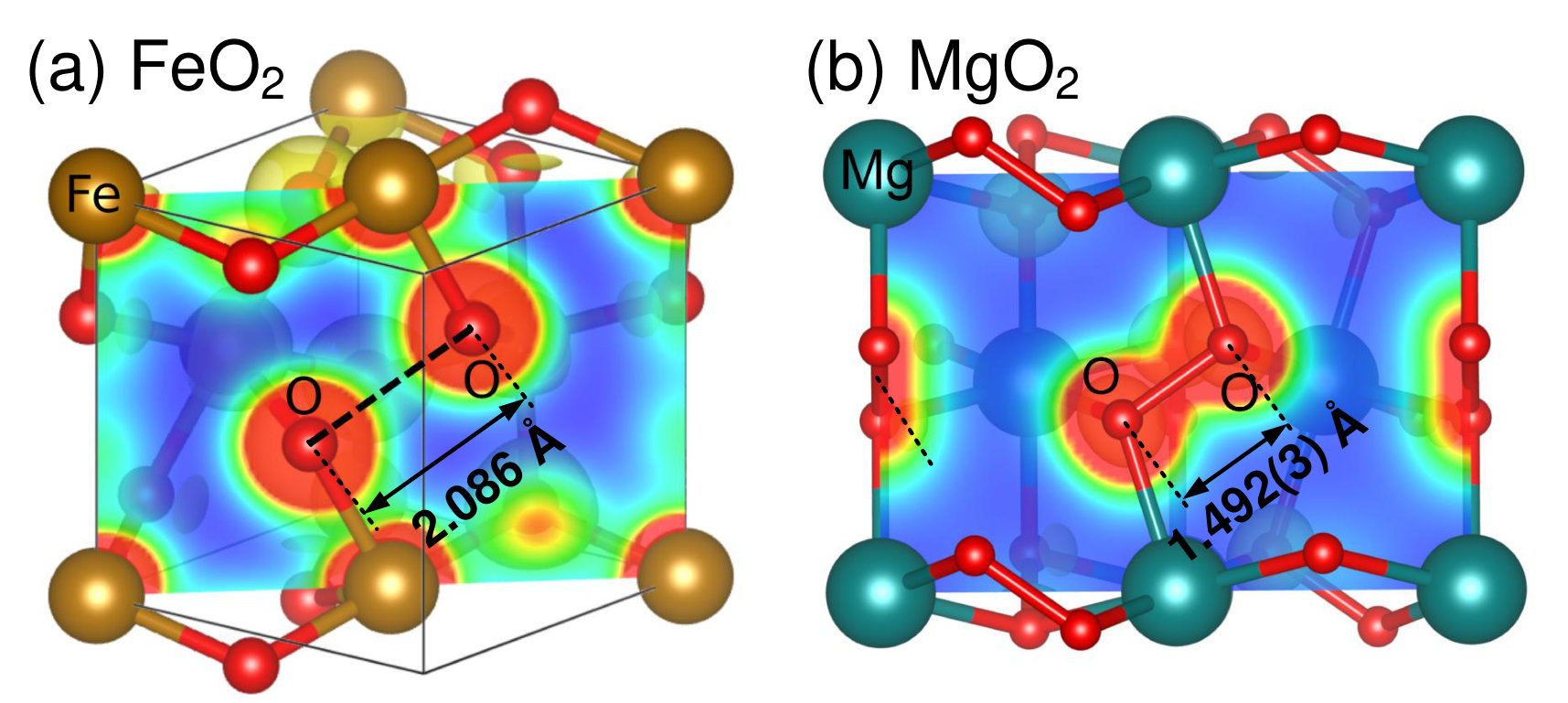 Figure 3
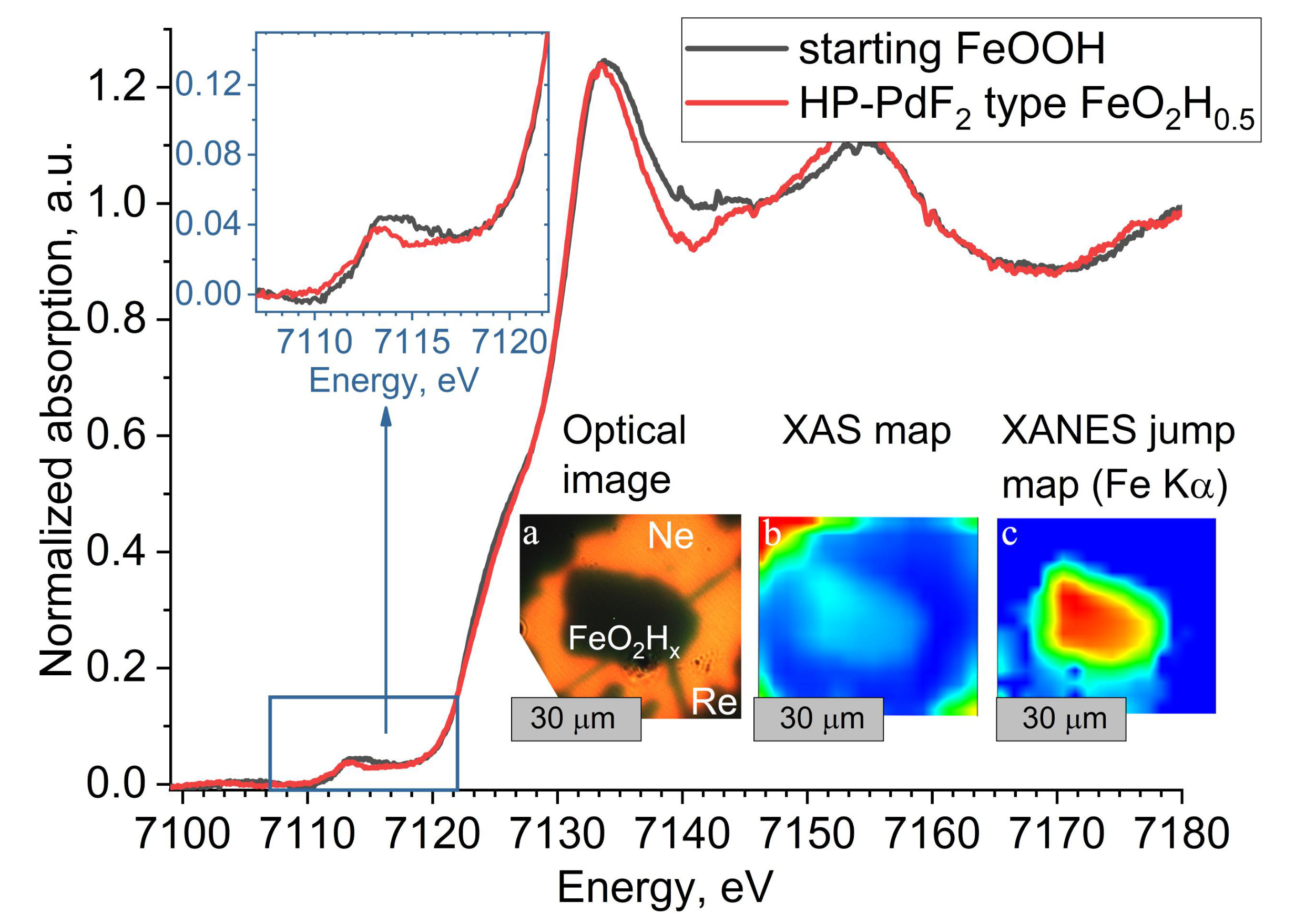 Figure 4
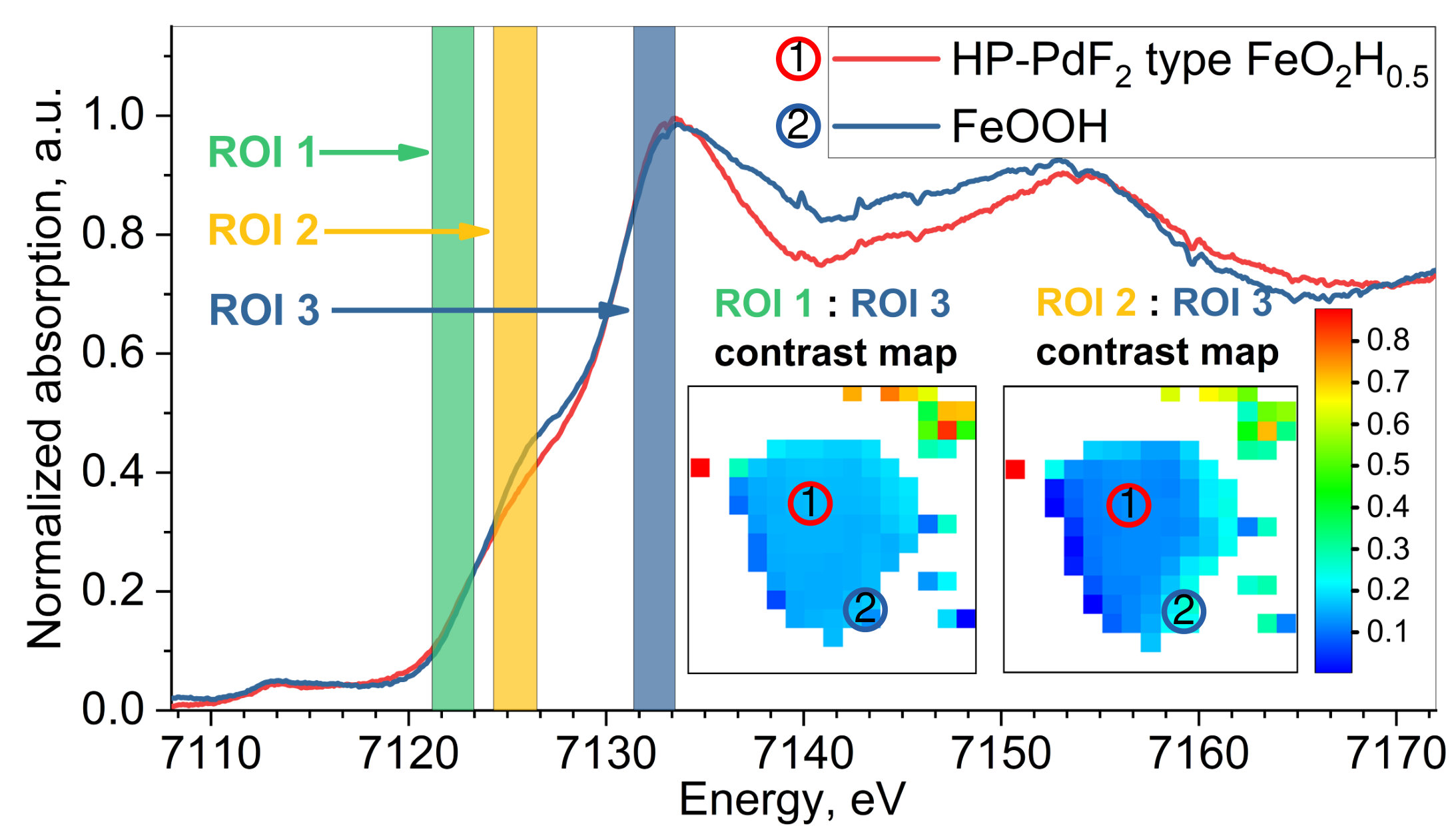 Figure 5
Peer Reviews
No public reviews on file for this paper yet. If you reviewed it on a platform where reviews are public (OpenReview, ICLR, NeurIPS, ICML), you can paste yours below so the community can read it here.
Videos
No videos yet. Explain this paper in a talk, walkthrough, or lecture? Add one.