Dark matter component decaying after recombination: constraints from diffuse gamma-ray and neutrino flux measurements
Oleg E. Kalashev, Mikhail Yu. Kuznetsov, Yana V. Zhezher

TL;DR
This paper investigates a two-fraction dark matter model with an unstable component decaying after recombination, using gamma-ray and neutrino flux data to constrain decay channels and assess its cosmological implications.
Contribution
It provides new constraints on decay channels of unstable dark matter fractions based on diffuse gamma-ray and neutrino flux measurements, testing a scenario that may resolve cosmological measurement tensions.
Findings
Constraints on decay branching ratios for various channels.
Limits on the lifetime of the unstable dark matter component.
Implications for cosmological models with decaying dark matter.
Abstract
We consider scenario of the dark matter consisting of two fractions, stable part being dominant and a smaller unstable fraction, which has decayed after the recombination epoch. It has been suggested in Ref. [arxiv:1505.03644] that the above scenario may alleviate tension between high-redshift (CMB anisotropy) and low-redshift (cepheid variables and SNe Ia, cluster counts) cosmological measurements. We derive constraints on the heavy relics branching to , , , , , , and in the above scenario by comparison of the secondary and fluxes produced by the process with recent diffuse and flux measurements.
Click any figure to enlarge with its caption.
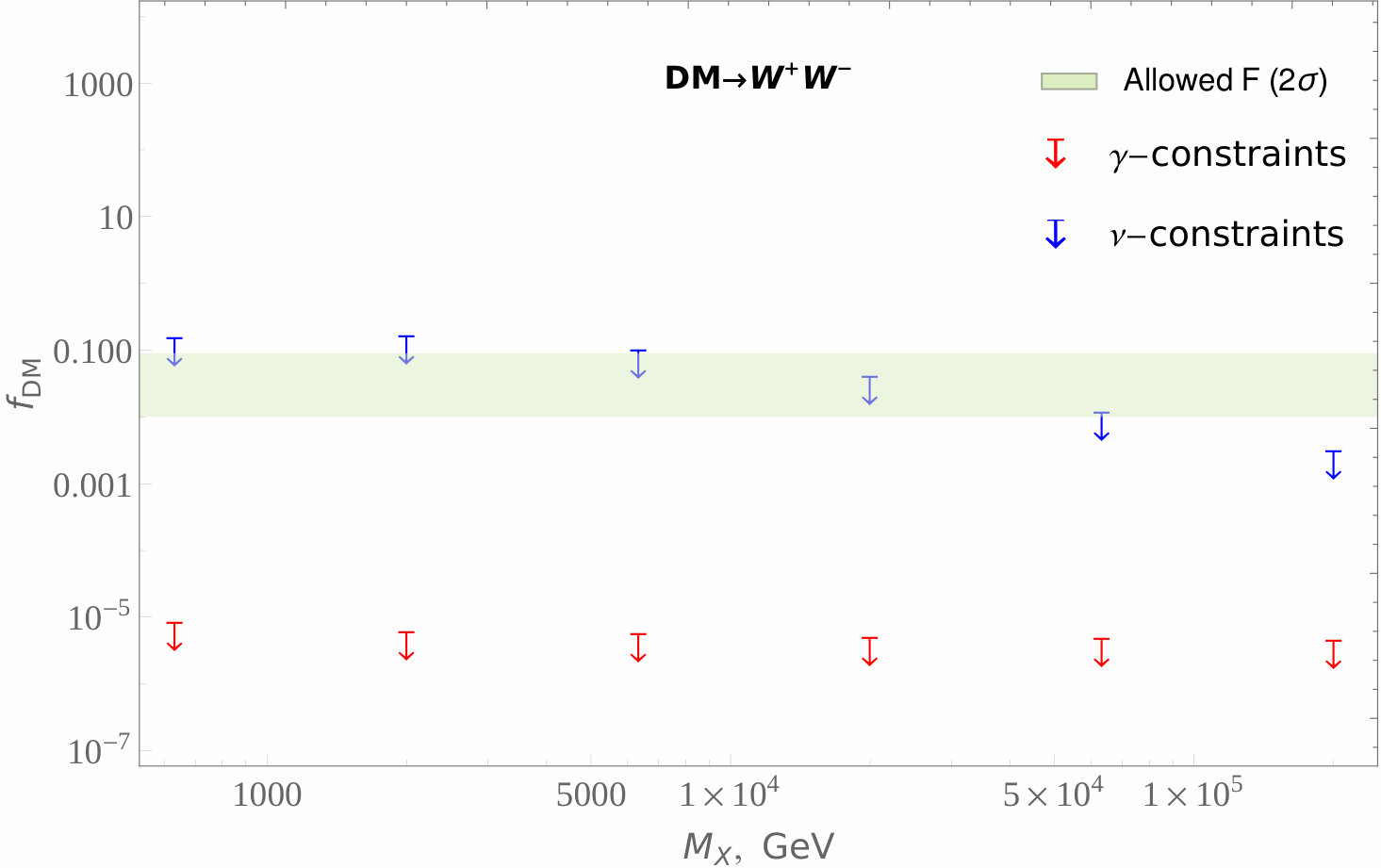 Figure 1
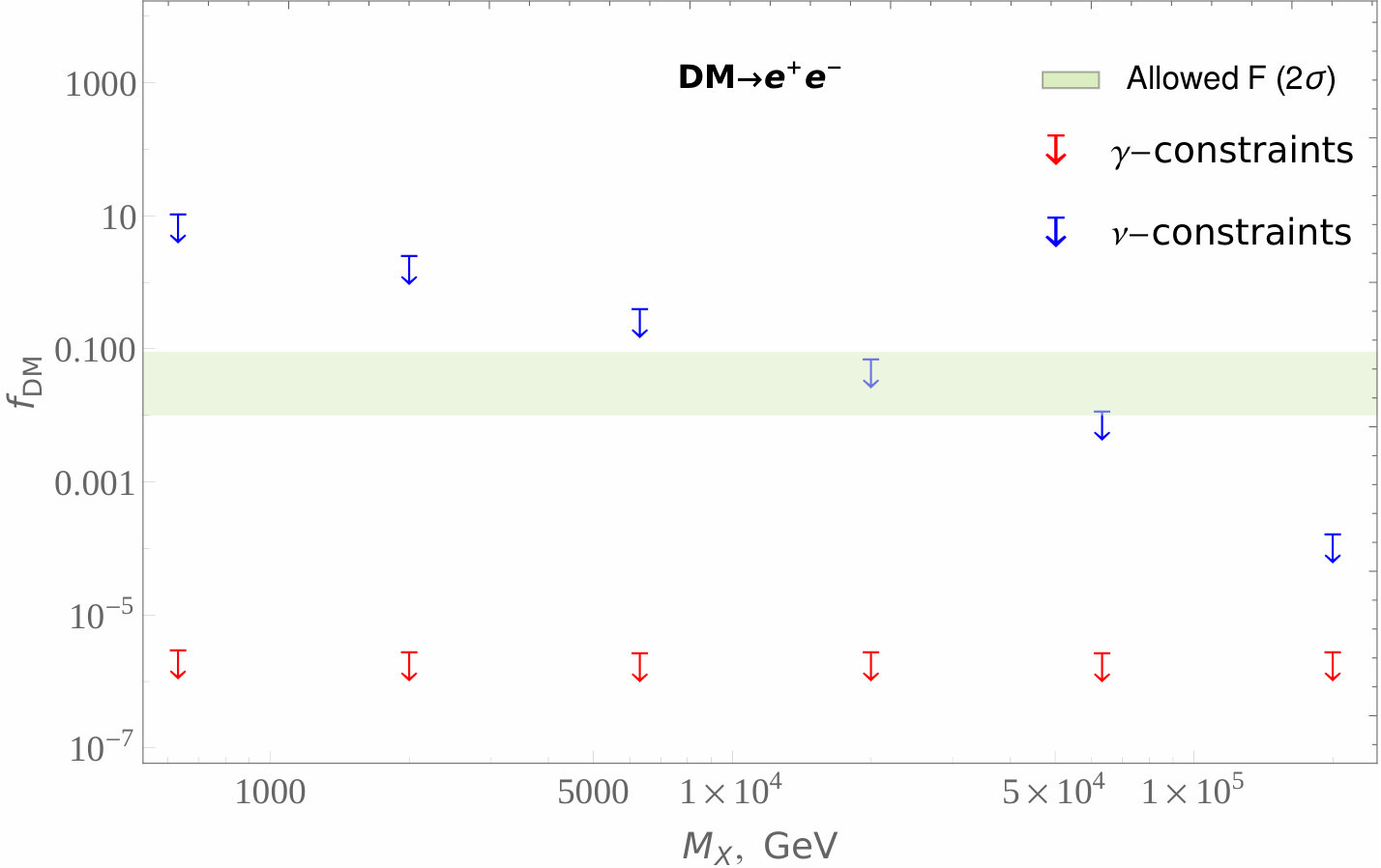 Figure 2
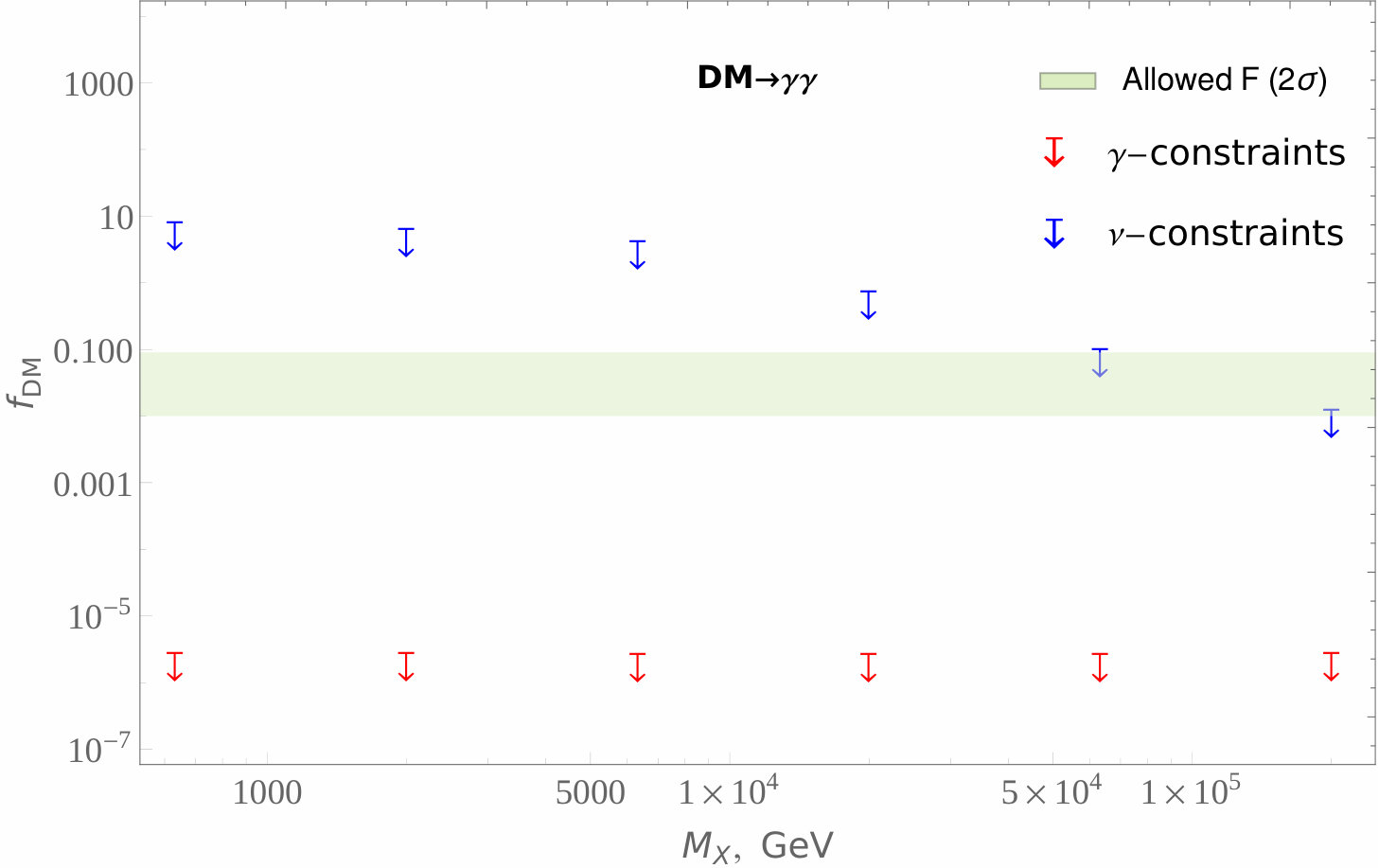 Figure 3
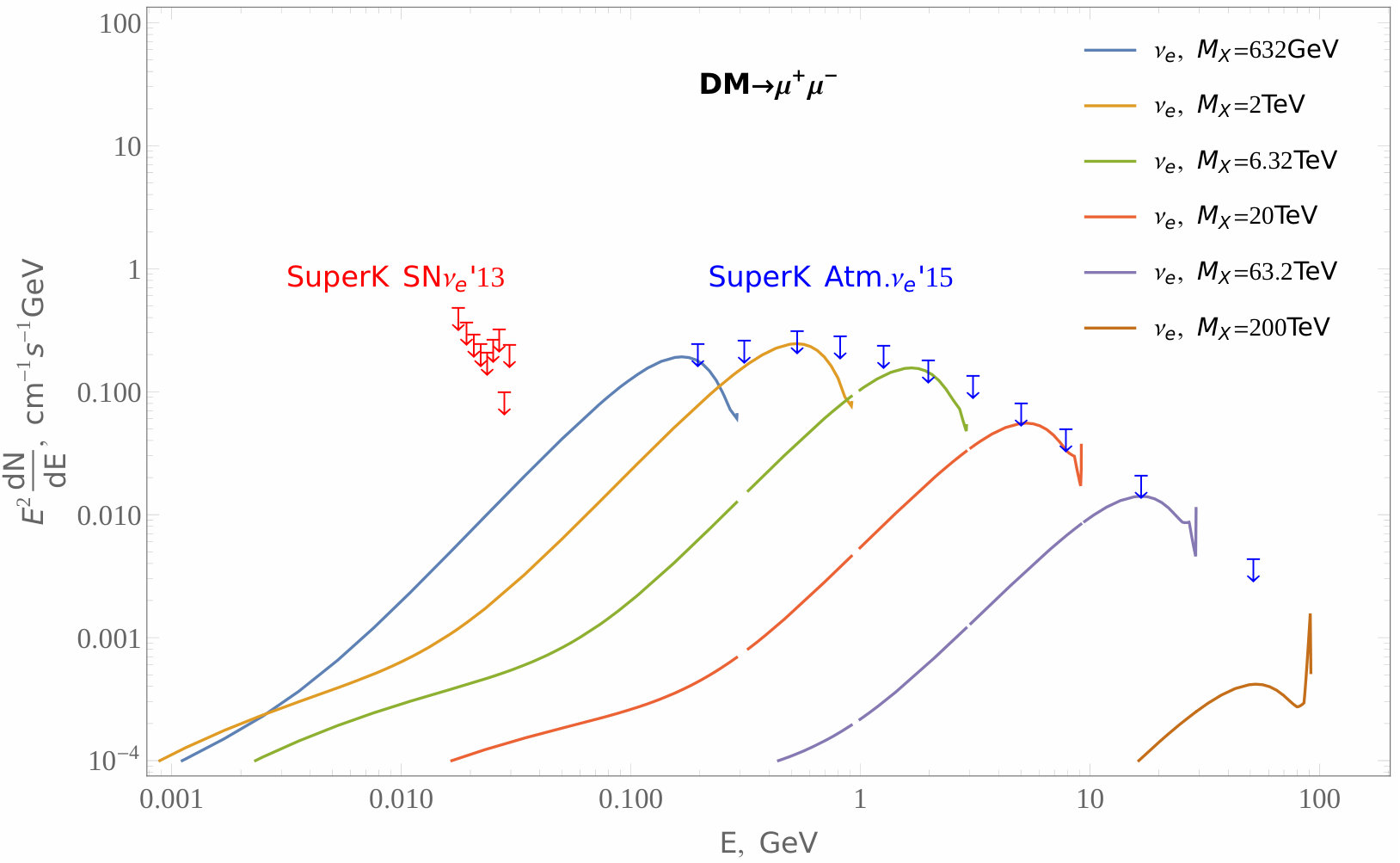 Figure 4
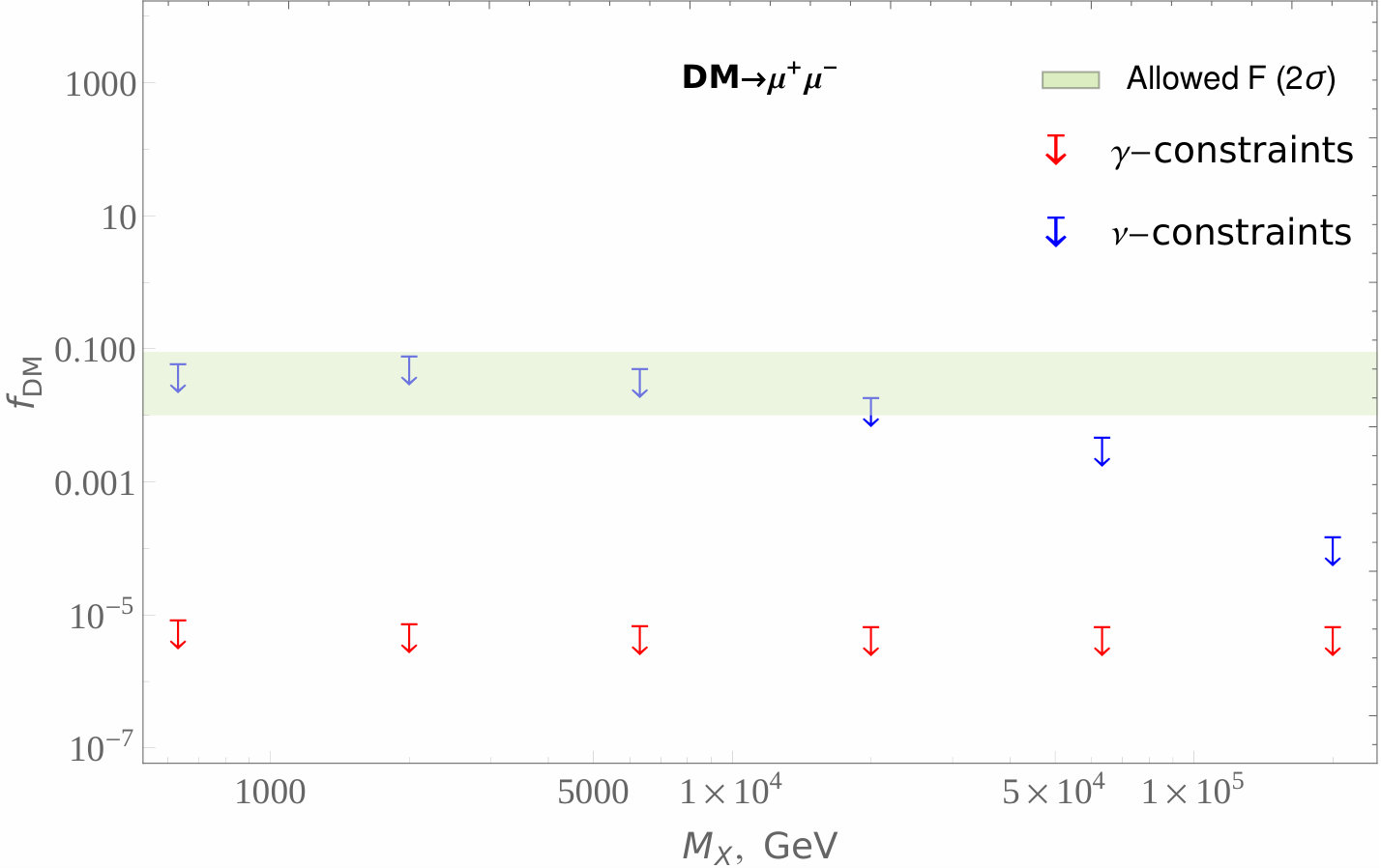 Figure 5
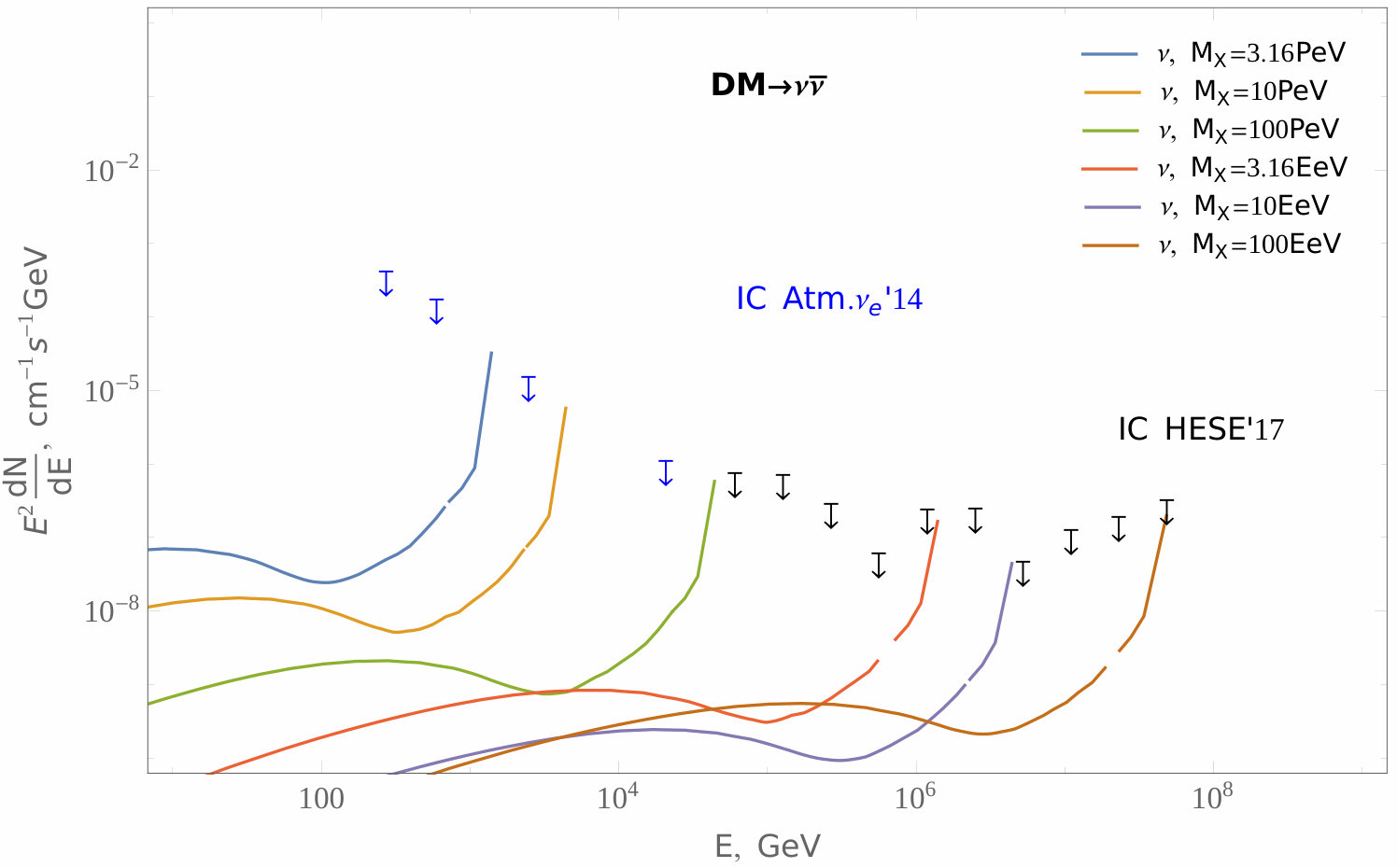 Figure 6
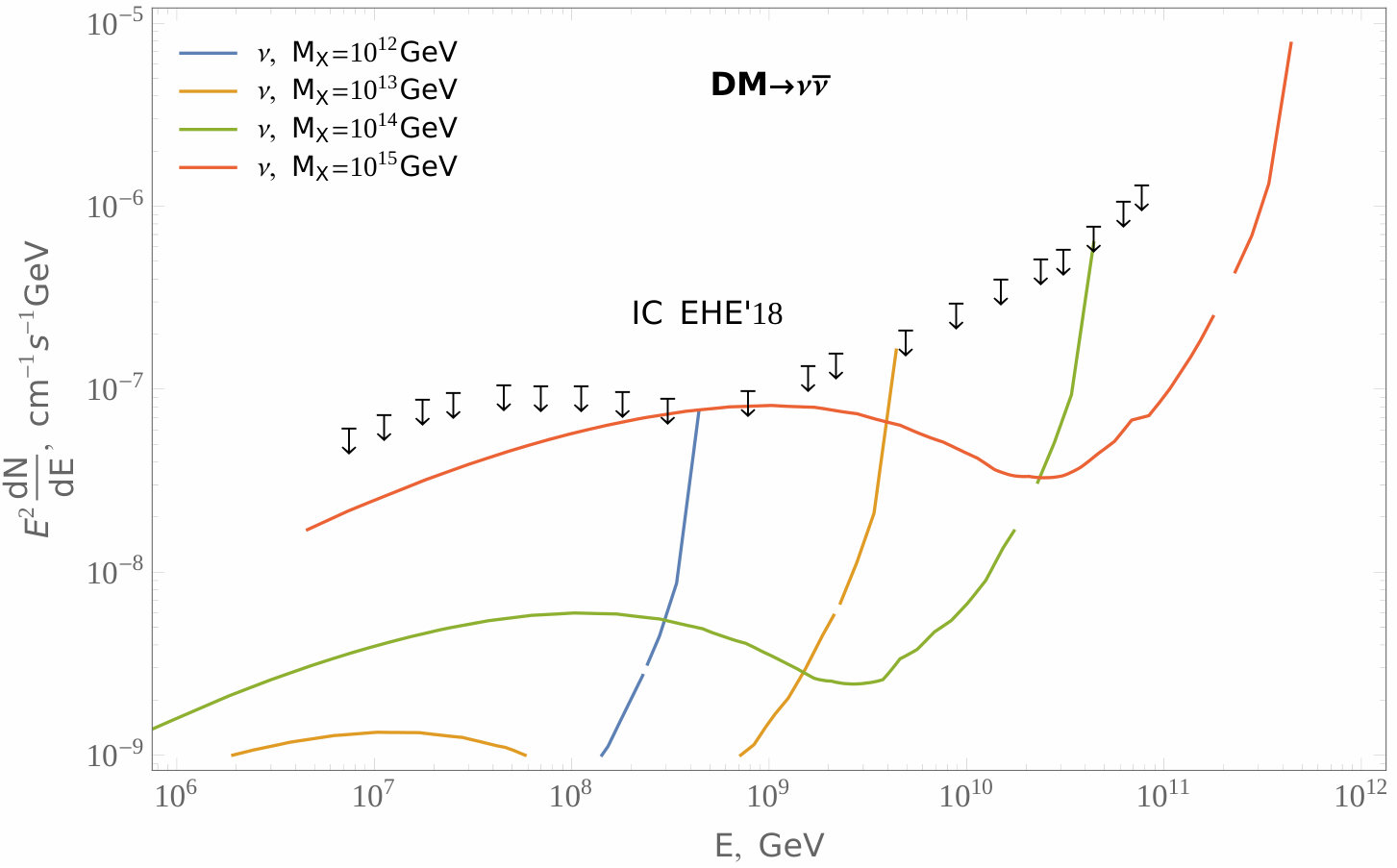 Figure 7
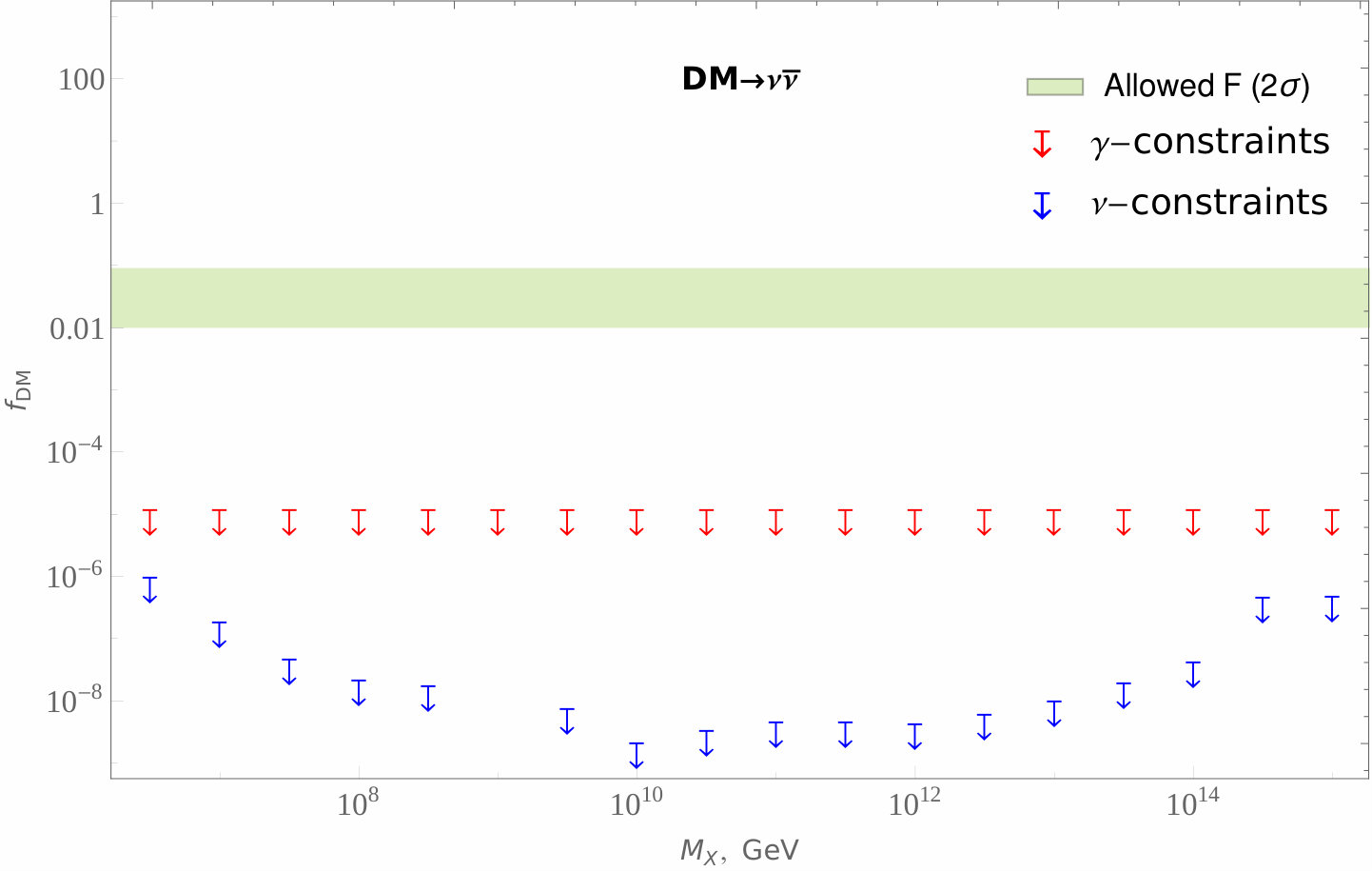 Figure 8
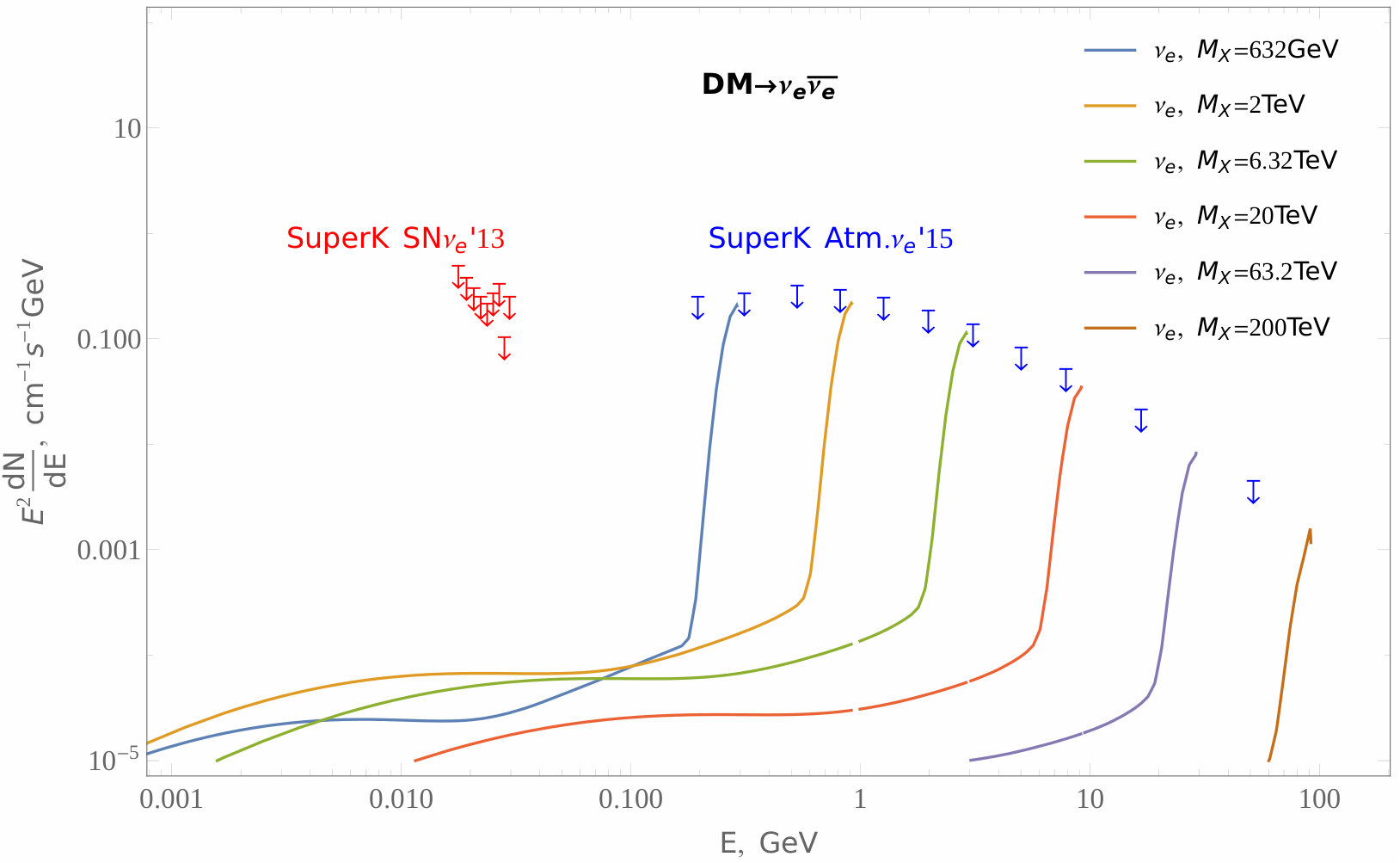 Figure 9
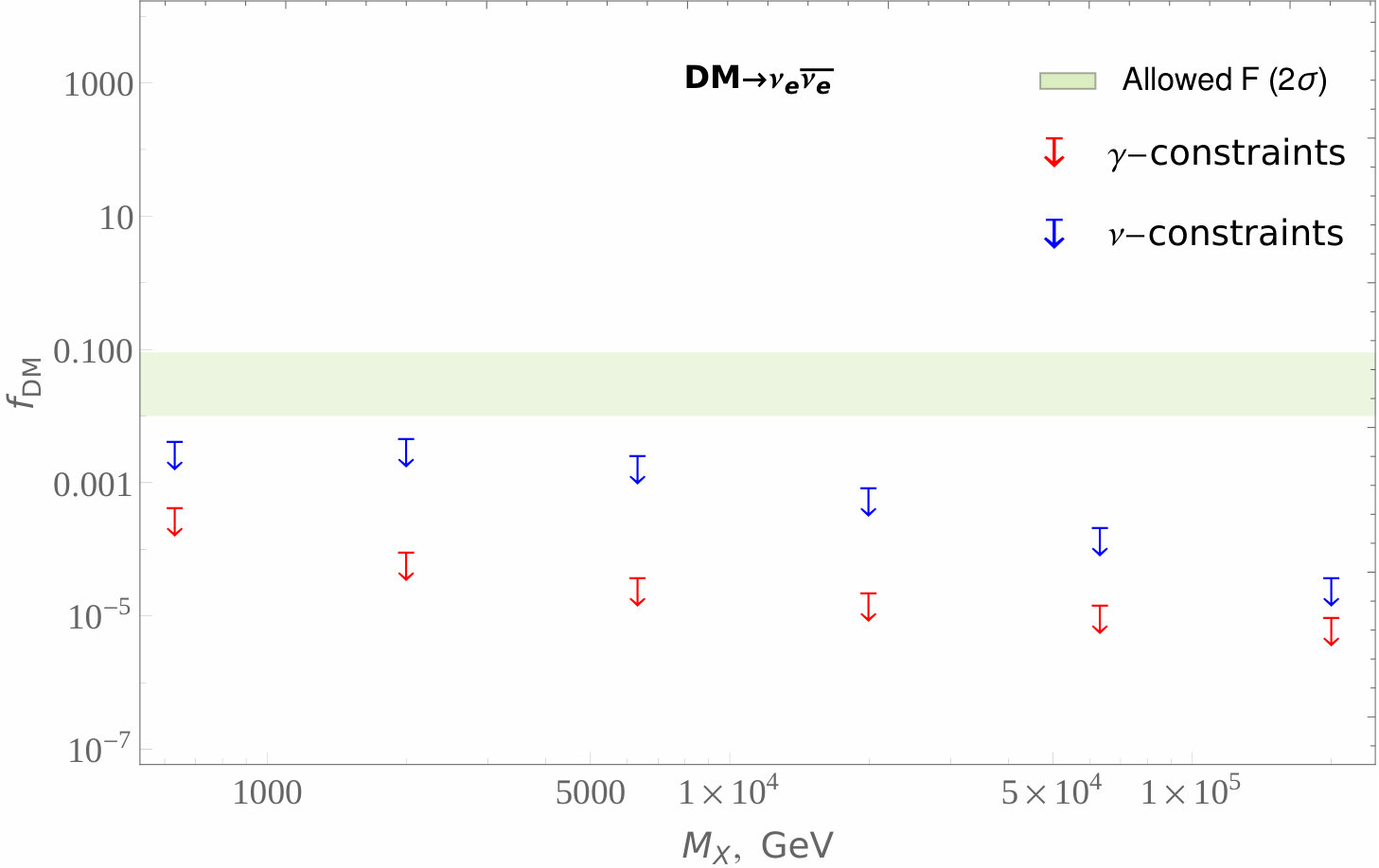 Figure 10
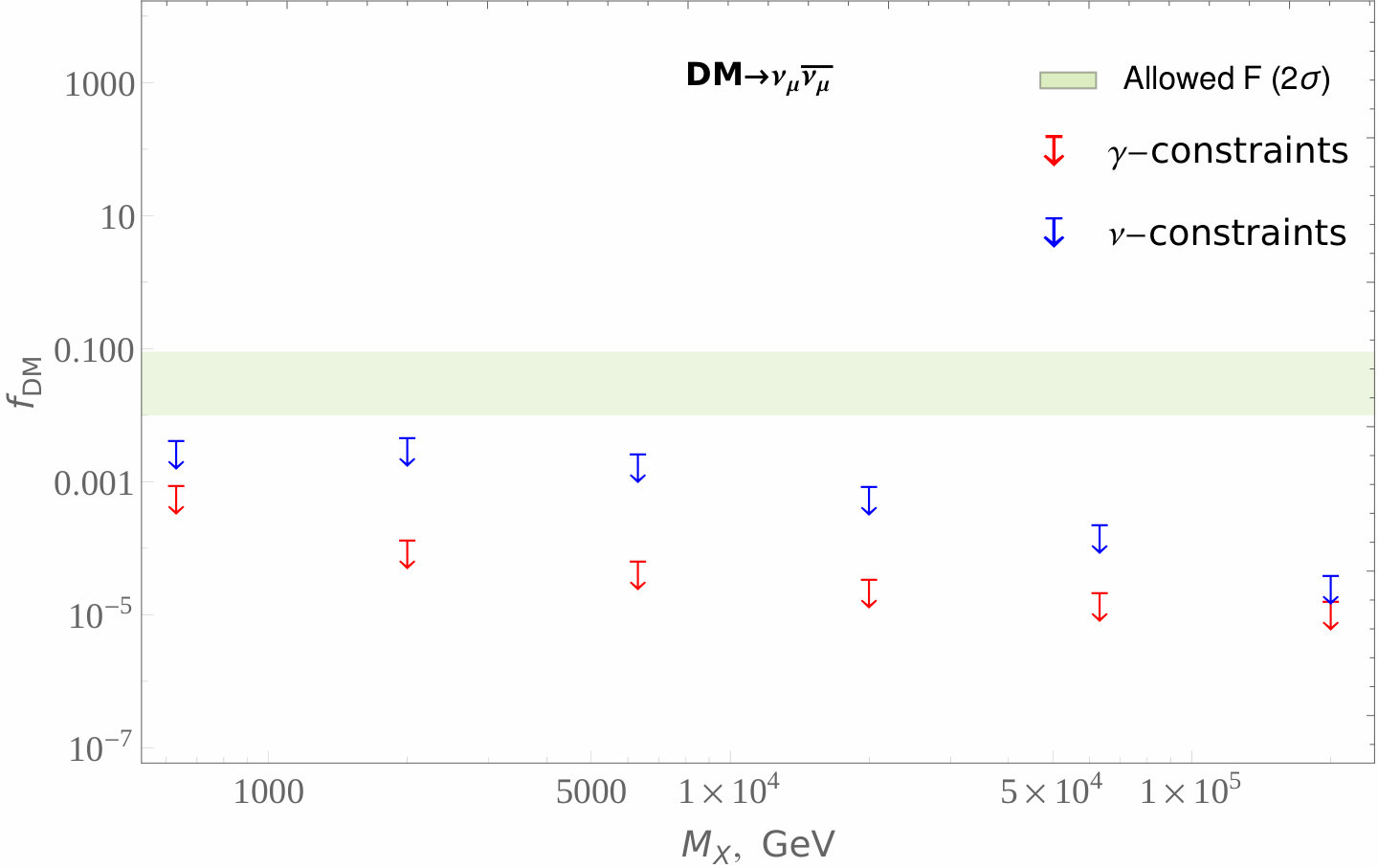 Figure 11
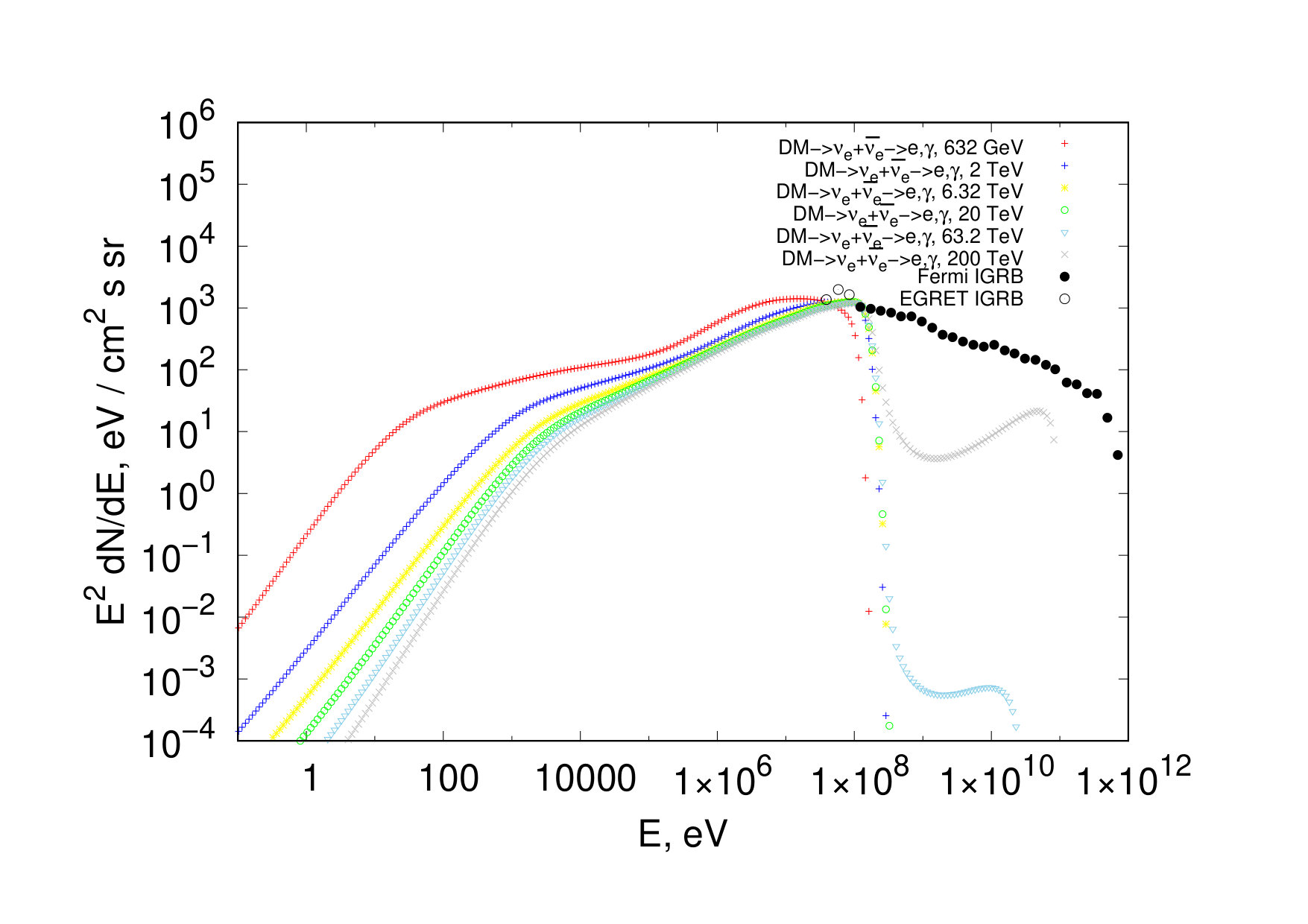 Figure 12
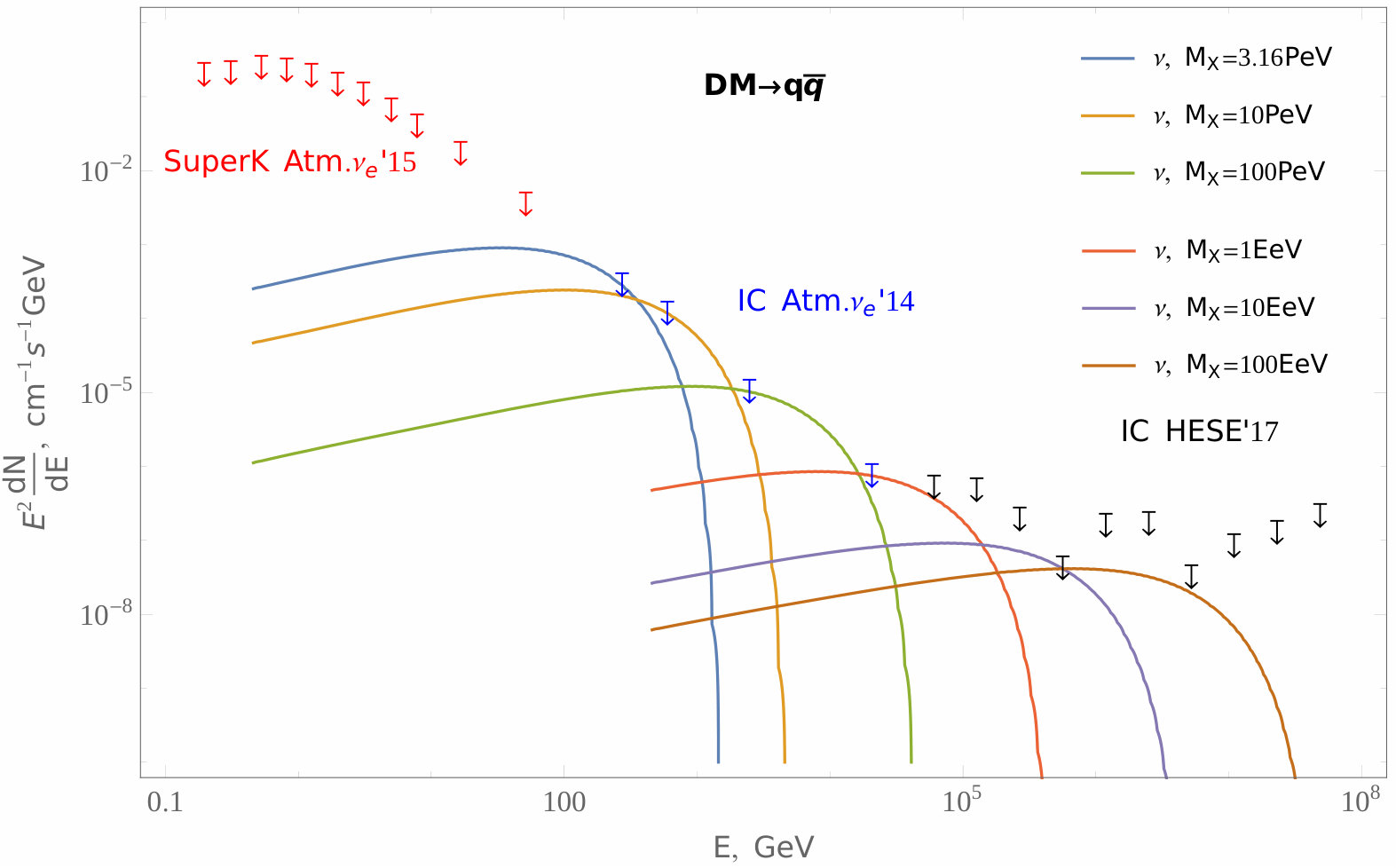 Figure 13
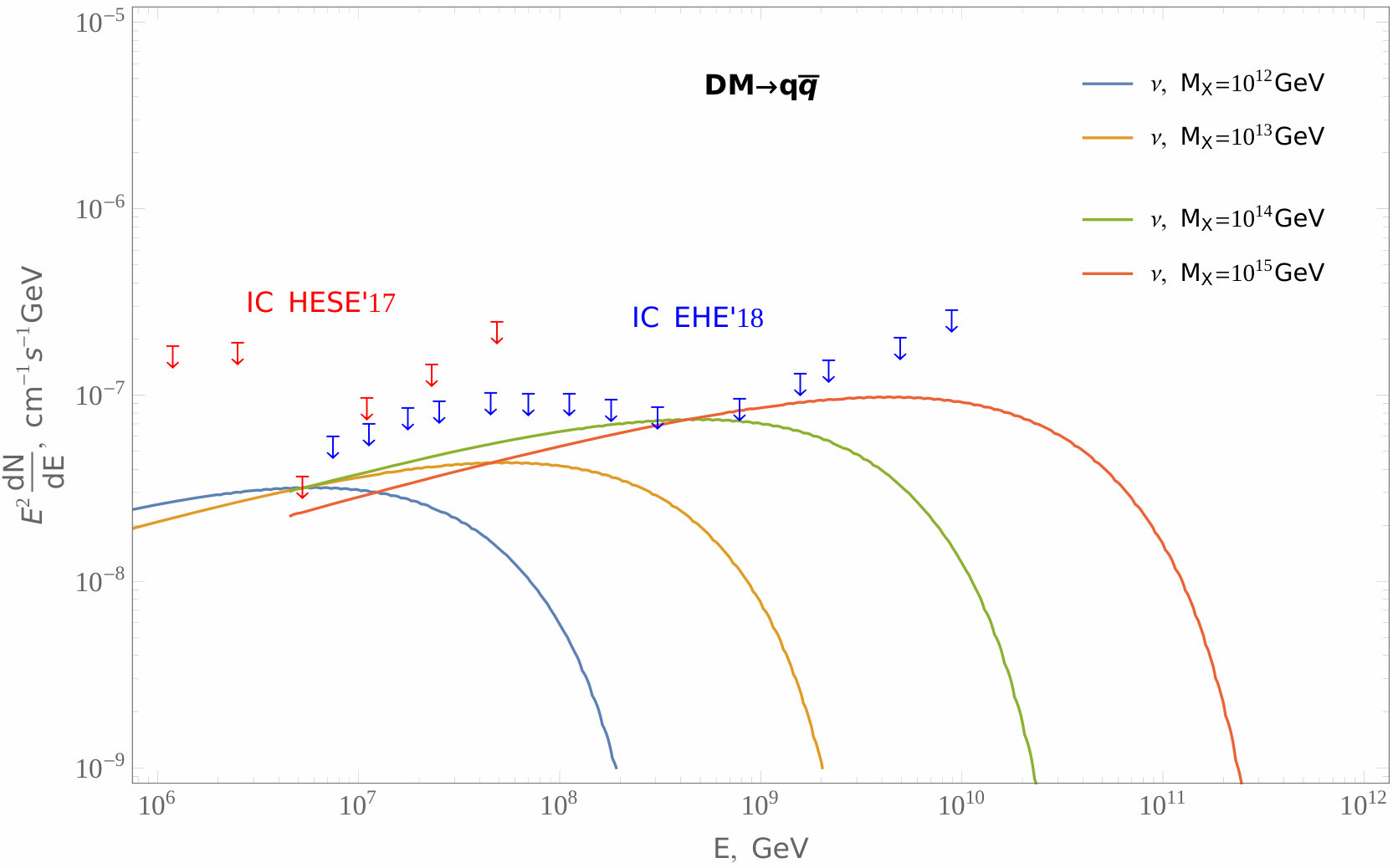 Figure 14
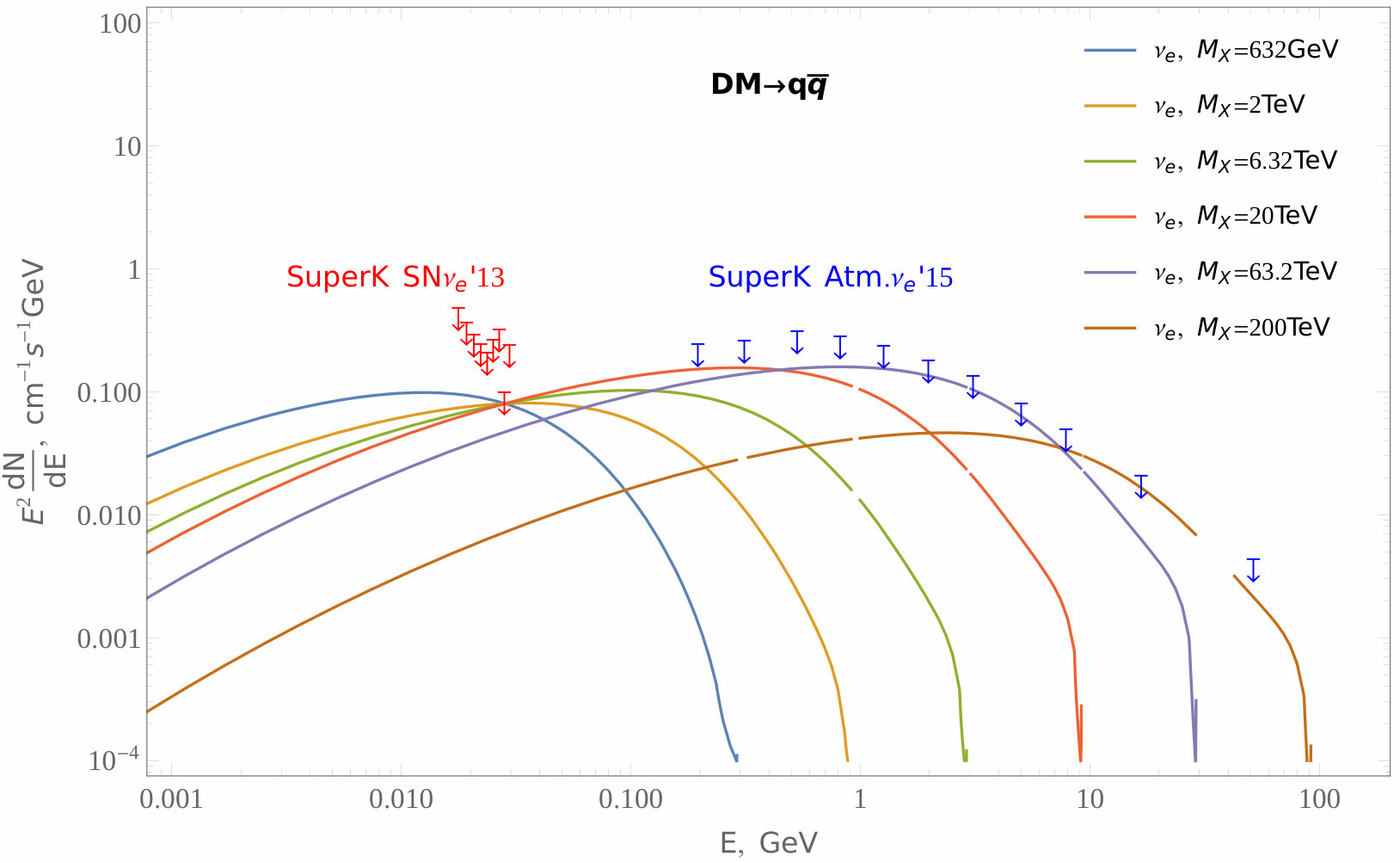 Figure 15
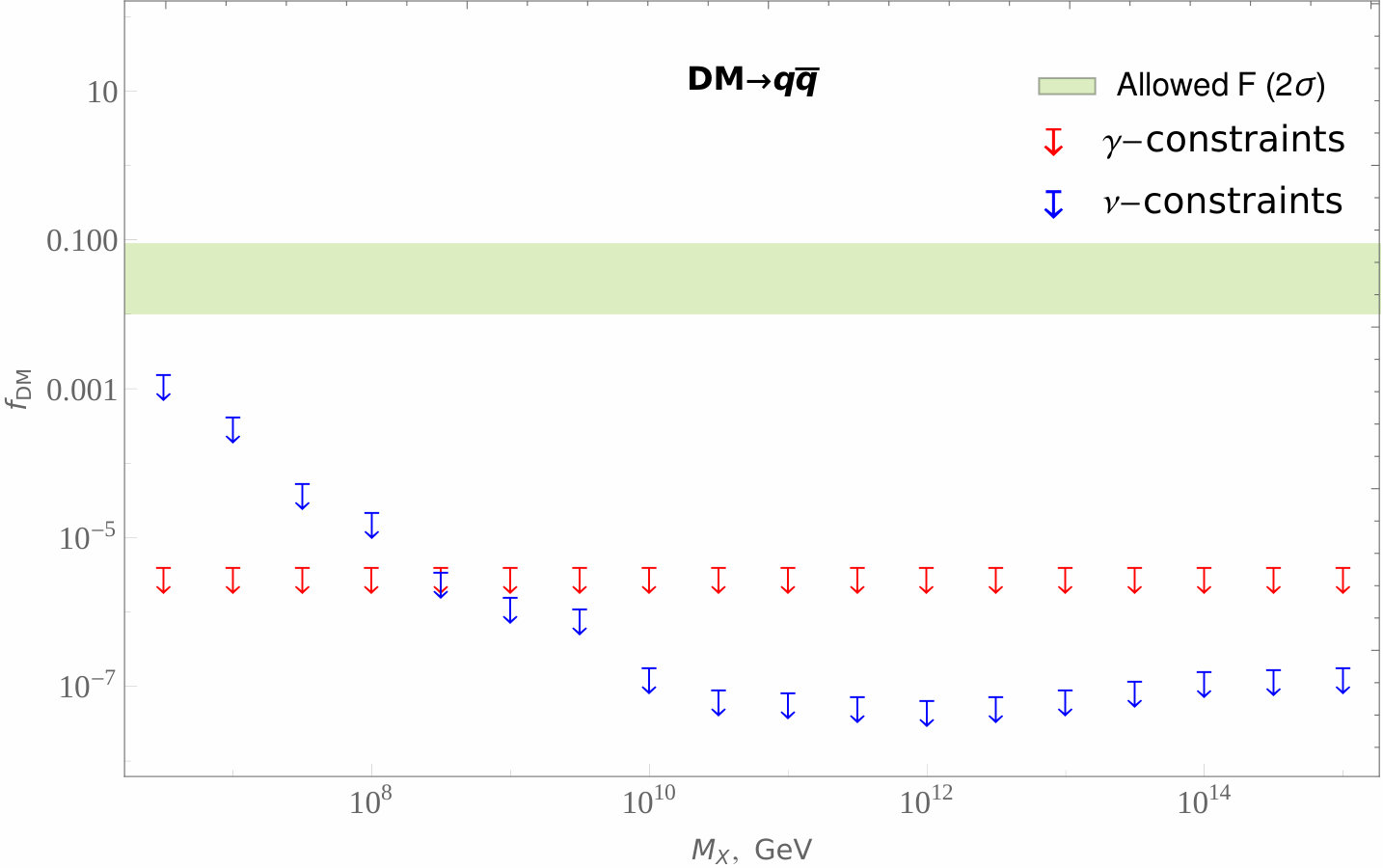 Figure 16
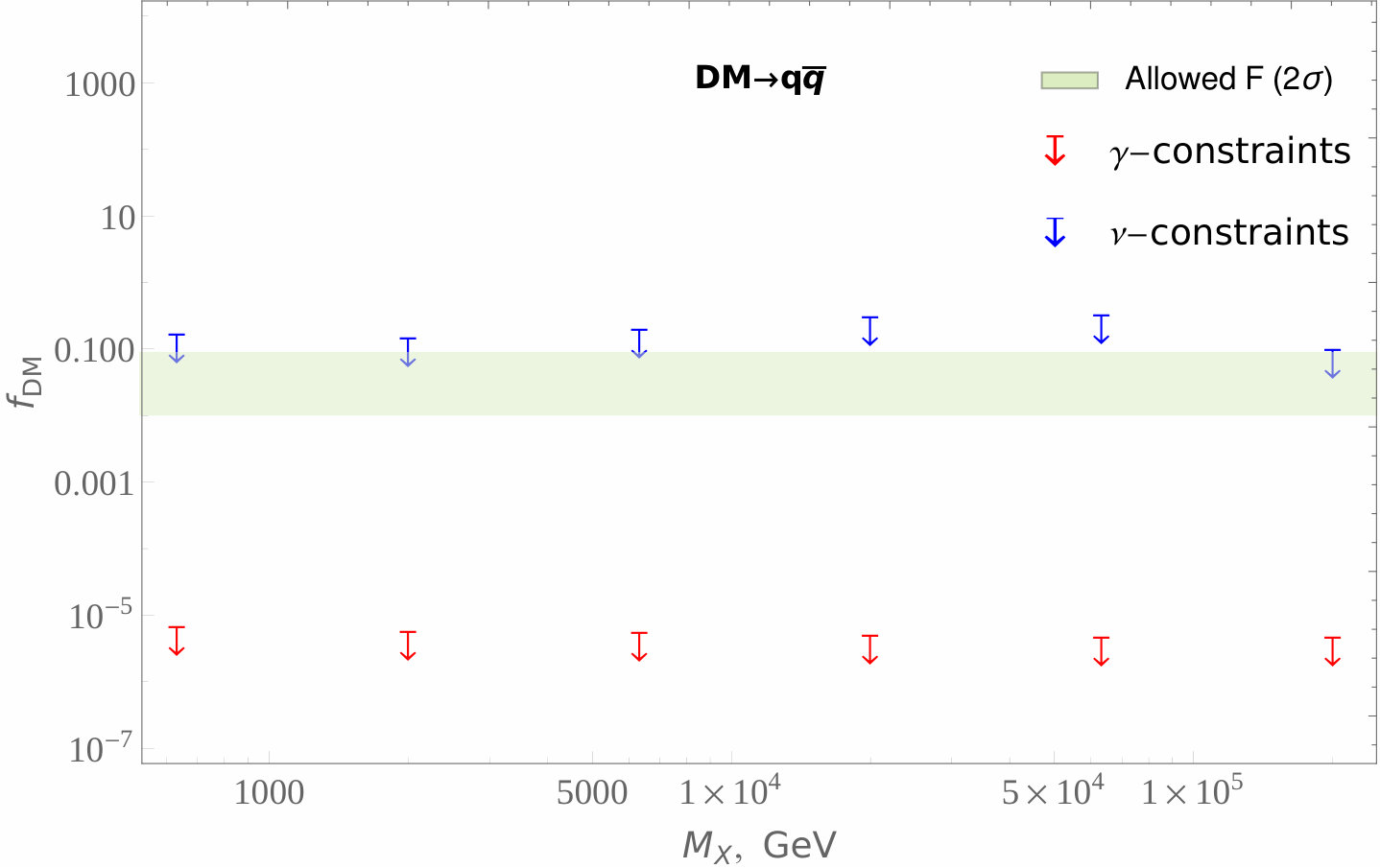 Figure 17
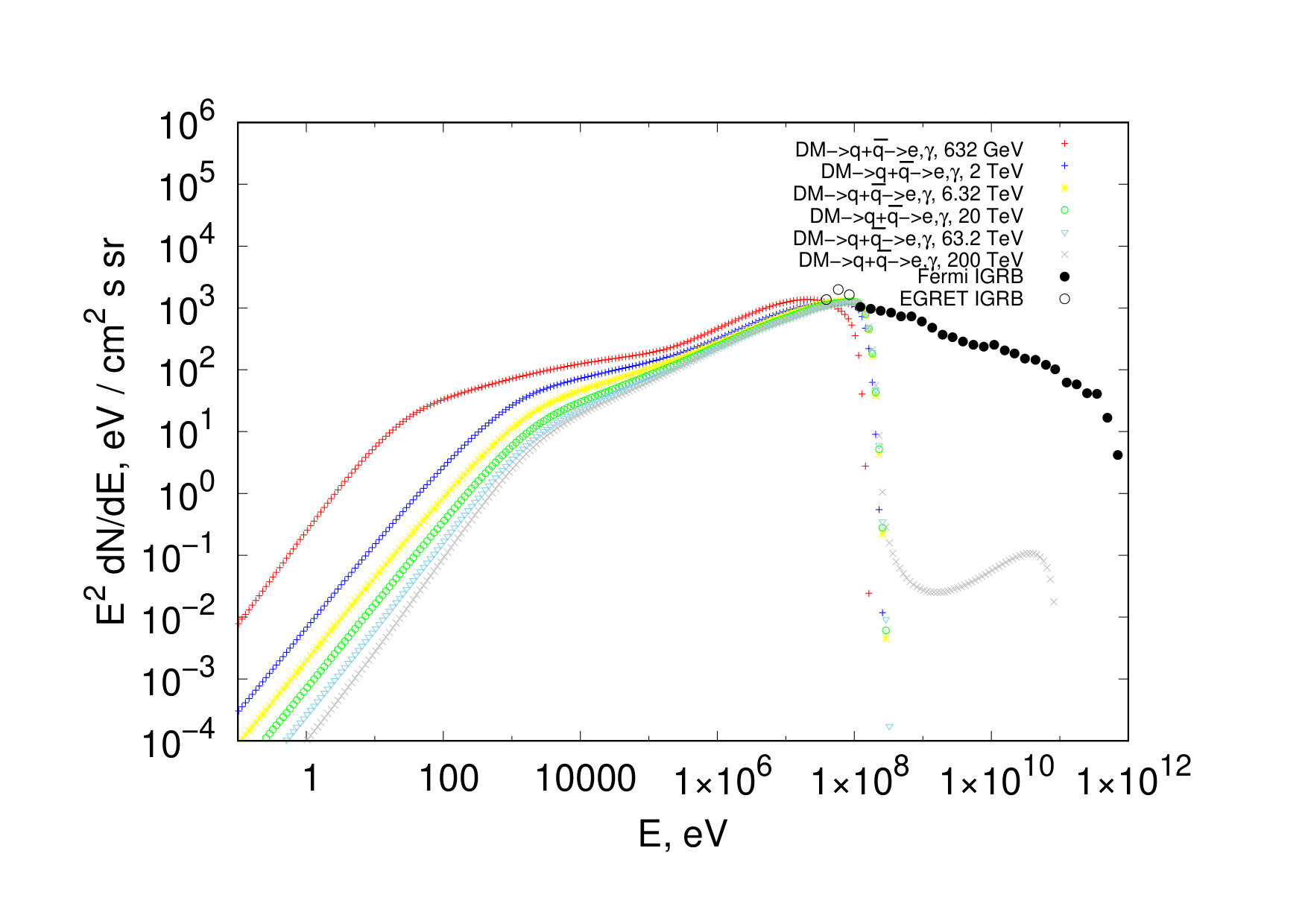 Figure 18
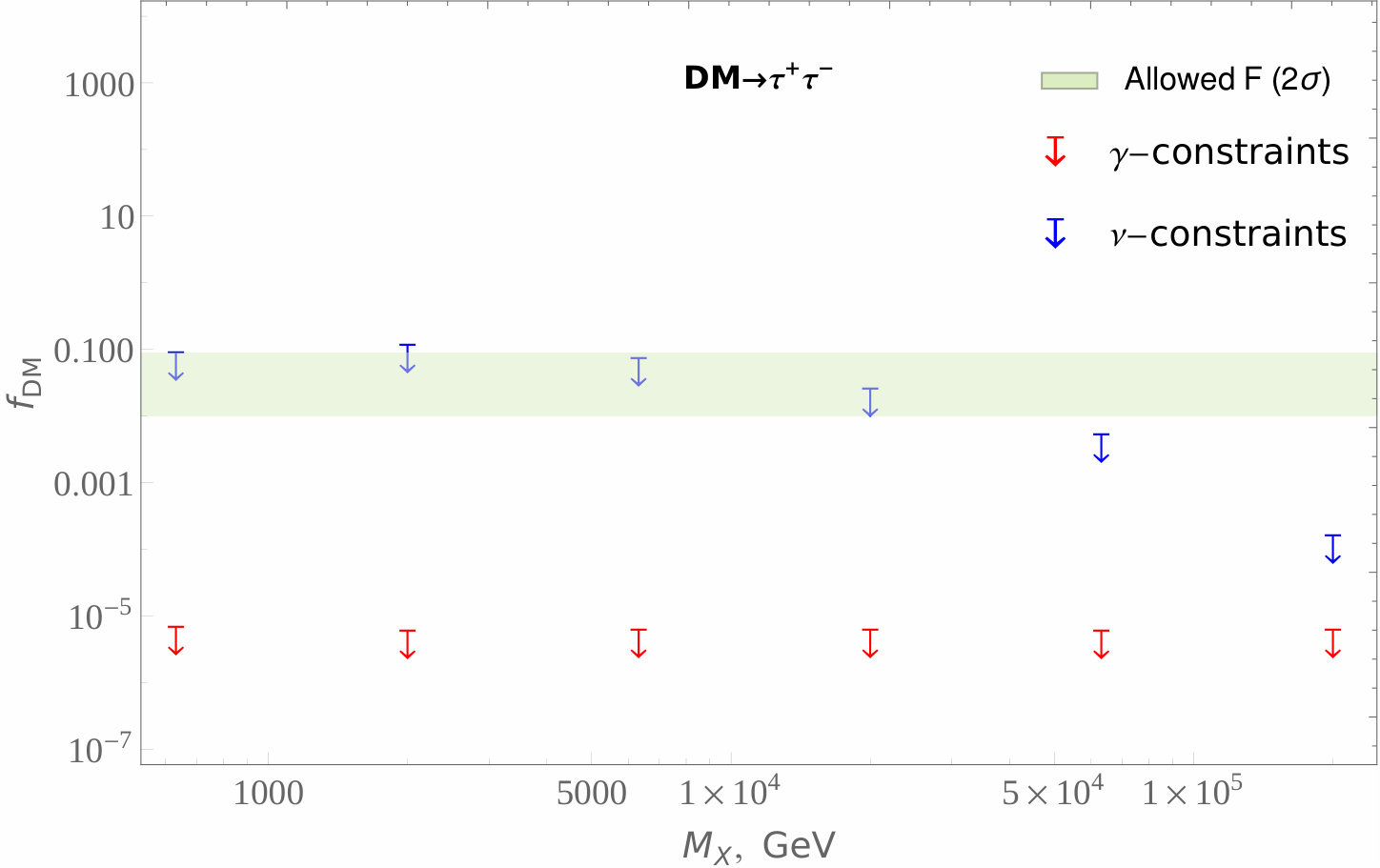 Figure 19
Peer Reviews
No public reviews on file for this paper yet. If you reviewed it on a platform where reviews are public (OpenReview, ICLR, NeurIPS, ICML), you can paste yours below so the community can read it here.
Videos
No videos yet. Explain this paper in a talk, walkthrough, or lecture? Add one.
INR-TH-2019-009
Dark matter component decaying after recombination: constraints from diffuse gamma-ray and neutrino flux measurements
O. Kalashev
M. Kuznetsov
Y. Zhezher
Abstract
We consider scenario of the dark matter consisting of two fractions, stable part being dominant and a smaller unstable fraction, which has decayed after the recombination epoch. It has been suggested in Ref. [1] that the above scenario may alleviate tension between high-redshift (CMB anisotropy) and low-redshift (cepheid variables and SNe Ia, cluster counts) cosmological measurements. We derive constraints on the heavy relics branching to , , , , , , and in the above scenario by comparison of the secondary and fluxes produced by the process with recent diffuse and flux measurements.
1 Introduction
New era in precise determination of cosmological parameters was opened by the WMAP [2] and Planck [3] measurements of the cosmic microwave background fluctuations. Surprisingly, it revealed the tension between the CMB based determination of the Hubble constant and the previous interpretation of value from direct low redshift measurements. Low-redshift determination of the Hubble constant, derived from the the Hubble Space Telescope (HST) cepheid and SNe Ia data lead to [4], while deduced from the Planck data is equal to [3], showing discrepancy between two measurements. Other than that, such cosmological parameters as initial density perturbations and mass density parameter also show discrepancy for high-redshift measurements from the CMB and for low-redshift measurements from clusters as cosmological probes [5].
It was recently proposed [1] that this tension may be resolved if a certain fraction of the dark matter is unstable. In this model, it is suggested that the dark matter consists of two fractions: stable and unstable. The stable fraction is dominant, and only a small fraction of dark matter decays between recombination and the present epoch. In the follow-up papers [6, 7] lensing constraints along with baryon acoustic oscillation and redshift space distortions measurements have been used to limit the allowed range of decaying dark matter (DDM) fraction to at .
The DDM scenario finds another application in the possible explanation of the astrophysical neutrino flux discovered by the IceCube Collaboration [8, 9]. The distribution of IceCube events is isotropic in the sky, which together with Fermi data on the accompanying -ray flux makes it challenging to model the production of IceCube neutrinos in astrophysical sources [10] or in the present decay of DM [11, 12]. In [13], the DDM model was considered with the dominant decay mode into the visible sector with branching ratio .
The present study is aimed to derive the constraints on the heavy relics branching to a number of decay channels: , , , , , , and , assuming scenario of Ref. [1]. While secondary lose their energy essentially through redshift only, secondary and -rays initiate electron-photon cascades on the CMB during their propagation. The cascade develops through the chain of inverse Compton scattering of electrons and pair production by photons on CMB until the threshold for the pair production is achieved, below which the energy is collected in the form of effectively sterile photons [14]. We obtain the desired constraints by comparison of - and -fluxes with observations. Namely, we compare the model gamma-ray flux with the Fermi LAT [15] and EGRET [16] isotropic diffuse -ray background (IGRB) estimates, while the model neutrino flux is compared with the neutrino flux upper-limits set by Super-Kamiokande [17, 18] and IceCube [19, 9, 20].
Below, in Section 2, we describe in details the method we use to derive the constraints and present results along with discussion in Section 3.
2 Analysis
We consider the range of dark matter masses GeV. For lower DM masses the primary photon energy is typically below the threshold for pair production at redshift and therefore the corresponding limits could be derived without taking into account the EM cascade development. For TeV we use PPPC 4 DM ID toolkit [21] to calculate the spectra of , , and products of DM decay for several decay channels: , , , , , , and . For DM masses larger than 200 TeV we use the injection spectra of , , and calculated for two benchmark decay channels: and with the numerical codes of Ref. [22] and Ref. [12], respectively 111As it was discussed in Ref. [12], among all possible decay channels the and channels yield the softest and the hardest energy spectra, respectively, for both gamma-rays and neutrinos in the final state. Thus the constraints on HDM parameters that could be obtained for other decay channels or for their combinations should lie somewhere in between the constraints derived for the two aforementioned decay channels. In this sense we call and the benchmark channels.. By and we mean the DM decay into quarks and neutrinos with uniform distribution in flavors.
We expect at least for -ray constraints to weaken with shorter DM decay time, since in this particular case the EM cascade develops on average in more energetic background and resulting diffuse -ray background is shifted towards lower energies where it is less constrained. Therefore to build conservative constraints we assume below that DM decays in time
Having and spectra from DM decay we propagate them from [23] using the TransportCR code [24, 25], developed for the simulation of ultra-high-energy cosmic rays and electron-photon cascade attenuation. The electron-photon cascade development essentially stops when photon energies reach the threshold for pair production on CMB and afterwards the spectrum is only affected by the adiabatic Universe expansion. Due to the EM cascade universality [14] the final shape of -ray spectrum predicted is roughly the same for all the models considered in which the average initial electron and photon energy is well above . Therefore for these models only total energy density coming to EM cascade is relevant for the constraint derivation.
Secondary -ray spectra, predicted by the model at redshift , shouldn’t contradict to the current IGRB estimates. In the present analysis, we have adopted the Fermi LAT IGRB data [15], derived in the energy range from to and estimates by EGRET [16] derived in the energy range . Overall IGRB spectrum considered is shown in Fig. 1.
The independent set of constraints on the fraction of the DM decaying into visible particles could be derived using the recent experimental upper-limits on the diffuse neutrino flux in the wide energy range: from MeV to EeV. Namely, we adopt the Super-Kamiokande limits on the extragalactic supernovae neutrino [17], limits derived from the IceCube data on the high-energy astrophysical neutrino (HESE set) [9] and the IceCube limits on the highest-energy cosmogenic neutrino flux (EHE set) [20]. In the MeV – TeV energy range the observed neutrino flux is dominated by the atmospheric neutrinos, that are difficult to discern from the cosmic ones. Therefore in this range we adopt experimental limits on the atmospheric neutrino flux derived by Super-Kamiokande [18] and IceCube [19] as a rough but conservative bounds for our model flux.
Neutrino practically do not interact with medium during their propagation. Therefore we calculate their spectra at just by redshifting and assuming maximal mixing, i.e. at 222The resulting flavor composition for arbitrary initial flavour fractions was calculated in Ref. [26]. The effect of deviations from composition does not exceed the overall systematic error in our approach.. The neutrino injection spectra of and decay channels contain sharp peaks near . While the attenuation effects do not destroy the peaks, longer DM particle lifetime may make them smoother due to expansion of the Universe. Therefore, the constraints obtained in the assumption of short DDM lifetime would be stronger than those of long DDM lifetime, i.e. the short DDM lifetime assumption is not conservative in the case of neutrino constraints.
The examples of properly normalized neutrino spectra at for various decay channels and DM particle masses are shown in Fig. 2 (low ) and in Fig. 3 (high ) in comparison with respective experimental neutrino flux limits.
3 Results
In Fig. 4 we show constraints obtained on the fraction of the DM particles decaying into visible sector for , , , , , , and decay channels for DM masses TeV. Constraints derived with neutrino and -ray data are shown separately in blue and red points correspondingly. For comparison we also show in the same figures the preferred range of the decaying DM fraction () derived in Ref. [7] from cosmological data analysis of Refs. [27, 28, 29]. One can see that for all the channels considered in the above energy range the -ray constraints are more strict allowing values of f\raise 1.29167pt\hbox{;<\kern-7.5pt\raise-4.73611pt\hbox{\sim;}}10^{-5}. The least strict limits were obtained not surprisingly in case of decay channels.
In Fig. 5 we show the constraints obtained for larger masses M_{X}\raise 1.29167pt\hbox{;>\kern-7.5pt\raise-4.73611pt\hbox{\sim;}} PeV. The -ray constraints practically do not depend on since fraction of energy going to EM cascade is not changing with , while the propagated -ray spectrum is universal. The constraints derived using neutrino data become more restricting than -ray constrains for M_{X}\raise 1.29167pt\hbox{;>\kern-7.5pt\raise-4.73611pt\hbox{\sim;}}2\times 10^{8} GeV in case of hadronic decay channel and for M_{X}\raise 1.29167pt\hbox{;>\kern-7.5pt\raise-4.73611pt\hbox{\sim;}}10^{6} GeV in case of leptonic decay channel, reaching level of f\raise 1.29167pt\hbox{;<\kern-7.5pt\raise-4.73611pt\hbox{\sim;}}3\times 10^{-9} for GeV in the latter case. These constraints are imposed by IceCube data. We conclude, that for all DDM mass range considered in this study, DM should decay mostly into invisible radiation, in order to match the -ray and neutrino measurements.
Acknowledgments
We would like to thank Igor Tkachev, Dmitry Gorbunov and Anton Chudaykin for helpful discussions. The work was supported by the Foundation for the Advancement of Theoretical Physics and Mathematics “BASIS” grant 17-12-205-1
The reference list from the paper itself. Each links out to its DOI / PubMed record.
- 1[1] Z. Berezhiani, A. D. Dolgov and I. I. Tkachev, Reconciling Planck results with low redshift astronomical measurements , Phys. Rev. D 92 (2015) 061303 , [ 1505.03644 ]. · doi ↗
- 2[2] WMAP collaboration, G. Hinshaw et al., Nine-Year Wilkinson Microwave Anisotropy Probe (WMAP) Observations: Cosmological Parameter Results , Astrophys. J. Suppl. 208 (2013) 19 , [ 1212.5226 ]. · doi ↗
- 3[3] Planck collaboration, P. A. R. Ade et al., Planck 2013 results. XVI. Cosmological parameters , Astron. Astrophys. 571 (2014) A 16 , [ 1303.5076 ]. · doi ↗
- 4[4] A. G. Riess, L. Macri, S. Casertano, H. Lampeitl, H. C. Ferguson, A. V. Filippenko et al., A 3% Solution: Determination of the Hubble Constant with the Hubble Space Telescope and Wide Field Camera 3 , Astrophys. J. 730 (2011) 119 , [ 1103.2976 ]. · doi ↗
- 5[5] Planck collaboration, P. A. R. Ade et al., Planck 2015 results. XXIV. Cosmology from Sunyaev-Zeldovich cluster counts , Astron. Astrophys. 594 (2016) A 24 , [ 1502.01597 ]. · doi ↗
- 6[6] A. Chudaykin, D. Gorbunov and I. Tkachev, Dark matter component decaying after recombination: Lensing constraints with Planck data , Phys. Rev. D 94 (2016) 023528 , [ 1602.08121 ]. · doi ↗
- 7[7] A. Chudaykin, D. Gorbunov and I. Tkachev, Dark matter component decaying after recombination: Sensitivity to baryon acoustic oscillation and redshift space distortion probes , Phys. Rev. D 97 (2018) 083508 , [ 1711.06738 ]. · doi ↗
- 8[8] Ice Cube collaboration, M. G. Aartsen et al., Evidence for High-Energy Extraterrestrial Neutrinos at the Ice Cube Detector , Science 342 (2013) 1242856 , [ 1311.5238 ]. · doi ↗