TL;DR
StarNEig is a task-based library built on StarPU for solving dense nonsymmetric eigenvalue problems efficiently on shared and distributed memory systems, with GPU support planned.
Contribution
It introduces a new task-based library for nonsymmetric eigenvalue problems, offering compatibility with ScaLAPACK and supporting distributed and GPU-accelerated computations.
Findings
Demonstrates competitive performance in computational experiments.
Provides a ScaLAPACK compatibility layer for easy transition.
Supports both shared and distributed memory architectures.
Abstract
In this paper, we present the StarNEig library for solving dense non-symmetric (generalized) eigenvalue problems. The library is built on top of the StarPU runtime system and targets both shared and distributed memory machines. Some components of the library support GPUs. The library is currently in an early beta state and only real arithmetic is supported. Support for complex data types is planned for a future release. This paper is aimed for potential users of the library. We describe the design choices and capabilities of the library, and contrast them to existing software such as ScaLAPACK. StarNEig implements a ScaLAPACK compatibility layer that should make it easy for a new user to transition to StarNEig. We demonstrate the performance of the library with a small set of computational experiments.
Click any figure to enlarge with its caption.
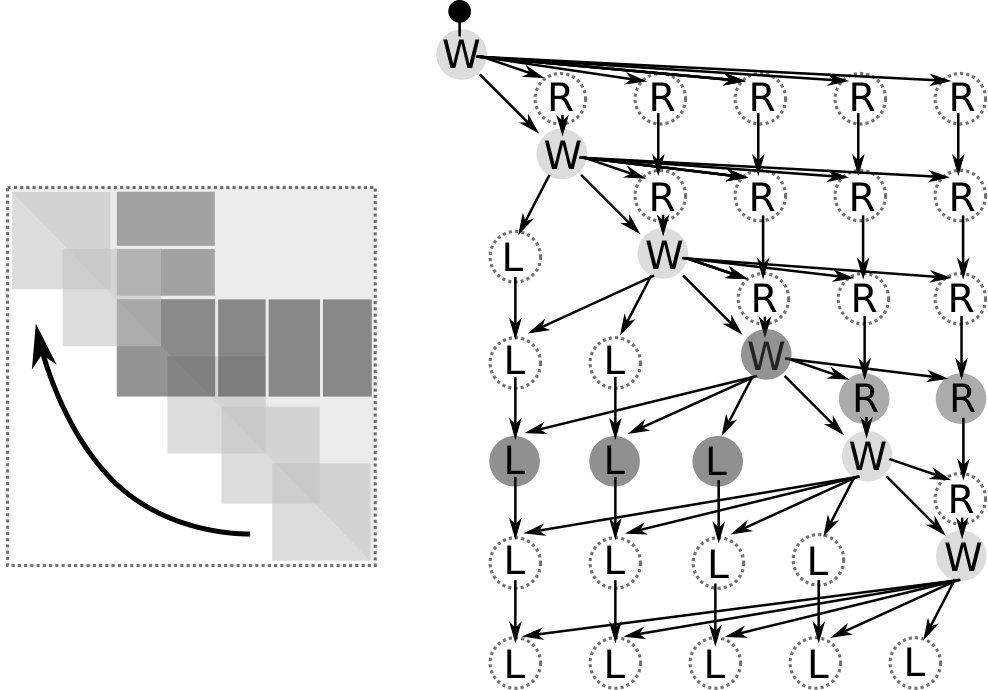 Figure 1
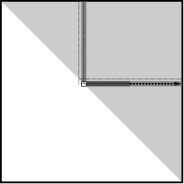 Figure 2
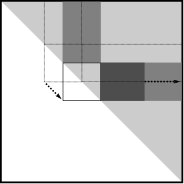 Figure 3
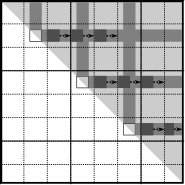 Figure 4
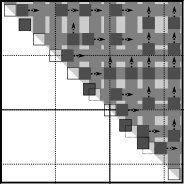 Figure 5
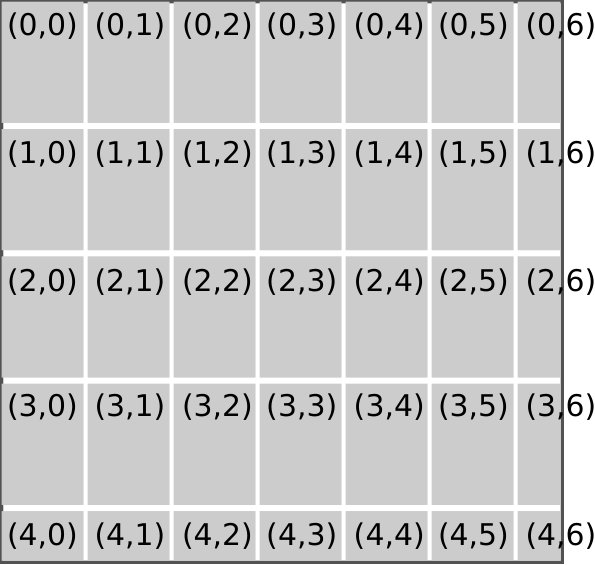 Figure 6
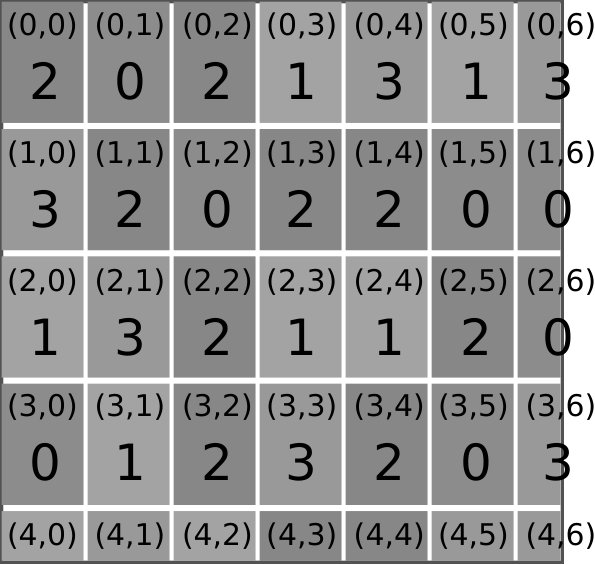 Figure 7
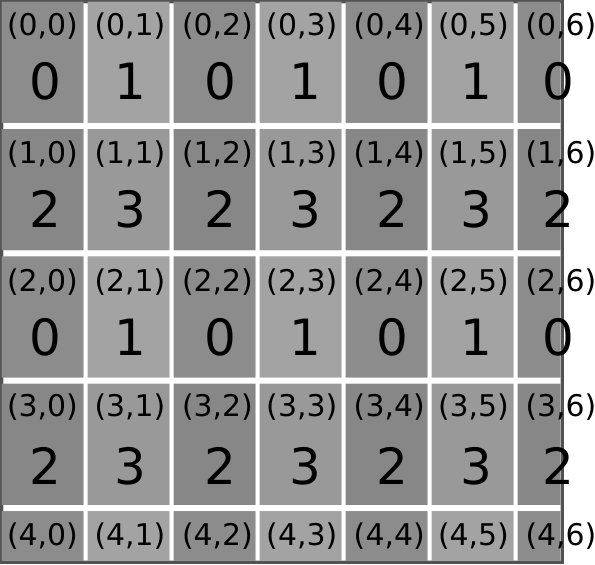 Figure 8
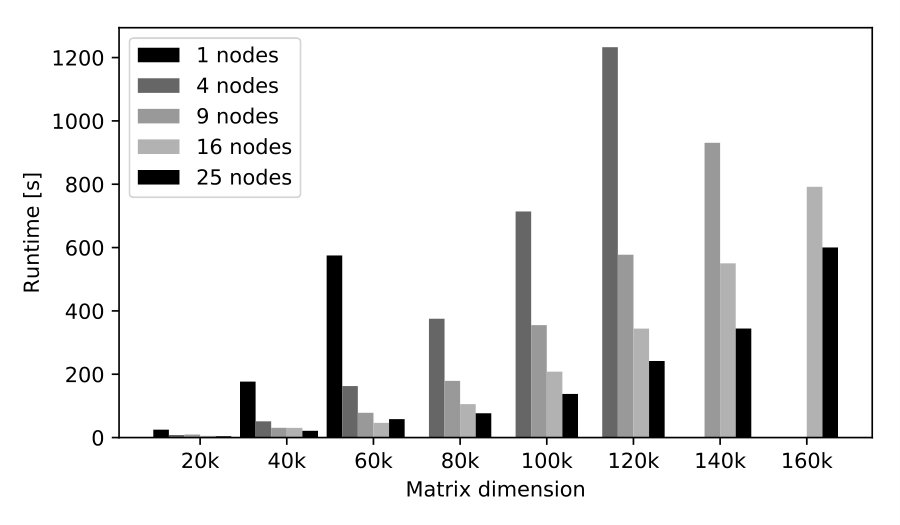 Figure 9
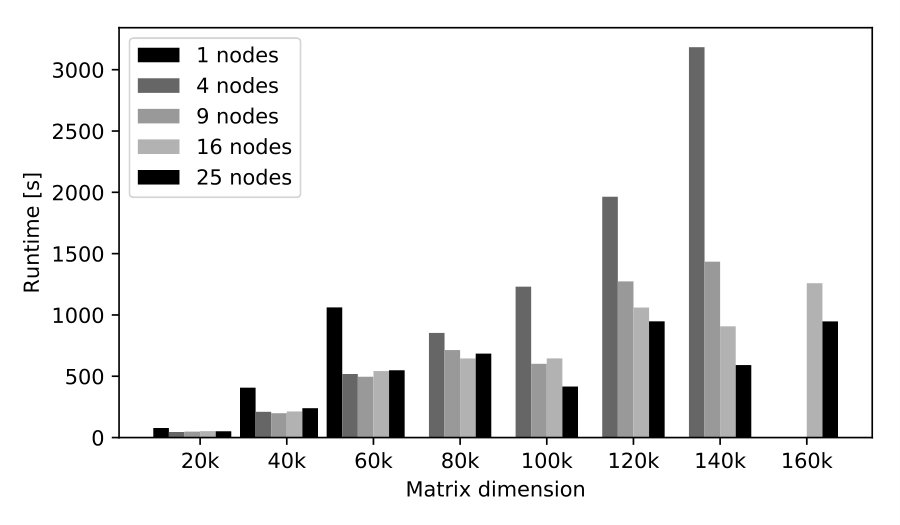 Figure 10
| Step | Shared memory | Distr. memory | GPUs |
|---|---|---|---|
| Hessenberg | Complete | ScaLAPACK | Single GPU |
| Schur | Complete | Complete | Experimental |
| Reordering | Complete | Complete | Experimental |
| Eigenvectors | Complete | In progress | Not planned |
| Hessenberg-triangular | Planned (LAPACK) | ScaLAPACK | Not planned |
| Generalized Schur | Complete | Complete | Experimental |
| Generalized reordering | Complete | Complete | Experimental |
| Generalized eigenvectors | Complete | In progress | Not planned |
| CPU cores | Schur reduction (secs) | Eigenvalue reordering (secs) | ||||
| ScaLAPACK | StarNEig | PDHSEQR | StarNEig | PDTRSEN | StarNEig | |
| 10 000 | 36 | 28 | 38 | 18 | 12 | 3 |
| 20 000 | 36 | 28 | 158 | 85 | 72 | 25 |
| 40 000 | 36 | 28 | 708 | 431 | 512 | 180 |
| 60 000 | 121 | 112 | 992 | 563 | 669 | 168 |
| 80 000 | 121 | 112 | 1667 | 904 | 1709 | 391 |
| 100 000 | 121 | 112 | 3319 | 1168 | 3285 | 737 |
| 120 000 | 256 | 252 | 3268 | 1111 | 2902 | 581 |
Peer Reviews
No public reviews on file for this paper yet. If you reviewed it on a platform where reviews are public (OpenReview, ICLR, NeurIPS, ICML), you can paste yours below so the community can read it here.
Code & Models
Videos
No videos yet. Explain this paper in a talk, walkthrough, or lecture? Add one.
11institutetext: Department of Computing Science, Umeå University, SE-901 87 Umeå, Sweden 11email: {mirkom,spock}@cs.umu.se
Introduction to StarNEig — A Task-based Library for Solving Nonsymmetric Eigenvalue Problems
Mirko Myllykoski
Carl Christian Kjelgaard Mikkelsen
Abstract
In this paper, we present the StarNEig library for solving dense non-symmetric (generalized) eigenvalue problems. The library is built on top of the StarPU runtime system and targets both shared and distributed memory machines. Some components of the library support GPUs. The library is currently in an early beta state and only real arithmetic is supported. Support for complex data types is planned for a future release. This paper is aimed for potential users of the library. We describe the design choices and capabilities of the library, and contrast them to existing software such as ScaLAPACK. StarNEig implements a ScaLAPACK compatibility layer that should make it easy for a new user to transition to StarNEig. We demonstrate the performance of the library with a small set of computational experiments.
Keywords:
Eigenvalue problem Task-based Library.
1 Introduction
In this paper, we present the StarNEig library [1] for solving dense non-symmetric (generalized) eigenvalue problems. StarNEig differs from the existing libraries such as LAPACK and ScaLAPACK in that it is relies on a modern task-based approach. More specifically, StarNEig is build on top of the StarPU runtime system [2]. This allows StarNEig to target both shared memory and distributed memory machines. Furthermore, some components of the StarNEig library support GPUs. The library is currently in an early beta state and under under continuous development.
This paper targets potential users of the library. We hope that readers, who are already familiar with ScaLAPACK, will be able to decide if StarNEig is suitable for them. In particular, we want to communicate what type of changes are necessary to make their software work with StarNEig. We will explain, through an example, why the task-based approach can potentially lead to superior performance when compared to older, but well-established, approaches. We also present a small sample of computational results which demonstrate the expected performance of the library. We refer the reader to [13] for more comprehensive performance and accuracy evaluations.
The rest of this paper is organized as follows: Section 2 provides a brief introduction to the solution of dense eigenvalue problems. Section 3 explains the task-based approach and Section 4 introduces the reader to some of the inner workings of StarNEig. Section 5 presents a small set of computational results and, finally, Section 6 concludes the paper.
2 Solution of Dense Nonsymmetric Eigenvalue Problems
Given a matrix , the standard eigenvalue problem consists of computing eigenvalues and matching eigenvectors such that
[TABLE]
Similarly, given matrices and the generalized eigenvalue problem for the matrix pair consists of computing generalized eigenvalues and matching generalized eigenvectors such that
[TABLE]
If the matrix or the matrices and are dense and nonsymmetric, then route of acquiring the (generalized) eigenvalues and the (generalized) eigenvectors usually includes the following three steps:
Hessenberg(-triangular) reduction:
The matrix or the matrix pair is reduced to upper Hessenberg or Hessenberg-triangular form by an orthogonal similarity transformation
[TABLE]
where is upper Hessenberg, is a upper triangular, and and are orthogonal.
Schur reduction:
The Hessenberg matrix or the Hessenberg-triangular matrix pair is reduced to Schur or generalized Schur form by an orthogonal similarity transformation
[TABLE]
where is upper quasi-triangular with and blocks on the diagonal, is a upper triangular, and and are orthogonal. The eigenvalues or generalized eigenvalues can be determined from the diagonal blocks of or .
Eigenvectors:
Finally, we compute vectors from
[TABLE]
and backtransform to the original basis by
[TABLE]
Additionally, a fourth step can be performed to acquire a desired invariant subspace of or :
Eigenvalue reordering:
The Schur form or the generalized Schur form is reordered, such that a selected set of eigenvalues or generalized eigenvalues appears in the leading diagonal blocks of an updated Schur form or an updated generalized Schur form , by an orthogonal similarity transformation
[TABLE]
where and are orthogonal.
See [4] for a detailed explanation of the underlying mathematical theory.
3 A Case for the Task-Based Approach
A task-based algorithm functions by cutting the computational work into self-contained tasks that all have a well defined set of inputs and outputs. The algorithm inserts the tasks into a runtime system that derives the task dependences and schedules the tasks to computational resources in a sequentially consistent order. As long as the cutting is carefully done, the underlying parallelism is exposed automatically as the runtime system unravels the resulting task graph.
3.1 Novelty in StarNEig
The first main source of novelty in StarNEig comes from the way in which the computational work is cut into tasks. As with many other task-based matrix algorithms, the matrices are divided into (square) tiles and each task takes a set of tiles as its input and produces/modifies a set of tiles as its output. The Hessenberg reduction, Schur reduction and eigenvalue reordering steps are based on two-sided transformation algorithms. These algorithms lead to data dependences that are much more complicated than the dependences arising from one-sided transformation algorithm such as the LU factorization. The second main source of novelty in StarNEig is related to the eigenvector computation step. Here, the data dependences are comparatively simple but the computations must be protected against floating-point overflow. This is a nontrivial issue to address in a parallel setting; see [7, 8, 9].
Furthermore, the Schur reduction and eigenvalue reordering steps apply a series of overlapping local transformations to the matrices. Due to this overlap, the two computational steps cannot have have a clear one-to-one mapping between the tasks and the (output) tiles since the local transformations must at some point cross between two or more tiles. Instead, most task ends up modifying several tiles and this can introduce spurious data dependences111A spurious data dependency is created when two (or more) tasks modify non-overlapping parts of the same tile but the runtime system interprets this as a true data dependency. that limit the concurrency.
3.2 Bulge Chasing and Eigenvalue Reordering
We will now use the Schur reduction and eigenvalue reordering steps to illustrate some benefits of the task-based approach. The modern approach for obtaining a Schur form of is to apply the multishift QR algorithm with Aggressive Early Deflation (AED) to the upper Hessenberg form (see [6] and references therein). The algorithm is a sequence of steps of two types: AED and bulge chasing. The bulge chasing step creates a set of bulges which are chased down the diagonal to complete one pipelined QR iteration. This is accomplished by applying sequences of overlapping Householder reflectors to . Similarly, the eigenvalue reordering step is based on applying sequences of overlapping Givens rotations and Householder reflectors to .
If the local transformations are applied one by one, then memory is accessed as shown in Fig. 1(a). This is grossly inefficient for two reasons: i) the transformation is so localized that parallelizing it would not produce any speedup and ii) the matrix elements are touched only once thus leading to very low arithmetic intensity. The modern approach groups a set of local transformation together and initially applies them to a relatively small diagonal window as shown in Fig. 1(b). The local transformations are accumulated into an accumulator matrix and later applied as level-3 BLAS operations acting on the relevant sections of the matrix. This leads to much higher arithmetic intensity and enables proper parallel implementations as multiple diagonal windows can be processed simultanously.
In particular, the Schur reduction and eigenvalue reordering steps are implemented in ScaLAPACK as PDHSEQR [6] and PDTRSEN [5] subroutines, receptively. Following a typical ScaLAPACK formula, the matrices are distributed in two-dimensional block cyclic fashion. The resulting memory access pattern is illustrated in Fig. 1(c) for a MPI process mesh. In this particular example, three diagonal windows can be processed simultaneously. The related level-3 BLAS updates require careful coordination since the left and right hand side updates must be performed in a sequentially consistent order. In practice, this means (global or broadcast) synchronization after each set of (left or right hand side) updates have been applied.
In a task-based approach, this can be done using the following task types:
Window task
applies a set of local transformations inside the diagonal window. Takes the intersecting tiles as input, and produces updated tiles and an accumulator matrix as output.
Right update task
applies accumulated right-hand side updates using level-3 BLAS operations. Takes the intersecting tiles and an accumulator matrix as input, and produces updated tiles as output.
Left update task
applies accumulated left-hand side updates using level-3 BLAS operations. Takes the intersecting tiles and an accumulator matrix as input, and produces updated tiles as output.
The tasks are inserted in a sequentially consistent order and each window chain leads to a task graph like the one shown in Fig. 2. It is critical to realize that the runtime system guarantees that the tasks are executed in a sequentially consistent order. In particular, there is no need for synchronization and different stages are allowed to overlap as illustrated in Fig. 1(d). This leads to much higher concurrency. Under suitable conditions, the AED step can also be partially overlapped with the bulge chasing step. Other benefits of the task-based approach include, for example, better load balancing, task priorities, accelerators support and implicit MPI communication. See [10, 11, 12, 13] for implementation details and further information.
4 StarNEig Library
StarNEig is a C-library that runs on top of the StarPU task-based runtime system. StarPU handles low-level operations such as heterogeneous scheduling, data transfers and replication between various memory spaces, and MPI communication between compute nodes. In particular, StarPU is responsible for managing the various computational resources such as CPU cores and GPUs. In order to accomplish this, StarPU creates a set of worker threads; usually one thread per computational resource. In addition, one thread is responsible for inserting the tasks and tracking the state of the machine. If necessary, one additional thread is allocated for MPI communication. Thus, StarNEig should be used in a one process per node (1ppn) configuration, i.e., several CPU cores should be allocated for each process (a node can be a full compute node, a NUMA island or some other collection of CPU cores).
The current status of the StarNEig library is summarized in Table 1. The library is currently in an early beta state. At the time of writing this paper, only real arithmetic is supported and certain interface functions are implemented as LAPACK and ScaLAPACK wrapper functions. The library is under continuous development. In particular, additional distributed memory functionality and support for complex data types are planned for a future release.
4.1 Distributed Memory
StarNEig distributes the matrices in rectangular blocks of a uniform size (excluding the last block row and column) as illustrated in Fig. 3(a). The data distribution, i.e., the mapping from the distributed blocks to the MPI process rank space, can be arbitrary as illustrated in Fig. 3(b). A user has three options:
Use the default data distribution. This is recommended for most users and leads to reasonable performance in many cases. 2. 2.
Use a two-dimensional block cyclic distribution (see Fig. 3(c)). In this case, the user may select the MPI process mesh dimensions and the rank ordering. 3. 3.
Define a data distribution function that maps the block row and column indices to the MPI rank space. For example, in Fig. 3(b), the rank 0 owns the blocks (0,1), (1,2), (1,5), (1,6), (2,6), (3,0) and (3,5).
The library implements distribution agnostic copy, scatter and gather operations.
Users who are familiar with ScaLAPACK are likely accustomed to using relatively small distributed block sizes (between 64–256). In contrast, StarNEig functions optimally only if the distributed blocks are relatively large (at least 1000). This is due to the fact that StarNEig further divides the distributed blocks into tiles and a tiny tile size leads to excessive task scheduling overhead because the tile size is closely connected to the task granularity. Furthermore, as mentioned in the preceding section, StarNEig should be used in 1ppn configuration as opposed to a one process per core (1ppc) configuration which is more common with ScaLAPACK.
4.2 ScaLAPACK Compatibility
StarNEig is fully compatible with ScaLAPACK and provides a ScaLAPACK compatibility layer that encapsulates BLACS contexts and descriptors [3] inside transparent objects, and implements a set of bidirectional conversion functions. The conversions are performed in-place and do not modify any of the underlying data structures. Thus, users can mix StarNEig interface functions with ScaLAPACK subroutines without intermediate conversions.
5 Performance Evaluation
The reference list from the paper itself. Each links out to its DOI / PubMed record.
- 1[1] Star N Eig — A task-based library for solving nonsymmetric eigenvalue problems, https://github.com/NLAFET/Star N Eig
- 2[2] Star PU — A unified runtime system for heterogeneous multicore architectures, http://starpu.gforge.inria.fr
- 3[3] Dongarra, J.J., Whaley, R.C.: A User’s Guide to the BLACS (1997), LAWN 94
- 4[4] Golub, G.H., Van Loan, C.F.: Matrix Computations. Johns Hopkins University Press, Baltimore, MD, 4th edn. (2012)
- 5[5] Granat, R., Kågström, B., Kressner, D.: Parallel eigenvalue reordering in real Schur forms. Concurrency and Computation: Practice and Experience 21 (9), 1225–1250 (2009), http://dx.doi.org/10.1002/cpe.1386 · doi ↗
- 6[6] Granat, R., Kågström, B., Kressner, D., Shao, M.: ALGORITHM 953: Parallel library software for the multishift qr algorithm with aggressive early deflation —Electronic appendix: Derivation of the performance model. ACM Trans. Math. Software 41 (4) (2015), http://dx.doi.org/10.1145/2699471 · doi ↗
- 7[7] Kjelgaard Mikkelsen, C.C., Karlsson, L.: Blocked algorithms for robust solution of triangular linear systems. In: Wyrzykowski, R., Dongarra, J., Deelman, E., Karczewski, K. (eds.) Parallel Processing and Applied Mathematics. pp. 68–78. Springer International Publishing, Cham (2018)
- 8[8] Kjelgaard Mikkelsen, C.C., Myllykoski, M.: Parallel robust computation of generalized eigenvectors of matrix pencils in real schur form. Submitted to PPAM 2019
