Model-Based Reconstruction for Quantitative MRI using the Bloch Equations
Nick Scholand

TL;DR
This paper introduces a comprehensive model-based MRI reconstruction method that directly incorporates Bloch equations, enabling accurate quantification of relaxation parameters from complex sequences.
Contribution
It integrates the full Bloch equations into the reconstruction process using a Runge-Kutta solver, advancing beyond simplified models for more precise MRI parameter mapping.
Findings
Successfully estimated T1, T2, M0 maps from experimental data.
Demonstrated improved accuracy over simplified models.
Validated with a custom T1-T2 phantom.
Abstract
In this work a generic model-based reconstruction for the quantification of relaxation parameters is developed. In contrast to previous approaches that rely on simplified models derived from the Bloch equations, this work includes the Bloch equations directly into the reconstruction. Therefore, non-linear calibrationless parallel imaging is combined with a generic Runge-Kutta 5(4) based forward operator to simulate spin dynamics described by arbitrary sequences. Gradients are determined by using a sensitivity analysis and solving the resulting ordinary differential equations parallel to the signal simulation. Based on this formulation an IRGNM-FISTA algorithm is used to estimate quantitative maps for , , , and the coil profiles from fully-sampled multi-inversion and golden-angle single-shot inversion-recovery radial bSSFP measurement with a custom-built -…
Click any figure to enlarge with its caption.
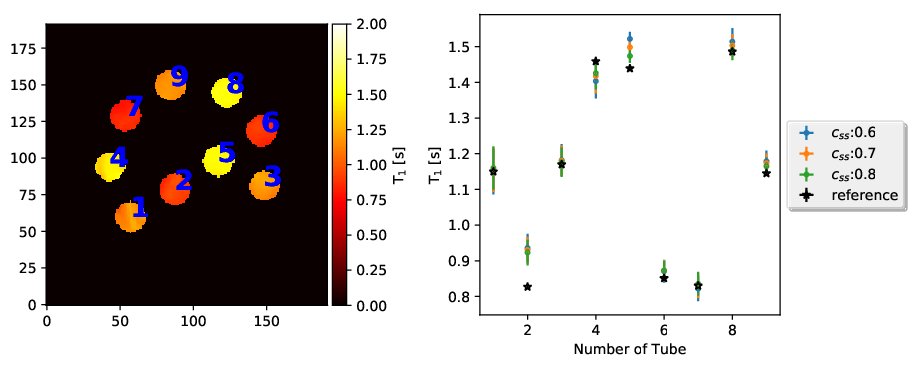 Figure 1
 Figure 2
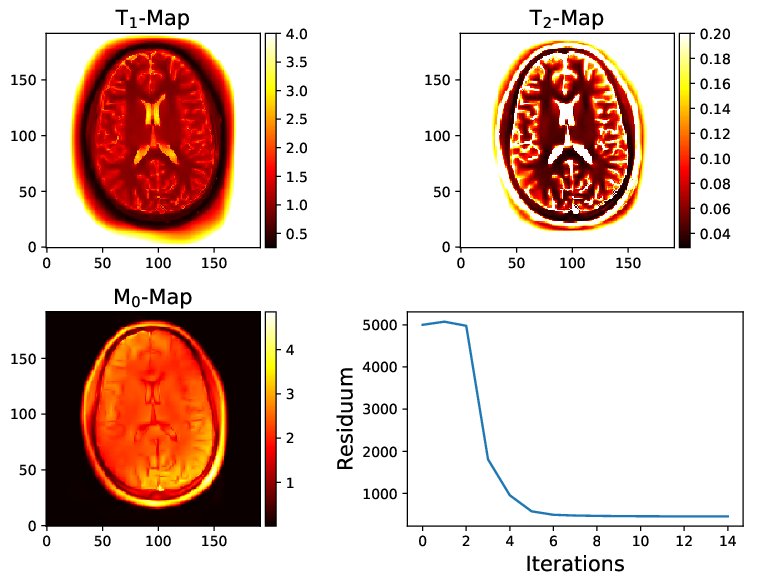 Figure 3
 Figure 4
 Figure 5
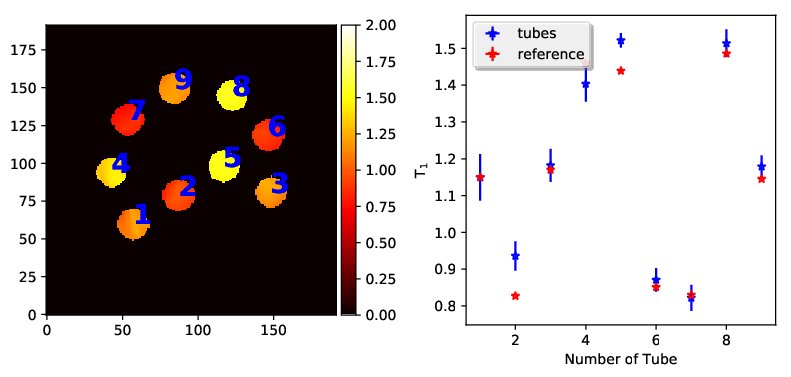 Figure 6
 Figure 7
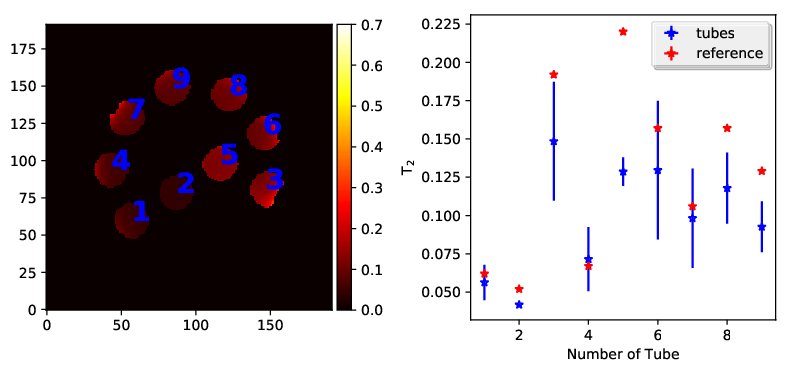 Figure 8
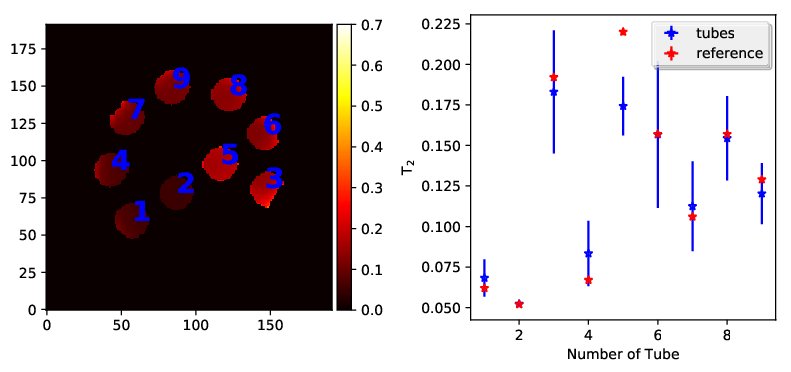 Figure 9
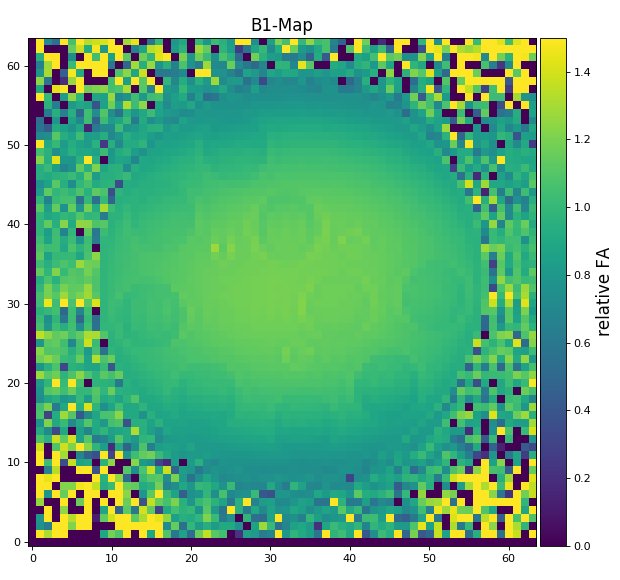 Figure 10
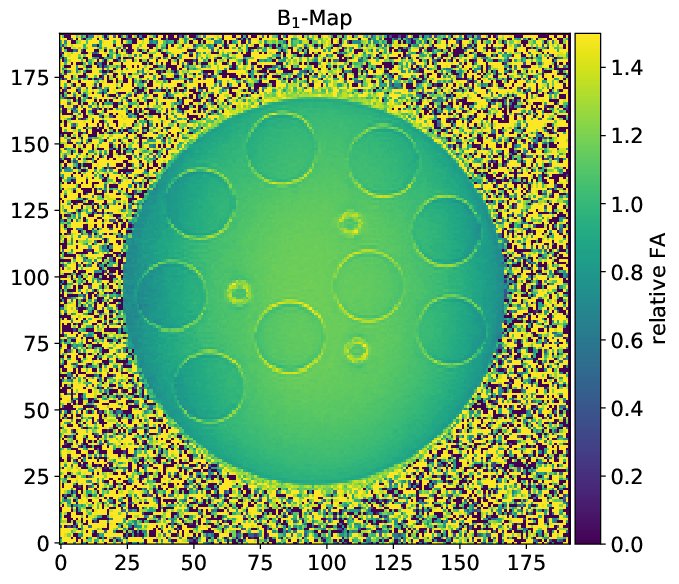 Figure 11
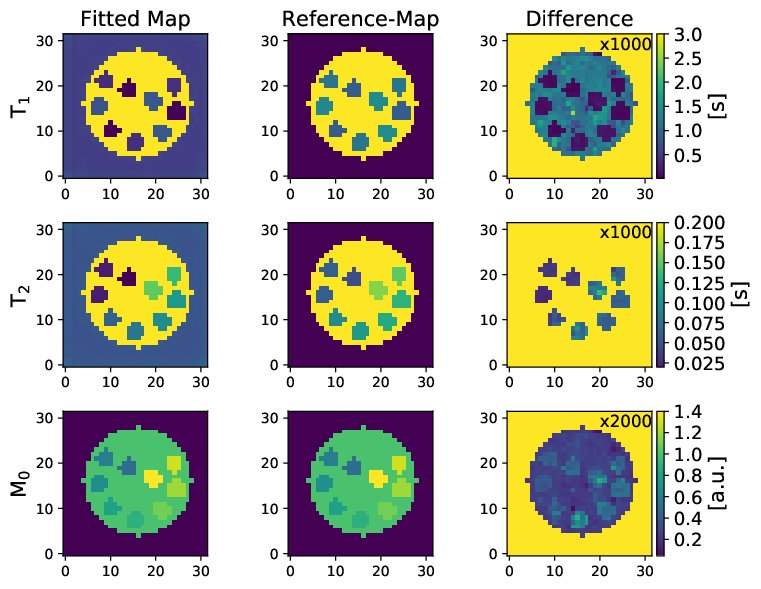 Figure 12
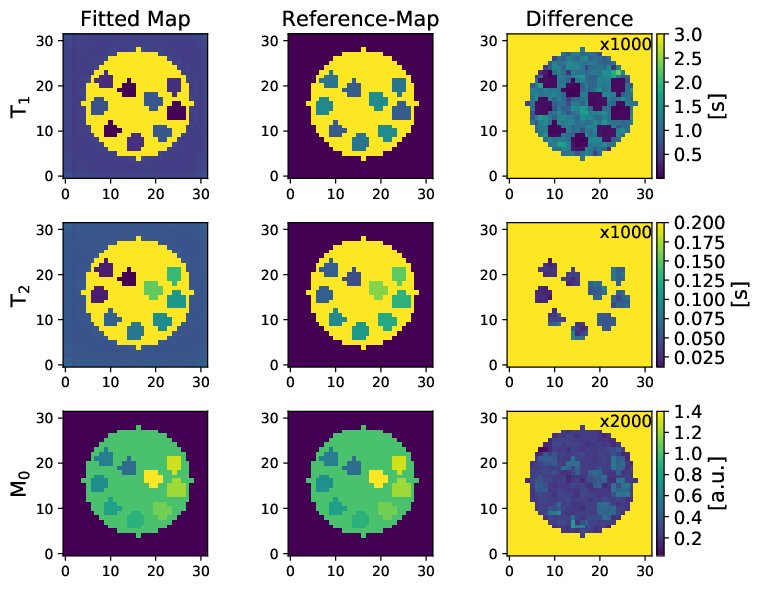 Figure 13
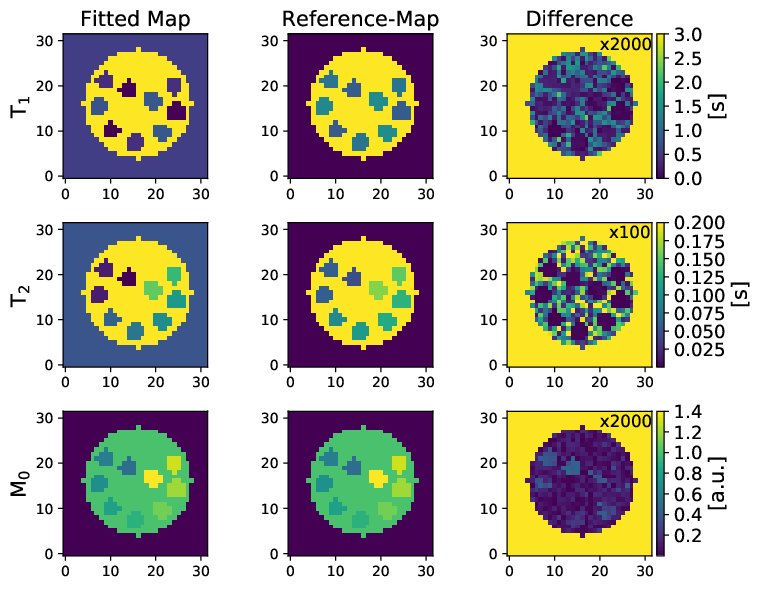 Figure 14
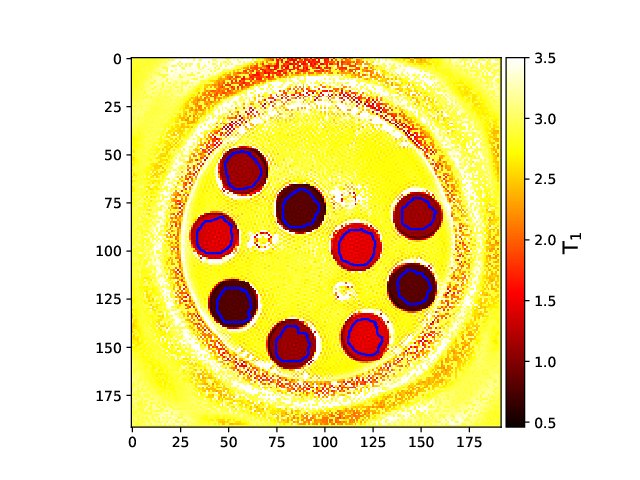 Figure 15
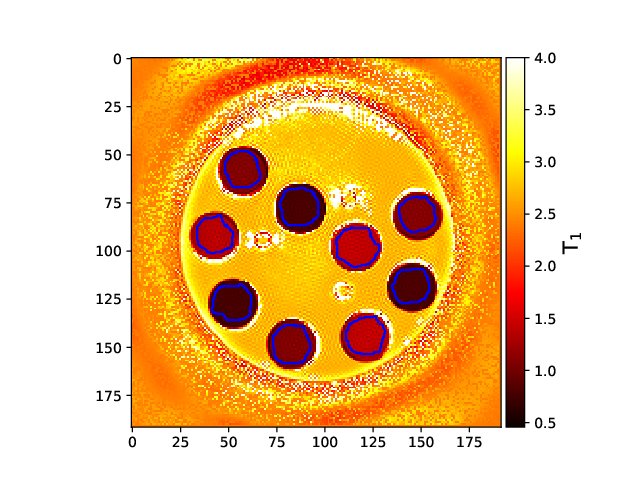 Figure 16
 Figure 17
 Figure 18
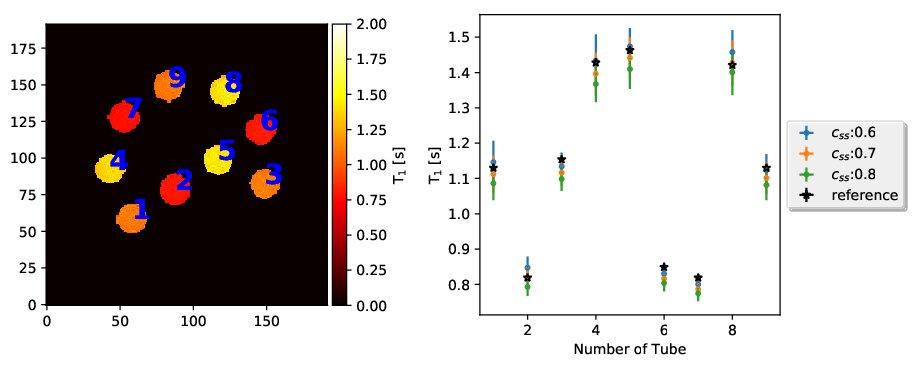 Figure 19
 Figure 20
 Figure 21
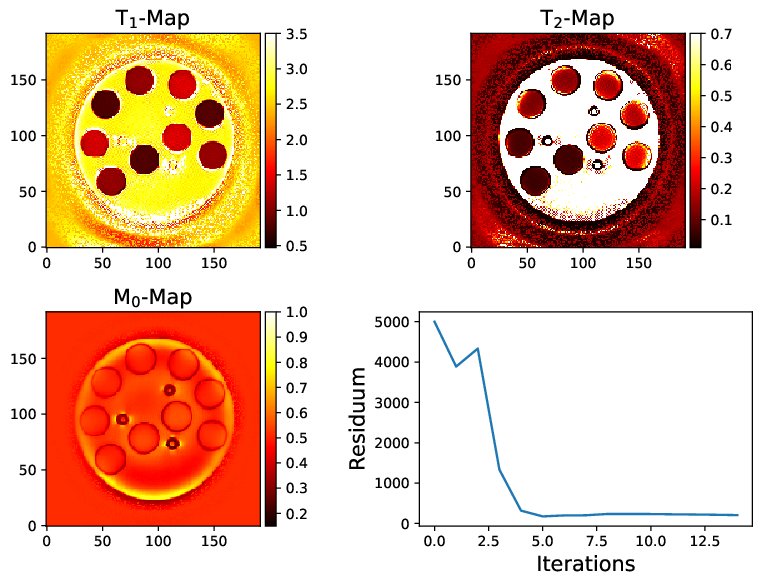 Figure 22
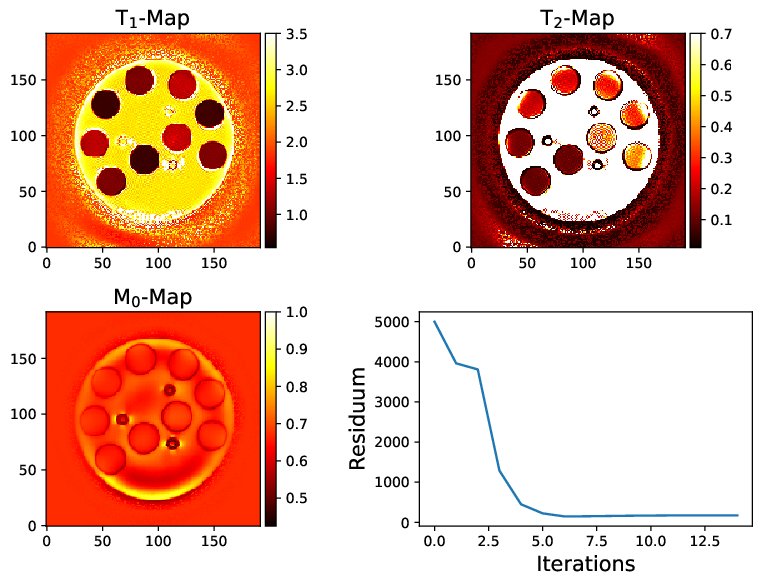 Figure 23
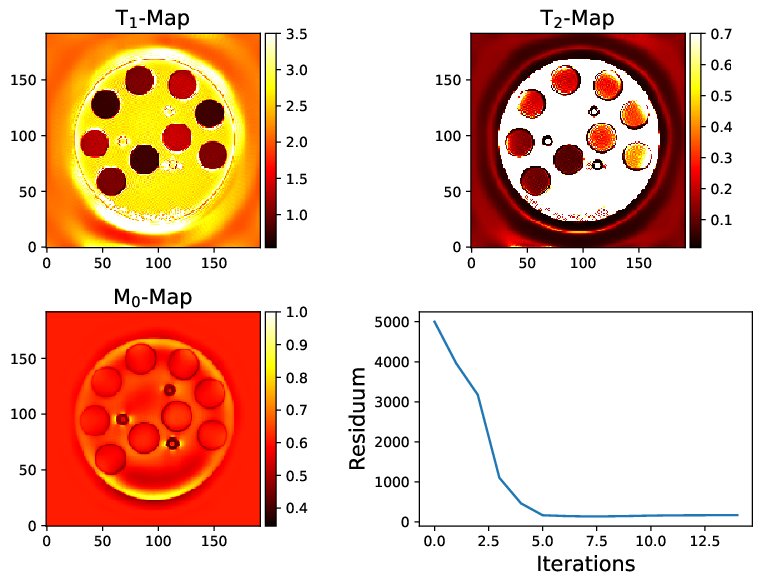 Figure 24
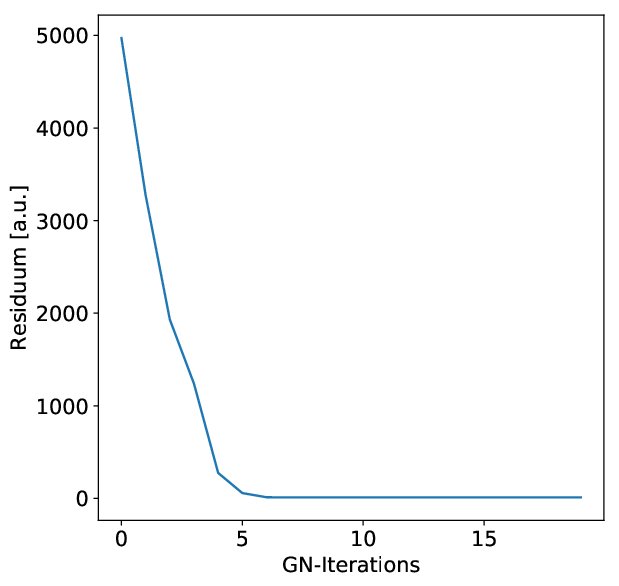 Figure 25
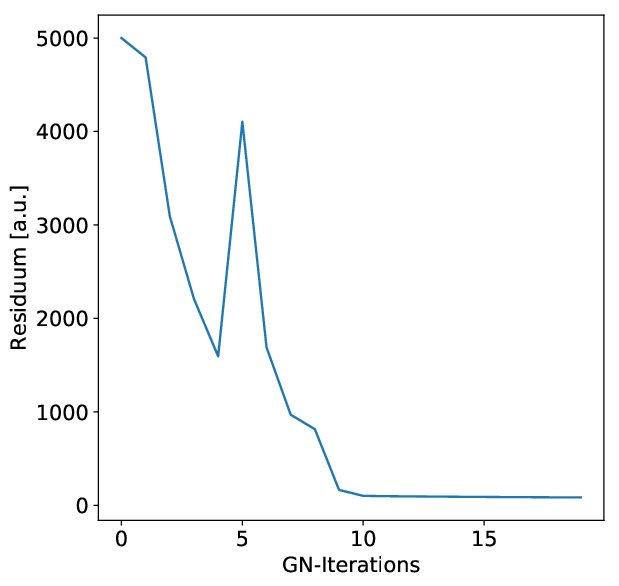 Figure 26
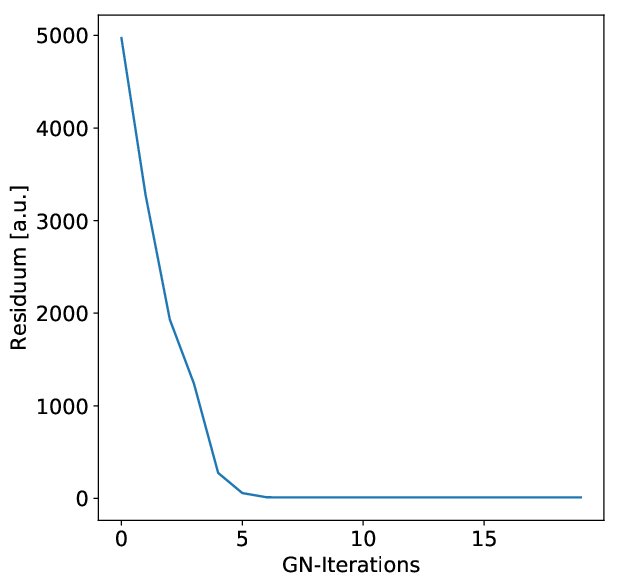 Figure 27
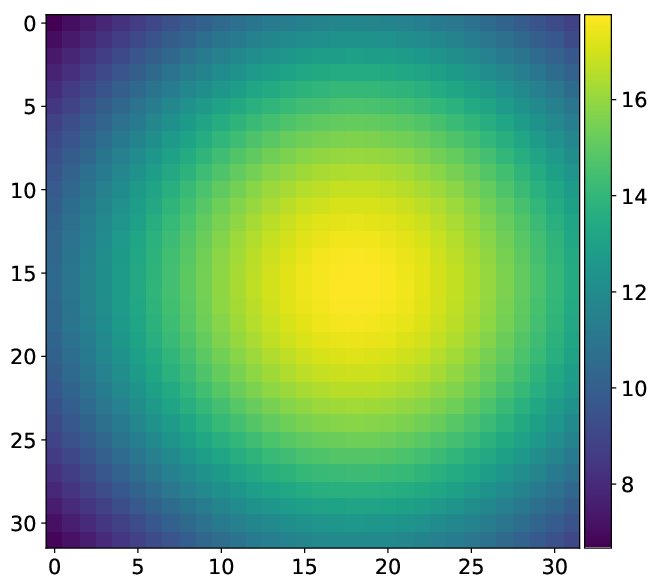 Figure 28
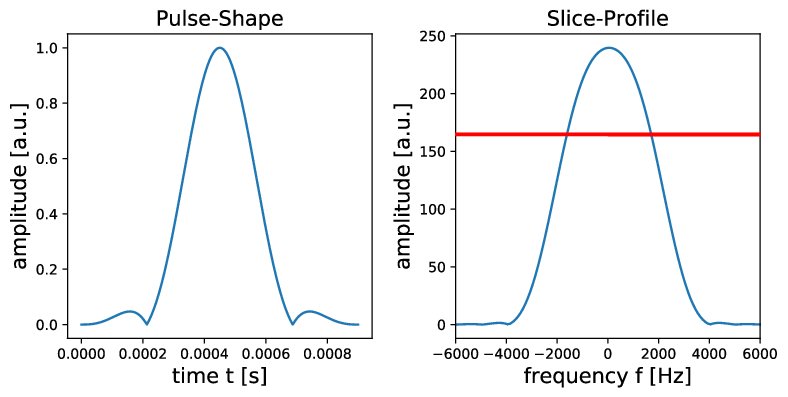 Figure 29
 Figure 30
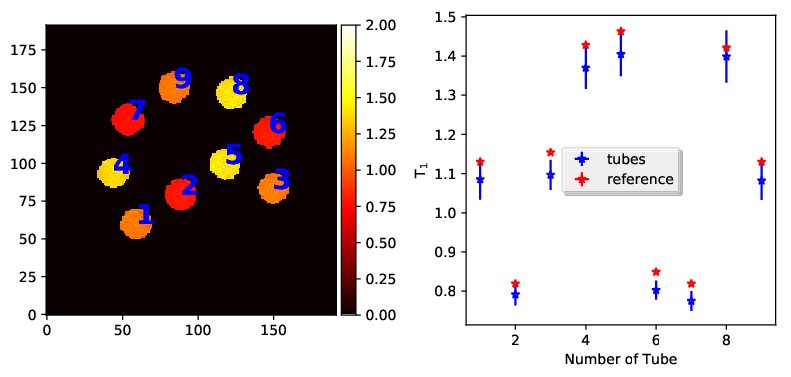 Figure 31
 Figure 32
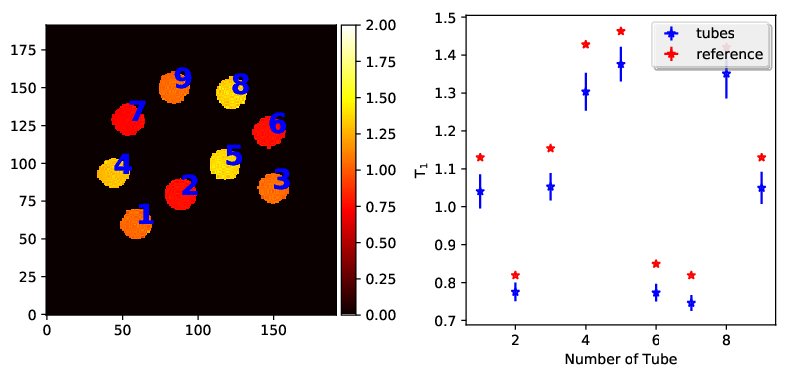 Figure 33
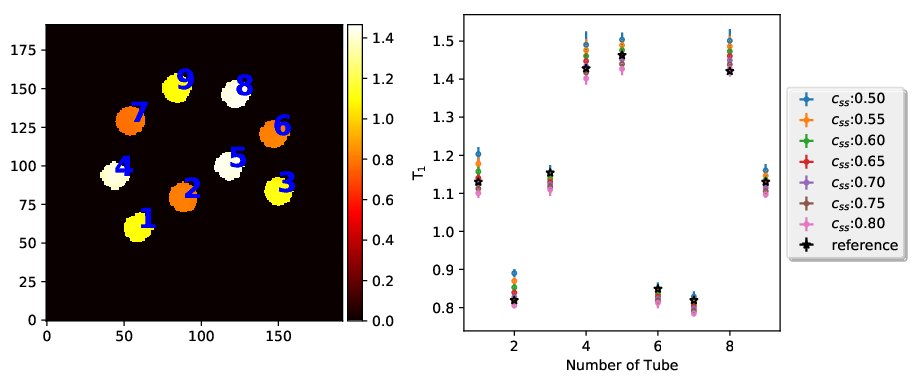 Figure 34
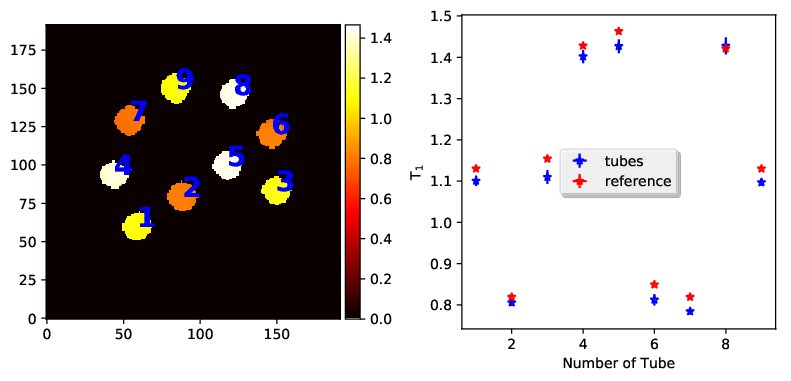 Figure 35
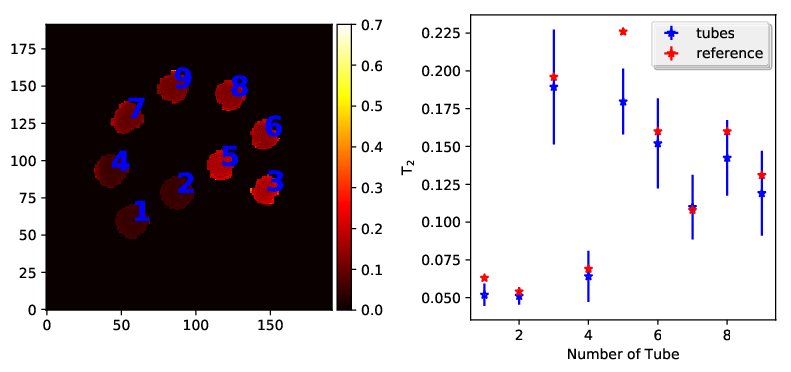 Figure 36
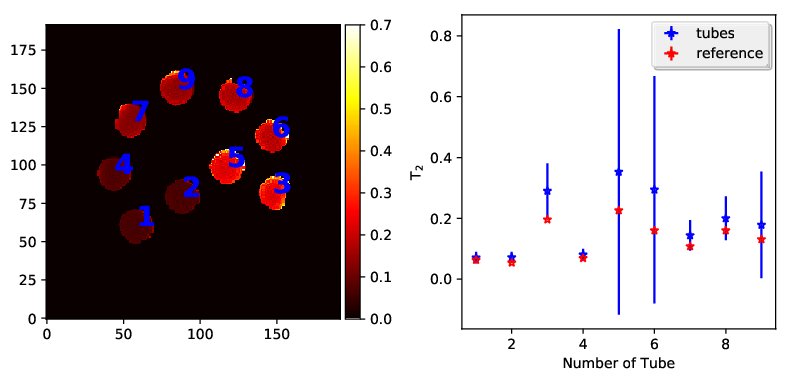 Figure 37
 Figure 38
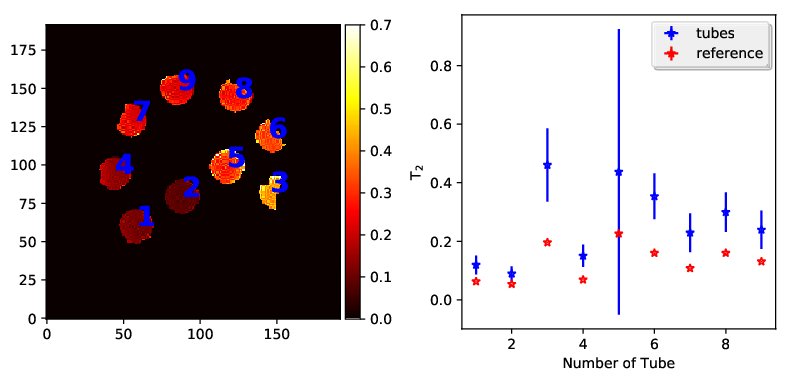 Figure 39
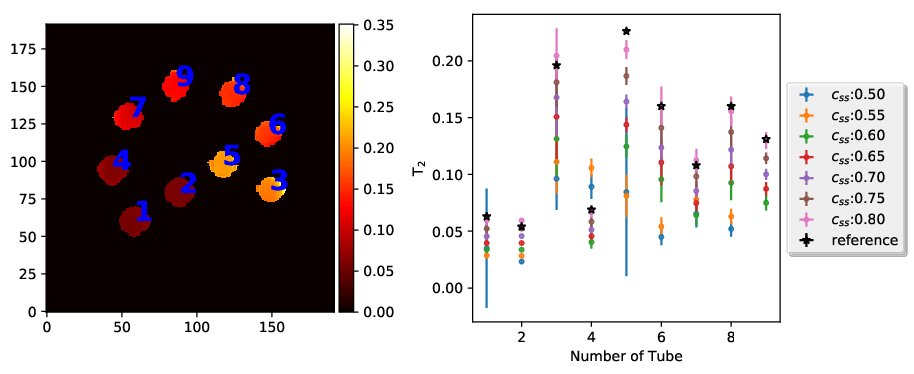 Figure 40
| Shortcut | Meaning |
|---|---|
| BART | Berkeley Advanced Reconstruction Toolbox |
| bSSFP | Balanced Steady-State Free Precession |
| BWTP | Bandwidth-Time-Product |
| Dopri | Dormand and Prince Algorithm |
| FA | Flip-Angle |
| FFT | Fast-Fourier Transformation |
| FID | Free Induction Decay |
| FISTA | Fast Iterative Shrinkage/Thresholding Algorithm |
| FLASH | Fast Low-Angle Shot |
| FoV | Field of View |
| FSM | Forward Sensitivity Method |
| IDEA | Integrated Development Environment for (MR) Applications |
| IRGNM | Iteratively Regularized Gauss Newton Method |
| MR | Magnetic Resonance |
| MRI | Magnetic Resonance Imaging |
| ODE | Ordinary Differential Equation |
| PI | Parallel Imaging |
| RF | Radio-Frequency |
| RK | Runge-Kutta |
| ROI | Region of Interest |
| SSFP | Steady-State Free Precession |
| TE | Echo Time |
| TI | Inversion Time |
| TR | Repetition Time |
Peer Reviews
No public reviews on file for this paper yet. If you reviewed it on a platform where reviews are public (OpenReview, ICLR, NeurIPS, ICML), you can paste yours below so the community can read it here.
Videos
No videos yet. Explain this paper in a talk, walkthrough, or lecture? Add one.
Taxonomy
TopicsAdvanced MRI Techniques and Applications · Medical Imaging Techniques and Applications · Atomic and Subatomic Physics Research
\DeclareSourcemap\maps
[datatype=bibtex] \map[overwrite=true] \step[fieldset=abstract, null] \step[fieldset=url, null] \step[fieldset=doi, null] \step[fieldset=eprint, null] \step[fieldset=issn, null] \step[fieldset=isbn, null]
\ThesisAuthorNickScholand \PlaceOfBirthArnsberg \ThesisTitleModel-Based Reconstruction for Quantitative MRI using the Bloch EquationsModellbasierte Rekonstruktion in der Quantitativen MRT unter Verwendung der Bloch-Gleichungen \FirstRefereeProf. Dr. Martin Uecker \InstituteInstitute for Diagnostic and Interventional Radiology
at the University Medical Center in Göttingen \SecondRefereeProf. Dr. Ulrich Parlitz \ThesisBegin20082018 \ThesisEnd12022019
Abstract
In dieser Arbeit wird eine Methode der modellbasierten Rekonstruktion für die Magnet-Resonanz-Tomographie entwickelt. Während bisherige Verfahren vereinfachte Signalmodelle benutzen, werden hier die Bloch-Gleichungen direkt in die Rekonstruktion eingebunden, um die Relaxationsparameter und einer selbst erstellten Messprobe zu bestimmen. Dazu wird eine kalibrationsfreie parallele Bildgebung mit einem Runge-Kutta 5(4) basierten Vorwärtsoperator kombiniert, der die Spindynamik beliebiger Sequenzen simulieren kann. Zusammen mit einem IRGNM-FISTA Algorithmus können damit die Parameterkarten für , und , sowie die Spulen-Sensitivitäten direkt aus den Rohdaten ohne vorherige Rekonstruktion bestimmt werden. Die Gradientenberechnung für den Optimierungsalgorithmus wird mittels einer Sensitivitätsanalyse realisiert, deren gewöhnliche Differenzialgleichungen parallel zur Simulation gelöst werden. Die Datenaufnahme erfolgt radial mit vollabgetasteten Multiinversions- und stark unterabgetastete Einzelinversionsmessungen.
Stichwörter: Model-Basierte Rekonstruktion, Sensitivitätsanalyse, Bloch-Simulationen, Quantitative MRT
?abstractname?
In this work a generic model-based reconstruction for the quantification of relaxation parameters is developed. In contrast to previous approaches that rely on simplified models derived from the Bloch equations, this work includes the Bloch equations directly into the reconstruction. Therefore, non-linear calibrationless parallel imaging is combined with a generic Runge-Kutta 5(4) based forward operator to simulate spin dynamics described by arbitrary sequences. Gradients are determined by using a sensitivity analysis and solving the resulting ordinary differential equations parallel to the signal simulation. Based on this formulation an IRGNM-FISTA algorithm is used to estimate quantitative maps for , , , and the coil profiles from fully-sampled multi-inversion and golden-angle single-shot inversion-recovery radial bSSFP measurement with a custom-built - phantom.
Keywords: Model-Based Reconstruction, Sensitivity Analysis, Bloch Simulation, Quantitative MRI
{nomenclature}
Abbreviations