Fluctuation Theorem of Information Exchange within an Ensemble of Paths Conditioned on Correlated-Microstates
Lee Jinwoo

TL;DR
This paper extends fluctuation theorems to include information exchange between correlated subsystems, demonstrating that mutual information encodes entropy production during dynamic coupling processes in non-equilibrium thermodynamics.
Contribution
It introduces a generalized fluctuation theorem for information exchange that accounts for correlated microstates during the evolution of coupled subsystems.
Findings
Information characterized by mutual information encodes entropy production.
Fluctuation theorem holds for paths reaching correlated states.
Extension of previous theorems to dynamic, correlated systems.
Abstract
Fluctuation theorems are a class of equalities that express universal properties of the probability distribution of a fluctuating path functional such as heat, work or entropy production over an ensemble of trajectories during a non-equilibrium process with a well-defined initial distribution. Jinwoo and Tanaka (Jinwoo, L.; Tanaka, H. Sci. Rep. 2015, 5, 7832) have shown that work fluctuation theorems hold even within an ensemble of paths to each state, making it clear that entropy and free energy of each microstate encode heat and work, respectively, within the conditioned set. Here we show that information that is characterized by the point-wise mutual information for each correlated state between two subsystems in a heat bath encodes the entropy production of the subsystems and heat bath during a coupling process. To this end, we extend the fluctuation theorem of information exchange…
Click any figure to enlarge with its caption.
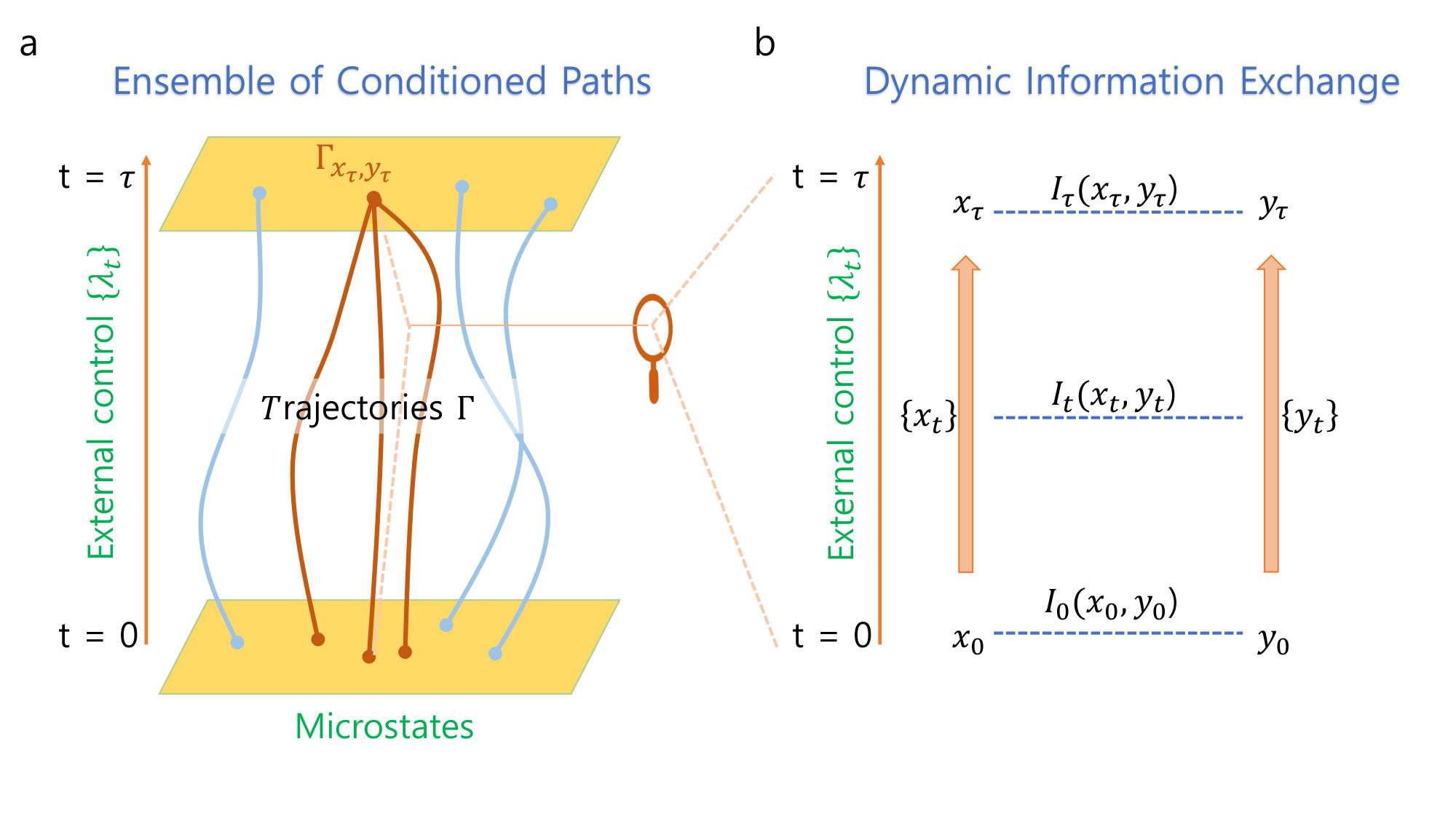 Figure 1
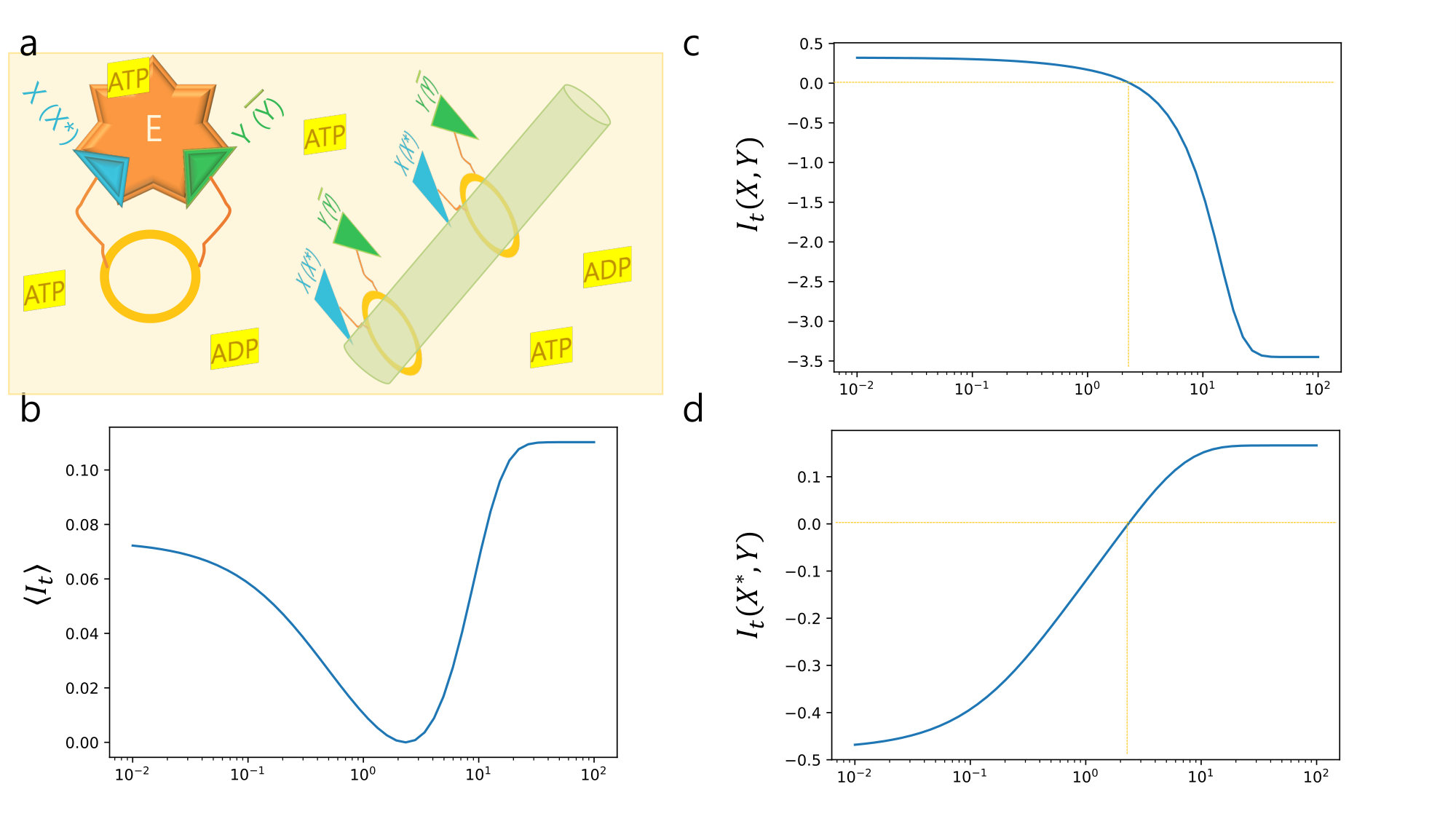 Figure 2
Peer Reviews
No public reviews on file for this paper yet. If you reviewed it on a platform where reviews are public (OpenReview, ICLR, NeurIPS, ICML), you can paste yours below so the community can read it here.
Videos
No videos yet. Explain this paper in a talk, walkthrough, or lecture? Add one.